cross pond high tech
167.9K views | +1 today
Follow
cross pond high tech
light views on high tech in both Europe and US
Your new post is loading...
Rescooped by Philippe J DEWOST from Digital Sovereignty & Cyber Security
December 11, 2018 2:37 AM
Scoop.it!

Your Apps Know Where You Were Last Night, and They’re Not Keeping It Secret - at least 75 companies have access

Your Apps Know Where You Were Last Night, and They’re Not Keeping It Secret - at least 75 companies have access | cross pond high tech | Scoop.it

Data reviewed by The Times shows over 235 million locations captured from more than 1.2 million unique devices during a three-day period in 2017.

The millions of dots on the map trace highways, side streets and bike trails — each one following the path of an anonymous cellphone user.

One path tracks someone from a home outside Newark to a nearby Planned Parenthood, remaining there for more than an hour. Another represents a person who travels with the mayor of New York during the day and returns to Long Island at night.

Yet another leaves a house in upstate New York at 7 a.m. and travels to a middle school 14 miles away, staying until late afternoon each school day. Only one person makes that trip: Lisa Magrin, a 46-year-old math teacher. Her smartphone goes with her.

An app on the device gathered her location information, which was then sold without her knowledge. It recorded her whereabouts as often as every two seconds, according to a database of more than a million phones in the New York area that was reviewed by The New York Times. While Ms. Magrin’s identity was not disclosed in those records, The Times was able to easily connect her to that dot.

The app tracked her as she went to a Weight Watchers meeting and to her dermatologist’s office for a minor procedure. It followed her hiking with her dog and staying at her ex-boyfriend’s home, information she found disturbing.

“It’s the thought of people finding out those intimate details that you don’t want people to know,” said Ms. Magrin, who allowed The Times to review her location data.

Like many consumers, Ms. Magrin knew that apps could track people’s movements. But as smartphones have become ubiquitous and technology more accurate, an industry of snooping on people’s daily habits has spread and grown more intrusive.

Lisa Magrin is the only person who travels regularly from her home to the school where she works. Her location was recorded more than 800 times there, often in her classroom .

A visit to a doctor’s office is also included. The data is so specific that The Times could determine how long she was there.

Ms. Magrin’s location data shows other often-visited locations, including the gym and Weight Watchers.

In about four months’ of data reviewed by The Times, her location was recorded over 8,600 times — on average, once every 21 minutes.

Philippe J DEWOST's insight:

Who is watching you ?

Philippe J DEWOST's curator insight, December 10, 2018 3:19 PM

Lots of "brothers" are watching you via apps on your phone and without any of your consent.

Scooped by Philippe J DEWOST
December 3, 2018 9:58 AM
Scoop.it!

Keynote Open Hardware à l'Open CIO Summit

Keynote Open Hardware à l'Open CIO Summit | cross pond high tech | Scoop.it

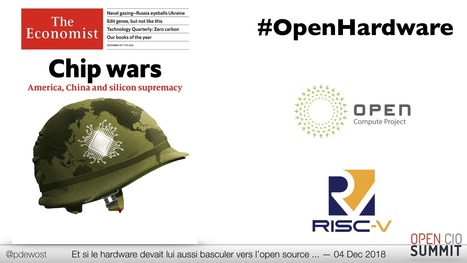
La une de couverture de The Economist est tombée pile-poil à point pour ma keynote de demain !

Philippe J DEWOST's insight:

Amusante coïncidence ?

No comment yet.
Scooped by Philippe J DEWOST
November 27, 2018 12:02 PM
Scoop.it!

Amazon Web Services introduces its own custom-designed Arm server processor, promises 45 percent lower costs for some workloads –

Amazon Web Services introduces its own custom-designed Arm server processor, promises 45 percent lower costs for some workloads – | cross pond high tech | Scoop.it
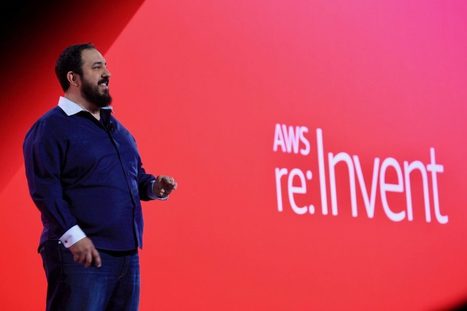
After years of waiting for someone to design an Arm server processor that could work at scale on the cloud, Amazon Web Services just went ahead and designed its own. Vice president of infrastructure Peter DeSantis introduced the AWS Graviton Processor Monday night, adding a third chip option for cloud customers alongside instances that use processors from Intel and AMD. The company did not provide a lot of details about the processor itself, but DeSantis said that it was designed for scale-out workloads that benefit from a lot of servers chipping away at a problem.
Philippe J DEWOST's insight:
If you can’t find it, just design it and build it ! Hardware Is Not Dead
No comment yet.
Rescooped by Philippe J DEWOST from Leonard
October 15, 2018 3:22 AM
Scoop.it!

Stacking concrete blocks is a surprisingly efficient way to store energy according Swiss startup Energy Vault

Stacking concrete blocks is a surprisingly efficient way to store energy according Swiss startup Energy Vault | cross pond high tech | Scoop.it

Thanks to the modern electric grid, you have access to electricity whenever you want. But the grid only works when electricity is generated in the same amounts as it is consumed. That said, it’s impossible to get the balance right all the time. So operators make grids more flexible by adding ways to store excess electricity for when production drops or consumption rises.

About 96% of the world’s energy-storage capacity comes in the form of one technology: pumped hydro. Whenever generation exceeds demand, the excess electricity is used to pump water up a dam. When demand exceeds generation, that water is allowed to fall—thanks to gravity—and the potential energy turns turbines to produce electricity.

But pumped-hydro storage requires particular geographies, with access to water and to reservoirs at different altitudes. It’s the reason that about three-quarters of all pumped hydro storage has been built in only 10 countries. The trouble is the world needs to add a lot more energy storage, if we are to continue to add the intermittent solar and wind power necessary to cut our dependence on fossil fuels.

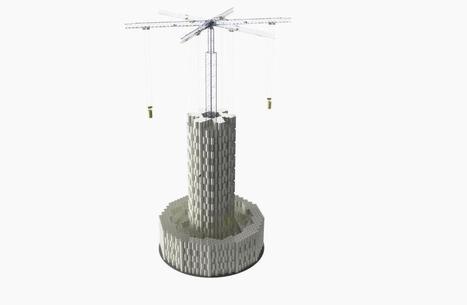
A startup called Energy Vault thinks it has a viable alternative to pumped-hydro: Instead of using water and dams, the startup uses concrete blocks and cranes. It has been operating in stealth mode until today (Aug. 18), when its existence will be announced at Kent Presents, an ideas festival in Connecticut.

On a hot July morning, I traveled to Biasca, Switzerland, about two hours north of Milan, Italy, where Energy Vault has built a demonstration plant, about a tenth the size of a full-scale operation. The whole thing—from idea to a functional unit—took about nine months and less than $2 million to accomplish. If this sort of low-tech, low-cost innovation could help solve even just a few parts of the huge energy-storage problem, maybe the energy transition the world needs won’t be so hard after all.

Philippe J DEWOST's insight:

Energy is concrete. Concrete is energy.

Philippe J DEWOST's curator insight, October 14, 2018 1:18 PM

Energy is concrete, and vice-versa

Rescooped by Philippe J DEWOST from Digital Sovereignty & Cyber Security
October 5, 2018 3:25 AM
Scoop.it!

Supermicro stock fell 50 percent after a bombshell Bloomberg report on How China Used a Tiny Chip to Infiltrate nearly 30 U.S. Companies

Supermicro stock fell 50 percent after a bombshell Bloomberg report on How China Used a Tiny Chip to Infiltrate nearly 30 U.S. Companies | cross pond high tech | Scoop.it

The attack by Chinese spies reached almost 30 U.S. companies, including Amazon and Apple, by compromising America’s technology supply chain, according to extensive interviews with government and corporate sources.

(from Bloomberg Business Week through Clément Epié)

-----------How the Hack Worked, According to U.S. Officials

① A Chinese military unit designed and manufactured microchips as small as a sharpened pencil tip. Some of the chips were built to look like signal conditioning couplers, and they incorporated memory, networking capability, and sufficient processing power for an attack.

② The microchips were inserted at Chinese factories that supplied Supermicro, one of the world’s biggest sellers of server motherboards.

③ The compromised motherboards were built into servers assembled by Supermicro.

④ The sabotaged servers made their way inside data centers operated by dozens of companies.

⑤ When a server was installed and switched on, the microchip altered the operating system’s core so it could accept modifications. The chip could also contact computers controlled by the attackers in search of further instructions and code.
-------------------------------------------

"In 2015, Amazon.com Inc. began quietly evaluating a startup called Elemental Technologies, a potential acquisition to help with a major expansion of its streaming video service, known today as Amazon Prime Video. Based in Portland, Ore., Elemental made software for compressing massive video files and formatting them for different devices. Its technology had helped stream the Olympic Games online, communicate with the International Space Station, and funnel drone footage to the Central Intelligence Agency. Elemental’s national security contracts weren’t the main reason for the proposed acquisition, but they fit nicely with Amazon’s government businesses, such as the highly secure cloud that Amazon Web Services (AWS) was building for the CIA.

To help with due diligence, AWS, which was overseeing the prospective acquisition, hired a third-party company to scrutinize Elemental’s security, according to one person familiar with the process. The first pass uncovered troubling issues, prompting AWS to take a closer look at Elemental’s main product: the expensive servers that customers installed in their networks to handle the video compression. These servers were assembled for Elemental by Super Micro Computer Inc., a San Jose-based company (commonly known as Supermicro) that’s also one of the world’s biggest suppliers of server motherboards, the fiberglass-mounted clusters of chips and capacitors that act as the neurons of data centers large and small. In late spring of 2015, Elemental’s staff boxed up several servers and sent them to Ontario, Canada, for the third-party security company to test, the person says.

Nested on the servers’ motherboards, the testers found a tiny microchip, not much bigger than a grain of rice, that wasn’t part of the boards’ original design. Amazon reported the discovery to U.S. authorities, sending a shudder through the intelligence community. Elemental’s servers could be found in Department of Defense data centers, the CIA’s drone operations, and the onboard networks of Navy warships. And Elemental was just one of hundreds of Supermicro customers.

During the ensuing top-secret probe, which remains open more than three years later, investigators determined that the chips allowed the attackers to create a stealth doorway into any network that included the altered machines. Multiple people familiar with the matter say investigators found that the chips had been inserted at factories run by manufacturing subcontractors in China.

This attack was something graver than the software-based incidents the world has grown accustomed to seeing. Hardware hacks are more difficult to pull off and potentially more devastating, promising the kind of long-term, stealth access that spy agencies are willing to invest millions of dollars and many years to get.

There are two ways for spies to alter the guts of computer equipment. One, known as interdiction, consists of manipulating devices as they’re in transit from manufacturer to customer. This approach is favored by U.S. spy agencies, according to documents leaked by former National Security Agency contractor Edward Snowden. The other method involves seeding changes from the very beginning.

One country in particular has an advantage executing this kind of attack: China, which by some estimates makes 75 percent of the world’s mobile phones and 90 percent of its PCs. Still, to actually accomplish a seeding attack would mean developing a deep understanding of a product’s design, manipulating components at the factory, and ensuring that the doctored devices made it through the global logistics chain to the desired location—a feat akin to throwing a stick in the Yangtze River upstream from Shanghai and ensuring that it washes ashore in Seattle. “Having a well-done, nation-state-level hardware implant surface would be like witnessing a unicorn jumping over a rainbow,” says Joe Grand, a hardware hacker and the founder of Grand Idea Studio Inc. “Hardware is just so far off the radar, it’s almost treated like black magic.”

But that’s just what U.S. investigators found: The chips had been inserted during the manufacturing process, two officials say, by operatives from a unit of the People’s Liberation Army. In Supermicro, China’s spies appear to have found a perfect conduit for what U.S. officials now describe as the most significant supply chain attack known to have been carried out against American companies.

One official says investigators found that it eventually affected almost 30 companies, including a major bank, government contractors, and the world’s most valuable company, Apple Inc. Apple was an important Supermicro customer and had planned to order more than 30,000 of its servers in two years for a new global network of data centers. Three senior insiders at Apple say that in the summer of 2015, it, too, found malicious chips on Supermicro motherboards. Apple severed ties with Supermicro the following year, for what it described as unrelated reasons.

In emailed statements, Amazon (which announced its acquisition of Elemental in September 2015), Apple, and Supermicro disputed summaries of Bloomberg Businessweek’s reporting. “It’s untrue that AWS knew about a supply chain compromise, an issue with malicious chips, or hardware modifications when acquiring Elemental,” Amazon wrote. “On this we can be very clear: Apple has never found malicious chips, ‘hardware manipulations’ or vulnerabilities purposely planted in any server,” Apple wrote. “We remain unaware of any such investigation,” wrote a spokesman for Supermicro, Perry Hayes. The Chinese government didn’t directly address questions about manipulation of Supermicro servers, issuing a statement that read, in part, “Supply chain safety in cyberspace is an issue of common concern, and China is also a victim.” The FBI and the Office of the Director of National Intelligence, representing the CIA and NSA, declined to comment.

The companies’ denials are countered by six current and former senior national security officials, who—in conversations that began during the Obama administration and continued under the Trump administration—detailed the discovery of the chips and the government’s investigation. One of those officials and two people inside AWS provided extensive information on how the attack played out at Elemental and Amazon; the official and one of the insiders also described Amazon’s cooperation with the government investigation. In addition to the three Apple insiders, four of the six U.S. officials confirmed that Apple was a victim. In all, 17 people confirmed the manipulation of Supermicro’s hardware and other elements of the attacks. The sources were granted anonymity because of the sensitive, and in some cases classified, nature of the information.

One government official says China’s goal was long-term access to high-value corporate secrets and sensitive government networks. No consumer data is known to have been stolen.

The ramifications of the attack continue to play out. The Trump administration has made computer and networking hardware, including motherboards, a focus of its latest round of trade sanctions against China, and White House officials have made it clear they think companies will begin shifting their supply chains to other countries as a result. Such a shift might assuage officials who have been warning for years about the security of the supply chain—even though they’ve never disclosed a major reason for their concerns.

Back in 2006, three engineers in Oregon had a clever idea. Demand for mobile video was about to explode, and they predicted that broadcasters would be desperate to transform programs designed to fit TV screens into the various formats needed for viewing on smartphones, laptops, and other devices. To meet the anticipated demand, the engineers started Elemental Technologies, assembling what one former adviser to the company calls a genius team to write code that would adapt the superfast graphics chips being produced for high-end video-gaming machines. The resulting software dramatically reduced the time it took to process large video files. Elemental then loaded the software onto custom-built servers emblazoned with its leprechaun-green logos.

Elemental servers sold for as much as $100,000 each, at profit margins of as high as 70 percent, according to a former adviser to the company. Two of Elemental’s biggest early clients were the Mormon church, which used the technology to beam sermons to congregations around the world, and the adult film industry, which did not.

Elemental also started working with American spy agencies. In 2009 the company announced a development partnership with In-Q-Tel Inc., the CIA’s investment arm, a deal that paved the way for Elemental servers to be used in national security missions across the U.S. government. Public documents, including the company’s own promotional materials, show that the servers have been used inside Department of Defense data centers to process drone and surveillance-camera footage, on Navy warships to transmit feeds of airborne missions, and inside government buildings to enable secure videoconferencing. NASA, both houses of Congress, and the Department of Homeland Security have also been customers. This portfolio made Elemental a target for foreign adversaries.

Supermicro had been an obvious choice to build Elemental’s servers. Headquartered north of San Jose’s airport, up a smoggy stretch of Interstate 880, the company was founded by Charles Liang, a Taiwanese engineer who attended graduate school in Texas and then moved west to start Supermicro with his wife in 1993. Silicon Valley was then embracing outsourcing, forging a pathway from Taiwanese, and later Chinese, factories to American consumers, and Liang added a comforting advantage: Supermicro’s motherboards would be engineered mostly in San Jose, close to the company’s biggest clients, even if the products were manufactured overseas.

Today, Supermicro sells more server motherboards than almost anyone else. It also dominates the $1 billion market for boards used in special-purpose computers, from MRI machines to weapons systems. Its motherboards can be found in made-to-order server setups at banks, hedge funds, cloud computing providers, and web-hosting services, among other places. Supermicro has assembly facilities in California, the Netherlands, and Taiwan, but its motherboards—its core product—are nearly all manufactured by contractors in China.

The company’s pitch to customers hinges on unmatched customization, made possible by hundreds of full-time engineers and a catalog encompassing more than 600 designs. The majority of its workforce in San Jose is Taiwanese or Chinese, and Mandarin is the preferred language, with hanzi filling the whiteboards, according to six former employees. Chinese pastries are delivered every week, and many routine calls are done twice, once for English-only workers and again in Mandarin. The latter are more productive, according to people who’ve been on both. These overseas ties, especially the widespread use of Mandarin, would have made it easier for China to gain an understanding of Supermicro’s operations and potentially to infiltrate the company. (A U.S. official says the government’s probe is still examining whether spies were planted inside Supermicro or other American companies to aid the attack.)

With more than 900 customers in 100 countries by 2015, Supermicro offered inroads to a bountiful collection of sensitive targets. “Think of Supermicro as the Microsoft of the hardware world,” says a former U.S. intelligence official who’s studied Supermicro and its business model. “Attacking Supermicro motherboards is like attacking Windows. It’s like attacking the whole world.”

Well before evidence of the attack surfaced inside the networks of U.S. companies, American intelligence sources were reporting that China’s spies had plans to introduce malicious microchips into the supply chain. The sources weren’t specific, according to a person familiar with the information they provided, and millions of motherboards are shipped into the U.S. annually. But in the first half of 2014, a different person briefed on high-level discussions says, intelligence officials went to the White House with something more concrete: China’s military was preparing to insert the chips into Supermicro motherboards bound for U.S. companies.

The specificity of the information was remarkable, but so were the challenges it posed. Issuing a broad warning to Supermicro’s customers could have crippled the company, a major American hardware maker, and it wasn’t clear from the intelligence whom the operation was targeting or what its ultimate aims were. Plus, without confirmation that anyone had been attacked, the FBI was limited in how it could respond. The White House requested periodic updates as information came in, the person familiar with the discussions says.

Apple made its discovery of suspicious chips inside Supermicro servers around May 2015, after detecting odd network activity and firmware problems, according to a person familiar with the timeline. Two of the senior Apple insiders say the company reported the incident to the FBI but kept details about what it had detected tightly held, even internally. Government investigators were still chasing clues on their own when Amazon made its discovery and gave them access to sabotaged hardware, according to one U.S. official. This created an invaluable opportunity for intelligence agencies and the FBI—by then running a full investigation led by its cyber- and counterintelligence teams—to see what the chips looked like and how they worked.

The chips on Elemental servers were designed to be as inconspicuous as possible, according to one person who saw a detailed report prepared for Amazon by its third-party security contractor, as well as a second person who saw digital photos and X-ray images of the chips incorporated into a later report prepared by Amazon’s security team. Gray or off-white in color, they looked more like signal conditioning couplers, another common motherboard component, than microchips, and so they were unlikely to be detectable without specialized equipment. Depending on the board model, the chips varied slightly in size, suggesting that the attackers had supplied different factories with different batches.

Officials familiar with the investigation say the primary role of implants such as these is to open doors that other attackers can go through. “Hardware attacks are about access,” as one former senior official puts it. In simplified terms, the implants on Supermicro hardware manipulated the core operating instructions that tell the server what to do as data move across a motherboard, two people familiar with the chips’ operation say. This happened at a crucial moment, as small bits of the operating system were being stored in the board’s temporary memory en route to the server’s central processor, the CPU. The implant was placed on the board in a way that allowed it to effectively edit this information queue, injecting its own code or altering the order of the instructions the CPU was meant to follow. Deviously small changes could create disastrous effects.

Since the implants were small, the amount of code they contained was small as well. But they were capable of doing two very important things: telling the device to communicate with one of several anonymous computers elsewhere on the internet that were loaded with more complex code; and preparing the device’s operating system to accept this new code. The illicit chips could do all this because they were connected to the baseboard management controller, a kind of superchip that administrators use to remotely log in to problematic servers, giving them access to the most sensitive code even on machines that have crashed or are turned off.

This system could let the attackers alter how the device functioned, line by line, however they wanted, leaving no one the wiser. To understand the power that would give them, take this hypothetical example: Somewhere in the Linux operating system, which runs in many servers, is code that authorizes a user by verifying a typed password against a stored encrypted one. An implanted chip can alter part of that code so the server won’t check for a password—and presto! A secure machine is open to any and all users. A chip can also steal encryption keys for secure communications, block security updates that would neutralize the attack, and open up new pathways to the internet. Should some anomaly be noticed, it would likely be cast as an unexplained oddity. “The hardware opens whatever door it wants,” says Joe FitzPatrick, founder of Hardware Security Resources LLC, a company that trains cybersecurity professionals in hardware hacking techniques.

U.S. officials had caught China experimenting with hardware tampering before, but they’d never seen anything of this scale and ambition. The security of the global technology supply chain had been compromised, even if consumers and most companies didn’t know it yet. What remained for investigators to learn was how the attackers had so thoroughly infiltrated Supermicro’s production process—and how many doors they’d opened into American targets.

Unlike software-based hacks, hardware manipulation creates a real-world trail. Components leave a wake of shipping manifests and invoices. Boards have serial numbers that trace to specific factories. To track the corrupted chips to their source, U.S. intelligence agencies began following Supermicro’s serpentine supply chain in reverse, a person briefed on evidence gathered during the probe says.

As recently as 2016, according to DigiTimes, a news site specializing in supply chain research, Supermicro had three primary manufacturers constructing its motherboards, two headquartered in Taiwan and one in Shanghai. When such suppliers are choked with big orders, they sometimes parcel out work to subcontractors. In order to get further down the trail, U.S. spy agencies drew on the prodigious tools at their disposal. They sifted through communications intercepts, tapped informants in Taiwan and China, even tracked key individuals through their phones, according to the person briefed on evidence gathered during the probe. Eventually, that person says, they traced the malicious chips to four subcontracting factories that had been building Supermicro motherboards for at least two years.

As the agents monitored interactions among Chinese officials, motherboard manufacturers, and middlemen, they glimpsed how the seeding process worked. In some cases, plant managers were approached by people who claimed to represent Supermicro or who held positions suggesting a connection to the government. The middlemen would request changes to the motherboards’ original designs, initially offering bribes in conjunction with their unusual requests. If that didn’t work, they threatened factory managers with inspections that could shut down their plants. Once arrangements were in place, the middlemen would organize delivery of the chips to the factories.

The investigators concluded that this intricate scheme was the work of a People’s Liberation Army unit specializing in hardware attacks, according to two people briefed on its activities. The existence of this group has never been revealed before, but one official says, “We’ve been tracking these guys for longer than we’d like to admit.” The unit is believed to focus on high-priority targets, including advanced commercial technology and the computers of rival militaries. In past attacks, it targeted the designs for high-performance computer chips and computing systems of large U.S. internet providers.

Provided details of Businessweek’s reporting, China’s Ministry of Foreign Affairs sent a statement that said “China is a resolute defender of cybersecurity.” The ministry added that in 2011, China proposed international guarantees on hardware security along with other members of the Shanghai Cooperation Organization, a regional security body. The statement concluded, “We hope parties make less gratuitous accusations and suspicions but conduct more constructive talk and collaboration so that we can work together in building a peaceful, safe, open, cooperative and orderly cyberspace.”

The Supermicro attack was on another order entirely from earlier episodes attributed to the PLA. It threatened to have reached a dizzying array of end users, with some vital ones in the mix. Apple, for its part, has used Supermicro hardware in its data centers sporadically for years, but the relationship intensified after 2013, when Apple acquired a startup called Topsy Labs, which created superfast technology for indexing and searching vast troves of internet content. By 2014, the startup was put to work building small data centers in or near major global cities. This project, known internally as Ledbelly, was designed to make the search function for Apple’s voice assistant, Siri, faster, according to the three senior Apple insiders.

Documents seen by Businessweek show that in 2014, Apple planned to order more than 6,000 Supermicro servers for installation in 17 locations, including Amsterdam, Chicago, Hong Kong, Los Angeles, New York, San Jose, Singapore, and Tokyo, plus 4,000 servers for its existing North Carolina and Oregon data centers. Those orders were supposed to double, to 20,000, by 2015. Ledbelly made Apple an important Supermicro customer at the exact same time the PLA was found to be manipulating the vendor’s hardware.

Project delays and early performance problems meant that around 7,000 Supermicro servers were humming in Apple’s network by the time the company’s security team found the added chips. Because Apple didn’t, according to a U.S. official, provide government investigators with access to its facilities or the tampered hardware, the extent of the attack there remained outside their view.

American investigators eventually figured out who else had been hit. Since the implanted chips were designed to ping anonymous computers on the internet for further instructions, operatives could hack those computers to identify others who’d been affected. Although the investigators couldn’t be sure they’d found every victim, a person familiar with the U.S. probe says they ultimately concluded that the number was almost 30 companies.

That left the question of whom to notify and how. U.S. officials had been warning for years that hardware made by two Chinese telecommunications giants, Huawei Corp. and ZTE Corp., was subject to Chinese government manipulation. (Both Huawei and ZTE have said no such tampering has occurred.) But a similar public alert regarding a U.S. company was out of the question. Instead, officials reached out to a small number of important Supermicro customers. One executive of a large web-hosting company says the message he took away from the exchange was clear: Supermicro’s hardware couldn’t be trusted. “That’s been the nudge to everyone—get that crap out,” the person says.

Amazon, for its part, began acquisition talks with an Elemental competitor, but according to one person familiar with Amazon’s deliberations, it reversed course in the summer of 2015 after learning that Elemental’s board was nearing a deal with another buyer. Amazon announced its acquisition of Elemental in September 2015, in a transaction whose value one person familiar with the deal places at $350 million. Multiple sources say that Amazon intended to move Elemental’s software to AWS’s cloud, whose chips, motherboards, and servers are typically designed in-house and built by factories that Amazon contracts from directly.

A notable exception was AWS’s data centers inside China, which were filled with Supermicro-built servers, according to two people with knowledge of AWS’s operations there. Mindful of the Elemental findings, Amazon’s security team conducted its own investigation into AWS’s Beijing facilities and found altered motherboards there as well, including more sophisticated designs than they’d previously encountered. In one case, the malicious chips were thin enough that they’d been embedded between the layers of fiberglass onto which the other components were attached, according to one person who saw pictures of the chips. That generation of chips was smaller than a sharpened pencil tip, the person says. (Amazon denies that AWS knew of servers found in China containing malicious chips.)

China has long been known to monitor banks, manufacturers, and ordinary citizens on its own soil, and the main customers of AWS’s China cloud were domestic companies or foreign entities with operations there. Still, the fact that the country appeared to be conducting those operations inside Amazon’s cloud presented the company with a Gordian knot. Its security team determined that it would be difficult to quietly remove the equipment and that, even if they could devise a way, doing so would alert the attackers that the chips had been found, according to a person familiar with the company’s probe. Instead, the team developed a method of monitoring the chips. In the ensuing months, they detected brief check-in communications between the attackers and the sabotaged servers but didn’t see any attempts to remove data. That likely meant either that the attackers were saving the chips for a later operation or that they’d infiltrated other parts of the network before the monitoring began. Neither possibility was reassuring.

When in 2016 the Chinese government was about to pass a new cybersecurity law—seen by many outside the country as a pretext to give authorities wider access to sensitive data—Amazon decided to act, the person familiar with the company’s probe says. In August it transferred operational control of its Beijing data center to its local partner, Beijing Sinnet, a move the companies said was needed to comply with the incoming law. The following November, Amazon sold the entire infrastructure to Beijing Sinnet for about $300 million. The person familiar with Amazon’s probe casts the sale as a choice to “hack off the diseased limb.”

As for Apple, one of the three senior insiders says that in the summer of 2015, a few weeks after it identified the malicious chips, the company started removing all Supermicro servers from its data centers, a process Apple referred to internally as “going to zero.” Every Supermicro server, all 7,000 or so, was replaced in a matter of weeks, the senior insider says. (Apple denies that any servers were removed.) In 2016, Apple informed Supermicro that it was severing their relationship entirely—a decision a spokesman for Apple ascribed in response to Businessweek’s questions to an unrelated and relatively minor security incident.

That August, Supermicro’s CEO, Liang, revealed that the company had lost two major customers. Although he didn’t name them, one was later identified in news reports as Apple. He blamed competition, but his explanation was vague. “When customers asked for lower price, our people did not respond quickly enough,” he said on a conference call with analysts. Hayes, the Supermicro spokesman, says the company has never been notified of the existence of malicious chips on its motherboards by either customers or U.S. law enforcement.

Concurrent with the illicit chips’ discovery in 2015 and the unfolding investigation, Supermicro has been plagued by an accounting problem, which the company characterizes as an issue related to the timing of certain revenue recognition. After missing two deadlines to file quarterly and annual reports required by regulators, Supermicro was delisted from the Nasdaq on Aug. 23 of this year. It marked an extraordinary stumble for a company whose annual revenue had risen sharply in the previous four years, from a reported $1.5 billion in 2014 to a projected $3.2 billion this year.

One Friday in late September 2015, President Barack Obama and Chinese President Xi Jinping appeared together at the White House for an hourlong press conference headlined by a landmark deal on cybersecurity. After months of negotiations, the U.S. had extracted from China a grand promise: It would no longer support the theft by hackers of U.S. intellectual property to benefit Chinese companies. Left out of those pronouncements, according to a person familiar with discussions among senior officials across the U.S. government, was the White House’s deep concern that China was willing to offer this concession because it was already developing far more advanced and surreptitious forms of hacking founded on its near monopoly of the technology supply chain.

In the weeks after the agreement was announced, the U.S. government quietly raised the alarm with several dozen tech executives and investors at a small, invite-only meeting in McLean, Va., organized by the Pentagon. According to someone who was present, Defense Department officials briefed the technologists on a recent attack and asked them to think about creating commercial products that could detect hardware implants. Attendees weren’t told the name of the hardware maker involved, but it was clear to at least some in the room that it was Supermicro, the person says.

The problem under discussion wasn’t just technological. It spoke to decisions made decades ago to send advanced production work to Southeast Asia. In the intervening years, low-cost Chinese manufacturing had come to underpin the business models of many of America’s largest technology companies. Early on, Apple, for instance, made many of its most sophisticated electronics domestically. Then in 1992, it closed a state-of-the-art plant for motherboard and computer assembly in Fremont, Calif., and sent much of that work overseas.

Over the decades, the security of the supply chain became an article of faith despite repeated warnings by Western officials. A belief formed that China was unlikely to jeopardize its position as workshop to the world by letting its spies meddle in its factories. That left the decision about where to build commercial systems resting largely on where capacity was greatest and cheapest. “You end up with a classic Satan’s bargain,” one former U.S. official says. “You can have less supply than you want and guarantee it’s secure, or you can have the supply you need, but there will be risk. Every organization has accepted the second proposition.”

In the three years since the briefing in McLean, no commercially viable way to detect attacks like the one on Supermicro’s motherboards has emerged—or has looked likely to emerge. Few companies have the resources of Apple and Amazon, and it took some luck even for them to spot the problem. “This stuff is at the cutting edge of the cutting edge, and there is no easy technological solution,” one of the people present in McLean says. “You have to invest in things that the world wants. You cannot invest in things that the world is not ready to accept yet.”

Bloomberg LP has been a Supermicro customer. According to a Bloomberg LP spokesperson, the company has found no evidence to suggest that it has been affected by the hardware issues raised in the article."

Philippe J DEWOST's insight:

Though the story is apparently still developing, a few conclusions may already be drawned :


1/ We (re)discover that China makes 90% of the world's PC

2/ As they learn fast and well, they gain not only understanding on how what they manufacture works, but also how to make it work differently by designing their own components (including processors in order to lower their dependency to Intel and US Tech)

3/ This revalidates that hardware design is a core industrial sovereignty constituent

4/ Europe has retreated very early from the field so we have absolutely no clue about what the technology we import actually does (beyond what it is supposed to do)


The only way out is to open source hardware and firmware excactly as it happened to Operating Systems. The proof that such option is viable came from Europe ; we need a Linus for hardware !

Philippe J DEWOST's curator insight, October 5, 2018 3:24 AM

Though the story is apparently still developing, a few conclusions may already be drawned :


1/ We (re)discover that China makes 90% of the world's PC

2/ As they learn fast and well, they gain not only understanding on how what they manufacture works, but also how to make it work differently by designing their own components (including processors in order to lower their dependency to Intel and US Tech)

3/ This revalidates that hardware design is a core industrial sovereignty constituent

4/ Europe has retreated very early from the field so we have absolutely no clue about what the technology we import actually does (beyond what it is supposed to do)


The only way out is to open source hardware and firmware excactly as it happened to Operating Systems. The proof that such option is viable came from Europe ; we need a Linus for hardware ! 

Rescooped by Philippe J DEWOST from Leonard
September 28, 2018 5:37 AM
Scoop.it!

Du BIM au BOS : la transformation numérique de la construction est en route

Du BIM au BOS : la transformation numérique de la construction est en route | cross pond high tech | Scoop.it
Le numérique a recomposé les manières de travailler et d’interagir sur un projet complexe, y compris dans le secteur du bâtiment. Savant mélange de logiciel, de données et de méthodes, le BIM (Building Information Modelling / Management) est l’un des aspects les plus saillants de la transformation numérique à l’oeuvre dans le secteur.

Ce processus de collaboration entre intervenants d’un projet de construction permet la conception et l’exploitation d’une maquette 3D renseignée de données – le jumeau numérique – tout au long du cycle de vie d’un ouvrage, de sa conception à sa maintenance en passant par sa construction. Il a le double avantage de centraliser l’information et de l’enrichir tout au long de la vie de l’ouvrage en la rendant facilement accessible et compréhensible au grand nombre. Le BIM ne se limite pas aux constructions neuves, mais s’applique aussi au patrimoine bâti, quelle que soit l’échelle pour en faciliter l’exploitation. Sur le papier, ce processus offre une mine d’opportunités pour les métiers de la construction et un vivier potentiel de nouveaux business.

Quelles sont les applications actuelles du BIM et les challenges que les acteurs du bâtiment devront relever dans les années à venir ? Le groupe de prospective de VINCI consacré au BIM et au BOS, animé par Leonard, a présenté un état de ses travaux lundi 24 septembre à Leonard:Paris.

Philippe J DEWOST's insight:

Il y a autant d'interprétations du #BIM que de parties prenantes, et voici pourquoi

Philippe J DEWOST's curator insight, September 28, 2018 4:12 AM

Il y a autant d'interprétations du #BIM que de parties prenantes, et voici pourquoi

Rescooped by Philippe J DEWOST from Leonard
August 4, 2018 1:00 PM
Scoop.it!

État des (tiers) lieux - Leonard:Paris

L’ouverture d’un tiers lieu par un grand groupe est considérée au mieux comme un non-événement, au pire comme une simple posture d’innovation. Pourquoi ? D’abord parce qu’on assiste à la profusion de tels endroits, mais aussi parce que ce mot « lieu » s’est comme appauvri de sa signification (état des lieux, esprit des lieux, lieu du crime, …), à tel point qu’il soit besoin de le réhausser d’un préfixe — qui plus est divisif : un tiers-lieu, est-ce un demi-lieu en encore plus petit ?

Philippe J DEWOST's insight:

un tiers-lieu, est-ce un demi-lieu en encore plus petit ?

Philippe J DEWOST's curator insight, July 31, 2018 6:34 AM

un tiers-lieu, est-ce un demi-lieu en encore plus petit ?

Scooped by Philippe J DEWOST
July 20, 2018 4:33 AM
Scoop.it!

Google may put its Fuchsia OS on smart home devices within three years

Google may put its Fuchsia OS on smart home devices within three years | cross pond high tech | Scoop.it

Google’s Project Fuchsia OS has been shrouded in mystery for the past few years. It was discovered almost two years ago when the company began quietly posting code to its GitHub repository and expanded with an actual “Armadillo” system UI last year, but there’s been little to no information about what Google intends to do with Fuchsia.

According to a new report from Bloomberg, the Fuchsia team’s goal is nothing less than creating a single, unifying operating system that could run on all of Google’s devices: replacing Android, Chrome OS, and powering all of Google’s smart home hardware. The time frame is similarly ambitious: the team hopes to release a connected home device powered by the new OS within three years to introduce Fuchsia before moving on to larger devices like laptops and phones within the next five years.


It’s certainly an interesting idea that would give Google a second chance to build a more secure, easily updated OS to enable even better cross-platform integration than the current Chrome OS / Android divide. Security is also said to be something at the core of Fuchsia, which could help Google better compete with Apple’s more tightly locked down iOS, too.

Philippe J DEWOST's insight:

YAOS - Yet Another Operating System ? Coming from Google, it might be more than a fad...

No comment yet.
Scooped by Philippe J DEWOST
July 10, 2018 6:57 AM
Scoop.it!

AI spots legal problems with tech T&Cs in GDPR research project

AI spots legal problems with tech T&Cs in GDPR research project | cross pond high tech | Scoop.it

Technology is the proverbial double-edged sword. And an experimental European research project is ensuring this axiom cuts very close to the industry’s bone indeed by applying machine learning technology to critically sift big tech’s privacy policies — to see whether AI can automatically identify violations of data protection law.

The still-in-training privacy policy and contract parsing tool — which is called ‘Claudette‘: Aka (automated) clause detector — is being developed by researchers at the European University Institute in Florence.

They’ve also now got support from European consumer organization BEUC — for a ‘Claudette meets GDPR‘ project — which specifically applies the tool to evaluate compliance with the EU’s General Data Protection Regulation.

Early results from this project have been released today, with BEUC sayingthe AI was able to automatically flag a range of problems with the language being used in tech T&Cs.

The researchers set Claudette to work analyzing the privacy policies of 14 companies in all — namely: Google, Facebook (and Instagram), Amazon, Apple, Microsoft, WhatsApp, Twitter, Uber, AirBnB, Booking, Skyscanner, Netflix, Steam and Epic Games — saying this group was selected to cover a range of online services and sectors.

And also because they are among the biggest online players and — I quote — “should be setting a good example for the market to follow”. Ehem, should.

Philippe J DEWOST's insight:

When Claudette meets GDPR , we get an extremely interesting encounter between Artificial Intelligence and EU policy.

Richard Platt's curator insight, August 22, 2018 12:22 PM

Technology is the proverbial double-edged sword. And an experimental European research project is ensuring this axiom cuts very close to the industry’s bone indeed by applying machine learning techniques to critically sift big tech’s privacy policies — to see whether AI can automatically identify violations of data protection law.  The still-in-training privacy policy and contract parsing tool — which is called ‘Claudette‘: Aka (automated) clause detector — is being developed by researchers at the European University Institute in Florence.  They’ve also now got support from European consumer organization BEUC — for a ‘Claudette meets GDPR‘ project — which specifically applies the tool to evaluate compliance with the EU’s General Data Protection Regulation.  Early results from this project have been released today, with BEUC saying the AI was able to automatically flag a range of problems with the language being used in tech T&Cs.

The researchers set Claudette to work analyzing the privacy policies of 14 companies in all — namely: Google, Facebook (and Instagram), Amazon, Apple, Microsoft, WhatsApp, Twitter, Uber, Airbnb, Booking, Skyscanner, Netflix, Steam and Epic Games — saying this group was selected to cover a range of online services and sectors.  And also because they are among the biggest online players and — I quote — “should be setting a good example for the market to follow”. Ehem, should.   The AI analysis of the policies was carried out in June after the update to the EU’s data protection rules had come into force. The regulation tightens requirements on obtaining consent for processing citizens’ personal data by, for example, increasing transparency requirements — basically requiring that privacy policies be written in clear and intelligible language, explaining exactly how the data will be used, in order that people can make a genuine, informed choice to consent (or not consent).  In theory, all 15 parsed privacy policies should have been compliant with GDPR by June, as it came into force on May 25. However, some tech giants are already facing legal challenges to their interpretation of ‘consent’. And it’s fair to say the law has not vanquished the tech industry’s fuzzy language and logic overnight. Where user privacy is concerned, old, ugly habits die hard, clearly.  But that’s where BEUC is hoping AI technology can help.  It says that out of a combined 3,659 sentences (80,398 words) Claudette marked 401 sentences (11.0%) as containing unclear language, and 1,240 (33.9%) containing “potentially problematic” clauses or clauses providing

Scooped by Philippe J DEWOST
June 27, 2018 3:09 AM
Scoop.it!

U.S. reclaims top spot for world's fastest supercomputer

U.S. reclaims top spot for world's fastest supercomputer | cross pond high tech | Scoop.it

TOP500 released an update to its list of the fastest supercomputers in the world, with the U.S. Department of Energy’s Oak Ridge National Laboratory leading the way. In its debut earlier this month, Summit clocked in at 122 petaflops of compute power on High Performance Linpack (HPL), a benchmark used to rank supercomputers ranked on the TOP500 list.

Summit uses more than 27,000 Nvidia graphics processing unit chips (GPU), and five of the seven fastest supercomputers in the world utilize Nvidia GPUs — like the Tesla V100, which first made its debut in May 2017. Summit has already been used to do things like apply machine learning in the search for genetic links between diseases or explore materials that can be used for superconductors.

“When we first started talking about the original Tesla K80 back in 2015, we were only contributing about 11 percent of the list that year, if I add up all the computational horsepower on the top of the list,” Nvidia VP Ian Buck told VentureBeat. “This year, the majority of 56 percent of the computation on the list is coming from GPUs, and this really talks to the adoption of accelerated computing, of using GPUs for solving the kinds of problems and building the kinds of systems that are necessary to advance computing.”

Also new to the list is Sierra. Housed at Lawrence Livermore National Laboratory, Sierra is now ranked the world’s third-fastest supercomputer, with 71 petaflops of compute power.

Both Summit and Sierra were built by IBM and include IBM Power9 CPUs.

The TOP500 updates its ranking of top supercomputers every six months.

The new rankings were announced today at the International Supercomputing Conference being held this week in Frankfurt, Germany.

Also announced today, Nvidia released nine new GPU Cloud computing containers to make it easier to work with deep learning frameworks.

The United States regains the title of owning the word’s fastest supercomputer after years of Chinese dominance.

Philippe J DEWOST's insight:

Supercomputer battles are not new : yet this "I have more petaflops than you" recent updates hides two interesting facts :

1/ "America First" : America is Back after years of Chinese dominance.

2/ GPUs propel now more than half of Supercomputers including #1

The latter might explain the first fact : while China finally mastered CPU production (and reduced its dependency to Intel and US tech), they need to go back to work in order to switch to GPU design and manufacturing if they want to keep independance.


One last question pending is : where is Europe now than ARM is gone ?

Philippe J DEWOST's curator insight, June 27, 2018 3:10 AM

Supercomputer battles are not new : yet this "I have more petaflops than you" recent updates hides two interesting facts :

1/ "America First" : America is Back after years of Chinese dominance.

2/ GPUs propel now more than half of Supercomputers including #1

The latter might explain the first fact : while China finally mastered CPU production (and reduced its dependency to Intel and US tech), they need to go back to work in order to switch to GPU design and manufacturing if they want to keep independance.


One last question pending is : where is Europe now than ARM is gone ?

Scooped by Philippe J DEWOST
June 20, 2018 6:51 AM
Scoop.it!

AI Learns the Art of Debate with IBM Project Debater

AI Learns the Art of Debate with IBM Project Debater | cross pond high tech | Scoop.it

Today, an artificial intelligence (AI) system engaged in the first ever live, public debates with humans. At an event held at IBM’s Watson West site in San Francisco, a champion debater and IBM’s AI system, Project Debater, began by preparing arguments for and against the statement: “We should subsidize space exploration.” Both sides then delivered a four-minute opening statement, a four-minute rebuttal, and a two-minute summary.
Project Debater made an opening argument that supported the statement with facts, including the points that space exploration benefits human kind because it can help advance scientific discoveries and it inspires young people to think beyond themselves. Noa Ovadia, the 2016 Israeli national debate champion, opposed the statement, arguing that there are better applications for government subsidies, including subsidies for scientific research here on Earth. After listening to Noa’s argument, Project Debater delivered a rebuttal speech, countering with the view that potential technological and economic benefits from space exploration outweigh other government spending. Following closing summaries from both sides, a snap poll showed that a majority of audience members thought Project Debater enriched their knowledge more than its human counterpart.
Just think about that for a moment. An AI system engaged with an expert human debater, listened to her argument, and responded convincingly with its own, unscripted reasoning to persuade an audience to consider its position on a controversial topic. Later, we held a second debate between the system and another Israeli debate expert, Dan Zafrir, that featured opposing arguments on the statement: “We should increase the use of telemedicine.”

For the initial demonstrations of this new technology, we selected from a curated list of topics to ensure a meaningful debate. But Project Debater was never trained on the topics. Over time, and in relevant business applications, we will naturally move toward using the system for issues that haven’t been screened.
Project Debater moves us a big step closer to one of the great boundaries in AI: mastering language. It is the latest in a long line of major AI innovations at IBM, which also include “Deep Blue,” the IBM system that took on chess world champion Garry Kasparov in 1997, and IBM Watson, which beat the top human champions on Jeopardy! in 2011.
Project Debater reflects the mission of IBM Research today to develop broad AI that learns across different disciplines to augment human intelligence. AI assistants have become highly useful to us through their ability to conduct sophisticated keyword searches and respond to simple questions or requests (such as “how many ounces in a liter?” or “call Mom”). Project Debater explores new territory: it absorbs massive and diverse sets of information and perspectives to help people build persuasive arguments and make well-informed decisions.

Philippe J DEWOST's insight:

I am sure DeepMind would strongly disagree and would be curious about the outcome of an argument between Alexa, DeepMind, Siri and Watson ...

No comment yet.
Scooped by Philippe J DEWOST
June 14, 2018 1:53 AM
Scoop.it!

Google will open an AI center in Ghana later this year, its first in Africa

Google will open an AI center in Ghana later this year, its first in Africa | cross pond high tech | Scoop.it
Google will open an AI research center in Accra later this year, the company announced. Its the company’s first in Africa.
Philippe J DEWOST's insight:

Meet #AfricaTech

No comment yet.
Scooped by Philippe J DEWOST
June 4, 2018 1:47 AM
Scoop.it!

Full video and transcript of Kleiner Perkins’ Mary Meeker Show 2018 edition

Full video and transcript of Kleiner Perkins’ Mary Meeker Show 2018 edition | cross pond high tech | Scoop.it

Here are some takeaways by ReCode:

  • 2017 was the first year in which smartphone unit shipments didn’t grow at all. As more of the world become smartphone owners, growth has been harder and harder to come by. The same goes for internet user growth, which rose 7 percent in 2017, down from 12 percent the year before. With more than half the world online, there are fewer people left to connect.
  • People, however, are still increasing the amount of time they spend online. U.S. adults spent 5.9 hours per day on digital media in 2017, up from 5.6 hours the year before. Some 3.3 of those hours were spent on mobile, which is responsible for overall growth in digital media consumption.
  • Despite the high-profile releases of $1,000 iPhones and Samsung Galaxy Notes, the global average selling price of smartphones is continuing to decline. Lower costs help drive smartphone adoption in less-developed markets.
  • Mobile payments are becoming easier to complete. China continues to lead the rest of the world in mobile payment adoption, with over 500 million active mobile payment users in 2017.
  • Voice-controlled products like Amazon Echo are taking off. The Echo’s installed base in the U.S. grew from 20 million in the third quarter of 2017 to more than 30 million in the fourth quarter.
  • Tech companies are facing a “privacy paradox.” They’re caught between using data to provide better consumer experiences and violating consumer privacy.
  • Tech companies are becoming a larger part of U.S. business. In April, they accounted for 25 percent of U.S. market capitalization. They are also responsible for a growing share of corporate R&D and capital spending.
  • E-commerce sales growth is continuing to accelerate. It grew 16 percent in the U.S. in 2017, up from 14 percent in 2016. Amazon is taking a bigger share of those sales at 28 percent last year. Conversely, physical retail sales are continuing to decline.
  • Big tech is competing on more fronts. Google is expanding from an ads platform to a commerce platform via Google Home Ordering. Meanwhile, e-commerce giant Amazon is moving into advertising.
  • People are spending more on health care, meaning they might have to be more focused on value. Meeker asks: “Will market forces finally come to health care and drive prices lower for consumers?” Expect health care companies to offer more modern retail experiences, with convenient offices, digitized transactions and on-demand pharmacy services.
  • The speed of technological disruption is accelerating. It took about 80 years for Americans to adopt the dishwasher. The consumer internet became commonplace in less than a decade.
  • Expect technology to also disrupt the way we work. Just as Americans moved from agriculture to services in the 1900s, employment types will again be in flux. This time, expect more on-demand and internet-related jobs to predominate.
  • Internet leaders like Google and Amazon will offer more artificial intelligence service platforms as AI becomes a bigger part of enterprise spending.
  • China is catching up as a hub to the world’s biggest internet companies. Currently, China is home to nine of the world’s 20 biggest internet companies by market cap while the U.S. has 11. Five years ago, China had two and the U.S. had nine.
  • Immigration remains important for U.S. tech companies. More than half of the most highly valued tech companies in the U.S. are founded by first- or second-generation immigrants. Uber, Tesla, WeWork and Wish all have first-generation founders.
Philippe J DEWOST's insight:

By now you have probably shuffled through the 294 slides of "The Monolith" - For those who prefer to listen or read text, here is the raw material.

No comment yet.
Scooped by Philippe J DEWOST
December 10, 2018 9:20 AM
Scoop.it!

Months after killing its drone project, Facebook is testing experimental hardware at a new facility in the New Mexico desert

Months after killing its drone project, Facebook is testing experimental hardware at a new facility in the New Mexico desert | cross pond high tech | Scoop.it
  • Facebook is building a "hardware prototype testing facility" to test experimental communications hardware in the New Mexico desert.
  • Earlier this year, Facebook abandoned plans to build autonomous drones that would supply wireless internet to the developing world.
  • But Federal Communications Commission filings seen by Business Insider indicate Facebook hasn't given up on hardware connectivity and continues to actively test in the US.
  • Expanding the global population of people with access to the internet will be essential for the 2.3 billion-user social network's growth in years to come.
 

Facebook may have ended its secretive internet-drone project — but that doesn't mean its attempts to build experimental communications hardware are over.

Philippe J DEWOST's insight:

Though Aquila might have flown away, facebook isn't done with hardware in the telecom space. I wonder how this will articulate with the Telecom Infrastructure Project they triggered a while ago.

No comment yet.
Scooped by Philippe J DEWOST
November 30, 2018 11:34 AM
Scoop.it!

In China, your car could be talking to the government, with support of at least 200 manufacturers

In China, your car could be talking to the government, with support of at least 200 manufacturers | cross pond high tech | Scoop.it

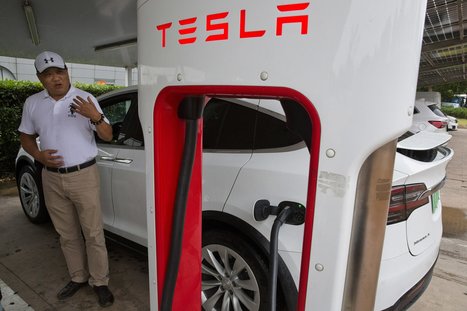
More than 200 manufacturers, including Tesla, Volkswagen, BMW, Daimler, Ford, General Motors, Nissan, Mitsubishi and U.S.-listed electric vehicle start-up NIO, transmit position information and dozens of other data points to government-backed monitoring centers, The Associated Press has found. Generally, it happens without car owners’ knowledge.


The automakers say they are merely complying with local laws, which apply only to alternative energy vehicles. Chinese officials say the data is used for analytics to improve public safety, facilitate industrial development and infrastructure planning, and to prevent fraud in subsidy programs.


.../...


According to national specifications published in 2016, electric vehicles in China transmit data from the car’s sensors back to the manufacturer. From there, automakers send at least 61 data points, including location and details about battery and engine function to local centers like the one Ding oversees in Shanghai.

Data also flows to a national monitoring center for new energy vehicles run by the Beijing Institute of Technology, which pulls information from more than 1.1 million vehicles across the country, according to the National Big Data Alliance of New Energy Vehicles. The national monitoring center declined to respond to questions.

Those numbers are about to get much bigger. Though electric vehicle sales accounted for just 2.6 percent of the total last year, policymakers have said they’d like new energy vehicles to account for 20 percent of total sales by 2025. Starting next year, all automakers in China must meet production minimums for new energy vehicles, part of Beijing’s aggressive effort to reduce dependence on foreign energy sources and place itself at the forefront of a growing global industry.


Philippe J DEWOST's insight:

China has already implemented V2I (Vehicle to Infrastructure) Communications for every automaker and without necessarily car owner's knowledge nor consent.

V2G (Vehicle to Governement) might be next.

Philippe J DEWOST's curator insight, November 30, 2018 12:02 PM

China has already implemented V2I (Vehicle to Infrastructure) Communications for every automaker and without necessarily car owner's knowledge nor consent.

V2G (Vehicle to Governement) might be next.

Scooped by Philippe J DEWOST
October 17, 2018 12:50 PM
Scoop.it!

Amazon patents new Alexa feature that knows when you're ill and offers you medicine

Amazon patents new Alexa feature that knows when you're ill and offers you medicine | cross pond high tech | Scoop.it

Amazon has patented a new version of its virtual assistant Alexa which can automatically detect when you’re ill and offer to sell you medicine.

The proposed feature would analyse speech and identify other signs of illness or emotion.

One example given in the patent is a woman coughing and sniffling while she speaks to her Amazon Echo device. Alexa first suggests some chicken soup to cure her cold, and then offers to order cough drops on Amazon.

If Amazon were to introduce this technology, it could compete with a service planned by the NHS. Health Secretary Matt Hancock said earlier this year that the NHS was working on making information from its NHS Choices online service available through Alexa.

Amazon’s system, however, doesn’t need to ask people whether they’re ill - it would just know automatically by analysing their speech.

Amazon's new patent filing shows an Amazon Echo device which knows when you're ill CREDIT: AMAZON
Adverts for sore throat products could be automatically played to people who sound like they have a sore throat, Amazon’s patent suggests.

The patent filing also covers the tracking of emotions using Alexa. Amazon describes a system where Alexa can tell by your voice if you’re feeling bored and tired, and then it would suggest things to do for those moods.

This futuristic version of Alexa would listen out for if users are crying and then class them as experiencing an “emotional abnormality.”

Philippe J DEWOST's insight:

This insanely smart move will help Amazon enter the healthcare and pharmacy markets and - maybe some day - the personal psycho market. Woody Allen, meet your therapist Alexa...

No comment yet.
Rescooped by Philippe J DEWOST from Leonard
October 9, 2018 12:58 AM
Scoop.it!

Venture Investors 50 List 2018

Venture Investors 50 List 2018 | cross pond high tech | Scoop.it
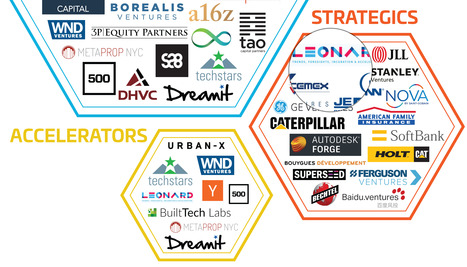
Earlier this year BuiltWorlds released its first ever List highlighting venture investors within the built environment. We saw major names like Brick & Mortar, Tech Stars, and the Autodesk Forge Fund, among other venture funds, accelerators, and strategic investors. It’s time we expand on that.
Philippe J DEWOST's insight:

Proud to join the list. More to come.

Philippe J DEWOST's curator insight, October 9, 2018 12:57 AM

Proud to enter the list. More to come.

Rescooped by Philippe J DEWOST from pixels and pictures
October 5, 2018 2:50 AM
Scoop.it!

Netflix consumes 15 percent of the world’s internet traffic, according to Sandvine's new Global Internet Phenomena Report - and it could be 3x worse

Netflix consumes 15 percent of the world’s internet traffic, according to Sandvine's new Global Internet Phenomena Report - and it could be 3x worse | cross pond high tech | Scoop.it

Video is taking over the internet, but it's never been more obvious than when you look at who's hogging the world’s internet bandwidth.

Netflix alone consumes a staggering 15 percent of global internet traffic, according to the new Global Internet Phenomena Report by bandwidth management company Sandvine. 

Movie and TV show fans are lapping up so much video content that the category as a whole makes up nearly 58 percent of downstream traffic across the entire internet. The report brings us some truly shocking numbers when it comes to the state of web traffic, too. But, at 15 percent all on it’s own, no single service takes up more bandwidth than Netflix.


.../...


What’s perhaps most surprising is that Netflix could dominate even more of the internet’s data if it wasn’t so careful optimizing it’s content. 

According to the study, Netflix could consume even more bandwidth if it didn't so efficiently compress its videos. “Netflix could easily be 3x their current volume," says the report


As a case study, Sandvine looked at the file size of the movie Hot Fuzz on multiple streaming services. The file size for this 2 hour film when downloading via iTunes ranged from 1.86GB for standard definition to 4.6GB for high definition. On Amazon Prime, films of a similar length clock in at around 1.5GB. However, the 120 minute film on Netflix only takes up 459MB.

Philippe J DEWOST's insight:

Seems that Netflix's encoding process is up to 3 times more efficient than competition, without apparently consumers noticing.

Are they using NG-Codec ?

Philippe J DEWOST's curator insight, October 5, 2018 2:48 AM

Seems that Netflix's encoding process is up to 3 times more efficient than competition, without apparently consumers noticing.

Are they using NG-Codec ?

Epic Heroes's curator insight, October 5, 2018 7:18 AM

Netflix consumes 15 percent of the world’s internet traffic

Rescooped by Philippe J DEWOST from Leonard
September 26, 2018 3:23 AM
Scoop.it!

Amazon makes its first investment into a home builder

Amazon makes its first investment into a home builder | cross pond high tech | Scoop.it
Amazon made its first investment in a homebuilding start-up Tuesday, furthering its commitment to the smart home space.
Philippe J DEWOST's insight:

Katerra was the first one ; looks like Deep Pockets are preparing a hold-up on wood and mortar.

Philippe J DEWOST's curator insight, September 26, 2018 1:21 AM

Katerra was the first one ; looks like Deep Pockets are preparing a hold-up on wood and mortar.

Scooped by Philippe J DEWOST
July 24, 2018 9:36 AM
Scoop.it!

Waymo's autonomous cars log 1 million miles in a month

Waymo's autonomous cars log 1 million miles in a month | cross pond high tech | Scoop.it

Waymo, the Alphabet self-driving car company that was spun out of Google, is picking up speed.

The company’s autonomous vehicles just drove 8 million miles on public roads. What’s more, it took the company just one month to go from 7 million miles to 8 million miles driven.

“We’re driving now at the rate of 25,000 miles every day on public roads,” CEO John Krafcik said Friday while addressing the National Governors Association.

Waymo’s acceleration in logging miles with self-driving cars has picked up in the last year. In November 2017, it crossed 4 million miles. Less than a year later it’s doubled that figure.

Most of the miles are being driven in the Phoenix area where the company has been developing and testing an autonomous ride-share service using modified Chrysler Pacifica hybrid minivans. The company plans to launch that ride-share service to the public later this year in Arizona.

Krafcik’s vision for the company is to partner with automakers, cargo operators and public transportation companies so they incorporate Waymo’s technology. Unlike automakers such as General Motors that are developing their own self-driving systems, Waymo has no plans to build its own vehicles.

Instead, Waymo is looking to build “drivers,” systems that can safely steer vehicles without requiring a human to sit behind the steering wheel.

“As we scale our business and have hundreds and thousands of Waymo drivers on the road, each one of those drivers is going to be exactly the same,” said Krafcik. “It’s going to be the world’s most experienced driver.”

Philippe J DEWOST's insight:

Interesting : it looks like Waymo's law it outpacing Moore's law. More interesting, they now log 25.000 miles per day. And even more interesting, they now say "We are driving..."

Philippe J DEWOST's curator insight, July 24, 2018 9:38 AM

“We’re driving now at the rate of 25,000 miles every day on public roads” — We stands for "our Way enabled car fleet" ... 

Richard Platt's curator insight, August 22, 2018 12:20 PM

Waymo, the Alphabet self-driving car company that was spun out of Google, is picking up speed.  The company’s autonomous vehicles just drove 8 million miles on public roads. What’s more, it took the company just one month to go from 7 million miles to 8 million miles driven.  “We’re driving now at the rate of 25,000 miles every day on public roads,” CEO John Krafcik said Friday while addressing the National Governors Association.  Waymo’s acceleration in logging miles with self-driving cars has picked up in the last year. In November 2017, it crossed 4 million miles. Less than a year later it’s doubled that figure.  Most of the miles are being driven in the Phoenix area where the company has been developing and testing an autonomous ride-share service using modified Chrysler Pacifica hybrid minivans. The company plans to launch that ride-share service to the public later this year in Arizona.  Krafcik’s vision for the company is to partner with automakers, cargo operators and public transportation companies so they incorporate Waymo’s technology. Unlike automakers such as General Motors that are developing their own self-driving systems, Waymo has no plans to build its own vehicles.

Instead, Waymo is looking to build “drivers,” systems that can safely steer vehicles without requiring a human to sit behind the steering wheel.  “As we scale our business and have hundreds and thousands of Waymo drivers on the road, each one of those drivers is going to be exactly the same,” said Krafcik. “It’s going to be the world’s most experienced driver.”

Scooped by Philippe J DEWOST
July 20, 2018 2:31 AM
Scoop.it!

Larry Page is quietly amassing a ‘flying car’ empire

Larry Page is quietly amassing a ‘flying car’ empire | cross pond high tech | Scoop.it

One flying car seems absurd; Larry Page has three.

He started with Cora, a two-seater flying taxi, then added a sporty flying boat called Flyer, both developed by a company called Kitty Hawk. And last week, The Vergediscovered a third: Opener, which just came out of stealth mode. There was no mention of the Google co-founder in the startup’s announcement, but when confronted with evidence of Page’s involvement, Opener quickly issued a press release admitting it.

Flying cars (more formally known as eVTOLs — for electric vertical takeoff and landing) are the electric scooters of aviation. Everyone from Uber to Airbus is working to build the lightweight aircraft and the aerial networks they will require, to say nothing of a host of well-funded startups, including Joby in the US, Volocopter in Germany, and China’s EHang.

Page is making his flying car companies compete for attention and funding

Kitty Hawk and Opener are based just a few buildings away from each other in Palo Alto, California, but have almost no contact. In fact, their CEOs have to compete for Page’s attention and funding, according to multiple sources close to the companies.

Workers at Kitty Hawk and Opener don’t know whether Page is simply hedging his bets with multiple aircraft, or embarking on a bold attempt to corner the market for flying cars as it emerges. The reason for multiple companies may be even more prosaic: the leaders of each project reportedly can’t stand each other. Regardless, Page now controls three of the world’s most advanced flying car projects, ahead of rivals like Joby, Uber, and aerospace giant Airbus, whose vehicles remain largely experimental.

Philippe J DEWOST's insight:

Are we really talking flying cars here ? I rather see driving or navigating planes ...

No comment yet.
Scooped by Philippe J DEWOST
July 10, 2018 3:53 AM
Scoop.it!

MIT's Cheetah robot moves by feel to approximate how humans and other animals navigate - without any visual sensor

MIT's Cheetah robot moves by feel to approximate how humans and other animals navigate - without any visual sensor | cross pond high tech | Scoop.it

In a turn away from vision, a team at MIT has created a feline robot that attempts to better approximate how humans and animals actually move, navigating stairs and uneven surfaces guided only by sensors on its feet.

Why it matters: Many ambulatory robots rely on substantial recent improvements in computer-vision, like advanced cameras and lidar. But robots will be more nimble and more practically interact with humans with the addition of "blind" vision — a sixth sense of feeling that most living things have for their surroundings.

What's going on: Computer vision alone can result in a robot with slow and inaccurate movements, says MIT's Songbae Kim, designer of the Cheetah 3.

  • "People start adding vision prematurely and they rely on it too much," Kim tells Axios, when it's best suited for big-picture planning, like registering where a stairway begins and knowing when to turn to avoid a wall. So his team built a "blind" version in order to focus on tactile sensing.

How the blind version works: Two algorithms help the Cheetah stay upright when it encounters unexpected obstacles.

  • One determines when the bot plants its feet, by calculating how far a leg has swung, how much force the leg is feeling, and where the ground is.
  • The other governs how much force the robot should apply to each leg to keep its balance, based on the angle of the robot's body relative to the ground.
  • The sensors can also adjust to external forces, like a researcher's friendly kick from the side.

The result is a quick, balanced robot: The researchers measure the force on each of the Cheetah's legs straight from the motors that control them, allowing it to move fast — at 3 meters per second, or 6.7 miles an hour — and jump up onto a tablefrom a standstill. These tricks make the 90-pound bot look surprisingly nimble.

Cheetah's design emphasizes "sensors that you and I take for granted," said Noah Cowan, director of the LIMBS robotics lab at Johns Hopkins University.

  • Humans unconsciously keep track of where their arms and legs are — and the forces acting on them — to help stay balanced and move smoothly. MIT’s Cheetah “feels” its legs in a similar way.

The Cheetah's capabilities resemble some of the robots produced by the ever-secretive Boston Dynamics, which in May released a video of its four-legged SpotMini navigating autonomously through its lab with the help of cameras.

  • It's not clear whether Boston Dynamic robots use tactile technology like Kim's, and the company did not respond to an email.
Philippe J DEWOST's insight:

It "looks" like machine vision is not necessarily mandatory when it comes to designing efficient "walking" machines.

No comment yet.
Scooped by Philippe J DEWOST
June 22, 2018 7:47 AM
Scoop.it!

US startups are disappearing — and that's bad for the economy —

US startups are disappearing — and that's bad for the economy — | cross pond high tech | Scoop.it

Historically, startups have been the engine of US economy. By creating new jobs and surfacing new ideas, startups play an outsized role in making the economy grow.

It’s too bad they are a dying breed.

While companies that were less than two years old made up about 13% of all companies in 1985, they only accounted for 8% in 2014.

 
A far smaller share of people work for startups

From around 1998 to 2010, the share of private sector workers in companies that were less than two years old plummeted from more than 9% to less than 5%.

 
The startup decline is happening across the economy

A new report from the Brookings Institution, finds that in nearly every industry, from agriculture to finance, the share of new companies is falling.


So what’s going on?

It’s not entirely clear, but the authors of the Brookings report have some ideas.

One possibility: Startups are struggling in this era of rising market concentration. In most industries, since the 1980s, the share of all sales going to the top firms is increasing. Startups may have a hard time competing with these mega firms, which can out pay them for the best talent and sometimes attempt to drive them out of the industry. Previous Brookings research found there are fewer startups in states where a smaller number of companies dominate the market (pdf).

Another related possibility is that the most-educated American workers are no longer attracted to entrepreneurship. In 1992, 4% of 25-54 year olds with a master’s degree or PhD owned a small company with at least 10 employees. In 2017, this was true of only 2.2%. Companies started by the highly educated are often unusually productive.

The Brookings report suggests that high salaries for educated employees at big companies have made entrepreneurship less compelling. Why compete with Google or Walmart when they are offering you an enormous amount of money to come work for them?

Philippe J DEWOST's insight:

According to Quartz, the Data Bureau of Labor Statistics, and a Brookings report, US startups are a dying breed.

No comment yet.
Scooped by Philippe J DEWOST
June 15, 2018 12:14 AM
Scoop.it!

AI could get 100 times more energy-efficient with IBM’s new artificial synapses

AI could get 100 times more energy-efficient with IBM’s new artificial synapses | cross pond high tech | Scoop.it
Neural networks are the crown jewel of the AI boom. They gorge on data and do things like transcribe speech or describe images with near-perfect accuracy (see “10 breakthrough technologies 2013: Deep learning”). The catch is that neural nets, which are modeled loosely on the structure of the human brain, are typically constructed in software rather than hardware, and the software runs on conventional computer chips. That slows things down. IBM has now shown that building key features of a neural net directly in silicon can make it 100 times more efficient. Chips built this way might turbocharge machine learning in coming years. The IBM chip, like a neural net written in software, mimics the synapses that connect individual neurons in a brain. The strength of these synaptic connections needs to be tuned in order for the network to learn. In a living brain, this happens in the form of connections growing or withering over time. That is easy to reproduce in software but has proved infuriatingly difficult to
Philippe J DEWOST's insight:
The human brain consumes 4.2 g of glucose per hour. Neural networks are trying to catch up and silicon might be the next step with a 100x efficiency factor
No comment yet.
Scooped by Philippe J DEWOST
June 5, 2018 1:23 AM
Scoop.it!

Nearly a quarter of Tesla’s Model 3 reservation deposits in the U.S. have supposedly been refunded

Nearly a quarter of Tesla’s Model 3 reservation deposits in the U.S. have supposedly been refunded | cross pond high tech | Scoop.it

Two years ago Tesla began accepting $1,000 deposits for its new, lower-priced Model 3 electric car, with the expectation that customers would likely receive their vehicles in 2018. Hundreds of thousands of people have reserved one.

But perhaps due to extended production delays, many customers have been asking for their money back.

As of the end of April, some 23 percent of all Model 3 deposits in the U.S. had been refunded, according to new U.S. data from Second Measure, a company that analyzes billions of dollars in anonymized credit and debit card purchases.

These cancellations aren’t necessarily bad for Tesla, since its production rate is nowhere near as high as it needs to be to fulfill the more than 450,000 reservations it still has. Last quarter, it delivered just 8,180 Model 3s.


Philippe J DEWOST's insight:

Should I stay or should I go ?

No comment yet.