Your new post is loading...

|
Scooped by
HAS-veille
January 26, 2023 4:29 AM
|
Bivalent Vaccine to Neutralize Omicron Variants Participants who had received three doses of BNT162b2 vaccine received either a fourth dose or a bivalent vaccine containing BA.4–BA.5 mRNA; th
|
|
Scooped by
HAS-veille
January 25, 2023 10:30 AM
|
JCVI makes interim recommendations to government on the COVID-19 vaccination programme for 2023.
|
|
Scooped by
HAS-veille
January 25, 2023 4:10 AM
|
This randomized, placebo-controlled platform trial compares the use of low-dose fluvoxamine (50 mg twice daily) for 10 days compared with placebo in outpatients with mild to moderate COVID-19.
|
|
Scooped by
HAS-veille
January 23, 2023 2:29 AM
|
Background: In February 2021, New Zealand began its largest ever immunisation programme with the BNT162b2 mRNA COVID-19 vaccine. We aimed to understand th
|
|
Scooped by
HAS-veille
January 20, 2023 1:25 AM
|
The acceptability and feasibility of large-scale testing with lateral flow tests (LFTs) for clinical and public health purposes has been demonstrated during the COVID-19 pandemic. LFTs can detect analytes in a variety of samples, providing a rapid read-out, which allows self-testing and decentralized diagnosis. In this Review, we examine the changing LFT landscape with a focus on lessons learned from COVID-19. We discuss the implications of LFTs for decentralized testing of infectious diseases, including diseases of epidemic potential, the ‘silent pandemic’ of antimicrobial resistance, and other acute and chronic infections. Bioengineering approaches will play a key part in increasing the sensitivity and specificity of LFTs, improving sample preparation, incorporating nucleic acid amplification and detection, and enabling multiplexing, digital connection and green manufacturing, with the aim of creating the next generation of high-accuracy, easy-to-use, affordable and digitally connected LFTs. We conclude with recommendations, including the building of a global network of LFT research and development hubs to facilitate and strengthen future diagnostic resilience. The feasibility of large-scale testing with lateral flow tests has been demonstrated in the COVID-19 pandemic. This Review examines lessons learned from the COVID-19 pandemic to inform the design and bioengineering of next-generation lateral flow tests to strengthen future diagnostic resilience.
|
|
Scooped by
HAS-veille
January 19, 2023 5:16 AM
|
Post-acute coronavirus 2019 (COVID-19) syndrome (PACS) is a well-recognized complex
systemic disease that is associated with substantial morbidity. There is a paucity
of established interventions to treat patients with this syndrome.
|
|
Scooped by
HAS-veille
January 19, 2023 4:44 AM
|
This cohort study investigates factors associated with COVID-19 symptoms in the 6 months after infection and compares the frequency of medical encounters before and after infection.
|
|
Scooped by
HAS-veille
January 19, 2023 4:35 AM
|
Effect of Previous SARS-CoV-2 Infection against BA.2.75 Infection A test-negative, case–control study in Qatar showed that previous infection with pre-omicron strains of SARS-CoV-2 conveyed littl
|
|
Scooped by
HAS-veille
January 18, 2023 9:04 AM
|
|
|
Scooped by
HAS-veille
January 18, 2023 8:20 AM
|
The immune system responds more strongly to the strain of a virus that it first met, weakening response to other strains. Can this ‘imprinting’ be overcome?
|
|
Scooped by
HAS-veille
January 18, 2023 4:25 AM
|
medRxiv - The Preprint Server for Health Sciences
|
|
Scooped by
HAS-veille
January 17, 2023 2:15 AM
|
WHO has updated its guidelines on mask wearing in community settings, COVID-19 treatments, and clinical management. This is part of a continuous process of reviewing such materials, working with guideline development groups composed of independent, international experts who consider the latest available evidence and the changing epidemiology.
|
|
Scooped by
HAS-veille
January 16, 2023 1:37 AM
|
A machine learning algorithm identifies four reproducible clinical subphenotypes of long COVID from the electronic health records of patients with post-acute sequelae of SARS-CoV-2 infection within 30–180 days of infection; these patterns have implications for the treatment and management of long COVID.
|
|
|
Scooped by
HAS-veille
January 26, 2023 4:02 AM
|
This report describes how a bivalent mRNA booster dose provided additional protection against symptomatic XBB/XBB.1.5 infection for at least the first 3 months after vaccination in persons who had previously received 2–4 monovalent vaccine doses.
|
|
Scooped by
HAS-veille
January 25, 2023 4:24 AM
|
Background The World Health Organization declared a pandemic of coronavirus disease 2019 (COVID-19), caused by severe acute respiratory syndrome coronavirus 2 (SARS-CoV-2), on March 11, 2020. The standardized approach of disability-adjusted life years (DALYs) allows for quantifying the combined impact of morbidity and mortality of diseases and injuries. The main objective of this study was to estimate the direct impact of COVID-19 in France in 2020, using DALYs to combine the population health impact of infection fatalities, acute symptomatic infections and their post-acute consequences, in 28 days (baseline) up to 140 days, following the initial infection. Methods National mortality, COVID-19 screening, and hospital admission data were used to calculate DALYs based on the European Burden of Disease Network consensus disease model. Scenario analyses were performed by varying the number of symptomatic cases and duration of symptoms up to a maximum of 140 days, defining COVID-19 deaths using the underlying, and associated, cause of death. Results In 2020, the estimated DALYs due to COVID-19 in France were 990 710 (1472 per 100 000), with 99% of burden due to mortality (982 531 years of life lost, YLL) and 1% due to morbidity (8179 years lived with disability, YLD), following the initial infection. The contribution of YLD reached 375%, assuming the duration of 140 days of post-acute consequences of COVID-19. Post-acute consequences contributed to 49% of the total morbidity burden. The contribution of YLD due to acute symptomatic infections among people younger than 70 years was higher (67%) than among people aged 70 years and above (33%). YLL among people aged 70 years and above, contributed to 74% of the total YLL. Conclusions COVID-19 had a substantial impact on population health in France in 2020. The majority of population health loss was due to mortality. Men had higher population health loss due to COVID-19 than women. Post-acute consequences of COVID-19 had a large contribution to the YLD component of the disease burden, even when we assume the shortest duration of 28 days, long COVID burden is large. Further research is recommended to assess the impact of health inequalities associated with these estimates.
|
|
Scooped by
HAS-veille
January 24, 2023 2:18 AM
|
This Special Communication describes the COVID-19 Prevention Network and its contribution to COVID-19 vaccine efficacy trials.
|
|
Scooped by
HAS-veille
January 23, 2023 2:27 AM
|
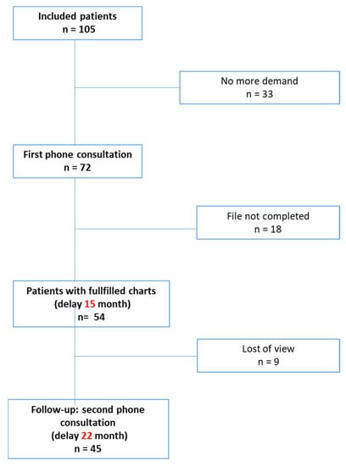
Introduction: Many COVID-19 patients present with severe long-lasting symptoms. They might benefit from a coordination team to manage such complex situations, but late efficacy still needs to be determined. Population and Methods: Out of 105 contacts, 45 patients had two phone consultations separated by personalized support 15 and 22 months, respectively, after COVID infection. Self-reported symptoms, feelings of improvement and ability to return to work allowed us to determine the efficacy of the therapeutic strategy proposed. Results: Unlike what was expected, many post-COVID-19 patients directly contacted the coordination team and had significant pre-existing comorbidities. Despite exercise, respiratory, olfactory rehabilitations, cognition/speech therapy and/or psychological support, the more frequent self-reported symptoms (fatigue, neurocognitive disorders, muscles and joint pain) did not resolve. However, dyspnea, anxiety and chest pain were significantly reduced. Finally, 2/3 of the patients felt some degree of improvement and returned to work either partially or fully, but 1/3 remained complaining of symptoms and out of work as late as 22 months after COVID occurrence. All patients greatly appreciated the second phone consultation. Conclusions: In such complex situations, besides early and adapted rehabilitations and psychological help allowing better symptom management, relatively simple actions such as a phone call might be very useful to reduce patients’ feelings of abandonment.
|
|
Scooped by
HAS-veille
January 19, 2023 10:46 AM
|
The global surge in the omicron (B.1.1.529) variant has resulted in many individuals with hybrid immunity (immunity developed through a combination of…
|
|
Scooped by
HAS-veille
January 19, 2023 4:46 AM
|
In 2021, we showed an increased risk associated with COVID-19 in pregnancy. Since then, the SARS-CoV-2 virus has undergone genetic mutations. We aimed…
|
|
Scooped by
HAS-veille
January 19, 2023 4:38 AM
|
Abstract Background The emergence of immune-escape variants of severe acute respiratory syndrome coronavirus 2 warrants the use of sequence-adapted vaccines to provide protection agains
|
|
Scooped by
HAS-veille
January 19, 2023 4:34 AM
|
Neutralization Escape by Omicron BQ.1.1 and XBB.1 BQ.1.1 and XBB.1 neutralizing antibody titers were lower than those against wild-type strain after boosters in vaccinated and previously infecte
|
|
Scooped by
HAS-veille
January 18, 2023 8:21 AM
|
The SARS-CoV-2 Omicron variant has demonstrated enhanced transmissibility and escape of vaccine-derived immunity. While first-generation vaccines remain effective against severe disease and death, robust evidence on vaccine effectiveness (VE) against all Omicron infections, irrespective of symptoms, remains sparse. We used a community-wide serosurvey with 5,310 subjects to estimate how vaccination histories modulated risk of infection in infection-naïve Hong Kong during a large wave of Omicron BA.2 epidemic in January-July 2022. We estimated that Omicron infected 45% (41–48%) of the local population. Three and four doses of BNT162b2 or CoronaVac were effective against Omicron infection (VE of 48% (95% credible interval 34–64%) and 69% (46–98%) for three and four doses of BNT162b2 respectively; VE of 30% (1–66%) and 56% (6–97%) for three and four doses of CoronaVac respectively) seven days after vaccination. 100 days after immunization, VE waned to 26% (7–41%) and 35% (10–71%) for three and four doses of BNT162b2, and to 6% (0–29%) and 11% (0–54%) for three and four doses of CoronaVac. The rapid waning of VE against infection conferred by first-generation vaccines and an increasingly complex viral evolutionary landscape highlights the necessity for rapidly deploying updated vaccines followed by vigilant monitoring of VE. An analysis of sera samples collected between January and July of 2022 in Hong Kong shows that the effectiveness of both the BNT162b2 and CoronaVac COVID-19 vaccines against SARS-CoV-2 Omicron BA.2 variant infection waned rapidly after the third and fourth doses
|
|
Scooped by
HAS-veille
January 18, 2023 8:19 AM
|
|
|
Scooped by
HAS-veille
January 18, 2023 4:23 AM
|
|
|
Scooped by
HAS-veille
January 16, 2023 2:22 AM
|
Long COVID is an often debilitating illness that occurs in at least 10% of severe acute respiratory syndrome coronavirus 2 (SARS-CoV-2) infections. More than 200 symptoms have been identified with impacts on multiple organ systems. At least 65 million individuals worldwide are estimated to have long COVID, with cases increasing daily. Biomedical research has made substantial progress in identifying various pathophysiological changes and risk factors and in characterizing the illness; further, similarities with other viral-onset illnesses such as myalgic encephalomyelitis/chronic fatigue syndrome and postural orthostatic tachycardia syndrome have laid the groundwork for research in the field. In this Review, we explore the current literature and highlight key findings, the overlap with other conditions, the variable onset of symptoms, long COVID in children and the impact of vaccinations. Although these key findings are critical to understanding long COVID, current diagnostic and treatment options are insufficient, and clinical trials must be prioritized that address leading hypotheses. Additionally, to strengthen long COVID research, future studies must account for biases and SARS-CoV-2 testing issues, build on viral-onset research, be inclusive of marginalized populations and meaningfully engage patients throughout the research process. Long COVID is an often debilitating illness of severe symptoms that can develop during or following COVID-19. In this Review, Davis, McCorkell, Vogel and Topol explore our knowledge of long COVID and highlight key findings, including potential mechanisms, the overlap with other conditions and potential treatments. They also discuss challenges and recommendations for long COVID research and care.
|


 Scoop.it!