


I was wondering why Alcoa (AA) was among the worst performing stocks in the S&P 500 today–only Freeport-McMoRan (FCX), CF Industries (CF) and Symantec (SYMC) are down more–and then a note from Goldman Sachs with the title Aluminium Producers Face...


 Your new post is loading...
 Scoop.it! I was wondering why Alcoa (AA) was among the worst performing stocks in the S&P 500 today–only Freeport-McMoRan (FCX), CF Industries (CF) and Symantec (SYMC) are down more–and then a note from Goldman Sachs with the title Aluminium Producers Face... 
No comment yet.
Sign up to comment
Scoop.it!
Novelis: Automakers test stronger aluminum
MaterialsReview's insight:
Aluminum's growth in the auto industry has been accelerating as a greater number of automakers turn to the lightweight metal to reduce weight, which improves fuel economy and delivers other benefits. But at an industry conference last week in Traverse City, Mich., officials from the steel industry said they have their own new, ultra-high-strength steel grades that can save weight and reduce manufacturing complexity ready for the market. Most aluminum panels, such as those used on Range Rovers and the new Ford F-150, are held together by a combination of rivets and adhesive, which is more complex than spot-welding two steel panels.
Scoop.it!

PerfScience
MaterialsReview's insight:
This project started under the supervision of Kevin Shinpaugh, an adjunct faculty member with aerospace and ocean engineering with an initiative set by the Defense Advanced Research Projects Agency (DARPA, for short). This machine will be put into use to print a "VT" Virginia Tech (one of the seven universities to participate) 3-D logo in space on an unmanned rocket for the first time as stated by Virginia Tech RockSat-X team leader Sebastian Welsh of Chadds Ford, Pennsylvania, and senior in the Department of Computer Science. - See more at: http://perfscience.com/content/2142378-nasa%E2%80%99s-wallops-island-flight-facility-launch-rocket-carrying-student-experiments?__scoop_post=e8cd1e00-4031-11e5-d7ef-90b11c3998fc&__scoop_topic=3833002#__scoop_post=e8cd1e00-4031-11e5-d7ef-90b11c3998fc&__scoop_topic=3833002
Scoop.it!
DETROIT, Jan. 29, 2015 /PRNewswire/ -- The Aluminum Association today released a comprehensive manual that details...
MaterialsReview's insight:
Today, various technologies are used to join aluminum alloy components with other aluminum parts or with dissimilar materials. The number of joining options continues to grow in response to specific design and assembly needs. With the advancement of new, innovative joining technologies, the joining manual arms engineers and designers with a detailed technical reference that outlines the benefits, design implications and potential limitations of each method.
Scoop.it!
Novelis: Automakers test stronger aluminum
MaterialsReview's insight:
Aluminum has been displacing steel on doors, hoods and other hang-on body parts for years. Strong growth is expected as such vehicles as the Cadillac CT6 and the next generation of the Jeep Wrangler use a greater combination aluminum and steel in a mixed-materials approach. But the steel industry is fighting back with massive investments in new grades of steel. In 1960, automakers had just two grades of steel from which to choose. Now, there are more than 200, said Jody Hall, vice president of the automotive market at the Steel Market Development Institute.
Scoop.it!

Muscat, Ferrari was the first manufacturer to introduce the RHT (retractable hard top) on a car of this particular architecture.
MaterialsReview's insight:
Designed around the concept of the retractable hard top, the 488 Spider has a spaceframe chassis made of 11 different aluminium alloys combined with other noble metals, such as magnesium, each one used in a highly specific way. This yields the same torsional rigidity and beam stiffness figures as the coupé, improving the chassis’ performance by 23 per cent over that of its predecessor. An extraordinary result, given that the roof is structural, that is only possible thanks to the expertise of the Scaglietti centre of excellence that engineers Ferrari’s aluminium chassis and bodies.
Scoop.it!

Aluminium products manufacturer says recycling plant will take used aluminium beverage cans and reprocess them back to raw metal
MaterialsReview's insight:
In its results for the year ended December 2014, Hulamin reported a 96% increase in headline earnings per share to 112c compared with the year-earlier period. Operating cash flow surged by 83% to R518m and the company declared a final cash dividend of 25c per share. Looking ahead, Hulamin said it would continue to focus on core competencies and product streams in 2015.
Scoop.it!

Producers are shifting to value-added products with an eye on long-term profits
MaterialsReview's insight:
Among the metals hit hard by the commodity price correction is aluminium. The price of the metal at the London Metal Exchange (LME), which hovered below $1,700 a tonne in early 2014, crossed $2,000 a tonne last August. But it could not hold these levels for long. Since the start of 2015, LME prices have fallen by 12 per cent from $1,800 to below $1,600 a tonne. One reason for this is slackening of demand. Higher supply, especially from China, is also hurting. Besides, the changes in warehouse rules at the LME have helped reduce physical delivery delays.
Scoop.it!

The aviation industry makes use of a massive variety of materials to keep the wonders of air travel alive. Perhaps no other material or substance, however, has contributed more to that cause than a... Via Andrew Law
MaterialsReview's insight:
"Professional aluminium polishing, however, adds the finishing touches. Firms like Badger Anodising typically employ polishing methods that include abrasive compounds, which aim to mechanically remove as much of the corrosive substances as possible. Another method, called anodising, aims to further augment aluminium’s innate defensive barrier by creating a new layer of the aluminium oxide using direct electrical current. All of the aforementioned reasons explain why cars rust more than planes, and why flying is regarded as the safest mode of travel there is. In a general sense, it’s an ode to both nature and man."
Scoop.it!

During your moments of soda drinking, have you ever paused for a little bit and pondered on the can in your hand? If you’re like most people, your answer is probably never, and that is completely u... Via Andrew Law
MaterialsReview's insight:
Metal polishing and anodising techniques offered as a service by companies such as Badger Anodising (Birmingham) Ltd are one of the main reasons why aluminium products have stuck around. For one, the widespread use of aluminium cans have brought forth a booming industry—currently, aluminium cans make about 85 to 90 percent of the multipack market for soft drinks, primarily through grocery stores. Beer cans come in close second, contending with glass containers. All in all, aluminium products are here to stay. They might seem commonplace, but a deeper look at their history and uses reveals proof of humanity’s ingenuity which has served society well for several decades—and possibly many more.
Scoop.it!
Contact : Jason Wang Email:xintian102@xtlaser.com Cell(Whatsapp): +86 15288856453 Skype:xtlasermachine Wechat:feiyuyishouzhe2012 QQ:2237961517 ...
MaterialsReview's insight:
Incredible video of firber laser engraving aluminium
Scoop.it!

Werkzeuge aus Aluminium haben eine geringere Dichte und eine höhere Wärmeleitfähigkeit als Stahlwerkzeuge. Dennoch werden sie im Spritzgießen fast nur für die Herstellung von Prototypen verwendet. Untersuchungen zeigen, dass Aluminium unter bestimmten Bedingungen auch in der Serienfertigung eine interessante Alternative zu Stahl sein kann.
MaterialsReview's insight:
Die im Aluminiumwerkzeug gefertigten Formteile weisen dagegen einen geringeren Verzug auf als die Teile aus der Stahlform. Hier wirken sich die geringeren Ausgangstemperaturen zu Zyklusbeginn und die schnellere Wärmeabfuhr des Aluminiumwerkzeugs positiv aus. Die Verzugswerte für Polyamid liegen bei Verwendung des Aluminiumwerkzeugs leicht über denen der Prüfkörper aus dem Stahlwerkzeug. Bei PE-HD ist es umgekehrt. Das Verzugsverhalten der beiden amorphen Vertreter zeigt keinen signifikanten Unterschied zwischen Stahl und Aluminium als Werkzeugwerkstoff.
Scoop.it!

China exported 2.5 million tonnes of unwrought aluminum and aluminum products in the first half of this year. That was 35 percent, or 650,000 tonnes, higher than the same period of 2014. Most of
MaterialsReview's insight:
GLOBAL SURPLUS MADE IN CHINA China's exports of "fake semis" are "the major driver" of lower aluminum prices, according to Klaus Kleinfeld, Alcoa chairman and CEO, talking to analysts on the company's Q2 financials conference call. What irks Alcoa and other non-Chinese producers is the fact that they have been steadily shuttering capacity only to see the resulting supply-demand deficit filled by Chinese exports. The company has revised upwards its estimate of global surplus this year by 400,000 tonnes to 760,000 tonnes. But the headline figure masks two very different market dynamics. In the world outside China Alcoa forecasts a deficit of 1.465 million tonnes. In China itself, though, the outlook is for a surplus of 2.227 million tonnes. China is exporting that surplus in the form of semi-manufactured products. If they were all genuine products, Alcoa would be less concerned.
Scoop.it!

Alcoa shares have struggled, but its business model is running full steam ahead.
MaterialsReview's insight:
The automotive industry has also been a solid long-term performer for Alcoa, and even though the company's near-term estimates for growth prospects in the industry aren't as strong as for aerospace, it's clear that automotive applications have huge potential for future expansion. Many see automotive customers as primarily a midstream opportunity for Alcoa, with the company having grown its automotive-sheet production capacity through initiatives like its Davenport plant expansion. Automotive-sheet revenue nearly tripled year over year in the second quarter. Moreover, advanced technology that went into producing Alcoa's Micromill material allows customers to build components and parts that are easier to form and substantially lighter than similar high-strength steel products, all while making the production process more efficient on Alcoa's end. Alcoa investors probably won't see a big immediate impact from the automotive sector, with the company calling for just 2% to 4% global growth in sales and North American sales climbing just 1% to 4%. Yet with more manufacturers looking to integrate lighter-weight materials into their products, the auto sector remains a core focus for Alcoa in its efforts to maximize its revenue.
Scoop.it!

Alcoa, like UC Rusal and other producers, has benefited from the physical delivery premium on top of the LME quoted prices in recent years particularly as, at times, the LME price has been below the cost of production. The addition of the delivery premium has allowed Western smelters to break even and even post profits while achieving no more than the traditional LME price would have given them at a loss.
Scoop.it!
ThyssenKrupp has already invested in a service center at Bengaluru in South India for material processing of aluminum and titanium used in the manufacture of aircraft. The current revenue size of India’s aerospace business is nothing to write home about, but it is expected to grow because of the decisions made by the government.
Scoop.it!

Steel is the dominant material in automobile manufacturing, accounting for roughly 60% of the weight of an average automobile. [3]
Scoop.it!
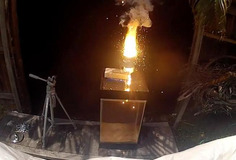
His latest concoction is one of his simplest. He decided to test what happens when you drop a bunch of different molten metals like aluminum, lead and tin into a tub of water. Typically they turn into frozen globs of hardened metal, but the very end of the experiment when he lights a batch of thermite on fire and throws it in the tank is worth the wait, giving a beautiful light show suspended in water.
Scoop.it!

The GLC is longer than the Audi Q5 at 182.6 inches but shorter than the 190.3-inch Cadillac SRX. Despite the larger dimensions, the GLC weighs 176 pounds less than the GLK because of extensive use of aluminum and high- to ultra-high-strength steels. Almost all of the driver-assistance systems have come from the C-, E- and S-class cars as standard or optional.
Scoop.it!

The world’s longest man-made surfing wave is set to open in north Wales, marking the transformation of a heavily polluted aluminium works into a lake serving up six-foot barrels once a minute.
Scoop.it!

The $60 million factory in Abu Dhabi in the United Arab Emirates will have capacity to produce 50,000 metric tons of aluminum rod and overhead conductors annually, says Andrew Shaw, managing director of Dubai Cable. The project, called Ducab Aluminium Co., will create 120 to 140 jobs with its opening planned for the first quarter of 2016, he said.
Scoop.it!
Work began nearly five years ago to make Ford Mexico’s manufacturing plants landfill-free. Nearly 45 tons of cafeteria waste now are composted and reused by farmers to improve agricultural growth and community green areas surrounding the plants. Solvents are recycled and scrap aluminum is collected for reuse – creating closed-loop systems.
Scoop.it!
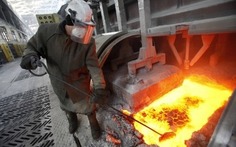
China Hongqiao Group, which is poised to surpass Russia's Rusal as the world's biggest aluminium producer, plans to spend 10 billion yuan on building power plants and expanding smelting capacity in China and on projects in Indonesia and Guinea
Scoop.it!
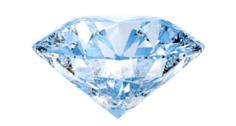
The jewelry craft is among the oldest on earth, with pieces dating as far back as 130,000 years ago. Adorning the body with jewelry is one of the oldest methods of displaying wealth, power and beliefs. The jewelry business has traditionally been very conservative, changing slowly with the emergence of new materials such as aluminum and plastic. As the cost of gold increased during the past decade, alternative materials, such as stainless steel and cork, have been utilized.
Scoop.it!

Technology advancement: Technological innovations are making far-reaching changes in field of construction. MIVAN technology or aluminum formwork system has replaced conventional technology in today’s construction and housing segment. This extremely progressive technology is a revolutionary innovation that gives structural stability to high-rise buildings in case of lateral movements, seismic and wind forces. It reduces construction and labour time and doubles the life of a building.
|
|







During 1H14, the ex-China aluminium market tightened after seven years of surplus, following a long period of painful production cuts, largely by producers outside of China. This period of tightness and strong ex-China pricing proved short-lived following a ramp-up in Chinese semi-fabricated aluminium exports (underpinned by low-cost supply growth and weak domestic demand), which effectively filled the ex-China deficit. This, together with the bearish 3Ds of macro (Deleveraging, Deflation and Divergence), drove US and European ‘all-in’ aluminium prices down by a third over the past year, or c.$850/t, to trade around c.$1,720/t, their lowest level since the 2008/09 financial crisis, and prior to that since 2003.