 Your new post is loading...

|
Scooped by
MaterialsReview
September 3, 2015 3:24 AM
|
Norway-based aluminum maker Norsk Hydro ASA plans to install new equipment for ultrasonic testing of foundry products from the extrusion ingot casthouse in Karmøy, Norway, the company announced in August.
With the new equipment in place, together with a newly installed ceramic filter, the company says its Karmøy facility hopes to strengthen its position as supplier of advanced aluminum alloys to the automotive industry.
“Automakers are using aluminium in an increasing number of components to reduce vehicle weight to meet the strict emission requirements introduced by governments in Europe and other parts of the world. Particularly the metal used in safety-critical parts requires documented high quality. It is this market we are now aiming for,” says the plant manager at Hydro Karmøy, Trond Olaf Christophersen.
Hydro says the ceramic filter removes unwanted elements from the metal, thereby increasing purity. Ultrasonic testing takes place after the casting process, providing quality control and documentation, explains casthouse manager Asle Voll.
“Automakers set strict requirements for us to document that there are no flaws in the ingots we produce. While we have previously only had equipment to manually test ingots, we can now test the entire cross section of the products using an automated process,” Voll says.
Hydro has installed similar equipment at its recycling plant in Rackwitz, Germany. The testing is carried out by several ultrasonic probes scanning the ingot while it moves forward in a rotating motion. In this way the entire cross section of the cylindrical ingot is examined. The data from the testing is then stored and made available to customers upon delivery.
“Leading automakers require that we use ultrasonic testing if, for example, we want to deliver metal for the suspension on their cars. We expect that more and more will follow suit with similar requirements,” says Andreas Skodvin, who is responsible for marketing, sales and customer relations for extrusion ingot for the European market.
Hydro also says it is making investments in Høyanger and Årdal, Norway, aimed at the automotive industry. By installing flexible and adjustable molds (AFM), the casthouses are able to supply ingots of alloys that were not possible to produce with existing equipment. This metal typically ends up in the hoods or side panels of vehicles, while the metal from Karmøy is used in extruded parts such as bumpers, piping systems and posts, Hydro says.
The company says that including the investments in Årdal, Høyanger and Karmøy, Hydro has over the last 18 months invested over NOK 100 million in the Norwegian casthouse system to meet the growing demand for aluminium from the automotive industry. This is in addition to €130 million Hydro is investing in a new production line for automotive parts at the rolling mill in Grevenbroich, Germany.
The implementation of ultrasonic testing in Karmøy is scheduled for completion in the second quarter of next year.
|
|
Scooped by
MaterialsReview
September 1, 2015 7:15 AM
|
Unfair Chinese aluminium trading is killing the European industry and, if the country is given market economy status by the European Union, it could have a catastrophic impact on EU jobs and production, warns Gerd Götz.
Gerd Götz has been the director general of European Aluminium since 2013. Before that he was in charge of professional and public affairs at Philips and headed the company’s European affairs office in Amsterdam. He spoke to EurActiv deputy news editor James Crisp.
What challenges is China posing to the aluminium industry in Europe?
Since the beginning of this year there has been double digit growth in imports to Europe from China. About 50% of global aluminium is produced in China. In the past when you look at the growth strategy of China, you could see this was consumed domestically. But now that growth in China is slowing down, there is suddenly overcapacity. Other regions, such as Europe, would bring down their capacity but China is exporting it into the world economy.
We are talking about production of 28 million tonnes of aluminium in China and ten million of that is overcapacity. In Europe we have a primary production of two million – so you can see why the industry, companies, unions, everybody is really alarmed about the situation.
And this is new aluminium being extracted and created rather than recycled aluminium?
We are talking about new aluminium.
Doesn’t that have an environmental impact that the Chinese need to take into consideration given the commitments they have made on global warming?
The carbon footprint of Chinese aluminium is certainly different to it in other regions. China exports aluminium with a footprint that is not helping our ambitious environmental and low carbon economy goals in Europe.
|
|
Scooped by
MaterialsReview
September 1, 2015 3:20 AM
|
Defra has implemented three alterations to the existing protocol which can be applied retrospectively from 1 January 2015 or the date at which the reprocessor/exporter originally applied for accreditation. The changes should provide a more accurate reflection of the proportion of aluminium that is being recovered and recycled following concerns from recycling body Alupro that the current packaging recovery note (PRN) system was undermining recycling data. A minimum of 70% of the mixed non-ferrous metals recovered from IBA are now considered to arise from aluminium packaging. This follows detailed studies of tested samples which showed the original 50% specification was under-representing recycled tonnages. In addition, some metal reprocessors under the previous system were applying the 50% figure to the aluminium fractions that had been recovered from mixed ferrous metals. Exporters or UK recyclers of aluminium recovered in this way will now be able to issue export PRNs (PERNs) based on 87.5% of the total recovered aluminium fraction.
|
|
Scooped by
MaterialsReview
August 31, 2015 11:30 AM
|
Aluminium is one of the world’s most sustainable building materials, up to 90% of aluminium used in construction today is recycled, using 95% less energy to manufacture than at primary production.
This not only reduces carbon emissions but also the life-cycle costing of a building, delivering significant savings, whilst reducing environmental impact.
Through responsible sourcing and intelligent design we have ensured that AluK products meet and exceed our partners’ environmental needs. All aluminium systems can be supplied using 100% recycled aluminium, if required for a specific project.
Aluminium does not age like other organic materials and needs no protection from ultra-violet light. It’s overall life-cycle is more environmentally friendly due to the minimum energy required in maintenance and the well established, proven design life of aluminium assures that it will provide a long term solution year on year with the guarantee of 100% recyclability at the end of a building’s life.
|
|
Scooped by
MaterialsReview
August 31, 2015 2:59 AM
|
The Aluminium Packaging Recycling Organization, Alupro, recently commissioned a research project to investigate the suitability of the Packaging Recovery Note (PRN) system for recording aluminum packaging recycling to reveal the actual recycling rate in the UK. Alupro has repeatedly voiced concerns to Defra and the Environment Agency (EA) about the inherent weaknesses in the PRN system. The research was carried out by independent environmental consultancy, Resource Futures, which aimed to determine how much aluminum packaging is reprocessed or exported beyond that reported by the accredited organizations.
Alupro has now released a statement, following approval from Defra and the Environment Agencies, revisions are being introduced to the protocol which accounts for aluminum packaging recovered from incinerator bottom ash (IBA).
Three revisions to the protocol are designed to obtain a more accurate rate of the aluminum packaging currently being recycled in the UK or exported for recycling.
|
|
Scooped by
MaterialsReview
August 28, 2015 10:01 AM
|
China is trying to push its two biggest aluminum businesses together as part of a planned shake-up of state-owned enterprises (SOEs), industry sources said, a move that would create the world's largest aluminum maker. Power company State Power Investment Corp (SPI) is in talks to hive off its aluminum assets to Aluminum Corp of China (Chinalco), allowing SPI to focus on power construction and generation, three industry sources told Reuters. The consolidation is shaping up as a test of Beijing's ambitions to restructure its vast but underperforming state-owned sector, particularly at a time of slowing economic growth.
|
|
Scooped by
MaterialsReview
August 28, 2015 4:52 AM
|
USA-based Diversified Plastics is enhancing its prototyping capabilities with a new Objet260 Connex 3D printer – a move it says will help its customers bring products to market quickly and cost effectively.
The company, which was founded in 1977 and specialises in injection moulding for a range of sectors, purchased the printer from Stratasys to meet customers’ constantly changing needs.
|
|
Scooped by
MaterialsReview
August 27, 2015 3:09 AM
|
The 7th International Aluminum Congress and ExpoAlumínio 2016, accompanied by ALUMINIUM Brazil, will be held at the São Paulo Expo Exhibition & Convention Center in São Paulo, Brazil, on June 7-9, 2016. Brazilian and global industry professionals, academic representatives, and researchers will gather together at the International Aluminum Congress to showcase the latest technological breakthroughs in aluminum production, processing and recycling, the applications of this metal in the major consumer markets, and address the huge challenges for the segment, both in Brazil and globally.
|
|
Scooped by
MaterialsReview
August 26, 2015 6:37 AM
|
Because extrusion is one of the most important aspects of 3D printing, having a variety of nozzles to choose from is important. And Performance 3-d makes the obvious point that it doesn’t seem right for users to be limited only to brass nozzles. With that in mind, they are now also offering high-heat transfer aluminum and tool steel, which they promise is “tough as nails.” While they are busy developing a range of sizes, right now these nozzles are available in .4mm and .6mm.
|
|
Scooped by
MaterialsReview
August 25, 2015 3:03 AM
|
he folks at the Steel Market Development Institute (SMDI) dropped me a line to point out that advanced high-strength steels (AHSS) are responsible for significant performance improvements and weight reductions in current vehicle platforms.
The 2016 Chevrolet Malibu for example uses AHSS to allow a four-inch wheelbase stretch while cutting 300 pounds of weight compared to the 2015 model.
|
|
Scooped by
MaterialsReview
August 24, 2015 2:25 PM
|
The Department for Environment, Food & Rural Affairs (Defra) is taking steps to improve compliance of aluminium reprocessors after the number of aluminium packaging waste recovery notes (PRNs) issued in the UK failed to meet statutory business targets for 2015.
|
|
Scooped by
MaterialsReview
August 20, 2015 3:04 AM
|
An innovative surface engineering process, which allows manufacturers to improve the material properties of lightweight alloys, is reducing wear on 737 landing gear components.
Operating an airline is an expensive business. Every time a plane is on the ground for maintenance work, it costs the operator money but, with lives at stake if components don’t operate effectively, the price of failing to maintain aircraft properly is even higher.
|
|
Scooped by
MaterialsReview
August 20, 2015 2:55 AM
|
The government on Wednesday said the demand by primary producers to raise import duty is a "tricky" case as the move will help the bigger players -- Hindalco, Balco, Nalco and Vedanta -- but may hurt smaller firms that import scrap.
The Ministry is reviewing the case for increasing import duty on aluminium and has met with both the primary producers as well as the small companies who import aluminium scrap for various purposes.
|
|
Scooped by
MaterialsReview
from Aluminum
August 18, 2015 11:42 AM
|
Simplified Assemblies with New Aluminum
The reduction or elimination of mixed-metal construction in automotive bodies significantly reduces the fastening and assembly challenges in current mass production.
For example, Cadillac uses flow drive screws for significant portions of their small car platform. Although robotics has dramatically reduced the cost of mechanical fastening, the old axiom in the automotive industry, “never use a screw where a spot weld will do,” is still true today.
Even advanced structural adhesives work best when gluing together materials with similar coefficients of thermal expansion. And galvanic corrosion can never rear its head between bonded metals of the same material.
Stamping aluminum sheet has never been easy, but the combination of Ford’s successful experience with the F150 program and modern simulation software makes it work. This software reduces the number of iterations of tooling needed to accommodate spring back and the unique flow properties of light alloys under pressure.
|
|
Scooped by
MaterialsReview
August 18, 2015 11:40 AM
|
Simplified Assemblies with New Aluminum
The reduction or elimination of mixed-metal construction in automotive bodies significantly reduces the fastening and assembly challenges in current mass production.
For example, Cadillac uses flow drive screws for significant portions of their small car platform. Although robotics has dramatically reduced the cost of mechanical fastening, the old axiom in the automotive industry, “never use a screw where a spot weld will do,” is still true today.
Even advanced structural adhesives work best when gluing together materials with similar coefficients of thermal expansion. And galvanic corrosion can never rear its head between bonded metals of the same material.
Stamping aluminum sheet has never been easy, but the combination of Ford’s successful experience with the F150 program and modern simulation software makes it work. This software reduces the number of iterations of tooling needed to accommodate spring back and the unique flow properties of light alloys under pressure.
Die metal casting is a technique used for designing and producing engineering machineries through injection of molten metal in a mould under high amount of pressure. As soon as the molten metal is injected into the mould, the die-casting machine is pushed down onto it to form the required part.
Durability, accuracy and repeatability are some of the best advantages provided by die casting in manufacturing, as they make it easier and more productive. The details are clearer, there is consistency in dimensions and textures of the manufactured parts are really smooth. Different types of materials are used for die metal casting such as aluminium, copper, steel, zinc, etc. Among all of them, aluminium is considered as the best material for die metal casting.
Benefits of aluminium die metal casting
There are various benefits of aluminium die casting in manufacturing which makes it the most favourable option for manufacturer. Some of them are listed below:
• It is lightweight, highly durable and strong.
• It has high stability when it comes to dimensions.
• It can be effectively used for producing complex designs.
• It has very high thermal and electrical conductivity.
• It can be machined easily.
Uses of aluminium casting
Aluminium casting has found several applications in agriculture, military, construction, automotive industries, electrical industries and marine as well as boating market.
Manufacturing of aluminium casts
Cold-chamber machines are used for creating aluminium casts where a special furnace is used for melting the metal and it is, then transferred to a specific unheated chamber. Hot chamber machines are not used here because of the iron present in them, which can affect the aluminium casts.
Lastly, aluminium castings come in different sizes and shapes depending upon different requirements of various industries. They are durable and flexible, which make them one of the most used materials in the engineering fields. The best part about aluminium casting is that you can give it any shape you want.
Via xiamenstick
From cookware to aircraft equipment, aluminium’s durable and lightweight nature makes it a preferred material in many industries for various applications. With the technology to anodise aluminium, products made of this metal offer benefits to the environment, while acquiring stronger surfaces for longer usage. Anodising also makes aluminium products safer to human health, with non-toxic and heat-resistant features.
Compared to other surface coatings like paint, the anodising process utilises minimal harmful materials like heavy metals and volatile organic compounds (VOC’s). Anodising also improves the aluminium alloy’s resistance to corrosion by creating a thin yet tough finish. Aluminium’s conducting abilities combined with the insulation of anodic coatings are also effective energy solutions for electrical functions like circuits and wiring.
Metal polishers and anodising companies like Badger Anodising (Birmingham) Ltd. also offer secondary infusions for anodised products like colour anodising using standard colours. Aluminium may also be made to look like stainless steel by employing any of these techniques: sulphuric acid-anodising, hard anodising and chromium anodising. When done by the best anodisers, finished products made in anodised aluminium can be expected to conform to the highest quality standards.
In anodising, the aluminium alloy has to undergo either of two processes–coil or batch anodising, each given to a particular type of product. As the term suggests, batch anodising involves submerging parts into different treatment tanks per batches, commonly done for cookware, cosmetic cases, extrusions, and similar types of products.
Meanwhile, in coil anodising, pre-rolled coils are constantly unfolded through a course of etching, anodising and cleaning tanks, after which the coils are rewound for shipment. This method is mostly done for items used in construction, such as continuous roofing systems and lighting fixtures.
Despite distinct purposes, both processes require five stages: cleaning, pre-treatment, anodising, colouring and sealing. Surface characteristics, including the thickness of the coating, are strictly regulated and controlled to conform to given specifications. After the anodic film or coating is integrated with aluminium, colour may be added through techniques that include integral colouring, electrolytic colouring, interference colouring or organic dyeing.
Having gone through all those procedures, anodised aluminium products’ highly-resistant structures are capable of providing longer services with low maintenance and operating costs. The anodising process also influences the overall aesthetics of the finished products, allowing for enhanced lustre and colour while maintaining their original metallic appearance.
Via Andrew Law
|
|
Scooped by
MaterialsReview
August 18, 2015 8:00 AM
|
The Global Aluminium Industry Report 2015 is a professional and in-depth study on the current state of the Aluminium industry. Major companies included in this study are Aluminum Co. of America, Aluminum Corp. of China Ltd, Rio Tinto Alcan Inc. and United Co. RUSAL plc.
The report provides a basic overview of the industry including definitions, classifications, applications and industry chain structure. The Aluminium Market analysis is provided for the international markets including development trends, competitive landscape analysis, and key regions development status.
The report focuses on global major leading industry players providing information such as company profiles, product picture and specification, capacity production, price, cost, production value and contact information.
Upstream raw materials and equipment and downstream demand analysis is also carried out.
The Aluminium industry development trends and marketing channels are analyzed. Finally the feasibility of new investment projects are assessed and overall research conclusions offered.
With 155 tables and figures the report provides key statistics on the state of the industry and is a valuable source of guidance and direction for companies and individuals interested in the market.
|
|
Scooped by
MaterialsReview
August 18, 2015 7:55 AM
|
Alba's Manager - Sales Europe, Boris Santosi received the award on behalf of the Company during a ceremony held at the Hilton Birmingham Metropole Hotel, at the
|
|
Scooped by
MaterialsReview
August 14, 2015 7:23 AM
|
The smartphone battery of the future should be loaded in a few minutes and keep for three days.
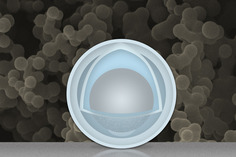
Charging cable lying on the bed and on the desk, the battery pack stuck in backpack: The biggest weakness of smartphones and -watches is and remains the battery. Hardly any device plays in normal use by an entire day. Loads not to be, is usually no later than the afternoon or evening final. Researchers at the Massachusetts Institute of Technology to solve the problem: They have developed a lithium-ion battery, which not only loaded much faster, but with a load of between three and four times as long to hold out as the major energy storage in today's devices , The secret are small balls of aluminum particles, in which the energy is stored. If the battery is charged, the balls expand, he empties, they fall in on itself. But because the beads float in a bath of electrolyte, unlike conventional batteries only the aluminum core is changing itself, which consists of polymorphic titania shell remains unchanged. This is to prevent damage that otherwise lead over time to a reduced battery capacity even after hundreds charging cycles. The use of aluminum oxide nanoparticles as electrode ensures addition to a significantly higher density than conventional batteries that usually put on graphite. In the same room can be so more energy can be stored. However, the conversion of the metal into nanoparticles is complicated, to mass production, it should therefore take time. Team leader Li Ju are nevertheless confident that we can keep costs down in the medium term. The production is easily automated and can therefore be quickly ramped up.
Until then create the new batteries in smart phones and watches, we have to make do with smaller advances. The Nipper, the smallest charger in the world, should at least talk to ensure that we carry around no clunky battery packs longer with us. The device can be worn on a key ring and is simply clamped if necessary to two commercially available AA batteries, to revive the smartphone. The hook: 30 minutes Charging provides the device only an emergency charge of ten to 40 percent - and does not work with the iPhone so far.
|
|
Scooped by
MaterialsReview
August 13, 2015 2:53 AM
|
In this video, Kaiser Aluminum reports that recent aluminum industry reports indicate a continued rise in aluminum extrusion demand, expanded use of aluminum in mainstream SUV applications, aluminum’s contribution to better vehicle safety ratings,...
|
|
Scooped by
MaterialsReview
August 13, 2015 2:51 AM
|
ALUMINIUM 2016 is the international meeting place for suppliers of raw material, semi-finished and finished products, surface treatment and producers of machinery, plant and equipment for aluminium processing and manufacturing. Light-metals trade, consultancy and expert opinions. ALUMINIUM no. 1 aluminium industry event worldwide.
|
|
Scooped by
MaterialsReview
August 13, 2015 2:45 AM
|
The Eleventh International Aluminum Extrusion Technology Seminar and Exposition (ET ’16), hosted by the Aluminum Extruders Council (AEC) and the ET Foundation, will take place May 2-6, 2016 in down...
|
|
Scooped by
MaterialsReview
August 13, 2015 2:36 AM
|
ALUMINIUM 2016 is the international meeting place for suppliers of raw material, semi-finished and finished products, surface treatment and producers of machinery, plant and equipment for aluminium processing and manufacturing. Light-metals trade, consultancy and expert opinions. ALUMINIUM no. 1 aluminium industry event worldwide.
|
|
Scooped by
MaterialsReview
August 12, 2015 2:24 AM
|
Source: ThinkstockThe 2% devaluation of the renminbi (yuan), announced early Tuesday morning by the People’s Bank of China, is playing havoc with commodity prices and, as we might expect, commodity producers.
|
|

















The company says that including the investments in Årdal, Høyanger and Karmøy, Hydro has over the last 18 months invested over NOK 100 million in the Norwegian casthouse system to meet the growing demand for aluminium from the automotive industry. This is in addition to €130 million Hydro is investing in a new production line for automotive parts at the rolling mill in Grevenbroich, Germany.