 Your new post is loading...

|
Scooped by
MaterialsReview
October 5, 2015 9:07 AM
|
Aluminium recycling is part of Europe’s wider Aluminium industry, a sector of the economy that generates almost €40 billion revenue a year and directly or indirectly employs more than one million people. Aluminium’s many properties place it at the heart of Europe’s ambition to build a circular economy.
Aluminium is infinitely recyclable. It remains essentially unchanged no matter how many times it is processed and used. Therefore, it can be considered as a material with permanent characteristics, one that is not consumed, but used over and over again, without the loss of its essential properties.
The association “European Aluminium” represents the aluminium industry in Europe. It encompasses primary aluminium producers, downstream manufacturers, producers of recycled aluminium and national aluminium associations representing the manufacturers of rolled and extruded products in 18 European countries.
Page in extremis is glad to have participated in the creative development and the graphical production of the brochure entitled “Recycling Aluminium: A Pathway to a Sustainable Economy”.
The result is a vibrant publication which was made within an intimate creative dialogue framework involving the Belgian communication agency’s creative team and European Aluminium’s communication team.
The communication agency has defined a very accurate process including a monitoring and quality check particularly suited to provide maximum comfort to its clients and the best results.
Page in extremis is specialised in corporate and institutional communication. The communication agency creates and refreshes corporate and institutional brands and develops digital and classic media.
|
|
Scooped by
MaterialsReview
October 5, 2015 3:34 AM
|
HAWESVILLE, Ky. — Century Aluminum says about 250 employees will remain working at its Hawesville Smelter in western Kentucky.
The Messenger-Inquirer (http://bit.ly/1WBmpjC ) reports in a statement Wednesday, the company said that the plant will continue operating at about 40 percent capacity after Oct. 24. Company officials had originally planned to shut down the smelter on that date, citing a stagnant aluminum market and low prices for Chinese aluminum.
The company now says it will keep two pot lines operating at the plant.
Century Aluminum's spokesman Kenny Barkley says the company would monitor the economy and the price of aluminum to determine if the two pot lines would continue operating.
Barkley says the company believes it can still operate with two pot lines and be profitable.
|
|
Scooped by
MaterialsReview
October 5, 2015 3:32 AM
|
Stocks finished last week higher with the both the Dow Jones Industrial Average DJIA, +1.23% and the S&P 500 index SPX, +1.43% gaining 1%, snapping a two-week trend of declines. The Nasdaq Composite Index COMP, +1.74% gained 0.5%.
Another quarter of earnings declines is predicted for the S&P 500, but investors have seen this game before.
The previous two earnings seasons started and ended in a similar way: Forecasters were calling for the first year-over-year decline in S&P 500 earnings in five years only for companies to beat traditionally lowered forecasts and show a net year-over-year rise for the respective quarters.
This time around, the bounce back could fall short of the mark, said Sam Stovall, U.S. equity strategist at S&P Capital IQ, in a recent note.
“This quarter, however, while actual Q3 EPS results will likely come in ahead of estimates, the depth of the predicted Q3 EPS shortfall implies that this third successive quarterly estimate for a first negative reading since Q3 2009 may finally come true,” said Stovall.
Stovall estimates a 4.6% decline in S&P 500 earnings over the year ago period because of a drop in earnings from the energy sector. Seeing that actual earnings results have outperformed forecasts by an average of four percentage points over the past 14 quarters, the third-quarter bounce back could fail to make it into a net gain.
An even sharper decline of 5.1% is seen by John Butters, senior earnings analyst at FactSet. One positive trend, however, going into this earnings season is that fewer companies have issued profit warnings while more companies have forecast earnings that have been higher than consensus estimates, Butters said.
With only 76 companies in the S&P 500 issuing profit warnings for the third quarter, that is the fewest number of companies issuing them since the second quarter of 2012, Butters noted.
If S&P 500 earnings live up to those healthier-than-usual forecasts, that would a welcome sign to investors who got battered in the third quarter and are looking for stronger fundamentals in stocks as they navigate the prospect of a volatile October. After all, one thing the correction achieved was lowering price-to-earnings ratios.
While forward 12-month P/E ratios for the S&P 500 are still above average, they did drop considerably over the third quarter. The current forward 12-month P/E is 15.1x—above the 10-year average of 14.1x—but lower than their level of 16.4x at the beginning of the third quarter, according to Butters.
Four other S&P 500 companies report earnings this week in addition to Alcoa Inc. AA, +2.81% : PepsiCo PEP, +0.33% Monsanto Co. MON, +1.43% Yum Brands Inc. YUM, +2.17% and Constellation Brands Inc. STZ, +1.11%
With a light week of economic data ahead, Fed watchers will be looking to parse the release of minutes from September’s Federal Open Market Committee on Thursday as another FOMC meeting looms near the end of October.
|
|
Scooped by
MaterialsReview
October 2, 2015 5:35 AM
|
Lightweight construction represents one of the greatest opportunities and prospective growth areas for the fibre composites industry. Demand in Europe is on the rise, and the sector is looking to the future with optimism – especially in Germany, a hub of innovation with above-average increases in the production of lightweight materials. The positive mood was reflected as well at the 10th COMPOSITES EUROPE, where the anniversary event from 22 to 24 September 2015 set new records all around – in terms of exhibitors, visitors and exhibition space.
The trade fair for fibre-reinforced plastics has been on an uninterrupted growth path ever since the event first took place. COMPOSITES EUROPE 2006 kicked things off with 168 exhibitors. When the event cycled back to Stuttgart this year for the tenth anniversary, 470 companies (prior Stuttgart event in 2013: 405) from 29 nations exhibited and filled three exhibition halls for the first time. With 10,087 visitors in attendance (2013: 9,171), COMPOSITES EUROPE set yet another record.
Drawn to the Exhibition Centre in Stuttgart above all were lightweight construction experts from the automotive sector, aerospace, mechanical engineering, the sports and leisure industry, wind power, and the construction sector.
LWhat’s more, COMPOSITES EUROPE has long been known as an important gathering place for the international industry: nearly half of all trade fair visitors (45%) came from outside Germany, with one in eight (13%) hailing from overseas. “Over the last ten years, COMPOSITES EUROPE has built an inclusive cross-sectoral network, which today benefits the entire composites industry. In this function, it is one of the most important international relationship brokers today”, says Hans-Joachim Erbel, CEO of Reed Exhibitions Deutschland GmbH, the organiser of COMPOSITES EUROPE.
Composites market continues to grow in 2015
Glass-fibre reinforced plastics (GFRP) make up the composites industry’s largest group of materials by far, with a share of over 95% of the total volume. GFRP production is on track to grow by 2.5% in 2015, reaching the highest level in eight years with an estimated 1.069 million tonnes. That’s the finding of the current market report issued by the German reinforced-plastics industry association AVK, which was presented in Stuttgart. Thermoplastic materials such as GMT and LFT are posting above-average growth rates. In addition to developing new products, researchers are focussed on multi-material composites systems in structural components. “The development of multi-material systems beyond individual materials groups remains one of the biggest challenges for the composites industry”, says Dr. Elmar Witten, the managing director of AVK. Thorsten Kühmann, the managing director for plastics and rubber machinery at the VDMA’s Forum Composite Technology, underscores that assessment: “Lightweight and smart – modern components for user industries must be both. COMPOSITES EUROPE is very well positioned in this area today.
Germany still top growth market The highest growth rates are being posted by the composites industry in Germany: the largest market for fibre-reinforced plastics in Europe is set to grow by 6% in 2015, followed by the Eastern European countries (4%) and UK/Ireland (3%). The main purchasers continue to be the transport and construction sectors, followed by the electrical/electronics industry, and the sports and leisure industry. Trade fair visitors are also confirming the excellent economic prospects enjoyed by fibre-reinforced composites: 72% of respondents expect their respective sectors to experience upward economic momentum in the next three to four years. Only 18% forecast their industry to stagnate.
COMPOSITES EUROPE puts spotlight on lightweight construction
A representative survey of trade fair visitors has shown that lightweight construction represents one of the biggest challenge areas for the industries that use fibre-reinforced plastics. About half consider lightweight construction a priority when it comes to developing innovative components, followed by the reduction of materials costs, automation and shorter process cycles.
Supplementing the exhibition area at COMPOSITES EUROPE was an extensive congress and lecture programme that provided an outlook on the future of lightweight construction. Two new events premiered at COMPOSITES EUROPE: the 1st International Composites Congress (which succeeded the former AVK Conference) and the bio!CAR Conference. “COMPOSITES EUROPE is an indispensable market staple. The response has been excellent again this year. We consider COMPOSITES EUROPE our trade fair partner – now and in future.”, says Dr. Elmar Witten, the management spokesman of Composites Germany.
Parallel event HYBRID Expo on the ascent
The significance of multi-material composites – metal-plastic hybrids, in particular – in the automotive engineering and electronics sectors was also on display at the parallel event HYBRID Expo, which was staged for the second time in Stuttgart. A total of 70 international exhibitors, including many major industry players from mechanical engineering, toolmaking and R&D as well as numerous complete-solutions providers, presented the entire process chain for the large-scale manufacturing of hybrid components. A special focus at the trade fair was on process integration and acceleration during the production of metal-plastic composites. A total of 2,962 visitors attended this year’s HYBRID Expo.
COMPOSITES EUROPE 2016 back in Düsseldorf
The next COMPOSITES EUROPE will cycle back to Düsseldorf and take place from 29 November to 1 December 2016 – this time again as a parallel event to the ALUMINIUM World Trade Fair. A combined total of approximately 1,500 lightweight construction exhibitors is expected for both trade fairs. The VDMA’s Thorsten Kühmann emphasises that the annual rotation of the location is appealing to the lightweight construction sector: “The targeted industry focus in Stuttgart and the cross-material event tie-in with ALUMINIUM in Düsseldorf are ideal for us and for our industry.
Note: The visitor, exhibitor and floor space figures of this trade fair are calculated and certified according to the uniform definitions published by FKM – German Society for Voluntary Control of Fair and Exhibition Statistics.
Partner and exhibitor statements: “COMPOSITES EUROPE is an indispensable market staple. The response has been excellent again this year. We consider COMPOSITES EUROPE our trade fair partner – now and in future.”
Dr. Elmar Witten, Managing Director, AVK / Management Spokesman, Composites Germany
“The rising demand for light and smart materials are driving lightweight construction into the new dimension of mass production. COMPOSITES EUROPE is the innovation hub for the composites industry – right at the heart of the most important market for lightweight construction materials in Europe.”
Prof. Roberto Frassine, President, EuCIA
“Lightweight and smart – modern components for user industries must be both. COMPOSITES EUROPE is very well positioned in this area today.It places the focus on our customers and offers exactly those lightweight construction solutions the industry is looking for. The targeted industry focus in Stuttgart and the cross-material event tie-in with ALUMINIUM in Düsseldorf are ideal for us and for our industry.”
Thorsten Kühmann, Managing Director, Plastics and Rubber Machinery, Forum Composite Technology, VDMA
“COMPOSITES EUROPE is a key trade fair for mechanical and plant engineering to present the latest developments. Besides established processes in duromer production, which are getting more and more suitable for large-scale manufacturing, we see great momentum and matching growth rates in the area of thermoplastic composites systems. In this context, process combinations for hybrid lightweight construction are gaining steadily in importance. On the international level, it’s becoming apparent that investment needs are increasing, especially on the Chinese market.”
Dr. Walter Begemann, Project Director, VDMA Forum Composite Technology
“Over the last ten years, COMPOSITES EUROPE has built an inclusive cross-sectoral network, which today benefits the entire composites industry. In this function, it is one of the most important international relationship brokers today.”
Hans-Joachim Erbel, CEO, Reed Exhibitions Deutschland GmbH, Organiser of COMPOSITES EUROPE
“We are highly satisfied again. It’s very important that we meet global players at COMPOSITES EUROPE. What we really enjoy is the opportunity here to talk with key people about the composites market. Given the internationalisation of the composites market, it’s really wonderful that we have a trade fair that alternates locations between Düsseldorf and Stuttgart, bringing key players to the venue. That’s why we’re still happy to be at COMPOSITES EUROPE.
Besides the European markets, we currently see increasing potential in Asia and the US. Impulses for developments in the areas thermoplastics and thermosets are still – and increasingly – being generated in Germany. From our fibre composites competency centre in Munich, we can meet the needs of every lightweight construction trend.”
Stefan Fenske, Product & Technology Management, KraussMaffei Technologies GmbH
“We’re very pleased with COMPOSITES EUROPE. We’ve made several international contacts from everywhere, i.e. from Europe to the US. That’s why the trade fair was a complete success for us.”
Gert Laarakker, Domestic & Int’l Sales, J.H. VOM BAUR SOHN GMBH & Co. KG
“A big success. Visitor quality has increased. With three halls, the trade fair is very well positioned this year. The quality of COMPOSITES EUROPE is improving with each passing year.”
Michael Stahl, Director Corporate Marcom & Public Affairs, Hexion GmbH
“For us as a developer and manufacturer of composite materials, COMPOSITES EUROPE provides an ideal platform for welcoming our customers to discussions at our exhibition stand. In conjunction with the PDA, we’re able to present our products in live applications. Taking into account also the Composites Forum and the opportunity to present our product innovations in lectures, we consider this a well-rounded event.”
Lothar Kempf, Managing Director, BÜFA Composite Systems GmbH & Co. KG
“This is already GUNNAR’s sixth time at COMPOSITES EUROPE. We’re honoured and delighted to be a part of the event again. First off, it’s nice to see that the trade fair is growing year after year – each year brings amazing improvements. Second, it’s also nice to see that it’s a mix of industry meeting place and innovative gathering spot for people who truly want to make decisions, i.e. entrepreneurs and technical directors, people who come to see the equipment, the solutions, who want to have explanations and who are also willing to invest in this technology.”
Thomas Schwarz, Marketing Director, GUNNAR
“COMPOSITES EUROPE is another great success for us. We held excellent talks. That’s great. The trade fair reflects how innovative the industry is and at the same time offers us the benefits of the German market. That’s why we like to come here. We look toward the future with optimism.”
Christian Fuchs, Managing Director, CrossLink Faserverbundtechnik GmbH & Co. KG
“We’re very satisfied with the trade fair. This was already our third time here, and we’re very pleased with the visitor response. We don’t just meet production equipment manufacturers here at this marketplace but also end customers and adhesives manufacturers – and that’s very interesting for us. We think the composites industry is very attractive, especially its growth rates – not just in lightweight automotive construction but also in other sectors where lightweight construction and composites are becoming more and more prominent.”
Michael Lachner, Managing Director, intec Bielenberg GmbH & Co. KG
“COMPOSITES EUROPE is very important to us. We are very excited to be here this year again. Specifically because of the quality of traffic. For example last year we were able to convert two contracts of leads generated right here at the COMPOSITES EUROPE. That’s why we this year decided to launch our brand new 3D Laser equipment with our new US-Partner at the Stuttgart Show.”
Stefan Dragitsch, Managing Director, JETCAM Composite GmbH
|
|
Scooped by
MaterialsReview
October 2, 2015 3:31 AM
|
At the Frankfurt Auto Show a few weeks ago there were dozens of cool new cars, reveals, and concepts. Of all the interesting things at the show though, there were few things as different or advanced as the Mercedes-Benz Concept IAA. IAA stands for intelligent aerodynamic automobile, and it gives just a hint at what this car can actually do. One of the hard parts of creating a very aerodynamic automobile is that the shapes and forms required make a car extremely impractical for street use. When you compound the fact that the car only has to be aerodynamic when its moving at speed, most automakers design cars to be more useful, and little less aerodynamically efficient.
Well Mercedes-Benz just solved that problem by making a car that changes its shape as you drive to cut more cleanly through the air.
Across the car there are various pieces of body work that expand and protrude to more effectively funnel air around the car. The most noticeable is the rear tail that extends in a dramatic fashion from the back. This elongates the car and reduces drag and turbulence coming off the rear. In the front there are also side canards that extend laterally away from the fender to reduce turbulence around the side of the car.
Being a fancy Mercedes concept car, there is also a wild and luxurious cabin design that is certainly worth a closer look. Click the link below to go to our full gallery where we have 17 high-resolution photos for you to enjoy. If you are interested in more information, we have included the full Mercedes-Benz press release from Frankfurt below.
Digital transformer The Mercedes-Benz “Concept IAA” (Intelligent Aerodynamic Automobile) is two cars in one: an aerodynamics world champion with a Cd value of 0.19 and a four-door coupé embodying irresistible design. The study, which is celebrating its world premiere at the Frankfurt International Motor Show, switches automatically from design mode to aerodynamic mode when the vehicle reaches a speed of 80 km/h, whereby numerous aerodynamics measures alter the shape of the vehicle. Inside, the “Concept IAA” continues the design line of the S-Class and S-Class Coupé, offers new touch-based functions and provides an idea of what the interior of a business saloon might look like in the near future.
At the touch of a button, or automatically on reaching a speed of 80 km/h, the Mercedes-Benz “Concept IAA” (Intelligent Aerodynamic Automobile) performs a fascinating transformation in which the captivatingly beautiful four-door coupé turns into an aerodynamics world champion: eight segments extend at the rear, increasing its length by up to 390 millimetres; front flaps in the front bumper extend by 25 mm to the front and 20 mm to the rear, improving the air flow around the front end and the front wheel arches; the Active Rims alter their cupping from 55 mm to zero; and the louvre in the front bumper moves 60 mm to the rear, improving the underbody air flow. “Fascinating and technically sophisticated cars form the core of Mercedes-Benz. The ‘Concept IAA’ applies intelligent innovations to resolve the conflicting aims of functionality and aesthetics and shows that we still have plenty of ideas on how to achieve further improvements in efficiency,” says Prof. Dr Thomas Weber, Member of the Daimler Board of Management responsible for Group Research and Head of Mercedes-Benz Cars Development.
Equally, the “Concept IAA” exemplifies the fundamental technological changes which are taking place in the automobile industry. The primary driving force behind this process of change is digitisation – commonly referred to in a business context as “Industry 4.0″. For Mercedes-Benz, a continuous digital process chain from research and development through production to marketing and sales, logistics and the service area is already becoming reality.
The design and aerodynamic shaping of the “Concept IAA” would not have been possible without the systematic digital networking of different specialist departments. The designers have employed the latest algorithmic design methods to handle the complex geometric design. The individually adapted software enables dynamic design in three-dimensional space. This dynamic modelling makes it possible to display and model different states simultaneously. The resultant highly complex geometries were turned into reality with the aid of innovative production technologies (rapid prototyping).
The world-beating aerodynamics were developed in parallel with the aid of numeric flow simulation. In around one million CPU hours, the aerodynamics experts from Mercedes-Benz simulated the flow characteristics, calculating some 300 variants. This roughly corresponds to the scope of work involved in developing a production model.
The “Concept IAA” also offers a look into the future in areas which are not apparent at first glance. The study features Car-to-X technology, for example, which enables the study to communicate with other vehicles or other sources of information. This represents a major advance in helping to avoid accidents, as obstacles or events which are not visible to the vehicle itself can be detected – the “Concept IAA” is able to look around the corner, as it were. With this and its interior and operating concept, the “Concept IAA” also offers a foretaste of the business saloon of the near future.
Exterior design: sensual purity and innovative aerodynamics With its dynamic basic shape (“drop shape”), elegantly purist overall design and aerodynamic innovations, the four-door “Concept IAA” Coupé Saloon is a symbiosis of design and aerodynamics. The vehicle interprets classic sports car proportions in a modern vein: the long bonnet flows aerodynamically into the compact, set-back greenhouse, whose roof slopes down elegantly towards the rear, ending in an airflow break-away edge.
The vehicle’s elegant side view combines a purist, long basic volume with highly pronounced wheel arches. The sporty, minimalist front of the show car boasts a striking “shark nose” profile. Like the front, the show car’s rear end also presents a clear-cut and purist appearance. As on the front grille, horizontal louvres lend structure to the shape of the rear end. An illuminated ring running around the rear end adds the finishing touch to the high-tech appearance. “The ‘Concept IAA’ continues our series of visionary concept cars,” explains Gorden Wagener, Head of Design at Daimler AG. “The symbiosis of alluring forms showcasing intelligent aerodynamics is an expression of our unique Mercedes-Benz design philosophy.” The interior: touch-based operating philosophy The interior of the “Concept IAA” combines stylish sportiness with modern luxury. The interior continues the design line of the S-Class and S-Class Coupé while providing an idea of what the interior of a business saloon might look like in the near future. The choice of colours and materials conjures up extrovert contrasts between anthracite and white as well as between aluminium and cut glass. Elegantly curved forms, flowing lines, carefully chosen high-quality materials and the touch-based operating philosophy provide for a high level of functionality.
The two-spoke steering wheel is a progressive further development of the Mercedes-Benz steering wheel philosophy. The open structure of its horizontal spokes is highly intricate in design, as a manifestation of intelligent and elegant lightweight construction. The steering wheel also incorporates touch-based operating functions, offering great functionality in the most compact dimensions as a study in perfect ergonomics: OFN (Optical Finger Navigation) buttons, embedded in the clusters in a similar hovering manner as the touchpad in the centre console, enable the driver to scroll through the instrument cluster menus. The OFN button on the left controls the left-hand display, while the button on the right controls the right-hand display. In this way, the “hands on the wheel, eyes on the road” operating philosophy which has been applied by Mercedes-Benz for many years now is implemented in a manner which is at once brilliantly simple and uncompromising.
“Captivatingly sporty lines, fascinating technical solutions: the ‘Concept IAA’ symbolises the emotional core of Mercedes-Benz: The best or nothing. And it shows in a host of details what our customers can look forward to in future production models,” says Ola Källenius, Member of the Board of Management of Daimler AG, Mercedes-Benz Cars Marketing & Sales, summing up the visionary concept. The “Concept IAA” is 5040 millimetres long (5430 mm in aerodynamic mode), 1995 mm wide and 1305 mm high. Its wheelbase measures 2975 mm, and the front/rear track widths are 1710 and 1770 mm respectively. The concept car is powered by a petrol/electric plug-in hybrid drive with a total output of 205 kW (279 hp). This provides it with a top speed of 250 km/h (electronically limited). CO2 emissions and electric range depend on the mode in which the vehicle is tested: in aerodynamic mode the “Concept IAA” manages an all-electric range of 66 kilometres and emits 28 g CO2 per km.In design mode the range stands at 62 km and CO2 emissions at 31 g per km. As urban driving is accorded a two-thirds weighting in the current New European Driving Cycle (NEDC), the advantage of aerodynamic mode is not revealed as clearly in this test as in real-life driving. Real-life fuel savings are all the greater, however – in keeping with Mercedes-Benz’s customer-oriented “Real Life Efficiency” philosophy.
The “Concept IAA” show car forms part of a long line of aerodynamically perfected vehicles from Mercedes-Benz. With a dimensional concept that makes it suitable for everyday use, this four-seater attains a Cd value of 0.19, assuring it of a place in the gallery of record-breaking and racing vehicles such as the Mercedes-Benz W 25 record-breaker of the 1936 season. At present the models from Mercedes-Benz occupy the top position for aerodynamics in practically every vehicle segment. In 2013 the Mercedes-Benz CLA attained a Cd figure of 0.22 – marking a new all-time low both within the Mercedes-Benz model portfolio and amongst all series production cars. For more information on Mercedes-Benz Cars, or to find your nearest retailer, visit www.Mercedes-Benz.co.uk
|
|
Scooped by
MaterialsReview
October 1, 2015 9:30 AM
|
GARMCO has awarded a contract worth $47 million to Fives to build a new state of art casthouse at GARMCO’s Bahrain based facilities.
The Re-melt Project is an EPC (Engineering, Procurement & Construction) Turn-Key project, which will enable GARMCO to develop its metal recycling capability and lower the cost of metal casting. The project will run for a duration of approximately 21 months, starting September 2015. The first stage has already commenced and is being managed internally by GARMCO with the support of a local supplier. This stage consists of the construction of a scrap storage area and segregation unit. The new project, once complete, will enable GARMCO to produce 120,000 tonnes of aluminium slabs.
H. E. Mr. Bernard Regnauld-Fabre, Ambassador of France to Bahrain, and Mrs Valerie Montane, the Commercial Counsellor, attended the signing ceremony (pictured) as the guest of honours. GARMCO has also invited the project’s financier – Ahli United Bank to join the ceremony.
|
|
Scooped by
MaterialsReview
October 1, 2015 4:01 AM
|
You read right, dear readers – MetalMiner unveiled its forecast of average 2016 prices for aluminum, copper, nickel, lead, zinc, tin and hot-rolled and cold-rolled steel yesterday, and you may be surprised that we’re more bearish than the big banks (the Standards, Macquaries, Goldman Sachses and the like) and their 2016 average price forecasts.
And all of these average price forecasts can be yours…as soon as our Annual Metal Buying Outlook is published and ready for download. (Hint: it could drop as early as the end of this week. We’ll update this post with the link to the report, so bookmark us!)
As far as MetalMiner’s departure from the banks’ forecasts, co-founder and editor-at-large Stuart Burns had this to say recently: “It’s definitely a bullish tone that bank and senior research analysts have taken…in our view, there’s still plenty of excess capacity out there, demand is weak, and the dollar is strengthening,” and those factors, ultimately, may make many of the banks’ forecasts turn from bullish to bearish sooner rather than later.
We’re not the only ones on the block with a bearish outlook – just yesterday, the WTO released updates on its 2015 and 2016 global trade outlook. According to their full release, WTO economists have lowered their forecast for world trade growth in 2015 to 2.8%, from the 3.3% forecast made in April, and reduced their estimate for 2016 to 3.9% from 4.0%.
WTO Trade Forecast Revised Downward
Some main takeaways:
The same exact things we at MetalMiner have been hammering home. Falling import demand in China, Brazil and other emerging economies; falling prices for oil and other primary commodities; and significant exchange rate fluctuations drove the revisions downward. (What’d we tell ya?!) Also, the WTO goes so far as saying, “Risks to the forecast are firmly on the downside, the most prominent being a further slowing of economic activity in developing economies and financial instability stemming from eventual interest rate rises in the United States.”
China, China, China. Globally and regionally, China’s lower economic growth rates and falling demand have really upset the apple cart. According to the WTO, Asian export and import growth for 2015 has been revised down as slower growth in Chinese imports has reduced intra-regional trade. Also, China’s struggling import demand plays a big role in world merchandise trade volume, which is expected to rise only 2.8% in 2015 – lower than the previous estimate of 3.3%.
Trade took H1 2015 hits – just like the overall commodities and metals sectors. As the WTO puts it, “At the time of our last forecast in April 2015, world trade and output appeared to be strengthening based on available data through 2014 Q4. However, results for the first half of 2015 were below expectations as quarterly growth turned negative, averaging ‑0.7% in Q1 and Q2.” Yep, the first half of 2015 was definitely not great for the metals sector, either.
For more on what US and global construction sector indicators can tell us, make sure you check out my colleague Jeff’s rundown today.
|
|
Scooped by
MaterialsReview
October 1, 2015 2:31 AM
|
A wonder of its day, the first aluminium military vessel, a torpedo boat, caused a quiet stir when it appeared in the Thames. But the wonder-metal had later problems
A visit to Engineer Towers 110 years ago would have caught our predecessors in a state of excitement most atypical of the Victorian gentlemen. London was aflap, it seems, over the exhibition of a boat in the Thames which appeared to defy the norms of military craft design. As yet unnamed, this was a torpedo boat which a Poplar-based shipbuilder called Yarrow & Co had built for the French Navy. “Ten tonnes with steam up and coal in the bunkers; twenty and a half knots speed; 300 horsepower. Ten years ago — perhaps five years ago — the man who suggested the possibility of producing a boat which could live in a sea and satisfy the conditions embodied in the lines above would have been regarded as a lunatic by those who had not watched the progress of events,” the journal expounded breathlessly.
The boat’s secret was that it was made from aluminium; indeed at 60ft (18.2m) long and 9ft3in (2.8m) across the beam it was not only the largest aluminium ship ever made at that point, it was the largest aluminium structure of any kind.
Aluminium was by no means a new material in 1894; it had first been isolated in 1825. But it had long been something of a curiosity. It was so difficult to produce in the 1850s and 60s that it was more valuable than gold, and in 1884 the largest piece ever cast was installed as the capstone for the Washington Monument in the US (it weighed 2.8kg, and 30g of the metal cost more than an average day’s wages). In 1893 the first ever cast aluminium sculpture was installed in London; it’s still there, in Piccadilly Circus (universally known as Eros, even though it’s actually called The Angel of Christian Charity and was never intended to depict Eros). But even that isn’t large, so for a whole boat to appear a mere year later made from this fabled lightweight metal must have been a curiosity indeed.
The vessel was a second-class torpedo boat, a type designed to be carried on the deck of a larger warship and launched at need, so lightweight construction was a necessity.
The Engineer reported that Yarrow had carried out extensive tests on aluminium, whose structural properties were then little known; and had determined that to increase its tensile strength it had been determined hat it was best alloyed with 6 per cent of copper. The article states that the hull weight was two tons; about half that of a comparable steel boat; moreover, the beam was 9inches wider than a British 60ft boat. It had cost about £1000 more than a steel boat (which an online calculator tells us is a little under £91,000 in today’s money) but was 3.5knots faster. It was also extraordinarily quiet: ‘On Saturday she was run at a variety of speeds from dead slow up to the highest available, and at none was the slightest vibration to be felt in any part of the boat forward, aft or amidships,” it noted: . “The only species of the kind was a sort of purring thrill.” While steel magnified every sound on a boat, aluminium seemed to deaden it: “The new metal acting very much like wood.” This would give it unheard-of stealth opportunities, it added.
The Engineer proclaimed the boat “the best torpedo boat of the size that has ever been produced.” Later reports are patchy; it appears that it was named La Foudre and some reports suggest that it suffered from corrosion. In any case, the use of aluminium was adopted by Navies worldwide as a superstructure material, but this was relatively shortlived. The metal does not respond well to heat; despite its perception as a relatively inert material, it is highly chemically reactive in in the wrong circumstances highly flammable. Moreover, at high temperatures it loses strength rapidly. The US Navy stopped using it for superstructure after a missile cruiser called USS Belknap collided with an aircraft carrier in 1975 and caught fire, with its superstructure being completely destroyed. Although it is sometimes reported that the Royal Navy’s HMS Sheffield, which sunk during the Falklands war in 1982, burned because it was made of aluminium, this is in fact not true: Sheffield had all-steel hull and superstructure, and the fire which doomed it resulted from an Exocet missile damaging its firefighting systems. The Royal Navy in fact also abandoned aluminium structure in the 1970s after several shipboard fires.
|
|
Scooped by
MaterialsReview
September 30, 2015 7:30 AM
|
Economical, environmentally friendly aluminium melting technology has always been the prime focus of ZPF therm Maschinenbau GmbH since it was established. Since November 2013, these tried-and-tested and continuously improved melting furnaces are being produced under the name ZPF GmbH. The first installation was already delivered in February, not entirely by chance to a customer who is still operating six first-generation ZPF furnaces from 1993 - to Metallwerk Friedrich Deutsch GmbH, market leaders for ski edges and a major supplier to the automotive industry. Due to their positive experience and satisfaction with the furnace engineering from Siegelsbach in the past, the decision was taken to continue the working relationship with the new ZPF company. Meanwhile, the plant is running at full capacity and has already proven to be exceptionally economical.
The metal-working factory Friedrich Deutsch in Innsbruck is primarily known for its pre-shaped and partly pre-finished steel edges for the ski and sport industry. In addition, the company manufactures pressure die-cast aluminium components for all the prominent car producers in Europe – several thousand tonnes of material are melted at their mill every year. So far, this work has been done by six melting and holding furnaces from ZPF therm in 24-hour continuous operations. “An expansion was, however, necessary for capacity reasons”, explains Hubert Tilg, manager of the die-casting division. “Because we were absolutely satisfied with the existing furnaces and they offer an excellent price-performance ratio as well, it was clear that we would again opt for ZPF.” A further factor was that, because of their familiarity with these melting facilities, the staff at the metal working factory can continue to carry out most of the maintenance work on the new furnace themselves.
In only three months, the required installations were manufactured in Siegelsbach in the state of Baden-Wuerttemberg and delivered to the customer. The system consists of an aluminium melting furnace with a melting capacity of 1,500 kg/h and a holding bath for 5,000 kg, an attached charging machine, and a 17” filtering furnace for cleaning the molten metal. “Thanks to its size, the new melting furnace yields much better energy values and is thus even more economical than the previous systems,” says Mr Tilg. “Apart from that, the larger charging system doesn’t need to be loaded so frequently, a further factor which reduces energy consumption and increases performance.”
Saves energy and reduces emissions thanks to special construction
ZPF furnace engineering aims generally at keeping the energy consumption as low as possible and implements flue gas reversal to achieve this. With this principle, instead of the hot flue gases from the melting process being discharged straight away, they are routed inside the furnace in such a way that their heat can be used to hold the molten aluminium at a high temperature. In addition, the combustion chamber made of refractory concrete acts not only as a separating layer between the aggressive liquefied aluminium and the outer shell of the furnace, but also as insulation, reducing the emission of heat to the surroundings and functioning as an energy accumulator. It is consequently much easier to keep the temperature inside the furnace at a constant level. In combination with the waste gas recirculation, the fuel requirement is very low making the furnace particularly efficient and environmentally friendly. At the same time, the longer route of the waste gases inside the melting system brings about lower emission values since practically all pollutants are burnt in the post-combustion process at over 800 °C. This means that ZPF installations can be used without flue gas filters.
Besides this, ZPF technology also has an impact on the melting quality and on the maintenance costs: the waste gases remaining inside the furnace generate a slight overpressure which prevents any additional oxygen from entering. The adverse reaction of oxygen with aluminium – which would cause corundum to form in the melt and on the inside walls - can consequently be kept at a very low level. This technique achieves both a higher degree of purity in the liquefied aluminium as well as reducing damage to the refractory walls, thus avoiding expenditure for relining and repairing the plant.
Contract is continuation of long-standing business relationship
The melting furnace has been working to full capacity without any problems since being commissioned in February. “We already have one of the first – if not the first – furnace made by the former company ZPF therm, and that is still in operation today. And we will continue working very closely with ZPF”, explains Michael Deutsch, CEO of Metallwerk Friedrich Deutsch. “ZPF is a partner with true ‘handshake reliability’ with whom you can go through the ups and downs of life. As a result of the new ownership, our confidence has increased even further.” The company is already considering ordering a further furnace in the medium term as an additional safeguard for the event of breakdowns.
Metallwerk Friedrich Deutsch GmbH was founded in Innsbruck in 1947; the core business at the time was welding engineering. In 1957, the factory started producing metal components for the ski and sports equipment industry in which the company has since become a market leader. In addition, the aluminium die-casting segment was established which today supplies sophisticated components to the automotive industry throughout Europe. Altogether about 250 people are employed in both divisions of the metal-working company.
In 2013, ZPF GmbH emerged as the successor of ZPF therm Maschinenbau GmbH, which was founded in 1993. Like the former company, ZPF GmbH focuses mainly on the development and construction of highly efficient aluminium melting furnaces. In addition, the product range includes chip melting and holding furnaces. The installations are produced in Siegelsbach in Baden-Wuerttemberg and pre-assembled to the greatest possible extent before being shipped to metal-working enterprises worldwide.
|
|
Scooped by
MaterialsReview
September 30, 2015 3:07 AM
|
Alcoa Inc.’s plans to split into two publicly traded companies isn’t expected to be completed until the second half of 2016, but that won’t stop it from looking to the future, which may mean some big acquisitions down the road.
Dividing the upstream and downstream businesses will draw attention to the company’s sum-of-the-parts valuation, but Michael Gambardella at J.P. Morgan doesn’t think that represents real value creation. The analyst thinks the plan could lead to modestly higher overhead costs and won’t generate any savings.
He suggested Alcoa would be wise to take a second step and combine the upstream business with another large aluminum producer, which should create significant additional value in a depressed metal price environment.
“This potential value creation could occur from significant cost cutting opportunities with greater scale and better market conditions from supply cuts, and potentially from further consolidation activities triggered by such a transaction,” Gambardella told clients. Alcoa tried to do this in 2007 when it made a hostile offer for Alcan Inc., which was eventually bought by Rio Tinto Group.
The analyst thinks a similar-sized producer, including Rio Tinto’s aluminum business, would be a good fit for Alcoa.
“This previous offer by Alcoa leads us to believe that Alcoa potentially thought that the Alcan aluminum assets (now the majority of Rio Tinto’s aluminum assets) were the best fit in the industry with its own upstream assets,” Gambardella said.
He noted that Alcoa could also consider a partnership with upstream producers such as South 32, Norsk Hydro ASA, Rusal and Aluminum Corp. of China Ltd. (Chalco) However, the analyst doesn’t think a transaction with Rusal or Chalco would get regulatory approval from the governments of Russia and China, respectively.
“Of all these companies, we think Rio’s assets stand out as most likely, in our view, given its past history and scale,” Gambardella said, adding that a merger could generate meaningful synergies.
He believes the big challenge in such a deal would not be overcoming anti-trust issues, but getting Rio Tinto and Alcoa to agree on the value of the assets being contributed to the new upstream joint venture, as well as who would manage and control the combined entity.
“However, we don’t believe these problems would be insurmountable and believe the rewards would outweigh the risks for both companies especially given the currently depressed market environment,” he said.
In terms of what this might mean for the aluminum and related markets, he believes the resulting cost reductions would put pressure on other companies to consolidate in order to compete more effectively, and that could lead to greater supply discipline.
|
|
Scooped by
MaterialsReview
September 29, 2015 2:44 AM
|
Stocks of global metal producers are being hammered due to the meltdown in prices. The BSE Metal index is down over 35 per cent since the start of 2015. Among those worst hit is aluminium major Hindalco Industries (Hindalco) whose stock price has been cut by half over this period.
The stock’s poor performance was due to a few reasons. One, aluminium prices are down over 20 per cent in the last year and the metal forms the mainstay of the company’s revenue. Over-supply from China could lead to continued price pressure in the near term. Two, operational performance of its Indian units in the June quarter was weak.
While metal production increased nearly 40 per cent year-on-year, profits slipped due to lower realisations, aggravated by higher input costs, depreciation and interest expenses.
The management has indicated that profitability impact may last for a few more quarters.
Three, the company’s US subsidiary, Novelis, which contributes 50 per cent of its consolidated revenue, reported lacklustre results in the June quarter. Sales dipped 2 per cent Y-o-Y and the subsidiary reported a loss.
Falling aluminium prices may continue to dent profits due to inventory losses in the near term. But after the fall in price, Hindalco’s stock is inexpensive. The stock trades at 0.4 times its estimated 2015-16 book value.
This is much lower than that of global peers such as Rusal and Alcoa (trading at 0.7 to 0.9 times price to book) and local peer Nalco (trading at 0.6 times price to book). It is also lower than its historic price-to-book ratio of about one time in the last five years.
Shareholders can remain invested as the near-term negatives seem to be priced in and the company’s long-term prospects remain strong.
A weak rupee will benefit the company. Also, any hike in import duty (from 5-10 per cent) as demanded by the industry should help.
Margin pressure
That said, the cheap valuation does not make the stock a buy candidate as it lacks near-term price triggers.
Hindalco’s margins are under pressure and there may be no respite in the near future. For one, after the company lost its captive coal blocks in April 2015, it had to purchase fuel at higher prices; input costs increased 45 per cent Y-o-Y in the June quarter.
While the four coal blocks it won in recent e-auctions can take care of one-fourth of its coal requirements, margins may remain dented until production starts (over the next two quarters). Also, interest cost increased 78 per cent Y-o-Y in the June quarter as new capacities became operational.
Depreciation expenses increased sharply — 40 per cent year-on-year — in the June quarter. These factors would continue to put pressure on net profit which dipped 67 per cent in the June quarter.
Profits at its US subsidiary Novelis — the world's largest recycler of aluminium — were affected primarily by falling aluminium prices which led to inventory losses.
Also, ramp up in costs for its new automotive capacity impacted profit.
Long-term positives
Hindalco’s long-term prospects, however, remain strong. Its copper segment, which contributes about 15 per cent of operating profits, faced revenue pressure from falling metal prices. However, thanks to better smelting margins, profits improved Y-o-Y in the June quarter by 8 per cent.
This segment should see consistent growth as refining margins are expected to be robust.
Its Utkal alumina refinery plant — among the low-cost plants globally — is operating at nearly full capacity utilisation.
The Aditya smelter’s utilisation is expected to improve from about 55 per cent levels currently to full capacity by the end of the financial year.
Also, margins should improve in the long term as captive coal output ramps up.
Uptick in aluminium demand from the automotive segment to meet stricter global emission standards should boost revenue and profits for Novelis. The company has debt of about ₹60,000 crore and it may remain at these levels with the capex cycle nearing an end. The company's net debt to equity is about 1.7 times.
|
|
Scooped by
MaterialsReview
September 29, 2015 2:42 AM
|
Alcoa Inc (AA.N) said Monday it will break itself in two, separating a faster growing plane and car parts business from traditional aluminum smelting operations as shareholders seek higher returns amid a commodity slump.
Pressured by a 42 percent drop in its share price this year and a surge in Chinese aluminum exports, Alcoa is joining a wave of major corporations which recently have sought to break up to add shareholder value, such as General Electric Co (GE.N) and Hewlett-Packard Co (HPQ.N).
Alcoa shares rose 2.4 percent to $9.29 as analysts applauded its intensified focus on products for expanding businesses like aerospace and auto.
The 127-year-old company was the biggest percentage gainer on the benchmark S&P 500 index, as U.S. stocks slumped broadly on Monday.
A global glut of aluminum, which has depressed prices, has battered Alcoa stock, driving the company's market value this year down to about $12 billion.
"Alcoa has faced this problem for decades: No matter what they have done to enhance their product line, their stock has traded based on metal prices," said analyst Charles Bradford of Bradford Research.
In another stark example of such a link, Glencore (GLEN.L) shares tumbled almost 30 percent to close at an all-time low on Monday, on fears that the mining and trading company was not doing enough to rein in its debt to withstand a prolonged fall in global metals prices.
Alcoa's traditional business, which also includes better-performing bauxite and alumina, will retain the Alcoa name. The newer company is still unnamed.
The split is expected to be completed in the second half of next year.
"We are interested in creating value for our customers, for our shareholders, for our employees, and at this point this is the option we see that creates the biggest value," Chief Executive Klaus Kleinfeld told Reuters.
Related Coverage
› Alcoa's split brings losses from its aluminum smelters into focus
Kleinfeld will become CEO of the new company, and remain Alcoa chairman during a transition period.
"We believe both entities have gotten into a shape that they are competitive and sizeable and they can stand on their own," Kleinfeld said.
Alcoa had already been in the process of a transition, including acquisitions to beef up its business for such sectors such as aerospace and autos, said Josh Sullivan, an analyst with Sterne Agee CRT.
"The commodity business was a significant drag, not only on valuation but on the resources of the company," Sullivan said.
Alcoa did not provide details on the cost of carrying out the split, which it said should be tax free for shareholders. It is targeting an investment grade credit rating for its "value-added" business and "strong non-investment grade" rating for its legacy business.
The company also said that as of Dec. 31 2014, its pension was underfunded by about $3.3 billion. Executives said Alcoa will allocate debt and pension liabilities "in a manner that is prudent for the two businesses to have the balance sheet" the company is targeting.
HIGH-STRENGTH ALUMINUM
A 25 percent drop since last September has pushed aluminum prices to six-year lows. An unprecedented plunge this year in premiums – surcharges paid for physical delivery - to their lowest in 3-1/2 years have posed the biggest threat to producers' margins since the 2008 financial crisis.
As a result, more than 10 percent of smelting capacity outside of China, or 3.5 million tons of production, is running in the red. Alcoa Inc has closed or curtailed 170,000 tons of annual output this year, part of a review of 500,000 tons of smelting capacity announced in March.
Aluminum output in China, the world's biggest producer, climbed 12 percent during the first seven months of the year.
At the same time, the company has bet on growth from higher-margin titanium and high-strength aluminum sales to the aerospace industry, as its order book swells for airplane production and amid renewed global spending on automobiles. About 40 percent of revenue for the new value-added business was generated by the aerospace sector.
Recent purchases include aerospace and defense industry-focused titanium supplier, RTI International Metals Inc, for $1.3 billion and privately-held TITAL, which makes titanium and aluminum structural castings for aircraft engines and airframes.
The company has also been working to improve in-house technology. Last December, Alcoa unveiled a process it calls Micromill to produce high-strength aluminum alloy, targeting automakers who are seeking an alternative to heavier steel.
In mid-September Alcoa announced a deal with Ford Motor Co (F.N) to provide components for the 2016 model F-150 pickup, the best-selling U.S. vehicle since 1982, using Micromill.
"They have been acquiring more businesses away from what they founded the company on," said Phil Gibbs, an analyst at KeyBanc Capital Markets.
The company did not provide a timeline for choosing a CEO for Alcoa after the split. The division of the company does not need shareholder approval, sources familiar with the matter said.
The company's financial advisors are Morgan Stanley and Greenhill & Co. The legal advisor for the split is Wachtell, Lipton, Rosen & Katz.
(Additional reporting by Lewis Krauskopf; Editing by Michele Gershberg and Christian Plumb)
|
|
Scooped by
MaterialsReview
from Rapid Prototyping China
September 22, 2015 4:51 AM
|
Die casting is the process by which molten metal under higher pressure is forced into steel molds so as to generate specific shapes following the metal cools. Die casting is used to produce any quantity of household objects, from toys to bathroom faucets, as effectively as any number of much bigger metal fixtures.
The objectives in designing die cast aluminum components must be low price-per-component and maximum production in cast units. Personal computer aided style application (CAD) will contribute directly to these objectives. A number of guidelines have been created inside the CAD and die casting neighborhood to make these targets much more attainable.
Aluminum casting is the approach of pouring molten aluminum into a mold to produce a component of a desired shape. Casting is utilized in many various industries to develop a wide range of components. Aluminum is a lightweight yet strong metal with superb corrosion resistance. The amateur hobbyist can create aluminum castings with the right tools, instructions and security precautions.
Die Cast Methods
The hot chamber: Hot-chamber machines, also recognized as gooseneck machines, rely upon a pool of molten metal to feed the die.Cold chamber methods: These are employed when the casting alloy can not be used in hot-chamber machines these consist of aluminium, zinc alloys with a large composition of aluminium, magnesium and copper. The processes for these machines begin with melting the metal in a separate furnace.
Each make use of injection systems, but in diverse ways. The hot technique is employed for metals with low melting points such zinc, copper and lead. The injection system itself is immersed in a bath of molten metal where it then fills with the liquefied metal. The cold chamber strategy is utilised for metals with higher melting points like aluminium. A manual or automatic ladle pours the molten metal into a cylindrical sleeve and is then sealed under stress to cool.
At Aluminium Die Casting Manufacturer Business Endurance tends to make aluminium die castings utilizing both un-questionable and low anxiety method. Endurance makes use of the un- questionable aluminium die launching approach primarily for two wheelers, 3 wheelers and 4 wheelers. At Endurance, all things are designed and tested with uncompromising good quality examining. The components in the course of production go by way of extensive high quality checks at each and every stage which ensure that high quality expectations specified. It is a continuous practice of Endurance to set top quality standards in the sector with its top quality items which will eventually mix its objective to spend focus to a productive and maintainable growth structure.
Krishna kshirsagar is connected with Endurance Group a leading Aluminium die casting companies.
Via Rapid Prototyping China
|
|
Scooped by
MaterialsReview
September 21, 2015 4:50 AM
|
A fresh report out of Korea claims Samsung could be experimenting with a new aluminum-magnesium alloy for the upcoming Galaxy S7. It’s unclear why the company wants to try a new metal material, though it may have something to do with Apple.
Samsung already uses high-strength 6013 series aluminum in its current flagship devices. That’s the same material included in cars and airplanes, so clearly durability isn’t an issue. Instead. the Galaxy-maker is apparently focused on how the Galaxy S7 will feel to the touch. “[The] goal is to produce a smooth surface like the iPhone with aluminum,” an anonymous industry official told iNews24.
Of course, Apple also upped its own design to 7000-series aluminum for the iPhone 6s and iPhone 6s Plus. Samsung may simply want to keep pace with its chief rival, even if it doesn’t make a huge difference for the actual device.
Rumor has it Samsung could have some pretty big changes in mind for the Galaxy S7. According to one recent report the device could sport dual-camera setup in back and a phablet-sized 5.7-inch screen.
Of course this is all just rumor and speculation for now. We’re still not expecting the Galaxy S7 until early next year, meaning Samsung likely has plenty of time before it has to start mass producing its next flagship phone.
|
|
Scooped by
MaterialsReview
September 18, 2015 8:03 AM
|
When it comes to concept cars , Mercedes-Benz is arguably one of the most active carmakers in the industry, rolling out stunning show cars on a regular basis. Recent creations include the 2013 Mercedes-Benz Vision Grand Turismo concept and the self-driving 2015 Mercedes-Benz F 015 Luxury In Motion , but none were as dramatic as the Concept IAA, which made its public debut at the 2015 Frankfurt Motor Show .
Short for Intelligent Aerodynamic Automobile (and not Frankfurt’s official IAA, or Internationale Automobil-Ausstellung, name), the Concept IAA is Mercedes’ latest effort toward perfecting aerodynamics and improving fuel economy by resolving "the conflicting aims of functionality and aesthetics."
"The Concept IAA continues our series of visionary concept cars," explained Gorden Wagener, Head of Design at Daimler AG. "The symbiosis of alluring forms showcasing intelligent aerodynamics is an expression of our unique Mercedes-Benz design philosophy."
And visionary is right, as the IAA is a self-transforming vehicle that literally changes the shape of its body in order to achieve a very low drag coefficient. Keep reading for the full details.
|
|
Scooped by
MaterialsReview
September 18, 2015 8:00 AM
|
Hindalco’s performance may be affected in near term due to a sharp slide in realisations in aluminium industry, its chairman Kumar Mangalam Birla said here today.
Addressing shareholders at the company’s 56th annual general meeting (AGM), Birla also predicted a “significant impact” on the financial performance of the company from FY16 onwards as interest and depreciation flow through the P&L statement following the full ramp-up of the projects.
“The commodity markets, and in particular the aluminium industry, are going through a challenging phase at present because of the sharp slide in realisations. This would impact Hindalco’s performance in the near term,” Birla said.
The de-allocation of coal blocks by the Supreme Court last year was a disruptive change in the business environment for its aluminium business, Birla said.
“Our expansion strategy was closely hinged on to the coal blocks allocated by the government. In the changed scenario, Hindalco participated in the fiercely competitive auctions of coal blocks and managed to bag four coal blocks, securitising approximately 25 per cent of its total coal requirement,” Birla added.
He said the short-term outlook for domestic aluminium business would be testing.
In the coming years, the focus will continue to be on operational excellence and increasing the productivity of new assets, Birla added.
He pointed out that with the addition of world-class assets in the recent years, the company is, however, well poised to ride the structural growth trends such as increasing urbanisation, light-weighting of vehicles and growth in emerging markets.
Birla said the company has a strong business portfolio comprising the de-risked copper business coupled with the technologically intensive portfolio of Novelis.
Along with this, its focused approach, would go a long way in ensuring a robust future.
|
|
Scooped by
MaterialsReview
September 16, 2015 7:13 AM
|
While India draws solace from the fact that its growth rate has surpassed that of China's, the truth is that these numbers tend to give an exaggerated picture of the country's economic performance vis-Ã -vis the neighbouring giant.
The ground reality is that the Indian economy is being battered by cheap Chinese imports and this devastation effect is perhaps now most evident in the steel and aluminium sectors.
The sheer size of the Chinese economy, which has shot well past the $10 trillion mark, dwarfs the Indian economy which is still hovering around the $2 trillion level. So a percentage point in growth here or there does not mean that the elephant is poised to catch up with the dragon.
Steel
As far as steel production is concerned, figures compiled by India's Joint Plant Committee show that China produced a phenomenal 476 million tonnes of steel between January and July this year although it was a 1.8 per cent fall over the country's production in the same period last year.
India on the other hand, produced only 53 million tonnes of steel during this 7-month period but this was a 4.8 per cent increase over the preceding year.
Public sector steel behemoth SAIL has plunged into a loss during the April-June quarter of the current financial year as cheap imports mainly from China and South Korea and Japan as well, eroded its market share and brought down earnings. This is the first time in over a decade that the Navratna company has posted a loss.
While SAIL posted a loss of Rs 321.64 crore in the first quarter ended June 30, 2015, compared with a net profit of Rs 530 crore in the same quarter last year.
Though domestic steel consumption grew about 7 per cent in the first quarter of 2015-16, India witnessed an unprecedented 54 per cent jump in imports from countries like China, Japan and Korea which sliced off a large chunk of the market share of domestically produced steel.
Private companies fared no better as the damage was across the entire industry. JSPL, for instance, posted a consolidated loss of Rs 339 crore in the quarter ended June, down from a net profit of Rs 418 crore in the same quarter last year.
Similarly JSW Steel reported a net loss of Rs 107 crore on a consolidated basis for the first quarter of 2015-16 compared with a net profit of Rs 657 crore in the corresponding period a year ago.
Safeguard
The world steel industry is plagued with massive overcapacity due to a slowdown in major steel consuming regions like the European Union, Japan, India and the US. Recent estimates for the world's surplus steel capacity have grown to 642 million tonnes, with China alone accounting for almost half of the global overcapacity.
This poses a potential danger if it is allowed to be dumped in the Indian market as it would result in low prices of the finished products, weak profitability leading to job losses and even bankruptcies of domestic firms.
The Government has done well to announce a 20 per cent safeguard duty on imports of hot-rolled flat steel products. This has come as a major relief to the steel industry but it is looking for a wider across-the-board hike in duty to contain the relentless surge in imports.
The government on its part has to move in accordance with the World Trade Organization rules and also the free trade agreements with countries such as Japan and South Korea that it has inherited from the UPA government.
According to official estimates, the market share of domestic producers has been declining since 2013-14 when it stood at 45 per cent and is expected to come down to 37 per cent in 2015-16 if the present trend continues. The aluminium industry is also at the receiving end from cheap Chinese shipments and an investment to the tune of Rs 1.2 lakh crore could end up getting impacted. Balco has already announced the closure aluminium rolling mill in Chhattisgarh which will lead to a loss of 1,000 jobs.
Danger
A delegation from the Aluminium Association of India representing leading private sector companies Hindalco , Vedanta and public sector Nalco had met the finance minister on Sunday to apprise him of the Chinese danger confronting the industry. Aluminum imports accounted for 56 per cent of Indian consumption in 2014-15, domestic production comprises only 44 per cent. China, which possesses more than 50 per cent of world aluminium production capacity, is now exporting over 20 per cent of its products and its exports to India have surged in recent years.
The losses in the steel industry also have a cascading effect on the country's banking sector which is reeling under bad loans that have crossed a whopping Rs 3 lakh crore. Most of these banks are in the public sector and have given out loans for projects with long gestation lags. These include steel, power and highways sector projects where private banks are not as forthcoming.
The high proportion of non-performing assets (NPAs) weakens banks and reduces their capacity to give out more loans to spur economic growth. It also increases the burden on the government as more capital will have to be pumped into the banking system to meet financial prudence norms.
(The writer is Chief, Economic Bureau, Mail Today)
|
|
Scooped by
MaterialsReview
September 16, 2015 5:58 AM
|
India’s aluminium industry today sought hike on the import duties to raise duties on of the metal from the government.
Comprising of Vedanta Group chief executive Tom Albanese, Hindalco deputy managing director D.Satish Pai and Nalco chairman T.K.Chand the Aluminium Association of India delegation met Finance Minister Arun Jaitley today to make an impact on on him the need to hike duties to prevent imports from impacting industry investments of over Rs.100,000 crore.
Hindalco deputy managing director D.Satish Pai stated: “We are here to present aluminium industry’s case and the difficulty we are facing. Finance minister gave us a patient hearing. He is aware of our situation and we are quite sure that he will take the right decision.”
Imports accounted for 56 percent of aluminium consumption in 2014-15, having grown by over 159 percent to 1,563 kilo tonnes (KT) in 2015, compared to 881 KT in 2011, mainly from China and Middle Eastern countries.China accounts for more than 50 percent of world aluminium production, while their exports to India have surged by 200 percent in the last fiscal as compared to in 2010-11.
Commerce Minister Nirmala Sitharaman previous month stated that talking to parliament that the government was bearing in mind a demand for doubling the duty on aluminium imports to 10 percent, subsequent to the representations that import of aluminium scrap and the metal’s declining global prices are unfavorably impacting the industry in India.
|
|
Scooped by
MaterialsReview
September 14, 2015 4:26 AM
|
Lightweight-metals specialist Alcoa (NYSE:AA) has seen plenty of ups and downs in recent years, as the raw aluminum market has struggled because of low commodity prices and weak primary demand even as orders for customized parts made of aluminum and other lightweight materials have climbed substantially. In order to give customers the specialized materials they need, Alcoa has moved aggressively toward building up its capacity in a new manufacturing process, and earlier this month, the company said that it would make a big investment toward taking full advantage of the opportunities to use additive manufacturing -- also known as 3-D printing -- in order to further its business prospects.
What Alcoa is doing
Alcoa announced last week that it would expand its research and development center near Pittsburgh, investing $60 million toward accelerating the development of advanced 3-D printing materials and processes. In particular, Alcoa hopes that it can custom-make materials for use in making complex high-performance parts for aircraft, automotive, medical, and construction applications.
Seeking to incorporate additive manufacturing into the production process for custom parts isn't a new idea, but Alcoa is putting its own unique spin on its strategy. Dubbing a new process it calls Ampliforge, Alcoa intends to use a combination of additive manufacturing and traditional processes in order to make high-quality parts. In essence, Ampliforge has two stages: first using a 3-D printing technique to come up with a part that's nearly complete, and then finishing the part using a regular manufacturing process in order to strengthen and enhance other important properties of the materials involved.
Alcoa sees elements that will go into its success with the Ampliforge process. First, Alcoa intends to produce metal powders that incorporate aluminum, titanium, and nickel for use in additive manufacturing processes, the goal of which is to ensure high-strength 3-D printed parts. Second, by integrating other manufacturing techniques, Alcoa expects to boost speeds, cut costs, and create an ability to build parts that wouldn't be possible without the use of 3-D printing during the production process. Finally, with its extensive experience in testing and quality control, Alcoa will maintain the ability to evaluate its production processes and find ways to improve on them over time.
Alcoa continues to grow
Alcoa's latest announcement is far from its first move into the 3-D printing realm. The company boasts over 20 years of experience in working with 3-D printed materials, and its recent acquisition of RTI International gave Alcoa even more capabilities in 3-D printing of titanium, plastics, and other specialty materials for aerospace as well as the medical and energy industries.
Of course, the Ampliforge process won't be able to overcome all of Alcoa's challenges. Making value-added parts for highly technical needs is only a portion of Alcoa's overall strategy, and in order to achieve a full turnaround, the lightweight-metals specialist will need to see improving macroeconomic conditions in industries that rely more on Alcoa for raw materials like alumina or intermediate-production goods like rolled metal. Yet increasingly, Alcoa has relied on its ability to provide state-of-the-art parts and components for industries that can afford to pay premium prices for well-made products, and the success of its multi-part strategy has helped bolster Alcoa's prospects even in a tough primary metal environment.
Emphasizing the high end of its business will also help Alcoa compete more effectively against its aluminum-producing peers. In particular, Chinese companies have focused on producing aluminum as a commodity, and that has put pricing pressure on Alcoa and other companies in the industry. By building out its capacity to produce goods that Chinese competitors can't, Alcoa is building itself a moat around the best part of its business.
Alcoa's latest initiative in the 3-D printing industry shows just how high the stakes are in trying to be as efficient as possible in producing high-quality parts and components. If Alcoa can ramp up its capacity to create parts on demand to satisfy its customers, then the $60 million it's investing to expand its research and development facilities will be money well spent.
The next billion-dollar iSecret
The world's biggest tech company forgot to show you something at its recent event, but a few Wall Street analysts and the Fool didn't miss a beat: There's a small company that's powering their brand-new gadgets and the coming revolution in technology. And we think its stock price has nearly unlimited room to run for early in-the-know investors! To be one of them, just click here.
|
|
Scooped by
MaterialsReview
September 10, 2015 8:24 AM
|
Car companies will soon make use of 3D printing to manufacture parts, bringing benefits in cost and strength that will improve the affordability and driving character of future vehicles, according to BMW's head of lightweight design Florian Schek.
While most vehicle manufacturers use the advanced technology during the development and design phase to quickly create prototype parts or models, Schek believes it won't be long before the technology is transferred into end-consumer production techniques.
He admitted that it is likely to be used on low-volume speciality vehicles first as the time needed to mass-produce parts by 3D printing is not as quick as conventional methods such as casting and forging for metals, or as affordable as plastics. But he said the rapid advances in the technology will ensure its future application is viable.
"We have that already in prototyping," he told Drive.
"But there is definitely a future for it in mainstream production. It will come.
"I think it will take some time in high-volume production, but it is not that far away for specialist models like the i8. We can do some very interesting things with 3D printing that we cannot do with other methods and it is quite exciting about the benefits, both in terms of design and structure."
Schek said the benefits of 3D printing structural elements – including major components such as shock absorber towers – could see improvements in weight reductions and rigidity, as the printing process could create components more intricately.
"With 3D printing we can see advantages in being able to build parts with strength where it is needed and not in places where it isn't, and this will help improve decreasing weight. We can design the part according to the forces that are running through it, this will be a big step forward for some areas," he told Drive during the launch of the all-new BMW 7-Series, which uses different materials in its skeleton – including steel, aluminium and carbon fibre – to reduce weight and increase overall strength.
"I can also see it eventually improving time to production in some circumstances too, because some components currently need to go through many processes to be ready for assembly whereas with 3D printing it is designed to be a finished product."
|
|
Scooped by
MaterialsReview
September 10, 2015 8:21 AM
|
Alucast, which is a specialist supplier of sand, gravity and pressure castings, has secured TS16949 as part of its continuous improvement drive and believes this latest development will pave the way for 33 per cent growth between now and 2018.
Boosted by the industry-specific approval, the company is expecting to win a number of new orders, taking turnover from its current £7m level to £10.4m in three years, potentially creating 25 new jobs in the process.
“We’ve always offered outstanding manufacturing standards to our global client base, but in order to win more work with tier 1 and car makers we had to secure TS16949…it’s fast becoming a pre-requisite on tenders,” explained Martin Haynes, technical manager at Alucast.
“It is a quick estimate, but now we hold the accreditation we believe we can bid for more than £5m of additional work every year…that could change our company forever. “It’s a massive investment in time and money, there’s no escaping that. However, the additional measures we have put in place are already generating cost savings through reductions in waste and greater throughput of work.
“Our Parts Per Million (PPM) score has improved and ‘right first time’ is becoming the norm.” Alucast, which is a member of the Midlands Assembly Network (MAN), has seen sales rise by five per cent this year to £7m.
This has been driven by a number of new contract wins in the premium sports car segment, supplying complex castings to the commercial vehicle market and three reshoring wins worth nearly £500,000. Seven new people have been employed as part of the expansion, taking the workforce to over 100 people…a number of whom are young apprentices starting their career in the foundry industry.
Tony Sartorius, chairman of Alucast, said: “Martin and his team have worked tirelessly to ensure we received TS16949 at the first time of asking and this will give us a great platform from which to grow. Our workforce has bought into the initiative and a united effort has produced the results we wanted.
“In addition to the accreditation, we have recently installed MagmaSoft casting software that is speeding up time to market and reducing the cost of prototyping.”
He added: “This is part of a £1m investment that also includes new CNC machines, replacement furnaces and building and layout improvements.”
Formed in the late 1960s, Alucast offers a single source manufacturing solution for sand, gravity and high-pressure aluminium castings.
It has recently installed a low pressure facility to further develop its expertise in structural parts and continues to offer fully machined castings ready for its customers to assemble trackside.
The company operates from a 55,000 sq ft facility in the heart of the Black Country, with clients spanning automotive, construction, electronics, hydraulics and vacuum goods.
|
|
Scooped by
MaterialsReview
September 10, 2015 5:53 AM
|
AGUEDA, Portugal – Major Portuguese component makers Rodi, Miranda, and Ciclo-Fapril announce they will invest € 12 million in aluminium frame production in Agueda, Portugal. Construction of the facility is to start this September.
In an interview with Fortune, Ellen Lee, Ford’s team leader of additive manufacturing, says that when compared to traditional manufacturing methods, 3D-printing metal parts does not improve efficiency or cost when mass-produced. By achieving a streamlined 3D manufacturing method that uses low-cost materials, Alcoa could lead the way in reforming manufacturing processes.
Additive manufacturing has the potential to reduce metal manufacturing costs by cutting down on scrap metal generated in common subtractive manufacturing. According to the National Institute of Standards and Technology (NIST), starting the design process with 3D models instead of 2D drawings can eliminate steps in the “digital thread,” or the manufacturing process from design to production. Thus, parts could be printed directly from the 3D rendering software used in the design process. Learn more about NIST’s project to standardize 3D modeling for manufacturing.
While 3D printing of metal parts would provide cost and time benefits, metal materials need to be improved for 3D printing before it becomes a large-scale manufacturing process. Ray Kilmer, Alcoa's chief technology officer, says that the R&D facility will be used to develop aluminum, titanium, nickel, and other metals that will reduce the cost of 3D printing, since current alloys used in 3D printing tend to be on the expensive side. New additive-manufacturing processes will also be explored.
Alcoa is currently selling many of its traditional smelting factories to funnel more capital toward future advances in metal 3D printing. The R&D center is expected to start running in the first quarter of 2016.
|
|
Scooped by
MaterialsReview
September 10, 2015 5:48 AM
|
The frame factory that Rodi, Miranda, and Ciclo-Fapril are building will have an initial capacity of 450,000 aluminium frames for e-bikes. In April 2016 production is to start. For phase 2 another investment of € 5 million is planned.
With Eurobike starting tomorrow the investors and initiators of the frame facility, which is to be a vital part of Bike Valley Portugal, regard the time ripe to present this initiative to the bike industry.
Company name is ‘Triangles’
The frame factory is built on a 63,000m² plot at the Casarão Industrial Park in Agueda; the town where all Portuguese component makers, as well as bike makers, are based. The company name of the frame factory is ‘Triangles’. The President is Armando Levi, who is also President of rim maker Rodi. Rodi is at Eurobike in Hall A1 – booth 418.
Major move for supply chain flexibility
Investing and setting-up aluminium frame production in Portugal is a major move towards adding flexibility to the supply chain of the bike industry in Europe. This was a main topic at the 2013, 2014, and 2015 Taipei Cycle Shows. Lead times of over six months for essential components like frames conflict with the growing need to promptly adjust bike production to dealer demand. In particular because dealers are increasingly reluctant to stock costly (electric and sports) bikes and want to order later and later in the season.
|
|
Scooped by
MaterialsReview
September 9, 2015 9:43 AM
|
The Bentley Bentayga SUV has been officially revealed, after more than a year of concepts, teasers and camouflaged test cars. The Bentayga will be the luxury brand's first-ever off-road 4x4 when it goes on sale early 2016.
Bentley claims the Bentayga is “the fastest, most powerful, most luxurious and most exclusive SUV in the world”. It's powered by a 600bhp 6.0-litre twin-turbo W12 engine connected to an eight-speed automatic gearbox and is fitted with four-wheel drive.
Four and five-seat options will be offered at launch, with a more practical seven-seat version, a diesel and a plug-in hybrid model expected later in 2016. The luxury SUV will be officially unveiled at this month's Frankfurt Motor Show, as Bentley vies to steal attention from Jaguar's F-Pace SUV.
Bentley assures us that everything from the design, to the engine and the handcrafted seats will be made in the brand's plant in Crewe, as opposed to Bratislava, Slovakia, where the Audi Q7 (which uses many of the same parts) is built.
Check out Bentley's own launch trailer of the new Bentayga here:
Bentley Bentayga SUV styling
After months of speculation and teasers from Bentley, the final design consists of a muscular body, with a silhouette that echoes the likes of the Audi Q7 and Porsche Cayenne.
The headlights are inspired by those of the Bentley EXP 10 Speed 6 concept car, with a ‘halo’ of LED daytime running lights offsetting the main lenses. The nose and lower grille section is very similar to that of the revised Bentley Continental GT coupe. To add to the SUV's rugged nature, a subtle metallic guard graces the underside of the front bumper.
Bentley's ‘Flying B’ air vents feature on the side, as do chunky flanks that swoop above the rear wheels. A line of chrome trim is fitted along the bottom edge of the doors, too.
The most distinctive feature at the back is the LED rear lights, which incorporate a Bentley ‘B’ graphic. The rear light clusters, along with the number plate frame and rear bumper, are also trimmed in chrome. The available alloy wheels run from 20 to 22 inches in diameter.
Interior and equipment
As with its Continental, Mulsanne and Flying Spur models, Bentley has lavished the Bentayga's interior with high-end materials and unique design touches. There are seven different coloured veneer options, 15 leather hide colours and 15 carpet colours, too.
The overall design of the dashboard is similar to that of the Continental, where the centre console seems to be book-ended between the driver and passenger spaces. An eight-inch touchscreen is housed in the middle, along with handcrafted air vents controlled by organ pulls. You can also specify a ‘Mulliner Tourbillon by Breitling’ clock made from solid gold.
The driver's instruments blend hi-tech equipment with a more traditional design. The sporty steering wheel is unique to the Bentayga, while the instrument cluster is all-digital – similar to the Virtual Cockpit system seen in the Audi TT and Audi Q7. This system will also display sat-nav maps and the view from the Bentayga's infrared night-vision technology.
A dial not dissimilar to those found in Land Rover cars will control the Bentayga's four-wheel-drive system. There are eight different driving modes to choose from – four of which focus on off-road capability on a variety of surfaces.
A head-up display is also available, beaming information like your current speed and sat-nav directions onto the windscreen, so you don’t have to take your eyes off the road. Loads of safety kit like adaptive cruise control and park assist are available too.
The sumptuous leather seats are diamond-quilted, and both the front and back seats are heated, ventilated and electrically adjustable. The front seats have a six-programme massage system, while those in the rear have their own footrests.
Rear-seat passengers are also treated to their own climate-control system and a 10.2-inch Android tablet, which can be mounted on the back of the front seats and used as an entertainment device. It comes with 4G, Wi-Fi and Bluetooth connectivity.
A number of different rear seating arrangements will also be available. Buyers will be able to choose between two individual back seats with a fixed centre console, or a more practical three-seat rear bench. Bentley also promises a seven-seat option will be available later in 2016.
Engines and performance
There's only one engine available from launch: a monstrous 600bhp 6.0-litre twin-turbocharged W12 TSI petrol. When teasing the car, Bentley claimed it would be “the most technically advanced 12-cylinder in the world”.
This engine is able to propel the SUV (which weighs more than 2,200kg) from 0-62mph in just four seconds. The car recorded a top speed of 187mph during testing, which Bentley says makes it the fastest SUV in the world. Power is sent to all four wheels through an eight-speed automatic gearbox.
Later in 2016, Bentley is promising a diesel-engined version as well as a plug-in hybrid, in case some buyers are put off by the 6.0-litre W12's claimed fuel economy of 22.1mpg. CO2 emissions are 292 grams per kilometre, so be prepared to stump up £505 a year in road tax.
The planned diesel version will likely be based on the 4.2-litre V8 from the latest Audi Q7, while the hybrid engine could be similar to that in the Porsche Panamera S E-Hybrid – only with more power.
Although we haven’t driven the Bentayga yet, our sister publication Auto Express found that a prototype version offered a combination of lightweight aluminium construction, a low centre of gravity, quick steering and four-wheel drive making it feel composed through difficult corners.
Off-road performance
Bentley has designed the Bentayga to be as at home in Chile's Atacama desert as it would be on the streets of Kensington in London. Auto Express found a prototype version of the Bentayga proved to be very capable at tackling muddy slopes and rocky terrain, even if it wasn’t quite as agile as a Range Rover.
The Bentayga features adjustable air suspension as well as a Land Rover-style rotary selector that allows you to change 19 different parameters to maximise the car's off-road performance. Four of the car's driving modes are all about maintaining maximum grip, including when driving on snow or sand.
While the Bentayga has proven itself to be a capable off-roader, it's unlikely that many Bentayga owners will venture far off the beaten track.
Price and release date
The Bentley Bentayga SUV is priced from £160,200 and goes on sale in early 2016. We’ll get our first look at the new SUV in the metal at this month's Frankfurt Motor Show.
It's unlikely that the Bentayga will remain unchallenged at the top of the luxury SUV class for long. Rivals from the likes of Rolls-Royce, Lamborghini and Maserati are under development and will no doubt give the Bentayga a run for its money when they’re released.
Bentley is also understood to be considering a smaller version of the Bentayga that’ll be similar in size to the likes of the Porsche Macan, Jaguar F-Pace and Audi Q5.
|
|
Scooped by
MaterialsReview
September 3, 2015 6:04 AM
|
When Ford’s 2015 F-150 pickup rolled out, a lot of people probably didn’t expect it to harbour a secret. At first glance, it looked like the hulking pickup truck’s body was made in “standard” terms using steel, making it almost indestructible (given its off-roading nature). When Ford itself revealed, however, that the 2015 F-150’s body is made not of steel, but of aluminium, many people raised their eyebrows in disbelief. How would aluminium even be able to withstand the F-150’s intended off-road purpose? Its strength is quite reminiscent of foil wraps and soda cans, right?
When Engineering and Polishing Made Aluminium a Worthy Rival for Steel
Not if you consider brilliant engineering and science. Aluminium is, indeed, a “weakling” if you consider the heavy loads that steel can easily support, but it possesses qualities that steel doesn’t have. For one, it’s very malleable (able to be shaped to extreme limits without breaking) and very elastic. In other words, it can be made into things that steel can’t, making it quite ideal for the automotive industry (which obviously puts a considerable concern on aesthetics, above most).
What about the strength part, though? While conventional aluminium in itself is weak, a simple squishing of a sheet of it between two anvils with a pressure of 60,000 kilograms per square centimetre (while turning one anvil slowly) can improve aluminium’s strength to 1 gigapascal. That level is enough to rival the strongest steels, and is about thrice as much as conventional aluminium’s strength. If that still isn’t fit for use in an off-road vehicle, nothing is.
There’s still the corrosion part to consider, but this is where aluminium truly shines. While chemistry does dictate that pure aluminium can literally dissolve in water for being so reactive with it, the Earth’s atmosphere does the trick. When exposed to air, aluminium naturally forms a coating of aluminium oxide on its surface, which then protects it from the elements. This is why aluminium doesn’t corrode, but steel surely does.
Still, industries aren’t content with natural processes. To further amplify the anti-corrosion properties (and then some), professional aluminium polishing is considered. Offered as a service by companies such as Badger Anodising, the process adds a new layer of protective finish over the metal’s surface to make it last longer and resist corrosion much better. Furthermore, the process can improve the metal’s appearance by smoothing surfaces out, removing sharp edges and imperfections, and making the metal easier to clean.
Just a brilliant stroke of smarts, plus industrial foresight to rely on standard aluminium polishing, has certainly made aluminium a worthy rival for steel. Suddenly, Ford’s decision to use aluminium on the 2015 F-150’s body doesn’t sound pointless anymore.
Source:
Aluminium Inferior To Steel? Not On The 2015 Ford F-150, Forbes, May 31, 2014
|
|



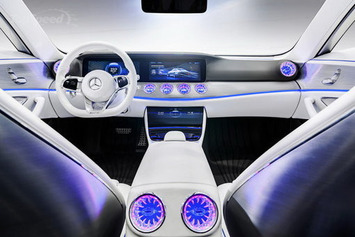







Aluminium is infinitely recyclable. It remains essentially unchanged no matter how many times it is processed and used. Therefore, it can be considered as a material with permanent characteristics, one that is not consumed, but used over and over again, without the loss of its essential properties.