 Your new post is loading...

|
Scooped by
MaterialsReview
November 27, 2015 4:22 AM
|
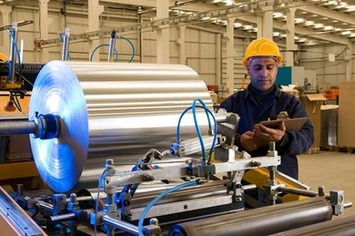
Gulf Extrusions (Gulfex), a leading manufacturer of extruded aluminium products, has launched a series of construction solutions during its participation at The Big 5 International Building and Construction Show, in Dubai, UAE.
The show which kicked off on November 23 will conclude tomorrow (November 26), and is being held at the Dubai World Trade Centre.
The company has introduced ‘Safaa’, a new range of specialty powder coating specifically developed for the unique architectural demands of the region, offering a wide range of design and colour choices to architects, contractors, engineers, and property owners, said a statement from Gulfex.
The company has unveiled a new software for the optimisation of estimated time of completion and structural calculation. The new solution will help in reducing production and estimation time by 50 per cent as well as preparing structural and u-value calculations, it said.
Additionally, it will also showcase solutions that meet and even exceed performance criteria for fire safety and acoustics in building envelopes. While noise reduction is an increasing priority for buildings, fire safety solutions ensure a safer built environment, it added.
Gulfex also conducted a Continuing Professional Development (CPD)-certified workshop on ‘Fire Safety in Facades’, and organised a live demonstration of the best practices in façade installation, accessory and firefighting equipment during its participation at the show, said the statement.
Modar Al Mekdad, CEO of the Metals Industries and general manager of Gulf Extrusions, said: “The show is one of the region’s biggest and most established exhibitions for building and construction and a perfect platform for new launches.”
“Gulfex has introduced a new powder coating range, a software solution, and fire safety and acoustic solutions. These products are specially designed for the Middle East’s harsh environment characterised by high temperatures and humidity and have been receiving tremendous response from trade visitors,” he said.
“Moreover, we will provide live demos so that interested clients can have a better understanding of the products, enabling them to make quick decision,” he added. – TradeArabia News Service
|
|
Scooped by
MaterialsReview
November 26, 2015 8:10 AM
|
The Midwest aluminum premium has risen as fears about costs set in after Alcoa’s announcement that it is shuttering much of its North American smelting capacity. Despite cuts in China, zinc is still massively oversupplied.
Midwest Premium Rises on Alcoa Shutdowns Announcement
The US Midwest aluminum premium has risen to its highest level in six months, traders told Reuters on Tuesday, but the current forward curve and Alcoa‘s plans to save a US smelter from curtailment were seen pressuring prices in the near-term.
The premium, paid on top of London Metal Exchange (LME) futures prices for physical delivery in the US, has risen to around 8.75 cents a lb., the traders said, citing the continued impact of Alcoa’s plans to shutter the bulk of its US smelting capacity, announced Nov. 2.
Chinese Cuts Fail to Balance Zinc Market
Output cuts announced by Chinese zinc smelters last week will do little to tighten next year’s global supply-demand balance in refined metal because already-known mining cutbacks would have forced smelters to reduce production anyway, Reuters reported.
On top of that, hard-hit prices will fail to get much of a lasting boost in coming months due to a glut of world inventories, although there may be spikes of short-covering, analysts and investors said.
|
|
Scooped by
MaterialsReview
November 26, 2015 3:46 AM
|
United States: The North American market is flooded with aluminium scrap and the situation will probably not change in the short term, it was stressed by David Rosenblum, vice president of non-ferrous at scrap metal major OmniSource, during Metal Bulletin's 23rd Recycled Aluminium Conference held this week in the Spanish capital Madrid.
Owing to softening growth in the emerging economies - particularly China - scrap demand from these markets has decreased, according to Rosenblum, while a strong US dollar has also 'discouraged' overseas shipments.
At the same time, demand for secondary aluminium in the USA has increased thanks to fast-growing use of aluminium in car production. 'Secondary automotive production is robust,' said Rosenblum, and this situation was unlikely to change as rolling mill capacity in the USA is ramped up to cater for automotive demand for body sheet. This trend has resulted in a significant increase over the last six months in inhouse scrap and scrap from closed-loop manufacturing, Rosenblum explained. As a consequence, demand for third-party scrap has shrunk.
Rosenblum estimated that global light vehicle production would climb from 88 million units in 2015 to 90.2 million units next year, and then to almost 105 million units by 2020.
|
|
Scooped by
MaterialsReview
November 25, 2015 6:09 AM
|
In honor of Throwback Tuesday, we are revisiting MetalMiner’s Top 50 posts with an eye toward illuminating what’s happening in metals today. #TBT This post, originally published Feb. 26, 2009, about the production of primary aluminum, is as relevant to the LME’s new aluminum contracts as it was to explaining aluminum’s price drop at the time. Since the aluminum price on the LME dropped below $1500/ton, it has been repeatedly stated that some 60-70% of aluminum smelters are losing money.
Electricity alone is generally accepted as representing about a third of the cost of aluminum ingot, although at what sales price that metric is judged is open to debate. We thought it would be interesting to explore what the true costs of production are for a ton of primary aluminum and thereby test to what extent the smelters’ claims that they are losing money are correct.
As with the steel industry, many of the industry’s woes may have as much to do with low plant capacity utilization as they do with low sales prices.
How Much Does it Cost to Produce One Ton of Aluminum?
Although the newest smelters can be closer to 12,500 kWh per ton, let’s say most smelters are consuming electricity at 14,500-15,000 kWh/ton of ingot produced. With the LME at $1,300/metric ton, that means electricity should be costing a typical smelter $0.029/kWh. Needless to say, smelters are rather coy about their power cost contracts so it’s hard to verify how prevalent this number is though many smelters are on variable power cost contracts with their electricity suppliers such that the power generators are paid a fixed percentage of the world ingot price. If we take that as one-third, then it’s not only smelters that are losing money – many power generators must be, too.
When US national average industrial and commercial electricity consumers are paying $0.0706/kWh and $0.1013/kWh, respectively, according to the Energy Information Administration, to be selling power to smelters at $0.029/kWh represents a huge subsidy. In reality, power costs to the smaller US smelters are probably higher than this and explains why many have been cut back or idled, but interestingly the same source gives specific power costs for the Pacific Northwest of only two-thirds the national average, suggesting that many NW smelters may indeed still be getting power at ingot-price-related levels.
By comparison, Chinese producers are more open with power costs. The Guangxi smelters typically consume 14,500 kWh/ton and are paying $0.050-0.055/kWh according to China Mining. Power costs of $0.0525/kWh and consumption at 14,500 kWh/ton equates to $760/ton. The domestic ingot price in China as reported on the SHFE is currently $1725/ton, making domestic electricity costs some 44% of the sales price of ingot and may explain why Chinese smelters combined with low capacity utilization due to reduced demand are widely reported to be in the red even at the premium SHFE price for ingot.
Like China, Australia has a comparatively high portion of it’s power generation coming from coal, although being a major coal producer local coal costs are lower in Australia than China. Nevertheless an organization called Earthlife Africa estimates Australian power rates at about the same $0.053/kWh as China, which with ingot selling at LME levels of $1300/metric ton would suggest Australian smelters are incurring an eye watering 59% of finished ingot power cost! We suspect power costs may be tied to ingot prices in Australia as the major smelting groups operating there — Alcoa, Rio, etc — are well-versed in the tactics of leveraging the best deal from local and federal government agencies in return for smelter investments. In addition, Australian smelter costs may benefit from lower bauxite costs than the Chinese as transport costs should be minimal, which could help to mitigate a power cost disadvantage.
Russian smelters on the other hand are built next to massive hydroelectric plants, shares in which many of them own. Electricity costs at Rusal are estimated at $128/ton and the current cost of production at only $1000/ton, so Rusal is still making money even with the LME at $1300/ton. Interestingly the same report says the cost of power is just 12% of the cost of production, suggesting the Alumina, Cryolite, Carbon anodes etc are cumulatively about $880/ton which will be explored in more detail later this week.
Even for those smelters still smart enough or lucky enough to be tied at power costs of one-third of the ingot price with the LME at $1,300/ton, they will be doing well to break even. Add in the fact many smelters are running at well below optimum capacity and the unit price per ton produced suggests they are indeed losing money – which begs the question, why hasn’t more capacity been closed down?
|
|
Scooped by
MaterialsReview
November 25, 2015 5:54 AM
|
The Alcoa Foundation, the philanthropic arm of Alcoa, awarded the Collision Repair Education Foundation a $75,000 grant that will provide aluminum repair focused training and technical presentations to high school and college collision school instructors. Working together with industry partners, the Collision Repair Education Foundation will bring over 50 collision school instructors into the Chicago, IL, area in March 2016 for several days of “train the trainer” aluminum repair technical training, as this group is educating the future repair professionals of the collision industry. As more and more of today’s and future vehicles are being constructed with aluminum, it is crucial that current and future repair professionals complete aluminum repair technical training in order to repair consumer’s collision damaged properly.
“Alcoa Foundation seeks solutions that reduce weight, improve fuel efficiency, and minimize the environmental footprint of mass transportation,” said Alice Truscott, program manager, Alcoa Foundation. “As aluminum usage becomes more popular in the making of cars with these very sustainable properties, we value partnerships with organizations like Collision Repair Education Foundation that will help prepare the workforce.”
Collision Repair Education Foundation director of Development, Brandon Eckenrode, noted, “We are very appreciative of Alcoa Foundation’s continued support and willingness to work together on providing collision school instructors with technical information about aluminum repair training. These instructors are able to bring this knowledge back to their classrooms and help students understand that repairing aluminum isn’t difficult, it’s just different.”
|
|
Scooped by
MaterialsReview
November 25, 2015 4:09 AM
|
The Environment Agency has released packaging waste recovery figures showing that reported aluminium packaging recycling recorded its highest ever quarterly performance in Quarter 3 (Q3 of 2014/15), at 23,330 tonnes.
The news follows an adjustment to the accreditation process for packaging recovery notes (PRNs), following concerns that the true amount of aluminium was not reflected in PRN data for Q1 and Q2, as official recovery data showed low levels of reporting.
Historic problems with low levels of reporting
Earlier this year, the Aluminium Packaging Recycling Organisation (Alupro), moreover, sought to determine the ‘real aluminium recycling figure’ this summer, saying that the PRN system was not fit for purpose, as it requires voluntary accreditation by reprocessors and exporters, a ‘significant number’ of which have not maintained their accreditation due to the process being ‘too onerous’ and low value.
The Department for Environment, Food & Rural Affairs (Defra) then took steps to improve compliance, encouraging unaccredited reprocessors and exporters to become accredited.
The Q3 results are the direct result of adjustments made to the accreditation process, following lower than expected tonnages in Q1 and Q2, and increasing volumes of aluminium packaging recovered from incinerator bottom ash (IBA) being reported through the system. An estimated 18,800 tonnes is required in the final quarter to achieve the 2015 recycling target.
Streamlining accreditation ‘has had an immediate effect’
Commenting on the latest figures, Rick Hindley, Executive Director of the Aluminium Packaging Recycling Organisation (Alupro) said: “Alupro has consistently advocated streamlining the reprocessor/exporter accreditation process, and these changes have had an immediate effect. With more reprocessors coming on stream we are increasingly confident that aluminium will not only achieve the 2015 recycling target, but also that in future the figures will be a more accurate picture of the amount of aluminium packaging recycled in the UK or exported for recycling. We are very pleased to see that new reprocessors are becoming accredited to the system and are grateful to Defra and the national environment agencies for working to bring about these changes.
“We knew that 2015 would be a period of adjustment following changes to the aluminium protocols which came into effect in January. This is the first set of data since further revisions were introduced to the protocol which allows PRNs to be issued on 70 per cent of the non-ferrous material recovered from incinerator bottom ash. We are increasingly confident that the 2015 recycling target will now be met.”
|
|
Scooped by
MaterialsReview
November 25, 2015 3:14 AM
|
Alcoa (NYSE:AA) is one of the world's most important aluminum producers. But right now aluminum really isn't the big story. Instead, shareholders are watching the corporate breakup that the relatively new CEO is pushing for. In fact, this type of event is one good reason you should care about the chief executive of a company -- and history is the best guide for why.
What's going on?
Here's the setup. Alcoa hires Klaus Kleinfeld in 2007 as its president and chief operating officer, and within seven months he's promoted to the CEO spot. He starts moving the company away from commodity aluminum markets and toward niche aluminum products, where the company can add value and charge higher prices. In mid-2014, Alcoa agrees to pay nearly $3 billion to buy an aerospace specialist called Firth Rixon, materially increasing the size of its specialty businesses.
Then, in the third quarter of 2015, Kleinfeld announces that Alcoa will split into two companies. One will focus on the specialty products business he's been expanding. The other will own the legacy commodity aluminum business that he's been shrinking. In case you didn't figure it out, he's going to run the specialty-products business. The first question to ask is whether this is a good or bad move for shareholders. Although that's hard to tell at this point, at the very least investors will be able to decide which part of the business they want to own. So choice is good. However, another question is whether this is good for the CEO. Clearly, he likes the specialty side of the business and has managed to put himself in a position to prosper along with the segment of Alcoa on which he's been most focused. Wait one moment ...
A cynical mind might suggest that's a little self-serving. And perhaps it is, but there are some interesting precedents that you might want to look at before you follow along with Kleinfeld and dump "old" Alcoa.
Take, for example, the split-up of Kraft Food into Kraft and Mondelez International (NASDAQ:MDLZ). Kraft retained the slow-growth U.S. food portfolio and Mondelez got the supposedly higher-growth international and snack businesses. This, of course, happened after a relatively new CEO bought a large internationally focused competitor, Cadbury. The CEO went with Mondelez.
But it hasn't worked out as well as planned. The higher-growth business stalled, failing to live up to expectations. The top line fell last year and looks likely to do so again this year. Kraft, meanwhile, wound up merging with Heinz to create Kraft Heinz Co. (NASDAQ:KHC), in a transaction helped along by Warren Buffett. So it's hard to do a compare and contrast, but suffice it to say Mondelez's growth didn't turn out to be as robust as investors may have hoped. And catching the interest of Buffett is kind of a statement in and of itself about the opportunities embedded in Kraft.
Another example, where an apples-to-apples stock price comparison is available, is Altria (NYSE:MO). This cigarette maker split its tobacco business up into the slow-growth U.S. business, which Altria was keeping, and its higher-growth foreign businesses, which would take the name Philip Morris International (NYSE:PM). The CEO at the time of the split went along with Philip Morris International to test the global appetite for smokes.
At first, Philip Morris' stock did outperform the slower-growth Altria, but then something interesting happened. The problems that made the U.S. tobacco business undesirable started to pop up more and more around the world, and Philip Morris' stock plateaued. Altria's shares, meanwhile, have kept chugging along and, at this point, anyway, have proved the better investment. Once again, it looks like a CEO was the architect of a corporate split that didn't pan out as planned.
Choose wisely Will Alcoa's split follow the same path as Kraft/Mondelez and Altria/Philip Morris International? There's really no way to tell in advance. However, these two examples provide a cautionary tale for investors who might be enamored of the higher-growth businesses being split off by the CEO. These big moves don't always play out as planned, and sometimes, slow and steady is the better business to hold.
A secret billion-dollar stock opportunity The world's biggest tech company forgot to show you something, but a few Wall Street analysts and the Fool didn't miss a beat: There's a small company that's powering their brand-new gadgets and the coming revolution in technology. And we think its stock price has nearly unlimited room to run for early-in-the-know investors! To be one of them, just click here.
|
|
Scooped by
MaterialsReview
November 25, 2015 2:08 AM
|
Connectivity: Mercedes me connect featuring a host of functions
The new SL is intelligently networked and “always on”. This is ensured thanks to the standard-fit communications module (on-board SIM card) which enables the use of Mercedes me connect services. The available Standard Services currently include Accident Recovery, Breakdown Management and Maintenance Management, as well as Telediagnostics, for example.
Also available as standard is the Mercedes-Benz emergency call system. In an accident this service automatically connects the occupants with the Mercedes-Benz Emergency Call Centre and sends the position and status of the vehicle to the rescue operations centre. A rescue vehicle can then be dispatched immediately. The system works automatically, but can also be triggered manually.
The optional Remote Online feature provides the technical basis for the SL to use Remote Services. For example, navigation destinations can be sent to the vehicle from a computer or smartphone.
Geofencing, Vehicle Tracker and Parked Vehicle Locator, Remote Door Locking and Unlocking or Remote Retrieval of Vehicle Status – these are additional Remote Services and Tracking Services that can currently be activated separately from Daimler AG for three years on the basis of this technical preparation. With the Smartphone Integration package compatible smartphones can be integrated into the vehicle via Apple® CarPlay® and used via voice-operated control for example. In addition, the other vehicle controls can also be used. Safe and comfortable use on the road is always ensured.
In the case of Apple® CarPlay® for example, the system supports making and receiving calls, navigation and listening to music, receiving and sending text messages and emails as well as Siri ® voice control. The selected apps from third-party providers that are also supported include Stitcher Radio® and Spotify®.
The functionality of COMAND Online (optional extra on the SL 400) now includes internet radio as well as Live Traffic Information, for example. The latter service uses real-time traffic data for dynamic route guidance with more accurate arrival times.
A concert room atmosphere even with the top down as well as less bulk in the doors due to reduced installation space are ensured by the Frontbass system, which celebrated its premiere in the SL in 2012. It makes intelligent use of the free installation space in the aluminium cavities in front of the footwell as resonating chambers for the base speakers.
The optional Harman Kardon® Logic 7® surround sound system has a 10-channel DSP amplifier with a total output of 600 watts and 11 high-performance speakers including Frontbass. An even more sophisticated sound is produced by the Bang & Olufsen BeoSound AMG sound system. It uses a 16-channel DSP amplifier with a total output of 900 watts in conjunction with 12 high-performance speakers including Frontbass. Its twin-lens tweeters provide a futuristic show effect with LED light strips – adapted to instrument lighting. The B&O-specific COMAND Menu True Image™ enables individual special settings to be made.
Even more choice: the Curve function on the ABC suspension for the first time
The steel suspension of the standard chassis features continuously variable dampers. In conjunction with the AMG Line equipment the suspension is lowered by 10 mm and fitted with harsher springs and torsion-bar stabilisers. The driver can leave the setting of the basic characteristics of the suspension to the control electronics via DYNAMIC SELECT – from comfortable to extremely sporty in the new third Sport+ mode.
The characteristics of the transmission modes: - Eco (E), fuel-efficient setting with “sailing” function
- Comfort (C), comfortable setting for long journeys or on rough roads
- Sport (S), sporty setting for a dynamic driving style
- Sport Plus (S+), extremely sporty setting – particularly suitable for flat road surfaces
- Individual (I) allows individual adjustment of the various parameters to suit the driver’s requirements.
Alternatively there is another option available in the guise of Active Body Control (ABC) with curve tilting function. ABC reduces body movements when moving off, braking and cornering. The spring struts of the ABC suspension are adjusted to the respective driving conditions via so-called plunger cylinders (via oil pressure), therefore making torsion-bar stabilisers on the front and rear axle, which can reduce comfort, unnecessary. The dampers only have to eliminate wheel vibrations and can be set up in such a way as to ensure comfort without losing any of the sportiness. In addition, the vehicle level can be adjusted to any unevenness: At higher speeds the SL is automatically lowered by 13 mm for more favourable aerodynamics. Conversely, at the press of a button it is possible to raise the vehicle by 50 mm for driving on rough roads.
On top of this there is the curve tilting function which applies a maximum of 2.65 degrees in the speed range from 15 to 180 km/h. It can be set via DYNAMIC SELECT (“Curve”), noticeably reducing the effects of lateral acceleration on the vehicle occupants. The DYNAMIC SELECT transmission modes in conjunction with ABC suspension:
- Curve (CV) increases ride comfort
- Comfort (C) is the comfortable setting for long journeys or on rough roads
- Sport (S) as a sporty setting enables a particularly dynamic driving style
- Sport Plus (S+) is an extremely sporty setting – particularly suitable for flat road surfaces
- Individual (I) allows individual adjustment of the various parameters to suit the driver’s requirements.
- Lighter and stiffer: elaborate all-aluminium bodyshell
The latest generation of the Mercedes-Benz SL takes the meaning of the well-known abbreviation “SL” – Super-Light – literally at its word. Systematic weight reduction is just as much a part of the outstanding design features of the new SL as it was for its namesake, the original SL from 1952 with its lightweight tubular frame. Here for the first time Mercedes-Benz has implemented an all-aluminium bodyshell as part of large-scale series production. Only relatively few components are made using other materials. High-strength steel tubes are integrated in the A-pillars to increase safety.
The aluminium bodyshell weighs around 110 kg less than if it had been produced using steel technology. The aluminium structure is not only lighter, but also superior in terms of rigidity, safety and comfort. This is thanks to intelligent lightweight construction with components optimised for their respective intended purposes. For example, different types of aluminium processing are used. Depending on their function, the components are produced using gravity die casting or vacuum die casting, made from extruded sections or used as aluminium sheets of a variety of different wall thicknesses. The result is high levels of rigidity and safety as well as better vibration characteristics. With its intelligent lightweight construction, which also comprises new bonding techniques, the SL has also become a role model for the current S-Class. The total of six models in the luxury class are characterised by a high percentage of strategically deployed light alloys such as aluminium or magnesium.
|
|
Scooped by
MaterialsReview
November 23, 2015 2:42 AM
|
The need to make a commitment to new, lighter models of transport that allow pollution to be reduced and natural resources to be preserved, is driving forward the design of advanced manufacturing technologies that are environmentally friendly and economically accessible for components manufacturers.
Right now, there are techniques that allow lighter aluminium automotive parts to be manufactured, but their high cost limits them to top-of-the-range vehicles. In order to design solutions that can be transferred to SMEs and which can be deployed in all types of cars, the IK4 R&D Alliance, through the IK4-AZTERLAN centre, has been leading a European project enabling manufacturing techniques for light structural components at a more competitive price to be developed.
The initiative, known as Soundcast, has focussed on combining various innovative techniques. They include the use of vacuum-assisted, high-pressure aluminium die casting technology (HPDC), alloys that are cheaper and more sustainable, and new laser welding adapted to the die casting process.
"Any reduction in vehicle weight, no matter how small, will have an impact multiplied by millions. The technologies developed in Soundcast are fully applicable in small and medium casting companies", maintained the project coordinator Ana Fernández of IK4-AZTERLAN.
This project comes within the line of research on alloys and aluminium transformation processes undertaken by IK4 which is seeking to drive forward the democratisation of vacuum-assisted HPDC technology through the development of new secondary alloys and process control technology.
The initiative, which kicked off in 2012, is in its final phase; this involves the demonstrations and testing of the technologies developed by all the members of the consortium: the Spanish aluminium die casting company Ruffini, and the German company Schmale & Schulte.
The use of the technologies developed is particularly useful in the sphere of hybrid and electric vehicles.
Soundcast is part of the 7th Framework Programme designed to drive forward innovation and research in the EU and has a total budget of 1.75 million euros, of which over 1.1 million euros are provided by European funds.
In addition to the above-mentioned organisations, the Catalan industrial research centre ASCAMM, the Technische Universität Braunschweig (Germany), the Swiss vacuum equipment supplier VDS, and the German lubricant supplier ChemTrend are also participating in the international consortium involved in the project.
|
|
Scooped by
MaterialsReview
November 20, 2015 5:37 AM
|
Government is considering raising import duty on aluminium products by as much as 5 percent, among other policy measures, to tackle the unabated import of cheap products that is adversely impacting the sector.
"Domestic aluminium industry is going through tough time. Some firms have approached Directorate General of Safeguards for a hike in safeguard duty. If it doesn't happen, we in our pre-budget consultation with Finance Ministry will propose for import duty hike," Mines Secretary Balvinder Kumar said.
He said the government is aware of the situation that the industry is going through and it will take appropriate measures to check that. When asked about the import duty hike, he said: "We will propose to raise it to 7.5 or 10 percent from the present 5 percent." Sources said mining conglomerate Vedanta has approached Directorate General of Safeguards, while Hindalco , the flagship firm of the Aditya Birla Group, is in the process.
Last month, aluminium industry officials met Revenue Secretary Hasmukh Adhia and pitched for a safeguard duty on the lines of one on steel products to check cheap imports from China and West Asia. In September, Aluminium Association of India members -- Vedanta CEO Tom Albanese, Deputy MD Hindalco D Satish Pai and Nalco CMD T K Chand -- met Finance Minister Arun Jaitley and requested him to raise import duty on the metal.
Domestic producers are facing the twin problems of cheaper imports and meltdown in global prices.
Primary aluminium prices at the London Metal Exchange have dropped 42 percent to USD 1,540 a tonne in August from USD 2,623 per tonne in April 2011.
While, aluminium hot metal cost of production (excluding interest and depreciation) on the domestic front has risen 29 percent to Rs 1.2 lakh a tonne from Rs 93,700 because of an increase in the cost of power, logistics and introduction of the renewable power obligation and a clean energy cess.
|
|
Scooped by
MaterialsReview
November 20, 2015 2:37 AM
|
A state-of-the-art aluminium automotive heat treatment line in Nacherstedt, Germany to serve European and global automotive customers.
Located adjacent to Novelis’ existing rolling mill and the world’s largest aluminium recycling centre, the $85 million (£56 million) investment will increase production capacity by 120,000 tonnes of automotive sheet annually.
At full production, this will increase Novelis’ European automotive sheet capacity to 350,000 tonnes per year.
Novelis president and chief executive Steve Fisher (pictured) said: “Coupled with our recent automotive expansions in North America and Asia, the opening of the new production line in Europe strengthens our industry leadership in the automotive market and uniquely positions Novelis to serve our global customers.
“As automakers increasingly turn to aluminium to achieve better fuel efficiency and reduce CO2 emissions in their vehicles, Novelis remains the supplier of choice and the only manufacturer of automotive sheet in the three major auto-producing regions of the world.”
|
|
Scooped by
MaterialsReview
November 17, 2015 10:38 AM
|
Aluminium is about to become even more ubiquitous than it already is. Buoyed by a renewed drive to lower global СО2 emissions, carmakers and industry voices are turning to aluminium to build the cars of the future.
Since transportation remains the main cause of air pollution in many developed countries (especially in the US), and since regulators are tightening restrictions governing emissions and fuel efficiency, reducing the weight of automobiles has become increasingly important for automakers.
According to TK Chand, Chairman of India's National Aluminium Company, replacing 1 kilogram of heavy metal with aluminium reduces emissions by 22 kilograms during a vehicle's lifecycle.
His predictions are in line with other industry experts. Even Arcelor Mittal, the world's biggest steel producer, estimates that "reducing the weight of the vehicle by around 12kg saves one gram of СО2 equivalent emissions per kilometre". As such, the volume share of aluminium in cars manufactured for the US market is now expected to rise from 6.6% in 2015 to 26.6% in 2025. For example, Ford's flagship truck and best-selling model in the US for the past 32 years, the F-150 boasts an all-new high-strength steel frame coupled with a high-strength aluminium-alloy body that saves up to 315 kg compared to its predecessor. As a result, fuel consumption has decreased (from 13mpg to 19mpg for the 2.7 litre engine).
However, it's not just carmakers that have to step up their game. Leading aluminium producers have also called for the implementation of "green" standards across the industry. Why? Because if aluminium cars enable lower СО2 emissions, "more pollution could have been caused by the company producing that metal, which damages the idea of clean vehicles", according to United Co. Rusal's deputy chief executive officer. In this regard, it is vital to ensure the use of clean energy such as hydropower for aluminium production, a development that would guarantee a sustainable and environmentally friendly aluminium industry.
With an integrated approach that takes into account both consumer preference and market expectations, the possibility of driving fuel-efficient cars at no cost to the environment is within grasp.
|
|
Scooped by
MaterialsReview
November 17, 2015 8:06 AM
|
The world aluminium industry presents two highly contrasting constructs. On the one hand are US producers such as Alcoa and Century Aluminium, majority owned by debt-ridden commodity conglomerate Glencore. They all are committed to production discipline by either temporarily switching off smelters or scrapping potlines. On the other, there is Aluminium Corporation of China, popularly known as Chalco, going back on its earlier programme to shut its smelter at Liancheng in northern Gansu province after the local government upped a discount in power rates to avoid job losses. Chalco's action falls in an established pattern of Chinese provinces enabling production of all metals to be sustained by offering subsidies to plants otherwise ripe for closure. Thanks to falling power bills, courtesy munificence of state agencies and also due to cheaper alumina prices, China's cost of making the white metal, which finds application in a wide range of products from cans to automobiles to aircraft, is at a five-year low.
The biggest cost element in smelting aluminium is electricity, where state subsidy is coming to the aid of Chinese aluminium makers to leave a good portion of their production in the world market. According to Morgan Stanley, China will end 2015 with aluminium production up 11 per cent to around 30 million tonnes (mt). This is happening when the country's economy continues to slow with annual rise in gross domestic product (GDP) down to 6.9 per cent in the third quarter. This official claim is, however, challenged by many China experts saying the actual performance is worse. The Organisation for Economic Cooperation and Development says the world's second largest economy will be growing 6.8 per cent this year. Its GDP growth will slow to 6.5 per cent in 2016 and to further 6.2 per cent in the following year. A local industry official says "Chinese growth slipping will translate into flat local demand for aluminium. The pressure will, therefore, further mount on China to sell more and more aluminium in the world market supported by large subsidy dollops."
Expect, then, China to invite any number of anti-dumping campaigns in countries principally targeted for export of aluminium slabs, billets and semi-manufactured products. The latest tiff relates to the US Aluminium Extruders Council (USAEC) filing a case with the Department of Commerce against China Zhongwang Holdings for wrongly describing the extrusions it sold in the US to avoid paying import duty. This is, however, hotly contested by China Zhongwang. The world's largest aluminium maker Rusal, which has exercised trend-setting production discipline in the face of falling prices, is making common cause with USAEC and wants the issue to be referred to the World Trade Organization. In a total smelter capacity resting of 2.7 mt so far in the current year, Rusal has a good share. Complaining about Chinese aluminium export harming US producers, Century Aluminium chief executive Michael Bless says this is being done through "blatantly uneconomic methods that would not be possible but for the large subsidies Chinese producers are receiving from their government... Our collective goal is no more than fair trade and transparent markets and equal conditions for all industry participants".
Responding to a fall in aluminium prices by as much as 27 per cent in the past year, Alcoa is to cut aluminium capacity by 503,000 mt and alumina refining capacity by 1.2 mt by 2015-end. Century will soon switch off one of the three potlines at its Kentucky smelter. The problem, however, is attempts made by producers outside China to restrict industry capacity and production are largely negated by large subsidised exports by China.
According to customs data, Chinese aluminium exports in the first nine months of 2015 were 18 per cent ahead from a year ago. A report by Bank of America Merril Lynch says nearly half the world's smelters have turned unprofitable with aluminium prices trading at six year lows. "In our view, the recent dynamic is testament to the ongoing challenging fundamental backdrop. This has perhaps been most visible in the reluctance of China's aluminium producers to curtail output," says the report. As oversupply persists in a subdued demand situation, the light metal for delivery in three months is down to around $1,500 a tonne. To add to the industry's agony, premiums charged for immediate delivery in the US, Europe and Japan are sharply squeezed largely in response to London Metal Exchange introducing rules to streamline warehouse inventory and delivery management.
|
|
Scooped by
MaterialsReview
November 17, 2015 2:16 AM
|
Alcoa received an average recommendation of “Buy” from the twenty-three brokerages that are covering the firm, MarketBeat.Com reports. Ten investment analysts have rated the stock with a hold rating and thirteen have given a buy rating to the company. The average 1-year price target among analysts that have covered the stock in the last year is $14.47.
AA has been the subject of several research analyst reports. Gabelli assumed coverage on Alcoa in a report on Monday, October 5th. They issued a “buy” rating and a $14.50 target price for the company. Deutsche Bank decreased their price target on Alcoa from $16.00 to $14.00 and set a “buy” rating for the company in a research note on Monday, October 5th. Citigroup Inc. reaffirmed a “buy” rating on shares of Alcoa in a research report on Wednesday, September 30th. S&P Equity Research reissued a “buy” rating and issued a $15.00 price target on shares of Alcoa in a research report on Tuesday, September 29th. Finally, Bank of America restated a “buy” rating on shares of Alcoa in a research note on Monday, September 28th.
In other Alcoa news, Director Martin Sorrell acquired 4,435 shares of the stock in a transaction that occurred on Friday, October 16th. The stock was bought at an average cost of $9.49 per share, for a total transaction of $42,088.15. Following the completion of the transaction, the director now owns 29,389 shares of the company’s stock, valued at approximately $278,901.61. The acquisition was disclosed in a document filed with the Securities & Exchange Commission, which can be accessed through this hyperlink.
Alcoa (NYSE:AA) opened at 7.99 on Friday. The company has a market cap of $10.47 billion and a P/E ratio of 21.19. The company’s 50 day moving average price is $9.36 and its 200-day moving average price is $10.60. Alcoa has a one year low of $7.81 and a one year high of $17.75.
Alcoa (NYSE:AA) last released its quarterly earnings results on Thursday, October 8th. The company reported $0.07 earnings per share for the quarter, missing the consensus estimate of $0.14 by $0.07. The business earned $5.60 billion during the quarter. Alcoa’s revenue for the quarter was down 10.7% on a year-over-year basis. During the same quarter in the previous year, the firm posted $0.31 earnings per share. On average, analysts forecast that Alcoa will post $0.60 EPS for the current fiscal year.
The firm also recently declared a quarterly dividend, which will be paid on Wednesday, November 25th. Investors of record on Friday, November 6th will be issued a $0.03 dividend. The ex-dividend date is Wednesday, November 4th. This represents a $0.12 dividend on an annualized basis and a yield of 1.50%.
Alcoa Inc. (NYSE:AA) is participated in lightweight metals engineering and manufacturing. The Company operates in four segments: Alumina, Primary Metals, Global Rolled Products, and Engineered merchandise and Alternatives. Its products, which include aluminum, titanium and nickel, are employed in consumer electronics, cars, commercial transport, packaging, building and construction, oil and gas, defense, aircraft, and industrial applications around the globe. In addition, it produces and manages primary aluminum, fabricated aluminum and alumina combined, through its active involvement in the aspects of the business and recycling. The Company has investments and managing activities in Brazil, Australia, China, Guinea, Iceland, Russia and Saudi Arabia, among others. It creates three dimensional (3D-printed) plastic components and titanium, specialty metals for aerospace, medical and energy applications.document.write(‘‘);
|
|
Scooped by
MaterialsReview
November 16, 2015 5:17 AM
|
Alcoa’s announcement that it is shutting down our state’s last two aluminum smelters may be a long awaited requiem for some, but there are other factors we should consider before burying it.
First, the Seattle Times reports the decision will cost 1,500 family-wage jobs with good benefits. And even though the trend has not been good for our aluminum industry, we need to look for opportunities to resurrect it.
In 2000, Seattle economist Dick Conway found the five largest smelters in Washington employed more than 7,500 people and generated $2.6 billion in revenue. The average salary for aluminum workers at the time was $49,330, which was 1.7 times our state’s average.
Second, the loss of smelting capacity in America should alarm us. Since 2007, Alcoa has cut its domestic production by 45 percent. As a result, we are becoming more dependent on other nations for the materials we need to defend our nation, restore our manufacturing sector and grow our economy.
There are several reasons given for Alcoa’s decision.
Among them, cheaper foreign competition, the worldwide economic slowdown, especially in China, and the glut of metals on world markets causing metal prices to plummet. Then toss in rising energy costs and union contract disputes.
The bottom line? Once an economic powerhouse in the nation’s top aluminum-producing regions, Washington’s aluminum producers may be on a trajectory toward extinction.
Now we will have to rely more on China, Russia and other nations for our strategic metals, and given the strategic challenges posed by some of those nations today, that is a dangerous trend.
The only silver lining is there are no immediate plans to raze those two smelters. They have closed before and then restarted, the last time in 2011. However, others have been demolished over last two decades in Mead, Vancouver, Goldendale, Tacoma and Longview.
Mining and smelting are not pretty and in the past have polluted our air and water with heavy metals, arsenic and sulfur gases. Many of the old smelter sites, especially those which processed copper, silver and other metals mined in Montana, northern Idaho and Washington are Superfund clean-up sites.
Some of those large copper and silver smelters were built before 1900. Until the early 1970s, they dealt with air pollution by raising the stacks on their smelters to disperse the contaminants and installed settling ponds for wastewater.
When much-needed new pollution laws were enacted, many of the old smelters were inefficient and their environmental controls were insufficient. But as costs climbed, our smelters could not compete on the world market with those from places like Norilsk, Russia’s most polluted city.
However, aluminum processing is different. While it has had its environmental challenges, companies have invested to comply with our high environmental standards.
In our region, the aluminum industry started with the completion of Grand Coulee and Bonneville dams, which produce greenhouse-gas-free electricity. That excess “cheap electricity” generated from the Columbia River hydro system was just what the industry needed to turn imported bauxite into aluminum ingots.
When Boeing started using aluminum for World War II bombers, the aluminum industry grew and flourished. Because of its light weight and strength, Boeing still uses it in the commercial airplanes assembled in Renton and Everett. Even high-end new electric cars like Tesla are cast in aluminum.
The point is aluminum production is important to our state. While our state’s aluminum industry has faded, aluminum is still in high demand. The only questions are where will it be smelted and where will those manufacturing jobs be located?
• Don C. Brunell is a business analyst, writer and columnist. He retired as president of the Association of Washington Business, and now lives in Vancouver. He can be contacted at theBrunells@msn.com.
|
|
Scooped by
MaterialsReview
November 16, 2015 3:15 AM
|
Next time you're looking for a conversation starter, skip the spirit animal question and consider this instead: if you could be any building in Melbourne, what would it be?
Architecture, art and design students from Monash University spent weeks researching and contemplating the interiors of 11 Melbourne buildings – from the National Gallery of Victoria's Great Hall to Myer on Bourke Street – and came up with outfits inspired by each.
The results range from the literal to the abstract. Leonard French's stained-glass roof for Roy Grounds' National Gallery of Victoria building is hard to miss in Ken Wu and Isabella Alvarado's piece, while the flashy '80s-glam interior of Hamer Hall, originally designed by John Truscott and updated by ARM architects, is reimagined as a hooped dress lined with LED lights by Kia Achilleos and Celina San Jose.
"The interiors that we chose have quite distinctive architectural features or have almost an architectural personality," project supervisor Cate Hall says. "We really wanted in this project to investigate the historical aspects of Melbourne's architecture as well as the contemporary. So it was a combination of very prescriptive architectural elements that we could look from and a combination of what was happening 100 years ago to what was happening last year." The stark white and silver renovation of Myer by NH Architecture, an asymmetric collection of escalator shafts and walkways capped with a gold-striped roof, was turned into a "slinky" of laser-cut aluminium and white acrylic plastic in the hands of Ruben Digby-Diercks and Matthew Luong. William Butterfield's neo-Gothic St Paul's cathedral is also given the dress treatment by Monique Woods, Hoai My Linh Duong and Nicole White. Achilleos, a fourth year master's of architecture student, had never set foot inside Hamer Hall before the project. "We arranged a private tour ... and it was amazing just to go through and see the quality of work in the space," she said. "We were playing off the idea that Hamer Hall was a cave and it had all the jewels inside it."
Although models will wear the students' work when it goes on display at MPavilion on Saturday, there is something of a tradition of architects wearing costumes of buildings. Most famously were the gaggle who gathered for the 1931 Beaux Arts Ball hosted by New York's Society of Beaux Arts Architects where the architects of the Chrysler Building, the Waldorf-Astoria and the Museum of the City of New York, among others, donned silvery cardboard approximations of their famous creations.
For $15, attendees were promised something "modernistic, futuristic, cubistic, altruistic, mystic, architistic and feministic". For considerably less, Melburnians might see the same. Wearing the City designs will be on display at MPavilion, Queen Victoria Gardens, from 5-7pm on Saturday.
|
|
Scooped by
MaterialsReview
November 13, 2015 4:38 AM
|
With the demand for automotive aluminium accelerating in the US, Linde LLC is focusing its global expertise in oxyfuel technology on improving both the casthouse processing and heat treating of aluminium and aluminium alloy products.
Earlier this year, gasworld explored the increasing mandate for metallurgy, with a potential new wave of growth emerging in the aluminium business.
Aluminium has been in tight supply in 2015, as a number of demand drivers create challenges in supply. Demand for the commodity took a sharp decline worldwide as a result of the 2008 economic downturn, creating a situation of over-supply, shrinking prices, and serious stockpiling.
Continuing market volatility in the last half-decade has seen consumption increase again, however, and significant demand this year is understood to be driven by the US auto industry’s shift toward lighter weight vehicles, as it seeks to satisfy new 54.5mpg corporate average fuel-efficiency (CAFE) targets for 2025.
Vehicle manufacturers reportedly plan to use more aluminium in doors, bonnets and other car parts over the next few years, including plans for aluminium-bodied pick-ups – and so, the exigency for this non-ferrous metal increases.
Linde LLC previously noted that as aluminium-cast parts manufacturers increasingly engage in vertical integration to ensure a continuous supply of raw materials, this drives the construction of smelters to increase secondary production from recycled content – as well as boosting downstream production of finished aluminium-based products.
With secondary aluminium production in the US ramping up again from the scaled-back capacities of previous years, the challenge is to either add energy or improve the energy efficiency of the process to increase melting capacity. Linde’s Low-Temperature Oxyfuel (LTOF) technology addresses this problem by replacing air-fuel combustion with oxyfuel combustion that is characterised by low flame temperatures.
At the Aluminum Show 2015 in Detroit next week (11th – 12th November), Linde will introduce its advanced LTOF technology for re-melting aluminium, and highlight research into the Linde Direct Flame Impingement (DFI) process which uses oxyfuel to assist in the heat treating of aluminium sheet.
Secondary aluminum processors serving the automotive industry can quickly improve productivity with Linde LTOF technology, which can be installed or retrofitted to virtually any aluminum remelt operation to improve fuel efficiency, boost melting rates, and reduce the generation of nitrous oxides (NOx) associated with air-fuel combustion.
“We developed Low-Temperature Oxyfuel technology to meet the challenge of maintaining or increasing re-melting rates with high levels of solid charge materials, typical of secondary aluminium operations in the US,” said Tony Palermo, Program Manager, Metallurgy, Linde LLC. “Recycled aluminium feedstock will be increasingly critical to meet demand, so this is a win-win-win for auto companies, aluminium companies, and the environment.”
|
|
Scooped by
MaterialsReview
November 12, 2015 2:35 AM
|
N TIME for National Recycling Week this week, Boyne Smelters Limited (BSL) is now operating Queensland's only and Australia's largest aluminium can recycling facility after a successful pilot proved the potential of the value-add processing concept earlier this year.
The smelter is now recycling around 13 million aluminium cans a month, which will add 2,400 tonnes of aluminium to its production annually.
In 2011, BSL invested in a partnership with Inalco for an onsite processing plant to recycle dross, cell bottoms, and scrap aluminium from its existing operations.
Prior to 2011, all dross was sent offsite for processing. But it wasn't until Australia's largest remaining aluminium recycling plant closed last year, resulting in the majority of aluminium cans being sent offshore for processing, that BSL staff saw a wider opportunity to use its onsite capability.
"Our people saw a gap in the market and saw an opportunity to add value to Australian resources here in Gladstone. They prepared a business case and we started a pilot in June this year," BSL site general manager Joe Rea said.
"I'm pleased to say the pilot was successful. We've seized the opportunity to add to our recycling capability by processing aluminium cans through the existing onsite plant as a supplementary feedstock.
"Part of the pilot was proving to our customers that the quality of our BSL product would not be compromised and they've been more than happy with the results."
BSL sources 80 per cent of its cans from Queensland with the remainder from NSW, trucking in a planned 156 million cans a year.
Aside from the benefits of reducing landfill waste, recycling aluminium uses only around five per cent of the energy of primary aluminium production, resulting in less greenhouse gas emissions.
All up, the recycling plant processes on average 520 tonnes of scrap aluminium, cans, dross and cell bottoms a month at BSL with metal recovery at around 60-90 per cent, depending on the feedstock.
BSL has the capacity to double its current recycling production figures without additional investment in the plant, however, the volume of cans needed to maintain cost efficiencies is challenged by road freight costs.
BSL will review the can recycling business case in early 2016.
|
|
Scooped by
MaterialsReview
November 11, 2015 3:03 AM
|
Alcoa’s latest aluminum-making cutback is signaling the end of an iconic American industry.
For 127 years, the New York-based company has been churning out the lightweight metal used in everything from beverage cans to airplanes, once making it a symbol of U.S. industrial might. Now, with prices languishing near six-year lows, it’s wiping out almost a third of domestic operating capacity, Harbor Intelligence estimates. If prices don’t recover, the researcher predicts almost all U.S. smelting plants will close by next year.
While that’s a big deal for the U.S. industry and the people it employs, it doesn’t mean much for global supplies. Alcoa’s decision to eliminate 503,000 metric tons of smelting capacity accounts for about 31 percent of the U.S. total for primary aluminum, but less than 1 percent of the global total, according to Harbor.
For more than a decade, output has been moving to where it’s cheaper to produce: Russia, the Middle East and China. A global glut has driven prices down by 27 percent in the past year, rendering U.S. operations unprofitable and accelerating the pace of the industry’s demise.
“You’ve seen a fair clip of closures in the U.S., that is just unfortunate, but a development that’s very difficult to change,” said Michael Widmer, head of metal-markets research at Bank of America in London. “It means you’ll just have to purchase from somewhere else.”
That’s exactly what Jay Armstrong, the president of Trialco in Chicago Heights, Ill., is doing. The company, which turns aluminum into finished manufactured products, now buys about 80 percent of the supplies it turns into car wheels from overseas. That’s up from 40 percent five years ago, he said.
“It’s not the kind of business where we’re going to pay more and buy all American,” Armstrong said. “It’s too competitive a business to do that.”
Alcoa announced last Monday it will idle smelters in Ferndale and Wenatchee in Washington state with 800 workers and in Massena, N.Y., with 486 workers and partially curtail refining capacity at its Point Comfort, Texas, facility by about 1.2 million tons and laying off 135 employees.
In June, Alcoa permanently shut its idled Pocos de Caldas smelter in Brazil, bringing the company’s production capacity to 3.4 million tons, compared with 4.5 million tons at the end of 2010.
Century Aluminum has also shuttered U.S. production capacity as prices have dropped. The Chicago-based company said it intends to curtail one of three potlines at its Sebree, Ky., smelter by the end of the year because of a glut of the metal being exported from China. It has curtailed 60 percent of its facility in Hawesville, Ky., and will stop operations at its Mount Holly plant in South Carolina by year-end if it can’t secure power to run the smelter.
Aluminum is down 19 percent this year to $1,501 a ton on the London Metal Exchange. The metal touched $1,460 last month, the lowest since 2009, and most U.S. smelters can’t make money when prices are near $1,500 or below, Harbor estimates. Plants overseas usually have the advantage of lower labor costs, cheaper energy expenses and weaker domestic currencies that favor exports to the U.S.
While output has been moving abroad for some time, the game changer in the past year has been the domination of China, where ballooning output has compounded a global surplus and driven prices so low that Bank of America estimates more than 50 percent of producers globally lose money. Smelters in the Asian country are still profitable, helped by higher physical premiums in the region.
China probably will account for 55 percent of global aluminum production this year, up from 24 percent in 2005, according to Harbor research. The U.S. has gone in the opposite direction: from 2.5 million tons in 2005 to 1.6 million in 2015, it said.
Still, not all U.S. smelters will benefit from closing down. Citigroup says some domestic operations with long-term energy contracts will have to pay regardless and are better off making the metal than simply paying the energy bill. Some plants also have access to cheap hydro power, said David Wilson, an analyst at Citigroup in London.
“You have to be losing a lot of money to make it worth while to effectively shut down,” Wilson said.
Energy contracts haven’t been an impediment for Alcoa. When Monday’s plans are undertaken, it will have closed, divested or curtailed 45 percent of smelting capacity since 2007.
|
|
Scooped by
MaterialsReview
November 10, 2015 2:06 AM
|
Schools around the UK can now benefit from new multidisciplinary teaching resources on aluminium recycling. The Aluminium Packaging Recycling Organisation (Alupro) has launched the new resources for schools with free curriculum-linked activities for pupils aged seven to 14. The resources, which can be used across several subjects including geography, design and technology, English and ICT, are hosted on a new dedicated website www.learningaluminium.co.uk
The Aluminium Life Cycle resources are based around short films with supporting lesson and activity plans. Younger students are guided around the aluminium recycling ‘loop’ by three animated characters: Ally the aerosol, Alex the drink can and Freddy the foil tray - who between them explain aluminium’s material properties, many uses and the importance of recycling. A second version of the film and resources is also available for older students. The project has been co-funded by Unilever and by Alupro members, Novelis and Contital i2R.
Diana Caldwell, Marketing & Communications Manager of Alupro says: “Learning Aluminium is the result of extensive research conducted with teachers about how best to link aluminium to the curriculum. As an industry we are keen to ensure tomorrow’s consumers, recyclers, designers and engineers appreciate the value of aluminium, and this is reflected in the support the project has attracted from all sectors of the industry.”
The Learning Aluminium website also features the aluminium industry’s popular design & technology schools resource, the Alu D&T Challenge, which includes a national competition to encourage students to think about the importance of sustainable design.
The Alu D&T Challenge teaches students about the material properties and sustainability potential of aluminium. It has been designed to help young designers realise the contribution aluminium makes to the world we live in through a wide variety of uses and products from smartphones to cars, packaging to buildings.
Lesson plans, design briefs, stimulus sheets and guidance are available for teachers to support the D&T curriculum for 11-14 year olds throughout the UK. This year’s competition sets challenges in three design categories focusing on transport, building and packaging. The aim is to inspire students to really get creative and design a product for the future using aluminium. This year’s competition has attracted sponsorship from across the aluminium industry and its customers. Main sponsors1 are Alupro, the Aluminium Federation, Novelis UK Ltd., Hydro Aluminium Rolled Products and Jaguar Land Rover, with additional support from Alcoa and Befesa.
Entries will be assessed by a panel of judges from across industry, the sponsors and academia. The winning student and team in each of the three design challenges will win a desktop 3D printer (worth £600) for their school, plus £100 in vouchers. There will also be prizes awarded to runners up and all shortlisted schools.
In addition, the individual designer voted the judges’ favourite will win a trip to Germany, including a visit to the Hydro Aluminium Rolled Products facility at Grevenbroich near Dusseldorf. The plant is the company’s largest aluminium production site in Germany and produces 440,000 tonnes of aluminium annually for customers including the packaging, automotive and construction industries.
Diana Caldwell adds: “We are excited to see how teachers will respond to the new Learning Aluminium materials, and also to see the students’ entries to the D&T Challenge. We hope to attract as many schools as possible to the Challenge, which encourages creative and sustainable thinking about aluminium – a highly versatile and infinitely recyclable material.”
The Alu D&T Challenge competition launches at the beginning of the 2015 autumn term. The resources and full details of the competition are available online at www.learningaluminium.co.uk/aludtchallenge
|
|
Scooped by
MaterialsReview
November 6, 2015 1:57 AM
|
With the demand for automotive aluminum accelerating in the U.S., Linde LLC is focusing its global expertise in oxyfuel technology on improving both the casthouse processing and heat treating of aluminum and aluminum alloy products.
At the Aluminum Show 2015 in Detroit, November 11 and 12 (booth #1237), Linde will introduce advanced Linde Low-Temperature Oxyfuel (LTOF) technology for remelting aluminum, and highlight research into the Linde Direct Flame Impingement (DFI) process which uses oxyfuel to assist in the heat treating of aluminum sheet.
Secondary aluminum processors serving the automotive industry can quickly improve productivity with Linde LTOF technology, which can be installed or retrofitted to virtually any aluminum remelt operation to improve fuel efficiency, boost melting rates, and reduce the generation of nitrous oxides (NOx) associated with air-fuel combustion.
"We developed Low-Temperature Oxyfuel technology to meet the challenge of maintaining or increasing remelting rates with high levels of solid charge materials, typical of secondary aluminum operations in the U.S."
–Tony Palermo, Program Manager, Metallurgy, Linde LLC
For continuous annealing and solution heat treatment of aluminum sheet, Linde REBOX® DFI technology, now in commercial development, retrofits to the annealing section of the line and could significantly boost throughput rates for the annealing furnace. Linde presented results of DFI heating conducted at its European test laboratory at TMS 2015 in March.
Aluminum Sheet Annealing
While aluminum currently enjoys about a 73 percent share, by weight, of the casting market in 2015 vehicles, aluminum sheet for auto and truck bodies represents the highest growth area for aluminum in the auto industry. An aluminum autobody can reduce vehicle weight about 30 percent, and improve fuel economy about 20 percent.
Linde has been developing REBOX DFI technology for continuous annealing of aluminum sheet for several years. Because of aluminum's low melting point and the restricted range for various types of heat treatments, temperature control is critical to sheet property and surface quality.
With Linde DFI technology, oxyfuel flames directly heat the metal strip. The process can achieve heat transfer rates up to 10 times higher than those for conventional fuel-fired furnaces. The Linde REBOX DFI technology has been boosting productivity of continuous steel hot-dip galvanizing and stainless steel annealing lines for nearly 10 years and millions of tons, with capacity increases in excess of 25 percent.
According to a survey by Ducker Worldwide, the overall demand for aluminum for NAFTA-produced vehicles is projected to increase by 56 percent leading up to the 54.5 corporate average fuel efficiency (CAFE) U.S. standard for 2025. Aluminum is about one-third lighter than steel, and reducing the weight of a vehicle by 10 percent means about a 7 percent improvement in fuel economy for the life of the average vehicle.
Boosting Secondary Aluminum
Characterized by lower flame temperatures, Linde LTOF technology enables more uniform heating than other combustion techniques, as well as the increased radiative heat transfer efficiency typical of oxyfuel combustion. Uniform heating also reduces incidences of localized overheating, which has been associated with yield loss.
"Recycled aluminum feedstock will be increasingly critical to meet demand, so this is a win-win-win for auto companies, aluminum companies, and the environment," Palermo said.
In Europe, aluminum scrap is sometimes added to an adjacent primary melting operation in the casthouse. Linde has documented a 60 percent increase in aluminum remelting capacity and a 50 percent reduction in fuel consumption at such a 130,000 metric ton per year facility in Norway using Linde LTOF technology. Most aluminum remelting plants in the U.S operate remelt furnaces with, or close to, 100 percent solids in the charge. Use of LTOF technology is low capital method to increase throughput for casthouses processing solid charge feedstocks.
About Linde in North America
Linde LLC and Linde Engineering North America Inc. are members of The Linde Group. In the 2014 financial year, The Linde Group generated revenue of USD 17.9 bn (EUR 17.047 bn), making it the largest gases and engineering company in the world with approximately 65,500 employees working in more than 100 countries worldwide. The strategy of The Linde Group is geared towards long-term profitable growth and focuses on the expansion of its international business with forward-looking products and services. Linde acts responsibly towards its shareholders, business partners, employees, society and the environment – in every one of its business areas, regions and locations across the globe. The company is committed to technologies and products that unite the goals of customer value and sustainable development.
|
|
Scooped by
MaterialsReview
November 3, 2015 3:08 AM
|
Shivam Engineering for Aluminium Machining Components in India, Aluminium Machining Components in Ahmedabad.
|
|
Scooped by
MaterialsReview
November 2, 2015 5:32 AM
|
SHANGHAI – A helping hand for China’s economy may end up hurting aluminum prices, worsening a glut that’s threatening producers worldwide.
On-grid power tariffs in China may be reduced as soon as next month to benefit industrial users and bolster growth, according to three people familiar with the matter. For smelters hooked up to state supplies, which account for a quarter of capacity in the top producer, that could cut costs by 375 yuan ($59) a metric ton, according to Essence Securities Co.
Aluminum is the second-worst base-metal performer over the past year as supplies top demand and investors desert commodities, with benchmark prices in London sinking to a six- year low this week. If prices remain at current levels , the entire U.S. smelting system is at stake, Austin, Texas-based Harbor Intelligence warned Monday. Hedge fund manager Dwight Anderson has dubbed aluminum as “miserable” amid the surplus.
In China, “some smelters could stay alive longer with the subsidy,” according to Essence analysts including Qi Ding, who estimate that 66 percent of producers are losing money. The reduction in costs from an electricity-tariff cut will weigh on prices because of the supply glut, they said.
Rising output
On-grid power prices may be shaved by 0.03 yuan per kilowatt hour, according to the three people, who said the reduction may take effect in some regions from as early as Nov. 1. While that may seem a modest sum, electricity typically accounts for more than 40 percent of the cost of producing aluminum in China, where output is still rising even as growth slows.
Three-month aluminum dropped to $1,460 a ton on the London Metal Exchange on Wednesday, the lowest price since June 2009. It traded at $1,471.50 on Thursday, 28 percent lower over 12 months.
If the China smelters’ cost reduction from the electricity tariff cut is passed on, aluminum will fall to $1,400 a ton, Helen Lau, an analyst at Argonaut Securities Asia, forecast in a report on Thursday.
|
|
Scooped by
MaterialsReview
November 2, 2015 3:33 AM
|
Stainless steel end users and customers took the stage during American Metal Market‘s 29th Stainless & Its Alloys conference recently in suburban Chicago and let producers and resellers know what they need from steelmakers.
Manufacturers of rail cars, food service equipment, exterior building skin and aerospace industry original equipment brought up issues such as continuing unhappiness with surcharges, additive manufacturing and general shipping and delivery difficulties that are still hampering their supply chains.
Push for Industry Change “The steel industry must innovate and engineer risks out,” said Partha Biswas, global CIO of international food service equipment manufacturer Middleby Corp. “Even though nickel prices are down now, the nickel price is an unacceptable financial risk for us. We need to test, validate and educate new processes at every link in the supply chain. Maybe it’s a good time to start talking about folding surcharges into the base price. Why is this one of the few industries that has surcharges that work this way?” Middleby consumes roughly 1 million metric tons of stainless steel a year and supplies companies such as McDonald’s, Chic-Fil-A, Kroger and hundreds of others across the restaurant and food service provider spectrum. New Manufacturing Processes BIll Bihlman, founder and president of Aerolytics, LLC, echoed many of Biswas’ sentiments while explaining the long evolution of aviation equipment design. He noted that additive manufacturing, more commonly known as 3D printing, is already revolutionizing the aerospace part design and manufacturing industries. Using titanium wire to weld an aircraft part rather than using a powder to sinter a part together, an older 3D printing technology, is the process that has the most potential to change aerospace and aviation manufacturing, he said. The microstructure quality and repeatability of the process are both better with a welded rod than with a sintered powder. GE‘s additive manufactured fuel nozzle and Lockheed Martin‘s investment in the technology were cited as cases in point. “With welding you can control the outcome of the part better than the melting of powder material,” he said. He also noted that the movement toward automation for the aerospace industry is not going to slow down. Building Design With Stainless Bill Zahner, CEO and President of Kansas City-based Zahner explained how his building engineering and fabrication company uses stainless steel on some of the most sculpturally beautiful buildings in the world, including the Pritzker Pavilion in Chicago’s Millennium Park, the Petersen Automotive Museum, the Experience Music Project in Seattle and the Broad Art Museum in East Lansing, Mich. designed by architect Zaha Hadid. Utilizing 3D design software such as CATIA, Zahner is able to design and fabricate the most complicated architectural forms. Zahner explained how his company uses blue stainless to create a water effect. The ability to shape the metal in different forms and use it as a lightweight skin that sheds moisture/dirt, yet also is malleable, creates great effects. “Architects generally don’t know what material they want to use,” Zahner said. “Light interference can add a texture along a surface AND can make beautiful, clean colors with stainless.” Both Zahner and Bihlman stressed that the 3D modeling programs used in both product and building design (CATIA started as an aerospace product) have allowed architects and product designers to create virtually any form they wish.
|
|
Scooped by
MaterialsReview
November 2, 2015 2:43 AM
|
At the upcoming Advanced Engineering Show, Composites Evolution will be launching its new range of aligned Biotex Flax tapes, offering significantly improved performance compared to woven fabrics, at a lower cost.
Aligning the flax filaments in a tape means that there is no twist in the fibres (unlike most natural fibre yarns), giving the same stiffness for weight as glass fibre. In parallel, because the spinning and weaving steps are eliminated from the production process, the final product cost is lower than conventional woven fabrics.
Biotex Flax tapes can replace layers of carbon fibre in a laminate to create micro-sandwich structures with equal bending stiffness to all-carbon laminates, but with reduced cost, reduced weight, increased shock absorption and improved environmental impact. The tapes have also been used to produce hybrid flax/carbon spread tow fabrics, which offer superior properties due to the high degree of fibre alignment and low crimp, alongside highly attractive aesthetics. These materials are particularly suited to sporting goods.
Biotex Flax tapes are suitable for resin infusion, resin transfer moulding and prepregging processes, using a wide range of thermoset resin systems. In addition, Composites Evolution also includes prepregged tapes as part of its Ecopreg PFA range of materials, giving a 100% bio-derived structural material.
Gareth Davies, Sales Manager at Composites Evolution said, “Whilst we will still carry a range of woven fabrics where aesthetics are critical to an application, these new unidirectional tapes offer a step change in performance for cost, especially when used as part of a multi-layer or hybrid layup. It’s rare that a company can offer improved performance and lower cost in one hit, and we’ve received very positive reactions from initial trials with customers.”
|
|













Gulf Extrusions (Gulfex), a leading manufacturer of extruded aluminium products, has launched a series of construction solutions during its participation at The Big 5 International Building and Construction Show, in Dubai, UAE.