Coastal Restoration
28.6K views | +24 today
Follow
Coastal Restoration
Coastal management and restoration of our planet's coastlines with a particular focus on California, Louisiana and the Pacific.  Emphasizing wetland restoration, aspects of agriculture in the coastal plain, fisheries, dealing with coastal hazards, and effective governance.
Curated by PIRatE Lab
Your new post is loading...
Scooped by PIRatE Lab
July 20, 2014 7:21 AM
Scoop.it!

Candidate Coastal Songs

You, Me and the Bourgeoisie (The Ship Session)

Where the Boat Leaves From / One Love

A Whale Of A Tale

Too Much Food

Toes (Live from Bonnaroo)

Thanks to the Rolling Sea

Submarines

Southern Cross

Song of the Shrimp

Son Of A Son Of A Sailor

Sloop John B

Sea Lion Woman

Sailor Blues

Sail

Rolling Down To Old Maui

Roll 'er Down the Bay

A Pirate Looks At Forty

Nobody Knows Nothin'

New World Water

Miami 2017 (Seen the Lights Go On Broadway)

Messages

The Last Resort

La Mer

If I Had A Boat

The Horizon Has Been Defeated (Single Version)

Hey Tony!

Gone Fishin'

Girl In the Sea

Galway Bay

Galveston Bay

Drifting Blues

The Downeaster 'Alexa' (Live at Yankee Stadium)

Dead Cats Don't Meow

Dale and Shale's Big Fish Tail Sale

Come Sail Away

Coastal

California Saga (On My Way To Sunny Caliorn-I-A)

California Beach Boy

Black Water (BP Version)

Big Ship Sailin' on the Ocean

Barrett's Privateers

Banana Boat (Day-O)

PIRatE Lab's insight:

Please suggest additional songs that have something to do the with coast, ocean, and our management thereof.

No comment yet.
Scooped by PIRatE Lab
July 19, 2014 3:04 PM
Scoop.it!

Port Hueneme braces for high tides, adds rocks to block beach erosion

Port Hueneme braces for high tides, adds rocks to block beach erosion | Coastal Restoration | Scoop.it
A 6.9-foot high tide is forecast for Friday and Saturday nights.
PIRatE Lab's insight:

Emergency revetments to stem the erosion of Port Hueneme. 

No comment yet.
Scooped by PIRatE Lab
July 19, 2014 10:58 AM
Scoop.it!

Thousand Oaks redevelopment sparks public outcry to save the trees

Thousand Oaks redevelopment sparks public outcry to save the trees | Coastal Restoration | Scoop.it
There are trees, and then, when you grow up in a city called Thousand Oaks, there are trees.
PIRatE Lab's insight:

This whole incident has been very disappointing.  It ultimately shows how the wealthy and powerful from outside a community don't necessarily care about what makes a place unique nor for a true sense of place.


This same philosophy was behind the original creation of Thousand Oaks' original Oak Protection Ordinance.  And it was also this same region of the city that was the epicenter of the concern.  Several decades ago a massive, ultra-rich, gated Country Club development called Lake Sherwood went in.  It was the 70s and the owner was a certain gentleman who now owns perhaps the largest global media empire.  They killed and cleared an insane amount of trees, particularly oaks to make way for the golf course, mansions, etc..  In the wake of this fiasco, the City of Thousand Oaks created their first Oak Protection Ordinance.  So now when a small home owner wants to clear an oak on his or her property, there are several hurdles that must be cleared before that becomes legal.  This incident shows that we are all not created equal, however.  The folks with money and influence can simple get around such things with a simple visit to clerk at a desk.


Issues like these make environmental protection ordinances seem like just another special interest thing.  Not something that is meant to benefit everyone and help our planet.  We all should be held to both the letter and the spirit of the laws or seek to change them.  I suspect that the outcome of this (when all the dust settles) is to make it hard again for the small operator to manage woody species, but yet allow the big honchos to keep doing whatever they "need" to do.  Bummer.

No comment yet.
Scooped by PIRatE Lab
July 18, 2014 3:40 PM
Scoop.it!

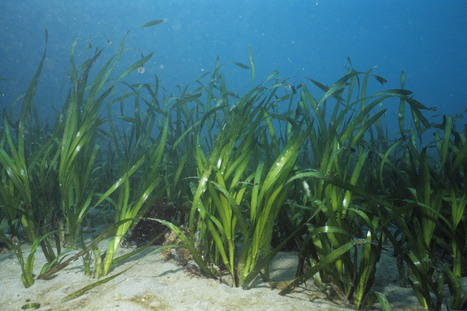
Underwater Meadows Might Serve As Antacid For Acid Seas

Underwater Meadows Might Serve As Antacid For Acid Seas | Coastal Restoration | Scoop.it
Marine biologists worry that certain species won't survive the shifts in sea acidity that climate change brings. But research on sea grasses along California's coast suggest marine preserves can help.
PIRatE Lab's insight:

Good stuff here about the potential value of Marine Protected Areas beyond what they were originally intended for (fish protection).  That is great.  But there is also a bit of wishful thinking here and at least a smidgeon of researchers following the grant money (with the new big dollars in ocean acidification).

No comment yet.
Scooped by PIRatE Lab
July 18, 2014 3:25 PM
Scoop.it!

Florida – Some property owners say no to beach renourishment for land rights | Coastal Engineering News & Subscription List

Florida – Some property owners say no to beach renourishment for land rights | Coastal Engineering News & Subscription List | Coastal Restoration | Scoop.it

The U.S. Army Corps of Engineers has begun a $16.1 million beach renourishment project in Pinellas County that excludes a few property owners who refuse to sign a perpetual easement.

No comment yet.
Scooped by PIRatE Lab
July 18, 2014 2:53 PM
Scoop.it!

Coastal Sediment Management Workgroup

Please join the California Coastal Sediment Management Workgroup co-chaired by the U.S. Army Corps of Engineers and California National Resources Agency for the California Coastal Sediment Master Plan, Outreach and Plan Formulation Stakeholder Meeting 2.  The meeting will be held on Thursday, July 31, 2014 from 9:00 am to 12:00 pm at the San Diego Association of Governments (SANDAG) office (8th Floor Board Room) located at 401 B Street in San Diego, California.  

The overall purpose of the meeting is to obtain input from coastal stakeholders regarding how best to pull together existing regional sediment management plans into a state-wide sediment master plan.  Please note that lunch will not be provided so plan accordingly. Please RSVP to David Cannon at david.cannon@everestconsultants.com by Friday, July 25. More information about the California Coastal Sediment Master Plan is available online. 

No comment yet.
Scooped by PIRatE Lab
July 15, 2014 10:44 AM
Scoop.it!

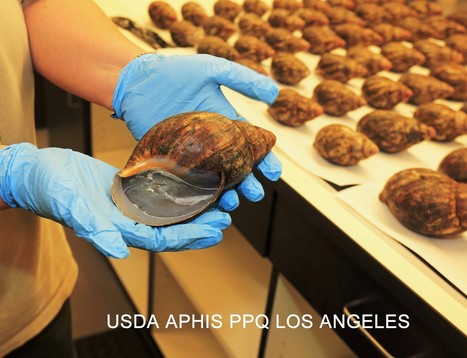
67 giant African snails, meant for human consumption, seized at LAX

67 giant African snails, meant for human consumption, seized at LAX | Coastal Restoration | Scoop.it

WowTwo picnic baskets packed with 67 live giant African snails were seized by federal authorities at Los Angeles International Airport , authorities said Monday.

PIRatE Lab's insight:

Wow!  Customs and Border Protection actually managed to catch the dude with two giant picnic baskets on his way to San Dimas with 35 pounds of live gigantic snails.  Impressive.  I think he was sitting next to me on my last flight home.  Errrr...no.  Now that I think about it, I am pretty sure THAT guy's 35 pounds of mollusk was marine in origin.  The dripping salt water and purple squid ink decorating the seat and aisle were the give away.  If only he hadn't been pre-approved by the TSA's stellar Global Entry he might have been screened and caught like Mr. Nigeria here.  I guess this poor schmuck from Lagos failed to pay for his get out of jail free card.

No comment yet.
Scooped by PIRatE Lab
July 12, 2014 8:01 PM
Scoop.it!

The long journey of 'local' seafood to your plate

The long journey of 'local' seafood to your plate | Coastal Restoration | Scoop.it
Another glorious Golden State summer is upon us. San Joaquin Valley peaches are at their height and rolling in to farmers markets from Silver Lake to Mar Vista. Alice Waters' foragers are plucking Napa zucchini blossoms for the chefs at Berkeley's Chez Panisse. Barbecues in Sonoma are primed for grilling Niman Ranch grass-fed steaks.
PIRatE Lab's insight:

Our research bears this out.  Among other things, the carbon footprint of the average seafood item sold here in Southern California restaurants has a carbon footprint (or carbine "finprint") about half that of your average seafood item sold in markets.  The phenomenon of "needing" to send the vast majority of our catch overseas for processing is behind this (and the fact that processed seafood is more likely to be sold in markets).

No comment yet.
Rescooped by PIRatE Lab from sustainability and resilience
July 11, 2014 6:51 PM
Scoop.it!

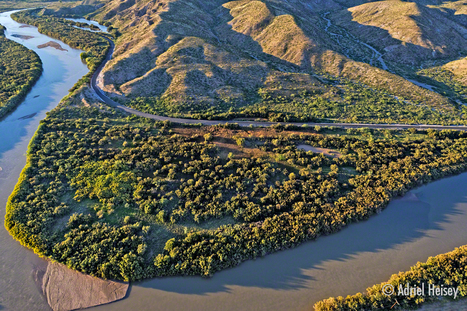
Along the Rio Grande, An Innovative Water Market Restores Riverside Habitat

Along the Rio Grande, An Innovative Water Market Restores Riverside Habitat | Coastal Restoration | Scoop.it
With rivers in the American Southwest dammed, diverted, drought-stricken and running dry, their fate is increasingly in human hands.

Via Anita Woodruff
PIRatE Lab's insight:

A very cool idea and approach.  I like the idea of enviros and farmers sharing the pain of the drought.


I also had never thought of classifying restoration species as "agricultural crops" to allow for the diversions of water/resources.

PIRatE Lab's comment, July 11, 2014 6:49 PM
Very cool. I had not heard of this project before, but it looks neat. Thanks for sharing Anita!
Scooped by PIRatE Lab
July 10, 2014 7:09 PM
Scoop.it!

Island Fox Recovery from KCLU

It’s an environmental success story on the islands off our coastline which has left even biologists involved in the project surprised.


It’s a story we first told you about last week.  Efforts to save the rare Island Fox have been so successful, researchers are moving to remove them from the endangered species list.


KCLU’s Lance Orozco has the story behind the story, explaining how they made a long shot effort work.

PIRatE Lab's insight:

A fantastic summary of the efforts to recover endangered species on our California Channel Islands.  This is shaping-up to become a classic example of ecosystem interactions, food web dynamics, invasive species, and novel pollutants (environmental estrogens).


Click the "MP3 Island Fox Recovery" link to hear the story.

No comment yet.
Scooped by PIRatE Lab
July 9, 2014 12:13 PM
Scoop.it!

Ray Nagin sentenced to 10 years in prison for public corruption

Ray Nagin sentenced to 10 years in prison for public corruption | Coastal Restoration | Scoop.it
He becomes the first mayor of New Orleans to be sent to federal prison.
PIRatE Lab's insight:

This mayor, who sought personal profit and position even in the wake of Hurricane Katrina, is finally sentenced.  This sorry political leader would use any tools at his disposal (divisive rhetoric, payola, etc.) to improve he and his children's position, the city and the public be damned.


See also: http://www.latimes.com/nation/nationnow/la-na-nn-ray-nagin-new-orleans-mayor-sentenced-prison-20140709-htmlstory.html


and:


http://thelensnola.org/2014/02/19/rethinking-ray-nagin-his-greatest-accomplishment-was-surely-his-re-election/


No comment yet.
Rescooped by PIRatE Lab from Rescue our Ocean's & it's species from Man's Pollution!
July 8, 2014 8:13 PM
Scoop.it!

"Save The Whales"... their poop holds the key (maybe)!

"Save The Whales"... their poop holds the key (maybe)! | Coastal Restoration | Scoop.it

Whale poo could be the secret to reversing the effects of climate change. 


Via Marian Locksley
PIRatE Lab's insight:

Its all about trying to transport carbon from the surface down to the sediments down deep in the benthos...although "reversing" climate change is a bit overly optimistic.

PIRatE Lab's curator insight, July 8, 2014 8:23 PM

So whales can be seen as an ecosystem service.  In this case, a force to sequester carbon.  By saving whales from extinction we (in effect) saved this important function which "rockets" carbon from surface waters (such as krill or other plankton) into deeper waters as speed many orders of magnitude greater than the normal settling rate of typical marine snow.

Scooped by PIRatE Lab
July 6, 2014 4:01 PM
Scoop.it!

Blocking Californians' beach access will soon carry a hefty fine

Blocking Californians' beach access will soon carry a hefty fine | Coastal Restoration | Scoop.it
Frustrated beachgoers this summer will finally have a remedy against anyone who blocks public access to California's shoreline.
PIRatE Lab's insight:

A HUGE breakthrough for coastal access!

No comment yet.
Scooped by PIRatE Lab
July 19, 2014 3:08 PM
Scoop.it!

7 secrets of highly successful seafood retailers

7 secrets of highly successful seafood retailers | Coastal Restoration | Scoop.it
Shoppers who trust the seafood in a store are more loyal customers and the basket size of a seafood customer is typically $10 higher than average.
PIRatE Lab's insight:

How people are marketed to in larger markets.

No comment yet.
Scooped by PIRatE Lab
July 19, 2014 1:18 PM
Scoop.it!

Satellites Are Now Cleared to Take Photos at Mailbox-Level Detail

Satellites Are Now Cleared to Take Photos at Mailbox-Level Detail | Coastal Restoration | Scoop.it
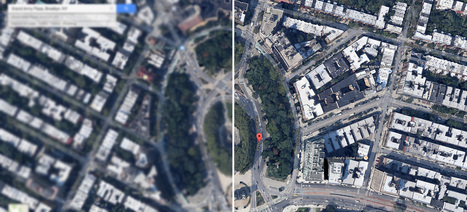
The Department of Commerce just lifted a ban on satellite images that showed features smaller than 20 inches. The nation's largest satellite imaging firm, Digital Globe, asked the government to lift the restrictions and can now sell images showing details as small as a foot. A few inches may seem slight, but this is actually a big deal.
PIRatE Lab's insight:

Here we go.  I was just at the ESRI conference in San Diego and Digital Globe is pushing this in a big way.


We seem to be concerned about "drones," but there are a host of technologies that should be equally concerning.  The cats of which are mostly already out of the bags.


Merry Christmas!

Scooped by PIRatE Lab
July 18, 2014 4:02 PM
Scoop.it!

Considering Multiple Futures: Scenario Planning to Address Uncertainty in Natural Resource Conservation

A new guide to scenario planning for natural resource management with a particular eye towards preparing for climate change.

PIRatE Lab's insight:

This report covers a range of scenario planning approaches and 12 case studies of how the approach is being applied to natural resource management and climate change issues in the US.

truonganphuong's curator insight, July 20, 2014 3:45 AM

This is a new publication from the Wildlife Conservation Society (WCS) and the U.S. Fish and Wildlife Service (USFWS) which illustrates that one way to make pro-active decisions in conservation and natural-resource planning today is to consider various scenarios that may unfold tomorrow. In addition to offering insights on scenario planning, the report explains why a group might undertake a scenario planning effort, and describes the range of approaches for scenario planning in natural resource conservation. I love how detailed and thoughtful this report is and believe that this will be very much beneficial to our future. 

Scooped by PIRatE Lab
July 18, 2014 3:32 PM
Scoop.it!

How beach shaped San Diego’s history

How beach shaped San Diego’s history | Coastal Restoration | Scoop.it
This history of San Diego is written in the sand and the surf.
PIRatE Lab's insight:

Increasingly I am understanding how much sandy beaches are worth and how valuable they are to the broader economy and sense of place for those of us here in Southern California.  Check out the "Century of Beach Culture Landmarks" link as well.

No comment yet.
Scooped by PIRatE Lab
July 18, 2014 3:19 PM
Scoop.it!

Billionaire makes final push to bar public access to Martin's Beach

Billionaire makes final push to bar public access to Martin's Beach | Coastal Restoration | Scoop.it
A San Mateo County Superior Court judge heard closing arguments Wednesday in the latest battle over access through private land to a beloved beach — one that could lead to the U.S. Supreme Court.
PIRatE Lab's insight:

Closing arguments here.  We will have to see how the judge comes down.

No comment yet.
Scooped by PIRatE Lab
July 18, 2014 2:08 AM
Scoop.it!

White Shark swims onto Coronation beach, Western Australia

A 4m (13ft) Great White shark came ashore at coronation beach yesterday. Looked like it may have been sick or injured. It would head off shore about 50m then...
PIRatE Lab's insight:

This great white shark that washed ashore on an Australian beach had a large Australian sea lion stuck in its throat.


The 13-plus-foot shark choked and died, according to the Western Australia Department of Fisheries. On Saturday, the shark was seen in distress, thrashing in shallow surf at Australia's Coronation Beach. Beachgoers took this video of the fish and posted it on YouTube, where the footage has gone viral. Two days later, the shark washed up on the same beach.


My colleague Chris Lowe from Cal State Long Beach told the LA Times the mammal in his mouth in and of itself couldn't have killed the shark. "They can't choke to death like humans since an esophageal block doesn't restrict breathing in a shark. It's most likely that the shark was rubbing along the seafloor to dislodge the food and the animal just stranded and couldn't get back to deeper water."


Yes.  Maybe.  But who the heck knows?


No comment yet.
Scooped by PIRatE Lab
July 12, 2014 8:13 PM
Scoop.it!

Dumped WWII Chemical Munitions Still Affecting Fish

EUROPE - Thousands of tonnes of chemical warfare agents were dumped into the Baltic Sea after the Second World War. A recent study has shown that fish caught near the dumping grounds show high levels of genetic and cell damage, revealing the long legacy of these toxic substances.
PIRatE Lab's insight:

This is particularly interesting and an increasing venue for exploring ecotoxicity.  Our historic approach of looking for PAHs or some other substance has often missed the big story that persistent compounds can have effects upon populations and ecosystems long after the compound itself my have decayed or broken down to sub-detection levels.  Population and genetic structure is the natural place to look for this.  But even so, being able to detect impacts from seven decades ago is impressive.

No comment yet.
Scooped by PIRatE Lab
July 12, 2014 12:48 PM
Scoop.it!

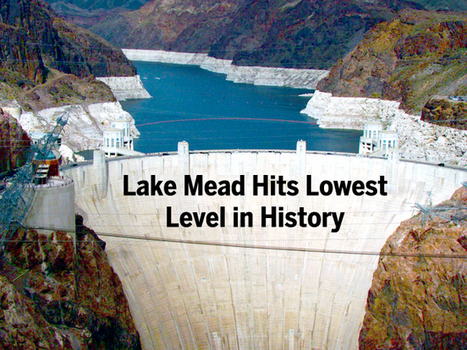
Drought Drains Lake Mead to Lowest Level

Drought Drains Lake Mead to Lowest Level | Coastal Restoration | Scoop.it

"The largest reservoir in the U.S. falls to its lowest water level in history, Nevada State Sen. Tick Segerblom introduced a bill title and issued a press release on July 8 calling for an 'independent scientific and economic audit of the Bureau of Reclamation’s strategies for Colorado River management.'"


This week’s history-making, bad-news event at Lake Mead has already triggered lots of news stories, but almost all of these stories focus on the water supply for Las Vegas, Phoenix and California. But what about the health of the river itself?


Tags: physical, fluvial, drought, water, environment.

Tom Franta's curator insight, July 12, 2014 11:40 AM

Many geographers are aware that future water resource issues in the American Southwest will have political, cultural, and social impacts.  What do you believe to be some approaching concerns after reading this article?

Scooped by PIRatE Lab
July 11, 2014 1:58 PM
Scoop.it!

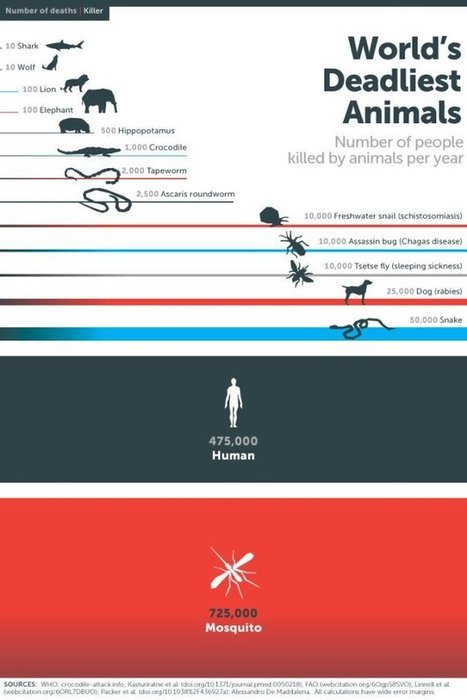
Mosquitos: The deadliest animal

Mosquitos: The deadliest animal | Coastal Restoration | Scoop.it

This graphic from the Gates Foundation is from a few months ago.

PIRatE Lab's insight:

An interesting talking point for folks worried about "dangerous" animals.  I  am always amazed at how our risk managers can't seem to see the real dangers out there (i.e. driving to a field site), instead focusing on the apparent "dangerous" things (which really aren't that bad): SCUBA diving, working with large predators, etc.

No comment yet.
Rescooped by PIRatE Lab from Rescue our Ocean's & it's species from Man's Pollution!
July 10, 2014 5:34 PM
Scoop.it!

Sea surface temps are up. So why haven't forecasters declared El Niño conditions?

Sea surface temps are up. So why haven't forecasters declared El Niño conditions? | Coastal Restoration | Scoop.it
Sea surface temperatures are up. So why haven't forecasters declared El Niño conditions? 

Via Marian Locksley
PIRatE Lab's insight:

Good summary of the different index measurement points.


Please also see the frequent updates from NOAA here:


http://www.cpc.ncep.noaa.gov/products/analysis_monitoring/enso_advisory/index.shtml

No comment yet.
Scooped by PIRatE Lab
July 9, 2014 9:42 AM
Scoop.it!

Fish drying method changes lives in Burundi

Fish drying method changes lives in Burundi | Coastal Restoration | Scoop.it

FAO project to introduce simple raised drying racks improves livelihoods and nutrition for communities along the shores of Lake Tanganyika and beyond.

An FAO project to equip small fishing communities with the tools and know-how to dry fish on simple raised racks instead of on the sand has changed lives along the shores of Lake Tanganyika in Burundi.

Yet at the same time, the increase in supply has not put greater pressure on the lake’s resources, as the amount of fish being taken from the lake has remained relatively stable.

“The extraordinary thing is how this one very small project has created a snowball effect along the shores of the lake,” said FAO Fishery Industry Officer Yvette Diei-Ouadi. “It’s extremely rare now to see people drying fish on the ground – if driers can’t afford wire-mesh racks they will improvise with wood and fishing net. Even fishing communities in neighbouring countries have taken up the rack-drying technique.”

The new way of drying fish has brought other changes. Whereas in 2004, about 80 percent of driers were women, now men keen to join in the lucrative enterprise comprise 30-40 percent.

PIRatE Lab's insight:

A possible example of how effective technology can bolster income and improve lives without necessarily leading to a further exploitation/intensification of harvest of the resources/fishery.  This "win-win" may have been possible as the exploitation rate of the fishery was already quite high by the early 2000's when this new fish drying technique was introduced.

No comment yet.
Scooped by PIRatE Lab
July 7, 2014 2:47 PM
Scoop.it!

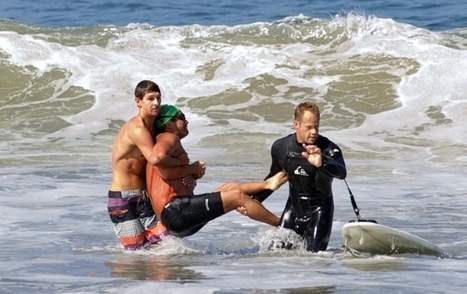
Footage Of The Manhattan Beach Shark Attack, Swimmer 'Thought This Was It'

Footage Of The Manhattan Beach Shark Attack, Swimmer 'Thought This Was It' | Coastal Restoration | Scoop.it
A video of the shark attack that left a swimmer injured yesterday shows the panic that it caused among those at Manhattan Beach enjoying the holiday weekend.
PIRatE Lab's insight:

With increasing encounters with (mostly juvenile) white sharks here in the Southern California Bight, we may be in need of some new policies regarding fishing behaviors on our coastal assess points and piers.  There is an amazing disregard for the potential severity of attracting cartilaginous fishes into areas where large numbers of people recreate in shallow water.  This incident is but the latest.


See also: http://www.latimes.com/local/la-me-shark-attack-20140707-story.html


and


http://ktla.com/2014/07/06/swimmer-attacked-by-shark-in-manhattan-beach-is-in-shock/


and


http://www.latimes.com/local/lanow/la-me-ln-shark-bite-fisherman-interview-20140706-story.html


and


http://www.latimes.com/local/lanow/la-me-ln-fisherman-defends-actions-shark-attack-20140708-story.html


and last, but certainly not least:


http://www.latimes.com/local/lanow/la-me-ln-shark-bites-20140705-story.html


No comment yet.