


If you’ve never used video in eLearning before, use these five tips to make the new onboarding process as effective as possible.
Via juandoming

 Your new post is loading...
 Scoop.it! If you’ve never used video in eLearning before, use these five tips to make the new onboarding process as effective as possible. Via juandoming 
No comment yet.
Sign up to comment
Scoop.it!

We're already more than a week into January, but I'm still slowly working my way through all the "best of" year-end lists out there (there are so many of them!). Combing through these recommendations may be time-consuming, but it's worth the commitment, I've found, as sometimes you turn up an absolute gem you missed earlier in the year.
Take the post titled "The Two Minutes It Takes to Read This Will Improve Your Writing Forever," by marketer Josh Spector, for example. As short as it is useful, the piece is one of the most recommended posts of 2016, Medium informs me. It's not hard to see why.
Spector offers five dead-simple changes you can make to basically any piece of writing in a matter of seconds that will make it more forceful and compelling. We'd all enjoy reading a bit more if more writers followed his tips. Via The Learning Factor

The Learning Factor's curator insight,
January 15, 2017 4:45 PM
Super quick changes, outsize impact.
Scoop.it!

"Today’s most hyped phrase, personalized learning, is nearing Gartner’s peak of inflated expectations among the chattering class of education thought leaders and philanthropists." Via EDTECH@UTRGV
Scoop.it!

Wondering what are the Computer Skills that everyone should master to speed their professional development? Check 5 Computer Skills everyone should master. Via EDTECH@UTRGV

Carolina Velásquez's curator insight,
November 6, 2016 7:17 PM
Since technology is booming, people want to master of the different platforms or tool that internet offers. I agree every person, if she/he has can connect with internet, so she/he should develop some skills .As the article says, to have master of mobile apps or social skills.
Scoop.it!

Free daily vocabulary email, helping you say exactly what you mean with no wasted words. Enhance your skills in public speaking, conversation, writing, and reading. Via Ana Cristina Pratas
Scoop.it!

Wondering how to reduce Online Training Seat Time in your corporate eLearning program? Check these 9 tips to reduce Online Training Seat Time. Via EDTECH@UTRGV
Scoop.it!

How To Build A Corporate Learning Community Of Practice. Check the Top 10 Tips To Create a Corporate Learning Community of Practice. Via Ana Cristina Pratas

EI Design's curator insight,
October 17, 2016 6:32 AM
Top 10 Tips To Create a Corporate Learning Community of Practice
Scoop.it!
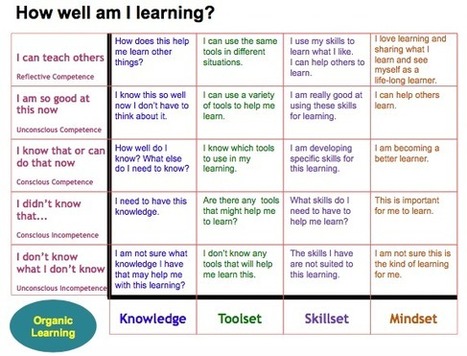
We were exploring how to make metacognitive thinking more visible for our students, keeping it aligned with our mandate to keep thinking and learning visible, transparent, tangible, critiqueable and accountable within learning spaces.
Learn more / En savoir plus / Mehr erfahren:
http://www.scoop.it/t/21st-century-learning-and-teaching/?tag=rubric
http://www.scoop.it/t/21st-century-learning-and-teaching/?tag=Criticism
Via Nik Peachey, Gust MEES

Carole Hunter's curator insight,
October 10, 2016 10:46 AM
Contains rubrics both for ourselves as educators, but also for students. How well are we learning?

Dr. Helen Teague's curator insight,
October 11, 2016 2:49 PM
Don't often see a rubric specifically for metacognition: Rubric for Deeper Thinking About Learning
Scoop.it!
View full lesson: http://ed.ted.com/lessons/5-tips-to-improve-your-critical-thinking-samantha-agoos Every day, a sea of decisions stretches before us, an Via Ana Cristina Pratas
Scoop.it!

Want to know why your eLearning program isn't taking off as expected and instead is received with skepticism? Check 5 Barriers To eLearning Adoption. Via EDTECH@UTRGV
Scoop.it!
Short version - Professional Learning Animation AITSL
Jess Chalmers's insight:
Share your insight
Scoop.it!
Trusted guides are individuals who offer valuable information, in the form of articles, courses, tutorials, video, podcasts or in other formats, on a specific subject-matter and who have earned, over-time, deep-trust from their readers, followers and fans. Via Nik Peachey, Paulo Moekotte
Scoop.it!

Why are there still so many myths about eLearning? The fact is, online education is in trend today. Statistics say it all: Via Edumorfosis, juandoming
|
Scoop.it!

You see people succeed all around you and it seems effortless for them. You feel you've stalled, or worse -- you feel like you've wasted your time doing what you're doing, and time is running out. I get it. I've been there, and I can help.
So now what? Now it's time to unleash positive change in your life once and for all. Start with a question: What do you love to do? For those of you who struggled with the answer. I'm going to help you get there. Here are four steps to unleash positive change in your life immediately. Via The Learning Factor
The Learning Factor's curator insight,
January 17, 2017 4:52 PM
When you are aware of your passion, you don't need resolutions. You don't need to suffer through diets. You will see your purpose with clarity.
Scoop.it!

HR leaders are sizing up a handful of challenges that they weren't yet facing in the early days of 2016. Over the next 12 months the solutions to those obstacles will have to evolve and adapt as the overall business world does the same. Still, it's worth taking a look back at what's changed in the past year in order to see what's in store for human resources professionals in 2017. These are five of the biggest trends impacting the field right now. Via The Learning Factor
The Learning Factor's curator insight,
January 12, 2017 4:36 PM
Some companies seem less gung-ho to ditch annual performance reviews than they were a year ago.
Scoop.it!

Want to know how to encourage employees to Comply With Compliance Training? Check 5 tips to encourage employees to Comply With Compliance Training.
Scoop.it!

The new book The Distracted Mind: Ancient Brains In A High-Tech World makes the case for managing the tsunami of digital distractions to aid how we learn, absorb information and live. Via juandoming
Scoop.it!

Use some psychology to break down five distinct sources of motivation for corporate eLearners. Via EDTECH@UTRGV
Scoop.it!

Given the plethora of tools, there is no one way to engage in professional learning. Create a system that allows you to curate content, save great resources, and share with others in whatever way best fits your learning style, devices, and preferences. Via Nik Peachey

Rod Murray's curator insight,
October 15, 2016 7:52 AM
Learn about the power of Curation and tools to make it happen

Jemma Hillyer | EliteText's curator insight,
October 15, 2016 8:22 AM
A great list of tools for collecting and sharing content.
Scoop.it!

Scoop.it!
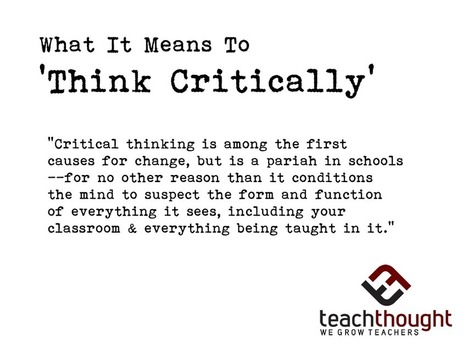
Critical Thinking
Learn more / En savoir plus / Mehr erfahren:
http://www.scoop.it/t/21st-century-learning-and-teaching?tag=Critical-Thinking
Via Gust MEES, juandoming

Gust MEES's curator insight,
October 7, 2016 10:02 AM
Critical Thinking
Learn more / En savoir plus / Mehr erfahren:
http://www.scoop.it/t/21st-century-learning-and-teaching?tag=Critical-Thinking

Roberto Aníbal Arce's curator insight,
October 11, 2016 11:36 AM
Buenos recursos para enseñar pensamiento crítico
Scoop.it!

The advent of artificial intelligence places more focus on the need for creativity in work and education rather than emphasis on science, technology, engineering and maths, Deloitte's Centre for the Edge managing director and co-chairman John Hagel says. Mr Hagel believes AI can take care of a lot of tasks in the STEM category. “I’m a contrarian in terms of this emphasis on STEM...that's not what's going to provide us with a career that serves us well over time. Via Marc Wachtfogel, Ph.D.
Scoop.it!

Screencasts are typically short video recordings of what is taking place on the screen of a computer or mobile device. They provide students with a dynamic way to make thinking visible, as they can demonstrate what they know through a variety of modalities such as drawing, typing, voice narration, and video. However, what is sometimes overlooked is the power of the screencast in the hands of teachers. As the new school year begins, consider these three ways to utilize screencasting to facilitate communication and foster a stronger home-school connection. Via John Evans

Louise Robinson-Lay's curator insight,
September 23, 2016 2:36 AM
Screen casting is a great way to share ideas. They can make useful PD learning.
Scoop.it!

Customers with positive associations with a brand will spend up to 200% more and will also tell an average of eight friends about them. Via Eric_Determined / Eric Silverstein

Eric_Determined / Eric Silverstein's curator insight,
July 29, 2016 3:08 AM
The way customers feel is of the utmost importance, not just today, but for the entire customer life cycle. And since satisfaction is more neutral than positive, it is no longer enough for brands to simply satisfy customers.
|






