 Your new post is loading...

|
Rescooped by
Rémy TESTON
from Social Media and Healthcare
August 4, 2014 7:49 AM
|
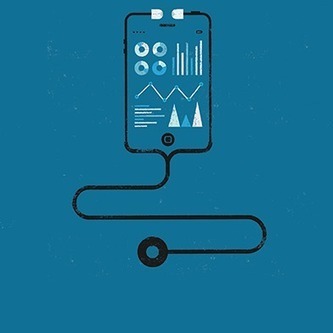
Nowadays, mobile phones are used for much more than making a phone call or sending a text message. In relation to health, many people now use their mobile devices as their personal advisors and their medical assistants. A 2013 survey from creative agency Digitas Health which polled over 2000 consumers revealed that patients who use their smartphone at the doctor’s office are 80% more likely to switch medications, and also twice as likely to request a particular brand. The results also revealed that 38% of smartphone owners believe that their device is essential for finding information related to healthcare, and one in every ten patients use apps that have been recommended by their physicians. Users that own both a tablet and smartphone device are twice as likely to ask their doctor about a particular app, and similarly twice as likely to switch their medication. With these statistics in mind, healthcare marketers should not underestimate the power of mobile. It is evident that one of the best ways to engage with patients these days is online and through mobile devices. Therefore, creating a responsive website along with a strong social media campaign is essential for a successful marketing project. Marketers should also make sure they are providing patients with what they are looking for. As people are increasingly using their smartphones to access information, marketers should make it easy for them to access it. They could create a blog, website, or social media channel, where useful information can be found. Search engine optimization is essential in this process, as having your campaign high on search results lists will mean that patients can easily access the information you are providing. Healthcare marketers should also consider buying or creating customer-friendly applications to supply patients with information before, during, and after they have visited the doctors. There are many apps that hospitals use that allow users to check their symptoms, find the nearest emergency room center, or register for care. Other applications provide maps, medication trackers, and personal health records. Finally, it is important for marketers to allow patients to connect with them but also with each other. Therefore, it would be useful for marketers to create a community within their apps, where patients with similar illnesses can make contact and share information with one another. In turn, this will help marketers to increase awareness about the services they provide, promote specialists, and build loyalty among the groups.
Via Plus91
|
|
Scooped by
Rémy TESTON
August 3, 2014 7:22 AM
|
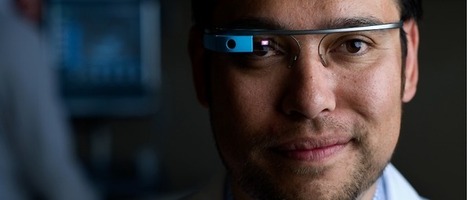
L'UCI School of Medicine est une école de médecine américaine. Elle vise à intégrer les Google Glass dans son cursus pédagogique.
|
|
Rescooped by
Rémy TESTON
from Social Media and Healthcare
August 3, 2014 7:14 AM
|
Credibility and integrity form the cornerstone of success and longevity in any profession, the medical field included. For years, these factors have been associated with maintaining professional boundaries in physician-patient interaction and colleague communication. These lines seem to have blurred, however, with the rapid evolution of social media and the burgeoning influence of online engagement. Doctors now have opportunities to communicate with patients and fellow physicians outside clinics, hospitals and conferences through blogs and social networking sites such as Facebook, Twitter and YouTube. For doctors who wish to keep up with these developments, how do they extend their services online without the risk of crossing professional limits? (from left to right) Dr. Remo-tito A. Aguilar, Atty. Ivy Patdu-Calaquian, MD, and Dr. Ivan Vicente In a recent symposium on social media use, misuse and abuse among doctors, orthopedic surgeon and co-founder of HealthXPh Dr. Remo-tito A. Aguilar discussed how physicians can create a professional online presence by giving patient education, providing wellness motivation, and managing patient support groups. He cited Dr. Willy Ong’s Health Tips, a Facebook page featuring health advice posts that are shared thousands of times by Dr. Ong’s followers, who have reached over 87,500 as of this writing. “His frequent, consistent and regular updates also contributed to the popularity of his page. By providing proactive wellness motivation, Dr. Ong [has become] an active participant in his community’s health and wellness,” noted Dr. Aguilar. He also mentioned how his fellow HealthXPh co-founder Dr. Iris Thiele Isip-Tan uses social media to direct patients to her blog, The Endocrine Witch. On her Facebook page, she posts “picture quotes” with links to her blog posts—an approach that Dr. Aguilar described as “simple, succinct and visual sharing of information” that not only catches readers’ attention but facilitates message retention as well. Dr. Narciso Tapia’s Smiling Kidneys Club, on the other hand, was cited as a model for patient support groups. Dr. Tapia, himself a dialysis patient, uses Facebook to manage the Cebu-based support group for patients with kidney disease. Dr. Aguilar explained, “The shared experience for social media bonded them together and has since [helped them support] each other emotionally and, sometimes, financially.” As for physician-to-physician engagement, Dr. Aguilar suggested online peer collaboration through platforms such as HealthXPh, which supports quick, easy sharing of public health alerts and medical specialty concerns and issues. He added that those who belong to healthcare institutions could use social media to provide patient support services, as long as the sites are regularly monitored and patients’ queries are promptly addressed. Monitoring of service delivery as well as raising of brand awareness can also be done via social media. Following Dr. Aguilar’s talk, Atty. Ivy Patdu-Calaquian, MD, and Dr. Ivan Vicente discussed the dangers of social media use among doctors, and how these can be avoided. They gave specific examples of how physicians, albeit unintentionally, misuse social media through posts that breach patient confidentiality and online activities that violate professional boundaries between doctor and patient. Patient confidentiality may be violated by sharing photos that accidentally show patients in the background. It can also be breached with a status update about a tough day at work, with details about patients that may not include names but other information that may reveal their identity. The mere act of actively adding patients as Facebook friends may also violate this. One might also commit online misconduct by granting consultations online—whether in the public feed or via private message. Some doctors might post selfies on duty or while engaging in activities that could negatively affect their credibility, such as drinking alcohol, while others may rant and post defamatory statements against colleagues. These, however, can be prevented by avoiding the sharing of sensitive and unprofessional posts anywhere on the Web—even on accounts set to private—as any post can still be copied, screenshot, saved and forwarded without consent. “Doctors may also consider having separate personal and professional social media accounts, which can help in maintaining appropriate boundaries between physician and patient.” Doctors may also consider having separate personal and professional social media accounts, which can help in maintaining appropriate boundaries between physician and patient. They are also advised to monitor their internet presence by routinely searching their name online to ensure that none of their private information is compromised. Finally, physicians have the responsibility to call the attention of colleagues—discreetly, of course—when they notice any online misconduct. As Dr. Vicente pointed out, “We should remember that as physicians, we have the professional commitment to safeguard the reputation of colleagues and other health professionals.” With these guidelines in mind, doctors would be digitally equipped and savvy as they navigate the new frontiers of health and wellness engagement.
Via Plus91
|
|
Scooped by
Rémy TESTON
August 3, 2014 7:07 AM
|
Une application pour téléphone intelligent avertit quand une personne atteinte de maladie mentale change ses habitudes.
Une nouvelle molécule pourrait bien révolutionner le traitement des cancers. Mise au point par Écrins Therapeutics, ET-D5 agit sur la vascularisation des cellules tumorales.
Via Emmanuel Capitaine
|
|
Rescooped by
Rémy TESTON
from Social Media and Healthcare
August 1, 2014 5:33 AM
|
Few healthcare IT policies these days are as delicate, sensitive and potentially emotionally explosive as efforts to restrict or regulate employee social media activity. And yet hospital hierarchies are routinely stepping on these political minefields as providers try to protect their reputations.
Consider a recent incident at the 2,478-bed New York Presbyterian Hospital. An ER nurse posted a photograph of a trauma room – no staff or patients were in the picture – after caring for a man who had been hit by a subway train. The caption: "Man vs. 6 train." The image simply showed a room that had seen a lot of action moments before. The veteran nurse was fired after the incident, according to an ABC News report, not because she had breached hospital policy or violated HIPAA, but, as she put it: "I was told I was being fired for being insensitive." This legitimately raises key issues around what a hospital's social media policy should be. This specific incident, though, appears to be an impressively poor choice for the hospital to have selected to make its stand. First, there really was no privacy issue at play. The photo shows nothing more than a slightly messy trauma room. The caption is vague and is hardly worse than a police officer posting a car accident image, with a note warning people against drinking/texting while driving. (To be precise, the injured car would be recognizable to the patient along with friends and family, especially if a license plate were visible, whereas a generic trauma room photo isn't.) An even bigger problem with using this incident is that the nurse, Katie Duke, didn't even take that photograph. It was taken by a staff doctor and the doctor had posted it on the doctor's Instagram page. Nurse Duke had merely reposted it. The consistency killer? The doctor "was not reprimanded," ABCNews reported. To be fair, it's not clear whether the doctor's post included the "Man vs. 6 train" comment. Given that it appears that the comment – as opposed to the image – is the trigger here, the hospital's disciplinary process may or may not have been inconsistent. Let's get back to the social media policy issues. I would hate to have to issue a concrete definition – acceptable to our friends in Legal – of "sensitivity." What if there had been no image and the nurse had simply said something like "A grim reminder at the ER today about how dangerous and deadly subways can be. Don't take any chances – ever." Is that insensitive? And if not, how is it meaningfully different than what Duke reposted? She specified the subway line, which, by itself, isn't insensitive nor especially revealing. And she used an image of the trauma center, which showed nothing. Would it have made any difference had she posted a generic trauma center image from Google Images? If no patient or hospital privacy has been violated, what is the issue? The issue is that she was accused of violating hospital policy. We've now gone full circle. What is reasonable to ban, as long as no one's privacy nor hospital confidentiality is violated? (Classic hospital confidentiality: "Wow, my hospital is getting away with amazing markups. We just charged a patient $XXX for something, and I saw the paperwork that we only paid $X for it." The employee would be using information that she/he could only know because she worked there. That's a fine violation.) Can a hospital ban employees from saying anything hospital-related on their social media posts? What if it's entirely positive, as in "Our surgical team is brilliant. We saved patients today that most surgeons would have lost"? Here's the IT nightmare. What if the hospital says, "We're going to decide this on a case-by-base basis"? Danger, Will Robinson! Danger! Then things fall to IT to become the social media police. Are you to then track every social media feed of every employee and to then – gulp – review every posting for appropriateness? And somehow management thinks that this action will avoid lawsuits? The simple fact is that a social media policy that covers what an employee does in his or her personal time is highly problematic. On the other hand, there certainly is social conduct that has to be dealt with. What if a doctor set up a site that identified herself as working at this identified hospital and then said how her team tries to inflict as much pain as possible and that they then place bets on when different patients will scream or pass out? The easiest route from an administrative perspective – but certainly not from a legal perspective – is to adopt something akin to the Pentagon's infamous Don't Ask Don't Tell. That would be a program where there was zero effort to uncover such naughty social posts (as IT breathes a major sigh of relief) but a strict policy for punishing employees and contractors who engaged in bad behavior that the hospital happened to learn of. The problem is that it leads to inconsistent punishment – with most people never getting caught – and to even vindictive behavior, with employees reviewing the social posts of a rival, looking for anything that might get them into trouble. That policy might simply prohibit posts that reflect poorly on the hospital, which is vague enough to allow senior management to make customized decisions. As long as healthcare doesn't decide that it needs to proactively check on all posts – a thankless task that would almost certainly fall to IT, which would try to automate much of that assignment from Hell – any concrete policy is better than none.
Via Plus91
|
|
Rescooped by
Rémy TESTON
from Social Media and Healthcare
August 1, 2014 5:23 AM
|
Patient recruitment is one of the biggest challenges facing companies involved inoncology clinical development. For example, a recent study by Cutting Edge Information finds that only 43% of surveyed companies achieved planned Phase 2 oncology enrollment. Recruitment problems can greatly delay clinical trials – sometimes by as long as 20 months – and these delays cost the company and deny oncology patients much-needed treatments. If only there were some avenue through which companies could reach large communities of patients just perfect for their trials.But wait – there is! It’s called social media, and – for pharma – it’s no longer a mystery, and it’s no longer off-limits. Every day patients congregate on Facebook, Twitter and other social media communities for education and support. Pharma can join hands with patients via these online groups and communicate with them about clinical trials.Through this engagement, patients learn about clinical trials around them and build relationships with companies that last beyond the trial duration. Though these methods are still new to pharma, a few studies and anecdotal evidence suggest that social media is more effective than traditional means of clinical trial patient recruitment – and it’s cheaper and faster (see here and here for examples). For companies using social media, a Clinipace survey found that 54% of respondents believe online communities and advocacy groups are their most valuable channels for enrolling patients in oncology clinical trials. One such community is PatientsLikeMe – a social media site where patients meet to share stories, learn about treatment options and even input their own real world data (RWD). Companies such as Sanofi and Genentech have partnered with PatientsLikeMe to gain access to a wide range of oncology patients (among other therapeutic areas). This set-up is a win-win for all parties: patients learn about relevant clinical trials, and companies can get the patient enrollment they need. It’s a no-brainer, right? Well, as with everything in pharma, there are always precautions. Social media may put patient privacy — and trial integrity — at risk if companies and patients are not careful. Ken Getz, who led a Tufts study on social media and clinical trials, suggests that informed consent could encourage patients to be mindful of what they disclose online during clinical trials. For those pharma organizations that are still hesitant to enter the social media landscape, the American Society of Clinical Oncology posted a Practical Guidance on using social media for various oncology practices – including clinical trials. With these guidelines in mind, pharma can jump into social media and reach out to oncology patients looking for clinical trials. Source: http://www.cuttingedgeinfo.com/2014/social-media-oncology-clinical-development
Via Plus91
|
|
Rescooped by
Rémy TESTON
from Santé & Actualités
August 1, 2014 5:20 AM
|
Les douleurs chroniques font partie des troubles médicaux les plus fréquents et invalidants. Les antalgiques font également partie des médicaments les plus utilisés, avec plus ou moins de succès
Via VALWIN
Toshiba annonce un premier objet connecté dédié à la santé. Cet appareil d'un nouveau genre renfermera de nombreux capteurs spécifiques et sera adapté aux contraintes du monde médical.
Via Lionel Reichardt / le Pharmageek
|
|
Rescooped by
Rémy TESTON
from Digital Health
July 30, 2014 4:25 AM
|
Dr. Samir Damani, a cardiologist at Scripps Health and a physician-entrepreneur, believes there is much value in the proliferation of digital and mobile health
Via Alex Butler
|
|
Rescooped by
Rémy TESTON
from Digital Health
July 27, 2014 7:28 AM
|
The Baseline Study is a collaboration between the Google X “moonshot” organization and various clinical and academic partners. The work should fit in well with the health-monitoring aspects of Google’s wearable efforts.
Via Alex Butler
|
|
Rescooped by
Rémy TESTON
from Télémédecine & e-Santé
July 25, 2014 2:53 PM
|
Gérer ses informations médicales à travers des applications est une pratique de plus en plus courante. A cet effet, l'exploitation et la sécurisation de ces données donnent matière à réflexion. Beaucoup d'utilisateurs se posent en effet la question, où iront toutes ces données ? Existe-t-il un cadre légal pour protéger ces informations à caractère personnel ?
Via Clinique PASTEUR
|
|
Scooped by
Rémy TESTON
July 24, 2014 7:05 PM
|
This 29-page research report is based on an independent study conducted in April 2014 by EPG Health Media, publisher of epgonline.org (the website for healthcare professionals).
The study includes two sample groups; 326 healthcare professionals (HCPs) and 146 pharmaceutical industry marketers (including pharma company and agency) and is designed to provide insight into factors surrounding HCP demand and pharma supply of digital resources.
- See more at: http://www.epghealthmedia.com/industry-reports/digital-demand-versus-supply/#sthash.EULwUre0.dpuf
|
|
|
Scooped by
Rémy TESTON
August 3, 2014 12:27 PM
|
Partners with the personalised analytics firm on a new MS platform Source: www.pmlive.com
|
|
Rescooped by
Rémy TESTON
from healthcare technology
August 3, 2014 7:15 AM
|
Called Baseline Study, Google's project will gather anonymous genetic and molecular information to create a full picture of what a healthy human is. The early-stage project is run by Andrew Conrad, a 50-year-old molecular biologist who pioneered cheap, high-volume tests for HIV in blood-plasma donations. Dr. Conrad joined Google X—thecompany's research arm—in March 2013, and he has built a team of about 70-to-100 experts from fields including physiology, biochemistry, optics, imaging and molecular biology.
Other mass medical and genomics studies exist. But Baseline will amass a much larger and broader set of new data. The hope is that this will help researchers detect killers such as heart disease and cancer far earlier, pushing medicine more toward prevention rather than the treatment of illness. "With any complex system, the notion has always been there to proactively address problems," Dr. Conrad said. "That's not revolutionary. We are just asking the question: If we really wanted to be proactive, what would we need to know? You need to know what the fixed, well-running thing should look like." The project won't be restricted to specific diseases, and it will collect hundreds of different samples using a wide variety of new diagnostic tools. Then Google will use its massive computing power to find patterns, or "biomarkers," buried in the information. The hope is that these biomarkers can be used by medical researchers to detect any disease a lot earlier. The study may, for instance, reveal a biomarker that helps some people break down fatty foods efficiently, helping them live a long time without high cholesterol and heart disease. Others may lack this trait and succumb to early heart attacks. Once Baseline has identified the biomarker, researchers could check if other people lack it and help them modify their behavior or develop a new treatment to help them break down fatty foods better, Dr. Conrad said. Google has already built one of the world's largest networks of computers and data centers to serve online-search results quickly and run other data-hungry services like the video website YouTube. This computing muscle can now be used to store and crunch medical information and let other researchers access it more easily.
Via nrip
|
|
Scooped by
Rémy TESTON
August 3, 2014 7:11 AM
|
Selon un rapport publié par la GSMA (GSM Association), la Chine est le leader mondial en termes d’ad...
|
|
Rescooped by
Rémy TESTON
from Pharma Hub
August 3, 2014 6:42 AM
|
The US Food and Drug Administration has proposed to largely deregulate a sizable list of Class II and Class I medical devices and no longer require their makers to go through the 510(k) process.
Via Philippe Marchal
|
|
Rescooped by
Rémy TESTON
from healthcare technology
August 1, 2014 5:33 AM
|
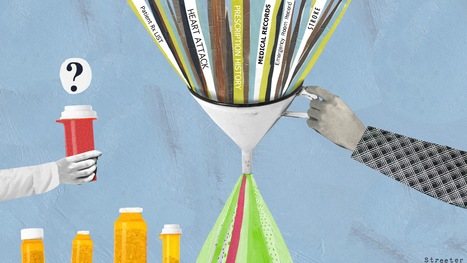
It's been tough to identify the problems that only turn up after medicines are on the market. An experimental project is now combing through data to get earlier, more accurate warnings. No one likes it when a new drug in people's medicine cabinets turns out to have problems — just remember the Vioxx debacle a decade ago, when the painkiller was removed from the market over concerns that it increased the risk of heart attack and stroke. To do a better job of spotting unforeseen risks and side effects, the Food and Drug Administration is trying something new — and there's a decent chance that it involves your medical records. It's called Mini-Sentinel, and it's a $116 million government project to actively go out and look for adverse events linked to marketed drugs. This pilot program is able to mine huge databases of medical records for signs that drugs may be linked to problems. The usual system for monitoring the safety of marketed drugs has real shortcomings. It largely relies on voluntary reports from doctors, pharmacists, and just plain folks who took a drug and got a bad outcome. "We get about a million reports a year that way," says Janet Woodcock, the director of the FDA's Center for Drug Evaluation and Research. "But those are random. They are whatever people choose to send us." more at http://www.npr.org/blogs/health/2014/07/21/332290342/big-data-peeps-at-your-medical-records-to-find-drug-problems?sc=tw
Via nrip
|
|
Rescooped by
Rémy TESTON
from Digital Health
August 1, 2014 5:32 AM
|
Accessible healthcare solutions that use just a mobile phone are being used simultaneously by patients in both developing and developed markets
Via Alex Butler
|
|
Rescooped by
Rémy TESTON
from Digital Health
August 1, 2014 5:21 AM
|
Google, Apple, and Samsung are racing to develop wearable technology that could be used to to monitor and track personal health and diagnose disease, explains Chris Duffey
Via Alex Butler
|
|
Scooped by
Rémy TESTON
August 1, 2014 5:16 AM
|
1. A practical digital health fellowship for providers and post-graduates 2. True interoperability 3. More women in leadership positions 4. A more robust representation of people involved in healthcare 5. A Hippocratic oath for the digital age
|
|
Rescooped by
Rémy TESTON
from Digital Health
July 31, 2014 8:09 PM
|
A combination of virtual reality and therapy, referred to as "interreality," may help therapist better understand how patients react to stress. Researchers say the hybrid therapy known as “interreality” was more effective than traditional cognitive behavioral therapy, which is currently considered the gold standard for more serious anxiety or post traumatic stress disorders
Via Marc Phippen
|
|
Rescooped by
Rémy TESTON
from Social Media and Healthcare
July 30, 2014 4:24 AM
|
As we’ve noted before, Social Media marketing is changing the game for physicians in cosmetic practice. Whether you’re a plastic surgeon, cosmetic dermatologist or Medspa owner, these stats from theInternational Association of Physicians in Aesthetic Medicine say it all: “42 percent of patients received most of their information about cosmetic procedures from social media [in 2012].” But it’s not all wine and roses when it comes to social media marketing and physicians. It’s true that, done well, social media can be incredibly effective for sharing information, building engagement, identifying new patients, and keeping current patients engaged. Done poorly, however, social media can hurt your reputation, alienate patients and hinder practice growth. Here are five tips to help prevent your social media practices from turning your aesthetic or wellness practice into a digital version of What not to Wear. Five biggest turnoffs in social media: Irrelevant content: The first rule of social media marketing is to provide interesting and relevant content. So think before you post. Is this something that will inform and interest my patients, specifically? Increase their engagement with the practice? Get them thinking about that next service or new product? If none of the above applies, perhaps it’s not the right forum for that post. Fortunately, those who work in aesthetic, cosmetic and health and wellness practices typically have lots of great content to share. A hard sell: Have an offer or promotion? That’s great. Patients who are interested in your services will be thrilled. But make sure you don’t sell too hard. Offer relevant content about a common patient problem or concern. Skip the sales pitch until the end. Let the products or services stand for themselves as solutions to issues you raise – and that your patients care about already. Poor spelling and grammar: Want somebody to tune out your message? Then don’t bother to check your spelling and / or grammar. Those who follow you or read your posts will make assumptions about your overall professionalism and question the value of your brand. Of course, mistakes inevitably happen; just make sure they happen infrequently. When you do see an error, fix it. Immediately. Repetition, repetition, repetition: Don’t keep repeating the same message over and over again. According to one survey, more than half of people on Facebook and Twitter report that repetition turns them off. Most aesthetic, cosmetic and health and wellness practices offer multiple services, much of them quite cutting edge and interesting to large numbers of people. Draw on that variety to showcase the broader message: Have x problem?Here’s how you can look and / or feel your absolute best. Controversy and / or poor taste: We like to think that this is an obvious one, but sadly it’s not. Do not post anything that could potentially alienate the very people you want to attract. Our advice? Avoid any post involving politics, local or otherwise. The views you have and believe to be self-evident may not be shared by your patients, current or future. Never use inappropriate language. Watch out for questionable humor. Finally, if you’re not sure, don’t share. We hope this helps you as you begin working on your social media strategy. For more ideas on how to manage your digital image, see this blog about digital marketing platforms. For another perspective on what not to wear on social media, see this slide presentation from Forbes.
Via Plus91
Alors que les substituts à la nicotine sous forme de patchs diffusent en continu la substance dont raffolent les fumeurs, un nouvel appareil appelé SmartStop anticipe la sensation de manque et diffuse la nicotine avant que le besoin de fumer ne se...
Via nathalie Bissot-Campos
|
|
Rescooped by
Rémy TESTON
from healthcare technology
July 25, 2014 2:52 PM
|
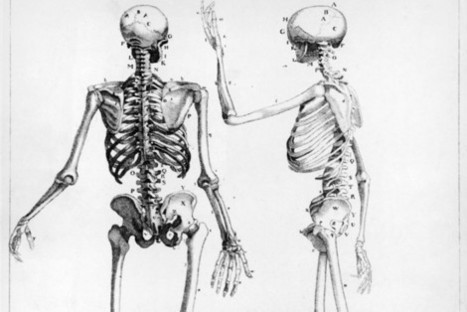
After decades as a technological laggard, medicine has entered its data age. Mobile technologies, sensors, genome sequencing, and advances in analytic software now make it possible to capture vast amounts of information about our individual makeup and the environment around us. The sum of this information could transform medicine, turning a field aimed at treating the average patient into one that’s customized to each person while shifting more control and responsibility from doctors to patients. The question is: can big data make health care better? “There is a lot of data being gathered. That’s not enough,” says Ed Martin, interim director of the Information Services Unit at the University of California San Francisco School of Medicine. “It’s really about coming up with applications that make data actionable.” The business opportunity in making sense of that data—potentially $300 billion to $450 billion a year, according to consultants McKinsey & Company—is driving well-established companies like Apple, Qualcomm, and IBM to invest in technologies from data-capturing smartphone apps to billion-dollar analytical systems. It’s feeding the rising enthusiasm for startups as well. Venture capital firms like Greylock Partners and Kleiner Perkins Caufield & Byers, as well as the corporate venture funds of Google, Samsung, Merck, and others, have invested more than $3 billion in health-care information technology since the beginning of 2013—a rapid acceleration from previous years, according to data from Mercom Capital Group. more at http://www.technologyreview.com/news/529011/can-technology-fix-medicine/ ;
Via nrip
|















The use of smartphone apps as health advisers is not entirely a bad idea. However, the responsibility of making sure that the right information is provided falls on the marketers and app developers. It is important to ensure that every information provided in the apps are correct.