Disponibles à tout moment, peu encombrantes, les applications mobiles destinées aux médecins et aux infirmières fleurissent sur les smartphones.
Elles les accompagnent dans le choix d’un médicament, d’un type de pansement, le calcul de doses ou le suivi des patients. Les premiers « trophées de la santé mobile », décernés en janvier 2014, ont distingué de nombreuses applications, destinées aux patients et aux professionnels de santé.
Un sondage réalisé par FICO, leader mondial de la gestion décisionnelle, montre que 56% des personnes à travers le monde déclarent faire confiance à leurs organismes de santé dans la gestion de leurs données personnelles.
Apple didn’t choose just any partner for its enterprise bid. IBM itself is no stranger to healthcare, after all, it made healthcare the flagship use case for Watson, the data intelligence processor that mimics human thinking and learning well enough that it managed to beat the best Jeopardy champions back in 2011. It’s been providing backup support for oncologists ever since. IBM knows how to manage data in a healthcare setting.
ProTransport-1, a Northern California based medical transport provider has announced a software partnership with CrowdOptic, maker of mobile and wearable broadcasting solutions to deploy the CrowdOptic Google Glass broadcasting solution in its ambulances and mobile medicine units.
ProTransport-1 will use CrowdOptic’s software solution that will allow paramedics and nurses to broadcast through Google Glass a live view of complex cases from the ambulance to medical teams at the receiving hospital during transport. According to the press release, the companies aim to “improve documentation and expand medical consultative opportunities for patients en route.
“CrowdOptic’s see-what-I-see technology allows paramedics and nurses on our ambulances to broadcast the live view of complex cases to medical teams at the hospital”, said Glenn Leland, Chief Strategy Officer for ProTransport-1.
Additionally, ProTransport-1 envisions multiple opportunities to utilize CrowdOptic’s software particularly in the mobile medical setting by enabling a two-way educational forum between a patient in their home and providers. “We additionally envision a variety of dispatch, navigation, documentation and operational processes will migrate to CrowdOptic and Google Glass over time” said Glenn Leland, Chief Strategy Officer for ProTransport-1.
Una de las múltiples utilidades de las Google Glass en salud es su aplicación en el ámbito de las emergencias, como forma de transmisión de información en directo a las centrales de coordinación, como para soporte visual durante el tratamiento de los pacientes. ¿Acabaremos llevándolas como un dispositivo de trabajo más?
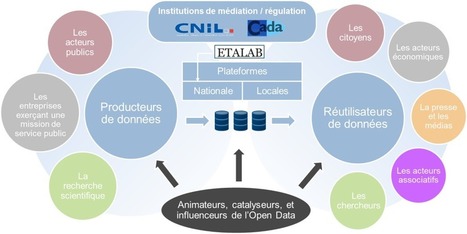
À l’instar des big data, l’open data ou "données ouvertes" est un sujet incontournable de ces dernières années qui consiste à mettre à disposition de tous, facilement (sans restriction technique, juridique ou financière) et gratuitement des données numériques, produites par une collectivité ou un service public.
En cette période estivale, le blog se met en veille pendant quelques semaines. J'en profite pour remercier tous les lecteurs de plus en plus nombreux chaque semaine !
Gérer ses données médicales en ligne est devenu un phénomène de plus en plus courant, ce qui soulève un certain nombre d'interrogations. Que deviennent les informations médicales renseignées par les utilisateurs ? Existe-t-il un droit à la confidentialité qui les protègent ?
Les technologies de "quantified self" (ou "quantification de soi", outils connectés permettant de mesurer et de gérer ses performances physiques) intéressent tant les industriels des secteurs de la santé et du numérique, que les autorités nationales et européennes. Mais le développement de ces outils d’auto-mesure et d’analyse du corps soulève de nouveaux enjeux, estime Thomas Roche, avocat associé du cabinet Delsol Avocats.
The FDA is looking into a new way to regulate drugs and medical devices—by using social media. The agency has drafted social media guidelines that would urge drug companies to use platforms such as Facebook, Twitter, and YouTube, to educate the public about the risks of their prescription drug or medical device.
The draft guidelines, which are currently under review by the agency, propose that companies be required to use the “character space constraints” on social media platforms such as Twitter to tweet the risks, along with the benefits, of a product. The guidelines also recommend that manufacturers include a link that takes readers to more information about the product. In the case of Twitter, that information should all be included in a single tweet.
If a firm concludes that adequate benefit and risk information, as well as other required information, cannot all be communicated within the same character-space-limited communication, then the firm should reconsider using that platform for the intended promotional message.
If approved, the guidelines will become the first formal recommendation by the agency regarding manufacturers’ use of social media.
La transformation digitale vecteur de croissance et de création de valeur : web casting, web conference, serious games, apps, flashcodes, santé connectée,
La construction et l'exploitation du réseau fibre PICArd de Santé Sécurisé de TélécOmmunication (Picasso 2.0) vont être réalisées par la société Option Service.
Depuis 25 ans, le Festival de la Communication Santé récompense chaque année les meilleures communications santé. Buzz e-santé est heureux de participer à cette 25e édition en tant que partenaire. ...
Les feuilles de routes des plans "Objets connectés" et "Santé numérique" ont été validées lors du quatrième comité de pilotage des 34 plans de la Nouvelle France industrielle, le 18 juin.
Most physicians agree that we have an ethical obligation to help educate our patients about what’s going on with their health, but what does that look like in a world overwhelmed with digital health information? And how do we budget appropriate time when we’re already struggling to balance shorter appointment times, more documentation requirements, and busier clinic schedules?
It’s estimated that 72 percent of patients get a majority of their health information online. With an abundance of biased and incorrect information on the Internet, our responsibility as physicians has evolved from simply teaching patients about their health conditions to now include educatingpatients on where and how to find and identify reliable health information.
This premise goes back to why I use social media. We have a responsibility to share, or at the very least be cognizant of, reliable health information in the realm where our patients seek it. In the old days that looked like an exam room; today it looks like a Google search.
Here are four ways to efficiently help ensure patients have the resources they need to find reliable health information, despite cramped clinic visits and time constraints.
Ask: How can you possibly know where patients find their information if you don’t ask? I have patients come in with birth plans all the time and quite frequently they’ve printed them out from a website with little-to-no additional research into the (often very specific) things they’ve requested. You can’t possibly know or understand their views unless you ask.
Take Two: I understand how limited our time is – I’m a resident with a busy clinic and short, often over-booked appointment slots. But taking two minutes to discuss reliable health information with your patients has great potential for improving patient care and decreasing un-needed visits and calls.
Prep: Have pre-written, condition-specific information for your patients and include curated links to additional reliable information for those who may want it. It’s as simple as a “dot-phrase” on most major EMR systems or a copy/paste file you can quickly email or print.
Encourage: Encourage your patients to take control of their health by being informed.Encourage them to ask questions and explain things back to you, so you’re certain they have a grasp on it. Encourage them to share what they’ve learned in their searches.
Online marketing in the healthcare sector is all about helping patients find the information they need. Encourage them to ask the right questions, help them find the answers.
Social media and GP recruitment are a perfect fit; recruiting is selling the story of your GP practice, a culture and a job. Social media is all about sharing stories using words, images and video.
Having conversations in the digital space is like having conversations in the real world. The only difference is that online conversations are searchable, archived and can come back to haunt you. Always bear this in mind. The positive of this is that it makes the conversations findable so people can join in. These people could be your future employees.
Indeed, the outcome of these conversations is to build a pool of GP and practice nurse candidates who want to engage with you, and more importantly, work for you before you have even told them there are jobs available within your practice.
Caution If you have a bad reputation, a poor culture or unhappy staff then be wary of using social media. If your practice is not a positive place to work social media won’t change that – but it will give current and past employees a reason to jump on the social band wagon and create a trend you don’t want.
Be prepared for negative comments and complaints from users, patients and media. It is important when using social media to remain transparent, so respond to negative comments instead of deleting them. If you delete comments you will find users will move to another platform where you can’t manage the situation so easily.
Learning to use social media tools is not complicated, but does take time and experimentation. What works for one GP practice won’t always work for yours, so talk to individuals not the masses.
How to have an online conversation The most difficult part of social recruiting is deciding what to talk about. Forget the fact that you are online, talk as you would talk in the real world.
Ask a lot of questions - listen to the responses and expand further;Tell great stories - people like hearing about people;Share interesting and useful insights;Show videos, images and documents that help tell the story; andDon’t just talk about yourself.
Think about the person you like to chat to the most, what do they talk about? They probably engage with you by asking lots of questions, sharing information about other people, places and experiences, and are approachable, funny and personable.
What can you talk about? Try to create and share content that is interesting, funny, informative and relevant as you want people to pass it on.
Insider info: Offer insights into the culture of your practice. What is unique about you? Do you offer great training or strong career progression? Is it a fun place to work? What do employees do?Community news: Are you working in the local community? Do you work with local charities? Use this information to demonstrate the values and culture within your GP surgery.How to guides: These are useful information pieces on the practice, the roles within the company. Mix up words, images and video. Infographics are a great way to do this.Diary: A day in the life of different job roles within your surgery. Show the work involved, the people candidates would be working with, the building and department, give people a real flavour of what it would be like to work with you and bring your GP practice to life.Ask questions: Ask for other people’s tips and stories, encourage candidates to share experiences, ask current employees to comment or share their experiences.Jobs: Obviously the whole idea is to recruit people, so don’t forget to post jobs to this newly engaged audience all hoping to now work for you!
Bring out the humans People don’t want to engage and interact with a GP surgery, they want to engage with the people who make it happen. So, don’t talk like a corporate press release, talk like a person, as you would in a face to face chat.
Alex Türk (Président de la Commission Nationale de l'Informatique et des Libertés), au Parlement Européen, tire la sonnette d'alarme : Il dit qu'il est dépas...
Une salutaire mise en perspective des risques liées au développement des technologies de l'information couplées aux nanotechnologies. Alex Türk, le président de la Cnil réclame le droit pour chacun "à ce qu'on le laisse tranquille", et craint que demain on regrette Big Brother. " Parce qu'au moins, on peut se rebeller contre une Stasi, mais pas contre des millions de puces lâchées dans la nature."
Swiss drugmaker Novartis has struck an agreement with Google to develop “smart” contact lenses that would help diabetics to track their blood glucose levels or restore the eye'...
En cette période estivale, le blog se met en veille pendant quelques semaines. J'en profite pour remercier tous les lecteurs de plus en plus nombreux chaque semaine !
Le site marchand belge de parapharmacie, qui dépasse les 5 millions d'euros de ventes en France et se déclare rentable, compte accélérer sa croissance en Europe.
Le Groupe Hospimedia lance un nouveau portail pour accompagner les établissements dans leurs recrutements de médecin : profilmedecin.fr. Découverte. Les établissements de santé rencontrent de plus ...
Electronic consultation systems use the Internet to deliver health services to people all around the world and has been shown to reduce unnecessary visits to specialists, with a meaningful percentage of cases being resolved without a face-to-face visit. As a result, wait times are less for those who really do need to see a specialist. Skype is one method that is popular among health-care providers today.
Au cours des dernières semaines, vous avez suivi mes différents articles concernant la mise en place et le développement de l’Hôpital numérique en France. A l’aide des exemples cités au fil ...
L'Etablissement Français du Sang a lancé il y a quelques semaines une application Facebook pour inciter au don de sang : Je donne, nous donnons ! Découverte. Pour sensibiliser les 18-34 ans au don ...
Pour sensibiliser les 18-34 ans au don de sang, l’Etablissement Français du Sang lance l’application Facebook : Je donne, nous donnons !
Le principe de cette application est d’inciter à créer un événement « Don de sang » avec ses amis puis ajouter une sortie après le don de sang si l’internaute le souhaite.
L’EFS propose également une autre application Facebook permettant de trouver les prochaines collectes proches de son domicile : Où donner.
A new survey conducted in May 2014 in the US shows that 85 percent of respondents would publicly share their health experience on social media to support others with the same disease.
To get content containing either thought or leadership enter:
To get content containing both thought and leadership enter:
To get content containing the expression thought leadership enter:
You can enter several keywords and you can refine them whenever you want. Our suggestion engine uses more signals but entering a few keywords here will rapidly give you great content to curate.


 Your new post is loading...