


L'Académie américaine de pédiatrie estime que les écrans interactifs (smartphones et tablettes) peuvent contribuer au développement de jeunes enfants. Une analyse partagée en France par l'Acadé

 Your new post is loading...
 Scoop.it! L'Académie américaine de pédiatrie estime que les écrans interactifs (smartphones et tablettes) peuvent contribuer au développement de jeunes enfants. Une analyse partagée en France par l'Acadé 
No comment yet.
Sign up to comment
Scoop.it!

Background Social media may offer insight into the relationship between an individual's health and their everyday life, as well as attitudes towards health and the perceived quality of healthcare services. Objective To determine the acceptability to patients and potential utility to researchers of a database linking patients’ social media content with their electronic medical record (EMR) data. Methods Adult Facebook/Twitter users who presented to an emergency department were queried about their willingness to share their social media data and EMR data with health researchers for the purpose of building a databank for research purposes. Shared posts were searched for select terms about health and healthcare. Results Of the 5256 patients approached, 2717 (52%) were Facebook and/or Twitter users. 1432 (53%) of those patients agreed to participate in the study. Of these participants, 1008 (71%) consented to share their social media data for the purposes of comparing it with their EMR. Social media data consisted of 1 395 720 posts/tweets to Facebook and Twitter. Participants sharing social media data were slightly younger (29.1±9.8 vs 31.9±10.4 years old; p<0.001), more likely to post at least once a day (42% vs 29%; p=0.003) and more likely to present to the emergency room via self-arrival mode and have private insurance. Of Facebook posts, 7.5% (95% CI 4.8% to 10.2%) were related to health. Individuals with a given diagnosis in their EMR were significantly more likely to use terms related to that diagnosis on Facebook than patients without that diagnosis in their EMR (p<0.0008). Conclusions Many patients are willing to share and link their social media data with EMR data. Sharing patients have several demographic and clinical differences compared with non-sharers. A database that merges social media with EMR data has the potential to provide insights about individuals’ health and health outcomes. Via Plus91
Scoop.it!

Le CESSIM a publié, en partenariat avec Ipsos, les résultats de son baromètre annuel sur les usages digitaux des professionnels de santé.
Scoop.it!

Premier site français d’information en continu sur les technologies de l’information et de la communication (TIC, NTIC) dans la santé - TIC santé
Scoop.it!

L’Institut Curie lance la première carte interactive et complète des réseaux de signalisation du cancer, fonctionnant sur le même principe que Google Maps.
Scoop.it!

Médiamétrie// NetRatings livre les derniers chiffres sur le consommateur connecté en marge du salon Conext à Lille. Portrait tout en chiffres de 35 millions de cyberacheteurs en France.
Scoop.it!

This live-streaming app can promote your facility and staff, and offer a behind-the-scenes view your community will enjoy. Via COUCH Medcomms

ChemaCepeda's curator insight,
October 21, 2015 11:28 AM
Nuevas formas de comunicar en salud y retransmitir lo que pasa en tu organización con Periscope
Scoop.it!

Google vient tout juste de déposer un brevet pour des lentilles connectées rechargeables avec la lumière extérieure afin d'éviter tout dispositif de chargement superflu.
Scoop.it!
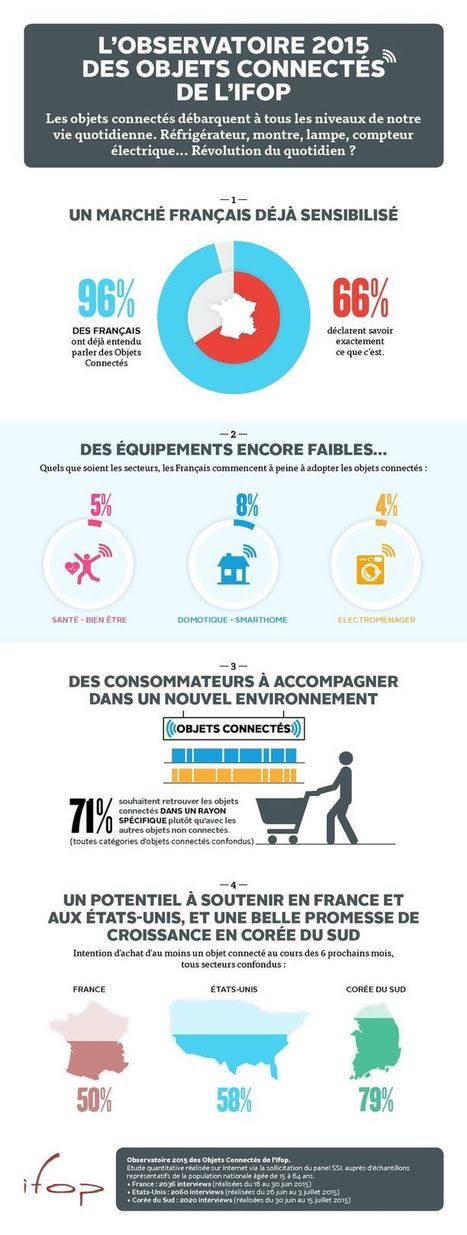
Multimédia :
Scoop.it!

Hospitals, doctors and the health care system as a whole have become ever more focused on measuring the quality of the care patients receive. And with good reason: as the system leans ever more towards tying reimbursements to quality, everyone recognizes that you can’t improve quality if you’re not measuring it. Of the many ways one can look at quality in an inpatient setting, patient experience has earned a lot of attention. Hospitals, payors, survey vendors and government agencies are spending millions to develop, deploy and analyze tools like the adult and child Hospital Consumer Assessment of Healthcare Providers and System (HCAHPS) surveys, which give voice to patients and their concerns about the care they receive. Are there other ways to hear what patients are saying? Jared Hawkins, MMSc, PhD, of Boston Children’s Hospital’s Computational Health Informatics Program (CHIP), Boston Children’s chief innovation officer, John Brownstein, PhD, and their colleagues wanted to see whether they could harness the power of social media—specifically, Twitter—to supplement survey-based methods. Their data, published in the journal BMJ Quality & Safety, give encouraging hints, but it’s too early to retire those patient surveys just yet. A social view of patient experience Could tweets be a reasonable form of quality measurement? When you consider it, we often turn to Twitter, Yelp, Angie’s List and other networks to provide instant feedback on and offer our thoughts about pretty much any company, contractor or store we do business with. Why would healthcare be any different? That “instant” aspect is part of what captured the team’s attention. “The main problems with measuring patient experience by survey are the small numbers of people who respond to surveys and the lag time,” says Hawkins, who works under Brownstein in hisComputational Epidemiology Group. “It can take up to two years before survey data are released to the public. “Given that social media data are close to real time,” he continued, “we wanted to see if we could capture this discussion and if the content is useful.” Sifting the tweets from the chaff Hawkins, Brownstein and their collaborators collected more than 400,000 public tweets directed at the Twitter handles of nearly 2,400 hospitals in the U.S. between 2012 and 2013. Using machine learning, natural language processing and manual curation, they tagged 34,735 patient experience tweets directed at 1,726 hospital-owned Twitter accounts, determined the sentiment of those tweets (positive, neutral, negative) and binned the tweets into topical categories (e.g., Time, Communication, Pain). “We were able to capture what people were happy or mad about, in an unsolicited way,” Hawkins explains. “No one else is looking at patient experience this way because surveys ask very targeted questions. Unsurprisingly, you get back very targeted, narrow answers.”
(Kostenko Maxim/Shutterstock)
Quality tweeting The holy grail in this work would be the ability to correlate tweets and the sentiments expressed in tweets to outcomes metrics that relate to care quality. Hints of that ability are there. When Hawkins and Brownstein compared their data with outcomes data from Medicare’s Hospital Compare website, they found a weak negative correlation between tweet sentiment and hospitals’ 30-day readmission rates. “Hospitals that people thought highly of had lower readmission rates,” Hawkins explains. Surprisingly, though, they did not see a relationship between tweet sentiment and HCAHPS experience data. “This is a brand new way of using Twitter data,” Hawkins notes. “It may be that we have to be cautious about using tweet sentiment to understand quality.” Just the beginning Probably the study’s largest weakness, Hawkins notes, is the number of tweets out there for analysis. “There’s not a tremendous volume,” he says, noting that of the 2,400 hospital Twitter accounts they looked at, only about 300 received more than 50 inbound tweets in a year. “If you look at a lot of hospitals, there’s not a lot going on, maybe three or five tweets that are about patient experience. “But remember, this was 2012,” he adds. “If we were to look today and beyond, we would expect the volume to be much higher. And we’re already looking to see whether we can integrate data from other social networks like Yelp and Reddit. At the moment, the low volume of data could make it hard to identify trends over time, notes Sara Toomey, MD, MPhil, MPH, MSc, managing director of the Center of Excellence for Pediatric Quality Measurement at Boston Children’s, who was not involved in Hawkins and Brownstein’s study. The Twitter users who produced the tweet pool analyzed may not be entirely representative of each hospital’s patients. But the data are suggestive and highlight Twitter’s possible utility as a way to supplement HCAHPS and other surveys. “We’re always looking for ways to listen to the voices of patients and families and use what they say to inform the quality of the care we provide,” explains Toomey, one of the co-leaders in the effort to develop the child version of HCAHPS. “There’s been a steady decline in survey response rates, so people involved in quality measurement are actively seeking ways of augmenting the standard approach with other collection methods.” “It’s exciting to think about how a hospital might feed not only comments and scores from surveys but also comments from other sources like tweets into our efforts to improve quality,” she adds. Hawkins agrees, adding that in his view the study provides proof of principle for incorporating Twitter into the box of tools hospitals use to measure their interactions with patients. “The discussion about patient experience is going on out there on social media,” he says. “We need to be looking at it, and in a systematic way.”
Via Plus91
Scoop.it!

La société Proteus veut commercialiser des gélules enregistrant les données des patients afin de surveiller l’observance de leur traitement en temps réel. Via Chanfimao, Lionel Reichardt / le Pharmageek
Scoop.it!

Comment un jeu thérapeutique peut-il permettre d’altérer des souvenirs douloureux ?
|
Scoop.it!

Mining patients' social media data could provide enormous insight into overall health outcomes, according to a new study conducted by University of Pennsylvania researchers. By handling social media posts much like big data, it just may be possible to link social media posts to health outcomes, said researchers at UPenn's Perelman School of Medicine, in a new study. If patients consent to sharing this data, a research database could be created, comparable to that of genomic databases. This database could be used by researchers to better understand the relationship between certain patients and their health. [See also: UPMC's big data approach slashes readmissions.] As part of the study, more than 1,000 patients consented to sharing both their social media and health data over a seven-month period. Researchers then analyzed the data, which consisted of some 1.4 million tweets and posts, from 2009 to present. "We dont often think of our social media content as data, but the language we use and the information we post may offer valuable insights into the relationship between our everyday lives and our health," said Raina M. Merchant, MD, the study's lead author and director of the Social Media and Health Innovation Lab, in an Oct. 13 statement. "Finding ways to effectively harness and mine that data could prove to be a valuable source of information about how and why patients communicate about their health. There is a rich potential to identify health trends both in the general public and at the individual level, create education campaigns and interventions, and much more. One of the unique aspects of this data is the ability to link social media data with validated information from a health record." [See also: 7 pain points of big data and Partners' CIO on big hope for big data.] This type of database, as Merchant explained, can help her team think about health in new, innovative ways. Some of the posted content included statements like, "I forgot to take my water pill for my heart failure today." Certain language, researchers explained, may be suggestive of cognitive decline or mental status. Other social media posts they saw included a string of high-sodium food photos or insight into health practices such as exercise habits.
Via Plus91
Scoop.it!

Les technologies génétiques, qui posent de nombreuses questions éthiques, son...
Scoop.it!
Des étudiants de l’Université Johns Hopkins ont mis au point un stéthoscope intelligent qui supprime les sons parasites et propose des diagnostiques. Un outil pratique pour les environnements bruyants.
Scoop.it!

L'hôpital militaire de Bégin est désormais à la pointe de la technologie en matière de chirurgie grâce au robot chirurgical Da Vinci, livré ...
Scoop.it!

La e-santé se porte bien. Pilules connectées et applications mobiles seront peut-être bientôt prescrites par les médecins généralistes. En Basse-Normandie, la société Bodycap révolutionne le...
Scoop.it!

Les salariés assurés dans le cadre de leur entreprise se voient désormais souvent offrir des services à distance grâce à leurs complémentaires santé. CNP Assurances vient à son tour d'annoncer le lancement d‘une plateforme pour ses clients. Via DIRECT MEDICA by Webhelp, Lionel Reichardt / le Pharmageek
Scoop.it!
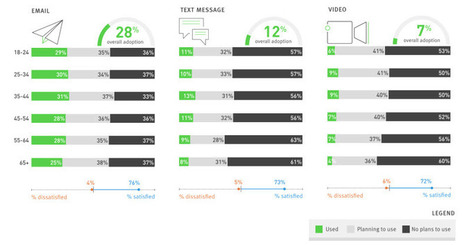
While most people limit themselves to searching for health information online, there's plenty of curiosity for telemedicine, remote monitoring and using texts and emails to get health info. Via Marie Ennis-O'Connor
Scoop.it!
A l’ESCP Europe, les futurs entrepreneurs, étudiants en master Option Entrepreneuriat, sont encouragés à passer à l’action en organisant chaque année un festival qui mêle rencontres, expérimentation, conférences et animations, l’EntrepreneurShip festival (http://entrepreneurshipfestival.eu/).
Scoop.it!

La régie publicitaire Futuramedia développe des réseaux de Digital Media dans les pharmacies et parapharmacies.
Scoop.it!

Over half of the 100 billion searches conducted on Google each month now come from mobile devices Via Julie O'Donnell, Lionel Reichardt / le Pharmageek

Manish Verma's curator insight,
October 20, 2015 12:47 AM
It is expected to grow further. More people have mobile phones than computers... 
SergePPlourde's curator insight,
October 23, 2015 3:45 PM
#mHealth app developers, think about it, that's more than 50 billion searches done on mobile devices. Think of all those who search solutions to their health problems... that maybe you could help solve, or enable to solve...
Scoop.it!

Via ce blog « Le monde de la e-santé », accédez à mon mapping comportant à ce jour 400 références digitales concernant la e-santé. C’est un outil incontournable pour découvrir les sites web, applications mobiles, serious games, sites communautaires, web TV… réalisés par les divers acteurs de la santé au profit des professionnels de santé…
|






