Bilingually Enriched Learners
3.8K views | +0 today
Your new post is loading...
Rescooped by Dennis Swender from Leading Schools
March 10, 2017 8:56 PM
Scoop.it!

Schools Often Fail to Educate, Support English-Language Learners

Schools Often Fail to Educate, Support English-Language Learners | Bilingually Enriched Learners | Scoop.it
Schools across the United States often provide substandard instruction and social-emotional support to the nation's English-language learners—and fail to properly train the educators who teach them, a new report from the National Academies of Sciences, Engineering, and Medicine finds.

Noting that limited English proficiency remains a substantial barrier to academic success for millions of children in K-12 schools, the study explores how under-resourced schools and under-prepared educators can hinder efforts to help those students learn and master English.

Via Mel Riddile
No comment yet.
Rescooped by Dennis Swender from Conditionals
March 10, 2017 11:16 AM
Scoop.it!

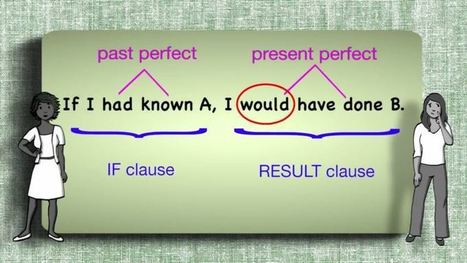
The EFL SMARTblog: What would happen if..? (2nd Conditional)

The EFL SMARTblog: What would happen if..? (2nd Conditional) | Bilingually Enriched Learners | Scoop.it

Via David M
No comment yet.
Scooped by Dennis Swender
March 10, 2017 12:18 AM
Scoop.it!

Schools Are Falling Short for Many English-Learners

Schools Are Falling Short for Many English-Learners | Bilingually Enriched Learners | Scoop.it
In a National Academies report on the state of education for ELLs, one theme is consistent: public schools need more resources and research.
No comment yet.
Rescooped by Dennis Swender from Social Foraging
March 9, 2017 12:25 AM
Scoop.it!

Visualising the languages of New York

Visualising the languages of New York | Bilingually Enriched Learners | Scoop.it
Web developer Jill Hubley has created a data visualization mapping the most common languages in New York City, broken down by census tract. Users can select individual languages to see where they are the most common, as well as filter out English and Spanish—the most common languages—to see the widely varied demographic makeup of the city’s population. The visualization uses data from the U.S. Census Bureau’s 2014 American Community Survey

Via Ashish Umre
No comment yet.
Scooped by Dennis Swender
March 3, 2017 2:49 PM
Scoop.it!

Schools Often Fail to Educate, Support English-Language Learners

Schools Often Fail to Educate, Support English-Language Learners | Bilingually Enriched Learners | Scoop.it
In a wide-ranging report on the state of education for ELLs, one theme is consistent: The nation's public schools must devote more resources and research to educating students who aren't native English speakers.
No comment yet.
Rescooped by Dennis Swender from TEFL & Ed Tech
March 3, 2017 12:13 AM
Scoop.it!

Which countries are best at English as a second language?

Which countries are best at English as a second language? | Bilingually Enriched Learners | Scoop.it
A new report shows which countries are most proficient at speaking English as a secondary language.

Via Evdokia Roka
No comment yet.
Rescooped by Dennis Swender from TEFL & Ed Tech
February 26, 2017 3:02 PM
Scoop.it!

Which countries are best at English as a second language?

Which countries are best at English as a second language? | Bilingually Enriched Learners | Scoop.it
A new report shows which countries are most proficient at speaking English as a secondary language.

Via Evdokia Roka
No comment yet.
Rescooped by Dennis Swender from Learning & Technology News
February 22, 2017 11:16 AM
Scoop.it!

Online Language Learning Research Network - Report

Online Language Learning Research Network - Report | Bilingually Enriched Learners | Scoop.it

Around 230 academics and practitioners logged into the first online conference organised by the Online Language Learning Research Network (OLLReN), a partnership initiative from Cambridge University Press and Laureate International Universities, with support from IATEFL’s Learning Technologies SIG. Twelve presentations were given by researchers who have been investigating the use of online technology for language learning. It was an impressive global collaboration, with researchers from New Zealand, China, Japan, Kazakhstan, the UK, the USA and Uruguay.


Via Nik Peachey
Nik Peachey's curator insight, February 22, 2017 1:04 AM

This site now has links to all the webinar recordings and copies of the slide decks to download.

Scooped by Dennis Swender
February 19, 2017 5:33 AM
Scoop.it!

The History of Weddings - Lessons in digital literacy: Reviewed by TES

Bolster your students' digital literacy and research skills with this project-based resource that focuses on interpreting and creating infographics. Resource: https://www.tes.com/us/teacher-lessons/the-history-of-weddings-lessons-in-digital-literacy-11208067

No comment yet.
Rescooped by Dennis Swender from Nik Peachey
February 19, 2017 5:31 AM
Scoop.it!

Exploiting digital video for language development

Exploiting digital video for language development | Bilingually Enriched Learners | Scoop.it
In this webinar, we invite Nik Peachey, winner of the 2016 British Council ELTon award for innovation in teacher resources to talk about using digital video.

Video is one of the most powerful mediums for language instruction and learning and your students' access to the tools to view, create and communicate with video through mobile devices has never been better. Are you making the most of this opportunity for your students? Come along to this webinar, share your ideas and get some new ideas for how to exploit digital video with your students.

Via Nik Peachey
Nik Peachey's curator insight, February 17, 2017 6:10 AM

The recording of my webinar for the British Council on exploiting digital video.

Rescooped by Dennis Swender from Tips for teacher development
February 15, 2017 10:59 AM
Scoop.it!

10 Websites for English Language Teachers

10 Websites for English Language Teachers | Bilingually Enriched Learners | Scoop.it
All teachers enjoy reading and gaining access to more resources for lesson ideas or developing material for classes and I thought I would share the ten websites that I like to refer to when I am se...

Via Inna Piankovska
No comment yet.
Rescooped by Dennis Swender from English learner's corner
February 15, 2017 10:55 AM
Scoop.it!

Do vs. Make

Do vs. Make | Bilingually Enriched Learners | Scoop.it
Do and Make are two verbs which frequently confuse students. Here we will learn about the difference between Do and Make and when to use each one.

Via Inna Piankovska
No comment yet.
Rescooped by Dennis Swender from English learner's corner
February 15, 2017 10:55 AM
Scoop.it!

English Learner’s Hub

English Learner’s Hub | Bilingually Enriched Learners | Scoop.it

English Learner’s Hub, by Inna Piankovska


Via Inna Piankovska
No comment yet.
Rescooped by Dennis Swender from 21st Century Learning and Teaching
March 10, 2017 12:36 PM
Scoop.it!

The Best Music Websites For Learning English | #ModernEDU #ESL #Languages

The Best Music Websites For Learning English | #ModernEDU #ESL #Languages | Bilingually Enriched Learners | Scoop.it
Check out my New York Times post for English Language Learners focuses on using music for language development and includes a student interactive, video, and teaching ideas. I use music a lot in my…


Learn more / En savoir plus / Mehr erfahren:


http://www.scoop.it/t/21st-century-learning-and-teaching/?&tag=Music


Via Gust MEES
Gust MEES's curator insight, March 10, 2017 11:35 AM
Check out my New York Times post for English Language Learners focuses on using music for language development and includes a student interactive, video, and teaching ideas. I use music a lot in my…


Learn more / En savoir plus / Mehr erfahren:


http://www.scoop.it/t/21st-century-learning-and-teaching/?&tag=Music


Toni's curator insight, March 27, 2017 12:08 PM
Good info. I hope to post these on my sure as well if they are useful.
Rescooped by Dennis Swender from Conditionals
March 10, 2017 11:13 AM
Scoop.it!

Everyday Grammar: Past Unreal Conditionals

Everyday Grammar: Past Unreal Conditionals | Bilingually Enriched Learners | Scoop.it

Via David M
miguel baranda's curator insight, June 2, 2018 7:32 PM
Un vídeo que explica la formación del condicioal.
Scooped by Dennis Swender
March 9, 2017 12:38 AM
Scoop.it!

Language: The cornerstone of national identity

Language: The cornerstone of national identity | Bilingually Enriched Learners | Scoop.it

"Of the national identity attributes included in the Pew Research Center survey, language far and away is seen as the most critical to national identity. Majorities in each of the 14 countries polled say it is very important to speak the native language to be considered a true member of the nation."

Richard Aitchison's curator insight, February 6, 2018 9:03 AM
The link between language and national identity is important as shown in this article as Europeans believe it is the the number one link and most important.  From an American standpoint this was interesting to read as the trend nowadays, especially in America is to be more open to multiple languages and always viewing Europe as a place where many of the people that would live their would speak multiple languages as well.  How we communicate with people is very important obviously and now it has even become a political issue.  If you tend to lend more left you link national identity and language less and if you lean more right you tend to link national identity and language more. This is something that will continue to play out in the United States over the next decade as the Hispanic community continues to grow in the country and language will come to the forefront. While America has always been a melting pot of people, English has always survived as its dominate language and a way to identify Americans. Twenty or Thirty years from now will that continue? Will Americans lose that as and Identity, how will that effect them? Will this become a major political battle as well, how will this play out in elections in 2020, 2024, 2028, and beyond. Some very interesting trends to look at.  
Douglas Vance's curator insight, February 9, 2018 3:37 PM
For most of Europe, but especially older and more conservative Europeans, being able to speak the language of the country you live in is incredibly closely tied to national identity. Therefore, immigrants who arrive and do not speak the language are viewed as "others" and not belonging. This close tie between language and national identity serves as one of the fuels for anti-immigrant sentiments in many European nations. Although this sentiment is not confined to just Europe.
Zavier Lineberger's curator insight, March 9, 2018 2:26 PM
(Europe) Throughout Europe and North America, the majority of citizens believe the national language is essential to the country's identity. For immigrants to be considered a part of these countries, the majority believe proficiency is required. In the United States, age, education, and religion are all factors contributing to this view, however race has little effect on people's view of language. Like America, older and more conservative Europeans place a higher emphasis on language. National identity can be a geopolitical problem for the European Union because some countries believe the 24 official languages subvert autonomy and internal unity. Interestingly Canada, a country with two official languages, places a lessor importance on language, with only a 59% majority believing it is fundamental to identity.
Rescooped by Dennis Swender from Learning & Technology News
March 6, 2017 8:38 PM
Scoop.it!

Using Multiple Languages to Support Bilingual Learners

Using Multiple Languages to Support Bilingual Learners | Bilingually Enriched Learners | Scoop.it
This article highlights three critical considerations drawn from the “Translanguaging: Guide for Educators” published by the City University of New York. These recommendations, used in part or in whole, are sure to benefit our bilingual learners as they make them feel both valued and included.

Via Nik Peachey
Jhon Campaz's curator insight, April 11, 2020 7:35 PM
I find this article interesting since in our context we do not have a practical reference for translanguaging practices.

For this author, blending sentences is allowed. It gives great insights at the moment of designing material. 

Use of multilingual texts: 
books that are written by authors from culturally diverse backgrounds

Think About the Language Process 
Take into account the linguistic demands of a reading task, and have students first read the text in their home language so they can become familiar with key vocabulary words and content. Then, ask students to read the passage in English at school to reinforce concepts and facilitate language transfer.

Actively Promote Multilingualism
This is great, specially for those classrooms where students with indigenous backgrounds are enrolled. 

Diego Herrón García's curator insight, April 17, 2020 6:03 PM
I think that using multiple languages at school has both pluses and cons. On the one hand,  the advantage would be that students can use their home language as a means to learn the target language of  the school; Learners` native or home language should be seen as an instrument to facilitate learning , so it is good that teachers are aware of including students` home languages as a way to make them feel better, included and glad that they have the opportunity to use more than one language in a classroom. On the other hand, I feel that using more than two or three languages may be disadvantagous if the school attempts to make the children proficient in al the languages involved. I consider that plurilinguism is good is the institutions use a tool to make the learners proficient in two languages so that they can really use them properly; that is to say, it is better to be proficient in two languages than speaking three or four languages but not being very good at them. In that way, I consider plurilingualism good and bad at once, because it depends on how the schools take advantage of it. 
To conclude, allowing students to use several languages in a classroom is good because they can not be limited to look for tools that facilitate their learning, but those tools shoud be aimed at strengthening two specific languages.
What I just wrote is aimed at criticizing plurilingualism cases. Children should focus on two languages at school.
Jhon Steven Marin Marin's curator insight, May 18, 2020 2:48 PM
In my opinion the purpose of this article is to establish a necessary connection between two languages, so it is really important recognize that translanguaging has a leading role in the development of classes for example in the way that students make use of both languages ​​to communicate in the classroom with their clasmates, placing on stage the use of words from two completely different linguistic repertoires.
Scooped by Dennis Swender
March 3, 2017 2:44 PM
Scoop.it!

Americans Are Falling Behind in Foreign-Language Learning

Americans Are Falling Behind in Foreign-Language Learning | Bilingually Enriched Learners | Scoop.it
The first nationwide study of foreign-language learning in nearly three decades concludes that a critical shortage of educators could imperil efforts to boost language learning.
No comment yet.
Scooped by Dennis Swender
March 2, 2017 9:33 AM
Scoop.it!

Language: The cornerstone of national identity

Language: The cornerstone of national identity | Bilingually Enriched Learners | Scoop.it

"Of the national identity attributes included in the Pew Research Center survey, language far and away is seen as the most critical to national identity. Majorities in each of the 14 countries polled say it is very important to speak the native language to be considered a true member of the nation."

Richard Aitchison's curator insight, February 6, 2018 9:03 AM
The link between language and national identity is important as shown in this article as Europeans believe it is the the number one link and most important.  From an American standpoint this was interesting to read as the trend nowadays, especially in America is to be more open to multiple languages and always viewing Europe as a place where many of the people that would live their would speak multiple languages as well.  How we communicate with people is very important obviously and now it has even become a political issue.  If you tend to lend more left you link national identity and language less and if you lean more right you tend to link national identity and language more. This is something that will continue to play out in the United States over the next decade as the Hispanic community continues to grow in the country and language will come to the forefront. While America has always been a melting pot of people, English has always survived as its dominate language and a way to identify Americans. Twenty or Thirty years from now will that continue? Will Americans lose that as and Identity, how will that effect them? Will this become a major political battle as well, how will this play out in elections in 2020, 2024, 2028, and beyond. Some very interesting trends to look at.  
Douglas Vance's curator insight, February 9, 2018 3:37 PM
For most of Europe, but especially older and more conservative Europeans, being able to speak the language of the country you live in is incredibly closely tied to national identity. Therefore, immigrants who arrive and do not speak the language are viewed as "others" and not belonging. This close tie between language and national identity serves as one of the fuels for anti-immigrant sentiments in many European nations. Although this sentiment is not confined to just Europe.
Zavier Lineberger's curator insight, March 9, 2018 2:26 PM
(Europe) Throughout Europe and North America, the majority of citizens believe the national language is essential to the country's identity. For immigrants to be considered a part of these countries, the majority believe proficiency is required. In the United States, age, education, and religion are all factors contributing to this view, however race has little effect on people's view of language. Like America, older and more conservative Europeans place a higher emphasis on language. National identity can be a geopolitical problem for the European Union because some countries believe the 24 official languages subvert autonomy and internal unity. Interestingly Canada, a country with two official languages, places a lessor importance on language, with only a 59% majority believing it is fundamental to identity.
Scooped by Dennis Swender
February 22, 2017 7:11 PM
Scoop.it!

ELL Research & Reports | Middlebury Interactive Languages

ELL Research & Reports | Middlebury Interactive Languages | Bilingually Enriched Learners | Scoop.it
Middlebury Interactive Languages has compiled research and resources, including white papers, special reports and webinars, for you to learn more about our digital English Language Learning curriculum and pedagogical approach.
No comment yet.
Scooped by Dennis Swender
February 19, 2017 6:02 AM
Scoop.it!

Popolic - ��� - Credits : Key & Peele . ⚠ Like This Page ➡... | Facebook

Popolic - ��� - Credits : Key & Peele . ⚠ Like This Page ➡... | Facebook | Bilingually Enriched Learners | Scoop.it
��� - Credits : Key & Peele
.
⚠ Like This Page ➡ Popolic For More Videos
� http://www.popolic.com
.
.
.
.
UNILAD People Are Awesome Viral Buzz FailArmy...
No comment yet.
Rescooped by Dennis Swender from Nik Peachey
February 19, 2017 5:31 AM
Scoop.it!

Nik Peachey - Managing the digital classroom

Nik Peachey - Managing the digital classroom | Bilingually Enriched Learners | Scoop.it
The language classroom is becoming an increasingly complex environment with students attending classes equipped with a variety of digital devices. These devices can become a tiresome distraction or a powerful tool for learning depending on the skill and knowledge of the teacher.

Via Nik Peachey
Nik Peachey's curator insight, October 14, 2016 1:59 AM

A recording of my webinar from the British Council's Teaching for Success online conference.

Nik Peachey's curator insight, October 15, 2016 1:29 AM

A recording of my webinar presentation for the British Council Teaching for Success online conference.

Rescooped by Dennis Swender from InfoBlazeME
February 15, 2017 11:33 AM
Scoop.it!

Globalisation: How Dubai is connecting the world 

Globalisation: How Dubai is connecting the world  | Bilingually Enriched Learners | Scoop.it
Emirate among top 10 most connected cities in the world, highest rank achieved by any GCC nation

Via InfoBlaze
No comment yet.
Rescooped by Dennis Swender from Tips for teacher development
February 15, 2017 10:57 AM
Scoop.it!

5 Great YouTube Channels for EFL Classroom

5 Great YouTube Channels for EFL Classroom | Bilingually Enriched Learners | Scoop.it

Via Inna Piankovska
No comment yet.
Rescooped by Dennis Swender from English learner's corner
February 15, 2017 10:55 AM
Scoop.it!

Tools for Classroom

Tools for Classroom | Bilingually Enriched Learners | Scoop.it
On 16th March I attended the VIth Annual Conference of the above group at Coventry University. There were some interesting presentations on recent language projects, some entirely online and some i...

Via Inna Piankovska
No comment yet.