


Today I’m going to teach you to cut those awkward pauses out at the root. No longer will you search for interesting things to say every 30 seconds! You’re going to have conversations that flow natu...

 Your new post is loading...
 Scoop.it! Today I’m going to teach you to cut those awkward pauses out at the root. No longer will you search for interesting things to say every 30 seconds! You’re going to have conversations that flow natu... 
No comment yet.
Sign up to comment
Scoop.it!

seeking to map a new spiritual and social landscape, the buddhist bug project (bbug) by cambodian artist anida yoeu ali creates a surreal existence amongst ordinary people and everyday environments.
Scoop.it!

I learned that even Obama knows young people don't use Facebook anymore.
Scoop.it!

You spend, like, half of your life on that thing. 1. On the iPad: Make typing more comfortable by switching your keyboard to thumb mode. Simply swipe two [...]
Scoop.it!

The story of Pedal Power's bike machine is spreading quickly. The two-man company has more than tripled its crowd-sourced fundraising goal, and its bike desk is being used to power laptops, grind grain for beer, and churn butter.
Scoop.it!

Facilitating Collaborative Learning: 20 Things You Need to Know From the Pros (Facilitating Collaborative Learning: 20 Things You Need to Know From the Pros http://t.co/jrejDzlieg)... Via Linda Kaiser, PhD, Adelina Silva, juandoming

Gary Harwell's curator insight,
January 5, 2014 4:03 AM
Do we k now these things that have to be done? 
Laura Salas's curator insight,
November 21, 2015 8:57 PM
As an educator facilitating collaborative learning might be a challenge at times. Sometimes individuals don't want to work with certain other people or sometimes some are too shy and don't really contribute. Whatever the challenge these great tips can help us improve our strategy.
Scoop.it!

From
99u

“ We're addicted to distraction, and it's holding us back. To find genius in the 21st century, we must build a discipline of unplugging and deep thinking.”
Via Christine Heine, Gust MEES
Scoop.it!

This morning a close friend of the family passed away far too early. While I’ve spent most of the day grieving, I’ve spent the last couple hours thinking about the fact that our lives are sometimes much shorter than we expect them to be, and that each moment is a miracle – perhaps an obvious thought that simply sinks in a bit more on a day like today. As I sit here, one question keeps dancing around my mind: What can you do with your moments to maximize their value? An answer that immediately comes to mind: Use them to give yourself priceless gifts nobody else can give you…
Scoop.it!

Yesterday I heard a quote that changed my life. It’s one those things that makes you really re-consider what you do day-to-day. It makes you re-evaluate every core assumption you’ve ever had about life. And it’s totally a Milk the Pigeon worthy quote. Here’s how it goes:
- Socrates
Scoop.it!

What about asking youngsters, instead of experienced creative directors, to create the strongest communication campaigns? Pets4Pets Project taught little kids the secrets of the advertising indust...
Scoop.it!

It’s no secret that the high-pressure world of business can have some unfortunate effects on our health. Aside from the constant stress that comes with being a successful entrepreneur, there’s the ever-present risk of debt.
Scoop.it!

Communications technology use is growing at a near exponential rate on a global scale.1 A recent United Nations study shows that more people have access to cell phones than toilets, as 6 billion of the world’s 7 billion people (85 percent) have access to mobile phones, while only 4.5 billion (64 percent) have access to working toilets.2Throughout the past 15 years, communications and information technology have become essential components of public health surveillance and research.3This technology allows for cheaper and more accessible forms of disease surveillance and epidemiological research, particularly through the mining of online social network data. Social media has potential to change the nature, speed, and scope of public health surveillance and research by offering a real-time stream of user-generated updates from millions of people around the world.Data mining is a field of computer science involving methods such as computational epidemiology, artificial intelligence, statistics, algorithm development, database systems management, and data processing to identify patterns in large sets of data.4Data mining from informal Internet sources may lead to the discovery of new information about disease patterns, both communicable and chronic, as well as health risk behaviors. Moreover, developing risk prediction models from data aggregated from informal sources, such as social media, has great potential to supplement formal data sources in predicting disease spread.Earlier intervention and control measures based on this information may mean the difference between containment and epidemic. In recent years, systems using informal data mined from social media sources have been credited with reducing the time it takes to detect an emerging outbreak, preventing governments from suppressing outbreak information, facilitating public health responses, and contributing to the generalizable knowledge about health risk behaviors in a quick and cost-efficient manner.5Despite the inherent public nature of social media, there are many ethical implications inherent in the systematic acquisition of personal information, especially that pertaining to health. Concerns surrounding social network data analysis include issues of privacy, data quality, public panic, autonomy, access, and informed consent. While online social network data analysis holds great promise in the field of public health, it is essential that this valuable data be systematically harnessed in compliance with the law and ethical principles, keeping in mind salient privacy concerns, to yield population-level health benefits.Social Media In Tracking Infectious DiseasesInfectious diseases account for more than 13 million deaths each year.6 It is estimated that 45 percent of the people living in developing countries have infectious diseases, making infectious diseases one of the leading causes of mortality for children and young adults.7 The threat of infectious disease is accelerating with the high mobility of populations due to airline travel and increasing resistance to antimicrobial medicines due to mutations.8 Given the severity of the infectious diseases as a public health threat, culling social media information for epidemiological surveillance during outbreaks is generally accepted as ethically permissible.Data mining social media sources to track the early stages of an infectious disease outbreak has great potential in developing countries. Although developing countries often lack a strong public health infrastructure, they have burgeoning mobile communication infrastructures.9Aggregating and analyzing social media’s informal data in near real-time allows public health officials to gain early insight into an evolving epidemic in order to help plan a response weeks sooner than formal routes.10 A two-week jump on an infectious disease may mean the difference between life and death; between containment and an epidemic. The quicker a potential disease can be located, the quicker public health authorities can establish control measures ranging from vaccinations and antibiotics to clean water.Case Study: Twitter and the 2010 Cholera Outbreak In HaitiDr. Rumi Chanura and her team of researchers from Harvard University conducted one of the pioneer studies that demonstrated the value of social media data in monitoring an infectious disease outbreak. The study demonstrated the value of monitoring social media during an outbreak. The study analyzed information from social media sources, primarily Twitter, during the first 100 days of the cholera outbreak in Haiti in 2010. In Oct. 2010, 10 months after Haiti experienced a devastating earthquake, hospitals in the Artibonite River basin saw a swell of patients with severe diarrhea, vomiting, and dehydration.11By Dec. 31, 2010, more than 170,000 people were afflicted with cholera and 3,600 lost their lives to the disease.12According to the World Health Organization, “the devastating cholera epidemic provides stark reminder of the challenges that arise in the absence of the infrastructure and institutions that most of us take for granted.”13Dr. Chanura collected 188,819 tweets and 4,697 online reports that contained the word cholera during the first 100 days of the outbreak.14 The team analyzed the relationship between frequency of mentions and the occurrence of a secondary cholera outbreak, and evaluated them through risk prediction models.15 They found a close correlation between the aggregated social network data and the formal Haitian Ministry of Health data.16The study demonstrated that informal data has been surprisingly accurate when it comes to disease tracking. The undeniably strong correlations between formal data and informal data collected from social media sources demonstrated that informal sources can produce reliable decision-making data during disease outbreaks in near real-time.While Haiti lacks water and sanitation infrastructure for the prevention of cholera, the nation does have a strong mobile communication infrastructure. This communication infrastructure allowed for the sick, their families, their communities, and healthcare providers to share information about conditions on the ground, allowing cholera cases to be reported that may have otherwise gone untracked, since many patients never reported to clinics.17 This also allowed for speedier intervention with oral rehydration tablets and antibiotics in the afflicted areas.18Hypothetical: Role of Social Media In HIV/AIDS Tracking, Contact Tracing, and Partner NotificationHaving discussed the role of social media data in contagious disease cases in the developing world, it is time to turn to a potential role of social media data that is much more ethically contentious—the use of social media data in HIV/AIDS tracking.The principle of confidentiality between physician and patient dates back to before the Hippocratic Oath.19 Nevertheless, the scope of confidentially is subject to limitations, especially in cases where public welfare is endangered. Affirmative disclosure obligations have expanded throughout the years, and every state in the U.S. has some type of mandatory reporting of certain communicable diseases in place.In addition to mandatory reporting, public health officials can exercise police authority to mandate contact tracing. Contact tracing is the process by which individuals who may have come into contact with an infected person are identified and later notified of potential exposure by a public health official without directly naming the infected individual. For the purposes of HIV/AIDS, this is generally limited to sexual partners or individuals involved in sharing intravenous needles. Despite its controversial nature due to privacy concerns, and potential deterrence of testing, it remains standard practice in nearly all states.These concerns have inspired various legislative efforts. For example, the Mayersohn-Velella Bill, developed in New York during the early 1990s to prevent the mother-child transmission of HIV, mandated a three-step process to contain the spread of HIV through surveillance measures: 1) Doctors must report the names of HIV-infected patients to the state health department; 2) Public health officials are to contact those individuals for the names of partners whom they might have exposed; 3) Public health officials will contact the partners and be informed of exposure, but not specifically by whom.20 Additionally, the Ryan White Care Act, in effect today, provides grants to states to implement partner notification programs for individuals with HIV.21It is not unprecedented for nontraditional methods to be used as a means of contact tracing as a last resort. Consider the example of Nushawn Williams in 1997. Williams, a 20-year-old male, was allegedly responsible for a “cluster” of HIV infections through sexual activity in Chautauqua County and New York City, despite knowledge of his HIV-positive status. Because of his self-declared intention of noncompliance, New York state and local health officials declared him a "clear and imminent danger to the public health," and released his identity to the news media, an untraditional outlet to inform the public about an alleged public health threat.Now consider the following hypothetical involving an adult HIV-positive male who is unwilling to cooperate with public health officials. He refuses to disclose his contacts in 2012. He also refuses to inform future sexual partners of his HIV status, will not use condoms during sexual activity, and continues to use popular social networking websites to seek out sexual partners.Due to his refusal to assist in the identification of those exposed, and future noncompliance, the Department of Health and Human Services believes that social media could be of considerable use for the purpose of contact tracing to identify and notify individuals who may have been exposed. Taking into consideration the privacy implications of the proposed expansion of surveillance activities, would it be appropriate to incorporate social media into surveillance for the purpose of contact tracing?There are two key conflicting principles in this hypothetical: 1) The privacy ‘right to be let alone’ by the individual, and 2) the public health interest as a ‘right to know’ of potential exposure. In other words, the state’s fundamental authority to protect the population’s safety and welfare is at odds with the individual’s legally protected rights to autonomy, privacy, liberty, and property. Under the Millian harm principle, which holds that "the only purpose for which power can be rightfully exercised over any member of a civilized community, against his will, is to prevent harm to others," intervention and regulation on individual behavior is justified so long as it prevents harm and risk to others.22To intrude on individual liberties, the state must first demonstrate a rational and legitimate interest in intervention.23 Accordingly, one must assess the nature, duration, probability, and severity of risk at hand. In the case of HIV, there is a potentially high duration and magnitude of harm if exposed, so there is a clear rational interest for intervention. It can be argued that there is a duty for public health officials to warn exposed individuals. The population’s reliance on the protection from the state implies an ethical obligation for the government to exercise its authority to ensure health and safety.24Generally, public health policy strives toward the least restrictive means of intervention to be exercised, to not unduly compromise the rights and liberties of an individual.25 Accordingly, the use of online social network data without consent should be seen as permissible only as a last resort, rather than standard practice.While it is often argued that individual liberty must be subordinated to protect the common public health good, it is important to weigh the incidental costs of implementing policies, such as decreased levels of public trust and deterrence of HIV testing. Consequently, the proposed policy of using online social network data in contact tracing may translate to reduced rates of public cooperation, which may make a community more vulnerable to public health harms. Privacy ConcernsPrivacy is an inherently complicated topic in the field of public health. Balancing the protection of an individual’s personal health information with the need to protect public health is no easy task. Advancements in information and communication technologies only further distort the boundaries between what is public and what is private.26Users of online social networks often share identifiable information about themselves, including their full names, birthdates, email addresses, GPS coordinates, job titles, and the names of their employers.27 By providing researchers with rich, ready-made data sets, social media is incentivizing researchers to develop innovative methods to search the Internet for health-related information. The mining and mapping of social networks, including names, dates, and places, has become a common practice, from market research to biomedical studies.28 It is important then to consider what obligations researchers and public health officials have in determining and meeting their online subjects’ expectations of privacy.An individual's constitutional right to privacy hinges on “whether that individual had a personal and objectively reasonable expectation of privacy.”29 Similarly, the Code of Federal Regulations governing human subject research, 45 C.F.R. § 46.102, defines private information as individually identifiable information about behavior “that occurs in a context in which an individual can reasonably expect that no observation or recording is taking place, and information which has been provided for specific purposes by an individual and which the individual can reasonably expect will not be made public.”30While mining publicly available data from open sources is within the letter of the law, it raises a number of ethical issues. Some might argue it seems unreasonable that a public posting on a public site can hold an expectation of privacy. However, privacy can conceptually be considered to be an individual's right to determine what information one would like to share with others and the ability to control when others can access that information. While the practice of data mining is growing, many social media users are unaware of how public their data is.31Privacy settings on some social media sites, such as Facebook, are complicated. Many individuals post information to be shared with an intended audience of friends, family, and peers, without the intent of being turned into research subjects by having their information collected, analyzed, and published without notification or consent.The federal definition of human subject research is the “systematic investigation involving living individuals about whom a researcher obtains data through intervention or interaction with the individual or identifiable private information.”32 It follows that such research activities would require institutional review board (IRB) approval. However, it remains unclear whether subjects in Internet research involving data mining of health information qualify as a human subject research under this definition.Researchers must take into consideration the level of sensitivity of the information detected, such as stigmatized health conditions. Recent studies have shown that the Internet is used more often by patients with “stigmatized conditions,” such as mental disorders or sexually transmitted diseases, to get health information and communicate with healthcare professionals than by patients with “non-stigmatized conditions.”33The misuse of such data collected from the Internet by researchers can have maleficent consequences, such as stigma, discrimination, and discomfort of the subject.Accordingly, researchers and bioethicists are left to grapple with the issue of determining when it is permissible to turn unsuspecting individuals into a research subjects without notification or consent.Autonomy and Informed ConsentVoluntary informed consent of study participants is a cornerstone of modern biomedical research ethics. Many ethical issues arise when it comes to respecting the autonomy of human subjects in Internet-based research. Respecting the autonomy of subjects necessitates that prospective subjects are given adequate information to make an informed decision before agreeing to participate in a study.This is done properly through a formal informed consent process, which includes: 1) providing subjects with the information to decide whether to take part in a study (i.e., risks and benefits, compensation, duration of study, etc.); and 2) documenting the information was provided and the subject willingly volunteered to take part in the study.34 The principle question here, then, is whether or not it is necessary to provide informed consent to an individual before his or her informal data via social media platforms is mined for public health surveillance and research.While it is generally accepted that data mining for public health surveillance in emergency circumstances and communicable diseases is permissible, it would be wise to develop an opt-out system on social media platforms for non-emergency research purposes. While this would surely lead to more incomplete data sets, it can be considered a small price to pay for protecting the privacy of patients, especially those with stigmatized conditions. Further, there are statistical methods designed to deal with missing data so that the incomplete data sets would not render the research impossible.35ConclusionHistorically, advancements in bioethics standards have been reactionary to human subject abuses. It is vital to resist this reactionary approach to the lack of oversight in internet research and take a proactive stance to develop acceptable standard procedures for the use of big data sets culled from online social network websites before foreseeable abuses occur.One need only consider the recent public outrage surrounding the National Security Agency (NSA) leaks on the federal government’s PRISM surveillance program, which included online social network data, to gauge the high salience of these concerns.Achieving a just balance between maintaining individual liberties and ensuring the health and safety of the population is an enduring problem for authorities, particularly those in the field of public health. Champions of autonomy may view social media data mining as an unwarranted and potentially maleficent violation of one’s autonomy and personal liberties.On the other hand, utilitarian thinkers may consider it a beneficent measure to ensure the health and welfare of the community. Accordingly, efforts should be taken to counter ethical concerns while reaping the benefits of being able to analyze the massive amount of online data available through social media for the purposes of public health.Privacy concerns notwithstanding, the potential societal benefit of digital epidemiology remains clear. The utilization of social media has the capacity to transform disease surveillance and change how healthcare workers respond to public health emergencies. As public health threats become increasingly complex, trade-offs must be made to ensure the collective benefits of population health warrant infringement on individual rights, while balancing competing ethical, health, economic, and legal concerns.Public health researchers must work together with policy makers, medical professionals, and bioethicists to develop unambiguous ethical guidelines to answer to challenges stemming from today’s technological advances and changing communications structure.
Via Plus91
|
Scoop.it!

The most creative people are able to activate two brain systems at once while in a moment of creative flow.
Scoop.it!

Thank heavens, burrito-less nights are now a thing of the past! At least for the citizens of Los Angeles. The world’s first burrito vending machine, Burrit
Scoop.it!

One of the most powerful benefits of social media is that it doesn’t require big budgets or marketing teams to leverage…. Just time and the ability to learn new skills.
Scoop.it!

A story from one of Laura Ingalls Wilder's "Little House" books proves we've all gone soft.
Alessandro Rea's insight:
Record-low temperatures caused by the Polar Vortex have forced schools across the country to close this week. Weather-related school cancellations tend to raise anxieties about whether we're a nation of wimps. During President Obama's first winter in Washington, he complained when his daughters' school closed for bad weather: "We're going to have to apply some flinty Chicago toughness to this town." In response to this latest round of school closings, a Virginia mom sighed, "Hasn’t anyone heard of gloves, scarf and a hat when it’s cold?? Just bundle up—people do it all over the world. We are such wimps to cancel school."

Angie Mc's curator insight,
January 9, 2014 3:05 PM
Laura Ingalls Wilder stories make my heart sing, even when they are oh so harsh.
Scoop.it!

From
gibbon
Almost all the knowledge is available on the web, all you need is someone to guide you to it. Via Robin Good

M Dolores Solé Gómez's curator insight,
January 4, 2014 5:56 AM
Great! Thank you for sharing this tool. 
Terry Yelmene's curator insight,
January 5, 2014 2:35 AM
This may be useful, if it proves easy enough.
Scoop.it!

From
io9
Designer Chui Chih designed this plant-based breathing apparatus, inspired by the idea that humanity will soon have to adapt to a crowded, urban world with bad air quality. Her vision is showcased in some truly stunning photos.
Scoop.it!
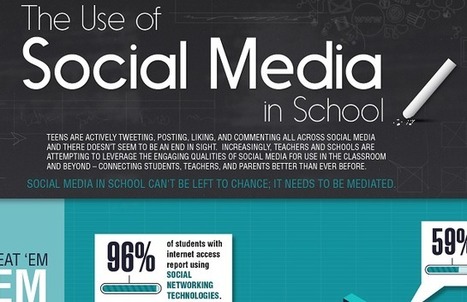
“Teachers and schools are attempting to leverage the engaging qualities of social media for use in the classroom and beyond.”
Via Ivo Nový
Scoop.it!

Being carefree is possible by learning what to care less about. Here are ten tips to being more carefree and happier.
Scoop.it!

Self-knowledge is the greatest knowledge that you will ever acquire. Why? Because your ability to fulfill your unique internal drive will determine your ability to fulfill your potential, which in turn determines the quality of your life. The questions below are designed to help to know yourself deeply and find what is truly important to you. We all have an unexpressed potential. This exercise are specifically designed to help you find yourself. There is no better time to be true to yourself than now.
Scoop.it!

Apple just released its annual "Best Of" list for the iTunes and App Stores, and apps that focused on language learning or had unusual visual designs were..
|






