Trustees are the people responsible for controlling the work, management and administration of the charity on behalf of its beneficiaries. Generally trustees are treasurer, chair, board member etc. The trustees are responsible for keeping this list up to date and can do this by updating their details as they happen through the online service.
What the charity does: Education/training, The Prevention Or Relief Of Poverty, Environment/conservation/heritage
Who the charity helps: The General Public/mankind
How the charity helps: Provides Services, Provides Advocacy/advice/information, Sponsors Or Undertakes Research
Where the charity operates:
Throughout England And Wales, Brazil, Chad, China, Colombia, Ecuador, Ghana, India, Indonesia, Kenya, Madagascar, Mozambique, Nigeria, Peru, Romania, Rwanda, South Africa, Uganda
Activities - How the Charities Spends their Money
Charities provides funding , expertise, and know how to facilitate projects designed to accelerate the transition to a "circular bioeconomy" that is climate neutral, inclusive and prospers in harmony with nature. Circular bioeconomy means a system where renewable biological resources from the land and sea (such as plants, animals, micro-organisms and derived biomass) are restored and sustainably managed.
Charitable Objectives
To promote for the public benefit the conservation, protection and improvement of the physical and natural environment, in particular, but not exclusively, by the transformation of degraded land into regenerative landscapes that are biodiversity positive and climate neutral.
To promote sustainable development for the benefit of the public by:
• The preservation, conservation and the protection of the environment and the prudent use of resources;
• The relief of poverty and the improvement of the conditions of life in socially and economically disadvantaged communities;
• And the promotion of sustainable means of achieving economic growth and regeneration of nature;
• To advance the education of the public in subjects relating to sustainable development and the protection, enhancement and rehabilitation of nature and the environment;
• And to promote to promote study and research in such subjects provided that the useful results of such research are disseminated to the public at large;
• Sustainable development means “development which meets the needs of the present without compromising the ability of future generations to meet their own needs”
Registration history: 12 September 2023: CIO registration
Organisation type: CIO
Other names: CBA (Working name)
Gift aid: Not recognised by HMRC for gift aid
Other regulators: No information available
Policies: Bullying and harassment policy and procedures, Complaints handling, Complaints policy and procedures, Conflicting interests, Financial reserves policy and procedures, Internal charity financial controls policy and procedures, Internal risk management policy and procedures, Investing charity funds policy and procedures, Paying staff, Risk management, Safeguarding policy and procedures, Safeguarding vulnerable beneficiaries, Serious incident reporting policy and procedures, Social media policy and procedures, Trustee conflicts of interest policy and procedures, Trustee expenses policy and procedures
Land and property:
This charity does not own and/or lease land or property
DEC brings together 15 of the UK's leading humanitarian agencies. At times of major humanitarian crisis, DEC works with its members, broadcast and other partners to launch a fundraising appeal to the UK public. The proceeds of each appeal are distributed to DEC's member agencies to enable them to deliver humanitarian programmes to help those most affected.
The DEC's History of Emergency Funding
Founded in 1963, the DEC's first appeal responded to the August 1966 earthquake in Varto, Turkey. Since then, the committee has run 77 appeals and raised more than £2.4 billion as disaster emergency funding, saving millions of lives and helping rebuild communities devastated by disasters.
The other charities on the committee are Action Against Hunger, ActionAid, Age International, Catholic Agency for Overseas Development, Care, Christian Aid, Concern Worldwide, International Rescue Committee, Islamic Relief, Oxfam, Plan International, Save the Children, Tearfund and World Vision.
A key part of the meeting -- will be plans for financial reforms. While optimism from investors has pushed up related stocks to feverish highs, CCTV reporter...
Wall Street Journal (blog) US Banks Announce Ripple Protocol Integration CoinDesk Ripple Labs has sealed new partnerships that will bring its Ripple protocol to two US banks.
CBS News China may be set to replace central bank chief CBS News Li appointed Zhou appointed to a third term as governor of the People's Bank of China just last year despite the latter having passed retirement age.
International Business Times Walmart's Checking Account Deal Will Further Pressure Banks International Business Times Wal-Mart and prepaid card provider Green Dot, which Visa Inc. and Mastercard Inc.
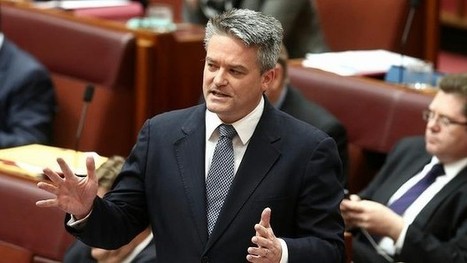
Sydney Morning Herald FOFA reforms on ticking deadline Sydney Morning Herald The federal government faces a ticking clock to keep alive its attempts to unwind Labor's Future of Financial Advice reforms.
Diamond Dealers Face Loan Drought After Losing Bank Bloomberg The Antwerp Diamond Bank, a source of finance for 80 years to the network of companies that trade, cut and polish in the Belgian port city, will stop lending after a sale by KBC Groep NV...
KRII-KROTOASA RESEARCH-INTENSIVE INSTITUTE 's insight:
Albanian central bank Governor Ardian Fullani’s arrest on charges linked to theft may signal a turning point in attitudes toward corruption as the country seeks to join the European Union, analysts said.
The bank’s Supervisory Council in Tirana, the capital, will ask lawmakers to replace Fullani with First Deputy Governor Elisabeta Gjoni, the bank said in a statement today. Fullani was arrested for abuse of power Sept. 5 with the bank’s inspector general, Elivar Golemi, the Prosecutor General’s office said in a statement. It followed the theft of 713 million lek ($6.6 million) from a storage building, the Associated Press reported, citing prosecutor spokesman Albi Serani.
Prime Minister Edi Rama, who took power a year ago, is stepping up the fight against corruption after the Balkan nation started EU talks in June, a process that will require it to bring its banking system, judiciary and economy to the bloc’s standards. Fullani’s lawyer Maks Haxhia declared the arrest “illegal,” Top Channel television reported Sept. 5. Haxhia didn’t immediately respond to e-mail queries or phone calls from Bloomberg.
“A taboo has been broken,” Neritan Sejamini, a political analyst in Tirana, said by phone today. “The public could now see that all these people that have broken the law aren’t really above the law. It could also spur the public, the media and the society in general to realize corruption ultimately doesn’t pay.”
Albania, wedged between the Adriatic Sea, Montenegro, Kosovo, Macedonia and Greece, ranked 116th in Transparency International’s 2013 corruption perception scorecard of 177 countries. European countries ranked lower were Belarus, Russia and Ukraine at 123rd, 127th and 144th.
The lek dropped 0.3 percent to 108.14 against the dollar, the weakest in 14 months on a closing basis, and it extended its slide to 5.5 percent this year, according to data compiled by Bloomberg. Albania’s currency depreciated 0.4 percent against the euro to 140.20 by 2:18 p.m. in Tirana.
KRII-KROTOASA RESEARCH-INTENSIVE INSTITUTE 's insight:
Being technically savvy in financial planning and presenting a wealthy client with appropriate investment options is no longer enough - private banks say training relationship managers in "soft skills" to deal with customers is equally essential.
One such "soft skill" is speaking in the client's native language - like Bahasa Indonesia, for Indonesian customers. Some bankers attend classes during lunch to the learn the lingo. Mr Leslie Tan, a director at the Bank Of Singapore, said: "Being able to converse in their native language often serves as a good ice-breaker with clients. Clients do appreciate it if you could speak in their local language and it does build up rapport."
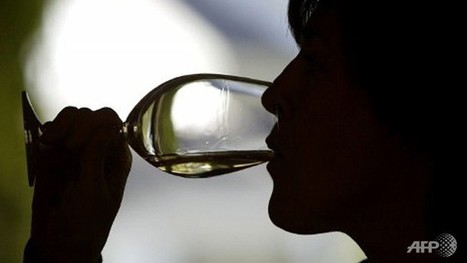
Some institutions are also schooling their bankers in the finer things of life - sending their relationship managers to courses such as wine appreciation, art appreciation and even to learn about luxury watches. All this is in the hope that they would connect better with clients.
Mr Robin Heng, Managing Director and Market Head for Southeast Asia in the Bank of Singapore, said: "We bring in specialists from different companies into the bank and then we share this information. It allows the specialists to train the relationship managers on what the latest trends out there are. We do want to understand what motivates and excites the client. Like a watch collector - to know why he or she is interested in collecting this style of watch."
SINGAPORE: Being technically savvy in financial planning and presenting a wealthy client with appropriate investment options is no longer enough - private banks say training relationship managers in "soft skills" to deal with customers is equally essential.
One such "soft skill" is speaking in the client's native language - like Bahasa Indonesia, for Indonesian customers. Some bankers attend classes during lunch to the learn the lingo. Mr Leslie Tan, a director at the Bank Of Singapore, said: "Being able to converse in their native language often serves as a good ice-breaker with clients. Clients do appreciate it if you could speak in their local language and it does build up rapport."
Some institutions are also schooling their bankers in the finer things of life - sending their relationship managers to courses such as wine appreciation, art appreciation and even to learn about luxury watches. All this is in the hope that they would connect better with clients.
Mr Robin Heng, Managing Director and Market Head for Southeast Asia in the Bank of Singapore, said: "We bring in specialists from different companies into the bank and then we share this information. It allows the specialists to train the relationship managers on what the latest trends out there are. We do want to understand what motivates and excites the client. Like a watch collector - to know why he or she is interested in collecting this style of watch."
But knowing your Merlot from your Chardonnay is not enough. Some experts emphasise the need for relationship managers to be equally grounded in both the hard and soft sides of private banking.
"I could not tell you that we do one more than the other. I think we are fairly thorough on both aspects," said Mr Claudio de Sanctis, Managing Director and head of Singapore private banking at Credit Suisse. "All of them undergo two to three years of intensive training courses, where everything is trained from soft skills, interacting with clients to technical knowledge, product development and expertise - it is a 360-degree training."
KRII-KROTOASA RESEARCH-INTENSIVE INSTITUTE 's insight:
Following weeks of unrest and last week’s announcement that the Department of Justice is investigating its police force, Ferguson’s City Council yesterday announced a raft of reforms. Their intent according to the AP is to repair residents’ relationship with their local government. Some of the planned reforms include establishing a review board “to guide the police department” and reducing revenues from court fines. It has been widely reported that criminal and court fines levied on Ferguson’s residents are the city’s second largest source of revenue.
Read more about the planned reforms on the AP. *This Tuesday evening is the first meeting of the city council since weeks of unrest and global media coverage following the fatal shooting of unarmed 18-year-old Michael Brown by officer Darren Wilson.
EXECUTIVE SUMMARY Financial sector reforms are being considered to address the risks posed by large and complex financial institutions (LCFIs). The vast majori…
KRII-KROTOASA RESEARCH-INTENSIVE INSTITUTE 's insight:
Financial sector reforms are being considered to address the risks posed by large and complex financial institutions (LCFIs). The vast majority of global finance is intermediated by a handful of these institutions with growing interconnections within and across borders. Common trends that contributed to the recent global crisis included sharp increases in leverage, significant reliance on short-term wholesale funding, growth of off-balance-sheet activities, maturity mismatches, and increased share of revenues from complex products and trading activities.
The key objective of the financial sector reforms is to promote a less leveraged, less risky (or better cushioned), and thus a more resilient financial system that supports strong and sustainable economic growth. The recent proposals of the Basel Committee on Banking Supervision (BCBS) on capital standards represent a substantial improvement in the quantity and quality of capital in comparison with the pre-crisis situation. The analysis of this paper suggests that, subject to usual caveats associated with limited data disclosures and availability, phase-in arrangements will allow most banks to move to these higher standards through earnings retention, assuming a modest economic and earnings outlook.
It also suggests that should banks generate strong earnings in the coming years, and distribute lower dividends, they could rebuild common equity capital ratios faster than required under the current phase-in periods. The analysis of the paper also suggests that the new capital standards will have a significant impact on investment-banking-type activities, including through tighter requirements for trading book exposures. Investment banking activities will also be affected by a host of other regulatory initiatives, including the new accounting rules and higher standards for securitization, derivatives, and trading businesses, as well as measures to restrain certain activities.
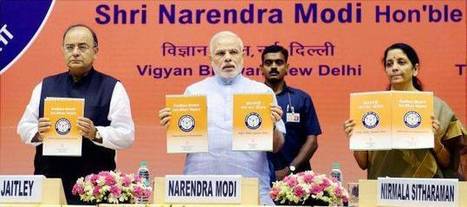
Mega camp for financial inclusion The Hindu As part of the drive for financial inclusion, a special mega camp is being organised with the participation of all banks in the Union Territory at Antoniar Hall on Cuddalore Road on Saturday September 27.
The Guardian Agents of change The Guardian This partnership is providing women entrepreneurs in Nigeria with an innovative, mobile technology solution to meet one of the greatest challenges facing the world today: financial inclusion in emerging...
Research shows that if you empower a woman, you empower a family, a community, and indeed a nation. This is because women invest 90% of what they earn back into their families' health and education, making a lasting difference.
This Focus Note provides an overview of recent relevant FATF standards and guidance, highlighting opportunities for financial inclusion-friendly policymaking to fight money laundering and terrorist financing.
KRII-KROTOASA RESEARCH-INTENSIVE INSTITUTE 's insight:
During the 1997–98 Asian financial crisis, when middle-income countries were hard hit by big capital outflows, there was an effort by China, Japan, Taiwan and other countries to put together an Asian Monetary Fund to offer balance of payments support. Washington vetoed the idea, insisting that all assistance had to go through the International Monetary Fund. The result was a mess, including an unnecessarily deep regional recession, as the IMF failed to act as a lender of last resort and then attached all kinds of harmful and unnecessary conditions to its lending.
But the world has changed a lot in the past 15 years. Last week the BRICS countries (Brazil, Russia, India, China and South Africa) decided to form the Contingent Reserve Arrangement (CRA) and the New Development Bank (NDB), and the United States will not have a veto this time. These new institutions could mark a turning point for the international financial system.
Western media coverage of these developments has been mostly dismissive, but that primarily reflects the concerns of Washington and its allies. They have had unchallenged sway over the decision-making institutions of global financial governance for 70 years, and the last thing they want to see is competition. But competition is exactly what the world needs here.
The IMF and the World Bank were created in 1944, when the United States was pretty much the only standing industrial power in the world. The institutions mirrored that unipolar reality. Today Washington still controls both institutions, with the subordinate partnership of a handful of rich allies; the same is true for the G-7, G-8 and G-20. In recent years, as the eurozone has become the recipient of most IMF lending, the European directors have, of course, been given the predominant voice on policies in this region, but it’s still the same group of countries in charge. And even in the World Trade Organization, which was formed in 1995 and has a different consensual process, the founding rules were written by the rich countries — and in this case, especially their corporations.
Although most economists and most of the major media have ignored it, the IMF’s loss of influence over economic policy in most middle-income countries is one of the most important developments in the international financial system in the past half-century.
For decades there have been efforts to give the majority of the world’s nations a voice at the IMF and the World Bank, but progress has been glacial at best. The BRICS countries have more than 40 percent of the world’s population, and China is now the world’s largest economy, but they have almost no voice at either institution. To say that an alternative has been long overdue is an understatement.
The BRICS NDB has gotten the most attention, but the $100 billion currency reserve fund could prove a much bigger breakthrough. For most countries, one of the biggest constraints and sources of potential instability is the balance of payments. They must have enough dollars or other hard currency to finance imports and enough international reserves to insure against a panicked flight from their currency. Otherwise, their economies can fall into a crisis, a recession or other devastating economic imbalance. Most of the damage from the Asian financial crisis might have been prevented with timely balance of payments support.
But the harmful macroeconomic conditions attached to IMF lending have continued. Just look at Ukraine, where the economy is shrinking by 5 percent this year and the IMF is imposing austerity that will prolong and possibly deepen the recession. An examination of IMF policies during the global recession of 2009 showed that 31 of 41 countries with IMF agreements were subjected to pro-cyclical macroeconomic policies — that is, policies that could be expected to worsen an economic downturn or impede recovery. And although the IMF is only the junior partner in the troika, with the European Central Bank and European Commission, together they have dragged Europe through years of unnecessary recession and the collective punishment of mass unemployment, and that has hurt most of the global economy — including the BRICS and other developing countries.
The BRICS’ defection is part of a process that has been taking place over the past 15 years, in which middle-income countries have accumulated sufficient reserves to vote with their feet and break out of the IMF’s orbit. Although most economists and most of the major media have ignored it, the IMF’s loss of influence over economic policy in most middle-income countries is one of the most important developments in the international financial system in the past half-century. It has almost certainly contributed to the rebound of economic growth in most developing countries over the past decade. It is also, not coincidentally, a huge loss of influence for the U.S. government, which has traditionally used the IMF’s creditors’ cartel for its own imperial purposes.
The BRICS’ new CRA has the potential to break the pattern not only of U.S.-EU global dominance but also of the harmful conditions typically attached to balance of payments support. It could prove very important in the next few years: A lot of money has poured into emerging market government bonds since the Fed set short-term interest rates at zero more than five years ago. A lot of it could up and leave when the Fed decides to raise interest rates here. Such rate hikes were a major cause of the Mexican peso crisis in 1995 and hit other countries such as Brazil and Argentina a few years later. The BRICS countries have indicated that they are open to having other countries join. China has about $4 trillion in reserves, so it has the potential to contribute vastly more and probably still come out ahead, as most of its reserves will likely be losing money in U.S. Treasury bonds. There’s no telling how soon this new fund will be up and running or how big or inclusive it will grow to be. But the upside potential for the world economy is very big.
KRII-KROTOASA RESEARCH-INTENSIVE INSTITUTE 's insight:
The coalition will leave more debt than all Labour governments since 1900. The current government is now responsible for £517 billion of the trillion-plus-pound UK public debt, compared to £472 billion accrued during the 33 years Labour led the country since the turn of the twentieth century.
And the figures look even worse when you adjust for inflation. When you do that, the Coalition’s share jumps to nearly half of the total debt.
But the Coalition don’t meet any public needs, they simply serve the wants of a powerful, wealthy elite. Labour invested in public services, the Tories have bled them dry. So, what have they done with the money? Because the public have seen only austerity cuts. And the most vulnerable bear the brunt of the cuts.
Oxfam’s director of campaigns and policy, Ben Phillips, said: “Britain is becoming a deeply divided nation, with a wealthy elite who are seeing their incomes spiral up, while millions of families are struggling to make ends meet.”
“It’s deeply worrying that these extreme levels of wealth inequality exist in Britain today, where just a handful of people have more money than millions struggling to survive on the breadline.”
Diseases associated with malnutrition, which were very common in the Victorian era in the UK, became rare with the advent of our welfare state and universal healthcare, but are they are now are making a reappearance.
NHS statistics indicate that the number of cases of gout and scarlet fever have almost doubled within five years, with a rise in other illnesses such as scurvy, cholera, whooping cough and general malnutrition. People are more susceptible to infectious illness if they are under-nourished.
In 2013/14, more than 86,000 hospital admissions involved patients who were diagnosed with gout – an increase of 78 per cent in five years, and of 16 per cent on the year before. Causes of gout include a lack of vitamin C in the diet of people who are susceptible, drinking alcohol (beer and spirits in particular) and a lack of a balanced diet generally.
The figures from the Health and Social Care Information Centre (HSCIC) show a 71 per cent increase in hospital admissions among patients suffering from malnutrition – from 3,900 admissions in 2009-10 to 6,690 admissions in 2013-14.
Cases of scarlet fever admitted to hospital doubled, from 403 to 845, while the number of hospital patients found to be suffering from scurvy also rose, with 72 cases in 2009/10 rising to 94 cases last year.
The figures also show a steep rise in cases diagnosed with cholera, a water-borne disease which was extremely prevalent in the 19th century, causing nearly 40,000 deaths.
While total numbers remain low, the 22 cases last year compare with just 4 in 2009/10, the statistics show.
Dr Theresa Lamagni, Public Health England’s head of streptococcal infection surveillance, said the total number of notifications of scarlet fever this year has already reached 12,580 cases – the highest since 1970.
Cases of measles in hospital rose, from 160 to 205 cases, with a small rise in admissions for whooping cough, from 285 to 289 cases over the five years examined.
The figures on malnutrition follow a series of scandals of care of the elderly, with doctors, remarkably, forced to prescribe patients with drinking water or put them on drips to make sure they do not become severely dehydrated.
Charities have warned that too many patients are being found to be malnourished after being admitted to hospitals from care homes, as well as from their own homes.
However, Labour have said the figures a national scandal.
Luciana Berger MP, Labour’s Shadow Public Health Minister, said: “This shouldn’t be happening in 21st century Britain and the Government’s response is hopelessly complacent.
“People are living under greater pressure and struggling with the cost of living”.
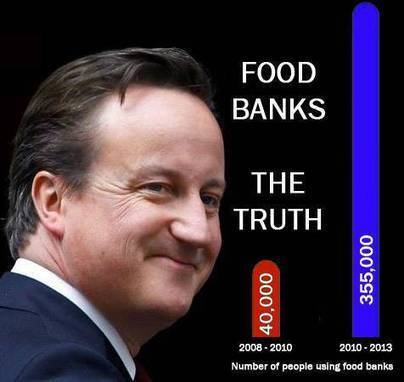
“Hundreds of thousands are forced to turn to food banks and sadly it’s unsurprising people are eating less, and eating less healthily too”.
“David Cameron needs to listen to what the experts are saying and tackle the cost of living crisis that is driving people into food poverty.”
Cases of malnutrition have been steadily increasing since the 2010 general election.
In 2009/10 there were 3,899 hospital admissions for this, in 2010/11 there were 4,660, in 2011/12 there were 5,396 then in 2012/13 this had risen again to 5,594.
People unable to feed themselves adequately needing hospital admission saw a significant rise to 6,686, where malnutrition was the primary or secondary diagnosis during 2013/14.This is a rise of 71 per cent from 3,899 in the year up to April 2010.
KRII-KROTOASA RESEARCH-INTENSIVE INSTITUTE 's insight:
It might seem an unlikely proposition, but central banking has become exciting. This is not necessarily a welcome development.
Decisions taken by the leading monetary authorities since the 2008-2009 global financial crisis have been unorthodox, creative and, at times, risky. Their high-stakes choices today will affect the global economy for decades to come.
Moreover, central bankers have become more vocal in expressing strongly held positions in the mass media, as if seeking to win over popular opinion.
It is a potent and dangerous mix. In this environment, sober, informed voices, such as that of the Bank for International Settlements (BIS), the central bank of central banks, should also be given a fair hearing.
Unfortunately, many central bankers have sought to marginalise the BIS rather than engage with it.
One of the most contentious debates has been over when to end the “unconventional” monetary-policy measures that were introduced in the aftermath of the financial crisis to ensure that banks continued to lend, thereby stimulating growth and averting deflation.
Some central bankers now worry that ending these measures prematurely will tip the economy back into recession. Yet others fear that the current strategy, though originally intended to prevent an economic collapse, is now sowing the seeds of future instability, including the emergence of another asset-price bubble.
In their efforts to resolve such dilemmas, policymakers are also wrestling over whether to focus on traditional monetary tools, such as interest rates, or make greater use of so-called macro-prudential measures, such as capital add-ons and buffers or adjustments to banks’ loan-to-value ratios.
KRII-KROTOASA RESEARCH-INTENSIVE INSTITUTE 's insight:
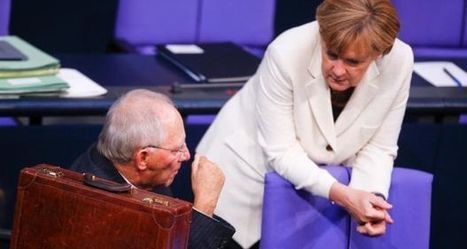
Backsliding on fiscal reforms poses the biggest threat to the economic recovery in Europe, chancellor Angela Merkel said today, pointing to Germany’s 2015 budget plan as an example of how to get away from debt-financed growth.
“We have to take it very seriously when the (European)
Commission rightly warns that backsliding on reforms is the biggest risk for further recovery,” she told Germany’s lower house of parliament in a debate on next year’s budget.
“Sticking to our own commitments in Europe, especially in the euro zone, has to become the hallmark of the euro zone,” said the chancellor.
To get content containing either thought or leadership enter:
To get content containing both thought and leadership enter:
To get content containing the expression thought leadership enter:
You can enter several keywords and you can refine them whenever you want. Our suggestion engine uses more signals but entering a few keywords here will rapidly give you great content to curate.


 Your new post is loading...


 Scoop.it!