


|
Scooped by
KRII-KROTOASA RESEARCH-INTENSIVE INSTITUTE
August 9, 2014 8:09 PM
|


No comment yet.
Sign up to comment

 Your new post is loading... Your new post is loading...
 Scoop.it!
No comment yet.
Sign up to comment
Scoop.it!
 International financial institutionsThe international financial institutions ( IFIs) are financial institutions that have been established (or chartered) by more than one country, and hence are subjects of international law. Their owners or shareholders are generally national governments, although other international institutions and other organizations occasionally figure as shareholders.
KRII-KROTOASA RESEARCH-INTENSIVE INSTITUTE 's insight:
A bilateral development bank is a financial institution set up by one individual country to finance development projects in a developing country and its emerging market, hence the term bilateral, as opposed to multilateral. Examples include:
Scoop.it!
International financial institutionsThe international financial institutions ( IFIs) are financial institutions that have been established (or chartered) by more than one country, and hence are subjects of international law. Their owners or shareholders are generally national governments, although other international institutions and other organizations occasionally figure as shareholders.
KRII-KROTOASA RESEARCH-INTENSIVE INSTITUTE 's insight:
Main article: Bretton Woods system The best-known IFIs were established after World War II to assist in the reconstruction of Europe and provide mechanisms for international cooperation in managing the global financial system . They include the World Bank, the IMF, and the International Finance Corporation. Today the largest IFI in the world is the European Investment Bank which leant 61 billion euros to global projects in 2011. Founded, Name, www Address, Notes, HQ
Scoop.it!
International financial institutionsThe international financial institutions ( IFIs) are financial institutions that have been established (or chartered) by more than one country, and hence are subjects of international law. Their owners or shareholders are generally national governments, although other international institutions and other organizations occasionally figure as shareholders.
KRII-KROTOASA RESEARCH-INTENSIVE INSTITUTE 's insight:
The international financial institutions (IFIs) are financial institutions that have been established (or chartered) by more than one country, and hence are subjects of international law. Their owners or shareholders are generally national governments, although other international institutions and other organizations occasionally figure as shareholders. The most prominent IFIs are creations of multiple nations, although some bilateral financial institutions (created by two countries) exist and are technically IFIs. Many of these are multilateral development banks (MDB).
|
Scoop.it!
International financial institutionsThe international financial institutions ( IFIs) are financial institutions that have been established (or chartered) by more than one country, and hence are subjects of international law. Their owners or shareholders are generally national governments, although other international institutions and other organizations occasionally figure as shareholders.
KRII-KROTOASA RESEARCH-INTENSIVE INSTITUTE 's insight:
Financial institutions of neighboring countries established themselves internationally to pursue and finance activities in areas of mutual interest; most of them arecentral banks, followed by development and investment banks. The table below lists some of them in chronological order of when they were founded or listed as functioning as a legal entity. Some institutions were conceived and started working informally 2 decades before their legal inception (e.g. the South East Asian Central Banks Centre) Founded, Name, www Address, Notes, HQ
Scoop.it!
International financial institutionsThe international financial institutions ( IFIs) are financial institutions that have been established (or chartered) by more than one country, and hence are subjects of international law. Their owners or shareholders are generally national governments, although other international institutions and other organizations occasionally figure as shareholders.
KRII-KROTOASA RESEARCH-INTENSIVE INSTITUTE 's insight:
The regional development banks consist of several regional institutions that have functions similar to the World Bank group's activities, but with particular focus on a specific region. Shareholders usually consist of the regional countries plus the major donor countries. The best-known of these regional banks cover regions that roughly correspond to United Nations regional groupings, including the Inter-American Development Bank, the Asian Development Bank; the African Development Bank; the Central American Bank for Economic Integration; and the European Bank for Reconstruction and Development. Founded, Name, www Address, Notes, HQ
Scoop.it!
International financial institutionsThe international financial institutions ( IFIs) are financial institutions that have been established (or chartered) by more than one country, and hence are subjects of international law. Their owners or shareholders are generally national governments, although other international institutions and other organizations occasionally figure as shareholders.
KRII-KROTOASA RESEARCH-INTENSIVE INSTITUTE 's insight:
Multilateral Development Bank A multilateral development bank (MDB) is an institution, created by a group of countries, that provides financing and professional advising for the purpose of development. MDBs have large memberships including both developed donor countries and developing borrower countries. MDBs finance projects in the form of long-term loans at market rates, very-long-term loans (also known as credits) below market rates, and through grants. The following are usually classified as the main MDBs:
There are also several "sub-regional" multilateral development banks. Their membership typically includes only borrowing nations. The banks lend to their members, borrowing from the international capital markets. Because there is effectively shared responsibility for repayment, the banks can often borrow more cheaply than could any one member nation. These banks include:
There are also several multilateral financial institutions (MFIs). MFIs are similar to MDBs but they are sometimes separated since they have more limited memberships and often focus on financing certain types of projects.
Scoop.it!
KRII-KROTOASA RESEARCH-INTENSIVE INSTITUTE 's insight:
There has been much talk over the past few months on the rise of new multilateral development banks: the China-led Asian Infrastructure Investment Bank and the BRICS’ New Development Bank. Alongside discussions on how the new banks will be set up and on whether they will eschew social and environmental safeguards for speed and cost is the inevitable battle for talent. To get the banks up and running — and running smoothly — by the end of the year, they would need to attract prime talent from both the public and private sectors. Well-established multilateral development banks — such as the World Bank, Asian Development Bank and Inter-American Development Bank — are the most likely sources of much-needed expertise. But the establishment of these new banks has expanded the career pool not just for seasoned experts but for young and midlevel development professionals as well. Apart from the fulfillment of helping people and contributing to the cause of international development, staff in these MDBs enjoy competitive salaries, travel opportunities and fiscal incentives, to name a few.
|



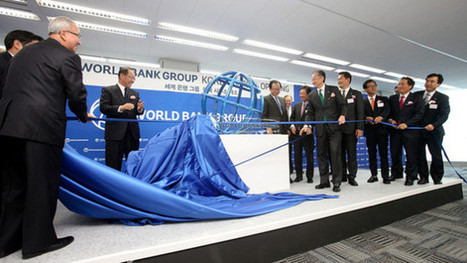


The International Financial Institutions (IFIs) include the World Bank, the regional development banks, and the International Monetary Fund (IMF). They are the largest source of development finance in the world, typically lending between US$30-$40 billion to low and middle-income countries each year.
The IFIs, and in particular the World Bank, are a primary source of development knowledge, publishing research that frames the debate on development issues. Other donor institutions often take their lead from the World Bank and the IMF, thus amplifying the impact of those institutions’ lending approaches and decisions.
IFI loans to finance investment projects and policy reforms in developing countries are intended to reduce poverty and encourage economic development. However, ill-conceived IFI loans have often caused widespread environmental and social damage including irreversible impacts on natural habitats, displaced communities, and indigenous peoples.
IFI activities are often carried out without the informed participation of affected people, non-governmental organizations (NGOs), and-in many cases-even the legislatures of the Banks’ borrowing countries. Moreover, despite some progress the IFIs still do not release comprehensive information in a timely manner during project design and implementation. Finally, as publicly financed institutions, the IFIs should be held accountable for the consequences of the funds they loan to developing countries.
The Bank Information Center (BIC) partners with civil society in developing and transition countries to influence the World Bank and other international financial institutions (IFIs) to promote social and economic justice and ecological sustainability. BIC is an independent, non-profit, non-governmental organization that advocates for the protection of rights, participation, transparency, and public accountability in the governance and operations of the World Bank Group and regional development banks.
The above mission rests on the core premise that socially and environmentally sustainable development is not possible without the informed and active participation of local communities. All too often, powerful interests prevent local voices from shaping development policy and projects. Many of the current economic and social crises affecting the world’s poor are in large part a result of their marginalization. By opening political space around development decision-making, BIC aims to ensure that local communities and civil society organizations have an important voice in decisions that affect them. BIC assists these groups through its information dissemination and capacity building activities, coalition building, project and policy monitoring, and advocacy support services.
BIC is supported by private foundations and organizations that work in the fields of environment and development. BIC is not affiliated with any of the Multilateral Development Banks, nor does it receive any funding from them.
View BIC’s Brochure
BIC Campaigns, February 2012
The Community BIC Serves
BIC is a principal source of information for affected communities, non-governmental organizations and grassroots groups working to address the negative impacts of economic globalization. BIC is also a resource for government employees, IFI staff, the media, students, and the general public.
Since its founding in 1987, the Bank Information Center (BIC) has partnered with civil society in developing and transition countries – as well as the Global North – to influence the World Bank and other international financial institutions (IFIs) to promote social and economic justice and ecological sustainability. For the 2012-2015 period, BIC will pursue this mission with a primary institutional focus on the World Bank Group.
The strategic plan will guide BIC’s work for the next four years, assuming a $2.5 million annual budget.
With the emergence in recent years of various international financial regulatory bodies as well as alternative sources of finance, the power and influence of the World Bank has been called into question. In the face of the global economic crisis sparked in 2008, the World Bank Group is likely to increase its power and finance for at least the next few years, particularly for aid-dependent countries and middle-income countries with high levels of debt. At the same time, the markets will shun goals, such as economic justice and ecological sustainability, if they are perceived as short-term costs rather than long-term benefits. Hence, the need for BIC’s mission and role as the premier go-to organization on the World Bank Group (WBG) is greater than ever.
BIC Strategic Plan: 2012-2015
BIC’s campaign work for the 2009-2012 period is centered on several World Bank policy reviews, specifically the World Bank’s information disclosure policy, the IFC’s social and environmental sustainability policy and Performance Standards, the World Bank’s Energy Strategy and the World Bank Forest Carbon Partnership Facility’s Strategic Environmental and Social Assessment.
Our annual reports provide a description of BIC’s activities and outcomes achieved on these campaigns during the specified period as well as our concerted efforts to mainstream gender considerations into our work. They also provide information on our core work in building the capacity of local civil society groups in order to better understand World Bank Group operations, allowing for civil society voice and participation in the design of IFI projects and policies. Our annual reports also highlight our efforts to enhance awareness of the IFI accountability/grievance mechanisms as tool for civil society to achieve social justice.
BIC Annual Report 2013
BIC Annual Report 2012
BIC Annual Report 2011
BIC Annual Report 2010
BIC Annual Report 2009
BIC Annual Report 2008
BIC Program Areas
BIC program activities are largely determined by the needs and demands of civil society organizations in the Global South. While the political and institutional landscape in which BIC operates continues to change, the basic services and reform efforts that have characterized BIC’s mission and strategy remain critical. BIC pursues its mission through three major strategies: (i) information services and capacity building; (ii) project and policy monitoring; and (iii) policy reform of the MDBs. These strategies require our persistent engagement with NGOs and grassroots social movements around the world to support their efforts to participate in and influence development decisions. For this reason, we have organized a large part of BIC’s program work by geographic regions, with staff dedicated to Asia, Africa, Latin America, Eastern Europe and Central Asia and the Middle East and North Africa.
BIC’s work focuses on four essential elements to democratizing decision making within powerful public institutions:
Tuesday Group is a monthly meeting co-chaired by BIC and the US Agency for International Development. Our objective is to provide opportunities to discuss and coordinate policy around multilateral development banks as well as discuss and vet issues between NGOs and the US government. We meet on the first Tuesday of every month at the World Wildlife Fund offices. All questions and discussion topics are submitted beforehand to our mailing list, so please email Martha Coe at mcoe@bicusa.org to participate.
Given the nature of BIC’s work, the organization assumes the highest transparency standards and undertakes to be open, honest and accountable about its activities and operations. BIC will pro-actively produce and disclose on its website relevant financial and budgetary information, and will also respond to information requests regarding the organization’s operations.
BIC’s Transparency and Environment Policy
Though BIC doesn’t have a separate campaign for gender issues, we are committed to the goal of gender equality, both within our organization and in our advocacy within the IFIs. Our gender policy has been formulated to guide staff in these goals.
BIC’s Gender Policy