Your new post is loading...
TNC’s Nature Bonds program combines debt refinancing and robust conservation plans to help countries protect ecosystems and support communities. Land & Water Stories Nature Bonds Program: Unlocking Funds for Conservation and Climate Action TNC’s Nature Bonds Program combines debt refinancing, science, planning and policy to help countries protect ecosystems and support communities. $1 Billion Unlocked for Nature With the launch of our project in Ecuador, the six Nature Bonds projects now in implementation are expected to unlock approximately $1 billion for conservation, a monumental milestone. The projects will help to protect or improve the management of over 242 million hectares of ocean, land, and fresh water, and 18,000 km of rivers. Ecosystems and natural resources around the world are under threat. The climate crisis and other pressures are accelerating biodiversity loss, worsening food and water insecurity, and leading to loss of lives and livelihoods. For many indebted countries, it’s a struggle to access the finances needed to protect communities and natural resources and address climate change, even when there is the ambition to do so. As part of last year’s agreement on a Global Biodiversity Framework, governments have pledged to protect 30% of the world’s land, fresh water and oceans by 2030. It’s a landmark agreement that together with the Paris Climate Accord sets vital goals for people and nature. The more we protect and effectively manage nature, the more we can safeguard ecosystems that are critical to supporting the well-being of communities through benefits like increased climate resilience and improved food and water security. But that’s not all. Protecting nature at scale also helps the world in its battle to reduce carbon emissions and stem global warming. Forests and oceans soak up an estimated 11 gigatons of carbon each year—about a third of emissions from industry and fossil fuels annually. Yet solutions are costly, and time is running out. The United Nations estimates the global gap in funding for biodiversity is $700 billion. And 88% of “last chance ecosystems” are in countries with moderate to high debt distress. For many countries, debt burdens and lack of access to international capital are enormous hurdles to meeting their ambitious biodiversity and climate goals. That’s where the Nature Bonds Program comes in.
Resources to Explore -
Practice Standards Voluntary practice standards for developing, implementing and reporting on high-quality debt conversion projects for nature, resilience and people. Download the PDF Practice Standards: Other Languages -
Nature Bonds Project Toolkit A step-by-step guide designed for governments, partners and other stakeholders seeking a thorough understanding of the process, best practices and crucial considerations for world-class impact. Download the PDF Global Insights Check out our latest thinking and real-world solutions to some of the most complex challenges facing people and the planet today. Our History For more than 70 years, The Nature Conservancy has been pioneering initiatives to protect nature, with sustainable financing a core element of our work. Piloted in Seychelles in 2016, our approach—initially dubbed Blue Bonds for Ocean Conservation—that combines debt refinancing with technical assistance has proven highly effective. Recently expanded to include terrestrial and freshwater outcomes, what we now call our Nature Bonds Program has six projects in implementation, including marine-focused projects in Belize (2021), Barbados (2022), Gabon (2023), and The Bahamas (2024), and the program's first ever project focused on terrestrial and freshwater conservation in Ecuador (2024). Together, the six projects are expected to generate approximately USD $1 billion in conservation funding and support governments to reach new protection commitments or improved management of approximately 242 million hectares of ocean, land, lakes and wetlands and 18,000 km of rivers, demonstrating how quickly this approach is scaling around the world. Belize Blue Bonds for Ocean Conservation Impact Report Learn more about The Nature Conservancy's Belize sovereign debt conversion in the latest annual Impact Report. What Is the Nature Bonds Program? The Nature Bonds Program is a holistic approach to leverage debt refinancing for effective, durable conservation and climate action. We work with governments to help them refinance debt and generate new funding to invest in conservation, and in climate mitigation and adaptation measures. Once the transaction closes, we partner with national governments to make direct conservation investments over the span of 15 to 20 years to implement robust conservation plans. For each Nature Bonds project, TNC acts as a long-term partner, providing guidance and support to countries throughout the project term. Download the Nature Bonds Toolkit A step-by-step guide to the Nature Bonds approach, designed for governments, partners and other stakeholders seeking a thorough understanding of the process, best practices and crucial considerations for world-class impact. Download the Toolkit With strong partnerships and collaboration between governments, funders and multilateral development banks, the Nature Bonds Program is helping countries refinance debt and re-invest the savings in nature conservation and climate action. Powered by Partnerships Nature Bonds projects combine debt refinancing, science, policy and planning to support countries in achieving their conservation and climate goals, close the nature finance gap, and support local communities. To make Nature Bonds projects possible, TNC engages with governments, financial institutions, NGO partners and community stakeholders to ensure that the project outcomes are a win for both nature protection and sound fiscal management. The Nature Bonds Program builds on our experience with Blue Bonds projects in Seychelles, Belize, Barbados and Gabon. Our project in Barbados is one example of the deep collaboration behind our holistic approach to leveraging debt refinancing for action on conservation and climate priorities. We worked with the Barbadian government under Prime Minister Mia Mottley, partners from the financial and conservation spheres, and communities to develop a set of commitments for durable conservation that is tailored to Barbados. Hosting Carbon & Biodiversity Erwin Ovando, one of the Valdivian Coastal Reserve park guards, standing among Alerce trees (Fitzroya cupressoides), which can grow up to 4,000 years old making them the second oldest growing tree species in the world, Valdivian Coastal Reserve, Los Rios, Chile. © Nick Hall TNC will be working in Barbados with stakeholders like fishers, with the tourism sector and with communities and local NGOs on marine spatial planning to design marine protections and management plans that balance conservation and the development of a sustainable Blue Economy. Launching the project in 2022, we worked with the InterAmerican Development Bank, Credit Suisse and CIBC First Caribbean Bank to secure new funds through a $150 million debt refinancing that is expected to channel $50 million to marine conservation over a period of 15 years and help achieve lasting benefits to nature and the local economy. By replicating projects like this, the Nature Bonds Program is committed to ensuring financing for conservation and climate adaptation and mitigation not just in the immediate future but over the long term. Such innovative approaches require financial resources to get off the ground, and all our work is made possible by philanthropic support that enables us to develop new debt transaction projects and offer countries tailored science, policy and planning support to deliver effective and durable conservation outcomes. Goliath in Lilliput Decades ago, following severe declines in populations of Goliath Grouper, Florida banned their fishing, leading to an increase in the population. © Tom Shlesinger/TNC Photo Contest Communities—Communities have a vital role to play in the development and implementation of Nature Bonds projects. In the Seychelles, more than 100 stakeholders were consulted during the preparation of the country’s Marine Spatial Plan, which supports the sustainable development of the Seychelles Blue Economy through activities such as fishing, tourism and more while ensuring that marine environments and ecosystems and community livelihoods are protected. Country leaders and policymakers—Political leaders around the world are making important new commitments on funding, conservation and addressing the climate crisis. Nature Bonds projects rely on their leadership and ambition to deliver on pledges. The government of Belize is essential to the success of a Blue Bond project that will protect 30% of the country's oceans. Belizean Prime Minister John Briceño said that “Blue Bonds will help us support the vibrant marine life that reside here and maintain the rich biodiversity that is crucial for the health of our ecosystem and the planet. We are proud to be pioneers in this work and to lead the way for other countries to join us as we conserve our oceans for Belize and beyond.” Philanthropic partners—Support from our philanthropic partners and the involvement of other funders help us provide the expert advice and convening power that underpin Blue Bonds and Nature Bonds projects. Funders also support TNC’s in-country staff, who play a key role in seeing our rigorous conservation projects through from start to finish. Financial partners—Nature Bonds projects are made possible by the support of multilateral development banks as well as other financial partners who provide credit enhancements that allow countries to access the best outcomes and offer expert advice. In Gabon, we collaborated with the US Development Finance Corporation (DFC) to develop a debt refinancing and conservation program that met Gabon’s needs and ambitions. DFC CEO Scott Nathan explained, “DFC’s political risk insurance provided critical support for this historic transaction, helping to mobilize capital from institutional investors and catalyze additional investment in Gabon’s marine conservation efforts.” Natural Opportunities Brilliantly colored glacial lagoons sit beneath peaks and glaciers of monstrous sizes in the Cordillera Huayhuash, Peru. © Kevin Wells/TNC Photo Contest 2019 Now Is the Time for Action We must act now to preserve nature, accelerate action on climate adaptation and mitigation and biodiversity conservation pledges at the national and international level, and support the well-being of communities and ecosystems around the world. Global movements such as the Nairobi Declaration are also adding their voices to the call for urgent climate finance action, and Nature Bonds projects will work in cooperation alongside these types of initiatives as a part of the growing global movement for urgent action on the biodiversity loss and climate crises. Nature Bonds projects are an exciting path to support countries in financing and accelerating projects that move the world toward reaching global biodiversity and climate commitments—but more ambition, funding and partnerships are needed to help them achieve maximum impact. Debt refinancing is a key tool for unlocking new funds and addressing the nature and climate finance gaps, and we hope new partners will join efforts to accelerate action on climate adaptation and mitigation and conservation. An Audacious Plan to Save the World’s Ocean TNC’s Blue Bonds for Conservation model helps governments unlock funding for conservation goals—and benefit millions of people in coastal regions. 7-minute read time The Debt-for-Nature Lifeline Debt-for-nature swaps are no longer just a viable economic option; they are now a lifeline for our planet. We must pursue crucial reforms and make credible commitments before it's too late. Invest in Nature, and Nature Invests in Us How we fund and transition to a nature-positive economy at land, water and sea. Global Insights Check out our latest thinking and real-world solutions to some of the most complex challenges facing people and the planet today.
Spekboom, a hardy, unassuming succulent shrub, has become one of the country’s most quietly powerful climate allies. (Imperative) Climate finance is often discussed in abstractions such as bonds, instruments and capital flows. But in the Eastern Cape, the story starts with a plant. Spekboom, a hardy, unassuming succulent shrub, has become one of the country’s most quietly powerful climate allies. Now the plant is at the centre of an ambitious new financial experiment. The World Bank has priced a $120 million (about R2 billion) spekboom restoration outcome bond — its longest-dated outcome bond yet — aimed at funding large-scale ecosystem restoration in the Eastern Cape while tying investor returns directly to environmental outcomes. Issued through the International Bank for Reconstruction and Development, the bond matures in 2040 and offers full principal protection, backed by the bank’s triple-A credit rating. Its returns are split: a fixed coupon and a performance-linked component tied to whether restoration succeeds. For Michael Bennett, the head of market solutions and structured finance at the World Bank, the starting point is ecological decline. “The objective of the project is land restoration, starting in the Eastern Cape, in what is known as the Albany thicket,” he said. Once dominated by spekboom, the area has been degraded over time — primarily through overgrazing by domestic animals, mainly goats — leading to erosion, reduced water retention and lower carbon sequestration. The bond’s $120m proceeds will support the World Bank’s broader sustainable development lending globally. What distinguishes it is how part of the return is redirected. Investors accept a lower fixed coupon than on a standard World Bank bond of similar maturity. The foregone portion is channelled, via a structured transaction arranged by BNP Paribas, into upfront financing for restoration. The outcome bond has been structured to mobilise $25m of private capital to support a
50 000 hectare scale-up of a spekboom project, designed, developed and operated by Imperative, a private-company specialising in ecosystem restoration. The ambition is both ecological and economic: reviving degraded landscapes while creating about 11 000 jobs, many through small and medium-sized enterprises involved in planting, harvesting, monitoring and land management. “This is a project expected to have a much longer life, even longer than the 14.5-year life of our bond, so it is a combination of the two,” Bennett said. “They are employing small and medium-sized enterprises on the ground and providing them with training. Therefore, the impact includes not only jobs created by this project but also training and knowledge transfer for the local folks on the ground who will be doing the actual work.” For investors, the structure offers upside. As spekboom grows, it generates carbon removal units that can be sold on voluntary markets. A significant share has been secured under a long-term agreement with Amazon, which will purchase the credits at a fixed price for more than a decade. A portion of the revenue flows back to investors, again via BNP Paribas, as a performance-linked return. If the project delivers, the bond can outperform a standard World Bank bond. If not, investors still retain principal and the base coupon. The project is registered under the Verra standard, ensuring independent monitoring and verification of carbon outcomes, essential in a model where financial returns depend on measurable environmental performance. “This will be our seventh outcome bond,” Bennett said, placing it within a broader programme spanning reforestation in the Amazon, clean cookstoves in Ghana, water purification in Vietnam, recycling projects in Ghana and Indonesia, and a Unicef Covid-19 financing instrument. It is also the second such bond in South Africa, after the wildlife conservation or “rhino” bond, which launched four years ago and is a first-of-its-kind, outcome based financial instrument that channels investments to achieve an increase in black rhino populations. Spekboom, Bennett said, is well-suited to the model. “It’s a very efficient plant for water retention and from a carbon sequestration perspective, so it has qualities required for a bond of this type because it can produce a relatively high level of carbon sequestration for the cost of putting it into the ground, which is important for a bond of this type. We needed to produce enough carbon credits to repay the activity.” Efficiency is crucial in a structure where returns depend on generating enough carbon credits to sustain the model. “But it is also a native species of this area. So, it’s a story of restoring land that has been degraded over hundreds of years of human activity, back to its more native state,” Bennett said, adding that he had never heard of spekboom before work started on the project. On the ground, the model is designed around partial land use rather than exclusion. Imperative works with landowners, leasing portions of farms and fencing off degraded areas while leaving surrounding land in use. “In most cases, it’s not all of anyone’s farm that is being fenced off,” Bennett said. “It’s just a portion.” The fencing primarily limits intensive grazing by goats — the main driver of degradation — while allowing broader wildlife movement across non-contiguous land parcels. The overgrazing problem, he said, came mainly from goats being able to move freely through the area and feed without restriction, often standing in one patch of spekboom and “eating it until it is completely gone”. In a more natural system, where both prey and predator species are present and able to move across the landscape and over fences, grazing on spekboom is more limited and controlled. Animals remain alert, constantly scanning for predators, which prevents sustained pressure on any single area. That kind of lighter, intermittent grazing does not damage the thicket. As spekboom returns, it forms a canopy that allows other species to regenerate, improving biodiversity while stabilising soil and improving water retention. Over time, Bennett said, the landscape begins to function again as an ecosystem.
Spekboom Carbon Capture Projects Visit www.socialcarbon.org to view project “Spekboom Regeneration and Carbon Sequestration”. Why Is Spekboom So Special? Spekboom Net Zero is a large-scale carbon capture project in South Africa based on planting Portulacaria Afra (Spekboom) on available farmland... Spekboom Carbon Capture Projects Why Is Spekboom So Special? Spekboom Net Zero is a large-scale carbon capture project in South Africa based on planting Portulacaria Afra (Spekboom) on available farmland and other suitable land areas. The first phase of this project will be on the order of 7,000 Ha with the potential of capturing 100,000 tonnes CO2 per year for 200 years. CO2 Absorption Spekboom carbon capture rate is like a tropical rain forest per hectare, at a rate of 15 to 29 tons of CO2 per hectare per year, except this carbon sequestration rate lives in a hot and dry subtropical ecological system, not in a rain forest. NO SPECIAL ATTENTION It can live mostly anywhere, in desert, in mountains, by the sea on sand dunes. It doesn’t need any special attention, like fertilizers or special irrigation. Easy to plant It is easy to plant, just break off a branch (even just a leaf) and stick it in the ground. It grows to 2 to 3 meters in 4 years and lasts 200 years. Social Carbon Capture Unemployment in Eastern Cape South Africa is nearly 50%. Spekboom Carbon Capture Projects will provide income to workers and families that are just surviving day-to-day living in poverty. MORE ABOUT SPEKBOOM Carbon Credit Project Development Typical Carbon Credit Project 2022 - Project arrangement defined.
- Stakeholder consultation meeting with verification company.
- After one year, audit to confirm carbon capture rate.
- Carbon Credit issued by verification company and placed on registry.
- Buyers can purchase credits directly from project developer, or brokers or retailers. Demand continues to be greater than supply.
- Payment distributed to Stakeholders.
Restored spekboom, 27 years after cuttings were planted Spekboom Large Scale Carbon Capture Continues Year on Year Eastern Cape, South Africa was flagged by the United Nations as particularly suitable for mass restoration and rehabilitation projects, in part due to Spekboom and subtropical valley thicket, and as part of carbon sequestration and climate mitigation GALLERY Spekboom is a low-maintenance shrub, and doesn't need to be cultivated in a nursery before planting, making it cheap and convenient How Shrubs Can Help Climate Change,” Alexander Matthews, BBC Future 4 February 2020 In spekboom-rich thicket, the dense canopy and the “skirt” of branches create a cool dry microclimate underneath. INTERVIEW WITH F.B. WILLIAMS F B Williams is the first farmer in South Africa to participate in the Spekboom Regeneration and Carbon Sequestration Project. WHY GO FOR IT?
The project will see 180 million spekboom shrubs planted in South Africa’s Eastern Cape, bringing back the area’s thriving habitats. - Millions of spekboom plants, known for their ability to absorb carbon, will be grown on previously degraded land.
- Amazon’s investment will help transform an area twice the size of the city of Seattle.
- The project will create 11,000 jobs and generate more than $500 million in economic value locally.
- Amazon will buy 1.95 million tonnes of high-quality nature-based carbon removal credits generated by the project.
The hills in South Africa’s Eastern Cape are connected to the families who live there. Farmers grow their crops in the soil while animals graze on the vegetation. But over time, the Albany thicket covering large parts of the landscape has disappeared. Years of land use have left it struggling to support nature and the communities that depend on it. Amazon has announced it is investing in one of the world’s largest nature-based carbon removal programs, helping to bring an area more than twice the size of Seattle back to life. How Amazon is preparing for the energy needs of the future Learn how we're supporting the transition to carbon-free energy and powering our business with sustainability in mind. The ambition of the program is breathtaking. Amazon’s support will enable more than 50,000 hectares of exhausted land to be restored over the coming years, largely thanks to a remarkable plant called spekboom. Spekboom is a hardy succulent that can help turn dusty, dry, degraded land back into thriving habitats and help tackle climate change at the same time. Scientists have found that spekboom can remove carbon from the atmosphere at rates comparable to young tropical forests. What’s more, the plant transforms the ground around it. By restoring moisture and improving soil health, it creates the conditions for native grasses, shrubs, and trees to return—followed by birds, insects, and mammals that haven't thrived there for decades. By the end of 2028, 180 million spekboom cuttings will be planted across the landscape, bringing new life to the Albany thicket, a distinctive ecosystem that has been in decline for decades. But this isn't simply a story about plants. It's about people too. The Amazon-backed restoration program is expected to create around 11,000 jobs by 2030 in one of South Africa's most economically disadvantaged regions, while training local businesses in ecological restoration and injecting more than $500 million into surrounding communities through wages, procurement, landowner payments, and community investment. Amazon continues to be one of the world’s leading corporate purchasers of carbon-free energy With more than 700 projects globally, Amazon is investing in over 40 gigawatts of carbon-free energy, which is enough to power more than 12.1 million U.S. homes. Why spekboom is used in land restoration Unlike many restoration projects that rely on planting trees, this one centers on a native succulent that evolved specifically for the Eastern Cape's harsh climate. Known locally as elephant bush because elephants browse its leaves, spekboom flourishes where many other plants struggle. It grows from simple cuttings placed directly into the soil, making restoration practical at enormous scale. As the plants mature, they gradually cool the landscape, improve depleted soils, and create conditions for entire ecosystems to recover naturally. Today, the project area is home to 165 recorded plant and animal species, including several considered vulnerable by conservationists. Its noteworthy ecological impact has earned international recognition, with the United Nations naming spekboom restoration one of its World Restoration Flagship initiatives. How Amazon is supporting the restoration program Large-scale restoration requires more than remarkable plants—it also requires long-term investment. Amazon has committed to purchase 1.95 million tons of carbon removal credits generated by the project over more than a decade, one of the largest private-sector commitments to nature restoration in South Africa's history. That long-term commitment enabled the World Bank to launch an innovative Spekboom Outcome Bond, giving investors the confidence there would already be a buyer for the project's future carbon credits. These credits are available for qualified companies to purchase through Amazon's carbon credit service. How Amazon approaches carbon credits, a key tool in the fight against climate change Carbon credits help unlock private sector climate finance at scale, and drive impact beyond our own operations. The credits will meet some of the world's highest standards for nature-based carbon removal, carrying both the ABACUS label and the Climate, Community & Biodiversity (CCB) certification. “This is a story about nature, community, ingenuity, and scale,” said Kara Hurst, Amazon’s chief sustainability officer, when she visited the project site. “Spekboom is a natural wonder, but it can’t heal the land without help from the people who call the Eastern Cape home. This project will restore the ecosystem and create jobs—a model for how nature-based solutions can enable both climate action and economic development.” The project forms part of Amazon's work toward its Climate Pledge goal to reach net-zero carbon across its operations by 2040. The project is already underway. Phase one—with 30 million plants covering 10,000 hectares—has been in progress since April 2024. More than 50,000 hectares will be added to the project as a result of Amazon’s support. The project holds a 'AA.pre' Standalone Rating from BeZeroCarbon—an independent agency that assesses the quality of carbon credits—making it one of the highest-rated afforestation, reforestation, and revegetation (ARR) projects in the world. The 'AA.pre' rating, on a scale from AAA (highest) to D (lowest), indicates a high likelihood that the project's carbon credits represent real, verified carbon dioxide removal. Sign up for the weekly Amazon newsletter
Indigenous Biodiversity: Amazon Buying Albany Thicket Region: Eastern Cape Indigenous spekboom Plant, rivers, biodiversity, under Threat using Climate Financing, Green Economy disguise
The Eastern Cape is at the forefront of a massive green economy boom driven by the indigenous Spekboom plant. Climate financing in the province is now dominated by innovative outcome-based bonds and corporate carbon credits that restore degraded thicket landscapes while creating thousands of local, rural jobs. The Spekboom Restoration-Linked Bond Spekboom is a highly resilient, native succulent capable of sequestering up to 10 tonnes of carbon per hectare. This massive carbon-capturing potential has unlocked landmark climate funding: - The World Bank Bond: The World Bank priced a historic $120 million Spekboom Restoration Outcome Bond to fund large-scale land restoration and job creation in the Eastern Cape.
- Corporate Offtake: The project features a long-term carbon credit agreement with Amazon, which is purchasing a massive share of the resulting carbon credits.
- Local Scale: The initiative spans 50,000 hectares and is focused in areas like Jansenville, the Dr. Beyers Naudé Local Municipality, and the Sarah Baartman District.
Economic and Environmental Impact This influx of international climate finance is uniquely designed to yield direct socio-economic and ecological benefits: - Job Creation: The project is projected to generate up to 11,000 green jobs across the value chain, directly fighting the region's high unemployment rates.
- Ecosystem Recovery: Beyond carbon sequestration, the restored Spekboom thickets help improve soil quality, enhance water retention, and restore biodiversity.
If you are looking to tap into or partner with the region's carbon economy, several key entities are leading the charge: - Project Developers: The large-scale 50,000-hectare project is implemented by the ecosystem restoration company Imperative.
- Provincial Support: The Eastern Cape Development Corporation (ECDC) actively spearheads the province's green investment and Carbon Sequestration Funds.
- Regional Government: Track official civic initiatives and rural development updates via the Eastern Cape Provincial Government.
Reflecting on our roundtable session at the 18th congress of the International Society of Ethnobiology (ISE) in Morocco by Brittany Kesselman | Jun 24, 2024 Brittany Kesselman reflects on her participation at the ISE congress in Morocco. From 15-19 May 2024 I attended the 18th congress of the International Society of Ethnobiology (ISE) in Marrakech, Morocco. The conference theme was ‘Biodiversity and Cultural Landscapes: Scientific, Indigenous and Local Perspectives’. There were participants from 72 different countries. While most came from academia, other participants were artists, or representatives of Indigenous peoples’ groups and non-governmental organisations (NGOs). I attended the conference with my colleagues from the Bioeconomy Chair, and together we organized a panel called ‘Nourishing Diversity: Exploring the Interplay of Local Foodways, Biodiversity, and Cultural Landscapes in the Global South. Initially, we had planned the panel to include collaborators from West Africa and South America. In the end they were unable to attend, so the panel focused on work in South Africa. Our panel was made up of Eva Ross, presenting on her work on breadmaking cultures and changes in foodways among communities in the Cederberg, Western Cape province; Sthembile Ndwandwe, sharing her work on the impact of honeybush commercialization on harvester communities in Haarlem village, Western Cape province; Maya Marshak, presenting on agroecological deskilling in the wake of industrial maize adoption in KwaZulu-Natal province; Jess Fortes, sharing her work on traditional foodways in KwaZulu-Natal province; and myself, recounting research on precolonial foodways and the contemporary resurgence of traditional foodways in various parts of South Africa. Rather than each presenting a separate paper, we opted for a less conventional approach, weaving together our presentations into a series of inputs on different themes. This showed the many overlaps between our work, in terms of understanding people’s traditional relationships with the natural world, how those were disrupted by colonialism and capitalism, and the ways in which people resisted or adapted to those disruptions. We also touched on some examples of the resurgence of traditional foodways (e.g. in the form of food festivals). Our panel began with a wonderful animation, conceptualised and illustrated by Maya Marshak, that also brought together all of our work in terms of things lost (“ghosts”) and things emerging, in the wake of industrial agriculture and neoliberal conservation. Before taking questions from the audience, we held a meditative reflection exercise, which involved audience members imagining a landscape they know well, finding a traditional food plant there, and thinking about how the landscape is changing. In order to create a more sensory engagement with the plants we spoke about, we provided a small gift to participants—small samples of kei apple jam graciously supplied by Loubie Rusch of Making Kos, honeybush tea, rooibos tea, millet grains, and a painted image from the animation. At the entrance to the room, we had a display with these and additional items, including sprigs of umsuzwane (Lippia javanica) and wild rosemary (Eriocephalus africanus), zebra beans, tea, and breadmaking booklets that Eva co-produced with her research participants (bread makers) from the Cederberg. These gave people a chance to engage with the plants, and the research generally, in a more interactive and embodied way. Based on feedback from participants, the panel was well received, both in terms of content and our arrangement of inputs into a broader story. Many of the presenters at the conference shared unconventional work, in terms of using storytelling, the arts and other creative methods to share their research. It was inspiriting to see children’s books produced as research outputs, with the aim of educating young people about conservation. Other highlights of the conference included the keynote addresses by Anna Tsing on ‘Swamp Epistemologies’ and Carolyn Finney on ‘What Endures: Race, Resilience and the Land on Which we Stand’. I appreciated how both of them wove together personal stories with ecological questions and broader systemic issues. I also loved the biocultural forum, a room devoted to the display and production of cultural products and creative outputs. There, we made quilt squares that reflected the themes of our work, learned about weaving grass into rope, and saw food products from the Atlas Mountains as well as handicrafts from the west coast of Mexico. Outside of the conference, I especially enjoyed wandering through the maze of souks in the Medina, where small shops display colourful textiles, beautiful ceramics, intricate metalwork and fragrant spices in mounds spilling out into the narrow streets. Physical Address Department of Environmental and Geographical Science
South Lane
Upper Campus
University of Cape Town
Rondebosch
7701
Pension funds have the potential to ignite Africa’s infrastructure revolution Across Africa, economic growth and development have gained significant momentum in recent years. But with growth comes a challenge: building and funding the infrastructure to support it. Where will the funding for Africa’s new infrastructure come from? This remains a crucial question. One solution that offers great potential is pension funds: a vast pool of long-term capital that could be channelled towards infrastructure, with a focus on climate change adaptation. The importance of infrastructure Infrastructure is the backbone of any thriving society, enabling connectivity and access to services. In Africa, better infrastructure is pivotal to progress – building bridges that connect communities, power plants that illuminate cities, schools that nurture young minds and hospitals that save lives. But the scale of infrastructure development required across the continent is substantial. And this means a significant amount of funding is needed. Harnessing pension funds African pension funds have grown rapidly in recent years, accumulating substantial capital. Instead of letting this money sit idle, pension funds could invest a portion of it in infrastructure projects. With their long-term outlook and stable cash flows, pension funds are well suited for investing in projects that require longer periods of time and large amounts of resources – as many infrastructure projects do. Win-win scenario When pension funds invest in infrastructure, it creates a win-win situation. Infrastructure investment entails improved transport, better energy access and upgraded healthcare facilities, which all contribute to economic growth and enhanced quality of life for people in the region. In addition, infrastructure projects generate long-term revenue streams, like toll fees from highways or electricity sales from power plants, providing pension funds with steady cash flows, and supporting future retirement payments. Nigeria and South Africa Several African countries have already begun to recognise the value of investing pension fund assets in infrastructure: - Nigeria: The Nigerian Sovereign Investment Authority has used pension assets to finance key infrastructure projects, including roads, power generation and healthcare facilities. These investments have greatly improved connectivity and quality of life for many Nigerians.
- South Africa: The Public Investment Corporation has been vital in financing infrastructure projects, including renewable energy initiatives. These investments are contributing to South Africa’s sustainability goals and fostering a greener future.
Covid recovery and sustainable investment The Covid-19 pandemic has severely impacted Africa’s economy, but the recovery effort has provided an opportunity to prioritise sustainable infrastructure investments. By allocating a portion of their portfolios to infrastructure projects, pension funds can help drive economic recovery while ensuring long-term returns. In Ghana, for example, the Social Security and National Insurance Trust has been actively investing in infrastructure projects to support the country’s recovery efforts. Climate change resilience Africa is particularly vulnerable to the effects of climate change. This is an important consideration when financing new infrastructure. Pension funds can help the continent build a climate-resilient future by prioritising investments in renewable energy, climate-smart agriculture and resilient urban planning. In Kenya, for example, the government has invested in a number of renewable energy projects, like geothermal power plants. This not only helps to fight climate change, but also provides sustainable energy solutions for the country. Building a sustainable future African governments, supported by international organisations like the World Bank and the African Development Bank (AfDB), have already implemented recovery plans that emphasise infrastructure as a key strategy to stimulate growth and improve the lives of ordinary Africans. Continuing this momentum and recognising the potential of pension funds to finance infrastructure, will be essential for Africa’s financial development. As African nations continue to grow and evolve, the deployment of pension funds in infrastructure projects stands as a beacon of sustainable development. These investments will do more than build roads, power plants, and hospitals; they will weave a fabric of connectivity, opportunity, and stability that will endure for centuries.
OECD WORKING PAPERS ON FINANCE, INSURANCE AND PRIVATE PENSIONS OECD Working Papers on Finance, Insurance and Private Pensions provide timely analysis and background on industry developments, structural issues, and public policy in the financial sector, including insurance and private pensions. Topics include risk management, governance, investments, benefit protection, and financial education. These studies are prepared for dissemination in order to stimulate wider discussion and further analysis and obtain feedback from interested audiences. Favourable conditions such as the growth of pension fund assets, privatisation trends and changing regulations have increased the interest of institutional investors in infrastructure investment. However, data on pension fund investment in infrastructure is limited. National statistical agencies do not currently collect separate data on these investments, and the different modes available to investors to gain exposure to infrastructure means that information is buried under different headings. This paper is based on a recent survey of some of the largest pension funds across different regions, accounting for over USD 7 trillion of assets under management. We look at how much these investors have allocated to infrastructure, what is considered as infrastructure, where it fits in the total portfolio allocation, what approaches and forms of investment have been taken, what are recent trends in relation to infrastructure and asset allocation, regulation and green investment. A better understanding of these issues is necessary from a policy perspective in order to be able to attract institutional investors to the infrastructure sector. ABOUT THIS PAPER In order to identify the flows and better capture the underlying trends in asset allocation and investment strategies of institutional investors, in 2010 the OECD launched a pilot survey on investments of selected individual pension funds both within and outside the OECD that are among the largest in their respective countries. This paper draws on data collected through the OECD Large Pension Funds Survey 2011 (“LPFs”).1 Data has been received from 26 pension funds, a mix of defined benefit (DB) and defined contribution (DC) schemes, mainly public sector pension funds but also some corporate funds managing on aggregate USD 1.6 trillion. This information complements the OECD Public Pension Reserve Funds (“PPRFs”) survey also carried out in 2011. Altogether, data has been received from 52 institutional investors from more than 20 countries around the world including some non-OECD countries such as Brazil, Colombia, Peru and South Africa, accounting for over USD 7 trillion of assets under management. For this report, which focuses on infrastructure investment, we included data from 28 funds out of the total 52 funds (the complete survey). Out of the 28 funds used in this report, 22 are LPFs and 6 are PPRFs. The funds taken in consideration invest in infrastructure and provided information on their infrastructure investment allocation. Results of the survey are based on a relatively small – although significant in terms of assets under management – sample of investors and are biased towards the larger investors in each respective country. However, the trends that are analysed and the conclusions may be valid for a wider set of investors. The survey is part of the OECD project “Institutional Investors and Long Term Investment” that was recently launched. Going forward, the survey will be extended to more funds and countries as well as to other institutional investors (e.g. insurers and sovereign wealth funds), providing insights and detailed investment information which will complement the administrative data gathered at the national level. Policy recommendations In order to attract private sector investment, and particularly institutional investment, to the infrastructure sector, policy makers need to approach the issues investors are facing from an asset allocation perspective and make the asset class financially attractive. While investors are increasingly adopting an international approach to their portfolio allocation, a co-ordinated policy response to the barriers they are facing is still missing at the international level. However, governments have started to recognise that they need to reconsider their approach to financing to secure new sources of capital to invest in infrastructure. Developed and developing countries are, in effect, competing to attract institutional investors to infrastructure. Infrastructure investing is different from other asset classes as the nature and risks of these investments, such as high up-front costs and the scale of the projects, require dedicated resources to understand them – resources that many smaller pension funds lack and which take years to build up (as has been the case at the Canadian public pension funds, for example, which are some of the most experienced infrastructure investors in the world). An additional issue for pension funds is the lack of objective, high-quality data on infrastructure investments and a clear and agreed benchmark. This makes it difficult to assess the risks of these investments and to understand correlations with the investment returns of other assets. Without such information, pension funds are reluctant to make such allocations. A related issue is that, whilst some countries collect data which matches the needs of the relevant authorities, there is no international, official, accurate data on the asset allocation of pension funds in alternative asset classes, which include, inter alia, hedge funds, private equity, real estate, infrastructure and commodities. Definitions of alternative assets, as to ensure that the data collected and reported is comparable across pension funds, is required in order to monitor the flows into different types of alternative assets and their respective costs and performance – which is vital not only for investors but also for regulators and other policy makers, to help them better understand the exposure of pension funds in different countries and produce appropriate regulation. Some policy initiatives are headed in the right direction. The UK government has a stated policy to attract GBP 20 billion of institutional investment into UK infrastructure7 and has been active through HM Treasury in leading the discussions with investors. The EU “Project Bonds Initiative” approved in May 2012 aims to finance infrastructure projects in Europe through capital market solutions, i.e. structuring financial instruments, the project bonds. The experience of Mexico and Chile suggests that institutional investors, and in particular pension fund assets, have been instrumental to the growth of the corporate bond market and in turn to the provision of development finance. Recent G20 meetings (i.e. Los Cabos in June 2012 and Cannes in November 2011) recognised the urgent need to deepen and broaden capital markets for developing countries to put their own financial resources to productive use and to attract foreign capital flows.
This document sets out the Government Employees Pension Fund’s (GEPF, the Fund) Developmental Investment Policy. Developmental investments (“DI”) refers to investment made in the development of a country, region, or community, usually in the form of infrastructure, education and other projects that aim to improve the economic and social well-being of the area and its inhabitants. Being the largest investor in the South African economy, with a strong focus on developmental investments, the GEPF can structure an investment portfolio which brings positive economic, social, and environmental outcomes to South Africa. Given the GEPF’s investment beliefs1, the GEPF can leverage its current and prospective investments to support the advancement of South Africa’s national and the continental (African) development agenda. The GEPF is committed to making investments with a positive developmental impact, where there is a need for funding, and where appropriate risk adjusted returns can be earned. More specifically, the GEPF is committed to: -
Invest in the economic infrastructure framework of South Africa (e.g., energy, logistics, water, commuter transport, liquid fuels, and broadband infrastructure); -
Invest in the social infrastructure framework of South Africa (e.g., affordable housing, healthcare, and education); -
Invest in firms, funds, and projects that improve long-term environmental sustainability in South Africa (e.g., mitigate against climate change, renewable energy, energy efficiency, green buildings, recycling, and clean technology); -
Invest in job creation and new enterprises (small and medium sized enterprises, especially those with high positive social or environmental impact, smaller cap stock exchanges, and in support of broad-based black economic empowerment (“BBBEE”)). This Developmental Investment Policy (“DI Policy”) aims to support and guide investment toward creating a sustainable, equitable and inclusive economy. This Policy outlines the GEPF’s priorities and objectives for directing investments in its unlisted portfolio, which may include investments in infrastructure development, job creation, poverty reduction, and environmental protection while earning risk adjusted returns for its members, pensioners and beneficiaries. This Developmental Investment Policy provides the basis for the management of developmental investments at the GEPF. 2. Policy Statement 2.1 Developmental investments The GEPF commits to achieving sound risk adjusted investment returns for members, pensioners and beneficiaries of the Fund while also supporting positive, long-term, economic, social, and environmental outcomes for South Africa and the African continent. To this end, the GEPF commits to invest a portion of the GEPF’s portfolio in developmental investments and in assets with positive developmental impact, where there is a need for funding, and where appropriate risk-adjusted returns can be earned. More specifically, the GEPF commits to invest in the following four pillars: a. Investment in economic infrastructure: Actively invest in return-seeking, sound investments in the construction, improvement, and replacement of the economic infrastructure framework of South Africa, that provides the missing links in our economy enabling it to run, grow, and be more competitive. Investments that unlock volume, cost reduction opportunities, and the quality of our economic activity. Investments in infrastructure with measurable multiplier effects on key socio-economic indicators. Investments that support South Africa’s transition to a low-carbon economy, improve South Africa’s long-term environmental sustainability, and mitigate and enable adaptation to climate change. b.Investment in social infrastructure: Actively invest in return-seeking, sound investments in the improvement and replacement of social infrastructure, which improves access to healthcare and the health outcomes of South Africa. Provides access to affordable housing near economic centres. Improves access to education and education infrastructure. c. Environmentally sustainable investments: This is return-seeking investment in firms, funds, and projects that seek to improve environmental sustainability, to mitigate climate change, and to foster renewable energy, green buildings, energy efficiency, recycling, and clean technologies. d. Enterprise development and Broad-Based Black Economic Empowerment: This is return-seeking investment in small and medium enterprises especially those that seek to have high positive social or environmental impact; in smaller cap stock exchanges; in sectors in which enterprise growth and the creation of new jobs is possible (including agriculture and agri-processing, construction and housing, tourism, business process outsourcing, and the green economy), and in broad-based black economic empowerment transactions. Actively invest in return-seeking, sound investments that unlock the growth catalysing and job- creating opportunities in South Africa’s agricultural sector and in support of sustainable farming practices for food security in South Africa. In investment decision-making, ESG risks and opportunities relevant to the investment decision should be considered, using available data and tools, in support of conducting thorough investment analysis to improve the long-term financial and sustainability performance of the GEPF’s developmental investments. 2.2 Principles of Developmental Investments In implementing the Developmental Investment Policy, the GEPF will honour the following principles: a. Impartiality: o market-related risk-adjusted returns and o highdevelopmentalimpact. b. Diversification: • Developmental investments will be made optimally across opportunities, and the four pillars underlying the DI Policy. c. Transparency: -
Reporting that is accurate, timely and transparent. -
Reporting that clearly communicates to members, pensioners, beneficiaries and GEPF stakeholders how developmental investments are made. -
Reporting that is apolitical and makes it clear that there is no inappropriate political, ideological, or conflicts of interest in the developmental investments. d. ESG Discipline: • All developmental investments, whether public or private, shall incorporate ESG in its investment processes, and be held to strict governance standards. e. Acceptable Returns: • The Fund will seek to earn a blended return of at least 5% real return per annum (as per the most recent Statutory Actuarial Valuation), in line with our belief that developmental investing does not lead to a compromise of returns. 3. Scope and Objectives This Policy seeks to create a framework for developmental investment that is aligned with South Africa’s National Developmental Plan and its international obligations and best practice policy framework. The ultimate objective of this Policy is to enhance economic growth, create opportunities for economic empowerment and thereby improve the lives of South African’s. The DI Policy shall apply to all GEPF investments with a particular focus on the GEPF’s unlisted investments and investments under the Isibaya Funds portfolio. The specific objectives and asset allocation ranges of the DI Policy, in terms of the GEPF’s investment pillars are as follows. Developmental Investment Objectives -
(i) Missing links: infrastructure investments that interconnect two markets/areas e.g., fibre optic links connecting regions. -
(ii) Bottlenecks: investments that unlock the volume, cost, and quality of economic activity e.g., port infrastructure -
(iii) Ripple effects: investments with measurable multiplier effects on key socio-economic indicators
e.g., a rural infrastructure package that boosts agricultural productivity with multiplier effects on rural income and development. Environmental sustainability -
- Renewable energy -
- Green economy -
(i) Decarbonisation of the GEPF investment portfolio. -
(ii) Diversification of the GEPF investment portfolio. -
(iii) Support of the transition to a low carbon economy. -
(iv) Support the long-term nature of green economy investments as demand for sustainable energy continues to rise, and the long-term growth of the economy. Social infrastructure and services - Healthcare
- Affordable housing - Education -
(i) Improve access to healthcare and improve health outcomes. -
(ii) Support the modernisation and expansion of the healthcare system. -
(iii) Support South Africa’s emerging market for the medical technology industry. -
(iv) Provide access to affordable housing near economic centres. -
(v) Support access to education and the improvement of education infrastructure. Job creation, new enterprises, and BBBEE -
(i) Unlock the growth catalysing and job creating opportunities in South Africa’s agricultural sector. -
(ii) Improve food security through sustainable farming practices. -
(iii) Transformation of the financial services industry -
- Support for black-owned PE and VC managers (Considering the limits imposed by Reg 28). -
- Incubation Manager Programme -
- Influence the development and recruitment of black investment professionals in Funds allocated to. -
- Transformation targets and policies for investee companies -
(iv) Improve access to finance for job creation SMEs with a social and environmental impact. -
(i) Agriculture and Agri-processing; -
(ii) Business Process Outsourcing; Tourism; Construction; -
(iii) Housing; -
(iv) Renewable energy, energy
efficiency, recycling, and clean technology * The GEPF’s definitions for Economic, Social and Environmental infrastructure is based on the textbfGlobal Infrastructure Company Classification Standard (TICCS)2. -
The GEPF shall allocate the necessary resources to implement the Developmental Investment policy. -
The GEPF shall develop a Developmental Investment Strategy that shall outline the GEPF’s specific asset allocation targets across the four investment pillars of this policy in line with the asset allocation ranges in this policy. -
The asset allocation targets shall consider the appropriate asset classes, the risks within these asset classes, acceptable ranges, the levels that will trigger rebalancing and rebalancing procedures. -
The GEPF will make the resources available to share information about developmental investing approaches and methodologies. -
Endeavour to consult key GEPF stakeholders prior to the adoption of specific allocation percentages. -
The GEPF shall endeavour to pursue partnerships and collaborations with private sector investors, intermediaries, and development organisations to enhance the impact of investments and access new investment opportunities. -
The GEPF will endeavour to communicate regularly with key GEPF stakeholders, including GEPF’s members and pensioners, beneficiaries, and regulators to ensure that they are informed of the Fund’s DI Policy and its progress in achieving its developmental goals. -
The GEPF shall consider managers within its Manager Development Program in the allocation of assets in pursuit of the DI Policy objectives. -
The GEPF will review and update, where necessary, the content and strategy of this policy. 5. Transparency and Reporting The GEPF is committed to public transparency of our developmental investing activities. We commit to reporting regularly, providing a review of our developmental activities and impact. The GEPF recognises the importance of disclosure on how these principles translate into investment and engagement outcomes, especially those tied to our developmental objectives. The GEPF also appreciates the growing expectation of our stakeholders for increased transparency and disclosure. The GEPF will progressively expand the scope of reporting to climate-related financial disclosures, alignment with the Code for Responsible Investing in South Africa (CRISA 2), local and global developmental initiatives and impact investing frameworks, for our developmental investments. 6. Governance and Oversight The GEPF’s Board of Trustees’ primary concern is to act in the best financial interests of the Fund and its beneficiaries, as well as the developmental objectives of South Africa. Seeking the best return that is consistent with our developmental investment objectives and a prudent and appropriate level of risk. The GEPF’s Board of Trustees further believes that environmental, social, and governance (ESG) factors can have an impact on the performance of its investments and its ability to achieve the developmental investment objectives of the GEPF. The governance and oversight of this policy shall be shared by the appropriate structures of the Fund in line with the above belief, for the effective implementation of this policy Setting the investment framework, including objectives, an acceptable risk appetite, and the developmental investment objectives within that framework. Ensuring that this policy is reviewed, where necessary, revised, at prescribed intervals. Providing oversight of the investment committee and GEPF Executive team.
Consulting with key GEPF stakeholders when reviewing developmental investment issues. Investment Committee (IC) Shall monitor compliance with this policy and report to the Board of Trustees. Reviewing this policy at prescribed intervals and approving revisions to this policy or recommending changes, and where these are material, referring them to the Board of Trustees for approval. The Investment Committee shall have general oversight of the GEPF’s developmental investment performance and impact management. Advisory Board Primary function is to review the fund manager’s compliance with the Unlisted Investments (AB) Agreement and mandate as well as to monitor and review performance. The GEPF’s Investment team shall provide written confirmation to the IC, and obtain same from fund managers, that they have complied with the developmental investment restrictions of their mandates based on this policy and the DI strategy and shall advise fund managers promptly and in writing of any material changes to this policy. Investment performance monitoring (financial and developmental metrics). Shall comply with this policy and the DI strategy in accordance with their mandates. Discretionary management of the portfolio, including implementation (within the guidelines given by the IC, based on this policy) of changes to this policy and/or the DI strategy. Providing quarterly reports on actions and future intentions, and any changes to the processes applied to their portfolio. The safekeeping of the assets within the pooled funds in which the Fund invests for development. GEPF-PIC ESG Working Committee Provide support to the GEPF on the implementation of the DI Policy and the DI Strategy, including the integration of ESG considerations in the investment decision-making process. Providing updates on the fund managers and their likelihood of achieving targeted performance and impact objectives. Advising the investment team and committee on this DI Policy and the DI Strategy. Provide or source relevant training on developmental and ESG investment matters to the GEPF Board of Trustees. 7. Policy Review and Evaluation This Policy will be reviewed every three-years or as and when necessary provided that such a required review will be within 6-months after new legislation has been implemented. The Investment Committee is responsible for implementing, updating and reviewing this Policy.
24 of 1956 The Pension Funds Act 24 of 1956 intends: - to provide for the registration, incorporation, regulation and dissolution of pension funds and for matters incidental thereto.
Commencement 1 January 1958 (Government Gazette 5971 of 8 November 1957) Amendments The Southern African Legal Information Institute provides a complete amended Act at https://www.saflii.org/za/legis/consol_act/pfa1956165/ [Updated to 1 April 2023]
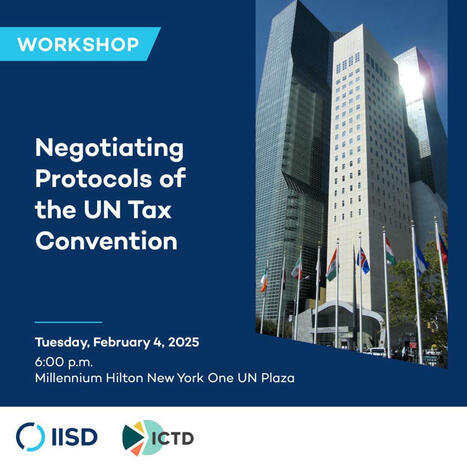
WORKSHOP Workshop | Negotiating Protocols of the UN Tax Convention A workshop for tax experts and non-tax practitioners engaging in the negotiations of the protocols of the United Nations Framework Convention on International Tax February 4, 2025 6:00 pm - 8:30 pm EST New York One UN Plaza New York, NY 10017, United States (Open to public) On February 4, 2025, the International Institute for Sustainable Development(IISD) and the International Centre for Tax & Development (ICTD) hosted an in-person only workshop on negotiating the protocols of the UN Framework Convention on International Tax Cooperation. This event was set in the margins of the UN’s intergovernmental committee meeting working on the United Nations Framework Convention on International Tax. It was organized in-person at the Millennium Hilton New York, providing a space for discussion and learning on international tax cooperation. Event details - Date: February 4, 2025
- Time: 6:00 PM
- Venue: Millennium Hilton New York, One UN Plaza
Agenda - 6:00 PM – 6:30 PM: Refreshments and networking
- 6:30 PM – 7:00 PM: Overview of international tax cooperation and the UN Tax Convention
- 7:00 PM – 8:30 PM: Panel discussion on the protocols
This event provided a space for peer-to-peer learning, allowing participants to engage in discussions about international tax cooperation and explore priorities for protocols, based on the research we’ve initiated. It enabled attendees to connect with both tax experts and non-tax practitioners involved in the negotiations, with contributions from academia, civil society, and international organizations. Scene Setting Presenters - Elisângela Rita, Senior Policy Advisor - International Institute for Sustainable Development
- Frederik Heitmuller, Associate Postdoctoral Fellow - International Centre for Tax & Development
Speakers - Abdul Chowdhary, Senior Programme Officer - Tax Cooperation and Policy, South Center
- Aisha Isa, Manager, Centre for Studies in African Taxation
- Diane Ring, Professor of Law, Boston College Law School
- Thulani Shongwe, Senior Manager International Tax, African Tax Administration Forum
Related -
Inside the UN Tax Negotiations: Key outcomes and future challenges EXPLAINER August 23, 2024
NEPAD: eighteenth consolidated progress report on implementation and international support While the pandemic has reshaped the financing for development landscape in Africa and exacerbated existing vulnerabilities, it also provides an opportunity for African countries to strengthen domestic resource mobilization to underpin sustainable development financing. Effective domestic resource mobilization is essential in order to obtain the financing required to effectively drive the continent’s economic growth and development in an inclusive and sustainable manner. Increased domestic resource mobilization would also be fundamental to Africa reclaiming its policy space over its development, channelling resources towards productive capacity development and structural transformation and industrialization. However, for domestic resource mobilization to play an effective role in the continent’s sustainable development agenda, fundamental changes in both policy and institutions will be required, including through improving efficiency in public expenditures, strengthening revenue collection, harnessing private savings and the private financial sector for development and stemming illicit financial flows. Download Related Secretary-General's Reports Other Reports and Publications e-Magazines
The Circular Bioeconomy Alliance, a charity established by His Majesty King Charles III as Prince of Wales in 2020, calls for urgent transition to ‘nature-first economy’. A hundred business leaders, scientists and indigenous leaders from across the world have come together to accelerate the move towards a nature-first economy, at an event hosted by The King in London. The event, which marked the UK launch of the Circular Bioeconomy Alliance (CBA), focused on how communities, and industries such as fashion, food, pharma can embrace new nature-based approaches. Reimagining nature finance is crucial to catalyse this economic transformation, and the event focused on exploring new approaches. Participants discussed the need to Re-Nature, Re-Think and Re-Activate to create an ecosystem that connects international companies, local stakeholders and the finance industry to holistically redesign supply chains around regenerative landscapes. Sign up for our newsletter “Nature is the keystone infrastructure regulating our planetary system, including its climate, the food we eat, the water we drink and the oxygen we breathe”, said Marc Palahí, CEO of the Circular Bioeconomy Alliance. “Nature is also the basic fabric supporting all our economic activities, even if our economic system fails to value it because bees, birds and trees do not send bills to us. It is time to reimagine our world and centre it around Nature - our most important capital and the basis for human health and wellbeing. This requires understanding, valuing and investing in Nature to transform our economy rather than to offset for its failure. We have the knowledge and technology for this transformation, we just need the wisdom and mindset to do it.” It is time to reimagine our world and centre it around Nature (…). This requires understanding, valuing and investing in Nature to transform our economy rather than to offset for its failure At the event The King met with experts and companies and investors working to accelerate the transition towards nature-positive businesses in sectors such as food, fashion, health, tourism and the built environment. New Living Labs and initiatives bring together pioneering corporates & communities to regenerate landscapes The event saw the CBA announce the launch of two new pioneering Living Labs, to demonstrate how to holistically create regenerative landscapes and nature-positive supply chains in symbiosis with local communities and indigenous people. A regenerative fashion initiative in India will focus on landscape restoration for sustainable cashmere, supported by Brunello Cucinelli, while a nature-based medicinal plant production in Italy, will be supported by Aboca. Other new initiatives encompass educational initiatives in the Amazon and Australia, bio-architecture in Bhutan, as well as continuing work building resilient landscapes, communities and value chains in Africa and Europe. Read also: The tree of life – powering the circular bioeconomy
|
This project supports sustainable forest management in South Africa’s Eastern Cape to preserve native ecosystems, prevent deforestation, and create long-term social and environmental benefits." Somerset East – Eastern Cape Restoration Project, South Africa Afforestation, Reforestation and Revegetation (ARR) Theory of change Located on degraded former ranchland in the Eastern Cape of South Africa, the project provides a financial incentive to restore spekboom thicket, a keystone plant species native to the Eastern Cape and largely cleared by agricultural settlers. It is responsible for supporting a rich biodiversity. Climate change mitigation Planting spekboom thickets in ecologically degraded areas not only sequesters carbon, but also improves soil health and biodiversity, and, if managed properly, increases resilience in a region prone to climate variability. - Regenerating the ecosystem
- Providing trainings and employment
- Supporting endangered species
At a glance Located on 2390 hectares of degraded former ranchland in South Africa’s Eastern Cape, the project area we support provides a financial incentive for the restoration of spekboom thicket, a local keystone species. Native to the region, it supports a divers ecosystem. 2390 harestored in South Africa Impact areas 1. Biodiversity The project will regenerate spekboom thickets, benefiting thousands of plant and animal species that depend on this ecosystem. 2. Sustainable commodities Site-appropriate regeneration increases resilience and adaptation to climate change. Protecting a threatened ecosystem avoids emissions. 3. Creation of employment The project is located in one of South Africa’s most impoverished districts, with a high unemployment rate. It supports the local community by creating new jobs. SDGs Explore projects around the world Use the interactive map to dive into the projects Explore more
The Eastern Cape is officially charting a new course for the global green economy. Today, Eastern Cape Premier, Lubabalo Oscar Mabuyane joins global tech leader Amazon and the World Bank for the official ribbon-cutting ceremony of the historic Spekboom Restoration Project at Botterblom Farm. With a staggering investment projected impact, this initiative is a masterclass in combining aggressive rural economic development with world-class climate action. All these efforts and commitments are important to ensure youth development never stop. This great initiative is expected to improve lives in areas including: Economic Injection: Driving massive financial and infrastructure investment straight into the Dr. Beyers Naudé Local Municipality and the Sarah Baartman District. Eco-Restoration at Scale: Utilising the extraordinary, carbon-sequestering power of the indigenous Spekboom plant to restore degraded landscapes. Rural Job Creation: Transforming environmental conservation into sustainable livelihoods, creating green jobs, and fostering localised skills development. Follow us for exclusive updates as we capture this monumental milestone for our province. #GreenEconomy #AmazonWorldBank #SpekboomRestoration #EconomicDevelopment #ECTimeToThriveIsNow
The Eastern Cape spekboom renaturation project Via our climate protection contribution you automatically build up habitat in Eastern Cape, South Africa with every purchase. Together, this enables us to restore natural territory where the climate crisis is hitting the hardest: in the Global South. How the project is supported: With every card payment, through Referrals and the Zero account our community supports the Eastern Cape spekboom renaturation project. This is a major milestone for us - we are doing something totally new which wouldn’t be possible without our community. Since the project is entirely financed by the Tomorrow customers. Why spekboom is so important for climate protection The spekboom is a succulent plant, which can grow up to five meters tall and live for 200 years. Beyond capturing CO₂ through photosynthesis, its roots prevent soil erosion, its leaves help regenerate the soil and create a microclimate that promotes the restoration of biodiversity. It grows in semi-arid thickets and is a hardy plant that is remarkably tolerant of drought and rocky soils. In short: this succulent can be very beneficial for the climate and the soil. Project location Hilton Farm The location of the ‘ Spekboom Renaturation Project’ is within the plant’s original growing region in the South African province of Eastern Cape. This farm consists mainly of degraded meadowland and a smaller section of agricultural land with low productivity. In addition to the ecological effects, it also has a social impact: The project created 119 seasonal and 4 permanent jobs in an area with an unemployment rate that remains above 40%. The phases of the project At Hilton Farm, a total of three million of the local spekbooms will be planted as part of a two-year planting plan and then maintained for three years. By this time, the spekboom will have established itself so well that it will transform the landscape into a species-rich thicket ecosystem in the following years. This project is important in the Eastern Cape because the landscape has suffered from extreme droughts and intensive agriculture. For conservation purposes, the created ecosystem will then be permanently protected. Our partners For this project, we have teamed up with strong partners: while the EcoPlanet Bamboo Group is the actual project developer, ClimatePartner takes care of the reporting, the audits and certification of the project. Together with our community, we are the sole financiers of the project.
PRESS RELEASEApril 23, 2026 World Bank Prices 14-Year Spekboom Restoration Outcome Bond in South Africa Bond to help a program that aims to restore degraded land and create jobs WASHINGTON, April 23, 2026 – The World Bank (International Bank for Reconstruction and Development, IBRD) today priced a $120 million Spekboom Restoration Outcome Bond that will unlock support for large-scale ecosystem restoration and job creation in South Africa’s Eastern Cape province. Maturing in 2040, the bond is the World Bank’s longest-dated outcome bond and provides investors with full principal protection and a coupon that includes a fixed rate component and potential additional variable components linked to the restoration of the native plant. Spekboom, a succulent plant native to South Africa, is prized for its drought resilience and high carbon sequestration. Its restoration improves soil quality, water retention and climate resilience, while fostering microclimate and soil conditions needed to revitalize the biodiverse ecosystem that support other plant and animal species. The outcome bond has been structured to mobilize $25 million of private capital to support a 50,000 hectare scale-up of a spekboom project, designed, developed and operated by Imperative, a private-company specializing in ecosystem restoration. The project aims to restore degraded land and create 11,000 local jobs including through small and medium sized enterprises that will deliver spekboom harvesting, planting, monitoring and ongoing land management. “Innovative financing is essential to address complex development challenges,” said Anshula Kant, Managing Director and World Bank Group Chief Financial Officer. “This outcome bond shows how capital markets can be mobilized to support large land restoration projects while aligning investor returns with measurable results that strengthen livelihoods and create jobs.” The bond’s principal is fully protected by the triple-A credit strength of the World Bank, with the $120 million proceeds used to support the World Bank’s sustainable development lending activities globally. Investors in the bond have agreed to receive a fixed coupon that is lower than the return on regular World Bank bonds of similar maturity. An amount equal to the remaining portion of the coupon that would otherwise have been paid to investors under a regular bond will be channeled to Imperative, through a hedge transaction with BNP Paribas, as upfront financing for the spekboom restoration project. Amazon will purchase a large share of the carbon removal units (CRUs) expected to be generated by the spekboom project under a fixed price offtake agreement for more than a decade. An amount equal to a pre-determined percentage of the CRU revenue from such sales will be channeled back to bondholders, through BNP Paribas, in the form of CRU Linked Interest. Compared to a standard World Bank bond of similar maturity, the outcome bond offers investors the potential to earn a higher return if the project performs and generates CRU revenue as projected. BNP Paribas is the sole Lead Manager and Bookrunner for the transaction. “We are pleased to have supported the World Bank on this innovative transaction that aims to channel private capital towards measurable environmental outcomes, while maintaining principal protection and a stable income profile for investors,” said Frederic Zorzi, Global Head of Primary Market at BNP Paribas. “The structure illustrates how a collaborative approach - bringing together the World Bank, Amazon and institutional investors - can accelerate private capital mobilization while advancing the World Bank’s development objectives and provide investors with a product that aligns perfectly with their mandates and sustainability goals.” “We are thrilled to continue our partnership with the World Bank and participate in the latest Outcome Bond for spekboom restoration given its attractive relative valuation and scalable structure. This investment will further display the potential that spekboom restoration presents to positively impact biodiversity degradation on the African Continent while also providing employment opportunities for local communities,” said Stephen M. Liberatore, CFA Head of ESG/Impact for Global Fixed Income, Nuveen. “AllianceBernstein is pleased to support another investment through the World Bank’s innovative outcome bond structure, which meaningfully de-risks important ecosystem restoration projects by aligning incentives and securing commitments from a credible offtaker,” said Erin Bigley, Chief Responsibility Officer, AllianceBernstein. "We are proud to participate in the Spekboom Restoration Outcome Bond as it supports nature‑based solutions that generate environmental positive impact and create benefits for local communities. This investment is marking BNP Paribas Cardif’s first participation in an outcome bond and contributes to our biodiversity roadmap. It demonstrates how sustainable finance can simultaneously protect ecosystems and empower the communities that depend on them.” said Matthieu Bonte, Global Chief Investment Officer, BNP Paribas Cardif. “We are delighted to partner again with the World bank and BNP Paribas to support for this large-scale ecosystem project in South Africa. While offering investors an attractive yield coupon, it will help deliver carbon sequestration, ecosystem recovery and biodiversity conservation,” said Tony Trzcinka, Senior Portfolio Manager, Impax Asset Management. “This marks our second outcome bond investment through our Nature and Social Outcomes strategy, showing how UK pension capital can support projects in emerging markets that bring together large‑scale nature restoration with tangible social benefits, while delivering returns for pension savers. By partnering with the World Bank and BNP Paribas, the Spekboom Restoration Outcome Bond will restore degraded landscapes and support wider ecosystem recovery through carbon sequestration, while creating thousands of jobs and channelling meaningful investment into communities in South Africa’s Eastern Cape, with a strong focus on opportunities for local businesses,” said Jake Harper, Head of EM Private Debt, Asset Management, L&G. “Mackenzie Investments is proud to partner with the World Bank on the Spekboom Restoration Outcome Bond. Spekboom is a remarkable native South African succulent, recognized by the United Nations as a World Restoration Flagship for its capacity to reverse desertification and capture carbon at scale. By linking investor returns directly to the project's carbon outcomes, this bond makes the connection between financial performance and environmental impact explicit and measurable. This is Mackenzie's fifth investment in the World Bank's outcome bond program, and we continue to believe that it is a structure with significant potential to scale and attract broader adoption across the industry,” said Hadiza Djataou, Vice President and Portfolio Manager, Mackenzie Investments. "Marking our second investment in an outcome-based structure, MetLife Investment Management is pleased to participate in the issuance of the World Bank's Spekboom Outcome Bond on behalf of clients who have impact focused investment objectives. The bond will provide vital funding for a nature-based project in South Africa, focused on the large-scale planting of native Spekboom to sequester carbon, restore degraded ecosystems, and support local livelihoods. This investment reflects the continued evolution of fixed income markets in facilitating opportunities to direct capital to impactful initiatives that explicitly links financial performance to measurable real-world outcomes, alongside clearly defined risk and return profiles. Crucially, these kinds of structures enable investors to tap into high-impact areas like targeted ecosystem restoration, effectively bridging the gap between mainstream capital markets and highly specific sustainability goals," said Todd Howard, Head of EMEA Fixed Income, MetLife Investment Management. “Morgan Stanley Investment Management is pleased to support the World Bank’s latest outcome bond. This transaction demonstrates once again the potential of capital markets to advance nature-based solutions at scale while delivering measurable environmental and social outcomes. By directly linking investor returns to project performance, the bond creates a clear and transparent pathway from financing to impact,” said Anuj Gulati, Managing Director, Global Head of Fixed Income ESG Strategy and Research, Morgan Stanley Investment Management. “This is yet another clear example of how Skandia and the capital markets can contribute to concrete climate solutions. Through this investment, we combine financial returns with measurable environmental benefits and long-term sustainable development,” said Alexander Onica, Head of Fixed Income and Currency Management, Skandia. Transaction Summary Issuer IBRD Size (Aggregate Nominal Amount) USD 120 million Trade Date April 23, 2026 Settlement Date April 30, 2026 Maturity Date November 2, 2040 Issue Price 100 percent of the Aggregate Nominal Amount Interest Amount Fixed Interest Amount + CRU Linked Interest Amount + Shortfall Catch Up Amount (if any) + Planting Success Payment Amount (if any) + CRU Outperformance Amount (if any) Fixed Interest Amount 2.410% per annum, with a short first coupon CRU Linked Interest Amount A payment linked to a pre-agreed share of CRUs generated by the project and sold to Amazon, paid annually on each Interest Payment Date starting from November 2, 2031 Redemption amount Redemption at Par Lead Manager BNP Paribas Listing Luxembourg Stock Exchange About the World Bank The World Bank (International Bank for Reconstruction and Development, IBRD), rated Aaa/AAA (Moody’s/S&P), is an international organization. Created in 1944, it is the original member of the World Bank Group and operates as a global development cooperative owned by 189 nations. The World Bank provides loans, guarantees, risk management products, and advisory services to middle-income and other creditworthy countries to end extreme poverty and promote shared prosperity on a livable planet. It also provides leadership to coordinate regional and global responses to development challenges. The World Bank has been issuing bonds in the international capital markets for over 75 years to fund programs and activities that achieve a positive impact. World Bank bonds are aligned with the Sustainability Bond Guidelines published by the International Capital Market Association. More information on the World Bank’s Sustainable Development bonds is available at www.worldbank.org/debtsecurities and in the World Bank’s Sustainable Development Bond Impact Report that describes how the World Bank engages with investors and raises awareness for specific development challenges. Disclaimers This press release is not an offer for sale of securities of the International Bank for Reconstruction and Development ("IBRD"), also known in the capital markets as "World Bank". Any offering of World Bank securities will take place solely on the basis of the relevant offering documentation including, but not limited to, the prospectus, term sheet and/or final terms, as applicable, prepared by the World Bank or on behalf of the World Bank, and is subject to restrictions under the laws of several countries. World Bank securities may not be offered or sold except in compliance with all such laws. The World Bank Sustainable Development Bond Framework, the World Bank’s Sustainable Development Bond Impact Report, and the information set forth therein are not a part of, or incorporated by reference into, the offering documentation. Net proceeds of the bonds described herein are not committed or earmarked for lending to, or financing of, any particular World Bank projects or programs. Payments on the bonds described herein are not funded by any World Bank project or program. Contact Heike Reichelt
Head of Investor Relations, Ratings, and Sustainable Finance,
World Bank Group Treasury
debtsecurities@worldbank.org
Amazon said it will buy just less than half of the carbon credits to be generated by a project to restore degraded land in South Africa by planting thickets of Spekboom, a plant that sequesters carbon dioxide and helps soil retain water. The company has committed to purchase 1.95 million carbon credits at a fixed price over more than a decade and will then resell them to its own business units, suppliers and other parties to help them offset their emissions. Amazon will sell the credits through its Sustainability Exchange to companies that are acting to cut their own emissions and have set so-called net-zero targets for 2050 or before. The company didn’t disclose what it would pay for the credits. “The idea is to simplify carbon credit procurement for our businesses and our value chain,” James Mulligan, head of carbon neutralisation at Amazon, said in a response to queries. In addition to sourcing the credits, Amazon will provide support, including tracking the retirement of the units once they’ve been used by buyers, he said. Amazon’s commitment to buy the credits helped the World Bank get support from investors to sell a $120 million bond, the returns of which are based on the project’s generation of the offsets. Part of the bond’s proceeds will go to Imperative, the company running the initiative to restore land in the Eastern Cape province that’s been degraded by centuries of goat overgrazing. A carbon credit represents a ton of planet-warming gas or its equivalent removed from the atmosphere or prevented from entering it in the first place. Buyers are typically companies that want to use the credits to offset their own emissions. Amazon started its Sustainability Exchange in March last year in the US and expanded it to the UK this month. It has also bought credits from reforestation projects in Ghana and the Ivory Coast, as well as from others that aim to reduce emissions from refrigerant gases and methane from rice paddies. In addition to reducing emissions, Amazon said the project, which will stretch over 50,000 hectares of land, is expected to create 11,000 jobs as 180 million shrubs are planted by the end of 2028. Spekboom means “bacon tree” in Afrikaans, a reference to its plump, succulent leaves. It’s often the dominant plant in a biome found in the Eastern Cape known as the Albany Thicket. About 80% of the 1.7-million-hectare Albany Thicket has been degraded.
President Cyril Ramaphosa answered questions in the National Assembly on 11 March 2025. Picture: Phando Jikelo/Parliament President Cyril Ramaphosa was responding to oral questions in the National Assembly on issues around growing the economy. President Cyril Ramaphosa answered questions in the National Assembly on 11 March 2025. Picture: Phando Jikelo/Parliament CAPE TOWN - President Cyril Ramaphosa has assured MPs that the funds of pensioners that will be used to invest in infrastructure will be protected and safeguarded. He said that amendments to pension fund legislation and regulations had created room for these investments to be made into the country’s infrastructure. Ramaphosa was responding to oral questions in the National Assembly on issues around growing the economy. "They are not state resources. To facilitate in infrastructure investment, government needs to provide those savers with a reasonable return and ensure that these funds are safeguarded." He said that infrastructure spend would also encourage more private sector investment. "Infrastructure spend by government will encourage and enable greater private sector investment."
26 April 2023 African Infrastructure Investment Managers (AIIM) The South African investment community and pension funds, in particular, are sitting on the cusp of an infrastructure boom that provides an excellent opportunity for diversifying portfolios and supports the development of critical infrastructure for the country. Vuyo Ntoi, Co-Managing Director of African Infrastructure Investment Managers (AIIM), a division of Old Mutual Alternative Investments, says pension funds should strongly consider the opportunity sparked by the South African government’s ambitious investment drive. Ntoi says, “Under its Infrastructure SA (ISA) programme, the government is committed to raising more than a trillion rand over the next five years. However, the government is looking for more support from pension funds, which have been slow to invest in the country's infrastructure compared to similar pension fund participation in Europe and the US.” According to the Organisation for Economic Co-operation and Development’s long-term investing of large pension funds and public pension reserve funds 2022 report, pension funds invested $211.8-billion in infrastructure in the preceding year. Investing in alternative assets, such as infrastructure, private equity, hedge funds, , and real estate, can help diversify pension fund portfolios. Currently, alternative assets comprise only 8% of pension fund investments in South Africa, compared to 18% in Europe and 24% in the US. Ntoi says that to make it easier for pension funds to invest, National Treasury has amended Regulation 28 of the Pension Funds Act. This amendment introduced a definition of infrastructure and set a limit of 45% for exposure in infrastructure investment. While the overall allocation limit for alternative assets is capped at 27.5% under Regulation 28, pension funds are free to invest in a range of asset types, including bonds and listed and unlisted entities. Ntoi says that, although there is no specific infrastructure sector instrument, pension funds can invest in a range of asset types to diversify their portfolios. “Such investment will not only help create jobs and stimulate economic growth, but it will also improve the country's critical infrastructure, which will benefit all South Africans,” says Ntoi. “The government seems committed to working with the private sector to achieve its infrastructure goals, which presents an incredible opportunity for investors.” He adds that the infrastructure backlog in South Africa is substantial, culminating in a number of infrastructure crises for the country. “The electricity crisis is the most visible to us because we experience it every day in our households and workplaces, but there are other problems. Issues around water delivery are linked to electricity problems, crumbling distribution infrastructure, and a backlog in the development of new bulk water sources across the country. He adds that some of the country’s current infrastructure is not fit for purpose. “We see some key institutions in the logistics sector crumbling from an operational performance perspective, owing to poor maintenance of existing infrastructure and reduced or flawed investment in new capital stock. As a result many businesses were not able to take full advantage of a commodity boom immediately before and after COVID-19.” Ntoi says investment opportunities range from the development and construction of greenfield projects to investing in upgrades and refurbishing of brownfield projects. “These assets are long-term good yield providers, and pension funds can participate either by buying debt through bank syndications, buying bonds that relate to a specific infrastructure project, by participating in private equity funds such as the ones managed by ourselves, publicly listed equity, as well as listed infrastructure equity funds.” He says that taking advantage of the infrastructure investment opportunity will hopefully drive a shift in current trends which have reflected a steady decline in investment in fixed capital by government and private businesses since 2012, when the National Development Plan set targets for this measure, which have not been met. “The amendments of Regulation 28 and the investment power of pension funds are critical to reverse the funding decline that has in part led to the crises we currently face,” he concludes.
This Transformation Policy sets out the principles by which the GEPF will be guided in directing investments that will promote the socio-economic transformation objectives of the GEPF. This policy also identifies specific impact areas that will be targeted in order to realise the GEPF’s socio-economic objectives. The GEPF is also committed to being an active owner in Listed and unlisted assets. Moreover, and due to their high economic impact, the GEPF has a strategic interest in Unlisted Investments ‘the Isibaya Portfolio” and would endeavour to use these assets as a key lever for the achievement of our transformation objectives. The GEPF is committed to achieving market related returns for its members and pensioners of the Fund, while also supporting positive, long-term, economic, social, and environmental impact for South Africa. The socio-economic transformation objectives of the GEPF include: 1. Industry-level transformation: Actively invest in return-seeking, sound investments that support the transformation of the financial services sector and, encourage the development of black-owned asset managers, including public/listed market fund managers, private market managers, stockbrokers, audit firms, actuarial service providers, and other relevant and emerging financial service providers; 2. Economic transformation: Actively invest in return-seeking, sound investments that advances B-BBEE and transformation within the broader economy, supports access to finance for black-owned small and medium sized enterprises; 3. Socio-economic transformation: Investments in asset classes aimed at delivering positive financial social service outcomes for previously disadvantaged South Africans; 4. Making investments that support South Africa’s Just Transition and improve South Africa’s long-term environmental sustainability; 5. To be an active owner in the investments that we make, ensuring that the performance of our investments is aligned to our socio-economic transformation objectives. This policy seeks to create a framework for the investments of the GEPF for socio-economic transformation, and to be aligned with the socio-economic transformation objectives articulated in the National Development Plan. These include: -
Reduce poverty through job creation, social protection, and the expansion of economic opportunities; -
Economic growth and job creation through the development of infrastructure, investments in education and skills development, and the promotion of small business development; -
Social cohesion by addressing the historical divisions and inequalities that exist in South African society, and the development of women, youth, and persons with disabilities. The GEPF’s Transformation Policy seeks to provide a framework for the consideration of socio-economic transformation objectives in the implementation of its investment, developmental investment and responsible investment policies and strategies. The Transformation Policy shall apply to the GEPF’s investment strategy, more so the Fund’s unlisted investments (through the “Isibaya Portfolio”) due to their broader developmental and social impact. The socio-economic transformation objectives and corresponding investment pillars are outlined below. Socio-economic transformation objectives and impact areas One of the key socio-economic transformation objectives of the GEPF is economic growth and job- creation. The associated impact area is the creation of employment opportunities through the promotion of economic growth. This includes the investment in infrastructure development in the manner described in our developmental investment policy, the expansion of manufacturing and services industries, and the promotion of small business development (see below). A thriving economy creates more job opportunities, which in turn reduces poverty and inequality. Impact Areas: -
Economic Growth -
Job Creation Environmental Sustainability Our investments for environmental sustainability are aimed at protecting communities against the worst impacts of climate change, provide access to clean energy sources and that have a positive impact on the environment for a more sustainable future. Impact Areas: Social Infrastructure and services Access to education, healthcare and affordable housing near economic opportunities are similarly, other impact areas that are important to the GEPF. This includes ensuring access to critical social services to underserved communities. The GEPF is also committed to the support of the development of its own employees, particularly, women, youth and persons with disabilities. Impact Areas: Job creation, new enterprises, and BBBEE The GEPF is committed to employment equity and the support of transformed small, medium enterprises, and the development of its employees who are women, youth and persons living with disabilities. The GEPF also considers the transformation of the financial services sector a key impact area and supports the objectives of the Financial Sector Code (FSC). The GEPF shall adopt a “Two-channel” approach to transformation. Channel 1: Asset/Fund Manager Transformation -
- Driven primarily through the Manager Development Program and allocations to black-owned asset/fund managers to be made in accordance with the Manager Development Program. -
- Broadening of the reach GEPF impact to the broader value chain of the financial services sector. This refers to the supporting of other stakeholders of the investment process (in addition to investment managers) such as investment consultants, brokers and research providers. -
Channel 2: Investee Company Transformation -
- Investments in growth and strategic sectors of our economy to achieve economic growth and job creation objectives. -
- Improve the transformation-related performance of those sectors as active owners driving pro-empowerment recruitment and procurement policies. -
-
Impact Areas: -
Skills Development -
EmploymentEquity -
Emerging fund manager support -
SMEsupport 3. IMPLEMENTATION -
The GEPF will make the resources available to ensure the objectives of this policy are understood and embedded in all processes of the organisation. -
The GEPF shall allocate the necessary resources to implement the transformation policy. -
The GEPF shall develop a Transformation Strategy that shall outline the GEPF’s transformation targets aligned to its socio-economic transformation impact areas. -
The GEPF shall endeavour to consult all key stakeholders prior to the adoption of transformation targets. -
The GEPF shall establish a Transformation Committee and working groups to monitor implementation of the Transformation Policy. -
The Transformation Committee shall report to the Board of Trustees on progress made toward achieving the objectives of this policy. -
Reports to the Board of Trustees by the Transformation Committee shall include the performance of the Incubation Manager Program. 4. TRANSPARENCY AND REPORTING The GEPF is committed to public transparency and commits to reporting on its progress toward its transformation objectives annually in the GEPF’s annual report to GEPF stakeholders. Such reporting will align to the requirements of the Broad-Based Black Economic Empowerment Act (2017) and the Financial Sector Code (FSC), such as the required and voluntary disclosures1 implemented from time to time. The GEPF recognises the importance of disclosure on how its investments and operations translate into socio-economic transformation outcomes. The GEPF also appreciates the growing expectations of our stakeholders for increased levels of transparency and disclosure. The GEPF will progressively expand the scope of reporting on its performance on socio- economic transformation targets as these evolve over time. 5. OVERSIGHT AND GOVERNANCE The GEPF’s Board of Trustees’ primary concern is to act in the best financial interests of the Fund and its beneficiaries, as well as the socio-economic transformation objectives of South Africa. Seeking the best return that is consistent with our transformation objectives and a prudent and appropriate level of risk. The GEPF’s Board of Trustees further believes that environmental, social, a governance (ESG) factors can have an impact on the performance of its investments and its ability to achieve the socio-economic transformation objectives of the GEPF. The governance and oversight of this policy shall be guided by the process and structures set out in the Fund’s Developmental Investment Policy. The Transformation Committee shall be responsible for the implementation of the Fund’s transformation objectives, as set out in this Policy.
Refers to Environmental, Social, and Governance factors. Broad-based Black Economic Empowerment refers to the South African government legislative policy as published in the Broad-Based Black Economic Empowerment Act 53 of 2003 (B-BBEE Act), which aims to facilitate broader participation in the economy by black people. A form of affirmative action, intended to redress the inequalities created by apartheid. The second Code for Responsible Investing in South Africa, 2022. It contains voluntary principles encourages institutional investors and service providers into integrating ESG issues in investments decisions. Developmental impact refers to the effect that a particular event, project, or intervention has on the overall growth, advancement, and progress of a community, region, or nation. It is a measure of the positive or negative changes that occur as a result of the intervention, and considers a wide range of social, economic, environmental, and political factors. Developmental Investments Developmental investment refers to investments made in the development of a country, region, or community, usually in the form of infrastructure, education, and other projects that aim to improve the economic and social well-being of the area and its inhabitants. Economic infrastructure refers to the physical and institutional structures, systems, and facilities that are necessary for the functioning of an economy. It encompasses the assets, networks, and services that enable the production, distribution, and exchange of goods and services, and supports economic activity and growth. Environmental Sustainability Environmental sustainability refers to the responsible use and management of natural resources and ecosystems to meet the needs of the present generation without compromising the ability of future generations to meet their own needs. It encompasses the interconnected social, economic, and environmental dimensions of sustainable development, and aims to balance economic progress with ecological preservation. The process of including ESG factors in investment analysis and decisions to better manage risks and improve returns. Impact investments are investments made with the intention to generate positive, measurable societal l and environmental impact alongside a financial return Impact Management Framework An Impact Management Framework (IMF) is a systematic approach for evaluating and monitoring the social, environmental, and economic impacts of an organization, project, or intervention. A just transition aims to achieve a quality of life for all South Africans, in the context of increasing the ability to adapt to the adverse impacts of climate change, fostering climate resilience, and reaching net-zero GHG emissions by 2050, in line with the best available science. Transitioning out of carbon intense activities to a greener economy in a fair and inclusive that does not harm livelihoods of workers and communities while maximizing climate action benefits. A low carbon economy aims to reduce the use of fossil fuels and shift to cleaner, renewable energy sources, and to increase energy efficiency in all sectors of the economy. SME finance, also known as small and medium-sized enterprise (SME) finance, refers to the financing solutions and services that are designed to meet the financial needs of small and medium-sized businesses. Social infrastructure refers to the facilities, services, and institutions that support the basic needs and well-being of a community and its members. It encompasses the physical and institutional structures that support social and community services, such as education, health care, housing, and social services. The ability of an entity to conduct its business in a manner that primarily meets existing needs without compromising the ability of future generations to meet their needs. Conducting business sustainably includes managing the interaction of the business with the environment, the society, and the economy towards better long-term outcomes. Sustainable agriculture refers to a form of farming practices that meets the needs of the present generation while preserving the ability of future generations to meet their own needs. It is an approach to agriculture that considers the social, economic, and environmental impacts of farming activities, and aims to create a sustainable food system that provides nutritious food, protects, and enhances natural resources, and promotes social and economic well-being.
WORKSHOP Trade Partners' Retreat IISD's Trade program is hosting a full-day strategy meeting with its funders in Geneva on February 21, 2025. The meeting will focus on reviewing the team's impact, exploring strategic opportunities, addressing challenges, and shaping its future direction. February 21, 2025 8:30 am - 5:30 pm CET (By invitation) For the first time, IISD's Trade program is convening its group of funders for a meeting in Geneva on February 21, 2025. This event will serve as a platform to review the program's impact and discuss its future direction, as well as key strategic opportunities and challenges. Attendees will include representatives from governments and private foundations that support the program, alongside experts and leaders from IISD's Trade and Standards teams. During the day-long meeting, we will engage with partners on our integrated approach to trade policy challenges. Discussions will cover critical topics, such as environmentally harmful subsidies across various sectors, sustainability standards, and the growing role of industrial policy in an increasingly unstable geopolitical environment. Related -
How Can World Trade Organization Rules and Flexibilities Promote Food Security in Least Developed Countries? -
Why Trade Matters in the Plastic–Pollution Treaty Negotiations EXPLAINER November 22, 2024 -
The WTO and Fisheries Subsidies: Where are we, exactly? DEEP DIVE November 6, 2024
February 10, 2025 8:00 am - 4:00 pm EAT (By invitation) IISD will deliver a 3-day in-person training for government officials in Dar es Salaam, Tanzania, focusing on two critical issues: strengthening the design and negotiation of investment contracts to enhance agricultural and forestry investment governance and the reform of international investment agreements (IIAs). This training will provide practical guidance and explore: - The relationship between IIAs, investment contracts, and national laws and their role in attracting sustainable investment
- Legal risks associated with IIAs and investor–state contracts in agriculture and forestry
- How investor–state contracts can be designed and negotiated to mitigate risks posed by foreign direct investment in agriculture and forestry sectors
- Legal tools that could promote more responsible investment in agriculture, including model contracts, memorandums of understanding, and institutional frameworks
- How investment treaties impact national policy space and strategies for reform
- National strategies to align investment policies with sustainable development goals
Officials in attendance for this workshop include: - President’s Office – Planning and Investment
- Attorney General’s Office (Mainland & Zanzibar)
- Solicitor General’s Office
- President’s Office – Labour and Investment (Zanzibar)
- Ministry of Constitutional and Legal Affairs
- Ministry of Agriculture, Irrigation, Natural Resources, and Livestock
- Ministry of Finance
- Tanzania Investment Centre
- Zanzibar Investment Promotion Authority
- Southern Agricultural Growth Corridor of Tanzania
Financing for Development in the Era of COVID-19: The Primacy of Domestic Resources Mobilization While the pandemic has reshaped the financing for development landscape in Africa and exacerbated existing vulnerabilities, it also provides an opportunity for African countries to strengthen domestic resource mobilization to underpin sustainable development financing. Effective domestic resource mobilization is essential in order to obtain the financing required to effectively drive the continent’s economic growth and development in an inclusive and sustainable manner. Increased domestic resource mobilization would also be fundamental to Africa reclaiming its policy space over its development, channelling resources towards productive capacity development and structural transformation and industrialization. However, for domestic resource mobilization to play an effective role in the continent’s sustainable development agenda, fundamental changes in both policy and institutions will be required, including through improving efficiency in public expenditures, strengthening revenue collection, harnessing private savings and the private financial sector for development and stemming illicit financial flows. Download Related Secretary-General's Reports Other Reports and Publications e-Magazines
|