Your new post is loading...

|
Scooped by
Gilbert C FAURE
April 24, 2017 9:51 AM
|
A new study has begun in Australia to assess a drug candidate called GNbAC1 in treating type 1 diabetes. GNbAC1 is an antibody designed to inhibit a protein called MSRV-Env that has been detected in the pancreases of people with type 1 diabetes.
|
|
Scooped by
Gilbert C FAURE
April 13, 2017 1:47 PM
|
|
|
Scooped by
Gilbert C FAURE
April 13, 2017 2:11 AM
|
Early in embryological development, the immune system learns not to attack the body's own cells. In many autoimmune diseases, including type 1 diabetes, multiple sclerosis, and rheumatoid arthritis, this self-tolerance i

|
Suggested by
Société Francaise d'Immunologie
April 13, 2017 2:09 AM
|
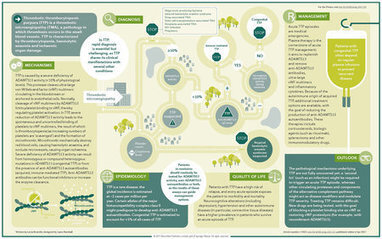
Haemolytic anaemia, thrombocytopenia and microthrombi are hallmarks of thrombotic thrombocytopenic purpura (TTP), a rare microangiopathy that can cause severe ischaemic organ damage.
|
|
Scooped by
Gilbert C FAURE
April 7, 2017 2:45 AM
|
Hypertriglyceridemia is a condition that causes high triglyceride levels in the blood. Autoantibodies may be a new cause for high plasma triglycerides.
|
|
Scooped by
Gilbert C FAURE
April 4, 2017 7:50 AM
|
Cellular and Molecular Immunology aims to report the dynamic progress being made in China and abroad in immunological research, and welcomes high-quality Research Articles, Reviews and Brief Reports across a broad range of topics including, but not limited to, clinical immunology, comparative immunology, immunobiology, immunogenetics, immunological techniques, immunopathology, immunopharmacology, infection immunology, neuroimmunology, transplantation immunology, tumor immunology, and veterinary immunology.
|
|
Scooped by
Gilbert C FAURE
April 4, 2017 7:03 AM
|
|
|
Scooped by
Gilbert C FAURE
April 4, 2017 2:39 AM
|
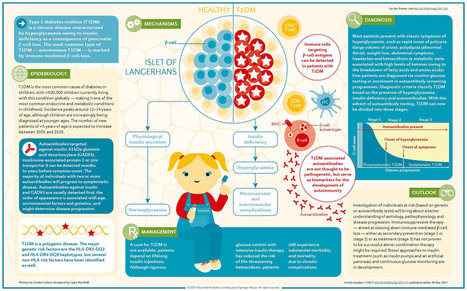
Type 1 diabetes mellitus is an autoimmune disease that is characterized by insulin deficiency due to pancreatic β-cell loss and results in hyperglycaemia.
|
|
Scooped by
Gilbert C FAURE
April 3, 2017 1:57 AM
|
Inhibitory receptors on T cells, including lymphocyte activation gene 3 (LAG3), serve as brakes that limit immune-mediated damage to the host. LAG3 is expressed by exhausted conventional T cells in the tumor microenvironment and has emerged as a key target for tumor immunotherapy. The role of LAG3 in regulatory T cells (Tregs) has remained unclear. Using a mouse model of autoimmune diabetes, Zhang et al. report that Treg-specific deletion of LAG3 led to enhanced Treg proliferation and reduced the incidence of type 1 diabetes. Their studies highlight the cell-type dependence and context specificity of the role of LAG3 and call for a more holistic assessment of the functions of inhibitory receptors that emerge as targets for tumor immunotherapies.
|
|
Scooped by
Gilbert C FAURE
March 31, 2017 6:58 AM
|
|
|
Scooped by
Gilbert C FAURE
March 30, 2017 2:59 PM
|
Publication date: February 2017
Source:Pediatric Clinics of North America, Volume 64, Issue 1
Author(s): John M. Routes, James W. Verbsky
Teaser Although primary immunodeficiencies typically present with recurrent, chronic, or severe infections, autoimmune manifestations frequently accompany these disorders and may be the initial clinical manifestations. The presence of 2 or more autoimmune disorders, unusual severe atopic disease, or a combination of these disorders should lead a clinician to consider primary immunodeficiency disorders.
|
|
Scooped by
Gilbert C FAURE
March 29, 2017 1:40 PM
|
The gut microbiota can influence immune-cell function by the production of short-chain fatty acids. Mackay and colleagues show that diets enriched for acetate and butyrate protect non-obese diabetic mice from insulitis and diabetes progression.
|
|
Scooped by
Gilbert C FAURE
March 27, 2017 2:19 AM
|
|
|
|
Scooped by
Gilbert C FAURE
April 24, 2017 9:39 AM
|
Immune‐mediated necrotizing myopathies (IMNM) may be associated with either anti–signal recognition protein (SRP) or anti–3‐hydroxy‐3‐methylglutaryl‐CoA reductase (HMGCR) antibodies (Abs), and th
|
|
Scooped by
Gilbert C FAURE
April 13, 2017 1:33 PM
|
A highly sensitive time-resolved fluoroimmunoassay (TRFIA) was developed to quantify serum antibodies against the phospholipase A2 receptor (anti-PLA2R-IgG) for differential diagnosis of membranous nephropathy.
|
|
Suggested by
Société Francaise d'Immunologie
April 13, 2017 2:09 AM
|
|
|
Scooped by
Gilbert C FAURE
April 7, 2017 2:46 AM
|
Click on the article title to read more.
|
|
Scooped by
Gilbert C FAURE
April 6, 2017 2:27 PM
|
|
|
Scooped by
Gilbert C FAURE
April 4, 2017 7:47 AM
|
Kawasaki disease (KD) is an acute systemic vasculitis of childhood that does not have a known cause or aetiology. The epidemiological features (existence of epidemics, community outbreaks an
|
|
Scooped by
Gilbert C FAURE
April 4, 2017 4:08 AM
|
To assess the efficacy and tolerability of hydroxychloroquine (HCQ) in patients with cutaneous lupus erythematosus (CLE), in a phase III clinical trial conducted in Japan.We conducted a double‐blind
|
|
Scooped by
Gilbert C FAURE
April 3, 2017 1:43 PM
|
Lupus symptoms, skin rashes, joint pain, causes, diagnosis, and treatments are explained with pictures in this slideshow from WebMD's medical editors.
|
|
Scooped by
Gilbert C FAURE
March 31, 2017 11:43 AM
|
Type 1 diabetes mellitus (T1DM) is a chronic disease characterized by insulin deficiency as a consequence of pancreatic β-cell loss.
|
|
Scooped by
Gilbert C FAURE
March 30, 2017 3:12 PM
|
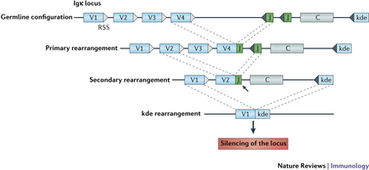
Self-reactive B cells are tolerized at various stages of B-cell development and differentiation, including the immature B-cell stage (central tolerance) and the germinal center (GC) B-cell stage, and B-cell tolerance involves various mechanisms such as deletion, anergy, and receptor editing. Self-reactive B cells generated by random immunoglobulin variable gene rearrangements are tolerized by central tolerance and anergy in the periphery, and these processes involve apoptosis regulated by Bim, a pro-apoptotic member of the Bcl-2 family, and regulation of B-cell signaling by various phosphatases, including SHIP-1 and SHP-1. Self-reactive B cells generated by somatic mutations during GC reaction are also eliminated. Fas is not directly involved in this process but prevents persistence of GC reaction that allows generation of less stringently regulated B cells, including self-reactive B cells. Defects in self-tolerance preferentially cause lupus-like disease with production o
|
|
Suggested by
Société Francaise d'Immunologie
March 30, 2017 2:57 PM
|
The BANK1 SLE-risk variants are associated with alterations in peripheral B cell signaling and development in humans
Elizabeth M. Dam
|
|
Scooped by
Gilbert C FAURE
March 28, 2017 3:55 AM
|
|


 Scoop.it!