Your new post is loading...

|
Scooped by
Gilbert C FAURE
July 31, 2018 3:45 AM
|
Type 1 diabetes (T1D) arises from a failure to maintain tolerance to specific β-cell antigens. Antigen-specific immunotherapy (ASIT) aims to reestablish immune tolerance through the supply of pertinent antigens to specific cell types or environments that are suitable for eliciting tolerogenic...
|
|
Scooped by
Gilbert C FAURE
July 29, 2018 5:14 AM
|
B-cell activating factor of the tumour necrosis factor family (BAFF) plays a role in autoantibody production and is elevated in dermatomyositis (DM) and anti-Jo-1-positive polymyositis (PM). We investigated the inter-relationships between serum levels of BAFF, anti-Jo-1 autoantibodies, and disease...
|
|
Scooped by
Gilbert C FAURE
July 29, 2018 5:13 AM
|
Nephrol Dial Transplant. 2018 Jul 19. doi: 10.1093/ndt/gfy233.[Epub ahead of print]...
|
|
Scooped by
Gilbert C FAURE
July 24, 2018 3:44 AM
|
Autoimmune diseases (ADs) represent a broad spectrum of chronic conditions that may afflict specific target organs or multiple systems and impose a significant burden on quality of life. The etiology of ADs is multifactorial in which a mosaic of factors (i.e., genetic, hormonal, and environmental) work in concert to induce a loss of tolerance and subsecuent tissue damage (1).
|
|
Scooped by
Gilbert C FAURE
July 24, 2018 1:48 AM
|
The growing research in human genomics is likely to play a key role in the development of the global in vitro diagnostics and laboratory developed tests for autoimmune diseases market in the coming years.
|
|
Scooped by
Gilbert C FAURE
July 19, 2018 8:54 AM
|
IFN-γ is central in inflammatory pathogenesis, response to infection and autoimmune diseases. Here the authors show that MMP12 expression is reduced in patients with SLE and that MMP12 post-translationally truncates IFN-y, inhibiting its function and affecting pathogenesis of mouse models of peritonitis, SLE and rheumatoid arthritis.
|
|
Scooped by
Gilbert C FAURE
July 19, 2018 2:25 AM
|
Natural autoantibodies form a network that serves to protect the organism from outer and inner danger but also contributes to autoimmune disease. It is our view, that this critical component of the immune system deserves much greater attention than it currently attracts for the benefit of patients and for better understanding how immunity operates. Since the early days of immunology, pioneering work by Landsteiner and his group on haptens showed that immunization is a process that can raise highly specific antibodies. In the same era, Ehrlich put forward the dogma of “horror autotoxicus”, proclaiming the inability of the immune system to recognize self-constituents. Later on, in the 1950s, Burnet build upon these seminal observations and formulated the clonal selection theory which states that “cell clones produce highly specific antibodies for environmental constituents while the immune system is educated during ontogeny not to recognize self-constituents”. Nevertheless, other studies, contradicting the “dogma”, were mostly ignored. These studies showed that circulating antibodies in normal human sera could recognize various substances, including self-antigens, albeit with a low avidity 1. In the following years, additional experiments reinforced the notion of a persistent immune system reactivity against self e.g. in either normal or lupus-prone mice where the genetic background alone drives the immune system to generate IgM-producing cells that secret self-reactin
|
|
Scooped by
Gilbert C FAURE
July 17, 2018 11:51 AM
|
To report a form of autoimmune cerebellar ataxia in which antibodies target septin-5, a guanosine triphosphate (GTP)-binding neural protein involved in neurotransmitter exocytosis.Archived sera and CSF specimens with unclassified synaptic antibodies were ...
The choice of excipients is central in the drug development process. A bad choice of excipient can modify or masking the effect of the active substance. Some so-called excipients display bioactivity themselves, which can lead to unwanted effects in patients.
Via Krishan Maggon
|
|
Scooped by
Gilbert C FAURE
July 14, 2018 1:56 PM
|
Type 1 diabetes results from a co-ordinated autoimmune attack of insulin producing beta cells in the pancreas by the innate and adaptive immune systems, beta cell death being predominantly T cell-mediated. In addition to T cells, peripheral B cells are important in type 1 diabetes progression. The thymus of mice and man also contain B cells, and lately they have been linked to central tolerance of T cells. The role of thymic B cells in type 1 diabetes is undefined. Here we show there are abnormalities in the thymic B cell compartment prior to beta cell destruction and type 1 diabetes manifestation.Using non-obese diabetic (NOD) mice, we document that preceding type 1 diabetes development, there is significant accumulation of thymic B cells-partly through in situ development- and the putative formation of ectopic germinal centres. In addition, in NOD mice we quantify thymic plasma cells and observe in situ binding of immunoglobulins to undefined antigens on a significant proportion of medullary thymic epithelial cells. In contrast, no ectopic germinal centres, or pronounced intrathymic autoantibodies are detectable in animals not genetically predisposed to developing type 1 diabetes. Binding of autoantibodies to thymic stroma correlates with apoptosis of medullary thymic epithelial cells, including insulin-expressing cells. In contrast, apoptosis of medullary thymic epithelial cells was decreased by 50% in B cell deficient NOD mice suggesting intrathymic autoantibodies ma
|
|
Scooped by
Gilbert C FAURE
July 10, 2018 6:28 AM
|
Autoantibodies targeting TLR and SMAD pathways define new subgroups in systemic lupus erythematosus
Journal of Autoimmunity, Volume 91
|
|
Scooped by
Gilbert C FAURE
July 4, 2018 11:09 AM
|
|
|
Scooped by
Gilbert C FAURE
July 2, 2018 2:46 PM
|
Th17 cells are generally considered to be positive regulators of immune responses because they produce pro-inflammatory cytokines, including IL-17A, IL-17F and IL-22. Cytokine production not only promotes accumulation of immune cells, such as macrophages, neutrophils and lymphocytes, at inflammatory sites but can also cause tissue pathologies. Conversely, certain Th17 cells can also negatively regulate immune responses by secreting immunosuppressive factors, such as IL-10; these cells are termed non-pathogenic Th17 cells. In this review, we summarize recent advances in the development and regulatory functions of non-pathogenic Th17 cells in autoimmune diseases.
|
|
|
Scooped by
Gilbert C FAURE
July 30, 2018 1:20 PM
|
Primary Sjögren's syndrome (pSS) is a chronic autoimmune rheumatic disease characterized by inflammation of exocrine glands, mainly salivary and lacri…
|
|
Scooped by
Gilbert C FAURE
July 29, 2018 5:13 AM
|
A marvel of evolution, the adaptive immune system has the capacity to respond to almost any foreign antigen in a highly specific manner. Antibodies, Y-shaped glycoproteins containing both diverse variable regions responsible for antigen binding and constant regions responsible for effector...
|
|
Scooped by
Gilbert C FAURE
July 26, 2018 3:18 AM
|
Dry eye and inflammation that arise from disruption of moisturizing oil glands in the eyelids could be due to blockage by immune cells, a new study finds.
|
|
Scooped by
Gilbert C FAURE
July 24, 2018 1:49 AM
|
Early breaches in B cell tolerance are central to type 1 diabetes progression in mouse and man. Conventional BCR transgenic mouse models (VH125.Tg NOD) reveal the power of B cell specificity to drive disease as APCs.
|
|
Scooped by
Gilbert C FAURE
July 23, 2018 1:55 PM
|
In vitiligo, autoreactive T cells attack melanocytes, leading to white spots on the skin. Depigmentation typically recurs upon cessation of treatment, so new therapies are needed for permanent patient relief.
A sensitive T cell tracking assay reveals immunogenic activity of specific catabolized peptide fragments of insulin and their effects on T cell activity in lymph nodes, highlighting communication between pancreatic islets and lymphoid tissue.
Via Krishan Maggon
|
|
Scooped by
Gilbert C FAURE
July 17, 2018 2:01 PM
|
Lupus is a complex heterogeneous disease characterised by autoantibody production and immune complex deposition followed by damage to target tissues. Animal models of human diseases are an invaluable tool for defining pathogenic mechanisms and testing of novel therapeutic agents. There are perhaps more applicable murine models of lupus than any other human disease. There are spontaneous models of lupus, inducible models of lupus, transgenic-induced lupus, gene knockout induced lupus and humanised mouse models of lupus. These mouse models of lupus have contributed significantly to our knowledge of the pathogenesis of lupus and served as valuable preclinical models for proof of concept for new therapies. Despite their utility, mouse models of lupus have their distinct limitations. Although similar, mouse and human immune systems are different and thus one cannot assume a mechanism for disease in one is translatable to the other. Efficacy and toxicity of compounds can vary significantly between humans and mice, also limiting direct translation. Finally, the heterogeneous aspects of human lupus, both in clinical presentation, underlying pathogenesis and genetics, are not completely represented in current mouse models. Thus, proving a therapy or mechanism of disease in one mouse model is similar to proving a mechanism/therapy in a limited subset of human lupus. These limitations, however, do not marginalise the importance of animal models nor the significant contributions they have made to our understanding of lupus.
|
|
Scooped by
Gilbert C FAURE
July 17, 2018 5:03 AM
|
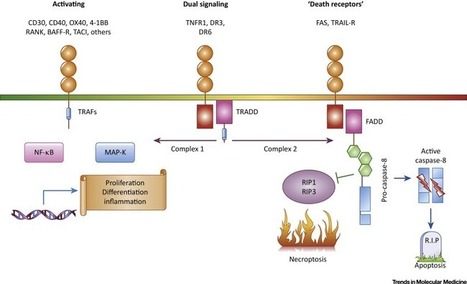
Originally discovered as an inducer of apoptosis, the TNF-family receptor Fas (CD95,
APO-1, TNFRSF6) has more recently been found to have functions beyond cell death,
including T cell co-stimulation and promoting terminal differentiation of CD4+ and
CD8+ T cells.
Via Krishan Maggon

|
Suggested by
LIGHTING
July 13, 2018 2:08 AM
|
INGR1D is a large screening study in the Thames Valley to identify infants who are at risk of developing type 1 diabetes.
Autoimmune diseases are chronic inflammatory pathologies that are characterized by the presence of antibodies against own epitopes in serum (autoantibodies). Systemic lupus erythematosus (SLE) is a common autoimmune pathology, characterized by the presence of antinuclear antibodies (ANAs).
Via Krishan Maggon
|
|
Scooped by
Gilbert C FAURE
July 3, 2018 5:08 AM
|
|