Your new post is loading...

|
Scooped by
Gilbert C FAURE
December 8, 2020 12:14 PM
|
Nonalcoholic fatty liver disease (NAFLD) prevalence is high, especially in patients with obesity and type 2 diabetes, and is expected to rise steeply in the coming decades.We estimated NAFLD prevalence in patients with type 1 diabetes and explored associated ...
|
|
Scooped by
Gilbert C FAURE
December 6, 2020 1:38 PM
|
Nakazawa and colleagues describe advances in our understanding of anti-neutrophil cytoplasmic antibody-associated vasculitis. These insights have already generated promising new treatments that target B cells, T cells and cytokines; potential novel approaches targeting additional cells or...
|
|
Scooped by
Gilbert C FAURE
December 3, 2020 1:09 PM
|
In this review, we discuss the biological features of IL-23 and its role in the pathogenesis of autoimmune diseases including psoriasis, rheumatoid arthritis and inflammatory bowel diseases.Advantages, limitations and side effects of each concept will be reviewed, suggesting several advanced IL-23-...
|
|
Scooped by
Gilbert C FAURE
December 3, 2020 1:04 PM
|
More than 130 million people around the globe suffer from psoriasis vulgaris, a chronic condition characterized by skin inflammation, scales, and dry patches. However, its pathology is not fully clear.
|
|
Scooped by
Gilbert C FAURE
November 28, 2020 1:02 PM
|
|
|
Scooped by
Gilbert C FAURE
November 25, 2020 6:16 AM
|
Immune cell migration to the pancreatic islets during type 1 diabetes occurs by transendothelial migration, through a series of steps including rolling, arrest, and crawling on the vascular wal
|
|
Scooped by
Gilbert C FAURE
November 19, 2020 9:15 AM
|
Coate et al. examined expression of canonical SARS-CoV-2 entry proteins ACE2 and TMPRSS2
in the human pancreas and report ACE2 expression in the microvasculature, including
islet pericytes, whereas both ACE2 and TMPRSS2 are expressed in some ducts.
|
|
Scooped by
Gilbert C FAURE
November 18, 2020 1:19 PM
|
Antiphospholipid syndrome (APS), is an acquired autoimmune disorder characterised by thrombosis, pregnancy morbidity, and the presence of antiphospholipid antibodies (aPL). Although venous thromboembolism is the most common manifestation, thrombotic events in APS may also occur in virtually any...
|
|
Scooped by
Gilbert C FAURE
November 18, 2020 6:07 AM
|
Myasthenia gravis (MG) is characterized by muscle weakness and fatigability caused by the presence of autoantibodies against the acetylcholine receptor (AChR) or the muscle‐specific tyrosine kinas
|
|
Scooped by
Gilbert C FAURE
November 17, 2020 4:56 AM
|
|
|
Scooped by
Gilbert C FAURE
November 14, 2020 1:38 PM
|
Antiphospholipid Syndrome Antiphospholipid syndrome (APS) is defined by the coexistence of obstetric morbidity (mainly pregnancy losses) and/or vascular thrombosis (venous or arterial) with the presence of aPL, namely lupus anticoagulant, anticardiolipin, or anti-β2-glycoprotein I antibodies. From: Handbook of Systemic Autoimmune Diseases, 2018 Related terms: View all Topics Antiphospholipid Syndrome Lucia R. Wolgast MD, in Transfusion Medicine and Hemostasis (Third Edition), 2019 Introduction The antiphospholipid (aPL) syndrome (APS) is an autoimmune thrombophilic condition that is defined by a combination of clinical and laboratory criteria. In general terms, APS patients have developed circulating antibodies against plasma proteins that bind to phospholipids (i.e., aPL antibodies) with subsequent clinical morbidity of thrombosis and/or pregnancy complications. The investigational criteria for APS (often referred to as the Sydney Investigational Criteria) are detailed in Table 108.1 and require that patients have documented evidence for vascular thrombosis and/or obstetric complications, such as unexplained recurrent miscarriages, intrauterine growth restriction, intrauterine fetal demise, preeclampsia/toxemia, placental abruption, and preterm labor. The laboratory criteria require identifying the persistent aPL antibodies (i.e., at least two abnormal measurements at least 12 weeks apart), including elevated medium to high tiers of anticardiolipin (aCL) IgG or IgM antibodies, anti-β2-glycoprotein I (anti-β2GPI) IgG or IgM antibodies, and/or positive lupus anticoagulant (LA). The laboratory diagnosis of APS is discussed in Chapter 158. Table 108.1. Sydney Investigational Criteria for the Diagnosis of the Antiphospholipid Syndromea Clinical • Vascular thrombosis (one or more episodes of arterial, venous, or small vessel thrombosis). For histopathologic diagnosis, there should be no evidence of inflammation in the vessel wall. • Pregnancy morbidities attributable to placental insufficiency, including (a) three or more otherwise unexplained recurrent spontaneous miscarriages, before 10 weeks of gestation, (b) one or more fetal losses after the 10th week of gestation, (c) stillbirth, and (d) episode of preeclampsia, preterm labor, placental abruption, intrauterine growth restriction, or oligohydramnios that are otherwise unexplained. Laboratory • Medium- or high-titer aCL or anti-β2GPI IgG and/or IgM antibody present on two or more occasions, at least 12 weeks apart, measured by standard ELISAs. • Lupus anticoagulant in plasma, on two or more occasions, at least 12 weeks apart, detected according to the guidelines of the ISTH SSC Subcommittee on Lupus Anticoagulants and Phospholipid-Dependent Antibodies. β2GPI, β2-glycoprotein I; aCL, anticardiolipin; aPL, antiphospholipid; ELISA, enzyme-linked immunosorbent assay; Ig, immunoglobulin. a “Definite APS” is considered to be present if at least one of the clinical criteria and one of the laboratory criteria are met. Modified from Miyakis, S., Lockshin, M. D., Atsumi, T., et al. (2006). International consensus statement on an update of the classification criteria for definite antiphospholipid syndrome (APS). J Thromb Haemost, 4, 295–306. It is important for the reader to understand that these criteria were not designed to be requirements for the clinical diagnosis of APS. Rather, they were intended to provide a uniformly rigorous definition of APS for the purpose of standardizing research on the disorder. In “real-world” clinical practice, some patients may be appropriately diagnosed for presumptive APS without meeting the strict investigational criteria. Some APS patients may be positive for other “noncriteria” clinical laboratory tests—see Chapter 158—that have not been included by consensus panels as diagnostic criteria for the disorder, but these positive noncriteria laboratory tests may indicate a clinical risk and warrant treatment. Furthermore, APS patients may have positive APS criteria assays but not the typical criteria manifestations. These “noncriteria manifestations” include thrombocytopenia, livedo reticularis, skin ulcers, nephropathy, migraine, cognitive defects, diffuse alveolar hemorrhage, and valvular heart disease (Libman–Sacks endocarditis), and these clinical manifestations may need to be managed differently. Occasional patients may even test entirely negative for the APS criteria assays but have typical clinical manifestations of the disorder—a situation referred to as seronegative APS (termed SNAPS). At present, APS may be divided into the following subcategories: (1) Primary APS is the “stand alone” disorder, in the absence of systemic lupus erythematosus (SLE), (2) secondary APS occurs in the presence of APS, (3) catastrophic APS (CAPS) manifests as disseminated thrombosis in large and small vessels with resulting multiorgan failure (Table 108.2), and (4) SNAPS includes patients whose diagnostic tests are entirely negative but who, on clinical grounds, are still suspected to have the disorder. Table 108.2. Proposed Criteria for the Classification of Catastrophic Antiphospholipid Syndrome (APS) 1. Evidence of involvement of three or more organs, systems, and/or tissuesa 2. Development of manifestations simultaneously or in less than a week 3. Confirmation by histopathology of small vessel occlusion in at least one organ or tissueb 4. Laboratory confirmation of the presence of antiphospholipid antibodies (lupus anticoagulant and/or anticardiolipin antibodies)c Definite Catastrophic APS • All four criteria Probable Catastrophic APS • All four criteria, except for only two organs, systems and/or tissues involvement • All four criteria, except for the absence of laboratory confirmation at least 6 weeks apart due to the early death of a patient never previously tested for aPL before the catastrophic APS event • Criteria 1, 2, and 4 • Criteria 1, 3, and 4 and the development of a third event in more than a week but less than a month, despite anticoagulation a Usually, clinical evidence of vessel occlusions, confirmed by imaging techniques when appropriate. Renal involvement is defined by a 50% rise in serum creatinine, severe systemic hypertension (N180/100 mm Hg), and/or proteinuria (N500 mg/24 hours). b For histopathological confirmation, significant evidence of thrombosis must be present, although, in contrast to Sydney criteria, vasculitis may coexist occasionally. c If the patient had not been previously diagnosed as having an APS, the laboratory confirmation requires that the presence of antiphospholipid antibodies must be detected on two or more occasions at least 6 weeks apart (not necessarily at the time of the event), according to the proposed preliminary criteria for the classification of definite APS. Modified from Asherson, R. A., Cevera, R., de Groot, P. G., et al. (2003). Catastrophic antiphospholipid syndrome: international consensus statement on classification criteria and treatment guidelines. Lupus, 12, 530–534. Antiphospholipid Syndrome Nancy Agmon-Levin, ... Yehuda Shoenfeld, in The Autoimmune Diseases (Fifth Edition), 2014 The antiphospholipid syndrome (APS) is an autoimmune disorder characterized by thrombosis, pregnancy losses, and the presence of at least one of three antiphospholipid antibodies. However, it has been acknowledged that the clinical spectrum of APS is much wider, including systemic and organ-specific manifestations. Moreover, the presence of more than 20 antiphospholipid antibodies has been recognized, some of which may participate in the pathogenesis of APS although not included as criteria. Our knowledge and understanding of the etio-pathogenesis of APS has increased tremendously, as the effects of antiphospholipid antibodies, mainly the anti-B2GPI–B2GPI immune complexes, were elucidated. The latter bind to different cells (i.e., monocytes, endothelial cells, and trophoblasts), recruit cell surface receptors, and subsequently induce intracellular signaling. Additionally an arsenal of environmental factors as infectious agents and vitamin D has been associated with the presence of antiphospholipid antibodies and overt APS. It seems therefore that in APS both thrombotic and immune-mediated mechanisms play a part and may be considered as candidates for targeted therapeutic interventions. Antiphospholipid Syndrome ROBERT A.S. ROUBEY, in The Autoimmune Diseases (Fourth Edition), 2006 Publisher Summary The antiphospholipid syndrome (APS) is the association of autoantibodies having an apparent specificity for anionic phospholipids with one or more clinical manifestations that include venous and arterial thrombosis and pregnancy loss and morbidity. APS is an under-recognized autoimmune disease that accounts for a significant proportion of thromboembolic disease and recurrent pregnancy loss. Animal models of APS are important tools for investigating the cellular basis of the autoimmune response, the contribution of genetic factors, and mechanisms by which antiphospholipid antibodies (aPL) contribute to thrombosis and pregnancy loss Anticoagulation rather than immunosuppression is the current mainstay of therapy. Although effective in most cases, full anticoagulation carries a significant risk of adverse side effects. Future research characterizing the underlying autoimmune response, the spectrum of APS autoantibodies, and the relevant mechanisms of hypercoagulability will lead to the identification of novel therapeutic targets and approaches. These new approaches raise hope for safer and more effective treatment of APS. Antiphospholipid syndrome Munther A. Khamashta, Mary-Carmen Amigo, in Rheumatology (Sixth Edition), 2015 Antiphospholipid syndrome: definition and history Antiphospholipid syndrome (APS) is an autoimmune multisystemic disorder characterized by recurrent arterial and venous thrombosis and/or pregnancy morbidity associated with the presence of persistent antiphospholipid antibodies (aPLs). aPLs are a heterogeneous group of antibodies directed against anionic phospholipids or protein-phospholipid complexes. Laboratory tests to identify aPL includes solid-phase immunoassays (enzyme-linked immunosorbent assay [ELISA]) to detect anticardiolipin (aCL) and anti–β2-glycoprotein I (anti-β2-GPI) antibodies and functional assays to detect the so-called lupus anticoagulants (LACs) that demonstrate the ability of aPL to prolong phospholipid-dependent clotting reactions.1 The term lupus anticoagulant is a misnomer. The LAC phenomenon results in prolonged plasma clotting times; however, patients with LAC are subject to thrombosis, not to hemorrhage, except in uncommon cases such as in hypoprothrombinemia-LAC syndrome. Although initially described in patients with systemic lupus erythematosus (SLE), APS was soon recognized also to occur in patients without underlying autoimmune disease. APS was then classified as “secondary” in the presence of SLE and “primary” in the absence of SLE or other autoimmune disorders. Primary APS is the most common cause of acquired thrombophilia and accounts for 15% to 20% of all episodes of deep vein thrombosis with or without pulmonary embolism, one third of new strokes occurring in patients younger than age 50, and 10% to 15% of women with recurrent fetal loss.2 APS also accounts for a significant proportion of thromboembolic disease and recurrent fetal loss in patients with SLE. aPLs are present in 30% to 40% of SLE patients, and 10% to 15% of all SLE patients have clinical manifestations of APS.3 It is now generally accepted that aPLs are the most frequent acquired risk factor for a treatable cause of recurrent pregnancy loss and for pregnancy complications. In 1999, an international consensus meeting formulated the first classification criteria (known as the Sapporo criteria) for patients with APS.4 In 2006, these criteria were updated1 (Box 139.1). Antiphospholipid Syndrome Tadej Avčin, Kathleen M. O'Neil, in Textbook of Pediatric Rheumatology (Seventh Edition), 2016 Other Manifestations Cardiac manifestations are frequent in adult patients with APS but have not been extensively investigated in childhood. The most prominent cardiac manifestations include valvular disease, occlusive coronary artery disease, cardiomyopathy, and intracardiac thrombosis.22,248 Nonbacterial (Libman–Sacks) vegetations were disclosed by echocardiographic studies in 11% of adult patients with APS,22 but were only rarely observed in patients with pediatric APS.29,249 Several cases of pediatric patients with aPL-related myocardial infarction have been reported, often in association with underlying SLE or congenital heart disease.32,250-253 Multiple small vascular occlusions are responsible for APS cardiomyopathy, especially in CAPS, in which it is one of the most common causes of death.254,255 Pulmonary embolism and infarction constitute the most frequent pulmonary manifestation of APS.45,182,256-258 aPLs were reported in 30% to 40% of children with pulmonary embolism who were referred for hematology evaluation.256,258 Rarely, recurrent pulmonary embolism may lead to pulmonary hypertension.196,259,260 The kidney is a major target organ of pediatric APS with manifestations that include renal vascular occlusion, thrombotic glomerular microangiopathy, and hypertension.46,261-265 The term antiphospholipid syndrome-associated nephropathy (APSN) was proposed to describe thrombotic microangiopathy involving both arterioles and glomerular capillaries that cause hypertension, acute renal failure, proteinuria, and poor renal function with a tendency to develop end-stage renal disease.2,266-268 This entity was reported in 16% of Thai patients with childhood-onset SLE who underwent renal biopsy and was significantly more frequent in adult SLE patients (41%).268 aPLs are also associated with hepatic, digestive, and adrenal manifestations resulting from occlusive vascular disease of intraabdominal vessels.269-272 Osteoarticular manifestations such as avascular necrosis of bone, nontraumatic fractures, and bone marrow necrosis are rarely seen in APS patients.273,274 Adult patients with primary APS and no prior glucocorticoid treatment appear to have an increased risk of avascular necrosis.275 aPLs were reported as one of the most common prothrombotic alterations in patients with multifocal osteonecrosis, which is present in 20% of cases.276 Perthes disease has been linked with aPLs in two pediatric studies,274,277 but the association does not appear to be strong. Antiphospholipid Syndrome Tatsuya Atsumi, ... Takao Koike, in Systemic Lupus Erythematosus (Fifth Edition), 2011 Antiphospholipid antibodies (aPLs) include a heterogeneous group of circulating immunoglobulins present in a wide range of infectious and autoimmune diseases. In particular, anticardiolipin antibodies (aCL) and lupus anticoagulants (LA) are associated with the antiphospholipid syndrome (APS). APS is recognized as a condition that is a frequent cause of acquired thrombophilia. They react with a complex of phospholipid and plasma proteins, including β2GPI, prothrombin, annexin V, high- and low-molecular-weight kininogen, protein S, and protein C, previously known as “cofactors.” Because of their strong relationship with clinical symptoms, aPLs have been considered pathogenic antibodies. It is recognized that the inhibition of the natural anticoagulant systems, the impairment of fibrinolytic activity, and the direct effect of aPLs on cell functions are some of the mechanisms of aPL-mediated thrombosis. Studies on the pathogenicity of aPLs have been carried out mainly on the corresponding antigens, especially on the function of β2GPI and their modifications by the antibodies. Evidence suggests that complement activation is also required for aPL-mediated tissue injury, and findings have revealed that aPLs play a role in the T-cell responses. Pathogenesis of Antiphospholipid Antibody Syndrome Ian Giles, ... Yiannis Ioannou, in Dubois' Lupus Erythematosus and Related Syndromes (Ninth Edition), 2019 Clinical Importance of the Antiphospholipid Syndrome in Patients With SLE APS has a wide range of clinical manifestations.5 Initially, APS was identified in patients with SLE, in whom a positive test for either aPLs occurred in the presence of thrombosis or pregnancy morbidity. The existence, however, of primary APS (PAPS) in patients lacking another autoimmune rheumatic disease (ARD) was identified in ~50% of APS patients. The original description of the remaining cases as secondary APS, occurring in the presence of another ARD, most commonly SLE, has now been dropped because the clinical and serologic features of APS are similar in both groups. In this regard, the 2006 APS classification criteria recommended that any associated disorder should be reported, such as SLE-associated APS.4 A catastrophic variant occurs in less than 1% of patients with APS who develop multiple (often small vessel) thromboses resulting in multiorgan failure, and 40% of these patients have SLE.6 Antiphospholipid Syndrome Wendy Lim MD, MSc, in Transfusion Medicine and Hemostasis (Second Edition), 2013 Future Directions APS is a complex disorder with evolving diagnostic criteria. Insight into the pathophysiology of APS may lead to novel treatments for APS, which to date have focused on antithrombotic therapy. Complement activation may play an important role in fetal loss, and although there is currently no specific complement-targeted therapy approved for patients with APS, complement inhibition may prove to be a novel upstream treatment for APS. Other investigational treatments include the use of rituximab, other immunosuppressive agents and autologous stem cell transplantation, all of which require further study. Management of patients with aPL and APS can be challenging, as many patients with APS have risk factors for bleeding and have a high risk of recurrent thromboembolism. The clinical trials and observational studies performed to date have yielded valuable information on the management of patients with APS, but further research is required to address the ongoing controversies that exist in the management of these patients. The Clinical Evaluation of Kidney Disease in Systemic Lupus Erythematosus Brad H. Rovin, Isabelle Ayoub, in Systemic Lupus Erythematosus, 2016 Antiphospholipid Syndrome and the Kidney APS (Chapters 56–58Chapter 56Chapter 57Chapter 58) can result in kidney injury by causing noninflammatory occlusions of renal blood vessels, including the intrarenal microvasculature. APS is seen in about 30% of patients with SLE, often (but not always) accompanied by LN and antiphospholipid antibodies such as anticardiolipin and anti-β2-glycoprotein I antibodies, or lupus anticoagulants.41 It is important to consider the diagnosis of renal APS and verify with a kidney biopsy, because the usual immunosuppression used for LN does not treat renal APS, which requires anticoagulation. Failure to treat APS can lead to CKD or ESRD. Antiphospholipid Syndrome in Systemic Autoimmune Diseases Roger A. Levy, ... Ricard Cervera, in Handbook of Systemic Autoimmune Diseases, 2017 1.1 Introduction Antiphospholipid syndrome (APS) is defined by the occurrence of venous and arterial thromboses (often multiple) and pregnancy morbidity (abortions, foetal deaths, premature births), in the presence of antiphospholipid antibodies (aPL); namely, lupus anticoagulant (LA), anticardiolipin antibodies (aCL), or anti-β2 glycoprotein-I (anti-β2GPI) antibodies. APS can occur in patients having neither clinical nor laboratory evidence of another definable condition (primary or isolated APS), or it may be associated with other diseases, mainly systemic lupus erythematosus (SLE), and occasionally with other autoimmune conditions, infections, drugs, and malignancies. Rapid chronological occlusive events, occurring over days to weeks, have been termed as catastrophic APS (CAPS). Other postulated APS subsets include microangiopathic APS (MAPS) and seronegative APS.
|
|
Scooped by
Gilbert C FAURE
November 7, 2020 6:22 AM
|
Background/Purpose: ANA testing as an approach to diagnosing and classifying SLE, now embedded in the EULAR/ACR Criteria, is more important than ever. Cross-sectional studies indicate that as few as 70% are ANA-positive, although ANA status may change over time.
|
|
Scooped by
Gilbert C FAURE
November 3, 2020 2:41 AM
|
Background/Purpose: Studies addressing the epidemiology of ANCA-associated vasculitides (AAV) in different countries reported various prevalence rates and suggested that incidence may have increased over the past 30 years. Environmental factors may play an important role in the development of AAV. Exposure to silica, one of the strongest environmental substances causing overall autoimmunity, has particularly been […]
|
|
|
Scooped by
Gilbert C FAURE
December 7, 2020 9:03 AM
|

|
Suggested by
LIGHTING
December 3, 2020 1:30 PM
|
Abstract. Lupus nephritis (LN) affects a large proportion of patients with systemic lupus erythematosus (SLE). LN can lead to end-stage renal disease depending
|
|
Scooped by
Gilbert C FAURE
December 3, 2020 1:09 PM
|
Journal of Clinical Medicine, an international, peer-reviewed Open Access journal.
|
|
Scooped by
Gilbert C FAURE
November 29, 2020 4:10 AM
|
Antiphospholipid syndrome (APS), an acquired autoimmune thrombophilia, is characterised by thrombosis and/or pregnancy morbidity in association with persistent antiphospholipid antibodies. The 16th International Congress on Antiphospholipid Antibodies ...
|
|
Scooped by
Gilbert C FAURE
November 25, 2020 10:43 AM
|
Lupus nephritis (LN) is one of the most common manifestations of systemic lupus erythematosus (SLE), affecting approximately 40% of patients with lupus.It represents a major risk factor for morbidity...
|
|
Scooped by
Gilbert C FAURE
November 23, 2020 3:36 AM
|
Common variable immunodeficiency (CVID) is the most common symptomatic inborn error of immunity characterized by variable clinical manifestations including infections, autoimmunity, chronic lun
|
|
Scooped by
Gilbert C FAURE
November 18, 2020 2:42 PM
|
New research by University of Georgia scientists sheds light on why people with obstructive sleep apnea may have associated autoimmune disorders. The results could lead to better approaches to treatment and possibly new drug therapies.
|
|
Scooped by
Gilbert C FAURE
November 18, 2020 1:18 PM
|
Multiple sclerosis (MS) is a chronic autoimmune disease of the central nervous system (CNS), with characteristic inflammatory lesions and demyelination. The clinical benefit of cell-depleting therapies targeting CD20 has emphasized the role of B cells and autoantibodies in MS pathogenesis.
|
|
Scooped by
Gilbert C FAURE
November 17, 2020 11:50 AM
|
Since the early 1800s vaccines have saved numerous lives by preventing lethal infections. However, during the past two decades, there has been growing awareness of possible adverse events associated with vaccinations, cultivating heated debates and leading to significant fluctuations in...
|
|
Scooped by
Gilbert C FAURE
November 16, 2020 1:34 PM
|
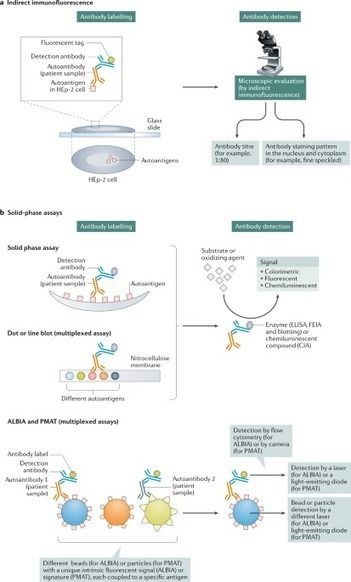
Antinuclear antibodies (ANAs) are valuable laboratory markers to screen for and support the diagnosis of various rheumatic diseases (known as ANA-associated rheumatic diseases). The importance of ANA testing has been reinforced by the inclusion of ANA positivity as an entry criterion in the 2019 systemic lupus erythematosus classification criteria. In addition, specific ANAs (such as antibodies to Sm, double-stranded DNA (dsDNA), SSA/Ro60, U1RNP, topoisomerase I, centromere protein B (CENPB), RNA polymerase III and Jo1) are included in classification criteria for other rheumatic diseases. A number of techniques are available for detecting antibodies to a selection of clinically relevant antigens (such as indirect immunofluorescence and solid phase assays). In this Review, we discuss the advantages and limitations of these techniques, as well as the clinical relevance of the differences between the techniques, to provide guidance in understanding and interpreting ANA test results. Such understanding not only necessitates insight into the sensitivity and specificity of each assay, but also into the importance of the disease context and antibody level. We also highlight the value of titre-specific information (such as likelihood ratios). Antinuclear antibodies (ANAs) are valuable biomarkers for various autoimmune rheumatic diseases and can be detected using various assays. This Review discusses the advantages and disadvantages of different ANA assays, to help in the understanding and interpretation of ANA test results.
|
|
Scooped by
Gilbert C FAURE
November 12, 2020 3:53 AM
|
Scientists observed that this regeneration mechanism was under the influence of circadian rhythms - the molecular clocks regulating metabolic functions according to a 24-hour cycle of alternating day-night.
Researchers from the Nationwide Institute of Arthritis and Musculoskeletal and Pores and skin Ailments (NIAMS) have performed a research displaying that the...
Via Krishan Maggon
|