Au XIVᵉ siècle, on accusait les Juifs d'empoisonner les puits. En 2026, certains les accusent... d'avoir inventé les virus ! Les supports changent. Les mécanismes demeurent.
Chaque crise sanitaire réveille les mêmes réflexes : la peur appelle des explications simples, les théories du complot fabriquent des coupables, et l'antisémitisme retrouve un terrain fertile.
Le hantavirus nous en donne une nouvelle illustration avec une pseudo-étymologie totalement inventée devenue virale en quelques heures. Comme souvent, le mensonge voyage en première classe ; les faits prennent le train suivant.
Dans cette tribune publiée aujourd'hui dans L'Express , je défends une idée simple : la lutte contre la désinformation est aussi une lutte contre l'antisémitisme.
La désinformation ne détruit pas seulement les faits. Elle détruit la confiance. Et lorsqu'une société cesse de faire confiance à la science, aux institutions et à ses concitoyens, elle devient vulnérable à toutes les manipulations.
Voltaire écrivait : « Ceux qui peuvent vous faire croire des absurdités peuvent vous faire commettre des atrocités » Trois siècles plus tard, cette phrase n'a peut-être jamais été aussi actuelle.
Défendre la vérité scientifique, ce n'est pas seulement corriger une erreur. C'est protéger notre démocratie, notre santé publique et notre République.
Notre proposition « Désinformation Vaccinale: Curation, Observatoire, Littératies » a été retenue pour le séminaire annuel de l’Académie des Controverses et de la Communication Sensible, intitulé « La désinformation : nouvelles formes, nouveaux défis », qui s'est tenu à Paris le mardi 26 novembre 2024.
Voir ci-après posts du 27 novembre, avec lien vers la présentation sur Slideshare.
Présentation le 20 mars 2025 à InfoxsurSeine deux jours pour décrypter la désinformation et échanger autour des solutions. Quels outils concrets face aux manipulations de l’information et à l’essor de l’IA générative ?
Avez vous acheté le numéro Juillet/septembre 2025 de la RECHERCHE sur LE FAUX?
des sujets à approfondir
- Vaccins et argent Making money with vaccines, against vaccines
le sujet le plus chaud, de 3,36 euros par mois à 300 millions de dollars?
- Publications vraies et fausses particulièrement difficile
- Obligations, exemptions, incitations, peut-être plus simple?
The topic addresses Fake news as a global problem, extracting material focusing on vaccinations, vaccination hesitancy and anti-vax attitudes. The subject is evolving constantly with health consequences all over the world.
This topic became a research action project at CREM (Centre de Recherche sur les médiations)
Ir covers not only Fake News still thriving on the internet,
but also efforts of many (supranational bodies, scientific societies, researchers...) to improve health literacies of laypeople, and medical students on this sensitive topic...
Unfortunately, as Jonathan Swift so eloquently said: "Reasoning will never make a man correct an ill opinion, which by reasoning he never acquired" and
“The greatest enemy of knowledge is not ignorance; it is the illusion of knowledge.” — Daniel J. Boorstin
Michael Wolff joins Joanna Coles to analyze a White House increasingly defined by self-inflicted constraint. At the center is the escalating Hormuz crisis, where Trump’s aggressive posture collides with the realities of this critical global chokepoint and the strategic blowback it’s incurring. Which comes as MAGA coalition fractures widen: Tucker Carlson breaks publicly over foreign policy, RFK Jr. stumbles through repeated hearings while defending unpopular anti-vax positions, and key officials scramble to distance themselves from decisions they helped shape. The throughline is an administration in which impulse destroys strategy, and in which Trump’s own style of decision-making increasingly functions less as power and more as a self laid trap.
00:00 - Trump’s War and “Lineup of Fools” 03:47 - Venice Check-In and Podcast Premise 07:34 - The “Hormuz War” and Strategic Failure 11:21 - Deadlines, War Powers, and Accountability 15:08 - Tucker Carlson Turns on Trump 18:55 - Opportunism and MAGA Fractures 22:42 - The Trap of “Forever Wars” 26:29 - Strategic Blunder: Strait of Hormuz 30:16 - RFK Jr. Hearings and Political Liability 34:03 - Anti-Vax Politics Backfire 37:50 - RFK Jr. Messaging Collapse 41:37 - Trump Team Credibility Problems 45:24 - Internal Chaos and Public Perception 49:11 - Mounting Political Consequences 52:58 - Trump Boxed In by His Own War
#trump #news #podcast
📖 Title: How Trump Is Trapped By His Own Idiocy: Wolff 👂 Podcast: Inside Trump's Head 📺 Episode: 103 🎧 Format: Full Podcast 📅 Date: April 23, 2026 🎙️ Hosts: Joanna Coles, Michael Wolff
Have a question or comment for us? Send us an email: beastpod@thedailybeast.com
The Daily Beast is committed to accurate, fair, independent, fast, and accountable journalism. We seek the truth and report it honestly, without fear or favor. We ground robust and provocative opinions in fact.
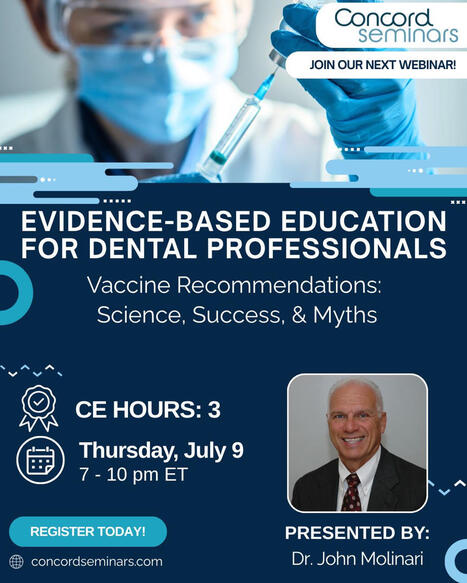
Vaccine Recommendations: Science, Success, & Myths with Dr. John Molinari starts Thursday at 7 pm ET! REGISTER HERE ➡️ https://tinyl.co/4hGK
This live webinar will consider vaccination as one of the most effective public health approaches for protection of both the general population and health care professionals. The most recent recommendations for vaccine-preventable infectious diseases, including influenza and other respiratory infections, pneumococcal pneumonia, shingles, human papilloma viruses (HPV), and pertussis (i.e., whooping cough). Important information also will be included describing unfortunate widespread efforts to misrepresent vaccine success and promote myths which damage control against vaccine-preventable diseases. Measles will be used as an important disease example of this emerging public health threat.
A major portion of this presentation will discuss appropriate scientific and clinical evidence for development of available vaccines and emerging technologies, in order to provide participants useful information when considering: 1. their own protection; 2. protection of their patients (general public); and 3. vaccine requirements for individuals diagnosed with immune compromising conditions and diseases.
Vaccine coverage for Aborginal and Torres Strait Islander children declined between 2020 to 2025 # from 93.1 to 89% at 12 months # from 91.2 to 86.7% at 2 years
Timely MMR coverage for the 1st dose is now 55.9%, having dropped 12% over the last 5 years
This places Aboriginal and Torres Strait Islander children at increased risk of measles and other serious VPDs 🦠
In 2024 we explored the reasons why with health service providers from urban, rural and remote areas in NT and NSW 🤔
We identified 6 key themes to take a strengths-based approach to improving uptake 💡 # Families: need to build knowledge/address attitudes and provide more information on vaccines and optimise influences on decision-making # health services: need to strengthen clinic and health service delivery operations, data quality and access to vaccines for families # health staff: need for clarification around workforce roles, responsibilities and relationships
We suggest tailored approaches that are aligned with the National Immunisation Strategy (NIS) 2025-30 that - are community-led and focused - provide culturally grounded family-centered care - build leadership and self-determination
Huge thanks to our wonderful team led by Kristy Crooks Bianca Middleton Kylie taylor, Elizabeth Harwood, Katrina Clark, Caitlin Kent, Kelly McCory, Maria Hefler, Jessica Kaufman and Durrheim David 🙏
Australian Government Department of Health, Disability and Ageing National Centre for Immunisation Research and Surveillance (NCIRS) DFAT Wesfarmers Centre of Vaccines and Infectious Diseases
🦠 Knowledge Nugget: Can a Vaccine-Derived Virus Really Cause Disease?
It sounds surprising, but yes—it can happen, although it is extremely rare.
Recently, vaccine-derived poliovirus (VDPV) was detected in a sewage sample, highlighting the importance of continuous disease surveillance even in countries that have eliminated wild polio.
What is Vaccine-Derived Poliovirus (VDPV)?
The Oral Polio Vaccine (OPV) contains a weakened live virus. After vaccination, this weakened virus can briefly multiply in the intestine and may be excreted. In communities with low vaccination coverage, it can, on rare occasions, mutate over time and regain the ability to spread. This is known as vaccine-derived poliovirus (VDPV).
Does this mean vaccines are unsafe?
No.
The benefits of vaccination far outweigh this extremely rare risk. In fact, vaccines have protected millions of children from paralysis and helped eliminate wild poliovirus from India. VDPV mainly becomes a concern where immunization rates are low, reinforcing the need for strong vaccination programmes.
Why is testing sewage important?
Modern public health doesn't wait for hospitals to report outbreaks.
By analysing wastewater, scientists can detect viruses circulating in a community before large numbers of people become sick. This early-warning system allows health authorities to respond quickly with targeted surveillance and immunization.
🌍 The Bigger Lesson
Public health is not only about treating diseases—it's about preventing them through science, surveillance, and community participation.
Sometimes, the most powerful medical intervention is one that stops an outbreak before anyone even notices it.
💬 Question for Readers:
Which innovation do you think has saved more lives over the past century—vaccination, clean drinking water, or disease surveillance? Share your perspective in the comments.
Vaccines: Separating Facts from Myths with Science
In the age of instant information, misinformation can spread just as quickly as infectious diseases. Understanding the evidence behind vaccines is essential for protecting individuals, communities, and global public health. From rigorous clinical trials to continuous safety monitoring, vaccines remain one of the most effective public health interventions, preventing millions of illnesses and deaths every year. Knowing the difference between myths and facts empowers people to make informed health decisions based on evidence, not fear.
For Public Health students, vaccine literacy is more than an academic topic... it's a cornerstone of disease prevention, health promotion, and community engagement. Developing a strong understanding of immunisation science today will help you confidently analyse public health issues, contribute to meaningful discussions, and communicate evidence-based information in your future career.
At DigiReach Learning, we're committed to simplifying complex public health concepts through practical learning resources and research-focused content.
When trust in medicine falls, disease doesn't wait.
A new modeling study published in JAMA Network Open suggests that reducing routine childhood vaccination could have significant public health consequences.
Key findings: 🦠 Fewer vaccines = more outbreaks. 👶 Young children face the greatest risk. 🏥 Small drops in vaccination can have big consequences.
The study models the potential impact of recent vaccine policy changes under HHS Secretary Robert F. Kennedy Jr. Whether you agree or disagree with those decisions, they should be evaluated through evidence and their real-world effects, not political ideology.
As a physician, I think these conversations are about more than immunology and biology. They're about human behavior.
Trust, fear, identity, and the way we process risk all influence health decisions. If we want better public health outcomes, we have to communicate the science while also understanding the psychology behind why people believe what they do.
That's the biopsychosocial model in action.
#PublicHealth #Vaccines #BehavioralMedicine #Biopsychosocial #MindingMedicine| 10 commentaires sur LinkedIn
Sometimes, antivaxxers are trying to pollute your mind. In this case, through a series of events on topics that are presented in a such misleading way that it does not attract anyone at all. And the guy still does it ? What is wrong in continuing do so ?
Anti-vaccine influencers have to revert to tricks, misinformation, and propaganda to try and scare you away from vaccinating and protecting your kids with the hepatitis B vaccines.
⁉️ Pourquoi les individus continuent-ils de croire en une fausse information alors même qu’ils ont reçu sa correction ?
À partir d'une revue de la littérature, nous proposons une réorganisation conceptuelle des mécanismes expliquant pourquoi les corrections échouent parfois à modifier les représentations, ainsi que des implications pratiques et pour la recherche.
Trois grandes familles d’explications interdépendantes ont été identifiées : - 🧠 𝗖𝗼𝗴𝗻𝗶𝘁𝗶𝘃𝗲𝘀 : la personne n’a pas intégré ou ne se souvient pas de la correction, peut-être faute de ressources attentionnelles et/ou mnésiques. - ✊ 𝗠𝗼𝘁𝗶𝘃𝗮𝘁𝗶𝗼𝗻𝗻𝗲𝗹𝗹𝗲𝘀 : la personne est motivée à rejeter la correction, peut-être parce qu’elle va à l’encontre de croyances ancrées dans son identité, ou qu’elle suscite un vide en supprimant une explication existante. - 🤝 𝗥𝗮𝘁𝗶𝗼𝗻𝗻𝗲𝗹𝗹𝗲𝘀 : la personne accorde davantage de crédibilité à la fausse information qu’à sa correction, par exemple parce que la source de la correction lui paraît moins fiable.
Cette réorganisation conceptuelle dresse des perspectives pour de futures recherches et des pistes pour optimiser la correction des fausses informations. Elle peut intéresser les chercheurs, journalistes, enseignants, et plus largement toute personne impliquée dans la lutte contre la désinformation.
📰 Pour les personnes intéressées, l’article qui développe ces idées vient d’être publié : https://lnkd.in/emcRCpx3
This week, the UK House of Lords Childhood Vaccinations Committee continues its inquiry into why childhood vaccination rates are declining and what can be done to reverse the trend. The inquiry is hearing evidence from ministers, NHS England, public health leaders and vaccination experts before making recommendations to the Government.
It's encouraging to see research published in The BMJ contributing to these discussions. The 2024 paper, Behavioural interventions to reduce vaccine hesitancy driven by misinformation on social media, was submitted as written evidence to the UK House of Lords Childhood Vaccinations Committee inquiry, helping to inform debate on how policymakers can rebuild trust and improve vaccine confidence. https://lnkd.in/eb3atMhc
BMJ Impact Analytics shows the paper has also been cited in policy documents from Public Health Scotland, the Welsh Government and other UK public health organisations. Beyond policy, the paper reached a wide public audience, generating 170 news stories from 117 international news outlets, 157 discussions on X, 112 scholarly citations, and coverage in six blogs, placing the paper in the top 5% of all research outputs tracked by Altmetric.
Reflecting on the paper's impact, lead author Professor Kai Ruggeri from Columbia University, New York, said, "The dream of good academic research is to drive real world decision making in a way that informs it, but doesn't force it."
He adds: "I was excited, obviously, going into The BMJ. I assumed there was a pretty good chance that policymakers would see it. That's a great thing about The BMJ."
🖇️ Ruggeri K, Vanderslott S, Yamada Y, Argyris YA, Većkalov B, Boggio PS, et al. Behavioural interventions to reduce vaccine hesitancy driven by misinformation on social media. BMJ. 2024;384:e076542. doi:10.1136/bmj-2023-076542. https://lnkd.in/eBJmDECY Samantha Vanderslott Young Anna Lee-Argyris Mosoka Fallah, PhD, MA, MPH Friederike Stock -- 📜 Parliamentary inquiry background: In England, pre-school vaccination programmes are estimated to prevent more than 200,000 hospital admissions and around 5,000 deaths each year. However, childhood vaccination coverage has declined in recent years, while inequalities in uptake have widened. Uptake of every routine childhood vaccination is now below the 95% target. The House of Lords Childhood Vaccinations Committee is drawing on evidence from people and organisations with relevant experience to assess the Government’s response and identify practical measures to reverse these trends. The committee is due to report by the end of November 2026. https://lnkd.in/e8xT95h7 -- 🏷️ Emma Veitch Kamran Abbasi Theodora Bloom Juliet Dobson Michelle Phillips Paul Simpson Anca Babor Ashley McKimm Jocalyn Clark Niels Peter Thomas Bev Acreman
Did a 6-in-1 pediatric vaccine actually kill 6 infants during clinical trials?
Viral videos making the rounds on social media claim that the official FDA package insert for Vaxelis exposes a dark truth about combination childhood immunizations. The claim suggests that multiple babies died directly from the shot, that there were "zero true placebos," and that pediatricians push the schedule purely because it drives 50% of their practice revenue.
But what does the actual clinical data say when you look past the scare tactics?
In his latest medical fact check, Tech ARP dives deep into the unredacted clinical records, including the FDA multi-discipline reviews and the Australian Public Assessment Report (AusPAR), which tracked 9,500 infant subjects.
The reality of what the data reveals is a masterclass in how mandatory regulatory reporting is routinely weaponized to mislead parents:
🔹 The Deaths Were Completely Unrelated: Forensic autopsies and independent death scene investigations proved the tragic infant deaths were caused by independent environmental or genetic factors—including accidental co-sleeping suffocation and severe pre-existing congenital anomalies. 🔹 The SIDS Myth: Extensive global data confirms vaccinated infants actually track a *lower* statistical risk of SIDS, because immunizations prevent severe respiratory infections that compromise breathing. 🔹 The Profit Myth: Far from a cash cow, vaccine inventory is often a "loss leader" due to massive upfront costs and low reimbursement rates. Roughly 24% of pediatricians have considered stopping vaccine distribution entirely just to avoid bankruptcy.
Medical transparency matters, but out-of-context fearmongering puts lives at risk. Read the full, data-backed breakdown on Tech ARP.
How are you talking to patients about vaccines? Delve into this Society of Hospital Medicine activity to learn evidence-based communication strategies to improve vaccination coverage. #VaccineConfidence
💉 Polio is eliminated in many countries—but is it gone forever? Myth: Polio is no longer a global concern. Fact: While tremendous progress has been made through vaccination, polio remains a public health priority in some regions, making continued immunisation and surveillance essential.
Vaccines have transformed global health, but maintaining high immunisation coverage is key to preventing resurgence.
💬What do you think is the biggest challenge to achieving a polio-free world? Vaccine access Vaccine awareness Public trust Healthcare infrastructure
Je ne suis pas payée pour le rappeler. Mais envoyer un enfant avec un carnet de vaccination falsifié à l’école, c’est jouer avec sa vie. Et celle des autres.
Alors qu’on voit l’impact de la baisse de la couverture vaccinale sur des maladies comme la rougeole, voici pourquoi falsifier un carnet met des personnes en danger :
➡️ Lorsque votre enfant va en classe, il peut côtoyer : - un enfant avec un petit frère âgé de quelques mois, - un enfant avec une grand-mère immunodéprimée qui vient chercher son petit-enfant, - un enfant sous chimiothérapie dont le système immunitaire ne peut pas se défendre.
Or, ces personnes, dont le système immunitaire est plus fragile, comptent sur l’immunité collective.
L’immunité collective repose sur le fait que suffisamment d’enfants soient vaccinés pour bloquer la circulation d’un virus ou d’une bactérie.
Falsifier un carnet de vaccination fragilise ce bouclier collectif.
Un enfant non vacciné peut contracter et transmettre des maladies graves (rougeole, coqueluche, méningite...) sans forcément présenter de symptômes immédiats.
Ces maladies peuvent être mortelles pour les nourrissons trop jeunes pour être vaccinés. Elles peuvent provoquer des complications irréversibles chez les personnes fragiles (surdité, encéphalite, décès).
On le voit aujourd’hui : en dessous d’un certain taux de vaccination, des épidémies que l’on croyait éradiquées réapparaissent.
Vacciner son enfant, c’est le protéger, lui, mais c’est aussi tenir sa place dans une chaîne de solidarité qui protège ceux qui ne peuvent pas se protéger eux-mêmes.
Si vous avez des doutes sur la vaccination, parlez-en à votre médecin.
Pour mieux comprendre ce que permet d’éviter la vaccination, je vous invite à lire notre Tribune publiée dans Le Parisien et initiée par l’Institut Pasteur. Le lien est en commentaire 👇 | 18 commentaires sur LinkedIn
🦠 What if I told you that a vaccine can protect someone who never received it? Yess, that is truee🤭
That was one of the most fascinating things I learned while continuing my Foundations in Virology and Vaccinology course.
Before now, I thought the purpose of vaccination was simply to protect the person receiving the vaccine. I never really stopped to think about the impact it could have on an entire community.
One concept that completely changed my perspective is "herd immunity".
Herd immunity occurs when a large enough proportion of a population becomes immune to an infectious disease, usually through vaccination. As the number of susceptible individuals decreases, the pathogen finds it difficult to spread from one person to another. Over time, this helps protect people who are especially vulnerable, including those who cannot be vaccinated or those whose immune systems may not respond adequately to vaccines.
One example I found particularly interesting involves Streptococcus pneumoniae.
Although pneumococcal vaccines are routinely given to children, the benefits extend far beyond them. Vaccinating children reduces the circulation of the bacterium within the community, meaning older adults, who are at a much higher risk of severe pneumococcal disease are less likely to be exposed in the first place.
One of the most beautiful things about vaccination is that sometimes, protecting yourself also means protecting someone else🤍 That idea genuinely stayed with me🥹
The more I learn about immunology and vaccinology, the more I realize that public health isn't only about treating diseases.. it's about understanding how they spread and using that knowledge to protect entire communities, especially those who are most at risk.
📚 Learning Out Loud | Foundations in Virology & Vaccinology
For those in healthcare or biomedical sciences, what's one public health concept that completely changed the way you think about disease prevention?
Comment mesurer les véritables effets de la désinformation ? Qui la produit, et avec quelles techniques contemporaines ? Quels ressorts cognitifs et sociaux expliquent notre vulnérabilité ? Comment la crise des médias et l'économie des plateformes reconfigurent-elles notre environnement informationnel ? Et que peut-on faire pour y répondre ?
Ce sont quelques-unes des questions auxquelles j'essaie d'apporter des éléments de réponse dans mon livre 𝘓𝘢 𝘥𝘦́𝘴𝘪𝘯𝘧𝘰𝘳𝘮𝘢𝘵𝘪𝘰𝘯, à paraître le 2 juillet aux Éditions La Découverte (collection Repères). L'ambition de ce petit livre est modeste : réunir, dans un volume court et accessible, des acquis de recherche aujourd'hui dispersés entre plusieurs disciplines et largement anglophones, et tenter de distinguer ce qui est établi, ce qui reste débattu et ce que nous ignorons encore.
Le livre explore d'abord ce que la recherche permet réellement de dire des effets de la désinformation, puis s'attarde plus longuement sur ses techniques et sur ceux qui la produisent, avant de se tourner vers les ressorts cognitifs et sociaux de notre vulnérabilité, le rôle de la crise des médias et de l'économie des plateformes, et, pour finir, les réponses possibles. En chemin, seize encadrés éclairent un cas, une notion ou une controverse, et un tableau de synthèse récapitule les principales interventions de lutte contre la désinformation, classées selon ce que l'on sait de leur efficacité.
J'ai cherché à le rendre accessible, sans prérequis particulier, à destination des étudiants, des journalistes, des enseignants et des responsables publics comme de tous ceux qui souhaitent simplement mieux comprendre ce phénomène.
Les liens de précommande et d'informations sont en commentaire.
Au plaisir d'en discuter et d'échanger avec vous !
Éditions La Découverte Focus Influence École normale supérieure EHESS - École des hautes études en sciences sociales | 23 comments on LinkedIn
In today's Substack, we take on a claim that's been circulating for years and has come roaring back... that COVID vaccines cause cancer, the so-called "turbo cancer" scare. My own mother, several friends, and hundreds of you have sent us some version of this post, all asking the same thing: is this true?! This time it arrives with new faces attached, including actual oncologists, and a new study people are citing as proof. We looked closely at that study, and it doesn't hold up. Please take the time to read this one in full.
Vaccines can save lives, but for many families in rural and underserved communities, access to timely pediatric immunizations remains a major challenge. Joining Dr. Christina Madison to discuss the real-world barriers affecting vaccine access—and the community-based solutions helping close those...
She's an absolute disgrace to the Nursing profession!
DeVuono pleaded guilty in September 2023 and was sentenced in June 2024 to five years of probation, surrendering her NP and RN licenses and forfeiting more than $1.2 million.
On July 9, 2026, the NY Department of Health fined her $544,000 for falsifying vaccination records for 162 children, the largest such penalty in the agency's 125-year history.
The fraud went beyond COVID cards: she logged hundreds of routine childhood vaccines (MMR, polio, hepatitis B, chickenpox) that were never given, forcing the state to void records and families to revaccinate.
Maryland doctor faces possible 50-year jail sentence — is it because he promoted monoclonal antibodies instead of COVID shots?
“The government doesn’t get to lose ...They just get to keep swinging, bullying their way through a judicial system that is now built for this exact purpose.” — Dr. Kirk Moore
They received FDA approved COVID vaccine. So why the lies here ??? And where is the illegality ? We saw what not mandating vaccines in soldiers did… Some got the flu, some died…
To get content containing either thought or leadership enter:
To get content containing both thought and leadership enter:
To get content containing the expression thought leadership enter:
You can enter several keywords and you can refine them whenever you want. Our suggestion engine uses more signals but entering a few keywords here will rapidly give you great content to curate.





 Your new post is loading...