Your new post is loading...

|
Rescooped by
Gilbert C FAURE
from Immunology and Biotherapies
January 30, 2020 1:15 PM
|
Point of view of an Immunologist/curator in 2020 Après Bobcatsss 2020, ECIL 2021, ICDF 2022, HESIVAXs with the motto UTA "Understand to Act" Notre proposition « Désinformation Vaccinale: Curation, Observatoire, Littératies » a été retenue pour le séminaire annuel de l’Académie des Controverses et de la Communication Sensible, intitulé « La désinformation : nouvelles formes, nouveaux défis », qui s'est tenu à Paris le mardi 26 novembre 2024. Voir ci-après posts du 27 novembre, avec lien vers la présentation sur Slideshare. Présentation le 20 mars 2025 à InfoxsurSeine deux jours pour décrypter la désinformation et échanger autour des solutions.
Quels outils concrets face aux manipulations de l’information et à l’essor de l’IA générative ? Avez vous acheté le numéro Juillet/septembre 2025 de la RECHERCHE sur LE FAUX? des sujets à approfondir - Vaccins et argent Making money with vaccines, against vaccines le sujet le plus chaud, de 3,36 euros par mois à 300 millions de dollars? - Publications vraies et fausses particulièrement difficile - Obligations, exemptions, incitations, peut-être plus simple?
|
|
Scooped by
Gilbert C FAURE
Today, 7:23 AM
|
April 24 marks the start of World Immunization Week.
For me, immunization is not a communication campaign or a formal recommendation.
It is one of the fundamental management decisions in public health.
Through immunization, health systems do not simply respond to infections, they act ahead of them:
reducing mortality, preventing outbreaks, protecting vulnerable populations, and building long-term resilience.
National immunization schedules are not arbitrary.
They reflect epidemiological realities, risk assessments, and public health priorities.
When the risk is low 👉 vaccination may focus on high-risk groups.
When the risk is high 👉 it becomes a population-wide decision.
📌 In Ukraine, the National Immunization Schedule provides protection against 11 infectious diseases.
According to the World Health Organization, immunization prevents 3.5–5 million deaths every year.
In a broader perspective, vaccines have saved over 150 million lives in the past 50 years.
Immunization, therefore, is about more than individual protection.
It is about:
— government accountability;
— the quality of decision-making;
— trust in the system;
— and the ability to protect populations before a crisis, not after it.
Vaccination works where there is accountability, trust, and system thinking.
That is why this is not only a medical issue - it is a leadership issue.
|
|
Scooped by
Gilbert C FAURE
Today, 7:20 AM
|
"Health and Human Services Secretary Robert F. Kennedy Jr. is giving several prominent right-wing and anti-vaccine medical groups a formal role in meetings of the Centers for Disease Control and Prevention’s vaccine advisory committee.
Kennedy, a longtime anti-vaccine activist, has sought to completely reshape the Advisory Committee on Immunization Practices (ACIP) since taking over at HHS. Last year, he replaced all original 17 members with contrarians and prominent anti-vaccine voices. Since then, the committee has made controversial moves like voting to recommend only flu vaccines without the organomercury compound thimerosal, which some anti-vaxxers believe is linked to autism despite research indicating otherwise.
In his latest move to control ACIP, Kennedy has reshaped the body’s charter. The changes follow a court order in a suit brought by the American Academy of Pediatrics temporarily blocking the committee’s work. The new charter broadens ACIP’s focus to identifying gaps in vaccine safety research and studying the cumulative effects of the childhood vaccine schedule and ingredients like aluminum.
It also adds four additional liaison organizations.
Liaisons are non-voting members of the committee who can comment and ask questions during presentations and assist the body with feedback. The groups Kennedy has added—Association of American Physicians and Surgeons, the Independent Medical Alliance, Physicians for Informed Consent, and the Medical Academy of Pediatrics and Special Needs—have each promoted anti-vaccine narratives in line with his long-held beliefs."
|
|
Scooped by
Gilbert C FAURE
Today, 7:18 AM
|
A new article claiming that placebos can work as well as “real medicine” is making the rounds on social media parroting several old myths to make this argument, which makes now a good time to address common myths about placebos long beloved by quacks. https://lnkd.in/gam4v_Ri
|
|
Scooped by
Gilbert C FAURE
Today, 7:17 AM
|
danah boyd's new essay makes an argument that public health professionals should sit with.
She shows how platforms moved away from helping people connect because it turned out that it was far more profitable to keep people scrolling through polished, curated content. The result, she argues, is that parasociality now plays a far more central role than it once did. One-sided emotional engagement with creators and influencers has become the dominant mode, and this has crowded out the reciprocal relationships that build social cohesion.
Boyd's argument is about platforms and everyday social life. But I couldn't help thinking about how the implications also extend to public health practice.
The changing social media has also made it harder to sustain public health approaches grounded in health promotion and harm reduction, which depend on acting trustworthily and sustained engagement with communities and individuals, not on what gets the most views in a feed.
Part of the problem is that public health has largely treated digital technologies as tools to do public health work, rather than recognizing how digital ecologies are reshaping the social conditions that health depends on. That mindset has left us without a clear sense of what digital platforms are for beyond delivering messages and campaigns.
It might be more useful to see them as one way of connecting people to health services, professionals and each other. And then more fundamentally, if we understand the role of public health organizations and their partners as supporting the social fabric and conditions for social cohesion (that health and wellbeing depend on), we need to ask what our programs, services and partnerships actually do to nurture that.
|
|
Scooped by
Gilbert C FAURE
Today, 7:14 AM
|
Can warning videos blunt misinformation? What a 12-country test found (Phys.org):
https://lnkd.in/du7Z6BnS
Glimpse: Concerns have been expressed over the impact of online disinformation on public opinion and the efficacy of countermeasures due to its rapid dissemination. This study investigates if brief "prebunking" or warning videos can lessen consumers' vulnerability to false information. Researchers investigated whether exposure to short films outlining typical manipulation techniques enhances people's capacity to identify false information using a large-scale experiment with over 20,000 participants spread across 12 European nations. The findings indicate that prebunking videos greatly improve users' ability to recognize deceptive information, including strategies like discrediting and scapegoating. Effectiveness varies by country, though, with bigger effects seen in those with higher GDPs, levels of education, and democratic development. All things considered, the results indicate that video-based inoculation techniques can significantly increase public resistance to false information in online settings.
---
Free articles and analyses on soft counter-extremism, against online hate, and on the theory of mis-/disinformation (usually third-party content).
The most recent LinkedIn posts on the above subjects, with glimpses, can be accessed via:
• https://lnkd.in/eBarZAew
Two-week reviews available via the following three Policyinstitute.net websites:
• counter-terrorism.org
• preventhate.org
• strategism.org
The views expressed in this post is that of the author(s) of the source content and do not necessarily represent those of Policyinstitute.net and its staff. While we carefully produce the glimpses to the articles, documents, or recordings that we hyperlink, we are not responsible for textual changes nor for imponderable parts of the original items.
#policyinstitutenet #preventradicalization #preventextremism #counterextremism #preventhate #disinformation #misinformation
|
|
Scooped by
Gilbert C FAURE
Today, 7:10 AM
|
Voici un exemple d'étude réalisée sur l'homéopathie pour expliquer la présence d'un effet sur l'organisme vivant malgré l'absence de matière.
|
|
Scooped by
Gilbert C FAURE
Today, 7:07 AM
|
Pleased to share our newly published article in npj Vaccines. In this paper, we developed an open repository of 503 studies on COVID-19 vaccine mandates, drawing on evidence from epidemiology, economics, ethics, law, and related fields. The studies were identified through a manual search across multiple databases, with data extraction supported by a large language model.
The paper also includes a worked scoping review of quasi-experimental studies examining the effects of mandates on vaccine uptake. The reviewed studies show short-run increase in first-dose uptake following mandate announcements, while long-term effects and broader social, health, and economic consequences remain less well understood.
The study also provides an example of how large language models can be used to support evidence mapping, while still requiring careful human oversight and methodological transparency.
Many thanks to all collaborators involved in this work, and special thanks to Fabio Martinenghi for leading this work.
Read the full article here: https://lnkd.in/gc4kRxn3
Tanka P Ojha Bianca Devsam Shevaun Drislane Sophie Vasiliadis Chiara Berardi Aregawi Gebremariam Alessia Dipalma Teresa Gavaruzzi Jeremy Ward Francesco Paolucci Prof Margie Danchin Katie Attwell Christopher Blyth
|
|
Scooped by
Gilbert C FAURE
Today, 7:05 AM
|
|
|
Scooped by
Gilbert C FAURE
Today, 7:03 AM
|
Measles cases have been increasing across the United States in recent years, raising concern among public health experts. The resurgence is being closely linked to declining vaccination rates in certain communities, where vaccine hesitancy has grown.
Health authorities report that measles, once declared eliminated in the US in 2000, has made a comeback through localized outbreaks. These outbreaks often begin when unvaccinated individuals come into contact with travelers carrying the virus from countries where measles is still widespread.
Research from the Centers for Disease Control and Prevention (CDC) shows that the measles, mumps, and rubella (MMR) vaccine remains highly effective, providing about 97 percent protection after two doses. Despite this, vaccination coverage has dropped below the critical threshold of around 95 percent in some regions, weakening herd immunity.
Studies, including CDC surveillance reports and peer-reviewed epidemiological analyses, highlight that misinformation and distrust in vaccines have played a significant role in this decline. Public health experts warn that even small reductions in vaccination rates can lead to rapid outbreaks because measles is one of the most contagious viruses known.
Medical professionals continue to emphasize that vaccination is the most effective way to prevent the spread of measles. They also stress the importance of restoring public confidence in vaccines to avoid further outbreaks and protect vulnerable populations such as infants and immunocompromised individuals.
|
|
Scooped by
Gilbert C FAURE
Today, 7:01 AM
|
The threat of the virus has clearly subsided, but opinions vary on how much and who remains at risk.
|
|
Scooped by
Gilbert C FAURE
Today, 6:57 AM
|
I joined BBC’s More or Less porcast to answer a question a lot of people are asking: have RFK Jr. and MAHA actually changed how Americans think about vaccines?
The data have a more nuanced answer than most headlines suggest.
It's worth 8 minutes of your time → https://lnkd.in/gV42v-Yt
|
|
Scooped by
Gilbert C FAURE
Today, 6:55 AM
|
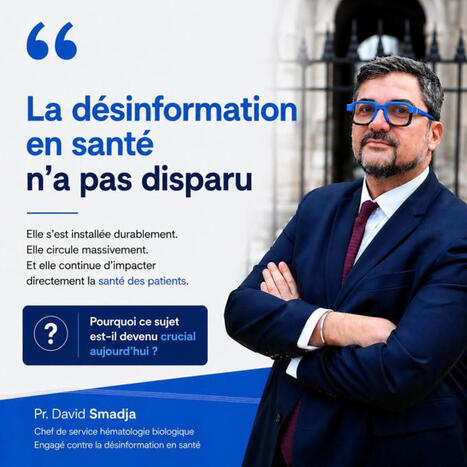
Tout soutien aux activités de David Smadja. Il faut du courage pour propager les bons messages. BRAVO.
|
|
|
Scooped by
Gilbert C FAURE
Today, 7:24 AM
|
It’s a common, misleading refrain in anti-vaccine circles: Childhood vaccines may be unsafe because few if any have been tested in placebo-controlled trials before being approved. But that claim misunderstands the vaccine safety testing process and takes advantage of a narrow definition of a...
|
|
Scooped by
Gilbert C FAURE
Today, 7:21 AM
|
27 April 2026
link: https://lnkd.in/enVKHWNP
The Council of Chief Medical Officers of Health (CCMOH) strongly reaffirms its support for vaccination and its confidence in Canada's established vaccine approval and oversight systems.
Vaccination remains one of the most effective tools for protecting health and preventing disease. Access to clear, transparent, and reliable health information, including information on possible, albeit rare, side effects, is fundamental to empowering individuals to protect themselves and make informed decisions about their health and well-being. The role of healthcare professionals has never been more crucial in this regard, as the spread of misinformation, vaccine hesitancy, and the rapid dissemination of information on social media have made it more difficult for people to identify reliable sources of information.
Canada has a rigorous vaccine regulatory system. Only vaccines reviewed and licensed by Health Canada can be offered in Canada, ensuring they meet the highest standards of safety, efficacy, and product quality. Canada has a comprehensive post-licensed vaccine safety surveillance system and is part of a global network led by the World Health Organization (WHO). This system is able to detect and assess safety issues, take appropriate regulatory action as needed, and rapidly adapt immunization programs when necessary....
#vaccines #work
#publicHealth
|
|
Scooped by
Gilbert C FAURE
Today, 7:19 AM
|
U.S. President Donald Trump has fired all 24 members of the National Science Board, the body that oversees the National Science Foundation.
Many science advocates see it as the latest step by his administration to erode—some would say destroy—the independence of the 76-year-old research agency.
Learn more: https://scim.ag/48r58GF | 132 comments on LinkedIn
|
|
Scooped by
Gilbert C FAURE
Today, 7:17 AM
|
A new study from Harvard and MIT challenges something communications researchers have assumed for years: that persuasion effects fade quickly.
Turns out, one short news article or video clip can shift someone's attitudes in ways that last at least a week. That changes a lot.
🌸 What this means if you work in communications:
1/ Misinformation is stickier than we thought. If someone encountered a misleading frame a week ago, a correction today is fighting an uphill battle. The belief has already had time to settle.
2/ Prebunking likely lasts longer than we assumed too. Getting ahead of misleading content before people encounter it? That protection probably has more staying power than previous research suggested.
3/ Concrete beliefs outlast vague ones. Campaigns that move people toward a specific, tangible position produce more durable change than ones that nudge general sentiment.
4/ You do not need to bombard people. A single well-crafted exposure can have real staying power.
⏰ The uncomfortable finding:
Our confidence in both prebunking and debunking is probably slightly overestimated. Not because the interventions do not work, but because they have mostly been tested in clean, short lab conditions.
We do not actually know how corrections hold up against repeated re-exposure to the original misinformation. Someone gets debunked on Monday, then sees the original misleading frame again on Wednesday and Friday. Does the correction stick? Testing this properly is currently beyond what research can afford to do.
Real-world misinformation exposure is messier, longer, and more repetitive than any study captures.
The effects that actually move people are more durable than we gave them credit for. That raises the stakes for communication campaigns. In both directions.
|
|
Scooped by
Gilbert C FAURE
Today, 7:16 AM
|
This post is too long, but either the opening or the conclusion should give you what you need.I wanted to also provide a thorough legal explanation for those who want it.
"In January 2026, the anti-vaccine organization Children’s Health Defense(CHD) sued the American Academy of Pediatrics (AAP), claiming that the AAP’s decades-long effort to encourage immunizing children is a racketeering enterprise equivalent to tobacco companies’ decades-long efforts to mask the harms of tobacco. CHD claimed this violates the Racketeer Influenced and Corrupt Organizations Act (RICO), an act designed to target organized crime. Yes, you read that right.
The case is titled Shaw v. AAP, after the lead plaintiff, Andrea Shaw, but because CHD brought the case and is leading it, I’ll focus on them. Andrea Shaw is a parent who lost her twin children and blames vaccines, though, as far as I know, the cause of death is not yet established, and the police are still investigating the deaths, and she was put as the lead plaintiff.
The lawsuit is a tissue of strange conspiracy theories and false claims woven together to try to make a professional organization’s support for protecting children from disease sound like something nefarious. It treats AAP, pharmaceutical companies, Dr. Paul Offit, and the government as part of a large nebulous conspiracy, without distinguishing between the actions of each, and makes claims that are as legally spurious as they are factually unsound.
While courts need to address claims objectively and seriously, this lawsuit really invites a Last Week Tonight episode or at least a Saturday Night Liveskit.
I think the AAP’s motion to dismiss, filed on April 3, 2026, captures the problem exactly when it says:
This lawsuit is the latest missive in a campaign targeting the American Academy of Pediatrics and its use of science-backed evidence in vaccine policy. Summarizing the case exposes the absurdity and recklessness—not to mention the legal deficiencies—of its allegations.
In short, Plaintiffs allege that a non-profit organization dedicated to promoting children’s health—including by providing guidance about childhood vaccines—has perpetrated multiple criminal frauds as part of a wide-ranging and long-running criminal racketeering enterprise. That is because [CHD]… disagrees with decades of evidence-backed medicine and science and, unable to prevail through scientific discourse and debate, has instead chosen to weaponize the RICO statute to silence its opponents.
This post will explain what RICO is, the claims in the lawsuit, and some of the problems in the lawsuit."
https://lnkd.in/dDUx_-u5
|
|
Scooped by
Gilbert C FAURE
Today, 7:13 AM
|
|
|
Scooped by
Gilbert C FAURE
Today, 7:09 AM
|
Vaccination au collège – Vos droits en tant que parents
Nous avons mis en place une campagne d’information à destination des parents sur leurs droits et libertés fondamentaux applicables lor
|
|
Scooped by
Gilbert C FAURE
Today, 7:07 AM
|
Measles in Neonates: A Hidden Indicator of Immunization Gaps
Measles is often seen as a childhood disease—but what happens when it affects those who haven’t even had the chance to be protected?
Neonates are among the most vulnerable. Too young for routine vaccination, they rely entirely on maternal antibodies and the strength of community immunity. When a newborn contracts measles, it is rarely just an isolated clinical event—it is a warning sign. A signal that something, somewhere in the immunization chain, has failed.
In many low-resource and rural settings, I’ve witnessed firsthand how gaps in maternal immunization, limited antenatal care access, and missed vaccination opportunities create silent pathways for infection. These are not just system failures—they are missed chances to protect life at its very beginning.
Neonatal measles often presents severely, with higher risks of complications, hospitalization, and even death. Yet, it remains under-discussed in global health conversations.
So, what must we do?
- Strengthen routine immunization systems
- Prioritize maternal vaccination and antenatal care
- Close equity gaps in hard-to-reach communities
- Improve surveillance to capture early-life infections
Every case of measles in a newborn should prompt a deeper question: Who did we miss, and how do we prevent the next one?
Ending measles starts long before a child is eligible for a vaccine—it begins with protecting mothers, strengthening systems, and ensuring no community is left behind.
|
|
Scooped by
Gilbert C FAURE
Today, 7:04 AM
|
A more likely explanation for an uptick in cancer rates than vaccine induced turbo cancer is that we are finally seeing the predicted rebound in cancer diagnoses after the COVID pandemic. https://lnkd.in/gNUZWRGK
|
|
Scooped by
Gilbert C FAURE
Today, 7:02 AM
|
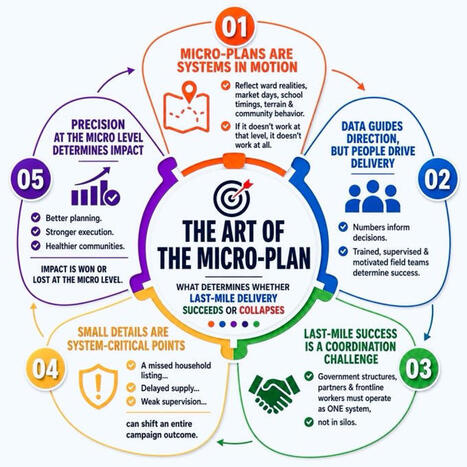
Most immunization campaigns fail, not from lack of strategy, but from weak micro-planning.
The Art of the Micro-Plan: What determines whether last-mile immunization succeeds or collapses
In public health, the strategy is rarely the problem.
Execution is.
And execution lives in the micro-plan.
1. Micro-plans are not documents—they are systems in motion
They must reflect ward realities, market days, school timings, terrain, settlement patterns, and community behavior.
If it does not work at that level, it does not work at all.
2. Data guides direction, but people drive delivery
Numbers inform decisions, but trained, supervised, and motivated vaccination teams determine success.
3. Last-mile immunization is a coordination challenge
Government structures, partners, supervisors, and frontline health workers must operate as one system, not in silos.
4. Small details are system critical points
A missed household listing, delayed vaccine supply, poor session planning, or weak supervision can shift an entire campaign outcome.
In large-scale immunization and outbreak response, the difference between success and failure is rarely strategy.
It is precision at the micro level.
That is where impact is won or lost.
What has been the biggest micro-planning challenge you’ve seen in immunization campaigns or outbreak response?
#Immunization #PublicHealth #GlobalHealth #HealthSystems #OutbreakResponse #Vaccination #HealthSecurity #Epidemiology #PrimaryHealthcare #LastMileDelivery
|
|
Scooped by
Gilbert C FAURE
Today, 6:58 AM
|
A more nuanced explanation for measles outbreaks than just ‘misinformation’.
|
|
Scooped by
Gilbert C FAURE
Today, 6:56 AM
|
Worldwide, 1 in 5 children are either zero dose (unvaccinated)or under vaccinated, but this global average hides substantial inequities across countries and within countries, explains Dr. Ibrahim Dadari in #pas2026.
A main driver of this story is underinvestment and inequities that deprive children from access to vaccines.
|
|
Scooped by
Gilbert C FAURE
Today, 6:54 AM
|
How we talk about #vaccination matters — including for #OlderAdults.
Our new VITAL project website – launched last week – includes #EvidenceInformed, practical resources to support better conversations between healthcare workers and older people about vaccination. For example, we used a Cochrane qualitative #EvidenceSynthesis to develop a set of practical questions and prompts intended to support health service managers and planners when they’re designing or implementing vaccination #communication strategies. You can explore the resources here:
https://www.vitaledu.eu/en
Take a look — and let us know how we can make the site even better.
#HealthCommunication #EvidenceInformed #PublicHealth #DecisionMaking
Jim Janimak Aura Timen Francesco Nicoli Johanna Kintrup Freek de Haan Anna Czwarno NTNU i Ålesund NTNU Faculty of Medicine and Health Sciences Norwegian Institute of Public Health Claire Glenton
|


 Scoop.it!