A study from Burkina Faso found that areas with high vaccination coverage had 10% higher school enrolment than areas without, while primary school completion increased by about 13%. This is part of mounting evidence demonstrating how vaccines don’t just save lives, they shape children’s futures.
So how do #VaccinesWork to help children progress through school and have more career opportunities? https://bit.ly/3Ovve4i
Notre proposition « Désinformation Vaccinale: Curation, Observatoire, Littératies » a été retenue pour le séminaire annuel de l’Académie des Controverses et de la Communication Sensible, intitulé « La désinformation : nouvelles formes, nouveaux défis », qui s'est tenu à Paris le mardi 26 novembre 2024.
Voir ci-après posts du 27 novembre, avec lien vers la présentation sur Slideshare.
Présentation le 20 mars 2025 à InfoxsurSeine deux jours pour décrypter la désinformation et échanger autour des solutions. Quels outils concrets face aux manipulations de l’information et à l’essor de l’IA générative ?
Avez vous acheté le numéro Juillet/septembre 2025 de la RECHERCHE sur LE FAUX?
des sujets à approfondir
- Vaccins et argent Making money with vaccines, against vaccines
le sujet le plus chaud, de 3,36 euros par mois à 300 millions de dollars?
- Publications vraies et fausses particulièrement difficile
- Obligations, exemptions, incitations, peut-être plus simple?
The topic addresses Fake news as a global problem, extracting material focusing on vaccinations, vaccination hesitancy and anti-vax attitudes. The subject is evolving constantly with health consequences all over the world.
This topic became a research action project at CREM (Centre de Recherche sur les médiations)
Ir covers not only Fake News still thriving on the internet,
but also efforts of many (supranational bodies, scientific societies, researchers...) to improve health literacies of laypeople, and medical students on this sensitive topic...
Fake News related to Covid and Vaccinations slightly decreased compared to other topics such as ukrainian war, gaza war, and politics in USA even sports related informations... but the involvement of politicians in the topic very much increased !
Unfortunately, as Jonathan Swift so eloquently said: Reasoning will never make a man correct an ill opinion, which by reasoning he never acquired.
“The greatest enemy of knowledge is not ignorance; it is the illusion of knowledge.” — Daniel J. Boorstin
What Implementation Strategies Can Help To Improve Vaccine Uptake?
Improving vaccine uptake remains one of the most impactful and increasingly complex challenges in modern healthcare.
This article highlights strategies that can be implemented to increase vaccine acceptance and uptake including case studies from the Maternal Vaccination Service, South Warwickshire University NHS Foundation Trust and UHCW Maternity Vaccination Service.
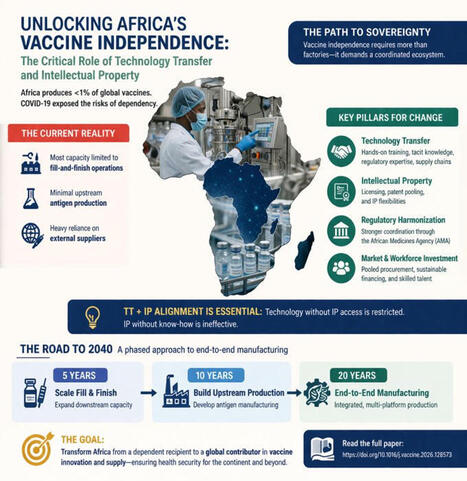
📢 New Publication alert: Unlocking Africa's Vaccine Independence: The Critical Role of Technology Transfer and Intellectual Property.
I am pleased to share our latest policy and systems-level analysis article, led by Prof. Claude Mambo Muvunyi, published by Elsevier's Vaccine, focusing on how Africa can achieve vaccine independence through the combined role of technology, regulation, and market structures.
🌍 Why this matters The experience of COVID-19 exposed structural vulnerabilities in global vaccine access, particularly for Africa, which produces less than 1% of the vaccines it uses. This paper examines what it will take to transition toward sustainable, end-to-end vaccine manufacturing and proposes the realistic phases in a series of 5, 10, and 20 years towards achieving Agenda 2040.
🔍 Key insights from the paper:
👉 Explains why current progress in Africa is still largely confined to “fill-and-finish” manufacturing, with minimal upstream production of vaccine antigens 👉 Argues that technology transfer (TT) must go beyond written protocols to include hands-on expertise, tacit knowledge, regulatory dossiers, and supply chain integration 👉 Highlights the importance of intellectual property (IP) mechanisms such as licensing and patent pooling to enable legal and sustainable local production 👉 Demonstrates that TT and IP must be aligned, as neither alone can deliver functional manufacturing capacity 👉 Draws lessons from established ecosystems in Europe and the U.S. to show how integrated manufacturing clusters, strong regulation, and public financing drive success 👉 Identifies key barriers in Africa, including regulatory fragmentation, supply chain dependency, a limited skilled workforce, and uncertain market demand 👉 Proposes a systems framework involving regional coordination, regulatory harmonization through the African Medicines Agency, and pooled procurement mechanisms 👉 Outlines a phased pathway toward 2040, where Africa progressively moves from fill-and-finish to full end-to-end vaccine manufacturing
👏 Congratulations to the entire team Pierre Gashema BSc, MSc Patrick Gad IRADUKUNDA, BSc., MSc. Jean Claude Rudacogora Emmanuel Siddig Shema Hugor MBBS MSc Dr. Radjabu BIGIRIMANA Jean De Dieu HARELIMANA Mina Adel Louis Prof. Claude Mambo Muvunyi
Africa CDC Rwanda Food and Drugs Authority Rwanda Biomedical Centre 📖 Read the full article: https://lnkd.in/dEjETnKX
How can countries make informed immunization decisions without local delivery cost data?
This pre-print modeling analysis provides standardized delivery cost estimates across LMICs for routine childhood immunization, routine adolescent immunization, and mass campaigns.
Key findings: 👶 Routine childhood delivery: $5.86 economic cost per dose 🏫 Routine adolescent delivery: $17.65 per dose: the highest among delivery platforms 📣 Campaign delivery: $3.13 per dose: the lowest on average 💵 Financial costs are substantially lower than economic costs across all modalities 🌍 Costs vary widely by country context, reflecting differences in scale, infrastructure, and delivery strategies
Standardized estimates like these offer a practical solution where local data are missing, but also highlight the need for continued investment in primary costing studies.
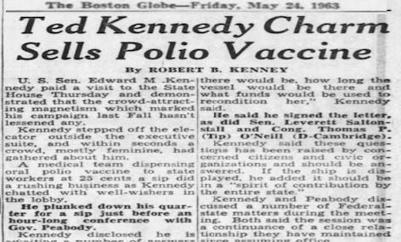
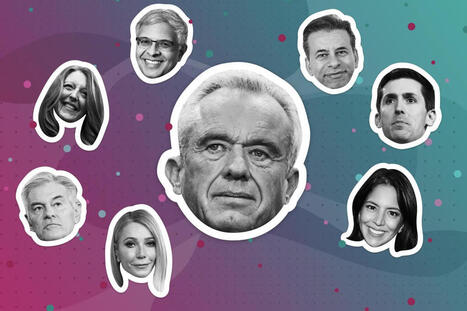
Remember when that good old Kennedy family charm would be put to good use? How did we go from working to get kids vaccinated to working to take away those same vaccines?
Cette semaine dans ma newsletter : les joueurs de pipeau. Ceux qui vous jouent une musique si agréable que vous ne pensez pas à vérifier s'ils savent vraiment en jouer. En santé, ça s'appelle un faux expert. Et ça coûte cher.
Certains ont un stéthoscope. Certains ont un doctorat. Certains ont juste… un micro et une conviction très solide.
Dans la dernière édition des clés, j'ai cartographié 6 profils de faux experts en santé : → L'expert déplacé → Le scientifique dissident (alias le "je suis le nouveau Galilée") → Le citoyen auto-proclamé → L'influenceur entrepreneurial → Le pseudo-thérapeute à tendance gourou → L'expert politique
Malheureusement, ni le titre de docteur ni celui de "spécialiste" ne protègent contre l'ultracrépidarianisme ou les crises d'ego.
L'idée est toujours la même : en tant qu'acteur de santé, plus vite on repère le faux expert, plus vite on dit stop à l'infox.
Et bonus, une méthode rigolote avec 10 questions pour évaluer l’« expertitude » d’un discours d’expert avant d’accorder votre confiance.
⬇️ Le lien vers l'édition complète est en commentaire !
The VFC program has saved millions of lives and has led to societal savings of $2.7 trillion! So why do Aaron Siri and Danica Patrick seem to have a problem with it? https://lnkd.in/g7YK-DJb
Cardinal sin ? This image, once analyzed closely, is not bad, not terrible, it is purely blasphemous. Any person with one ounce of a religion fiber should be extremely worried to see the President posting such.
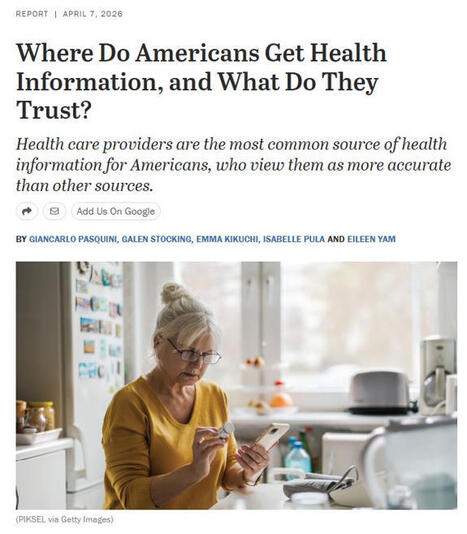
A recent Pew Research Center survey of over 5,000 U.S. adults reveals a troubling pattern in how Americans get health information. Uninsured Americans are far less likely to get health information from healthcare professionals, with only 25% doing so often compared to 54% of insured Americans. Instead, they're more likely to turn to social media and AI chatbots.
The survey doesn't tell us why, but limited access to the healthcare system may play a role. Only 7% of all surveyed social media users rated health information from these platforms as highly accurate. Yet among uninsured social media users, that figure jumped to 17%, nearly 3x the rate of insured users. For uninsured Americans, fewer clinician visits may mean less exposure to reliable health information and fewer opportunities to develop the skills to recognize it elsewhere.
What can we do about it?
Clinicians: ask patients where they're getting health information, without judgment. Someone turning to TikTok isn't necessarily being reckless; they're trying to be resourceful. Work through what they found together and point them toward sources you trust.
Science communicators: consider where your content lives and who can access it. Paywalls and sign-up gates may seem minor, but for people with limited access to the healthcare system, free and findable online content may be the only vetted health information they encounter.
Everyone: before sharing health information, check the source. Is it from a clinician, a peer-reviewed study, or a reputable organization? Free, reliable health information exists alongside a lot that isn't, and the two aren't always easy to tell apart. When you find content you trust, share it widely. That's exactly what Unbiased Science is here for. All our content is free and evidence-based.
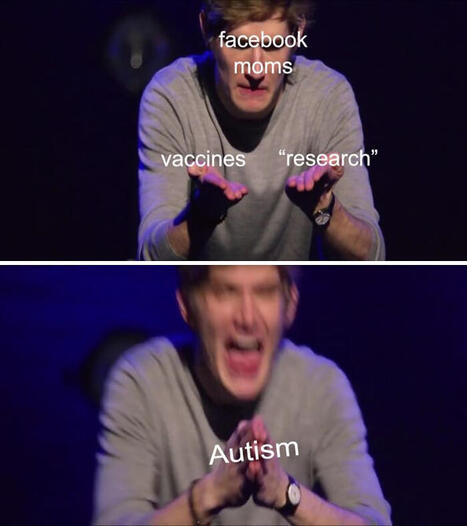
Facebook moms are a different breed: they'll proudly announce their kid is unvaccinated, call you out for your vaccinated child to be "contagious," and then go back home and disinfect a wound with colloidal silver.
Shane Crotty (La Jolla Institute for Immunology) gives a comprehensive scientific review of immunological memory to vaccines with an emphasis on human vaccines and in humans.
This review covers the key adaptive immune components involved in vaccine-mediated protective immunity: B cells, CD8+ T cells, CD4+ T cells, and antibodies.
The video lecture will cover the same material as the written review (https://www.cell.com/immunity/fulltext/S1074-7613(26)00089-0) but is not a verbatim recitation of the review article. In the interest of flow, the video lecture will have very few citations. All citations are included in the written review; please refer to the review for references.
Video Chapters 00:00 Introduction to Immunological Memory 02:10 Introduction: Vaccine Impact on Health 05:55 Introduction: Circulating and Tissue Resident Memory Cells 06:06 Layers of Immune Protection 09:00 B-cell memory to vaccines: Introduction 09:50 B-cell memory to vaccines: Durability 35:12 B-cell memory to vaccines: Functionalities 56:00 B-cell memory to vaccines: Hybrid immunity and tissue resident memory 1:06:33 CD8 T-cell memory to vaccines: Durability 1:12:45 CD8 T-cell memory to vaccines: Functionalities 1:15:49 CD8 T-cell memory to vaccines: Durability part 2 1:17:27 CD8 T-cell memory to vaccines: Hybrid immunity and tissue resident memory 1:22:53 CD8 T-cell memory to vaccines: Summary 1:26:02 CD4 T-cell memory to vaccines: Durability 1:29:53 CD4 T-cell memory to vaccines: Functionalities 1:38:45 CD4 T-cell memory to vaccines: Hybrid immunity and tissue resident memory 1:43:15 CD4 T-cell memory to vaccines: Summary 1:44:58 Antibody memory to vaccines: Introduction 1:46:16 Antibody memory to vaccines: Durability 2:09:27 Antibody memory to vaccines: Functionalities 2:09:47 Antibody memory to vaccines: Hybrid immunity and tissue memory 2:15:04 Antibody memory to vaccines: Summary 2:16:05 Holistic understanding of immune memory to vaccines
🛠️ Tool of the Week: Practical Resources for Immunization Economics
How do we measure inequity in vaccination when multiple factors shape access?
This week we highlight the Vaccine Economics Research for Sustainability & Equity (VERSE) toolkit, developed by Johns Hopkins Bloomberg School of Public Health to provide a standardized approach for measuring multivariate equity in vaccination coverage, cost-of-illness, and health outcomes.
The resource addresses the need for more comprehensive equity measurement, capturing multiple dimensions of disadvantage rather than relying on single indicators.
The resource helps users: 📊 Measure equity using a composite index that combines multiple determinants (e.g., socioeconomic status, maternal education, geography) ⚖️ Quantify both relative inequality (concentration index) and absolute gaps between advantaged and disadvantaged groups 🧠 Identify key drivers of inequity through decomposition analysis (e.g., maternal education, wealth) 🌍 Compare equity across outcomes, including vaccination coverage, zero-dose status, and health or economic outcomes 📈 Track changes in equity over time and assess trade-offs between coverage and equity using visualization tools
By moving beyond single-dimension measures, the VERSE toolkit supports more nuanced analysis of who is being left behind, helping inform more targeted and equitable immunization strategies.
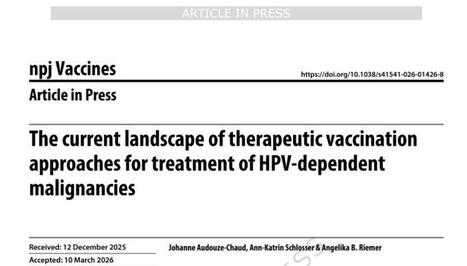
#VAXVOICE #POSTS @vaxvoice.org HPV PHARMACCINES LANDSCAPE "This review provide s an overview of current therapeutic human papillomavirus (HPV) vaccination approaches. We review important criteria for their development, and present vaccines currently being actively followed in clinical trials, for precursor lesions or established cancers. Subsequently, we list approaches that reached clinical trial stage but were abandoned. Lastly, we discuss promising preclinical studies. We conclude with a brief overview of novel in silico tools developed to enhance vaccine design." https://lnkd.in/dXaKbe2M
Did you know that the Politico Vaccine Hesitancy Poll found that the majority thought that parents should be required to vaccinate their kids against dangerous diseases to protect them and their community?
It's highly unlikely that MAHA and science-based public health can ever "get along," at least not as long as MAHA embraces quackery and antivax pseudoscience. Unfortunately, that didn’t stop STAT from ignoring the elephant in the room, vaccines, in search of a “kumbaya” moment between MAHA and public health. https://lnkd.in/gzeamVWT
📌 Pour la 2e fois en Europe, la désinformation est mesurée scientifiquement. Et le constat s'aggrave. Explication.
Six mois après une première vague déjà très instructive, le 2e rapport SIMODS (Structural Indicators to Monitor Online Disinformation Scientifically) confirme une dégradation nette de l’environnement informationnel sur plusieurs grandes plateformes.
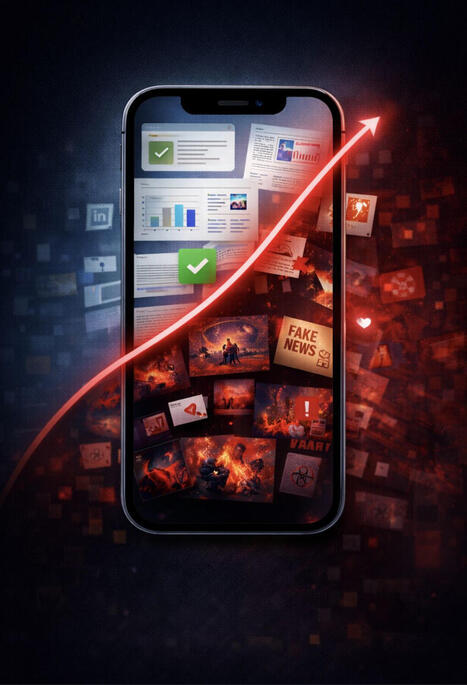
⚠️ Sur TikTok, X/Twitter et YouTube, les contenus problématiques sont désormais plus nombreux que les contenus crédibles sur les sujets d’intérêt public.
❌ Ce que montrent les données : → Sur X/Twitter, les comptes peu crédibles génèrent 10 fois plus d’engagement qu’une source crédible de taille comparable. Sur YouTube, cette prime à la désinformation atteint 11. → Sur TikTok, 25 % des contenus observés sur les sujets d’intérêt public contiennent des informations fausses ou trompeuses. → Une part croissante de cette désinformation intègre désormais des éléments générés par IA, en particulier sur TikTok et YouTube.
↳ Les enseignements à tirer : → Le faux n’est pas seulement présent, il est avantagé → L’IA accélère la production de contenus trompeurs → Le sujet ne relève pas seulement de la modération, il tient aussi aux choix de conception algorithmique.
✅ LinkedIn reste une exception. Environ 1 % de contenus trompeurs. Pas de prime statistiquement significative à la désinformation. Une autre logique de plateforme est donc possible. | 16 comments on LinkedIn
One-off flu clinics are not a vaccination strategy.
When vaccination is treated as a one off clinic, programs often fail because: - consent is incomplete - eligible residents are missed - documentation is inconsistent - follow up doses are not coordinated - coverage is never measured
The result is a clinic that occurs, but population protection is never achieved.
This means continuous eligibility tracking so organisations know who is eligible, who has consent, who has been vaccinated and who still requires vaccination.
Consent should be managed through centralised systems so residents are ready before clinics occur.
Clinics should occur as part of an ongoing program rather than a single event.
Organisations also need visibility of: - vaccination uptake - missed residents and upcoming eligibility
Without measurement, coverage cannot be improved.
The Vaccination Hub was built around a simple principle:
Vaccination success is not about running clinics. It is about coordinating protection.
Our role is to provide the systems that ensure eligible individuals are identified, consent is obtained, clinics are coordinated, vaccinations are documented, and coverage is monitored.
This removes the administrative burden from clinicians and ensures vaccination programs achieve their intended outcome.
used as a sobriquet for a new type of journalism cropping up in the US, where local news websites, many of which had gone out of business, were bought or cloned or mimicked and used for the purposes of disinformation or propaganda, sometimes domestic but more often international and almost always right-leaning. What looks like a local Philly news website might sandwich an anti-vax article between stories about food stalls and council meetings. A report by media analysis company NewsGuard suggests there are more pink slime outlets operating in America – over 1,200 – than there are legitimate local news websites. And what happens in the US must surely happen here.
Aux États-Unis, les théories conspirationnistes prennent de plus en plus de place dans le domaine de la santé 😷❌ TV5MONDE est allé enquêter sur la désinformation sanitaire et le complotisme qui font partie de la nouvelle doctrine américaine depuis le retour de Donald Trump à la Maison Blanche en janvier 2025 et la nomination de Robert F. Kennedy, militant antivaccins notoire, à la tête du ministère de la Santé.
🔍 L'enquête dans son ensemble « l’Amérique malade de la désinformation médicale » sera disponible ce jeudi sur les chaînes Youtube de TV5MONDE !
Première chaîne mondiale en langue française, TV5MONDE propose une information fiable, multilatérale et internationale. Notre mission :
• promouvoir la création francophone et la diversité culturelle, • offrir une information vérifiée issue de toutes les régions du monde, • mettre en lumière les enjeux contemporains : politique, économie, culture, société, environnement, sport et innovations.
Sur cette chaîne YouTube, retrouvez :
• nos journaux télévisés (Le Journal de l’Afrique, 64’), • nos reportages, analyses et entretiens, • nos émissions culturelles, linguistiques, sociétales et documentaires.
🔗 SUIVEZ TV5MONDE SUR TOUS NOS RÉSEAUX & PLATEFORMES
The extraordinary success of vaccines saving lives and improving human health is predicated on immune memory. Within the armamentarium of adaptive imm…
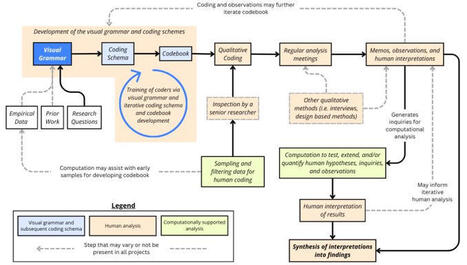
PhD student Nina Lutz, who has been a member of my lab for the last three years, will present a paper tomorrow (at CHI 2026) documenting her methodological approach for analyzing visual content on social media. Since she showed up on the UW campus, Nina has been building pipelines that integrate computational and qualitative analysis to support collaborative teams (4-10 researchers) studying visual propaganda online. I'm very proud of her for this work, which was initially rejected from CHI 2025, heavily revised, and then selected as a "Best Paper" for CHI 2026.
To get content containing either thought or leadership enter:
To get content containing both thought and leadership enter:
To get content containing the expression thought leadership enter:
You can enter several keywords and you can refine them whenever you want. Our suggestion engine uses more signals but entering a few keywords here will rapidly give you great content to curate.





 Your new post is loading...