Your new post is loading...

|
Rescooped by
Gilbert C FAURE
from Immunology and Biotherapies
January 30, 2020 1:15 PM
|
Point of view of an Immunologist/curator in 2020 Après Bobcatsss 2020, ECIL 2021, ICDF 2022, HESIVAXs with the motto UTA "Understand to Act" Notre proposition « Désinformation Vaccinale: Curation, Observatoire, Littératies » a été retenue pour le séminaire annuel de l’Académie des Controverses et de la Communication Sensible, intitulé « La désinformation : nouvelles formes, nouveaux défis », qui s'est tenu à Paris le mardi 26 novembre 2024. Voir ci-après posts du 27 novembre, avec lien vers la présentation sur Slideshare. Présentation le 20 mars 2025 à InfoxsurSeine deux jours pour décrypter la désinformation et échanger autour des solutions.
Quels outils concrets face aux manipulations de l’information et à l’essor de l’IA générative ? Avez vous acheté le numéro Juillet/septembre 2025 de la RECHERCHE sur LE FAUX? des sujets à approfondir - Vaccins et argent Making money with vaccines, against vaccines le sujet le plus chaud, de 3,36 euros par mois à 300 millions de dollars? - Publications vraies et fausses particulièrement difficile - Obligations, exemptions, incitations, peut-être plus simple?
|
|
Scooped by
Gilbert C FAURE
Today, 1:41 PM
|
Recently I found myself trapped on a plane next to someone who, within minutes of takeoff, wanted to debate vaccines for the entire two-hour flight.
Honestly, I didn’t want to engage. Not because I didn’t care, but because my tank was already empty after several days of heavy vaccine conversations.
That reluctance has a name: conversation fatigue. And it’s something we don’t talk about enough in medicine and public health.
It’s what happens when you’ve been having the same emotionally heavy, high-stakes conversation on repeat, against an information environment that had hours with your patients before you got five minutes.
New post in Community Immunity today on what it costs us, and how to keep going.
🔗 Link in comments
|
|
Scooped by
Gilbert C FAURE
Today, 11:41 AM
|
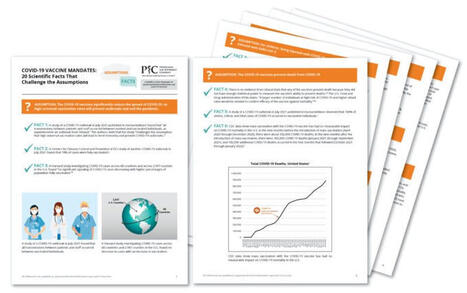
COVID-19 VACCINE MANDATES: 21 Scientific Facts That Challenge the Assumptions - Physicians for Informed Consent: Education.
|
|
Scooped by
Gilbert C FAURE
Today, 10:45 AM
|
The Danger of "Magic Cures": A Critical Look at Mebendazole and Ivermectin
In recent years, we have witnessed a concerning surge in the promotion of mebendazole and ivermectin as "miracle drugs" for conditions far beyond their intended use. These medications, originally developed as antiparasitics for humans and animals, are frequently touted by social media influencers, individuals with limited medical backgrounds, and even some licensed physicians who attribute near-magical properties to them.
While it is tempting to believe in a simple, low-cost solution for complex diseases like cancer or viral infections, we must separate digital hype from clinical reality.
1. Therapeutic Grade vs. Home Remedies
Our bodies are complex biological systems. When we fall ill, we require substances prepared with pharmaceutical-grade active ingredients. There is a fundamental difference between a controlled laboratory formulation and a homemade infusion or a "fungus drink."
Precision: Medications must have a specific concentration to be effective without being toxic.
Safety: The dosage must be strictly regulated by a qualified physician who understands the pharmacokinetics of the drug.
2. The Risk of Off-Label and Veterinary Use
We are currently "flooded" with information that purports to guide the sick, but much of it is dangerously inaccurate. One of the most prevalent trends involves using medications designed for pets or livestock.
While substances like mebendazole or ivermectin are being studied for potential secondary effects in oncology, they are not without significant risks. The primary concern is hepatotoxicity. These drugs can cause severe alterations in liver function, leading to long-term damage that may complicate a patient's primary condition. Using a "magic" shortcut today could lead to organ failure tomorrow.
3. Financial Interests and Misinformation
It is vital to remain skeptical of "experts" or commentators who seem more interested in selling a lifestyle, a supplement, or a controversial viewpoint than in patient safety. Their opinions are often profit-driven and do not constitute a solution to your specific health problems.
4. Personalization: You Are Unique
Medicine is not "one size fits all." Your body, your medical history, and your current condition are unique. A treatment that worked for someone in a viral video—or was tested in a petri dish—may be contraindicated for you based on your: Genetics and metabolism. Existing liver or kidney function.
Interactions with other medications.
The Bottom Line: Don’t let the noise of the internet dictate your health. Leave the "magic properties" to fiction and trust in science-based medicine. Your treatment must be prescribed by a professional who understands your specific organism and the rigorous science behind the chemicals you ingest.
| 113 comments on LinkedIn
|
|
Scooped by
Gilbert C FAURE
Today, 10:33 AM
|
Every day, fact-checkers at Reuters, Snopes.com, PolitiFact, AFP, BOOM Live, Lead Stories and 100+ other organizations debunk fake and AI-generated images. Their work is scattered across dozens of websites in different languages.
I've been collecting these debunked images since February — currently 1,110 entries across 6 categories: fake images, AI-generated content, manipulated photos, false context, satire, and debunked claims.
Today we're making this database freely searchable. You can filter by category, search by name (Trump, Epstein, Musk) or place (Iran, Gaza, Los Angeles), and every result links directly to the source fact-check.
Behind the scenes, ImageWhisperer uses this same database to automatically flag known fakes during analysis — matching uploaded images against all 1,110 entries using perceptual hashing and CLIP embeddings in under 30ms.
No login. No paywall.
https://lnkd.in/e5cdG4cQ
|
|
Scooped by
Gilbert C FAURE
Today, 10:31 AM
|
Our new research on the effect of personal access to medical expertise on vaccine uptake is available as an NBER working paper now! Joint work with D. Mark Anderson, Daniel Rees and Raymond Montizaan.
Using data on applicants to Dutch medical schools and their older relatives (i.e., parents, aunts, and uncles ages 60+), we estimate the effect of personal access to medical expertise on vaccine hesitancy. Leveraging variation in lottery outcomes that determine admission to medical schools, we find that having a physician in the family increases the likelihood of complying with government recommendations that anyone over the age of 59 receive a second booster dose of a COVID-19 vaccine. Our estimated effects are strongest for having a female physician in the family, suggesting important gender-based differences in how medical expertise is communicated.
Link to paper: https://lnkd.in/eqGZ3ur6
|
|
Scooped by
Gilbert C FAURE
Today, 5:03 AM
|
|
|
Scooped by
Gilbert C FAURE
Today, 5:00 AM
|
Misinformation has major macroeconomic impacts (Cyprus Mail):
https://lnkd.in/dvrn4Ujt
Glimpse: According to the article, misinformation poses a serious threat to the economy in addition to being a social or political problem. The text emphasizes how inaccurate or misleading information, particularly when spread digitally, can overburden public institutions, lower productivity, and skew decision-making. Misinformation about health alone can cost up to $1 trillion a year. The essay also highlights how coordinated disinformation efforts that target investor confidence, important industries, and vital infrastructure can serve as instruments of economic warfare. It concludes that disinformation poses systemic dangers to economic stability and necessitates coordinated institutional and policy responses given their increasing prevalence across nations and settings.
---
Free articles and analyses on soft counter-extremism, against online hate, and on the theory of mis-/disinformation (usually third-party content). Two-week reviews available via the following three Policyinstitute.net websites:
• counter-terrorism.org
• preventhate.org
• strategism.org
The most recent LinkedIn posts on the above subjects, with glimpses, can be accessed via:
• https://lnkd.in/eBarZAew
The views expressed in this post is that of the author(s) of the source content and do not necessarily represent those of Policyinstitute.net and its staff. While we carefully produce the glimpses to the articles, documents, or recordings that we hyperlink, we are not responsible for textual changes nor for imponderable parts of the original items.
#policyinstitutenet #preventradicalization #preventextremism #counterextremism #preventhate #disinformation #misinformation
|
|
Scooped by
Gilbert C FAURE
Today, 4:54 AM
|
Vaccine adherence: small act, global impact.
More than 150 million lives have been saved by vaccines since 1974.
Science made it possible, but it is everyday practice that sustains that impact.
At CMEPEDIA, we offer free, independent CME courses designed to support real-world clinical decision-making. Our modules on Rabies Vaccination in India and Pneumonia Vaccination in India bring together current guidelines, practical approaches, and strategies to improve vaccine adherence in everyday practice.
Every dose administered, every schedule followed, every patient conversation—these are the moments where global health outcomes are shaped.
Yet in practice, challenges persist. Vaccine hesitancy, uncertainty around eligibility, and gaps in implementation continue to affect uptake.
For healthcare professionals, staying updated is not optional. It directly influences outcomes.
Because improving adherence does not start with policy. It starts with informed care.
Create a free account on Cmepedia and start learning.
https://lnkd.in/gx9F76QD
Learn More:
https://www.cmepedia.com/
World Health Organization
#worldhealthday
|
|
Scooped by
Gilbert C FAURE
Today, 4:51 AM
|
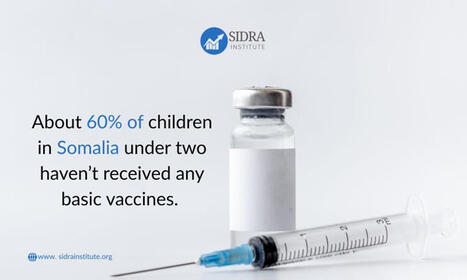
Children in #Somalia remain unvaccinated or "zero-dose" primarily due to a combination of systemic, sociocultural, geographic, and security-related factors. These include:
▶️Insecurity and Conflict: Ongoing violence and instability restrict access to certain areas, such as conflict zones controlled by groups like Al-Shabaab, making it difficult for health services to reach children.
▶️Limited and Fragmented Service Delivery: Health infrastructure is weak, with poor health infrastructure, shortages of health workers, and insufficient logistics and cold chain systems, leading to missed opportunities for vaccination.
▶️Poor Data and Monitoring: Limited reliability and quality of immunization coverage data hinder targeted interventions. Without accurate data on who is unvaccinated, efforts remain unfocused.
▶️Sociocultural Factors: Misinformation about vaccines, low parental education, and cultural beliefs lead to vaccine hesitancy and refusal.
▶️Geographic Barriers: Nomadic populations, remote rural areas, and populations living in hard-to-reach zones pose logistical challenges for vaccine delivery.
▶️Displacement and Mobility: Internally displaced persons and nomadic groups frequently move, complicating tracking and consistent vaccination efforts.
▶️Inadequate Policy Focus: Current policies do not sufficiently recognize or tailor interventions for zero-dose and missed populations, leading to gaps in reaching the most vulnerable.
#ChildVaccination #SIDRAPublication #Somalia #ChildHealth #Immunization #VaccinesSaveLives #SomaliChildren
Read more➡️https://bit.ly/4csr1HG
|
|
Scooped by
Gilbert C FAURE
Today, 4:50 AM
|
🔷 Un jeune footballeur s'effondre à l'entrainement ! Un jeune judoka meurt d'une crise cardiaque lors d'un championnat ! Un arbitre de basket meurt à 23 ans en plein match ! Nos médias ont bien compris comment susciter l'attention de leurs lecteurs.
🔹Sous chacune de ces publications tels des étourneaux, des nuées d'antivaccins envahissent les commentaires, tour à tour médecins légistes, détenteurs de données qu'on voudrait nous cacher, toxicologues ou pharmacologues improvisés.
🔹Une étude publiée dans PLOS Medicine en mars 2026 a examiné la relation possible entre la vaccination contre la COVID-19 et le risque de mort subite chez des adultes jeunes en bonne santé âgés de 12 à 50 ans, en Ontario, au Canada.
🔹Ils ont identifié les cas comme des individus décédés subitement hors de l'hôpital ou dans les 24 heures suivant leur admission à l'hôpital avec un diagnostic final d'arrêt cardiaque.
🔹Les analyses statistiques ont démontré que la vaccination COVID-19 n’augmentait pas le risque de mort subite.
🔹Même si cette étude présente des limites, les résultats concordent avec d’autres études internationales qui n’ont pas constaté d’augmentation de mortalité cardiaque subite post-vaccination COVID-19.
Source Plos Medecine Association between COVID-19 vaccination and sudden death in apparently healthy younger individuals
#prévention #vaccination #covid #vaccins #santépublique #décès
|
|
Scooped by
Gilbert C FAURE
Today, 4:47 AM
|
What actually helps more children receive routine vaccines?
In our new study published in BMJ Public Health, we spoke with caregivers and healthcare workers in East New Britain Province, Papua New Guinea to understand the realities behind childhood immunisation.
We found that door-to-door outreach, engaging community and religious leaders, and taking time to explain vaccines to caregivers can make a real difference. At the same time, families face practical barriers such as distance, travel costs and clinics sometimes running out of vaccines.
These findings have already informed locally tailored education materials and training for health workers in the province.
🔗 Explore the research: https://lnkd.in/gucHiw-T
https://lnkd.in/gr2Hk6KS
This work was conducted by Burnet Institute in partnership with the East New Britain Provincial Health Authority, PNG Institute of Medical Research, Papua New Guinea National Department of Health and Murdoch Children's Research Institute (MCRI).
Authors: Willie Pomuat | Ben Sanderson | Ursila Pele Melepia | Athaliah Hannah James | Delmah B. | Lynette Duwaba | Benjamin Paivu | Daniel Wami Willlie | Patrick Kiromat | Ëlsie Stanley Buka | Edward Waramin | Moses Laman | Shelley Walker | Caroline Homer | Leanne Robinson | Michelle Scoullar | Stefanie Vaccher | Prof Margie Danchin
|
|
Scooped by
Gilbert C FAURE
Today, 4:46 AM
|
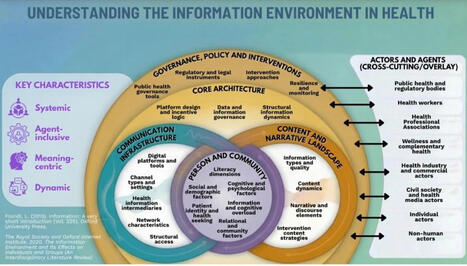
Health is happening inside an information environment
https://lnkd.in/eQj5NWWJ
Excellent blog
Very relevant to misinformation and also to social media
And many other issues in the space
1. Communication still matters, but it now happens inside a much more complex environment
2. Channels and intermediaries do not just carry information, they shape how it lands
3. A lot of the real power sits upstream in the architecture
4. Much of what shapes health information exposure happens before any specific message is even encountered, because platform design, commercial logic, data governance, and algorithmic systems help determine what becomes visible, what becomes repetitive, what becomes normalized, and what remains hard to find
5. Harms need to be understood ecologically, not just item by item
6. End of the blog offers a set of solutions
HT Tina D Purnat
|
|
|
Scooped by
Gilbert C FAURE
Today, 1:42 PM
|
One of my favorite papers got published 🥳 It covers a lot of ground and it’s the best summary of my views on misinformation and what to do about it. Give it a read :)
👉 https://lnkd.in/eWMxbRxh | 16 comments on LinkedIn
|
|
Scooped by
Gilbert C FAURE
Today, 11:54 AM
|
|
|
Scooped by
Gilbert C FAURE
Today, 11:39 AM
|
GenAI raises an urgent pedagogical question for universities: how can we train students to evaluate scientific claims critically when the language of scholarship can be so convincingly simulated?
|
|
Scooped by
Gilbert C FAURE
Today, 10:35 AM
|
📢 Entretien avec Nicolas Berrod pour Le Parisien en marge des Journées Scientifiques de l'ANRS Maladies infectieuses émergentes sur le sujet recherche-fiction de la réponse scientifique et sanitaire à la prochaine pandémie. #PReViX #France_2030 Secrétariat général pour l'investissement
🔬 Avec Laurent Jaboeuf, Hervé Raoul, Natalia M., Eric Quéméneur, Mathieu Molimard.
https://lnkd.in/evTZjFkA
Université de Montpellier CHU de Nîmes
PCCEI Inserm Occitanie Méditerranée
|
|
Scooped by
Gilbert C FAURE
Today, 10:32 AM
|
JOURNEE MONDIALE DE LA SANTE !
Le plus puissant levier de la #prévention en santé ? La #vaccination !
Plus de 150 millions de vies sauvées par les #vaccins en 50 ans.
C’est la #santé et la #science en action.
#médecinepréventive
Zoī
Ismaël EMELIEN, Paul Dupuy, Alice Conques, Tyra Malzy, Antoine Attali, Emile B., Alexandre Hollard, Alaedine Benani, Angia Vaudron
|
|
Scooped by
Gilbert C FAURE
Today, 7:15 AM
|
When JD Vance called his second COVID vaccine dose the worst sickness he'd had in 15 years—complete with heart palpitations and two days in bed—it reignited debate about mRNA side effects. We compare his experience directly to the classified reactogenicity data from the pivotal clinical trials.
============================================
Post Pandemic Dashboard Snapshot
https://lnkd.in/ehAYX_TG
============================================
This video explains the FDA's severity grading system, why these symptoms were anticipated and not labeled "injuries," and the biology of cytokine-driven responses. We also tackle the bigger question: do people with strong initial reactions face higher risks of ongoing issues upon re-exposure to the virus or additional shots? Evidence-based answers included.
You can also find us Here:
Substack: https://lnkd.in/ejXM5s68
Videos: https://lnkd.in/g3vJ8uXx
Courses: https://lnkd.in/ecmtMKhz
Rumble: https://lnkd.in/gG_HmbdN
#covid #medicine #research
|
|
Scooped by
Gilbert C FAURE
Today, 5:01 AM
|
📢 Influence en santé : ce que la réglementation 2026 change vraiment
En 2026, l’influence en santé entre dans une nouvelle phase.
Contrat écrit à partir de 1 000 € HT, prise en compte des avantages en nature, transparence renforcée : le cadre se durcit et professionnalise les collaborations.
Un décryptage complet à découvrir sur Buzz E-santé :
➡️ Un tournant réglementaire pour l’influence commerciale
➡️ Pourquoi la santé est un terrain plus sensible que les autres
➡️ La transparence publicitaire devient non négociable
➡️ Les avantages en nature ne sont plus une zone grise
➡️ En santé, l’influence responsable devient un impératif éditorial
➡️ Ce que cela change pour les marques et les acteurs de santé
➡️ Ce que cela change pour les créateurs de contenus santé
➡️ Vers une nouvelle culture de la preuve et de la responsabilité
Dans un secteur aussi sensible que la santé, cette évolution est majeure.
Elle rappelle qu’une campagne d’influence ne se joue plus seulement sur la visibilité, mais aussi sur la conformité, la responsabilité et la confiance.
🔗 https://lnkd.in/ezcSZ3XB
Charlotte Scordia Warembourg Dominique Noel Charlotte Bouton Caroline Brive Fanny Allaire Fanny Gaudry Frederique SAAS Jérôme Dévé Aurélie ANDRIEUX-BONNEAU LIONEL REICHARDT Caroline T. Eric Phélippeau Denise Silber Emmanuelle Pierga Laurent Mignon Adèle Depoux Julien Montheil Thibaud Guymard Pascal BECACHE Florian Gaudu Sophie Durand Bruno ERHARD Marlène Monnier-Tourtoulou Reynald Deliens Fabienne Prouvost Victoria Morel Flore Gorge-Coudy Robin Bénard
|
|
Scooped by
Gilbert C FAURE
Today, 4:58 AM
|
#Twitter20
Il y a 20 ans, un 21 mars, le premier jour du printemps 2006, Jack Dorsey a envoyé un message de 140 caractères dont personne ne pensait qu’il aurait la moindre importance : "𝙟𝙪𝙨𝙩 𝙨𝙚𝙩𝙩𝙞𝙣𝙜 𝙪𝙥 𝙢𝙮 𝙩𝙬𝙩𝙩𝙧"
Personne ne s’attendait à ce qu’il survive à MySpace, qu’il bouleverse les élections, qu’il alimente des révolutions, qu’il diffuse les informations avant les agences de presse et qu’il devienne le canal de communication en temps réel par défaut sur Internet.
Vingt ans plus tard, la plateforme s'appelle X, vaut 44 milliards de dollars, a un nouveau propriétaire qui compte lui-même 236,8 millions d'abonnés.
Nous avons rassemblé les données significatives sur X-Twitter : Les chiffres révèlent une plateforme qui s'est contractée, transformée et a trouvé un plancher.
Quelques chiffres qui m’ont marqué :
🔹le tweet « Dunk in the Dark » d’Oreo pendant la panne de courant du Super Bowl 2013 a généré 525 millions de dollars d’impressions médiatiques gratuites. Un seul tweet. Moins d’une minute de préparation.
🔹la finale de la Coupe du monde 2022 a généré 24 400 publications par seconde sur X. Aucune autre plateforme n’a jamais produit une telle concentration du public en temps réel autour d’un seul moment.
🔹59,7 % des utilisateurs de X déclarent spécifiquement l'utiliser pour s'informer. Le concurrent le plus proche est Facebook, avec 58,3 %. Mais sur X, l'information est l'objectif principal. Sur Facebook, elle est en concurrence avec la messagerie, les photos et le divertissement.
🔹Dans les 26 pays étudiés, l'algorithme de X en 2025 montre un biais par défaut documenté en faveur des contenus de droite pour les comptes nouveaux ou neutres.
🔹🔹Rapport complet avec une infographie chronologique sur 20 ans
https://lnkd.in/efkkTveT
#XTwitter #PR #SocialMedia #MediaMonitoring #Onclusive
|
|
Scooped by
Gilbert C FAURE
Today, 4:53 AM
|
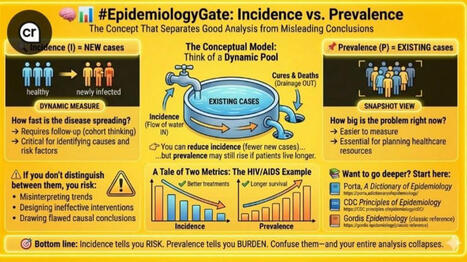
One of the most dangerous mistakes in epidemiology is confusing incidence with prevalence—because the wrong metric can lead to the wrong public health action.
Incidence tells us the risk and speed of disease occurrence: how many new cases are emerging over time. Prevalence, on the other hand, captures the current burden: how many people are living with the condition at a given point.
This distinction is not academic—it is strategic. A disease may show declining incidence but rising prevalence due to improved survival, as seen in chronic HIV care, cancer, and NCD management. Without this nuance, analysts risk misreading progress, misallocating resources, and designing ineffective interventions.
In epidemiology, incidence guides prevention. Prevalence guides planning. The strongest public health decisions begin when we know exactly which question the data is answering.
#Epidemiology #PublicHealth #Biostatistics #DataScience #DiseaseSurveillance #GlobalHealth #HealthSystems #ResearchMethods #HIV #NCDs
|
|
Scooped by
Gilbert C FAURE
Today, 4:51 AM
|
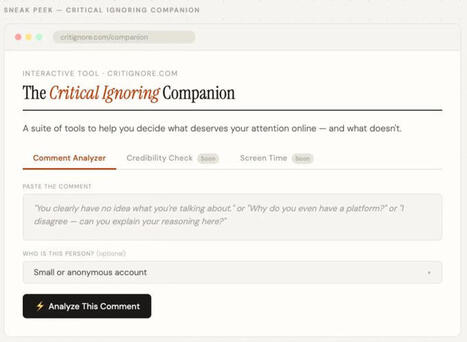
After years of studying misinformation, online attention, and why people fall for bad information, I kept running into the same frustration: the research is solid, but most people need something they can actually use.
So I built some tools!
Today I'm launching two things:
The Misguided Toolkit (https://lnkd.in/g5fnG-7N) — free, research-backed tools for understanding your own biases and information ecosystem. Two are live now: an Identity Map and a Network Diversity Audit.
And IgnoreMore.com — a dedicated suite of tools for protecting your attention online. The flagship tool, the Critical Ignoring Companion, helps you decide in seconds whether a comment is worth your energy: reply, ignore, or block, with a research-grounded explanation.
A 2024 survey found 53% of Gen Z and 46% of millennials doomscroll "a lot" or "some." Research shows people regret at least some of their social media use in 60% of sessions. This isn't a personal failing. It's a structural problem, and these tools are built to help.
All my tools are free and grounded in peer-reviewed research. And they are all in their early versions, so your input helps shape what they become.
👉 ignoremore.com 👉 https://lnkd.in/g5fnG-7N
Happy to answer questions in the comments.
|
|
Scooped by
Gilbert C FAURE
Today, 4:48 AM
|
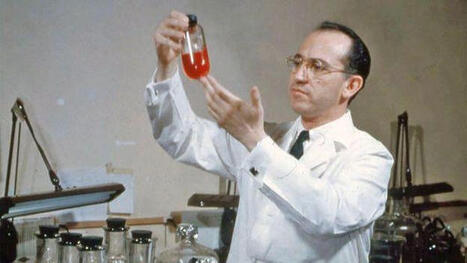
On 12 April 1955, Dr Jonas Salk announced that his vaccine was safe and effective. It would go on to save countless lives – but he refused to profit from it. In 1982, Salk talked to the BBC about his breakthrough.
"Humanity received some of the brightest news in all its history." That is how one US reporter described the announcement, in April 1955, that Dr Jonas Salk had succeeded in developing a polio vaccine. Polio was a disease which, until then, had no prevention and no cure – and everyone was threatened by it. Interviewed on television that evening, Salk was asked who owned the patent on the vaccine. "Well, the people, I would say," he replied. "There is no patent.
|
|
Scooped by
Gilbert C FAURE
Today, 4:46 AM
|
Public health has evolved as a collective response to the need to prevent disease, prolong life and improve population wellbeing through organised social action. Over time, it developed from early concerns with hygiene and environment into a broader field combining science, policy and community action to protect population health.
The document outlines the main stages in the history of public health, from ancient Greek and Roman ideas on hygiene, environment and water systems to the decline of sanitation during the Middle Ages and the impact of major epidemics such as the Black Death. It then moves through the sanitary reforms of the 19th century, the rise of epidemiology and germ theory, and the later development of modern public health institutions, legislation and health promotion efforts.
It is useful because it shows how public health has been shaped by recurring crises, scientific progress and changing social priorities. By connecting historical milestones with modern public health practice, the document helps readers understand why sanitation, prevention, surveillance and health promotion continue to play such a central role in protecting and improving population health.
|
|
Scooped by
Gilbert C FAURE
Today, 4:45 AM
|
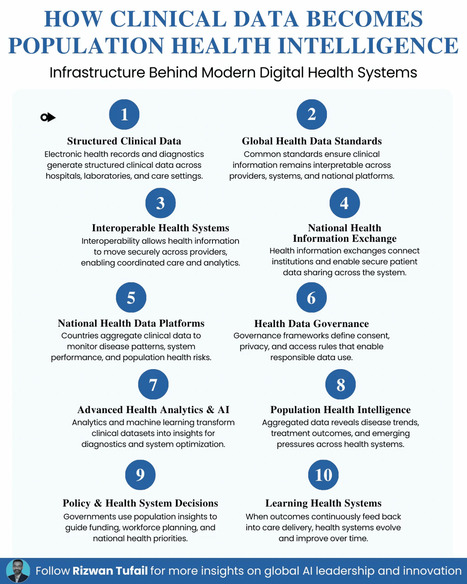
Clinical data is everywhere.
Yet most health systems struggle to turn it into actionable population health intelligence.
The difference is its structure.
Here’s how intelligence emerges from raw clinical data:
1. Structured clinical data from hospitals, labs, and diagnostics
2. Global standards to make information interpretable across systems
3. Interoperable platforms connecting providers
4. National health exchanges and data platforms
5. Governance frameworks for consent, privacy, and ethical use
6. Advanced analytics & AI transforming insights into decisions
When these layers operate together, governments and hospitals can anticipate trends, optimize interventions, and improve outcomes at scale.
Without it, insights remain fragmented, reactive, and ineffective.
Follow Rizwan Tufail for tactical frameworks on how clinical data becomes operational population health intelligence. | 67 comments on LinkedIn
|