Your new post is loading...

|
Rescooped by
Gilbert C FAURE
from Immunology and Biotherapies
January 30, 2020 1:15 PM
|
Point of view of an Immunologist/curator in 2020 Après Bobcatsss 2020, ECIL 2021, ICDF 2022, HESIVAXs with the motto UTA "Understand to Act" Notre proposition « Désinformation Vaccinale: Curation, Observatoire, Littératies » a été retenue pour le séminaire annuel de l’Académie des Controverses et de la Communication Sensible, intitulé « La désinformation : nouvelles formes, nouveaux défis », qui s'est tenu à Paris le mardi 26 novembre 2024. Voir ci-après posts du 27 novembre, avec lien vers la présentation sur Slideshare. Présentation le 20 mars 2025 à InfoxsurSeine deux jours pour décrypter la désinformation et échanger autour des solutions.
Quels outils concrets face aux manipulations de l’information et à l’essor de l’IA générative ? Avez vous acheté le numéro Juillet/septembre 2025 de la RECHERCHE sur LE FAUX? des sujets à approfondir - Vaccins et argent Making money with vaccines, against vaccines le sujet le plus chaud, de 3,36 euros par mois à 300 millions de dollars? - Publications vraies et fausses particulièrement difficile - Obligations, exemptions, incitations, peut-être plus simple?
|
|
Scooped by
Gilbert C FAURE
March 6, 7:44 AM
|
|
|
Scooped by
Gilbert C FAURE
March 6, 7:42 AM
|
|
|
Scooped by
Gilbert C FAURE
March 6, 7:39 AM
|
|
|
Scooped by
Gilbert C FAURE
March 6, 7:36 AM
|
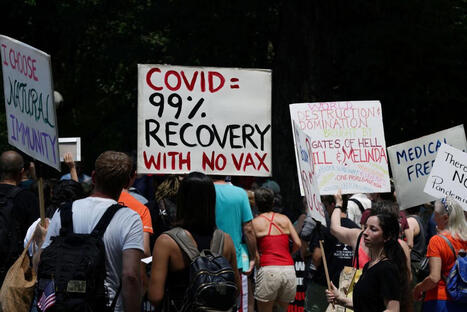
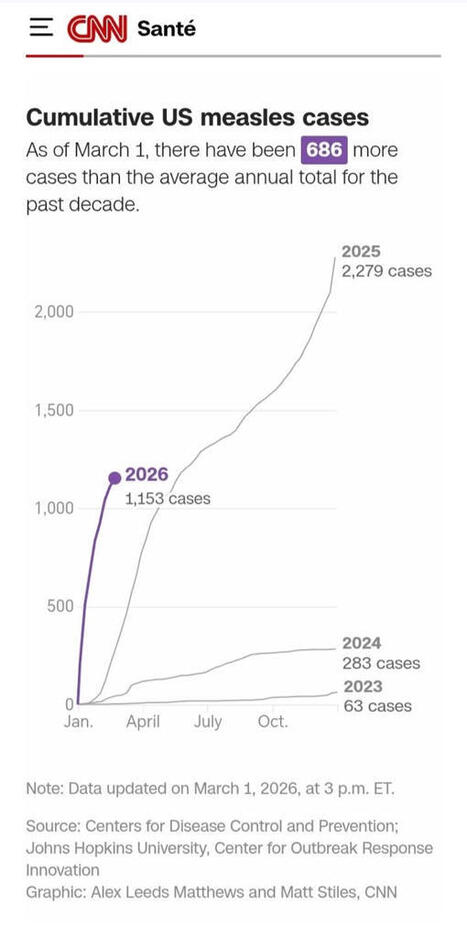
Misinformation is fueling measles outbreaks and a lot of it is now coming from doctors.
|
|
Scooped by
Gilbert C FAURE
March 6, 7:33 AM
|
Comparison of trials relied upon to license Pfizer's most profitable drugs vs. trials relied upon to license infant vaccines. May seem unreal but these are the facts.
Sources:
- Pfizer's most profitable drugs: https://lnkd.in/gYYTWuHe
- Drug data: https://lnkd.in/gvdw9NRV
- Vaccine data: https://lnkd.in/gPiAAGqe
Note "Safety Review" means period after administration. See Chapter 10 of Vaccines, Amen for complete discussion. | 24 comments on LinkedIn
|
|
Scooped by
Gilbert C FAURE
March 6, 7:32 AM
|
La #confiance_dans_la_science est devenue un indicateur central des relations entre science et société. Mais une question demeure rarement discutée : comment mesure-t-on réellement cette confiance ?
D'où l'intérêt du chapitre récemment publié — “Measuring Trust in Science Through Surveys: Challenges and Reflections” — par mes collègues du POIESIS project Dr. Anne-Sophie Behm-Bahtat, Bankole Falade, Hannah L. Bunt et Martin W. Bauer qui examinent de manière critique les enjeux méthodologiques liés à la mesure de la confiance dans les enquêtes par questionnaires.
Quelques enseignements clés :
🧩 Un concept multidimensionnel : la confiance dans la science recouvre plusieurs dimensions (scientifiques, institutions, pratiques, résultats) et ne peut pas être réduite à une seule de ces dimensions.
🗣️ Le poids de la formulation des questions : les effets sémantiques et pragmatiques influencent fortement les réponses des enquêtés.
📊 Les pièges de l’interprétation comparative : l’analyse des données Eurobaromètre montre combien les comparaisons internationales ou les classements de confiance doivent être interprétés avec prudence.
Le reste est à découvrir en ligne : https://lnkd.in/eGBTjvMy
|
|
Scooped by
Gilbert C FAURE
March 4, 10:43 AM
|
"But opening a conversation with, “Are you sorry now that your child wasn’t vaccinated?” or publicly blasting parents whose unvaccinated children got sick or died will never change people’s reluctance to vaccinate. At Voices for Vaccines, our years of work with formerly hesitant families have shown us that empathy works — meaning not judging people who have refused vaccination.
Every parent has a wish list of mulligans that they know they’ll never actually get to do over. Sometimes, the things on that list are life-altering — like wishing they hadn’t waited so long to get special education services, wishing they hadn’t signed a child up for a sport that left them injured or wishing they hadn’t categorized warning signs about friend challenges as just a phase. But we deal with those regrets in private and may frame our past decisions in a way to assuage our guilt. “My child developed resilience before getting her special education services.” Or: “At least my child learned about teamwork before he injured his shoulder.” Or: “There were no signs that my child was lonely.” We keep our regrets and rationalizations inside the family. They aren’t published for all to see.
The work I do has shown me that people do change their minds about vaccination, and they sometimes change their minds after experiencing a vaccine-preventable disease — even if they don’t like talking about it. Ultimately, people can help their family and friends overcome vaccine fears when they listen fully to them. Heather Simpson, a self-described former anti-vaxxer, told us, “What finally changed my mind was having people reach out, listen to my fears, and talk to me. The thousands of mean comments didn’t change my mind.” During the height of the COVID-19 pandemic, the country deployed dozens of trusted messenger programs into communities to have real conversations about vaccination with people who weren’t inclined to get the shots."
https://lnkd.in/etFrh3qD
|
|
Scooped by
Gilbert C FAURE
March 4, 10:37 AM
|
🔷 L'ANSM vient de mettre en ligne sur sa chaîne Youtube, l'intervention du Pr Mathieu Molimard dans le cadre de la lutte contre la désinformation, la vaccination étant comme vous le savez très concernée.
🔹Qu'elle soit intentionnelle, non intentionnelle, ou visant à discréditer, la prolifération des fausses informations est exacerbée par le numérique et un faible niveau de culture scientifique, il faut agir.
🔹Mathieu Molimard insiste sur la nécessité pour les scientifiques et les sociétés savantes de s'organiser et d'occuper l'espace médiatique avec des faits vérifiés et coordonnés.
🔹Il insiste sur l'importance d'une veille active et d'une communication proactive pour débunker les fausses nouvelles avant qu'elles ne se propagent. Les sociétés savantes peuvent agir comme des vigies de la désinformation, mais elles ont besoin de moyens et de coordination pour renforcer leur impact.
Lien vers la vidéo : https://lnkd.in/eb6Qj8ER
|
|
Scooped by
Gilbert C FAURE
March 4, 10:35 AM
|
"President Donald Trump is urging Republicans nationwide to move away from anti-vaccine messaging ahead of the Midterms. Still, in Florida, Gov. Ron DeSantis is taking the opposite approach by advancing a high-profile vaccine exemption bill even as the state reports one of the nation’s highest measles case counts.
Nationally, the political landscape is shifting.
Trump’s advisers have warned that attacks on childhood vaccines are “unpopular,” and POLITICO reports that the White House recently urged the Food and Drug Administration to revisit a decision on a flu vaccine that was “shot down” by Robert F. Kennedy Jr.’s team. Surveys from Trump pollster Tony Fabrizio indicate that voters broadly oppose efforts to reduce the childhood vaccine schedule. Kennedy’s own advisory panel on immunizations, which had been working to justify cutting back childhood vaccines, postponed its February meeting.
At the same time, figures in the Trump administration, such as Dr. Mehmet Oz, are responding to measles spikes across the country, including in Florida.
“Take the vaccine, please,” Oz urged on CNN as cases continue to rise."
|
|
Scooped by
Gilbert C FAURE
March 4, 10:34 AM
|
#SEV2026 | La Semaine Européenne de la Vaccination (SEV) se déroulera du 27 avril au 3 mai 2026. Pour cette édition, l'OMEDIT NA Vaccination se mobilise aux côtés des professionnels de santé de Nouvelle-Aquitaine. 💉
PROGRAMME :
😊 Webinaire "Actualisation du calendrier vaccinal 2026" animé avec le CRAtb Nouvelle-Aquitaine et Santé publique France
👉 A ne pas manquer pour actualiser vos connaissances
📅 Jeudi 30 avril 2026
🕐 De 13h à 14h
👩⚕️ A destination des professionnels de santé (médecins, pharmaciens, sage-femmes, IDE)
🔗 Inscriptions : https://lnkd.in/eQ-aGe39
📢 Vous souhaitez organiser un atelier de sensibilisation sur le sujet de la vaccination ?
☑️ Devenez animateur de la "Fresque de la vaccination"
❓La "Fresque de la Vaccination - parcours vaccinal" permet d'améliorer la compréhension sur la vaccination et son environnement et aborde les questions telles que : "Comment fonctionne un vaccin ?", "Quelles maladies peut-on prévenir grâce à la vaccination ?", "Où peut-on se faire vacciner ?"
La Fresque de la Vaccination peut être réalisée avec le grand public (dès 16 ans, ou des professionnels de santé), sur un créneau de 1 à 2h et pour des groupes de 4 à 15 joueurs.
📱 Lien pour faire la demande de formation gratuite : https://lnkd.in/eKw3VdTu
+ D'autres formations auront lieu dans la région en 2026 : https://lnkd.in/eizbZ_ps
#SEV #vaccination #santépublique
|
|
Scooped by
Gilbert C FAURE
March 4, 10:28 AM
|
"Plotkin is sometimes called the “godfather of vaccines.” His contributions to vaccinology are so substantial, they literally named the field’s go-to textbook after him. “Plotkin’s Vaccines” is now in its eighth edition; a ninth is in production.
But the world is changing, and public health gains are being lost. In a pair of recent interviews with STAT, Plotkin expressed dismay at seeing the achievements of his career and his field slip away. He knows what lies ahead: Lots of kids will contract illnesses that could be prevented, and some of them will die.
“All I can say is that I’m beginning to regret having lived so long — because we’re going downhill,” Plotkin said."
|
|
Scooped by
Gilbert C FAURE
March 2, 6:53 AM
|
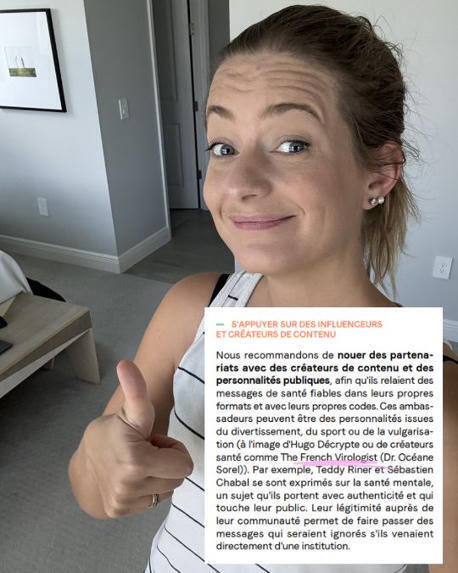
Le 4ᵉ rapport du comité citoyen vient de sortir. Et il affirme que croire à une fake news en santé n’est ni une question d’intelligence, ni une question de niveau d’études.
(le fameux “Ah non, moi jamais je tombe dans le piège !” qui n’a jamais immunisé personne)
Cela arrive surtout lorsque l’on se sent seul, inquiet, éloigné du système de soins, méfiant envers les institutions, ou simplement perdu dans un flot d’informations contradictoires.
Depuis 2019, la Délégation au numérique en santé (DNS) tire au sort 26 citoyens pour répondre à une question de fond pour l'avenir de notre santé.
Cette année, le sujet était la désinformation en santé et j’ai fait partie des experts invités.
L’une de leurs conclusions, c’est qu’elle ne peut pas être attribuée uniquement aux plateformes numériques.
Les crises sanitaires récentes, la rapidité des évolutions scientifiques, certaines contradictions dans les messages publics, des erreurs de communication parfois… ont pu nourrir le doute.
Alors, la priorité n’est pas de traquer toutes les fausses informations.
Mais de rendre l’information en santé fiable, claire et accessible, beaucoup plus visible.
Parce que “la désinformation vient à nous ; l'information fiable, nous devons aller la chercher”.
Voici 3 des pistes proposées :
𝟭/ 𝗔𝗹𝗹𝗲𝗿 𝗰𝗵𝗲𝗿𝗰𝗵𝗲𝗿 𝗹𝗲𝘀 𝗽𝘂𝗯𝗹𝗶𝗰𝘀 𝗹𝗮̀ 𝗼𝘂̀ 𝗶𝗹𝘀 𝘀'𝗶𝗻𝗳𝗼𝗿𝗺𝗲𝗻𝘁 𝗱𝗲́𝗷𝗮̀
→ L'information fiable doit emprunter les mêmes canaux que la désinformation pour avoir
une chance de la contrebalancer.
𝟮/ 𝗚𝗮𝗿𝗮𝗻𝘁𝗶𝗿 𝗹'𝗮𝗰𝗰𝗲𝘀𝘀𝗶𝗯𝗶𝗹𝗶𝘁𝗲́ 𝗱𝗲 𝗹'𝗶𝗻𝗳𝗼𝗿𝗺𝗮𝘁𝗶𝗼𝗻 𝗮̀ 𝘁𝗼𝘂𝘀 𝗹𝗲𝘀 𝗽𝘂𝗯𝗹𝗶𝗰𝘀
→ Le tout-numérique, le tout-écrit ou les formats complexes excluent une partie de la
population.
𝟯/ 𝗠𝗼𝗯𝗶𝗹𝗶𝘀𝗲𝗿 𝗱𝗲𝘀 𝘃𝗼𝗶𝘅 𝗱𝗲 𝗰𝗼𝗻𝗳𝗶𝗮𝗻𝗰𝗲 𝗽𝗼𝘂𝗿 𝗽𝗼𝗿𝘁𝗲𝗿 𝗹'𝗶𝗻𝗳𝗼𝗿𝗺𝗮𝘁𝗶𝗼𝗻
→ Un message est mieux reçu quand il vient de quelqu'un en qui on a confiance, plutôt
que d'une institution (et je suis citée aux côtés de Hugo Décrypte et Teddy Riner 😍)
Depuis 5 ans, je me bats contre la désinformation en santé. Et ce rapport me conforte dans une conviction : on ne gagnera pas seul. Ni moi, ni vous, ni les institutions, ni les plateformes.
On gagne en rendant l'information fiable visible, accessible et humaine. On gagne en agissant tous ensemble.
|
|
|
Scooped by
Gilbert C FAURE
March 6, 8:01 AM
|
|
|
Scooped by
Gilbert C FAURE
March 6, 7:43 AM
|
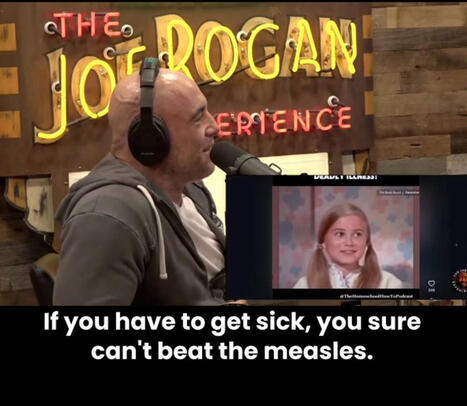
Yes, 60s sitcoms taught us that measles is harmless, alcoholism is funny, horses can talk, Nazi POW camps were like frat parties, and prehistoric humans kept dinosaurs as pets.
Kudos to Joe Rogan and Aaron Siri of the Brady Bunch School of Medicine for sharing their astute analysis of infectious disease risk. | 19 comments on LinkedIn
|
|
Scooped by
Gilbert C FAURE
March 6, 7:40 AM
|
La parole concise : clé d'une communication efficace
|
|
Scooped by
Gilbert C FAURE
March 6, 7:38 AM
|
|
|
Scooped by
Gilbert C FAURE
March 6, 7:34 AM
|
For the past month I’ve been testing a new health literacy platform, and honestly… it’s kind of incredible.
I didn’t expect to use it very much.
Turns out I use it almost every day.
You download it to your phone and it connects securely with your health records, medications, and insurance information.
You can ask simple questions about your condition and get clear explanations in plain language.
It reminds you when to take medications.
It helps schedule appointments.
It can even help you figure out whether you should call your doctor, go to urgent care, or head to the ER.
If the technology isn’t working for you, every hospital and clinic also has a health literacy desk where you can talk to a real human who will help you understand your care plan and what to do next.
What I like most is that it’s designed for families.
Kids can use it to learn how their bodies work.
Teens can find trustworthy health information.
Parents can manage care for their children.
Adults can help coordinate care for aging parents.
It basically helps ordinary people navigate a healthcare system that has become incredibly complex.
After using it for a few weeks I started wondering how something like this makes money.
So I started digging.
Turns out it’s not really a startup at all.
It’s part of a massive public health initiative focused on improving health literacy across the country.
Which actually makes sense when you look at the numbers.
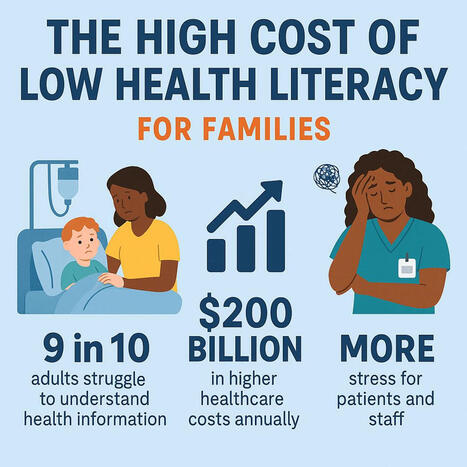
In the U.S., we spend roughly $200 billion every year dealing with the consequences of low health literacy.
Missed medications.
Avoidable ER visits.
Preventable complications.
So instead of paying for all the downstream problems, the program invests upfront in helping people actually understand their health.
It also creates a huge workforce of people focused on education, navigation, and support.
In other words, it’s building public health infrastructure.
The surprising thing is that none of the pieces are particularly exotic.
We already have the technology.
We already have the healthcare system.
We already spend the money.
What we didn’t have, before this program came along, was a comprehensive system designed to make healthcare understandable.
They’re still taking applications for early users, so I’ll drop the link to join the waiting list in the comments below.
♻️ If this resonates, share it with your network.
👉 And follow me for more ideas like this. | 47 comments on LinkedIn
|
|
Scooped by
Gilbert C FAURE
March 6, 7:33 AM
|
“One of the wildest gaslightings of anything ever!” - Joe Rogan | 45 comments on LinkedIn
|
|
Scooped by
Gilbert C FAURE
March 6, 7:30 AM
|
|
|
Scooped by
Gilbert C FAURE
March 4, 10:38 AM
|
|
|
Scooped by
Gilbert C FAURE
March 4, 10:36 AM
|
New commentary in Health Affairs Forefront from Timothy Callaghan, PhD, Liz McCuskey, Michael R. Ulrich, Nicole Huberfeld and I.
We make the case that the Trump administration's efforts to cancel vaccine hesitancy and promotion research grants aren't just unlawful -- they're a major threat to public health.
That's a *big* problem not just for addressing the resurgence of vaccine-preventable diseases like Meales in the US, but because new vaccine technologies could pose promising treatments for a wide range of chronic diseases (like cancer) and emerging infectious disease threats (like bird flu). Vaccine promotion is, we argue, a key component of vaccine access.
You can read the full piece here!
https://lnkd.in/eKxtCfPR
|
|
Scooped by
Gilbert C FAURE
March 4, 10:34 AM
|
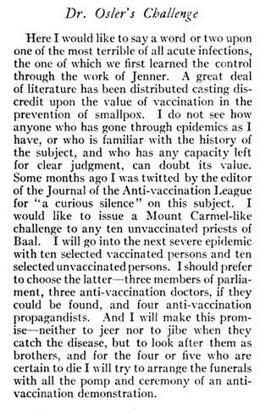
An unvaccinated activist who didn't think he could get sick accepted a challenge to be exposed to smallpox and he nearly died! https://bit.ly/4bgQkfn #VaccinesWork
|
|
Scooped by
Gilbert C FAURE
March 4, 10:31 AM
|
|
|
Scooped by
Gilbert C FAURE
March 4, 10:22 AM
|
🧬 COVID-19 Vaccination in Young Adults and Children: What the Data Shows
Analyzing various studies and public health data, there are important signals regarding COVID-19 vaccination in young adults and children that deserve attention.
Mortality in Young Adults
Data from the UK Office for National Statistics (ONS) indicate that young adults aged 18–39 who received four doses of the COVID-19 vaccine had, in some months, up to three times higher mortality rates compared to their unvaccinated peers.
In February 2023, the difference reached 318% higher mortality among those with four doses.
In other months, the difference ranged between 221% and 290%.
Even those with only one dose showed higher mortality than unvaccinated individuals in certain periods.
This does not mean vaccines fail to prevent severe illness, but it highlights that multiple doses in young populations may have unexpected effects, reinforcing the need for careful monitoring.
Observations in Children📝
Pediatric follow-up studies also show that vaccinated children may have higher incidences of:
Asthma, allergies, and eczema
Respiratory and ear infections
Behavioral and developmental issues
In some analyses, unvaccinated children had overall better health outcomes compared to vaccinated peers. This does not imply vaccines are inherently harmful, but it indicates that long-term effects need to be studied through independent, peer-reviewed research.
Reflection💡
These data emphasize several important points:
The need for independent, long-term studies on vaccines in young adults and children.
The importance of careful monitoring and transparent communication of adverse effects.
That health decisions should always consider risk versus benefit, especially in healthy populations.
🔍 In summary, the data suggest that vaccination is complex: it protects against severe disease, but its long-term effects—particularly in healthy young people—are still not fully understood. Critical research and analysis are essential to guide public health policies and informed decisions by parents and young adults.
📚 Sources: UK ONS, independent pediatric studies, scientific reviews on mRNA vaccines. | 28 comments on LinkedIn
|
|
Scooped by
Gilbert C FAURE
March 2, 4:14 AM
|
Countering the misinformation & disinformation ecosystem needs to involve more than debunking bad information that's circulating. We need evidence-based medicine to answer questions that people have about their every day health needs, no matter how mundane or esoteric.
Unfortunately, much of the conversation around misinformation for many routine (or sometimes unusual) health and wellness issues starts and stops with health professionals and anti-misinformation enthusiasts stating "there's no evidence" to support this or that, which is often true but doesn't actually address the concerns that people have.
How should I fuel for a marathon? How do I stop my brain fog? What does my body need to adapt to long-distance endurance training?
These are all questions that millions of people ask, yet conventional evidence-based medicine does a poor job of answering, and influencers and charlatans have stepped in.
Combatting this misinformation is not only about pushing back against bad or misleading advice, it also requires us to have good information to help people navigate their daily lives.
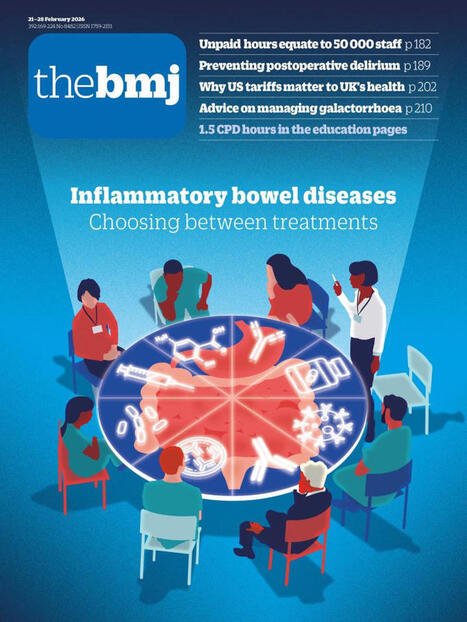
My letter today in the BMJ:
https://lnkd.in/dAhJKpMy
|