Delighted to kick off the year by sharing a new paper that examines why parents in Western Australia declined or delayed RSV immunisation (nirsevimab) for their infants in 2024, the first year it was available in WA. The paper discusses rationales and experiences that shaped parents' choices around the immunisation. VaxPol Lab #UWAresearch #UWASchoolofSocialSciences
Notre proposition « Désinformation Vaccinale: Curation, Observatoire, Littératies » a été retenue pour le séminaire annuel de l’Académie des Controverses et de la Communication Sensible, intitulé « La désinformation : nouvelles formes, nouveaux défis », qui s'est tenu à Paris le mardi 26 novembre 2024.
Voir ci-après posts du 27 novembre, avec lien vers la présentation sur Slideshare.
Présentation le 20 mars 2025 à InfoxsurSeine deux jours pour décrypter la désinformation et échanger autour des solutions. Quels outils concrets face aux manipulations de l’information et à l’essor de l’IA générative ?
Avez vous acheté le numéro Juillet/septembre 2025 de la RECHERCHE sur LE FAUX?
des sujets à approfondir
- Vaccins et argent Making money with vaccines, against vaccines
le sujet le plus chaud, de 3,36 euros par mois à 300 millions de dollars?
- Publications vraies et fausses particulièrement difficile
- Obligations, exemptions, incitations, peut-être plus simple?
Gilbert C FAURE's insight:
The topic addresses Fake news as a global problem, extracting material focusing on vaccinations, vaccination hesitancy and anti-vax attitudes. The subject is evolving constantly with health consequences all over the world.
This topic became a research action project at CREM (Centre de Recherche sur les médiations)
Ir covers not only Fake News still thriving on the internet,
but also efforts of many (supranational bodies, scientific societies, researchers...) to improve health literacies of laypeople, and medical students on this sensitive topic...
Fake News related to Covid and Vaccinations slightly decreased compared to other topics such as ukrainian war, gaza war, and politics in USA even sports related informations... but the involvement of politicians in the topic very much increased !
Unfortunately, as Jonathan Swift so eloquently said: Reasoning will never make a man correct an ill opinion, which by reasoning he never acquired.
“The greatest enemy of knowledge is not ignorance; it is the illusion of knowledge.” — Daniel J. Boorstin
le 1 avril 2025, retour de shitstorm?
Bonjour Pr Faure, avez vous informé vos patients de la balance bénéfice -risque actuelle des produits à ARNmodifié avant de les injecter ? L'information claire loyale et appropriée et un impératif déontologique et légal. Il faut travailler Pr Faure. Pas diffamer. Travailler.…
Since Elisabeth Wilhelm and I drafted the first version of our chapter on health disinformation for the new European Digital Media Observatory volume, its relevance has only grown.
Health disinformation gets propagated for profit or for social and political influence. The motivations vary, but the tactics tend to exploit the same vulnerabilities in the information environment and in the ways people make sense of risk and uncertainty.
Public health works toward long-term population wellbeing, so it approaches harmful information as a structural challenge that affects trust, equity, and the ability of communities to stay safe. Addressing health disinformation therefore cannot rely on rapid debunking alone. Public health needs to work on durable resilience that includes social and behavior change approaches, strong health communication systems, and support for the many people who form and maintain community trust.
This also matters for climate and One Health challenges. The same conditions that allow health disinformation to spread also shape how people understand climate impacts, zoonotic threats, and environmental change.
Disinformation narratives cut across these domains, which means the solutions must as well. Interdisciplinary work that links public health, SBC, climate communication, and information integrity is essential.
We wrote the chapter as a short public health primer for disinformation researchers and closed with reflections for colleagues who sit at the intersection of health communication and information disorder.
Lis and I explored several of the chapter’s themes during our EDMO training workshop: https://lnkd.in/dAbJdn5a
Thanks to Paula Gori and Lisa Ginsburg for inviting us to contribute to this book: Disinformation: A Multi-Disciplinary Analysis
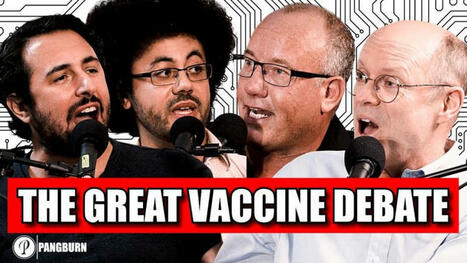
2009... and how relevant this piece still is today... Should we debate science deniers ? We have seen a million dollars but up to do so. Should one expert take the bait ? This 2009 raises interesting questions. But not wanting to say yes or no, I would suggest to have a look at this debate only to see that well-prepared individuals ( and not even vaccine experts) totally demilish two prominent anti-vaxxers in Steve Kirsch and Pierre Kory. Now imagine if such would have been a Paul Offit and Peter Hotez sitting against these two clowns (irony)...
"The normal academic response to an opposing argument is to engage with it, testing the strengths and weaknesses of the differing views, in the expectations that the truth will emerge through a process of debate. However, this requires that both parties obey certain ground rules, such as a willingness to look at the evidence as a whole, to reject deliberate distortions and to accept principles of logic. A meaningful discourse is impossible when one party rejects these rules."
In December, I had the opportunity to lead a WHO team in Kyrgyzstan to identify why some children remain un‑ or under‑vaccinated in low‑coverage areas—a challenge seen in countries worldwide, even where national coverage appears strong. Facility‑level assessments like the one we conducted are powerful tools for uncovering the local barriers that drive inequities and for understanding the magnitude of each root cause that leaves children unprotected.
Across all four regions, health workers demonstrated strong commitment to vaccination—regular services, well‑organized records, and active home‑visiting efforts.
The assessment also revealed several challenges that require attention:
• High workload and staffing gaps, limiting time for outreach, counselling, and follow‑up. • Access barriers for mobile families, remote households, and urban apartment blocks that restrict home visits. • Challenges with timeliness, with many children not completing their vaccination series. • Diversity among refusals—some occurring before the first dose, others after the child had already started a series. • Undocumented missed vaccinations, representing a major lost opportunity for timely follow‑up. • Inconsistent use of contraindications and recent vaccine stockouts, both contributing to delays.
Our recommendations included:
• Strengthening standardized documentation and coding of every missed vaccination to support data‑driven follow‑up. • Implementing digital reminders and structured recall, supported by phone outreach and home visits. • Segmenting refusal groups (zero‑dose vs. partially vaccinated) and tailoring interventions accordingly. • Standardizing and reinforcing national contraindication guidance through quick reference tools and brief refresher training. • Expanding targeted outreach for hard‑to‑reach populations, including mobile sessions and solutions for restricted‑access apartment buildings.
Equity in immunization requires understanding what is happening in clinics, homes, and everyday interactions between caregivers and health workers. I’m grateful to the Ministry of Health, the Republican Center for Immunization (RCI), WHO Kyrgyzstan, the health workers who supported this effort, and my own team. Lisa Jacques-Carroll Sahar Nejat Nadezhda Zhgenti Ana Janashia Shahin Huseynov Catharina de Kat Reynen Robb Butler
Débat avec Sylvain Delouvée, maître de conférences de psychologie sociale à l’Université Rennes 2, figure médiatique des croyances collectives et de la désinformation, récompensé en 2025 de la médaille de la médiation scientifique CNRS – France Universités. Enregistré jeudi 8 janvier 2026 à Rennes, Campus Santé de Villejean dans le cadre du cycle "Esprit critique et vaccination"
L'Université de Rennes, le CHU de Rennes, l'École des Hautes Études en Santé Publique et Sciences Po Rennes sont heureux de proposer 3 conférences - débats portant sur le développement de l'esprit critique face à l'enjeu sociétal qu'est la vaccination les jeudis 8, 15 et 22 janvier 2026.
e projet a bénéficié d’une aide de l’Etat gérée par l’Agence Nationale de la Recherche au titre de France 2030 portant la référence « ANR-22EXES-0008 »
No one will connect the dots if people won’t talk about vaccination status. And that is what Fauci and Offit and every politician banks upon, due to the influence of powerful industry lobby groups that ostracise you with the weaponised term ‘antivaxxer’ and conspiracy theorist’. If you were banned from clubs and restaurants etc in 2021 due to you reliance on natural immunity, (now proven to be overwhelmingly more beneficial than the falsely named mRNA “vaccine”), then make sure you talk about vaccination status wherever you can. That’s if you want to save your children and grandchildren from neurological and other damage due to unnecessary shots.
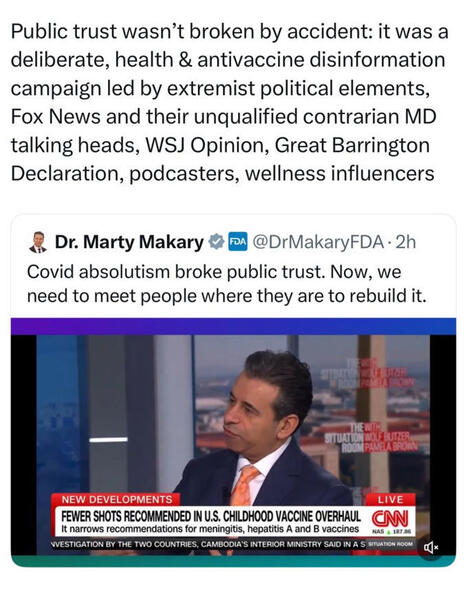
While anti-vax advocates welcome the changes, local pediatricians are frustrated with new guidelines that say less vaccines will be enough for some kids.
A former senior adviser to Republican Lt. Gov. Stavros Anthony said she was pushed out of her job in December after working with Anthony for more than a decade, replaced with a younger employee with a sizable social media following and a background with a conservative activist group.Sally...
The risk of viral pathogen transmission between humans and animals (spillover events) and subsequent spread has been increasing due to human impacts on the planet, which lead to changes in the interactions between humans, animals, ecosystems and their pathogens. Key factors (drivers) that increase the risk of disease emergence include climate change, urbanization, land-use changes and global travel, all of which can alter human–animal–environment interactions and increase the likelihood of zoonotic spillovers and vector-borne diseases. Incorporating data on these drivers (such as ecological shifts and patterns of animal movement) into disease surveillance systems can help identify hot spots for disease emergence, which could in theory enable earlier detection of outbreaks and, in turn, increase the effectiveness of intervention strategies. A One Health approach, emphasizing the interconnectedness of human, animal and environmental health, is advocated for addressing these complex challenges. Although conceptually clear and widely endorsed, implementation of One Health approaches towards primary prevention of spillovers is extremely challenging. Here, we summarize current knowledge on disease emergence and its drivers, and discuss how this knowledge could be used towards primary prevention and for the development of risk-targeted One Health early warning surveillance. We consider integrating innovative tools for diagnostics, surveillance and virus characterization, and propose an outlook towards more integrated prevention, early warning and control of emerging infections at the human–animal interface. In this Review, Sikkema and Koopmans examine the drivers of viral emergence and how these insights could inform prevention strategies and the development of risk-targeted One Health early warning surveillance. They discuss tools for diagnostics, surveillance and virus characterization, and propose strengthening integrated One Health strategies for early warning, prevention and control of emerging infections at the human–animal interface.
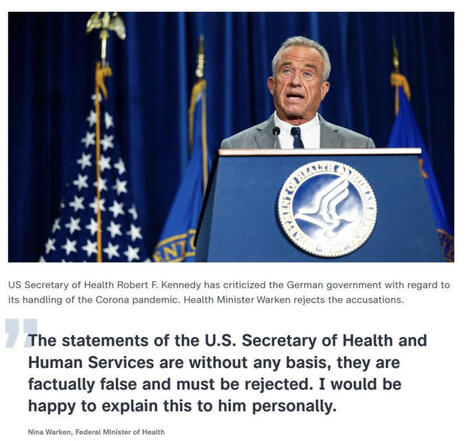
With Larry Gostin: Federal vaccine recommendations derive their authority from method. Traditionally, advisory committees staffed with the nation’s leading scientists weigh evidence publicly. Conflicts are rare and disclosed. Rationales are explained. That structure is what allows federal guidance to serve as a credible reference point for states, clinicians and parents. When the secretary bypasses or distorts that structure, the guidance loses its claim to legitimacy. Public trust wanes.
Les pouvoirs publics lancent officiellement aujourd'hui la lutte contre la désinformation en santé.
La ministre Stephanie RIST vient de présenter un ensemble de mesures pour s'attaquer aux fausses informations qui nuisent à la santé de la population, mais aussi à la démocratie.
Pour son plan, elle s'est largement inspirée d'un rapport qui vient de lui être remis (même si tout n'a pas été repris...)
Deux de ses auteurs, Dominique Costagliola et Mathieu Molimard, détaillent à L'Express le résultat de leurs trois mois d'investigation et de leurs 156 entretiens... 👇
Pierre de Bremond d'Ars Collectif No Fakemed Agnès Buzyn Isabelle Jourdan Valentin Berdah Unadfi-Union nationale des Associations de Défense des Familles et de l’Individu victimes de sectes Victor Garcia
Ce que l’histoire sanitaire montre vraiment : les maladies reculaient avant les vaccins.
La plus grande révolution sanitaire. Les véritables raisons de la disparition des maladies infectieuses "Présentées sur une telle durée, les courbes révèlent un effondrement progressif et massif de la mortalité, amorcé bien avant l’introduction des vaccins et poursuivi de manière remarquablement régulière, indépendamment des grandes innovations médicales ultérieures. Cette perspective de long terme transforme un simple constat statistique en preuve historique, difficilement contestable. La tendance mise en évidence par ces données est encore plus spectaculaire que celle observée aux États-Unis. Au milieu du XIXᵉ siècle, la mortalité associée à ces cinq maladies infectieuses atteignait des niveaux considérables. Pourtant, à partir des années 1870 — bien avant toute intervention vaccinale — un déclin massif, continu et irréversible s’amorce, devenant clairement perceptible autour de 1875. L’ampleur de cette amélioration pré-vaccinale est tout simplement vertigineuse. Au moment de l’introduction nationale du vaccin contre la coqueluche, en 1957, le taux de mortalité avait déjà chuté de plus de 99 %. Plus saisissant encore, la mortalité due à la rougeole avait diminué de plus de 99,9 % — autrement dit, avait pratiquement disparu — avant le déploiement national du vaccin en 1968."
"Overall, this review article is basically a nothingburger. It’s far more speculation than anything else, as I mantioned before, a case of putting the cart before the horse. The authors carefully select three studies that they think they can point to as strong suggestive evidence in population studies that COVID-19 vaccination is associated with an increased risk of cancer. When these studies are examined in more detail, they all suffer from potential confounders that could easily explain their results, none more than the S. Korean study, which is about as obvious an example of healthy user/healthy vaccinee bias as I’ve ever seen. The authors also present a tiny number of case reports—at least the number is incredibly tiny relative to the billions upon billions of doses of vaccine that have been administered over the last four years—as though they suggested anything but the entirely predictable phenomenon that, if you administer a medication to a large enough number of people, you will find a number of bad things that happen to a number of people soon after receiving that medication by random chance alone. No convincing argument or evidence is presented to suggest causation.
Next, they list various mechanisms by which COVID-19 vaccines in general—and the spike protein in particular—might cause cancer. They then speculate wildly about these potential biological mechanisms and “gaps in knowledge” about COVID-19 vaccines and cancer. Most of these biological mechanisms strike me as a stretch, at best, particularly the invocation of “inflammation” as somehow activating dormant cancer cells that we all have in our bodies, again, because all vaccines cause transient inflammation, but the authors don’t address what is different about the inflammation caused by COVID-19 vaccines that it would lead to cancer.
There’s just one problem. If COVID-19 vaccines were truly responsible for a wave of “turbo cancers” or, as the authors would prefer to say, hyperprogression, then the epidemiological data would be there now, and it would be impossible to deny. By now, there would have been a worldwide wave of cancer correlating temporally and physically with the rollout of COVID-19 vaccines across the globe. We see no such thing. Related to this problem is the paucity of evidence that COVID-19 vaccines or the spike protein generated by them can cause neoplastic transformation (conversion of a normal cell to cancer) in cell culture or animal models, much less in humans. Again, this whole review article strikes me, more than anything else, as an exercise in—you guessed it!—putting the cart before the horse. Seriously, provide us with some compelling evidence, and we will change our minds, but Kuperwasser and El-Deiry don’t because they can’t. That evidence doesn’t exist, and it isn’t for lack of people trying to find it, either."
Is 2026 the year evidence dies at the CDC? Dr Sandra Fryhofer explains why the CDC can no longer be our ‘North Star’ for vaccine guidance and gives a preview of what’s to come in 2026.
There is nothing in this case that links this situation to COVID vaccines. Nothing. This is not only pure speculation in absence of facts. It is misinformation. We would expect more from Dr Philip McMillan. The article from the journal Stuff not even mentions the COVID vaccine or his vaccination status. What is happening here is simply that Dr Philip McMillan transforms himself in an ambulance chaser, hijacking’s one terrible disease to make a case where there is nothing to see, vaccine-wise. Shame…
📍 New evidence from Ethiopia shows that community engagement strategies like defaulter-tracing tools and personalised health calendars help close immunisation gaps by strengthening connections between caregivers and health workers. Shared responsibility and local communication are key to improving vaccine uptake.
It was not journalism that was affected. It was a new breed of pseudo-journalism based on misinformation that emerged. One where pseudo-self-claimed experts tried to flood the social media space. Be reminded that the only significant contribution to science from these individuals should have been their silence. Investigative journalism should be fact-based and science-based, not relying on anecdotes or unproven theories. Journalism should always check sources for credibility. Assess such and then, if appropriate publish. If not, not publish. These misinformation pushers may call being silenced censorship. I would call this journalistic critical appraisal and responsability… Vejon Health Ltd and its director may be among those where the lack of credibility may push you to consider more appropriate sources of information as appropriate information…
Getting a few people who are trying to both-sides the attacks on vaccination in my mentions. This piece by Martin McKee and Pascal Diethelm is a crucial corrective. When you engage with anti-vaxxers or those who sympathize with them, you are falling into a trap." Here is their article. "The normal academic response to an opposing argument is to engage with it, testing the strengths and weaknesses of the differing views, in the expectations that the truth will emerge through a process of debate. However, this requires that both parties obey certain ground rules, such as a willingness to look at the evidence as a whole, to reject deliberate distortions and to accept principles of logic. A meaningful discourse is impossible when one party rejects these rules."
To get content containing either thought or leadership enter:
To get content containing both thought and leadership enter:
To get content containing the expression thought leadership enter:
You can enter several keywords and you can refine them whenever you want. Our suggestion engine uses more signals but entering a few keywords here will rapidly give you great content to curate.


 Your new post is loading...