“Do you give a vaccine to an infant, when you do not know for sure that the benefits will outweigh the harms? And of course, the answer is no.“ | 28 comments on LinkedIn
Notre proposition « Désinformation Vaccinale: Curation, Observatoire, Littératies » a été retenue pour le séminaire annuel de l’Académie des Controverses et de la Communication Sensible, intitulé « La désinformation : nouvelles formes, nouveaux défis », qui s'est tenu à Paris le mardi 26 novembre 2024.
Voir ci-après posts du 27 novembre, avec lien vers la présentation sur Slideshare.
Présentation le 20 mars 2025 à InfoxsurSeine deux jours pour décrypter la désinformation et échanger autour des solutions. Quels outils concrets face aux manipulations de l’information et à l’essor de l’IA générative ?
Avez vous acheté le numéro Juillet/septembre 2025 de la RECHERCHE sur LE FAUX?
des sujets à approfondir
- Vaccins et argent Making money with vaccines, against vaccines
le sujet le plus chaud, de 3,36 euros par mois à 300 millions de dollars?
- Publications vraies et fausses particulièrement difficile
- Obligations, exemptions, incitations, peut-être plus simple?
Gilbert C FAURE's insight:
The topic addresses Fake news as a global problem, extracting material focusing on vaccinations, vaccination hesitancy and anti-vax attitudes. The subject is evolving constantly with health consequences all over the world.
This topic became a research action project at CREM (Centre de Recherche sur les médiations)
Ir covers not only Fake News still thriving on the internet,
but also efforts of many (supranational bodies, scientific societies, researchers...) to improve health literacies of laypeople, and medical students on this sensitive topic...
Fake News related to Covid and Vaccinations slightly decreased compared to other topics such as ukrainian war, gaza war, and politics in USA even sports related informations... but the involvement of politicians in the topic very much increased !
Unfortunately, as Jonathan Swift so eloquently said: Reasoning will never make a man correct an ill opinion, which by reasoning he never acquired.
“The greatest enemy of knowledge is not ignorance; it is the illusion of knowledge.” — Daniel J. Boorstin
le 1 avril 2025, retour de shitstorm?
Bonjour Pr Faure, avez vous informé vos patients de la balance bénéfice -risque actuelle des produits à ARNmodifié avant de les injecter ? L'information claire loyale et appropriée et un impératif déontologique et légal. Il faut travailler Pr Faure. Pas diffamer. Travailler.…
When a parent walks into a clinic after reading unverified vaccine claims online, the healthcare provider doesn't just face a medical decision—they're managing a customer experience crisis. Trust, once broken by misinformation, becomes harder to rebuild than to establish.
This tension sits at the heart of modern healthcare delivery. Nearly 75% of people agree COVID-19 vaccines were misrepresented on social media. Sixty-one percent of physicians report patients arriving with misinformation already embedded in their thinking. In rural areas, the problem intensifies dramatically—38% of rural providers encounter vaccine hesitancy daily compared to just 21% in suburban practices.
But here's where customer experience strategy becomes critical: vaccine hesitancy isn't primarily an education problem. It's a trust problem.
Research distinguishes three types of vaccine-related trust: trust in healthcare systems, trust in science, and trust in government. Misinformation erodes all three simultaneously. When patients say vaccine information feels "confusing" or they "don't know enough about science," they're not requesting more complex explanations—they're signaling absence of relational trust. This is fundamentally a CX failure, not a clinical one.
The health literacy gap compounds this challenge. One-third of Americans cannot properly understand basic probability. Half cannot describe a scientific experiment accurately. When healthcare organizations distribute vaccine information written at college reading levels to populations with high school literacy, communication systems exclude rather than engage.
Healthcare systems addressing this strategically are seeing measurable results. Organizations that redesigned vaccine communications for actual health literacy levels—using shorter sentences, simpler language, concrete examples—reported 12% reductions in vaccine hesitancy. Those investing in provider communication training saw improvements in both patient satisfaction and vaccination acceptance. Those building authentic community partnerships with trusted local leaders achieved vaccination rate increases from 34% to 71% among previously skeptical populations.
Organizations winning the trust battle aren't the ones with the best vaccine science. They're the ones investing in relationships, community partnerships, transparent crisis communication, and genuine acknowledgment of historical healthcare failures.
Vaccine hesitancy reveals a deeper truth for CX leaders: patients abandon scientifically sound guidance when they don't trust the source. They embrace misinformation from sources they've learned to trust.
Shapiro Administration Urges CDC Advisory Committee to Follow Decades of Trusted Science and Maintain Hepatitis B Vaccine Recommendation for Newborns Ahead of December Meeting: https://lnkd.in/ePA8t-4i
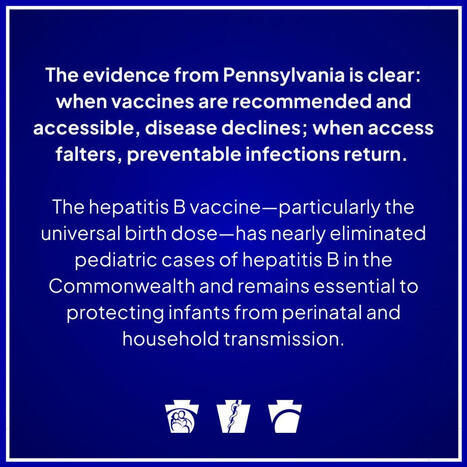
"The evidence from Pennsylvania is clear: when vaccines are recommended and accessible, disease declines; when access falters, preventable infections return. The hepatitis B vaccine—particularly the universal birth dose—has nearly eliminated pediatric cases of hepatitis B in the Commonwealth and remains essential to protecting infants from perinatal and household transmission."
PENNSYLVANIA DEPARTMENT OF HEALTH Pennsylvania Insurance Department Valerie Arkoosh, MD, MPH
“Do you give a vaccine to an infant, when you do not know for sure that the benefits will outweigh the harms? And of course, the answer is no.“ | 28 comments on LinkedIn
We have just witnessed the promotion (to CDC Deputy Director) of the man partially responsible for the delayed response to a dangerous (and deadly) Pertussis outbreak in Louisiana. He is also notoriously opposed to vaccination programs, even if he is not more generally anti-vaccination.
"As of Sept. 20, Louisiana had counted 387 cases of whooping cough in 2025, according to the Centers for Disease Control and Prevention. The previous 35-year high was 214 cases, in 2013."
Every single one of these outbreaks (measles, pertussis, polio) happens in areas where immunizations are in decline, or low to begin with. It cannot be clearer that our childhood vaccination programs save lives: but only when they are adhered to.
A demonstrator holds a sign outside the Center for Disease Control (CDC) headquarters in Atlanta, Georgia, US, on Thursday, December 4, 2025.An influential…...
Tirer les leçons de la pandémie de covid est crucial : préparer vaccins, surveillance et communication, impliquer la génération Z, sensibilisée aux pandémies et aux gestes barrières, pour renforcer la santé publique, combattre les fake news et protéger les plus vulnérables.
Largely unscattered ??? Tell this to those now suffering from Long COVID. The only thing said by Dr Philip McMillan which is true is that vaccines were not the problem, and still are not. From what we have seen, a high risk group is basically define by one factor: being alive. Some may have higher risk factors like age and comorbidities. All do need protection. It is irresponsible to claim that mandates were not needed. We have seen neighbouring countries where mandates existed and not. A good example of such being Canada and the USA, as well as the Scandinavian countries. Where mandates were not implemented, death rates from COVID were the highest. Such explains why the USA, despite claims of being the best healthcare in the world, had the one of worse COVID fatality rate in the world. But the narrative of Haiti as an example of low vaccination and low death rates is fallacious at best and omits the true driver of such: the very low age of its population.
Hello my brilliantly stubborn lovers of democracy and die-hard Jimmy Kimmel fans. Today is December 6th, and after scrolling through what Donald Trump has been up to, I honestly feel like I should start this show with a content warning: “The following images may be disturbing to viewers with common sense.” Because tonight we’ve got Trump looking like a decaying wax statue, giving himself a fake FIFA peace medal, cheering on anti-vax policies that put newborn babies at risk, crashing poll numbers, economic pain, war crimes at sea, and a regime that cares more about Mar-a-Lago meet-and-greet emails than whether you can afford health care.
Let’s start with the visuals, because Trump sure did. He’s posting these glamour shots of himself at an event he threw for himself so he could award himself a made-up “FIFA 2025 Peace Prize.” Yes, FIFA. The same FIFA that hosts the World Cup and is famous for corruption looked at Donald Trump and said, “You know what we need? More of that.” So the FIFA president shows up, they invent a peace medal, and Donald proudly holds it up like a kid who just won “Most Improved at Nap Time.” ------------------------------ Disclaimer: This is an independent, fan-made channel not affiliated with Jimmy Kimmel, or any political organization. The videos are inspired by public speeches and verified news for educational and analytical purposes only.
We use voiceover narration, storytelling, and dramatized reenactments to explain complex political news in a clear, emotional, and engaging way. All visuals and voices are independently produced and do not feature or represent Jimmy Kimmel personally.
Our goal is to present political developments that encourage civic understanding and discussion while maintaining respect for all public figures. We strive to amplify public information responsibly and follow fair use and journalistic integrity principles. ------------------------------ Watch More: Trump’s Studio 54 Meltdown: https://youtu.be/_EfnDWHIq2c Trump’s Rotting Hand: https://youtu.be/YQMk0bGL19g Trump’s “Epstein Transparency” Scam: https://youtu.be/dmJZ6XYa1Kk Trump’s ‘TRUMPICAN’ MELTDOWN: https://youtu.be/O_I9qMTZwZg
About Jimmy Kimmel Live:
Jimmy Kimmel serves as host and executive producer of Emmy® nominated “Jimmy Kimmel Live,” ABC’s late-night talk show. “Jimmy Kimmel Live” is well known for its viral video successes, with over 16 billion views and more than 19 million subscribers on the show’s YouTube channel. Some of Kimmel’s most popular comedy bits include Celebrities Read Mean Tweets, Lie Witness News, Halloween Candy YouTube Challenge, Jimmy and Cousin Sal pranking Aunt Chippy and music stars like Rihanna and Dua Lipa surprising Jimmy in the middle of the night. 📌 Tags + Hashtags
Jimmy Kimmel, Jimmy Kimmel LIVE, LIVE Jimmy Kimmel, Jimmy Kimmel Project, Jimmy Kimmel 2025, Jimmy Kimmel Trump critic, Jimmy Kimmel Project USA, Jimmy Kimmel LIVE 2025, Jimmy Kimmel co-founder, Jimmy Kimmel politics, Jimmy Kimmel author, Jimmy Kimmel anti-Trump, Jimmy Kimmel political commentary, Jimmy Kimmel strategist, Jimmy Kimmel TV, Jimmy Kimmel MSNBC, Jimmy Kimmel CNN, Jimmy Kimmel news, Jimmy Kimmel viral, Jimmy Kimmel campaign, Jimmy Kimmel ads, Jimmy Kimmel 2025 politics, Jimmy Kimmel Republicans, anti-Trump Republicans, political strategist, Jimmy Kimmel biography, Jimmy Kimmel speeches, Jimmy Kimmel debate, Jimmy Kimmel interview, Jimmy Kimmel clips, Jimmy Kimmel viral videos, Jimmy Kimmel movement, Jimmy Kimmel leaders, Jimmy Kimmel LIVE commentary, Jimmy Kimmel LIVE 2025, Kimmel Jimmy show, Kimmel Jimmy show 2025,
How Vaccines Work: A Simple Explanation I Often Use
Whenever friends, classmates, or parents ask me about vaccines, I always try to explain them in the simplest and most human way possible: vaccines help your body practice before the real infection shows up.
Growing up in Nigeria, vaccines like polio and measles were an essential part of childhood health. Later, when I moved to Japan, I noticed how organized and highly trusted the vaccination programs were. Even though the environments were different, the science and the goal stayed the same: protection.
Vaccines introduce a harmless form of a virus or a weakened part of it. This doesn’t make you sick instead, it trains your immune system to recognize and fight the real infection quickly. It’s like giving the body a “preview” so it knows what to do later.
My personal experience made this even clearer. During the COVID-19 pandemic, I received my vaccinations, and I remember feeling grateful for the science behind them. The process was simple, and afterward I felt more protected, especially while living abroad. Later, I also received the HPV vaccine because I strongly believe in preventing future health risks whenever possible. These experiences helped me understand vaccines not just from a scientific point of view, but also from a practical, everyday life perspective.
What I’ve learned both from studying science and from personal experience is that vaccines are one of the most reliable tools we have for prevention. They help communities stay healthy, reduce hospital visits, and allow people to live with more confidence.
Yesterday, The BMJ published Tina D Purnat's editorial and analysis on how social media creators shape public health conversations, and it’s another reminder that our challenge in the UK isn’t just “misinformation”. It’s the 𝗶𝗻𝗳𝗼𝗿𝗺𝗮𝘁𝗶𝗼𝗻 𝗲𝗻𝘃𝗶𝗿𝗼𝗻𝗺𝗲𝗻𝘁𝘀 people live in now.
This reinforces a theme I’ve been exploring for a while: the information environment is no longer a backdrop to health, it’s a determinant of health. It shapes trust, behaviour, identity, and the options people believe are available to them.
A few reflections relevant for the NHS, UKHSA and local public health teams:
1️⃣ 𝗔𝘂𝘁𝗵𝗼𝗿𝗶𝘁𝘆 𝗶𝘀 𝗻𝗼 𝗹𝗼𝗻𝗴𝗲𝗿 𝗲𝗻𝗼𝘂𝗴𝗵; affinity now drives trust. People connect with creators because they feel known by them. Personal storytelling, vulnerability, and community are powerful. Public health needs to build connections, not just issue content. 2️⃣ 𝗖𝗼𝗺𝗺𝘂𝗻𝗶𝘁𝗶𝗲𝘀 𝘀𝗵𝗮𝗽𝗲 𝗯𝗲𝗹𝗶𝗲𝗳𝘀 𝗺𝗼𝗿𝗲 𝘁𝗵𝗮𝗻 𝗶𝗻𝗱𝗶𝘃𝗶𝗱𝘂𝗮𝗹𝘀. Online groups can support people, but can also cement unverified norms. Once something becomes group identity, traditional myth-busting rarely works. 3️⃣ 𝗣𝗹𝗮𝘁𝗳𝗼𝗿𝗺𝘀, 𝗻𝗼𝘁 𝗶𝗻𝘀𝘁𝗶𝘁𝘂𝘁𝗶𝗼𝗻𝘀, 𝗱𝗲𝗰𝗶𝗱𝗲 𝘄𝗵𝗮𝘁 𝗴𝗲𝘁𝘀 𝘀𝗲𝗲𝗻. Algorithms reward emotion and engagement. If our content doesn’t resonate emotionally, it won’t surface, no matter how accurate it is. We need to design for the environment, not just the message. 4️⃣ 𝗘𝘃𝗲𝗿𝘆 𝗰𝗹𝗶𝗻𝗶𝗰𝗮𝗹 𝗰𝗼𝗻𝘃𝗲𝗿𝘀𝗮𝘁𝗶𝗼𝗻 𝗶𝘀 𝗻𝗼𝘄 𝗮 𝗱𝗶𝗴𝗶𝘁𝗮𝗹 𝗰𝗼𝗻𝘃𝗲𝗿𝘀𝗮𝘁𝗶𝗼𝗻. Patients often arrive with a feed’s worth of health advice from people they feel a parasocial relationship with. Clinicians need tools and support to navigate this with empathy rather than confrontation. 5️⃣ 𝗧𝗿𝘂𝘀𝘁 𝗻𝗼𝘄 𝗰𝗼𝗺𝗲𝘀 𝗳𝗿𝗼𝗺 𝘁𝗿𝗮𝗻𝘀𝗽𝗮𝗿𝗲𝗻𝗰𝘆 𝗮𝗻𝗱 𝗵𝘂𝗺𝗶𝗹𝗶𝘁𝘆. Explaining uncertainty, acknowledging system pressures, and showing how guidance evolves are essential to rebuilding institutional trust. 6️⃣ 𝗪𝗲 𝗻𝗲𝗲𝗱 𝘁𝗼 𝘀𝗵𝗶𝗳𝘁 𝗳𝗿𝗼𝗺 𝗱𝗲𝗯𝘂𝗻𝗸𝗶𝗻𝗴 𝘁𝗼 𝗽𝗿𝗲𝗯𝘂𝗻𝗸𝗶𝗻𝗴. Building people’s ability to recognise misleading tactics before they encounter them is increasingly important. 7️⃣ 𝗣𝘂𝗯𝗹𝗶𝗰 𝗵𝗲𝗮𝗹𝘁𝗵 𝗰𝗼𝗺𝗺𝘂𝗻𝗶𝗰𝗮𝘁𝗶𝗼𝗻 𝗺𝘂𝘀𝘁 𝗯𝗲 𝘁𝗿𝗲𝗮𝘁𝗲𝗱 𝗮𝘀 𝗮 𝘀𝘁𝗿𝗮𝘁𝗲𝗴𝗶𝗰 𝗶𝗻𝗳𝗿𝗮𝘀𝘁𝗿𝘂𝗰𝘁𝘂𝗿𝗲. Not downstream. Not “just messaging.” It’s part of how we steward the information ecosystems that shape health outcomes and inequalities.
This is a timely reminder that we need to combine behavioural science, cyberpsychology, platform literacy, and practical empathy if we want to support people navigating complex digital spaces ethically and effectively.
If you thought the COVID shots were bad enough, wait until you hear this presentation from epidemiologist @NicHulscher.
He dropped 6 minutes of damning COVID vaccine data on a Washington county health board, and the longer you listen, the worse it gets.
“A total of 450 peer-reviewed studies now demonstrate that COVID-19 vaccines are fundamentally harmful to the human body.”
“We’re now detecting vaccine components in individuals over three years after their last injection.”
“Thousands of genes critical for immune function, mitochondrial function as well as cancer surveillance become severely dysregulated.”
“This product mRNA and spike are found directly in affected tissues, particularly the heart, the brain and adrenal glands at autopsy.”
“The mRNA vaccine spike was being expressed in the cerebral arteries of hemorrhagic stroke patients up to 17 months after their last vaccination.”
“Post mortem analyses of 325 peer-reviewed autopsy reports do indicate a high likelihood of a causal link between COVID-19 vaccines and deaths from multiple organ systems.”
“The highest [estimate of post-injection mortality] is up to 17 million deaths.”
“Eight studies have documented negative efficacy… once the antibodies wear off… the efficacy turns negative and you face increased infection risks.”
“We have actually today just documented the first direct evidence of genetic material from a mRNA vaccine integrating into a human genome.”
“The mRNA vaccines increased the risk of any cancer by 23%, breast cancer by 54%, bladder cancer by 62%, and colorectal cancer by 35%.”
After hearing all this, the Chelan-Douglas Health District Board of Health voted 7–2 to keep giving COVID shots.
And the cost of getting this wrong is far higher than most people realize.
The Hepatitis B vaccine mandate may be gone, but Hepatitis B itself is exactly as dangerous today as last week.
Here’s what the biology still tells us:
🧠 1️⃣ Chronic Hepatitis B leads to serious disease in up to 40% of those who become chronically infected.
About 10% of adults with acute Hep B develop chronic infection. And 15–40% of those will develop: • cirrhosis • liver failure • or hepatocellular carcinoma
This virus increases the risk of liver cancer 100-FOLD
Yes you read it right: ONE HUNDRED times increased risk of cancer.
💀 2️⃣ Hepatitis B kills more than 820,000 people every year.
Most deaths come from cirrhosis and liver cancer — and most are preventable.
🩸 3️⃣ Hepatitis B is one of the most contagious viruses in healthcare.
A needlestick from someone with Hep B is:
👉 20 to 100 times more likely to infect you than a needlestick from someone with HIV.
Let that sink in:
Up to ONE HUNDRED TIMES more contagious.
This is why vaccination matters.
💸 4️⃣ The financial burden of Hepatitis B complications is staggering.
Here are the numbers that hit hardest: • Liver transplant: $800,000–$1.2 million (first year alone) • Post-transplant care: $30,000–$60,000 every year for life • Liver cancer treatment: often tens of thousands per month • Cirrhosis care: tens of thousands per year • Full vaccine series: ~$150
We are talking about one of the most expensive diseases in medicine — and one of the easiest to prevent.
🏥 5️⃣ Chronic Hep B is lifelong — medically, emotionally, financially.
Patients face: • ultrasounds every 6 months • lifelong antivirals • cancer surveillance • repeated hospitalization • increased mortality
This is not a “low-risk” infection.
📌 6️⃣ Removing a mandate does NOT remove the medical necessity.
Sometimes, the impact of inaccurate information can`t be reversed; or can be reversed only to a certain degree. As such, it can create lifelong issues for either individuals or societies. Sometimes the effect will be seen immediately.
Alternatively, it may take many years or even decades for the true impact of misinformation and disinformation campaigns to be seen. On an individual level some may see it sooner; some may see it later.
My article on the online antivaccine movement in the age of COVID 19
Some might call this presidency the worst ever in the USA. I would not comment on the politics of such. But from a public health aspect, fear we have seen so far since its start has proven to be disaster over disaster. Not only the decisions made, but as well for all of the lies seen in groups to such decisions that are not science based, not public health based, not even politically motivated as the majority of Americans believe in vaccines, but are only an ideology of destruction of what was the gem of healthcare in the world. The FDA, the CDC, the HHS and the ACIP are now only shadows of what they should be and were…
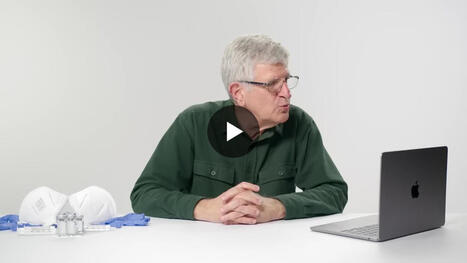
If every doctor communicated like Paul Offit MD, TikTok wellness grifters would be unemployed by Christmas.
WIRED sat him down to answer common vaccine questions — and it might be the clearest, most grounded piece of public-facing medical communication I’ve ever seen. I’ve followed Offit’s work for decades — but I’ve never heard him speak this plainly about common questions around vaccination.
That matters. Because today ACIP is (still) debating whether to scrap the universal newborn dose of Hepatitis B vaccine for babies born to hepatitis-negative mothers — or delay that dose by months.
Some of my favorite lines from the video:
“𝗔𝗻𝗱 𝘄𝗵𝗶𝗹𝗲 𝗶𝘁’𝘀 𝘃𝗲𝗿𝘆 𝗲𝗮𝘀𝘆 𝘁𝗼 𝘀𝗰𝗮𝗿𝗲 𝗽𝗲𝗼𝗽𝗹𝗲, 𝗶𝘁’𝘀 𝗵𝗮𝗿𝗱 𝘁𝗼 𝘂𝗻𝘀𝗰𝗮𝗿𝗲 𝘁𝗵𝗲𝗺.” (That may be the single best summary of the entire vaccine misinformation era.)
And when someone asks why babies get “so many shots,” he doesn’t spiral into jargon or defensiveness. He explains the whole point in one sentence:
“𝗩𝗮𝗰𝗰𝗶𝗻𝗲𝘀 𝗮𝗿𝗲 𝗴𝗶𝘃𝗲𝗻 𝘁𝗼 𝗽𝗿𝗲𝘃𝗲𝗻𝘁 𝗱𝗶𝘀𝗲𝗮𝘀𝗲𝘀 𝘁𝗵𝗮𝘁 𝗰𝗮𝘂𝘀𝗲 𝗰𝗵𝗶𝗹𝗱𝗿𝗲𝗻 𝘁𝗼 𝘀𝘂𝗳𝗳𝗲𝗿 𝗼𝗿 𝗯𝗲 𝗵𝗼𝘀𝗽𝗶𝘁𝗮𝗹𝗶𝘇𝗲𝗱 𝗼𝗿 𝗱𝗶𝗲.” BOOM. No drama. No spin. Just the truth clinicians sometimes forget to say out loud.
This is what good communication looks like: clarity without condescension, empathy without indulgence and facts that actually land.
If ACIP swings the wrong way — moving from a “safe by default” baseline to a “parent-choice roulette” at birth — we won’t just be trading a shot. We’ll be eroding decades of public-health trust and reopening the door to preventable chronic disease. If the birth-dose is delayed or abandoned, some of those newborns will turn up decades later with chronic HepB: cirrhosis, liver cancer, maybe needing transplant… and deaths in 2040s, 2050s, 2060s. Long after the current ACIP panel will be retired or dead. But the consequences won’t be.
We keep talking about “restoring trust in medicine.” This is what it actually looks like.
Full video below. Watch it if you talk to patients about vaccines — or if you just care what good medicine sounds like.
Kennedy’s campaign against public health and vaccines, which have saved at least 154 million lives over the past 50 years, is a fundamental threat to...
Upending decades-old guidance, the Centers for Disease Control and Prevention’s vaccine advisory committee voted to no longer issue a blanket recommendation that all newborns receive a hepatitis B vaccine at birth.
Ignorance or bad faith ? To claim that the original logic for a universal newborn dose as“marketing” is a lie,as it was driven by boring epidemiology not only in the USA but in many other countries. We saw today the USA ddnying the science on HepB vaccines. And here is why : - Perinatal/early-childhood HBV > very high risk of lifelong chronic infection, cirrhosis and liver cancer. - Many carriers don’t know or disclose their status, and babies don’t stay in the same “low-risk” household forever. - Selective “high-risk only” programmes were tried and repeatedly missed kids; universal infant Hep B helped drive childhood HBV down.
Rebranding this as a victory, it shows how little one trust the benefits of public health as HepB vaccines reduce infection cases by 99%. I have looked at the actual ACIP language and numbers, only to notice how much of the litterature they have omitted to support their lies: - Is the birth dose truly no longer recommended for all, or just being pushed to a slightly later window in very low-risk settings? - What happens for babies born to mums with unknown status, incomplete screening, or in chaotic social situations? - What modelling did CDC use for future chronic HBV and liver-cancer burden under the new policy? It was funny to listen to those trying to compare the USA to Denmark as one has fully universal medicine access and the other not enough.
The evidence says a more targeted approach now has a better risk–benefit profile, great; show the data and be honest about the trade-offs, one being the deaths to so many children it is worrisome that the ACIP took such decision. One would that any parent of a child who would get infected to sue some of the members of the ACIP committee. Top on my list would be Levy o
To get content containing either thought or leadership enter:
To get content containing both thought and leadership enter:
To get content containing the expression thought leadership enter:
You can enter several keywords and you can refine them whenever you want. Our suggestion engine uses more signals but entering a few keywords here will rapidly give you great content to curate.


 Scoop.it!

 Your new post is loading...