Groundbreaking research compares health of vaccinated vs.unvaccinated...
Get Started for FREE
Sign up with Facebook Sign up with X
I don't have a Facebook or a X account


|
Suggested by
Société Francaise d'Immunologie
onto Hésitations Vaccinales: Observatoire HESIVAXs July 20, 2019 4:48 AM
|
 Scoop.it!
Groundbreaking research compares health of vaccinated vs.unvaccinated...

 Your new post is loading...
 Your new post is loading...
Your new post is loading...
Scoop.it!
Point of view of an Immunologist/curator in 2020 Après Bobcatsss 2020, ECIL 2021, ICDF 2022, HESIVAXs with the motto UTA "Understand to Act"
Notre proposition « Désinformation Vaccinale: Curation, Observatoire, Littératies » a été retenue pour le séminaire annuel de l’Académie des Controverses et de la Communication Sensible, intitulé « La désinformation : nouvelles formes, nouveaux défis », qui s'est tenu à Paris le mardi 26 novembre 2024. Voir ci-après posts du 27 novembre, avec lien vers la présentation sur Slideshare.
Présentation le 20 mars 2025 à InfoxsurSeine deux jours pour décrypter la désinformation et échanger autour des solutions.
Avez vous acheté le numéro Juillet/septembre 2025 de la RECHERCHE sur LE FAUX?
des sujets à approfondir - Vaccins et argent Making money with vaccines, against vaccines le sujet le plus chaud, de 3,36 euros par mois à 300 millions de dollars? - Publications vraies et fausses particulièrement difficile - Obligations, exemptions, incitations, peut-être plus simple?
Gilbert C FAURE's insight:
The topic addresses Fake news as a global problem, extracting material focusing on vaccinations, vaccination hesitancy and anti-vax attitudes. The subject is evolving constantly with health consequences all over the world. This topic became a research action project at CREM (Centre de Recherche sur les médiations) Ir covers not only Fake News still thriving on the internet, but also efforts of many (supranational bodies, scientific societies, researchers...) to improve health literacies of laypeople, and medical students on this sensitive topic... https://www.scoop.it/topic/assim-actualites/?&tag=acting+against+fake+news
Nous avons rejoint le réseau SHS Vaccination France https://shs-vaccination-france.com/le-reseau-france/ 1ère journée d'études à Paris le 24 janvier 2025 https://shs-vaccination-france.com/prsentations-1ere-journee-detudes-du-reseau-shs-vaccination/
We also joined The collaboration on social science and immunisation (COSSI): a successful Australian research and practice network https://www.sciencedirect.com/science/article/pii/S0264410X24001440?via%3Dihub plusieurs réunions organisées down under, mais c'est loin.
and the VARN community Vaccination Acceptance Research Network https://boostcommunity.org/news/1071180?network_id=sabin-vaccine-institute
Published papers related to this subject are also posted. https://www.scoop.it/topic/assim-actualites/?&tag=article+scientifique
Fake News related to Covid and Vaccinations slightly decreased compared to other topics such as ukrainian war, gaza war, and politics in USA even sports related informations... but the involvement of politicians in the topic very much increased !
Unfortunately, as Jonathan Swift so eloquently said: Reasoning will never make a man correct an ill opinion, which by reasoning he never acquired.
“The greatest enemy of knowledge is not ignorance; it is the illusion of knowledge.” — Daniel J. Boorstin
le 1 avril 2025, retour de shitstorm? Bonjour Pr Faure, avez vous informé vos patients de la balance bénéfice -risque actuelle des produits à ARNmodifié avant de les injecter ? L'information claire loyale et appropriée et un impératif déontologique et légal. Il faut travailler Pr Faure. Pas diffamer. Travailler.…
Scoop.it!

From
www

"Overall, this review article is basically a nothingburger. It’s far more speculation than anything else, as I mantioned before, a case of putting the cart before the horse. The authors carefully select three studies that they think they can point to as strong suggestive evidence in population studies that COVID-19 vaccination is associated with an increased risk of cancer. When these studies are examined in more detail, they all suffer from potential confounders that could easily explain their results, none more than the S. Korean study, which is about as obvious an example of healthy user/healthy vaccinee bias as I’ve ever seen. The authors also present a tiny number of case reports—at least the number is incredibly tiny relative to the billions upon billions of doses of vaccine that have been administered over the last four years—as though they suggested anything but the entirely predictable phenomenon that, if you administer a medication to a large enough number of people, you will find a number of bad things that happen to a number of people soon after receiving that medication by random chance alone. No convincing argument or evidence is presented to suggest causation.
Scoop.it!

A Review and Agreement with an 1871 Medical Dissent
Gilbert C FAURE's insight:
1871
Scoop.it!
From
boingboing
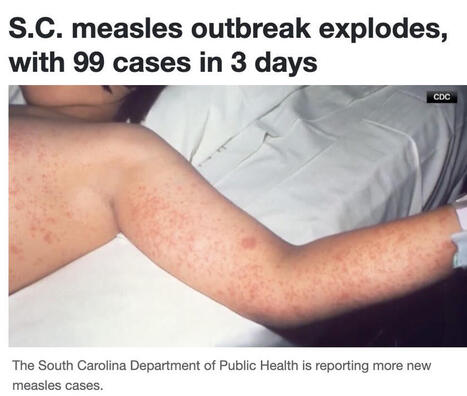
A preventable outbreak: measles spreads where vaccines didn't...
Scoop.it!
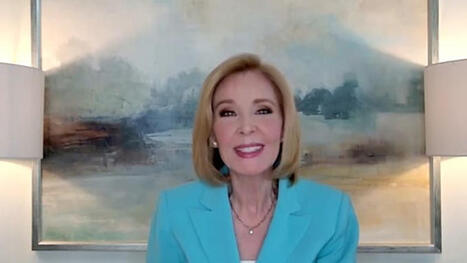
Is 2026 the year evidence dies at the CDC? Dr Sandra Fryhofer explains why the CDC can no longer be our ‘North Star’ for vaccine guidance and gives a preview of what’s to come in 2026.
Scoop.it!
Boosting Influenza Vaccination Coverage Requires Improved Access, Trust: Marco del Riccio, MD | AJMC
From
www
Although influenza vaccine uptake remains low, improving access, recommendations, and trust may help close coverage gaps.
Scoop.it!

From
www
There is nothing in this case that links this situation to COVID vaccines. Nothing. This is not only pure
Scoop.it!

From
www
📍 New evidence from Ethiopia shows that community engagement strategies like defaulter-tracing tools and personalised health calendars help close immunisation gaps by strengthening connections between caregivers and health workers. Shared responsibility and local communication are key to improving vaccine uptake.
Scoop.it!

It was not journalism that was affected. It was a new breed of pseudo-journalism based on misinformation that emerged. One where pseudo-self-claimed experts tried to flood the social media space. Be reminded that the only significant contribution to science from these individuals should have been their silence.
Scoop.it!
Getting a few people who are trying to both-sides the attacks on vaccination in my mentions. This piece by Martin McKee and Pascal Diethelm is a crucial corrective. When you engage with anti-vaxxers or those who sympathize with them, you are falling into a trap."
Scoop.it!

A generation ago, pediatric wards filled up every winter with babies dangerously dehydrated from rotavirus.
Scoop.it!
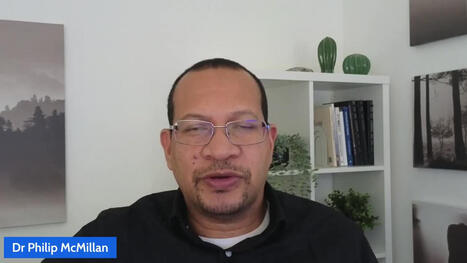
Join us as we delve into the effectiveness of COVID vaccines, exploring the science behind their development and the impact they've had on the global pandemic. With a critical eye, we examine the data and expert opinions to answer the question: did COVID vaccines really work? From vaccine efficacy rates to real-world outcomes, this video takes a comprehensive look at the role of vaccines in combating COVID-19. Whether you're looking for a deeper understanding of vaccine science or seeking to separate fact from fiction, this video aims to provide a balanced and informative perspective on one of the most critical public health issues of our time.
|
Scoop.it!
From
www
Débat avec Sylvain Delouvée, maître de conférences de psychologie sociale à l’Université Rennes 2, figure médiatique des croyances collectives et de la désinformation, récompensé en 2025 de la médaille de la médiation scientifique CNRS – France Universités.
Scoop.it!

From
www
Vaccines and mRNA injections disrupt immune balance while driving inflammation and chronic illness worldwide
Gilbert C FAURE's insight:
2025
Scoop.it!

From
substack
No one will connect the dots if people won’t talk about vaccination status. And that is what Fauci and Offit and every politician banks upon, due to the influence of powerful industry lobby groups that ostracise you with the weaponised term ‘antivaxxer’ and conspiracy theorist’. If you were banned from clubs and restaurants etc in 2021 due to you reliance on natural immunity, (now proven to be overwhelmingly more beneficial than the falsely named mRNA “vaccine”), then make sure you talk about vaccination status wherever you can. That’s if you want to save your children and grandchildren from neurological and other damage due to unnecessary shots.
Scoop.it!
While anti-vax advocates welcome the changes, local pediatricians are frustrated with new guidelines that say less vaccines will be enough for some kids.
Scoop.it!
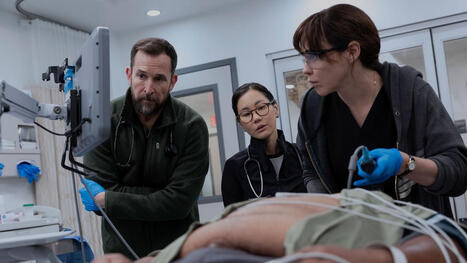
Dhruv Khullar writes on the HBO Max show “The Pitt,” and about the medical profession.
Scoop.it!

From
www
A former senior adviser to Republican Lt. Gov. Stavros Anthony said she was pushed out of her job in December after working with Anthony for more than a decade, replaced with a younger employee with a sizable social media following and a background with a conservative activist group.Sally...
Scoop.it!

The risk of viral pathogen transmission between humans and animals (spillover events) and subsequent spread has been increasing due to human impacts on the planet, which lead to changes in the interactions between humans, animals, ecosystems and their pathogens. Key factors (drivers) that increase the risk of disease emergence include climate change, urbanization, land-use changes and global travel, all of which can alter human–animal–environment interactions and increase the likelihood of zoonotic spillovers and vector-borne diseases. Incorporating data on these drivers (such as ecological shifts and patterns of animal movement) into disease surveillance systems can help identify hot spots for disease emergence, which could in theory enable earlier detection of outbreaks and, in turn, increase the effectiveness of intervention strategies. A One Health approach, emphasizing the interconnectedness of human, animal and environmental health, is advocated for addressing these complex challenges. Although conceptually clear and widely endorsed, implementation of One Health approaches towards primary prevention of spillovers is extremely challenging. Here, we summarize current knowledge on disease emergence and its drivers, and discuss how this knowledge could be used towards primary prevention and for the development of risk-targeted One Health early warning surveillance. We consider integrating innovative tools for diagnostics, surveillance and virus characterization, and propose an outlook towards more integrated prevention, early warning and control of emerging infections at the human–animal interface. In this Review, Sikkema and Koopmans examine the drivers of viral emergence and how these insights could inform prevention strategies and the development of risk-targeted One Health early warning surveillance. They discuss tools for diagnostics, surveillance and virus characterization, and propose strengthening integrated One Health strategies for early warning, prevention and control of emerging infections at the human–animal interface.
Scoop.it!
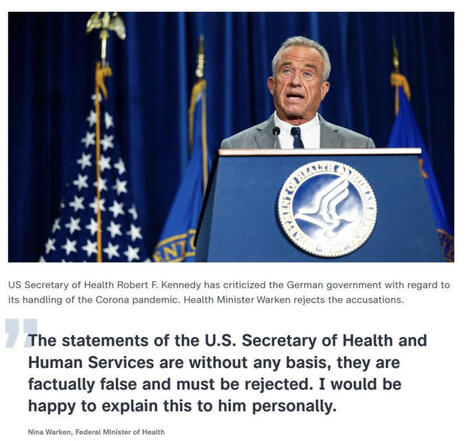
Ignorance, bad faith or stupidity... Maybe the guy should have checked his sources, and get a better German translator. And mind his own business...
Scoop.it!
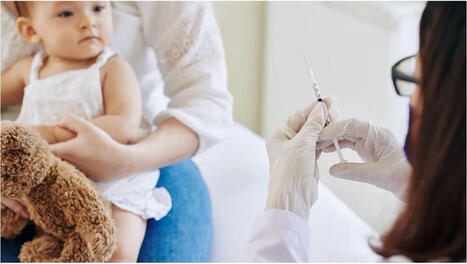
As mentioned by a pediatrician, « I heard from a parent just this week: "What vaccines are recommended now? I am so confused." This uncertainty is coming from families who previously made confident decisions to vaccinate. Amid fewer universally recommended vaccinesopens in a new tab or window and a vague emphasis on "shared clinical decision-making," the consistent theme in parents' concern is federal messaging that signals ambiguity without a clear explanation. »
Scoop.it!

Chez certaines personnes, les réponses immunitaires liées à une infection ou une vaccination contre la Covid-19 pourraient avoir des effet sur des cellules cancéreuses dormantes ou existantes. .
Scoop.it!
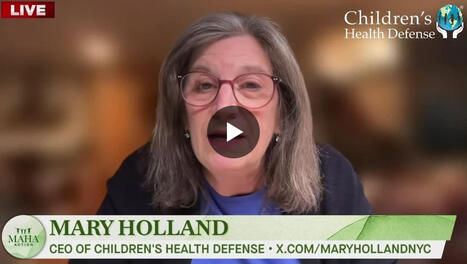
Debate with RFK Jr : why ? As RFK Jr said himself : ¨he doesn't think people should take medical advice from him.¨ As well, as he stated: his views on vaccines are irrelevant...
Scoop.it!

The officlal HHS Rapid Response account posted a clip of some of HHS Secretary Kennedy's recent remarks. "We all know that trusting the experts is not a feature of science; it’s not a feature of democracy — it’s a feature of tyranny. And a feature of religion. But not science," he said in the below video from HHS Rapid Response.
|