



In response to the recent discovery of the Flashfake botnet, Kaspersky Lab has announced the availability of its free Flashfake Removal Tool.

 Your new post is loading...
 Scoop.it! In response to the recent discovery of the Flashfake botnet, Kaspersky Lab has announced the availability of its free Flashfake Removal Tool. 
No comment yet.
Sign up to comment
Scoop.it!

Apple said Tuesday it's developing a solution to combat the Flashback malware that experts say has infected around 600,000 Mac computers around the world.
Scoop.it!

Apple is developing a tool to "detect and remove" a Trojan that is believed to have infected around 650,000 Macintosh computers.
It said it is working with internet service providers (ISPs) to disrupt the command network being used by hackers to exploit the malware. Trojans are infections that can expose computers to control by hackers.
It is Apple's first statement on the threat. It issued patches to prevent the malware's installation last week.
The two security updates were released ===> eight weeks after Java's developer Oracle issued a fix for other computer systems. <===
Scoop.it!

Apple a indiqué discrètement qu’il mettra bientôt à la disposition des utilisateurs Mac un outil de détection ...
Scoop.it!

Dr. Web's chief executive Boris Sharov, who says Apple never responded when the firm shared its findings on the Flashback botnet.
“They told the registrar this [domain] is involved in a malicious scheme. Which would be true if we weren’t the ones controlling it and not doing any harm to users,” says Sharov. “This seems to mean that Apple is not considering our work as a help. It’s just annoying them.”
Scoop.it!

In KB article HT5244, Apple has - apparently for the very first time! - talked openly about a security problem before it has all its threat reponse ducks in a row.
Scoop.it!

Ein Entwickler hat ein kleines Tool für Mac-Rechner entwickelt, mit dem schnell überprüft werden kann, ob der Rechner vom gefährlichen Flashback-Trojaner befallen ist. Auch Kaspersky hat ein solches Tool mittlerweile veröffentlicht.
Scoop.it!

Die Anzahl der mit Flashback infizierten Macs steigt weiter. Derweil haben die Antivirenhersteller kostenlose Test- und Entfernungsprogramme für Flashback-Trojaner verteilt.
Scoop.it!
WHAT IS FLASHBACK/FLASHFAKE?
It is a family of malware for Mac OS X. The first versions of this type of threat were detected in September 2011. In March 2012 over 600 000 computers worldwide were infected by Flashback.
The infected computers have been combined in a botnet which enables cybercriminals to install additional malicious modules on them at will.
Check for FREE online (Kaspersky) if your Mac is infected and learn HowTo...
Also users can check if they’re infected with Flashfake by using Kaspersky Lab’s free removal tool http://support.kaspersky.com/downloads/utils/flashfake_removal_tool.zip
Scoop.it!

The Flashback botnet is an indication that Apple is not putting enough energy into security and that oracle isn't paying attention to Java security issues.
Scoop.it!

Malware called "Fakeflash" or "Flashback' is infecting Macs running OS X. It has given criminals access to more than 600,000 computers. One reason for the attack: Apple sells more Macs now and has about 12 percent market share.
Scoop.it!

From
www

The Flashback Trojan has compromised an estimated 600,000 plus Macs, making it comparable to the massive Conficker worm botnet.
Scoop.it!
Congratulations, Apple. The Mac is now popular enough to attract major attention from the bad guys.
Patching the future
|
Scoop.it!

Nach der Enttarnung des Flashback-Trojaners hat Apple nun die Sicherheitslücke geschlossen und arbeitet mit Hochdruck an einem Entfernungs-Tool.
Scoop.it!

The explosion in development and adoption of smartphones and tablets for both personal and business use in the past two years is both a blessing and a curse to IT departments globally.
Known as the Bring Your Own Device (BYOD) phenomenon, on one hand, there is an opportunity for greatly increased productivity and decreased costs.
===> On the other, there are increased security risks, management issues and even data and device ownership and governance issues. <===
Via Gust MEES
Scoop.it!
Kaspersky Lab -- which is offering the free tool -- counted up to 670,000 infected OS X machines in the botnet last week; today has seen just 227,493 so far, up from 208,301 yesterday.
Over the weekend, Kaspersky saw a major dip in the number of active infected Macs, from a head count on Friday, April 6, of 650,748, to 248,723 on Saturday, and then 237,103 on Sunday.
Scoop.it!

It tried to kill the messenger...
Now that the Mac has achieved uber popularity, it is attracting hackers.
Scoop.it!

"Apple développe des logiciels qui détecteront et supprimeront le virus Flashback", a indiqué l'entreprise dans un message diffusé par un blog sur son site internet.
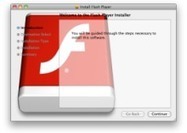
Les pirates informatiques trompent les utilisateurs de Mac en les incitant à télécharger une fausse nouvelle version du logiciel de visionnage de vidéos Adobe Flash, qui est en fait un cheval de Troie.
Scoop.it!

We all need to use anti-virus, but above all we need to use our common sense...
The Flashback Trojan is a good example of how Mac users are now very much targets of cybercriminal gangs - no longer are these people a ragtag bunch of hackers simply looking to make a name for themselves but well-organised, profit-motivated gangsters - as was the MacDefender (and numerous variants) scareware campaign from last year.
Don't be fooled into thinking that Apple necessarily has your back either - it seriously dropped the ball when it came to the Flashback threat, not issuing an update for Java for weeks after Oracle had made it clear that a vulnerability existed and had fixed the threat for Windows.
Scoop.it!
Plus d’un demi-million de Mac auraient été infectés, selon Dr. Web, par un logiciel malveillant exploitant une faille Java. Celui-ci, surnommé Flashback, marque-t-il la fin d’une époque ?
Force est de constater qu’Apple n’a pas manqué de travailler à répandre lui-même cette image. Début 2009, l’entreprise présentait même son système d’exploitation comme «un havre de paix.»
Mais cette présentation était à tout le moins discutable. De fait, la division sécurité d’IBM indiquait à la même période que Mac OS X et Mac OS X Server comptaient chacun pour 14,3 % des vulnérabilités dévoilées en 2008.
Pour un environnement hyper sécurisé, on a vu mieux. Par la suite, les démonstrations d’exploits sur Mac OS X n’ont pas manqué.
De quoi donner de l’eau au moulin d’Eric Filiol, spécialiste de la cryptologie, qui rappelait alors que
===> «tous les environnements capables d’exécution [de code] sont potentiellement vulnérables.» <===
Et l’on ne saurait contredire cette affirmation aussi prudente que réaliste.
Scoop.it!

After intercepting one of the domain names used by the Flashback/Flashfake Mac Trojan and setting up a special sinkhole server last Friday, we managed to gather stats on the scale and geographic distribution of the related botnet.
Scoop.it!
At the moment, there are more than 100 million Mac OS X users around the world. The number has grown switfly during the past years we expect this growth to continue.
Scoop.it!

Le cheval de Troie Flashback cause beaucoup de dégâts et d'émoi depuis la semaine dernière. Voici la méthode pour savoir si votre ordinateur en est victime.
Scoop.it!

Mac users: It’s time to be more vigilant about viruses.
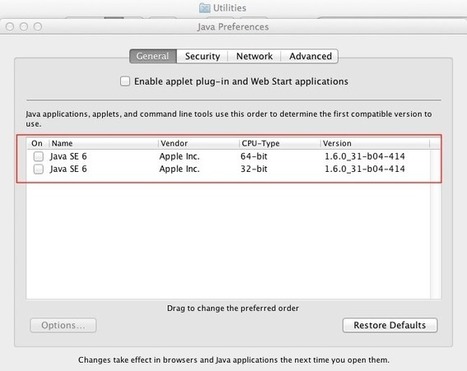
Geise said that Macs were particularly affected in this attack because of a vulnerability in the Apple version of Java — the company stopped using Oracle’s releases of Java a couple of years ago, and supports its own versions.
Yet while Oracle had patched the problem with Java that caused this problem months ago, Apple had yet to address the problem until April 3, when it issued a patch for the vulnerability. It then released a second patch on April 5.
“Oracle had patched this but Apple didn’t patch it until very recently,” he said. “Exploits were seen in the wild since around early to mid-March.
That has been a full month of lead time to do bad stuff.”
Several experts have said that this appears to be one of the largest-ever attacks on Macs.
Scoop.it!

Hello Mac users, welcome to the problems facing Windows users!
Now Mac users are facing a far more serious threat. Having your Mac as part of a botnet, and having malware on the system that’s sniffing passwords is a big deal indeed, and far scarier than some fake security popup. Flashback is serious malware. Unless you do some digging around on your system, you won’t even know it’s there.
That’s serious. But is it serious enough to get Mac users to protect their Macs?
I hope so, because ===> this incident has highlighted how wide open Mac users are to attacks, and it’s clear that Apple doesn’t have their backs covered. <===
|




