Apple released Safari 6 as part of its new Mac operating system, OS X Mountain Lion, as well as a version for Lion that fixes a whopping 121 security vulnerabilties.
Unfortunately, Apple did not release security updates for Safari for either Snow Leopard or Windows to coincide with the release of Safari 6.0.
===> Unfortunately for Apple, ignoring security issues that affect a large percentage of users does not make the security issues disappear. <===
Apple has snapped up AuthenTec, a Delaware-based company that specializes in security systems such as fingerprint scanners.
So what does Apple want with AuthenTec? Are we about to see fingerprint scanners embedded in all our MacBooks? My guess is not so much on that front. But AuthenTec makes security-related products for other platforms, too. For example, the company has helped develop a system for Android devices where a fingerprint scanner is used in conjunction with mobile wallet functionality, as a way to secure payments.
Apple does tend to acquire small companies from time to time, usually in areas that it wants to control. For example, the company acquired a number of mapping firms that formed the basis of its iOS 6 mapping technology, bought up chip-maker PA Semi so it could design its own processor, and purchased Siri to make, well, Siri. In all of those cases, there was some lag time between the acquisition of the firm and the revelation of exactly what Apple was doing with the technology; if that holds true in this case, then a year or so from now, we’ll probably have the answer.
Apple did not respond to Macworld's request for comment as of this writing.
After further analysis, more information has emerged about the Morcut Mac OS X malware which was discovered this week.
Clearly OSX/Morcut-A was created with spying in mind, as its code includes hooks to control/monitor the following operations:
mouse coordinates instant messengers (for instance, Skype [including call data], Adium and MSN Messenger) location internal webcam clipboard contents key presses running applications web URLs screenshots internal microphone calendar data & alerts device information address book contents
===> In short, if this malware managed to infect your Mac computer it could learn an awful lot about you, and potentially steal information which could read your private messages and conversations, and open your email and other online accounts. <===
Apple has released an update to its Safari browser, version 6, that plugs 121 security holes, most of which involve the WebKit rendering engine.
The Safari update fixes a staggering 121 vulnerabilities, 117 of those flaws in WebKit, a browser engine designed to render HTML webpages. Most of the WebKit vulnerabilities could result in an unexpected application termination or arbitrary code execution if the user visits a maliciously created website, according to the security update.
Apple also patched two issues with the handling of feed:// URLs – one is a cross-site scripting vulnerability that could be exploited if a user visited a maliciously crafted site, and the other is an access control issue that could be exploited to send files from a user’s system to a remote server.
Another Safari fix resolves a problem in which passwords may autocomplete even when the site specifies that autocomplete should be disabled.
Apple will be making its first appearance at computer security conference Black Hat Thursday.
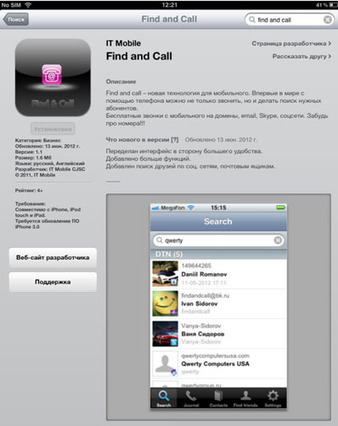
The first iOS malware app was confirmed earlier this month. Called “Find and Call” the app would have users upload all of their contact information to a server that would them spam all of their contacts with messages that appeared to come from the victim’s phone.
Hackers have started to pay more attention to the OSX platform.
Previously thought to be free from viruses and attacked, Apple computers have started to see a rise in malicious software attacks.
A new Mac Trojan - dubbed Crisis or Morcut - has been spotted but, luckily, not in the wild.
Security firms Intego and Sophos have picked up samples from Virus Total, which shares the samples submitted to it with AV developers, and the fact that it could be found only there shows that the threat is extremely low risk.
Nevertheless, the malware itself is far from harmless.
It can compromise the last two version of Apple's OS X (10.6 and 10.7) and it doesn't require a password to be entered to do it.
Summary: Apple has announced it iOS 6 will block the hacking of its In-App Purchase program. The company has also offered a temporary fix for app developers. if your app is affected, don't wait around for iOS 6.
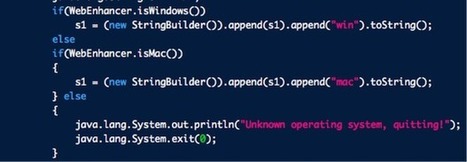
If allowed to run, a malicious Java applet checks the user's operating system and delivers a payload customized for that platform, whether it's Windows, Mac OS X, or Linux.
Most recently, we have come across a new variant of OSX.Macontrol (first seen in March 2012). This current sample appears to be spread through targeted email and has a very low distribution rate. The binary [md5 - e88027e4bfc69b9d29caef6bae0238e8] is small in size (75kB) and provides little functionality other than a backdoor to a remote host (61.178.77.16x).
The web server appears to be a custom HTTP command and control server that can collect and modify system settings. HTTP command and control allows the attacker to evade detection by sending commands that appear to be clean, normal web traffic.
OSX.Macontrol has the ability to:
- Close the connection to the remote location and end the threat - Collect information regarding the compromised computer and send it back to the remote server - Send the process list of the compromised computer to the remote server - End processes - Fork running processes - Retrieve the install path of the Trojan - Delete files - Run files - Send files to the remote server - Send user status and information to the remote server - Log out the current user - Put the compromised computer to sleep - Restart the compromised computer - Shut down the compromised computer
===> To ensure that you are protected, please make sure your AV definitions are always up to date. Also, please do not download or open attachments from senders that you do not recognize. <===
Symantec Note: We were able to connect with Apple and they stated they updated their OS X malware definitions recently to address this version of Macontrol.
In the past, few viruses have targeted Apple operating systems -- but this is gradually changing. The increased popularity of Apple smart devices has led some cybercriminals to exploit a traditionally ignored audience.
IT admins needs to educate their users about this growing threat and implement a business antivirus solution for Macs as they do for PCs.
Apple's OS X Mountain Lion (version 10.8) is due to be released next month, and its latest Developer Preview shows a new addition meant to keep its users secure: the automatic security check feature.
This new capability - "OS X Security Update Test 1.0" - will make the OS contact Apple's servers on a daily basis or every time the machine is started, download and automatically install updates, thus ensuring that the users always have the latest patches.
A new Trojan dubbed 'OSX/Crisis' has been discovered which takes sneaky to a whole new level for infecting Mac OS X systems.
Andrew, director of security operations for nCircle, declared, “Mac malware is no joke. Despite Apple’s marketing hype about security, it should be obvious to everyone that their devices are susceptible to malware. Earlier this year the Flashback Trojan infected hundreds of thousands of Macs. The new OSX/Crisis malware is another Apple wake up call.”
For many Mac users, though, there is still a disconnect between realizing that the threat landscape has shifted, and actually doing something about it.
===> Mac users need to embrace the mindset that has been conditioned into Windows users over time, and install antimalware and other security tools to proactively protect against new attacks. <===
===> “Mac users are going to have to learn to be more security minded and Apple needs to step up and offer users practical, effective security support.” <===
Summary: If Apple didn't buy AuthenTec, a cash strapped mobile security player, it's likely another rival would have. Apple's courtship of the enterprise via the bring your own device continues.
In a first, Apple manager scheduled to take stage Thursday at Black Hat to discuss security technologies in iOS...
Beyond Flashback, research has shown that Macs are carrying malware unbeknownst to users. A security scan of 100,000 Macs found 3 percent infected with Mac-capable malware, according to anti-virus vendor Sophos. When Windows malware was included, one in five Macs were found to be harboring some type of malware.
While the Mac has been the primary target, hackers are taking notice of iOS. This month, Kaspersky Lab reported finding an iOS Trojan that uploaded a user's address book to a remote server. Spam messages with a URL to the application, called "Find and Call," were sent from the server to all the users' contacts.
For years hackers focused on Microsoft Windows PCs instead of Apple products, which had a fraction of the market share. Today,
===> Apple's success in selling the iPhone and iPad have made it the world's most valuable company and its products a potentially lucrative target for cybercriminals. <===
Summary: A new Mac OS X Trojan referred to as OSX/Crisis silently infects OS X 10.6 Snow Leopard and OS X 10.7 Lion. It then spies on the user by monitoring Adium, Firefox, Microsoft Messenger, Safari, and Skype.
Apple parlera de la sécurité d'iOS lors de la conférence Black Hat qui se tient du 21 au 26 juillet 2012 à Las Vegas. C’est la première participation de la marque à la pomme à ce rendez-vous.
Non seulement Apple sera présent à la conférence Black Hat sur la sécurité informatique, mais le constructeur y fera aussi une déclaration. Le dirigeant de la plateforme sécurité de chez Apple, Dallas De Attley, montera sur la scène lors de l’événement, qui a lieu du 21 au 26 juillet à Las Vegas. Il parlera entre autres des systèmes de sécurité d’iOS, le système d’exploitation mobile d'Appel pour ses Iphone, iPad et iPod touch.
While the mode of infection is currently unknown, this new threat has uniquenesses over past malware for OS X. Read this blog post by Topher Kessler on MacFixIt.
Summary: Apple is working hard to fight the hacking of its In-App Purchase program for iOS. So far though, the company's attempts have not deterred Russian developer Alexey Borodin who apparently wants Cupertino to fix the underlying problem rather than just trying to block his in-appstore.com service.
Kaspersky meldet die erste Malware in Apples App Store
Die schädliche Anwendung heißt “Find and Call”. Sie liest das Telefonbuch aus und verschickt Spam-Nachrichten an alle Kontakte. Sie stand auch in Google Play zur Verfügung. Aus beiden Marktplätzen ist sie inzwischen entfernt worden.
A malicious app that slurps mobile users' phonebooks and uploads them to a remote server has been spotted being offered both on Google Play and Apple's App Store.
In the five years since the first iPhone was released, there has never been a serious known case of iOS malware on an non-jailbroken device.
Virtually every version of iOS has been quickly jailbroken (that is, modified to allow installation of apps and hacks not authorized by Apple or the mobile carrier).
Jailbreaking is accomplished by exploiting security vulnerabilities in iOS. The same exploits used to jailbreak (an arguably legitimate hack) could just as easily be used to infect an iOS device with malware.
Read more to know the possible dangers and be aware:
Apples MacOS X Moutain Lion wird täglich in Kontakt mit den Update-Servern von Apple treten, um nach neuen Sicherheitsupdates zu suchen und diese dann zu installieren. Apple will so die Sicherheit des Betriebssystems weiter verbessern.
Il semble bien que le mythe du Mac infaillible soit en train de tomber. Après l'épisode Flashback (un malware ciblant exclusivement les ...
La maturité pour Apple ?
Lorsque l'on regarde l'ancienne version de la page, le discours passé d'Apple fait sourire. Il était temps que l'entreprise redescende sur terre, et reconnaisse enfin la vulnérabilité de son OS aux menaces des cybercriminels.
L'épisode Flashback y est certainement pour quelque chose. L'entreprise à la pomme a sûrement pris conscience de quelque chose. On espère que cela la poussera à se focaliser davantage sur la sécurité, de même que ses consommateurs (qui se croient encore trop souvent hors d'atteinte).
To get content containing either thought or leadership enter:
To get content containing both thought and leadership enter:
To get content containing the expression thought leadership enter:
You can enter several keywords and you can refine them whenever you want. Our suggestion engine uses more signals but entering a few keywords here will rapidly give you great content to curate.


 Your new post is loading...