 Your new post is loading...

|
Scooped by
Gust MEES
November 28, 2017 7:56 PM
|
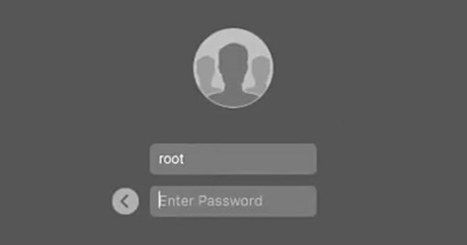
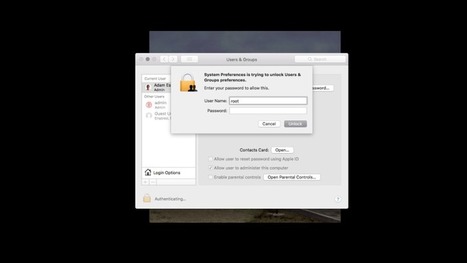
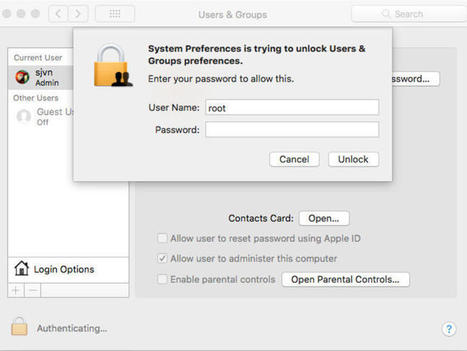
Want to have god-like powers over a Mac? Just enter your username as root... no password required. But an attacker needs to have physical access to a Mac computer in order to exploit this flaw?Not so fast. For instance, security researcher Patrick Wardle reports that it is possible to exploit the flaw remotely. Learn more / En savoir plus / Mehr erfahren: https://www.scoop.it/t/apple-mac-ios4-ipad-iphone-and-in-security
|
|
Scooped by
Gust MEES
November 28, 2017 7:11 PM
|
What’s the maddest, baddest, craziest, can-you-believe-it, how-did-that-happen security blunder of recent memory?
Companies contending for the top three spots in the past quarter surely include:
Uber. Suffered a breach, paid the hackers off, pretended it never happened, got found out anyway.
Equifax. Personal data including social security numbers for about half of US adults carried off by crooks.
Apple. When connecting an encrypted device, [Show password hint] would reveal the password itself.
Well, Apple just did it again, and this one is even worse that before – so Cupertino may well be back in first place.
Learn more / En savoir plus / Mehr erfahren: https://www.scoop.it/t/apple-mac-ios4-ipad-iphone-and-in-security
|
|
Scooped by
Gust MEES
November 28, 2017 6:50 PM
|
Update: Apple has acknowledged the issue and is working on it. Statement and workaround below.
Wow, this is a bad one. On Macs running the latest version of High Sierra — 10.13.1 (17B48) — it appears that anyone can log in just by putting “root” in the user name field. This is a huge, huge problem. Apple will fix it probably within hours, but holy moly. Do not leave your Mac unattended until this is resolved.
The bug is most easily accessed by going to Preferences and then entering one of the panels that has a lock in the lower left-hand corner. Normally you’d click that to enter your user name and password, which are required to change important settings like those in Security & Privacy.
No need to do that any more! Just enter “root” instead of your user name and hit enter. After a few tries, it should log right in. There’s no need to do this yourself to verify it. Doing so creates a “root” account that others may be able to take advantage of if you don’t disable it. Learn more / En savoir plus / Mehr erfahren: https://www.scoop.it/t/apple-mac-ios4-ipad-iphone-and-in-security
|
|
Scooped by
Gust MEES
November 28, 2017 6:37 PM
|
A newly-discovered flaw in macOS High Sierra — Apple’s latest iteration of its operating system — allows anyone with local (and, apparently in some cases, remote) access to the machine to log in as the all-powerful “root” user without supplying a password. Fortunately, there is a simple fix for this until Apple patches this inexplicable bug: Change the root account’s password now. Learn more / En savoir plus / Mehr erfahren: https://www.scoop.it/t/apple-mac-ios4-ipad-iphone-and-in-security
|
|
Scooped by
Gust MEES
November 28, 2017 3:41 PM
|
VIETNAMESISCHE SICHERHEITSFORSCHER:
Neue Maske soll iPhone X sofort entsperren
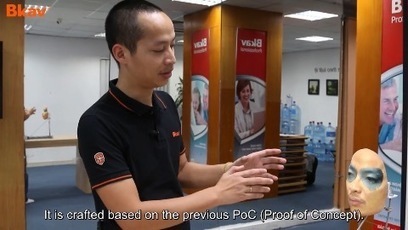
Die Maske, mit denen Forscher des vietnamesischen Anbieters Bkav ein iPhone X überlistet haben, ist überarbeitet worden. Die neue Version soll die Entsperrung über Face ID ermöglichen, ohne dass das iPhone X angelernt werden muss.
Mitarbeiter des vietnamesischen Sicherheitsanbieters Bkav wollen mit einer neuen Maskenversion Apples Face ID leichter als bisher überlisten können und warnen davor, die Gesichtserkennung im geschäftlichen Bereich zu nutzen - weil diese so unsicher sei.
Learn more / En savoir plus / Mehr erfahren: https://www.scoop.it/t/apple-mac-ios4-ipad-iphone-and-in-security/?&tag=Face-ID
|
|
Scooped by
Gust MEES
November 10, 2017 4:36 PM
|
|
|
Scooped by
Gust MEES
November 3, 2017 12:44 PM
|
MIMIKERKENNUNG:
Apples Face-ID gefällt nicht nur grinsenden Einhörnern
Amerikanische Bürgerrechtler sind besorgt darüber, dass App-Entwickler die Mimikerkennung des iPhone X auch für unlautere Zwecke verwenden könnten. Apple untersagt dies zwar, macht aber nur Stichproben.
Die Gesichtsdaten, die zum Freischalten des neuen iPhone X verwendet werden, sollen sicher auf dem Smartphone gespeichert werden.
Wie Reuters berichtet, dürfen Entwickler die durch Face ID gewonnenen Gesichtsdaten auch außerhalb des iPhones speichern. Bürgerrechtler befürchten, App-Entwickler könnten die Daten nutzen, um Reaktionen beispielsweise auf Werbeanzeigen in Apps zu messen. Entwickler können theoretisch überwachen und speichern, wie oft Benutzer blinzeln, lächeln oder ihre Augenbrauen heben. Learn more / En savoir plus / Mehr erfahren: https://www.scoop.it/t/apple-mac-ios4-ipad-iphone-and-in-security/?&tag=Face-ID
|
|
Scooped by
Gust MEES
November 2, 2017 1:29 PM
|
Beim jährlichen Hackerwettbewerb Mobile Pwn2Own 2017 ist es dem Tencent Keen Security Lab gelungen, Apples iPhone 7 wiederholt zu kompromittieren. Die Sicherheitsforscher nutzten dabei zwei verschiedene Schwachstellen in dem Smartphone, das mit dem aktuellen Mobilbetriebssystem iOS 11.1 lief.
Der erste erfolgreiche Hack war durch einen WLAN-Fehler möglich und brachte dem Team eine Prämie von 110.000 Dollar sowie 11 Master-of-Pwn-Punkte ein. Dabei entfielen 60.000 Dollar auf den WLAN-Exploit. Weitere 50.000 wurden dafür vergeben, dass die bösartige Anwendung der Sicherheitsforscher sich als beständig erwies und auch einen Neustart überlebte. Sie nutzten insgesamt vier Bugs, um Code auszuführen und erhöhte Berechtigungen zu erlangen.
Die hergestellte Verbindung mit einem WLAN bringt die Hacker-App „KeenLab“ auf das iPhone 7 (Screenshot: ZDI).
Der zweite Hack nutzte eine Anfälligkeit im Safari-Browser aus und wurde mit weiteren 45.000 Dollar sowie 13 Punkten honoriert. Das Keen Security Lab benötigte nur wenige Sekunden, um den erfolgreichen Exploit vorzuführen. Der Angriff erforderte zwei Bugs, die sich im Browser und in einem Systemdienst fanden. Eine bösartige App konnte sie auch nach einem Neustart des iPhone 7 weiterhin nutzen. Auf einen ebensolchen Safari-Hack stieß außerdem ein Sicherheitsforscher, der sich „mj0011“ nennt, und erhielt eine Prämie von 25.000 Dollar. Ein weitere iPhone-7-Attacke von 360 Security war teilweise erfolgreich und brachte 20.000 Dollar ein. Learn more / En savoir plus / Mehr erfahren: https://www.scoop.it/t/apple-mac-ios4-ipad-iphone-and-in-security
|
|
Scooped by
Gust MEES
October 26, 2017 8:30 AM
|
Une fois installées, beaucoup d'applications demandent l'autorisation d'accéder aux capteurs photo/vidéo de l'iPhone. Mais pour le célèbre développeur Felix Krause, une fois acceptée, cette autorisation peut constituer une porte d'entrée pour une utilisation non-autorisée.
Il ne s'agit ni d'une faille ni d'un bug mais le spécialiste autrichien démontre qu'une application qui peut accéder à la caméra a la possibilité d'utiliser les modules du smartphone en tâche de fond, en toute discrétion, sans limite de temps. Concrètement, l'appareil peut filmer ou photographier à l'insu de l'utilisateur et pourquoi pas transmettre les clichés ou les vidéos à un tiers.
Felix Krause a développé une vraie fausse application de réseau social demandant l'autorisation d'utiliser la caméra et démontre que l'application peut prendre des photos sans autorisation, photos qui apparaissent alors dans le fil d'actualités de ce faux réseau social...
Ne s'agissant pas d'une faille, le développeur demande donc à Apple de modifier son OS afin que ces autorisations soient modifiées et limitées. Un icône d'utilisation activée de la caméra pourrait également constituer une solution afin d'alerter en temps réel l'utilisateur. Learn more / En savoir plus / Mehr erfahren: https://gustmees.wordpress.com/2014/03/05/often-asked-questions-are-there-cyber-security-dangers-with-apps-and-whats-about-privacy/ http://www.scoop.it/t/apple-mac-ios4-ipad-iphone-and-in-security/?&tag=Privacy
|
|
Scooped by
Gust MEES
October 15, 2017 11:21 AM
|
|
|
Scooped by
Gust MEES
October 10, 2017 4:17 AM
|
Uber has said it will remove code from its iPhone app that security researchers say could let the ride-sharing app record the screen -- even when the app is closed.
Will Strafach, a security researcher, discovered this week that Uber had been granted an undocumented private app permission allowing access to the screen-recording feature. It's one of many "entitlements" that allow developers to tap into features of an iPhone or iPad that are normally off limits to most app developers, unless they have been granted special permission by Apple.
Many screen-recording apps use this entitlement without permission, such as iRec, which run on jailbroken devices.
Strafach said that to his knowledge, based on thousands of app binaries he has indexed, Uber is the only third-party app that was given a private entitlement.
Other iPhone and iPad app developers said the move was unprecedented.
Apple expert and jailbreak author Luca Todesco told ZDNet that it was an "extremely dangerous use case." Learn more / En savoir plus / Mehr erfahren: http://www.scoop.it/t/apple-mac-ios4-ipad-iphone-and-in-security https://gustmees.wordpress.com/2014/03/05/often-asked-questions-are-there-cyber-security-dangers-with-apps-and-whats-about-privacy/
|
|
Scooped by
Gust MEES
October 5, 2017 7:33 PM
|
It’s only eight days since Apple’s latest and greatest macOS 10.13 release, better known as High Sierra.
But the first security update has already come out, and we suggest you apply it urgently.
The update is called High Sierra 10.13 Supplemental Update, detailed in the security advistory APPLE-SA-2017-10-05-1. Learn more / En savoir plus / Mehr erfahren: http://www.scoop.it/t/apple-mac-ios4-ipad-iphone-and-in-security
|
|
Scooped by
Gust MEES
October 3, 2017 6:53 AM
|
Dans de nombreux cas, le système EFI des Mac reste vulnérable même si l’on télécharge toutes les mises à jour proposées par Apple. Les utilisateurs concernés peuvent donc être la cible d’attaques Thunderstrike, particulièrement néfastes.
Vous avez un Mac totalement patché et vous vous sentez en sécurité ? Voici une étude qui risque de vous faire déchanter. Les chercheurs en sécurité Rich Smith et Pepjin Bruienne de la société Duo ont analysé le niveau de sécurité du système d’amorçage EFI de 73.324 ordinateurs Mac et – surprise – celui-ci est loin d’être toujours à la hauteur des espérances. Learn more / En savoir plus / Mehr erfahren: http://www.scoop.it/t/apple-mac-ios4-ipad-iphone-and-in-security http://www.scoop.it/t/apple-mac-ios4-ipad-iphone-and-in-security/?&tag=EFI
|
|
|
Scooped by
Gust MEES
November 28, 2017 7:33 PM
|
Sicherheitsexperten haben eine gigantische Lücke im neuen Apple-Betriebsystem Mac OS High Sierra entdeckt!
Laut einem Bericht des Magazin „Wired“ lässt sich die Abfrage von Nutzername und Passwort mit einem erschreckend einfachen Trick umgehen: Statt des Nutzernamens tippt man lediglich das Wort „root“ ein, lässt das Passwort-Feld leer, drückt mehrfach die Eingabetaste – und erhält vollständigen Zugriff auf das Gerät.
Dann sei es jedem Angreifer mit Zugang zu einem solchen Computer möglich, in die tiefsten Systemeinstellungen vorzudringen.
Beim Kurznachrichtendienst Twitter zeigen gleich mehrere Nutzer, wie simpel sich die Passwortabfrage aushebeln lässt.
Learn more / En savoir plus / Mehr erfahren: https://www.scoop.it/t/apple-mac-ios4-ipad-iphone-and-in-security
|
|
Scooped by
Gust MEES
November 28, 2017 7:05 PM
|
In software, there are bugs, and there are dangerous bugs. It looks like macOS High Sierra has one of those dangerous bugs; one that could give someone full access to virtually any user account. And holy buckets, it is scary. Learn more / En savoir plus / Mehr erfahren: https://www.scoop.it/t/apple-mac-ios4-ipad-iphone-and-in-security
|
|
Scooped by
Gust MEES
November 28, 2017 6:44 PM
|
THERE ARE HACKABLE security flaws in software. And then there are those that don't even require hacking at all—just a knock on the door, and asking to be let in. Apple's macOS High Sierra has the second kind.
On Tuesday, security researchers disclosed a bug that allows anyone a blindingly easy method of breaking that operating system's security protections. Anyone who hits a prompt in High Sierra asking for a username and password before logging into a machine with multiple users, they can simply type "root" as a username, leave the password field blank, click "unlock" twice, and immediately gain full access.
In other words, the bug allows any rogue user that gets the slightest foothold on a target computer to gain the deepest level of access to a computer, known as "root" privileges. Malware designed to exploit the trick could also fully install itself deep within the computer, no password required. Learn more / En savoir plus / Mehr erfahren: https://www.scoop.it/t/apple-mac-ios4-ipad-iphone-and-in-security
|
|
Scooped by
Gust MEES
November 28, 2017 6:05 PM
|
Apple, Apple, Apple. What are we going to do with you? In your most recent High Sierra macOS release, it turns out you've given a way for any local user to take over a Mac -- lock, stock, and two smoking barrels.
This exploit doesn't require any mad NSA-type hacker skillz. All you have to do is go to System Preferences, then Users and Groups, and click the lock to make changes. Then, enter "root" as your username without a password. Shazam! You're in.
As on any Unix/Linux-based system, the root user can control all administration functions and can read and write to any file system, including those of other users. In theory, root is disabled on Apple systems unless expressly authorized. Wrong!
Once in, you can edit your own permissions. For example, want to give yourself administrator privileges? Sure! Or, you can set up new administration-level accounts. Once you've done that, you can do anything your heart desires within the system. Learn more / En savoir plus / Mehr erfahren: https://www.scoop.it/t/apple-mac-ios4-ipad-iphone-and-in-security
|
|
Scooped by
Gust MEES
November 28, 2017 2:23 PM
|
Breaking into a locked iPhone X shouldn't ever be described as simple, but according to a group of security researchers, that's exactly where we find ourselves.
The same Vietnamese team that managed to trick Face ID with an elaborately constructed mask now says it has found a way to create a replicated face capable of unlocking Apple's latest and greatest biometric using a series of surreptitiously snagged photographs.
SEE ALSO: No one agrees on whether or not a dead body will unlock a smartphone
Apple has copped to the fact that Face ID, for all its technical prowess, isn't perfect. It can be tricked by twins. For most people, however, that security threat is a nonexistent one. But what about masks? The Cupertino-based company assured customers that it had designed the biometric-powered safeguard with that attack in mind — yet the researchers at Bkav are here to rain on that particular parade.
"These materials and tools are casual for anyone."
They built a relatively inexpensive mask which, according to a blog post and video demonstration, was able to fool Face ID into unlocking. Learn more / En savoir plus / Mehr erfahren: https://www.scoop.it/t/apple-mac-ios4-ipad-iphone-and-in-security/?&tag=Face-ID
|
|
Scooped by
Gust MEES
November 7, 2017 3:37 PM
|
BY NOW, IF you’re an iPhone owner, you’ve probably updated to iOS 11 by now. If not, you really should, and not just for the animoji. The latest iOS update bakes in a few important security updates that you’re going to want to tap into.
What’s new? For starters, you can limit each individual app on your phone to tracking your location either all the time, only when you’re using it, or never. Just head to Settings, then Privacy, then Location Services to set how liberally you want to share your GPS info.
After that, head straight to Safari settings to flip on a few new features that weren’t available in earlier iOS versions. Go ahead and turn on Block Pop-ups, Prevent Cross-site Tracking, and Ask Websites Not To Track Me. They’ll go a long way to keep advertisers from following your every move online.
And if you got a fancy new iPhone X and you’re not sure about this whole Face ID thing—although frankly, it’s pretty darn secure—remember that you can always turn it off and just use a PIN instead. Or, if you’re worried about law enforcement forcing you to open your phone with your face, you can disable both it and Touch ID on the go by squeezing the side button and one of the volume buttons at the same time.
Learn more / En savoir plus / Mehr erfahren: https://www.scoop.it/t/apple-mac-ios4-ipad-iphone-and-in-security
|
|
Scooped by
Gust MEES
November 2, 2017 5:15 PM
|
Apple plans to share facial mapping data captured by the iPhone X’s series of front-facing cameras and sensors, according to a report by Reuters. The revelation, contained in a developer agreement detailing the use of Apple’s new facial recognition software, would appear to undermine statements Apple made during the iPhone X reveal back in September. The company’s executives at the time made an effort to placate privacy concerns with talk of strict on-device storage and end-to-end encryption.
However, there’s quite a bit of unpacking to do here regarding what developers actually have access to and under what terms. According to the developer agreement, third-party app makers only have access to the visual facial mapping data, and not the same mathematical representation of it that is used to unlock the iPhone X using Face ID. Apple claims the latter is encrypted on the device itself, so not even its own employees have access to it. Yet developers do still have access to a map of a user’s face as part of the True Depth camera, along with data on as many as 50 facial expressions that could tell a developer how exactly you raise your eyebrows or move your mouth, to name a few telling instances. This is how Snapchat’s iPhone X-specific filters, demoed onstage during the phone’s reveal, appear more sophisticated than standard ones. Despite the apparent protections, organizations like the American Civil Liberties Union are concerned that an era of widespread facial recognition technology, no matter the intentions or safeguards of its creator, could yield unexpected results. “Apple does have a pretty good historical track record of holding developers accountable who violate their agreements, but they have to catch them first - and sometimes that’s the hard part,” Jay Stanley, an ACLU senior policy analyst, told Reuters. “It means household names probably won’t exploit this, but there’s still a lot of room for bottom feeders.” Learn more / En savoir plus / Mehr erfahren: https://www.scoop.it/t/apple-mac-ios4-ipad-iphone-and-in-security
|
|
Scooped by
Gust MEES
November 1, 2017 5:11 PM
|
Apple hat das Update auf iOS 11.1 veröffentlicht. Schafft es Apple damit, den arg angekratzten Ruf seines aktuellen Betriebssystems zu reparieren? Auch in Sachen Sicherheit rüstet Apple mit dem umfangreichen Update iOS 11.1 nach. Sicherheitslücken im System, die vorher auf sogenannte KRACK-Attacken anfällig waren, wurden laut Apple Support geschlossen. So kommen Sie zum Update iOS 11.1 ist ab sofort für iPhone, iPad und iPod touch verfügbar. Sie finden das 300 Megabyte große Update bei den Einstellungen > Allgemein > Softwareupdate. Eine Übersicht aller Neuerungen finden Sie hier. Learn more / En savoir plus / Mehr erfahren: https://www.scoop.it/t/apple-mac-ios4-ipad-iphone-and-in-security
|
|
Scooped by
Gust MEES
October 21, 2017 10:26 AM
|
|
|
Scooped by
Gust MEES
October 11, 2017 2:44 PM
|
We noticed a lull in recent months in emails and web pages that SHOUT THAT YOUR MAC IS INFECTED and then offer free advice on what to do next – “free” advice that you should urgently buy a product to remove a threat that doesn’t exist, that is.
But, then it happened.
Like the proverbial buses that keep you waiting for ages and then three come along at once…
…we visited an innocent-sounding website yesterday, only to be bombarded with three different Apple-focused scams in quick succession. Learn more / En savoir plus / Mehr erfahren: http://www.scoop.it/t/apple-mac-ios4-ipad-iphone-and-in-security
|
|
Scooped by
Gust MEES
October 9, 2017 8:36 AM
|
To be fair to Apple, this behaviour is officially documented in Apple support article HT208086, entitled Use Bluetooth and Wi-Fi in Control Center with iOS 11, but in our opinion, you’d be forgiven for thinking that those those grey “off” icons on the Control Centre screen really meant “off”.
As the support article explains it, “off” in this context means something much more nebulous, namely:
Both Wi-Fi and Bluetooth will continue to be available, so you can use these important features: AirDrop, AirPlay, Apple Pencil, Apple Watch, Continuity features, like Handoff and Instant Hotspot, Instant Hotspot and Location Services.
Curiously, the support article also documents that both Wi-Fi and Bluetooth will automatically come back on when one of these happens:
You walk or drive to a new location. (Wi-Fi only.)
It’s 05:00 local time.
You restart your device.
|
|
Scooped by
Gust MEES
October 5, 2017 12:02 PM
|
Trotz Verschlüsselung kann man unter macOS 10.13 kinderleicht und mit nur wenigen Klicks das Passwort einblenden. Möchte man unter dem Festplattendienstprogramm ein neues, verschlüsseltes APFS-Volumen anlegen, muss der Anwender ein Passwort eingeben. Im besten Fall denkt man sich hier ein besonders sicheres Passwort aus – eine Kombination aus Zahlen, Buchstaben, Zeichen und Groß- und Kleinschreibung. Merkhilfen für das entsprechende Passwort sind in der Regel empfehlenswert, so hat doch mancher Nutzer bei verschiedenen Anwendungen diverse Passwörter, an die man sich im Zweifel nicht ohne Merkhilfe erinnern kann. Doch gerade die Merkhilfe wird hierbei zum Verhängnis. Deaktiviert man das neu eingerichtete Volumen und möchte es anschließend wieder aktivieren, fragt der Mac nach einem Passwort. Und wenn man nun auf besagte Merkhilfe klickt, wird dem Nutzer tatsächlich das eigentliche Passwort und nicht – wie zuvor eingegeben – die Merkhilfe angezeigt. Learn more / En savoir plus / Mehr erfahren: http://www.scoop.it/t/apple-mac-ios4-ipad-iphone-and-in-security
|

























But an attacker needs to have physical access to a Mac computer in order to exploit this flaw?
Not so fast. For instance, security researcher Patrick Wardle reports that it is possible to exploit the flaw remotely.
Learn more / En savoir plus / Mehr erfahren:
https://www.scoop.it/t/apple-mac-ios4-ipad-iphone-and-in-security