Apple, Mac, MacOS, iOS4, iPad, iPhone and (in)security...
18.2K views | +10 today
Apple, Mac, MacOS, iOS4, iPad, iPhone and (in)security...
Everything related to the (in)security of Apple products
Curated by Gust MEES
Your new post is loading...
Scooped by Gust MEES
January 8, 2018 1:58 PM
Scoop.it!

15-year-old Unpatched Root Access Bug found in Apple’s macOS | #CyberSecurity #NobodyIsPerfect #Awareness #LPEexploit

15-year-old Unpatched Root Access Bug found in Apple’s macOS | #CyberSecurity #NobodyIsPerfect #Awareness #LPEexploit | Apple, Mac, MacOS, iOS4, iPad, iPhone and (in)security... | Scoop.it

An IT security researcher has leaked details on an unpatched Apple’s macOS bug which lets attackers gain root access and take complete control of a targeted device.

After a disastrous 2017, where Apple faced all sorts of security-related issues and complaints, the company is in trouble again right from the first day of the New Year! On the very first day of 2018 (or the last day of 2017, depending on your location and region), a security researcher having immense expertise in hacking Apple’s iOS has posted details of an unpatched security flaw present in macOS operating system.

“One tiny, ugly bug. Fifteen years. Full system compromise” wrote the researcher, who uses the alias Siguza (s1guza).


Learn more / En savoir plus / Mehr erfahren:


https://www.scoop.it/t/apple-mac-ios4-ipad-iphone-and-in-security/?&tag=LPE+Exploit


https://www.scoop.it/t/apple-mac-ios4-ipad-iphone-and-in-security


Gust MEES's insight:

An IT security researcher has leaked details on an unpatched Apple’s macOS bug which lets attackers gain root access and take complete control of a targeted device.

After a disastrous 2017, where Apple faced all sorts of security-related issues and complaints, the company is in trouble again right from the first day of the New Year! On the very first day of 2018 (or the last day of 2017, depending on your location and region), a security researcher having immense expertise in hacking Apple’s iOS has posted details of an unpatched security flaw present in macOS operating system.

“One tiny, ugly bug. Fifteen years. Full system compromise” wrote the researcher, who uses the alias Siguza (s1guza).


Learn more / En savoir plus / Mehr erfahren:


https://www.scoop.it/t/apple-mac-ios4-ipad-iphone-and-in-security/?&tag=LPE+Exploit


https://www.scoop.it/t/apple-mac-ios4-ipad-iphone-and-in-security


No comment yet.
Scooped by Gust MEES
January 4, 2018 8:09 PM
Scoop.it!

Sicherheitslücke in Prozessoren - Alle iPhones, iPads und Computer von Apple betroffen | #CyberSecurity #NobodyIsPerfect #Awareness #Spectre #Meltdown

Sicherheitslücke in Prozessoren - Alle iPhones, iPads und Computer von Apple betroffen | #CyberSecurity #NobodyIsPerfect #Awareness #Spectre #Meltdown | Apple, Mac, MacOS, iOS4, iPad, iPhone and (in)security... | Scoop.it
05.01.2018 - 01:50 Uhr
Durch eine massive Sicherheitslücke in den Computerchips von Milliarden Geräten können auf breiter Front vertrauliche Daten abgeschöpft werden.

Jetzt hat Apple bestätigt, dass auch „alle Mac-Systeme und iOS-Geräte betroffen sind“. Im Klartext: Jeder Apple-Computer, jedes iPhone und jedes iPad könnte von Hackern angegriffen werden. Bislang seien aber keine solche Attacken bekannt, erklärt Apple in einem Hilfe-Dokument. 

Was müssen Besitzer von Apple-Geräten wissen?

Nach Angaben des Unternehmens wurde eines der beiden möglichen Angriffsszenarien („Meltdown“)  bereits mit Aktualisierungen seiner Betriebssysteme abgestellt. Auf Geräten, die mit iOS 11.2, MacOS 10.13.2 bzw. tvOS 11.2 arbeiten, soll diese Angriffsmöglichkeit nicht mehr möglich sein.


Mit einem Update für den Internet-Browser Safari solle in den nächsten Tagen auch das Angriffsszenario „Spectre“ verhindert werden. Die Apple Watch ist laut Apple nicht von der Sicherheitslücke betroffen, benötigt daher keine Aktualisierung. 

Apple empfiehlt außerdem dringend, Apps oder Programme ausschließlich aus sicheren Quellen wie dem eigenen App-Store zu laden. Andernfalls laufe man Gefahr, gefährliche Spionagesoftware aufs eigene Gerät zu holen. 


Learn more / En savoir plus / Mehr erfahren:


https://www.scoop.it/t/securite-pc-et-internet/?&tag=Meltdown+and+Spectre+Attacks


https://gustmeesde.wordpress.com/2014/12/26/programme-die-auf-jeden-neuen-pc-und-smartphones-gehoren/


https://gustmeesde.wordpress.com/2014/12/16/browser-sind-das-einfallstor-fur-malware-sind-eure-browser-up-to-date/


Gust MEES's insight:
05.01.2018 - 01:50 Uhr
Durch eine massive Sicherheitslücke in den Computerchips von Milliarden Geräten können auf breiter Front vertrauliche Daten abgeschöpft werden.

Jetzt hat Apple bestätigt, dass auch „alle Mac-Systeme und iOS-Geräte betroffen sind“. Im Klartext: Jeder Apple-Computer, jedes iPhone und jedes iPad könnte von Hackern angegriffen werden. Bislang seien aber keine solche Attacken bekannt, erklärt Apple in einem Hilfe-Dokument. 

Was müssen Besitzer von Apple-Geräten wissen?

Nach Angaben des Unternehmens wurde eines der beiden möglichen Angriffsszenarien („Meltdown“)  bereits mit Aktualisierungen seiner Betriebssysteme abgestellt. Auf Geräten, die mit iOS 11.2, MacOS 10.13.2 bzw. tvOS 11.2 arbeiten, soll diese Angriffsmöglichkeit nicht mehr möglich sein.


Mit einem Update für den Internet-Browser Safari solle in den nächsten Tagen auch das Angriffsszenario „Spectre“ verhindert werden. Die Apple Watch ist laut Apple nicht von der Sicherheitslücke betroffen, benötigt daher keine Aktualisierung. 

Apple empfiehlt außerdem dringend, Apps oder Programme ausschließlich aus sicheren Quellen wie dem eigenen App-Store zu laden. Andernfalls laufe man Gefahr, gefährliche Spionagesoftware aufs eigene Gerät zu holen. 


Learn more / En savoir plus / Mehr erfahren:


https://www.scoop.it/t/securite-pc-et-internet/?&tag=Meltdown+and+Spectre+Attacks


https://gustmeesde.wordpress.com/2014/12/26/programme-die-auf-jeden-neuen-pc-und-smartphones-gehoren/


https://gustmeesde.wordpress.com/2014/12/16/browser-sind-das-einfallstor-fur-malware-sind-eure-browser-up-to-date/


No comment yet.
Scooped by Gust MEES
January 2, 2018 5:35 PM
Scoop.it!

MacOS LPE Exploit Gives Attackers Root Access; dating back to 2002!! | #Apple #NobodyIsPerfect 

MacOS LPE Exploit Gives Attackers Root Access; dating back to 2002!! | #Apple #NobodyIsPerfect  | Apple, Mac, MacOS, iOS4, iPad, iPhone and (in)security... | Scoop.it

A researcher that goes by the handle “Siguza” released details of a local privilege escalation attack against macOS that dates back to 2002. A successful attack could give adversaries complete root access to targeted systems.


Siguza released details of the attack on Dec. 31 via Twitter, wishing followers a “Happy New Year” and linked to a technical write-up outlining the research.


Learn more / En savoir plus / Mehr erfahren:


https://www.scoop.it/t/apple-mac-ios4-ipad-iphone-and-in-security


https://www.scoop.it/t/apple-mac-ios4-ipad-iphone-and-in-security/?&tag=LPE+Exploit


Gust MEES's insight:

A researcher that goes by the handle “Siguza” released details of a local privilege escalation attack against macOS that dates back to 2002. A successful attack could give adversaries complete root access to targeted systems.


Siguza released details of the attack on Dec. 31 via Twitter, wishing followers a “Happy New Year” and linked to a technical write-up outlining the research.


Learn more / En savoir plus / Mehr erfahren:


https://www.scoop.it/t/apple-mac-ios4-ipad-iphone-and-in-security


https://www.scoop.it/t/apple-mac-ios4-ipad-iphone-and-in-security/?&tag=LPE+Exploit


No comment yet.
Scooped by Gust MEES
December 28, 2017 3:58 PM
Scoop.it!

HOP : Apple accusé d’obsolescence programmée en France | #NobodyIsPerfect #Naivety #Lawsuits

HOP : Apple accusé d’obsolescence programmée en France | #NobodyIsPerfect #Naivety #Lawsuits | Apple, Mac, MacOS, iOS4, iPad, iPhone and (in)security... | Scoop.it
Le compteur des plaintes continue de tourner pour Apple, et il n’a sans doute pas fini de le faire. Aux Etats-Unis et à Israël, le fabricant totalisait déjà huit plaintes, la plupart sous le statut de class-action. Si ces procédures étaient jugées recevables, la firme pourrait écoper de plusieurs millions de dollars de sanctions.

En France, les peines encourues sont généralement moindres. Une condamnation serait cependant préjudiciable à l’image du géant mondial, surtout s’il était reconnu coupable de délit d’obsolescence programmée. C’est sur ce fondement que l’association HOP (Halte à l’Obsolescence Programmée), déjà auteure de plaintes similaires contre les fabricants d'imprimantes, attaque Apple.

Réduire délibérément la durée de vie pour vendre plus
Comme elle le rappelle dans un communiqué, depuis la loi de transition énergétique de 2015, la pratique de l’obsolescence programmée est un délit en France. Or, HOP estime qu’en altérant les performances des iPhone 6, 6S, SE et 7 au travers d’une mise à jour d’iOS, Apple s’est rendu coupable de ce délit.

Le ralentissement du processeur de ces iPhone, officiellement au motif d’en préserver la batterie, relève selon le plaignant de ce délit, défini comme « le recours à des techniques par lesquelles le responsable de la mise sur le marché d’un produit vise à en réduire délibérément la durée de vie pour en augmenter le taux de remplacement. »

L’association considère que la mise à jour par Apple « a lieu au moment même de la sortie de l’iPhone 8. Le ralentissement des appareils plus anciens semble avoir pour intention délibérée de pousser les clients d’Apple à l’achat du nouveau modèle. »

En cas de condamnation, la peine peut aller jusqu’à deux ans de prison et 300.000 euros d’amende, mais surtout 5% du chiffre d’affaires annuel. Et lorsqu’on est la multinationale la plus rentable de l’histoire, ce montant atteint donc plusieurs milliards de dollars.


Learn more / En savoir plus / Mehr erfahren:


https://www.scoop.it/t/apple-mac-ios4-ipad-iphone-and-in-security/?&tag=Lawsuits


https://www.scoop.it/t/apple-mac-ios4-ipad-iphone-and-in-security


Gust MEES's insight:
Le compteur des plaintes continue de tourner pour Apple, et il n’a sans doute pas fini de le faire. Aux Etats-Unis et à Israël, le fabricant totalisait déjà huit plaintes, la plupart sous le statut de class-action. Si ces procédures étaient jugées recevables, la firme pourrait écoper de plusieurs millions de dollars de sanctions.

En France, les peines encourues sont généralement moindres. Une condamnation serait cependant préjudiciable à l’image du géant mondial, surtout s’il était reconnu coupable de délit d’obsolescence programmée. C’est sur ce fondement que l’association HOP (Halte à l’Obsolescence Programmée), déjà auteure de plaintes similaires contre les fabricants d'imprimantes, attaque Apple.

Réduire délibérément la durée de vie pour vendre plus
Comme elle le rappelle dans un communiqué, depuis la loi de transition énergétique de 2015, la pratique de l’obsolescence programmée est un délit en France. Or, HOP estime qu’en altérant les performances des iPhone 6, 6S, SE et 7 au travers d’une mise à jour d’iOS, Apple s’est rendu coupable de ce délit.

Le ralentissement du processeur de ces iPhone, officiellement au motif d’en préserver la batterie, relève selon le plaignant de ce délit, défini comme « le recours à des techniques par lesquelles le responsable de la mise sur le marché d’un produit vise à en réduire délibérément la durée de vie pour en augmenter le taux de remplacement. »

L’association considère que la mise à jour par Apple « a lieu au moment même de la sortie de l’iPhone 8. Le ralentissement des appareils plus anciens semble avoir pour intention délibérée de pousser les clients d’Apple à l’achat du nouveau modèle. »

En cas de condamnation, la peine peut aller jusqu’à deux ans de prison et 300.000 euros d’amende, mais surtout 5% du chiffre d’affaires annuel. Et lorsqu’on est la multinationale la plus rentable de l’histoire, ce montant atteint donc plusieurs milliards de dollars.


Learn more / En savoir plus / Mehr erfahren:


https://www.scoop.it/t/apple-mac-ios4-ipad-iphone-and-in-security/?&tag=Lawsuits


https://www.scoop.it/t/apple-mac-ios4-ipad-iphone-and-in-security


No comment yet.
Scooped by Gust MEES
December 26, 2017 9:36 AM
Scoop.it!

First Lawsuits Filed Against Apple for Slowing iPhones | Do customers now realizing about their #Naivety!?

First Lawsuits Filed Against Apple for Slowing iPhones | Do customers now realizing about their #Naivety!? | Apple, Mac, MacOS, iOS4, iPad, iPhone and (in)security... | Scoop.it
Over the years, iPhone owners have often wondered aloud if Apple was doing something to slow down older devices. Now, we know that yes, it does do that. Just a few days after admitting that it has been quietly throttling older iPhones with degraded batteries, a pair of lawsuits have been filed against Apple alleging fraud and deceptive practices.

It became clear during the last few iOS version updates that Apple had opted to apply performance throttling to older devices. It wasn’t until Geekbench ran comparisons with various iOS versions that iPhone owners had any proof. Apple was forced to issue a statement in which is admitted to slowing down iPhones. In some ways, its position makes sense, but the way it handled the situation is terrible.

The situation has to do with how lithium-ion batteries age. We’re all familiar with batteries losing capacity as they get old, but they also have less voltage. It turns out Apple didn’t include enough headroom for the battery, and its voltage can fall below what is needed to power the custom A-series system-on-a-chip. Without enough voltage, the phone can just shut down without warning. Apple’s solution to this was to add performance throttling to iOS based on battery voltage. So, if your battery is degrading, your phone gets slow.


Learn more / En savoir plus / Mehr erfahren:


https://www.scoop.it/t/apple-mac-ios4-ipad-iphone-and-in-security


Gust MEES's insight:
Over the years, iPhone owners have often wondered aloud if Apple was doing something to slow down older devices. Now, we know that yes, it does do that. Just a few days after admitting that it has been quietly throttling older iPhones with degraded batteries, a pair of lawsuits have been filed against Apple alleging fraud and deceptive practices.

It became clear during the last few iOS version updates that Apple had opted to apply performance throttling to older devices. It wasn’t until Geekbench ran comparisons with various iOS versions that iPhone owners had any proof. Apple was forced to issue a statement in which is admitted to slowing down iPhones. In some ways, its position makes sense, but the way it handled the situation is terrible.

The situation has to do with how lithium-ion batteries age. We’re all familiar with batteries losing capacity as they get old, but they also have less voltage. It turns out Apple didn’t include enough headroom for the battery, and its voltage can fall below what is needed to power the custom A-series system-on-a-chip. Without enough voltage, the phone can just shut down without warning. Apple’s solution to this was to add performance throttling to iOS based on battery voltage. So, if your battery is degrading, your phone gets slow.


Learn more / En savoir plus / Mehr erfahren:


https://www.scoop.it/t/apple-mac-ios4-ipad-iphone-and-in-security


No comment yet.
Scooped by Gust MEES
December 18, 2017 4:47 PM
Scoop.it!

iMac Pro mit ARM-Chip: Wiederherstellung erfordert zweiten Mac | #Apple 

iMac Pro mit ARM-Chip: Wiederherstellung erfordert zweiten Mac | #Apple  | Apple, Mac, MacOS, iOS4, iPad, iPhone and (in)security... | Scoop.it
Sollte bei einem System-Update etwas schiefgehen, muss man Apples teuren All-in-One-Mac umständlich neu aufsetzen – und braucht dafür einen zweiten Mac sowie ein passendes Kabel. Grund ist wohl der neue T2-Chip.

Eine Wiederherstellung des iMac Pro ist – im Unterschied zu allen anderen Macs – nicht ohne weiteres möglich: Um den neuen All-in-One-Mac bei schweren Problemen neu aufzusetzen, bedarf es eines zweiten Macs, wie Apple in einem Support-Dokument erklärt. Die Prozedur sei notwendig, wenn der iMac Pro unter “bestimmten Umständen” nicht mehr reagiert, etwa in Folge eines Stromausfalls während der Aktualisierung des Betriebssystems, erklärt der Hersteller.


Learn more / En savoir plus / Mehr erfahren:


https://www.scoop.it/t/apple-mac-ios4-ipad-iphone-and-in-security


Gust MEES's insight:
Sollte bei einem System-Update etwas schiefgehen, muss man Apples teuren All-in-One-Mac umständlich neu aufsetzen – und braucht dafür einen zweiten Mac sowie ein passendes Kabel. Grund ist wohl der neue T2-Chip.

Eine Wiederherstellung des iMac Pro ist – im Unterschied zu allen anderen Macs – nicht ohne weiteres möglich: Um den neuen All-in-One-Mac bei schweren Problemen neu aufzusetzen, bedarf es eines zweiten Macs, wie Apple in einem Support-Dokument erklärt. Die Prozedur sei notwendig, wenn der iMac Pro unter “bestimmten Umständen” nicht mehr reagiert, etwa in Folge eines Stromausfalls während der Aktualisierung des Betriebssystems, erklärt der Hersteller.


Learn more / En savoir plus / Mehr erfahren:


https://www.scoop.it/t/apple-mac-ios4-ipad-iphone-and-in-security


No comment yet.
Scooped by Gust MEES
December 16, 2017 7:24 AM
Scoop.it!

Ärger mit Face ID: Freundin kann iPhone X mit ihrem Gesicht entsperren | #Apple #NobodyIsPerfect

Ärger mit Face ID: Freundin kann iPhone X mit ihrem Gesicht entsperren | #Apple #NobodyIsPerfect | Apple, Mac, MacOS, iOS4, iPad, iPhone and (in)security... | Scoop.it
Wie ein chinesischer TV-Sender berichtet, gab eine Chinesin ihr iPhone X zurück, nachdem ihre Kollegin es problemlos entsperren konnte.


Learn more / En savoir plus / Mehr erfahren:


https://www.scoop.it/t/apple-mac-ios4-ipad-iphone-and-in-security/?&tag=Face-ID


Gust MEES's insight:
Wie ein chinesischer TV-Sender berichtet, gab eine Chinesin ihr iPhone X zurück, nachdem ihre Kollegin es problemlos entsperren konnte.


Learn more / En savoir plus / Mehr erfahren:


https://www.scoop.it/t/apple-mac-ios4-ipad-iphone-and-in-security/?&tag=Face-ID


No comment yet.
Scooped by Gust MEES
December 7, 2017 5:08 PM
Scoop.it!

Sierra, El Capitan : mises à jour de sécurité et Safari 11.0.2 | #Apple #Updates #Browser #CyberSecurity #CyberHygiene #NobodyIsPerfect #Awareness

Sierra, El Capitan : mises à jour de sécurité et Safari 11.0.2 | #Apple #Updates #Browser #CyberSecurity #CyberHygiene #NobodyIsPerfect #Awareness | Apple, Mac, MacOS, iOS4, iPad, iPhone and (in)security... | Scoop.it

Dans la foulée de macOS 10.13.2, Apple livre aussi des mises à jour de sécurité pour macOS Sierra et OS X El Capitan. Elles contiennent les mêmes correctifs que la toute dernière mouture de High Sierra bien évidemment.


Avec macOS 10.13.2, Safari passe en version 11.0.2 pour High Sierra bien sûr, mais aussi pour Sierra (10.12.6) et El Capitan (10.11.6). Ces mises à jour sont à récupérer depuis le Mac App Store.

Learn more / En savoir plus / Mehr erfahren:


https://www.scoop.it/t/apple-mac-ios4-ipad-iphone-and-in-security


Gust MEES's insight:

Dans la foulée de macOS 10.13.2, Apple livre aussi des mises à jour de sécurité pour macOS Sierra et OS X El Capitan. Elles contiennent les mêmes correctifs que la toute dernière mouture de High Sierra bien évidemment.


Avec macOS 10.13.2, Safari passe en version 11.0.2 pour High Sierra bien sûr, mais aussi pour Sierra (10.12.6) et El Capitan (10.11.6). Ces mises à jour sont à récupérer depuis le Mac App Store.

Learn more / En savoir plus / Mehr erfahren:


https://www.scoop.it/t/apple-mac-ios4-ipad-iphone-and-in-security


No comment yet.
Scooped by Gust MEES
December 4, 2017 3:23 AM
Scoop.it!

Apple: Vier Fehler in fünf Tagen!! | #CyberSecurity #NobodyIsPerfect #Awareness #Naivety

Apple: Vier Fehler in fünf Tagen!! | #CyberSecurity #NobodyIsPerfect #Awareness #Naivety | Apple, Mac, MacOS, iOS4, iPad, iPhone and (in)security... | Scoop.it

Blamable Woche für Apple: Mehrere Fehler in seinen Betriebssystemen zwingen das Unternehmen zu schnellen Updates – und die Kunden zu Wachsamkeit.


Vier recht peinliche Software-Fehler in nur einer Woche also. Die Zahl der konkret Betroffenen ist zwar möglicherweise nicht besonders hoch. Aber angesichts der enormen Verbreitung von Apple-Hardware ist das Unternehmen immer gezwungen, schnell Updates zu entwickeln und auf die riesige Nutzerbasis zu verteilen, stets unter medialer Beobachtung. 

Außerdem ist Apple längst nicht mehr nur Hardware-Hersteller, auch wenn es mitunter noch so wahrgenommen wird. Software und Dienste gehören aber genauso zu seinem Ökosystem, und beide haben nicht erst seit dieser Woche einen deutlich schlechteren Ruf als die Geräte, auf denen sie laufen.


Das Unternehmen wirbt aber gern damit, dass seine Produkte besonders sicher seien und sich besonders leicht bedienen ließen. Und so muss es sich wohl auch an seinen Werbesprüchen messen lassen. Einer lautet zurzeit: "Anything you can do, you can do better."


Learn more / En savoir plus / Mehr erfahren:


https://www.scoop.it/t/apple-mac-ios4-ipad-iphone-and-in-security/?&tag=Root


https://www.scoop.it/t/apple-mac-ios4-ipad-iphone-and-in-security


Gust MEES's insight:

Blamable Woche für Apple: Mehrere Fehler in seinen Betriebssystemen zwingen das Unternehmen zu schnellen Updates – und die Kunden zu Wachsamkeit.


Vier recht peinliche Software-Fehler in nur einer Woche also. Die Zahl der konkret Betroffenen ist zwar möglicherweise nicht besonders hoch. Aber angesichts der enormen Verbreitung von Apple-Hardware ist das Unternehmen immer gezwungen, schnell Updates zu entwickeln und auf die riesige Nutzerbasis zu verteilen, stets unter medialer Beobachtung. 

Außerdem ist Apple längst nicht mehr nur Hardware-Hersteller, auch wenn es mitunter noch so wahrgenommen wird. Software und Dienste gehören aber genauso zu seinem Ökosystem, und beide haben nicht erst seit dieser Woche einen deutlich schlechteren Ruf als die Geräte, auf denen sie laufen.


Das Unternehmen wirbt aber gern damit, dass seine Produkte besonders sicher seien und sich besonders leicht bedienen ließen. Und so muss es sich wohl auch an seinen Werbesprüchen messen lassen. Einer lautet zurzeit: "Anything you can do, you can do better."


Learn more / En savoir plus / Mehr erfahren:


https://www.scoop.it/t/apple-mac-ios4-ipad-iphone-and-in-security/?&tag=Root


https://www.scoop.it/t/apple-mac-ios4-ipad-iphone-and-in-security


No comment yet.
Scooped by Gust MEES
November 30, 2017 10:32 AM
Scoop.it!

Apple's patch for stupid root access bug breaks file sharing for some - but the fix is easy | #CyberSecurity #Updates #NobodyIsPerfect #Naivety

Apple's patch for stupid root access bug breaks file sharing for some - but the fix is easy | #CyberSecurity #Updates #NobodyIsPerfect #Naivety | Apple, Mac, MacOS, iOS4, iPad, iPhone and (in)security... | Scoop.it
The patch that Apple rushed out yesterday to fix the root access flaw in macOS brings with it problems of its own. Fortunately, this new bug is quite easy to fix.


The patch that Apple released to fix the "root" security flaw discovered in the latest release of macOS High Sierra is causing problems for some users.


Must read: How strong are iPhone X sales?


The patch - which Apple rushed out in less than 24 hours - can cause file sharing to stop working for some users, according to a support document published by Apple.

The fix itself is pretty straightforward, although does require users to be familiar with using Terminal:

  • Open the Terminal app (which is in the Utilities folder of the Applications folder)
  • Type sudo /usr/libexec/configureLocalKDC and press Return
  • Enter your administrator password when requested and press Return
  • Quit the Terminal app


Note that this fix is only for the file sharing bug caused by Security Update 2017-001 for macOS High Sierra 10.13.1. If you're running a different version, this patch isn't for you.

It's likely that Apple will push a patch for this bug as part of the macOS High Sierra 10.13.2 update.


Learn more / En savoir plus / Mehr erfahren:


https://www.scoop.it/t/apple-mac-ios4-ipad-iphone-and-in-security


Gust MEES's insight:
The patch that Apple rushed out yesterday to fix the root access flaw in macOS brings with it problems of its own. Fortunately, this new bug is quite easy to fix.


The patch that Apple released to fix the "root" security flaw discovered in the latest release of macOS High Sierra is causing problems for some users.


Must read: How strong are iPhone X sales?


The patch - which Apple rushed out in less than 24 hours - can cause file sharing to stop working for some users, according to a support document published by Apple.

The fix itself is pretty straightforward, although does require users to be familiar with using Terminal:

  • Open the Terminal app (which is in the Utilities folder of the Applications folder)
  • Type sudo /usr/libexec/configureLocalKDC and press Return
  • Enter your administrator password when requested and press Return
  • Quit the Terminal app


Note that this fix is only for the file sharing bug caused by Security Update 2017-001 for macOS High Sierra 10.13.1. If you're running a different version, this patch isn't for you.

It's likely that Apple will push a patch for this bug as part of the macOS High Sierra 10.13.2 update.


Learn more / En savoir plus / Mehr erfahren:


https://www.scoop.it/t/apple-mac-ios4-ipad-iphone-and-in-security


No comment yet.
Scooped by Gust MEES
November 29, 2017 12:58 PM
Scoop.it!

Apple closes that big root hole – “Install this update as soon as possible” | #CyberSecurity #Updates #NobodyIsPerfect #Naivety #macOS

Apple closes that big root hole – “Install this update as soon as possible” | #CyberSecurity #Updates #NobodyIsPerfect #Naivety #macOS | Apple, Mac, MacOS, iOS4, iPad, iPhone and (in)security... | Scoop.it
At first, the Twitter user who publicised this flaw was criticised by some people, who considered his tweet to be “irresponsible disclosure”, because it told the world about a problem that it might have been better to tell Apple about privately first so the hole could be closed and then announced.

But others soon realised that this was not a brand new discovery – indeed, it had been discussed more than two weeks ago on Apple’s on support forum.

Apple’s official policy of saying nothing about security issues until a fix is out meant that there wasn’t much to go on once the news broke, except to assume that the company was frantically coding up a fix…

…and, fortunately that turns out to have been true.


Learn more / En savoir plus / Mehr erfahren:


https://www.scoop.it/t/apple-mac-ios4-ipad-iphone-and-in-security


Gust MEES's insight:
At first, the Twitter user who publicised this flaw was criticised by some people, who considered his tweet to be “irresponsible disclosure”, because it told the world about a problem that it might have been better to tell Apple about privately first so the hole could be closed and then announced.

But others soon realised that this was not a brand new discovery – indeed, it had been discussed more than two weeks ago on Apple’s on support forum.

Apple’s official policy of saying nothing about security issues until a fix is out meant that there wasn’t much to go on once the news broke, except to assume that the company was frantically coding up a fix…

…and, fortunately that turns out to have been true.


Learn more / En savoir plus / Mehr erfahren:


https://www.scoop.it/t/apple-mac-ios4-ipad-iphone-and-in-security


No comment yet.
Scooped by Gust MEES
November 29, 2017 10:55 AM
Scoop.it!

BSI warnt vor Sicherheitslücke in Apple-Betriebssystem | #CyberSecurity #Awareness #Mac #macOS #NobodyIsPerfect #Naivety 

Das Bundesamt für Sicherheit in der Informationstechnik (BSI) warnt vor einer schwerwiegenden Sicherheitslücke im Apple-Betriebssystem macOS 10.13 (High Sierra), die es ermöglicht, sich ohne die Eingabe eines Passwortes mit vollen administrativen Rechten auf diesem System anzumelden.

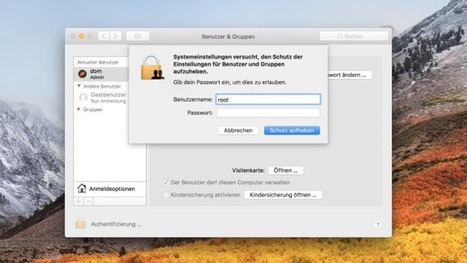
Bei betroffenen Computern können mit dem Nutzernamen "root" und einer leeren Passwortzeile Sicherheitseinstellungen überwunden werden, indem mehrfach auf "Schutz aufheben" geklickt wird. Anschließend kann sich der Angreifer ohne die Eingabe eines Passwortes als Benutzer "root" mit vollen administrativen Rechten auf diesem System anmelden. Dieser Vorgang ist unter bestimmten Voraussetzungen über das Apple-eigene Remote Access Tool auch ohne physischen Zugriff auf das Gerät möglich. Andere Wege zur Ausnutzung dieser Schwachstelle sind denkbar.

Das Bundesamt für Sicherheit in der Informationstechnik (BSI) empfiehlt die explizite Vergabe eines starken Passworts für den Root-Account betroffener Apple-Computer. Daneben sollten auch passwortgeschützte Apple-Computer nicht unbeaufsichtigt gelassen werden.

Apple hat bekanntgegeben, in Kürze ein Sicherheitsupdate zur Verfügung stellen zu wollen. Sobald das Update veröffentlicht ist, sollten Anwender es einspielen.

Dazu sagt BSI-Präsident Arne Schönbohm: "Der vorliegende Fall macht einmal mehr deutlich, dass Software-Qualität ein entscheidender Faktor für die Informationssicherheit ist. Betroffene Anwender sollten sich nun aktuell informieren und ihren Apple-Rechner mit den empfohlenen Maßnahmen absichern."


Learn more / En savoir plus / Mehr erfahren:


https://www.scoop.it/t/apple-mac-ios4-ipad-iphone-and-in-security


Gust MEES's insight:
Das Bundesamt für Sicherheit in der Informationstechnik (BSI) warnt vor einer schwerwiegenden Sicherheitslücke im Apple-Betriebssystem macOS 10.13 (High Sierra), die es ermöglicht, sich ohne die Eingabe eines Passwortes mit vollen administrativen Rechten auf diesem System anzumelden.

Bei betroffenen Computern können mit dem Nutzernamen "root" und einer leeren Passwortzeile Sicherheitseinstellungen überwunden werden, indem mehrfach auf "Schutz aufheben" geklickt wird. Anschließend kann sich der Angreifer ohne die Eingabe eines Passwortes als Benutzer "root" mit vollen administrativen Rechten auf diesem System anmelden. Dieser Vorgang ist unter bestimmten Voraussetzungen über das Apple-eigene Remote Access Tool auch ohne physischen Zugriff auf das Gerät möglich. Andere Wege zur Ausnutzung dieser Schwachstelle sind denkbar.

Das Bundesamt für Sicherheit in der Informationstechnik (BSI) empfiehlt die explizite Vergabe eines starken Passworts für den Root-Account betroffener Apple-Computer. Daneben sollten auch passwortgeschützte Apple-Computer nicht unbeaufsichtigt gelassen werden.

Apple hat bekanntgegeben, in Kürze ein Sicherheitsupdate zur Verfügung stellen zu wollen. Sobald das Update veröffentlicht ist, sollten Anwender es einspielen.

Dazu sagt BSI-Präsident Arne Schönbohm: "Der vorliegende Fall macht einmal mehr deutlich, dass Software-Qualität ein entscheidender Faktor für die Informationssicherheit ist. Betroffene Anwender sollten sich nun aktuell informieren und ihren Apple-Rechner mit den empfohlenen Maßnahmen absichern."


Learn more / En savoir plus / Mehr erfahren:


https://www.scoop.it/t/apple-mac-ios4-ipad-iphone-and-in-security


No comment yet.
Scooped by Gust MEES
November 29, 2017 5:21 AM
Scoop.it!

Schwere Sicherheitslücke in macOS gefunden: Apple vergisst Passwort-Abfrage - so können Sie sich schützen | #Apple #CyberSecurity #Awareness #NobodyIsPerfect #Naivety

Schwere Sicherheitslücke in macOS gefunden: Apple vergisst Passwort-Abfrage - so können Sie sich schützen | #Apple #CyberSecurity #Awareness #NobodyIsPerfect #Naivety | Apple, Mac, MacOS, iOS4, iPad, iPhone and (in)security... | Scoop.it
In der aktuellen macOS-Version High Sierra steckt eine Sicherheitslücke, die Beobachter sprachlos macht: Mit wenigen Klicks können Angreifer sich root-Rechte verschaffen - weil Apple dafür kein Passwort verlangt.

Schon vor einigen Wochen fiel macOS High Sierra, die aktuelle Version des Apple-Betriebssystems, durch einen abstrusen Bug auf: Das Passwort verschlüsselter Festplatten kopierte das Betriebssystem kurzerhand in den Passwort-Hinweis und machte es damit für jeden sichtbar. Wer damals dachte, viel schlimmer kann es nicht kommen, hat sich getäuscht: In einer jetzt entdeckten Sicherheitslücke verlangt Apple an kritischen Punkten einfach überhaupt kein Passwort mehr.


Angreifer können sich mit wenigen Klicks vollen Zugriff auf den Computer sichern.


Öffentlich wurde der eklatante Bug durch einen Tweet. Der Entwickler Lemi Orhan Ergin‏ beschreibt darin das Vorgehen, mit dem sich Dritte auf einem Mac root-Rechte verschaffen können, ohne dafür ein Passwort zu benötigen. Mit diesen Rechten ist es möglich, den Mac vollständig zu übernehmen.


Learn more / En savoir plus / Mehr erfahren:


https://www.scoop.it/t/apple-mac-ios4-ipad-iphone-and-in-security


Gust MEES's insight:
In der aktuellen macOS-Version High Sierra steckt eine Sicherheitslücke, die Beobachter sprachlos macht: Mit wenigen Klicks können Angreifer sich root-Rechte verschaffen - weil Apple dafür kein Passwort verlangt.

Schon vor einigen Wochen fiel macOS High Sierra, die aktuelle Version des Apple-Betriebssystems, durch einen abstrusen Bug auf: Das Passwort verschlüsselter Festplatten kopierte das Betriebssystem kurzerhand in den Passwort-Hinweis und machte es damit für jeden sichtbar. Wer damals dachte, viel schlimmer kann es nicht kommen, hat sich getäuscht: In einer jetzt entdeckten Sicherheitslücke verlangt Apple an kritischen Punkten einfach überhaupt kein Passwort mehr.


Angreifer können sich mit wenigen Klicks vollen Zugriff auf den Computer sichern.


Öffentlich wurde der eklatante Bug durch einen Tweet. Der Entwickler Lemi Orhan Ergin‏ beschreibt darin das Vorgehen, mit dem sich Dritte auf einem Mac root-Rechte verschaffen können, ohne dafür ein Passwort zu benötigen. Mit diesen Rechten ist es möglich, den Mac vollständig zu übernehmen.


Learn more / En savoir plus / Mehr erfahren:


https://www.scoop.it/t/apple-mac-ios4-ipad-iphone-and-in-security


No comment yet.
Scooped by Gust MEES
January 8, 2018 12:27 PM
Scoop.it!

Apple confirms iPhone, Mac affected by Meltdown, Spectre flaws, but Apple Watch unaffected | #CyberSecurity #Awareness #NobodyIsPerfect 

Apple confirms iPhone, Mac affected by Meltdown, Spectre flaws, but Apple Watch unaffected | #CyberSecurity #Awareness #NobodyIsPerfect  | Apple, Mac, MacOS, iOS4, iPad, iPhone and (in)security... | Scoop.it

Apple has issued a statement regarding the Meltdown and Spectre vulnerabilities, confirming all Mac systems and iOS devices are affected, but saying there are no known exploits impacting customers at this time.

The iPhone maker has already released mitigations in iOS 11.2, macOS 10.13.2, and tvOS 11.2 to help defend against Meltdown. A spokesperson confirmed Friday that Apple Watch is not affected by either Meltdown or Spectre, despite its own initial report Thursday.

"In the coming days we plan to release mitigations in Safari to help defend against Spectre," the company said in a statement. "We continue to develop and test further mitigations within the operating system for the Spectre techniques, and will release them in upcoming updates of iOS, macOS, and tvOS."


Learn more / En savoir plus / Mehr erfahren:


https://www.scoop.it/t/securite-pc-et-internet/?&tag=Meltdown+and+Spectre+Attacks


https://gustmeesde.wordpress.com/2014/12/26/programme-die-auf-jeden-neuen-pc-und-smartphones-gehoren/


https://gustmeesde.wordpress.com/2014/12/16/browser-sind-das-einfallstor-fur-malware-sind-eure-browser-up-to-date/


Gust MEES's insight:

Apple has issued a statement regarding the Meltdown and Spectre vulnerabilities, confirming all Mac systems and iOS devices are affected, but saying there are no known exploits impacting customers at this time.

The iPhone maker has already released mitigations in iOS 11.2, macOS 10.13.2, and tvOS 11.2 to help defend against Meltdown. A spokesperson confirmed Friday that Apple Watch is not affected by either Meltdown or Spectre, despite its own initial report Thursday.

"In the coming days we plan to release mitigations in Safari to help defend against Spectre," the company said in a statement. "We continue to develop and test further mitigations within the operating system for the Spectre techniques, and will release them in upcoming updates of iOS, macOS, and tvOS."


Learn more / En savoir plus / Mehr erfahren:


https://www.scoop.it/t/securite-pc-et-internet/?&tag=Meltdown+and+Spectre+Attacks


https://gustmeesde.wordpress.com/2014/12/26/programme-die-auf-jeden-neuen-pc-und-smartphones-gehoren/


https://gustmeesde.wordpress.com/2014/12/16/browser-sind-das-einfallstor-fur-malware-sind-eure-browser-up-to-date/


No comment yet.
Scooped by Gust MEES
January 3, 2018 5:25 AM
Scoop.it!

Apple : une faille de sécurité de plus de quinze ans découverte dans macOS | #CyberSecurity #NobodyIsPerfect

Apple : une faille de sécurité de plus de quinze ans découverte dans macOS | #CyberSecurity #NobodyIsPerfect | Apple, Mac, MacOS, iOS4, iPad, iPhone and (in)security... | Scoop.it
Un chercheur en sécurité a découvert une faille importante datant au moins de 2002. Depuis quelques mois Apple enchaîne les vulnérabilités sur son système d’exploitation.


La faille aurait beau avoir plus de quinze ans, elle n’en donne pas moins accès à tout le contrôle de macOS. C’est la découverte réalisée par le chercheur en sécurité Siguza qui a dévoilé la chose sur Twitter et GitHub. Cette vulnérabilité zero-day concerne directement le kernel de l’OS d’Apple. Consolation pour les potentielles victimes, il faut toutefois avoir accès à la machine pour pouvoir l’exploiter.


Learn more / En savoir plus / Mehr erfahren:


https://www.scoop.it/t/apple-mac-ios4-ipad-iphone-and-in-security/?&tag=LPE+Exploit


https://www.scoop.it/t/apple-mac-ios4-ipad-iphone-and-in-security


Gust MEES's insight:
Un chercheur en sécurité a découvert une faille importante datant au moins de 2002. Depuis quelques mois Apple enchaîne les vulnérabilités sur son système d’exploitation.


La faille aurait beau avoir plus de quinze ans, elle n’en donne pas moins accès à tout le contrôle de macOS. C’est la découverte réalisée par le chercheur en sécurité Siguza qui a dévoilé la chose sur Twitter et GitHub. Cette vulnérabilité zero-day concerne directement le kernel de l’OS d’Apple. Consolation pour les potentielles victimes, il faut toutefois avoir accès à la machine pour pouvoir l’exploiter.


Learn more / En savoir plus / Mehr erfahren:


https://www.scoop.it/t/apple-mac-ios4-ipad-iphone-and-in-security/?&tag=LPE+Exploit


https://www.scoop.it/t/apple-mac-ios4-ipad-iphone-and-in-security


No comment yet.
Scooped by Gust MEES
January 1, 2018 10:38 AM
Scoop.it!

Apple, Epson face French legal complaints over allegedly shortening life of products | #Lawsuits #HOP #France

Apple, Epson face French legal complaints over allegedly shortening life of products | #Lawsuits #HOP #France | Apple, Mac, MacOS, iOS4, iPad, iPhone and (in)security... | Scoop.it

Apple, Epson face French legal complaints over allegedly shortening life of products

PARIS (Reuters) - Smartphone maker Apple (AAPL.O) and Japanese printer company Epson (6724.T) are facing legal complaints in France over allegedly speeding up the aging process of their products to stimulate demand.


Learn more / En savoir plus / Mehr erfahren:


https://www.scoop.it/t/apple-mac-ios4-ipad-iphone-and-in-security/?&tag=Lawsuits


https://www.scoop.it/t/apple-mac-ios4-ipad-iphone-and-in-security


Gust MEES's insight:

Apple, Epson face French legal complaints over allegedly shortening life of products

PARIS (Reuters) - Smartphone maker Apple (AAPL.O) and Japanese printer company Epson (6724.T) are facing legal complaints in France over allegedly speeding up the aging process of their products to stimulate demand.


Learn more / En savoir plus / Mehr erfahren:


https://www.scoop.it/t/apple-mac-ios4-ipad-iphone-and-in-security/?&tag=Lawsuits


https://www.scoop.it/t/apple-mac-ios4-ipad-iphone-and-in-security


No comment yet.
Scooped by Gust MEES
December 26, 2017 10:41 AM
Scoop.it!

BSI warnt vor Risikostufe 4: Apple schließt gefährliche Sicherheitslücken | #CyberSecurity #NobodyIsPerfect #Awareness #LEARNing2LEARN #ICT #Updates #iCloud

BSI warnt vor Risikostufe 4: Apple schließt gefährliche Sicherheitslücken | #CyberSecurity #NobodyIsPerfect #Awareness #LEARNing2LEARN #ICT #Updates #iCloud | Apple, Mac, MacOS, iOS4, iPad, iPhone and (in)security... | Scoop.it
Mit "Apple iCloud für Windows" können Sie persönliche Dokumente, Mails, Fotos und Termine zwischen Apple-Geräten wie iPhone oder iPad und Windows-PC synchronisieren.

Apple hat für seine Software "iCloud für Windows" ein außerplanmäßiges Update auf Version 7.2 veröffentlicht, das gleich mehrere Sicherheitslücken schließt.


Das Bundesamt für Sicherheit in der Informationstechnik (BSI) stuft die Sicherheitslücken auf seiner fünf-stufigen Skala mit Risikostufe 4 ("hoch") ein und empfiehlt allen iPhone- oder iPad-Nutzern mit Windows-PCs das Programm möglichst schnell zu updaten:


Apple behebt mit einem Sicherheitsupdate für iCloud für Windows mehrere Sicherheitslücken, die von einem Angreifer aus dem Internet ausgenutzt werden können, um beliebige Aktionen auf Ihrem Gerät auszuführen und private Informationen über Sie zu sammeln.


Learn more / En savoir plus / Mehr erfahren:


https://www.scoop.it/t/apple-mac-ios4-ipad-iphone-and-in-security


Gust MEES's insight:
Mit "Apple iCloud für Windows" können Sie persönliche Dokumente, Mails, Fotos und Termine zwischen Apple-Geräten wie iPhone oder iPad und Windows-PC synchronisieren.

Apple hat für seine Software "iCloud für Windows" ein außerplanmäßiges Update auf Version 7.2 veröffentlicht, das gleich mehrere Sicherheitslücken schließt.


Das Bundesamt für Sicherheit in der Informationstechnik (BSI) stuft die Sicherheitslücken auf seiner fünf-stufigen Skala mit Risikostufe 4 ("hoch") ein und empfiehlt allen iPhone- oder iPad-Nutzern mit Windows-PCs das Programm möglichst schnell zu updaten:


Apple behebt mit einem Sicherheitsupdate für iCloud für Windows mehrere Sicherheitslücken, die von einem Angreifer aus dem Internet ausgenutzt werden können, um beliebige Aktionen auf Ihrem Gerät auszuführen und private Informationen über Sie zu sammeln.


Learn more / En savoir plus / Mehr erfahren:


https://www.scoop.it/t/apple-mac-ios4-ipad-iphone-and-in-security


No comment yet.
Scooped by Gust MEES
December 21, 2017 12:26 PM
Scoop.it!

Oh Apple, you really need to rethink how you do things | Yes, Apple is slowing down your old iPhone!

Oh Apple, you really need to rethink how you do things | Yes, Apple is slowing down your old iPhone! | Apple, Mac, MacOS, iOS4, iPad, iPhone and (in)security... | Scoop.it

Quietly inserting code into iOS that measurably slows down the performance of older iPhones is a monumentally boneheaded blunder.

The ink is barely dry on the piece I wrote earlier this week about how Apple needs to do better in 2017 when it comes to light that the company has done another boneheaded thing.

Must read: Apple seems to have forgotten about the whole 'it just works' thing

It now turns out that the old yet often-quoted urban legend that Apple inserts code into iOS to slow down older iPhones is true.

Yes, Apple is slowing down your old iPhone.

The company admitted yesterday that it started doing it last year when it released iOS 10.2.1 following reports that iPhone 6, iPhone 6s, and iPhone SE were shutting down randomly due to cold weather, low battery charge, or battery aging.

Apple expanded the scope of this code to include iPhone 7 and iPhone 7 Plus devices with the release of iOS 11.2.


Learn more / En savoir plus / Mehr erfahren:


https://www.scoop.it/t/apple-mac-ios4-ipad-iphone-and-in-security


Gust MEES's insight:

Quietly inserting code into iOS that measurably slows down the performance of older iPhones is a monumentally boneheaded blunder.

The ink is barely dry on the piece I wrote earlier this week about how Apple needs to do better in 2017 when it comes to light that the company has done another boneheaded thing.

Must read: Apple seems to have forgotten about the whole 'it just works' thing

It now turns out that the old yet often-quoted urban legend that Apple inserts code into iOS to slow down older iPhones is true.

Yes, Apple is slowing down your old iPhone.

The company admitted yesterday that it started doing it last year when it released iOS 10.2.1 following reports that iPhone 6, iPhone 6s, and iPhone SE were shutting down randomly due to cold weather, low battery charge, or battery aging.

Apple expanded the scope of this code to include iPhone 7 and iPhone 7 Plus devices with the release of iOS 11.2.


Learn more / En savoir plus / Mehr erfahren:


https://www.scoop.it/t/apple-mac-ios4-ipad-iphone-and-in-security


No comment yet.
Scooped by Gust MEES
December 17, 2017 4:46 PM
Scoop.it!

New MacOS malware steals bank log-in details and intellectual property | #Apple #CyberSecurity #NobodyIsPerfect #Awareness

New MacOS malware steals bank log-in details and intellectual property | #Apple #CyberSecurity #NobodyIsPerfect #Awareness | Apple, Mac, MacOS, iOS4, iPad, iPhone and (in)security... | Scoop.it

New MacOS malware steals bank log-in details and intellectual property.


Security researchers have discovered a new, invasive OSX.Pirrit adware variant targeting Mac OS X that enables cyber-criminals to take full control of a user's Mac computer.


The malware has already infected thousands of Mac computers around the world. According to a blog post by Amit Serper, principal security researcher at Cybereason, while usual adware campaigns enable the attackers to flood a person's computer with ads, this malware not only bombards Macs with adware, it spies on users and runs with the highest user privileges, enabling hackers to leverage this adware to capture personal information on the users, including bank account logins and intellectual property of businesses.

“To my surprise, it's very active. Not only is it still infecting people's Macs, OSX.Pirrit's authors learned from one of their mistakes (They obviously read at least one of our earlier reports),” said Serper.

He added that unlike old versions of OSX.Pirrit that used rogue browser plug-ins or even installed a proxy server on the victim's machine to hijack the browser, this incarnation uses AppleScript, Apple's scripting/automation language. 


Learn more / En savoir plus / Mehr erfahren:


https://www.scoop.it/t/apple-mac-ios4-ipad-iphone-and-in-security/?&tag=Malware


https://www.scoop.it/t/apple-mac-ios4-ipad-iphone-and-in-security


Gust MEES's insight:

New MacOS malware steals bank log-in details and intellectual property.


Security researchers have discovered a new, invasive OSX.Pirrit adware variant targeting Mac OS X that enables cyber-criminals to take full control of a user's Mac computer.


The malware has already infected thousands of Mac computers around the world. According to a blog post by Amit Serper, principal security researcher at Cybereason, while usual adware campaigns enable the attackers to flood a person's computer with ads, this malware not only bombards Macs with adware, it spies on users and runs with the highest user privileges, enabling hackers to leverage this adware to capture personal information on the users, including bank account logins and intellectual property of businesses.

“To my surprise, it's very active. Not only is it still infecting people's Macs, OSX.Pirrit's authors learned from one of their mistakes (They obviously read at least one of our earlier reports),” said Serper.

He added that unlike old versions of OSX.Pirrit that used rogue browser plug-ins or even installed a proxy server on the victim's machine to hijack the browser, this incarnation uses AppleScript, Apple's scripting/automation language. 


Learn more / En savoir plus / Mehr erfahren:


https://www.scoop.it/t/apple-mac-ios4-ipad-iphone-and-in-security/?&tag=Malware


https://www.scoop.it/t/apple-mac-ios4-ipad-iphone-and-in-security


No comment yet.
Scooped by Gust MEES
December 8, 2017 2:01 PM
Scoop.it!

Apple Fixes Flaw Impacting HomeKit Devices | #CyberSecurity #NobodyIsPerfect #Awareness

Apple Fixes Flaw Impacting HomeKit Devices | #CyberSecurity #NobodyIsPerfect #Awareness | Apple, Mac, MacOS, iOS4, iPad, iPhone and (in)security... | Scoop.it

Apple said it has fixed an undisclosed vulnerability in its HomeKit framework that could have allowed unauthorized remote control of HomeKit devices such as smart locks and connected garage door openers.

The flaw was first reported by the publication 9to5Mac on Thursday. According to the publication, the vulnerability requires an iPhone or iPad running the latest iOS 11.2 that is linked to the HomeKit user’s iCloud account.

 
The write-up on the vulnerability is vague and does not state what the specific vulnerability is, only that it was demonstrated to the publication and that it is complex to exploit.

HomeKit is Apple’s software framework for smart-home appliances that lets iPhone and iPads users communicate with and control dozens of compatible third-party HomeKit-enabled devices.

Learn more / En savoir plus / Mehr erfahren:


https://www.scoop.it/t/apple-mac-ios4-ipad-iphone-and-in-security


Gust MEES's insight:

Apple said it has fixed an undisclosed vulnerability in its HomeKit framework that could have allowed unauthorized remote control of HomeKit devices such as smart locks and connected garage door openers.

The flaw was first reported by the publication 9to5Mac on Thursday. According to the publication, the vulnerability requires an iPhone or iPad running the latest iOS 11.2 that is linked to the HomeKit user’s iCloud account.

 
The write-up on the vulnerability is vague and does not state what the specific vulnerability is, only that it was demonstrated to the publication and that it is complex to exploit.

HomeKit is Apple’s software framework for smart-home appliances that lets iPhone and iPads users communicate with and control dozens of compatible third-party HomeKit-enabled devices.

Learn more / En savoir plus / Mehr erfahren:


https://www.scoop.it/t/apple-mac-ios4-ipad-iphone-and-in-security


No comment yet.
Scooped by Gust MEES
December 4, 2017 3:12 PM
Scoop.it!

Something is rotten at Apple | #CyberSecurity #Awareness #NobodyIsPerfect #Naivety 

Something is rotten at Apple | #CyberSecurity #Awareness #NobodyIsPerfect #Naivety  | Apple, Mac, MacOS, iOS4, iPad, iPhone and (in)security... | Scoop.it

Last week was a really bad week for Apple, with both iOS and macOS falling victim to high profile bugs.

I won't bore you with the details, but the TL:DR of the headaches that Apple -- and more importantly, Apple's customers -- encountered was as follows:

A serious -- and very stupid -- root bug was uncovered in macOS.


The patch that Apple pushed out for the root bug broke file sharing for some.


Updating macOS to 10.13.1 after installing the root patch rolled back the root bug patch.


iOS 11 was hit by a date bug that caused devices to crash when an app generated a notification, forcing Apple to prematurely release iOS 11.2


Stuff happens, I get it.


Learn more / En savoir plus / Mehr erfahren:


https://www.scoop.it/t/apple-mac-ios4-ipad-iphone-and-in-security/?&tag=Root


https://www.scoop.it/t/apple-mac-ios4-ipad-iphone-and-in-security


Gust MEES's insight:

Last week was a really bad week for Apple, with both iOS and macOS falling victim to high profile bugs.

I won't bore you with the details, but the TL:DR of the headaches that Apple -- and more importantly, Apple's customers -- encountered was as follows:

A serious -- and very stupid -- root bug was uncovered in macOS.


The patch that Apple pushed out for the root bug broke file sharing for some.


Updating macOS to 10.13.1 after installing the root patch rolled back the root bug patch.


iOS 11 was hit by a date bug that caused devices to crash when an app generated a notification, forcing Apple to prematurely release iOS 11.2


Stuff happens, I get it.


Learn more / En savoir plus / Mehr erfahren:


https://www.scoop.it/t/apple-mac-ios4-ipad-iphone-and-in-security/?&tag=Root


https://www.scoop.it/t/apple-mac-ios4-ipad-iphone-and-in-security


No comment yet.
Scooped by Gust MEES
December 2, 2017 4:03 PM
Scoop.it!

Anzahl der Malware-Angriffe auf Macs | #Apple #CyberSecurity #NobodyIsPerfect #Naivety #Mac

Anzahl der Malware-Angriffe auf Macs | #Apple #CyberSecurity #NobodyIsPerfect #Naivety #Mac | Apple, Mac, MacOS, iOS4, iPad, iPhone and (in)security... | Scoop.it
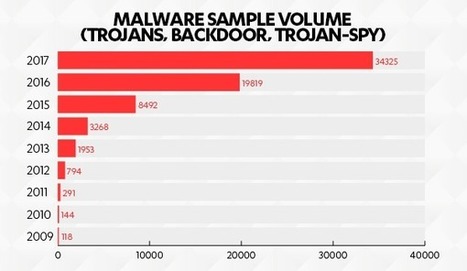
In den ersten drei Quartalen des Jahres 2017 stieg die Zahl der Malware-Angriffe auf Macs um über 70 % und die PUA (potenziell unerwünschte Anwendungen wie z.B. Adware) um 50 % gegenüber dem Vorjahr (Quelle: F-Secure Labs).


Learn more / En savoir plus / Mehr erfahren:


https://www.scoop.it/t/apple-mac-ios4-ipad-iphone-and-in-security


Gust MEES's insight:
In den ersten drei Quartalen des Jahres 2017 stieg die Zahl der Malware-Angriffe auf Macs um über 70 % und die PUA (potenziell unerwünschte Anwendungen wie z.B. Adware) um 50 % gegenüber dem Vorjahr (Quelle: F-Secure Labs).


Learn more / En savoir plus / Mehr erfahren:


https://www.scoop.it/t/apple-mac-ios4-ipad-iphone-and-in-security


No comment yet.
Scooped by Gust MEES
November 30, 2017 9:18 AM
Scoop.it!

Root-Lücke in macOS High Sierra: Sicherheits-Update hat Nebenwirkungen | #Apple #NobodyIsPerfect #IamRoot

Root-Lücke in macOS High Sierra: Sicherheits-Update hat Nebenwirkungen | #Apple #NobodyIsPerfect #IamRoot | Apple, Mac, MacOS, iOS4, iPad, iPhone and (in)security... | Scoop.it
Die von Apple schnell ausgelieferte Aktualisierung für macOS 10.13 kann die Dateifreigabe lahmlegen. Inzwischen hat der Mac-Hersteller bei dem Sicherheits-Update nochmals nachgebessert – das File-Sharing-Problem aber offenbar nicht ausgeräumt.

Das wichtige Sicherheits-Update 2017-001 für macOS High Sierra führt unter Umständen zu Problemen bei der Dateifreigabe: Nach der Installation des Updates, das Apple inzwischen auch automatisch einspielt, funktioniert der entfernte Zugriff auf die per File Sharing geteilten Verzeichnisse des Macs nicht länger, wie Nutzer berichten.

Workaround bei Dateifreigabe-Problem in High Sierra
Apple ist der Fehler bekannt, das Unternehmen hat bereits einen manuellen Workaround veröffentlicht: Nutzer sollen im Terminal
sudo /usr/libexec/configureLocalKDC
eingeben und den Befehl ausführen, so Apple – dafür ist die Eingabe des Admin-Passwortes vonnöten. Dies repariere die Dateifreigabe.

Apple bessert bei Sicherheits-Update nach


Offenbar hat Apple bei dem Security-Update 2017-001 inzwischen nachgebessert und – ohne weiteren Hinweis – eine neue Fassung veröffentlicht, die nun auch für macOS 10.13.0 gedacht ist. Zuvor wurde noch macOS 10.13.1 vorausgesetzt. Nach der Installation zeigt die Neufassung die Build-Nummer 17B1003, bei der ersten Version war es noch 17B1002. Die neue Fassung scheint aber ein für Unterstützung der ersten öffentlichen High-Sierra-Version zu sorgen, das Dateifreigabenproblem kann offenbar weiterhin auftreten.


Learn more / En savoir plus / Mehr erfahren:


https://www.scoop.it/t/apple-mac-ios4-ipad-iphone-and-in-security


No comment yet.
Scooped by Gust MEES
November 29, 2017 12:51 PM
Scoop.it!

Apple fixes macOS High Sierra security flaw | #CyberSecurity #Awareness #NobodyIsPerfect #Updates

Apple released a security update Wednesday to fix a major bug that allowed anyone to bypass security protocols and act as a computer's administrator.


"Security is a top priority for every Apple product, and regrettably we stumbled with this release of macOS," a spokesperson for Apple said in a statement. "When our security engineers became aware of the issue Tuesday afternoon, we immediately began working on an update that closes the security hole."


The security issue impacted macOS High Sierra 10.13.1. Apple says the update is now available for download and will be rolled out automatically to all systems running the affected software.
On Tuesday, developers noticed that someone with access to a Mac computer running Apple's most recent Mac software could type "root" and no password in the Users & Groups section of System Preferences and gain administrator-level access to the computer.


Learn more / En savoir plus / Mehr erfahren:


https://www.scoop.it/t/apple-mac-ios4-ipad-iphone-and-in-security


Gust MEES's insight:
Apple released a security update Wednesday to fix a major bug that allowed anyone to bypass security protocols and act as a computer's administrator.


"Security is a top priority for every Apple product, and regrettably we stumbled with this release of macOS," a spokesperson for Apple said in a statement. "When our security engineers became aware of the issue Tuesday afternoon, we immediately began working on an update that closes the security hole."


The security issue impacted macOS High Sierra 10.13.1. Apple says the update is now available for download and will be rolled out automatically to all systems running the affected software.
On Tuesday, developers noticed that someone with access to a Mac computer running Apple's most recent Mac software could type "root" and no password in the Users & Groups section of System Preferences and gain administrator-level access to the computer.


Learn more / En savoir plus / Mehr erfahren:


https://www.scoop.it/t/apple-mac-ios4-ipad-iphone-and-in-security


No comment yet.
Scooped by Gust MEES
November 29, 2017 7:34 AM
Scoop.it!

Une faille critique permet d'accéder à n'importe appareil sous macOS High Sierra | #Apple #CyberSecurity #NobodyIsPerfect #Awareness #Naivety

Une faille critique permet d'accéder à n'importe appareil sous macOS High Sierra | #Apple #CyberSecurity #NobodyIsPerfect #Awareness #Naivety | Apple, Mac, MacOS, iOS4, iPad, iPhone and (in)security... | Scoop.it

Une incroyable faille de sécurité permet d'accéder à un appareil sous macOS High Sierra sans le moindre effort en rentrant simplement le nom d'utilisateur "root".

Une énorme faille de sécurité permet de pénétrer dans d’importe quel appareil sous macOS High Sierra et cela sans le moindre effort. La démarche est on ne peut plus simple. Lorsque le système d’exploitation demande une autorisation d’accès avec un mot de passe et un identifiant, il suffit de rentrer le nom d’utilisateur « root » puis de cliquer plusieurs fois sur le bouton d'accès et comme par magie la machine accepte l'opération. 

Cette faille a été découverte Lemi Orhan Ergin, le fondateur de Software Craftsmanship Turkey. Il a tweeté l’information à Apple qui travaille déjà sur un correctif.


Learn more / En savoir plus / Mehr erfahren:


https://www.scoop.it/t/apple-mac-ios4-ipad-iphone-and-in-security


Gust MEES's insight:

Une incroyable faille de sécurité permet d'accéder à un appareil sous macOS High Sierra sans le moindre effort en rentrant simplement le nom d'utilisateur "root".

Une énorme faille de sécurité permet de pénétrer dans d’importe quel appareil sous macOS High Sierra et cela sans le moindre effort. La démarche est on ne peut plus simple. Lorsque le système d’exploitation demande une autorisation d’accès avec un mot de passe et un identifiant, il suffit de rentrer le nom d’utilisateur « root » puis de cliquer plusieurs fois sur le bouton d'accès et comme par magie la machine accepte l'opération. 

Cette faille a été découverte Lemi Orhan Ergin, le fondateur de Software Craftsmanship Turkey. Il a tweeté l’information à Apple qui travaille déjà sur un correctif.


Learn more / En savoir plus / Mehr erfahren:


https://www.scoop.it/t/apple-mac-ios4-ipad-iphone-and-in-security


No comment yet.