Your new post is loading...

|
Scooped by
Dr. Stefan Gruenwald
January 19, 2021 4:57 PM
|
The number of western monarch butterflies wintering along the California coast has plummeted precipitously to a record low, putting the orange-and-black insects closer to extinction, researchers announced Tuesday. An annual winter count by the Xerces Society recorded fewer than 2,000 butterflies, a massive decline from the tens of thousands tallied in recent years and the millions that clustered in trees from Northern California's Marin County to San Diego County in the south in the 1980s. Western monarch butterflies head south from the Pacific Northwest to California each winter, returning to the same places and even the same trees, where they cluster to keep warm. The monarchs generally arrive in California at the beginning of November and spread across the country once warmer weather arrives in March. On the eastern side of the Rocky Mountains, another monarch population travels from southern Canada and the northeastern United States across thousands of miles to spend the winter in central Mexico. Scientists estimate the monarch population in the eastern U.S. has fallen about 80% since the mid-1990s, but the drop-off in the western U.S. has been even steeper. The Xerces Society, a nonprofit environmental organization that focuses on the conservation of invertebrates, recorded about 29,000 butterflies in its annual survey last winter. That was not much different than the tally the winter before, when an all-time low of 27,000 monarchs were counted. But the count this year is dismal. At iconic monarch wintering sites in the city of Pacific Grove, volunteers didn't see a single butterfly this winter. Other well-known locations, such as Pismo State Beach Monarch Butterfly Grove and Natural Bridges State Park, only hosted a few hundred butterflies, researchers said. "These sites normally host thousands of butterflies, and their absence this year was heartbreaking for volunteers and visitors flocking to these locales hoping to catch a glimpse of the awe-inspiring clusters of monarch butterflies," said Sarina Jepsen, director of endangered species at the Xerces Society.
|
|
Scooped by
Dr. Stefan Gruenwald
January 19, 2021 4:54 PM
|
Earth's global average surface temperature in 2020 tied with 2016 as the warmest year on record, according to an analysis by NASA. Earth's global average surface temperature in 2020 tied with 2016 as the warmest year on record, according to an analysis by NASA. Continuing the planet's long-term warming trend, the year's globally averaged temperature was 1.84 degrees Fahrenheit (1.02 degrees Celsius) warmer than the baseline 1951-1980 mean, according to scientists at NASA's Goddard Institute for Space Studies (GISS) in New York. 2020 edged out 2016 by a very small amount, within the margin of error of the analysis, making the years effectively tied for the warmest year on record. "The last seven years have been the warmest seven years on record, typifying the ongoing and dramatic warming trend," said GISS Director Gavin Schmidt. "Whether one year is a record or not is not really that important -- the important things are long-term trends. With these trends, and as the human impact on the climate increases, we have to expect that records will continue to be broken." A Warming, Changing World Tracking global temperature trends provides a critical indicator of the impact of human activities -- specifically, greenhouse gas emissions -- on our planet. Earth's average temperature has risen more than 2 degrees Fahrenheit (1.2 degrees Celsius) since the late 19th century. Rising temperatures are causing phenomena such as loss of sea ice and ice sheet mass, sea level rise, longer and more intense heat waves, and shifts in plant and animal habitats. Understanding such long-term climate trends is essential for the safety and quality of human life, allowing humans to adapt to the changing environment in ways such as planting different crops, managing our water resources and preparing for extreme weather events. Ranking the Records A separate, independent analysis by the National Oceanic and Atmospheric Administration (NOAA) concluded that 2020 was the second-warmest year in their record, behind 2016. NOAA scientists use much of the same raw temperature data in their analysis, but have a different baseline period (1901-2000) and methodology. Unlike NASA, NOAA also does not infer temperatures in polar regions lacking observations, which accounts for much of the difference between NASA and NOAA records.
|
|
Rescooped by
Dr. Stefan Gruenwald
from Soggy Science
January 14, 2021 5:26 PM
|
A new citizen science project using eDNA technology to map the distribution of platypuses in Victoria will hopefully help reverse declines. The comprehensive citizen science-based project called ‘The great Victorian platypus search’ will collect vital population data using environmental DNA (eDNA). This technology detects the DNA a species leaves behind in its environment (such as water) and is a highly sensitive and cost-effective technique to determine distributions of aquatic species over large spatial scales, particularly for sparse and cryptic species like the platypus. Experienced biodiversity impact investor and founder of Odonata, Nigel Sharp, said that this is a necessary step to saving the species. “Before we can develop a plan to reverse their decline, we first have to fill a critical gap in our current understanding of the species’ populations. This could potentially reveal platypus occurrence in new areas where no previous records exist. The data collected will also provide the ability to identify refuge areas and prioritise and implement management actions to reverse declines and prevent further local extinctions” said Nigel. Importantly for this project, EnviroDNA has developed a robust and simple eDNA sampling methodology that citizen scientists, including school students, children and community groups can undertake with limited training or experience.
Via Grant W. Graves
|
|
Scooped by
Dr. Stefan Gruenwald
January 13, 2021 3:35 PM
|
A team of scientists at the Freie Universität in Berlin has developed an artificial intelligence (AI) method for calculating the ground state of the Schrödinger equation. The goal was to predict chemical and physical properties of molecules based solely on the arrangement of their atoms in space, avoiding the need for resource-intensive and time-consuming laboratory experiments. In principle, this can be achieved by solving the Schrödinger equation, but in practice this is extremely difficult. Up until now, it has been impossible to find an exact solution for arbitrary molecules that can be efficiently computed. But the team at the Freie Universität Berlin has developed an AI deep learning method that can achieve an unprecedented combination of accuracy and computational efficiency. AI has transformed many technological and scientific areas, from computer vision to materials science. “We believe that our approach may significantly impact the future of quantum chemistry,” says Professor Frank Noé, who led the team effort. The results were published in the reputed journal Nature Chemistry. Central to both quantum chemistry and the Schrödinger equation is the wave function – a mathematical object that completely specifies the behavior of the electrons in a molecule. The wave function is a high-dimensional entity, and it is therefore extremely difficult to capture all the nuances that encode how the individual electrons affect each other. Many methods of quantum chemistry in fact give up on expressing the wave function altogether, instead attempting only to determine the energy of a given molecule. This however requires approximations to be made, limiting the prediction quality of such methods. Other methods represent the wave function with the use of an immense number of simple mathematical building blocks, but such methods are so complex that they are impossible to put into practice for more than a mere handful of atoms. “Escaping the usual trade-off between accuracy and computational cost is the highest achievement in quantum chemistry,” explains Dr. Jan Hermann of Freie Universität Berlin, who designed the key features of the method in the study. “As yet, the most popular such outlier is the extremely cost-effective density functional theory. We believe that deep “Quantum Monte Carlo,” the approach we are proposing, could be equally, if not more successful. It offers unprecedented accuracy at a still acceptable computational cost.”
|
|
Scooped by
Dr. Stefan Gruenwald
January 11, 2021 3:18 PM
|
Scientists from Queen Mary University of London and the Russian Academy of Sciences have found a limit to how runny a liquid can be. Viscosity, the measure of how runny a fluid is, is a property that we experience daily when we fill a kettle, take a shower, pour cooking oil or move through air. We know that liquids get thicker when cooled and runnier when heated, but how runny can a liquid ever get if we keep heating it? Eventually, the liquid boils and becomes a gas or a dense gas-like substance if heated at high enough pressure. At the point where it transitions between the liquid-like and gas-like state is the minimum value of viscosity. Viscosity is considered impossible to calculate from theory because it strongly depends on liquid structure, composition and interactions as well as external conditions in a complicated way. Nobel laureate Steven Weinberg compared the difficulty of calculating the viscosity of water to the problem of calculating fundamental physical constants, the constants which shape the fabric of our Universe. Despite this difficulty, the researchers have developed an equation to do so. In the study, published in Science Advances, they show that two fundamental physical constants govern how runny a liquid can be. Physical constants, or constants of Nature, are measurable properties of the physical universe that do not change.
|
|
Scooped by
Dr. Stefan Gruenwald
January 11, 2021 12:35 PM
|
Goldfish have been subjected to over 1,000 y of intensive domestication and selective breeding. In this report, scientists describe a high-quality goldfish genome (2n = 100), anchoring 95.75% of contigs into 50 pseudochromosomes. Comparative genomics enabled them to disentangle the two subgenomes that resulted from an ancient hybridization event. Resequencing 185 representative goldfish variants and 16 wild crucian carp revealed the origin of goldfish and identified genomic regions that have been shaped by selective sweeps linked to its domestication. This comprehensive collection of goldfish varieties enabled scientists to associate genetic variations with a number of well-known anatomical features, including features that distinguish traditional goldfish clades. Additionally, they were able to identify a tyrosine-protein kinase receptor as a candidate causal gene for the first well-known case of Mendelian inheritance in goldfish—the transparent mutant. The goldfish genome and diversity data offer unique resources to make goldfish a promising model for functional genomics, as well as domestication.
|
|
Scooped by
Dr. Stefan Gruenwald
January 11, 2021 12:27 PM
|
Helium atoms are stand-offish, rarely interacting with atoms of other elements or with one another. But physicists know that helium atoms cooled close to absolute zero can be coaxed into forming fragile pairs, or dimers, of a particularly quantum nature. To better understand these tentative dance partners, Maksim Kunitski and Reinhard Dörner at Goethe University in Frankfurt, Germany, and their colleagues have given helium dimers a ‘kick’ by exposing them to a strong laser field. The team shot a laser pulse at helium dimers, imparting angular momentum to the pairs. A second, shorter laser pulse quickly knocked electrons off the atoms. The remaining positively-charged ions repelled one another, flying apart so they could be measured. By varying the time between the first and second laser pulses, the group could see the dimer’s quantum response. The team’s technique could be used to study the less-explored helium trimer — a grouping of three helium atoms — as well as other low-energy molecules. It could also open a window onto the dynamics of exotic quantum states.
|
|
Scooped by
Dr. Stefan Gruenwald
January 5, 2021 5:02 PM
|
Astronomers have found ghostly circles of radio emission, hanging in space like cosmic smoke rings. What are they? No one knows. The race is on to find out. In September 2019, the astronomer Anna Kapinska gave a presentation showing interesting objects she had found while browsing new radio astronomical data. She had started noticing very weird shapes she couldn’t fit easily to any known type of object. Among them, labeled by Anna as WTF?, was a picture of a ghostly circle of radio emission, hanging out in space like a cosmic smoke-ring. None of the attending astronomers had ever seen anything like it before, and had no idea what it was. A few days later, another astronomer, Emil Lenc found a second one, even more spooky than the first one. Anna and Emil had been examining the new images from pilot observations for the Evolutionary Map of the Universe (EMU) project, made with CSIRO’s revolutionary new Australian Square Kilometer Array Pathfinder (ASKAP) telescope. EMU plans to boldly probe parts of the universe where no telescope has gone before. It can do so because ASKAP can survey large swathes of the sky very quickly, probing to a depth previously only reached in tiny areas of sky, and being especially sensitive to faint, diffuse objects like these. A team of astronomers then searched the rest of the data by eye, and found a few more of the mysterious round blobs. They were ultimately dubbed ORCs, which stands for “odd radio circles.” But the big question, of course, is: “what are they?” At first, astronomers suspected an imaging artifact, perhaps generated by a software error. But ORCs were soon confirmed as being real, using other radio telescopes. However, astronomers still have no idea how big or far away they are. They could be objects in our galaxy, perhaps a few light-years across, or they could be far away in the universe and maybe millions of light years across. When we look in images taken with optical telescopes at the position of ORCs, we see nothing. The rings of radio emission are probably caused by clouds of electrons, but why don’t we see anything in visible wavelengths of light? We don’t know, but finding a puzzle like this is the dream of every astronomer. We Know What They’re Not We have ruled out several possibilities for what ORCs might be: Could they be supernova remnants, the clouds of debris left behind when a star in our galaxy explodes? No. They are far from most of the stars in the Milky Way and there are too many of them. Could they be the rings of radio emission sometimes seen in galaxies undergoing intense bursts of star formation? Again, no. We don’t see any underlying galaxy that would be hosting the star formation. Could they be the giant lobes of radio emission we see in radio galaxies, caused by jets of electrons squirting out from the environs of a supermassive black hole? Not likely, because the ORCs are very distinctly circular, unlike the tangled clouds we see in radio galaxies. Could they be Einstein rings, in which radio waves from a distant galaxy are being bent into a circle by the gravitational field of a cluster of galaxies? Still no. ORCs are too symmetrical, and we don’t see a cluster at their centre. A Genuine Mystery In a recent paper about ORCs, which is forthcoming in the Publications of the Astronomical Society of Australia, astronomers run through all the possibilities and conclude these enigmatic blobs don’t look like anything we already know about.
|
|
Scooped by
Dr. Stefan Gruenwald
December 31, 2020 2:57 AM
|
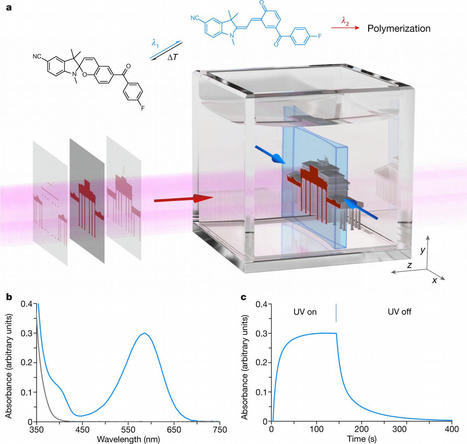
A team of researchers affiliated with several institutions in Germany has developed new chemistry for improved control of the volume of liquid in volumetric additive manufacturing. In their paper published in the journal Nature, the group describes their process and how well it worked when tested. Three-dimensional printing has made many headlines over the past decade as it has revolutionized the manufacturing process for a wide variety of products. Most 3-D printing involves controlling gantries that work together to position a nozzle that applies different types of material to a base to build products. More recently, some new types of 3-D printers have been developed for volumetric additive manufacturing, or VAM, that use laser light to induce polymerization in a liquid precursor to create products. They work by building products a layer at a time. In this new effort, the researchers have improved the way that polymerization starts in VAM applications. By adding the ability to control the volume of liquid precursor involved in the initiation process, they were able to increase the resolution of VAM printing by 10 times. They call their newly improved process xolography because it involves the use of two crossing light beams to solidify a desired object. The process begins with creating a rectangular sheet of light using a laser fired into a tub of liquid precursor. The laser excites the precursor molecules inside of the rectangle, preparing them for the second beam of light. The second laser is then directed into the rectangle as a preformed image slice. When the slice is projected into the rectangle, the excited precursor molecules solidify into a polymer, forming a solidified slice. The resin volume is then moved (the light sheet remains fixed in place) so that the process can be repeated to create another slice. The overall process is repeated, creating more slices as it goes, until the desired shape is achieved.
|
|
Rescooped by
Dr. Stefan Gruenwald
from Soggy Science
December 16, 2020 3:22 AM
|
Scientists tested whether a classic technique could detect subsurface oceans on the moons of Uranus. In this scenario, the planet’s oddball magnetic field offers a big advantage. Uranus’s magnetic field, like so much about the planet itself, is quite odd compared with other solar system planets: The field is tilted by 59° from the planet’s spin axis, and its center is shifted by about a third of the planet’s radius from the planet’s center. Magnetic induction confirmed the presence of Europa’s and Callisto’s subsurface oceans, but Jupiter’s very symmetric magnetic field made it impossible for the Galileo mission to figure out the oceans’ depth, thickness, or salinity with its small number of flybys. The same is true of Saturn’s magnetic field and Enceladus’s subsurface ocean. But measurements of those properties might be possible for moons of Uranus. “The key is that Uranus’ field is non-spin symmetric, unlike Saturn’s, and it rotates. We know these things, so [the technique] should work,” said David Stevenson, a planetary scientist at the California Institute of Technology in Pasadena and a member of the Galileo team. Stevenson was not involved with this research. “The caveat is magnetospheric effects [of Uranus], which are not yet well characterized but are unlikely to kill the idea.” Detecting a signal would be “actually easier and more reliable” than other methods that might find an ocean. However, Stevenson cautioned, subsurface oceans in the Uranus system are likely to be farther beneath the surface than those in the Jupiter system simply because Uranus’s moons are colder and so the icy shell is likely thicker. Although that might make the measured field weaker than estimated, he said, detecting a signal would be “actually easier and more reliable” than other methods that might find an ocean. Uranus and Neptune are higher-priority targets for a spacecraft mission than they have been in the past because an opportune launch window opens up in the late 2020s. NASA, for example, is considering a Neptune mission called Trident, although no mission to Uranus is currently under consideration. However, “getting close enough to one or more of the satellites to see this—you have to get close, meaning within a satellite radius, roughly—is unlikely to be a feature of an early…mission to Uranus,” which likely wouldn’t arrive before 2042, Stevenson said.
Via Grant W. Graves
|
|
Scooped by
Dr. Stefan Gruenwald
December 15, 2020 6:07 PM
|
Researchers from the Tel Aviv University (TAU) have shown that the coronavirus can be killed efficiently, quickly, and cheaply using ultraviolet (UV) light-emitting diodes (UV-LEDs). They believe that the UV-LED technology will soon be available for private and commercial use. This is the first study conducted on the disinfection efficiency of UV-LED irradiation at different wavelengths or frequencies on a virus from the family of coronaviruses. The article was published in November 2020 issue of the Journal of Photochemistry and Photobiology B: Biology. “The entire world is currently looking for effective solutions to disinfect the coronavirus,” said Professor Mamane. “The problem is that in order to disinfect a bus, train, sports hall, or plane by chemical spraying, you need physical manpower, and in order for the spraying to be effective, you have to give the chemical time to act on the surface. Disinfection systems based on LED bulbs, however, can be installed in the ventilation system and air conditioner, for example, and sterilize the air sucked in and then emitted into the room. “We discovered that it is quite simple to kill the coronavirus using LED bulbs that radiate ultraviolet light,” she explained. “We killed the viruses using cheaper and more readily available LED bulbs, which consume little energy and do not contain mercury like regular bulbs. Our research has commercial and societal implications, given the possibility of using such LED bulbs in all areas of our lives, safely and quickly.” The researchers tested the optimal wavelength for killing the coronavirus and found that a length of 285 nanometers (nm) was almost as efficient in disinfecting the virus as a wavelength of 265 nm, requiring less than half a minute to destroy more than 99.9% of the coronaviruses. This result is significant because the cost of 285 nm LED bulbs is much lower than that of 265 nm bulbs, and the former are also more readily available. Eventually, as the science develops, the industry will be able to make the necessary adjustments and install the bulbs in robotic systems or air conditioning, vacuum, and water systems, and thereby be able to efficiently disinfect large surfaces and spaces. Professor Mamane believes that the technology will be available for use in the near future.
|
|
Scooped by
Dr. Stefan Gruenwald
December 11, 2020 6:29 PM
|
The test flight didn’t come close to the edge of space, but the prototype was a big step toward the rocket’s first orbital mission. Just recently, SpaceX successfully launched—and nearly landed—a fully-assembled prototype of its next generation Starship rocket on a suborbital flight from its facility in south Texas. This is the rocket that Elon Musk hopes will soon carry humans to the moon and, eventually, to Mars, but Wednesday’s launch was an unmanned test flight that lasted just a few minutes. The rocket flew to an altitude of 40,000 feet—roughly the cruising altitude of a commercial airliner—and performed what Musk has called a “belly flop” maneuver on its way back to earth. The rocket executed a controlled descent to the surface and righted itself just a few hundred feet above the ground. But it wasn’t able to slow its descent enough to safely touch down, and it exploded spectacularly near the landing pad. While the rocket made it only about a tenth of the way to space and didn’t survive the landing attempt, it’s still a major step toward a first orbital mission and a big win for Musk’s interplanetary ambitions. SpaceX’s Starship looks like it was ripped straight from the pages of a pulp science fiction novel. Its gleaming, bullet-shaped silver hull is a patchwork of stainless steel plates. Two triangular fins protrude from its lower half, with two smaller fins near its tip. Starship is huge—15 stories from engine to nose cone—but it is only the upper stage of a still larger rocket called the Super Heavy. This booster is a scaled-up version of SpaceX’s Falcon 9 rocket and will come equipped with three times as many engines. When SpaceX mates a Falcon Super Heavy booster and Starship, the entire ensemble will stand nearly 400 feet tall. It will be just a few feet taller than NASA’s Saturn V rocket that carried humans to the moon, which remains the largest and most powerful rocket that has ever flown to space. Both the Super Heavy and Starship will use SpaceX’s new Raptor rocket engines, which are far more powerful than the Merlin engines that the company currently uses on all of its Falcon rockets. SpaceX has flown a Raptor engine on four occasions, twice during test flights for Starhopper, a scaled-down version of Starship that looked more like a grain silo than a rocket, and twice during test flights of a Starship prototype. Each Starhopper flight carried only a single engine and boosted the vehicle a few hundred feet in the air. During Wednesday’s test flight, the Starship prototype carried three Raptor engines and was the first time that a SpaceX rocket has flown more than one at the same time. One of the Raptor engines cut out about 2 minutes into the flight, and the second cut out shortly thereafter. It’s unclear whether those engines were intentionally shut down or malfunctioned during the flight. When Starship is ready to head to space, it will carry six Raptors—three optimized for flying through the atmosphere and three optimized for the vacuum of space—and the Super Heavy booster will be powered by 28 Raptor engines.
|
|
Scooped by
Dr. Stefan Gruenwald
December 11, 2020 2:58 PM
|
Scientists from the NIH have published an update on the durability of Moderna’s mRNA vaccine. The findings come from a small cohort (34) in the Phase 1 trial using the same dose regimen recently used in the Ph 3 trial. The results indicate that the Ab responses elicited by the vaccine are superior to those seen in individuals naturally infected with the virus. Additionally, the Ab responses, including neutralizing antibodies, are still present in all participants 3 months after the second dose. However, the decay in the response is already evident after 3 months. Participants older than 71 y display an Ab response, but it is lower than in adults 18 to 55 y old (38% lower IC80 values in neutralization of live virus), and it also seems more variable than the response observed in the younger cohort (although no data analysis is provided on this). Without markers of correlation it cannot be predicted how long the vaccine efficacy will last, and whether it will be less durable in the elderly. Further data will be needed to investigate this, especially in the elderly (https://lnkd.in/ggrYEB4)
|
|
|
Rescooped by
Dr. Stefan Gruenwald
from Nuclear Physics
January 19, 2021 4:55 PM
|
Tokamaks, devices that use magnetic fields to confine plasma into torus-shaped chamber, could play a crucial role in the development of highly performing nuclear fusion reactors. The ITER tokamak, which is set to be the largest nuclear tokamak in the world, is particularly likely to shape the way in which nuclear reactors will be fabricated in the future. ITER is a highly complex technology that uses entirely new strategies, which means that those building it are confronting challenges that have never been faced before. To facilitate the design and operation of the ITER tokamak, scientists worldwide have been conducting what are known as nuclear analyses, which are aimed at theoretically examining its outcomes and potential. So far, nuclear analyses based on data gathered by the ITER reactor have relied on detailed but partial models that only represent specific parts of the tokamak. However, these models present limitations and unquantified uncertainties that become evident as the design of the machine advances. Those related to its safety and operation are of particular relevance. With this in mind, researchers at Universidad Nacional de Educación a Distancia (UNED) have recently developed E-lite, a detailed and realistic Monte Carlo N-particle transport (MCNP) model of the ITER tokamak. This model, presented in a paper published in Nature Energy, has the potential to dramatically improve the reliability and precision of nuclear analyses assessing this magnetic fusion device. "Due to the computational limitations of a couple of decades ago, the ITER neutronics community worldwide, including ourselves (the TECF3IR research team at UNED), have so far been working using partial models of the ITER tokamak," Rafael Juarez, one of the researchers who carried out the study, told Phys.org. "Since then, however, computer power has evolved significantly. Furthermore, in recent years, the computational codes that we use have undergone advances as well, some of them enabled by TECF3IR."
Via Theo J. Mertzimekis
|
|
Scooped by
Dr. Stefan Gruenwald
January 14, 2021 5:39 PM
|
More than three decades' worth of government UFO records are now available for download, thanks to the efforts of some intrepid truth-seekers. The massive data dump includes more than 2,700 pages of UFO-related documents declassified by the CIA since the 1980s. The U.S. government also calls them "unidentified aerial phenomena, or UAP. According to The Black Vault — an online repository of UFO-related documents operated by author John Greenwald Jr. — the documents were obtained through a long string of Freedom of Information Act (FOIA) requests filed over the last quarter century . Over time, so many requests piled up that the CIA created a CD-ROM full of declassified documents, known as "The UFO collection." In mid-2020, Greenwald purchased the CD-ROM, and he recently finished uploading its contents as a series of searchable PDF files on his website. You can find them all at The Black Vault website. The documents cover dozens of incidents, including the 1976 account of the government’s then-Assistant Deputy Director for Science & Technology being hand-delivered a mysterious piece of intelligence on a UFO, to the description of a mysterious midnight explosion in a small Russian town. "Although the CIA claims this is their 'entire' [declassified] collection, there may be no way to entirely verify that," Greenwald wrote in a statement on The Black Vault website. "Research by The Black Vault will continue to see if there are additional documents still uncovered within the CIA's holdings." The data dump arrives months before officials from the U.S. Department of Defense and intelligence agencies are due to appear before Congress and spill their guts on everything they know about UFOs, the New York Post reported. A provision attached to the nearly 5,600-page COVID-29 relief bill passed in late December 2020 requires the agencies, "to submit a report within 180 days … to the congressional intelligence and armed services committees on unidentified aerial phenomena." The provision follows a banner year for UFOs, when startling footage of an unidentified object darting around several U.S. Navy planes in 2004 and 2015 was finally declassified. While the new data dump is significant, it's also just a drop in the bucket of The Black Vault's enormous archive. The website reportedly contains more than 2.2 million pages of UFO-related material in its archive, which Greenwald obtained through more than 10,000 FOIA requests. According to the Vault website, Greenwald filed his first FOIA request in 1996, when he was just 15 years old.
|
|
Scooped by
Dr. Stefan Gruenwald
January 13, 2021 3:38 PM
|
A joint group of scientists from Finland, Russia, China, and the USA have demonstrated that temperature difference can be used to entangle pairs of electrons in superconducting structures. The experimental discovery, published in Nature Communications, promises powerful applications in quantum devices, bringing us one step closer towards applications of the second quantum revolution. The team, led by Professor Pertti Hakonen from Aalto University, has shown that the thermoelectric effect provides a new method for producing entangled electrons in a new device. “Quantum entanglement is the cornerstone of the novel quantum technologies. This concept, however, has puzzled many physicists over the years, including Albert Einstein who worried a lot about the spooky interaction at a distance that it causes,” says Prof. Hakonen. In quantum computing, entanglement is used to fuse individual quantum systems into one, which exponentially increases their total computational capacity. “Entanglement can also be used in quantum cryptography, enabling the secure exchange of information over long distances,” explains Prof. Gordey Lesovik, from the Moscow Institute of Physics and Technology, who has acted several times as a visiting professor at Aalto University School of Science. Given the significance of entanglement to quantum technology, the ability to create entanglement easily and controllably is an important goal for researchers. The researchers designed a device where a superconductor was layered withed graphene and metal electrodes. “Superconductivity is caused by entangled pairs of electrons called “cooper pairs.” Using a temperature difference, we cause them to split, with each electron then moving to different normal metal electrode,” explains doctoral candidate Nikita Kirsanov, from Aalto University. “The resulting electrons remain entangled despite being separated for quite long distances.” Along with the practical implications, the work has significant fundamental importance. The experiment has shown that the process of Cooper pair splitting works as a mechanism for turning temperature difference into correlated electrical signals in superconducting structures. The developed experimental scheme may also become a platform for original quantum thermodynamical experiments. Reference: “Thermoelectric current in a graphene Cooper pair splitter” by Z. B. Tan, A. Laitinen, N. S. Kirsanov, A. Galda, V. M. Vinokur, M. Haque, A. Savin, D. S. Golubev, G. B. Lesovik and P. J. Hakonen, 8 January 2021, Nature Communications.
DOI: 10.1038/s41467-020-20476-7
|
|
Scooped by
Dr. Stefan Gruenwald
January 12, 2021 2:27 PM
|
Human settlements beyond Earth on Moon or on planets like Mars in space have long been the theme of science fiction. However, serious thoughts and research activities towards this have been in progress in the last two decades. One of the key questions before the scientific community has been on how to acquire the materials such as oxygen, water, building materials including metals and minerals etc. needed to establish a self-sustaining presence in space. Biomining i.e., extracting metals from ores through bio-catalysis using microorganisms like bacteria and archaea is in practice for long on planet Earth. Currently, this method is used to leach copper sulfides and pretreat gold ores and also to extract metals from oxidized ores and to recover metals from waste. Can the technique of biomining be effectively used under microgravity conditions in outer space to extract materials needed for human settlements? Can microorganisms help extract metal and materials using asteroid materials or rocks available on Moon or Mars? Knowledge of microbe–mineral interactions in space is also considered important because of its potential in soil formation, formation of biocrusts in enclosed pressurized spaces, use of regolith (layer of solid material over bedrocks) and production of construction materials. Space biomining experiments were designed exactly for these reasons to understand effects of altered gravity. To this end, European Space Agency carried out the BioRock experiment on the International Space Station (ISS) in 2019. Experiments were designed to study bioleaching of rare-earth elements from basaltic rock in three gravity conditions viz. microgravity, simulated Mars gravity and simulated Earth gravity. Three bacterial species, Sphingomonas desiccabilis, Bacillus subtilis, and Cupriavidus metallidurans were used in the study. The hypothesis tested was if ”different gravity regimens can influence the final cell concentrations achieved after a multi-week period in space’’. The results suggested no significant effect of different gravity conditions on final bacterial cell counts implying that efficacy of the bleaching process remains same under different gravity conditions. These findings of the BioRock experiment indicate that bacterial supported mining can be carried out in the space. Space biomining is a significant discovery that seems to have a great potential going forward.
|
|
Scooped by
Dr. Stefan Gruenwald
January 11, 2021 12:44 PM
|
In a new study, scientists argue that as much as 20 percent of differences in math ability could be explained by one gene that influences brain development. A BAD RELATIONSHIP with math can start early and anxiety or a lack of confidence around numbers can compound over time — transforming from a grade school phobia to a career hurdle. But some math ability may not be shaped in the classroom. According to new research, some percentage of math ability might have deeper, biological roots. Scientists in Germany argue that about one-fifth of math ability can be traced back to grey matter volume in the brain, influence by a gene, called ROBO1. This gene is linked to the development of grey matter volume in the right parietal cortex, a region of the brain that’s involved in number representation. Patterns in grey matter volume were, in turn, positively associated with math test scores when children involved in the study reached second grade, their ages ranged from 7 to 9-years-old. When the scientists initially measured the grey matter in the children's brains they were between the ages of 3 and 6-years-old and had not been formally trained in math. Because different variants of the ROBO1 gene influence grey matter volume, the authors propose that may have laid the groundwork for their math performance. They reasoned it was genetic variability's effect on grey matter that influenced whether or not a child was more skilled. The paper was published Thursday in PLOS Biology.
|
|
Scooped by
Dr. Stefan Gruenwald
January 11, 2021 12:29 PM
|
A strange and unstable astronomical object seems to have formed from the merger of two white dwarfs. Unusual X-ray emissions from a star called J005311 suggest that it was created by the explosive merger of two ultra-dense white dwarfs, which are the type of object that the Sun will become at the end of its life. A white dwarf’s atomic nuclei and electrons are squeezed together, allowing a regular star’s mass to pack into an Earth-sized orb. But a white dwarf cannot have a mass of more than 1.4 times that of the Sun; if it violates this limit, it collapses into an even more compact neutron star. When scientists first described J005311 in 2019, they reported that it was too bright, and therefore too massive, to be an ordinary white dwarf. Lidia Oskinova at the University of Potsdam in Germany and her collaborators studied the star’s X-ray emissions and found evidence of a strange composition dominated by the elements neon and oxygen. This suggests that it could be the unstable product of two white dwarfs ― making it an entirely new type of star. The authors predict that it will collapse into a neutron star within 10,000 years of its formation.
|
|
Scooped by
Dr. Stefan Gruenwald
January 9, 2021 2:41 PM
|
Elon Musk today announced a breakthrough in his endeavor to sync the human brain with artificial intelligence. During a live-streamed demonstration involving farm animals and a stage, Musk said that his company Neuralink had built a self-contained neural implant that can wirelessly transmit detailed brain activity without the aid of external hardware. Musk demonstrated the device with live pigs, one of which had the implant in its brain. A screen above the pig streamed the electrical brain activity being registered by the device. “It’s like a Fitbit in your skull with tiny wires,” Musk said in his presentation. “You need an electrical thing to solve an electrical problem.” Musk’s goal is to build a neural implant that can sync up the human brain with AI, enabling humans to control computers, prosthetic limbs, and other machines using only thoughts. When asked during the live Q&A whether the device would ever be used for gaming, Musk answered an emphatic “yes.” Musk’s aspirations for this brain-computer interface (BCI) system are to be able to read and write from millions of neurons in the brain, translating human thought into computer commands, and vice versa. And it would all happen on a small, wireless, battery-powered implant unseen from the outside of the body. His company has been working on the technology for about four years. Teams of researchers globally have been experimenting with surgically implanted BCI systems in humans for over 15 years. The BrainGate consortium and other groups have used BCI to enable people with neurologic diseases and paralysis to operate tablets, type eight words per minute and control prosthetic limbs using only their thoughts.
|
|
Scooped by
Dr. Stefan Gruenwald
January 4, 2021 3:29 PM
|
From the rapid development of vaccines for Covid-19 to the stunning collection of an asteroid sample, these were the biggest science moments of the year. Covid-19 dominated science coverage in 2020, and rightly so. The world grappled with how to combat the SARS-CoV-2 virus, learning about how it spread (whether it was on surfaces, via droplets or being airborne) and how it affected the human body (from immunity to symptoms like loss of smell.) But scientific endeavors in other fields, whether affected directly by the pandemic or indirectly by public health measures, didn’t come to a complete halt because of SARS-CoV-2. In incredible advances, researchers used three new tools for making discoveries about the sun, discovered that dinosaurs got cancer and published a study on a discovery in a Mexican cave that changes the timeline of humans’ arrival to the Americas. But none of those moments made this list of the biggest science stories of the year. It’s a subjective round-up, of course, but one compiled by our editors after much thought and debate. Presenting the key innovations, studies and discoveries that made 2020 an unforgettable year in science!
|
|
Scooped by
Dr. Stefan Gruenwald
December 21, 2020 1:26 PM
|
Food allergies are increasing at an alarming rate, with 6.5% of the general population affected. It has been hypothesized that the increase in allergies stems from the “hygiene hypothesis”. The gut microbiome, a collection of microbiota and their genetic contents from the gastrointestinal tract, has been shown to play a part in the development of food allergies. The Food and Drug Administration requires all regulated food companies to clearly state an inclusion of the major, or “big eight” food allergens on packaging. This review is to provide information on the significant advancements related to the gut microbiome and each of the eight major food allergies individually. Establishment of causal connection between the microbiome and food allergies has uncovered novel mechanisms. New strategies are discussed to prevent future sensitization and reaction through novel treatments involving functional additives and dietary changes that target the microbiome.
|
|
Scooped by
Dr. Stefan Gruenwald
December 15, 2020 6:11 PM
|
Today, most rechargeable batteries are lithium-ion batteries, which are made from relatively scarce elements―this calls for the development of batteries using alternative materials. In a new study, scientists from Tokyo University of Science, Japan, find an energy-efficient method to fabricate a hard carbon electrode with enormously high sodium storage capacity. This could pave the way for next-generation sodium-ion batteries made with inexpensive and abundant materials, and having a higher energy density than lithium-ion batteries. Cost-effective rechargeable batteries are at the heart of virtually all portable electronic devices, which have become ubiquitous in modern daily life. Moreover, rechargeable batteries are essential components in many environment-friendly technologies, such as electric cars and systems that harvest renewable energy. They are also key enablers of various medical devices and facilitate research in various fields as the energy source of electronic sensors and cameras. So, it shouldn't come as a surprise that there is a lot of effort spent in developing better and cheaper rechargeable batteries. So far, rechargeable lithium-ion batteries hold the number-one spot thanks to their great performance across the board in terms of capacity, stability, price, and charging time. However, lithium, and other minor and costly metals like cobalt and copper, are not among the most abundant materials on the earth's crust, and their ever-increasing demand will soon lead to supply problems around the world. At the Tokyo University of Science, Japan, Professor Shinichi Komaba and colleagues have been striving to find a solution to this worsening conundrum by developing rechargeable batteries using alternative, more abundant materials. In a recent study published in Angewandte Chemie International Edition, the team found an energy efficient method to produce a novel carbon-based material for sodium-ion batteries. Apart from Prof. Komaba, the team also included Ms. Azusa Kamiyama and Associate Prof. Kei Kubota from Tokyo University of Science, Dr. Yong Youn and Dr. Yoshitaka Tateyama from National Institute for Materials Science, Japan, and Associate Prof. Kazuma Gotoh from Okayama University, Japan. The study focused on the synthesis of hard carbon, a highly porous material that serves as the negative electrode of rechargeable batteries, through the use of magnesium oxide (MgO) as an inorganic template of nano-sized pores inside hard carbon. The researchers explored a different technique for mixing the ingredients of the MgO template so as to precisely tune the nanostructure of the resulting hard carbon electrode. After multiple experimental and theoretical analyses, they elucidated the optimal fabrication conditions and ingredients to produce hard carbon with a capacity of 478 mAh/g, the highest ever reported in this type of material. Prof. Komaba states, "Until now, the capacity of carbon-based negative electrode materials for sodium-ion batteries was mostly around 300 to 350 mAh/g. Though values near 438 mAh/g have been reported, those materials require heat treatment at extremely high temperatures above 1900°C. In contrast, we employed heat treatment at only 1500°C, a relatively low temperature." Of course, with lower temperature comes lower energy expenditure, which also means lower cost and less environmental impact. The capacity of this newly developed hard carbon electrode material is certainly remarkable, and greatly surpasses that of graphite (372 mAh/g), which is currently used as the negative electrode material in lithium-ion batteries. Moreover, even though a sodium-ion battery with this hard carbon negative electrode would in theory operate at a 0.3-volt lower voltage difference than a standard lithium-ion battery, the higher capacity of the former would lead to a much greater energy density by weight (1600 Wh/kg versus 1430 Wh/kg), resulting in +19% increase of energy density.
|
|
Scooped by
Dr. Stefan Gruenwald
December 11, 2020 6:41 PM
|
Permafrost covers 24 percent of the Earth’s land surface, and the soil constituents vary with local geology. Arctic lands offer unexplored microbial biodiversity and microbial feedbacks, including the release of carbon to the atmosphere. In some locations, hundreds of millions of years’ worth of carbon is buried. The layers may still contain ancient frozen microbes, Pleistocene megafauna and even buried smallpox victims. As the permafrost thaws with increasing rapidity, scientists’ emerging challenge is to discover and identify the microbes, bacteria and viruses that may be stirring. Some of these microbes are known to scientists. Methanogenic Archaea, for example metabolize soil carbon to release methane, a potent greenhouse gas. Other permafrost microbes (methanotrophs) consume methane. The balance between these microbes plays a critical role in determining future climate warming. Others are known but have unpredictable behavior after release. New evidence of genes moving between thawing ecosystems indicates a restructuring at multiple levels. In the Arctic Ocean, planktonic Chloroflexi bacteria recently acquired genes used for degrading carbon from land-based Actinobacteria species. As melt-swollen Arctic rivers carried sediments from thawing permafrost to the sea, the genes for processing permafrost carbon were also transported. Permafrost thaw in Siberia led to a 2016 anthrax outbreak and the death of 200,000 reindeer and a child.* But the hardy spores of Bacillus anthracis may represent an exception to the brutal freeze-thaw cycle that degrades more delicate bacterial and viral pathogens. Their adaptable characteristics have allowed them to remain frozen and viable over centuries of inactivity. Organisms that co-evolved within now-extinct ecosystems from the Cenozoic to the Pleistocene may also emerge and interact with our modern environment in entirely novel ways. A potential example, the emerging Orthopoxvirus species Alaskapox causing skin lesions, has appeared and disappeared in Alaska twice in the last five years. It is possible that the virus was transmitted through animal-human contact, but this novel virus’s origin remains unknown.
|
|
Scooped by
Dr. Stefan Gruenwald
December 11, 2020 3:54 PM
|
Five key genes are linked with the most severe form of COVID-19, scientists said on Friday, in research that also pointed to several existing drugs that could be repurposed to treat people who risk getting critically ill with the pandemic disease. Researchers who studied the DNA of 2,700 COVID-19 patients in 208 intensive care units across Britain found that five genes involving in two molecular processes – antiviral immunity and lung inflammation – were central to many severe cases. “Our results immediately highlight which drugs should be at the top of the list for clinical testing,” said Kenneth Baillie, an academic consultant in critical care medicine at Edinburgh University who co-led the research. The genes – called IFNAR2, TYK2, OAS1, DPP9 and CCR2 – partially explain why some people become desperately sick with COVID-19, while others are not affected, Baillie said. The findings, published in the journal Nature, should help scientists speed up the search for potential drugs for COVID-19 by conducting clinical trials of medicines that target specific antiviral and anti-inflammatory pathways. Among those with the most potential, he said, should be a class of anti-inflammatory drugs called JAK inhibitors, which includes the arthritis drug baricitinib, made by Eli Lilly . Baillie’s team also found that a boost in the activity of the INFAR2 gene could create protection against COVID-19, because it is likely to mimic the effect of treatment with interferon. Various existing drugs are being explored in clinical trials for their potential against COVID-19 including interferon-beta-1a, interleukin-1 receptor antagonist and Sanofi’s arthritis drug Kevzara.
|