Your new post is loading...

|
Scooped by
Dr. Stefan Gruenwald
July 20, 2016 2:55 PM
|
Yale University scientists have reached a milestone in their efforts to extend the durability and dependability of quantum information. For the first time, researchers at Yale have crossed the "break even" point in preserving a bit of quantum information for longer than the lifetime of its constituent parts. They have created a novel system to encode, spot errors, decode, and correct errors in a quantum bit, also known as a "qubit." The development of such a robust method of Quantum Error Correction (QEC) has been one of the biggest remaining hurdles in quantum computation. The findings were published online July 20 in the journal Nature. "This is the first error correction to actually detect and correct naturally occurring errors," said Robert Schoelkopf, Sterling Professor of Applied Physics and Physics at Yale, director of the Yale Quantum Institute, and principal investigator of the study. "It is just the beginning of using QEC for real computing. Now we need to combine QEC with actual computations." Error correction for quantum data bits is exceptionally difficult because of the nature of the quantum state. Unlike the "classical" state of either zero or one, the quantum state can be a zero, a one, or a superposition of both zero and one. Furthermore, the quantum state is so fragile that the act of observing it will cause a qubit to revert back to a classical state. Co-lead author Andrei Petrenko, who is a Yale graduate student, added: "In our experiment we show that we can protect an actual superposition and the QEC doesn't learn whether the qubit is a zero or a one, but can still compensate for the errors." The team accomplished it, in part, by finding a less complicated way to encode and correct the information. The Yale researchers devised a microwave cavity in which they created an even number of photons in a quantum state that stores the qubit. Rather than disturbing the photons by measuring them—or even counting them—the researchers simply determined whether there were an odd or even number of photons. The process relied on a kind of symmetry, via a technique the team developed previously.
|
|
Scooped by
Dr. Stefan Gruenwald
July 20, 2016 2:41 PM
|
If you spotted dozens of people silently congregating in parks and train stations over the weekend, they were probably just busy trying to catch a Pidgeotto. Niantic's Pokémon Go, the augmented reality mobile game, has become a global phenomenon since it launched Wednesday in Australia before rolling out in the U.S. The game requires players to explore the real world to find Pokémon, collect items at Pokéstops and conquer gyms, and a lot of work has gone into the game's mapping. John Hanke, the CEO and founder of Niantic, is a Google veteran. He was one of the founders of Keyhole, the company Google bought to start Google Earth, and had a hand in Google Maps before forming Niantic. The company spun off from Google's parent company Alphabet in 2015. For Hanke, accurate mapping was integral to Pokémon Go. "A lot of us worked on Google Maps and Google Earth for many, many years, so we want the mapping to be good," he told Mashable. All those Pokémon Go obsessives out there owe some serious thanks to a whole other set of gamers. Ingress, the augmented-reality multiplayer game, was launched in beta by Niantic in 2011. Its users are responsible for helping create the data pool that determines where Pokéstops and gyms appear in Pokémon Go. In the early days of Ingress, Niantic formed a beginning pool of portal locations for the game based on historical markers, as well as a data set of public artwork mined from geo-tagged photos on Google. "We basically defined the kinds of places that we wanted to be part of the game," Hanke said. "Things that were public artwork, that were historical sites, that were buildings with some unique architectural history or characteristic, or a unique local businesses."
A team of researchers made up of representatives from Google, Lawrence Berkeley National Labs, Tufts University, UC Santa Barbara, University College London and Harvard University reports that they have successfully created a scalable quantum simulation of a molecule for the first time ever. In a paper uploaded to the open access journal Physical Review X, the team describes the variational quantum eigensolver (VQE) approach they used to create and solve one of the first real-world quantum computer applications.
As research continues with the development of a true quantum computer, some in the field have turned their attention to selecting certain types of problems that such computers could solve, as opposed to what are now being called classical computers. One such problem is solving the molecular electronic structure problem, which as Google Quantum Software Engineer Ryan Babbush notes in a blog post involves searching for the lowest electron energy configuration of a given molecule. What this means in practice is using a machine to compute the energies of molecules—doing so for some, such as methane, is relatively easy and can be done very quickly on a classical computer, but others, such as propane, can take days. This makes it an ideal test case for a quantum computer.
Via Mariaschnee
NASA's Kepler spacecraft continues its fruitful exoplanet hunt with the newest discovery of two super-Earth-sized alien worlds. The newly detected planets are orbiting a nearby sun-sized star known as HD 3167, located some 150 light years away. The results are presented in a paper published July 18 on the arXiv pre-print server.
Although Kepler has lost two of its four reaction wheels and therefore cannot be precisely pointed toward stars, it is still capable of detecting new exoworlds. The spacecraft is now in its extended mission, known as K2, during which it has already found over 100 new planets. The HD 3167 system is just the latest addition to the vast collection of extrasolar worlds detected by K2.
HD 3167 was observed by Kepler between January 3 and March 23, 2016 during Campaign 8 of its K2 mission. This observation campaign allowed a team of astronomers, led by Andrew Vanderburg of the Harvard–Smithsonian Center for Astrophysics (CfA), to detect two transit signals that could be planets circling around this nearby star.
"We identified two planet candidates transiting HD 3167 after processing pixel-level data to produce a light curve, removing systematic effects due to Kepler's unstable pointing, and searching for planets using a Box Least Squares periodogram search," the researchers wrote in the paper.
To confirm the planetary status of these candidates, the team conducted follow-up observations employing the Tillinghast Reflector Echelle Spectrograph (TRES) on the 1.5 m telescope at the Fred L. Whipple Observatory on Mt. Hopkins, Arizona and the Robo-AO adaptive optics system installed at the 2.1 m telescope at the Kitt Peak National Observatory, also in Arizona. They also used statistical techniques to validate the planetary nature of the transiting signals.
Via Mariaschnee
|
|
Scooped by
Dr. Stefan Gruenwald
July 20, 2016 2:21 PM
|
Studies in rodents are beginning to reveal how mammalian navigational sense works. For that past few decades, scientists have been chipping away at an explanation of the brain’s “inner GPS.” The 2014 Nobel Prize in Physiology or Medicine honored the discovery of so-called place cells and grid cells in the hippocampus, which keep track of an individual’s location and coordinates in space, respectively. Since then, studies have revealed that neurons in different hippocampal regions have distinct genetic, anatomical, and physiological properties, said Attila Losonczy of Columbia, Danielson’s graduate advisor and a coauthor on the study. “What was unknown was how these subpopulations of pyramidal cells relate to the functions the hippocampus supports,” namely, spatial navigation and memory formation, Losonczy told The Scientist. Losonczy, Danielson, and colleagues used two-photon calcium imaging to measure neural activity in the superficial and deep sublayers of hippocampal area CA1 in mice while the animals performed either “random foraging” or “goal-oriented learning” tasks. Two-photon imaging “is an extremely powerful method, because it allows us and others to look at the activity of not just a single cell, but of a relatively large population of neurons in hippocampal CA1,” Danielson explained. The random foraging task involved running on a treadmill and receiving random water rewards. The goal-oriented learning task had the animals running on a treadmill and receiving rewards at predictable intervals. By measuring when the mice made licking motions while running, the researchers could see whether the animals had learned the location of the rewards. Deep CA1 neurons were more active than superficial ones in both tasks. Superficial brain cells formed a more stable representation than deep cells of the animals’ environment. But the latter were more highly tuned than the former during the goal-oriented learning task; activity in deep brain cells was also more predictive of the animals’ performance, the researchers found. “What’s particularly impressive to me in the study is that the anatomy in the hippocampus segregates two aspects of memory”—a stable map of the environment, and a representation of new goals or targets, neuroscientist Howard Eichenbaum of Boston University, who was not involved in the work, explains. It’s a bit like Google Maps on your phone, Eichenbaum explained: the plot of your environment with a dot for your location is the stable map, whereas the target address and directions for getting there comprise the goal-oriented system. The findings support those of previous studies. In a 2011 experiment, neuroscientist Gyorgy Buzsaki of New York University School of Medicine and colleagues found clear functional differences between deep and superficial neurons in the CA1 of rats. “The most astonishing [finding] was that neurons in both layers lock to the theta cycle, the most prominent navigation rhythm in the hippocampus,” Buzsaki explains. But during rapid eye movement (REM) sleep, the deep neurons shifted the phase of their firing by 180 degrees. The findings suggest that, compared with superficial brain cells, deep neurons receive more input from the animal’s external environment, such as when the rodent is seeking a specific goal, Buzsaki noted.
|
|
Rescooped by
Dr. Stefan Gruenwald
from DNA and RNA research
July 20, 2016 2:16 PM
|
A new study provides more evidence that identical sections of DNA can match up with each other without the help of other molecules. Now, in a new joint Harvard and Imperial study, published today in Proceedings of the Royal Society A, the team present evidence of the attraction between long identical DNA sections within a single molecule. The Harvard team was responsible for experiments while the Imperial group was focused on analysis and interpretation of the data.
The Harvard team anchored one end of a double-stranded DNA to the bottom of a very small container of solution, and attached a magnetic bead to the other end. This allowed them to manipulate the molecule and pull it straight using a magnet.
They constructed double-stranded DNA molecules that contained long sections carrying the same genetic code next to each other and running in opposite directions – head-to-head – and compared their behaviour to DNA without identical sections. The team observed that, in pulling the magnetic bead away from the bottom of the container at a fixed force, the DNA molecules with identical sections straightened less than other DNA molecules. The reason for this is that molecules with matching sections folded in on themselves and formed a loop, thereby pairing identical genes.
Via Integrated DNA Technologies
|
|
Scooped by
Dr. Stefan Gruenwald
July 20, 2016 1:59 PM
|
Despite investigations for over 70 years, the absolute limits of human vision have remained unclear. Rod cells respond to individual photons, yet whether a single-photon incident on the eye can be perceived by a human subject has remained a fundamental open question. A group of scientists now report that humans can detect a single-photon incident on the cornea with a probability significantly above chance. This was achieved by implementing a combination of a psychophysics procedure with a quantum light source that can generate single-photon states of light. The researchers further discover that the probability of reporting a single photon is modulated by the presence of an earlier photon, suggesting a priming process that temporarily enhances the effective gain of the visual system on the timescale of seconds.
|
|
Scooped by
Dr. Stefan Gruenwald
July 19, 2016 4:05 PM
|
The neural architecture in the auditory cortex — the part of the brain that processes sound — is virtually identical in profoundly deaf and hearing people, a new study has found. The study raises a host of new questions about the role of experience in processing sensory information, and could point the way toward potential new avenues for intervention in deafness. The study is described in a June 18 paper published in Scientific Reports. The paper was written by Ella Striem-Amit, a postdoctoral researcher in Alfonso Caramazza’s Cognitive Neuropsychology Laboratory at Harvard, Mario Belledonne from Harvard, Jorge Almeida from the University of Coimbra, and Quanjing Chen, Yuxing Fang, Zaizhu Han, and Yanchao Bi from Beijing Normal University. “One reason this is interesting is because we don’t know what causes the brain to organize the way it does,” said Striem-Amit, the lead author. “How important is each person’s experience for their brain development? In audition, a lot is known about [how it works] in hearing people, and in animals … but we don’t know whether the same organization is retained in congenitally deaf people.” Those similarities between deaf and hearing brain architecture, Striem-Amit said, suggest that the organization of the auditory cortex doesn’t critically depend on experience, but is likely based on innate factors. So in a person who is born deaf, the brain is still organized in the same manner.
|
|
Scooped by
Dr. Stefan Gruenwald
July 19, 2016 4:02 PM
|
An international team of researchers has succeeded for the first time in sequencing the genome of Chalcolithic barley grains. This is the oldest plant genome to be reconstructed to date. The 6,000-year-old seeds were retrieved from Yoram Cave in the southern cliff of Masada fortress in the Judean Desert in Israel, close to the Dead Sea. Genetically, the prehistoric barley is very similar to present-day barley grown in the Southern Levant, supporting the existing hypothesis of barley domestication having occurred in the Upper Jordan Valley.
|
|
Scooped by
Dr. Stefan Gruenwald
July 19, 2016 3:57 PM
|
Materials scientists have created a new material that performs like a cell membrane found in nature. Such a material has long been sought for applications as varied as water purification and drug delivery. Referred to as a lipid-like peptoid (we'll unpack that in a second), the material can assemble itself into a sheet thinner, but more stable, than a soap bubble, the researchers report July 12 in Nature Communications. The assembled sheet can withstand being submerged in a variety of liquids and can even repair itself after damage. "Nature is very smart. Researchers are trying to make biomimetic membranes that are stable and have certain desired properties of cell membranes," said chemist Chun-Long Chen at the Department of Energy's Pacific Northwest National Laboratory. "We believe these materials have potential in water filters, sensors, drug delivery and especially fuel cells or other energy applications."
|
|
Scooped by
Dr. Stefan Gruenwald
July 19, 2016 3:54 PM
|
Mantis shrimp are known for being able to see the polarization of light. Researchers from the University of Bristol's School of Biological Sciences have determined the shrimp roll their eyes to improve their polarization vision. Study co-author Dr. Nicholas Roberts says in a statement, "We have known for a while that mantis shrimp see the world very differently from humans. They can use 12 different colour channels (we use only three), and can see the polarization of light. But the eye movements of mantis shrimp have always been something of a puzzle. Intuitively, a stable eye should see the world better than a mobile one, but mantis shrimp seem to have found a different way to see more clearly."
The scientists say in the research paper that the shrimp "rotate their eyes to align particular photoreceptors relative to the angle of polarization of a linearly polarized visual stimulus, thereby maximizing the polarization contrast between an object of interest and its background." They say this is the first documented example of ay animal displaying dynamic polarization vision.
The scientists are studying the unique vision of the mantis shrimp in the hopes findings from the research can be applied to technology. They say that an automated visual system that mimics the shrimp eye could "provide a low-power, high-performance piece of technology, with applications ranging from underwater exploration to materials analysis."
A research paper on the findings was published here in the journal, Nature Communications.
|
|
Scooped by
Dr. Stefan Gruenwald
July 19, 2016 3:49 PM
|
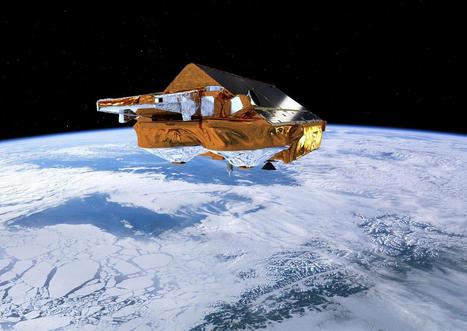
In the most detailed picture to date, information from ESA's CryoSat satellite reveals how melting ice in Greenland has recently contributed twice as much to sea-level rise as the prior two decades. Between 2011 and 2014, Greenland lost around one trillion tonnes of ice. This corresponds to a 0.75 mm contribution to global sea-level rise each year – about twice the average of the preceding two decades. The study, published in Geophysical Research Letters today, combines data from the CryoSat mission with a regional climate model to map changes in Greenland ice-sheet mass. It is the most detailed recent picture of ice loss from Greenland. CryoSat carries a radar altimeter that can measure the surface height variation of ice in fine detail, allowing scientists to record changes in its volume with unprecedented accuracy. The study demonstrates how the satellite has allowed researchers to map the complex regional pattern of imbalance. "CryoSat's radar really brings into focus our view of the ice sheet, revealing which glaciers are exhibiting the greatest signs of change," explained lead author Dr Mal McMillan from the UK Centre for Polar Observation and Modelling at the University of Leeds. "This helps us to study Greenland's individual outlet glaciers, which in turn allows us to better understand the contribution they have made to global sea-level rise."
|
|
Scooped by
Dr. Stefan Gruenwald
July 19, 2016 3:46 PM
|
Nuclear disarmament is all about trust—a hard thing for rival political powers to build, even under the best of circumstances. Recently, a team of researchers revealed something that might make that process easier: a new technique that nuclear inspectors can use to verify whether a warhead is active, inactive, or a fake—all without learning anything about its design. "This is something that has been an open problem for 50 years,” says study author and Massachusetts Institute of Technology in Cambridge nuclear policy expert R. Scott Kemp, who adds that it may be “the first technical solution” to the problem. Nuclear powers still possess more than 15,000 such weapons, according to the Federation of American Scientists. Although agreements such as 2010's New Strategic Arms Reduction Treaty have sought to limit U.S. and Russian stockpiles of nuclear missiles, no system has been successfully implemented to verify whether a nuclear warhead has been dismantled without revealing design secrets. Previous methods that kept those secrets safe were all vulnerable to cheating, Kemp says. The new method—still theoretical—is a kind of physical encryption that allows warhead scanning without revealing too much. Inspectors would send a high-energy x-ray beam through a warhead in which some of the x-ray photons would be absorbed by nuclear materials. As in medical imaging, the pattern of x-rays that emerges can reveal the geometry of what’s inside the warhead. To scramble that information, the emerging beam is directed onto an "encryption foil"—a set of materials picked by the warhead's owner and not revealed to the inspector. The x-ray photons hitting the foil cause it to emit gamma rays, via a process known as nuclear resonance fluorescence, which can then be picked up by a nearby detector. The amount and frequencies of the gamma rays would provide a signature of the layout and composition of the warhead. But, because of encryption foil, that layout and composition would not be discernible to the inspectors. If the inspectors can first test a known active warhead and use it as a model, they would then be able to identify the status of any subsequently tested warheads with 99.9% accuracy, the researchers write today in theProceedings of the National Academy of Sciences. Because the identity of the foil's material will remain unknown to the inspectors, it would be impossible for them to use the detected radiation to infer the design of the warhead.
|
Sea turtles and whales may be the charismatic critters of the sea, but the true kingpins of the ocean make up 98 percent of the ocean’s biomass — and yet individually are too small to see with the naked eye. An almost unknown organism by the name Candidatus Thioglobus autotrophicus, is present in low-oxygen waters around the world and is one of the dominant organisms in these areas — between 40 and 60 percent of all cells in some regions. Living things use oxygen for their metabolic activities, but in low-oxygen areas, bacteria and archaea have evolved to “breathe” other elements available in seawater. One of those is a chemical called nitrate which, when respired, produces gaseous nitrogen. That gas escapes to the atmosphere, effectively leaving the ocean and removing valuable nitrogen from the water. The bacteria grown and sequenced by the UW oceanographers have been pegged as playing a big role in removing nitrogen from the ocean, but until now scientists didn’t have a complete picture of how it happened. “We are filling in the gaps by providing a full genome,” said lead author Vega Shah, a UW doctoral student in oceanography. “Now we can talk about both what these organisms can and can’t do.” The research team confirmed the bacteria are contributing to nitrogen loss, but in a different way than expected. More specifically, they are responsible for a key step — converting nitrate to a similar chemical called nitrite — which then goes on to fuel other nitrogen-removal processes. Earlier research had hypothesized that these microbes also produce ammonia, another nitrogen-containing chemical. Instead, the UW team found that the microbes consume ammonia, essentially competing with other organisms for this nitrogen compound that is also important for growth and development. The findings were published July 19, 2016, in the Multidisciplinary Journal of Microbial Ecology, a Nature publication.
Via Integrated DNA Technologies
|
|
Scooped by
Dr. Stefan Gruenwald
July 20, 2016 2:30 PM
|
After 2014 set the record for annual average global surface temperature, 2015 promptly smashed it. By the end of 2015, the incredibly strong El Niño that had developed to help fuel that record enabled climate scientists to predict that 2016 was almost certain to break the record again. With the first half of 2016’s temperatures in the books, this prediction is proving to be on target. In a press conference Tuesday, NASA scientists highlighted the standout temperatures we've seen so far in 2016. This has been, far and away, the warmest January-to-June period on record. Even though the El Niño event has now come to an end, with forecasts pointing to cooler La Niña waters in the eastern equatorial Pacific Ocean, 2016 is a virtual lock to be significantly warmer than 2015. June 2016 also set the record for the warmest temperature on record in June—the 8th straight month that this has happened. The early expectation for 2017, however, is that the developing neutral or La Niña conditions will put an end to the streak of record years. The El Niño/La Niña see-saw is a an important factor in the year-to-year variability of global temperature, but it's obviously taking place on top of the long-term warming trend driven by human activities. Every year, an El Niño is capable of pushing average global temperatures a little higher than it could the year before. NASA’s Gavin Schmidt estimated that only about 40 percent of 2016’s increase over 2015 can be blamed on El Niño conditions. Meanwhile, Arctic sea ice is also having an interesting year. The extent of Arctic sea ice has been at or near a record low all year long. That's due to weather—warm temperatures (especially an early start to the melt season) and winds conducive to dispersing the ice pack. So will 2016 break 2012’s record for the lowest Arctic sea ice extent at the end of the melt season in September? NASA’s Walt Meier cautioned that while it’s certainly likely to be low—also following the longer-term trend—we have a couple months of weather yet that will determine the final result. “The first six months certainly have primed things to potentially be a record, but the summer melt season [from June to August] is really crucial. It really depends a lot on what happens there,” Meier said.
Scientists from Stanford University and the Department of Energy's SLAC National Accelerator Laboratory are using powerful X-rays to study high-performance mirror coatings that could help make the LIGO gravitational wave observatory 10 times more sensitive to cosmic events that ripple space-time.
The current version of the Laser Interferometer Gravitational-Wave Observatory, called Advanced LIGO, was the first experiment to directly observe gravitational waves, which were predicted by Albert Einstein 100 years ago. In September 2015, it detected a signal coming from two black holes, each about 30 times heavier than the sun, which merged into a single black hole 1.3 billion years ago. The experiment picked up a similar second event in December 2015.
"The detection of gravitational waves will fundamentally change our understanding of the universe in years to come," says Riccardo Bassiri, a physical science research associate at Stanford's interdisciplinary Ginzton Laboratory. "Extremely precise mirrors are the heart of LIGO, and their coatings determine the experiment's sensitivity, or ability to measure gravitational waves. So improving those coatings will make future generations of the experiment even more powerful."
Via Mariaschnee
|
|
Scooped by
Dr. Stefan Gruenwald
July 20, 2016 2:24 PM
|
Aye-ayes, a tiny crazed-looking lemur species, prefer fake nectar with higher concentrations of alcohol – as does the slow loris, a small primate with huge eyes from Southeast Asia. Chimps have been caught gulping fermented sap in the wild before, but it wasn’t clear if primates just tolerated the alcohol or actively sought it out, says Robert Dudley at the University of California in Berkeley. “This is the first study – albeit using captive primates – to show that there is a preference for higher levels of alcohol,” says Dudley, who wasn’t involved in the study. Aye-ayes usually snack on beetle larvae that they pick out of rotting wood with their bizarrely long middle fingers, but they also spend 20 per cent of the wet season drinking nectar from the traveller’s palm. The nectar could easily become fermented if natural yeasts carried by pollinators enters it, although this has not yet been confirmed in the wild. The slow loris spends much of its time guzzling bertam palm nectar, which has documented alcohol concentrations in the wild of up to 3.8 per cent.
|
|
Scooped by
Dr. Stefan Gruenwald
July 20, 2016 2:18 PM
|
Fragments of circulating DNA from tumors are around 20 to 30 base pairs shorter than those from healthy cells, researchers report. Pieces of tumor DNA circulating in the bloodstream are generally shorter than circulating DNA fragments derived from healthy cells, scientists reported this week (July 18, 2016) in PLOS Genetics. Researchers from the University of Washington and the University of Utah observed the DNA difference by analyzing fragments derived from human glioblastoma and hepatocellular carcinoma cells transplanted in rats. The team observed that the human circulating tumor DNA was typically 134 to 144 base pairs long, while the rat circulating DNA was typically 167 base pairs long. The scientists were then able to confirm this length difference in people: a cohort of 15 patients with lung cancer compared against nine healthy individuals, GenomeWeb reported. Human circulating tumor DNA “was overall consistently shorter than the fragment length of normal cell-free DNA,” the authors wrote in their paper. The findings could help improve cancer diagnosis and treatment prescription using liquid biopsies—a minimally invasive cancer detection method that has some notable limitations, including assay sensitivity. “This development has the potential to enable earlier detection of solid tumors through a simple blood draw by substantially improving our ability to detect very low quantities of circulating DNA derived from tumor cells,” study coauthor Hunter Underhill of the University of Utah said in a statement.
|
|
Scooped by
Dr. Stefan Gruenwald
July 20, 2016 2:10 PM
|
Evidence keeps piling up that a ninth planet is orbiting on the edge of our solar system, and now new calculations suggest it might be easier to track down than we thought. These new calculations show the planet is likely somewhere in the sky near the constellation Orion. Astronomers Mike Brown and Konstantin Batygin announced the possible existence of Planet Nine back in January. They didn't have direct proof though. Their calculations were based on the orbital path of six icy bodies way out on the edge of the solar system called Kuiper Belt objects, or KBOs. It appeared the possible ninth planet was sitting somewhere out beyond those KBOs, herding them together onto the same orbital plane.
|
|
Scooped by
Dr. Stefan Gruenwald
July 19, 2016 4:10 PM
|
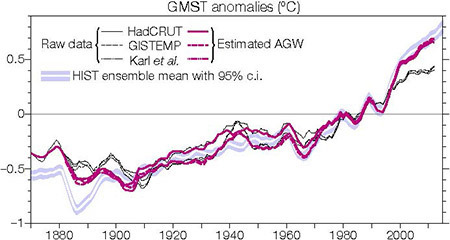
A research team including a Scripps Institution of Oceanography at the University of California San Diego climate scientist simulated in a computer model, for the first time, the realistic evolution of global mean surface temperature since 1900. In doing so, the researchers also created a new method by which researchers can measure and monitor the pace of anthropogenic global warming, finding that the contribution of human activities to warming in the surface waters of the Pacific Ocean can be distinguished from natural variability. Former Scripps researcher Yu Kosaka, now at the University of Tokyo, and Shang-Ping Xie, the Roger Revelle Chair in Environmental Science at Scripps, created the simulation by forcing sea surface temperature over the tropical Pacific to follow the observed variability. “The climate system includes naturally occurring cycles that complicate the measurement of global warming due to the anthropogenic increase in atmospheric greenhouse gases,” said Xie. “We can isolate the anthropogenic warming by removing the internally generated natural variability.” Climate policymakers have sought to limit the rise of global temperatures to 2° Celsius higher than pre-industrial levels. That figure is considered a threshold beyond which society and natural systems are virtually assured of experiencing significant and dangerous instability. Scientists have estimated that the planet is already roughly 1°C warmer at the surface than before the Industrial Revolution. The 2° C target was reaffirmed during the 2015 Conference of the Parties, known as COP21, that was held in Paris in December. Kosaka and Xie’s research could provide an easily generated and more accurate means to measure society’s success in keeping temperatures below that threshold. The research is further confirmation of the primary importance of the Pacific in controlling global-scale climate that researchers have come to understand in recent decades. Kosaka and Xie plotted the rise of global mean temperatures over the past 120 years. The rise of temperatures ascends in a staircase fashion with the steps becoming larger over the past 50 years.
|
|
Scooped by
Dr. Stefan Gruenwald
July 19, 2016 4:04 PM
|
When HIV infects a cell, it inserts its own DNA into the host’s chromosomes. In people whose disease is well-controlled by medication, the majority of affected cells contain a busted HIV genome, with mutations or deletions, that can’t make any more viruses. These have been considered “junk” by most scientists, says study author Hiromi Imamichi, a virologist at NIAID. Imamichi thinks they’re more like “zombies”—dead, but still able to do damage. Using blood samples from a repository at the National Institutes of Health Clinical Center in Bethesda, Imamichi checked for HIV DNA and RNA in cells from nine patients. For people whose disease was poorly controlled, with plenty of detectable virus in their blood, most of the HIV genomes in their cells were intact. But in those whose disease was well-managed, most of the HIV genomes were shortened due to missing pieces. Nonetheless, even in the people with HIV under control, their cells were producing defective RNAs from the truncated HIV genomes. Though flawed, those RNAs contained sequences that could, theoretically, be used to make protein. For example, in some cases different HIV genes were glued together, potentially encoding chimeric proteins. The authors provide “quite convincing evidence” that cells with defective HIV genomes make HIV RNA, says Mathias Lichterfeld, a translational immunologist and infectious disease physician at Brigham and Women’s Hospital in Boston, who was not involved in the study. What remains to be shown is whether those RNAs do then make warped, mismatched HIV proteins. It wasn’t possible to find such proteins in the blood samples, since any amount made by the small cell populations would be undetectable, Lane says. But he and Imamichi are now trying to prove defective HIV genomes make protein both in vitro and in vivo. If those proteins do exist, Lane believes “they’re probably causing some kind of immune activation.” That would explain why even in people whose HIV is kept in check, antibodies to HIV proteins and inflammation persist. The defective proteins might “distract” the immune system from the truly dangerous viruses, Lichterfeld speculates. The authors plan to study whether the presence of defective HIV RNAs correlates with higher immune activity in patients. Lichterfeld thinks it might be possible to block production of the defective HIV RNAs. Knocking out these zombies would likely improve the outlook for patients, by eliminating a cause for inflammation, Lichterfeld says, and Lane suspects such a therapeutic could be a key piece of an eventual cure.
|
|
Scooped by
Dr. Stefan Gruenwald
July 19, 2016 3:59 PM
|
The physicist Erwin Schrödinger highlighted some strange consequences of the idea of superposition more than 80 years ago, with a thought experiment that posed that a cat trapped in a box with a radioactive source could be in a superposition state, considered both alive and dead, according to the laws of quantum mechanics. Since then, scientists have proven that particles can indeed be in superposition, at quantum, subatomic scales. But whether such weird phenomena can be observed in our larger, everyday world is an open, actively pursued question. Now, MIT physicists have found that subatomic particles called neutrinos can be in superposition, without individual identities, when traveling hundreds of miles. Their results, to be published later this month in Physical Review Letters, represent the longest distance over which quantum mechanics has been tested to date. The team analyzed data on the oscillations of neutrinos—subatomic particles that interact extremely weakly with matter, passing through our bodies by the billions per second without any effect. Neutrinos can oscillate, or change between several distinct "flavors," as they travel through the universe at close to the speed of light. The researchers obtained data from Fermilab's Main Injector Neutrino Oscillation Search, or MINOS, an experiment in which neutrinos are produced from the scattering of other accelerated, high-energy particles in a facility near Chicago and beamed to a detector in Soudan, Minnesota, 735 kilometers (456 miles) away. Although the neutrinos leave Illinois as one flavor, they may oscillate along their journey, arriving in Minnesota as a completely different flavor. The MIT team studied the distribution of neutrino flavors generated in Illinois, versus those detected in Minnesota, and found that these distributions can be explained most readily by quantum phenomena: As neutrinos sped between the reactor and detector, they were statistically most likely to be in a state of superposition, with no definite flavor or identity.
|
|
Scooped by
Dr. Stefan Gruenwald
July 19, 2016 3:56 PM
|
Scientists have built a crwaling robot that is part sea slug and part 3-D printer polymer body parts. Sea slugs typically slither—a perfectly respectable way to get around—but recently a team of scientists saw additional locomotive potential in the odd-looking invertebrate. Specifically, they took a tiny muscle from the sea slug's mouth and used it to make a robot crawl. "We're building a living machine—a biohybrid robot that's not completely organic—yet," Victoria Webster, the PhD student who is leading the research, said in a statement. A sea slug might seem an unlikely source for robot parts. But according to the researchers, sea slugs are exceptionally tough creatures, and that toughness extends down to the cellular level. In the chilly Pacific Ocean, sea slugs endure large swings in temperature, salinity, and habitat as tides move them between deep water and shallow pools. This makes the slug's muscles more adaptable than those of many other species in terms of the conditions in which they can operate.
|
|
Scooped by
Dr. Stefan Gruenwald
July 19, 2016 3:53 PM
|
Despite being partially crippled by a series of malfunctions, the Kepler space telescope is still going strong. NASA’s premier planet hunter has found at least 104 worlds orbiting other stars during the first year since its resurrection. Most of the confirmed planets are less than three times as wide as Earth, Ian Crossfield, an astrophysicist at the University of Arizona in Tucson, and colleagues report online July 18 at arXiv.org. Roughly a dozen are about the same size as Earth or smaller. Several worlds live in multiplanet systems such as K2-72, where four small, possibly rocky, planets are crammed into puny orbits — the longest only 24 days. And a few worlds, despite orbiting stars that are much cooler than our sun, receive about as much solar energy as Earth, which marks them as potentially habitable. The researchers combined observations from Kepler and ground-based telescopes with statistical calculations to verify each planet candidate. From 2009 to 2013, Kepler stared at one patch of sky, during which time it cataloged over 2,300 exoplanets (SN: 6/11/16, p. 12). After failures in two components needed to keep the telescope steady, researchers designed a new mission, dubbed K2. Since 2014, the telescope has been scanning a band of sky aligned with Earth’s orbit, gazing at one spot for about 80 days before moving on to the next (SN: 6/28/14, p. 7).
|
|
Scooped by
Dr. Stefan Gruenwald
July 19, 2016 3:48 PM
|
In 1960, U.S. physicist Richard Feynman famously predicted the coming age of nanotechnology in an essay entitled "There’s Plenty of Room at the Bottom." Nowhere has this idea proven more powerful than in the realm of data storage, where by continually shrinking the size of bits of data, today’s computer hard disk drives now pack 10,000 times more information than those from just 15 years ago. Now, that march to the bottom may finally be nearing its end. In a recent issue of Nature Nanotechnology researchers report using a scanning tunneling microscope (STM) to store data at the atomic scale. To do so, they evaporated chlorine atoms atop a copper surface, which assembled themselves into a gridlike pattern with a small number of empty spots. The researchers then used the STM to move individual chlorine atoms around, encoding a series of 0s and 1s into a 12x12 array of rectangular blocks. By precisely controlling the dark spots—places missing a chlorine atom—the team encoded 160 words from Feynman’s “There’s Plenty of Room at the Bottom” lecture, among other writings. Although the process of reading and writing data with an STM remains too slow to make a useful data storage technology, it shows it’s possible to store as much as 500 terabits—or 62.5 terabytes—of data per 6.5 square centimeters, another 500 times better than today’s hard disk technology.
|