Your new post is loading...

|
Scooped by
Dr. Stefan Gruenwald
December 20, 2016 12:36 PM
|
Epigenetic regulation is one of the major mechanisms to control flowering time. It regulates gene expression through chemical modifications of DNA and its interacting proteins, but without changing the DNA sequence. If you think of the DNA contained in each cell as a big book that contains all the information, these chemical modifications can be thought as bookmarks that tell the cell which pages to read and which to skip over time. A particular type of chemical modification called acetylation, occurring on DNA bounded proteins (histones), can be promoted or removed by specific proteins. Arabidopsis has at least 18 proteins that remove these chemical modifications and are referred to as histone deacetylases (HDACs). Which are the targets of HDACs, how they coordinate with each other and how they interact with other proteins is still unclear. This study discovered the proteins that interact to one of these chemical modifications that controls the time of flowering. Researchers now concentrated on the ninth HDAC, known as HDA9. This protein is known to regulate several biological processes, such as flowering time, seed dormancy and stress responses. The team found that plants lacking this protein bloomed earlier and have enlarged fruits, indicating that the regulation of the stem cells activity was compromised. The same happens when POWERDRESS (PWR) (a protein already studied by the same research team for its regulation of floral stem cells), or both HDA9 and PWR are missing. The scientists discovered that PWR and HDA9 form a protein complex that removes the chemical modifications from a protein bound to DNA called histone 3. In the same way as removing a bookmark from the "DNA book" indicates that you do not need to read the pages next to the bookmark, removing this chemical modification reduces the production of AGL19, a protein that causes early flowering. In this way, plants maintain normal flowering time.
|
|
Scooped by
Dr. Stefan Gruenwald
December 20, 2016 12:28 PM
|
When you are suddenly able to understand someone despite a thick accent, or finally make out the lyrics of a song, your brain seems to be re-tuning to pick out words that were previously incomprehensible. Now, neuroscientists at University of California, Berkeley have observed this re-tuning in action by recording directly from the surface of a person’s brain as the words of a previously unintelligible sentence suddenly pop out after the subject is told the meaning of the garbled speech. The re-tuning takes place within a second or less, they found. The findings, published in Nature Communications, confirm hypotheses that neurons in the auditory cortex that pick out aspects of sound associated with language, the components of pitch, amplitude and timing that distinguish words or smaller sound bits called phonemes, continually tune themselves to pull meaning out of a noisy environment.
|
|
Scooped by
Dr. Stefan Gruenwald
December 20, 2016 12:24 PM
|
Seahorses have a specialized morphology that includes a toothless tubular mouth, a body covered with bony plates, a male brood pouch, and the absence of caudal and pelvic fins. A group of scientists now report the sequencing and de novo assembly of the genome of the tiger tail seahorse, Hippocampus comes. Comparative genomic analysis identifies higher protein and nucleotide evolutionary rates in H. comes compared with other teleost fish genomes. They identified an astacin metalloprotease gene family that has undergone expansion and is highly expressed in the male brood pouch. They also found that the H. comes genome lacks enamel matrix protein-coding proline/glutamine-rich secretory calcium-binding phosphoprotein genes, which might have led to the loss of mineralized teeth. Furthermore, tbx4, a regulator of hindlimb development, is also not found in H. comes genome. Knockout of tbx4 in zebrafish showed a ‘pelvic fin-loss’ phenotype similar to that of seahorses.
|
|
Scooped by
Dr. Stefan Gruenwald
December 20, 2016 12:19 PM
|
In a paper published today in Nature, the ALPHA collaboration reports the first ever measurement on the optical spectrum of an antimatter atom. This achievement features technological developments that open up a completely new era in high-precision antimatter research. It is the result of over 20 years of work by the CERN antimatter community. "Using a laser to observe a transition in antihydrogen and comparing it to hydrogen to see if they obey the same laws of physics has always been a key goal of antimatter research," said Jeffrey Hangst, Spokesperson of the ALPHA collaboration. Atoms consist of electrons orbiting a nucleus. When the electrons move from one orbit to another they absorb or emit light at specific wavelengths, forming the atom's spectrum. Each element has a unique spectrum. As a result, spectroscopy is a commonly used tool in many areas of physics, astronomy and chemistry. It helps to characterise atoms and molecules and their internal states. For example, in astrophysics, analysing the light spectrum of remote stars allows scientists to determine their composition. With its single proton and single electron, hydrogen is the most abundant, simple and well-understood atom in the Universe. Its spectrum has been measured to very high precision. Antihydrogen atoms, on the other hand are poorly understood. Because the Universe appears to consist entirely of matter, the constituents of antihydrogen atoms – antiprotons and positrons – have to be produced and assembled into atoms before the antihydrogen spectrum can be measured. It’s a painstaking process, but well worth the effort since any measurable difference between the spectra of hydrogen and antihydrogen would break basic principles of physics and possibly help understand the puzzle of the matter-antimatter imbalance in the Universe. Today’s ALPHA result is the first observation of a spectral line in an antihydrogen atom, allowing the light spectrum of matter and antimatter to be compared for the first time. Within experimental limits, the result shows no difference compared to the equivalent spectral line in hydrogen. This is consistent with the Standard Model of particle physics, the theory that best describes particles and the forces at work between them, which predicts that hydrogen and antihydrogen should have identical spectroscopic characteristics. The ALPHA collaboration expects to improve the precision of its measurements in the future. Measuring the antihydrogen spectrum with high-precision offers an extraordinary new tool to test whether matter behaves differently from antimatter and thus to further test the robustness of the Standard Model.
|
|
Scooped by
Dr. Stefan Gruenwald
December 16, 2016 2:20 PM
|
Researchers use tiny LED devices implanted in a mouse’s head and on a nerve in its leg [middle] to stimulate genetically altered neurons that respond to flashes of light. This optogenetic technology gives researchers a way to “turn on” precise groups of neurons and study the results. These wirelessly powered implants are about the size of peppercorns, so they don’t weigh down the mice or change their behavior.
|
|
Scooped by
Dr. Stefan Gruenwald
December 15, 2016 11:38 PM
|
The Android app harnesses a smartphone’s motion detectors to measure earthquake ground motion, then sends that data back to the Berkeley Seismological Laboratory for analysis. The eventual goal is to send early-warning alerts to users a bit farther from ground zero, giving them seconds to a minute of warning that the ground will start shaking. That’s enough time to take cover or switch off equipment that might be damaged in a quake. To date, nearly 220,000 people have downloaded the app, and at any one time, between 8,000 and 10,000 phones are active — turned on, lying on a horizontal surface and connected to a wi-fi network — and thus primed to respond. An updated version of the MyShake app will be available for download today (Dec. 14) from the Google Play Store, providing an option for push notifications of recent quakes within a distance determined by the user, and the option of turning the app off until the phone is plugged in, which could extend the life of a single charge in older phones. “The notifications will not be fast initially — not fast enough for early warning — but it puts into place the technology to deliver the alerts and we can then work toward making them faster and faster as we improve our real-time detection system within MyShake,” said project leader Richard Allen, a UC Berkeley professor of earth and planetary sciences and director of the seismology lab. In a presentation today, during this week’s annual meeting of the American Geophysical Union in San Francisco, UC Berkeley developer and graduate student Qingkai Kong will summarize the app’s performance. Ten months of operation clearly shows that the sensitivity of the smartphone accelerometers and the density of phones in many places are sufficient to provide data quickly enough for early warning. The phones readily detect the first seismic waves to arrive — the less destructive P waves — and send the information to Berkeley in time to issue an alert that the stronger S wave will soon arrive.
|
|
Scooped by
Dr. Stefan Gruenwald
December 14, 2016 2:01 PM
|
New data suggests the 2015 flash was a supermassive black hole tearing apart its dinner. A flash in the sky that earlier this year was called the brightest supernova ever detected—tens of times brighter than our entire Milky Way galaxy—may be something much more exotic: a supermassive black hole tearing apart—and consuming—a star that strayed too close, according to a new study. The flash was first spotted in 2015 by the All-Sky Automated Survey for SuperNovae (ASAS-SN), a network of small telescopes in Chile and Hawaii that monitors the sky for fast-changing objects. Astronomers assumed it was a superluminous supernova (SLSN), which occurs when a massive star collapses under its own gravity at the end of its life, spewing out a fireball of hot dust and gas that glows brightly for a short time before gradually fading. At the time, the event was twice as bright as the previous record holder. But ASASSN-15lh, as the event was named, was in the wrong sort of galaxy for an SLSN. The right sort is generally a young dwarf galaxy full of gas and dust where huge stars can form rapidly, burn brightly, and explode in a blaze of supernova glory. ASASSN-15lh, however, was in an old, burned-out galaxy with little evidence of star formation. “The minute they told me about this event, I was suspicious. It just didn’t seem right,” says Giorgos Leloudas, an astronomer at the Weizmann Institute of Science in Rehovot, Israel, who was not a member of the original team. Leloudas and his colleagues began gathering more data from a variety of sources, including the Swift gamma-ray satellite, the Las Cumbres Observatory global telescope network, the Hubble Space Telescope, and the European Southern Observatory’s Very Large Telescope and the New Technology Telescope, both based in Chile. Hubble data showed that the source of the flash was close to the center of its galaxy, whereas the rapid star formation that produces SLSNs typically happens farther out. Also, unlike a normal SLSN, ASASSN-15lh seemed to fade before getting brighter again weeks later, indicating a rise in temperature maintained for about 100 days, Leloudas says. A spectrum of the ultraviolet light from the event, recorded by Hubble, suggested a low-mass star in the prime of life, not on its deathbed. As the team reports today in Nature Astronomy, all these signs pointed to the idea that ASASSN-15lh might, in fact, be the dying gasp of a star that strayed too close to the supermassive black hole at the center of its galaxy and was ripped apart by the extreme gravitational field, a so-called tidal disruption event (TDE). TDEs are very rare—there are only about 10 such events currently suspected by astronomers. But, Leloudas says, the changes of output from ASASSN-15lh suggested a TDE: the initial flash from gravity tearing the star apart and heating its remains to high temperatures; the later burst from those remains being heated again as they were accreted onto the surface of the black hole. The one flaw in this argument is that the galaxy in question is thought to have a very massive black hole at its heart: more than 100 million times the mass of our sun. Theorists predict that such a leviathan would more likely swallow a star whole and only tear it up once it’s below the event horizon, where it can’t be seen. But the team realized there was a scenario in which the black hole would chew first and swallow later—if it were spinning. The gravitational field around a rotating black hole is different from a non-rotating one and would allow a visible TDE to occur.
|
|
Scooped by
Dr. Stefan Gruenwald
December 14, 2016 1:56 PM
|
Aerosols could cool the planet without ozone damage | To halt the rise of global temperatures, Harvard researchers are looking at solar geoengineering, which would inject light-reflecting sulfate aerosols into the stratosphere to cool the planet. The planet is warming at an unprecedented rate, and reducing emissions of greenhouse gases alone is not enough to remove the risk. Last year’s historic Paris climate agreement set the goal of keeping global temperatures no higher than 1.5 degrees Celsius above preindustrial levels. Emission reductions will be central to achieving that goal, but supplemental efforts can further reduce risks. One drastic idea is solar geoengineering — injecting light-reflecting sulfate aerosols into the stratosphere to cool the planet. Researchers know that large amounts of aerosols can significantly cool the planet; the effect has been observed after large volcanic eruptions. But these sulfate aerosols also carry significant risks. The biggest known risk is that they produce sulfuric acid in the stratosphere, which damages ozone. Since the ozone layer absorbs ultraviolet light from the sun, its depletion can lead to increased rates of skin cancer, eye damage, and other adverse consequences. Now, researchers from the Harvard John A. Paulson School of Engineering and Applied Sciences (SEAS) have identified an aerosol for solar geoengineering that may be able to cool the planet while simultaneously repairing ozone damage. The research is published in the Proceedings of the National Academy of Sciences. “In solar geoengineering research, introducing sulfuric acid into the atmosphere has been the only idea that had any serious traction until now,” said David Keith, the Gordon McKay Professor of Applied Physics at SEAS and professor of public policy at the Harvard Kennedy School, the first author of the paper. “This research is a turning point and an important step in analyzing and reducing certain risks of solar geoengineering.”
|
|
Scooped by
Dr. Stefan Gruenwald
December 14, 2016 1:51 PM
|
When two people smell the same thing, they can have remarkably different reactions, depending on their cultural background. Researchers at the Neuro have found that even when two cultures share the same language and many traditions, their reactions to the same smells can be different. In a partnership with researchers from the Lyon Neuroscience Research Centre in France, clinical neuropsychologist Jelena Djordjevic and her group at the Montreal Neurological Institute tested subjects in Quebec for their subjective impressions of different scents, while their collaborators in France did the same with French subjects. They selected six scents: anise, lavender, maple, wintergreen, rose and strawberry. Participants were asked to smell each scent first without knowing what the scent is, then again after being told its name. The subjects rated the scent on pleasantness, intensity, familiarity, and edibility. The scientists also measured the subjects’ non-verbal reactions to each scent, including sniffing, activity of facial muscles, respiration and heart rate. The researchers found significant differences between ratings of the same odors among the French and French-Canadian subjects. For example, the French gave wintergreen much lower pleasantness ratings than French-Canadians. In France, wintergreen is used more in medicinal products than in Canada, where it is found more in candy. Canadians were more familiar with scents of maple and wintergreen than the French, while in turn people from France were more familiar with the scent of lavender. When asked to describe odors, Canadians were better at describing maple and wintergreen, while people from France were better at describing lavender. Anise was rated similarly in two cultures but was described more often as “licorice” in Quebec and as “anise” in France. Providing the names of the odors to subjects increased their ratings of familiarity, pleasantness and edibility. Furthermore, cultural differences disappeared or decreased when the names were provided. This was true even for the non-verbal reactions to scents. The findings suggest that mental representations activated by odor names are more similar between cultures than the mental representations activated by sensory information alone. Cultural differences in perception of odors are subtle, and are easily reduced by the mere presence of odor names. The results were published in the journal Chemical Senses on Sept. 21, 2016.
|
|
Scooped by
Dr. Stefan Gruenwald
December 14, 2016 1:43 PM
|
Study traces evolutionary history of the baculum. Despite slang terms that imply otherwise, the human penis contains no bones. The same cannot be said for many of our closest evolutionary relatives: Chimpanzees and bonobos both have penis bones (a macaque one is pictured), also known as bacula. To find out why some primates have the feature whereas others don’t, researchers traced the bone’s evolutionary history through time. The baculum first evolved between 145 million and 95 million years ago, the team reports online today in the Proceedings of the Royal Society B. That means it was present in the most recent common ancestor of all primates and carnivores. Why some descendants, like humans, lost their bacula appears to be due to differences in mating practices: In primates, the presence of a penis bone was most tightly correlated to increased intromission duration, i.e. how long the penis penetrates the vagina during intercourse. Longer intromission times often occur in species with polygamous mating practices—where multiple males mate with multiple females—as seen in bonobos and chimps, but not humans. This system creates an intense competition for fertilization, and one way for males to reduce a female’s access to additional mates is to spend more time having sex with her themselves. The penis bone facilitates this by supporting the penis during sex and keeping the urethra open.
|
|
Scooped by
Dr. Stefan Gruenwald
December 14, 2016 1:09 PM
|
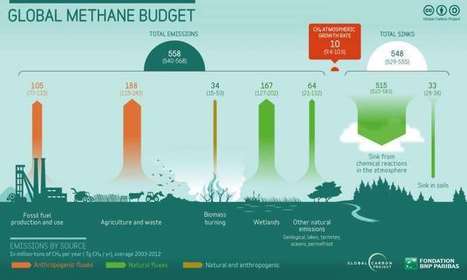
Global concentrations of methane, a powerful greenhouse gas and cause of climate change, are now growing faster in the atmosphere than at any other time in the past two decades. That is the message of a team of international scientists in an editorial to be published 12 December 2016 in the journal Environmental Research Letters. The group reports that methane concentrations in the air began to surge around 2007 and grew precipitously in 2014 and 2015. In that two-year period, concentrations shot up by 10 or more parts per billion annually. It's a stark contrast from the early 2000s when methane concentrations crept up by just 0.5 parts per billion on average each year. The reason for the spike is unclear but may come from emissions from agricultural sources and mainly around the tropics - potentially from farm sites like rice paddies and cattle pastures. Scientists involved in the editorial will discuss these trends at a session during the fall meeting of the American Geophysical Union (AGU) in San Francisco on Tuesday, 13 December. The findings could give new global attention to methane - which is much less prevalent in the atmosphere than carbon dioxide but is a more potent greenhouse gas, trapping 28 times more heat. And while research shows that the growth of carbon dioxide emissions has flattened out in recent years, methane emissions seem to be soaring. "The leveling off we've seen in the last three years for carbon dioxide emissions is strikingly different from the recent rapid increase in methane," says Robert Jackson, a co-author of the paper and a Professor in Earth System Science at Stanford University. The results for methane "are worrisome but provide an immediate opportunity for mitigation that complements efforts for carbon dioxide." The authors of the new editorial previously helped to produce the 2016 Global Methane Budget. This report provided a comprehensive look at how methane had flowed in and out of the atmosphere from 2000 to 2012 because of human activities and other sources. It found, for example, that human emissions of the gas seemed to have increased after 2007, although it's not clear by how much. The methane budget is published every two to three years by the Global Carbon Project, a research project of Future Earth.
|
|
Scooped by
Dr. Stefan Gruenwald
December 10, 2016 12:58 PM
|
After splitting from the chimpanzee lineage, a single letter of our genome switched to another – and likely shaped the evolutionary expansion of the human. The gene ARHGAP11B promotes basal progenitor amplification and is implicated in neocortex expansion. It arose on the human evolutionary lineage by partial duplication ofARHGAP11A, which encodes a Rho guanosine triphosphatase–activating protein (RhoGAP). However, a lack of 55 nucleotides in ARHGAP11B mRNA leads to loss of RhoGAP activity by GAP domain truncation and addition of a human-specific carboxy-terminal amino acid sequence. Scientists now show that these 55 nucleotides are deleted by mRNA splicing due to a single C→G substitution that creates a novel splice donor site. They reconstructed an ancestral ARHGAP11B complementary DNA without this substitution. Ancestral ARHGAP11B exhibits RhoGAP activity but has no ability to increase basal progenitors during neocortex development. Hence, a single nucleotide substitution underlies the specific properties of ARHGAP11B that likely contributed to the evolutionary expansion of the human neocortex.
|
|
Scooped by
Dr. Stefan Gruenwald
December 10, 2016 12:50 PM
|
There’s an abundant new swath of cosmic real estate that life could call home—and the views would be spectacular. Floating out by themselves in the Milky Way galaxy are perhaps a billion cold brown dwarfs, objects many times as massive as Jupiter but not big enough to ignite as a star. According to a new study, layers of their upper atmospheres sit at temperatures and pressures resembling those on Earth, and could host microbes that surf on thermal updrafts. Mild temperatures provide a benefit to worlds more massive than Jupiter. The idea expands the concept of a habitable zone to include a vast population of worlds that had previously gone unconsidered. “You don’t necessarily need to have a terrestrial planet with a surface,” says Jack Yates, a planetary scientist at the University of Edinburgh in the United Kingdom, who led the study. Atmospheric life isn’t just for the birds. For decades, biologists have known about microbes that drift in the winds high above Earth’s surface. And in 1976, Carl Sagan envisioned the kind of ecosystem that could evolve in the upper layers of Jupiter, fueled by sunlight. You could have sky plankton: small organisms he called “sinkers.” Other organisms could be balloonlike “floaters,” which would rise and fall in the atmosphere by manipulating their body pressure. In the years since, astronomers have also considered the prospects of microbes in the carbon dioxide atmosphere above Venus’s inhospitable surface. Yates and his colleagues applied the same thinking to a kind of world Sagan didn’t know about. Discovered in 2011, some cold brown dwarfs have surfaces roughly at room temperature or below; lower layers would be downright comfortable. In March 2013, astronomers discovered WISE 0855-0714, a brown dwarf only 7 light-years away that seems to have water clouds in its atmosphere. Yates and his colleagues set out to update Sagan’s calculations and to identify the sizes, densities, and life strategies of microbes that could manage to stay aloft in the habitable region of an enormous atmosphere of predominantly hydrogen gas. Sink too low and you are cooked or crushed. Rise too high and you might freeze. On such a world, small sinkers like the microbes in Earth’s atmosphere or even smaller would have a better chance than Sagan’s floaters, the researchers will report in an upcoming issue of The Astrophysical Journal. But a lot depends on the weather: If upwelling winds are powerful on free-floating brown dwarfs, as seems to be true in the bands of gas giants like Jupiter and Saturn, heavier creatures can carve out a niche. In the absence of sunlight, they could feed on chemical nutrients. Observations of cold brown dwarf atmospheres reveal most of the ingredients Earth life depends on: carbon, hydrogen, nitrogen, and oxygen, though perhaps not phosphorous.
|
|
|
Scooped by
Dr. Stefan Gruenwald
December 20, 2016 12:32 PM
|
Surgeons have described a new treatment for early stage prostate cancer as "truly transformative". The approach, tested across Europe, uses lasers and a drug made from deep sea bacteria to eliminate tumors, but without causing severe side effects. Trials on 413 men - published in The Lancet Oncology - showed nearly half of them had no remaining trace of cancer. The new treatment uses a drug, made from bacteria that live in the almost total darkness of the seafloor and which become toxic only when exposed to light. Ten fiber optic lasers are inserted through the perineum - the gap between the anus and the testes - and into the cancerous prostate gland. When the red laser is switched on, it activates the drug to kill the cancer and leaves the healthy prostate behind. The trial - at 47 hospitals across Europe - showed 49% of patients went into complete remission. And during the follow-up, only 6% of patients needed to have the prostate removed, compared with 30% of patients that did not have the new therapy. Crucially, the impact on sexual activity and urination lasted no more than three months. No men had significant side effects after two years.
|
|
Scooped by
Dr. Stefan Gruenwald
December 20, 2016 12:27 PM
|
|
|
Scooped by
Dr. Stefan Gruenwald
December 20, 2016 12:21 PM
|
Pregnancy reduces grey matter in specific parts of a woman's brain, helping her bond with her baby and prepare for the demands of motherhood. Scans of 25 first-time mums showed these structural brain changes lasted for at least two years after giving birth. European researchers said the scale of brain changes during pregnancy were akin to those seen during adolescence. But they found no evidence of women's memory deteriorating. Many women have said they feel forgetful and emotional during pregnancy and put it down to "pregnancy" or "baby" brain - and, it seems, with good reason. Pregnancy is characterized by extreme surges of sex hormones and involves drastic physiological and physical changes in the body, the researchers say. During those nine months, women experience a flood of estrogen which is greater than for the whole of the rest of their lives. Yet research on the effects of pregnancy on the human brain is scarce. This study, from researchers at the Universitat Autonoma de Barcelona and Leiden University and published in Nature Neuroscience, looked at the brain scans of women before they became pregnant, soon after they gave birth, and two years later, to see how the brain changed.
|
|
Scooped by
Dr. Stefan Gruenwald
December 20, 2016 12:17 PM
|
A chemical that disrupts biological processes in female mosquitoes may be just as effective as insecticides in reducing the spread of malaria. The study will be published online December 15, 2016 in PLOS Pathogens. “As insecticide resistance is spreading, new intervention methods to control mosquitoes are urgently needed,” said Flaminia Catteruccia, associate professor of immunology and infectious diseases at Harvard Chan School and co-senior author of the study. “Our study provides a new strategy based on the use of a non-toxic compound that prevents transmission of malaria parasites without killing the mosquito.” Malaria kills about 500,000 people every year. People can become infected when bitten by mosquitoes carrying the malaria parasite, Plasmodium falciparum. Typical strategies to prevent transmission involve the use of insecticide-treated bed nets and insecticide spraying, but Anopheles mosquitoes—the type that transmits P. falciparum parasites—are rapidly becoming resistant to insecticides. In the new study, researchers treated Anopheles female mosquitoes with a synthetic chemical called DBH (dibenzoylhydrazine) to see how it would impact their biological processes. DBH mimics the action of the steroid hormone “20E” (20-hydroxyecdysone), which plays a key role in the reproductive cycle of the female mosquito. Various aspects of the mosquitoes’ life cycle were disrupted after treatment with DBH, the researchers found. The females produced and laid fewer eggs; they didn’t mate successfully; and they died more rapidly than non-treated mosquitoes. The effects were greater the higher the DBH dose. DBH-treated mosquitoes were also less likely to be infected by malaria parasites. Using DBH in either bed nets or in sprays was equally effective, the researchers found. They also noted that DBH compounds are not toxic to mammals, which would make them ideally suited for use in bed nets, where low toxicity is essential.
|
|
Scooped by
Dr. Stefan Gruenwald
December 16, 2016 2:18 PM
|
Researcher Bin He and colleagues reported on Wednesday the successful use of sensors in a cap worn on the head that interpret brain signals and instruct a robotic arm to make corresponding movements. Bionic arms controlled wirelessly by people’s thoughts are coming closer to reality as the result of research at the University of Minnesota that seeks to eliminate the need for risky surgical brain implants in order to work. Tests with eight study subjects found their thoughts could instruct an arm to complete a variety of real-world tasks, such as picking up a block and putting it on a rack. “This is the first time in the world that people can operate a robotic arm to reach and grasp objects in a complex 3-D environment using only their thoughts without a brain implant,” said He, who directs the U’s Institute for Engineering in Medicine and its Center for Neuroengineering. “Just by imagining moving their arms, they were able to move the robotic arm.” While other clinical studies have successfully used a “brain-computer interface” to control a robotic arm, they required the use of implants that would be close enough to the neurons — the thinking cells of the brain — to record their signals. Attempts to use external sensors were unsuccessful because the skull created too much interference for the sensors to pick up the neural signals.
|
|
Scooped by
Dr. Stefan Gruenwald
December 14, 2016 2:04 PM
|
One of the hurdles to longevity is that bodies seemed designed to break down. It's a part of aging. It might be a part of evolution. Transplants and implants aren’t painless and can be risky. Now, researchers are saying that you won’t have to worry about bodies breaking down when you can just print a new part. Nature Magazine reports that scientists are using 3D bioprinting technology that can print everything from new knees and bones to eyes and ears. Penn State biological engineer Ibrahim Ozbolat, who is studying how to use 3D bioprinting to repair cartilage and other tissue types, tells Nature that one day a patient could lay under a machine that would inject cells into a trick knee to repair it. “In the future, we can have the patient under the bioprinter,” says Ozbolat. Ozbolat ads that this bioprinter machine could fix any body part, not just knees.
|
|
Scooped by
Dr. Stefan Gruenwald
December 14, 2016 1:59 PM
|
Cell biologists are learning more about how the Zika virus disrupts brain cells to cause the birth defect microcephaly, in which a baby’s brain and head are smaller than usual. Meantime, several strategies to combat the virus show preliminary promise, researchers reported at the American Society for Cell Biology’s annual meeting. Among the findings: - Zika causes fetal brain cells neighboring an infected cell to commit suicide, David Doobin of Columbia University Medical Center reported December 6. In work with mice and rats, Doobin and colleagues found suggestions that the cells’ death might be the body’s attempt to limit spread of the virus.
The researchers applied techniques they had previously used to investigate a genetic cause of microcephaly to narrow when in pregnancy the virus is most likely to cause the brain to shrink. Timing of the virus’s effect varied by strain. For one from Puerto Rico, brain cell die-off happened in mice only in the first two trimesters. But a strain from Honduras could kill developing brain cells later into pregnancy. Microcephaly can lead to seizures, mental impairment, delays in speech and movement and other problems. Disrupting a Zika enzyme could help stop the virus. The enzyme, NS3, causes problems when it gloms on to centrioles, a pair of structures inside cells needed to divvy up chromosomes when cells divide, Andrew Kodani, a cell biologist at Boston Children’s Hospital reported December 6. Zika, dengue and other related viruses, known as flaviviruses, all use a version of NS3 to chop joined proteins apart so they can do their jobs. Before chopping, Zika’s 10 proteins are made as one long protein. But once NS3 finishes slicing virus proteins, the enzyme moves to the centrioles, where it can mess with their assembly, Kodani and colleagues found. Something similar happens in some genetic forms of microcephaly.
|
|
Scooped by
Dr. Stefan Gruenwald
December 14, 2016 1:54 PM
|
The Ice Age giants of St. Paul Island outlived those on the mainland for millennia. What finally drove them to extinction? The end of the last ice age was a dynamic time in North America. Glaciers melted, opening up new land corridors, but sea levels rose, shrinking land mass. Humans arrived from Siberia, and North America’s massive animals went extinct. Researchers still debate why the megafauna died off: Hunting by humans and climate change are the main suspects.
|
|
Scooped by
Dr. Stefan Gruenwald
December 14, 2016 1:45 PM
|
In recent years numerous attempts to understand the human brain were undertaken from a network point of view. A network framework takes into account the relationships between the different parts of the system and enables to examine how global and complex functions might emerge from network topology. Previous work revealed that the human brain features 'small world' characteristics and that cortical hubs tend to interconnect among themselves. However, in order to fully understand the topological structure of hubs, and how their profile reflect the brain's global functional organization, one needs to go beyond the properties of a specific hub and examine the various structural layers that make up the network. To address this topic further, we applied an analysis known in statistical physics and network theory as k-shell decomposition analysis. The analysis was applied on a human cortical network, derived from MRI\DSI data of six participants. Such analysis enables us to portray a detailed account of cortical connectivity focusing on different neighborhoods of inter-connected layers across the cortex. Our findings reveal that the human cortex is highly connected and efficient, and unlike the internet network contains no isolated nodes. The cortical network is comprised of a nucleus alongside shells of increasing connectivity that formed one connected giant component, revealing the human brain's global functional organization. All these components were further categorized into three hierarchies in accordance with their connectivity profile, with each hierarchy reflecting different functional roles. Such a model may explain an efficient flow of information from the lowest hierarchy to the highest one, with each step enabling increased data integration. At the top, the highest hierarchy (the nucleus) serves as a global interconnected collective and demonstrates high correlation with consciousness related regions, suggesting that the nucleus might serve as a platform for consciousness to emerge.
|
|
Scooped by
Dr. Stefan Gruenwald
December 14, 2016 1:41 PM
|
iPSCs created through the reprogramming of human somatic cells retain genomic marks of the donor’s age. After human somatic cells are reprogrammed into induced pluripotent stem cells (iPSCs), the resulting cells retain both genetic and epigenetic indicators of the age of the person who donated the somatic-cell progenitors, scientists have found. Ali Torkamani, Kristin Baldwin, and their colleagues at the Scripps Research Institute in California have found that iPSC genomes have methylation patterns that reflect donor age. In general, the number of mutations those pluripotent cells carry increases with donor age—until around age 90, that is, when the number of mutations decreases, the researchers found. These results, published today (December 12) in Nature Biotechnology, have implications for autologous transplantation—creating a replacement tissue from a patient’s own cells—something that older people are more likely to need, the authors noted. “If you’re getting cells from these older donors, these seed cells that you use for reprogramming already have some accumulation of mutation load, and so that is actually very important evidence, especially when they are looking at the potential functions of these mutations,” University of California, San Diego, bioengineer Kun Zhang, who was not involved in the study, told The Scientist. Every cell line the researchers examined had at least one mutation in its exomic DNA and some of those mutations were potentially deleterious, even oncogenic, Zhang pointed out. “These damaging mutations might have some unexpected functional consequence when we’re looking at the clinical applications.” “The study highlights the fact that there is some age-associated risk of pathogenic variants in iPSCs,” Torkamani told The Scientist. Somatic cell reprogramming takes differentiated cells and returns them to a pluripotent state. A previousstudy had reported that, epigenetically, some iPSCs appear to have a negative age, corresponding to an embryonic state. Torkamani and colleagues decided to examine whether iPSCs additionally retain signs of the age of their somatic progenitor cells. Scientists have long realized that as people age, their genomes undergo epigenetic changes: some genomic sites gain methyl groups, others lose them. Epigenetic changes likewise occur during the creation of iPSCs, but it was unknown how reprogramming affected age-related epigenetic marks.
|
|
Scooped by
Dr. Stefan Gruenwald
December 11, 2016 6:13 PM
|
We can't see it, taste it, or smell it. Nevertheless, carbon monoxide is a deadly poison; it is a frequent cause of poisoning all over the world. This gaseous product of incomplete combustion displaces the oxygen molecules carried by hemoglobin throughout the body, thereby starving tissues of oxygen and causing death. Blood gas poisoning with carbon monoxide (CO) remains a major cause of death and disability, affecting 50,000 persons a year in the U.S. alone. Patients with greater than 30% carboxyhemoglobinemia may develop brain injury, long-term neurocognitive deficits, and/or death. In the present proposal we introduce the first antidotal therapy for carbon monoxide poisoning, based on the finding of a surprising and near-irreversible CO-binding affinity of mutationally engineered human neuroglobin. Neuroglobin, like cytoglobin and many plant Hbs, is a six-coordinate hemoprotein, with the heme iron coordinated by a proximal and distal histidine residues. In an effort to understand the function of this bis-histidyl structure, scientists now performed mutagenesis of the proximal histidine 64 molecule (e.g. H64Q) which opens the heme pocket, forming a five-coordinate molecule, more similar to the heme pocket of Hb or myoglobin. Unexpectedly, this molecule exhibits a remarkably high affinity for gaseous ligands, with a P50 value for oxygen (PaO2 value at which 50% of the heme binds oxygen) of 0.01 mm Hg (normal value is 26 mm Hg). This finding informs our primary hypothesis, that H64 mutant neuroglobin will bind CO with high affinity, producing a five-coordinate "trap" for CO. In our preliminary experiments we find that mutationally engineered H64Q neurglobin binds CO with an affinity more than 300 times that of hemoglobin and can remove CO from intact red cells in vitro and in vivo in CO exposed mice in less than 2 minutes. The scientists involved in this study propose to refine this molecule in a series of in vitro, pre-clinical physiology, and translational studies as a human biological antidote for CO poisoning and test its ability to clear CO from red blood cells, critical organs (lung, brain, and heart), and cytochrome C oxidase of the mitochondrial electron transport chain. From a translational perspective, will test the ability of this antidote to improve long-term organ function and survival after severe CO poisoning.
|
|
Scooped by
Dr. Stefan Gruenwald
December 10, 2016 12:54 PM
|
Ancient texts help piece together the planet's rotational history. Belinda Smith reports. When ancient and medieval astronomers dutifully jotted details about lunar and solar eclipses onto clay tablets and parchment, little did they know that information would one day be used to calculate the Earth’s spin – and how it’s slowed over the millennia. A trio of physicists in the UK gathered records from 720 BCE to 1600 CE which describe partial or total eclipses. From these, they calculated the planet’s rate of rotation at the time. Writing in the Proceedings of the Royal Society A, they found that an Earth day grew by an average of less than two-thousandths of a second each century. That the Earth’s spin is slowing isn’t new. It should be, after all – a little of the planet’s rotational momentum is constantly transferred to the moon’s orbital momentum. This means the moon speeds up slightly and slowly pulls away from Earth – at around four centimeters each year – while the planet takes a little longer to complete one full rotation (or a day). Richard Stephenson from the University of Durham and Leslie Morrison have examined historical eclipses for clues about the Earth’s rotation for nearly four decades.
|