Your new post is loading...

|
Scooped by
Dr. Stefan Gruenwald
April 19, 2017 12:33 PM
|
The LHCb experiment finds intriguing anomalies in the way some particles decay. If confirmed, these would be a sign of new physics phenomena not predicted by the Standard Model of particle physics. In a recent seminar at CERN, the LHCb collaboration presented new long-awaited results on a particular decay of B0 mesons produced in collisions at the Large Hadron Collider. The Standard Model of particle physics predicts the probability of the many possible decay modes of B0 mesons, and possible discrepancies with the data would signal new physics. In this study, the LHCb collaboration looked at the decays of B0 mesons to an excited kaon and a pair of electrons or muons. The muon is 200 times heavier than the electron, but in the Standard Model its interactions are otherwise identical to those of the electron, a property known as lepton universality. Lepton universality predicts that, up to a small and calculable effect due to the mass difference, electron and muons should be produced with the same probability in this specific B0 decay. LHCb finds instead that the decays involving muons occur less often. While potentially exciting, the discrepancy with the Standard Model occurs at the level of 2.2 to 2.5 sigma, which is not yet sufficient to draw a firm conclusion. However, the result is intriguing because a recent measurement by LHCb involving a related decay exhibited similar behavior. While of great interest, these hints are not enough to come to a conclusive statement. Although of a different nature, there have been many previous measurements supporting the symmetry between electrons and muons. More data and more observations of similar decays are needed in order to clarify whether these hints are just a statistical fluctuation or the first signs for new particles that would extend and complete the Standard Model of particles physics. The measurements discussed were obtained using the entire data sample of the first period of exploitation of the Large Hadron Collider (Run 1). If the new measurements indeed point to physics beyond the Standard Model, the larger data sample collected in Run 2 will be sufficient to confirm these effects.
|
|
Rescooped by
Dr. Stefan Gruenwald
from Nostri Orbis
April 19, 2017 12:17 PM
|
The world is expanding and so is the data around. The concept of big data has never looked more fascinating than now. Businesses are now looking for patterns to implement big data technology directly into their business applications and software. The term has moved from being just a buzzword to one of the most essential components of a company’s IT infrastructure. Organizations are taking the next step to identify the current as well as future developments in big data deployments. Massive data sets from an ever-expanding list of sources are what define big data in the simplest way. Organizations are trying to create a culture where they can embed the technology in applications so that it can truly empower their business. Truly, big data has taken the business world by storm, but what next! How big is it going to get; will businesses using data see productivity benefits, are there any security concerns? Questions abound and so does their answers. However, differentiating between what will sustain and what will pass will save you time and most importantly, a wrong investment. Since long, big data solutions, has been introduced as massive sets built around centralized data lakes. The reasons were quite simple. The data became difficult to duplicate and management was easier. In 2016 though, organizations are thinking of moving to distributed big data processing, not to mention managing multiple data location centers and multiple devices. Further, the continued growth of the Internet of Things is increasingly going to affect the deployment of distributed data processing frameworks. The ever-expanding list of resources continues generating larger and larger volumes of data. There are a lot of data and there is going to be more. Data-driven companies like Google are stressing on data analysis and how it must be grounded in sound values and practices. Terabytes, petabytes, or exabytes - big data means huge amounts of data getting transferred between applications. The consistent back and forth of information is creating huge security concerns. Intrusions are detected on a daily basis and what’s worse is organizations are keeping security as their second or third priority. Hackers can breach any database if your security system gets easily defeated. Organizations with weak protection solutions will end up being victims of thousands of hackers out there. Get a top-notch anti-malware software program that will safeguard your perimeter and it won’t be pregnable. Experts debate when it comes to quality of data. According to them, big isn’t necessary whatsoever and business doesn’t use even a fraction of the data they have access to. The idea is moving from big to fast and actionable data that answer questions and produces effective uses of the data. Big data is going to get bigger no matter what. Don’t get left behind and adopt it as soon as possible. For effective data management and protection from intrusion, make sure you are securing your enterprise with top performance anti-malware solutions. If big data is expanding, then so has to be the scale, speed, security and integration requirements of your organization.
Via Fernando Gil
|
|
Rescooped by
Dr. Stefan Gruenwald
from DNA and RNA research
April 19, 2017 12:12 PM
|
Scientists have developed a new system, described in Nature Genetics, that identified and tracked hundreds of genetic variations that alter the way DNA is spliced when cells make proteins, often leading to disease. It’s not so hard anymore to find genetic variations in patients, said Brown University genomics expert William Fairbrother, but it remains difficult to understand whether and how those mutations undermine health. In a new study in Nature Genetics, his research team used a new assay technology called “MaPSy” to sort through nearly 5,000 mutations and identify about 500 that led to errors in how cells processed genes. The system also showed precisely how and why the processing failed. “Today, because we can, we’re getting tens of thousands of variants from each individual that could be relevant,” said Fairbrother, an associate professor of biology. “We can sequence everything. But we want to know which variants are causing diseases — that’s the beginning of precision medicine. How you respond to a therapy is going to be determined by which variant is causing your disease and how.” To accelerate that knowledge, Fairbrother has dedicated his lab to developing a variety of tools and techniques, including software and biophysical systems such as MaPSy, to study gene splicing. Genes are sections of DNA sequence that provide cells with the instructions, or code, for making proteins the body needs for its functions. During this manufacturing process, useful protein coding sequences need to be cut out and reconnected — spliced — from the longer sequences, much as usable movie scenes are cut from longer reels of raw footage when making a film. Genes are often viewed as the blueprint of proteins. Sometimes mutations in genes affect not the code of the proteins themselves, but instead the splicing sites and instructions that govern how the gene sequence should be read. That can be a big problem — while the former kind of problem might affect a component of a protein, the latter kind of error can affect whether the protein is made at all. It’s therefore important to understand how an individual’s genetic variation could alter gene splicing, Fairbrother said. “Splicing errors can be very deleterious because instead of just changing one amino acid [the building block of a protein], it can take out a stretch of 40 or 50 amino acids,” he said. In 2012, Fairbrother’s lab unveiled free web-based software, Spliceman, which analyzes DNA sequences to determine if mutations are likely to cause errors in splicing. Later that year, the lab was part of a team that won the CLARITY contest in which scientists analyzed the whole genomes of three families to find the mutations causing a disease in children from each family.
Via Integrated DNA Technologies
|
|
Scooped by
Dr. Stefan Gruenwald
April 18, 2017 11:10 PM
|
A new study published in the journal Astrobiology seeks to integrate new exoplanet data as part of the Drake Equation while demonstrating the role of “pessimism” and “optimism” in estimating the odds of finding E.T. (you don’t find what you don’t look for).
“The question of whether advanced civilizations exist elsewhere in the universe has always been vexed with three large uncertainties in the Drake equation,” said University of Rochester astronomer and study coauthor Adam Frank in a statement. “We’ve known for a long time approximately how many stars exist. We didn’t know how many of those stars had planets that could potentially harbor life, how often life might evolve and lead to intelligent beings, and how long any civilizations might last before becoming extinct.”
Estimates derived by projects running under NASA’s Kepler satellite and a few other instruments suggest that out of the estimated 2 x 10^22 stars in the known universe, 20 percent have planets that reside in habitable zones that have temperatures, atmospheres, and other traits that could support life. So that takes care of one uncertainty.
That leaves two other questions: - How often would life evolve?
- How long could those civilizations survive for?
That last one is a particularly tough question to answer, since we can only really work off the history of human civilization — and we haven’t died off yet. That’s where the notion of pessimism and optimism arise. Frank and Sullivan write that their method requires only establishing how low the probability that humans are the only intelligent species to have ever evolved is. They call this the pessimism line. “If the actual probability is greater than the pessimism line,” said Frank, “then a technological species and civilization has likely happened before.” Using current SETI and exoplanet data, Frank and Sullivan ended up calculating this number at one in 10 billion trillion. That’s incredibly small — which means the odds that another intelligent species has evolved are very, very good. “Think of it this way,” said Frank. “Before our result you’d be considered a pessimist if you imagined the probability of evolving a civilization on a habitable planet were, say, one in a trillion. But even that guess, one chance in a trillion, implies that what has happened here on Earth with humanity has in fact happened about a 10 billion other times over cosmic history!” The researchers emphasize that this revised interpretation of the Drake equation accounts for the entire 13.78 billion year history of the universe — while the original localizes the odds of finding E.T. to the present day. That being said, optimism for finding alien life has never been higher. After all, three famous names just started a multi-million dollar project to look for aliens in Alpha Centauri — the closest star system to the Earth — and some prominent scientists think there’s a good chance we’ll find something special. There’s certainly never been a time to be an E.T. optimist.
|
|
Scooped by
Dr. Stefan Gruenwald
April 17, 2017 8:38 PM
|
Delivering life-saving drugs directly to the brain in a safe and effective way is a challenge for medical providers. One key reason: the blood-brain barrier, which protects the brain from tissue-specific drug delivery. Methods such as an injection or a pill aren’t as precise or immediate as doctors might prefer, and ensuring delivery right to the brain often requires invasive, risky techniques. A team of engineers from Washington University in St. Louis has developed a new nanoparticle generation-delivery method that could someday vastly improve drug delivery to the brain, making it as simple as a sniff. “This would be a nanoparticle nasal spray, and the delivery system could allow a therapeutic dose of medicine to reach the brain within 30 minutes to one hour,” said Ramesh Raliya, research scientist at the School of Engineering & Applied Science. “The blood-brain barrier protects the brain from foreign substances in the blood that may injure the brain,” Raliya said. “But when we need to deliver something there, getting through that barrier is difficult and invasive. Our non-invasive technique can deliver drugs via nanoparticles, so there’s less risk and better response times.” The novel approach is based on aerosol science and engineering principles that allow the generation of monodisperse nanoparticles, which can deposit on upper regions of the nasal cavity via diffusion. Working with Assistant Vice Chancellor Pratim Biswas, chair of the Department of Energy, Environmental & Chemical Engineering and the Lucy & Stanley Lopata Professor, Raliya developed an aerosol consisting of gold nanoparticles of controlled size, shape and surface charge. The nanoparticles were tagged with fluorescent markers, allowing the researchers to track their movement. Next, Raliya and biomedical engineering postdoctoral fellow Debajit Saha exposed locusts’ antennae to the aerosol, and observed the nanoparticles travel from the antennas up through the olfactory nerves. Due to their tiny size, the nanoparticles passed through the brain-blood barrier, reaching the brain and suffusing it in a matter of minutes.
|
|
Scooped by
Dr. Stefan Gruenwald
April 13, 2017 7:15 PM
|
A second Great Spot has been discovered on Jupiter by University of Leicester astronomers, rivalling the scale of the planet's famous Great Red Spot and created by the powerful energies exerted by the great planet's polar aurorae. Dubbed the 'Great Cold Spot', it has been observed as a localized dark spot, up to 24,000 km in longitude and 12,000 km in latitude, in the gas giant's thin high-altitude thermosphere, that is around 200K (Kelvin) cooler than the surrounding atmosphere, which can range in temperature between 700K (426ºC) and 1000K (726ºC). The results are published today (11 April) in Geophysical Research Letters. Dr Tom Stallard, Associate Professor in Planetary Astronomy and lead author of the study, said: "This is the first time any weather feature in Jupiter's upper atmosphere has been observed away from the planet's bright aurorae. "The Great Cold Spot is much more volatile than the slowly changing Great Red Spot, changing dramatically in shape and size over only a few days and weeks, but it has re-appeared for as long as we have data to search for it, for over 15 years. That suggests that it continually reforms itself, and as a result it might be as old as the aurorae that form it - perhaps many thousands of years old."
|
|
Scooped by
Dr. Stefan Gruenwald
April 13, 2017 4:27 PM
|
When Boston Dynamics introduced its massively upgraded Atlas last year, we said the robot could “do things we’ve never seen other robots doing before, making it one of the most advanced humanoids in existence.” But now, after seeing the video that Boston Dynamics just released to officially unveil its newest creation, Handle, a sort of Atlas on wheels, we’ll just say it again: Handle can do things we’ve never seen other robots doing before, making it one of the most advanced humanoids in existence. Boston Dynamics’ wheeled Handle robot received much fanfare earlier this month when DFJ partner Steve Jurvetson slipped us an early video from a company Keynote. Handle can manage some pretty sick hurdles and spins, but the new video shows how the robot can operate in tough environments — on hills, in the snow and over uneven terrain. It’s able to do this with a height of 6.5 feet that surpasses that of most humans. On wheels, it can move at a chipper nine mph and manage four-foot vertical jumps. If you’re wondering, the highest human jump ever recorded is 5.3 feet.
|
|
Scooped by
Dr. Stefan Gruenwald
April 13, 2017 11:19 AM
|
Researchers have discovered a fish venom that contains opioid properties, which could help in the development of new pain-killing drugs. The fierce-looking fang blenny, also known as the poison-fang blenny or the saber-tooth blenny, fends off predators and competitors by injecting them with a heroin-like substance that impairs them rather than kills them. "The venom causes the bitten fish to become slower in movement and dizzy by acting on their opioid receptors," said Bryan Fry, who led the study published Tuesday in the science journal Current Biology. Although used for defense, the venom "inhibits pain rather than causing it." It's not the first time animal poison has been found to have analgesic properties: Ziconotide which was derived from cone snails, is used to treat chronic pain. But it's the first time scientists have identified opioid peptides in fish venom, Fry said. This venom is "chemically unique," which drives home the importance of biodiversity, said Fry of the University of
Queensland. "This discovery is an excellent example as to why we must urgently protect all of nature," Fry told CBC News. "It is impossible to predict where the next wonder drug will come from."
|
|
Scooped by
Dr. Stefan Gruenwald
April 12, 2017 2:18 PM
|
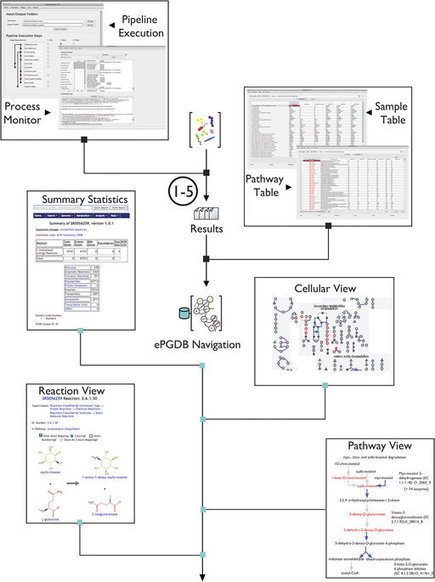
Advances in high-throughput sequencing are reshaping how we perceive microbial communities inhabiting the human body, with implications for therapeutic interventions. Several large-scale datasets derived from hundreds of human microbiome samples sourced from multiple studies are now publicly available. However, idiosyncratic data processing methods between studies introduce systematic differences that confound comparative analyses. To overcome these challenges, scientists developed GUTCYC, a compendium of environmental pathway genome databases (ePGDBs) constructed from 418 assembled human microbiome datasets using METAPATHWAYS, enabling reproducible functional metagenomic annotation. They also generated metabolic network reconstructions for each metagenome using the PATHWAYTOOLS software, empowering researchers and clinicians interested in visualizing and interpreting metabolic pathways encoded by the human gut microbiome. For the first time, GUTCYC provides consistent annotations and metabolic pathway predictions, making possible comparative community analyses between health and disease states in inflammatory bowel disease, Crohn’s disease, and type 2 diabetes. GUTCYC data products are searchable online, or may be downloaded and explored locally using METAPATHWAYS and PATHWAY TOOLS.
A team led by engineers at the University of California San Diego has developed nanowires that can record the electrical activity of neurons in fine detail. The new nanowire technology could one day serve as a platform to screen drugs for neurological diseases and could enable researchers to better understand how single cells communicate in large neuronal networks. "We're developing tools that will allow us to dig deeper into the science of how the brain works," said Shadi Dayeh, an electrical engineering professor at the UC San Diego Jacobs School of Engineering and the team's lead investigator. "We envision that this nanowire technology could be used on stem-cell-derived brain models to identify the most effective drugs for neurological diseases," said Anne Bang, director of cell biology at the Conrad Prebys Center for Chemical Genomics at the Sanford Burnham Medical Research Institute. The project was a collaborative effort between the Dayeh and Bang labs, neurobiologists at UC San Diego, and researchers at Nanyang Technological University in Singapore and Sandia National Laboratories. The researchers published their work Apr. 10 in Nano Letters.
Via Krishan Maggon
|
|
Scooped by
Dr. Stefan Gruenwald
April 11, 2017 9:37 PM
|
Brain-computer interfacing is a hot topic in the tech world, with Elon Musk's announcement of his new Neuralink startup. Here, researchers separate what's science from what's currently still fiction. Just as ancient Greeks fantasized about soaring flight, today’s imaginations dream of melding minds and machines as a remedy to the pesky problem of human mortality. Can the mind connect directly with artificial intelligence, robots and other minds through brain-computer interface (BCI) technologies to transcend our human limitations? Over the last 50 years, researchers at university labs and companies around the world have made impressive progress toward achieving such a vision. Recently, successful entrepreneurs such as Elon Musk (Neuralink) and Bryan Johnson (Kernel) have announced new startups that seek to enhance human capabilities through brain-computer interfacing. How close are we really to successfully connecting our brains to our technologies? And what might the implications be when our minds are plugged in? Eb Fetz, a researcher here at the Center for Sensorimotor Neural Engineering (CSNE), is one of the earliest pioneers to connect machines to minds. In 1969, before there were even personal computers, he showed that monkeys can amplify their brain signals to control a needle that moved on a dial. Much of the recent work on BCIs aims to improve the quality of life of people who are paralyzed or have severe motor disabilities. You may have seen some recent accomplishments in the news: University of Pittsburgh researchers use signals recorded inside the brain to control a robotic arm. Stanford researchers can extract the movement intentions of paralyzed patients from their brain signals, allowing them to use a tablet wirelessly. Similarly, some limited virtual sensations can be sent back to the brain, by delivering electrical current inside the brain or to the brain surface. What about our main senses of sight and sound? Very early versions of bionic eyes for people with severe vision impairment have been deployed commercially, and improved versions are undergoing human trials right now. Cochlear implants, on the other hand, have become one of the most successful and most prevalent bionic implants – over 300,000 users around the world use the implants to hear.
|
|
Scooped by
Dr. Stefan Gruenwald
April 11, 2017 9:14 PM
|
The latest evidence that people are refashioning Earth is written not in the sky, where carbon dioxide levels are rising, nor in the acidifying ocean, but in stone. Geologists have identified about 200 minerals that formed due to the hustle and bustle of human activity. Many of these unintentionally formed minerals appeared on Earth during the past two centuries, a blip in the timescale of thousands to millions of years that geologists typically work with. “It is happening in a geologic instant, in the blink of an eye,” says Robert M. Hazen from the Geophysical Laboratory at the Carnegie Institution for Science. Hazen led a research team that cataloged the human-influenced minerals last month (Am. Mineral. 2017, DOI: 10.2138/am-2017-5875). The uptick in mineral diversity is more than just an expanded checklist for rock hounds. To Hazen and colleagues, it grants further credence to the notion that humans have driven Earth into a new unit of geologic time: the Anthropocene epoch. The epoch comes after geological times such as the Plesiteocene epoch or the Jurassic period left their identifying marks in Earth’s sediment. And “there will be a distinctive, pervasive, and very diagnostic layer that makes our time different from any other time in Earth’s history,” Hazen contends. This argument has made his new paper the target of both praise and derision among professional geologists. The Anthropocene epoch is a proposed—but not yet official—unit of geologic time that would mark an end to the Holocene—the current epoch that began about 12,000 years ago after the last ice age ended. Click here to edit the content
|
|
Scooped by
Dr. Stefan Gruenwald
April 11, 2017 2:22 PM
|
Face2Gene takes advantage of the fact that so many genetic conditions have a tell-tale “face”—a unique constellation of features that can provide clues to a potential diagnosis. It is just one of several new technologies taking advantage of how quickly modern computers can analyze, sort, and find patterns across huge reams of data. They are built in fields of artificial intelligence known as deep learning and neural nets—among the most promising to deliver AI’s 50-year old promise to revolutionize medicine by recognizing and diagnosing disease. Genetic syndromes aren’t the only diagnoses that could get help from machine learning. The RightEye GeoPref Autism Test can identify the early stages of autism in infants as young as 12 months—the crucial stages where early intervention can make a big difference. Unveiled January 2, 2017 at CES in Las Vegas, the technology uses infrared sensors test the child’s eye movement as they watch a split-screen video: one side fills with people and faces, the other with moving geometric shapes. Children at that age should be much more attracted to faces than abstract objects, so the amount of time they look at each screen can indicate where on the autism spectrum a child might fall. In validation studies done by the test’s inventor, UC San Diego researcher Karen Pierce,1 the test correctly predicted autism spectrum disorder 86 percent of the time in more than 400 toddlers. That said, it’s still pretty new, and hasn’t yet been approved by the FDA as a diagnostic tool. “In terms of machine learning, it’s the simplest test we have,” says RightEye’s Chief Science Officer Melissa Hunfalvay. “But before this, it was just physician or parent observations that might lead to a diagnosis. And the problem with that is it hasn’t been quantifiable.” A similar tool could help with early detection of America’s sixth leading cause of death: Alzheimer’s disease. Often, doctors don’t recognize physical symptoms in time to try any of the disease’s few existing interventions. But machine learning hears what doctor’s can’t: Signs of cognitive impairment in speech. This is how Toronto-based Winterlight Labs is developing a tool to pick out hints of dementia in its very early stages. Co-founder Frank Rudzicz calls these clues “jitters,” and “shimmers:” high frequency wavelets only computers, not humans, can hear.
|
|
|
Scooped by
Dr. Stefan Gruenwald
April 19, 2017 12:18 PM
|
Only together we can make a difference! The truth awaits to be known. What is it that causes us to be aware of our existence, and is it related to the mind, the physical realm, or something more profound? Many scientists typically just relate consciousness to the mind, confusing it with self-awareness, whereas others recognize that these elements are all interconnected.
Researchers at Harvard University believe that they’ve finally pinpointed the physical source of consciousness in human beings. The team found that there are three particular regions of the human brain that appear to be fundamental to consciousness.
“For the first time, we have found a connection between the brainstem region involved in arousal and regions involved in awareness, two prerequisites for consciousness,” explained the lead researcher, Michael Fox, from the Beth Israel Deaconess Medical Centre at Harvard Medical School. “A lot of pieces of evidence all came together to point to this network playing a role in human consciousness.”
In terms of arousal, researchers had already determined that it’s regulated by the brainstem, the part of the brain that’s connected to the spinal cord, which regulates sleep cycle, heart rate, and breath. When you think about the spinal cord’s relation to the chakra system and Kundalini energy, it’s not surprising that this is suspected to be a fundamental part of human consciousness in the physical body.
Awareness, on the other hand, has proven to be much more difficult to pinpoint in the past, although it’s been speculated that it lies somewhere in the cortex, or the outer layer of the brain. However, the Harvard team has located two cortex regions that appear to work together to essentially “create consciousness.”
36 hospital patients with brainstem lesions participated in the study, 12 of whom were in comas. The scientists mapped their brainstems in order to figure out why some people stayed conscious despite their injuries, while others became comatose. Their findings suggest that the rostral dorsolateral pontine tegmentum, an area of the brainstem, is associated with comas, as 10 out of the 12 coma patients suffered injuries to this area.
They then compared the cortex to this area of the brainstem and identified which parts were connected to it. They found that two parts of the cortex are connected to this part of the brainstem, thus concluding that they’d be the most likely areas to play an important role in consciousness. The first was in the left, ventral, anterior insula (AI), and the other was in the pregenual anterior cingulate cortex (pACC).
The team also looked at fMRI scans of 45 other coma patients, all of which indicated that the patients suffered some sort of injury or disruption between these three integral regions of the brain. To the researchers, this suggests that these three regions play a fundamental role in consciousness. Perhaps this study will bring us one step closer to understanding why coma patients lose their conscious awareness!
|
|
Rescooped by
Dr. Stefan Gruenwald
from Nostri Orbis
April 19, 2017 12:15 PM
|
Alstom offers a unique and sustainable alternative to non-electrified network operators: the emission-free regional train Coradia iLint. Alstom is the first rail manufacturer worldwide to develop a lowfloor passenger train powered by a hydrogen fuel cell. Coradia iLint is special for its combination of different innovative elements: a clean energy conversion, a flexible energy storage and smart management of the traction power and remaining energy. The principle relies on a fuel cell which produces the electric power. The fuel cell is supplied with hydrogen on demand. Coradia iLint is developed in partnership with renowned German and Canadian companies boasting many years of experience in the fields of hydrogen energy and batteries. Coradia iLint is based on the service proven of the diesel train Coradia Lint. Replacing the diesel traction by the fuel cell technology enables sustainable train operation while its performance matches that of regular regional trains. It can run at 140 km/h, with a 600 to 800 km/tankful autonomy, and accommodate up to 300 passengers. Alstom provides a complete offer consisting of the train itself, its maintenance but also the whole hydrogen infrastructure out of one hand. This comprehensive solution allows operators to better focus on their core business.
Via Fernando Gil
|
|
Rescooped by
Dr. Stefan Gruenwald
from DNA and RNA research
April 19, 2017 12:09 PM
|
“Inhale deeply ... and exhale.” This is what a test for lung cancer could be like in future. Scientists at the Max Planck Institute for Heart and Lung Research in Bad Nauheim have developed a method that can detect the disease at an early stage. To this effect, they investigated the presence of traces of RNA molecules that are altered by cancer growth. In a study on healthy volunteers and cancer patients, the breath test correctly determined the health status of 98 percent of the participants. The method will now be refined in cooperation with licensing partners so that it can be used for the diagnosis of lung cancer. Most lung cancer patients die within five years of diagnosis. One of the main reasons for this is the insidious and largely symptom-free onset of the disease, which often remains unnoticed. In the USA, high-risk groups, such as heavy smokers, are therefore routinely examined by CAT scan. However, patients can be wrongly classified as having the disease. Together with cooperation partners, researchers at the Max Planck Institute for Heart and Lung Research have now developed a breath test that is much more accurate. In their research, the diagnosis of lung cancer was correct in nine out of ten cases. The method is therefore reliable enough to be used for the routine early detection of lung cancer. The researchers analyzed RNA molecules released from lung tissue into expired breath, noting differences between healthy subjects and lung cancer patients. Unlike DNA, the RNA profile is not identical in every cell. Several RNA variants, and therefore different proteins, can arise from one and the same DNA segment. In healthy cells, such variants are present in a characteristic ratio. The scientists discovered that cancerous and healthy cells contain different amounts of RNA variants of the GATA6 and NKX2 genes. Cancer cells resemble lung cells in the embryonic stage. The researchers developed a method to isolate RNA molecules. Not only is their concentration in expired breath extremely low, but they are also frequently highly fragmented. The researchers then investigated the RNA profile in subjects with and without lung cancer and from these data established a model for diagnosing the disease. In a test of 138 subjects whose health status was known, the test was able to identify 98 percent of the patients with lung cancer. 90 percent of the detected abnormalities were in fact cancerous.
Via Integrated DNA Technologies
|
|
Scooped by
Dr. Stefan Gruenwald
April 18, 2017 2:44 PM
|
Although the giant shipworm was first categorized as a species more than 200 years ago, no living specimen had been examined by scientists and almost nothing had been known about it. That changed when Daniel Distel, a researcher at Northeastern University, and colleagues got their hands on a handful of the creatures during a research trip to the Philippines. Their analysis, in a study published April 17 in the journal Proceedings of the National Academy of Sciences, shows that these creatures are quite bizarre. The giant shipworm, or Kuphus polythalamia, live inside large shells on the seafloor and grow to a length of more than five feet. That is much larger than other shipworms, which are generally diminutive. That, of course, led biologists to wonder why these creatures grow so big. Other shipworms contain bacteria in their guts that break down cellulose, the stiff material of which plant cell walls are made. An investigation by the researchers, including Margo Haygoodof the University of Utah College of Pharmacy, shows that Kuphus polythalamia don’t contain large amounts of these bacteria, nor do they have other shipworms’ hefty quantities of woody pulp in their guts. Rather, these giant weirdos contain a trove of unique bacteria that actually feast upon hydrogen sulfide. This gas, which to humans reeks of rotten eggs, is produced by festering wood and other rotting organic material in the seafloor. The unique adaption allows these huge animals to live in areas of the seafloor that would otherwise be uninhabitable, and it may also help explain their large size, allowing them to feed on a resource that moves to them, rather than having to move about nibbling wood.
|
|
Scooped by
Dr. Stefan Gruenwald
April 13, 2017 7:16 PM
|
After training a network of telescopes stretching from Hawaii to Antarctica to Spain at the heart of our galaxy for five nights running, astronomers said Wednesday they may have snapped the first-ever picture of a black hole. It will take months to develop the image, but if scientists succeed the results may help peel back mysteries about what the universe is made of and how it came into being. "Instead of building a telescope so big that it would probably collapse under its own weight, we combined eight observatories like the pieces of a giant mirror," said Michael Bremer, an astronomer at the International Research Institute for Radio Astronomy (IRAM) and a project manager for the Event Horizon Telescope. "This gave us a virtual telescope as big as Earth—about 10,000 kilometers (6,200 miles) is diameter," he told AFP. The bigger the telescope, the finer the resolution and level of detail. The targeted supermassive black hole is hidden in plain sight, lurking in the centre of the Milky Way in a region called the Sagittarius constellation, some 26,000 light years from Earth. Dubbed Sagittarius A* (Sgr A* for short), the gravity- and light-sucking monster weighs as much as four million Suns. Theoretical astronomy tells us when a black hole absorbs matter—planets, debris, anything that comes too close—a brief flash of light is visible.
|
|
Scooped by
Dr. Stefan Gruenwald
April 13, 2017 7:11 PM
|
The first image of a dark matter "bridge", believed to form the links between galaxies, has been captured by astrophysicists in Canada. Researchers at the University of Waterloo used a technique known as weak gravitational lensing to create a composite image of the bridge. Gravitational lensing is an effect that causes the images of distant galaxies to warp slightly under the influence of an unseen mass, such as a planet, a black hole, or in this case, dark matter. Their composite image was made up of a combination of combined lensing images taken of more than 23,000 galaxy pairs, spotted 4.5 billion light-years away. This effect was measured from a multi-year sky survey at the Canada-France-Hawaii Telescope. These results show that the dark matter filament bridge is strongest between systems less than 40 million light years apart, and confirms predictions that galaxies across the Universe are tied together through a cosmic web of the elusive substance. Dark matter is a mysterious element said to make up around 84 per cent of the Universe. It's known as "dark" because it doesn't shine, absorb or reflect light, which has traditionally made it largely undetectable, except through gravity and gravitational lensing. Evidence for the existence of this form of matter comes, among other things, from the astrophysical observation of galaxies, which rotate far too rapidly to be held together only by the gravitational pull of the visible matter. Astrophysics has long proposed the Universe's web of stars and galaxies is supported by a "cosmic scaffolding" made up of fine threads of this invisible dark matter. These threadlike strands formed just after the Big Bang when denser portions of the Universe drew in dark matter until it collapsed and formed flat disks, which featured fine filaments of dark matter at their joins. At the cross-section of these filaments, galaxies formed.
|
|
Scooped by
Dr. Stefan Gruenwald
April 13, 2017 4:23 PM
|
NASA has new evidence that the most likely places to find life beyond Earth are Jupiter's moon Europa or Saturn's moon Enceladus. In terms of potential habitability, Enceladus particularly has almost all of the key ingredients for life as we know it, researchers said. New observations of these active ocean worlds in our solar system have been captured by two NASA missions and were presented in two separate studies in an announcement at NASA HQ in Washington today. Using a mass spectrometer, the Cassini spacecraft detected an abundance of hydrogen molecules in water plumes rising from the "tiger stripe" fractures in Enceladus' icy surface. Saturn's sixth-largest moon is an ice-encased world with an ocean beneath. The researchers believe that the hydrogen originated from a hydrothermal reaction between the moon's ocean and its rocky core. If that is the case, the crucial chemical methane could be forming in the ocean as well. "Now, Enceladus is high on the list in the solar system for showing habitable conditions," said Hunter Waite, leader of the Cassini Ion and Neutral Mass Spectrometer team at the Southwest Research Institute in San Antonio and lead author of the Enceladus study. "The presence of hydrogen established another reference point saying there is hydrothermal activity inside this body, and that's interesting because we know in our own oceans, those are very important places that are teeming with life, and they are probably one of the earliest places where life happened on Earth." Additionally, the Hubble Space Telescope showed a water plume erupting on the warmest part of the surface of Europa, one of Jupiter's moons with an icy crust over a salty liquid water ocean containing twice as much water as Earth's seas. This is the second time a plume has been observed in this exact spot, which has researchers excited that it could prove to be a feature on the surface. "This is significant, because the rest of the planet isn't easy to predict or understand, and it's happening for the second time in the warmest spot," said Britney Schmidt, second author on the Europa study.
|
|
Scooped by
Dr. Stefan Gruenwald
April 12, 2017 2:50 PM
|
Amazon's Echo, a Bluetooth speaker powered by voice assistant Alexa, burst on to the scene a couple years ago and instantly captured the hearts and minds of consumers. You could hear the collective cry: voice control is finally here! Of course, there was lots of voice control on the market already (including Apple's O.G. Siri), but Alexa was the first out of the gate that promised—and delivered—on making voice commands useful in the home. With "Skills" being developed for a wealth of tasks (and Alexa being built into a lot of smart products like cars, refrigerators and lamps), it's as easy to ask her to tell you the weather or read you news headlines as it is to have her water your lawn, lock your door or order you a pizza.
But Alexa has a new competitor—Google Home. It's a speaker just like Alexa, but its brains are powered by the all-knowing Google Assistant. It's empowered with all that Google knows about search, plus data from other Google apps (like traffic from Google Maps). It can also get personal, alerting you to meetings on your Google Calendar or changes in your flight information by reading your Gmail Inbox.
The options are seemingly endless for these two equally charming and brainy gadgets, but how do their strengths and weaknesses stack up if they were engaged in a little battle? Which of the two would be the most useful?
Why do some tumors respond to immunotherapy and others don’t? That’s a question MD Anderson’s Weiyi Peng, M.D., Ph.D., and her team of investigators are getting closer to answering. Peng, an assistant professor in Melanoma Medical Oncology, led a study that showed a link between the loss of a tumor-suppressor gene called PTEN and resistance to checkpoint inhibitor immunotherapy. Patients with inactive PTEN had fewer T cells in their tumors, indicating that a lack of PTEN suppresses the immune response against melanoma. Patients with inactive PTEN also had worse outcomes when treated with checkpoint inhibitors compared to melanoma patients with intact PTEN. These findings indicate PTEN loss may be an important biomarker to predict melanoma patients’ resistance to immunotherapy. The study also showed that treatment with an experimental drug that blocks a molecular pathway called PI3K improved the effectiveness of anti-PD-1 treatment in laboratory models of melanomas with loss of the PTEN gene. “These results allowed us to devise a means of combating resistance to immunotherapy due to PTEN loss in melanoma patients,” Peng says. Findings of the study have led to a Phase I and II clinical trial that will test a combination of immunotherapy and targeted therapy in patients with metastatic melanoma who lack the PTEN gene.
Via Krishan Maggon
|
|
Rescooped by
Dr. Stefan Gruenwald
from DNA and RNA research
April 11, 2017 9:39 PM
|
“Synthetic biomarkers” could be used to diagnose ovarian cancer months earlier than now possible. Most ovarian cancer is diagnosed at such late stages that patients’ survival rates are poor. However, if the cancer is detected earlier, five-year survival rates can be greater than 90 percent. Now, MIT engineers have developed a far more sensitive way to reveal ovarian tumors: In tests in mice, they were able to detect tumors composed of nodules smaller than 2 millimeters in diameter. In humans, that could translate to tumor detection about five months earlier than is possible with existing blood tests, the researchers say. The new test makes use of a “synthetic biomarker” — a nanoparticle that interacts with tumor proteins to release fragments that can be detected in a patient’s urine sample. This kind of test can generate a much clearer signal than natural biomarkers found in very small quantities in the patient’s bloodstream. “What we did in this paper is engineer our sensor to be about 15 times better than a previous version, and then compared it against a blood biomarker in a mouse model of ovarian cancer to show that we could beat it,” says Sangeeta Bhatia, the John and Dorothy Wilson Professor of Health Sciences and Technology and Electrical Engineering and Computer Science, a member of MIT’s Koch Institute for Integrative Cancer Research and Institute for Medical Engineering and Science, and the senior author of the study. This approach could also be adapted to work with other cancers. In this paper, which appears in the April 10 2017 issue of Nature Biomedical Engineering, the researchers showed they can detect colorectal tumors that metastasized to the liver.
Via Integrated DNA Technologies
An unfunded project with an ambitious goal promises to shed light on the evolutionary history of higher organisms and enhance conservation efforts. But is the $4.8 billion project well-conceived? Since the Human Genome Project was completed in 2003, large-scale genome sequencing efforts have proliferated. For example, Genome 10K was launched in 2009 to sequence the genomes of at least one individual from each vertebrate genus, approximately 10,000 genomes. Two years later, the i5K was unveiled as an initiative to sequence the genomes of 5000 arthropod species. 2015 saw the announcement of the B10K Project, which plans to generate representative draft genome sequences from all extant bird species within five years. The list goes on and on and on. But a recently announced project has a more ambitious goal: to sequence all eukaryotic species on Earth. On February 23rd, the Earth BioGenome Project was officially announced at BioGenomics2017, the Global Biodiversity Genomics Conference held at the Smithsonian National Museum of Natural History in Washington, D.C. As reported in Science the next day, the first step of the project would be to sequence in great detail the DNA of a member of each eukaryotic family (about 9,000 in all) to create reference genomes on par or better than the reference human genome. Next would come sequencing to a lesser degree, a species from each of the 150,000 to 200,000 genera. Finally, the participants obtain rough genomes of the 1.5 million remaining known eukaryotic species. “I think the project is a good idea and will make an important contribution,” said Luke Thompson, a research associate at the National Oceanic and Atmospheric Administration and manager of the Earth Microbiome Project, which was founded in 2010 as a massively collaborative effort to characterize microbial life on this planet. “Numerous insights on the history and evolution of life on Earth are sure to follow from this work.” According to Thompson, the first stage of the project in particular would be very valuable. “This would provide immediate insight to the evolutionary history of higher organisms, improve taxonomic classification, and provide genomic templates for sequencing individual genera and species,” he said. “Speaking from a microbial perspective, which is my area of expertise, such an effort will provide a foundation for studies of co-evolution and symbiosis between microorganisms and higher organisms, including insights into the endosymbiosis events which enabled the fantastic radiation of eukaryotic diversity.” The 10-year project, which is currently unfunded, would cost an estimated $4 to $5 billion to complete. As such, some scientists have argued that it would not be a wise use of money and might take away funds from research endeavors focused on other important goals such as improving human health. “The number one challenge is getting buy-in from the scientific community,” said John Kress, a research botanist and curator at the Smithsonian National Museum of Natural History and co-organizer of the Earth BioGenome Project. “This effort will enhance what they do as biologists and conservationists and technologists and will not take funding away from their major projects, but actually add funding to what they want to do.” In addition, Kress will have to work with project co-organizers Harris Lewin, an expert in mammalian comparative and functional genomics at the University of California, Davis, and Gene Robinson, an evolutionary biologist at the University of Illinois at Urbana-Champaign, to tackle the second biggest challenge: acquiring the funding to get the project off the ground. “Along with that is convincing other funding agencies and research agencies that this thing has legs and this will help float a lot of boats,” Kress said. If the project is funded, the co-organizers will have to overcome many more hurdles. Although they would leave the bulk of the analysis to other scientists using the open-access data, the trio plans to collaborate with other genome sequencing projects to develop standardized analytic tools and standards to ensure high-quality genome sequences. “We can only be successful if it is a community effort,” Kress said. Even with the help of others, organizing a project of this scope would be very challenging. Managing the metadata in particular would be critical, Thompson said. “For each species, we will need to have photographs or micrographs, common and scientific names, body measurements, location and date of collection, and as many other parameters as possible,” he said. “These metadata are critical to interpreting the genome sequences.”
Via Integrated DNA Technologies
|
|
Scooped by
Dr. Stefan Gruenwald
April 11, 2017 6:57 PM
|
Many extensions of the Standard Model of particle physics explain the dominance of matter over antimatter in our Universe by neutrinos being their own antiparticles. This would imply the existence of neutrinoless double-β decay, which is an extremely rare lepton-number-violating radioactive decay process whose detection requires the utmost background suppression. Among the programmes that aim to detect this decay, the GERDA Collaboration is searching for neutrinoless double-β decay of 76Ge by operating bare detectors, made of germanium with an enriched 76Ge fraction, in liquid argon. After having completed Phase I of data taking, scientists have recently launched Phase II and report now that in GERDA Phase II that they have achieved a background level of approximately 10−3 counts keV−1kg−1 yr−1. This implies that the experiment is background-free, even when increasing the exposure up to design level. This is achieved by use of an active veto system, superior germanium detector energy resolution and improved background recognition of our new detectors. No signal of neutrinoless double-β decay was found when Phase I and Phase II data were combined, and scientists deduce a lower-limit half-life of 5.3 × 1025 years at the 90 per cent confidence level. The half-life sensitivity of 4.0 × 1025 years is competitive with the best experiments that use a substantially larger isotope mass. The potential of an essentially background-free search for neutrinoless double-β decay will facilitate a larger germanium experiment with sensitivity levels that will bring us closer to clarifying whether neutrinos are their own antiparticles.
|