Your new post is loading...

|
Scooped by
Dr. Stefan Gruenwald
May 4, 2017 8:17 PM
|
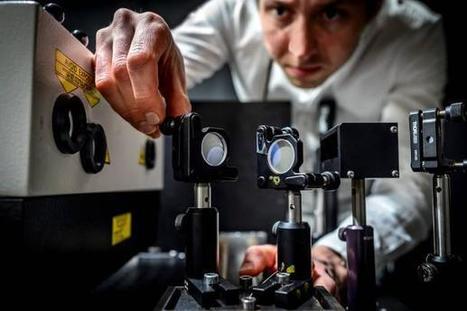
The technique used by Brand to create these pieces is not one of conventional holography. He meticulously controls the unique shape of thousands of tiny optical pieces placed on a surface creating a 3D effect when the light source or viewer moves. This is essentially a mathematical problem in differential geometry and combinatorial optimization. Brand was the first person to correctly describe this technique in 2008 even though it dates back as early as the 1930s (check out his paper for details). Specular holograms by Matthew Brand currently on display at the new Museum of Mathematics in New York.
|
|
Scooped by
Dr. Stefan Gruenwald
May 4, 2017 11:44 AM
|
Male cuttlefish compete for females with a repertoire of visually dramatic behaviors. Laboratory experiments have explored this system in Sepia officinalis but corroborative field data have eluded collection attempts by many researchers. While SCUBA diving in Turkey, a group of biologists fortuitously filmed an intense sequence of consort/intruder behaviors in which the consort lost then regained his female mate from the intruder. These agonistic bouts escalated in stages, leading to fast dramatic expression of the elaborate Intense Zebra Display and culminating in biting and inking as the intruder male attempted a forced copulation of the female. When analyzed in the context of game theory, the patterns of fighting behavior were more consistent with mutual assessment than self assessment of fighting ability. Additional observations of these behaviors in nature are needed to conclusively determine which models best represent conflict resolution, but these field observations agree with laboratory findings and provide a valuable perspective.
|
|
Scooped by
Dr. Stefan Gruenwald
May 2, 2017 2:50 PM
|
CRISPR-associated protein 9 (Cas9)-mediated genome editing provides a promising cure for HIV-1/AIDS; however, gene delivery efficiency in vivo remains an obstacle to overcome. A group of scientists now demonstrate the feasibility and efficiency of excising the HIV-1 provirus in three different animal models using an all-in-one adeno-associated virus (AAV) vector to deliver multiplex single-guide RNAs (sgRNAs) plus Staphylococcus aureus Cas9 (saCas9). The quadruplex sgRNAs/saCas9 vector outperformed the duplex vector in excising the integrated HIV-1 genome in cultured neural stem/progenitor cells from HIV-1 Tg26 transgenic mice. Intravenously injected quadruplex sgRNAs/saCas9 AAV-DJ/8 excised HIV-1 proviral DNA and significantly reduced viral RNA expression in several organs/tissues of Tg26 mice. In EcoHIV acutely infected mice, intravenously injected quadruplex sgRNAs/saCas9 AAV-DJ/8 reduced systemic EcoHIV infection, as determined by live bioluminescence imaging. Additionally, this quadruplex vector induced efficient proviral excision, as determined by PCR genotyping in the liver, lungs, brain, and spleen. Finally, in humanized bone marrow/liver/thymus (BLT) mice with chronic HIV-1 infection, successful proviral excision was detected by PCR genotyping in the spleen, lungs, heart, colon, and brain after a single intravenous injection of quadruplex sgRNAs/saCas9 AAV-DJ/8. In conclusion, in vivo excision of HIV-1 proviral DNA by sgRNAs/saCas9 in solid tissues/organs can be achieved via AAV delivery, a significant step toward human clinical trials.
|
|
Rescooped by
Dr. Stefan Gruenwald
from Soggy Science
May 2, 2017 1:29 PM
|
Fish are quite intelligent.The humble goldfish can remember things for three months, and can even tell the time in a rudimentary way. For a 1994 study, researchers trained goldfish to push a lever that worked for one hour a day in exchange for a reward. The fish learned to take advantage of this window of opportunity, demonstrating that they could keep track of time, learn and remember. Fish, like mammals, have an excellent sense of space. They draw on incoming sensory information such as hydrostatic pressure to work out their position in three-dimensional space, according to a 2016 study. Theresa Burt de Perera of the University of Oxford says that fish can encode space in 3D, whereas land-dwelling animals like us have trouble with the vertical dimension. Unlike rats, fish can accurately judge vertical distance. Brown says fish's ability to track depth makes them "superior to humans" in this respect. There is also tentative evidence that fish have something similar to "place cells". These cells, which have been found in rats, are neurons that fire when the animal occupies a specific location within its environment. Different place cells fire in different locations, so they are thought to be the seat of a neural map of space in mammals. The apparent fish "place cells" are in an area of their brain that is equivalent to the human hippocampus. The fish might use them to create a memory of the space around them. As well as navigating, fish can use tools – a skill once thought to belong exclusively to humans. Perhaps the most impressive tool-using fish is the archerfish (Toxotes chatareus), which uses water as a tool or weapon, much as we might throw a ball. The fish squirts a jet from its mouth like a water pistol to hit insects above the water's surface. It even takes light refraction into account.
Via Grant W. Graves
|
|
Scooped by
Dr. Stefan Gruenwald
May 2, 2017 1:19 PM
|
Common chimps and bonobos are our closest living relatives but almost nothing is known about bonobo internal anatomy. A group of scientists now present the first phylogenetic analysis to include musculoskeletal data obtained from a recent dissection of bonobos. Notably, chimpanzees, and in particular bonobos, provide a remarkable case of evolutionary stasis for since the chimpanzee-human split c.8 Ma among >120 head-neck (HN) and forelimb (FL) muscles there were only four minor changes in the chimpanzee clade, and all were reversions to the ancestral condition. Moreover, since the common chimpanzee-bonobo split c.2 Ma there have been no changes in bonobos, so with respect to HN-FL musculature bonobos are the better model for the last common ancestor (LCA) of chimpanzees/bonobos and humans. Furthermore, in the hindlimb there are only two muscle absence/presence differences between common chimpanzees and bonobos. Puzzlingly, there is an evolutionary mosaicism between each of these species and humans.
Physicists have theoretically shown that, when multiple nanoscale batteries are coupled together, they can be charged faster than if each battery was charged individually. The improvement arises from collective quantum phenomena and is rooted in the emerging field of quantum thermodynamics—the study of how quantum effects influence the traditional laws governing energy and work.
The researchers, Francesco Campaioli et al., have published a paper on the fast charging of nanoscale batteries in a recent issue of Physical Review Letters.
Although a great deal of research has shown that quantum phenomena provide advantages in information processing applications, such as computing and secure communication, there have been very few demonstrations of quantum advantages in thermodynamics. In one recent study in this area, researchers showed that quantum entanglement can allow more work to be extracted from a nanoscale energy-storage device, or "quantum battery," than would be possible without entanglement.
In the new study, the researchers build on this result to show that quantum phenomena can also enhance the charging power of quantum batteries. They also found that the process does not necessarily require entanglement, although it does require operations that have the potential to generate entangled states.
"Our work shows how entangling operations—that is, interactions between two or more bodies—are necessary to obtain a quantum advantage for the charging power of many-body batteries, whereas entanglement itself does not constitute a resource," Campaioli, at Monash University in Australia, told Phys.org. "Additionally, we show that for locally coupled batteries the quantum advantage scales with the number of interacting batteries."
Via Mariaschnee
|
|
Scooped by
Dr. Stefan Gruenwald
April 30, 2017 7:31 PM
|
Genetic map showing how dog breeds are related provides a wealth of information about their origins. What a tangled web humans have weaved for domestic dog breeds. A new family tree of dogs containing more than 160 breeds reveals the hidden history of man’s best friend, and even hints how studying canine genomes might help with research into human disease. In a study published on 25 April 2017 in Cell Reports, scientists examined the genomes of 1,346 dogs to create one of the most diverse maps produced so far tracing the relationship between breeds1. The map shows the types of dog that people crossed to create modern breeds and reveals that canines bred to perform similar functions, such as working and herding dogs, don't necessarily share the same origins. The analysis even hints at an ancient type of dog that could have come over to the Americas with people thousands of years before Christopher Columbus arrived in the New World. The new work could come as a surprise to owners and breeders who are familiar with how dogs are grouped into categories. “You would think that all working dogs or all herding dogs are related, but that isn’t the case,” says Heidi Parker, a biologist at the US National Institutes of Health (NIH) in Bethesda, Maryland, and a study author. When geneticists tried to map out herding-dog lineages in the past, they couldn’t do so accurately. Parker and Elaine Ostrander, also a biologist at the NIH and a study author, say that this was because herding dogs emerged through selective breeding at multiple times and in many different places. “In retrospect, that makes sense,” says Ostrander. “What qualities you’d want in a dog that herds bison are different from mountain goats, which are different from sheep, and so on.” Most of the breeds in the study arose from dog groups that originated in Europe and Asia. But domestic dogs came to the Americas thousands of years ago, when people crossed the Bering land bridge linking Alaska and Siberia. These New World dogs later disappeared when European and Asian dogs arrived in the Americas. Researchers have looked for the genetic legacy of these ancient canines in the DNA of modern American breeds, but have found little evidence until now. The way that two South American breeds, the Peruvian hairless dog and the Xoloitzcuintli, clustered together on the family tree suggested to Ostrander and Parker that those animals could share genes not found in any of the other breeds in their analysis. Parker thinks that those genes could have come from dogs that were present in the Americas before Columbus’s arrival. “I think our view of the formation of modern dog breeds has historically been one-dimensional,” says Bob Wayne, an evolutionary biologist at the University of California, Los Angeles. “We didn’t consider that the process has a deep historical legacy.” That extends to what was probably the first period of domestication for canines in hunter-gatherer times. Ostrander and Parker think that dog breeds underwent two major periods of diversification. Thousands of years ago, dogs were selected for their skills, whereas a few hundred years ago, the animals were bred for physical traits. “You would never be able to find something like this with cows or cats,” says Wayne, “We haven’t done this kind of intense deliberate breeding with anything but dogs.”
|
|
Scooped by
Dr. Stefan Gruenwald
April 29, 2017 11:54 AM
|
|
|
Scooped by
Dr. Stefan Gruenwald
April 28, 2017 5:58 PM
|
Using a specialized electron microscope outfitted with a pattern generator, scientists turned an imaging instrument into a lithography tool that could be used to create and study materials with new properties. The ability to pattern materials at ever-smaller sizes—using electron-beam lithography (EBL), in which an electron-sensitive material is exposed to a focused beam of electrons, as a primary method—is driving advances in nanotechnology. When the feature size of materials is reduced from the macroscale to the nanoscale, individual atoms and molecules can be manipulated to dramatically alter material properties, such as color, chemical reactivity, electrical conductivity, and light interactions. In the ongoing quest to pattern materials with ever-smaller feature sizes, scientists at the Center for Functional Nanomaterials (CFN)—a U.S. Department of Energy (DOE) Office of Science User Facility at Brookhaven National Laboratory—have recently set a new record. Performing EBL with a scanning transmission electron microscope (STEM), they have patterned thin films of the polymer poly(methyl methacrylate), or PMMA, with individual features as small as one nanometer (nm), and with a spacing between features of 11 nm, yielding an areal density of nearly one trillion features per square centimeter. These record achievements are published in the April 18 online edition of Nano Letters. “Our goal at CFN is to study how the optical, electrical, thermal, and other properties of materials change as their feature sizes get smaller,” said lead author Vitor Manfrinato, a research associate in CFN’s electron microscopy group who began the project as a CFN user while completing his doctoral work at MIT. “Until now, patterning materials at a single nanometer has not been possible in a controllable and efficient way.” Commercial EBL instruments typically pattern materials at sizes between 10 and 20 nanometers. Techniques that can produce higher-resolution patterns require special conditions that either limit their practical utility or dramatically slow down the patterning process. Here, the scientists pushed the resolution limits of EBL by installing a pattern generator—an electronic system that precisely moves the electron beam over a sample to draw patterns designed with computer software—in one of CFN’s aberration-corrected STEMs, a specialized microscope that provides a focused electron beam at the atomic scale. “We converted an imaging tool into a drawing tool that is capable of not only taking atomic-resolution images but also making atomic-resolution structures,” said coauthor Aaron Stein, a senior scientist in the electronic nanomaterials group at CFN.
|
|
Scooped by
Dr. Stefan Gruenwald
April 28, 2017 5:55 PM
|
Forget high-speed cameras capturing 100 000 images per second. A research group at Lund University in Sweden has developed a camera that can film at a rate equivalent to five trillion images per second, or events as short as 0.2 trillionths of a second. This is faster than has previously been possible. The new super-fast film camera will therefore be able to capture incredibly rapid processes in chemistry, physics, biology and biomedicine, that so far have not been caught on film. To illustrate the technology, the researchers have successfully filmed how light – a collection of photons – travels a distance corresponding to the thickness of a paper. In reality, it only takes a picosecond, but on film the process has been slowed down by a trillion times. Currently, high-speed cameras capture images one by one in a sequence. The new technology is based on an innovative algorithm, and instead captures several coded images in one picture. It then sorts them into a video sequence afterwards. In short, the method involves exposing what you are filming (for example a chemical reaction) to light in the form of laser flashes where each light pulse is given a unique code. The object reflects the light flashes which merge into the single photograph. They are subsequently separated using an encryption key. The film camera is initially intended to be used by researchers who literally want to gain better insight into many of the extremely rapid processes that occur in nature. Many take place on a picosecond and femtosecond scale, which is unbelievably fast – the number of femtoseconds in one second is significantly larger than the number of seconds in a person’s life-time. “This does not apply to all processes in nature, but quite a few, for example, explosions, plasma flashes, turbulent combustion, brain activity in animals and chemical reactions. We are now able to film such extremely short processes”, says Elias Kristensson. “In the long term, the technology can also be used by industry and others”.
|
|
Scooped by
Dr. Stefan Gruenwald
April 27, 2017 5:07 PM
|
Scientists have created an "artificial womb" in the hopes of someday using the device to save babies born extremely prematurely. So far the device has only been tested on fetal lambs. A study published Tuesday involving eight animals found the device appears effective at enabling very premature fetuses to develop normally for about a month. "We've been extremely successful in replacing the conditions in the womb in our lamb model," says Alan Flake, a fetal surgeon at Children's Hospital of Philadelphia who led the study published in the journal Nature Communications. "They've had normal growth. They've had normal lung maturation. They've had normal brain maturation. They've had normal development in every way that we can measure it," Flake says. Flake says the group hopes to test the device on very premature human babies within three to five years. "What we tried to do is develop a system that mimics the environment of the womb as closely as possible," Flake says. "It's basically an artificial womb."
|
|
Rescooped by
Dr. Stefan Gruenwald
from Eldritch Weird
April 27, 2017 4:57 PM
|
Mastodon site suggests first Americans arrived unexpectedly early. The New World was a surprisingly old destination for humans or our evolutionary relatives, say investigators of a controversial set of bones and stones. An unidentified Homo species used stone tools to crack apart mastodon bones, teeth and tusks approximately 130,700 years ago at a site near what’s now San Diego. This unsettling claim upending the scientific debate over the settling of the Americas comes from a team led by archaeologist Steven Holen of the Center for American Paleolithic Research in Hot Springs, South Dakota, and paleontologist Thomas Deméré of the San Diego Natural History Museum. If true, it means the Cerutti Mastodon site contains the oldest known evidence, by more than 100,000 years, of human or humanlike colonists in the New World, the researchers report online April 26 in Nature. Around 130,000 years ago, the researchers say, a relatively warm and wet climate would have submerged any land connection between northeastern Asia and what’s now Alaska. So ancient colonizers of North America must have reached the continent in canoes or other vessels and traveled down the Pacific coast, they propose. Candidates for southern California’s mastodon bone breakers include Neandertals, Denisovans and Homo erectus, all of which inhabited northeastern Asia around 130,000 years ago. A less likely possibility, Holen says, is Homo sapiens, which reached southern China between 80,000 and 120,000 years ago (SN: 11/14/15, p. 15). No hominid fossils have turned up among the mastodon remains. Whatever Homo species reached the Cerutti Mastodon site probably broke apart the huge beast’s bones to obtain nutritious marrow and claim limb fragments suitable for fashioning into tools, the scientists suspect. Hominids probably scavenged the mastodon’s carcass, since its bones contain no stone tool incisions produced when an animal is butchered, they add.
Via SIN JONES
|
|
Scooped by
Dr. Stefan Gruenwald
April 27, 2017 4:44 PM
|
Genomic changes in individual cells can eventually lead to cancer or other diseases. So scientists would like to be able to sequence the genome in a single cell. But the methods to do so can be plagued by the preferential amplification of some regions of the genome over others, leading to incomplete sequence coverage. A team led by X. Sunney Xie of Harvard University and Peking University has developed a whole-genome amplification method that reduces such bias and errors (Science 2017, DOI: 10.1126/science.aak9787). In the method, called LIANTI, researchers fragment genomic DNA from a single cell by inserting pieces of DNA called transposons. The transposons tag the DNA fragments so that they get amplified linearly instead of exponentially. The amplified DNA is then used to generate a library for subsequent DNA sequencing. Compared with other whole-genome amplification methods, LIANTI has more uniform amplification and higher sequence coverage. The method enabled the detection of a type of mutation called copy-number variation, which involves the gain or loss of regions of the genome, which is hard to detect with high resolution using other amplification methods. The researchers were even able to characterize so-called micro-copy-number variations, which are smaller than 100,000 bases, with a resolution of about 10,000 bases. Xie and coworkers used this ability to detect gains and losses of sequences to show that initiation of DNA replication is random and differs from cell to cell. They also showed that many single-nucleotide variations detected in previous single-cell sequencing are artifacts caused by instability of the DNA bases.
|
|
|
Scooped by
Dr. Stefan Gruenwald
May 4, 2017 11:48 AM
|
Troodontids were theropod dinosaurs closely related to birds. Here, Xu and colleagues describe a new, feathered troodontid species,Jianianhualong tengi, dating from the Lower Cretaceous period in China that provides insight into troodontid mosaic evolution and paravian feathering. Asymmetrical feathers have been associated with flight capability but are also found in species that do not fly, and their appearance was a major event in feather evolution. Among non-avialan theropods, they are only known in microraptorine dromaeosaurids. Paleontologists now report a new troodontid, Jianianhualong tengi gen. et sp. nov., from the Lower Cretaceous Jehol Group of China, that has anatomical features that are transitional between long-armed basal troodontids and derived short-armed ones, shedding new light on troodontid character evolution. The finding indicates that troodontid feathering is similar to Archaeopteryx in having large arm and leg feathers as well as frond-like tail feathering, confirming that these feathering characteristics were widely present among basal paravians. Most significantly, the taxon has the earliest known asymmetrical troodontid feathers, suggesting that feather asymmetry was ancestral to Paraves. This taxon also displays a mosaic distribution of characters like Sinusonasus, another troodontid with transitional anatomical features.
|
|
Scooped by
Dr. Stefan Gruenwald
May 2, 2017 3:01 PM
|
These images from the Radar instrument aboard NASA's Cassini spacecraft show the evolution of a transient feature in the large hydrocarbon sea named Ligeia Mare on Saturn's moon Titan. Analysis by Cassini scientists indicates that the bright features, informally known as the "magic island," are a phenomenon that changes over time. They conclude that the brightening is due to either waves, solids at or beneath the surface or bubbles, with waves thought to be the most likely explanation. They think tides, sea level and seafloor changes are unlikely to be responsible for the brightening. The images in the column at left show the same region of Ligeia Mare as seen by Cassini's radar during flybys in (from top to bottom) 2007, 2013, 2014 and 2015. The bottom image was acquired by Cassini on Jan. 11, 2015, and adds another snapshot in time as Cassini continues to monitor the ephemeral feature (previously highlighted in PIA18430). The feature is apparent in the images from 2013 and 2014, but it is not present in other images of the region. Cassini has observed similar transient features elsewhere in Ligeia Mare, and also in Kraken Mare (see PIA19047). These features are the first instances of active processes in Titan's lakes and seas to be confirmed by multiple detections. Their changing nature demonstrates that Titan's seas are not stagnant, but rather, dynamic environments. The Cassini radar team plans to re-observe this particular region of Ligeia Mare one more time during Cassini's final close flyby of Titan in April 2017. The results may further illuminate the phenomenon responsible for the appearance of the transient features. The large image panel shows Ligeia Mare in its entirety. Ligeia is Titan's second-largest liquid hydrocarbon sea, and has a total area of about 50,000 square miles (130,000 square kilometers), making it 50 percent larger than Lake Superior on Earth. This panel is a mosaic of five synthetic aperture radar images acquired by Cassini between 2007 and 2014. It shows a region approximately 330 by 305 miles (530 by 490 kilometers) in area. An earlier version of the mosaic was released as PIA17031; the new version includes new data to fill in some gaps in coverage and to improve the quality of coverage in some of the previously imaged areas.
|
|
Rescooped by
Dr. Stefan Gruenwald
from Popular Science
May 2, 2017 1:36 PM
|
The eerily gory waterfall is not in fact made of blood, and a new study shows just what gives it its unique color. Blood Falls, named for its ruddy color, is not in fact a gush of blood from some unseen wound. The color was initially chalked up to red algae, but a new study in the Journal of Glaciology has uncovered its true origin using radar to scan the layers of ice from which the river pours. The discovery came at the hands of a team of scientists, including National Geographic emerging explorer Erin C Petit. Located in Antarctica’s McMurdo Dry Valleys, the falls pour forth from Taylor Glacier, and the liquid bubbles up from fissures in the glacier’s surface. The flow was previously a mystery, as the mean temperature is 1.4 degrees Fahrenheit (-17 degrees Celsius) and little glacial melting can be seen at the surface. Imaging from underneath the glacier helped solve the mystery, revealing a complex network of subglacial rivers and a subglacial lake—all filled with brine high in iron, giving the falls its reddish tint. According to the study, the makeup of the brine explains the fact that it flows instead of freezes. “The brine remains liquid within the subglacial and englacial environments through latent heat of freezing coupled with elevated salt content,” the study explains. The lake under the glacier has an unusually salty consistency, and because saltwater has a lower freezing point than pure water and releases heat as it freezes, it melts the ice, enabling the rivers to flow. This means that the glacier can support flowing water and also that this is the coldest glacier on Earth with constantly flowing water—though this water is so filled with iron that it looks like something else entirely. The study also measured the amount of iron-rich brine in the river water and found the brine content increased as the measurements drew closer to the falls. Water temperature and brine content were also found to be related: Cracks of various sizes in the glacier let brine into the glacier. Then the brine (pictured here in red to represent the amount of iron present in the water) begins to freeze, and the latent heat warms the ice around it, upping the brine concentration in the center of the cracks.
Via Neelima Sinha
Scientists discover transcripts from the same gene that can express both proteins and noncoding RNA. Knocking down the short ASCC3 transcript produced after UV exposure prevented the cell from recovering normal levels of transcription. “Without the short isoform of ASCC3, you can no longer respond correctly to DNA damage, and cells die,” Svejstrup, who participated in the research, explains. Blocking the long version, on the other hand, increased transcription levels after UV irradiation. “It’s interesting because the same gene, ASCC3, is producing two opposed [functions],” says Alberto Kornblihtt, a molecular biologist at the University of Buenos Aires who was not involved in the work. “If the protein is made from the long pre-mRNA, then global transcription is repressed. But if the short RNA is made, it helps recover transcription hours after damage.”
Via Integrated DNA Technologies
|
|
Scooped by
Dr. Stefan Gruenwald
May 2, 2017 1:16 PM
|
The formation of a human embryo starts with the fertilization of the oocyte by the sperm cell. This yields the zygote, the primordial cell that carries one copy each of the maternal and paternal genomes. However, this genetic information starts being expressed only after the zygote divides a couple of times. But what triggers this process, called “zygotic genome activation”, was unknown until now. EPFL scientists have just found that members of the DUX family of proteins are responsible for igniting the gene expression program of the nascent embryo. Published in Nature Genetics, this discovery is a milestone for developmental biology. Alberto de Iaco, a postdoc in the lab of Didier Trono at EPFL, drew upon a seemingly irrelevant study of patients suffering from a form of muscular dystrophy where mutations lead to the production in muscle cells of a protein called DUX4, which is normally detected only at the earliest stage of human embryonic development. De Iaco also found that when DUX4 is forcibly produced in muscle cells, it turns on a whole set of genes that are expressed during zygotic genome activation. This was what first suggested that DUX4 could be the key regulator of this seminal event. To confirm this, the researchers analyzed publicly available data to determine what components of the human genome are expressed during the first few days of embryonic development. They found that DUX4 is one of the very first genes expressed at this stage, releasing a high concentration of its protein product just before zygotic genome activation. In line with this lead, the scientists could show that the DUX4 protein binds to the regulatory region of genes that are induced during zygotic genome activation, stimulating their expression. Next, they looked at mouse embryonic stem cells, which contain the mouse version of the DUX4 gene (called simply DUX). When in culture, a small fraction of these cells exhibit a any given time the gene expression pattern of 2-cell stage embryos, before cycling back to the features of more advanced embryonic cells. But when the EPFL researchers deleted the DUX gene, this process stopped, the appearance of the 2-cell stage-like subpopulation was suppressed. The final piece of evidence came when the EPFL scientists removed the DUX gene from fertilized mouse oocytes using CRISPR/Cas9 genome editing. This prevented zygotic genome activation altogether, and precluded the growth of embryos beyond the first couple of cell divisions. The study points to DUX4, and by extension the DUX family of proteins, as the master regulator responsible for kick-starting genome expression at the earliest stage of embryonic life in humans, mouse and probably all placental mammals.
A new field of physics seeking such advancements is called valleytronics, which exploits the electron's "valley degree of freedom" for data storage and logic applications. Simply put, valleys are maxima and minima of electron energies in a crystalline solid. A method to control electrons in different valleys could yield new, super-efficient computer chips. A University at Buffalo team, led by Hao Zeng, PhD, professor in the Department of Physics, worked with scientists around the world to discover a new way to split the energy levels between the valleys in a two-dimensional semiconductor. The work is described in a study published online today (May 1, 2017) in the journal Nature Nanotechnology. The key to Zeng's discovery is the use of a ferromagnetic compound to pull the valleys apart and keep them at different energy levels. This leads to an increase in the separation of valley energies by a factor of 10 more than the one obtained by applying an external magnetic field. "Normally there are two valleys in these atomically thin semiconductors with exactly the same energy. These are called 'degenerate energy levels' in quantum mechanics terms. This limits our ability to control individual valleys. An external magnetic field can be used to break this degeneracy. However, the splitting is so small that you would have to go to the National High Magnetic Field Laboratories to measure a sizable energy difference. Our new approach makes the valleys more accessible and easier to control, and this could allow valleys to be useful for future information storage and processing," Zeng said. The simplest way to understand how valleys could be used in processing data may be to think of two valleys side by side. When one valley is occupied by electrons, the switch is "on." When the other valley is occupied, the switch is "off." Zeng's work shows that the valleys can be positioned in such a way that a device can be turned "on" and "off," with a tiny amount of electricity.
Via Mariaschnee
|
|
Scooped by
Dr. Stefan Gruenwald
April 29, 2017 6:16 PM
|
Robots that fly. Robots you wear. Robots the size of nickels. These new classes of robots all have one thing in common—every aspect of them must be conceived and created from scratch. There are no designs, materials, manufacturing processes, or off-the-shelf components for them. Electrical engineer Robert Wood's Microrobotics Lab at Harvard University is at the forefront of engineering such robots, which can fly lighter, slither through narrower spaces, and operate at smaller sizes than anything imagined before. "Traditionally robots have been big, powerful, metallic objects that might weld doors onto cars in a factory," Wood says. "The robots we explore are dramatically different, some on a new, micro-sized scale, others made of soft rather than rigid materials." The ways the robots might one day help humans are astonishing, he says, potentially transforming fields like medicine and agriculture. Take RoboBees, colonies of autonomous flying micro-robots that Wood's team has been developing for years. He says that they could one day perform search-and-rescue expeditions, scout hazardous environments, gather scientific field data, even help pollinate crops. (Related "The Drones Come Home.") Like much of Wood's work, the RoboBees' design is "bio-inspired." "If you want to make something a centimeter big that can fly, several hundred thousand solutions already exist in nature," he says. "We don't just copy nature. We try to understand the what, how, and why behind an organism's anatomy, movement, and behavior, and then translate that into engineering terms." He and fellow researchers devised novel techniques to fabricate, assemble, and manufacture the miniature machines, each with a housefly-size thorax, three-centimeter (1.2-inch) wingspan, and weight of just 80 milligrams (.0028 ounces). The latest prototype rises on a thread-thin tether, flaps its wings 120 times a second, hovers, and flies along preprogrammed paths. The manufacturing process is based on folding layered elements, an idea inspired by children's pop-up books. Now Wood's experiments are focused on finding a self-contained energy source that won't be too heavy and that can efficiently power the delicate bees.
|
|
Scooped by
Dr. Stefan Gruenwald
April 29, 2017 11:41 AM
|
In a paper published today in Nature Physics(link is external), the ALICE collaboration reports that proton collisions sometimes present similar patterns to those observed in the collisions of heavy nuclei. This behavior was spotted through observation of so-called strange hadrons in certain proton collisions in which a large number of particles are created. Strange hadrons are well-known particles with names such as Kaon, Lambda, Xi and Omega, all containing at least one so-called strange quark. The observed ‘enhanced production of strange particles’ is a familiar feature of quark-gluon plasma, a very hot and dense state of matter that existed just a few millionths of a second after the Big Bang, and is commonly created in collisions of heavy nuclei. But it is the first time ever that such a phenomenon is unambiguously observed in the rare proton collisions in which many particles are created. This result is likely to challenge existing theoretical models that do not predict an increase of strange particles in these events. "We are very excited about this discovery,” said Federico Antinori, Spokesperson of the ALICE collaboration. “We are again learning a lot about this primordial state of matter. Being able to isolate the quark-gluon-plasma-like phenomena in a smaller and simpler system, such as the collision between two protons, opens up an entirely new dimension for the study of the properties of the fundamental state that our universe emerged from.” The study of the quark-gluon plasma provides a way to investigate the properties of strong interaction, one of the four known fundamental forces, while enhanced strangeness production is a manifestation of this state of matter. The quark-gluon plasma is produced at sufficiently high temperature and energy density, when ordinary matter undergoes a transition to a phase in which quarks and gluons become ‘free’ and are thus no longer confined within hadrons. These conditions can be obtained at the Large Hadron Collider by colliding heavy nuclei at high energy. Strange quarks are heavier than the quarks composing normal matter, and typically harder to produce. But this changes in presence of the high energy density of the quark-gluon plasma, which rebalances the creation of strange quarks relative to non-strange ones. This phenomenon may now have been observed within proton collisions as well. In particular, the new results show that the production rate of these strange hadrons increases with the ‘multiplicity’ – the number of particles produced in a given collision – faster than that of other particles generated in the same collision. While the structure of the proton does not include strange quarks, data also show that the higher the number of strange quarks contained in the induced hadron, the stronger is the increase of its production rate. No dependence on the collision energy or the mass of the generated particles is observed, demonstrating that the observed phenomenon is related to the strange quark content of the particles produced. Strangeness production is in practice determined by counting the number of strange particles produced in a given collision, and calculating the ratio of strange to non-strange particles. Enhanced strangeness production had been suggested as a possible consequence of quark-gluon plasma formation since the early eighties, and discovered in collisions of nuclei in the nineties by experiments at CERN[1]’s Super Proton Synchrotron. Another possible consequence of the quark gluon plasma formation is a spatial correlation of the final state particles, causing a distinct preferential alignment with the shape of a ridge. Following its detection in heavy-nuclei collisions, the ridge has also been seen in high-multiplicity proton collisions at the Large Hadron Collider, giving the first indication that proton collisions could present heavy-nuclei-like properties. Studying these processes more precisely will be key to better understand the microscopic mechanisms of the quark-gluon plasma and the collective behaviour of particles in small systems. The ALICE experiment has been designed to study collisions of heavy nuclei. It also studies proton-proton collisions, which primarily provide reference data for the heavy-nuclei collisions. The reported measurements have been performed with 7 TeV proton collision data from LHC run 1.
|
|
Scooped by
Dr. Stefan Gruenwald
April 28, 2017 5:56 PM
|
Female dragonflies use an extreme tactic to get rid of unwanted suitors: they drop out the sky and then pretend to be dead. Rassim Khelifa from the University of Zurich, Switzerland, witnessed the behavior for the first time in the moorland hawker dragonfly (Aeshna juncea). While collecting their larvae in the Swiss Alps, he watched a female crash-dive to the ground while being pursued by a male. The female then lay motionless on her back. Her suitor soon flew away, and the female took off once the coast was clear. “I was surprised,” says Khelifa, who had never previously seen this in 10 years of studying dragonflies.
|
|
Scooped by
Dr. Stefan Gruenwald
April 27, 2017 6:30 PM
|
You heard right. The Postal Service will debut a new thermochromic ink Forever stamp in June ahead of a rare solar eclipse set for Aug. 21, 2017. The new issue will transform from an image of a total solar eclipse into an image of the moon when you press it with your finger. The back will feature a U.S. map tracking when the eclipse will appear across the country. It's the first time a stamp will make use of thermochromic ink, which is sensitive to body heat (and changing temperatures -- which means stamps should be kept away from direct sunlight). The stamp's photo of the eclipse was taken in Libya by an Arizona-based astrophysicist in 2006. For rusty space enthusiasts: A total solar eclipse occurs when the moon completely covers the sun, casting a shadow on the Earth, according to NASA. The shadow path of the eclipse, which is 70 miles wide, will move diagonally across the country from west to east, traversing Oregon, Idaho, Montana, Wyoming, Nebraska, Kansas, Iowa, Missouri, Illinois, Kentucky, Tennessee, North Carolina, Georgia and South Carolina. A partial view of the phenomenon will be visible across North America. "Tens of millions of people in the United States hope to view this rare event, which has not been seen on the U.S. mainland since 1979," the Postal Service said in a statement.
If ever there was a wonder drug, aspirin might be it. Originally derived from the leaves of the willow tree, this mainstay of the family medicine cabinet has been used successfully for generations to treat conditions ranging from arthritis to fever, as well as to prevent strokes, heart attacks and even some types of cancer, among other ills. Indeed, the drug is so popular that annual consumption worldwide totals about 120 billion tablets.
Via Kathy Bosiak
|
|
Rescooped by
Dr. Stefan Gruenwald
from DNA and RNA research
April 27, 2017 4:53 PM
|
In the spring when water temperatures start to rise, rainbow trout that have spent several years at sea traveling hundreds of miles from home manage, without maps or GPS, to find their way back to the rivers and streams where they were born for spawning. Diverse animals use Earth's magnetic field in orientation and navigation, but little is known about the molecular mechanisms that underlie magnetoreception.In a study published April 26, 2017 in Biology Letters, researchers have now identified genes that enable the fish to perform this extraordinary homing feat with help from Earth’s magnetic field. Recent studies have focused on two possibilities: (i) magnetite-based receptors; and (ii) biochemical reactions involving radical pairs. In the new study, researchers used RNA sequencing to examine gene expression in the brain of rainbow trout (Oncorhynchus mykiss) after exposure to a magnetic pulse known to disrupt magnetic orientation behavior. They identified 181 differentially expressed genes, including increased expression of six copies of the frim gene, which encodes a subunit of the universal iron-binding and trafficking protein ferritin. Functions linked to the oxidative effects of free iron (e.g. oxidoreductase activity, transition metal ion binding, mitochondrial oxidative phosphorylation) were also affected. These results are consistent with the hypothesis that a magnetic pulse alters or damages magnetite-based receptors and/or other iron-containing structures, which are subsequently repaired or replaced through processes involving ferritin. Additionally, some genes that function in the development and repair of photoreceptive structures (e.g. crggm3, purp, prl, gcip, crabp1 and pax6) were also differentially expressed, raising the possibility that a magnetic pulse might affect structures and processes unrelated to magnetite-based magnetoreceptors.
Via Integrated DNA Technologies
|