Your new post is loading...

|
Scooped by
Dr. Stefan Gruenwald
January 8, 2018 4:23 PM
|
Wouldn’t it be nice if our microbiomes could serve up diet advice—some science-based assurance that our food and medicines act in harmony with our resident microbes to keep us healthy? For that to happen, scientists will need to better understand how the interaction between food and microbes affects the chemical composition of our guts. Now, a team of researchers has developed an edible device that passes through the digestive tract, measuring concentrations of intestinal gases along the way. The 2.6-centimeter-long capsule (above) contains sensors for hydrogen, oxygen, and carbon dioxide, which can spike and dip as microbes break down components of our meals and release various byproducts. In a pilot study published today in Nature Electronics, six volunteers experimented with high and low fiber diets while the pill transmitted signals to a pocket-size receiver every 5 minutes. Their preliminary tests showed that the pill's readouts can reflect changing levels of fermentation in the gut and the speed of food’s transit through the body. Turning those data into specific recommendations will be much more complicated. But the researchers suggest these gas readouts could someday help design more healthful foods and possibly diagnose digestive problems.
|
|
Scooped by
Dr. Stefan Gruenwald
January 7, 2018 11:36 AM
|
Scientists are one step closer to solving the mystery behind the 'most mysterious star in the universe.' A team of more than 200 researchers, including Penn State Department of Astronomy and Astrophysics Assistant Professor Jason Wright and led by Louisiana State University's Tabetha Boyajian, is one step closer to solving the mystery behind the "most mysterious star in the universe." KIC 8462852, or "Tabby's Star," nicknamed after Boyajian, is otherwise an ordinary star, about 50 percent bigger and 1,000 degrees hotter than the Sun, and about than 1,000 light years away. However, it has been inexplicably dimming and brightening sporadically like no other. Several theories abound to explain the star's unusual light patterns, including that an alien megastructure is orbiting the star. The mystery of Tabby's Star is so compelling that more than 1,700 people donated over $100,000 through a Kickstarter campaign in support of dedicated ground-based telescope time to observe and gather more data on the star through a network of telescopes around the world. As a result, a body of data collected by Boyajian and colleagues in partnership with the Las Cumbres Observatory is now available in a new paper in The Astrophysical Journal Letters. "We were hoping that once we finally caught a dip happening in real time we could see if the dips were the same depth at all wavelengths. If they were nearly the same, this would suggest that the cause was something opaque, like an orbiting disk, planet, or star, or even large structures in space" said Wright, who is a co-author of the paper, titled "The First Post-Kepler Brightness Dips of KIC 8462852." Instead, the team found that the star got much dimmer at some wavelengths than at others. "Dust is most likely the reason why the star's light appears to dim and brighten. The new data shows that different colors of light are being blocked at different intensities. Therefore, whatever is passing between us and the star is not opaque, as would be expected from a planet or alien megastructure," Boyajian said.
|
|
Scooped by
Dr. Stefan Gruenwald
January 3, 2018 4:19 PM
|
Japanese scientists have create a creepy machine that can peer into your mind's eye with incredible accuracy. The AI studies electrical signals in the brain to work out exactly what images someone is looking at, and even thinking about. The technology opens the door to strange future scenarios, such as those portrayed in the series 'Black Mirror', where anyone can record and playback their memories. Chilling Black Mirror-style machine recreates the image you're thinking about by decoding your brain signals. The breakthrough relies on neural networks, which try to simulate the way the brain works in order to learn. These networks can be trained to recognize patterns in information - including speech, text data, or visual images - and are the basis for a large number of the developments in AI over recent years. They use input from the digital world to learn, with practical applications like Google's language translation services, Facebook's facial recognition software and Snapchat's image altering live filters. The Kyoto team's deep neural network was trained using 50 natural images and the corresponding fMRI results from volunteers who were looking at them. This recreated the images viewed by the volunteers. They then used a second type of AI called a deep generative network to check that they looked like real images, refining them to make them more recognizable.
|
|
Scooped by
Dr. Stefan Gruenwald
January 2, 2018 4:01 PM
|
The two part Chang'e 4 space mission will launch in June when a satellite is placed when a 60,000km behind the moon, followed later in the year by a lander and rover. According to the Chongqing Morning Post, a container filled with seeds and insect eggs will be attached to Chang'e 4, China's second lunar lander, and will be sent to the Moon in 2018. The container, which is made from special aluminum alloy, will demonstrate the growing process of plants and animals on the Moon. It will also provide valuable data and experience for the future establishment of eco-bases on other planets. 'The container will send potatoes, Arabidopsis seeds and silkworm eggs to the surface of the Moon. The eggs will hatch into silkworms, which can produce carbon dioxide, while the potatoes and seeds emit oxygen through photosynthesis. Together, they can establish a simple ecosystem on the Moon,' Zhang Yuanxun, chief designer of the container, explains.
|
|
Rescooped by
Dr. Stefan Gruenwald
from Daily Magazine
January 2, 2018 3:56 PM
|
It's well established that nuclear fusion - the reaction that powers our Sun - could be the key to unlocking clean, limitless energy here on Earth. But one of the biggest challenges of modern science is how to harness the fusion reaction so that it produces more energy than it consumes. And a new paper claims to have found a way to do just that. Instead of looking at how to optimize common fusion reactor designs, such as tokamaks or stellerators, a group of physicists experimentally tested some novel reactor types. They found that a strange-looking sphere design could be the key to achieving net-positive nuclear fusion because, surprisingly, it has the potential to generate more energy than it uses. The key difference, aside from its shape, is that this nuclear sphere would fuse hydrogen and boron, rather than hydrogen isotopes such as deuterium and tritium. And it uses lasers to heat the core up to 200 times hotter than the centre of the Sun. If the team's calculations are correct, the hydrogen-boron reactor device could be built and producing net-positive energy way before any of the reactors currently being tested reach completion. Even better, the hydrogen-boron reaction produces no neutrons, and therefore doesn't create any radioactive waste as a byproduct. "It is a most exciting thing to see these reactions confirmed in recent experiments and simulations," says lead researcher Heinrich Hora, from the University of New South Wales in Australia.
Via THE OFFICIAL ANDREASCY
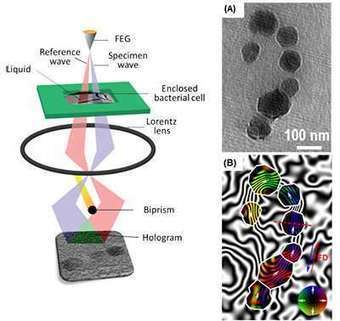
A research team led by a scientist from the U.S. Department of Energy's Ames Laboratory has demonstrated for the first time that the magnetic fields of bacterial cells and magnetic nano-objects in liquid can be studied at high resolution using electron microscopy. This proof-of-principle capability allows first-hand observation of liquid environment phenomena, and has the potential to vastly increase knowledge in a number of scientific fields, including many areas of physics, nanotechnology, biofuels conversion, biomedical engineering, catalysis, batteries and pharmacology. "It is much like being able to travel to a Jurassic Park and witness dinosaurs walking around, instead of trying to guess how they walked by examining a fossilized skeleton," said Tanya Prozorov, an associate scientist in Ames Laboratory's Division of Materials Sciences and Engineering. Prozorov works with biological and bioinspired magnetic nanomaterials, and faced what initially seemed to be an insurmountable challenge of observing them in their native liquid environment. She studies a model system, magnetotactic bacteria, which form perfect nanocrystals of magnetite. In order to best learn how bacteria do this, she needed an alternative to the typical electron microscopy process of handling solid samples in vacuum, where soft matter is studied in prepared, dried, or vitrified form. For this work, Prozorov received DOE recognition through an Office of Science Early Career Research Program grant to use cutting-edge electron microscopy techniques with a liquid cell insert to learn how the individual magnetic nanocrystals form and grow with the help of biological molecules, which is critical for making artificial magnetic nanomaterials with useful properties. To study magnetism in bacteria, she applied off-axis electron holography, a specialized technique that is used for the characterization of magnetic nanostructures in the transmission electron microscope, in combination with the liquid cell. "When we look at samples prepared in the conventional way, we have to make many assumptions about their properties based on their final state, but with the new technique, we can now observe these processes first-hand," said Prozorov. "It can help us understand the dynamics of macromolecule aggregation, nanoparticle self-assembly, and the effects of electric and magnetic fields on that process." "This method allows us to obtain large amounts of new information," said Prozorov. "It is a first step, proving that the mapping of magnetic fields in liquid at the nanometer scale with electron microscopy could be done; I am eager to see the discoveries it could foster in other areas of science."
Via Mariaschnee
|
|
Scooped by
Dr. Stefan Gruenwald
December 31, 2017 3:44 PM
|
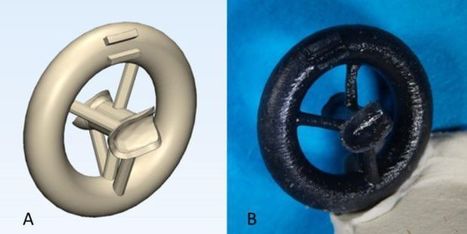
By printing custom bone prostheses, researchers hope they can better fix a certain kind of hearing loss. The auditory ossicles of the middle ear – the malleus, incus and stapes – are the tiniest bones in the human body. All three can fit on a dime, with room to spare. Their job is to transmit sounds from the ear drum to the liquid of the inner ear. Illnesses, accidents and tumors can damage these bones, causing what’s known as “conductive hearing loss.” The remedy is a delicate surgery, in which the bones are replaced with a tiny prosthesis. But the surgery has a relatively high failure rate, about 25 to 50 percent. Now, researchers at the University of Maryland Medical Center are using 3D printers to make custom-fitted ear bones. They hope these prostheses will improve on the current technology and raise the success rate of surgery. The team, made up of a radiologist and two ear, nose and throat doctors, took the ossicles from three human cadavers and removed the middle bones, or incuses. They then used a CT scanner to take images of the gaps left by the incuses, and designed tiny prostheses to fit those gaps. The prostheses varied by just fractions of millimeters, with ever so slightly different angles. The researchers then gave four different surgeons the three prostheses and had them guess which one went in which ear. Each surgeon independently matched the prostheses to the correct ears. “They said it wasn’t that hard to figure out,” says Jeffrey Hirsch, a radiology professor who led the research. “It was almost like a Goldilocks sort of thing – this prosthesis was too tight in this ear and too loose in this ear, but in this ear it’s just right.” The research was published recently in the journal 3D Printing in Medicine. The next step will be to test the prostheses for function using cadavers or animal models. They can run vibrations through a prosthesis to see how it transmits sound.
|
|
Scooped by
Dr. Stefan Gruenwald
December 27, 2017 12:42 AM
|
Deep learning, over the past 5 years or so, has gone from a somewhat niche field comprised of a cloistered group of researchers to being mainstream. The swift rise and apparent dominance of deep learning over traditional machine learning methods on a variety of tasks has been astonishing to witness, and at times difficult to explain. There is a fascinating history that goes back to the 1940s full of ups and downs, twists and turns, friends and rivals, and successes and failures. In a story arc worthy of a 90s movie, an idea that was once sort of an ugly duckling has blossomed to become the belle of the ball. Consequently, interest in deep learning has sky-rocketed, with constant coverage in the popular media. Deep learning research now routinely appears in top journals like Science, Nature, Nature Methods and JAMA just to name a few. Deep learning has conquered Go, learned to drive a car, diagnosed skin cancer and autism, became a master art forger, and can even hallucinate photorealistic pictures. A good surrogate for interest in deep learning is attendance at the Annual Conference on Neural Information Processing Systems (NIPS). NIPS is the main conference for deep learning research and has historically been where a lot of the new methodological research get published. How Google used artificial intelligence to transform Google Translate, one of its more popular services — and how machine learning is poised to reinvent computing itself. http://tinyurl.com/gue4pdh - Appearance of large, high-quality labeled datasets - Data along with GPUs probably explains most of the improvements we’ve seen. Deep learning is a furnace that needs a lot of fuel to keep burning, and we finally have enough fuel.
- Massively parallel computing with GPUs - It turns out that neural nets are actually just a bunch of floating point calculations that you can do in parallel. It also turns out that GPUs are great at doing these types of calculations. The transition from CPU-based training to GPU-based has resulted in massive speed ups for these models, and as a result, allowed us to go bigger and deeper, and with more data.
- Backprop-friendly activation functions - The transition away from saturating activation functions like tanh and the logistic function to things like ReLU have alleviated the vanishing gradient problem
- Improved architectures - Resnets, inception modules, and Highway networks keep the gradients flowing smoothly, and let us increase the depth and flexibility of the network
- Software platforms - Frameworks like tensorflow, theano, chainer, and mxnet that provide automatic differentiation allow for seamless GPU computing and make protoyping faster and less error-prone. They let you focus on your model structure without having to worry about low-level details like gradients and GPU management.
- New regularization techniques - Techniques like dropout, batch normalization, and data-augmentation allow us to train larger and larger networks without (or with less) overfitting
- Robust optimizers - Modifications of the SGD procedure including momentum, RMSprop, and ADAM have helped eek out every last percentage of your loss function.
|
|
Scooped by
Dr. Stefan Gruenwald
December 25, 2017 11:06 PM
|
One of the fundamental ideas of quantum theory is that quantum objects can exist both as a wave and as a particle, and that they don’t exist as one or the other until they are measured. This is the premise that Erwin Schrödinger was illustrating with his famous thought experiment involving a dead-or-maybe-not-dead cat in a box.
“This premise, commonly referred to as the wave function, has been used more as a mathematical tool than a representation of actual quantum particles,” said David Arvidsson-Shukur, a PhD student at Cambridge’s Cavendish Laboratory, and the paper’s first author. “That’s why we took on the challenge of creating a way to track the secret movements of quantum particles.”
Any particle will always interact with its environment, ‘tagging’ it along the way. Arvidsson-Shukur, working with his co-authors Professor Crispin Barnes from the Cavendish Laboratory and Axel Gottfries, a PhD student from the Faculty of Economics, outlined a way for scientists to map these ‘tagging’ interactions without looking at them. The technique would be useful to scientists who make measurements at the end of an experiment but want to follow the movements of particles during the full experiment.
Some quantum scientists have suggested that information can be transmitted between two people – usually referred to as Alice and Bob – without any particles travelling between them. In a sense, Alice gets the message telepathically. This has been termed counterfactual communication because it goes against the accepted ‘fact’ that for information to be carried between sources, particles must move between them.
“To measure this phenomenon of counterfactual communication, we need a way to pin down where the particles between Alice and Bob are when we’re not looking,” said Arvidsson-Shukur. “Our ‘tagging’ method can do just that. Additionally, we can verify old predictions of quantum mechanics, for example that particles can exist in different locations at the same time.”
The founders of modern physics devised formulas to calculate the probabilities of different results from quantum experiments. However, they did not provide any explanations of what a quantum particle is doing when it’s not being observed. Earlier experiments have suggested that the particles might do non-classical things when not observed, like existing in two places at the same time. In their paper, the Cambridge researchers considered the fact that any particle travelling through space will interact with its surroundings. These interactions are what they call the ‘tagging’ of the particle. The interactions encode information in the particles that can then be decoded at the end of an experiment, when the particles are measured.
The researchers found that this information encoded in the particles is directly related to the wave function that Schrödinger postulated a century ago. Previously the wave function was thought of as an abstract computational tool to predict the outcomes of quantum experiments. “Our result suggests that the wave function is closely related to the actual state of particles,” said Arvidsson-Shukur. “So, we have been able to explore the ‘forbidden domain’ of quantum mechanics: pinning down the path of quantum particles when no one is observing them.”
Reference
D. R. M. Arvidsson-Shukur, C. H. W. Barnes, and A. N. O. Gottfries. ‘Evaluation of counterfactuality in counterfactual communication protocols’. Physical Review A (2017). DOI: 10.1103/PhysRevA.96.062316
|
|
Scooped by
Dr. Stefan Gruenwald
December 21, 2017 3:27 PM
|
It doesn’t matter if it’s a burly rattler or a tiny garter snake. A deadly fungal disease that’s infecting snakes in the eastern and midwestern United States doesn’t appear to discriminate by species, size or habitat, researchers report online December 20 in Science Advances. The infection, caused by the fungal pathogen Ophidiomyces ophiodiicola, can cover snakes’ bodies with lesions that make it hard for the reptiles to do normal snake things like slither and eat. Many eventually die from the infection. Fungal spores hang around in the soil and can spread to snakes that pick the particles up (SN Online: 3/15/16). The disease has been likened to the chytrid fungus that’s wiping out amphibian populations worldwide, or the white-nose syndrome that’s killing off entire caves of bats (SN: 4/30/16, p. 20). In snakes, the disease not only “could result in the downfall of vulnerable species, but could also impact whole communities,” says Bruce Kingsbury, a biologist at Indiana University–Purdue University Fort Wayne, who was not part of the study. Snakes are important predators in many ecosystems — if the reptiles go, then populations of small mammals that they help control could boom, throwing the ecosystem out of whack. Snake fungal disease first gained widespread attention around 2008. It has now been documented in 23 species in the eastern and midwestern United States, says study coauthor Frank Burbrink, a herpetologist at the American Museum of Natural History in New York City. He and his colleagues wanted to see whether certain risk factors might make these species more susceptible to the disease than the dozens of other types of snakes that live in the region.
|
|
Scooped by
Dr. Stefan Gruenwald
December 21, 2017 3:21 PM
|
Scientists were shocked after discovering that a species of small Mexican fish can produce sounds so powerful during breeding season that it is able to damage the hearing of certain marine mammals such as dolphins. “It is the loudest sound ever recorded for a fish species,” says Dr. Timothy Rowell, a researcher at the University of San Diego and co-author of a study on the subject published in the journal Biology. “The sound levels generated by chorusing is loud enough to cause at least temporary if not permanent hearing loss in marine mammals that were observed preying on the fish.” During the spawning season, the chorus formed by the grouping of millions of fish “resembles that of a crowd shouting in a stadium,” Rowell adds. A single male of this species of fish is able to make almost as much noise as some species of whales while measuring less than one meter. The males of the species Gulf corvina are found during the spawning period in groups of about 1.5 million and produce the loudest chorus which has so far been measured in marine fish: 177 decibels. For comparison, the sound intensity level of a jet engine is 120 decibels at a distance of 32 m, which is loud enough to cause permanent hearing damage in humans.
|
|
Scooped by
Dr. Stefan Gruenwald
December 21, 2017 3:13 PM
|
Life expectancy in the United States dropped for the second consecutive year, while the top 10 causes of death remained the same. Life expectancy in the United States has dropped again following last year's decline, which marked the first downturn in more than two decades. On average, Americans can now expect to live 78.6 years, a statistically significant drop of 0.1 year, according to a report on 2016 data published Thursday by the National Center for Health Statistics. Women can now expect to live a full five years longer than men: 81.1 years vs. 76.1 years. The last time the agency recorded a multiyear drop was in 1962 and 1963.
|
|
Scooped by
Dr. Stefan Gruenwald
December 17, 2017 2:47 PM
|
Survivors of the world’s first known Ebola outbreak have immunity to the virus 40 years after they were infected, scientists have found. These people who beat infection in 1976 can make antibodies against Ebola today. “It’s interesting to see that after such a long time, people still have this kind of reactivity against the virus,” says virologist Stephan Becker of the Philipps University of Marburg in Germany. The findings were published online on 14 December in the Journal of Infectious Diseases1. Becker says that the discovery was “not completely unexpected”, because previous studies had found that survivors had immune responses to Ebola virus as long as 11 years after they were infected2. But until last year, no one had ever studied immunity in the survivors of the first recorded Ebola outbreak, which occurred in 1976 near the town of Yambuku, in what is now the Democratic Republic of the Congo (DRC). “Nobody even knew if these people were still alive,” says Anne Rimoin, an epidemiologist at the University of California, Los Angeles (UCLA), and the lead author of the latest study.
|
|
|
Scooped by
Dr. Stefan Gruenwald
January 8, 2018 4:21 PM
|
To the best of our knowledge, we humans can only experience this world in three spatial dimensions (plus one time dimension): up and down, left and right, and forward and backward. But in two physics labs, scientists have found a way to represent a fourth spatial dimension. This isn’t a fourth dimension that you can disappear into or anything like that. Instead, two teams of physicists engineered special two-dimensional setups, one with ultra-cold atoms and another with light particles. Both cases demonstrated different but complementary outcomes that looked the same as something called the “quantum Hall effect” occurring in four dimensions. These experiments could have important implications to fundamental science, or even allow engineers to access higher-dimension physics in our lower-dimension world. “Physically, we don’t have a 4D spatial system, but we can access 4D quantum Hall physics using this lower-dimensional system because the higher-dimensional system is coded in the complexity of the structure,” Mikael Rechtsman, professor at Penn State University behind one of the papers, told Gizmodo. “Maybe we can come up with new physics in the higher dimension and then design devices that take advantage the higher-dimensional physics in lower dimensions.” There are three spatial dimensions, or directions you can move by holding everything else constant. Moving back and forth along a line is moving in one dimension. Make a right angle to the line and you add a second dimension to move forward and backward in—imagine a square. Make another right angle and you enter the third spatial dimension. You can move up and down—that’s a cube. If a fourth dimension existed, you could make another right angle into it, and create some sort of hyper cube. A fourth spatial dimension can be described by mathematics but not physically realized. However, think about this: a three-dimensional figure leaves a two-dimensional shadow. By observing this shadow, we can glean some information about the three-dimensional thing. Perhaps by observing some real-world physical system, we can learn about a fourth-dimensional nature by a shadow left in lower dimensions. At each of the new experiments’ core is the quantum Hall effect: When electrons are confined to two dimensions, as if they are stuck on the surface of a sheet of paper (like in graphene or in certain layers of semiconductors), and a magnetic field is passed through that sheet perpendicularly, some of the system’s electrical properties become restricted to multiples of exact number values. Math says that other consequences of this quantum Hall effect should be measurable in a four-spatial-dimension system—but again, we don’t have four spatial dimensions to test this physics in.
|
|
Scooped by
Dr. Stefan Gruenwald
January 7, 2018 11:23 AM
|
In “The Chemical Basis of Morphogenesis,” Alan Turing proposed that chemical substances (morphogens) can transform and spread through tissue to yield natural patterns—stripes, spots and spirals—seen on animals. Turing expressed this idea in the language of differential equations, whose initial conditions controlled the evolution of the patterns. The complexity and detail in the patterns from such reaction-diffusion systems can be truly surprising—a relatively simple process and small number of parameters can yield an endless variety of familiar patterns and shapes. One season-appropriate example of this is snowflakes, known for their variety and complexity.
|
|
Scooped by
Dr. Stefan Gruenwald
January 3, 2018 4:14 PM
|
The AI, called Ultromics, is being used at John Radcliffe hospital in Oxford. The system has been successful in the early trials could soon be available for free on the NHS. Currently cardiologists can tell if there is a problem from the timing of the heartbeat in scans. But sometimes they get it wrong. There are 60,000 heart scans carried out each year and 12,000 of these are misdiagnosed. Ultromics was developed by Professor Paul Leeson as a way of improving those figures. He taught the AI system how to recognise heart disease by feeding it 1,000 heart scans of patients from the last seven years. Information about whether the patient went on to develop heart problems was also provided. The AI software used this information as a baseline to predict and diagnose the scans of new patients. It is only being used to provide recommendations to doctors which they can then follow up with their own diagnosis. The technology has already been tested in six cardiology units and the results of the study are to be published later this year.
|
|
Scooped by
Dr. Stefan Gruenwald
January 2, 2018 3:59 PM
|
As cyberattacks become more refined, they will start mimicking our online traits. This will lead to a battle of the machines. As early as 2018, we can expect to see truly autonomous weaponized artificial intelligence that delivers its blows slowly, stealthily and virtually without trace. And 2018 will be the year of the machine-on-machine attack. There is much debate about the possible future of autonomous AI on the battlefield. Once released, these systems are not controlled. They do not wait for orders from base. They learn and make their own decisions often while deep inside enemy territory. And they learn quickly from their environments. However, autonomous AIs are already starting to be deployed on another type of battlefield: digital networks. Today cyber-attackers are using AI technologies that help them not only infiltrate an IT infrastructure, but to stay on that network for months, perhaps years, without getting noticed. In 2018, we can expect these algorithmic presences to use their intelligence to learn about their environments and blend in with the daily commotion of network activity. The drivers of these automated attacks may have a defined target – the blueprint designs of a new type of jet engine, say – or persist opportunistically, where the chance for money- or mischief-making avails itself. As they sustain their presence, they grow stronger in their inside knowledge of the network and its users and they build up control over data and entire systems. Like the HIV virus, which is so pernicious because it uses the body's own defences to replicate itself, these new machine intelligences will target the very defences deployed against it. They will learn how the firewall works, the analytics models used to detect attacks and times of day that the security team is in the office. They will then adapt to avoid and weaken them. All the while, it will use its strength to spread, creating inroads for compromise and contaminating devices with brutal efficiency. AI will also attack us by impersonating people. We already have AI assistants that do our scheduling, email on our behalf and ask us what we'd like to order for lunch. But what happens if your AI assistant gets taken over by a malicious attacker? Or, indeed, what happens when weaponized AI is refined enough to convincingly impersonate a real person who you trust? A stealthy, long-term AI presence on your network will have ample time to learn what your writing style is and how this differs depending on who you email, your contact base and the distinctions in professional and personal relationships based on the language you use and key themes in your conversations. For example, you email your partner five times a day, particularly in the morning and afternoon. They sign their emails "X". Your football team emails weekly with details for Saturday's five-a-side games. They sign emails "Be there!". This is fodder for AI. As to what we should do about these malicious AIs: they will be too clever and stealthy to combat other than with other AIs. This is one arena we'll have to give up control, not take it back.
|
|
Scooped by
Dr. Stefan Gruenwald
January 2, 2018 3:53 PM
|
The world's oldest algae fossils are a billion years old, according to a new analysis by earth scientists at McGill University. Based on this finding, the researchers also estimate that the basis for photosynthesis in today's plants was set in place 1.25 billion years ago. The study, published in the journal Geology, could resolve a long-standing mystery over the age of the fossilized algae, Bangiomorpha pubescens, which were first discovered in rocks in Arctic Canada in 1990. The microscopic organism is believed to be the oldest known direct ancestor of modern plants and animals, but its age was only poorly dated, with estimates placing it somewhere between 720 million and 1.2 billion years. The new findings also add to recent evidence that an interval of Earth's history often referred to as the Boring Billion may not have been so boring, after all. From 1.8 to 0.8 billion years ago, archaea, bacteria and a handful of complex organisms that have since gone extinct milled about the planet's oceans, with little biological or environmental change to show for it. Or so it seemed. In fact, that era may have set the stage for the proliferation of more complex life forms that culminated 541 million years ago with the so-called Cambrian Explosion. "Evidence is beginning to build to suggest that Earth's biosphere and its environment in the latter portion of the 'Boring Billion' may actually have been more dynamic than previously thought," says McGill PhD student Timothy Gibson, lead author of the new study. To pinpoint the fossils' age, the researchers pitched camp in a rugged area of remote Baffin Island, where Bangiomorpha pubescens fossils have been found There,despite the occasional August blizzard and tent-collapsing winds, they collected samples of black shale from rock layers that sandwiched the rock unit containing fossils of the alga. Using the Rhenium-Osmium (or Re-Os) dating technique, applied increasingly to sedimentary rocks in recent years, they determined that the rocks are 1.047 billion years old. "That's 150 million years younger than commonly held estimates, and confirms that this fossil is spectacular," says Galen Halverson, senior author of the study and an associate professor in McGill's Department of Earth and Planetary Sciences. "This will enable scientists to make more precise assessments of the early evolution of eukaryotes," the celled organisms that include plants and animals. Because Bangiomorpha pubescens is nearly identical to modern red algae, scientists have previously determined that the ancient alga, like green plants, used sunlight to synthesize nutrients from carbon dioxide and water. Scientists have also established that the chloroplast, the structure in plant cells that is the site of photosynthesis, was created when a eukaryote long ago engulfed a simple bacterium that was photosynthetic. The eukaryote then managed to pass that DNA along to its descendants, including the plants and trees that produce most of the world's biomass today.
|
|
Scooped by
Dr. Stefan Gruenwald
January 2, 2018 3:34 PM
|
Ground-breaking lens opens new possibilities in virtual and augmented reality. Metalenses — flat surfaces that use nanostructures to focus light — promise to revolutionize optics by replacing the bulky, curved lenses currently used in optical devices with a simple, flat surface. But, these metalenses have remained limited in the spectrum of light they can focus well. Now a team of researchers at the Harvard John A. Paulson School of Engineering and Applied Sciences (SEAS) has developed the first single lens that can focus the entire visible spectrum of light — including white light — in the same spot and in high resolution. This has only ever been achieved in conventional lenses by stacking multiple lenses. The research is published in Nature Nanotechnology. Focusing the entire visible spectrum and white light – combination of all the colors of the spectrum — is so challenging because each wavelength moves through materials at different speeds. Red wavelengths, for example, will move through glass faster than the blue, so the two colors will reach the same location at different times resulting in different foci. This creates image distortions known as chromatic aberrations. Cameras and optical instruments use multiple curved lenses of different thicknesses and materials to correct these aberrations, which, of course, adds to the bulk of the device. “Metalenses have advantages over traditional lenses,” says Federico Capasso, the Robert L. Wallace Professor of Applied Physics and Vinton Hayes Senior Research Fellow in Electrical Engineering at SEAS and senior author of the research. “Metalenses are thin, easy to fabricate and cost effective. This breakthrough extends those advantages across the whole visible range of light. This is the next big step.” The Harvard Office of Technology Development has protected the intellectual property relating to this project and has licensed it to a startup for commercial development. The metalenses developed by Capasso and his team use arrays of titanium dioxide nanofins to equally focus wavelengths of light and eliminate chromatic aberration. Previous researchdemonstrated that different wavelengths of light could be focused but at different distances by optimizing the shape, width, distance, and height of the nanofins. In this latest design, the researchers created units of paired nanofins that control the speed of different wavelengths of light simultaneously. The paired nanofins control the refractive index on the metasurface and are tuned to result in different time delays for the light passing through different fins, ensuring that all wavelengths reach the focal spot at the same time.
|
|
Scooped by
Dr. Stefan Gruenwald
December 30, 2017 11:59 AM
|
“This is not the beginning of designer babies,” said one bioethicist. But good luck getting people to believe that. Researchers have erased a genetic glitch that causes heart defects in dozens of human embryos with surprising success, fixing the problem 72% of the time. It is the first study to use the controversial CRISPR gene-editing technology in a large number of normal human embryos. The hottest invention in biology, CRISPR allows scientists to cut out and replace genes. About 40 nations, including the US and the UK, effectively prohibit or outlaw using the method to genetically engineer babies. But the new study, published in Nature, suggests that CRISPR might work as an aid to fertility clinic screening for dangerous inherited diseases, relying on a previously unknown ability of human embryos to swiftly repair their genes. “I’m very surprised,” study coauthor Jin-Soo Kim of Seoul National University said in a briefing for reporters on the already widely discussed and speculated-about study, a collaboration between US, Chinese, and South Korean researchers. Kim and his colleagues injected the CRISPR gene fix into dozens of donor eggs, alongside sperm from a man who is a carrier for a heart defect linked to cardiomyopathy. The genetic defect corrected in the study is the leading cause of sudden heart attacks in young people, carried by about 1 in 500. If you inherit the glitch, you have a 50% chance of passing it along to your children. Unlike past experiments that attempted CRISPR days after embryos had developed, this one did it at the time of fertilization. And it worked in 72% of the embryos, replacing the defective gene with a healthy one. In those, the gene-editing technique replaced the gene in every one of the embryo’s cells, preventing the “mosaicism” — when some cells are fixed and others are not — that happened in previous studies. And CRISPR didn’t target any other genes — collateral damage that plagued similar Chinese studies in 2015. Even in the 28% of embryos where CRISPR did not correct the defective sperm gene, it still erased it. The biggest discovery was that the genetic defect originating in sperm was corrected not with the replacement gene that the researchers had inserted, but instead with a healthy gene from the donor egg. That suggests that the CRISPR process inadvertently triggered a powerful and unexpected form of natural DNA repair in human embryos, one not seen before in studies of mice or other creatures. “Overall, this is a very cool and surprising result, especially that it worked as well as it did,” stem cell scientist Paul Knoepfler of the University of California, Davis stated. “But I’m skeptical this will end up in clinical use,” Knoepfler added. Fertility clinics can already screen embryos for the 50-50 chance genetic defects like the one in the study, he noted, and then not use the defective ones in IVF procedures.
|
|
Scooped by
Dr. Stefan Gruenwald
December 27, 2017 12:31 AM
|
For the first time, an experimental drug has reduced levels of the toxic protein that causes Huntington's disease in humans. Huntington's disease is an inherited disorder in which mutant forms of the huntingtin protein damage nerve cells in the brain. The new drug, Ionis-HTTRx, was shown to be safe in humans and lowered levels of mutant huntingtin protein in the nervous systems of trial participants. "The results of this trial are of groundbreaking importance for Huntington's disease patients and families," said Sarah Tabrizi, director of University College London's Huntington's Disease Centre, who led the trial. "The key now is to move quickly to a larger trial to test whether the drug slows disease progression." The drug consists of a single strand of DNA that targets mRNA in brain cells, which in turn translates genes into proteins. In this case, the drug specifically sought out mRNA that helps translate huntingtin genes into huntingtin proteins and stopped production of the protein -- both the healthy and toxic forms. "Less of the protein is made," Wild said, adding that the healthy form of the protein is known to play a vital role in early childhood development but not necessarily during adulthood, whereas the toxic form damages nerve cells in adults. "That protein is the cause of all of the problems" in Huntington's disease. It's hoped this form of drug could be adapted to target proteins in other currently incurable brain disorders, such as Alzheimer's disease. By changing the DNA sequence in the drug, researchers can target any mRNA, Wild said. In other neurodegenerative diseases, "there is at least one protein you would like to partially reduce," he said. One example is tau protein in Alzheimer's disease. "This is a proof of principle study. You can inject these drugs into spinal fluid; they get into the brain and reduce harmful proteins."
|
|
Scooped by
Dr. Stefan Gruenwald
December 25, 2017 10:59 PM
|
Dragonfly's destination is the Saturn moon, Titan. And unlike the Mars' rovers, Dragonfly won't be a stuck in one general area. It will gather science from different sites hundreds of kilometers apart.
The dual-quadcopter won't fly like a typical drone, though. The communications delay between Earth and Titan means regular flying is a no-go. Instead, Dragonfly will perform a series of 'hops.' Once science gathering is done at one location, it will take off and head for the next.
During flight, instruments onboard will gather info on the makeup of Titan's atmosphere and capture aerial imaging of Titan's surface. These images will be huge for studying Titan's geology. These same images will be used to scout for future 'hop' landings too.
Scientists won't look longingly at interesting sites and wish they could explore it closer. With Dragonfly, they can queue up another 'hop' and check it out.
According to the Dragonfly team, the mission would last about two years. And 'hops' would happen each Titan day (that's 16 Earth days). Flying, science gathering, and data transmission will happen as the Sun shines on Titan (8 Earth days). At night, Dragonfly will use its Multi-Mission Radioisotope Thermoelectric Generator (MMRTG) to recharge. Here are the goals for the Dragonfly as the folks behind the mission tell it: - Understand the organic and methanogenic cycle on Titan, especially as it relates to prebiotic chemistry.
- Investigate the subsurface ocean and/or liquid reservoirs, particularly their evolution and possible interaction with the surface.
Will Dragonfly find life? I would pump the brakes on that one. It could, but this mission is about increasing our knowledge of Titan. We still don't have a good idea of the moon's surface composition. What complex organic compounds are formed from the interaction between sunlight and methane and nitrogen molecules? Are there chemical signatures that could point to signs of water or hydrocarbon-based life? Those are just a couple of the questions Dragonfly will attempt to answer if it's selected by NASA for the next New Frontiers mission.
Titan is also perfect for this kind of mission. Peter Bedini from Johns Hopkins Applied Physics Laboratory, called Titan the easiest place to fly a quadcopter in the solar system in a recent presentation. That's because Titan has an atmosphere more than four times as dense as Earth. And, the gravity is only 1/7 of Earth's. If you were standing on Titan, you could strap on a pair of wings, flap your arms, and fly.
|
|
Scooped by
Dr. Stefan Gruenwald
December 21, 2017 3:25 PM
|
Physicists at the University of Basel have succeeded in cooling a nanoelectronic chip to a temperature lower than 3 millikelvin. The scientists from the Department of Physics and the Swiss Nanoscience Institute set this record in collaboration with colleagues from Germany and Finland. They used magnetic cooling to cool the electrical connections as well as the chip itself. The results were published in the journal Applied Physics Letters. The group led by Basel physicist Professor Dominik Zumbühl had previously suggested utilizing the principle of magnetic cooling in nanoelectronics in order to cool nanoelectronic devices to unprecedented temperatures close to absolute zero. Magnetic cooling is based on the fact that a system can cool down when an applied magnetic field is ramped down while any external heat flow is avoided. Before ramping down, the heat of magnetization needs to be removed with another method to obtain efficient magnetic cooling. This is how Zumbühl’s team succeeded in cooling a nanoelectronic chip to a temperature below 2.8 millikelvin, thereby achieving a new low temperature record. Dr Mario Palma, and Dr Christian Scheller, equally contributing first authors, successfully used a combination of two cooling systems, both of which were based on magnetic cooling. They cooled all of the chip’s electrical connections to temperatures of 150 microkelvin – a temperature that is less than a thousandth of a degree away from absolute zero. They then integrated a second cooling system directly into the chip itself, and also placed a Coulomb blockade thermometer on it. The construction and the material composition enabled them to magnetically cool this thermometer to a temperature almost as low as absolute zero as well. “The combination of cooling systems allowed us to cool our chip down to below 3 millikelvin, and we are optimistic than we can use the same method to reach the magic 1 millikelvin limit,” says Zumbühl. It is also remarkable that the scientists are in a position to maintain these extremely low temperatures for a period of seven hours. This provides enough time to conduct various experiments that will help to understand the properties of physics close to absolute zero.
|
|
Scooped by
Dr. Stefan Gruenwald
December 21, 2017 3:16 PM
|
While bullet-proof body armor does tend to be thick and heavy, that may no longer be the case if research being conducted at The City University of New York bears fruit. Scientists there have determined that two layers of stacked graphene can harden to a diamond-like consistency upon impact. Known as diamene, the new material is made up of just two sheets of graphene, upon a silicon carbide substrate. It is described as being as light and flexible as foil – in its regular state, that is. When sudden mechanical pressure is applied at room temperature, though, it temporarily becomes harder than bulk diamond. The material was conceived of by associate professor Angelo Bongiorno, who developed computer models which indicated that it should work, as long as the two sheets were aligned correctly. Riedo and colleagues then conducted tests on samples of actual diamene, which backed up Bongiorno's findings. Interestingly, the hardening effect only happens when two sheets of graphene are used – no more or no less. That said, scientists at Rice University have had success in absorbing the impact of "microbullets" using graphene that's stacked 300 layers thick.
|
|
Scooped by
Dr. Stefan Gruenwald
December 20, 2017 12:13 PM
|
|