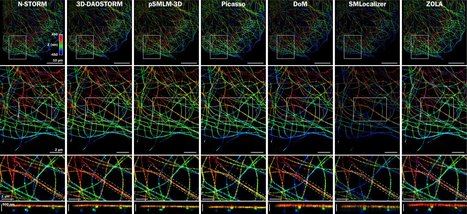
Single molecule localization microscopy can generate 3D super-resolution images without scanning by leveraging the axial variations of normal or engineered point spread functions (PSF). Successful implementation of these approaches for extended axial ranges remains, however, challenging.
A group of engineers and scientists present Zernike Optimized Localization Approach in 3D (ZOLA-3D), an easy-to-use computational and optical solution that achieves optimal resolution over a tunable axial range. They use ZOLA-3D to demonstrate 3D super-resolution imaging of mitochondria, nuclear pores and microtubules in entire nuclei or cells up to ~5 μm deep.
In summary, ZOLA-3D is a versatile, easy-to-use optical and computational imaging system for 3D SMLM that achieves theoretically optimal resolution over adjustable axial ranges from <1 μm up to at least 5 μm. Even larger axial ranges can in principle be achieved using different PSFs, although their larger lateral extent implies that the density of active fluorophores must be kept very low to maintain high localization precision.
ZOLA may be used to track single particles or molecules in 3D in live cells and that the use of reflective, rather than refractive optics will facilitate applications to multicolor imaging. The presented software is freely available from https://github.com/imodpasteur/ZOLA-3D, together with sample data and instructions. The researchers anticipate that ZOLA-3D will greatly facilitate 3D imaging of entire nuclei and cells with super-resolution.
Genetic analysis uncovers a direct descendant of two different groups of early humans.
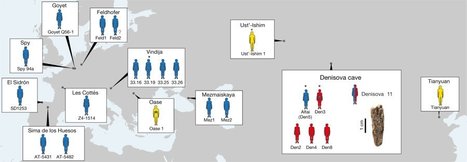
A female who died around 90,000 years ago was half Neanderthal and half Denisovan, according to genome analysis of a bone discovered in a Siberian cave. This is the first time scientists have identified an ancient individual whose parents belonged to distinct human groups. The findings were published on 22 August in Nature1.
“To find a first-generation person of mixed ancestry from these groups is absolutely extraordinary,” says population geneticist Pontus Skoglund at the Francis Crick Institute in London. “It’s really great science coupled with a little bit of luck.” The team, led by palaeogeneticists Viviane Slon and Svante Pääbo of the Max Planck Institute for Evolutionary Anthropology in Leipzig, Germany, conducted the genome analysis on a single bone fragment recovered from Denisova Cave in the Altai Mountains of Russia. This cave lends its name to the ‘Denisovans’, a group of extinct humans first identified on the basis of DNA sequences from the tip of a finger bone discovered [2] there in 2008. The Altai region, and the cave specifically, were also home to Neanderthals.
Given the patterns of genetic variation in ancient and modern humans, scientists already knew that Denisovans and Neanderthals must have bred with each other — and with Homo sapiens. But no one had previously found the first-generation offspring from such pairings, and Pääbo says that he questioned the data when his colleagues first shared them. “I thought they must have screwed up something.” Before the discovery of the Neanderthal–Denisovan individual, whom the team has affectionately named Denny, the best evidence for so close an association was found in the DNA of a Homo sapiens specimen who had a Neanderthal ancestor within the previous 4–6 generations [3].
An Artificial General Intelligence (AGI) would be a machine capable of understanding the world as well as any human, and with the same capacity to learn how to carry out a huge range of tasks.
AGI doesn't exist yet, but has featured in science-fiction stories for more than a century, and been popularized in modern times by films such as 2001: A Space Odyssey. Fictional depictions of AGI vary widely, although tend more towards the dystopian vision of intelligent machines eradicating or enslaving humanity, as seen in films like The Matrix or The Terminator. In such stories, AGI is often cast as either indifferent to human suffering or even bent on mankind's destruction.
In contrast, utopian imaginings, such as Iain M Banks' Culture civilization novels, cast AGI as benevolent custodians, running egalitarian societies free of suffering, where inhabitants can pursue their passions and technology advances at a breathless pace. Whether these ideas would bear any resemblance to real-world AGI is unknowable since nothing of the sort has been created, or, according to many working in the field of AI, is even close to being created.
Physicians currently spend a lot of time writing notes and reports about patients and inserting them into various kinds of electronic health record (EHR) systems. According to a recent study, doctors spend approximately two hours on administrative work for every hour spent with a patient. Thanks to cutting-edge artificial intelligence (AI) tools, this note-writing process could soon become fully automated, helping doctors to better manage their time and relieving them from this tedious task.
Peter Liu, a researcher at Google Brain, has recently developed a new language modeling task that can predict the content of new text notes by analyzing patient medical records, which include data such as demographics, laboratory measurements, medications and past notes. In his recent study, pre-published on arXiv, he trained generative models using the MIMIC-III (Medical Information Mart for Intensive Care) EHR dataset, and then compared the notes generated by the models with real notes from the dataset.
Commonly adopted methods to reduce the time that clinicians spend on note-taking include the use of dictation services and the employment of assistants who can write up notes for them. AI tools could help to tackle this issue, reducing costs spent on additional staff and resources. "Assistive-writing features for notes, such as auto-completion or error-checking, benefit from language models," Liu writes in his paper. "The stronger the model, the more effective such features would likely be. Thus, the focus of this paper is in building language models for clinical notes."
Liu employed two language models: the first is called transformer architecture, and was introduced in a study published last year in the Advances in Neural Information Processing Systems journal. As this model performs better with shorter texts, such as individual sentences, he also tested a recently introduced transformer-based model, called transformer with memory-compressed attention (T-DMCA), which was found to be more effective for longer sequences. He trained these models on the MIMIC-III dataset, containing de-identified EHR of 39,597 patients from the intensive-care unit of a tertiary care hospital. This is currently the most comprehensive EHR dataset that is publicly available and can be easily accessed online.
"We have introduced a new language modeling task for clinical notes based on HER data and showed how to represent the multi-modal data context to the model," Liu explained in his paper. "We proposed evaluation metrics for the task and presented encouraging results showing the predictive power of such models."
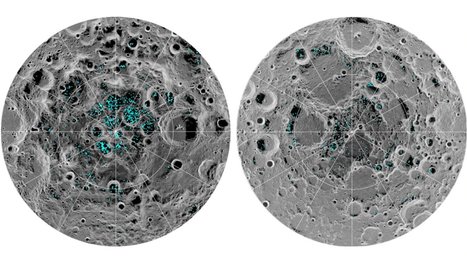
In the darkest and coldest parts of its polar regions, a team of scientists has directly observed definitive evidence of water ice on the Moon's surface. These ice deposits are patchily distributed and could possibly be ancient. At the southern pole, most of the ice is concentrated at lunar craters, while the northern pole's ice is more widely, but sparsely spread.
A team of scientists, led by Shuai Li of the University of Hawaii and Brown University and including Richard Elphic from NASA's Ames Research Center in California's Silicon Valley, used data from NASA's Moon Mineralogy Mapper (M3) instrument to identify three specific signatures that definitively prove there is water ice at the surface of the Moon.
M3, aboard the Chandrayaan-1 spacecraft, launched in 2008 by the Indian Space Research Organization, was uniquely equipped to confirm the presence of solid ice on the Moon. It collected data that not only picked up the reflective properties we'd expect from ice, but was able to directly measure the distinctive way its molecules absorb infrared light, so it can differentiate between liquid water or vapor and solid ice.
Most of the newfound water ice lies in the shadows of craters near the poles, where the warmest temperatures never reach above minus 250 degrees Fahrenheit. Because of the very small tilt of the Moon's rotation axis, sunlight never reaches these regions.
Previous observations indirectly found possible signs of surface ice at the lunar south pole, but these could have been explained by other phenomena, such as unusually reflective lunar soil.
With enough ice sitting at the surface—within the top few millimeters—water would possibly be accessible as a resource for future expeditions to explore and even stay on the Moon, and potentially easier to access than the water detected beneath the Moon's surface.
In January, raging storms caused medical emergencies along the U.S. East Coast, prompting the Red Cross to issue an urgent call for blood donations. The nation's blood supply was especially in need of O-type blood that can be universally administered in an emergency. Now, scientists say they have identified enzymes -- from the human gut -- that can turn type A and B blood into O, as much as 30 times more efficiently than previously studied enzymes.
The researchers will present their results today at the 256th National Meeting & Exposition of the American Chemical Society (ACS). "We have been particularly interested in enzymes that allow us to remove the A or B antigens from red blood cells," Stephen Withers, Ph.D., says. "If you can remove those antigens, which are just simple sugars, then you can convert A or B to O blood." He says scientists have pursued the idea of adjusting donated blood to a common type for a while, but they have yet to find efficient, selective enzymes that are also safe and economical.
To assess potential enzyme candidates more quickly, Withers collaborated with a colleague at his institution, the University of British Columbia (UBC), who uses metagenomics to study ecology. "With metagenomics, you take all of the organisms from an environment and extract the sum total DNA of those organisms all mixed up together," Withers explains. Casting such a wide net allows Withers' team to sample the genes of millions of microorganisms without the need for individual cultures. The researchers then use E. coli to select for DNA containing genes that code for enzymes that can cleave sugar residues. So instead of using metagenomics as a means of learning about microbial ecology, Withers uses it to discover new biocatalysts. "This is a way of getting that genetic information out of the environment and into the laboratory setting and then screening for the activity we are interested in," he says.
Withers' team considered sampling DNA from mosquitoes and leeches, the types of organisms that degrade blood, but ultimately found successful candidate enzymes in the human gut microbiome. Glycosylated proteins called mucins line the gut wall, providing sugars that serve as attachment points for gut bacteria while also feeding them as they assist in digestion. Some of the mucin sugars are similar in structure to the antigens on A- and B-type blood. The researchers homed in on the enzymes the bacteria use to pluck the sugars off mucin and found a new family of enzymes that are 30 times more effective at removing red blood cell antigens than previously reported candidates.
Withers is now working with colleagues at the Centre for Blood Research at UBC to validate these enzymes and test them on a larger scale for potential clinical testing. In addition, he plans to carry out directed evolution, a protein engineering technique that simulates natural evolution, with the goal of creating the most efficient sugar-removing enzyme.
Scientists have made the first full characterization measurement of an accelerator beam in six dimensions, advancing the understanding of accelerators around the world.
A team of researchers led by the University of Tennessee, Knoxville conducted the measurement in a beam test facility at the Department of Energy’s Oak Ridge National Laboratory using a replica of the Spallation Neutron Source’s linear accelerator, or linac. The details are published in the journal Physical Review Letters.
“Our goal is to better understand the physics of the beam so that we can improve how accelerators operate,” said Sarah Cousineau, group leader in ORNL’s Research Accelerator Division and UT joint faculty professor. “Part of that is related to being able to fully characterize or measure a beam in 6D space—and that’s something that, until now, has never been done.”
Six-dimensional space is like 3D space but includes three additional coordinates on the x, y, and z axes to track motion or velocity. “Right away we saw the beam has this complex structure in 6D space that you can’t see below 5D—layers and layers of complexities that can’t be detangled,” Cousineau said. “The measurement also revealed the beam structure is directly related to the beam’s intensity, which gets more complex as the intensity increases.”
Previous attempts to fully characterize an accelerator beam fell victim to “the curse of dimensionality,” in which measurements in low dimensions become exponentially more difficult in higher dimensions. Scientists have tried to circumvent the issue by adding three 2D measurements together to create a quasi-6D representation. The UT-ORNL team notes that approach is incomplete as a measurement of the beam’s initial conditions entering the accelerator, which determine beam behavior farther down the linac.
As part of efforts to boost the power output of SNS, ORNL physicists used the beam test facility to commission the new radio frequency quadrupole, the first accelerating element located at the linac’s front-end assembly. With the infrastructure already in place, a research grant from the National Science Foundation to the University of Tennessee enabled outfitting the beam test facility with the state-of-the-art 6D measurement capability. Conducting 6D measurements in an accelerator has been limited by the need for multiple days of beam time, which can be a challenge for production accelerators.
An international team has developed a model that simulates protein evolution. Starting from stiff, unfunctional proteins, the computer model shows how evolving protein components can work together to give rise to dynamic and efficient molecular machines. Flexibility allows proteins to change their 3D conformation to bind other molecules: this property is crucial to their function. Prof. Tsvi Tlusty and Dr. Sandipan Dutta at the Center for Soft and Living Matter, within the Institute for Basic Science (IBS, South Korea), in collaboration with Prof. Albert Libchaber from Rockefeller University and Prof. Jean-Pierre Eckmann from University of Geneva have mimicked gene evolution to obtain proteins that can bend and bind to other molecules. Understanding of this relation is one of the most highly sought-after aspects of protein biology; it could help to explain pharmaceutical action of drugs binding to their targets.
Evolution has shaped the living world we see around us for billions of years. Zillions of proteins work harmoniously to keep these life processes going. They are responsible for the smooth functioning of any organism: they recognize other molecules (ligands), bind to them and convert them. Others have transport function, provide structure, and support to the cells. Genes store the information about the production and design of these molecular machines. However, despite decades of research, drafting the "map" that draws the path from genes to protein function is not trivial.
According to a recent hypothesis, protein function relies on "flexible joints." This study, published in Proceedings of the National Academy of Sciences (PNAS), examines the link between function and flexibility by modelling proteins like elastic networks. In this model, proteins are made of flexible (polar) and rigid (hydrophobic) amino acids connected by molecular "springs". If some regions of the protein are flexible enough, they form a "floppy" channel, and the entire molecular machine can bend like a hinge. This motion allows them to bind effectively to other molecules. The binding between a ligand and a stiff or flexible protein can be thought as a ball landing on a rock or a soft pillow. The ball is likely to bounce away after hitting the rock, but the pillow is more likely to accept it. Therefore, the flexible protein is a better binder.
In this model, genes store the details of the protein design in a binary fashion: flexible amino acids are stored as zeros and rigid amino acids as ones. As a result, the entire protein structure can be simplified as a code, like 11110001…111, similar to the digital memory of a computer. However, not all codes give rise to functional proteins, for example a code with only ones: 111111…1111, would give rise to an entirely stiff protein, unable to move, and nonfunctional. Among all possible codes, only some produce a functional protein with a "floppy" region in the center that can welcome the ligand.
The model mimics evolution by changing one random amino acid at a time. During evolution, the zeros and ones in the gene are randomly flipped through a process called mutation. Most mutations do not bring any difference, or lead to non-functional proteins, but some rare mutations can give rise to a more efficient protein. Essentially, both functional and non-functional proteins are produced during evolution, but according to Darwin's theory of "survival of the fittest", only the functional proteins are kept and the non-functional proteins eventually die out.
An international team of researchers led by the University of Bristol have demonstrated that light can be used to implement a multi-functional quantum processor. This small device can be used as a scientific tool to perform a wide array of quantum information experiments, while at the same time showing the way to how fully functional quantum computers might be engineered from large scale fabrication processes.
They did this by engineering a silicon chip that guides single particles of light, called photons in optical tracks called waveguides to encode so-called quantum-bits of information called “qubits”.
International effort is growing to develop quantum computers as the next step in computing power, to increase the types of tasks that computers can solve for us.
One challenge is to make quantum computer processors that can be re-programmed to perform different tasks, just as we have computers today that can be re-programmed to run different applications. A second challenge is how to make a quantum computer in a way that its many parts can be made with very high quality and ultimately at low cost.
The Bristol team has been using silicon photonic chips as a way to try to build quantum computing components on a large scale and today’s result, published in the journal Nature Photonics, demonstrates it is possible to fully control two qubits of information within a single integrated chip. This means any task that can be achieved with two qubits, can be programmed and realized with the device.
Lead author, Dr Xiaogang Qiang, who undertook the work whilst studying for a PhD at the University of Bristol, and now works in the National University of Defense Technology in China, said: “What we’ve demonstrated is a programmable machine that can do lots of different tasks. “It’s a very primitive processor, because it only works on two qubits, which means there is still a long way before we can do useful computations with this technology.
Cases of measles have reached a record high in Europe this year, with more cases recorded in the first six months of 2018 than any other 12-month period this decade, according to the World Health Organization (WHO).
More than 41,000 children and adults contracted measles in the European regionfrom January to June -- almost doublethe number of people infected with measles for all of 2017. Last year was a record high for measles cases, with 23,927 people becoming infected in Europe that year, but numbers this year have already exceeded those figures. In 2016 there was a yearly total of 5,273 cases of measles.
"The current outbreaks threaten the lives of children and adults, and put the progress that has been made so far at risk," said Dr. Mark Muscat, technical officer with the vaccine-preventable diseases and immunization program at the WHO's Regional Office for Europe. "This is an unnecessary and unacceptable tragedy when we have a safe and effective vaccine available to prevent the disease."
Planetary nebula HuBi 1 shows a double-shell structure – a hydrogen-rich outer shell and a nitrogen-rich inner shell, after its central star experienced a "born-again" event.
The Instituto de Astrofísica de Andalucía (IAA-CSIC) in Spain, the Laboratory for Space Research (LSR) of the University of Hong Kong (HKU), and an International team comprising scientists from Argentina, Mexico and Germany have discovered the unusual evolution of the central star of a planetary nebula in our Milky Way. This extraordinary discovery sheds light on the future evolution, and more importantly, the ultimate fate of the Sun.
The discovery of a structurally 'inside-out' planetary nebula -- the ionized material that surrounds a white dwarf -- was just reported online in Nature Astronomy. This is also the eighth research paper produced by HKU LSR with its international collaborators in the Nature journals since 2017.
The research team believes this inverted ionization structure of the nebula is resulted from the central star undergoing a 'born-again' event, ejecting material from its surface and creating a shock that excites the nebular material.
Planetary nebulae are ionized clouds of gas formed by the hydrogen-rich envelopes of low- and intermediate-mass stars ejected at late evolutionary stages. As these stars age, they typically strip their outer layers, forming a 'wind'. As the star transitions from its red giant phase to become a white dwarf, it becomes hotter, and starts ionizing the material in the surrounding wind. This causes the gaseous material closer to the star to become highly ionized, while the gas material further out is less so.
Studying the planetary nebula HuBi 1 (17,000 light years away and nearly 5 billion years ahead of our solar system in evolution), however, Dr Martín Guerrero et al. found the reverse: HuBi 1's inner regions are less ionized, while the outer regions more so. Analysing the central star, with the participation of top theoretical astrophysicists, the authors found that it is surprisingly cool and metal-rich, and is evolved from a low-mass progenitor star which has a mass 1.1 times of the Sun.
The authors of the study suggest that the inner nebula was excited by the passage of a shockwave caused by the star ejecting matter unusually late in its evolution. The stellar material cooled to form circumstellar dust, obscuring the star; this well explains why the central star's optical brightness has diminished rapidly over the past 50 years. In the absence of ionizing photons from the central star, the outer nebula has begun recombining -- becoming neutral. The authors conclude that, as HuBi 1 was roughly the same mass as the Sun, this finding provides a glimpse of a potential future for our solar system.
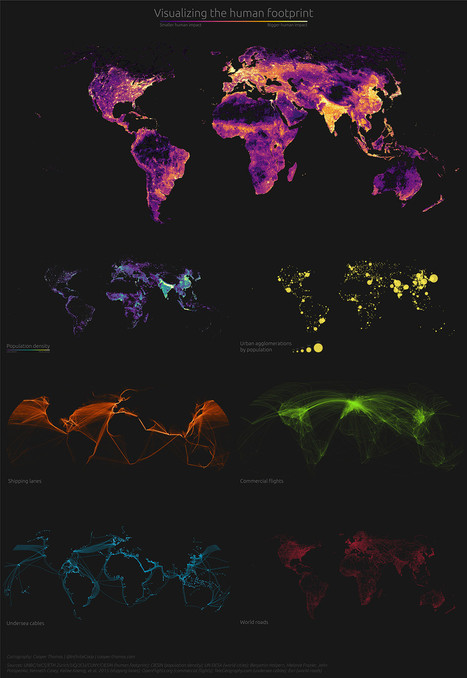
From global shipping to undersea cables and population density, these maps highlight our impact on the planet.
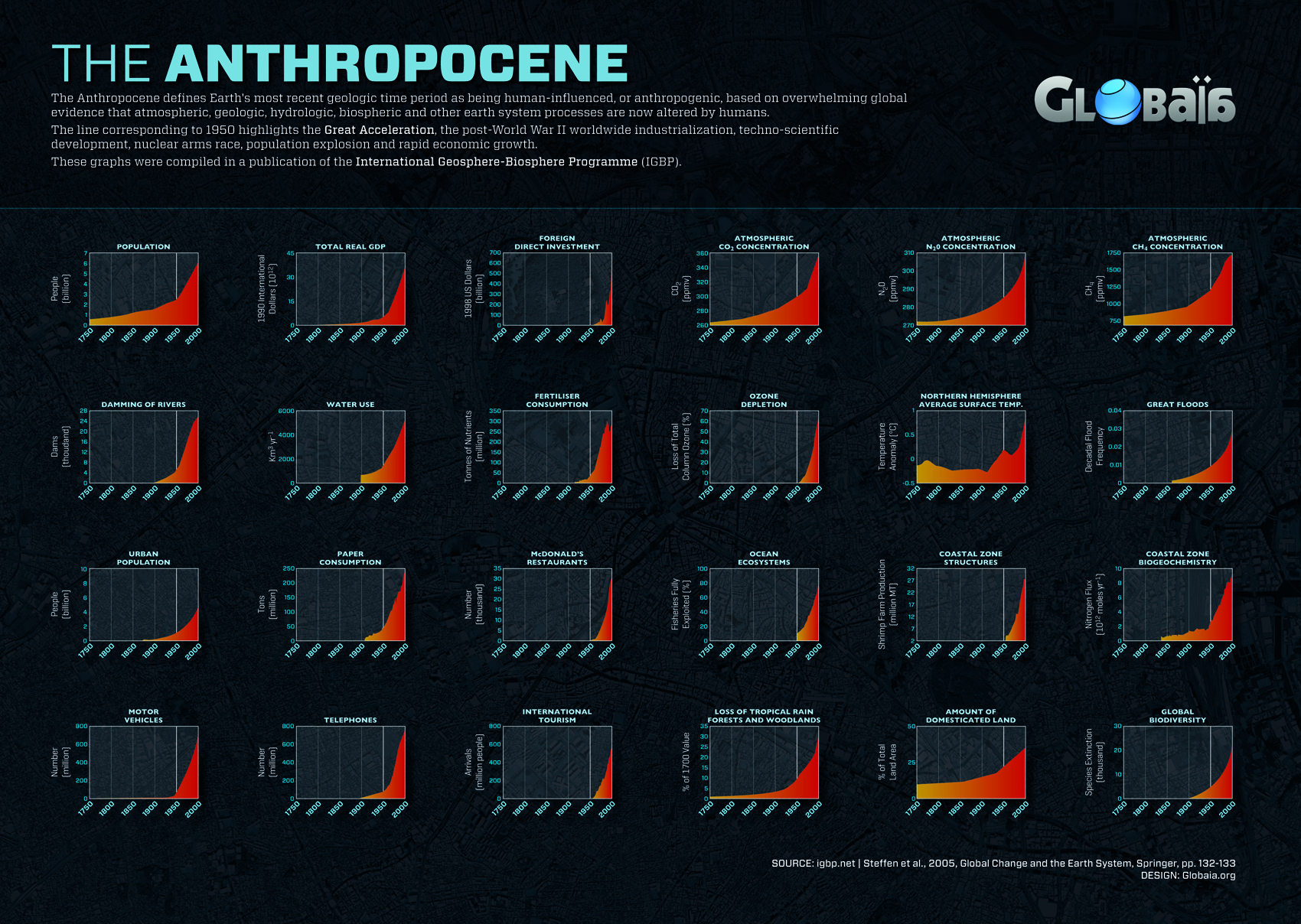
In a short amount of time, humans have changed the face of planet Earth. Our impact has been so profound, in fact, that scientists have declared the dawn of the Anthropocene epoch, or the age of human influence. Today’s ambitious graphic comes to us from Reldresal, and it looks at this human footprint from a number of different angles. Here are some of the ones we found most interesting.
POPULATION DENSITY
While there are humans present in nearly every part of the world, the overall distribution of population is far from even. As the map above vividly demonstrates, humans cluster in specific places that have the right conditions to support a large population. Massive river deltas such as Ganges-Brahmaputra (Bangladesh) and the Nile (Egypt) are obvious bright spots on the map. Not surprisingly, sparsely populated countries like Australia and Canada are nearly indistinguishable as most people cluster in more habitable places.
Millions of tiny bubbles, released from cells and packaged with molecular mail, are racing through your bloodstream right now. And until recently, only a handful of researchers gave them any thought.
Stephen J. Gould is one of those scientists. For more than a decade, Gould has devoted significant time and resources to understanding the curious cellular couriers. Called exosomes, these lipid vesicles shuttle proteins and genetic information between both neighboring and distant cells. “They are just a ubiquitous fact of our biology,” the Johns Hopkins University School of Medicine professor says.
Scientists have known about exosomes for decades, but as recently as 2006, only 508, mostly obscure, papers referred to them, according to PubMed. Today, a search on the site brings more than 8,000 hits, including several high-profile publications from the past year.
That research explosion is due, in part, to Swedish scientist Jan Lötvall from the University of Gothenburg. Exosomes had long been viewed as merely tiny trash sacs tossed from cells, but Lötvall showed in 2007 that some cells use exosomes to transfer genetic material—messenger RNAs to make proteins and microRNAs to regulate the expression of genes—between each other (Nat. Cell Biol. 2007, DOI: 10.1038/ncb1596). That discovery set scientists searching for ways that exosomes might be involved in health and disease and even be used as treatments.
What if instead of daily insulin injections or wearing pumps, just getting a shot every few months could reverse Type 1 diabetes for you – or your dog? It might take ushering in healthy pancreatic cells like a Trojan horse.
The Trojan horse, in this case, would be collagen, a protein that the body already makes for building muscles, bones, skin and blood vessels. A collagen formulation mixed with pancreatic cells, developed by Purdue University researchers in collaboration with the Indiana University School of Medicine, is the first minimally invasive therapy to successfully reverse Type 1 diabetes within 24 hours and maintain insulin independence for at least 90 days, a pre-clinical animal study shows.
For diabetic pets, the next step is a pilot clinical study in dogs with naturally occurring Type 1 diabetes, which will be conducted in collaboration with Purdue's College of Veterinary Medicine.
"We plan to account for differences from mouse to human by helping dogs first. This way, the dogs can inform us on how well the treatment might work in humans," said Clarissa Hernandez Stephens, first author on the work and a graduate researcher in Purdue's Weldon School of Biomedical Engineering. Findings appear in early view for a forthcoming issue of the American Journal of Physiology -- Endocrinology and Metabolism.
"With giving my dog shots twice a day, I have to constantly be thinking about where I am and when I need to be home. It greatly affects my work and my personal life," said Jan Goetz, owner of a diabetic dog named Lexi. "Not having to give these shots would mean freedom."
Type 1 diabetes affects about one in every 100 companion animals in the U.S., including dogs and cats, and approximately 1.25 million American children and adults. David Taylor, an Indiana resident, has struggled with Type 1 diabetes for almost 50 years. "A Type 1 diabetes diagnosis was my 18th birthday present, and since that first insulin injection, managing diabetes has been my 'other' full time job," Taylor said. "Treatment methods have improved enormously over 50 years, but they still permit no time off for the patient. Receiving an injection every few months would restore the near-normal life to me that I haven't had as an adult -- and I could retire from that full-time diabetes management job."
Because diabetes in dogs happens similarly in humans, treatment has so far been largely the same: Both need their glucose to be monitored throughout the day and insulin to be administered after meals. This also means that dogs and humans could potentially benefit from the same cure: A new set of pancreatic cells to replace the clusters of cells, called islets, that aren't releasing insulin to monitor blood glucose levels.
Still, 20 years of research and clinical trials hasn't produced an effective islet transplantation therapy because multiple donors are needed, the current method of delivering islets through the portal vein of the liver is too invasive and the human immune system tends to destroy a large percentage of transplanted islets.
Purdue researchers simply changed how the islets were packaged -- first, within a solution containing collagen, and second, as an injection through the skin instead of all the way at the liver, saving patients from a nasty procedure. "Traditionally, we transplant islets in the liver of the animal and never do it under the skin, in large part because the skin doesn't have the blood flow that the liver has for transporting insulin released by islets. And there are a lot of immune cells in the skin, so chances of rejection are high," said Raghu Mirmira, professor of pediatrics and medicine and director of the Diabetes Research Center at the Indiana University School of Medicine.
In a new town called Lyseparken, being built from scratch on vacant land near Bergen, Norway, a data center will help heat surrounding businesses–part of a design that could create the world’s first energy-positive city.
As data centers use energy (globally, they used 416 terawatt-hours of electricity in 2016, more than the entire United Kingdom), one big chunk of that electricity is used to keep servers cool. In the design for the new data center at Lyseparken, instead of fans, a liquid cooling system will send extra heat to a district heating system, which connects to businesses in the area, heating each building via the floor. The liquid loses heat as it travels, so the buildings that need heat most are located closest to the data center. Eventually, the liquid is cool enough that it can loop back to the data center to cool it down–and as that happens, it heats up again to start the process over.
In Lyseparken, the data center will sit at the heart of a new business park with 600,000 square meters of office space. The businesses will each have a stake in a local power company, and will each produce and consume electricity from a mix of renewable sources including solar and thermal energy. The data center–which can handle data for businesses or government–will buy solar energy from the power company, and then sell heat back. The arrangement offers low power bills, dividends from the power company for building owners, and, for the data center and other businesses with waste heat, the opportunity to make money from that energy. The new development will also include 3,000-5,000 new houses, which will house people working in the new area. The new town will be close enough to the city of Os that people can bike there.
A team of researchers at the University of California has developed a novel kind of neural network—one that uses light instead of electricity to arrive at results. In their paper published in the journal Science, the group describes their ideas, their working device, its performance, and the types of applications they believe could be well served by such a network.
Deep learning networks are computer systems that "learn" by looking at many examples of data types and then use patterns that develop as a way to make interpretations of new data. Like all other computers, they run on electricity. In this new effort, the researchers have found a way to create a deep learning network that does not use electricity at all—instead, it uses light. They call it a diffractive deep neural network, or more succinctly, D2NN.
To build such a network, the researchers created small plastic plates printed using a 3-D printer. Each plate represented a layer of virtual neurons—and each neuron could behave like its biological counterpart by either transmitting or reflecting incoming light. In their example, they used five plates lined up face-to-face with a small space between them. When the system was operating, light from a laser was directed at the first plate and made its way through to the second, third, fourth and fifth in a way that revealed information about an object placed in front of the device. A sensor at the back read the light and interpreted what was found.
To test their idea, the researchers chose to create a physical neural network able to recognize the numerals zero through nine, and then to report what it found. In practice, the system was shown a number on a display and responded by identifying the number and then displaying it using the sensor. The system was fed 55,000 images of numbers that had been scanned. This learning phase required the use of electricity as it ran on a computer that fed the system the data. In testing their system by showing it thousands of numbers, the researchers report that it was approximately 95 percent accurate. They note that their device was a proof of concept and could prove useful as a means of developing dedicated devices for applications that require speed—such as picking faces out of a crowd of moving people.
D-Wave Systems today published a milestone study demonstrating a topological phase transition using its 2048-qubit annealing quantum computer. This complex quantum simulation of materials is a major step toward reducing the need for time-consuming and expensive physical research and development.
The paper, entitled "Observation of topological phenomena in a programmable lattice of 1,800 qubits", was published in the peer-reviewed journal Nature. This work marks an important advancement in the field and demonstrates again that the fully programmable D-Wave quantum computer can be used as an accurate simulator of quantum systems at a large scale. The methods used in this work could have broad implications in the development of novel materials, realizing Richard Feynman's original vision of a quantum simulator. This new research comes on the heels of D-Wave's recent Science paper demonstrating a different type of phase transition in a quantum spin-glass simulation. The two papers together signify the flexibility and versatility of the D-Wave quantum computer in quantum simulation of materials, in addition to other tasks such as optimization and machine learning.
In the early 1970s, theoretical physicists Vadim Berezinskii, J. Michael Kosterlitz and David Thouless predicted a new state of matter characterized by nontrivial topological properties. The work was awarded the Nobel Prize in Physics in 2016. D-Wave researchers demonstrated this phenomenon by programming the D-Wave 2000Q system to form a two-dimensional frustrated lattice of artificial spins. The observed topological properties in the simulated system cannot exist without quantum effects and closely agree with theoretical predictions.
"This paper represents a breakthrough in the simulation of physical systems which are otherwise essentially impossible," said 2016 Nobel laureate Dr. J. Michael Kosterlitz. "The test reproduces most of the expected results, which is a remarkable achievement. This gives hope that future quantum simulators will be able to explore more complex and poorly understood systems so that one can trust the simulation results in quantitative detail as a model of a physical system. I look forward to seeing future applications of this simulation method."
Researchers recently discovered that the strength of the magnetic field required to elicit a particular quantum mechanical process, such as photoluminescence and the ability to control spin states with electromagnetic (EM) fields, corresponds to the temperature of the material. Based on this finding, scientists can determine a sample's temperature to a resolution of one cubic micron by measuring the field strength at which this effect occurs. Temperature sensing is integral in most industrial, electronic and chemical processes, so greater spatial resolution could benefit commercial and scientific pursuits. The team reports their findings in AIP Advances.
In diamonds, nitrogen atoms can replace carbon atoms; when this occurs next to vacancies in the crystal lattice, it produces useful quantum properties. These vacancies can have a negative or neutral charge. Negatively charged vacancy centers are also photoluminescent and produce a detectable glow when exposed to certain wavelengths of light. Researchers can use a magnetic field to manipulate the spins of the electrons in the vacancies, which alters the intensity of the photoluminescence.
A team of Russian and German researchers created a system that can measure temperatures and magnetic fields at very small resolutions. The scientists produced crystals of silicon carbide with vacancies similar to the nitrogen-vacancy centers in diamonds. Then, they exposed the silicon carbide to infrared laser light in the presence of a constant magnetic field and recorded the resulting photoluminescence.
Stronger magnetic fields make it easier for electrons in these vacancies to transfer between energy spin states. At a specific field strength, the proportion of electrons with spin 3/2 quickly changes, in a process called anticrossing. The brightness of the photoluminescence depends on the proportion of electrons in various spin states, so the researchers could gauge the strength of the magnetic field by monitoring the change in brightness.
Additionally, the luminescence abruptly changes when electrons in these vacancies undergo cross-relaxation, a process where one excited quantum system shares energy with another system in its ground state, bringing both to an intermediate state. The strength of the field needed to induce cross-relaxation is directly tied to the temperature of the material. By varying the strength of the field, and recording when photoluminescence suddenly changed, the scientists could calculate the temperature of the region of the crystal under investigation. The team was surprised to discover that the quantum effects remained even at room temperature.
"This study allows us to create temperature and magnetic field sensors in one device," said Andrey Anisimov, of the Ioffe Physical-Technical Institute of the Russian Academy of Sciences and one of the authors of the paper. Moreover, sensors can be miniaturized to 100 nanometers, which would enable their use in the space industry, geophysical observations and even biological systems. "In contrast to diamond, silicon carbide is already an available semiconductor material, and diodes and transistors are already made from it," Anisimov said.
You know how they say, "Show me pictures or video, or it didn't happen"? Well, the days when you could trust what you see on video in real time are officially coming to an end thanks to a new kind of face tracking.
A team from Stanford, the Max Planck Institute for Informatics and the University of Erlangen-Nuremberg has produced a video demonstrating how its software, called Face2Face, in combination with a common webcam, can make any person on video appear to say anything a source actor wants them to say.
In addition to perfectly capturing the real-time talking motions of the actor and placing them seamlessly on the video subject, the software also accounts for real-time facial expressions, including distinct movements such as eyebrow raises.
To show off the system, the team used YouTube videos of U.S. President George W. Bush, Russian President Vladimir Putin and Republican presidential candidate Donald Trump. In each case, the facial masking is flawless, effectively turning the video subject into the actor's puppet.
It might be fun to mix this up with something like "Say it with Trump," but for now the software is still in the research phase. "Unfortunately, the software is currently not publicly available — it's just a research project," team member Matthias Niessner told Mashable. "However, we are thinking about commercializing it given that we are getting so many requests." We knew this kind of stuff was possible in the special effects editing room, but the ability to do it in real time — without those nagging "uncanny valley" artifacts — could change how we interpret video documentation forever.
According to the Big Bang Theory of cosmology, the Universe began roughly 13.8 billion years ago as all matter in the Universe began to expand from a single point of infinite density. Over the next few billion years, the fundamental forces of the Universe began to separate from each other and subatomic particles and atoms formed. In time, this first stars and galaxies formed, giving rise to the large-scale structure of the Universe.
However, it was only by roughly 1 billion years after the Big Bang that the Universe began to become transparent. By about 12 billion years ago, intergalactic space was filled with gas that was much less transparent than it is now, with variations from place to place. To address why this was, a team of astronomers recently used the world’s largest telescope to search for galaxies of young stars in a huge volume of space.
The study which details their findings recently appeared in The Astrophysical Journal under the title “Evidence for Large-scale Fluctuations in the Metagalactic Ionizing Background Near Redshift Six“. For the sake of their study, the team used the Subaru Telescope– the world’s largest telescope, located at the Mauna Kea Observatories in Hawaii – to examine a 500 million light-year volume of space as it existed roughly 12 billion years ago. Using this data, the team considered two possible models that could account for the variations in transparency that astronomers have been seeing during this cosmic epoch.
On the one hand, if the region contained a small number of galaxies, the team would conclude that startlight could not penetrate very far through the intergalactic gas. On the other hand, if it contained an unusually large number of galaxies, this would indicate that the region had cooled significantly over the previous several hundred million years. Prior to their observations, Beck and his team were expecting to find that it was the latter.
However, what they found was that the region contained far fewer galaxies than expected – which indicated that the opaqueness of the region was due to a lack of starlight (more about the study in a recent UCLA press release).
It took 200,000 years for our human population to reach 1 billion—and only 200 years to reach 7 billion. But growth has begun slowing, as women have fewer babies on average. When will our global population peak? And how can we minimize our impact on Earth’s resources, even as we approach 11 billion?
Erica is 23. She has a beautiful, neutral face and speaks with a synthesised voice. She has a degree of autonomy – but can’t move her hands yet. Hiroshi Ishiguro is her ‘father’ and the bad boy of Japanese robotics. Together they will redefine what it means to be human and reveal that the future is closer than we might think.
Hiroshi Ishiguro and his colleague Dylan Glas are interested in what makes a human. Erica is their latest creation – a semi-autonomous android, the product of the most funded scientific project in Japan. But these men regard themselves as artists more than scientists, and the Erica project – the result of a collaboration between Osaka and Kyoto universities and the Advanced Telecommunications Research Institute International – is a philosophical one as much as technological one.
Erica is interviewed about her hope and dreams – to be able to leave her room and to be able to move her arms and legs. She likes to chat with visitors and has one of the most advanced speech synthesis systems yet developed. Can she be regarded as being alive or as a comparable being to ourselves? Will she help us to understand ourselves and our interactions as humans better?
Erica and her creators are interviewed in the science fiction atmosphere of Ishiguro’s laboratory, and this film asks how we might form close relationships with robots in the future. Ishiguro thinks that for Japanese people especially, everything has a soul, whether human or not. If we don’t understand how human hearts, minds and personalities work, can we truly claim that humans have authenticity that machines don’t?
Ishiguro and Glas want to release Erica and her fellow robots into human society. Soon, Erica may be an essential part of our everyday life, as one of the new children of humanity.
In remote areas of the world, everyday items like electrical outlets and batteries are luxuries. Health care workers in these areas often lack electricity to power diagnostic devices, and commercial batteries may be too expensive. Today, researchers report a new type of battery -- made of paper and fueled by bacteria -- that could overcome these challenges.
The researchers will present their results today at the 256th National Meeting & Exposition of the American Chemical Society (ACS). "Paper has unique advantages as a material for biosensors," says Seokheun (Sean) Choi, Ph.D., who is presenting the work at the meeting. "It is inexpensive, disposable, flexible and has a high surface area. However, sophisticated sensors require a power supply. Commercial batteries are too wasteful and expensive, and they can't be integrated into paper substrates. The best solution is a paper-based bio-battery."
Researchers have previously developed disposable paper-based biosensors for cheap and convenient diagnosis of diseases and health conditions, as well as for detecting contaminants in the environment. Many such devices rely on color changes to report a result, but they often aren't very sensitive. To boost sensitivity, the biosensors need a power supply. Choi wanted to develop an inexpensive paper battery powered by bacteria that could be easily incorporated into these single-use devices.
So Choi and his colleagues at the State University of New York, Binghamton made a paper battery by printing thin layers of metals and other materials onto a paper surface. Then, they placed freeze-dried "exoelectrogens" on the paper. Exoelectrogens are a special type of bacteria that can transfer electrons outside of their cells. The electrons, which are generated when the bacteria make energy for themselves, pass through the cell membrane. They can then make contact with external electrodes and power the battery. To activate the battery, the researchers added water or saliva. Within a couple of minutes, the liquid revived the bacteria, which produced enough electrons to power a light-emitting diode and a calculator.
CSAIL wireless system suggests future where doctors could implant sensors to track tumors or even dispense drugs.
Investigating inside the human body often requires cutting open a patient or swallowing long tubes with built-in cameras. But what if physicians could get a better glimpse in a less expensive, invasive, and time-consuming manner?
A team from MIT’s Computer Science and Artificial Intelligence Laboratory (CSAIL) led by Professor Dina Katabi is working on doing exactly that with an “in-body GPS" system dubbed ReMix. The new method can pinpoint the location of ingestible implants inside the body using low-power wireless signals. These implants could be used as tiny tracking devices on shifting tumors to help monitor their slight movements.
In animal tests, the team demonstrated that they can track the implants with centimeter-level accuracy. The team says that, one day, similar implants could be used to deliver drugs to specific regions in the body.
ReMix was developed in collaboration with researchers from Massachusetts General Hospital (MGH). The team describes the system in a paper that's being presented at this week's Association for Computing Machinery's Special Interest Group on Data Communications (SIGCOMM) conference in Budapest, Hungary.
More than 17 years after the sequencing of the human genome (HUGO), the human proteome is still under revision. One in eight of the 22,210 coding genes listed by the Ensembl/GENCODE, RefSeq and UniProtKB reference databases are annotated differently across the three sets. Scientists have now carried out an in-depth investigation on the 2,764 genes classified as coding by one or more sets of manual curators and not coding by others. Data from large-scale genetic variation analyses suggests that most are not under protein-like purifying selection and so are unlikely to code for functional proteins. A further 1,470 genes annotated as coding in all three reference sets have characteristics that are typical of non-coding genes or pseudogenes. These potential non-coding genes also appear to be undergoing neutral evolution and have considerably less supporting transcript and protein evidence than other coding genes. The researchers believe that the three reference databases currently overestimate the number of human coding genes by at least 2000, complicating and adding noise to large-scale biomedical experiments. Determining which potential non-coding genes do not code for proteins is a difficult but vitally important task since the human reference proteome is a fundamental pillar of most basic research and supports almost all large-scale biomedical projects.
To get content containing either thought or leadership enter:
To get content containing both thought and leadership enter:
To get content containing the expression thought leadership enter:
You can enter several keywords and you can refine them whenever you want. Our suggestion engine uses more signals but entering a few keywords here will rapidly give you great content to curate.


 Your new post is loading...