If only we could keep our bodies young, healthy and energetic, even as we attain the wisdom of our years. New research at the Weizmann Institute of Science suggests this dream could be at least partly obtainable in the future. The results of this research, led by Prof. Valery Krizhanovsky and Dr. Yossi Ovadya in the Molecular Cell Biology Department, were recently published in Nature Communications.
The research began with an investigation into the way that the immune system is involved in a crucial activity: clearing away old, senescent cells that spell trouble for the body when they hang around. Senescent cells – not completely dead but suffering loss of function or irreparable damage – have been implicated in diseases of aging by promoting inflammation. The researchers used mice in which a crucial gene for this immune activity was missing. At two years (elderly, for mice), the bodies of these mice had a greater accumulation of senescent cells compared with the mice in which the gene for removing these cells was intact. The mice missing the gene suffered from chronic inflammation, and various functions in their bodies appeared to be diminished. They also looked older – and died earlier – than their normal counterparts.
Next, the researchers gave the mice a drug that inhibits the function of certain proteins that help the aging cells survive in their senescent state, to see if this would contribute to the removal of these cells from the body. The drugs were administered to mice whose aging was a result of the malfunctions the group had uncovered in the immune system as well as those suffering premature aging from a different genetic error. The treated mice responded exceptionally well to the drug: Their blood tests and activity tests showed improvement, and their tissues appeared to be much closer to those of young mice. The scientists counted senescent cells, finding many fewer of them remaining in the treated mice’s bodies; and when they looked for signs of inflammation, they found that this, too, was significantly lower. The mice treated with the drug were more active and their median lifespan rose.
The scientists intend to continue exploring ways to prompt the human body to remove its old senescent cells, particularly to find means of activating the immune system to do this job. That is, if future experimentation proves their theories correct, they could end up creating truly “anti-aging” therapies.
In April, a citizen scientist named Barbara Rae-Venter used a little-known genealogy website called GEDMatch to help investigators find a man they’d been looking for for nearly 40 years: The Golden State Killer. In the months since, law enforcement agencies across the country have flocked to the technique, arresting a flurry of more than 20 people tied to some of the most notorious cold cases of the last five decades. Far from being a forensic anomaly, genetic genealogy is quickly on its way to becoming a routine police procedure. At least one company has begun offering a full-service genetic genealogy shop to law enforcement clients. And Rae-Venter’s skills are in such high demand that she’s started teaching her secrets to some of the biggest police forces in the US, including the Federal Bureau of Investigation.
Identifying individuals from their distant genetic relatives, a technique called long-range familial searching, is a potent alternative to the types of DNA searches commonly available to cops. Those are typically limited to forensic databases, which can only identify close kin—a sibling, parent, or child—and are highly regulated. No court order is required to mine GEDMatch’s open source trove of potential leads, which, unlike forensic databases, contains genetic bits of code that can be tied to health data and other personally identifiable information.
Currently, there aren’t any laws that regulate how law enforcement employs long-range familial searching, which hobbyists and do-gooders have turned to for years to find the biological families of adoptees. But some legal experts argue its use in criminal cases raises grave privacy concerns. They expect to see a legal challenge at some point, though probably not in the next year. In the meantime, GEDMatch is becoming even more powerful, as it grows by nearly a thousand new uploads every day. And with hundreds more cases currently in the hands of full-time family-tree builders, one thing’s for sure: In 2019, genealogy is going to send a lot more people to jail.
Just like a lock can be picked, any biometric scanner can be fooled. Researchers have shown for years that the popular fingerprint sensors used to guard smartphones can be tricked sometimes, using a lifted print or a person's digitized fingerprint data. But new findings from computer scientists at New York University's Tandon School of Engineering could raise the stakes significantly.
The group has developed machine learning methods for generating fake fingerprints—called DeepMasterPrints—that not only dupe smartphone sensors, but can successfully masquerade as prints from numerous different people. Think of it as a skeleton key for fingerprint-protected devices.
The work builds on research into the concept of a "master print" that combines common fingerprint traits. In initial tests last year, NYU researchers explored master prints by manually identifying various features and characteristics that could combine to make a fingerprint that authenticates multiple people. The new work vastly expands the possibilities, though, by developing machine learning models that can churn out master prints.
"Even if a biometric system has a very low false acceptance rate for real fingerprints, they now have to be fine-tuned to take into account synthetic fingerprints, too," says Philip Bontrager, a PhD candidate at NYU who worked on the research. "Most systems haven’t been hardened against an artificial fingerprint attack, so it’s something on the algorithmic side that people designing sensors have to be aware of now."
The research capitalizes on the shortcuts that mobile devices take when scanning a user's fingerprint. The sensors are small enough that they can only "see" part of your finger at any given time. As such, they make some assumptions based on a snippet, which also means that fake fingerprints likely need to satisfy fewer variables to trick them.
The researchers trained neural networks on images of real fingerprints, so the system could begin to output a variety of realistic snippets. Then they used a technique called "evolutionary optimization" to assess what would succeed as a master print—with every characteristic as familiar and convincing as possible—and guide the output of the neural networks.
The researchers then tested their synthetic fingerprints against the popular VeriFinger matcher—used in a number of consumer and government fingerprint authentication schemes worldwide—and two other commercial matching platforms, to see how many identities their synthetic prints matched with.
Fingerprint matchers can be set with different levels of security in mind. A top secret weapons facility would want the lowest possible chance of a false positive. A regular, consumer smartphone would want to keep obvious frauds out, but not be so sensitive that it frequently rejects the actual owner. Against a moderately stringent setting, the researcher team's master prints matched with anywhere from two or three percent of the records in the different commercial platforms up to about 20 percent, depending on which prints they tested.
Overall, the master prints got 30 times more matches than the average real fingerprint—even at the highest security settings, where the master prints didn't perform particularly well. Think of a master print attack, then, like a password dictionary attack, in which hackers don't need to get it right in one shot, but instead systematically try common combinations to break into an account.
A new theory tries to explain the mysterious phenomena that exists at the center of black holes.
Black holes are among the most mysterious places in the universe; locations where the very fabric of space and time are warped so badly that not even light can escape from them. According to Einstein's theory of general relativity, at their center lies a singularity, a place where the mass of many stars is crushed into a volume with exactly zero size. However, two recent physics papers, published on Dec.10 in the journals Physical Review Letters and Physical Review D, respectively, may make scientists reconsider what we think we know about black holes. Black holes might not last forever, and it's possible that we've completely misunderstood their nature and what they look like at the center, according to the papers. [read: Stephen Hawking's Most Far-Out Ideas About Black Holes]
Astronomers and physicists have long held that the idea of a singularity simply must be wrong. If an object with mass has no size, then it has infinite density. And, as much as researchers throw around the word "infinity," infinities of that kind don't exist in nature. Instead, when you encounter an infinity in a real, physical, science situation, what it really means is that you've pushed your mathematics beyond the realm where they apply. You need new math.
It's easy to give a familiar example of this. Newton's law of gravity says that the strength of the gravitational attraction changes as one over the distance squared between two objects. So if you took a ball located far from Earth, it would experience a certain weight. Then, as you brought it closer to Earth, the weight would increase. Taking that equation to the extreme, as you brought the object near to the center of Earth, it would experience an infinite force. But it doesn't. Instead, as you bring the object close to the surface of Earth, Newton's simple law of gravity no longer applies. You have to take into account the actual distribution of Earth’s mass, and this means that you need to use different and more complex equations that predict different behavior. Similarly, while Einstein's theory of general relativity predicts that a singularity of infinite density exists at the center of black holes, this can't be true. At very small sizes, a new theory of gravity must come into play. This theory is called quantum gravity.
Designed by Danny Hillis, the Clock is designed to run for ten millennia with minimal maintenance and interruption. The Clock is powered by mechanical energy harvested from sunlight as well as the people that visit it. The primary materials used in the Clock are marine grade 316 stainless steel, titanium and dry running ceramic ball bearings. The entire mechanism will be installed in an underground facility in west Texas.
In 02011, The American Astronomy Society published a paper co-written by Danny Hillis that describes how the Clock reckons time over its 10,000-year design lifetime.
Hundreds of tiny robots have been made to work as a team, inspired by the biological principles of self-organization.
Researchers have managed to get swarms of 300 robots to self-organize without following a preset pattern. The only programming each coin-size robot received was some basic rules on how to communicate—via infrared—with its neighbors. The robots were programmed to act like cells in a tissue. Those genetic rules mimic the system responsible for so-called Turing patterns in nature, such as a leopard’s spots.
What’s new: Of course, this isn’t the first artificial robot “swarm.” However, past swarms have had their final shape predefined by researchers. “What’s fascinating is there is no master plan; these shapes emerge as a result of simple interactions between the robots,” says Sabine Hauert from Bristol University’s robotics lab, who was part of the study.
This is just a proof of concept (and the rather amorphous blobs the robots ended up in don’t look like much) but they're the first steps towards something rather exciting. “The swarms are adaptable, dynamic, and robust, so damage means robots can just re-swarm into new areas,” says James Sharpe, who led the project from Barcelona’s Institute of Science and Technology. The work was published in the journal Science Robotics today.
Potential applications: It isn’t too much of a stretch to see how thousands of tiny robots could help form shapes to explore a disaster environment after an earthquake, or perhaps sculpt themselves into a 3D structures such as a temporary bridge. However, there’s still a long way to go before we see such swarms outside the lab.
Using a technique that involves analyzing thousands of single cells, scientists have figured out a new way to capture a stem cell that underlies flatworm regeneration.
Proliferating cells known as neoblasts include pluripotent stem cells (PSCs) that sustain tissue homeostasis and regeneration of lost body parts in planarians. However, the lack of markers to prospectively identify and isolate these adult PSCs has significantly hampered their characterization. Researchers now used single-cell RNA sequencing (scRNA-seq) and single-cell transplantation to address this long-standing issue. Large-scale scRNA-seq of sorted neoblasts unveiled a novel subtype of neoblast (Nb2) characterized by high levels of PIWI-1 mRNA and protein and marked by a conserved cell-surface protein-coding gene, tetraspanin 1 ( tspan-1). tspan-1-positive cells survived sub-lethal irradiation, underwent clonal expansion to repopulate whole animals, and when purified with an anti-TSPAN-1 antibody, rescued the viability of lethally irradiated animals after single-cell transplantation. The first prospective isolation of an adult PSC bridges a conceptual dichotomy between functionally and molecularly defined neoblasts, shedding light on mechanisms governing in vivo pluripotency and a source of regeneration in animals.
The microscopic marine animal Trichoplax adhaerens may use rapid changes in cell shape to avoid being ripped apart by forces in the ocean.
Most animals rely on changes in cell shape to move tissues around during development, but these alterations are usually slow and are rare in adult animals. In a case of extreme exception described in October 2018 in PNAS, the adult marine invertebrate Trichoplax adhaerens, an organism in the shape of a smashed wad of chewing gum no bigger than a piece of lint,consistently contracts and relaxes the cells on the top of its body at speeds nearly 10 times faster than ever before observed in an animal.
Researchers discussed the publishedwork, as well as ongoing studies into the purpose of the super fast cellular contractions, in three presentations at the American Society for Cell Biology (ASCB) annual meeting in San Diego this week. It’s “astonishing” that a cell can contract so quickly and retain its functional integrity while adhering to the surrounding cells, says Alejandro Sánchez Alvarado, a biologist at the Stowers Institute for Medical Research in Kansas City, Missouri, who did not participate in the work. “That’s a remarkable way of managing force, and [studying this animal] is helping us understand how multicellularity may have arisen as a life form on this planet.”
Trichoplax adhaerens are just a millimeter or two in diameter and flatter than a piece of paper—only about 25 microns thick. This tiny blob of an animal lives in oceans and is thought to be one of the most ancient metazoans. Their bodies are made up of two layers of epithelial cells: the ciliated bottom layer faces the substrate along which they’re moving and the top layer faces open water. So-called fiber cells reside in between the epithelia. They have no muscles, nerves, organs, or extracellular matrix, yet they are capable of directed movement, coordinated secretion of digestive enzymes, and predictable behaviors.
When Stanford University’s Manu Prakash was starting his lab about eight years ago, he wanted to be able to connect the behavior of an animal’s cells with that of the entire organism. Trichoplax fit the bill, thanks to its limited number of cell types and small size that allowed the researchers to view all the cells in a living adult animal at once. Over the years, Prakash’s group has built tracking microscopes to follow the animals as they lumber along glass dishes in seawater. When they recently used a fluorescent dye to visualize the cell membranes, they saw that cells in the top layer of epithelium contracted their surfaces more than 50 percent over the span of a single second—an observation that Prakash describes as “a huge surprise.”
Canadian researchers have discovered a new kind of organism that's so different from other living things that it doesn't fit into the plant kingdom, the animal kingdom, or any other kingdom used to classify known organisms. Two species of the microscopic organisms, called hemimastigotes, were found in dirt collected on a whim during a hike in Nova Scotia by Dalhousie University graduate student Yana Eglit.
A genetic analysis shows they're more different from other organisms than animals and fungi (which are in different kingdoms) are from each other, representing a completely new part of the tree of life, Eglit and her colleagues report in Nature.,
"They represent a major branch that we didn't know we were missing," said Dalhousie biology professor Alastair Simpson, Eglit's supervisor and co-author of the new study. "There's nothing we know that's closely related to them." In fact, he estimates you'd have to go back a billion years — about 500 million years before the first animals arose — before you could find a common ancestor of hemimastigotes and any other known living things.
The hemimastigotes analyzed by the Dalhousie team were found by Eglit during a spring hike with some other students along the Bluff Wilderness Trail outside Halifax a couple of years ago. She often has empty sample vials in her pockets or bags, and scooped a few tablespoons of dirt into one of them from the side of the trail. Back at the lab, she soaked the soil in water, which often revives microbes that have gone dormant, waiting for the next big rainstorm. Over the next few weeks, she checked on the dish through a microscope to see what might be swimming around.
Then, one day, about three weeks later, she saw something that caught her eye — something shaped like the partially opened shell of a pistachio. It had lots of hairs, called flagella, sticking out. Most known microbes with lots of flagella move them in co-ordinated waves, but not this one, which waved them in a more random fashion. "It's as if these cells never really learned that they have many flagella," Eglit said with a laugh. She had seen something with that strange motion once before, a few years ago, and recognized it as a rare hemimastigote.
Hemimastigotes were first seen and described in the 19th century. But at that time, no one could figure out how they fit into the evolutionary tree of life. Consequently, they've been "a tantalizing mystery" to microbiologists for quite a long time, Eglit said.
Two tiny Japanese rovers began exploring the surface of the big asteroid Ryugu recently — but they're not roving in the traditional sense of the term. The little robots, called MINERVA-II1A and MINERVA-II1B, touched down on Sept. 21, 2018, after separating from their Hayabusa2 mothership, which has been orbiting the 3,000-foot-wide (900 meters) Ryugu since late June 2018.
"Gravity on the surface of Ryugu is very weak, so a rover propelled by normal wheels or crawlers would float upwards as soon as it started to move," officials with the Japan Aerospace Exploration Agency (JAXA) wrote in a description of MINERVA-II1A and MINERVA-II1B.
For the first time, a woman who received a uterus from a deceased donor has successfully given birth—an important milestone for the young field of uterus transplantation, STAT reports. Researchers at the University of São Paulo in São Paulo, Brazil, transplanted the uterus of a 45-year-old woman who had died of a brain hemorrhage into the body of 32-year-old woman with a condition that prevented her from developing the organ. Once it was clear the recipient’s body was not rejecting the organ, a fertilized embryo was placed in the uterus; 36 weeks later she gave birth through a cesarean section to a 2.5-kilogram girl (above), researchers report this week in The Lancet. This is the first time a woman has given birth with a deceased donor’s uterus; some organs from live donors have figured in past births.
Natural hair color within European populations is a complex genetic trait. Previous work has established that MC1R variants are the principal genetic cause of red hair color, but with variable penetrance. Here, a group of geneticists have now extensively mapped the genes responsible for human hair color in the Caucasian British ancestry, participants in UK Biobank. MC1R only explains 73% of the SNP heritability for red hair in the UK Biobank, and in fact most individuals with two MC1R variants have blonde or light brown hair. The scientists identified several other genes contributing to red hair, the combined effect of which accounts for ~90% of the SNP heritability. Blonde hair is associated with over 200 genetic variants and the researchers find a continuum from black through dark and light brown to blonde and account for 73% of the SNP heritability of blonde hair. Many of the associated genes are involved in hair growth or texture, emphasizing the cellular connections between keratinocytes and melanocytes in the determination of hair color.
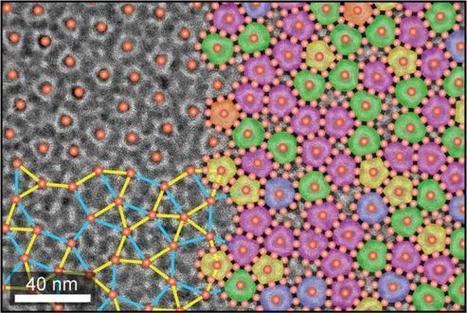
Brown University researchers have discovered a new type of quasicrystal, a class of materials whose existence was thought to be impossible until the 1980s.
The strange class of materials known as quasicrystals has a new member. In a paper published on Thursday, Dec. 20, in Science, researchers from Brown University describe a quasicrystalline superlattice that self-assembles from a single type of nanoparticle building blocks.
This is the first definitive observation of a quasicrystalline superlattice formed from a single component, the researchers say. The discovery provides new insight into how these strange crystal-like structures can emerge.
“Single-component quasicrystal lattices have been predicted mathematically and in computer simulations, but hadn’t been demonstrated before this,” said Ou Chen, an assistant professor of chemistry at Brown and the paper’s senior author. “It’s a fundamentally new type of quasicrystal, and we’ve been able to figure out the rules for making it, which will be useful in the continued study of quasicrystal structures.”
Quasicrystal materials were first discovered in the 1980s by the chemist Dan Shechtman, who in 2011 was awarded the Nobel Prize for the discovery. Unlike crystals, which consist of ordered patterns that repeat, quasicrystals are ordered but their patterns don’t repeat. Quasicrystals also have symmetries that aren’t possible in traditional crystals. Normal crystals, for example, can have three-fold symmetries that emerge from repeating triangles or four-fold symmetry from repeating cubes. Two- and six-fold symmetries are also possible. But quasicrystals can have exotic five-, 10- or 12-fold symmetries, all of which are “forbidden” in normal crystals.
The first quasicrystalline materials discovered were metal alloys, usually aluminum with one or more other metals. So far, these materials have found use as non-stick coatings for frying pans and anti-corrosive coatings for surgical equipment. But there’s been much interest in making new types of quasicrystal materials — including materials made from self-assembling nanoparticles.
For the past 13 years, NASA's New Horizons spacecraft has been bolting away from the sun at speeds in excess of 31,000 miles per hour, charting a course for the fringes of our solar system. In 2015, it made a close pass of Pluto, returning the highest resolution images of the erstwhile planet the world has ever seen. On New Year’s Eve 2018, at 9:33 pm PT, it will make history again, when it soars past Ultima Thule—a small, cold, and mysterious world, the investigation of which could yield crucial clues about the formation of our planetary system some 4.5 billion years ago.
When it does, Ultima Thule (official designation: 2014 MU69) will become the most distant—and, astronomers suspect, the most primitive—celestial body humans have ever investigated up close. But nobody, not even New Horizons' mission scientists, will be able to monitor the event in real time. When the spacecraft zips past Ultima, it will be more than 4 billion miles from Earth. The signals it beams back will take more than six hours to reach the Johns Hopkins University Applied Physics Laboratory in Laurel, Maryland, base of operations for the New Horizons mission.
But that doesn't mean you can't follow along. Here's where to tune in, and what to expect from the mission in the first few hours and days of the new year: Stream
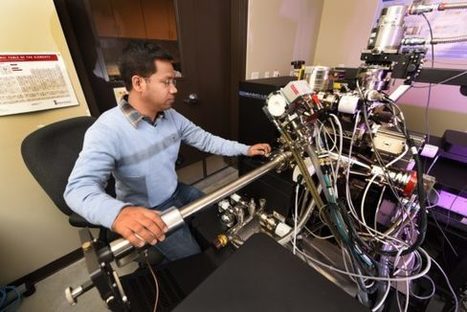
Researchers at Idaho National Laboratory have discovered how to make “superalloys” even more super, extending useful life by thousands of hours. The discovery could improve materials performance for electrical generators and nuclear reactors. The key is to heat and cool the superalloy in a specific way. That creates a microstructure within the material that can withstand high heat more than six times longer than an untreated counterpart.
“We came up with a way to make a superalloy that is much more resistant to heat-related failures. This could be useful in electricity generators and elsewhere,” said Subhashish Meher, an INL materials scientist. He was lead author of a new Science Advances paper describing the research.
Alloys are combinations of two or more metallic elements. Superalloys are exceptionally strong and offer other significantly improved characteristics due to the addition of trace amounts of cobalt, ruthenium, rhenium or other elements to a base metal. Understanding how to build an improved superalloy is important for making the metallic mixture better for a particular purpose.
Scientists have been studying nickel-based superalloys. Since these superalloys can withstand high heat and extreme mechanical forces, they are useful for electricity-generating turbines and high-temperature nuclear reactor components. Previous research had shown that performance can be improved if the material structure of the superalloy repeats in some way from very small sizes to very large, like a box within a box within a box.
This is called a hierarchical microstructure. In a superalloy, it consists of a metallic matrix with precipitates, regions where the composition of the mixture differs from the rest of the metal. Embedded within the precipitates are still finer-scale particles that are the same composition as the matrix outside the precipitates – conceptually like nested boxes.
Scientists in China have reported a major breakthrough in the quest for nuclear fusion technology, which would harness power through the same processes that occur within stars. At the Experimental Advanced Superconducting Tokamak (EAST) reactor in Hefei, China, researchers managed to heat hydrogen within the 'artificial sun' to a temperature of more than 100 million degrees Celsius, or 212 million degrees Fahrenheit, at which point it becomes plasma. The temperatures inside EAST are actually about seven times hotter than the center of the sun, where the added pressure from gravity allows for fusion to occur.
On Earth, extreme temperatures are necessary to produce nuclear fusion, which occurs when two nuclei come together to form a heavier nucleus. The fusion process releases vast amounts of heat and energy, the results of which we can see when we look up at the Sun, or any star in the night sky. The opposite of fusion is nuclear fission, which occurs when the nuclei of atoms split in a chain reaction. This process also releases extraordinary amounts of energy, and it's currently used in nuclear weapons and power plants worldwide. However, nuclear fission leaves behind dangerous radioactive waste. Nuclear fusion is relatively clean.
That's partly why scientists worldwide have been racing for years to develop a safe and reliable way to produce the conditions necessary for nuclear fusion, which in theory could someday give the world a virtually limitless supply of clean energy. The recent success at EAST represents an important step toward that goal.
"The mindset of being genetically at risk or protected can alter how we feel, what we do, and—as this study shows—how our bodies respond."
Millions of people in the United States alone have submitted their DNA for analysis and received information that not only predicts their risk for disease but, it turns out, in some cases might also have influenced that risk.
The team, led by Alia Crum, assistant professor of psychology Stanford University, found that when people learned of a genetic propensity for either obesity or lower exercise capacity, it altered the way their bodies responded either to a meal or to exercise. The work appears in Nature Human Behavior.
“Receiving genetic information doesn’t just make you more informed,” Crum says. “What this study shows is that it can also have a physiological impact on your body in a way that actually changes your overall risk profile.”
Crum and the study’s lead author, graduate student Bradley Turnwald, say that the results don’t suggest that DNA testing is bad or good, just that when delivering information, genetic counselors or personalized genetic testing companies need to be aware that the mere knowledge of the test result could influence a person’s risk.
The rapidly warming Arctic is no stranger to loss. Climate change is gradually claiming some of its most iconic features, from melting glaciers in Greenland to shrinking sea ice in the ocean.
But some casualties may be more surprising than others.
Research suggests that small lakes and ponds across the Arctic tundra are also steadily disappearing. Hundreds, in fact, have vanished from the landscape in the last few decades alone. Some of them may have been there for hundreds of years, scientists say.
It may seem counterintuitive on a landscape where frozen ice and snow are rapidly turning into liquid water. Scientists had once speculated that climate change may actually increase the number of lakes across the tundra, as thawing permafrost—a layer of frozen soil common in the Arctic—causes water to pool on the landscape.
But surveys increasingly suggest the opposite is happening.
New research, presented last week at the fall meeting of the American Geophysical Union in Washington, D.C., found that hundreds of tundra ponds have vanished from a single corner of western Greenland over the last 50 years. Satellite imagery shows that more than 400 ponds near the town of Kangerlussuaq, out of a survey of more than 2,000, have disappeared since 1969. Others have persisted but are smaller than they once were.
A variety of factors may be at play, according to lead researcher Rebecca Finger of Dartmouth College. In part, a warming climate may be causing more water to evaporate in some regions. And, perhaps unexpectedly, thawing permafrost likely also plays a large role—just not in the way scientists once thought it might.
A gigantic fungus that lives under the ground in a Michigan forest is even larger than initially estimated and may have been around for at least 2500 years.
A huge underground fungus that is one of the largest living organisms on the planet has turned out to be both bigger and older than thought. It may have been quietly spreading through the soil of Michigan since the end of the last ice age.
James B. Anderson of the University of Toronto in Canada and his colleagues discovered the enormous Armillariagallica fungus in the late 1980s, while studying fungi that were killing red pines on a Michigan plantation. “We found one genetic individual occupying this site,” says Anderson. It spanned at least 0.37 square kilometres. At the time they estimated it was at least 1500 years old and weighed at least 100,000 kilograms.
They published their findings in 1992. At the time the fungus was a serious contender for the largest living organism, but bigger fungi have since been found. An individual of A. ostoyae in the Malheur National Forest in Oregon spans 9.6 square kilometers. Confusingly, the Michigan and the Oregon fungi are both informally called “the humongous fungus”.
For the first time, scientists have made 2-deoxyribose, the sugar that makes up the backbone of DNA, under cosmic conditions in the lab by blasting ice with radiation. The result, reported December 18 in Nature Communications, suggests that there are several ways for prebiotic chemistry to take place in space, and supports the idea that the stuff of life could have been delivered to Earth from elsewhere.
“It tells us that this process happens everywhere, at least in our galaxy,” says astrochemist Michel Nuevo of NASA’s Ames Research Center in Moffett Field, Ca. Nuevo and his colleagues cooled ices of frozen water and methanol to about –260° Celsius inside a vacuum chamber and blasted the ice with ultraviolet light, mimicking the conditions found in interstellar clouds. Warming the irradiated ices simulated what happens when a young star is born.
After analyzing the ice’s contents, the team identified 2-deoxyribose, as well as several other kinds of sugars made in similar experiments in the past.
Experiments that had made ribose, the sugar of RNA, suggested that the sugars could be built up from reactions involving the simple molecule formaldehyde, which has been found in comets (SN Online: 10/23/14). But those reactions always lead to sugars with more oxygen molecules than deoxyribose has, Nuevo says. “The fact that we made deoxyribose points to another kind of mechanism.”
Nuevo and his colleagues also found simple deoxy sugars in meteorite samples, but not deoxyribose. That could suggest that, although deoxyribose can form in ices that predate stars, the sugar is not stable in the rocks that ultimately form planets.
Two ongoing asteroid missions might be able to help figure out why. Japan’s Hayabusa2 mission (SN Online: 6/27/18) and NASA’s OSIRIS-REx mission (SN Online: 12/10/18) will bring samples back to Earth, where scientists can search them for signs of deoxyribose and other biologically important molecules.
Organically farmed food has a bigger climate impact than conventionally farmed food, due to the greater areas of land required. This is the finding of a new international study involving Chalmers University of Technology, Sweden, published in the journal Nature.
The researchers developed a new method for assessing the climate impact from land-use, and used this, along with other methods, to compare organic and conventional food production. The results show that organic food can result in much greater emissions.
“Our study shows that organic peas, farmed in Sweden, have around a 50 percent bigger climate impact than conventionally farmed peas. For some foodstuffs, there is an even bigger difference – for example, with organic Swedish winter wheat the difference is closer to 70 percent,” says Stefan Wirsenius, an associate professor from Chalmers, and one of those responsible for the study.
The reason why organic food is so much worse for the climate is that the yields per hectare are much lower, primarily because fertilizers are not used. To produce the same amount of organic food, you therefore need a much bigger area of land.
The ground-breaking aspect of the new study is the conclusion that this difference in land usage results in organic food causing a much larger climate impact.
“The greater land-use in organic farming leads indirectly to higher carbon dioxide emissions, thanks to deforestation,” explains Stefan Wirsenius. “The world’s food production is governed by international trade, so how we farm in Sweden influences deforestation in the tropics. If we use more land for the same amount of food, we contribute indirectly to bigger deforestation elsewhere in the world.”
Even organic meat and dairy products are – from a climate point of view – worse than their conventionally produced equivalents, claims Stefan Wirsenius. “Because organic meat and milk production uses organic feeds, it also requires more land than conventional production. This means that the findings on organic wheat and peas in principle also apply to meat and milk products. We have not done any specific calculations on meat and milk, however, and have no concrete examples of this in the article,” he explains.
How do you create the largest 3-D map of the universe? It’s as easy as teaching 5,000 robots how to “dance.” DESI, the Dark Energy Spectroscopic Instrument, is an experiment that will target millions of distant galaxies by automatically swiveling fiber-optic positioners (the robots) to point at them and gather their light.
Scientists working at Berkeley Lab are assembling this array of robots and their related electronics – together representing into a series of 10 wedge-shaped petals that will be fitted together to form a circular focal plane.
The focal plane will be mounted near the top of the Mayall Telescope at Kitt Peak National Observatory near Tucson, Arizona.
To survive in the hostile underworld deep beneath Earth’s surface, organisms must be hardy enough to take on extreme pressure, blistering heat, a complete absence of sunlight, and minimal food. Now, hundreds of scientists from the Deep Carbon Observatory say their 10-year study looking for life in boreholes and underwater drill sites has revealed the deep biosphere is home to billions of microorganisms, The Guardian reports. The combined weight of all the carbon in the subterranean ecosystem, which includes many species of bacteria, archaea (single cells without nuclei), and small multicelled organisms like nematodes (above), is estimated to be 245 to 385 times heavier than that of all human beings on the surface, the researchers report this week at a meeting of the American Geophysical Union in Washington, D.C.
Parrots are famously talkative, and a blue-fronted Amazon parrot named Moises -- or at least its genome -- is telling scientists volumes about the longevity and highly developed cognitive abilities that give parrots so much in common with humans. Perhaps someday, it will also provide clues about how parrots learn to vocalize so well.
Morgan Wirthlin, a BrainHub post-doctoral fellow in Carnegie Mellon University's Computational Biology Department and first author of a report to appear in the Dec. 17, 2018 issue of the journal Current Biology, said she and her colleagues sequenced the genome of the blue-fronted Amazon and used it to perform the first comparative study of parrot genomes.
By comparing the blue-fronted Amazon with 30 other long- and short-lived birds -- including four additional parrot species -- she and colleagues at Oregon Health and Science University (OHSU), the Federal University of Rio de Janeiro and other entities identified a suite of genes previously not known to play a role in longevity that deserve further study. They also identified genes associated with longevity in fruit flies and worms.
"In many cases, this is the first time we've connected those genes to longevity in vertebrates," she said. Wirthlin, who began the study while a Ph.D. student in behavioral neuroscience at OHSU, said parrots are known to live up to 90 years in captivity -- a lifespan that would be equivalent to hundreds of years for humans. The genes associated with longevity include telomerase, responsible for DNA repair of telomeres (the ends of chromosomes), which are known to shorten with age. Changes in these DNA repair genes can potentially turn cells malignant. The researchers have found evidence that changes in the DNA repair genes of long-lived birds appear to be balanced with changes in genes that control cell proliferation and cancer.
The researchers also discovered changes in gene-regulating regions of the genome -- which seem to be parrot-specific -- that were situated near genes associated with neural development. Those same genes are also linked with cognitive abilities in humans, suggesting that both humans and parrots evolved similar methods for developing higher cognitive abilities.
"Unfortunately, we didn't find as many speech-related changes as we had all hoped," said Wirthlin, whose research is focused on the evolution of vocal behaviors, including speech. Animals that learn songs or speech are relatively rare -- parrots, hummingbirds, songbirds, whales, dolphins, seals and bats -- which makes them particularly interesting to scientists, such as Wirthlin, who hope to gain a better understanding of how humans evolved this capacity.
"If you're just analyzing genes, you hit the end of the road pretty quickly," she said. That's because learned speech behaviors are thought be more of a function of gene regulation than of changes in genes themselves. Doing comparative studies of these "non-coding" regulatory regions, she added, is difficult, but she and Andreas Pfenning, assistant professor of computational biology, are working on the computational and experimental techniques that may someday reveal more of their secrets.
To get content containing either thought or leadership enter:
To get content containing both thought and leadership enter:
To get content containing the expression thought leadership enter:
You can enter several keywords and you can refine them whenever you want. Our suggestion engine uses more signals but entering a few keywords here will rapidly give you great content to curate.


 Your new post is loading...