Your new post is loading...
Newborn stem cell banking began with the establishment of cord blood banks more than 25 years ago. Over the course of nearly three decades, there has been considerable evolution in the clinical application of stem cells isolated from newborn tissues. The industry now finds itself at an inflection point as personalized medicine and regenerative medicine continue to advance. In this review, the authors summarize their perspective on newborn stem cell banking in the context of the future potential that stem cells from perinatal tissues are likely to play in nascent applications. Specifically, they describe the relevance of newborn stem cell banking and how the cells stored can be utilized as starting material for the next generation of advanced cellular therapies and personalized medicine.
Via Krishan Maggon

|
Scooped by
Dr. Stefan Gruenwald
January 23, 2019 12:44 PM
|
Nearly one in three people in the United States will develop shingles, or herpes zoster, in their lifetime. Now, a new study published in The Journal of Infectious Diseases reveals that people with cancer are at greater risk of developing this painful condition, reports the Infectious Disease Society of America (IDSA). Shingles is caused by the varicella zoster virus, which also causes chickenpox. The large prospective study examined the risk of shingles before and after a cancer diagnosis and across a range of cancer types among more than 240,000 adults in Australia between 2006 and 2015. A cancer diagnosis of any kind was linked to a nearly 40 percent increase in risk for shingles compared with the risk of someone without cancer. What’s more, people who had a blood-related cancer diagnosis were three times more likely to develop shingles than those without the disease. The risk for shingles was 30 percent higher in those with solid organ cancers, such as cancer located in the lung, breast, prostate or other organ, compared with someone without cancer.
|
|
Rescooped by
Dr. Stefan Gruenwald
from BigData Hadoop Ecosystem
January 23, 2019 12:32 PM
|
When the tech giant helps Wikipedia, it’s also helping itself. GOOGLE IS POURING an additional $3.1 million into Wikipedia, bringing its total contribution to the free encyclopedia over the past decade to more than $7.5 million, the company announced at the World Economic ForumTuesday. A little over a third of those funds will go toward sustaining current efforts at the Wikimedia Foundation, the nonprofit that runs Wikipedia, and the remaining $2 million will focus on long-term viability through the organization’s endowment. Google will also begin allowing Wikipedia editors to use several of its machine learning tools for free, the tech giant said. What's more, Wikimedia and Google will soon broaden Project Tiger, a joint initiative they launched in 2017 to increase the number of Wikipedia articles written in underrepresented languages in India, and to include 10 new languages in a handful of countries and regions. It will now be called GLOW, Growing Local Language Content on Wikipedia. It’s certainly positive that Google is investing more in Wikipedia, one of the most popular and generally trustworthy online resources in the world. But the decision isn’t altruistic: Supporting Wikipedia is also a shrewd business decision that will likely benefit Google for years to come. Like other tech companies, including Amazon, Apple, and Facebook, Google already uses Wikipedia content in a number of its own products. When you search Google for “Paris,” a “knowledge panel” of information about the city will appear, some of which is sourced from Wikipedia. The company also has used Wikipedia articles to train machine learning algorithms, as well as fight misinformation on YouTube.
Via Charles Gerth
|
|
Scooped by
Dr. Stefan Gruenwald
January 23, 2019 10:45 AM
|
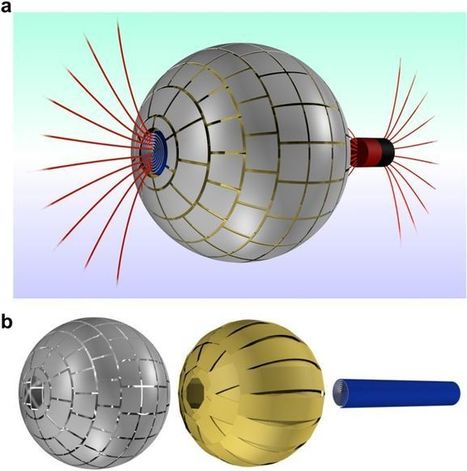
Wormholes are fascinating cosmological objects that can connect two distant regions of the universe. Because of their intriguing nature, constructing a wormhole in a lab seems a formidable task. A theoretical proposal by Greenleaf et al. presented a strategy to build a wormhole for electromagnetic waves. Based on metamaterials, it could allow electromagnetic wave propagation between two points in space through an invisible tunnel. However, an actual realization has not been possible until now. Scientists have now indeed succeeded to construct and experimentally demonstrate a magnetostatic wormhole. Using magnetic metamaterials and metasurfaces, their wormhole transfers the magnetic field from one point in space to another through a path that is magnetically undetectable. They experimentally show that the magnetic field from a source at one end of the wormhole appears at the other end as an isolated magnetic monopolar field, creating the illusion of a magnetic field propagating through a tunnel outside the 3D space. Practical applications of the results can be envisaged, including medical techniques based on magnetism.
|
|
Scooped by
Dr. Stefan Gruenwald
January 23, 2019 10:36 AM
|
Compensating for a fundamental flaw in photosynthesis boosts biomass in tobacco by up to 40 per cent – next up are food crops Inttelligent design has triumphed where evolution has mostly failed. Biologists have boosted the biomass of tobacco by around 40 per cent by compensating for a fundamental flaw in photosynthesis. The team is now working trying to introduce the same changes into food crops, starting with cowpeas and soybeans. “The funding agencies are really keen on getting this technology into the hands of the world’s poorest,” says team member Amanda Cavanagh at the University of Illinois in Urbana. The key ingredients of life are molecules made of chains of carbon atoms. Plants assemble these chains from carbon atoms taken from the carbon dioxide molecules in the air. Evolution’s greatest mistakes But the enzyme that grabs hold of CO2 and adds it to a carbon chain often grabs hold of an oxygen molecule by mistake. This generates toxic molecules that plants have to expend energy to mop up. This fundamental flaw has been described as one of evolution’s greatest mistakes. To be fair, it wasn’t a huge issue when photosynthesis first evolved, because there was little oxygen around. But as oxygen levels rose and CO2 levels declined over the aeons, it became a huge problem for plants. The grabbing of oxygen by mistake – called photorespiration – now happens so often it can reduce the efficiency of photosynthesis by as much as 50 per cent. A few plants have evolved a solution: they concentrate CO2 inside them to reduce the odds of oxygen being grabbed by mistake. But most of the plants we eat, including almost all vegetables and fruits, and key crops such as wheat, rice and soybeans, can’t do this. Biologists have been trying to find a fix for decades. Based on this work, Cavanagh and colleagues designed three alternative pathways for dealing with the toxic byproducts of photorespiration. “What we tried to do was to reroute the entire process,” she says. They genetically engineered these pathways into tobacco, chosen because it’s an easy plant to modify and has a short life cycle. In field tests over two seasons, the biomass of the best performing plants was boosted by more than 40 per cent. In 2016, another team boosted tobacco biomass by around 15 per cent by improving plants’ ability to cope with changing light levels. “The hope is that we can stack up these traits and get additive gains,” says Cavanagh.
|
|
Scooped by
Dr. Stefan Gruenwald
January 22, 2019 5:47 PM
|
A team of scientists provides the first experimental and theoretical proof that it is possible to form strong, stable attractions between some of the heavier elements in the periodic table—such as arsenic or even antimony. Because hydrogen is not involved in creating the bond between these elements, these new materials should be resistant to water and humidity.
Imagine a waterproof computer. It's not going to happen tomorrow, but it may no longer be a pipedream since a McGill-led international research team has shown for the first time that it is possible to form strong, stable attractions between some of the heavier elements in the periodic table. A recent article in Nature Communications provides the first experimental and theoretical proof that heavy, large atoms of an increasingly metallic nature—such as arsenic or even antimony—can be used to create new materials called cocrystals by using halogen bonds. Because hydrogen is not involved in creating the bond between these elements, these new materials should be resistant to water and humidity.
Creating co-crystals from deep in the periodic table
Much of recent research in chemistry has focused on creating new materials by manipulating the way that molecules recognize one another and come together to build more complex, self-organized structures. For example, cocrystals based on either hydrogen or halogen bonds have been extensively used by scientists in the design and manufacture of new improved pharmaceuticals, polymers with enhanced properties such as Kevlar, and more recently, materials for use in electronics. Until recently, such interactions invariably had to include at least one atom of a 'lighter' element found at the very top of the periodic table, such as hydrogen, nitrogen, oxygen, fluorine etc.
"Quite apart from the potentially practical applications of this discovery, it is a big advance in fundamental chemistry," says McGill chemistry Professor Tomislav Frišči?, one of the senior authors on the paper. "For the first time researchers have demonstrated molecular recognition events including only heavier elements located in the 4th and 5th periods. This is significantly deeper in the periodic table than has been seen until now. It is a very exciting time to be a chemist—it's as though we were explorers moving closer to the South Pole of the periodic table—and who knows what we will find there."
|
|
Scooped by
Dr. Stefan Gruenwald
January 22, 2019 5:39 PM
|
The pace of ice loss has increased four-fold since 2003 as enormous glaciers are depositing ever larger chunks of ice into the Atlantic ocean, where it melts, causing sea levels to rise. Enormous glaciers in Greenland are depositing ever larger chunks of ice into the Atlantic Ocean, where it melts. But scientists have found that the largest ice loss in the decade from 2003 actually occurred in the south-west region of the island, which is largely glacier-free. This suggests surface ice is simply melting as global temperatures rise, causing gushing rivers of meltwater to flow into the ocean and push up sea levels. South-west Greenland, not previously thought of as a source of woe for coastal cities, is set to “become a major future contributor to sea level rise”, the research states. “We knew we had one big problem with increasing rates of ice discharge by some large outlet glaciers,” said Michael Bevis, lead author of the paper and a professor of geodynamics at Ohio State University. “But now we recognize a second serious problem: increasingly, large amounts of ice mass are going to leave as meltwater, as rivers that flow into the sea.” The research provides fresh evidence of the dangers posed to vulnerable coastal places as diverse as Miami, Shanghai, Bangladesh and various Pacific islands as climate change shrinks the world’s land-based ice. “The only thing we can do is adapt and mitigate further global warming – it’s too late for there to be no effect,” Bevis said. “This is going to cause additional sea level rise. We are watching the ice sheet hit a tipping point. “We’re going to see faster and faster sea level rise for the foreseeable future. Once you hit that tipping point, the only question is: how severe does it get?” The study, published in Proceedings of the National Academy of Sciences, used data from Nasa’s gravity recovery and climate experiment (known as Grace) and GPS stations scattered across Greenland to analyze changes in ice mass.
|
|
Scooped by
Dr. Stefan Gruenwald
January 22, 2019 5:32 PM
|
By blocking out scattered light, astronomers were able to study our central black hole's powerful radio jet — which might be looking right at us. Using an array of 13 radio telescopes, astronomers from the Max Planck Institute were able to home in on Sagittarius A* (pronounced A-star), the region that houses the Milky Way’s supermassive black hole. And once they’d cleared out the noise of scattered light that surrounds it, they found that the powerful radio emission that blasts from the black hole is coming from just a tiny area, which could be aimed right at Earth. The research was published Monday in The Astrophysical Journal and, if confirmed, could shed new light on Sgr A* and its radio jets. Supermassive black holes are pretty common in our universe, sitting at the hearts of most large galaxies. Their strong gravitational fields allow them to suck in and obliterate objects that get too close to them. And while they absorb most of this celestial matter, a small fraction escapes the black hole and blasts back out into space. These emissions, known as jets, emit radio waves and travel at nearly the speed of light.
And even though we can detect some of Sgr A*’s radio emissions from Earth, studying it is easier said than done. There's a cloud of hot gas that sits between Earth and Sgr A*. And this interstellar gas scatters the jets’ light, making it hard to clearly pinpoint radio waves from the black hole. But recently, a team of researchers were able to isolate this radio emission using very long baseline interferometry — a technique that combines multiple telescopes to create a massive, extremely powerful one. Using 13 radio telescopes from around the world, they removed the effects of the hot gas to get a sharper image of the jets’ emission than ever before.
They found that it’s coming from a symmetrical source, which lines up well with the “jet” theory, since they blast from black holes in opposite directions. They also discovered that the emission is much narrower than they thought. So narrow, in fact, that it’s coming at us from just one 300 millionth of a degree — suggesting that it’s aimed almost directly at Earth.
|
|
Scooped by
Dr. Stefan Gruenwald
January 22, 2019 5:28 PM
|
Inspired by the ocean’s role as a natural carbon sink, researchers at Ulsan National Institute of Science and Technology (UNIST) and Georgia Tech have developed a new system that absorbs CO2 and produces electricity and useable hydrogen fuel. If we are going to reach the goal of keeping Earth from warming more than 1.5° C (2.7° F) this century, it's not enough to just reduce our carbon dioxide emissions – we need to actively clean it out of the atmosphere too. Inspired by the ocean's role as a natural carbon sink, researchers at Ulsan National Institute of Science and Technology (UNIST) and Georgia Tech have developed a new system that absorbs CO2 and produces electricity and useable hydrogen fuel. The new device, which the team calls a Hybrid Na-CO2 System, is basically a big liquid battery. A sodium metal anode is placed in an organic electrolyte, while the cathode is contained in an aqueous solution. The two liquids are separated by a sodium Super Ionic Conductor (NASICON) membrane.
|
|
Scooped by
Dr. Stefan Gruenwald
January 17, 2019 6:29 PM
|
In a scientific first for humankind, plants are growing on the surface of the moon, the South China Morning Post reports. Cotton, rapeseed, and potato seedlings have all sprouted inside a canister aboard China’s Chang’e-4 lunar lander, now parked on the far side of the moon. Yeast, fruit flies, and rock cress were also sent aboard Chang’e-4 as part of an experiment to investigate growth in low-gravity environments. The mission’s architects say the experiments could help lay a foundation for one day establishing a lunar base. Professor Liu Hanlong, head of the experiment, announced on Tuesday that the cotton seeds were the first to sprout, but the team did not give an exact time for that event. Liu said that in addition to cotton, rapeseed and potato seeds had sprouted and were growing well as of Saturday. Professor Xie Gengxin, the experiment’s chief designer, revealed that cotton, rapeseed, potato, arabidopsis – commonly known as rock cress – yeast and fruit flies were the six organisms chosen to go to the moon. “We have given consideration to future survival in space. Learning about these plants’ growth in a low-gravity environment would allow us to lay the foundation for our future establishment of space base,” Liu said. The container was equipped with a small but powerful control system to keep the interior at around 25 degrees Celsius (77 degrees Fahrenheit). Liu reports that the six components behaved as “producers, consumers and decomposers” in the micro-ecosystem that arrived on the moon. The plants produced oxygen and food by photosynthesis and sustained the fruit flies. The canister was fully concealed from the extremes of temperature and strong radiation on the moon. Chinese scientists designed tubes for the canister to take natural Earth light to the moon for the plants to aid photosynthesis. The yeast, acting as a decomposition agent, processed waste from the flies and the dead plants to create an additional food source for the insects. Liu explained that potatoes could be a main source food for space explorers, cotton could be used for clothing, and rapeseed could be a source of oil. Xie said the six species were chosen because they were small and could grow in a confined environment. They were also hardy enough to withstand some of the extreme conditions on the lunar surface.
|
|
Scooped by
Dr. Stefan Gruenwald
January 15, 2019 11:30 PM
|
Humans use a variety of cues to infer an object's weight, including how easily objects can be moved. For example, if we observe an object being blown down the street by the wind, we can infer that it is light. A team of scientists tested now whether New Caledonian crows make this type of inference. After training that only one type of object (either light or heavy) was rewarded when dropped into a food dispenser, birds observed pairs of novel objects (one light and one heavy) suspended from strings in front of an electric fan. The fan was either on—creating a breeze which buffeted the light, but not the heavy, object—or off, leaving both objects stationary. In subsequent test trials, birds could drop one, or both, of the novel objects into the food dispenser. Despite having no opportunity to handle these objects prior to testing, birds touched the correct object (light or heavy) first in 73% of experimental trials, and were at chance in control trials. These results suggest that birds used pre-existing knowledge about the behavior exhibited by differently weighted objects in the wind to infer their weight, using this information to guide their choices.
|
|
Scooped by
Dr. Stefan Gruenwald
January 13, 2019 2:18 AM
|
Neural networks are famously incomprehensible, so Been Kim is developing a “translator for humans.” If a doctor told that you needed surgery, you would want to know why — and you’d expect the explanation to make sense to you, even if you’d never gone to medical school. Been Kim, a research scientist at Google Brain, believes that we should expect nothing less from artificial intelligence. As a specialist in “interpretable” machine learning, she wants to build AI software that can explain itself to anyone. Since its ascendance roughly a decade ago, the neural-network technology behind artificial intelligence has transformed everything from email to drug discovery with its increasingly powerful ability to learn from and identify patterns in data. But that power has come with an uncanny caveat: The very complexity that lets modern deep-learning networks successfully teach themselves how to drive cars and spot insurance fraud also makes their inner workings nearly impossible to make sense of, even by AI experts. If a neural network is trained to identify patients at risk for conditions like liver cancer and schizophrenia — as a system called “Deep Patient” was in 2015, at Mount Sinai Hospital in New York — there’s no way to discern exactly which features in the data the network is paying attention to. That “knowledge” is smeared across many layers of artificial neurons, each with hundreds or thousands of connections. As ever more industries attempt to automate or enhance their decision-making with AI, this so-called black box problem seems less like a technological quirk than a fundamental flaw. DARPA’s “XAI” project (for “explainable AI”) is actively researching the problem, and interpretability has moved from the fringes of machine-learning research to its center. “AI is in this critical moment where humankind is trying to decide whether this technology is good for us or not,” Kim says. “If we don’t solve this problem of interpretability, I don’t think we’re going to move forward with this technology. We might just drop it.” Kim and her colleagues at Google Brain recently developed a system called “Testing with Concept Activation Vectors” (TCAV), which she describes as a “translator for humans” that allows a user to ask a black box AI how much a specific, high-level concept has played into its reasoning. For example, if a machine-learning system has been trained to identify zebras in images, a person could use TCAV to determine how much weight the system gives to the concept of “stripes” when making a decision. TCAV was originally tested on machine-learning models trained to recognize images, but it also works with models trained on text and certain kinds of data visualizations, like EEG waveforms. “It’s generic and simple — you can plug it into many different models,” Kim says.
|
|
Scooped by
Dr. Stefan Gruenwald
January 13, 2019 2:12 AM
|
Combining quantum computing with neural networks could produce AI that can make very complex decisions quickly. The human brain has amazing capabilities making it in many ways more powerful than the world’s most advanced computers. So it’s not surprising that engineers have long been trying to copy it. Nowadays, artificial neural networks inspired by the structure of the brain are used to tackle some of the most difficult problems in artificial intelligence (AI). But this approach typically involves building software so information is processed in a similar way to the brain, rather than creating hardware that mimics neurons. Scientists now hope to build the first dedicated neural network computer, using the latest “quantum” technology rather than AI software. By combining these two branches of computing, they hope to produce a breakthrough which leads to AI that operates at unprecedented speed, automatically making very complex decisions in a very short time. However, they need much more advanced AI if they want to create things like truly autonomous self-driving cars and systems for accurately managing the traffic flow of an entire city in real-time. Many attempts to build this kind of software involve writing code that mimics the way neurons in the human brain work and combining many of these artificial neurons into a network. Each neuron mimics a decision-making process by taking a number of input signals and processing them to give an output corresponding to either “yes” or “no”. Each input is weighted according to how important it is to the decision. For example, for AI that could tell you which restaurant you would most enjoy going to, the quality of the food may be more important than the location of the table that’s available, so would be given more weight in the decision-making process. These weights are adjusted in test runs to improve the performance of the network, effectively training the system to work better. This was how Google’s AlphaGo software learned the complex strategy game Go, playing against a copy of itself until it was ready to beat the human world champion by four games to one. But the performance of the AI software strongly depends on how much input data it can be trained on (in the case of AlphaGo, it was how often it played against itself). The new neuromorphic project aims to radically speed up this process and boost the amount of input data that can be processed by building neural networks that work on the principles of quantum mechanics. These networks will not be coded in software, but directly built in hardware made of superconducting electrical circuits. We expect that this will make it easier to scale them up without errors. Traditional computers store data in units known as bits, which can take one of two states, either 0 or 1. Quantum computers store data in “qubits”, which can take on many different states. Every extra qubit added to the system doubles its computing power. This means that quantum computers can process huge amounts of data in parallel (at the same time). So far, only small quantum computers that demonstrate parts of the technology have been successfully built. Motivated by the prospect of significantly greater processing power, many universities, tech giants and start-up companies are now working on designs. But none have yet reached a stage where they can outperform existing (non-quantum) computers.
|
Tumor cells leave the primary tumor and enter the circulation. Once there, they are called circulating tumor cells (CTCs). A fraction of CTCs are capable of entering distant sites and persisting as disseminated tumor cells (DTCs). An even smaller fraction of DTCs are capable of progressing toward metastases. It is known that the DTC microenvironment plays an important role in sustaining their survival, regulating their growth, and conferring resistance to therapy. But we still have much to learn about the nature of these rare cell populations to predict which will progress and what exactly should cause concern for future relapse. Although recent technological advances in our ability to detect and molecularly and functionally characterize CTCs and DTCs promise to unravel this ambiguity, the timing of dissemination and the precise source of CTCs and DTCs profiled will impact the conclusions that can be made from these endeavors. This review discusses the biology of CTCs and DTCs; the technologies to detect, isolate, and profile these cells; and the exceptions we must apply to our understanding of what role these cells play in the metastatic process. In conclusion, a greater effort has to be made to understand the unique biology of these cells which then will positively impact our ability to use these cells to predict outcome, monitor treatment efficacy, and reveal therapeutically relevant targets to deplete these populations and ultimately prevent metastasis.
Via Krishan Maggon
|
|
Scooped by
Dr. Stefan Gruenwald
January 23, 2019 12:38 PM
|
After sequencing one kākāpō's genome, the Department of Conservation's (DOC) kākāpō scientist, Dr Andrew Digby, came up with the idea to sequence every single kākāpō's genome. After a long, complicated process - which included collecting blood from every kākāpō, and a crowdfunding campaign to raise money, which was coordinated by the Genetic Rescue Foundation, a non-profit that aims to preserve biodiversity through genetic techniques - it has now been completed. In the time that lapsed, several kākāpō died, but many more were hatched; What began with a target of 125 genomes has become 172, including all 147 living birds (and several dead ones). It marks the second time globally an entire species has had its genome mapped - The first, the Spix's macaw, is believed to be extinct in the wild - and has the potential to shake up what we thought we knew about kākāpō. "We've basically got the set of all genes, of all the individuals, in the entire species," Digby said. "It's a massive resource... It's kind of limitless, in a way, what we can find out." Few bird species worldwide have attracted as much publicity and research interest as the kākāpō, but it remains frustratingly enigmatic. Some of the outstanding questions are complicated. Why, for example, are some birds more prone to particular diseases, like the dreaded "crusty bum", than others? But other questions are simple, and speak to how little we know about the ancient parrot. Chief among those questions: How long does a kākāpō live for? The answer is likely a very long time, but until now, there has been no way to know for sure. Around 32 living birds were discovered in the wild as adults - known as "founders" - meaning their age is unknown. "We know they're at least 35 or 40 years old, but are they 50? Or 100?" Digby said. "Are they about to die next year? We've got no idea." Some of those kākāpo may well be 100 years old. Perhaps the most famous kākāpo, Richard Henry, was found near Milford Sound in 1975 and died in 2010. He was the only mainland kākāpo to breed, providing precious genetic diversity to a population otherwise entirely drawn from Stewart Island.
|
|
Scooped by
Dr. Stefan Gruenwald
January 23, 2019 10:47 AM
|
Freak waves can sink ships, so scientists recreated one in a lab to see how they form. A team of researchers at the Universities of Oxford and Edinburgh have worked out how freak waves can happen. The research was led by Dr Mark McAllister and Prof Ton van den Bremer at the University of Oxford, in collaboration with Dr Sam Draycott at the University of Edinburgh. This project builds upon work previously carried out at the University of Oxford by Professors Thomas Adcock and Paul Taylor. The experiments were carried out in the FloWave Ocean Energy Research facility at the University Of Edinburgh.
|
|
Scooped by
Dr. Stefan Gruenwald
January 23, 2019 10:42 AM
|
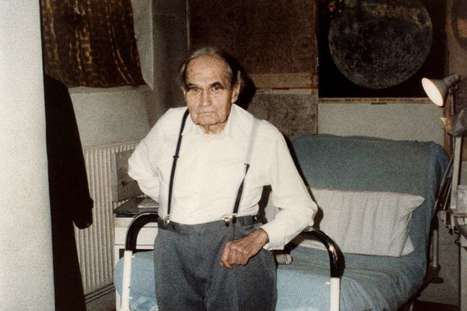
Adolf Hitler's deputy flew to Scotland in 1941 and was imprisoned for the rest of his life. But was the man in Spandau really Rudolf Hess? Now a DNA test has revealed the truth The Deputy Führer of the Third Reich Rudolf Hess was captured after a controversial flight to Scotland in 1941. Hess was sentenced to life imprisonment during the Nuremberg War Crimes Trials. He was detained in Berlin’s Spandau Prison under the official security designation ‘Spandau #7.’ Early doubts arose about the true identity of prisoner ‘Spandau #7.’ This evolved to a frequently espoused conspiracy theory that prisoner ‘Spandau #7’ was an imposter and not Rudolf Hess. After Hess’s reputed 1987 suicide, the family grave became a Neo-Nazi pilgrimage site. In 2011, the grave was abandoned and the family remains cremated. Here scientists now report the forensic DNA analysis of the only known extant DNA sample from prisoner ‘Spandau #7’ and a match to the Hess male family line, thereby refuting the Doppelgänger Theory. The prisoner in Spandau #7 was indeed Rudolf Hess.
|
|
Scooped by
Dr. Stefan Gruenwald
January 22, 2019 5:54 PM
|
Genes can jump when bacteria or viruses infect humans. Although our cells have mechanisms to counteract such events, some mobile DNA fragments become established in our cells, where they add genetic diversity. The first jumping genes in our evolution can be traced back as far as 600 million years ago, to the human ancestor Giardi lamblia, a primitive parasite. Once mammals arrived on the scene, insertions of mobile DNA into their genomes really took off. This happened between 40 and 12 million years ago. Exactly how these ancient jumping genes contributed to the development of the modern human is unclear. Scientists think that their step-wise integration coincided with the emergence of an increasingly complex brain structure, possibly giving us a crucial advantage during primate evolution. And their influence can still be felt today. Today, we know that jumping genes are important for placental development and actively regulate gene expression during early embryonic development. The jumping gene known as HERVK is thought to be a remnant of an infection by an ancient retrovirus that took up residence in the genome around 200,000 years ago. HERVK is switched on at the very early stage of human embryonic development and triggers a precise antiviral response, even though no virus is present. Scientists think that this event may provide the developing embryo with some level of viral resistance, which is, of course, a favorable trait. Jumping genes are also known to play crucial roles in brain function. One such gene contains a regulatory RNA molecule that is important for normal human brain development. If this is mutated, it causes infantile encephalopathy. While we now know that jumping genes contribute to normal body functions, they also have the potential to wreak serious havoc with our genes. Jumping genes and disease Mobile DNA can jump to another location on the same chromosome or a different chromosome each time a cell divides. If this happens in sperm or egg cells, it will be passed on to the next generation. The current estimate of such events occurring ranges from 1 in 20 to 1 in 1,000 births. These jumps can disrupt normal gene function and result in spontaneous emergence of heritable diseases, such as blood disorders, neurodegeneration, and age-related macular degeneration. Other cell populations also seem particularly prone to mobile DNA rearrangements. Several epithelial cancers, such as those lining the gastrointestinal tract, are known to harbor mobile genetic elements at diverse locations. Whether these events are at the root of the cancer or a side effect is not currently known, and the human genome is much more complex than previously thought. While jumping genes are just one part of the puzzle, scientists are beginning to appreciate the genetic contribution that microbes make to human diversity and disease.
|
|
Scooped by
Dr. Stefan Gruenwald
January 22, 2019 5:41 PM
|
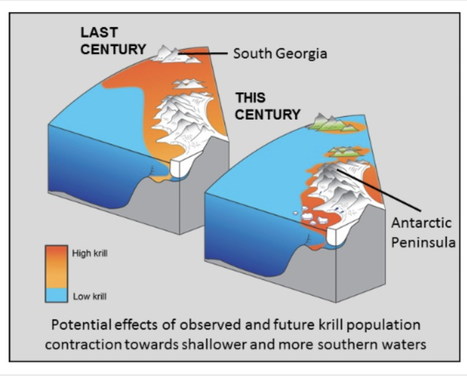
Antarctic krill are shrimp-like crustaceans which occur in enormous numbers in the cold Southern Ocean surrounding Antarctica. They have a major role in the food web and play a significant role in the transport of atmospheric carbon to the deep ocean.
Important krill habitats are under threat from climate change, and this latest research – published today in Nature Climate Change - has found that their distribution has contracted towards the Antarctic continent. This has major implications for the ecosystems that depend on krill.
An international team of scientists, led jointly by Dr Simeon Hill at the British Antarctic Survey and Dr Angus Atkinson at PML, analysed data on the amount of krill caught in nets during scientific surveys. The data covered the Scotia Sea and Antarctic Peninsula – the region where krill are most abundant. The team found that the centre of the krill distribution has shifted towards the Antarctic continent by about 440 km (4° latitude) over the last four decades.
The team took great care to account for background noise in the data. Many factors, in addition to long-term change, influence the amount of krill caught in any one net. Even after accounting for these factors the team found a consistent trend throughout the data, indicating a substantial change in the krill population over time.
|
|
Scooped by
Dr. Stefan Gruenwald
January 22, 2019 5:37 PM
|
Using Cassini observations, researchers have found rainfall on Titan's north pole. NASA’s Cassini orbiter captured the north pole on Saturn’s largest moon looking like a wet sidewalk after a bit of rain. This rainfall, which scientists take to signify a change in season on the moon, brought summer to Titan’s northern hemisphere earlier than scientists had predicted. This is the first time summer rainfall has ever been seen on the moon. But strangely, the rain came without any clouds. Summer Rain on Titan The Cassini spacecraft may be long gone, but the data it collected in its long journey continues to reveal incredible truths about Saturn and its moons. Now, researchers from the University of Idaho in Moscow have used Cassini’s observations to pinpoint rainfall on Titan’s north pole. Noticing what is described as “the wet-sidewalk effect,” the team spotted light reflecting off of Titan’s north pole in a way that indicates the presence of rainfall. But, the team has yet to find an explanation for the rainfall’s missing clouds. “The whole Titan community has been looking forward to seeing clouds and rains on Titan’s north pole, indicating the start of the northern summer,” lead study author Rajani Dhingra from the University of Idaho told the news site BGR. “But despite what the climate models had predicted, we weren’t even seeing any clouds. People called it the curious case of missing clouds.”
|
|
Scooped by
Dr. Stefan Gruenwald
January 22, 2019 5:30 PM
|
A new pancreatic cancer test could detect the disease before it progresses to later, deadly stages, new research says. Scientists have developed tests that pinpoints close to 70 percent of pancreatic cancer with less than 5 percent false-positive rate, according to a study published this month in Clinical Cancer Research. "Pancreatic cancer is an aggressive disease made even more devastating by its tendency to spread before detection, which is a serious roadblock to successful medical treatment," Brian Haab, a professor at the Van Andel Research Institute and the study's senior author, said in a press release. "We hope that our new test, when used in conjunction with the currently available test, will help doctors catch and treat pancreatic cancer in high-risk individuals before the disease has spread." Pancreatic cancer often occurs without early symptoms, making it hard to diagnose. Once doctors finally discover the disease, it's in an advanced stage making it harder to treat. In fact, the survival rate for patients with pancreatic cancer is 8.5 percent. The American Cancer Society says pancreatic cancer accounts for 3 percent of all cancers and 7 percent of all cancer deaths in the U.S. Pancreatic cancer is detected by calculating the level of sugar it produces that leaks into the bloodstream. The new test, however, measures a sugar called sTRA, which comes from a different subset of pancreatic cancers. The traditional test, which measures a sugar known as CA-19-9, only confirms a pancreatic cancer diagnosis. Developed 40 years ago, the CA-19-9 test only detects 40 percent of pancreatic cancers, and its only practical use is to track the progression of the disease. When used in combination, both the sTRA and CA-19-9 tests work effectively to locate the disease in its early stages.
|
|
Scooped by
Dr. Stefan Gruenwald
January 17, 2019 7:33 PM
|
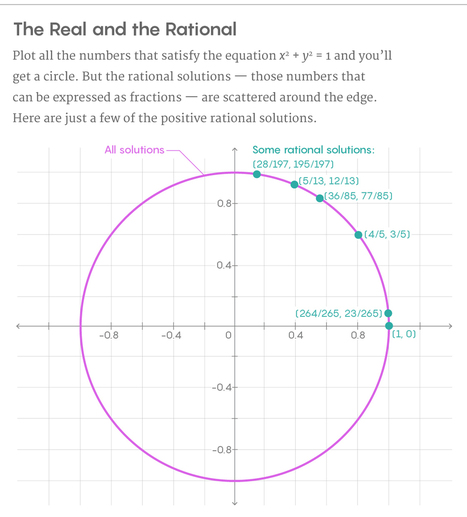
Alexander Smith’s work on the Goldfeld conjecture reveals fundamental characteristics of elliptic curves. Four researchers have recently come out with a model that upends the conventional wisdom in their field. They have used intensive computational data to suggest that for decades, if not longer, prevailing opinion about a fundamental concept has been wrong. These are not biologists, climatologists or physicists. They don’t come from a field in which empirical models get a say in determining what counts as true. Instead they are mathematicians, representatives of a discipline whose standard currency — indisputable logical proof — normally spares them the kinds of debates that consume other fields. Yet here they are, model in hand, suggesting that it might be time to re-evaluate some long-held beliefs. The model, which was posted in 2016 and is forthcoming in the Journal of the European Mathematical Society, concerns a venerable mathematical concept known as the “rank” of an algebraic equation. The rank is a measurement that tells you something about how many of the solutions to that equation are rational numbers as opposed to irrational numbers. Equations with higher ranks have larger and more complicated sets of rational solutions. Since the early 20th century mathematicians have wondered whether there is a limit to how high the rank can be. At first almost everyone thought there had to be a limit. But by the 1970s the prevailing view had shifted — most mathematicians had come to believe that rank was unbounded, meaning it should be possible to find curves with infinitely high ranks. And that’s where opinion stuck even though, in the eyes of some mathematicians, there weren’t any strong arguments in support of it. “It was very authoritarian the way people said it was unbounded. But when you looked into it, the evidence seemed very slim,” said Andrew Granville, a mathematician at the University of Montreal and University College London. Now evidence points in the opposite direction. In the two years since the model was released, it has convinced many mathematicians that the rank of a specific type of algebraic equation really is bounded. But not everyone finds the model persuasive. The lack of resolution raises the kinds of questions that don’t often attend mathematical results — what weight should you give to empirical evidence in a field where all that really counts is proof? “There is really no mathematical justification for why this model is exactly what we want,” said Jennifer Park, a mathematician at Ohio State University and a co-author of the work. “Except that experimentally, a lot of things seem to be working out.”
|
|
Scooped by
Dr. Stefan Gruenwald
January 17, 2019 12:04 PM
|
The breakthrough engineering technology, outlined in a new study published today in Nature, dramatically advances research of vascular diseases like diabetes, identifying a key pathway to potentially prevent changes to blood vessels—a major cause of death and morbidity among those with diabetes. An organoid is a three-dimensional structure grown from stem cells that mimics an organ and can be used to study aspects of that organ in a petri dish. “Being able to build human blood vessels as organoids from stem cells is a game changer,” said the study’s senior author Josef Penninger, the Canada 150 Research Chair in Functional Genetics, director of the Life Sciences Institute at UBC and founding director of the Institute for Molecular Biotechnology of the Austrian Academy of Sciences (IMBA). “Every single organ in our body is linked with the circulatory system. This could potentially allow researchers to unravel the causes and treatments for a variety of vascular diseases, from Alzheimer’s disease, cardiovascular diseases, wound healing problems, stroke, cancer and, of course, diabetes.” Diabetes affects an estimated 420 million people worldwide. Many diabetic symptoms are the result of changes in blood vessels that result in impaired blood circulation and oxygen supply of tissues. Despite its prevalence, very little is known about the vascular changes arising from diabetes. This limitation has slowed the development of much-needed treatment.
|
|
Scooped by
Dr. Stefan Gruenwald
January 15, 2019 12:53 AM
|
The destruction that a large earthquake can cause often doesn’t end when the ground stops shaking. Many produce aftershocks, smaller tremors hours or even days later caused by the ground’s reaction to the first quake. These aftershocks can sometimes cause more damage than the primary quake. And though we can usually predict the size of an aftershock, we haven’t been so great at predicting its location. Now, that could change. Researchers from Harvard University and Google’s AI division have created a neural network that can assess how likely it is that a particular location will experience an aftershock. The best part? It’s more accurate than the best existing models. They published their study Wednesday in the journal Nature.
|
|
Scooped by
Dr. Stefan Gruenwald
January 13, 2019 2:14 AM
|
A new study in the journal Science has found that the Earth’s oceans are warming far faster than experts had previously predicted, leading to a bleak outlook among climate scientists who say the rapid environmental shifts will lead to international disputes, humanitarian crises and deadly freak weather events. The New York Times, for instance, summarized researchers’ view of the findings as “catastrophic.” “It’s spilling over far beyond just fish, it’s turned into trade wars,” Rutgers professor Malin Pinsky told the newspaper. “It’s turned into diplomatic disputes. It’s led to a breakdown in international relations in some cases.” As the greenhouse effect has intensified, according to the new research, the oceans have born the brunt of global warming. Readings suggest that 2018 will be the hottest year on record for the planet’s seas, replacing 2017 and 2016 before it. The effects for weather patterns and marine life are dire, experts warn — and food shortages and displacement will leak into geopolitics long before we scorch life above the waterline as well. “If the ocean wasn’t absorbing as much heat, the surface of the land would heat up much faster than it is right now,” Pinsky told the Times. “In fact, the ocean is saving us from massive warming right now.” READ MORE: Ocean Warming Is Accelerating Faster Than Thought, New Research Finds [The New York Times]
|