 Your new post is loading...

|
Scooped by
Linda Holroyd
October 8, 2014 11:05 AM
|
That an octopus called Paul had a better success rate than Goldman Sachs when predicting World Cup results (credit to the Wall Street Journal for the headline “Octopus Beats Vampire Squid”) tells you something about the wisdom of guessing the future in public. Guessing what the world will look like in 50 years’ time, however, is pretty safe, as I won’t be here to see myself proved wrong. Or will I? If Google’s director of engineering has his way, we’ll all be around indefinitely – in the cloud at least. AI (artificial intelligence) guru Ray Kurzweil is one of a number of technologists, inventors and futurists who believe that the ability to upload our minds to the web, create virtual bodies, and thereby live forever, is within touching distance. Kurzweil invented the first flat-bed scanning and optical character recognition systems, foresaw the internet explosion and correctly predicted that a computer would beat a chess Grandmaster by the turn of the century. The 66-year-old thinks we’ll achieve digital immortality as soon as 2045, and takes 150 supplements a day as part of his efforts to get himself across the line. Whether or not his vision for humanity (“increasingly non-biological to the point where the non-biological part dominates and the biological part is not important any more”) appeals to everyone is another matter. Our trend-watching consultancy The Futures Company groups various technology-led enhancements in human capacity (of which “mind uploading” is perhaps the most extreme example) under the label “cognitive enrichment”. Developments in real-time translation (think Google Translate, without the gobbledegook) are expected to break down cultural barriers and foster greater collaboration. Microsoft has already launched a real-time translation app for Skype. Artificial intelligence is no longer a sci-fi writer’s dream but part of our everyday lives: from aviation and manufacturing to medicine and computer games. More than that, AI is on the verge of becoming self-operative and self-sustaining. Most of the major car makers say they’ll have at least semi-autonomous vehicles on the market by 2020, and researchers believe that robots will have been promoted from the production line to running their own businesses by 2050. J Walker Smith, executive chairman of The Futures Company, predicts that – as we move from screens to sensors as the chief user interface – people will become less actively engaged with technology while simultaneously getting more of what they want. He calls this the “pivot to passive” and argues that it will be as big a change as the rise of the internet itself. The driverless car is the most talked-about example of the phenomenon and the benefits it could bring. You give up control to the machine, it takes you where you want to go, and you get to do other things on the way. In Smith’s words, “consumers are spending the currency of control for a superior value proposition.” Self-driving cars are just the beginning: their equivalent is “coming to every category” – from vending machines that recognise your face and remember what you like, to headphones that know what you want to listen to before you do. Our relationship with technology looks set to be transformed once again. Cognitive enrichment is one of several universal “mega-trends” that forecasters believe will define the next 50 years. Another of them, closely connected to the preoccupations of Ray Kurzweil and his colleagues, is ageing. The world is getting older: we are living longer than ever before, and older people represent an increasing percentage of the global population. The UN expects that the number of people aged 60 or over will more than double, from 841 million globally in 2013 to more than two billion in 2050. At the current rate, the over-60s will outnumber children for the first time in 2047. This relentless demographic shift presents challenges for governments across the world, which will have to find new ways to secure the health and wealth of an ever-expanding grey army. In the commercial arena it will mean big changes for brands and marketers, with lower growth in demand for products consumed by younger households alongside ever-greater demand for products consumed by older people. As life expectancy rises and retirement dates stretch into the distance there will be particularly strong growth in products and services that keep older consumers active and productive. Medical businesses will experience a boom: from laboratory-grown organs to robotics, medical tourism and drugs to boost mental capacity. Many will be cheered by the promise of longer life, but if your dream is to retire to the country, you might be disappointed. A third mega-trend is urbanisation, and a resulting concentration of people and resources unlike anything we’ve seen before (as IBM’s Smarter Planet and Cities campaigns foresaw). The UN says that by the middle of the century the world’s urban population will be as big as the world’s total population was in 2002. As we become more urban, cities will begin to displace states and regions as the entities that matter most in the global economy (London is already doing this). McKinsey estimates that the world’s top 100 cities will account for 35% of global GDP growth between now and 2025. In this environment, national governments will find it harder than ever to exercise authority over such dominant cities and the transnational businesses that operate from them. The cities themselves will look very different, as massive population increases force the adoption of new models for transport, food production and retail. “Proximity retailing” (local convenience stores) and e-commerce giants such as Amazon and Alibaba will disintermediate the traditional “big-box” retailers. Home delivery will ultimately supplant in-store browsing as consumers’ favourite way to shop, as the remaining barriers to a seamless experience are lifted by innovations like 3D home printing, Amazon’s delivery drones and Google’s same-day Shopping Express service. Talking about 3D printing, its wider application in manufacturing will reduce demand for labour, carrying implications for future employment levels. Like shoppers, food will have smaller distances to travel as its production moves from the countryside to population centres. The New Scientist reports that “vertical farms” are “sprouting all over the world” as warehouses and high-rises are used to grow fruit and vegetables. The giant cities of the future will look to become increasingly food self-sufficient, driving rapid growth in urban agriculture. So where does all that leave us in 50 years’ time? Frankly, who knows? I’ve not even touched on other mega-trends like the rise of non-Western economies and the effects of climate change, which will also reshape the world in ways we can only imagine today. How to predict, for example, the long-term effects of the unstoppable ascent of the 21st century’s two great Eastern powers? 2028 may be the year to watch. According to the Centre for Economics and Business Research, it’s when China will overtake the US as the world’s largest economy and India leapfrogs Japan. It’s also the year that the People’s Republic will itself be overtaken, by India, as the world’s most populous country. Not even Goldman Sachs or clairvoyant cephalopods can be certain of the future (Paul called it wrong in the final of Euro 2008). But on our present trajectory some things do seem inevitable: we’ll be urban, older and so entwined with technology that it may be hard to see where we end, and it begins.
|
|
Scooped by
Linda Holroyd
October 7, 2014 1:48 PM
|
Not even a year after Coin’s launch, it has yet another competitor. Plastc, a digital wallet in a card, is announcing its arrival today — let the pre-orders begin.
There’s been a lot of ruckus in the digital payments space lately. With Apple soon to reveal its new Apple Pay digital payment method and PayPal forging its own path in 2015, it’s only natural that yet another company would want to capitalize on all the digital payments chatter.
Coin has already seen one new competitor, Stratos, which unveiled its product last week. Plastc, is a slightly trumped up version of the digital-wallet-as-physical-card that wants to provide consumers with a pathway from swipe cards to tap to pay solutions.
“There needed to be a Trojan horse to guide the way for consumers to make the transition from physical wallets to digital wallets” said Ryan Marquis, co-founder and COO of Plastc.
Plastc offers a lot of the same things Coin does. A mobile card reader to load up your cards into your digital wallet, a display screen on the card that let’s you choose which card you want to use for each transaction, and a proximity-based alert that notifies you when your card is far from your phone. But it tries to outdo Coin with the promise of more.
Plastc stores up to 20 cards on its device, where Coin only holds eight at a time. Where a Coin card battery will last up to 2 years before it needs to be replaced, Plastc’s battery only last 30 days but comes with a recharging mat. When Plastc’s cards ship next summer, they’ll carry both NFC cards and chip-and -pin technology.
The company also prides itself on its security. The mobile app requires both a four digit pin and a biometric facial scan before it gives users access. The card itself also requires a four digit pin. Plastc also has a remote wipe feature in case the card is lost.
But the card does display a credit card number like any old credit card, which is a weak point in security compared with other digital wallets. Also, as a swipe card with a magnetic stripe, it’s prone to any malware installed on a credit card point-of-sale terminal.
And compared with the security promises of digital wallets that neither require users to prominently display their account numbers on a physical object nor swipe a card at a terminal, Plastc’s offerings lack luster.
But this doesn’t deter Marquis. He sees the emergence of Apple Pay and like wallets as opening up the digital payments industry for all digital payment technologies. And he thinks it will take a while before consumers and merchants switch over to mobile-only payment methods. “You’re still going to make a digital wallet to make transactions at ATMs and gas pumps,” he said.
Maybe he’s right, but that feels like betting on the 8-track. It might have bridged reel-to-reel technology to the audio cassette, but it didn’t really have staying power on its own. With the advent of entirely digital wallets drawing nigh, it’s hard to get excited about an all-in-one card.
|
|
Scooped by
Linda Holroyd
October 3, 2014 1:08 PM
|
JP Morgan has 2nd Security Breach in 3 Months
Oct 2 2014 991Views 10Likes 10CommentsShare on LinkedInShare on FacebookShare on Google PluseShare on Twitter
Another data breach hits JP Morgan, the second in about 3 months.
According to a New York Times source, JP Morgan, a leading financial services firm with global reach, has discovered that hackers, who may have links to Italy, have gained entry in to some of their servers yet again. Currently, there is no information as to the extent of the damage.
Back in 2013, a breach took place on the company’s www.ucard.chase.com website. 465,000 accounts were compromised. While JP Morgan did notify law enforcement officials about the breach in September, they did not send out warnings to their customers until December of the same year.
JP Morgan caught some serious heat over a data breach similar to the one just discovered this week back in July of this year. In that instance, the attackers also obtained entry in to the financial firm’s servers and were able to see more than one million customer accounts. The firm’s customers were also the target of a large phishing campaign which convinced users to type in their bank login information around the same time.
Considering how close the two attacks have come to light this year, it is possible that they are linked, but that remains unclear at this time.
The July attack caught a large amount of attention, spawning an investigation by the Federal Bureau of Investigations, and seeing the financial giant put under a microscope by its regulators. In the end, JP Morgan said that no money had been taken from any customer accounts, and that the bank had taken steps to secure its servers.
This discovery comes quickly on the heels of the announcement that Albertson’s had experienced its second breach in approximately one month. You have to wonder if these companies are really taking these breaches as seriously as they should be.
|
|
Scooped by
Linda Holroyd
October 2, 2014 5:32 PM
|
PayPal’s break from EBay (EBAY) is all about buzzwords: eliminating dis-synergies, applying strategic focus, and seizing the moment. But what does that even mean?
Daniela Mielke, a former vice president for global strategy at PayPal, spoke to Bloomberg Businessweek about what she thinks her former employer should do now that it’s no longer saddled with its connection to EBay. And she didn’t resort to business jargon: “They are in a little bit of a strategic void, and the new leadership will have to decide which strategy to pursue,” says Mielke, who now works for payment-processing company Vantiv (VNTV). Here are three concrete ideas from the former PayPal exec:
1. Get new merchants to work with PayPal. Being a part of EBay brought a big advantage, allowing PayPal to become tightly integrated as the online market’s default payment method. A big question now is the shape of the agreements the companies end up structuring when they split. If PayPal is required to start sharing payment revenue with EBay, its core business won’t be as profitable. Of course, EBay is expected to soon make up only 15 percent of PayPal’s revenue, so ending the companies’ special relationship will come with potential advantages, too.
VIDEO: Did eBay Spin Off PayPal to Attract Alibaba’s Interest?
PayPal doesn’t work with the two biggest names in retail: Wal-Mart Stores (WMT) and Amazon.com (AMZN). Mielke believes it should go back to them and push hard to make a deal. An agreement won’t be a foregone conclusion, since both companies already have ways for people to pay for things on their websites and won’t necessarily feel the need to change. But perhaps enough people like using PayPal to put the company in a decent position for these negotiations.
2. Build an Apple Pay alternative. As it stands, Apple’s (AAPL) new mobile payment platform isn’t a huge threat to PayPal’s core business. But Apple is moving into areas where PayPal could stand to grow: in-person and in-app purchases. PayPal’s inability to figure these things out so far is regularly cited as evidence that its innovative drive has been hindered by its relationship with EBay.
The company apparently lost its chance to become part of Apple Pay when it cozied up to Samsung Electronics (005930:KS). So maybe it should just keep going. There will clearly be a demand for an Android alternative to Apple’s mobile wallet. Building such a thing is best done by a company that controls the hardware, says Mielke, because the security measures need the device and the software to work together. PayPal could bring its 150 million customer relationships to Samsung and have a pretty good start.
STORY: Apple Tries to Work Its Magic on Money
Taking such a partnership to its logical conclusion could lead to something the company currently says is not on the table: an acquisition. If Samsung did want to build a mobile wallet based on PayPal’s network, it could simply purchase the company and keep it from working with its competitors as well.
3. Become a bank. Mielke says that one consistently frustrating dynamic at PayPal during her time there was the company’s inability to pursue a bank license. “Right now, PayPal is working with banks that are renting their charters to them,” she says. “It’s not a scalable way to do things.” Getting a bank charter isn’t easy, though, and PayPal was precluded from seriously pursuing the idea when it was part of an e-commerce company.
If PayPal were to get a charter, it could underwrite its own credit products, hold its own accounts, and do other bank-like activities. This would make the company something much different than it is now, but that’s the point of setting out on a bold new path. PayPal has a strong reputation with younger people, who make up an attractive market to tech companies looking to edge in on financial services.
VIDEO: Can Technology Make Payments More Secure?
“They could actually position themselves as a 21st century bank for those who are sick of the traditional banks,” says Mielke. “This is a big opportunity for someone to grab.”
|
|
Scooped by
Linda Holroyd
October 2, 2014 5:10 PM
|
Investments in digital health companies this year has risen to $3 billion — and the year is only three quarters over.
By the midyear point, 2014 digital health investments had already eclipsed 2013 investments. And investments have continue to accelerate since then. The total for this year is now twice the full-year total for 2013, according to a new report from the digital health accelerator Rock Health.
The investment sizes trended down slightly during the third quarter. The average deal size for the year dropped $2.5 million per deal to $13.1 million after the third quarter deals were factored in. But the average investment size in 2014 is still 31 percent larger than the average deal in 2013, Rock Health says.
The top six business types targeted by investors remained largely the same in the third quarter, with analytics and big data outperforming all other categories, followed by digital medical devices, consumer engagement, payer administration, population health management, and telemedicine.
The most active investors in the space so far this year, according to another report out today from StartUp Health, include Founders Fund, Khosla Ventures, Sequoia Capital, and Venrock, each of which have at least six investments in the sector. Andreessen Horowitz, Mayo Clinic, Qualcomm Ventures, and SV Angel each have five investments so far this year.
Even though summer activity tends to slow deal flow, StartUp Health says, the third quarter saw 15 acquisitions by companies including Google, Practice Fusion, Cerner Corporation, and WebMD/Medscape.
Investor dollars continue to flow toward technologies that remove both friction points from healthcare access and healthcare delivery costs.
Telemedicine climbed into the top six investment areas in the third quarter. Remote doctor visits via video app has increasingly come to be seen as a way to increase patient engagement and eliminate costly ER visits.
Teladoc, for example, raised a large $50.3 million funding round during the quarter.
Aside from Teladoc, the other large funding deals in the quarter included Proteus Digital Health, which raised another $52 million, and Chunyu, which raised $50 million.
Geographically, California continues to dominate the digital health funding space, representing 37 percent of all funding so far this year. Together, New York and Massachusetts account for 20 percent of funding dollars, Rock Health says.
|
|
Scooped by
Linda Holroyd
October 2, 2014 4:56 PM
|
The online design-your-own made-to-measure (MTM) shirt category already has a lot of competition from the likes of Luxire and Modern Tailor, among others. Yet, when a new entrant appears with engineers at the helm, there’s likely going to be a difference.
Powered heavily by original technology and software, Original Stitch founders spent four years building its own photorealistic and 3D rendering technology to be able to serve up imagery for 300 fabrics that is so realistic you may just be able to count all 80 threads.
As company founder Jin Takahito explains, “It was a very difficult challenge to bring the fabrics into photorealistic content that made it very similar to the original fabric. We iterated through a lot of different technology throughout the R&D period just to get that right.”
Take the color white for example. As anyone knows, white can mean 100 different different shades, and depicting those differences to consumers online was paramount to the company. As well, the weave of a fabric is important in buying dress shirts and consumers need to be able to see as realistically as possible what they’re buying.
Translating what you see into what you get is also why 3D rendering is so important. Selecting a solid color is pretty low risk, but if you’re partial to paisley, you’ll really want to preview the whole shirt to ensure you’re going to be happy with how a fabric swatch translates into the finished product.
Software + engineering = quality and low price
Original Stitch founders were also dead-set on high quality – they were determined to offer a custom-made shirt of Burberry or Brooks Brothers quality, but at a far lower price. They knew it was possible when you’re not dealing with inventory and bricks and mortar retail presence.
Their early manufacturing explorations took them to China and Thailand. “I wasn’t happy with the quality coming out of there,” says Takahito. “If a customer spends a lot of time designing a shirt, and the shirt comes out low-quality, it’s a waste of time.” As a result, the founders chose Japan to manufacture all Original Stitch garments, a location known for high craftsmanship and attention to detail.
However, Japan’s manufacturing price point is higher. This is where software and engineering enters again to solve the quality/price challenge. To reduce time on what is usually a hand-cut process in places like China or Thailand, Original Stitch invested in German laser cutting machines. A customer’s measurements are translated into CAD data, and the laser cutting machine then cuts the fabric automatically from that data. What is usually a 15-minute hand-cut process is reduced to 30 seconds. As well, the error rate — usually 5 percent to 8 percent in a hand-cut process — is reduced to 0.001 percent.
By increasing efficiency, Original Stitch is able to produce more shirts in a given hour that is then passed along as reduced costs to consumers — $75 per shirt — while still providing high-quality fabric and craftsmanship. The company is looking at LTV (lifetime value) as their metric of success rather than raw transactions; it believes that by finding that sweet spot of value and quality, customers will prove loyal to the brand.
Early adopters = early wins
Officially launched in April, Original Stitch now has 70,000 registered users and within a 6-month period, an 18 percent re-order rate. Their conversion rates (site visits to purchase) are also quite high: According to the March 2014 Monetate Ecommerce Quarterly, average ecommerce American conversion rates are 2.7 percent. Original Stitch is experiencing an 18 percent conversion rate.
Certainly, some of this comes down to the time-investment users make selecting just the right fabric, the right collar, the right cut, and uploading measurements. Then again, it may come down to the fact that a lot of men are hardly fans of real-world shopping and would rather find a trusted source online to order from the comfort of their office desk, especially when it means getting a custom-fit and design.
|
|
Scooped by
Linda Holroyd
October 1, 2014 1:00 PM
|
Ok, before I start, let me make full disclosure: my new Tesla was delivered today. Yes I know it’s a car for the 1 percent, and that my modest green initiative of buying an electric vehicle won’t exactly save the biosphere. And indeed, I am indebted to Elon Musk, the CEO and chief product architect of Tesla Motors, for creating this piece of engineering and technology magic.
However, the process of deciding to purchase this vehicle has caused me to reflect on its founder and his place as a candidate as a truly extraordinary CEO – perhaps the greatest of the modern era.
My criteria are simple: wealth creation, industry reinvention and lasting impact on humanity. Musk is an extraordinary wealth creator. He’s the first to build a thriving car company since Chrysler in 1925. With a market cap of $30 billion, Tesla blows the doors off Chrysler. More than that, he has reinvented the automobile itself – creating new archetypical smart and green personal transportation vehicle with mind-boggling performance. According to Consumer Reports, the Tesla is not just the best electric car they have tested- but the best car they have ever tested.
Unlike many of the other contenders for top CEO, Musk is not just dedicated to wealth. He is building businesses to help solve some of the biggest challenges facing humanity. He sees shareholders as only one stakeholder in the corporate mission. In an interview with The Wall Street Journal, Musk emphasized that "the reason I created Tesla was to accelerate the transition to sustainable transport. And I made that clear to investors."
Accordingly, some investors were taken aback when Musk announced this summer that the company would make all of its patents available to any other company, unconditionally and “in good faith.” Musk wants to create a vibrant eco-sensitive transportation industry in which his company will compete. His goal is not to just make the vehicles, but also the batteries these cars will need. To help that happen, Musk committed $5 billion to a battery manufacturing plant in Nevada. He hopes to build half-a-million cars by 2020, generating high demand for those batteries. Musk wants other electrical-vehicle companies to adopt his batteries as the power source. It turns out integrity can help create business success.
His vision for eco-sensitive transportation is just one reason why Vanity Fair (ok, not exactly the most authoritative source of business acumen but still widely read) just picked him as the world’s most important living disrupter, having "staggering ambition with a do-gooder sense of purpose has made him revered among his peers.” Vanity Fair points out the total admiration of Musk by Google co-founder Larry Page. “You know, if I were to be hit by a bus today,” Page is reported to have said, “I should leave all of it to Elon Musk.”
But Tesla is only one feather in Musk’s cap. He also helped bring pioneering PayPal to life. Again, he spotted a new need: consumers wanted a secure means to pay for goods purchased online. PayPal turbocharged eBay and online commerce by giving buyers confidence their funds were safe when buying a beanie baby or camera lens from the other side of the planet.
Musk also oversees the Solar City, which makes 25 percent of the solar panels made in the US. This is just another facet of his zeal to tackle the largest crisis facing humanity today: climate change.
He also spotted a need for affordable space travel. So in 2001 Musk founded Space Exploration Technologies, better known as SpaceX, to develop and manufacture space launch vehicles. Musk is SpaceX’s chief executive and chief technology officer. The company's first vehicles were the Falcon 1 and Falcon 9 rockets and the Dragon spacecraft. On May 2012, SpaceX docked a Dragon with the International Space Station, making it the first commercial company to launch and dock a cargo vehicle to the ISS. An impressive feat for an eleven-year-old company.
Earlier this month SpaceX landed a $multi-billion contract to take astronauts back and forth to the ISS. NASA retired its famous space shuttle fleet in 2011, and ever since has had to rely on Russia's good will and its Soyuz vehicles to ferry astronauts to the International Space Station. Musk will eliminate this inappropriate dependence.
I confess my glowing portrayal of Musk may be colored by buyer’s delight. But nevertheless, consider the other candidates for CEO of the last quarter century (roughly the digital age.)
There are many CEOS who have led spectacular turnarounds or taken epic steps to make their company better. Lou Gerstner stopped IBM’s decline, and Ford’s Alan Mulally may have saved the company. Tim Cooke has taken Apple into the post Jobs era – a sizeable, some say unlikely feat. Nike’s Phil Knight, among other things reinvented Nike’s labor practices in the developing world, and in doing so set new standards for supply chain integrity and sustainability.
There are great women CEOs transforming massive and important companies, notably Pepsi’s Indra Nooyi, HP’s Meg Whitman and Xerox’s An Mulchay – all of whom have put a sluggish or failing company back on track to success. Not to mention transformational women in the entertainment and information industries like Oprah Winfrey.
I’d disqualify all of the Wall Street CEOs. Many have accumulated staggering wealth, but no one has stepped up to transform an industry in urgent need of reinvention the way that Musk is changing the transportation industry. Driven by sheer greed, the financial services industry nearly brought the global economy to its knees in 2008, and nothing has changed since.
GE’s Jack Welch is often touted as a great CEO but he wouldn’t even make my top 50 list. “Neutron Jack” as he was called was best at cost cutting rather than being an innovator or game changer. He was a good manager in the traditional sense but to me he was not a great business leader for our changing times.
The best candidates are those who created new industries that had a big impact on business, consumer behaviour and beyond. In alphabetical order:
Jeff Bezos' modest online bookstore became a juggernaut that redefined how online retailers understand their customers.
Richard Branson brought the personal touch to hundreds of service-oriented companies such as airlines and mobile phones, but his total impact is still in flux.
Warren Buffett was the most successful investor in the past century, and has amassed an astonishing amount of wealth for himself and other shareholders of Berkshire-Hathaway.
John Chambers piloted the extraordinary Cisco success story, whose technology shaped the World Wide Web. We are all in his debt.
Bill Gates created a great company and then clawed his way through decades of PC turmoil to reign supreme, perhaps to see his accomplishments eclipsed by the mobile revolution. As did Michael Dell.
Larry Page, Sergey Brin and subsequently Eric Schmidt made the web usable and then proceeded to pioneer a new species of company: A digital conglomerate.
Howard Schultz reinvented the North American coffee break and brought many fair trade practices to a brutally cost-competitive commodity industry, but he hasn’t reshaped our societal landscape.
Fred Smith is the founder, chairman, president, and CEO of FedEx. He reinvented logistics and reshaped global commerce.
Ted Turner Understood the power of delivering content to the voracious 24-hour audience.
Mark Zuckerberg quickly created amazing wealth but the jury is still out on Facebook’s enduring value and the social cost to all of us from Big Data.
Steve Jobs is still the gold standard, having not only saved Apple, transformed the computer, entertainment and communications industries but also changed the lives of hundreds of millions of people. Musk has not had that kind of impact. But his sense of purpose extends beyond a desire to innovate, create wealth and change consumer experiences. He seems driven to help solve some of humanities most vexing problems through entrepreneurship. Time will tell if he ranks with the likes of Henry Ford as the great business leader called forth by changing times.
|
|
Scooped by
Linda Holroyd
October 1, 2014 12:51 PM
|
America’s next generation of business leaders will almost all be from the information technology sector. Perhaps more interestingly, nearly all of them dropped out of college. Forbes recently published its annual billionaires list, and nearly all of the fresh faces came from dot.com IPOs. The top three are among tech’s most famous college dropouts, all from the team that built Facebook: Mark Zuckerberg ($34B, Harvard), Dustin Moskovitz ($8.1B, Harvard) and Sean Parker ($3B, never made it to college). But this handful of other successful techies who abandoned college proves that dropout happy tech billionaires may dominate the world’s elite: - Jack Dorsey ($2.7B, NYU) of Twitter and Square
- Jan Koun ($7.6B, San Jose State University) of WhatsApp
- Travis Kalanick ($3B, UCLA) of I-will-destroy-government-regulators/Uber
The other young billionaires in tech with college degrees are: Though he was not inspired by Zuckerberg and the list of dropouts, fellow billionaire Peter Thiel sparked a national firestorm when he launched his Thiel Fellowship program back in 2010, which pays 20 young entrepreneurs $100,000 each to skip college and instead jump into the startup scene. Some tech titans as Google’s Eric Schmidt, have lambasted Thiel’s message, saying it’s a terrible life lesson for the majority of aspiring technologists. Still, a number of Theil’s fellows have managed to make a mark. And the overwhelming success of so many dropouts from such a diverse set of companies is a sight to behold.
|
|
Scooped by
Linda Holroyd
October 1, 2014 12:46 PM
|
The New York Times today announced plans to shut down its NYT Opinion app because the app is “not attracting enough subscribers.”
The news, announced alongside job cuts in the Times’s newsroom, comes four months after the Opinion app first launched to significant media attention. As TechCrunch noted when the app first launched, this was the paper’s “first attempt at distilling a particular vertical section into a standalone, paid service.” The Times originally charged users $7 per month to access the full version of the Opinion app.
The Times also shared today that its NYT Now app, which offers select major news stories for a fee of $8 per month, “had not proved as popular as they had hoped.” Low interest in the paper’s premium apps apparently prompted the company to release the NYT Cooking app for free. Two weeks after it launched, the Times says, “the product had more than a million unique visitors.” This, of course, does not inspire confidence in the Times’ latest premium content initiatives.
The NYT Opinion app briefly ranked among the top #100 iOS apps in the U.S. shortly after it launched, according to app tracking site App Annie. Within two weeks the app dropped off the overall top charts. The NYT Now app, however, appears to have performed better in terms of total downloads but still ranks below competing news reading apps like Flipboard and CNN.
|
|
Scooped by
Linda Holroyd
September 29, 2014 12:20 PM
|
If you Google the phrase "faith-based businesses," the results point to companies that pursue a religious agenda. But there's another kind of faith in business: the belief that a product or service can radically remake an industry, change consumer habits, challenge economic assumptions. Proof for such innovative leaps is thin, payoffs are long in coming (if they come at all), and doubting Thomases abound. Today, pundits fret about an innovation bubble. Some overvalued companies and overhyped inventions will eventually tumble and money will be lost. Yet breakthrough progress often requires wide-eyed hope. In this special report on the World's Most Innovative Companies, there are plenty of examples to make you a believer ("I've never been more excited about the possibilities ahead of us," Nike CEO Mark Parker recently told me). Our staff has spent more than six months gathering and analyzing data. To generate our list of the 50 Most Innovative Companies--and the accompanying top 10 companies in various sectors--we assessed thousands of enterprises. From all that work, I've pulled out 12 rising trends, which follow here. Risk of failure and collapse are always with us. But the culture of innovation across the globe is more robust than ever. We think that's worth celebrating. - EXCEPTIONAL IS EXPECTEDThe No. 1 company on our list, Google, did not land there for the range of its activities--despite the 29 achievements we list. In fact, today's smartest businesses tend to laser-focus on just a few goals; broad ambition can distract from the nitty-gritty required to turn goals into reality. Yet from Google Fiber to Google Glass to investing in new health technologies, Google executes at a high level repeatedly. That's why it tops the list.
- INNOVATION IS EPISODICOnly a handful of companies on our list repeat year after year. That's not because companies suddenly lose their edge; it's because innovation ebbs and flows. As editor-at-large Jon Gertner explains in his eye-opening guide to breakthrough change at Philips (No. 50), development of LED lighting has been under way there for 50 years--but a specific 11-month deadline provided the essential innovative exclamation point.
- MAKING MONEY MATTERSGreat ideas are captivating, but great businesses are self-sustaining. Dropbox (No. 4) and Airbnb (No. 6) are darlings of the venture set, but they also charge real customers real money for a product with real value. Unlike the many web-based companies launched pre-2008 whose business models rely on advertising for revenue (Facebook, Twitter, et al.), these enterprises are transaction based--and are reaping the rewards.
- SUSTAINABILITY HAS FOUND A NEW GEARRemember when operating a "green" business was either a gimmick or a promise (or both)? No more. Today, energy efficiency, alternative fuels, and recycling are core advantages for successful enterprises. Brazil's Braskem (No. 41), a $19 billion petrochemical giant, uses sugarcane rather than oil to create in-demand plastics. Levi Strauss (No. 30) produces more than 10% of its clothing with recycled materials, on its way to 100%. Companies such as FedEx and Coca-Cola are converting their truck fleets to hybrids, with the help of XL Hybrids (No. 35). You don't have to own a Tesla (No. 20) to see the impact.
- UNLOCKING GLOBAL TALENT UNLOCKS POSSIBILITYIn Kenya, a homegrown tech center called iHub (No. 38) is unleashing Silicon Valley–like potential, signing up 10,000 members, launching 152 companies, and spawning similar efforts in Tanzania and Uganda. India's Universal Identification Authority (No. 22) combats the rampant fraud that cramps entrepreneurialism there. As an encouraging ad campaign in South Africa from Johnnie Walker (No. 31) explains: "Our future will not be written by the great strides of yesterday, but by the ones we take today."
- PASSION IS UNDERRATEDCrowdsourcing may seem like old news, but tapping into a genuine fan base is powerful. SXSW (No. 12) started as a small regional gathering and now attracts 60,000 people from around the globe. GoPro (No. 39) has moved from extreme athletes to the mainstream. GitHub (No. 26), home to the geek elite, is making collaboration the first resort for software development.
- CONFLICT ISN'T REQUIREDHow do you make meaningful change in the face of calcified institutions? Sometimes you just have to go around them. That's the path Charles Best at DonorsChoose.org (No. 9) has taken, avoiding unions and politicos by crowdsourcing direct assistance to teachers. Bloomberg Philanthropies (No. 2) uses data to answer questions other foundations aren't asking, while SHoP Architects (No. 33) manages to both create cutting-edge designs à la indie firms and get them built at the appropriately industrial scale.
- HAPPY CUSTOMERS MAKE YOU HAPPYUber made hailing a cab a pleasure, not a pain. But then it forgot what made it great; its pricing tactics have invited a backlash (which is why it's not on this year's list; see why). The mirror opposite of Uber? That's Yelp (No. 10), which continues to reward grateful users with new features. Other companies are thriving by solving customers' nagging problems, from Square's mobile payment advances (No. 28) to Warby Parker's stylish spectacles (No. 17). OTG Management has even made it possible to enjoy airport food (No. 46).
- SOFTWARE BEATS HARDWAREThe hoopla around the latest iPhone or the newest car obscures the fact that software is the key source of progress today. Our autos are rolling computers, upgraded remotely and managing more of our driving tasks. (See "Driverless Cars") Even lighting, thanks to LEDs and the folks at Philips, will be seen less and less as a physical product and more as an application.
- "MADE IN CHINA" IS A COMPLIMENTThere was a time when artisans in China were considered among the world's finest. That emphasis on quality is returning, as a new generation of fashion and luxury brands caters to the burgeoning middle and upper classes. The pernicious idea that Chinese companies aren't about innovation is a relic. Xiaomi (No. 3) is reinventing the smartphone business; Beijing Genomics Institute (No. 37) has become the world's largest DNA sequencer.
- THE BIGGEST WINNER IN THE APP ECONOMY REMAINS APPLECase in point: gaming. As mobile and social gaming have exploded, we've gone from the Doodle Jump era to the FarmVille era, from Angry Birds to Candy Crush. Yet no new company has emerged with the profitability and stability of console-based enterprises like Electronic Arts or Activision or Ubisoft. (See why the maker of Candy Crush, King, failed to make this year's list.) Meanwhile, (No. 14) Apple's 2013 App Store sales topped $10 billion.
- DREAMING BIG ISN'T FOLLY; IT'S REQUIREDPhilips scientists calculated that LED lighting could cut total worldwide electricity use by 10%--saving some $250 billion. It's the reason they've put decades into developing it. Pharma researcher Medivation (No. 16) believed it could attack cancer in a new way, and it got a breakthrough drug on the market three years faster than the norm. GE (No. 27) estimates that sensor-packed plane engines could save the airline industry $30 billion over 15 years--and that broader applications of data-driven efficiencies could increase national incomes by nearly a third. Is Tesla's vision of a national network of electric cars pie-in-the-sky? Maybe. But without the dreams, we'll never find our way to what is truly possible. As Jon Gertner observes in his Philips article, "The initial appeal of an innovation doesn't predict the problems it may one day solve."
|
|
Scooped by
Linda Holroyd
September 29, 2014 12:12 PM
|
Shyp, the app that sends someone to your home to package and ship your goods, launches in New York today.
For $5 plus the price of postage, a Shyp “hero” will arrive at your door and retrieve an item that you want to ship. The “hero” will deposit that item in one of the many vans (called “satellites”) strategically circulating through the city. Once the van is full, it will return to Shyp’s warehouse in Brooklyn, where Shyp packages and sends the items on their way.
Already the company is making money, though how much is anyone’s guess. Shyp ships everything at the lowest possible price and gets discounts for shipping such high volume. Co-founder Kevin Gibbon tells me he pays his drivers above average for their services. Because drivers and heroes are interacting with clients directly, sometimes at their homes, Gibbon says he needs highly personable staff.
The company opened up its pick-up and package service roughly a year ago in San Francisco. Now Shyp is ready to expand to other locales. Though the company advertises to consumers, that’s not necessarily it’s demographic. 70 percent of its users are businesses.
“The way we market towards consumers, is so that they’re bringing [Shyp] into their businesses,” said Gibbon.
One of the main reasons Shyp chose New York as it’s next destination is because of the strong community of makers and small businesses — people, who run a storefront in Brooklyn, let’s say, as well as a shop on Etsy, who aren’t big enough to have their own shipping infrastructure.
For a person who has to ship a 1,000 items, Shyp may not be the ideal solution, since it requires that you enter recipients’ addresses into an iPhone app. There is a sweet spot for a certain type of small business that sells enough to get a good discount through Shyp, but not enough to require its own shipping infrastructure.
Since its initial launch, Shyp has expanded its services to include dealing with international customs, a laborious process especially for the uninitiated.
Shyp is ramping up quickly after its first year. It has plans to launch in Miami in time for Art Basel — a huge sceney art show and party where, no doubt, lots of people will be looking for an easy way to ship purchases home.
|
|
Scooped by
Linda Holroyd
September 24, 2014 5:48 PM
|
What’s the opposite of innovation? I say it’s complacency, the thought that the status quo is good enough, and will always be good enough. Standing still in an age where technology and business just keeps moving faster is a recipe for extinction, a disaster for all stakeholders.
As a leader for companies large and small, consider that Data, Sensor, Software, Network and Operational Advancements will continue to automate, connect and serve people at lower costs. Understanding how and when that will happen for your company and industry is the key.
Kudos to industry giants who are taking their expertise, customers and knowledge from their established, and sometimes old-school industries to the new-new. Examples include what Ingersoll Rand, long known for its industrial products, is now impressively offering Nexia Home Intelligence featuring electronic locks and thermostats from standard manufacturers including Schlage and TRANE and managed over mobile and web interfaces. Consider also what Philips, the giant Dutch electronics company with a large footprint in healthcare, is providing for 7 million people and at-risk individuals with alert systems for falls, a medication dispensing service, and remote monitoring, and what corporate giants GE and IBM and Siemens are doing to move into the clean energy, big data and healthcare space, and what Samsung and Apple are doing to expand from mobile phones and software to healthcare monitoring and apps.
Below are ten factors to consider as you lead from the old way of doing things, to the new opportunities ahead.
Industry Considerations
1. What are the opportunities ahead for your company and your industry as a whole? How close are you to a commoditization, where price is the main factor to consider? What will you do about it?
2. What are the market and customer trends leading to this state, and what can you do to continue serving current customers in a new way? What are your customers’ suggestions and feedback?
3. What’s right about what you’ve done in the past and how can it be adapted to what you need in the future?
Technology Considerations
4. What are the hardware, software, operational, and other innovations that are transforming your industry or adjacent industries?
5. How does your company’s offerings fit with these technological innovations?
6. What are your strategies for innovating technologies internally or in collaboration with others?
7. What are your customers asking for that you can’t provide, and what opportunity are they pointing to?
Leadership Considerations
8. Are you the right person to get your company from here to there? Are they the right people above, around and under you to deliver?
9. What does complacency look like, sound like, feel like? How do you pose opportunities to shake up those that are too comfortable? How do you make it an idea they want and would lobby for?
10. What if you, your company, your technology/product, your industry can’t go from here to there? What’s an elegant plan B? What would it take to get from here to there, and is it worth it?
We hope that the questions above help you expand your perspective beyond your usual thinking, speaking and doing, and shake up the complacency inside, around and over you.
Follow our blogs and curated content at http://www.scoop.it/t/personalization or find out more about FountainBlue’s Pivot-or-Perish Approach to advising tech leaders.
|
|
Scooped by
Linda Holroyd
September 24, 2014 1:40 PM
|
Major airlines are structured in a manner that makes it impossible for them to care about your happiness. Over the past few decades, via consolidation, bankruptcies, and restructuring, the number of individual airlines has been reduced to the point where a few major players control the market. During this period of consolidation, the competitive environment has shifted so that customers themselves wield very little power and are instead at the mercy of the major carriers. The fact is that the major airlines don’t actually operate most of the flights you fly. Despite the fact that you may purchase a ticket from a major carrier with a well-known brand, in fact most short-haul, domestic flights are outsourced to regional air carriers. These carriers are paid on a per flight basis. In other words, no matter how many customers are on board, the outsourced player still gets paid the same amount of money. This basic structure presents a problem. The party that has the most knowledge of the market and the customers has no control over the process. The major carrier whose brand forms the basis of trust on which the transaction is based is simply using itself as a marketing vehicle to sell tickets. The outsourced carrier, who has knowledge of an individual routes popularity, performance, and customer dynamic, has no influence on whether service will expand, contract, or change at all. The system itself is built in a way to promote congestion, confusion, and consternation. Airports have grown from small municipal gateways into major cities in their own right. These cities host millions of travelers each day and employ thousands of workers. Very few elements of the modern day terminals are centered on the customer. The focus of the planning, construction and operation of the terminals are the airlines. They are built in a manner to make sure that the major carriers can use these facilities as hubs of their operation, linking their network of flights from around the world. Loyalty and affinity programs aren’t helping the process. Being part of a loyalty program essentially guarantees that you will return to that airline as a customer. You are saying to the airline, “I don’t care about how well you perform, I will come back no matter what”. While there are obvious benefits to loyalty programs, the programs are taking the element of competition out of the market. As a result, there is little incentive for the major carrier to perform up to customer expectations. In instances when a customer doesn’t fly on its preferred airline where they are enrolled in a loyalty program, the purchase decision is almost entirely based on price. In this instance the customer is telling the airline, “I don’t care about how well you perform, and I don’t care about your rating, I just want the cheapest ticket”. The result of this has been the emergence of low frills, budget airlines. The fact that a non-loyalty program purchase decision is mostly based upon pricing makes it clear that the airlines themselves are commodities. There is very little way of differentiation between the major carriers. While airlines may tout in flight services or increased legroom as a means to stand apart from the competition, the fact remains that the majority of the available seats are on outdated aircraft where the original intent was to squeeze on board as many seats as possible. There is only so much an airline can do to improve the flight experience on these aircraft. This unfortunate state of affairs presents a unique opportunity for start-ups in the field of aviation. Companies that can differentiate their offering and focus on customer service hold a distinct advantage as compared to the major players who have turned their service into a commodity. A few such air carriers have launched in the past several years across the US. Mostly these carriers operate out of smaller, less congested airports that are overlooked by major carriers. Should the major carriers continue to operate under their current policies, look for more of these new carriers to pop-up and for the customers to begin to return to a time when they actually enjoyed flying.
|
|
|
Scooped by
Linda Holroyd
October 8, 2014 11:00 AM
|
Change is easy. If I want to quit smoking or give up certain foods or start going to gym, I can do that. Most of us can ... at least once. What’s hard is sustaining that change. Most people who go on a diet inevitably put the weight back on (believe me; I’ve tried it multiple times).When it comes to corporate transformations, that insight is critical. So many clients I’m speaking with these days are in the midst of significant digital and commercial transformations. Most if not all large companies know they need to change if they want to keep up with customers, competitors, and disruptions in the marketplace. The fact is that it’s pretty easy to generate enthusiasm, create some new roles, and launch some experiments. Making those changes stick is the tough part. In fact, some 70% of all commercial transformations don’t work.
That’s why I was struck by a recent statistic I read in a piece my colleagues recently published (You can read it here: The 90% success recipe: Commercial transformations that beat the odds and the market). They show how companies can turn that 70% failure rate into a 90% success rate.
For me, it was about finding the Transformers in the organization, people who are not only committed to change but who can make the change happen. Hollywood may not create a movie about these Transformers, but we know that more than 60 percent of survey respondents cited in the white paper said that having committed change leaders (ie. Transformers) across the organization was “extremely important” to the transformation effort.
There are lots of great nuggets in the article, but what I really liked was the point that there are different types of transformers for different parts of the organization. For the C-suite, it’s about changing one's perspective of the drivers of success -- usually moving much more towards taking the customer's view and recognizing the blockages to becoming more agile. It requires new leadership and change-management skills, maintaining a clear message, applying it consistently to decisions, and celebrating initiatives throughout the organization. For managers, the focus needs to be on coaching, customer insight, and problem solving. Frontline reps need specific selling skills like consultative selling and using new pricing tools. It is a full court press towards faster responsiveness, better use of customer data, and much more cross-functional teamwork.
A good Transformer is a coach who can inspire and direct others in the organization. They stay "on message", encourage people to break out of perceived constraints, and learn what works from inside and outside the company. Their attention to and focus on the details of people – not just org charts or reports or KPIs, which of course are important – is what is going to make any transformation stick.
Who are the Transformers in your organization?
|
|
Scooped by
Linda Holroyd
October 7, 2014 1:46 PM
|
HangIt, a mobile platform company founded on the principle that mobile location changes everything, announced today that it has raised $6.2 million in seed funding and has established headquarters in New York City.
The HangIt platform, to be launched later this year, is an open, turnkey cloud-based service – available free to app developers and publishers – built to enable advanced location-based messaging and marketing in any app. HangIt is also developing a set of marketing products on its platform.
HangIt is a co-invention of Cornell Professor of Entrepreneurship and Innovation Jason Hogg, a former FBI agent who became the founder and CEO of payment company Revolution Money (acquired by American Express in 2009), and first name inventor of American Express’ Serve and Bluebird technology platforms. He serves as HangIt’s chairman and is currently a professor at Cornell’s Johnson Graduate School of Management. Hogg’s co-inventor is Nicholas Johns, the company’s chief architect. Johns is an intellectual property attorney who was General Counsel for Revolution Money and was instrumental in generating its I.P. portfolio.
“The HangIt platform is a blank sheet approach which makes using mobile location fast, easy and free to app developers and publishers so that they can create contextually relevant experiences for smartphone users,” Hogg said. “Our first products on the platform will disrupt the mobile advertising industry by creating new marketing channels that deliver increased relevance and revenue to app developers and publishers by reaching and redirecting customers when they are ready to buy.”
At HangIt, Hogg has curated a team that includes new Chief Executive Officer Steven Gal, a co-founder of ID Analytics (acquired by LifeLock in 2012), and currently a professor of entrepreneurship at Cornell Tech and Cornell’s Johnson School.
“The vision here is big – mobile location is a disruptive communication paradigm – for more than just ads,” explained Gal. “We have a team that collectively has built more than a dozen successful technology companies spanning network services, payments, marketing and analytics. This team, separately and collectively, has built large-scale data and analytical transaction networks and has a track record of executing on partnerships and sales to build new markets.”
HangIt, developed on a strong portfolio of intellectual property following the patent strategy pioneered at Revolution Money, was incubated for several months at Vesta Labs in Atlanta, which has invested $6.2 million in seed funding. Since its incubation, HangIt has deployed, and is currently testing, the prototype in major metropolitan areas.
“At Vesta Labs, we’ve been thrilled to work with Jason and his team at HangIt, and to be integral in its foray into disruptive applications of mobile location,” said Vesta Corp. Chief Executive Officer Doug Fieldhouse. “We are confident in HangIt’s ability to trail blaze in mobile location with its new platform.”
According to tech veteran Andrew Yang, Founder and CEO of Venture For America, who was an early evaluator of the new technology, “HangIt has the potential to be one of the most powerful ways for companies to drive consumer behavior in the real world since Google AdWords™.”
HangIt will extend the boundaries of location-based marketing and messaging when it launches its platform later this year into a rapidly expanding market. According to eMarketer, mobile marketing grew 105 percent in 2013 and mobile ad spending is on pace to reach $31.45 billion this year.
|
|
Scooped by
Linda Holroyd
October 3, 2014 11:26 AM
|
Marketing's role in any organization is critical; its leaders must be extraordinary.
Unfortunately, I don't think marketing has stepped up to the challenge of doing remarkable things. There is still a relentless focus on price, mass advertising, product and service flogging and applying traditional marketing tools introduced years ago.
Marketing leaders must take responsibility for this state of affairs. If they accept how their team performs its role, they can't be surprised when lacklustre results are produced.
Parochial leaders get mediocrity.
Organizations need stand-out marketing leaders; people who will not stop until their team produces unheard-of results.
Here are eight actions marketing leaders can take if they want to stand-out:
1. Set short-term revenue goals. Focus on the next 24 months in order to make execution the priority and to avoid the "hockey stick" phenomenon where sales are supposed to miraculously show up at the end of the planning period. Set revenue targets monthly and review performance to ensure you are on track.
2. Make revenue targets bold enough that you don't know exactly how to achieve them. "I don't know" is an effective way to drive innovation and creativity. If you know how to deliver your expected revenue, there is little or no incentive to do different things. If you follow yesterday's path, nothing remarkable happens.
3. Eliminate benchmarking as a tool for your marketers to use. Copying won't step your organization up to a higher level; it simply keeps you in the competitive herd. Ask, "How can we be different?". Apply this question to every proposal you review. If it doesn't move your organization towards being a "different breed,” reject the proposal out-of-hand.
4. Stop new customer acquisition programs. Insist on seeing proposals that generate more revenue from your existing customer base. Offer any special promotions or deals to your existing customers first; reward their loyalty.
5. De-emphasize price and establish value creation as your raison d'être. Ask what value is being created for your loyal customers, not, "How can we lower our prices?". Replace the product manager position with the value creator and reward those who are prolific at providing value solutions.
6. Recruit weird people. Contrarians. People who question traditional ways of doing things. People who hate fitting in. You need a team of stand-outs to carry your mandate to be different.
7. Expand your marketing team to include the frontline; they are customer-facing and have keen insights into what customers desire. Get their ideas and implement them. And tell the rest of the organization what you are up to.
8. Develop a competitive claim that is more than just hot air. Be clear and specific that the value you deliver to your customers is distinct from your competition. Answer the killer question, "Why should I do business with you?" by declaring your "only statement" – "We are the ONLY ones who..."
Marketing leaders must step up their game. Organizations depend on it.
|
|
Scooped by
Linda Holroyd
October 2, 2014 5:16 PM
|
StoreDot, a company that uses bio-organic technology to make ultrafast charging batteries, has just raised $42 million in new funding.
StoreDot has discovered self-assembling nanodots from organic materials that can be used to make a new kind of batteries. The company first showed off its prototype last April, and will now use the new funding to further refine and commercialize its battery technology, beef up its teams, and begin developing new products in its new research facility in Herzliya, Israel.
StoreDot’s technology could also help improve current smartphone and TV display technologies, flash memory, bio-LEDs, bio-lasers, drug delivery, food security, and bio labeling, among other things.
The new funding comes from several investors, including $10 million from Roman Abramovich’s private asset management company, Millhouse Capital.
StoreDot was founded in 2012 by Gil Rosenman, Simon Litsyn, and Doron Myersdorf, and is based in Tel Aviv, Israel. The company previously raised $6 million from Singulariteam and Genesis Angels.
|
|
Scooped by
Linda Holroyd
October 2, 2014 5:02 PM
|
While cultural and political leaders in France may be anxious about the arrival of Netflix, it appears French consumers are willing to give the streaming service a look.
And that may have led to a critical new partnership.
Orange, France’s largest telecom company, has said it will begin offering Netflix through its set-top boxes starting in November. In an interview with Le Monde, Orange chief executive Stephane Richard said that negotiations “were tough but have come to a close.”
Earlier this year, Richard had said Orange would not carry Netflix because the company did not want to be a “Trojan horse” for the U.S.-based video streaming service.
Telecom companies and French officials were upset by Netflix’s decision to put its headquarters in Amsterdam where it could avoid strict rules about how much French-language content it must carry and bypass various taxes.
So what changed? Richard didn’t say in the interview. But when Netflix launched on Sept. 15, it announced a deal to be carried by Bouyges Telecom, a smaller Internet and video service. France’s Internet and telecom markets are highly competitive, and Orange may not have wanted to be at a disadvantage to a rival.
However, it’s also noteworthy that Richard’s interview came shortly after another newspaper, Le Figaro, reported that Netflix had signed up 100,000 subscribers in just two weeks in France. That may not sound like a lot on a global basis, but the leading online video service in France, Canal Play, has about 500,000 and has been around for about three years.
One caveat: Netflix is offering the first month of its service for free in France. So we’ll see in mid-October whether there’s enough content in there to convince these new users to stick around and start paying.
The launch in France was part of a broader European expansion last month that included Germany, Belgium, Austria, Switzerland, and Luxembourg.
Wooing these new countries is essential for Netflix. While the company has 14 million subscribers overseas compared with 36 million in the U.S., its fastest growth is in these international markets.
|
|
Scooped by
Linda Holroyd
October 2, 2014 4:45 PM
|
As the global market for drugs surpasses $1 trillion this year, growing payer scrutiny of value for money is just one of the factors that will drive disruptive change in the use of medicines over the next decade. The ten harbingers of change identified by the IMS Institute reflect the deep and rapid changes in the global health sector that are upending business models and forcing all stakeholders to re-evaluate their approaches to bringing healthcare to patients.
They point to a future of evidence-based and integrated decision-making powered by information and technology, improved patient outcomes with millions of lives saved through transformational disease treatments, and expanded use of medicines in more efficient, connected health systems. The dynamics will affect existing business models and healthcare systems, bringing opportunities to those leaders who understand, embrace and adapt to the new landscape.
The 2014 Harbingers of Change are:
1. Consumer Technology Companies Rush to Healthcare to Transform Patient Engagement. Three technology juggernauts – Google, Apple and Samsung – have announced major investments and initiatives that will bring mobile, cloud and wearable technology to healthcare. Their entry into the healthcare space also will encourage other players – small and large software developers and device manufacturers, as well as payers and life sciences companies – to create patient-focused apps and mobile-compatible sensors that can positively impact health. Rapid adoption of these technologies, including Patient Digital Health Platforms, will lead to more patients embracing healthy behaviors, as well as increased and earlier diagnosis, improved treatment of disease, and more appropriate use of medicines. These technologies also will generate new streams of information that can be used to increase the understanding of drug use, effectiveness and risks.
2. Hepatitis C Cluster of Innovation Triggers New Thinking on Financing Cures. A wave of innovation in Hepatitis C drug development is challenging the way health systems respond to new therapies. Although these drugs represent a breakthrough opportunity to cure a potentially fatal disease, they carry high upfront costs with the potential for long-term savings for health systems. As a result – and with other breakthrough medicines in development – new approaches by payers that consider total disease costs when setting budgets or introducing new financing mechanisms will be implemented.
3. Breakthrough Vaccines Foreshadow New Era of Improved Public Health for Low- and Middle-Income Countries. New vaccines for malaria and dengue fever are under regulatory review or in the final stages of clinical development – marking breakthrough progress toward eradication of these devastating tropical diseases. The medical advances are the result of philanthropy-driven efforts, together with public and private sector collaboration. As greater numbers of these medicines are similarly developed and launched, they will accelerate efforts to improve distribution infrastructure, strengthen procurement and supply chain management systems, and increase demand forecasting capabilities, especially in Africa.
4. Biologics Bring New Treatment Options and Expanded Markets in Pharmerging Countries. In 2013, the use of biologic medicines in pharmerging countries reached 51 percent of the per-capita volume used in developed nations. This is up from just 10 percent a decade ago, and is being fueled by non-original biologics and biosimilars that are bringing advanced treatment options for patients suffering from cancer, diabetes and auto-immune disorders. Greater demand for biologics in these countries will expand market opportunities for life sciences companies, drive changes in standards of care for patient treatment, and compel health systems to provide the infrastructure and training needed for healthcare professionals to administer biologics safely and effectively.
5. Governments Unshackle Data to Aid Research and Spark Medical Innovation. In the past year, the U.S. and Korea governments have advanced healthcare data availability by publicly releasing granular health utilization and cost data in a way that protects patient privacy. They join the U.K., which previously provided broad access to prescriber-level information. This represents a paradigm shift as governments acknowledge that data saves lives, and as restrictions on data use are being eased through robust methods that protect patient privacy, including de-identification. More participants will access and apply this patient-anonymous information in creative ways – including linking it with patient-anonymous private-sector data, and breaking down traditional silos to yield new insights and innovations in disease treatments and medicine use.
6. Medicine Spending Growth Returns to Developed Countries, Signaling New Phase in Life Sciences Innovation Cycle. After seven years of medicine spending growth of 5 percent or less – including a decline in some of those years – spending in developed countries is now increasing at higher rates. While much of the lower growth was due to patent expiries, fewer innovative medicines launched and macroeconomic conditions, a new phase in the life sciences innovation cycle has begun – yielding lower savings from patent losses and higher spending levels on innovative medicines as country economies improve. As this new phase takes hold, payers will be planning for increased spending levels, rebalancing drug and non-drug budgets, and seeking new approaches to control costs. At the same time, life sciences companies will intensify efforts to demonstrate clinical differentiation for their medicines based on real-world and clinical trial evidence, as well as the economic value of the medicines.
7. U.S. Payment and Delivery Models Shift Focus to Outcomes and Performance.Accountable Care Organizations (ACOs) and ACO-like payment and delivery models now cover 10 percent of the U.S. population, representing a fundamental shift toward a value-focused healthcare system. These models target improved coordination of care, fewer medical errors, lower costs and improved patient outcomes. They will increase demand for cost-effective and preventive medicines while reducing overuse or misuse.
8. U.S. Clinicians Consider Costs in Clinical Treatment Decisions. The American Society of Clinical Oncology has announced an initiative to make available an online tool and mobile app for oncologists that will enable them to incorporate cost considerations into clinical decision making. The goal is to help inform physicians about the relative value of drugs and to facilitate cost discussions with their patients around medicine use. This marks a significant shift in the U.S. healthcare model and will result in changes to physician prescribing patterns and a sharper focus on defining and implementing relevant measures of treatment costs and outcomes – as well as ensuring their appropriate use by patients and providers in decision making.
9. In Loosening Price Caps to Ensure Supply, China Acknowledges Reality of Market Mechanisms. After a series of high-profile drug shortages in recent years, the Chinese government relaxed price caps on 530 low-cost “essential” drugs. This unprecedented action has allowed prices to rise to a level that provides sufficient incentive for companies to continue offering those medicines at acceptable quality standards. Payers will adopt a sharper focus on understanding market mechanisms as they seek an appropriate balance between minimizing costs and ensuring the reliable supply of essential drugs.
10. Purchasing Groups Consolidate Across a Fragmented Landscape. The formation of three mega-supply chain purchasing groups for finished pharmaceuticals has radically shifted the balance of power among wholesalers, retail pharmacy chains, and generic and branded pharmaceutical companies, particularly in the U.S. and Europe. While these purchasing groups have been forming, other sectors involved in the manufacture and delivery of medicines remain fragmented, leading to an increase in negotiating power among these buyers. The consolidation of purchasing groups will encourage generic manufacturers to differentiate their products through proprietary formulations, delivery mechanisms or services, and may result in consolidation of the highly fragmented generic industry.
The full version of the report is available at www.theimsinstitute.org. It can also be downloaded as an app via iTunes at https://itunes.apple.com/app/ims-institute/id625347542.The study was produced independently as a public service, without industry or government funding.
|
|
Scooped by
Linda Holroyd
October 1, 2014 12:54 PM
|
Economists generally disagree about nearly everything, as the famous University of Chicago poll of America’s top economists finds. It typically sees wide variation in opinion on everything from net neutrality to airline mergers. When asked whether the government and taxi unions should stop interfering with ride-sharing services, every single one agreed that Uber, Lyft and their competitors should be let free. Specifically, the economists were asked if the government should let “car services such as Uber or Lyft compete with taxi firms on equal footing regarding genuine safety and insurance requirements, but without restrictions on prices or routes, raises consumer welfare.” 56 percent strongly agreed and 37 percent agreed. Although three respondents did not answer, no one was undecided. “Yes. yes. A thousand times yes. Instead, try calling for a cab on Saturday night from the south side of Chicago and see what happens,” wrote Austan Goolsbee, former chairman of Obama’s Council of Economic Advisers. Recent studies seem to back up the economist poll. One study from Berkeley found that Uber was far more efficient at picking up passengers; 92 percent arrive in under 10 minutes, compared to 16 percent of taxis. Another study from MIT found that 95 percent of all taxi trips in some areas of New York City could be shared. Both Lyft and Uber are now offering carpooling options, which could significantly decrease the number of cars on the road. Governments around the world disagree. California threatened to shut down Uber and Lyft’s carpool service. German courts have gone back and forth over bans on ridesharing. The most recent move, as of yesterday, is to have Uber use regular German taxi drivers in their service. Belgium has essentially banned ridesharing apps. With both the public and consumers fighting for less regulation, it’s unknown how long governments can continue their trend in heavy-handed strictures. Readers can see the full poll results here.
|
|
Scooped by
Linda Holroyd
October 1, 2014 12:50 PM
|
Who doesn’t love shiny new gadgets? I know I do. But what good are gizmos if they don’t actually, you know, do something? The wearable tech industry is booming right now, but whether or not it’s accomplishing something productive — other than giving us something that looks cool — isn’t so clear.So we’ve put together a list of some of the latest (and most prominent) wearables currently on the market or in development to try and sort out why they’re so appealing. We also determine if there are any nuggets of true, world-changing innovation here. Here they are in order from the useful to just the plain whack-a-doodle: meMINIThe meMINI is a wearable camera that lets you “handpick your favorite moments, after they happen,” according to its Kickstarter page, which makes it sound like any old recording device on the surface. In actuality, the meMINI records video continuously so that when a moment happens that you want to capture forever, you just have to press the “Recall” button to save the few seconds or few minutes that have just transpired. It’s like a video record button that lets you go back in time. It includes a “magnacatch” that lets you wear it anywhere on your clothing, too. You can get it now for $199. Narrative ClipLifeloggers rejoice! The Narrative Clip is a wearable camera the size of a stamp that automatically takes photos of your life. Since you don’t have to consciously take the pictures, the argument here is that you’ll capture moments that you might’ve otherwise missed. It can store up to 4,000 images that you can easily upload to your computer later or share with friends online. It weighs just 0.7 oz so it promises not to hang off your shirt. Starting price is $229. Mi.muNow, this is a wearable I can get behind. The Mi.mu is a pair of gloves that uses gesture detection to help wearers control music using the movement of their hands. Though it didn’t meet its Kickstarter goal, the gloves are still in development and have received considerable endorsement by musician Imogen Heap. No release date has been set as of yet. Lumo LiftIf you’re like me and sit slumped over a keyboard all day, this wearable might actually be useful. The Lumo Lift is a magnet that clips onto your clothes near your collarbone that can sense when you’re slouching. When it does, the device vibrates until you stand or sit up straight again. It can also measure how good your posture is throughout the day. And it works (of course) with the Lumo Lift app. Expect to pay $100 for this one. MuseBecause who doesn’t need their brain “sensed”? At least, that appears to be the thinking behind the Muse, a brain fitness tool that promises to help you better manage stress and improve focus. To use it, just sync the headband’s Bluetooth with the dedicated app and go through Muse-guided exercises. For instance, you’ll be presented with a beach environment on the app, and if your mind wanders, the weather will change. This helps your improve focus and learn calming techniques. Muse costs $299. Sensoria Smart Sock Fitness TrackerWe’ve got smart wristbands. Sensoria smart Sock Fitness Tracker will be giving us smart socks. This device, which met its funding goal on Indiegogo, consists of “smart” socks that are made of running-friendly fabric that’s been infused with textile sensors. Once you’ve put on the socks, just snap on an electronic anklet to one of them and you’ll be able to sync details about your step count, speed, calories burned, and how your feet hit the ground, to a dedicated app. What will super smart socks set you back? $149. SmartWigThe SmartWig from Sony is only at the patent stage right now, but it’s so unusual, I had to include it here. The SmartWig is designed to cover all of or a portion of the head and is loaded with sensors that are capable of communicating with a whole host of external devices. It has a GPS, lasers for conducting remote PowerPoint presentations, and ultrasound transducers that vibrate when you’re getting close to an object. And if you want to complete a task, just touch the wig. Here’s my favorite description from the patent: “During a presentation the user may, for example, move forward or backward through presentation slides by simply pushing the sideburns.” Now, be honest: Do you see yourself actually using any of these?
|
|
Scooped by
Linda Holroyd
October 1, 2014 11:43 AM
|
The shareholder value Carl Ichan, John Donahoe and eBay's Board aspire to create is a consequence of the customer experiences each company can manifest autonomously, not as a direct result of their legal separation. Simply put: PayPal will be a bank. eBay will be a marketplace and commerce platform. These are not symbiotic entities or customer experiences. Incremental Utility and Satisfaction in Bespoke User Experiences Reid Hoffman cites that PayPal may have interest in “expanding into banking, peer-to-peer lending, and other strategic growth areas”. With the provision of these services PayPal is moving towards being a financial institution. As such, it is moving into a highly regulated arena with significant implications to the customer experience - especially on account setup for merchants and consumers. Regulated financial institutions fall under anti-money laundering (AML) and counter terrorism financing (CTF) regulations resulting in know your customer (KYC) experiences. After 9/11 these regulations took on particular significance in the US, and the US government has pressured governments globally to curtail the estimated3%-5% ($2.17- $ 3.61 trillion) of Global GDP that is laundered annually. Currently PayPal by and large exists in regulatory grey-area that allows its customers to forego many heinous consumer and merchant authentication processes. Having personally led PayPal Australia through the woods of being forced by the Australian government to comply with their local AML/CTF regulation and having to significantly burden the PayPal Australia experience with KYC protocols; I can assure you that eBay does not want KYC processes as a gating factor for Marketplace merchants or consumers. Imagine you want to sell your Google Glasses on a future PayPal/eBay entity where PayPal is a regulated financial institution. You go to setup your account as a “merchant” on eBay and because of eBay’s affiliation with PayPal you are asked to scan and send in your Drivers License, Passport, Tax Records, Bank Information, Building Lease, Business License, and several other authenticating documents. Internationally (the future of both companies’ growth) you may be asked to visit a post office, 7-Eleven, or government agency to have someone physically review and approve your documentation. Rhetorical question; given the aforementioned process would you proceed with listing your item on eBay or go to the easiest alternative marketplace? The Past Poor User ExperienceeBay and PayPal know that the service with the least-friction customer experiences will win – therefore they know that if they want to achieve their future ambitions they cannot integrate the user experiences of each entity or entangle a hyper-regulated financial institution with laissez faire marketplaces or commerce platforms. Ease of use has been a consistent threat to PayPal. All the "PayPal is holding my money" experiences that are replayed hate blogs and with our friends, family, or our own money are the result of AML/CTF KYC regulations. These regulations are the reason the PayPal ecosystem was temporarily threatened by the rise Stripe and Braintree with their process-free and developer-simple APIs. When Stripe first launched a developer could run a test-payment in a few minutes. At PayPal, in part due to regulatory compliance, Developer accounts/tokens would take 5+ days to issue before you could run a test payment. This led to developers rapidly adopting Braintree and Stripe in lieu of PayPal. For eBay the rise of Craigslist, Gumtree (now eBay), Rakuten, Alibaba and Amazon’s easy-to-list-products marketplaces are exemplary of the benefits of low-friction, localized experiences. All Other Reasons are DistractionsLet's leverage one of the original detractors, and now primary promoters, of the PayPal / eBay split, Reid Hoffman. Hoffman cited three reasons for a separate PayPal: 1) Increasing Optionality, 2) The Importance of Leadership, 3) Preserving key synergies while moving forward. 1. Increasing OptionalitySaid another way, from a customer perspective the brands and customer experiences cannot live together. Each brand is moving independently to a mature brand definition: PayPal as a payment mark (e.g. VISA, MasterCard, American Express), lender and bank. eBay as Earth’s marketplace and commerce platform. As the user experience and the brand are inextricably linked the companies must look to redefine the borders of their experience. 2. The Importance of LeadershipMr. Hoffman - PayPal’s leadership bench strength is tremendous: Additionally PayPal has been a factory for entrepreneurs and a magnet for payments talent. Outside of the founding PayPal Mafia, recent former PayPal execs include: PayPal is clearly not lacking in leadership. Rather it suffers from a lack of focus on the user experience when exceptions occur. Said another way: When things go right people love PayPal. It's only when questions arise for PayPal that things go horribly wrong - which typically means a customer has crossed an AML, CTF or KYC threshold. 3) Preserving key synergies while moving forwardIt is a fait accompli that PayPal and eBay will still hold hands and ride into the sunset. However they will now have an open, not codependent, relationship. For many years eBay needed PayPal’s revenue and growth to support its turnaround and stem the marketplace’s decline. Forbes recently quoted Donahoe saying: “Ebay has strong margins and cash flow and you took that cash flow and invested it in the faster growing parts of the portfolio, mainly PayPal. The nice thing about the spin-off is that it allows eBay to keep its own profits and reinvest it back in the businesses that will best to drives incremental growth and provide a more cohesive capital allocation. It will let eBay control its own destiny.” The subtext here is that for many years, a dollar spent in PayPal product and market development was guaranteed to yield a higher return than a dollar spent in eBay product and market development. However Donahoe and the Marketplace and Enterprise leadership team have been able to articulate a successful change in trajectory in eBay’s marketplace and commerce platform. They are now growing under its their own momentum - and therefore it makes sense to invest in maturing their offering. What happens next?Having led the creation of PayPal’s point of sale product and witnessed first-hand the mobile transformation in the company, the response to Stripe’s threat, the acquisition of Zong, Where.com and the subsequent acquisition of BrainTree (and therefore Venmo) - I cannot see where PayPal’s optionality has been historically limited. PayPal exists on nearly every major merchant site in the US. For those merchants PayPal was missing; it just bought the Braintree portfolio. Regarding competition - Entrenched incumbents present a potential medium to long-term risk to PayPal, new market entrants are nipping at PayPal’s heels, but for the moment PayPal remains the 100 lb gorilla. Apple Pay is 2007 payments technology in a 2014 flaccid / flexible phone that will take years to achieve mass-market adoption, Square’s $5B valuation will never be supported on the open market and no sane entity will purchase them at that price, and Stripe’s elegantly simple APIs have earned them a $1.75B valuation but they are not a serious threat to the PayPal + Braintree entity. PayPal just needs to survive long enough to let Square’s balloon deflate and they will remain the pervasive, alternative player in the payments market. eBay has a portfolio of companies that, when combined appropriately, forms a platform of eCommerce capabilities that is potentially unrivaled. They just need to tie their companies together and they will have a killer retail platform and marketplace. And all the while we, the users, get to enjoy the benefits of further optimized experiences and services, bespoke to their unique intent, that allow us to pay for, finance and sell anything anytime, anywhere, anyway.
|
|
Scooped by
Linda Holroyd
September 29, 2014 12:16 PM
|
At a time of unprecedented structural change in the financial services industry, banks and credit unions are contending with increasing challenges, including post-crisis regulations, a more demanding consumer and new competition from inside and outside the industry.
Organizations are responding by making significant investments in core systems replacement, digital channels and data analytics to ensure their ongoing competitiveness. By Jim Marous, Partner at The Financial Brand and Publisher of the Digital Banking Report While compliance with new regulations and new competitors remain a major challenge, maintaining customer loyalty is considered to be the financial industry’s biggest challenge, according to a study by Temenos. Cited by 30% of global senior bankers, there is concern that more empowered and better informed customers may begin to switch providers in greater numbers. Temenos’ 7th Annual Survey of Challenges, Priorities and Trends in the Financial Services Sector found that the industry overall views their biggest threat as being technology vendors, such as Apple and Google (cited by 23% of respondents). In comparison, the retail bank and credit union sector found existing large incumbents and new bank entrants to be the biggest threat. Banks are responding to these challenges by investing chiefly in product innovation, digital channels and in complying with new regulations. In fact, product innovation was noted as the industry’s number one investment priority, cited by 24 percent of respondents, while for the retail bank and credit union sector, 26 percent found product innovation to be the most important. David Arnott, CEO of Temenos said, “The banking industry is undergoing a once in a generation shift, a second big bang. As our results confirm, it is digitization, changing customer behaviour and regulation that are driving the change. What is encouraging about these results is that banks appear to be both cognizant of the challenges ahead and making many of the right investments to be able to offer the customer-centric banking services to compete successfully in the future.” Loyalty in Limbo For the second consecutive year, the survey found that the industry’s biggest challenge was satisfying the demands of better-informed and less-loyal customers. This challenge is felt most acutely by retail bankers, with 34% citing waning customer loyalty as their biggest challenge. And while only 24% of corporate banks cited this as their biggest concern, the private wealth sector noted the increasing challenge of customer loyalty, with 32% of respondents indicating that this is their biggest challenge. This may be attributable to the influx of younger investors who have different needs and behaviors than their parents and grandparents. Finally, loyalty was a bit stronger in the developed world than in developing countries, where younger populations and less established financial organizations prevail. Regulation Challenges Remain While the pace of regulatory change has abated somewhat, complying with complex new rules continues to require operational adjustment and high financial and human commitment. The challenge of complying with new regulations is considered much greater in the US and western Europe, where governments have potentially overcompensated for a perceived lack of regulation before the financial crisis. Private wealth management (PWM) and the universal banking sectors viewed regulation as their biggest threat in 36% and 28% of cases, respectively, caused by sector specific regulations that are onerous. Digitalization Breeds Competition As a new breed of digital consumer has emerged, so has a new breed of competitor. These competitors are differentiated by the ability to turn big data into meaningful customer insights. In addition, as the banking industry value chain continues to fragment, more competitors are ‘nipping at the edges,’ offering discrete financial services without becoming full fledged banks (Square, PayPal, Apple, etc.). Interestingly, while the overall industry views technology vendors as the biggest threat (23%, up from 11% in 2012), retail banks and credit unions view existing large incumbents (25%) and new bank entrants (24%) as the biggest threat, with the threat of technology vendors (13%) viewed as less of a threat than supermarket banks (17%). An often ignored competitive threat is disintermediation, which could take the form of peer-to-peer services (such as Lending Club), the use of capital markets, third party product offerings (like prepaid cards) or a complete vacating of banking services overall. Product Innovation Prioritization Correlating with the challenges of increased competition and consumer demands, product innovation was cited by 24% of the senior banker respondents to the Tememos survey, with 26% of retail bankers citing product innovation as their number one priority. The picture is similar with investment in digital channels, with 18% of overall respondents and 20% of retail banking respondents mentioning digital channels as top priority. Interestingly, 22% of private wealth management sector respondents said investing in mobile channels was their top priority, suggesting the importance of younger investors. Not to be forgotten, investing in branches remains a priority (7% vs. 12% in 2012), indicating that retail banks are updating branch formats, increasing investment in new branch technology while converting physical facilities to centers for sales and advice as opposed to transactions. IT Spending Explodes Aligning with other studies, the Telemos research found that 67% of respondents expected higher IT budgets in 2014 and just 11% anticipated their IT budget to shrink, giving a net positive delta of 56%, higher than in 2013 (53%) and in 2008 (46%). The trend illustrates how all banks, regardless of sector or geographical region recognize the priority of investing in IT to sustain competitiveness in the digital age. Real-time core banking system renewal built around customer records and not products, was cited as the number one IT investment priority for banks in 2014. The second biggest priority for IT spending, cited by 23% of respondents, was digital channels, with the single biggest area of investment being mobile apps for tablets and smartphones, cited by 32% of respondents. Overall, 17% of respondents were directing most of their mobile bank spending to building out basic services, such as balance requests and transfers, illustrating the game of catch up that many banks are faced with. Financial institutions must move from being data custodians to being data analysts that seek insights from customer data Finally, the third largest priority was investing in analytics, cited by 14% of respondents. This priority is aligned with the need for improving customer service and expanding product offerings as well as using customers’ data to offer real-time value-added services, such as digital money management and location-based offers. The Future Juan Pedro Moreno, Senior Managing Director of the global Banking practice at Accenture, which partnered with Temenos on the study said, “For many banks, product innovation will need to go hand-in-hand with a new mind-set. The most innovative banks will no longer think of themselves as mere providers of financial products and services and enablers of transactions. They will be solution providers that play a greater role not just at the moment of transactions, but before and afterward as well.”
|
|
Scooped by
Linda Holroyd
September 29, 2014 12:09 PM
|
Mobile apps have become tablestakes both for B2B and B2C. Yet, just because apps are now seen as essential to any digital strategy, it doesn’t mean we can get comfortable. Change is constant. Brands will need to continually adapt as both technology and the marketplace suggest new directions. As we head into 2015, we spoke with Mike Haney, Chief Creative Officer at Mag+, to get his sense on what to watch for and keep in mind both for brands and the development community. Here are his five predictions. 1. Apps will get more and more targeted
When companies first began developing apps, they were multipurpose. If an extra feature or functionality could be fit into an app, it was. That’s changing. We’re going to see people going back to the idea of apps as tools, meaning apps will be created to address very targeted needs. On the B2C side, the app world is getting more and more crowded, so the more specific you can make an app, the easier it is for someone to get the value out of that app. What’s driving this in the B2E (business to employee) space is the consumerization of IT. Technology managers charged with mobile strategies are trying to create natural interactions for business-focused tools based on what people do daily with their phones. Facebook is a great example. After breaking out photo and chat from what was once an all-in app, it’s training people to think differently about how they use their devices. We’ll see more specificity going forward. 2. Apps will get more disposable Along with apps targeting very specific purposes, businesses will get more comfortable with a shorter app shelf life. In the early days this was unheard of because of the amount of money invested in apps. Now with third-party app platforms like Mag+ and others making it easier and easier to build apps, organizations can bring apps to market quickly that are intended to meet short-term objectives. Take fashion brands, for example. A sales app that is devoted to this season’s catalogue is then archived, or even thrown away, and a new one is built for the next season, allowing the brand to always stay current. The same holds true for “versioning,” which is picking up a lot of steam. A large global brand can build a base sales app at headquarters, but then that app becomes localized so each region around the world has its own app. This enables sales teams in different geographies to add and subtract relevant material. 3. Apps will be used more for marketing As people get over the idea that an app is permanent, apps will be seen routinely as another tool in the marketing toolbox. While the web and social media serve important functions, mobile brings unique qualities to a marketing campaign. Targeting a device that’s with a consumer all the time, marketers are seeing the huge potential to leverage things like location, photo-sharing and messaging to build more engagement. 4 .Apps will get more plentiful in B2E Above: EMC Interactive distributes a sales presentation app to sales employees to improve sales efficiency. Today, IT departments have directives to build more apps and increase the mobile app presence for their companies, particularly for B2E and internal applications. More and more, mobile apps are being seen as a tool of the enterprise. This represents a shift away from seeing them only as a broadcast mechanism aimed at a public audience, to having specific purposes targeting a particular group of people, such as members of an organization, university alumni, etc. 5. App communication — and 2-way communication — will become more frequent To maintain user engagement, all apps are working hard now to find the right communication frequency. This is true whether you’re trying to reach a million consumers or five sales people. For example, with internal sales apps, updates will become more regular as a means to communicate regularly with sales teams and share up-to-the-minute information whether it be product-related, an HR message or to explain changes in policy. On the consumer side, a trend that’s already happening and will become more practiced, is personalizing messaging based on users’ location, actions taken or opt-ins. Along with this, apps will incorporate feedback mechanisms more and more, providing ways for users to participate in two-way communication. This could include anything from a survey to tap-here-to-send-a-comment. The app only as a one-way broadcast mechanism won’t be enough going forward.
|
|
Scooped by
Linda Holroyd
September 24, 2014 1:44 PM
|
Over the last few weeks you may have found yourself reading about a technology success story called Alibaba, however you could equally be forgiven for not knowing much about yet another name appearing on the already busy tech scene. In simple terms, think of Alibaba as a Chinese e-Bay, Amazon and Google all under one big umbrella but on a much larger scale than you can probably comprehend and to put this into perspective, imagine more transactions than eBay and Amazon combined to become the world's biggest e-commerce business. Do I have your attention? Alibaba’s biggest website is called Taobao is essentially an enormous marketplace like eBay which has more than 760 million product listings from 7 million sellers but they do not charge any listing fees. Alternatively they charge for advertising and other services to allow users to stand out from the crowd and these ads typically appear alongside search results. Although responsible for 80% of Chinese e-commerce, it's important to remember that besides the e-commerce/retail marketplace, Alibaba also provides cloud-computing services and the growth potential quite is quite staggering. The founder and executive chairman Jack Ma appeared at the New York Stock Exchange on Friday for their flotation which left many to speculate at the colossal valuation of $231bn for a company that most people outside of China are blissfully unaware of. However China has 560 million Internet users spending 20 hours a week online making them a nation with the largest Internet market in the world, this is probably just one of a myriad of reasons for an relatively unknown company Chinanet Holdings share price to jump 89% in a day after revealing that they are in talks with Alibaba's Taobao unit. Take a look at the image below from Business Insider which reveals that Alibaba is now the fourth most valuable technology company in the world. Another unlikely winner from this story is Yahoo who back in 2005 placed what many thought was a very risky bet that consisted of a $1 billion stake on the Chinese e-commerce company but this looks to now offer a return of $8 billion proving that once again fortune favours the brave. Alibaba Group founder Jack Ma is refreshingly humble and somewhat of a hero to entrepreneurs all over the world and there are many inspiring stories to be found online,the Guardian for example recently reported that Sanjay Varma, a former Alibaba vice-president who now works in Hong Kong, said he remembers having long, late-night conversations with Ma about his ambitions in 1999, soon after the company was founded. He really wanted to empower the little guys, the small companies, the SMEs, Jack back then was humble, and today he's still very humble Ma revealed in an interview back in 2006, why he chose the name, "Alibaba is a kind, smart business person, and he helped the village," he said. "Alibaba opens sesame for small- to medium-sized companies." The genius behind the name is that no matter where in the world you are from, you will be familiar with the story. The flipside of success stories where telephone number figures are quoted daily around tech stories such as WhatsApp, Twitch and Alibaba is that there is an increasing concern about how sustainable this brave new billion dollar tech start-up world really is. Could history repeat itself? Are we in the midst of another tech bubble? On this occasion, I disagree with the doom-sayers and feel that this forward thinking twenty-first century company will go from strength to strength as our perception of the world evolves and we increasingly embrace being a part of a global community, whilst the internet continues to break down international borders. Alibaba’s biggest problem appears to be with the ubiquitous counterfeit goods that in fairness also frequent marketplaces both online and offline all over the world. However with businesses becoming increasingly concerned about the lack of intellectual property protection, clamp downs on fake goods will become vital to paving the way for a better reputation that will ultimately lead to more sales and growth.
|


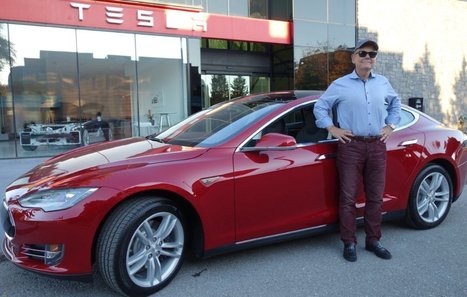









We will be even more urban (centered on cities), older, and immersed in tech - watch how the move from screens to sensors and to AI, vertical farms, 3D printing moves us there