 Your new post is loading...

|
Scooped by
Linda Holroyd
September 24, 2014 11:56 AM
|
Much of the focus on the potential for big data has centered around using analytics to boost sales and marketing.
While those areas are indeed ripe for innovation, companies can tap analytics for a slew of other novel improvements to outperform competitors, including identifying new profit models, designing new products and streamlining processes.
Tom Davenport, a professor at Babson College and an independent senior advisor to Deloitte Analytics, outlines the 10 ways companies can foster innovation with analytics in an article in Deloitte University Press.
The 10 ways companies can drive innovation with analytics are:
1. Profit model innovation: “There is certainly an analytics spin on this form of innovation, in that many companies in both online and offline businesses are attempting to make profits with new data and analytics-based products and services,” Davenport says. GE, Monsanto and several large banks are among the companies using analytics to identify new ways to monetize their offerings and assets.
2. Network innovation: Companies can use analytics to deliver new products, services or processes to their existing network of partners, such as suppliers. For example, a company could deliver analytics to suppliers and partners to help them make better decisions. “In another context, with the Internet of Things, companies almost always need to share sensor data with their ecosystems, and to define standards so that the information can be integrated and analyzed,” Davenport points out.
3. Structure innovation: Analytics can be used to organize company assets in new ways to create value. “Large banks, for example, have formed new business units to analyze customer data,” the article notes. “Similarly, other businesses create a centralized group of analysts, and then ‘embed’ many of them with key decision makers in business units and functions.”
4. Process innovation: While process improvement was one of the most common uses of analytics in the early days of the technology, companies are evolving from a narrow focus on supply chain and logistical processes to bolster processes in pricing, marketing, sales and manufacturing, Davenport points out.
5. Product performance innovation: While product innovation has not traditionally involved analytics, that’s changing now that different devices come with the ability to track the physical movements of the wearer.
6. Product system innovation: A business and its network of partners can use analytics to sift through the vast amount of data created by sensors.
7. Service innovation: Analytics can drive or measure service innovation, the article notes. Companies that build complex products like vehicles, computer hardware or jet engines can use analytics to monitor how the machines are performing and predict when they may need maintenance.
8. Channel innovation: Analytics can measure the effectiveness of the different channels companies use to deliver products and services. “Today, the enormous challenge for many organizations is to understand customer relationships across all channels and touch points,” according to Davenport. “Even identifying the same customer across channels is often a problem, although analytics can make it much easier.”
9. Brand innovation: Analytics are key to knowing how a brand is performing.
10. Customer engagement innovation: Analytics are ideally suited for digging into customer behavior data to identify the most effective ways to profitably interact with them.
|
|
Scooped by
Linda Holroyd
September 23, 2014 11:57 AM
|
Karma is trying to end the hunt for WiFi with its latest portable wireless Internet hub.
The new device, called Karma Go, gives users nationwide coverage via Sprint’s 4G LTE and 3G network. Previously the company serviced only select regions and cities in the U.S.
Among the many companies that want to bring you wireless Internet anywhere you are, Karma does a couple of things differently. For one, there’s no monthly plan. Karma users buy the device and then buy data for $14 a gigabyte. That’s pretty reasonable when you consider how much the big telecoms charge for data on mobile phones. Plus with Karma the data never expires.
“So this is what I’m doing, I have an iPod touch or what I call an iPhone 6 mini” says co-founder Steven Van Wel. “But there’s no data on this. I use Google Voice, so it rings, and I’m always connected to Karma,” he says.
The device stays live for 220 hours on standby and users can continuously browse for about 5 hours. Bottom line is that he can connect to the Internet from any device (laptop, tablet, phone) anywhere covered by Sprint’s 3G and 4G LTE network.
Being that Van Wel is a co-founder, he’s happy to rely on his own network. General users may not want to rely on Google Voice, with its at times spotty connection, to make phone calls — if you still even make phone calls. But Van Wel does paint a pretty picture of life without a 2-year mobile contract.
Karma also differentiates itself from competitors by keeping the Karma network open. Up to eight people can connect to your Karma device and buy data from Karma. Van Wel says users are invisible to one another, making it difficult for hackers to get into your computer or leach data from your account. Even if Karma Go is secure, having eight people on one device will slow down the speed of your service. Karma boasts that it Internet speed of 25 mbps, which is fine, but lower speeds could make for frustrating Internet experience.
But if you don’t want to share, Van Wel says you should probably go with another wireless provider. The two main competitors in the space are Clear and Freedompop. The latter is already on Sprint’s nationwide 4G LTE network, but requires a monthly fee. Freedompop has expanded to offering devices and cell phone coverage, as well as supplying Internet to home networks — something that Karma has expressed interest in pursuing in the future. Karma originally launched on Clear’s wireless infrastructure, before the company was acquired by Sprint.
The Karma Go device is priced at $150, though existing Karma users will get a 50% discount on the device. Early adopters can snag the device for $99.
|
|
Scooped by
Linda Holroyd
September 22, 2014 5:28 PM
|
Much has been reported about Apple’s biggest volume day to date — selling 4 million iPhone 6’s in 24 hours worldwide this past Friday. It’s a tremendous achievement for any company.
Less has been said on how Google will sell 2 million smartphones by year's end in one country alone — and how it will beat Apple in the process.
Google launched a smartphone that can’t be bought in the US, in a country where most Americans can’t find on a map and at a profit margin that made Wall Street boil.
It’s the Android One, it was just released in India, and it’s proof that Google gets the global smartphone game.
The iPhone 6’s markets are saturated; the Android One’s markets are not.
Many pundits classify Apple as an “aspirational” brand--they make products that more people want than can afford. It's a great position for any company to be in, but the cachet can come at a cost: arrogance.
For the last decade, Apple has thought locally and applied it globally. So in their mind what works in Cupertino will also work in Beijing, Mumbai and Mexico City. They've gotten away with it until now, but there's a problem: saturation.
In Apple’s primary market—the US, it controls 42% of smartphone sales. That’s a problem because the US is saturated with smartphones--roughly 75% of Americans own one. Most developed economies have similar ownership levels. When you factor in that growth within the high-end smartphone market--their sweet spot--has plateaued, Apple should be exploring new markets.
Instead of adapting to price sensitivities within emerging markets, Apple’s iPhone 6 starts at $649 (without contract) and tops out at $949. That's an impossible purchase when the average household income in India is just US$7,700.
While Apple's CEO Tim Cook might claim that China is now its biggest market, the company gave up 30% of its market share in the last year to local competitors Huawei and Xiaomi. (This happened despite blistering iPhone sales.) After flubbing the iPhone 5C launch in China, he still has not set a release date for the 6 and 6 plus—despite it being manufactured there.
In Mexico, its share dropped by 50% in the last 12 months. In fact, Apple has lost ground in almost all major economies in that same time period. Apple has lost its global mojo.
Google’s Android One launched in India this week for just $105, and carrier subsidies will drive that price down into the $60s. Amazon India's massive inventory sold out in a matter of hours. Google understands what works in Mountain View might not in Mumbai or Manila.
iPhone 6 sales are mostly upgrades; Android One sales are all new.
The last major iPhone update was over two years ago. That’s a lifetime in the fast-moving mobile world. Their pre-sales figures show how pent up the demand is today and will likely remain in the months to come.
While the iPhone 6 will eat into some of Samsung’s higher-end market share, a majority of these revenues will come from upgrades from existing customers. This will generate massive revenues (and profits) for Apple, but lead to minimal growth in its market share at best, and not help them long term.
In contrast, Google didn't design the Android One for the 1.75 billion people who already have a smartphone. They have created it for the 5+ billion who don’t and priced it accordingly.
The iPhone 6 is sourced globally; the Android One is sourced locally.
Apple’s hardware is often second-to-none in its quality and build. A vendor's success is nearly guaranteed when Apple selects them. This pattern also happens within two other companies: General Motors and Ford. It doesn't take a logistics expert to tell you how global sourcing drives up costs and production times. (Maybe that’s why the iPhone 6 is delayed for release in China.)
Google took a different approach. It worked with local chipmakers and phone manufacturers to control costs in India.
Likewise, they’ll partner with other manufacturers like Alcatel, Lenovo and Panasonic to ensure that this sourcing model will be replicated in other emerging markets.
The iPhone 6 software is locked by Apple; so is the Android One by Google.
Apple has a long history of tightly controlling software on all of its platforms. That hurt them in the PC age, but has helped them improve the user experience in the mobile age.
Google took notice. Manufacturers like Samsung load up their Android devices with bloatware to the angst of users. Google limits Android One manufacturers to its stock OS.
Google has also eliminated OS access from wireless carriers--like Apple did with AT&T seven years ago. Google took it a step further by understanding the great expense of mobile data for most users within India. They partnered with Airtel to allow Android One users to get free OS updates for the first six months—in time for a critical update to their more energy-efficient Android L OS. These users will also get up to 200MB of free data for app downloads per month.
Unless there are radical changes coming to Cupertino, Apple just lost the global smartphone war to Google.
|
|
Scooped by
Linda Holroyd
September 22, 2014 2:17 PM
|
I take a trip through memory lane to find out the technological innovations that have helped shape the last 15 years. There’s an argument for each and every one taking the coveted prize, but regrettably, there can only be one winner.
(1) Google
Like a few other companies on this list, Google has become so successful and engrained in our lives that it’s become a verb – to google. Obviously Google isn’t just a search engine anymore, it has its fingers in pretty much every pie possible. Undoubtedly one of the most innovative companies in the world, and with at least an element of all our lives invested in Google in some form, you can be sure that its data collecting capacity will mean that Google will continue to bring innovative technology to the market that makes us feel special.
(2) Apple’s iPhone
I chose Apple’s iPhone as the smartphone of choice for this list because at the time of its first release in 2007, it really was a ‘wow’ moment- we hadn’t really seen anything similar to it before. In March this year, Apple sold its 500 millionth iPhone and with the iPhone 6 set to be as popular as ever, it’s difficult to see that number not rising significantly over the coming year. It has been reported however, that Apple is shying away from its ‘leader’ status with the iPhone 6 looking suspiciously similar to a number of HTC’s phones. With this in mind, it will be interesting to see whether Apple maintains its rank as the world’s premier smartphone manufacturer.
(3) Facebook
Facebook almost seems a little ‘old school’ now. For whatever reason, it has lost that something that made us spend hours upon hours fixated on our computer screens in the mid to late 2000’s. It seems to be the normal order of things that social networks organically become redundant after a few years, so with that in mind, the fact that Facebook is still with us shows that it’s doing something right. Like Google, it’s got such a substantial pool of data at its disposal that it’s likely it will continue to produce services that suit our own personalised needs.
(4) Twitter
Twitter, like Facebook and Google, has its own verb – to tweet. It’s now the go to site for celebrities looking to vent something, people who want the news before the BBC even reports it and for organizing political activities, like we saw in the Arab Spring. If I were a betting man, I would say that Twitter’s shelf life is much longer than Facebook’s and it continues to be one of the most exciting platforms in the world.
(5) Wi-Fi
Starbucks for one have a lot be grateful for when it comes to Wi-Fi. If it weren’t for them, people would only go into their coffee shops for coffee - not the free Wi-Fi. However annoying the connectivity problems can often be, Wi-Fi has undoubtedly contributed to the mobile society that we all currently enjoy. It often acts as the platform for the other products on this list and enables them to operate at their innovative best.
(6) Tom - Tom
Like Apple’s iPod, The Tom-Tom has been steadily pushed into insignificance by the emergence of smartphones and the sophistication of ‘maps’ applications. The life cycle of the GPS system has only been in motion since 2000 when the government allowed the public access to their then advanced GPS signal – they’re now available in most supermarkets for around £50. Tom-Tom have not become too disheartened by the market’s starvation of specific GPS technologies though, they recently partnered up with Apple and will be the company that provides the mapping data for the new iPhone 6’s operating system.
(7) Apple’s iPod
I was very surprised to find out that Sony had only stopped making their ‘Walkman’ in 2010 – the iPod took over that market in the early 2000’s and held onto it with a firm grip until the smartphone started to come on the scene. Despite coming last on our list, it’s hard to ignore MP3 players and the popularity they had, especially when the Apple iPod was released in 2001. The news that Apple have killed off their oldest and dearest product line, marks if not the end, then the slippery slope to extinction, but we mustn’t forget the impact that the Mp3 player had on DRM, the music industry as a whole and online music stores.
|
|
Scooped by
Linda Holroyd
September 17, 2014 1:35 PM
|
“If you made photos tiny and kept them tiny so they can’t be enlarged, would it reduce the anxiety around taking a photo and get people to take more photos?” Kevin Rose asks me. He’s not quite sure, but he’s going to find out with Tiiny, the new iOS app from his mobile laboratory North that launches this morning. It lets you take a thumbnail-sized photo or GIF and share it to 3×4 grid on the Tiiny homescreen of people who follow you, but it disappears after 24 hours. Rose tells me beta testers shared 5X more photos with Tiiny than on their other photo apps. But if Tiiny never takes off, Rose doesn’t care. It only took North three weeks to build, and the small team plans to release a new app at least every three months unless one really blows up. “it’s about having as many shots on goal as possible,” Rose explains. This strategy puts North at the forefront of a movement to experiment with building whimsical mobile apps without the crushing pressure to succeed and make money right away. Afforded by Rose’s past successes with Digg, Revision3, Milk, and his gig at Google Ventures he just left, he says “I don’t have to have an exact business plan, but I can explore the more crazy parts of my head.” Little Is The Big Picture Tiiny doesn’t do much. That’s the point. Tap the camera button to take a photo or tap and hold to take a silent animated GIF up to five seconds long, and they’re all just 212 pixels x 212 pixels. Tiiny lets you import your social graph from the Twitter, and uses the same asymmetrical social model. Your photo gets slid into the first slot on the grids of people who follow you, pushing the rest of their photos down. 24 hours later, it disappears, so you have no profile page. Followers can tap photos to see who they’re from, double tap to Like, and browse a Popular page of the best Tiiny moments. What’s special is that the photos and GIFS can’t be expanded full-screen, so you don’t have to look perfect. While Snapchat pioneered this ‘shoot from the hip’ style with 10-second self-destructing photos, they’re still full-screen so you’re inclined to agonize over your appearance and framing. Tiiny takes casualness to another level because no one will see that pimple or poor focus. You also don’t have to worry about annoying your friends by posting too much. While Instagram’s full-screen feed can be overwhelmed by someone shooting non-stop, and you can pester someone with Snapchat direct messages, if you post four Tiinys in a row, it will only take up 1/3 of a friend’s screen. That opens up fun opportunities for photo sequences. A Tiiny Experiment Rose tells me Tiiny is “a two-fold experiment in minimalism, both in how we interact with each other — less choice, less friction, less megapixels — and how we build products at North — how could we build a product quickly?” He played with both this morning. Rose vowed to himself not to shave until the entire Tiiny development process and launch were done. So today he shared a series of Tiiny photos as he carved his facial hair into different configurations on his way to a clean mug. “It will be funny and ridiculous and stupid but it’s a moment I would not think of sharing on another social network.” Rose actually dug up the idea for Tiiny while browsing Instagram. “I was consuming a lot of content through the popular pages and tag pages, and I noticed that with the three-across grid you can consume a lot more content faster than a normal stream” he recounts. “With one big picture after one big picture, going down 10 or 20 pictures takes a lot of time.” So he built Tiiny to let you get a feel for what’s up with all your friends instantly. Of course, many people will say we don’t need any more photo apps. Especially more ephemeral ones trying to coin off of Snapchat’s success. Luckily, Rose doesn’t care. He tells me that if Tiiny doesn’t find millions of users, North will simply open source it or cease development, and move on. Rose tells me “we can continue to try some wild and crazy stuff. Some will be slightly better takes on stuff.” I likened North to an app magazine with regular issues released, and he replied “Every page turn is going to be something completely different. We’re not gong to do photo apps for ever. We’ve got ideas in the cryptocurrency space and there’s no common theme.” Rose doesn’t really need any more money, which frees him to swing for the fences rather than chase middling success. “We’re looking for those big home runs. We’re not one of those companies or incubators with 6 things going on at the same time. If we have that nice single or double hit that were excited about and it looks good, but it’s surely not going to be a big product we’re not going to hire around it. We’re going to constantly churn out stuff. When you spread yourself too thin, nobody wins.” Already, tech’s power players are feverishly posting to Tiiny, though we’ll see if that lasts. You can call the app frivolous or even useless, but Rose reminds us how we first reacted to Twitter, Snapchat, and more to today’s top social app. “They all seemed, at least initially, funny and cute” but not real businesses. Time proved us wrong.
|
|
Scooped by
Linda Holroyd
September 16, 2014 11:51 AM
|
This post originally appeared on Bloomberg View. A recent visit to a hectic Starbucks store near Times Square in New York reminded me of one of the great achievements of real entrepreneurship and inspired innovation: taking an existing technology and turning it into something much more transformational in meeting -- and often forming -- the demands and needs of customers. Many pathbreakers in business, such as Amazon, Apple, Google and Microsoft, succeed by creating something completely new. Their impressive deployment of one disruptive technology after another has comprehensively redefined existing industries and created new segments. They have empowered people and enhanced living standards around the world. Less obvious -- and sometimes counterintuitive -- are the companies that take an existing activity and turn it into something much more consequential. Think of how Cirque du Soleil has revolutionized the circus experience. And how Starbucks, with more than 21,000 stores in 65 countries, has redefined coffee drinking, not only in the U.S. but also around the world, including Europe where skepticism was most intense. On recent trips to Europe, I couldn’t help but notice the brisk business the company's increasing number of outlets conduct there (although, admittedly, I tended to stick to the more traditional cafes for my own daily consumption). Now the challenge for Starbucks is to keep innovating as a dominant player in the industry. From the perspective of an outsider like me, it is succeeding through approaches that intelligently target different client segments. Three stand out. First, Starbucks is doing more than just expanding and adapting its product line to enhance the experience of the coffee drinkers who constitute its core client base. It is also looking to improve their purchase experience in other ways. Last week, it announced that it would introduce new formats that would reduce client wait times. Second, it is experimenting with more products to tempt those who use its stores as an ad hoc office during the day. Only last week I discovered that the place where I occasionally work while waiting for my daughter to finish an after-school activity now serves popcorn. It is not easy to resist the combination of reliable free Wi-Fi, a customized drink and popcorn munchies. You can even get beer and wine later in the day at some locations. Third, it is employing user-driven customization to expand its reach among groups such as teenagers and tweens -- something that I discovered a few months ago when my daughter introduced me to the “Starbucks secret menu” (which, by the way, contains lots of drinks with no caffeine). Not everyone admires Starbucks. Those who dislike the company and its influence can become quite entrenched in their opposition. One of our local coffee houses actually developed an identity almost synonymous with being anti-Starbucks. Yet regardless of how you feel about the company, it is hard to ignore how it is constantly innovating on the foundation of an old “technology.” Its approach is instructive for many other industries. Just imagine how many are waiting to be beneficially disrupted by this type of entrepreneurship.
|
|
Scooped by
Linda Holroyd
September 16, 2014 11:31 AM
|
Fastly, a startup looking to challenge the biggest companies in the business of distributing content around the world for quick online access, has brought on $40 million in fresh money. Announced today, the funding will assist Fastly in expanding its infrastructure internationally, with an emphasis on Japan, Australia, and Europe in general, founder and chief executive Artur Bergman said in an interview with VentureBeat. Rather than compete on price, Fastly likes to drum up business by being, well, fast. “Customers are happy to pay for that,” Bergman said. The content-distribution network (CDN) market has proven interesting for investments and acquisitions. Verizon last year acquired EdgeCast. CDN and security provider CloudFlare announced a $50 million round late last year. Apple has started serving web requests through its own CDN, which could be useful when it’s time download an operating-system update. Meanwhile, CDN giant Akamai has hung around. Fastly aims to stand out by storing customers’ content on speedy solid-state drives and delivering it over 10-gigabit Ethernet. It even employs software-defined networks based on Arista switching hardware that can help Fastly “choose the best path out into theInternet,” Bergman said, and ultimately deliver content more quickly than it could without such techniques. Above: The Fastly team. Image Credit: Fastly Before starting Fastly in 2011, Bergman was chief technology officer at community site-hosting company Wikia, where he disliked the CDN service the company was receiving from a major provider. So Bergman took to building his own. Now Wikia is a Fastly customer, along with Disqus, GitHub, Kickstarter, Pinterest, and Twitter. And Fastly has provided CDN as an underlying layer of services from startups like Firebase and Imgix. Bergman said Firebase’s use of Fastly, which entails storing static client-side content on Fastly’s widespread global infrastructure, is “a good example of the kind of customer that’s trying to push the envelope of what you can do with a CDN and move as much of what would normally be origin to the edge.” Fastly introduced a streaming-media service last year. August Capital led the new round in San Francisco-based Fastly, which employs around 115. IDG Ventures, Battery Ventures, O’Reilly AlphaTech Ventures, and Amplify Partners also participated. To date the startup has raised more than $50 million, Bergman said.
|
|
Scooped by
Linda Holroyd
September 12, 2014 1:25 PM
|
Most traditional marketers don’t know how to beef up their digital skills, a recent Adobe study found. But marketing is becoming more and more digital, which means that finding the right people to manage marketing automation, multivariate campaigns, or digital attribution campaigns isn’t always easy. Especially when hiring managers are looking for dual-expertise unicorns. “Ideally, marketing technologists have exposure to both marketing and development,” says Erica Seidel, who runs The Connective Good, an agency specializing in marketing tech hires, and recently wrote a study on the mar-tech talent land grab. “Many of them have started in software development roles and have migrated into marketing. Others have more of a marketing heritage but have always been drawn to the latest technologies.” It’s those two disparate skills that makes hiring hard … as well as the fact that there too few candidates out there. “We do seem to have a shortage,” Seidel told me via email. “I like to talk about BATS talent – people who have skills across Business, Analytics, Technology, and Storytelling. It is rare to find someone who hits it out of the park in all these areas.” While the demand just keeps going up, Seidel says, there are also more and more marketing technologies being “minted” as well. Seidel encourages executives to think in terms of hiring teams. So if you can’t find the unicorn who is both a marketer and a technologist, ensure that your marketing department hires several people instead, ones who have multiple sets of skills in marketing, analytics, databases, integrations, customer journey, and more. Of course, there’s a downside to that tactic. “Some orgs are hiring more people than they otherwise would, even though it can feel and be bloated and expensive,” Seidel says. “The benefit is it introduces extra capacity.” In fact, one organization she worked with even hired accountants — yes, plural — into junior marketing roles, with the logic that anyone who could track dollars through financial systems could also track spend, ROI, click-through, and all the other metric minutiae that have become so critically important in data-driven marketing. Getting the marketing technologist unicorn who possesses all or most of the needed skills in one body can be so challenging that some organizations, such as SapientNitro, have created their own marketing technology “universities.” Others look for social science grads who also have something of a background in coding, Seidel says. Perhaps the biggest need, however, is not current skill set. Rather, it’s future focused: “Apart from skills, the biggest wish list item for marketing technologists was not an aptitude but rather an attitude characteristic: the ability to learn.”
|
|
Scooped by
Linda Holroyd
September 10, 2014 12:54 PM
|
A parked car at an airport is an untapped resource, and startups love untapped resources. One startup, FlightCar, puts your unused car to work while you travel, and it has just scored $13.5 million to continue doing so. CEO and co-founder Rujul Zaparde recalled to VentureBeat that he was sitting with co-founder and president Kevin Petrovic in the winter of 2012, talking about Airbnb. “If your most valuable asset is your home,” he said they reasoned, “the second is your car.” “Then we put two and two together,” he told us, coming up with a service that started in February of last year at San Francisco’s airport and has now reached the main airports of Boston and Los Angeles. The new funding, a Series A round lead by GGV Capital, will be used for expansion to Seattle and other airports. The company reports 30,000 members, including both car owners and the car renters. Although they are now matchmakers between idle cars and needy drivers, the co-founders have only been legally driving for a few years. Zaparde, who is 19, deferred attending Harvard in the fall of 2012 to launch this company. Co-founder and president Kevin Petrovic is 20 and similarly told Princeton that school would have to wait. “Let’s say you’re going on a five-day trip next week,” Zaparde told us. If you’re traveling by air, you list your car online with Flightcar, pull into its 24/7 parking lot near the airport, and get checked in by an attendant. A town car service takes you to your gate. When you return, you click on the FlightCar app to get picked up and taken back to the lot. Your car, he said, is waiting, cleaned inside and washed on the outside. You’ve gotten five days of free parking, plus a fee for use of your car. From the point of view of renters — who are pre-screened — the company guarantees a car in the class requested or larger. If for some reason a suitable car is not available, FlightCar will take the renter to a rental car agency, “and we’ll pay the difference,” Zaparde said. “It’s happened, but it’s extremely rare.” The renter pays anywhere from $39 per day for a one-day rental to $19 per day for a five-day rental, for the least expensive and smallest car. That includes up to one hundred miles a day. After that, it’s 45 cents per mile. The car owner gets five to 20 cents a mile up to 75 miles and 40 cents for each mile over. So a car driven for 100 miles could make the owner up to $35 a day, plus free parking and a car wash. The company reports that most cars are driven less than 40 miles daily, and each rented car has up to $1 million in insurance. What if you get back from your trip, drive your car away, and find out the next day it has a problem it never had before? Zaparde said FlightCar will cover “any sort of damage, internal or external” except air conditioning issues, with no deductible. An owner has three days from picking up the car to report any issue. “If there is a significant issue, we’ll have an independent mechanic look at it, and if it’s not just wear and tear and is not the air conditioning, we’ll cover it in full,” he said. During repair, a loaner car is offered. Besides GGV Capital, existing investors General Catalyst Partners, SoftBank Capital, and First Round Capital also participated in this round. Previous investors include Comcast Ventures, Facebook co-founder Eduardo Saverin, Airbnb co-founder Brian Chesky, Ryan Seacrest, and Ashton Kutcher.
|
|
Scooped by
Linda Holroyd
September 10, 2014 12:18 PM
|
A relaxed, confident and effervescent Tim Cook wowed the Apple faithful with the long-awaited, heavily-hyped (though, as I’ll argue later, underhyped) Apple Watch. Cook's almost childlike enthusiasm seems entirely justified: Based on first impressions, Apple Watch has the potential to be yet another transformative device for the company. It’s the ammunition needed to put to rest the Haunted Empire/Apple-After-Steve-Is-Dead meme if not once and for all, at least until this time next year when the restless tech press will almost certainly ask: "What have you done for me lately?" Apple Watch — not iWatch — puts the brand front and center in a sophisticated piece of personal technology that has been smoldering, but hasn't caught fire. Pebble really got the niche going when its Kickstarter campaign broke all records. But while Pebble has gained considerable techie cred (I don't leave home without it), few people outside that bubble even know what it is. So Apple needs to do with its Watch what it did with the original iPhone in 2007 and iPad in 2010: convince people that they really need one. That these two products are the top sellers in Apple's arsenal makes Cook's audacious plan plausible. I've not held one myself so I can't speak to the usability. But the problems Apple has chosen to solve — its approach to what a smartwatch should be — seem spot on, based on the unveiling. They are priced right — at least exactly where I had speculated the price point should be. They are stylish and customizable (meeting another criteria I hoped for), the better to wean watch wearers from their wrist ornaments of choice, and woo potential customers still going commando. Apple Watch has Siri integration, which extends that personal assistant intelligently. But you can't use it to make or receive calls, which would have been dumb. It gives you turn-by-turn directions, sparing you the need to keep referring to your iPhone (and keeping the battery-sucking screen on) as you discreetly move about looking like a native who is desperate only for the correct time. The Twitter app gives you all the lightweight functionality you need to read, respond, RT. When available for sale "early next year" road warriors will immediately have a taste of what it will be like using a watch to check in to an airline, unlock a hotel room, check your car's vitals. I might be getting ahead of the story, but isn't that whole Apple/IBM alliance about the professional — elbowing into the enterprise? Health and activity monitoring seem robust and in the background — as they should be to be of any use. How long might it be before your vitals are shared with your medical team automatically, giving them (and you) a heads up to troubling stats? It's not just for astronauts anymore. The crowning achievement of Apple Watch is the digital crown — a perfect-seeming interface for navigating menus and making selections. How it feels on the wrist remains to be seen — Is the watch thick enough to allow pudgy fingers to use it easily, but not too thick? This is no place for a touch screen, buttons or voice. Check out Apple VP Kevin Lynch messing with it in the video below (sorry for lack of sound) to get a sense of its proportions.
If Jony Ive has perfected stem-winding, his place is reserved in heaven (again). The Apple Watch news was so exciting, two other big Apple announcements almost seem tame. But Apple also unveiled two larger iPhones — 4.7" and 5.5" screens as rumored — and finally got into the NFC payments game. Again, by endorsing what Google and the unfortunately-named Isis consortium of credit card companies have been struggling to get consumers to care about, NFC payments now have a chance — how could it have been when it was absent from the best-selling phone in the world? Take a bow, Mr. Cook. And leave that shirt untucked. Tails are for players.
|
|
Scooped by
Linda Holroyd
September 9, 2014 12:01 PM
|
With almost three quarters of 2014 complete, angel and venture capital has poured more than $140 million into the infrastructure of crowdfunding, more than double the amount invested last year and 43% more in individual deals. Where is all this money going? For four years, my firm has been studying the crowdfunding space. The crowdfunding industry encompasses all forms of crowd finance: donation, perks/pre-order, debt, and equity. Still nascent in its growth, serious investments started to flow into the space in 2011, with three deals totaling $13.5 million. A year later, three more investments totaled $18.6 million. During 2012, our work in Washington, D.C. culminated in the form of the JOBS Act, and major provisions were signed into law, including Title II, lifting the ban on general solicitation to accredited investors, and Title III, debt and equity crowdfunding. Savvy entrepreneurs who understood what these fundamental changes meant began building and scaling all forms of crowd finance platforms. 2013 was a breakout year for crowdfunding. A total of $71 million went into seven major deals that year. This represents a 133% growth over 2012, with more than twice as many deals. Lending and rewards platforms were the greatest beneficiary of these investments. Now, in just eight months of 2014 more than $140 million has been pumped into at least 10 deals (we expect this to be close to $250 million by year’s end). Five of these deals were over $14 million each, totaling $124 million. Interestingly enough, we’re starting to see significant capital poured into the equity crowdfunding space even though Title III of the JOBS Act has yet to go into effect. (We did, however, let the SEC know that, two-plus years since President Obama gave it the green light, an industry is primed and ready to go). So what trends are we seeing? Size of rounds: Series A investments across the board are averaging $6 million. Series B rounds jump to $28 million, and C and D to around $45 million each as companies seek more capital to scale, grow, and beat out the competition. Since lending platforms are the biggest and most mature, they’ve been pushing the average deal size up in the later rounds. Number of startups by round: Over 25 companies have completed Series A rounds, 13 Series B, and 10 Series C and above. Average investment by round: The average A round for equity platforms is $5.75 million. For lending platforms, the average is $5.1 million. And reward platforms lead the pack at almost $7 million. Average valuation by platform type: Valuations are across the board, but if we are conservative and assume investors might seek 20% equity for an A round, then valuations average $28.75 million for equity platforms, $25.5 million for lending platforms, and $35 million for rewards platforms. According to our research, in total almost $1 billion has been invested into the crowd finance arena since 2006. Six lending platforms have collectively raised over $450 million, which reflects not only the investor interest in these peer-to-peer (P2P) and peer-to-business (P2B) platforms but also a justification of their business models. Interestingly enough, the P2P space last year saw $1 billion flow from investors to borrowers, with demand now exceeding supply as institutional investors try to buy up these loans — another data point in why the crowd finance arena is serious business. Over 10 rewards platforms have received over $275 million in investments. Kickstarter and Indiegogo have the biggest names in the space, but platforms like Quirky received substantial later-stage rounds, and relative newbie Crowdtilt closed a significant B round of $23 million. More than seven equity crowdfunding platforms have received over $180 million in financing, with the oldest among them being only four-years old. This too shows validation for a business model of which one of the two models (Title III, crowdfunding for all) has yet to go into effect. We anticipate equity crowdfunding to blossom in the next 36 months, with a majority of venture capital flowing into this space as early movers are proving the model, the media is covering it with more interest, and the global appetite for this sector expands significantly. New market entrants, new technologies, and new businesses (think crowd education, crowd vetting tools, crowd analytic, and crowd investor relations) are launching to support the crowdfunding industry, and we are keeping an eye on them. Actually, we are doing more than that; we are placing our bets on who we think the winners will be with our own capital.
|
|
Scooped by
Linda Holroyd
September 9, 2014 11:46 AM
|
I love Uber, the ridesharing app that connects people who need rides with drivers. Instead of my normal $35 taxi ride to LAX, an UberX car takes me for about $11. The service is active in 108 US cities and 45 countries worldwide. Five years ago, it didn’t exist. Today, it’s valued at over $18 billion. It truly is an Exponential Organization. Uber is one of a new generation of dematerializing, demonetizing and democratizing technologies that’s disrupting the status quo. Simply put, Uber is a product adored by passengers and Uber drivers alike. It uses technology to dramatically improve a broken system. It solves a pain point. As a result, hordes have left the traditional taxis and rental car options. Understandably, these incumbents aren’t happy, and where do they turn? Regulation. Uber’s Long, Legal Battle I recently spent a week with Uber CEO Travis Kalanick in Sicily at Google GOOGL -1.52% Camp. I’d heard mention of some of the legislative challenges that Uber was facing globally, but I wasn’t really aware of the scope or scale of what was happening. Check out this global resistance: - Germany: officials just slapped a nationwide ban on Uber “ because the drivers don’t have correct permits. Drivers will face fines of up to $323,700 per trip if Uber violates this temporary injunction.
- Spain: Hundreds of taxi drivers went on strike in June, protesting the unregulated private service that was taking their business.
- India: “According to the Economic Times, three Uber competitors — Meru Cabs, Easy Cab, and Mega Cab — have written to the Reserve Bank of India , complaining that Uber is violating foreign-exchange laws.”
- Brazil: Uber might face legal problems if the government of Sao Paulo pushes for the suspension of its service. For example, a few weeks ago “three cars were found providing services through Uber in Sao Paulo and the drivers had to pay fines of $900 on average.”
- Vancouver: The city attorney claims that the service is illegal: “Though the meter UberX uses does not look like a traditional taxi meter that measures time and distance as the ride progresses, it still fits within the definition of (a) taxi meter [under city code].”
- United States: The taxi lobbies are putting enormous pressure on local governments to block Uber in their cities. In Milwaukee, five taxi groups are “suing the city of Milwaukee, hoping to block an ordinance that provides a path to legalization for mobile ride-booking apps.” In California, New York and DC, Uber has faced numerous cease-and-desist orders.
And yet: Regulation, the Protection of Last Resort Laws typically favor the incumbent solutions that manifested them in the first place. But when an industry turns to protectionist regulations to keep a more cost-effective solution out of the market, you know it’s in a death spiral. Take the horse versus the automobiles, for example. Many hated cars in the early 1900s because, well, they scared horses. In fact, amazingly, at the turn of the century, a law in Pennsylvania stated: “Any motorist who sights a team of horses coming toward him must pull well off the road, cover his car with a blanket or canvas that blends with the countryside, and let the horses pass. If the horses appear skittish, the motorist must take his car apart, piece by piece, and hide it under the nearest bushes.”
In general, the government’s major role is stabilization. But many times when a product is so much better say 10x or more the incumbent will eventually lose. They must adapt or go extinct. Regulation can only stay the change for a short time. And during this time of accelerating change, where the only constant is change, we will be seeing a lot of 10x improvements challenging the norm. Look at Airbnb, Pandora , iTunes, Tesla, Craigslist. The list goes on and on. Technologies that leverage the 6 D’s will WIN In my mind, the companies and products that solve problems most effectively (and most cheaply) will win. Many of these are the products that follow the 6 D’s of exponential change. To demonstrate what this means, for those not part of Abundance 360, let’s look at how Uber fits into this model: - Digitized: Uber digitized the taxi-calling experience, the payments process, the taxi-navigating process, the fare splitting process, and more.
- Deceptive to Disruptive: In my mind, Uber, despite being an $18 billion company, is still in its deceptive growth stage. Just wait until we get into automated vehicles and self-driving cars. Guess who will be perfectly positioned to take over that market?
- Dematerialized: Uber dematerialized a number of things, including the need for taxi fleets. In some cases, it dematerialized owning a car for many who elect to “Uber” everywhere instead.
- Demonetized: Uber eliminated the annoying fees and taxes that taxis require, as well as taking “tipping” out of the picture.
- Democratized: UberX is cheap and available to anyone with a smartphone (and the service in the area). It is democratizing transportation.
Despite their many legal challenges, Uber continues to drive and thrive. They are growing explosively, and the company is changing the game. And frankly, knowing Travis’ vision for Uber, we haven’t seen anything yet. This is an important debate I acknowledge the debate about technology vs. policy is an important one. Technology can be a double-edged sword. I want to talk with you about the implications these technologies have on jobs, on wages, on livelihoods. To have these debates together. And it seems Uber does too. They just hired David Plouffe, one of U.S. President Barack Obama’s key election advisers, to take charge of policy and strategy.
|
|
Scooped by
Linda Holroyd
September 4, 2014 3:10 PM
|
At the beginning of each month we will profile the twenty posts from the previous month that generated the most traffic to Innovation Excellence. We also publish a weekly Top 10 as part of our FREE Innovation Excellence Weekly magazine (PDF for printing or downloading to iPad, Kindle, Nook, etc.) and email newsletter. Did your favorite make the cut? But enough delay, here are August’s twenty most popular innovation posts (each receiving 3,200 – 15,000 page views): - Difficult Discussions Are The Most Important Discussions – by Mike Shipulski
- How Educators Around The World Are Implementing Mobile Learning – by Saga Briggs
- 7 Ways to Create a Culture of Innovation – by Stephan Vincent
- 20 Things Educators Need To Know About Digital Literacy Skills – by Saga Briggs
- 15 Examples of Open Innovation between Big Companies & Startups – by Stefan Lindegaard
- How Startup Funding Works (Infographic) – by Peter Doyle
- 6 Things You Should Know About The Future – by Greg Satell
- The Real Business Value of the Internet of Things – by Andrew Timm
- The Critical Missing Component for Innovation Success is… – by Jeffrey Phillips
- Building a Next Generation Organisation Means Embracing Adaptability – by Cris Beswick
- An Era of User Revenge? 3 Horizons of Co-creation – by Nicolas Bry
- Creating the Pathways to Excellence – by Holly G Green
- Culture Eats Strategy – Innovation Psychology Explored – by Pete Foley
- B2B Disruption: Pricing, Segmentation, and Technology – by Stephan Liozu
- Trust Trumps Everything – by Deborah Mills-Scofield
- Malloy Hoverbike: A Truly Groundbreaking Innovation – by Peter Doyle
- Has Innovation Become A Four-Letter Word? – by John K. Coyle
- How to Find your Unique Innovation Mindset – by Mark E Miller
- Requirements, Market Research, Entertainment, and the Art of the Possible – by Scott Williams
- Risk is an Imperative for Sustainable Innovation – by Robert F Brands
BONUS – Here are four more strong articles published the last week of the month:
If you’re not familiar with Innovation Excellence, we publish 2-6 new articles every day built around innovation and marketing insights from our roster of contributing authors and ad hoc submissions from community members. Get the articles right in your Facebook feed or on Twitter or Linkedin too!
|
|
|
Scooped by
Linda Holroyd
September 23, 2014 12:10 PM
|
Any one of a number of giant companies could have been first to market with a bagless vacuum cleaner. They all knew that their cleaners lost suction when dust bags became full. They also knew how their customers wrestled to empty dust bags while being enveloped by the dirt they’d just sucked up out of their carpets. Taxi companies were aware that people found waiting for cabs frustrating and watching the meter running while they were stuck in a traffic jam unnerving. Big hotel chains understood that their guests wanted a more personal service and resented the inflated prices charged for items from the minibar.
And yet, it took smaller players like Dyson, Uber and Airbnb to respond to those needs and bring about change. So how and why were they able to succeed in disrupting a market?
CHARACTERISTICS OF DISRUPTIVE INNOVATIONS
1. Start with a purpose and a small problem rather than a big idea.
2. Based on what people do, not what they say they do.
3. Leverage data to get closer to users, customers or fans.
4. Can be more responsive to customer’s behaviours and needs.
5. Tap into consumer’s latent desire.
6. Connect the disconnected.
7. Create value where none existed.
8. Disrupt people not industries—changing the user’s worldview and behaviour.
9. Begin by changing a small group of people at the edges.
10.Seem obvious only after the fact.
Disruptive innovators thrive on creating difference first and focus on growth later. They almost never begin by designing a product—they always start with their customer’s story.
|
|
Scooped by
Linda Holroyd
September 23, 2014 11:42 AM
|
One aspect of Obamacare that you hear few complaining about is the way it will increase compensation for health providers who treat Medicare patients. In simple terms, providers will be given a fixed amount for taking care of a given patient population. Then every dollar they can avoid spending on patient care — while upholding quality standards — is one more dollar they can keep as profit. In a sense, doctors will no longer be paid for the patients they see; they’ll paid for patients they don’t see.
And the best way to save dollars spent on patient care is to either keep patients healthy in the first place or to make sure sick patients stay well enough to avoid ER visits and hospital readmissions.
Sense.ly is one of a new wave of companies addressing various aspects of patient wellness and engagement. Sense.ly’s uses a virtual nurse named Molly, who acts as the provider’s point of contact for patients. This allows patients to give and receive information from their provider without having to drive to the clinic or hospital.
The San Francisco-based startup has now raised a new $1.25 million in venture funding from Launchpad Digital Health, Eastlink Capital Management, and several angel investors, Sense.ly CEO Adam Odessky tells VentureBeat.
The investment will be used to “build out Sense.ly’s products, further expand the team, and broaden the company’s customer base,” Odessky says. He adds that the new funding comes as Sense.ly has signed up several new hospital customers to use its platform. It now has ten large paying clients, Odessky says.
Sense.ly’s platform combines advanced sensor capabilities and an avatar-based mobile technology to reach outpatients. A congestive heart failure or diabetes patient might check in with a caregiver by entering into a Q&A session with “Molly” on their PC, tablet, or smartphone.
Molly then passes on the information she receives to an IBM Watson supercomputer, which will link the symptoms to probable causes, then provide recommendations. If Watson determines that videoconference with a real doctor is in order, Sense.ly will set that up.
The platform can also connect with sensors applied to the extremities, so a clinician can keep a constant eye on movement and other metrics.
The platform reduced patient calls by 28 percent in a recent pilot program, Sense.ly says, while physicians increased their productivity by saving nearly a fifth of their time every day.
Sense.ly was incubated within Orange S.A., the leading France-based telecom and technology company, and launched independently in 2013. It is currently a member of the LaunchPad Digital Health accelerator program; previously, it was a graduate of the Alchemist Accelerator.
“Sense.ly’s technology has applications across a broad spectrum of medical conditions and represents an exciting new tool in our efforts to address the growing burden of chronic diseases,” University of California, San Francisco’s Dr. Van Selby said in a statement.
|
|
Scooped by
Linda Holroyd
September 22, 2014 5:23 PM
|
Some startups are useful, some are beautiful, and some are pointless – I’m looking at you, Yo! Then, there are some design ideas that have the potential to radically change our futures. These are creations that 15 years ago you wouldn’t have dreamed possible.At the V&A this week as part of the Global Design Forum, five entrepreneurs took to the stage and pitched their startups, which they believe to have a far-reaching impact on our world and way of life in years to come. Peek Peek took home top prize from the competition with its app to improve optical healthcare in low-income countries. It comes with a clip-on piece of hardware and effectively means that non-healthcare experts can perform eye-health checks for people who might not otherwise have access to them. The app is portable, obviously, and stores patients’ data so the follow-up examinations can be run as smoothly as possible. Ooho! For all those looking for an alternative to water bottles, Ohoo! is the answer. To rid us of the plight of plastic packaging, the startup has designed an edible membrane of algae that helps water replicate water’s droplet form on a bigger scale. Ohoo! believe that if adopted widely, the new gelatinous container could make the unsustainable plastic water bottle obsolete. Pavegen We all pound the pavement. Walking to work, walking to the shop, walking to the pub. Now,Pavegen want to turn those steps into energy. The startup’s technology turns every step into renewable energy, all of which can be used to power applications such as pedestrian lighting, way-finding solutions and advertising signage. The tiles are wifi enabled which means the energy collected can all be tracked. Cities can also track where the highest level of footfall is, i.e. where people are walking most. Plan Bee Bees haven’t been doing so well recently. Pesticides, climate change, and pollution (among others) are causing colony collapse disorder, a phenomenon where bee hives simply disappear. Plan Bee have developed a self-monitoring bee hive that helps track the bees’ behaviour. There is an increasing number of hobby bee-keepers, but everyone leads busy lives and don’t always have time to properly check the hives. The Plan Bee hive uses a scanner to capture images of the brood daily and digitally analyse them for any unusual patterns. If symptoms of sickness are detected the beekeeper is then alerted so they can react accordingly, hopefully stopping the demise of an ever-important hive. VIBE VIBE is a computer interface that transfers information to a digital output through vibration, replacing a normal electrical circuit board. It eliminates the need for critical raw materials that are normally used in the production. It is developed from a single sheet of aluminium and has much of the same functionality that a normal keyboard does. The best bit? The design means its almost 100% recyclable. Never again will old keyboards collect dust in the corner.
|
|
Scooped by
Linda Holroyd
September 18, 2014 11:30 AM
|
NanoMech announced today that it has secured an additional $12 million in capital for its Series B Financing round, in order to continue growth and dominance as a global leading nanoscale manufacturer. The latest round of investors include Meadow Lane Investments, Hendricks Investment Holdings, Advantage Capital Partners and Spring Creek Investments. Today’s announcement represents significant strategic investment in NanoMech and its future by this group of preeminent, long-term investors.
Building on continued momentum, NanoMech will use the financing to expand its global reach, invest in additional sales and marketing resources, and increase investment in its market leading nanotechnology platforms, nGlide, TuffTek, and nGuard. In order to take advantage of opportunities immediately available, the Company also has approximately 60 days to consider additional private placements of its stock in this round. The proceeds will be used to rapidly increase its sales and marketing infrastructure and activities, continue to expand and protect its intellectual property, and for working capital.
NanoMech is shipping novel nano-engineered products globally to Fortune 100 companies as well as to emerging companies who have chosen to innovate their way to the top by incorporating NanoMech’s nano-engineered solutions into disruptive and far more competitive products. NanoMech has brought revolutionary and transformative innovation to world leaders in energy manufacturing, exploration and service; auto, truck and marine manufacturing; Indy and NASCAR racing; agriculture and construction equipment manufacturers; refining and formulating lubrication manufacturers; aerospace manufacturing; textile manufacturers; and advanced military applications.
The Company is also finalizing the construction of its 25,000 square foot production expansion to triple the size of current operations which will serve as the Company’s world headquarters, with an anticipated completion date in October. While the new facility will connect to the existing building, the Company has purchased the adjacent 7.3-acre tract for future development providing the Company with the ability to expand on a contiguous 9 acre campus.
“NanoMech is a global nanomanufacturing company founded right here in Northwest Arkansas,” said NanoMech CEO Jim Phillips. “The additional capital proceeds are for the purpose of accelerating awareness and demand for our industry transformative nGlide and TuffTek products and expanding our physical presence in the energy manufacturing and transportation markets. Our sweep over the last year of the major top national new product awards including the R&D 100 Award, the Edison Award, and the SBIR Tibbetts Award, provide ample validation of NanoMech’s prowess in inventing, productizing, and commercializing world class technology. During this timeframe, we also reached a critical milestone in having our core patents issued by the USPTO and several key international patent offices.”
The issuance of these patents fortifies the Company’s position as a world leader in the lubricant additives and fully formulated lubricants industry, a $300 billion market that serves as the backbone to all industries that use machinery, including manufacturing, farming, gas and oil exploration, aerospace, racing, marine, national defense and transportation. Additionally, winning these patents increases the Company’s intellectual property in providing the most wear resistant cutting tools and wear parts in the global $25 billion cutting tool industry.
Dr. Ajay Malshe, CTO and Founder added, “Our new nanofactory and expanded headquarters will also allow us to meet current demand for our products while advancing ongoing research and development efforts. The state-of-the-art, smart manufacturing facility and laboratories will further position our products and scientists as some of the best and most innovative in the world. This advanced facility will allow us to accelerate the development and commercialization of innovative products that people have only dreamed of before.”
About NanoMech
NanoMech is focused on patented platform nanomanufacturing technologies that offer a broad range of high value market opportunities. The operating vision of NanoMech is to be the Six Sigma world leader in nanomanufacturing innovation with swift product development and an emphasis on platform technologies that are scalable for efficient mass production.
NanoMech Inc. was founded in 2002 and creates advanced engineering materials through patent and patent-pending nano-engineered and nano-manufactured product development. NanoMech is recognized as a leader in innovation and technology. Their breakthroughs in nano-materials and manufacturing include the first cubic boron nitride coating for machine tools and advanced nano-engineered lubricants. The company’s products have applications in very advanced machining and manufacturing, lubrication and energy, sustainable protective multi-functional coatings for textiles and other consumer products, strategic military applications and biomedical implant coatings. In the last year, NanoMech has been presented with the prestigious R&D 100 Award, the Edison Award, and most recently, the Tibbetts Award, making it the only company in Arkansas’ history to sweep all three awards. NanoMech is a member of President Obama’s Materials Genome Initiative, the U.S. Manufacturing Competitiveness Initiative (USMCI) and the U.S. Technology Leadership and Strategy Initiative, both based in Washington, DC. For more information please visit www.NanoMech.com.
|
|
Scooped by
Linda Holroyd
September 16, 2014 11:53 AM
|
One of the most flattering things in the professional world is getting headhunted on behalf of a renowned company. If someone rings you out of the blue and takes an interest in you, it is a sure sign that you are doing all the right things in your current job. When I started my first headhunting firm many years ago, almost every time I approached a candidate on behalf of a prestigious company their self-esteem would instantly be boosted. It would be a very risky approach to sit back and purely wait to be headhunted but when great opportunities do present themselves over the course over a career it is always important to grasp them. Here are a few ways you can get yourself headunted.
Build a Brand I have said before that to get yourself noticed within an industry you need to get out there and network. Attend the right events and talk to the right people. Sometimes CEOs may come directly to you if they remember a conversation you had at some sort of trade events - I have done this before. The key is to not be overly salesy when you meet people - listening is a huge part of networking - but still ensuring they know your quality and reputation. You may even wish to be published in some form – more experienced people in some industries tend to publish whitepapers, but if you are not at this stage you can write blogs specific to your sector. All of this will help boost your own brand.
Be Digitally Visible The modern world almost revolves around the Internet and you need to ensure you have a strong presence here if you want to be contacted for the best opportunities. This means ensuring your LinkedIn profile is up to date and professional – new responsibilities should be constantly added on and any projects you have worked on should have their own section. You may also want to consider uploading your latest CV onto all the major job boards. Headhunters usually don’t look on here, but it’s good to be visible to recruiters the next level down as they still have highly sought after and lucrative roles. It’s amazing how many people don’t do this and still have their CV from two years ago posted up. Although recruiters may read between the lines and recognise that you’ve probably developed since then, they will also have a nagging doubt over your attention to detail.
Constantly Communicate If you’ve been approached by a headhunter but the opportunity didn’t really pan out, that doesn’t mean you have to leave it at that. Stay in constant communication with them so you are fresh in their mind for other opportunities. It’s all about relationship building – let them know how you are getting on in your current job and what direction you’re looking to take. The contact book these people have is incredible, so the more connected you are to them, the more opportunities that can come your way. Also, if they have a vacancy which isn’t of interest to you, how about referring them to somebody you know who might be interested? The headhunter will trust you more, and when a better role comes up, you’ll be the first person they call.
Go the Extra Mile It may seem simple and very obvious but the best way to get yourself noticed is to excel at what you do. Things like networking and brand building, which I mentioned earlier, are critical – but there is no substitute for actual output. Go the extra mile on projects and always look to take on responsibility. The harder you work and the better your output, the more word will get around. As I said it would be dangerous to rely on being headhunted to move your career forward but there are still steps that can be taken to improve your profile and enhance your personal reputation.
|
|
Scooped by
Linda Holroyd
September 16, 2014 11:34 AM
|
“Target the customer” has become a mantra among marketers. Today, the appropriately named TargetingMantra announced it has closed $1.1 million in funding to expand its Amazon-like personalized targeting service. The company’s omnichannel “one-stop” personalization suite is designed to show product recommendations, similar items and other relevant cross-selling opportunities to customers, based on user behavior. The funding — from 500Startups, Nexus Venture Partners, and One97 Mobility Fund — will be used to further develop its offering, create new products, and boost business development and marketing. Previously, the company’s founders bootstrapped their operations. Personalization is a common practice on Amazon, Netflix, and many other sites, and the company — with offices in both New Delhi, India, and Mountain View, California — is focusing on bringing that capability to e-commerce sites in India, Brazil, and Singapore, in addition to the U.S. market. The startups core team knows the drill well, since they previously worked on Amazon’s personalization team. “We don’t offer a platform,” CEO and co-founder Saurabh Nangia told VentureBeat. “We offer a few slots on a page where we use machine learning to show recommendations.” TargetingMantra, which has about 40 client companies so far, currently offers two dozen of their self-described “widgets,” and it integrates its service into any e-commerce site via an API. TargetingMantra said that, on average, its client companies “have seen a 19 percent increase in revenue, 17 percent increase in buyer conversion ratio, and 16 percent increase in order value.” Given the many recommendation services out there, how does TargetingMantra differ? Nangia pointed to “the omnichannel nature” of his company’s service, especially its emphasis on mobile. “In emerging markets, mobile commerce is catching up,” he told us, with over a third of all e-commerce in India soon expected to be conducted via mobile. He also highlighted “the efficiency of the algorithm, using an ensemble of machine learning models” in TargetingMantra, while other services, especially for smaller companies, “rely on rule-based engines” that offer recommendations based on what marketing managers think. “Ours is based on behavior,” he said. The biggest competitor? Nangia cited RichRelevance.com, but noted that “they are focused on the U.S. market.”
|
|
Scooped by
Linda Holroyd
September 15, 2014 5:03 PM
|
Over the years of working in the field of analytics and big data I have collected thousands of quotes and snippets highlighting both the transformational nature of the phenomenon as well as many of the perils. A client has recently ask me to send him my top 10 big data quotes of all time and this is the list I came up with: - “Big data is at the foundation of all the megatrends that are happening today, from social to mobile to cloud to gaming.” – Chris Lynch, Vertica Systems
- “Big data is not about the data” – Gary King, Harvard University, making the point that while data is plentiful and easy to collect, the real value is in the analytics.
- “There were 5 exabytes of information created between the dawn of civilization through 2003, but that much information is now created every 2 days.” – Eric Schmidt, of Google, said in 2010.
- “Information is the oil of the 21st century, and analytics is the combustion engine.” – Peter Sondergaard, Gartner Research
- “I keep saying that the sexy job in the next 10 years will be statisticians, and I’m not kidding” – Hal Varian, Google
- “You can have data without information, but you cannot have information without data.” Daniel Keys Moran, computer programmer and science fiction author
- “Hiding within those mounds of data is knowledge that could change the life of a patient, or change the world.” – Atul Butte, Stanford School of Medicine
- “Errors using inadequate data are much less than those using no data at all.” Charles Babbage, inventor and mathematician
- “To call in the statistician after the experiment is done may be no more than asking him to perform a post-mortem – he may be able to say what the experiment died of.” – Ronald Fisher, biologist, geneticist and statistician
- “Without big data, you are blind and deaf in the middle of a freeway” – Geoffrey Moore, management consultant and theorist
|
|
Scooped by
Linda Holroyd
September 11, 2014 11:59 AM
|
What can the median age of a country tell you about its future? Turns out, quite a bit. Using data from the CIA Factbook, we’ve created the graphics below to show you the median age of every country in the world. There are 1.2 billion people between the ages of 15 and 24 in the world today — and that means that many countries have populations younger than ever before. Some believe that this "youth bulge" helps fuel social unrest — particularly when combined with high levels of youth unemployment. Writing for the Guardian last year, John Podesta, director of the progressive Center for American Progress, warned that youth unemployment is a “global time bomb,” as long as today’s millennials remain “hampered by weak economies, discrimination, and inequality of opportunity.” The world’s 15 youngest countries are all in Africa. Of the continent’s 200 million young people, about 75 million are unemployed. The world’s youngest country is Niger, with a median age of 15.1, and Uganda comes in at a close second at 15.5. On the flip side, an aging population presents a different set of problems: Japan and Germany are tied for the world’s oldest countries, with median ages of 46.1. Germany’s declining birth rate might mean that its population will decrease by 19 percent, shrinking to 66 million by 2060. An aging population has a huge economic impact: in Germany, it has meant a labor shortage, leaving jobs unfilled. What do you think will be the long-term impact of the world's shifting demographics?
|
|
Scooped by
Linda Holroyd
September 10, 2014 12:23 PM
|
At first glance, it looks like a funny white plastic ball with a thermometer tip strapped to it. But the DynoSense device is really more like a thermometer on steroids. Announcing its launch today, the DynoSense device is a clinical and consumer-grade scanner that can track 33 body metrics in 60 seconds, such as temperature and heart rate. It also gives people and their medical care providers valuable information about their health. The DynoSense is just as easy to use as a digital thermometer: Place it in your mouth, then hold it in place for 60 seconds while the device scans your vitals and the app serves up your metrics, which include a score and a grade. The score, a number between 0 and 100, tells you how how healthy the DynoSense thinks you are. The grade, a letter from A to F, tells you how your vitals and health rate fall within the context of your demographic group, as well as your environment. (For example, air quality can have an effect on your body, so the device takes that into an account.) “The average user only cares about one or two things,” said DynoSense founder and chief executive Saeed Azimi in an interview with VentureBeat. Even though the device tracks all these metrics, the grade and score nicely boil them down for the average Joe simply looking for a quick checkup. Moreover, some users might be focused on a particular metric or two because of their particular health issues and not care as much about the others. Eventually, the company plans for the device to track up to 80 different metrics. If you are like me, you’ve naturally already thought of the Scanadu Scout, also a Tricorder-like device that promises to help you quickly scan your vitals by holding the small device to your temple. So how is the DynoSense different or better? It comes down to the approaches the two devices take. Because the DynoSense measures your vitals orally, unlike the Scout, it can not only capture many more metrics, but also, according to Azimi, is more accurate. DynoSense will mainly focus on a business-to-business approach, partnering with clinics, hospitals, and the like, although Azimi said that the device will also be made available for consumer purchase. Keeping both sales approaches open is a wise move for the company. While medical are providers can certainly benefit from using the device on-site when examining patients, certain groups of people, such as patients with chronic diseases or who are elderly, need to be more aware in shifts of heart rate or blood pressure. The DynoSense will make it easier for them to track and manage their health. The DynoSense will of course be connected to a mobile app that will display all its metrics, and the dashboard can be customized. Moreover, the device, whose base supports Wi-Fi and 3G, is HIPAA compliant and can transmit these numbers to a doctor. It will also be FDA compliant, and the company has already completed a series of clinical trials with a few clinics in the U.S. In one of those trials, 12 patients used the DynoSense for a whole week, and the device successfully detected and noted cases of arrhythmia and premature ventricular contractions (PVC). DynoSense is currently closing talks to run a study with a clinic in China and expects to make test units available for interested organizations in about six months. The company is opening up pre-orders for its device, priced at $199, and expects to ship in late summer 2015. DynoSense previously raised about $700,000 in seed funding, mostly from Azimi. The company is in the process of raising its first round of funding and seeks about $6 million.
|
|
Scooped by
Linda Holroyd
September 9, 2014 12:05 PM
|
Berg, an early player in the connected hardware game, today announced it has “not reached a sustainable business in connected products” and will shut down after operating for nine years. London-based Berg shares that its former flagship product, the Little Printer — a rather cute Web-connected printer — will “run till March next year,” and will be kept alive by a “skeleton crew.” It appears the company’s goal is to sell or open-source the Little Printer’s underlying technology before then. Although Berg received quite a bit of attention when its Little Printer debuted in 2011, the device fell out of the limelight after it formally launched a year later. The Little Printer initially launched with big-name partners like Foursquare, Google, the Guardian, and Nike. Afterwards, Berg worked to expand its connected hardware business — an effort that ultimately didn’t work out. Prior to launching the Little Printer, Berg created Mag+, which it called “the first magazine platform for the iPad.” Berg cautions, however, that it is going into “hibernation” and is “wrapping up for this incarnation,” leaving open the possibility that the company will relaunch or pivot after shuttering its existing operations. We’ve reached out to Berg for comment on the matter and will update this story when we hear back.
|
|
Scooped by
Linda Holroyd
September 9, 2014 11:59 AM
|
Look out Outbrain and Taboola, Yahoo is about to start eating your lunches with the company’s latest product launch. Today Yahoo announced a new service for digital publishers called Yahoo Recommends, which provides digital publishers with a personalized content recommendation tool to keep readers engaged with content on a particular site. The new tools are notable because it marks the first time Yahoo’s marketplace has offered ad inventory and served ads beyond Yahoo-branded content sites, according to Yahoo SVP Mike Kerns. Essentially, the tool will show readers links to additional related content (via a banner embedded into the website) or point them to content they’re likely to enjoy based on their current visit to the site. Yahoo will also include relevant ads — served by Yahoo Gemini — mixed in with those content recommendations, giving publishers a way to boost revenue. It’s very similar to what Outbrain and Taboola already offer to several top digital publishers, including VentureBeat. Publishers that want to use the Yahoo Recommends tool just need to register their content with Yahoo, then add a widget to their content pages. The tool is supposed to scale across both mobile and desktop, as well as offer publishers access to analytics on how ads and content recommendations are performing. The company already has a handful of notable publishers using the tool, including CBS Interactive and Vox Media.
|
|
Scooped by
Linda Holroyd
September 9, 2014 11:38 AM
|
The biggest IPO in history is coming to New York in September – one which will open the door on the world’s largest e-commerce market – China. The company? Alibaba, the Chinese retailer which, with a merchandise volume of $248bn, last year grossed more sales than Amazon and eBay combined. So what’s so special about Alibaba, and can it go from being the biggest IPO (initial public offering) to being the most valuable company on earth? (1) Alibaba 101 – What Is It?Dubbed by the Wall Street Journal as "a mix of Amazon, eBay and PayPal with a dash of Google," Alibaba is the e-commerce giant which handles 80% of all online retail in China. It was founded in 1999 by Jack Ma, initially as a bridge between China and the rest of the world, a B2B platform connecting small Chinese manufacturers with buyers overseas. There is additionally a consumer-to-consumer site called Taobao.com (a bit like eBay), on which you can buy and sell any product imaginable. More recently it launched Tmall.com, a business-to-consumer portal that helps global brands such as Disney and Levi’s reach China’s middle classes (a bit like Amazon). The scale is huge, and in just one day last year – a ‘Singles’ Day’ promotion held every year on November 11th – the firm’s sales exceeded $5.7 billion. The connecting glue that enables all these transactions is Alipay, developed – like eBay acquired and further developed PayPal – because of the lack of a trustworthy online payments system. Alipay has likewise been extended to enable people to pay their mobile and utility bills, and is now China’s biggest third-party payment tool. Alibaba has also supported the growth of the logistics industry in China, although a recent KPMG has highlighted that if Alibaba is to keep up with its explosive growth projections, an additional $2.5 trillion may need to be invested in buying land and constructing warehouses alone over the next 15 years. (2) From Hangzhou To The New York Stock Exchange – The Biggest IPO Ever?Alibaba wasn’t always going to list on the New York Stock Exchange. Initially, it tried to list in Hong Kong, lobbying the Securities and Futures Commission and the stock exchange to be allowed to have a partnership structure that would have let its top executives nominate the majority of board members (as is permissible on the NYSE). This was a particular issue for Jack Ma, who wanted to be able to keep full managerial control of his company, even when Japan’s Softbank and Yahoo! have respective 34.4% and 22.6% stakes. Under its agreement with Yahoo, Alibaba will be buying back 20% of Yahoo’s stake (for at least $7 billion), and Yahoo will have the right to trade-in a further 20% if Alibaba lists by Dec 2015. Ma would rather accept a potentially lower market valuation and retain control of his company. This control has in the past led to contentious results, such as when, in 2010, he and a handful of associates spun out the Alipay division into a separate company, without Yahoo’s consent. Alibaba claimed that it needed to spin out Alipay and turn it into a domestic entity, to prevent delays in obtaining an operating license under newly issued Chinese regulations. Investors in the New York IPO should be aware that it does not include Alipay – and may also wish to reflect on the fact that, by comparison, PayPal currently represents 43% of eBay’s revenue.
Yet even without Alipay, at around $20bn, Alibaba still looks likely to be the largest IPO in US corporate history, and possibly in the world. This will imply an underlying market capitalization of at least $168bn. According to Piper Jaffray analyst Gene Munster, it could actually be as high as $221bn. In a research note, he said, “We believe Alibaba could grow 40% in FY15 and 30% in FY16. We believe this would imply $15.3bn in revenue in Alibaba's FY16."
At a market cap of $221bn, Alibaba would be the 15th biggest company in the world (it would be the 33rd biggest at $168bn), even if at $15.3bn, it would only be the 257th biggest in terms of global revenue. So with the bullish growth estimates going up and up, what are potential Alibaba investors actually speculating on? Cheung Kong Graduate School Of Business (CKGSB) professor Teng Bingsheng told Forbes Magazine: “This is a play on China and China’s internet sector, which has made a bigger impact than any other country in the world. In a metaphor that Jack Ma proposed, he was using a machine gun while traditional companies were still practicing martial arts.” The Economist believes that “the ongoing shift from investment- to consumption-led growth means that firms that make it easy to sell directly to consumers should benefit disproportionately,” and that while, “internet penetration is still lower than in developed countries; China will surely catch up. One informed estimate holds that China’s e-commerce market could double by 2020, to over $600 billion.” Yet as Alibaba Vice President Joe Tsai acknowledges, “Over 90% of our business is in China,” and this is currently very much a Chinese rather than a global growth play. He adds, “it’s actually natural that we start with China and use acquisitions and investments to complement our business growth. So I wouldn’t be surprised that we do most of our things in China. We’ll be very careful in expanding through acquisitions outside of China. Obviously there are cultural challenges.” Other risk factors include Alibaba’s delay in going fully mobile, with the majority of its profits coming from its PC business. Facebook faced a similar challenge at the time of its IPO in 2012, although the majority of its revenue does now come from mobile. This is a particular concern given the rise of Tencent in China, and its mobile social-messaging app WeChat. This led The Economist to argue: “So successful is WeChat, at integrating social networking, payments, e-commerce and entertainment that it has been valued by some analysts at more than $60 billion, three times what Facebook paid for WhatsApp, another messaging service.” 3) Culture & Leadership: Ma The Chinese Dreamer & WarriorAs I discovered while researching my book ‘Dream to Last’, Chinese CEOs are fantastic at dreaming big, yet frequently lack the Western capacity of execution and innovation, which is needed to create truly great companies. Jack Ma is a notable exception. The first mainland Chinese entrepreneur to appear on the cover of Forbes Magazine, first to be named one of the world’s 100 most influential people by Time, and one of ‘Asia’s Heroes of Philanthropy’ by Forbes Asia, Ma’s success is attributed to his vision, perseverance and daring. He is aiming high: “Set your sights high, the higher the better. Expect the most wonderful things to happen, not in the future but right now. Realize that nothing is too good. Allow absolutely nothing to hamper you or hold you up in any way.” And like many Chinese CEOs, Ma is much more focused on the long-term rather than next quarter’s earnings. Just three days after the company filed for its US IPO, Ma led a ‘mass wedding’ for Alibaba employees on May 9 in Hangzhou. There were 102 married couples, to resonate with the 102 years that Ma has said Alibaba shall survive. His blessing went: “The length of our marriage is 102 years, and we have 87 years left. After 87 years you can marry someone else. But within these 87 years, you cannot change your mind.” When I questioned Ma at a China conference in 2008 whether it was better for companies to build winning families rather just making money, he responded that, “people are responsible for their own families but companies should build a sense of shared community”. He is attempting to build a sense of this into the corporate culture, with employees having a stake in the company. In 2011, Alibaba set up an interest-free mortgage fund called ‘iHome’, and already, 4,000 employees have received over $150m in loans. And in 1999, Ma also listed another 17 people as co-founders in the company; people who had been his English students where he was teaching at university. Vice President Joe Tsai comments: “What really, really struck me, was that it wasn’t justJack himself, or it was himself with another one or two guys. It was Jack already was with a group of followers. Basically these were his students… I just saw this energy. They were working very hard. They seemed happy. They had that glimmer in their eyes. And I thought to myself, ‘Wow, this is a guy who can really get people together. He’s a great leader. He can really build something’… Jack gave away a very substantial part of his equity to the founding team. That’s Jack. I think that is unique. You don’t see that in other places… Jack was all about being open and sharing from day one. I was quite amazed.” Management gurus often talk about a “flattened hierarchy”, but again Ma is making it work in practice. He recognizes the need for individual recognition. On Day 1, all Alibaba employees have to come up with nicknames for themselves. COO Daniel Zhang’s nickname is Xiao Yao Zi, meaning ‘free and unfettered man’. He goes by ‘Old Xiao’. Ma’s nickname is Feng Qing Yang, which, according to The Financial Times, “comes from a reclusive swordsman character who was unpredictable and aggressive.” Ma acknowledges that he has a warrior spirit, commenting, “I had always wished that I was born in a period of war. I could have been a general. I thought about what I could have achieved in war.” Finally, Ma has a social conscience, commenting, “We do not do business for survival, we are trying to positively impact the world. Society has given me so much, too much. What I can do is repay society.” His humble origins shape his guiding mission, as he reflects, “Others can imitate my management model, but they can never endure the hardships I have experienced, nor have my passion persistently to push forward.” Like Bill Gates, Ma has announced that he will give several billion dollars to finance, environmental, medical, and educational projects. He has been named chairman of the board of the Nature Conservancy in China. He hopes that he can lift Chinese society, reflecting: “Just as the internet is revolutionising retail, we at Alibaba believe it will eventually do the same to fundamentally information-driven industries such as finance, education and healthcare. Once this change happens – once we are all connected – I believe the spirit of equality and transparency at the heart of the internet will make it possible for Chinese society to leapfrog in its development of a stronger institutional and social infrastructure… Our water has become undrinkable, our food inedible, our milk poisonous and worst of all the air in our cities is so polluted that we often cannot see the sun. 20 years ago, people in China were focusing on economic survival. Now, people have better living conditions and big dreams for the future. But these dreams will be hollow if we cannot see the sun.” 4) Global Battle: So Who Will Be The Most Valuable Company In The World?In a world still adjusting to the loss of Steve Jobs, it is refreshing to find a such spirited and visionary entrepreneur in Jack Ma. In the next century, I believe that the truly great companies will be those which can successfully build global presence – succeeding both in China and the West – and continuing to do breakthrough innovation at scale. Many Western companies have gone into China and failed – or, like Google, Facebook and Twitter – have been blocked out by the Chinese government. This has led to much ‘copycat innovation’ – with domestic players such as Baidu, RenRen and Sina Weibo filling the vacuum in search and social networking. Rather than winning by default, what’s interesting about Alibaba is that, on a more level playing field, it managed to take on its Western equivalent, eBay, at home and win. Under Meg Whitman, eBay squandered an 85% market in e-commerce in China, after Alibaba launched its Taobao site. In a series of publicity stunts not unlike those of Virgin’s Richard Branson, Ma assumed the mantle of the underdog, proclaiming: “eBay may be a shark in the ocean, but I am a crocodile in the Yangzi river. If we fight in the ocean, we lose; but if we fight in the river, we win.”
Screenshot: ‘Crocodile in the Yangtze’ film Former employee, Porter Erisman, told The New York Times. ““With eBay he liked looking foolish and stupid. From a Wall Street investors’ perspective, he was willing to run Alibaba into the ground to defeat eBay – the only thing worse than a smart competitor is a crazy one who is willing to just spend all their money with no hope of making a profit.” Yet while Alibaba can win at home, there are not yet enough signs that it can “Open Sesame” on the markets of the West. Amazon’s Jeff Bezos is already doing a excellent job of running a hypergrowth company that prioritizes giving customers the lowest possible prices at the lowest possible margins, over and above generating Wall Street profits. CKGSB Professor Teng Bingsheng reminds us that, “Alibaba started as a bridge between China and the rest of the world. It was an import and export platform for the small to mid-sized importers in other parts of the world to find Chinese exporters.” With 90% of Alibaba’s revenues in China, for potential investors in the IPO, this is indeed a Chinese rather than a global play. When asked if Alibaba can repeat its success internationally, Bingsheng says, “Probably not any time soon... For the time being, Alibaba will probably focus on its e-commerce platform in China and maintain this bridge between the East and West.” Against this backdrop, the world’s current most valuable company – Apple – is doing pretty well in China. Yes, Apple does software and services, but by being primarily a hardware device maker, it has managed to avoid some of the freedom of expression and big data pitfalls of other Silicon Valley companies entering China. With a premium brand appealing to fashion-conscious Chinese consumers, in 2013, Apple did $37.9bn of business in China, 4.5 times Alibaba’s current annual revenue. And with a long-awaited deal now completed to sell iPhones through China Mobile, the world’s largest cellular operator, last quarter Apple saw Chinese revenues jump 28%. So Alibaba is currently a great bet on China, whose sheer domestic scale alone gives it a prospect – but no certainty – of becoming the most valuable company in the world. However, there is one domestic competitor in particular which could still steal Alibaba’s thunder. With a market cap of 1.2tn Hong Kong dollars ($166bn US), Tencent is an excellent company, with a similar market cap to that expected of Alibaba. Tencent founder Pony Ma famously once said “To copy is not evil”, yet Jack Ma, founder of Alibaba Group, has said of Tencent: “The problem with Tencent is there is no innovation, and all things are copied.” Well, contradict this: Tencent’s WeChat messaging app has over 100m international users, and is one of the first examples of the kind of leapfrog innovation that’s likely to come from China to the West, rather than vice versa. With over a billion users overall, Tencent is already set to overtake Facebook’s 1.2bn users. So Jack Ma should keep a intense eye on Tencent. Jack Ma came up with the name Alibaba while sitting in a coffee shop in San Francisco, because, “e-commerce is global, so we needed a name that was globally recognized”. He said he asked a waitress whether she recognized the name and she said yes. In battle to become the biggest company of the 21st century, Alibaba is set up to be up in the top 5 or 6, alongside Tencent, Amazon, Google, and possibly eBay. The overall winner will be the one that can be a true global player in the West, China and emerging markets, and become a real bridge between China and the West. For this company, it will be vital that the leadership at top ensures it continues to innovate, execute flawlessly and maintain integrity and connection with stakeholders. Alibaba is in with a strong shout to overcome Apple as the world’s premier company, if it can continue to make the right big calls. As it moves towards IPO, Alibaba has been on a buying spree of smaller Western companies to attempt to bolster its global presence, but, as it matures and its organic growth continues, it’s going to have to make sure that a more global outlook from its Hangzhou heaquarters, and continued innovation, are firmly implanted in its DNA. The world’s premier company will continue to be right on the tough calls to. In particular, I would bet that Jack Ma, like Steve Jobs, will be prepared to fight to the last to ensure his company succeeds. With the iPhone 6 and possible iWatch launch on Tuesday Sept. 9th, we’ll learn more this week about Apple’s innovation pipeline, and how much fight it has left in it… for the moment, Tim Cook seems to be on the backfoot.
|




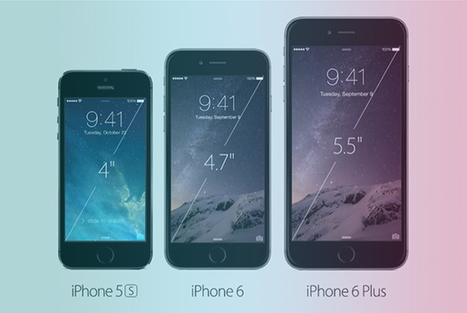







Ten ways to leverage analytics to facilitate innovation