 Your new post is loading...

|
Scooped by
Linda Holroyd
December 16, 2014 11:41 AM
|
It is that time of the year when we tend to pause and reflect. What have we achieved this year? What are the highlights of culture, business, technology, and trends that we have observed around us? For me, the most exciting and positive movement at present is in the domain of technology impacting education. And it is an impact that is coming from many different directions. Let’s explore them in further detail. Cost of higher education: The cost of higher education is high, and when coupled of youth unemployment and student debt, it has become a serious issue that is finally getting a great deal of attention this year. It is causing the higher ed institutions to experiment, consider alternative models, explore new ideas. Education has been a rather slow-to-change field. This year, however, I think the pace of change has picked up, and most likely, this trend is driven by fear. While the top institutions with big brands can justify their premium pricing, most others cannot. Tremendous amounts of quality educational content is available online for free, or at reasonable prices. Unless the degree comes with a serious branded network, is it worthwhile to pay so much? The question, I am sure, will be hotly debated over the rest of this decade, and changes will come. Question mark around liberal arts education: The jobs are mostly in the STEM fields. Then why would anyone pay $30k a year for four years to study the humanities? What is the justification for existence of the liberal arts colleges if they cannot translate that education into lucrative professional careers? This is the question plaguing the leaders in that field. Personally, I am a huge believer in liberal arts education. However, I also believe, that liberal arts should be the arts that liberate. Today, those are technology and entrepreneurship. Thus, I would like to see the liberal arts colleges make it compulsory for students to study programming and entrepreneurship as parts of their degree requirement. We’re not there yet, but by 2020, I hope, we get there. Evolution of engineering education: Most engineering schools are hotbeds of experimentation with MOOCs and other online education possibilities. EdX, the mother of all MOOCs, came out of a collaboration between Harvard and MIT, and is run by MIT’s Anant Agarwal. There is, however, concern around intellectual property, and many deans are not as keen to give out their jewels for free. My take on the subject is that Free is a dangerous path. Creating and delivering value isn’t free. Thus, consuming value should also not be free. Is education a public good? To an extent. But with governments neck-deep in debt, it is unclear how such models will sustain at scale. Nonetheless, experimenting with scalable modes of delivering world class education to students worldwide is worthwhile. Whatever comes out of this will likely, also, be worthwhile. The other observation I have is that many of the deans of engineering schools are trying to figure out how to also train their entire body of engineering students with entrepreneurship education. They don’t have adequate budgets yet, but again, with smart use of virtual methods, it is doable. I would like to see, by 2020, every single engineering student in the world ALSO trained in entrepreneurship. The pace of progress for humanity will accelerate tremendously. It is engineers, not MBAs, who know best how to ‘build’ things. That includes new companies. Demand for community colleges and vocational education: At the face of huge global youth unemployment numbers, the country that has drawn attention as a successful model is Germany. They do vocational training well. Most other countries don’t. America has an excellent network of community colleges through which really great quality vocational training CAN be delivered. However, the quality of the community colleges and their connections into the employers is quite poor. There’s a lot of work to be done here, but through a combination of virtual learnings methods and internships, the gap can be bridged. The model, also, needs to be replicated globally. Changes in K-12 education: Salman Khan has made some dent in K-12, and Khan Academy’s attempts at turning the schools from ‘sage on stage’ to ‘guide on side’ is a seminal experiment under way. Instead of not-very-qualified teachers trying to create course content, if the lectures are standardized and delivered via online video, which teachers guide students through exercises in class, the quality of education may significantly improve. It’s early. But, it is an extremely promising direction. In general, rich media content available widely for educational purposes is awesome. The film ‘Lincoln’ is far more engaging to teach history with than a dry text book. Broadband penetration: Today, the limiting factor for online education is broadband penetration. By 2020, this will change dramatically. The ability for digital learning to impact society will also change alongside. Changing dynamics of media consumption: The availability of vast amount of rich media content not only on smart phones and tablets, but also on television is drastically changing how people consume media. Instead of TV being time-bound, today, it is becoming largely on-demand. To the extent this trend accelerates, education and entertainment are going to intersect in ways that we haven’t seen yet. I see huge potential. Education businesses: For-profit colleges get a lot of flack. They charge big tuition fees, and don’t deliver on the employability metric as well. But, if you look at education businesses as great providers of digital programs and materials, without having to worry about accreditation, faculty, etc. such that existing institutions can scale their ability to deliver quality education using those capabilities at reasonable prices, the potential is enormous. If community colleges started adopting more of the proven digital learning methods and casting their faculty as ‘guide on side’, the results could be encouraging. In this, also, lies the answer to the question of how a liberal arts college or an engineering school can teach entrepreneurship or programming to large numbers of students (not 50 students, 5000 students). Entrepreneurship education and incubation: Entrepreneurship has justifiably become cool, and its education on high demand. This trend will continue. At every level – high school, college, graduate school, community college – entrepreneurship needs to be taught, and by 2020, we will see much greater penetration of entrepreneurship education throughout society. Entrepreneurship as a vehicle of economic development and prosperity is becoming well understood. Its education will also become so within this decade. Internships: There is a lot of discussion around whether unpaid internships should be legal. I think, this is nonsense. Any opportunity to educate and develop skills in people should be welcome. If employers are willing to train free of charge, it is absolutely ridiculous to not let them. It takes a lot of bandwidth for an organization to train green, unskilled people. It is free education that makes youth employable. I hope that aided by online services, the process of matching interns with employers will become pervasive at every level, in every country. This is an incredibly important youth development strategy for the world. Those are currently my observations. I have a long view, and fully acknowledge that it will take time. Many of the experiments are at their very beginning stages. Nonetheless, I do believe that we end this decade on high note, having achieved meaningful strides in the education domain. Looking For More Hands-On Advice? I receive many emails from entrepreneurs who want to discuss their specific businesses. I’m very happy to discuss your situation during my free online 1M/1M Roundtables, held almost every Thursday. During each roundtable, up to five entrepreneurs can pitch their businesses and receive my immediate and straightforward feedback. To give entrepreneurs all over the world access to Silicon Valley’s knowledge, methodology, and network, I founded the One Million by One Million (1M/1M) global virtual incubator. 1M/1M aims to nurture a million entrepreneurs to reach a million dollars each in annual revenue and beyond, thereby creating a trillion dollars in global GDP and ten million jobs. For those still testing the waters of entrepreneurship, I’ve written my Entrepreneur Journeys book series to inform and inspire. My newest book, Bootstrapping With A Paycheck, is now available from Amazon. If you are interested in entrepreneurship topics and my writings, you can follow mehere. I hope to publish three articles on LinkedIn every week.
|
|
Scooped by
Linda Holroyd
December 11, 2014 6:15 PM
|
If you live in Silicon Valley, chances are that you are reading this article from your iPhone, while riding in an Uber car to the company you work at that holds the next world-changing technology. But it goes beyond the technology we see and hold in our hands and includes all the industries the Valley has helped flourish, providing growth for technology that shapes our lives in ways many of us not only don’t understand, but don’t even know. The minds and innovation that live and thrive here hold the keys to future technology innovation. The San Francisco the Bay Area receives more than 50 percent of the country’s VC funding. Silicon Valley offers unparalleled access to high-quality engineers, a risk-taking culture, venture capitalists and superb universities. But the reason this particular spot ended up at the heart of the technology industry might surprise you. It all starts with Sputnik. Americans were brokenhearted when Russia beat the United States in the space race with the launch of Sputnik 1. NASA was created, and NASA needed high-powered components to be developed in order to put the first person on the moon. Fulfilling that need was Fairchild Semiconductor, which was founded in the Bay Area in the midst of Cold War competition. The seminal event was the spark that ignited Silicon Valley’s innovative, risk-taking culture five decades ago and it has truly shaped the way our lives have been, and will continue to be, enhanced by technology. If not for Sputnik we would not have witnessed the massive technology innovations that spawned from Fairchild Semiconductor and “Fairchildren” companies like Intel, AMD and NVIDIA. This was just the beginning. A flourishing hardware industry emerged. As a result, the software and Internet industries also flourished. Bay Area innovation is changing the way we do everything – from Uber disrupting the taxi industry, to Twitter disrupting the media industry and Facebook disrupting the communications industry. One can even argue that Barack Obama is president partially as a result of embracing social media technologies and Salesforce’s cloud-based software for campaign management – talk about a political disruption! In truth, you can look at any industry that has yet to be optimized by tech and bet that in the not so distant future it will experience a revolution in part due to innovations from Silicon Valley. Think about the transportation sector, an industry that hasn’t changed much in the last half century, but is on the precipice of complete technological disruption. Automated, self-driving cars are something we already see sharing our Bay Area roads, but in as little as five years these cars will likely be broadly available, instituting a massive disruption in the way we commute. Longer-term, this disruption will also offer a sizable boost to economic growth, with the number of accidents falling because of this sensor-based self-driving technology. The opportunity for mobile commerce and communication are also limitless. While these are areas that receive a lot of air time, it’s breathtaking to think that each of us with a smartphone holds more power in the palm of our hand than every computer we used to put a person on the moon (take that, Sputnik!), or that a child in Africa has more and faster access to information than Bill Clinton did in the 1990s. These revolutionary communications tools have worked to keep rogue governments in check, spurred political revolutions and enabled countries without sophisticated, tech-enabled banking systems to able to flourish, thanks to smartphone computing and the advent of Bitcoin. In short, the disruptive power of technology can, and will, rock every industry as we know it on a global scale. Still more industry-disrupting companies will be born in the Bay Area over the next decade, leveraging technologies via the Internet of Things (IoT) movement or, in true Valley style, creating an entirely new movement altogether. As an investor, the best investments are platform solutions because they own the ecosystem and are technologies that have the ability to scale and grow. Facebook, LinkedIn, eBay and even YouTube (as a media platform) are great examples of platform-based approaches that have scaled, with skyrocketing numbers of users, but also content or applications that run on top of them. It starts as one platform and morphs into something much bigger. The healthcare industry is beginning to see the platform tectonic shift that will change the way we all give and receive medical services. Once we address cloud-based security issues, enterprise public cloud computing will also flourish. Other regions have tried to emulate what the Bay Area has done with little success. The region’s technological prowess isn’t just due to great minds and high-quality schools like Stanford and UC Berkeley. If this were the case, then Oxford and Cambridge would make London a dominant tech center. Silicon Valley is a fertile technology crescent 50 years in the making. It is the product of Sputnik-induced competition, a 1960s induced cultural renaissance and an open-minded, risk-taking approach where failure is accepted. Silicon Valley cannot be replicated anywhere else, but the effects of its innovation will continue to be shared around the world.
|
|
Scooped by
Linda Holroyd
December 3, 2014 12:29 PM
|
Successful Business Models in an Age of Personalization filter out the noise generated from databases, sensors, and people, and provides filtered, data-driven, automated, relevant and actionable reports for people, teams and businesses so that they can better serve their customers and partners and other stakeholders. The trick is to digitize the information, engage and connect the communities of stakeholders, garner wisdom from the crowds as well as usage data, deputize contractors to deliver quality goods and services to-the-door, and continue to leverage Data, Sensor, Software, Network and Operational Advancements to sure that CUSTOMERS receive the personalized services they expect. Below are descriptions of these categories of business models and examples of companies implementing them well. Monetizing Digitized Content connects creators, consumers, communities and sponsors. It’s remarkable what NetFlix has done in the movie industry, taking down companies like Blockbuster, and what Amazon has done for books, moving us to paying for digitized volumes. - Progressive newspapers like the Wall Street Journal and the New York times are successfully selling online and mobile subscriptions to their targeted audiences. And businesses like Issuu work with tens of thousands of periodical publishers to convert print to digital formats, making it easy for publishers to do the conversion from print to digital.
- In the gaming and sports industries in particular, you will find that consumers are willing to pay more for quality, exclusive content. For example, ESPN is now partnering with local carriers to offer premium access to targeted sports content to their most loyal customers. And Sony Online Entertainment subscribers can pay $15 a month for select enhancements, including: more character slots and storage, 10% discount at SOE’s marketplace and a monthly allotment of virtual currency for purchasing upgrades.
Engaged Audiences and Communities will lead to more connections, more targeted conversations and longer and deeper interactions between members. - Many of these niche communities will make it easier for advertisers to connect with their targeted prospects, and help community members receive relevant information and deals. In fact, advertising strategies will target relevant communities, and will no longer focus on the Web 2.0 eyeballs-and-exposure strategy, preferring Click-Through models, which benefit both the advertisers and the prospects/customers.
- There is strength in numbers, and a good example of how that’s working is in the Crowdfunding Connecting with others to jointly fund promising ventures is lower risk, with potential up-sides. This trend will amplify and extend in other ways as well.
Wisdom From the Crowds leads to empowered and informed consumption. Getting vetted, impartial recommendations from trusted and experienced networks will saves time and money and increases the likelihood that you will be happy with the product and the results. - Product, Music and Service Recommendations: Whether it’s getting product recommendations with services such as Needle and Peerlyst, or getting music and playlist recommendations from your friends through iTunes or Spotify, or service recommendations through Angie’s List, Care and Thumbtack, it is very powerful and useful to get the input of the experts, people who have been-there, done-that, but without a motive or agenda. This crowd of experts-in-the-field and others with similar needs will continue to fuel purchasing decisions for all.
- Social networks such as FaceBook, LinkedIn, and Twitter help you connect with your network, communicate with your community, and create a platform to share your views. The crowd will help determine who’s popular, followed and respected – and those that are influence the decisions, thoughts and actions of others.
Post-Sales Data will help retailers proactively serve customers.Retailers are reasonably sophisticated today using past purchasing patterns to plan-fully stock their shops, but having data about what happens after purchases will help retailers even better prepare for and even anticipate customers’ preferences. - Information on what happens *after* a product is brought home – whether it’s used, how often it is purchased, long-term data on buying patterns for that product – will help retailers better project and plan for anticipated needs for niche customers, regions, areas.
- The Next-Generation of Mail Order retailers will be data-based, of course, assuming preferences on styles, colors, costs, quantity etc for each niche market. But what will be different will be how proactively send products out to customers with minimal risks to those customers, and then how they take feedback from customers to progressively more personalize future offerings.
Deputizing Vetted Local Vendors and Providers will conveniently bring products and services to the door. It’s hard to build an army of providers to serve the personalized needs of specific people in specific areas, and even harder to scale that army. Here are examples of companies successfully doing so. - The UBER/Lyft example shows how an army of deputized, local couriers will forever change the way people think about how to get from one place to another – and forever transform the taxi industry. Look also at what Surf Air is doing – providing all-you-can-fly memberships to-and-from convenient locations to frequent flyers. What will this mean to the airline industry in general?
- Amazon Fresh and Google Express are examples of how forward-thinking companies leverage technology to efficiently deliver perishables regularly to the doorstep. Both Google and Amazon will leverage supply chain concepts, delivery-optimization algorithms, and targeting populace target markets. Google Express will target the delivery of non-perishable staples, perhaps with the support of self-driving vehicles and Amazon Fresh will focus on efficiently delivering perishables. Both will continue to transform how we think about grocery shopping and online retailing.
This list isn’t intended to be exhaustive – in fact we will soon have a separate post that’s all about the data – filtering out the noise to find what’s relevant. Meanwhile, your input and thoughts are welcome.
|
|
Scooped by
Linda Holroyd
November 25, 2014 3:19 PM
|
Thanks to the Internet of Things (IoT), millions of “hyper-connected” smart homes, smart cities, smart refrigerators, and smart cars are coming down the pike, with the promise of helping people and businesses run simple while creating an estimated $65 trillion in global trade.
A never-before-seen powerful infrastructure must be able to accommodate the massive volumes of data these “things” generate.
Thankfully, today’s smart businesses are building a new communications fabric that is uniquely suited for IoT. How are they doing it and what challenges are they facing along the way?
According to Dan McNamara, Chief Executive at Keytree, the backbone exists to handle the large data stream being generated from everyday objects but the industry-at-large still needs to figure out why IoT adoption is important in the first place.
“We have to understand where this technological experience is going to meet human experience,” McNamara said during a recent SAP Radio broadcast. “I think that focus will make the adoption of the Internet of Things much stronger.”
Evolution of IoT Infrastructure
Denis King, SVP of Global Field Operations and Strategic Alliances at Solace Systems agrees, believing the real appeal of IoT is when the story lies close to the end user, the smart device, where people can make intuitive decisions. So what happens when 30 million applications connect to an infrastructure?
“There’s been an incredible amount of R&D in advancement and innovation in instrumenting and lowering the cost of the sensor and the devices,” said King. “And there’s actually been quite a bit of work in the analytic space moving from the traditional business intelligence to more real time predictive analytics.”
King believes the IoT infrastructure, communications standards and what data actually makes it back to the cloud of a data center needs to evolve.
Protecting IoT Privacy
Christine Hertzog, Founder and Managing Director of the Smart Grid Library believes there are many potential uses and benefits for different IoT stakeholders – and this creates privacy issues.
“There is definitely a monetization of this data and monetization can create privacy issues,” said Herzog. “It’s going to be important to keep in mind where ownership of that data should reside and what rules need to be put around it.”
IoT privacy comprises much more than people, according to Hertzog. For example, if data is being generated on the energy consumption of a building that becomes a privacy or competition issue as a business may not want competitors knowing how their business is doing based on that energy consumption data.
“It’s not a person, it’s not an individual, but it is an individual company and there might be some sensitivity to that data,” said Hertzog.
Where’s The Killer IoT App?
The killer IoT app may be here soon, thanks to the high level of interest in smart cities, buildings and transportation.
For example, air conditioning, lighting, fire alarms are all systems and can cede into central network. This can become a bit more advanced, possibly a bit more intelligent and behavioral based, which is already starting to happen, according to Keytree’s McNamara. “There’s a good business case with sustainability goals and efficiencies to be considered so I see smart buildings being an area of interest,” he said.
And even though home automation, smart metering, manufacturing, oil, gas and mining are catching on to IoT, according to King of Solace Systems, railways are benefitting from IoT big time. Some of the largest railway systems in the world have quadrupled the number of sensors on tracks to control trains better.
“And for every single mile an hour faster they can make those trains go with better control saves them in the order of $200 million on the bottom line,” said King. “These are use cases that we don’t hear about or we don’t talk about, but certainly ones that we see quite regularly.”
Hetzog of Smart Grid Library said certain killer IoT apps exist within city infrastructures like Los Angeles where sophisticated traffic light sensing systems help officials understand if they need to re-think the timing of their lights differently to avoid congestion.
“There’s fair amount of automation involved so that may be a killer app for them. It includes traffic flow and alleviates one of the problems or complaints of the citizens of that city have and it helps to make it more livable.”
|
|
Scooped by
Linda Holroyd
November 18, 2014 11:11 AM
|
When Domino's Pizza (NYSE: DPZ), the recognized world leader in pizza delivery, launched its fan-favorite Domino's Tracker® nearly seven years ago, smartwatch technology was likely never a part of the plan. It is now.
The pizza tracker, which allows customers to trace their order from the time it is taken, baked and out for delivery, will now be available on a new innovative platform: Pebble. This marks the first time that Domino's Tracker has been available on any smartwatch device.
Pebble Technology Corp. of Palo Alto, California, debuted its first smartwatch, Pebble, on Kickstarter in 2012, which remains one of the most successful crowd-funding campaigns to date. The company introduced a premium model, Pebble Steel, in January of this year.
"Partnering with Pebble makes perfect sense for our brand, as we continue to innovate and reinvent the ways Domino's and technology can interact," said Kevin Vasconi, Domino's Pizza chief information officer. "Pebble's story of beginning as a self-starter with a great idea completely aligns with the values of the Domino's brand – and we are proud to have such a shared entrepreneurial passion for the pursuit of innovation."
Offering such features as notifications and apps, Pebble hosts an app store with over 4,000 applications – including one for Domino's. By loading the app on your watch, and synching with the Domino's mobile app for either iPhone® or Android™, Domino's Tracker updates and notifications will show up directly on your watch in real time.
"We're thrilled to be the first smartwatch to partner with Domino's and help bring their beloved tracker experience to the wrist," said Shobeir Shobeiri of Pebble's business development team. "We designed Pebble to mesh seamlessly into your life, and the Domino's Tracker app is a natural addition to our growing appstore."
Domino's Tracker on Pebble is available for use beginning today, along with the Domino's mobile app for Android and iPhone. More information can be found at http://pbl.io/dominos.
"We think 'Pebblers' around the world will find it both simple and useful," said Shobeiri.
|
|
Scooped by
Linda Holroyd
November 13, 2014 11:51 AM
|
Twitter is getting some long-awaited updates. The company’s VP of product, Kevin Weil, says native video shooting and editing, filters for surfacing relevant tweets, and updates to direct messaging are all in the pipeline. The announcement came in a blog post released today. Earlier this year Twitter enabled users to natively embed GIFs and other videos. Now the company says it wants users to be able to record, edit, and post videos within its app. Twitter is most used during live events, so in-app video producing capabilities definitely capitalizes on that use case. Adding video functionality would also push Twitter to compete more directly with Instagram’s video editing and sharing tools. Twitter says it’s also working on creating tools that will make surfing the Twitter stream less of a chore. So far the company says it’s experimenting with creating “snapshots” for users that highlight some of the biggest news on the service. Already, Twitter surfaces trending tweets, but it doesn’t go much beyond that in terms of helping users make more sense of the stream. The company is also developing ready-made timelines for users who don’t want to spend time developing personalized lists. This could allow people to get into Twitter immediately based on the selection of a few key interests, which might help with the service’s sometimes daunting onboarding process. Finally, Twitter promises to update its direct messaging system and provide a way for users to move public tweets to private messages seamlessly. One of Twitter’s projects is to enable users to share and discuss tweets publicly and privately via direct messages. We’ll know more about that looks like when the feature rolls out next week.
|
|
Scooped by
Linda Holroyd
November 13, 2014 10:13 AM
|
Quirky, the New York City startup focused on crowdsourcing innovation, has also been working in partnership with GE to create a full-bodied ecosystem of connected devices and services for the smart home. Earlier this year, it spun out a whole new company, Wink, focused on building the app, hub, and control panels for the smart home. The problem is that studies show many people are still afraid to experiment with a smart home. "Most Americans still don't think the smart home is affordable," said Beth Comstock, GE's chief marketing officer. "Quirky today will turn that on its head. This morning it launched a bevy of new connected devices, along with a couple of other initiatives all aimed at driving mainstream consumer adoption of the smart home.
The first two items are bare-bones sensors. Overflow is a $35 unit that alerts you when it detects water leakage. Tripper is a $40 door and window sensor that monitors when something is opened or closed. It can be connected to your Wink app to automate certain routines, like turning off your lights when you leave in the morning, turning them on when you come home at night, or adjusting the heat when you open and close the window.
Outlink is a smart wall outlet with a pretty compelling selling point: it can monitor your energy consumption in real time to help you better understand your bill. Now you can find out if your vacuum cleaner or blender are sucking down pennies or dimes every time you run them.
Tapt is a smart wall switch that lets you program routines, control smart bulbs even when the switch is set to off, and use the app as your dimmer.
"MOST AMERICANS STILL DON'T THINK THE SMART HOME IS AFFORDABLE."
Ascend is the least exciting of the new products, it's basically a converter that makes your current garage door opener into a smart opener, which you can control and monitor through the Wink app.
Finally there was Norm, which Quirky CEO Ben Kaufman grandly introduced with the line, "Today we're announcing the death of the thermostat." It's not really clear why replacing one box with another equals the end of the thermostat, but Norm is much simpler and cheaper, at $80, than most smart thermostats. It monitors temperature in whatever room you install it, can be controlled with the Wink app, and can be easily connected to low-cost temperature sensors in any room. The Norm allows you to set and adjust temperature for an average of all your rooms or apply more finely tuned room-by-room temperatures if you have an HVAC system installed.
Where will you find a bunch of good, inexpensive sensors to work with your Norm? Quirky also announced the creation of a new micro-factory in San Francisco where it will produce custom-made sensor kits it's calling the Spotter UNIQ. The unit looks like a basic smoke detector but can be personalized to detect motion, temperature, humidity, light, sound, vibration, and several other factors. It's priced between $30 and $120 a unit, depending on how many different sensors and smart buttons you want crammed into it. The goal is to make it easy for consumers to have sensors in every room that fit their needs and to ask them only to pay for what they want.
TRYING TO SHOW THE WORLD THEY DON'T ACTUALLY WANT THE JETSONS
Last but not least, Quirky announced a new nationwide marketing campaign for Wink playing off of the theme of the creepy robot butler. The joke is that we've all been waiting for that Jetson's era home, with a digital assistant at your beck and call, is already here and would be better delivered with the Wink app than a humanoid machine. It's definitely a straw man (or bot), but it's also pretty funny.
For now, the big takeaway would be that Quirky and GE are powering forward in the smart home space, fleshing out an ecosystem of connected products that was already one of the most robust and readily available. Whether this will convince more consumers to start opening their wallets remains to be seen.
|
|
Scooped by
Linda Holroyd
November 5, 2014 3:38 PM
|
Permission is one of the most powerful concepts in strategic marketing, but it is an easy one to misinterpret if you are not careful. Here’s a few things you need to know:
1. Permission is anchored in the idea of what the world wants your company to be. It may surprise you that the world has an agenda for your company, but it does—even if it has never heard of you. The world has unmet needs, and it is always looking for someone credible to enlist in meeting those needs. If you are a start-up, then you are credible at being highly disruptive. If you are an established and vibrant enterprise, then you are credible as a responsible steward. If you are an aging enterprise looking to rejuvenate, then you are credible as an agent of change within a conservative community.
2. Permission means you get more than one bite at the apple. It means the customer base, and even the industry ecosystem, are willing to cut you some slack because, in their view, you represent the best chance for them to accomplish their agenda. In effect, you are granted a competitive advantage out of the box, given a status that none of your peers are getting. It is an amazing gift and is key both to start-up successes and enterprise turnarounds.
3. Permission is absolutely necessary at the point of business transformation. There are plenty of times when you can overcome lack of permission through tenacious persistence, but not at the point of transformation. When you are turning the boat, when you are changing the direction of your enterprise, when you are entering a new space, your first encounters need to be with natural allies. They may not have bought in just yet, but they must be naturally aligned with your agenda, or you need to go elsewhere. You are simply too vulnerable otherwise.
4. Permission is an invitation to display generosity. The prize you are after is a relationship of trust, one which will cause your target customers to privilege your company above other vendors. That’s what will secure your future in the new world. To accelerate getting to that point, begin with acts of strategic generosity, ones that demonstrate respect for the challenges your customers are hoping you can solve, and evidence that you have the wherewithal to solve them. Get these offers in play ASAP, and let the market’s viral properties drag you forward.
5. Permission has a sell-by date. When issues and concerns come to the fore, there is a period of several years during which the pragmatist herd will wait to see who is going to step up to meet its new set of needs. If you have the wherewithal to lean in at this time but hold back instead, perhaps because you fear you will cannibalize some other aging product line, you will not be forgiven downstream. Gather the rosebuds while ye may.
That’s what I think. What do you think?
|
|
Scooped by
Linda Holroyd
November 3, 2014 1:39 PM
|
In early October, Google announced a new project called " The Physical Web," which they explain like this: The Physical Web is an approach to unleash the core superpower of the web: interaction on demand. People should be able to walk up to any smart device - a vending machine, a poster, a toy, a bus stop, a rental car - and not have to download an app first. Everything should be just a tap away. At the moment this is an experimental project which is designed to promote establishing an open standard by which this mechanism could work. The two key elements of this initiative are: URLs: The project proposes that all 'smart devices' should advertise a URL by which you can interact with that device. The device broadcasts its URL to anyone in the vicinity, who can detect it via their smartphone (with the eventual goal being this functionality is built into the smart phone operating systems rather than needing third-party apps). Beacons: Not well known until Apple recently jumped on the bandwagon announcing iBeacons, beacon technology has been around for a couple of years now. Using a streamlined sibling of Bluetooth, called Bluetooth Low Energy (no pairing, range of ~70 metres / ~230 feet) it allows smartphones to detect the presence of nearby beacons and their approximate distance. Until now they've mostly been used to 'hyper-local' location based applications (check this blog post of mine for some thoughts on how this might impact SEO). The project proposes adapting and augmenting the signal that Beacons send out to include a URL by which nearby users might interact with a smart device. This post is about looking to the future at ways this could potentially impact search. It isn't likely that any serious impact will happen within the next 18 months, and it is hard to predict exactly how things will pan out, but this post is designed to prompt you to think about things proactively. Usage examples To help wrap your head around this, lets look at a few examples of possible uses: Bus times: This is one of the examples Google gives, where you walk up to a bus stop and on detecting the smart device embedded into the stop your phone allows you to pull the latest bus times and travel info. Item finder: Imagine when you go to the store looking for a specific item. You could pull out your phone and check stock of the item, as well as being directed to the specific part of the store where you can find it. Check in: Combined with using URLs that are only accessible on local wifi / intranet, you could make a flexible and consistent check in mechanism for people in a variety of situations. I'm sure there are many many more applications that are yet to be thought up. One thing to notice is that there is no reason you can't bookmark these advertised URLs and use them elsewhere, so you can't be sure that someone accessing the URL is actually by the device in question. You can get some of the way there by using URLs that are only accessible within a certain network, but that isn't going to be a general solution. Also, note that these URLs don't need to be constrained to just website URLs; they could just as well be deep links into apps which you might have installed. Parallels to the web and ranking There are some obvious parallels to the web (which is likely why Google named it the way they did). There will be many smart devices which will map to URLs which anyone can go to. A corollary of this is that there will be similar issues to those we see in search engines today. Google already identified one such issue—ranking—on the page for the project: At first, the nearby smart devices will be small, but if we're successful, there will be many to choose from and that raises an important UX issue. This is where ranking comes in. Today, we are perfectly happy typing "tennis" into a search engine and getting millions of results back, we trust that the first 10 are the best ones. The same applies here. The phone agent can sort by both signal strength as well as personal preference and history, among many other possible factors. Clearly there is lots of work to be done here. So there is immediately a parallel between with Google's role on the world wide web and their potential role on this new physical web; there is a suggestion here that someone needs to rank beacons if they become so numerous that our phones or wearable devices are often picking up a variety of beacons. Google proposes proximity as the primary measure of ranking, but the proximity range of BLE technology is very imprecise, so I imagine in dense urban areas that just using proximity won't be sufficient. Furthermore, given the beacons are cheap (in bulk, $5 per piece will get you standalone beacons with a year-long battery) I imagine there could be "smart device spam." At that point, you need some sort of ranking mechanism and that will inevitably lead to people trying to optimise (be it manipulative or a more white-hat approach). However, I don't think that will be the sole impact on search. There are several other possible outcomes. Further impacts on the search industry 1. Locating out-of-range smart devicesImagine that these smart devices became fairly widespread and were constantly advertising information to anyone nearby with a smart devices. I imagine, in a similar vein to schema.org actions which provide a standard way for websites to describe what they enable someone to do ("affordances," for the academics), we could establish similar semantic standards for smart devices enabling them to advertise what services/goods they provide. Now imagine you are looking for a specific product or service, which you want as quickly as possible (e.g "I need to pick up a charger for my phone," or "I need to charge my phone on the move"). You could imagine that Google or some other search engine will have mapped these smart devices. If the above section was about "ranking," then this is about "indexing." You could even imagine they could keep track of what is in stock at each of these places, enabling "environment-aware" searches. How might this work? Users in the vicinity whose devices have picked up the beacons, and read their (standardised) list of services could then record this into Google's index. It sounds like a strange paradigm, but it is exactly how Google's app indexing methodology works. 2. Added context Context is becoming increasingly important for all searches that we do. Beyond your search phrase, Google look at what device you are on, where you are, what you have recently searched for, who you know, and quite a bit more. It makes our search experiences significantly better, and we should expect that they are going to continue to try to refine their understanding of our context ever more. It is not hard to see that knowing what beacons people are near adds various facets of context. It can help refine location even further, giving indications to the environment you are in, what you are doing, and even what you might be looking for. 3. Passive searches I've spoken a little bit about passive searches before; this is when Google runs searches for you based entirely off your context with no explicit search. Google Now is currently the embodiment of this technology, but I expect we'll see it become more and more I believe could even see see a more explicit element of this become a reality, with the rise of conversational search. Conversational search is already at a point where a search queries can have persistent aspects ("How old is Tom Cruise?", then "How tall is he?" - the pronoun 'he' refers back to previous search). I expect we'll see this expand more into multi-stage searches ("Sushi restaurant within 10 minutes of here.", and then "Just those with 4 stars or more"). So, I could easily imagine that these elements combine with "environment-aware" searches (whether they are powered in the fashion I described above or not) to enable multi-stage searches that result in explicit passive searches. For example, "nearby shops with iPhone 6 cables in stock," to which Google fails to find a suitable result ("there are no suitable shops nearby") and you might then answer "let me know when there is." Wrap up It seems certain that embedded smart devices of some sort are coming, and this project from Google looks like a strong candidate to establish a standard. With the rise of smart devices, whichever form they end up taking and standard they end up using, it is certain this is going to impact the way people interact with their environments and use their smart phones and wearables. It is hard to believe this won't also have a heavy impact upon marketing and business. What remains less clear is the scale of impact that this will have on SEO. Hopefully this post has got your brain going a bit so as and industry, we can start to prepare ourselves for the rise of smart devices. I'd love to hear in the comments what other ideas people have and how you guys think this stuff might affect us. About Tom-Anthony — Tom is Head of R&D at Distilled, which focuses on a variety of areas, including spending time looking at technology trends. He is currently writing up his thesis for a PhD in Artificial Intelligence. Follow him on Twitter: @TomAnthonySEO or Google+, or read his blog.
|
|
Scooped by
Linda Holroyd
October 30, 2014 5:13 PM
|
Experts imagine how our lives will be different when our connections are 100 times faster than today's. (Are you listening, Comcast?)
For all the ways the Internet has changed how we live and work over the last 20 years, there are still plenty of areas it hasn't touched, and plenty more where it hasn't been as revolutionary as predicted. (Futurists in the '90s said we'd all be making virtual commutes by now. Most of us are still waiting.)
One limiting factor has been connectivity speeds, which haven't grown to allow for more sophisticated services and, in the U.S., have even fallen behind other nations. The current U.S. average connection speed is 10.5 megabits per second (Mbps) compared to speeds of up to 23.6 Mbps in South Korea, the nation with the best speeds.
But what happens when we do finally get fiber into every home? That's the subject of a new report from the Pew Research Center, which asked 1,464 experts to make predictions for what might become possible with speeds 50 to 100 times faster than what we have now. Below are a few ideas we picked out.
LESS TRAVEL
Many respondents said telepresencing will be a reality by 2025, especially for business. “I believe ‘telepresence’ will be a driving application in the workforce, and thus the ability to have multi-person meetings without travel will be enhanced significantly,” says Jim Hendler, a professor of computer science at the Rensselaer Polytechnic Institute. People won't need to travel so much, and we'll enjoy "truly immersive entertainment and communications," according to Kathryn Campbell, partner with interactive agency Primitive Spark. She predicts something like the Holodeck, the simulated reality room seen on Star Trek.
VIRTUAL REALITY IS REALITY
Dipping into faraway worlds will be easier, due to virtual and augmented reality. System programmer and author David Collier-Brown, expects to take a bus tour of Istanbul from his living room. Alison Alexander, at the University of Georgia, says the "global nature of connectivity could foster an integrated world economy, breaking down the importance of nations and governments." Bryan Alexander, senior fellow at the National Institute for Technology in Liberal Education, says life and games will become increasingly intertwined: "We should expect new forms of gaming to emerge, such as ones integrating daily life with games."
WE'LL RECORD EVERYTHING
Today's intermittent life-logging will become "cradle-to-grave" and "always-on." Nothing will escape the cameras, such that there's be more pressure to live a full life, says educator Laurel Papworth. David Orban, CEO of translation startup Dotsub, expects "emotional computing" will process our facial expressions as well as our keystrokes. "Remote group collaboration will gain a fundamental new dimension in being able to record, transmit, analyze, and understand the full gamut of human emotions," he says. Hal Varian, chief economist for Google, expects more continuous health tracking: "It will be much cheaper and more convenient to have that monitoring take place outside the hospital. You will be able to purchase health-monitoring systems just like you purchase home-security systems."
HEALTH AND EDUCATION
Health and education could be (and, to some extent, are already) the next sectors disrupted by the Internet. “Just-in-time learning will continue to expand, permitting people of all ages to find the information they need when needed," says Internet policy consultant Ed Lyell. "Time in school will need to radically change since the talking-head, expert teacher is less and less valuable." Judith Donath, a fellow at Harvard’s Berkman Center for Internet and Society, expects more telemedicine and individualized health care. "The next big food fad, after hipster locavores, will be individualized scientific diets, based on the theory that each person’s unique genetics, locations, and activities mean that she requires a specific diet, specially formulated each day," she says.
DON'T GET TOO EXCITED
The survey also picked up on a lot of pessimism about the future. Respondents expect digital divides to widen if fiber-grade Internet is limited to those who can afford steep charges. Speedier connectivity also may not be the elixir it's cracked up to be. "I note that there haven’t been any ‘killer apps’ for quite a while. All the recent candidates (social media) are minor permutations of Internet messaging," says Robert McGrath, an early World Wide Web developer.
Leah Lievrouw, a professor at the University of California-Los Angeles, expects efforts to "stabilize" or "lock down" the Internet to continue: "We might well increase digital bandwidth, but use it to deliver and meter familiar, trusted (and ‘safe’) products and services, or variations on them: media content, college lectures, voice telephony, security services, public utilities, financial information and services, health care advice, and so on,” she says.
Online, there's a lot to look forward to, but plenty to guard against at the same time.
|
|
Scooped by
Linda Holroyd
October 28, 2014 12:44 PM
|
XYZprinting announced it has created an all-in-one 3D printer and scanner for sale starting today at $800.
The Da Vinci 1.0 all-in-one 3D printer allows just about anyone to create a 3D-printed object, and that’s one of the requirements for mass adoption of the new technology. By adding a scanner to the 3D printer, XYZprinting has lowered the bar for many people, Simon Shen, chief executive of Taipei-based New Kinpo Group, the parent company of XYZprinting, told VentureBeat in an interview.
3D printing hardware sales have grown at a 32.3 percent compound annual growth rate for the past three years, according to market researcher Wohlers Associates. It is now a $3 billion industry, and it could grow to $21 billion by 2020, Wohlers says. New Kinpo Group is a good company to enter the market as it has been making inkjet and laser printers for 15 years as a contract manufacturer, Shen said.
“We thought that 3D printers would be the rising star for the printing industry, and so we started this work a while ago,” Shen said. “We asked our customers if they were interested, but they felt the market was too small. So we decided we should do it ourselves.”
The product is a follow-up to the $500 3D printer that the company launched earlier this year as it tries to bring low-cost 3D printers to the mainstream. It isn’t nearly as cheap as inkjet printing — a technology that New Kinpo Group also specializes in manufacturing — but the prices are starting to come down.
XYZprinting, which has a U.S. office in San Diego, Calif., has tried to make it easy to design your own 3D object through software that runs on a PC. The software lets you preview the scan and edit the object as necessary before printing. You can also scan an object and then modify it or share the design with others.
The new device has built-in high-resolution scanning with an industrial grade scanning resolution of 0.5 millimeters. You can design objects in a matter of minutes and save them in the industry standard .stl format. It has diagonally placed laser sensors that speed up the scanning in conjunction with a turntable to ensure a comprehensive scan. The machine has an algorithm (patent pending) that fills in voids with texture and curves to provide a seamless printed object.
The Da Vinci uses fused filament fabrication technology (FFF) and can print items that have dimensions of 7.8 inches by 7.8 inches by 7.8 inches. I checked out the objects and they are reasonably precise, though the plastic object is someone grainy and rough rather than perfectly smooth. XYZprinting has a cloud-based database of open-source 3D models that consumers can choose to print.
“We are trying to set the most reasonable prices,” Shen said. “If we can get it below $500, it becomes more affordable than an [unsubsidized] mobile phone.”
Shen said the device has a smart filament cartridge system and its nozzles are easy to clean. A speed-scan feature can print an object in just five minutes. For better quality, it could take a few hours.
The machine is available for order on Amazon, and it will go on sale on sites such as NewEgg.com and retailers Micro Center and Studica soon. XYZprinting’s $500 3D printer is a single-color printing device. The interest in that device has been with hobbyists, students, teachers, and designers. The chief rival is Makerbot.
Shen said that 3D printing is gaining traction in markets such as education, design, fashion, medical, and automotive. But Shen said that there are still about 10 different technologies competing to be mainstream for 3D printing. Over time, Shen believes, his company will be able to do things like print in chocolate, if people want that.
“This is very early stage, as most people don’t know how to draw a 3D object,” Shen said. “But that will change over time. In 20 years, I believe a 3D printer will be part of everyone’s life.”
|
|
Rescooped by
Linda Holroyd
from Creators Lab
October 27, 2014 2:35 PM
|
The Internet of Things is emerging as the third wave in the development of the internet. While the fixed internet that grew up in the 1990s connected 1 billion users via PCs, and the mobile internet of the 2000s connected 2 billion users via smartphones (on its way to 6 billion), the IoT is expected to connect 28 billion “things” to the internet by 2020, ranging from wearable devices such as smartwatches to automobiles, appliances, and industrial equipment. The repercussions span industries and regions.
At Goldman Sachs, we see numerous triggers turning the IoT from a futuristic buzzword to a reality. The cost of sensors, processing power, and bandwidth to connect devices has dropped low enough to spur widespread deployment. Innovative products like fitness trackers and Google’s Nest thermostats are demonstrating the potential for both consumers and enterprises. And corporate alliances are taking shape to set the standards needed to integrate the wide array of devices in a cohesive way.
While these enablers make the IoT possible, its long-term success depends on the use cases that help realize the economic potential of connecting billions of devices, either to improve quality of life or save money. We focus on five key verticals where the IoT will be tested first: Connected Wearable Devices, Connected Cars, Connected Homes, Connected Cities, and the Industrial Internet.
Early adopters in these verticals are using the IoT to pioneer new product areas and to find efficiencies that save money or reduce demand for resources. In wearable devices, new consumer categories are emerging in fitness bands, action cameras, smart watches and smart glasses. Cars are becoming more connected with each new model, driven by infotainment, navigation, safety, diagnostics, and fleet management. Consumers in these verticals are able to see the internet extended beyond desktops and mobile devices.
Connected Homes are perhaps the clearest next proving ground for the IoT, combining both the potential to spawn new lines of products and services in areas such as security cameras and kitchen appliances, and the chance to reduce energy use and costs through smart thermostats and HVAC systems.
We believe this segment could generate meaningful revenue in the near term. Samsung said at its 2014 investors forum it expects the global Smart Home Device market to reach $15 billion in 2015, almost doubling from 2013’s $7.8 billion. Samsung expects the bulk of this opportunity to be driven by the U.S., U.K., Australia and China.
In connected cities, the U.S. has emerged as a leading adopter of smart meter technology for power utilities, approaching 50% penetration of 150 million total endpoints. The initial foray into connected cities was catalyzed by over $3 billion in stimulus funding and support for smart grid technology as part of the 2009 American Recovery and Restoration Act. Government initiatives are likely to drive growth internationally as well. In Europe there is a target for 80% of households to have smart meters by 2020.
Smart meters and the grid network architecture lay the foundation for further connectivity throughout cities, including smart street lighting, parking meters, traffic lights, electric vehicle charging, and others. According to The Climate Group, a non-profit organization dedicated to reducing carbon use, combining LED lamps in streetlights with smart controls can reduce CO2 emissions by 50%-70%.
Within the vast Industrials sector, the IoT represents a structural change akin to the industrial revolution. Equipment is becoming more digitized and more connected, establishing networks between machines, humans, and the internet and creating new ecosystems. While we are still in the nascent stages of adoption, we believe the Industrial IoT opportunity could amount to $2 trillion by 2020. Included within this Industrial category are numerous sectors, from transportation to health care to oil and gas, each of which will be affected.
Specifically, we expect IoT to impact three main areas within industrials: building automation, manufacturing, and resources. Factories and industrial facilities will use the IoT to improve energy efficiency, remote monitoring and control of physical assets, and productivity.
With several infrastructure booms coming to an end and rising cross-border competition, industrial companies are looking for new sources of growth. Fixed investment is moving away from traditional capital goods equipment, creating new business models that more seamlessly integrate hardware and software, which support recurring revenue streams and greater customer stickiness.
As with any gold rush, the early winners from the IoT are likely to be the suppliers selling the “shovels” to make the connections possible and to process the vast amounts of data. But in the long run, the ultimate impact of this third wave of the Internet depends on the adopters in these proving grounds finding gold in connecting billions of devices into an intelligent network.
Via Valeria Duflot
|
|
Scooped by
Linda Holroyd
October 24, 2014 1:07 PM
|
Global streaming music company Deezer has purchased news and talk radio service Stitcher, the companies announced today. Financial terms of the deal were not disclosed.
The acquisition marks the latest move by Deezer to gradually enter the crowded U.S. streaming music market, with rivals like Spotify, Pandora, Rdio, and Beats Music leading the pack. But unlike other top U.S. streaming services, Deezer plans to capitalize on the undeserved group of consumers interested in listening to talk radio, nationally syndicated radio programs, podcasts, sports commentary, and more.
Stitcher, meanwhile, is the clear leader in non-music streaming audio content, with 35,000 shows from over 12,000 providers (including NPR, BBC, and Fox News). It also offers access to a number of podcasts and is much easier to access than apps from individual content providers or even Apple’s native Podcast app for iOS.
“We think there’s a lot of underutilized potential in streaming talk and news radio content, which none of the leading music services offer,” Deezer North America CEO Tyler Goldman told VentureBeat. “The perception that there are two different kinds of consumers that only prefer either streaming music or talk radio is incorrect. People are interested in consuming both, but right now non-music streaming content isn’t easy to find.”
Deezer’s strategy for carving out a space in streaming services has been to identify smaller, niche areas of streaming audio that aren’t being service by all-encompassing music services that try to appeal to everyone. Take, for instance, Deezer’s first step into the U.S. with high-resolution streaming music service “Deezer Elite” for those that primarily want to listen to music over Wi-Fi where home audio systems are available to take full advantage of the superior sound quality. This logic is also why Deezer sees potential in Stitcher — especially with the forthcoming rise in connected cars via in-dash audio players that support Apple’s CarPlay or Google’s Android Drive platforms.
Stitcher is especially valuable to Deezer because it is already available on most devices and platforms (including several connected cars) and is among the most popular podcast/talk radio apps on Android and Apple’s App Store. The service doesn’t like to tout the total number of active monthly listeners, but Stitcher’s distribution is almost more important to a company like France-based Deezer that doesn’t yet have a strong presence in the U.S.
That said, Goldman told me that distribution was a relatively small factor in Deezer’s decision to buy Stitcher. He also said Deezer isn’t planning to use Stitcher as a springboard for getting deeper into the advertising business, as Deezer is still primarily focused on driving growth to its paid monthly subscriptions. Deezer has 16 million active monthly listeners and over 5 million paying subscribers across the world. For perspective, Spotify has about 10 million paying subscribers and 40 million active users across the globe. So Deezer isn’t the largest global streaming audio service company, but it’s still significantly large, especially when looking at the number of paid vs. free users.
Deezer said it plans to keep Stitcher operating as a separate entity that generates revenue through advertising, as it currently does. But Stitcher’s technology and some of its non-music audio content will be integrated into Deezer’s other products in the future. This includes the 180 countries where Deezer is currently available, which means Stitcher’s audience reach just got a heck of a lot bigger.
Stitcher previously raised a total of $18.7 million in funding from Great Oaks Venture Capital, Benchmark, SV Angel, and others. And while Deezer didn’t disclose how much it spent to buy Stitcher, Goldman did say: “Well, no, talk was not cheap. But it is very valuable.”
|
|
|
Scooped by
Linda Holroyd
December 15, 2014 5:09 PM
|
These days, it seems like everything is automated. Thanks to companies like Amazon, Netflix, and Pandora, the world has become more and more accustomed to buying and using products and services without ever having to talk to an actual human being. As consumer expectations have evolved, so has business. To survive in business today, you have to be willing and able to adopt technology and processes that boost efficiency. Things have to move fast if you want to meet the needs and demands of customers. That’s why in the business world we’re using marketing automation more than ever before. It’s the only way to keep up with expectations and demands. But if you want to truly grow your business and take things to the next level, you can’t just focus on automation. You have to also commit to keeping things personal—especially when it comes to your marketing efforts. Compelling Research Despite the fact that the entire world is obsessed with using technology to streamline every aspect of life, the truth is, at the end of the day, people still ultimately like doing business with people. According to a recent guidepublished by Help Scout: 70% of buying experiences are based on how the customer feels they are being treated.In the last year, 67% of customers have hung up the phone out of frustration they could not talk to a real person.In 2011, 86% of consumers quit doing business with a company because of a bad customer experience3 in 5 Americans (59%) would try a new brand or company for a better service experience. As a business owner, you have to remember to keep the human side of your business alive as you adopt and integrate new processes that streamline parts of your business. Because the way you interact, sell, onboard, and market to your prospects and customers still matters. Helpful Tools To Help Keep Things Personal When it comes to implementing tools that help you automate your marketing efforts, you have to choose wisely. Not all tools are created equal. The best tools out there are the ones that make it easy and possible for you to continue giving people the royal treatment. Because that’s what people are wanting and expecting from companies now more than ever before. I think Gary Vaynerchuk says it best here: “You have to be no less than a customer concierge, doing everything you can to make every one of your customers feel acknowledged, appreciated, and heard. You have to make them feel special, just like when your great-grandmother walked into Butcher Bob’s shop or bought her new hat, and you need to make people who aren’t your customers wish they were.” — Gary Vaynerchuk, “The Thank You Economy Fortunately, there are a lot of great tools out there that give you the opportunity to automate your marketing efforts while still keeping things personal. Here are a few of my favorites: 1. Intercom: Intercom is a tool that can not only show you who is using your product, but it also makes it easy to personally communicate with them through targeted, behavior-driven email and in-app messages. With the app in place, you can reach any one of your customers in a matter of seconds and send them a personalized messages to get them the help they need. It’s a great example of an automation tool that makes scaling your business while keeping the human aspect of business alive possible. 2. Streak: Streakis essentially a CRM tool for Gmail. We use it at When I Work as a way to personally connect with people who might be interested in sharing our content or sharing insight in our blog posts. With Streak, you can automate your emails, but you’re still able address recipients by name and include relevant details specific to each person. Instead of sending all the emails at once, this Chrome extension sends out each email individually, which makes things seem even more personal. 3. Buffer: Buffer is a social media management tool. It’s unlike other social media management tools in that it actually makes it easy to confirm that you’re actually tagging (@ mentioning) the right people in the tweets you to schedule to publish at a later time. It’s similar to other social media management tools in that it allows you to schedule your updates to go live when your followers are actually listening. Both features make it the clear winner for an app that can automate your social media efforts but still make it seem like someone from your team is present and available to interact with interested followers. If you’re looking for another great social media monitoring tool to add to your arsenal, tryMention. It’s different than Buffer and definitely worth checking out. 4. MailLift: MailLift is a handwritten letter service for sales professionals and marketing teams. With this app, you set a template, select recipients, and customize any other details to make your handwritten letter stand out. Then an actual person handwrites your letter for you, and MailLift sends it out on your behalf. When it comes to saying thanks, nothing comes close to a handwritten letter, especially these days. It’s a great way to make your customers feel like they are getting special, personal attention from you even as your business continues to grow. Effective Strategies To Keep The Human Side of Your Marketing Efforts Alive It is possible to keep marketing personal in the age of automation. If you’re feeling inspired and want to make some changes, start by following these recommendations: 1. Ditch automated “no reply” emails and replace them with emails from an actual person on your team. Your prospects aren’t expecting they’ll get to talk to an actual person. Surprise them. 2. Send personalized, handwritten thank you cards to each new customer you acquire. Go the extra mile to show them how much you value them as a customer. 3. Pay attention and react to your social analytics. Before you can use software to schedule your social media posts, you have to know when your followers are actually active and listening. 4. Always make it your goal to help solve the problems your customers have, from the moment they first engage with you. This one is important. You can’t convert people if you can’t prove to them that you can help them in some way. If you want to really dive into this concept, listen to this podcast. It’ll help steer you in the right direction. 5. Be transparent. Give your customers opportunities to get to know you and the people who work for you better. It’ll help you boost customer loyalty and differentiate from competition. 6. Make sure your customers know they can reach out to you in a number of ways. Make sure they know that real people are listening and where they can reach them when they need help.
|
|
Scooped by
Linda Holroyd
December 8, 2014 5:26 PM
|
It’s going to be one of the most interesting years ahead. There are disruptive marketing trends ahead and this list starts to build on the platform of sharing, something I’m very interested in and will be focusing even more on in 2015. I will focus on sharing platforms (not just social networks). More specifically, I’ll be focusing on how, why, when and where we share and how it will change the way customers do business with people and brands. Here we go:
Video Becomes Experiential - This shouldn’t be anything new to hear, but the growth that will happen in video marketing will take off in ways we’ve never seen. Again, Facebook is planning to outperform Youtube, and I believe it will. Video gives us the most context around people, companies and things over any other online medium. But start thinking about video as experiential. This is where 3D glasses and video start to give us the ability to play with video and experience stories, shopping and interactions in a new way.
Shareable Experiences – You will start to see shared experiences integrate into our lives because brands will have to partner with potentially unexpected people to offer a unique, delightful experience that’s personally tailored to the user. Brands will also be coming up with new, innovative ways to socially share this personal experience in real time. This won’t be accomplished overnight, but I think it’s getting there.
Narrative Science – The reports, white papers and research papers we produce take a long time to create and have a shelf life. The only difference from year to year is that a human has to go in and relay the story in-between the numbers, delivered in the same template. Narrative science starts to solve that problem by analyzing numbers and building the story on it’s own, in real time. For instance, if numbers have changed over one hour, one day, one year, narrative science will reflect that analysis back immediately if asked. I don’t believe there is any way for a system like this to pre-determine a storyline when it comes to making a gut based decision, but in these cases, we are all looking for ways to build on research and release it with confidence in minutes versus days, weeks or months.
Invective Marketing – I hesitated putting this one down here, but it’s becoming a thing more and more. It turns out being despicable to people online is a growth trend and, for aficionados of the discipline, the potential returns are substantial. Because individual brands now carry as much weight as company brands, some people have found a living literally arguing with people across social channels as a form of amplification and impression-building. The trickiest bit about invective marketing is that you first must establish a foothold in the media landscape somewhere and build a large following. Whatever you say must be nasty, argumentative and controversial enough for people to want to respond impulsively – i.e. it can’t be directed at people who everyone agrees deserves public scorn. Most businesses will not do this, but it is becoming a thing with a lot of notable people with a voice to combat vs converse. Remember this before you respond with an opinion to something controversial online, you could be falling into the sleazy trap they’ve set to selfishly profit from.
Transmedia Storytelling – The story is everywhere now, it’s not something we just see online, or in the lobby waiting for our next appointment, or on the road, or on a social network. The story is everywhere, yet as marketers we are designing the story for each individual channel. I think we’ll see this changing next year, where the story is continued and pieced together as a transmedia thread, giving us bite-sized pieces of information while entertaining us at the same time. It’s how we respond as humans. For as poorly as the movie business is at leveraging social media, they are actually really good at snippet storytelling in many diverse places. Watch how the upcoming Star Wars movie surrounds you, making you feel like the movie is just a small piece of the experience they’ve conceived for you to have.
Personalized (Human) Marketing – Think about how much email you receive that has nothing to do with you. The variable data email says “Hello Bryan, we thought this would be of interest to you….” and you realize right away it has nothing to do with you. It’s automated. This is lazy marketing and it’s killing your conversions. It’s also a facet of the technology systems and what they will allow. I’ve talked about this before; if we use personality trait mapping and develop right-time marketing messaging to individuals, it will make the recipient feel like making a connection with you is a real human experience.
The Narrowing of API’s – This is going to be a hot topic in the social and open source software systems. I’ve always been a proponent of open source, because it has helped marketers steer toward the single dashboard we have always desired to capture in one centralized place, the numerous pieces of software we use to track data across our organizational channels. Software brands have loosened their open API reins and continue to do so, but I think in 2015 some social networks and software will start to pull back. Why? Well, let’s take Facebook for instance. They want to deliver your analytics directly to you and won’t want to share that through 3rd party software. This gives them the ability to drive a single source dashboard through just them and control the outcome and ability to market all on their platform. I think closing APIs may start to give brands like Facebook a competitive advantage, or more ways to add revenue. Everything is cyclical.
KEY TAKEAWAY: Sharing will be at the epicenter in 2015. We have the tools and technology right now – the challenge will be to exercise our own human ability to change the paradigm of how we tell stories, tolerate inhumanity online and exercise discernment in how much we let technology lead or control how and what we communicate.
|
|
Scooped by
Linda Holroyd
December 3, 2014 11:08 AM
|
China has long been known as the factory to the world, and with good reason. In 2011, for example, it manufactured 90% of all the personal computers produced globally that year, as well as 80% of the air conditioners, 74% of the solar cells, and 70% of the mobile phones. Like a factory, China has a reputation for being dirty, noisy, crowded and jarring to the senses – the kind of place you’re eager to clock out from and leave at 6 PM. And like the factory floor, China is usually the last and perhaps the least interesting stage of manufacturing and assembly in global supply chains. Typically, the innovation happens elsewhere. But amid the gritty business of global supply chains, some Chinese industries are developing surprisingly innovative services and products. Here are eight of the industries in China that are doing a better job at meeting people’s needs and pushing the boundaries of innovation than more established competitors in other parts of the world. 1. Micropayments Micropayments have finally become a standard in the West, with internet users now paying small fees for virtual goods from the Apple iTunes store and games like Candy Crush. But before they were popularized in the U.S., these mini-payments were common in East Asia, where widespread piracy made it difficult for companies to profit from selling games or software, as most companies have in the West. Instead, Chinese tech companies would offer their games and web services for free, and then charge small amounts of money for individual pieces of content – such as a virtual sword to help a gamer reach the next level, a new outfit for a virtual avatar, or a new ring tone for your cell phone. This business model not only helped digital companies make money despite rampant piracy, it also proved more appealing in a lower-income country, where consumers were less willing and able to shell out a big lump sum for a digital product up front. Tencent, now one of China’s most successful companies, built its empire on countless of these mini transactions. 2. E-commerce Americans are more aware than ever of the promise of the Chinese e-commerce market, after Alibaba’s massive and successful U.S. listing this fall. Alibaba is an innovative company, adapting eBay’s business model to the Chinese market in a number of interesting ways. But the most innovative thing about Chinese e-commerce may be simpler and broader reaching: That e-commerce has basically leapfrogged traditional retail in China, bringing modern consumerism to developing rural areas before brick-and-mortar stores can. China is a massive country, both in terms of size and population. Faced with these logistical challenges, many upscale brands have barely penetrated into China, establishing just a few stores in the country’s largest coastal cities. Apple, for example, has only 13 stores in China, despite recording net sales of $9.3 billion in China in the second quarter. Chinese consumers outside of the major cities have quickly taken to going online to buy products, obviating brick-and-mortar stores. That demand from lower-tier cities helped e-commerce revenues expand at more than 70 percent per year between 2009 and 2012, according to research by KPMG. Of course, none of this would be possible without… 3. Delivery services Of course, sometimes your delivery guy gets lost, or is vague about what time he will arrive. But in general, courier services in China are flexible, fast and very cheap – so much so that some friends in Shanghai would use delivery services to send freshly baked cookies to friends across the city. The low cost and high quality is due to lots of competition in the segment, high demand for deliveries due to the bustling e-commerce business, and a low cost of labor in China. As more Chinese head abroad, Chinese delivery companies have sprung up that offer international delivery at a fraction of the price of companies like UPS and DHL. 4. Online investment products The banking sector is still tightly regulated in China, but new online investment platforms in China are providing many people who aren’t served by the traditional banking system with access to investment options. The most famous and biggest of these services is Alibaba’s Yu’e Bao, which since launching in June 2013 has rapidly become the largest money market fund in China and among the biggest in the world. The platform allows internet users toinvest the leftover cash that is sitting in their accounts at Alibaba’s payment service, Alipay, for a roughly 5 percent return. Tencent, Baidu, Sina, and other technology companies are offering competing products. Most of these services have no minimum requirement for the amount invested, unlike Chinese banks, which typically require at least 1,000 RMB ($162) for many investment products. Due to the lower cost of operating a digital platform, these services can afford to cater to the lower-earning or rural consumers that traditional banks have previously ignored. For many Chinese people, a smartphone is their sole way of accessing the internet, and even more central to their careers and social lives than in the West. Although Apple and Samsung are still hugely popular in China, many people are turning to cheaper domestic brands to acquire the same bells and whistles at a fraction of the price. Xiaomi is among the most successful of China’s cheap mobile brands. Xiaomi sells its phones in flash sales to generate buzz, and then keeps costs low by selling most of its products online and generating revenue from software sales, rather than handsets. The company plans to sell 60 million smartphones in 2014, a sharp rise from 18.7 million sold in 2013 and 7.2 million in 2012. Xiaomi’s success has inspired a lot of followers, including Coolpad, Oppo and OnePlus. Lenovo, China’s more seasoned electronics product maker that acquired IBM, has also done well selling less expensive smartphones in markets such as Indonesia, India and Russia. 6. High-speed rail The designs for China’s high-speed rail system aren’t particularly original. China modeled its train systems on those in Japan, Europe and elsewhere, and acquired the know-how through technology transfer agreements with multinational companies. But the extent of China’s network, and the way it has been subsidized to make high-speed rail affordable for hundreds of millions of people, makes the system transformative. China has the longest high-speed rail network (+124 mph) anywhere in the world, with nearly 7,000 miles of track at the end of 2013. 7. Hydroelectricity China has a long-running fascination with hydroelectric power. Mao Zedong dreamed of a dam stretching across the Yangtze similar to the present-day Three Gorges Dam. Before he served as president and party chief, Hu Jintao was a water engineer who worked for the state owned company Sinohydro for five years. When in office, Hu saw the Three Gorges Dam, the largest dam in the world, completed. Today, China is the world’s largest producer of hydroelectric power, with more than 250 gigawatts of hydroelectric capacity and 11 of the world’s largest 25 hydroelectric plants. As China runs out of rivers to dam, its state-owned companies are increasingly looking abroad. Chinese banks and companies have been involved in 330 dams in 74 different countries since 2000, particularly in Africa and Southeast Asia, according to the NGOInternational Rivers. Whether these dams are really a net positive for China and the world is debatable. They’ve necessitated the relocation of millions of people, destroyed ecosystems, flooded archeological and cultural sites, increased the risk of landslides, and raised pollution levels downstream. But hydroelectric dams are also the biggest source of renewable energy in the world, and in China they have helped to offset the burning of coal. Whatever your view about dam building, it’s undeniable that China has taken hydroelectric power to a level unseen before. 8. DNA sequencing The cost of sequencing a complete genome has fallen from $3 billion in 2003 to just a few thousands dollars today. That accomplishment is in large part due to one Chinese biotech firm called Beijing Genomics Institute, or BGI, which today accounts for about half of the world’s global genetic sequencing capacity. BGI sequences more DNA than any other institution on earth, including Harvard and the National Institutes of Health. The company it has mapped out the genomes for cancer cells, plants, insects, humans and the giant panda. It is now working to catalogue the genes of more than 2,000 families with autistic children. B.G.I. aims bring the cost under $1,000, at which point it could be incorporated into normal medical care. What do you think are China’s biggest and best innovations? Leave your ideas in the comments.
|
|
Scooped by
Linda Holroyd
November 24, 2014 1:01 PM
|
The fundamentals of marketing are always going to be the same, but with the landscape changing at the speed of technology, what matters most now is how one activates the fundamentals. Smart marketers know that they need to get ahead of the trends and anticipate the next big things, or else be devoured by their competitors. Here is what I believe could be some of the most interesting developments next year: Transparency will become the most important tool of marketing. Consumers are going to continue to exert power and influence. The idea of radical transparency is something that few brands are taking advantage of now, and most brands fight it. Next year the best brands won’t be those with the best stories, or sort of made up fictional stories, but those that will give an accurate and real time picture of what they are doing in the interest of the consumer, at any given time. CMOs will become Chief Simplifier Officers.Most companies create complexity, especially even as the landscape itself is turning more complex. They’ve arranged themselves in endless new vertical silos, by geography, product, or function that hamper them when it comes to working more closely and with the free flow of ideas. To optimize consumer and customer engagements, CMOs will begin to put silo busting on top of their agenda and begin to think holistically about the company’s overall value proposition, integrating messages and insights across business units, geographies, and functional groups. We will witness the emergence of the marketing technologists. Too many companies think in terms of digital marketing. Instead, they should be thinking in terms of marketing in a digital world. The best marketer in a digital world would be the marketing technologists, people with heavy digital DNA and technology acumen. They will be integrated seamlessly with the marketing groups and will play an important role in how marketing strategies are developed and applied. The winners will be adept at agility marketing. Social media produced a different, more elusive consumer with short-term thinking. Marketers are now chasing their daily meanderings in “likes”, “shares”, “tweets”, click-through rates, and ever more immediate but pointless metrics. The best marketers will have ever more consumer data, capable of faster adaption, shorter lead times, and always-on, real-time marketing. Instead of the next month or next quarter the focal point for the winners becomes the next hour. Media agencies will step up and lead. Media agencies have been built to give strictly narrow media recommendations. But today creativity is the currency of an effective media placement. Media agencies will be moving from being media-facing to consumer facing. Uniquely positioned at the intersection of technology and the consumer, they will become their clients’ key strategic partner, even more so than creative agencies, as big data and technology make “Math Men” the most important asset of marketers. Hispanic agencies will go mainstream. Hispanics are 17% of the U.S. population, and are 56% of total U.S. population growth since the last decade. U.S. Hispanic purchasing power exceeds $1 trillion and is expected to grow by 2017 80% faster than non-Hispanic. Marketers will finally pay attention next year and stop marginalizing Hispanic ad agencies. Those agencies are capable of engaging consumers well beyond this demographic. Hispanic agencies will reach the mainstream in 2015. Marketing will shift from globalization to personalization. The world is more connected because of technology these days, but marketing is becoming more regionalized, and more localized, even more individualized, as consumers resist homogenization. Personalization is not a trend. It is a marketing tsunami, here to stay, which will transform how we think about and how we manage global brands. Companies will decentralizing their structure and increase regional and local influence. Procurement will become more powerful. Companies will continue to maintain a cautious financial stance, and marketing procurement will continue to carry a lot of clout, driving for greater accountability and transparency. Procurement will partner more closely with the CMO, CIO, CTO and CFO to remove internal roadblock and it will become more focused on agency operations and improving efficiencies there, not just fee negotiations. There will be a growing focus on Internal Communications.Companies will be focused on internal communications as a marketing asset. They will look at it as a key challenge and opportunity to create brand ambassadors and make sure that employees and vendors understand and live “the brand,” as well as the vision and strategy of the company. Holding companies will start divesting assets. The legacy agencies, those that still adhere to the obsolete TV model, having become mature businesses. The ad giants have been frantically gobbling up digital agencies, but the labor intensive digital model is less lucrative than the TV-focused business model. With growing pressure on their bottom line and with fewer opportunities to grow via M&A activity there will be pressure to divest non-essential assets. The economics of marketing in a digital world will challenge marketers. Because smart content creation should be native to the digital channel that reaches the audience, the single biggest challenge that marketers will need to solve is how to scale content in an economic way. Avi Dan is founder of Avidan Strategies, a leading agency search and compensation consultant
|
|
Scooped by
Linda Holroyd
November 17, 2014 1:38 PM
|
I got lots of responses to my recent post on The Five Types of People Who Kill Innovation. One of the comments came from Benedetto Spina, who proposed that we should also look into the types of people who make innovation happen. Great idea!
While working on this, I found it difficult to identify specific people or functions that make innovation happen better than others, so I decided to think more about the traits that you should look for in such people.
Here you get some ideas:
The positive thinker: Well, this one is kind of obvious as you the ability to see opportunities rather than limits when it comes to innovation.
The one who challenges the status quo: People who keep questioning the status quo and challenges our habits can be a pain in the butt, but they can also be a valuable source for innovation. For corporate innovators, it is about finding ways to tap into such people and for the challengers themselves, they need to find the right balance
The one who keeps pushing things forward: Endurance and persistence is key for any kind of innovation efforts.
The unusual suspects: When it comes to innovation, we too often go to the same guys. There can be lots of value of tapping the unusual suspects; the people who are more quiet and less heard. There are reasons for their “inactivity” and maybe it is just a question of understanding these reasons better in order to make such people better contributors.
The one who choses to learn: Corporate innovation changes fast in these years as companies embrace openness and a broader focus that also includes business model innovation. I often ask corporate innovators to take a good hard look in the mirror the next morning while asking themselves two questions: Do I have what it takes in terms of skills and mindset to drive innovation forward in my company? Do I have a process that helps me stay sharp on this? Too few people do this.
The one who can adapt and deal with uncertainty: Being an adaptive and fast learner is critical today and since everything seems to be changing, it is also important to be able to deal with a high degree of uncertainty and unknowns.
The one who gets results with and through others: Innovation is not a game for lone geniuses anymore. The best corporate innovators today know that their key function is to help business units and functions create better results through innovation. They need to become facilitators and integrators rather than doing things just by themselves.
The cross-pollinators: We need people who can bridge connections in many different ways. This can be from one business unit or function to another and it can be between internal and external resources.
The one who communicates well: You need a talent for communication, networking and stakeholder management as innovation today happens with so many different people, groups and touch points.
YOU! You help drive innovation forward when you challenge the status quo, when you believe and when you keep pushing the limit. Yes, this is a play on the YOU as an obstacle to innovation in my first post.
Well, this is my list of people who make innovation happen. I could add more, but I will stop for now.
You can of course find one or more of these traits and characteristics in the same person and you might also see that one person might not do all of this at the same time, but only occasionally. That is not a problem.
I don’t believe that everyone should innovate at the same time in a big company anyways. The majority of the employees “just” need to do their job and keep the big wheel running while also doing the incremental kind of innovation. It is, however, important that everyone – and not just the designated corporate innovators – get a chance to contribute to the innovation efforts (beyond incremental) and capability within the company. This could be through specific campaigns or clearly identified processes that allow everyone within the company to be able to contribute.
|
|
Scooped by
Linda Holroyd
November 13, 2014 10:21 AM
|
Android fans are waiting for Android 5.0 to start hitting handsets. In the meantime, Google has been working on the Android Wear software, both for the smartwatches themselves and for the companion app used on Android phones. Phandroid got an early look at the new Android Wear app and shares some of what’s to be expected.
For starters, the new companion phone software, used to configure and communicate with an Android Watch, has Google‘s new Material Design look found throughout Android 5.0. So you’ll see all new icons and the old black background is gone, to be replaced with a flatter look with dark text on a white background. The app also shows how you’re using the internal storage on your watch and battery usage information.
Menus and cards on Android Wear watches themselves won’t have any major new looks but there will be more watch faces available as the official watch face API is expected to debut with the update. Up to now, developers and Android Wear device owners could create new faces but they weren’t optimized for power consumption; the new API will bring that and other possible functions to watch faces, such as weather icons.
Another improvement deals with dimsissed cards on Android Wear. Currently, if you swipe to dismiss an information blurb, it’s gone from the watch. Once updated with the newest software, you’ll have an option to swipe up and use an “undo” command. Also included will be more choices to manage the display brightness: Expect a new theater mode that disables the display until you tap the screen or a watch button.
Phandroid also found screen options to help make Android Wear watches more readable to some, including color inversion, large text and screen magnification choices. Lastly, the “OK, Google” voice interaction will start showing your most recently used commands, similar to the way Google Glass works. This should speed up the process of getting Android Wear to do what you want faster and without scrolling through an arbitrary, unchanging list.
Note that Google hasn’t officially announced or made this software, which will also rely on an updated Google Play Services app, available. I wouldn’t expect to see the software debut until Android 5.0 starts rolling out to Google Nexus devices — something I hope we’ll see as early as this week.
|
|
Scooped by
Linda Holroyd
November 6, 2014 5:28 PM
|
Android is much bigger than iOS.
Android is underappreciated as a commercial platform — as a revenue driver for the e-commerce, advertising, and software industries.
Consider:
Android is crushing it as a driver of ad revenue. In this year's second quarter, Android's share of mobile ad traffic passed the share controlled by Apple's iPhone and iPad devices. Android at 39% still lags iOS in ad revenue share, but it is gaining share twice as fast.
Android is exploding as an e-commerce driver. Android's share of mobile commerce orders is up 26% year-over-year. Android devices now account for just over one-fifth of all mobile e-commerce orders in the US.
It's also the fastest-growing major app ecosystem. Global revenue on Google Play more than doubled year-over-year in the first quarter of 2014. That's faster growth than iOS, according to App Annie. Some analysts believe Google Play will overtake the Apple App Store in revenue within five years.
In a new BI Intelligence report, we show how Android has translated its massive audience — an estimated 1.2 billion active users globally by the end of this year — into a solid platform for mobile-based businesses.
Consider:
Mobile business models that neglect or ignore Android risk severely limiting their market potential. Android is roughly twice the size of iOS in terms of its user base and is comparable in size to the world’s two other major platforms: Facebook and Windows.
The fragmentation problem is extremely overblown, from all perspectives: screen size, operating system version, and device proliferation. Globally, 80% of Android devices are running the two latest available versions of the platform. In the U.S, it's over 90%. Android Lollipop will roll out beginning this month.
Android's Achilles Heel remains the feature-creep and bloatware perpetrated on the platform by partner carriers and manufacturers. But Google is exerting more and more control over Android and pushing partners to adopt its preferred version of Android, which has a full suite of Google apps, including Search and Google Play.
Google has made progress in "recapturing" Android. In the second quarter of 2014, 65% of global smartphone shipments were running Google's preferred version of Android, rather than variants. That was a 3-percentage-point improvement over the previous quarter.
Too many analysts remain attached to an outdated idea of Google's mobile operating system as fragmented, malware-ridden, and low-end. They believe Android users don’t spend money on mobile and lack lifetime value. This is no longer true.
The report is full of charts and data that can be easily downloaded and put to use.
In full, the report:
Explains how Android has essentially solved the fragmentation problem
Delivers all the key stats in a dozen charts for Android-based e-commerce, advertising, and app sales
Shows how Android is growing much faster across most key mobile business categories than rival platforms
Lists all the milestones Android has achieved in 2014, including surpassing iOS in web traffic share
Delves into why Android still has significant vulnerabilities, and how Google is addressing them
|
|
Scooped by
Linda Holroyd
November 3, 2014 1:58 PM
|
If you’re aiming to innovate, failure along the way is a given. But can you fail better?
Whether you’re rolling out a new product from a city-view office or rolling up your sleeves to deliver a social service in the field, learning why and how to embrace failure can help you do better, faster. Smart leaders, entrepreneurs, and change agents design their innovation projects with a key idea in mind: ensure that every failure is maximally useful.
In Fail Better, Anjali Sastry and Kara Penn show how to create the conditions, culture, and habits to systematically, ruthlessly, and quickly figure out what works, in three steps:
1. Launch every innovation project with the right groundwork
2. Build and refine ideas and products through iterative action
3. Identify and embed the learning
Fail Better teaches you how to design your efforts to test the boundaries of your thinking, explore crucial interdependencies, and find the factors that can shift results from just acceptable to groundbreaking—or even world-changing. Practical instructions intertwined with compelling real-world examples show you how to:
• Make predictions and map system relationships ahead of time so you can better assess results
• Establish how much failure you can afford
• Prioritize project activities for disconfirmation and iteration
• Learn from every action step by collecting and examining the right data
• Support efficient, productive habits to link action and reflection
• Distill, share, and embed the lessons from every success and failure
You may be a Fortune 500 manager, scrappy start-up innovator, social impact visionary, or simply leading your own small project. If you aim to break through without breaking the bank—or ruining your reputation—this book is for you.
|
|
Scooped by
Linda Holroyd
November 3, 2014 1:12 PM
|
Not too long ago, when most people heard the word “drones,” they thought of unmanned military aircraft engaged in highly controversial clandestine operations. But when Jeff Bezos announced that Amazon was testing the idea of delivering packages via drones, he made drones with popular commercial application suddenly seem like a viable proposition.
We estimate that 12% of an estimated $98 billion in cumulative global spending on aerial drones over the next decade will be for commercial purposes.
While drones are unlikely to become a part of our daily lives in the immediate future, they will soon begin taking on much larger roles for businesses and some individual consumers, from delivering groceries and e-commerce orders to revolutionizing private security, to changing the way farmers manage their crops — perhaps even aerial advertising.
In a new report from BI Intelligence, we size the commercial and military drone market to estimate how big the drone industry could become, and which industries are most likely to see drones become part of their business model in the next few years. We also look at what components industries, like GPS and sensors manufacturers, will be working to become drone-ready. And we assess how drone development will proceed in light of stiff safety and privacy concerns and regulatory hurdles.
Here are some of the issues and opportunities that will impact how the drone industry develops:
American regulators plan to phase in commercial drone flights beginning in 2015, starting with limited flights of small drones weighing 55 pounds or less.
Retail and e-commerce — along with the related logistics and shipping industries — arguably have the most at stake in the wide deployment of civilian and commercial unmanned aerial vehicles, or UAVs. Drones might be the missing link in the shipping chain that allows for nearly immediate e-commerce deliveries. But there are few industries that couldn't potentially be touched by drones, especially on the enterprise side.
Currently, military applications dominate the global UAV market, but commercial applications will quickly ramp up over the next 10 years, particularly after 2020.
Privacy and safety concerns still pose the risk of chilling commercial drone flights in many markets, but if UAVs are rolled out gradually we believe the benefits of drone-powered commercial applications, such as environmental monitoring and shipping, will ultimately win public opinion over.
In full, the report:
Outlines the state of drones in terms of FAA regulations and explains when the regulatory agency expects to begin allowing commercial drones to fly
Sizes the market for drones and how much spending will go towards drones over the next 10 years
Discusses which industries are most likely to embrace drones and how drones could change the way these businesses function
Identifies the key manufacturers that will be working to upgrade their parts and technology to make them suitable for drones
Underscores the steep safety and privacy concerns facing commercial drones
To access BI Intelligence's full report on Drones, along with BI Intelligence's in-depth coverage of the mobile, social, payments, and video industries, sign up for a free trial subscription here.
|
|
Scooped by
Linda Holroyd
October 30, 2014 10:50 AM
|
Everything You Need To Know About The Internet Of Things
Comment Now Follow Comments
A few months ago I wrote a post called, A Simple Explanation Of The Internet Of Things where I tried to provide some clarity around what this new connected world means for all of us. In the article I mentioned some of the driving forces behind this.
“Broadband Internet is become more widely available, the cost of connecting is decreasing, more devices are being created with wifi capabilities and sensors built into them, technology costs are going down, and smart phone penetration is sky-rocketing. All of these things are creating a “perfect storm” for the IoT.”
Today we live in a world where some of our devices are connected to each other and to us, for example wearable fitness devices that connect to our scales or smartphones that connect to our lights. However, imagine this amplified 100 fold where tens of billions of devices are connected to each other, everything from cars and phones to wearable devices, appliances, or even jet engines!
Clearly this poses a unique set of challenges and opportunities for businesses and consumers alike. To expand on that I wanted to share a visual created by the FOW Community which highlights ten important things that everyone needs to know about the internet of things.
Jacob Morgan is a futurist, best-selling author, and keynote speaker, learn more by visiting The Future Organization.com
|
|
Scooped by
Linda Holroyd
October 28, 2014 12:35 PM
|
Say you’d like to get some feedback on a particular creative project, but don’t have a ton of cash to hire a part-time consultant. New startup Fluence, which launches today, might be a good alternative.
Fluence invites industry experts, marketing pros, social media power users, and other to quickly and easily provide feedback — in exchange for fees — through its web-based platform.
It’s attempting to provide a more reliable solution for professionals who might enjoy the wide range of reactions provided by social networks, but who need more constructive feedback than you’re likely to find on Facebook or Twitter. While feedback on media projects (audio and video) is a natural fit for the platform, you could also use it to solicit feedback on a variety of products and services.
For instance, if you want feedback on a new demo video for your music startup you can surf Fluence for relevant people to provide feedback. Those doing the consulting list a short bio illustrating their background, and list a per-minute rate for their service. So if you wanted a combination of 50 musicians, fellow music startup founders, and freelance journalists to weigh in on your video for about 7 minutes apiece, you could probably do so for about the same price it would cost to hire one dedicated consultant for a few hours.
The startup was cofounded by Shamal Ranasinghe, who previously founded artist analytics platform Topspin, a startup that was acquired by the now Apple-owned Beats Music. That said, he’s got plenty of experience in trying to help people gain crowd-based insight about their work.
“The idea for Fluence came to me while I was still working at Topspin, but the inspiration for it almost predated it,” Ranasinghe said. “There are so many talented artists playing to only a fraction of their potential audience. It occurred to me that what was needed is an easy way for them to get feedback on their work.”
After Ranasinghe walked me through a quick demo of Fluence, I asked him how it would handle instances where the person doing the consulting doesn’t actually need the money — but does want to “pay it forward” by quickly advising some folks looking for guidance or feedback. For example, Apple CEO Tim Cook typically auctions off a lunch to one person with deep pockets every year, with the proceeds going to charity.
Fluence plans to do the same eventually. Ranasinghe revealed that he sent an invite to former Topspin and Beats Music CEO Ian Rogers.
“I invited Ian to become a Fluencer and he could just donate whatever money he brings in to a good cause,” Ranasinghe said, adding that it would be pretty valuable for music startups to gain feedback from the man in charge of Apple’s streaming music efforts. I wouldn’t disagree.
Fluence’s platform could be huge for those who wish to bottle up the sort of diverse feedback provided when sharing on on various social networks. But that’s assuming that enough credible “influencers” sign up to sell their time. While Ranasinghe didn’t disclose how many users the service has from its open beta, he did indicate that Fluence was seeing steady growth.
|
|
Scooped by
Linda Holroyd
October 24, 2014 1:09 PM
|
51Talk, an oral English training service providing one-to-one courses, announced that it has received US$55 million of Series C financing led by Sequoia Capital along with DCM and the Shunwei Fund headed by Xiaomi founder Lei Jun.
It is worth nothing that 51Talk is the first online education company in which Sequoia Capital invested. Sequoia is the backer of a number of highly successful Chinese internet companies, like Alibaba, Qihoo 360, VipShop, JD, Dianping, and so on.
51Talk closed a US$12 million Series B round last year and received several million dollars in Series A from DCM at the end of 2012. The angel investment is secured in 2011 from ZhenFund which was founded by legendary angel investor Xu Xiaoping.
51Talk offers e-learning courses at affordable prices, with teachers mainly coming from southeast Asian countries who speaks English as their native language. The company currently claims more than 2,500 foreign teachers, up from 1,000 at the end of last year, and more than 50,000 paying students.
The funds will be used in upgrading the technical platform and IT systems, as well as improving syllabus design. The site is planning to expand into the overseas market and kids’ education, according to Huang Jiajia, CEO of the company.
51talk is also trying to diversify its user experience by setting up offline experience centers, following a similar initiative by major competitor Hujiang. In addition to building such centers in first-tier cities like Beijing and Shanghai, 51Talk is also planning to expand their offline network into second- and third-tier cities, since more than half of their users come from them, Huang added.
|





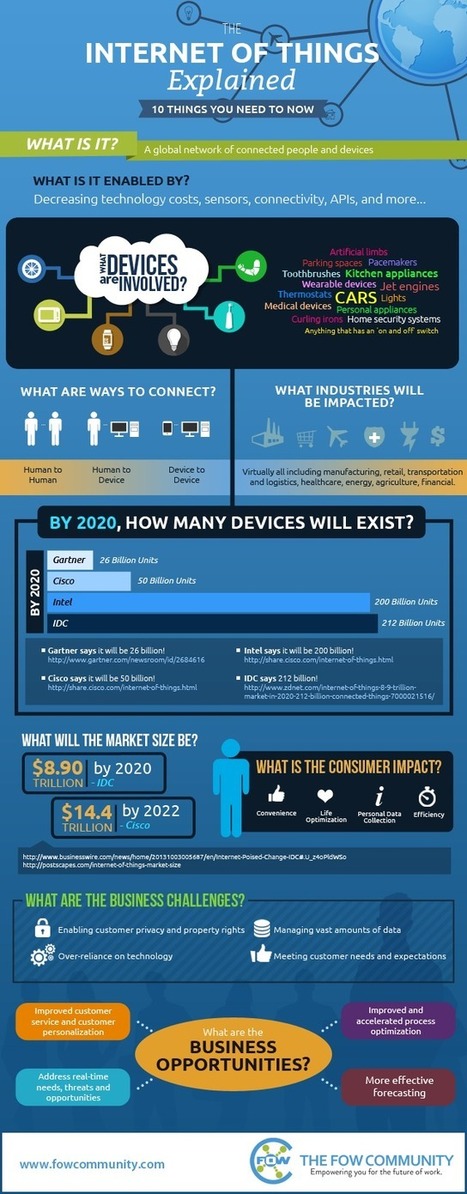







Many of these predictions are about the cost of education and also about making that education valuable and practical