 Your new post is loading...

|
Scooped by
Linda Holroyd
November 19, 2013 3:55 PM
|
What will the future be like? As depicted in today’s popular movies and books, the future is either one of bright promise—where the world’s greatest problems have been solved by technology and greater human enlightenment—or it’s a dystopian world where today’s problems have only gotten worse, technology has gone bad, and the very survival of humanity is at risk. As Cisco’s chief futurist, it’s my job to think about what the world will look like in a few years, and how our actions today will impact that future. And while I’m not ready to put on my rose-colored glasses just yet, I do have an optimistic view of what the future may bring, enabled by the Internet of Everything (IoE). Within 10 years, there will be 50 billion connected things in the world, with trillions of connections among them. These connections will change the world for the better in ways we can’t even imagine today. But here are just a few things I can imagine: Better supply of food: Sensors all along the food supply chain, together with Big Data analytics and the intelligence of the cloud, will help us optimize the delivery of food from “farm to fork.” Sensors in the field will be combined with weather forecasts and other data to trigger irrigation and harvest times for each crop. And sensors on the food itself will alert merchants and consumers about when the “sell by” and “use by” dates are approaching to prevent spoilage. All of this will significantly reduce food waste—which today amounts to about one-third of total world food production. Better supply of water: Similarly, about 30 percent of our water supply is lost due to leaks and waste. Just one faucet or leaky pipe dripping three times a minute will waste more than 100 gallons of water a year. “Smart” pipes can reduce this waste significantly by sensing and pinpointing the location of leaks that would otherwise go undetected for months or years. Better access to education: Affordable access to education is one of the most important ways to lift people out of poverty. Soon, time and distance will no longer limit access to an engaging, affordable, high-quality education. With connection speeds going up, and equipment costs going down, distance learning is going beyond traditional online classes to create widely accessible immersive, interactive, real-time learning experiences. Better access to healthcare: Urbanization and population growth are putting a strain on healthcare resources—especially in rural areas. After the devastating 2008 earthquake in Sichuan Province, China, Cisco was a strategic partner in creating a networked medical delivery system, including four telehealth networks that allow doctors to meet with and examine patients remotely. But those capabilities are just the beginning of what IoE will make possible. Soon, women with high-risk pregnancies will be able to wear a tiny, always-on fetal monitoring electronic “tattoo,” which will communicate to the cloud whenever the woman is within range of a wireless network. The analytics capabilities in the cloud will alert doctors at the first sign of trouble, and even tell the mother-to-be when she needs to drink more water, or get more rest. While sensors and machine-to-machine communication are important parts of these solutions, it’s not just the “Internet of Things” that is making all of this possible—it’s the Internet of Everything—the networked connection of people, process, data, and things. And Big Data analytics is what brings the intelligence to all of these connections, enabling new kinds of processes, and helping us make smarter decisions. I’ve highlighted just four areas where IoE will change the world for the better. But there is not a single part of life that will not be impacted in some way—whether that means improving your drive to work, speeding you through the checkout line at the grocery store, saving energy through smart lighting, or minimizing your wait at a traffic light. The Internet of Everything is not a silver bullet that can solve all the world’s woes, but with the spark of human innovation, IoE can be the engine for a better future.
|
|
Scooped by
Linda Holroyd
November 13, 2013 5:06 PM
|
The term ‘Big Data’ is as massive in management and technology as Justin Bieber and Miley Cyrus are in music. Like with other mega buzzwords, many say big data is all talk and no action. This couldn’t be further from the truth. With this post, I want to show how big data is used today to add real value. Eventually, every aspect of our lives will be affected by big data. However, there are some areas where big data is already making a real difference today. I have categorized the application of big data into 10 areas where I see the most widespread use as well as the highest benefits [For those of you who would like to take a step back here and understand, in simple terms, what big data is, check out the posts in my Big Data Guru column]. 1. Understanding and Targeting Customers This is one of the biggest and most publicized areas of big data use today. Here, big data is used to better understand customers and their behaviors and preferences. Companies are keen to expand their traditional data sets with social media data, browser logs as well as text analytics and sensor data to get a more complete picture of their customers. The big objective, in many cases, is to create predictive models. You might remember the example of U.S. retailer Target, who is now able to very accurately predict when one of their customers will expect a baby. Using big data, Telecom companies can now better predict customer churn; Wal-Mart can predict what products will sell, and car insurance companies understand how well their customers actually drive. Even government election campaigns can be optimized using big data analytics. Some believe, Obama’s win after the 2012 presidential election campaign was due to his team’s superior ability to use big data analytics. 2. Understanding and Optimizing Business Processes Big data is also increasingly used to optimize business processes. Retailers are able to optimize their stock based on predictions generated from social media data, web search trends and weather forecasts. One particular business process that is seeing a lot of big data analytics is supply chain or delivery route optimization. Here, geographic positioning and radio frequency identification sensors are used to track goods or delivery vehicles and optimize routes by integrating live traffic data, etc. HR business processes are also being improved using big data analytics. This includes the optimization of talent acquisition – Moneyball style, as well as the measurement of company culture and staff engagement using big data tools. 3. Personal Quantification and Performance Optimization Big data is not just for companies and governments but also for all of us individually. We can now benefit from the data generated from wearable devices such as smart watches or smart bracelets. Take the Up band from Jawbone as an example: the armband collects data on our calorie consumption, activity levels, and our sleep patterns. While it gives individuals rich insights, the real value is in analyzing the collective data. In Jawbone’s case, the company now collects 60 years worth of sleep data every night. Analyzing such volumes of data will bring entirely new insights that it can feed back to individual users. The other area where we benefit from big data analytics is finding love - online this is. Most online dating sites apply big data tools and algorithms to find us the most appropriate matches. 4. Improving Healthcare and Public Health The computing power of big data analytics enables us to decode entire DNA strings in minutes and will allow us to find new cures and better understand and predict disease patterns. Just think of what happens when all the individual data from smart watches and wearable devices can be used to apply it to millions of people and their various diseases. The clinical trials of the future won’t be limited by small sample sizes but could potentially include everyone! Big data techniques are already being used to monitor babies in a specialist premature and sick baby unit. By recording and analyzing every heart beat and breathing pattern of every baby, the unit was able to develop algorithms that can now predict infections 24 hours before any physical symptoms appear. That way, the team can intervene early and save fragile babies in an environment where every hour counts. What’s more, big data analytics allow us to monitor and predict the developments of epidemics and disease outbreaks. Integrating data from medical records with social media analytics enables us to monitor flu outbreaks in real-time, simply by listening to what people are saying, i.e. “Feeling rubbish today - in bed with a cold”. 5. Improving Sports Performance Most elite sports have now embraced big data analytics. We have the IBM SlamTracker tool for tennis tournaments; we use video analytics that track the performance of every player in a football or baseball game, and sensor technology in sports equipment such as basket balls or golf clubs allows us to get feedback (via smart phones and cloud servers) on our game and how to improve it. Many elite sports teams also track athletes outside of the sporting environment – using smart technology to track nutrition and sleep, as well as social media conversations to monitor emotional wellbeing. 6. Improving Science and Research Science and research is currently being transformed by the new possibilities big data brings. Take, for example, CERN, the Swiss nuclear physics lab with its Large Hadron Collider, the world’s largest and most powerful particle accelerator. Experiments to unlock the secrets of our universe – how it started and works - generate huge amounts of data. The CERN data center has 65,000 processors to analyze its 30 petabytes of data. However, it uses the computing powers of thousands of computers distributed across 150 data centers worldwide to analyze the data. Such computing powers can be leveraged to transform so many other areas of science and research. 7. Optimizing Machine and Device Performance Big data analytics help machines and devices become smarter and more autonomous. For example, big data tools are used to operate Google’s self-driving car. The Toyota Prius is fitted with cameras, GPS as well as powerful computers and sensors to safely drive on the road without the intervention of human beings. Big data tools are also used to optimize energy grids using data from smart meters. We can even use big data tools to optimize the performance of computers and data warehouses. 8. Improving Security and Law Enforcement. Big data is applied heavily in improving security and enabling law enforcement. I am sure you are aware of the revelations that the National Security Agency (NSA) in the U.S. uses big data analytics to foil terrorist plots (and maybe spy on us). Others use big data techniques to detect and prevent cyber attacks. Police forces use big data tools to catch criminals and even predict criminal activity and credit card companies use big data use it to detect fraudulent transactions. 9. Improving and Optimizing Cities and Countries Big data is used to improve many aspects of our cities and countries. For example, it allows cities to optimize traffic flows based on real time traffic information as well as social media and weather data. A number of cities are currently piloting big data analytics with the aim of turning themselves into Smart Cities, where the transport infrastructure and utility processes are all joined up. Where a bus would wait for a delayed train and where traffic signals predict traffic volumes and operate to minimize jams. 10. Financial Trading My final category of big data application comes from financial trading. High-Frequency Trading (HFT) is an area where big data finds a lot of use today. Here, big data algorithms are used to make trading decisions. Today, the majority of equity trading now takes place via data algorithms that increasingly take into account signals from social media networks and news websites to make, buy and sell decisions in split seconds. For me, the 10 categories I have outlined here represent the areas in which big data is applied the most. Of course there are so many other applications of big data and there will be many new categories as the tools become more widespread.
|
|
Scooped by
Linda Holroyd
October 24, 2013 4:28 PM
|
For the past few years, industry pundits have been predicting the death of the personal computer. I look at it a bit differently—the personal computer is not dying, but is becoming even more personal. It is now something you’re going to wear—in your clothing, jewelry, shoes, glasses, watches, and even on your skin. The burgeoning field of wearable technology is hitting the mainstream, illustrated by a new ad campaign from Samsung that employs Dick Tracy, Captain Kirk, and a lineup of other comic and science fiction characters to introduce the new Galaxy Gear smartwatch. In a recent blog, my colleague Joseph Bradley described the wide range of “wearables” that are now available—and sure to be a hot topic at the Internet of Things World Forum in Barcelona next week. I recently wrote about how wearable technology is helping drive the Internet of Everything (IoE)—and changing the way we live—by connecting people in new and different ways. Today, I’d like to go a little deeper, and explore some of the ways that today’s wearable technology might evolve. One of the principles of this evolution is that technology is getting smaller, faster, cheaper, and more powerful every day. In fact, in terms of physical size, computing technology is becoming 100 times smaller each decade. The computing power of the ENIAC computer that filled a whole room back in 1956 now fits inside the tiny chip of a “musical greeting card” that you can buy for $4 at your local store. The smartphone in your pocket is many times more powerful than the PCs of just a decade ago. And now, all the capabilities of your smartphone are being condensed into smartwatches, which can make phone calls, connect to the Internet, take pictures, and do just about anything else your phone or tablet can do. But even this miniaturization of technology is dwarfed by the power that is available when you connect to the cloud. One really exciting example is SIGMO—a language translator that you can clip to your shirt, or wear on your wrist. It costs about $50, and when connected to the cloud can provide real-time voice translation of 25 languages. Sigmo blew past its fund-raising goal of $15,000 on the crowd-funding site Indiegogo.com to almost a quarter-million dollars, illustrating the demand for these types of gadgets. For most people today, “wearable technology” brings to mind personal monitoring devices such as Fitbit or Nike+FuelBand that record heart rate, blood pressure, intensity of exercise, and even sleep patterns. This concept is evolving to be even more personal, and not just for the benefit of the wearer. Expectant mothers will wear electronic “tattoos”—smart sensing stickers that can monitor fetal heart rate and brain waves, detect early signs of labor, and even notify the doctor directly when it’s time to go to the hospital. The concept of wearables isn’t new. For millennia, people have been adorning themselves with tattoos, piercings, and jewelry that communicate something about who they are, what they do, and where they are from. Today’s wearables just sense and communicate much, much more. Further along on the wearable continuum will be “embeddables,” which may be sensors placed under the skin or swallowed. Today, the Proteus smart pill can send a text to a doctor or relative from inside the body to confirm that medication has been taken. In the future, such ingestible devices will be able to send a picture from inside the GI tract to aid diagnoses and reduce the need for surgery and other invasive procedures. I can even imagine the day when wearables evolve into replaceables. Today, we use cornea transplants to repair damaged eyes. In the future, we may be able to insert artificial eyes with zoom capabilities, infrared sensors, and night vision. The prosthetics we use for limb replacement will become even more powerful and flexible than the original “organic” limbs. All of these possibilities will be enabled by the Internet of Everything, providing rich and valuable connections among people, process, data, and things. And these examples are just the beginning. As technology continues to become smaller, cheaper, and more powerful, and as the number of connected things in the world grows to 50 billion in the next decade, the true possibilities may go far beyond what we can imagine today.
|
|
Scooped by
Linda Holroyd
October 17, 2013 3:02 PM
|
Gartner just concluded its Gartner Symposium/ITxpo 2013 in Orlando, gathering tens of thousands of IT executives. Among the most anticipated aspects of the gathering are the ruminations from the Gartner pontificators regarding IT trends. Among several trends shared were the Top 10 Strategic Technology Trends for 2014. Here is a summary of those trends: Mobile Device Diversity and Management Gartner suggests that now through 2018, a variety of devices, user contexts, and interaction paradigms will make “everything everywhere” strategies unachievable. The unintended consequence of bring your own device (BYOD) programs has been to render much more complex (by two or three times, Gartner estimates) the size of the mobile workforce, straining both the information technology and the finance organizations. It is recommended that companies better define expectations for employee-owned hardware to balance flexibility with confidentiality and privacy requirements. Mobile Apps and Applications Gartner predicts that through 2014, improved JavaScript performance will begin to push HTML5 and the browser as a mainstream enterprise application development environment. As a consequence, it was suggested that developers focus on expanding user interface models including richer voice and video that can connect people in new and different ways. Apps will grow and applications will shrink, continuing a trend that has been documented for a while now. The market for creating apps continues to be very fragmented (Gartner estimates that there are over 100 potential tool vendors), and consolidation is not likely to happen in earnest for a while. It is suggested that ‘the next evolution in user experience will be to leverage intent, inferred from emotion and actions, to motivate changes in end-user behavior.” The Internet of Everything The Internet is expanding into enterprise assets and consumer items such as cars and televisions. The problem is that most enterprises and technology vendors have yet to explore the possibilities of an expanded Internet and are not operationally or organizationally ready. Gartner identifies four basic usage models that are emerging: ManageMonetizeOperateExtend. These can be applied to people, things, information, and places, and therefore the so called “Internet of Things” will be succeeded by the “Internet of Everything.” Hybrid Cloud and IT as Service Broker Gartner suggests that bringing together personal clouds and external private cloud services is essential. Enterprises should design private cloud services with a hybrid future in mind and make sure future integration/interoperability is possible. Early hybrid cloud services will likely be more static, engineered compositions, and Gartner suggests that more deployment compositions will emerge as cloud service brokerages evolve. Cloud/Client Architecture As the power and capability of many mobile devices increases, the increased demand on networks, the cost of networks, and the need to manage bandwidth use “creates incentives, in some cases, to minimize the cloud application computing and storage footprint, and to exploit the intelligence and storage of the client device.” Gartner also notes that as mobile users continue to demand more complex uses of their mobile technologies, it will drive a need for higher levels of server-side computing and storage capacity. The Era of Personal Cloud The push for more personal cloud technologies will lead to a shift toward services and away from devices. The type of device one has will be less important, as the personal cloud takes over some of the role that the device has traditionally had with multiple devices accessing the personal cloud. Software Defined Anything Software-defined anything (SDx) is defined by “improved standards for infrastructure programmability and data center interoperability driven by automation inherent to cloud computing, DevOps and fast infrastructure provisioning.” Dominant vendors in a given sector of an infrastructure-type may elect not to follow standards that increase competition and lower margins, but end-customer will benefit from simplicity, cost reduction opportunities, and the possibility for consolidation. Web-Scale IT
Large cloud services providers such as Amazon, Google GOOG -0.59%, Salesforce.com, and the like are re-inventing the way in which IT services can be delivered. Gartner points out that the capabilities of these companies exceed the “scale in terms of sheer size to also include scale as it pertains to speed and agility.” The suggestion is that IT organizations should align with and emulate the processes, architectures, and practices of these leading cloud providers. The combination of the aforementioned three among others is how Gartner defines “Web-scale IT.” Smart Machines Gartner suggests that the “the smart machine era will be the most disruptive in the history of IT.” These will include the proliferation of contextually aware, intelligent personal assistantssmart advisors (e.g., IBM IBM -6.05% Watson)advanced global industrial systemsautonomous vehicles. The company also projects that smart machines will strengthen the forces of consumerization after enterprise buying commences in earnest. 3-D Printing The growth of 3-D printers is projected to be 75 percent in the coming year, and 200 percent in 2015. Gartner suggests that “the consumer market hype has made organizations aware of the fact 3D printing is a real, viable and cost-effective means to reduce costs through improved designs, streamlined prototyping and short-run manufacturing.”
|
|
Scooped by
Linda Holroyd
October 8, 2013 2:55 PM
|
Every year for the last decade, I’ve spoken to MBA graduates returning for their one-year reunions. As predictable as the annual return of swallows to San Juan Capistrano, graduates who flock back to campus bring with them real-world anxiety over three things: 1) Work – doing meaningful work; 2) Companionship – finding a life partner, or figuring out life with their partner; and 3) Balance – dividing time and energy between work and family This weekend, my own business school class marks its 40-year reunion, and the issues won’t have changed much. While for many of us, life’s ups and downs may have rounded off the sharp edges on those same apprehensions, they remain the struggles of our lives. If any of us in the class of ‘73 has had success in four decades of dealing with these existential concerns, it’s because we recognized the truth of the following: You can’t do it all yourself. Those who’ve done well will likely have one significant quality in common: They’ll have joined (or formed) the right teams. After picking the best players, they’ll have shared their own successes, and celebrated the successes of others. As Chicago Bulls coach Phil Jackson advised a young and wildly-talented Michael Jordan, “Let the game come to you." After Jordan committed to being a team player (though not always as the nice-guy), the Bulls won six NBA World Championships. In the same way, realizing that both business and family life are “team sports” will help with finding a team-centered life. Life is a marathon. A meteoric rise right after grad school is impressive, but long-term success is far more satisfying. Life is a marathon, not a sprint. Quick success sometimes goes to people’s heads – and makes them forget everyone who helped them get where they are. In the 1980s, after good fortune and good times made many folks wealthy, real estate markets collapsed. Some panicked; others dug in -- and dug out. It turned out that no one was as smart as they thought on the way up (or quite as dumb as others thought on the way down). But steadfast efforts when the chips were down revealed character not apparent when things were going well. Bouncing back is key. Scanning reunions for grads once deemed “most likely to succeed” may not reveal the ones who did. Brains and ambition help, but it’s a never-say-die resiliency that allows people to move forward through life’s inevitable setbacks. “Most Likely To Bounce Back After A Fall” might have been a better yearbook category. Give before you get. Real friends give without calculating a return on their friendship. So do spouses. Even salespeople first give information and authentic assurances in order to make sales. And while children require that you give, give, and give some more, they can return something far more valuable than you ever gave them — the chance to pass on the best of what you know, and the best of who you are, to the next generation. We end up caring about things for which we sacrifice. So, finding opportunities for giving goes a long way to relieving personal and career anxieties – which can be rooted in the desire to get before we give. Don't underestimate refuge and recovery. I’ve never met a career-driven person who’s found peace in work alone. You need a space for refuge – a way to be alone, to recreate, and to recover; or things can go south. Letdowns are inevitable; so make sure you meditate, pray, stay active, or have a close friend in whom you can confide. Making sure you have the time and place and support for recovery is not selfish. It’s essential. Wealth, power, fame and influence – perhaps all well and good – don’t reliably deliver satisfaction or meaning in life. I submit that meaning comes from the ability to look back with pride, and to look forward with peace, knowing that those we’ve worked with and cared for are better off for having known us. If recent graduates could be sure of these, they might choose to live with their team in mind.
|
|
Scooped by
Linda Holroyd
October 1, 2013 12:56 PM
|
First, understand how content and community work together, which is what we covered a couple of months ago, in our blog on Why Content is King and Community is Queen. Last month, we covered some thoughts on how to create quality content. But this month, we delve into the importance of community, for nobody can create quality content without understanding the community they serve and what’s important to them. Strategically Reach Out to Classes of Customers 1. Knowing who you serve and why you serve them is a first step. Understanding this from your company perspective, and also from your customers’ perspective will help ensure alignment.
2. Question whom you’ve reached out to before, and whom you should be reaching out to now. What has changed? What will be changing? How will that affect what you do for whom and why that’s important to them?
3. What major trends are forging changes in the relationship with your clients? How will these trends impact the relationship with your stakeholders and customers in the short term and in the long term? Know What Motivates Them, What’s Relevant to Them 4. Build a relationship with the customers you serve. Know where they are coming from and support them, even if it transcends your current business needs.
5. Bring feedback about the motivations and needs of your community to the management team and help shape corporate strategy based on the needs of the community and customer. Ensure that the Content Matters to Them 6. If there’s a mismatch between the content and the needs of the community, the product/service offering and what the community is looking for, something needs to be done. Either pivot the business or identify and recruit a new niche community, or a combination of both.
7. Addressing the issue head-on will likely unearth other problems better brought out into the open. Invite Participation and Initiative 8. Inviting active participation and input, rewarding volunteer leadership and initiative can help you bring the company and its offerings to new levels – new functionality, larger market, more opportunities.
9. Rewarding community members with the initiative and leadership for proactive feedback will facilitate active participation and feedback from others within the community – for the benefit of all.
10. There’s a difference between saying that you’re customer-centric and actually being so, between inviting participation and initiative and being open to suggestions and feedback and change. Community members find out quickly what you really mean based on the way you’re acting. The bottom line is that the engagement and participation of the right community and customer will truly dictate the success of a company. How the leadership team manages this internal-external collaboration will directly affect a company’s bottom line today, and its prospects for the future.
|
|
Scooped by
Linda Holroyd
September 17, 2013 4:42 PM
|
Social media competencies fell into four broad categories: Content production; think blogging, podcasting and graphics-type skills here.Project management skills particular to social media; such as search engine optimization (SEO), blogger influencer outreach, media buying and more.Social-specific skills; like community management, social customer service and monitoring and a bunch more.Social media center of excellence leadership skills; including cross-functional team coordination, policy development and management, and governance, among others. Based on what we’ve seen and learned, our assertion is that while some organizations have basic social media development efforts in place for broad-based employee groups, there is limited discipline around competencies. The need for high-functioning social media teams is increasingly important as use of social media by business grows and integration of social media into business processes becomes more common. Why? 79% of companies use, or are imminently planning to use, social media. Nearly half of the companies who were rated as “effective” in social media said it was integral to the company strategy. – Harvard Business Review Analytics Services52% of executives say that social business is important to their companies today. 86% say it will be vital in three years. 28% of CEOs say social business is vital to their organizations. – MIT Sloan Management Review 2012 Social Business GlobalDuring the next five years, CEOs expect social media to rise to the second-most important way businesses connect with customers. – IBM 2012 CEO studyMany executives also cite overall organization shortcomings, which include acquiring the skills necessary to carry out a digital business agenda. They need to be resourceful in developing homegrown skills. – McKinsey 2012, Digital and Executive challenges
|
|
Scooped by
Linda Holroyd
August 26, 2013 12:26 PM
|
The CMO position is dying for four reasons: 1] Most CMOs are not really immersed in marketing activities. By this I mean understanding, creating and delivering value to the customer. Too many CMOs focus on PR and communications rather than products or pricing, so as not to invade the space of the Chief Innovation Officer or the CFO. 2] CFOs have become more powerful because of tough trading conditions and short-term pressure from financial markets. The CFO is also winning the race to the very top—most CEOs now have a finance or engineering background, and few come from sales and marketing. 3] Marketing impact is often hard to measure. Marketing is more art than science. It's hard to know whether all those millions of dollars spent have led to an increase in real sales. And when a downturn comes, the marketing budget is often the first to be cut. 4] Nobody has a clear idea of what marketing is. Ask 20 senior managers in any company what marketing is, and you’ll get 20 different answers. By contrast, most people would agree on a definition of finance or production. Instead of feeling sorry for themselves, CMOs can take the following practical steps to reclaim some of their lost power: 1] Get rid of the CMO title, because nobody understands it. Create the new title of CCO – Chief Customer Officer. This person must be the voice of the customer in the organization, taking views and messages from the market and spreading them internally. More and more companies have a CCO or a senior executive with a similar title, from salesforce.com to the Washington Post. 2] Get the CEO to be the CMO. Chief executives can drive the customer-centricity agenda better than anyone else, because they can shape a company's culture and drive the recruitment of customer-oriented people. Having the CEO as CMO also sends a strong message throughout the organization that the customer is front and center and that marketing is everybody's job. 3] Get the CFO on board too. Doing this requires taking some of the fuzziness out of marketing. CCOs need to be financially literate and produce hard numbers that show the return on investment from marketing. 4] Use customer knowledge to build influence. With backing from the big two in the C-suite, CCOs can use their customer knowledge to influence discussions of product design and pricing, and make a company's offerings more sensitive to the market. Back in the 1950s, the management guru Peter Drucker wrote that a company has only two key functions – marketing and innovation – and that all other functions should support these. Sadly, paying attention to the customer is less and less common these days. The CCO can be the first step toward reversing this trend. So – goodbye to the CMO, hello to the CCO.
|
|
Scooped by
Linda Holroyd
August 26, 2013 12:21 PM
|
Know your people and your business: Be engaged with your business, live your business, and be where the action is. Insist on realism: It's the heart of execution. Start by being realistic yourself. Then you make sure realism is the goal of all dialogues in the organization. Set clear goals and priorities: Focus on 3-4 clear priorities that everyone can grasp. Speak and act simply and directly. Follow through: Lack of it is a major cause of poor execution. Implement detailed action plans and make specific people accountable for results. Reward the doers: If you want people to produce specific results, you need to reward them accordingly. Either in base pay or in bonuses and stock options. Expand people's capabilities through coaching: Pass on your knowledge, wisdom and experience to the next generation of leaders. Every encounter is an opportunity to coach. Know yourself: It takes emotional fortitude to be open to whatever information you need, whether it's what you like to hear or not.
|
|
Scooped by
Linda Holroyd
August 16, 2013 4:59 PM
|
By making the technical specifications they’ve already come up with available to everyone, he hopes that other innovators will be able to improve the Hyperloop, and that all involved will make money, not just the patent-holder.
|
|
Scooped by
Linda Holroyd
August 15, 2013 11:24 AM
|
“What are the characteristics of a great product?” Think: DICEE Deep. A great product is deep. It doesn’t run out of features and functionality after a few weeks of use. As your demands get more sophisticated, you discover that you don’t need a different product. Intelligent. When you encounter a great product, you can see that the company understood your needs and your pain. You may not have even realized you had this need or this pain, but the product not only makes you aware of them, it solves them too. Complete. A great product is more than a physical thing. Documentation counts. Customer service counts. Tech support counts. Consultants, OEMS, third-party developers, and VARS count. Blogs about it counts. A great product has a great total user experience—sometimes despite the company that produces it. Elegant. A great product has an elegant user interface. Things work the way you’d think they would. A great product doesn’t fight you—it enhances you. If you really do it well, it becomes “one” with your customers. Emotive. A great product incites you to action. It is so deep, indulgent, complete, and elegant that it compels you to tell other people about it. You’re not necessarily an employee or shareholder of the company that produces it. You’re bringing the good news to help others, not yourself.
|
|
Scooped by
Linda Holroyd
August 9, 2013 1:27 PM
|
Yes, Jeff Bezos bought The Washington Post with his own cash, not through Amazon. But that’s the best way of merging the two. ... Bezos has said that in 20 years, print newspapers will be all but extinct. Now that he has spent $250 million on one of his own, we can only assume that he wants to transform it into something new. “If he’s successful and The Post becomes bigger, richer, has a bigger audience, has more revenues, can hire more writers, can create more content, can touch more lives in a more meaningful ways, then he’s not catching a falling knife,” Mutter says. “He’s grabbing an important a brand that’s bigger and more important than it is today.”
|
|
Scooped by
Linda Holroyd
August 6, 2013 12:33 PM
|
Jeff Bezos' acquisition of The Washington Post is the ultimate symbolic, white-knight moment: one of the most iconic traditional newspaper families nobly admits it is out of answers in the new media landscape. It turns to a friend and digital-first mogul with a jobs-to-be-done attitude who will think of the industry differently. No one knows what is going to happen next. But this is a put-up-or-shut-up moment for the Digital Class, which has done well in a largely underregulated industry where they've been allowed to innovate (and manipulate) freely. Can that attitude work in an old-line industry like newspapers? More tangibly, can a traditional model be re-made as entrepreneurial? It's a moment of hope for those who believe what's been missing in traditional media hasn't been value, but the absence of people who can unlock and reinvigorate it. So what will The Post look like, even three years from now? I see a nimble, customer-focused company with vibrant new revenue streams - and a print edition. Here's what matters and how that happens. This is a media tipping point. This is the biggest of a series of passing-of-the-torch moments in modern media. Everyone from Ashton Kutcher to Warren Buffet to the owner of the Red Sox has bought a newspaper. Now, Bezos owns The Washington Post, while New York Mayor Michael Bloomberg is thought to pursue the New York Times, and the Koch family is considering buying The Los Angeles Times and Chicago Tribune. With Rupert Murdoch in control of The Wall Street Journal, we could see a new age of publishing titans duking it out for readers, but in a world where readers are much more sophisticated and have access to other sources of information than in the yellow journalism era more than a century ago when Hearst and Pulitzer invented news to sell papers, or the Red Scare era when the Chandlers of Los Angeles effectively invented Richard Nixon and pushed him toward the White House.Bezos SHOULD 'Business Insider' the Washington Post (at least a little bit). In his memo to Washington Post staff, Bezos endorsed the traditional newsgathering values of the newspaper. But let's hope he also brings some of the lessons he's learning from Business Insider, the anti-traditional media company, in which Bezos has a $5 million stake. The link between The Post and Business Insider may be the first real chance to bring wholesale digital media DNA to a company without as much old-line resistance. Bezos gives a lesson in transparency and communication. Compare Bezos' honest, direct and clear memo to his new employees to the regularly opaque corporatespeak we get from those who have traditionally controlled the printing presses. A new era of communication is coming - to the people who own media companies. Look for staff changes soon - but on the business side. People will over-fret about what will happen to the editorial mission of The Washington Post in the near term. That's not where the change will come at first. The business side of journalism is in desperate need of repair.Alan Mutter contrasted Bezos best: Bezos, the billionaire founder of Amazon.Com, is uniquely equipped to bring unprecedented innovation and fresh energy to an industry whose managers run their businesses like the people of Cuba treat their 1953 Plymouths: tinkering with them just enough to keep running. It's the data. Traditional media outlets have vast amounts of data. Not Big Data like the NSA is pilfering - they have that, too - but information its reporters are gleaning, compiling and sadly not using as often as they should to build databases and products. Someone like Bezos - and the team he'll eventually bring in - will recognize this almost immediately. The first changes will be in The Washington Post unveiling a series of new, subscription-based database and business intelligence services. A re-education in customer-centric. I operate in two industries - media and healthcare - that thought they knew what serving the customer was about but are in the midst of a brutal re-education. Bezos' statement ("Our touchstone will be readers, understanding what they care about – government, local leaders, restaurant openings, scout troops, businesses, charities, governors, sports – and working backwards from there.") will trigger a reader-focused approach that will increase the diversity of discourse within The Washington Post and alter news coverage because the entire operation will better understand what jobs their readers want done. This change will do nothing to alter the independent voice of the publication. Bezos will remake (or break) the newspaper's union. Amazon's a notoriously anti-union company. It's not about money, they claim, but about the ability to innovate quickly (for more, read the New York Times' piece about Amazon in Germany). The sentence, "We will need to invent, which means we will need to experiment" from Bezos' memo means quick change is coming. Unions will adjust to an entrepreneurial atmosphere or Bezos will run them over. Free Kindles are small potatoes. So much chirping about free Kindles. That's a small, undignified, sideshow of a play for an Amazon-Washington Post partnership. Bezos would be too smart to know that many Post readers like print. Kindles as an option? Maybe. But how disappointing would it be if free Kindles was the biggest innovation out of this deal? What's unanswered? So much. Will Bezos and this next generation of moguls really allow for the free-flow of ideas? How will Bezos' other investments impact this one? But it's one everyone should be excited for - and look eagerly on for what's next.
|
|
|
Scooped by
Linda Holroyd
November 14, 2013 11:29 AM
|
Adam Rifkin, a serial entrepreneur who was namedFortune’s best networker ... goes out of his way to help a staggering number of people, doing countless five-minute favors—making introductions, giving feedback, and recommending and recognizing others. After Rifkin does you a favor, it’s common for him to reach out and ask for your help in return. At first, it seems like he’s just following the norm of reciprocity: since he helped you, you owe him. But there’s a twist: he doesn’t ask you to help him. Instead, he asks you to help him help someone else. Rifkin is more concerned about people paying it forward than paying it back. In his view, every favor that he does is an opportunity to encourage other people to act more generously. That way, a broader range of people can benefit from his contributions. After watching Rifkin in action, it dawned on me that Cialdini’s line could be adapted. Instead of “I know you’d do the same for me,” how about this response? “I know you’ll do the same for someone else.” Just like Cialdini’s reply, it affirms your character as a person who’s happy to be helpful. Unlike his version, it doesn’t deliver the implicit message that you’re indebted to me, and I’m waiting for you to repay it. It’s just a sentence, but the underlying values have the potential to fundamentally change the way that people interact. In traditional direct reciprocity, people trade favors back and forth in pairs. In contrast, Rifkin’s approach is called generalized reciprocity. As described by political scientist Robert Putnam in Bowling Alone, “I’ll do this for you without expecting anything specific back from you, in the confident expectation that someone else will do something for me down the road.” If you follow this approach, when you really need help, you have access to a broader range of potential givers. If you stick to direct reciprocity, you can only ask people you’ve helped in the past or might be able to help in the future. In generalized reciprocity, you can extend your request to a wider network: since you’ve given without strings attached, other people are more inclined to do the same. In fact, social scientists James Fowler and Nicholas Christakis have conducted experiments showing that acts of giving often spread “up to three degrees of separation (from person to person to person).” So next time someone expresses appreciation for your help, it might be worth stretching beyond politeness to ask them to pay it forward. I know you’ll do that for someone else.
|
|
Scooped by
Linda Holroyd
November 5, 2013 3:23 PM
|
It’s not Twitter, Google+ or LinkedIn. It’s a company that most people in the West don’t know. That, however, is set to change, with the explosive growth of China’s Tencent and its mobile messaging app WeChat... Last week, Facebook, the current king of social networks, admitted that it’s losing teen users, and that the overall growth in its monthly active users has slowed to 18% year-on-year. This isn’t helped by the fact that it and other Western social networks are banned in China. By contrast, Tencent recently announced that WeChat’s users have almost tripled from the 85 million of the year before. Source: WorldOfCEOs, JPMorgan, Credit Suisse, Bloomberg & company announcements And Tencent’s reach – unlike local Twitter-equivalent Sina Weibo and Facebook-equivalent RenRen – is not just restricted to China. WeChat was rebranded from the more Chinese-sounding Weixin to appeal to an international audience, and it’s now virally coming across here. In just four months between May and September 2013, its overseas users have doubled from 50m to 100m. So, in an increasingly crowded mobile messaging, what is Tencent and WeChat doing right? First, it has managed to differentiate its product with some killer features that keep users coming back for more. On the messaging side, users can “hold-to-talk” and send free walkie-talkie style messages that bypass the need for voicemail. Yet what keeps its network growing are fun discovery features that can connect users locally and across continents. WeChat has neatly fused together the open approach of social networks such as Twitter, where anyone can follow anybody, and more closed networks such as Facebook, which rely on mutual friend connections. It’s growing virally through social connection and not just social media. For instance, the ability to identify “People Nearby” can make the daily commute or a night out with friends much more interesting. Here is a quick summary of my results when looking for other WeChat users in London... Alternatively, you can “shake” your smartphone, and be connected with other users anywhere in the world who are shaking their phones at the same moment. In growing its international user base, Tencent has brought on board brand ambassadors, such NBA star LeBron James, soccer star Lionel Messi and Bollywood actors Varun Dhawan and Parineeti Chopra, who users can follow and interact with. Massive Value Creation Shaking and tapping on smartphones are not just gimmicks: floated on the Hong Kong stock-exchange in 2004 (the same year as Google), Tencent has far outstripped Google in the rate of appreciation of its share price, up 104 times on it IPO price compared to Google’s 8.5 times price appreciation. With a $101bn US market cap (still some way off Google’s $343bn valuation), Tencent joins Yahoo!, eBay and Amazon among the world’s most valuable internet companies. From Copycat To WeChat Like many of China’s tech companies, Tencent’s roots lie in the “copycat innovation” and localization of what was happening in Silicon Valley. The company was founded in 1998 by Shenzhen University computer sciences graduate Huateng “Pony” Ma, and five classmates. Its first product, OICQ or Open ICQ, was a Chinese copy of the popular ICQ desktop instant messenger that had been acquired by AOL in the same year. When AOL filed a lawsuit in March 2000 for violation of its intellectual property, Tencent eventually lost the battle and changed the name of the product from OICQ to QQ, as it is still known today.
With an increase in user numbers but unable to cash in on its huge user base, Pony and his co-founders nearly had to sell the company. A big early success was in attracting venture capital – in 2000, Pacific Century CyberWorks and IDG invested $4 million for a 40% stake, proving to be the kick-start that Tencent needed.
A big part of the success of WeChat has been down to the fact that, when other companies continued to develop for the desktop, founderPony Ma made a big bet on mobile. A CEO known for his understanding of and investment in long-term growth, a few years ago Pony made the smart move to shift more than half of its 20,000 employees to focus on mobile. Although Tencent’s mobile business has not been the source of its revenue (70% of its revenue is from user payments and the rest from commerce), Tencent expects that eventually “the real value is the connection of the phone with business offline.” Pony is currently ranked third in Hurun Rich List and fifth in Forbes Chinese Rich List. Reflecting on the “copycat years”, he attributed his early success to a combination of copying and luck: “When we were a small company, we needed to stand on the shoulders of giants to grow up.” Paraphrasing a quote attributed to Isaac Newton, he added, “If I have seen further it is by standing on the shoulders of giants.” Pony is known to pay attention to details that most big companies ignore, drawing comparisons with the late Steve Jobs. Indeed, even Jobs owned up to a degree of copycat innovation in launching new products – when he unveiled the iBooks app at the launch of the iPad in 2010, he acknowledged that it bore similarities to Amazon’s Kindle: “Amazon’s done a great job of pioneering this functionality with the Kindle. We’re going to stand on their shoulders and go a little further.” However, Pony didn’t want to stop with copying, adding: But copying others can't make you great. So the key is how to localize a great idea and create domestic innovation.” A company veteran added: “it was entrepreneurship, concentration and passion that helped Pony succeed.” WeGlobal? Despite WeChat’s frightening domestic and overseas exponential growth rate, it doesn’t have it all its own way in the global market. Martin Lau, President of Tencent, acknowledges that the US remains something of a sticking point, commenting at a conference at Stanford University last month, “US is a very tough market. You have your free SMS which takes away the cost appeal of microchat. You have [Apple’s] iMessage… We will try to find ways to provide differentiated services.” WeChat is also up against WhatsApp, a hypergrowth American startup that also almost doubled its monthly active users to 350m from 200m in April. Other competitors, such as Viber and Japan’s Line exist, but tellingly, they won’t reveal their monthly user figures. So there’s an interesting global battleground setting up: both between Facebook, Tencent and WhatsApp in global social media and messaging, and Amazon, eBay and Alibaba in global e-commerce. LinkedIn is currently the leading professional social network and doesn't have a recognised global direct competitor: it will be interesting to see if one emerges from China or elsewhere. I’m confident that Tencent will overtake Facebook, although partly because China’s population is bigger and partly because it has an unfair advantage over Western competitors blocked out of the Chinese market. This needs to change. My overall prediction for the next few years is that Tencent will build a significant global business of great value: with products and brands we’ll increasingly come to know, interact with – and maybe even love.
|
|
Scooped by
Linda Holroyd
October 24, 2013 4:15 PM
|
It’s been nearly half a century since Philip Kotler first published hisPrinciples of Marketing, which has defined the practice of millions of professionals worldwide ever since. It’s no stretch to say that before Kotler, there was no marketing profession. What made Kotler different than what came before is that he took insights from other fields, such as economics, social science and analytics and applied them to the marketing arena. Although it seems basic now, it was groundbreaking then. Today technology is transforming marketing once again. Although up to this point, most of the impact has been tactical, over the next decade or so there will be a major strategic transformation. This, of course, will be a much harder task because we will not only have to change what we do, but how we think and many will be left behind. Here’s a short guide. From Messages to Experiences In the 20th century, promotion dominated the field of marketing. While evaluating opportunities was important, advertising, especially on TV, was what drove budgets and, as a result, strategic thinking. Not surprisingly, coming up with the right message and broadcasting to the right people at the right time was of paramount importance. Today, however, digital technology has enabled us to retarget consumerswhen they respond to a message and that has changed marketing forever. In effect, we must make the shift from grabbing attention to holding attention. That means that brands will have to learn to bemore like publishers and learn content skills. It also means that marketers will have to create a genuine value exchange rather than just coming up with catchy ad slogans and price promotions. Like it or not, we’ve entered a post-promotional paradigm. From Rational Benefits to The Passion Economy In the past, we focused on rational benefits to entice consumers to support our brands. Show that you are better in a clear, rational way and, so the thinking went, you could build a loyal following. However, we’re not rational, calculating machines, but emotional driven creatures who are subject to an whole array of cognitive biases. and new research has changed the psychology of marketing. For example, research shows that while a price promotion may spurs sales, it lessens enjoyment and can hurt the brand long-term. In effect, it’s become clear that we are not operating in a rational economy, but a passion economy, where a sense of purpose determines how people will act and brand associations, rather than brand attributes, determine marketing success. So we’ll have to learn to focus on more than share of market, but also share of synapse. From Strategic Planning to Adaptive Strategy Marketing strategy has always been numbers driven. We survey a small selection of the population and then scale up those samples to make decisions. Unfortunately, our numbers are always wrong. They are backward looking, fraught with error and based on confidence intervals that virtual guarantee that they’ll be wildly off one time in twenty. However, big data is enabling an entirely different approach. Rather than wait for the results of controlled studies and then analyze them to glean insights, we can collect massive amounts of data in real time. Instead of fooling ourselves into thinking we have it right, we can become less wrong over time. What we need then is a more Bayesian approach to strategy that takes uncertainty into account, allows us to manage complex interactions that we have so far ignored but always knew existed and enable us to prepare multiple approaches rather than building a consensus around the lowest common denominator. From Hunches to Simulations Marketing historically has been about big ideas. The problem is that once you have a big meeting amongst a bunch of big egos, each of which has his own big idea, the ideas tend to get progressively smaller until ultimately the next marketing plan ends up being a tweaked version of the last one. The reason this has always been the case is that big ideas are risky. Sure, by coming up with a new way of thinking you could end up a hero, but you could also end up fired. Marketers, much like everybody else, are motivated less by the sublime and more by the mundane aspects of life, like paying the mortgage, braces for the kids and so on. Yet machine learning technology is enabling a new approach in the form ofmarketing simulations. Rather than argue the merits of a new approach in stale conference rooms, we can test them in simulated environments built from real world data. As the Web of Things becomes more pervasive, this will truly allow us to co-create with our consumers. In other words, by increasing our failures in the virtual world, we can improve our performance in the real one. From Brands to Platforms For most of the 20th century, businesses focused on developing proprietary value chains. As they became more successful and added scale, theircompetitive advantage would grow in terms of quality, efficiency and brand equity. Brands were, in effect, just another asset to be accounted for and then leveraged. Digital technology is forcing marketers to rethink their historical approach to marketing. We are no longer operating in a scale economy, but in a semantic economy where the connectivity drives value and brands are becoming open platforms and ecosystems rather than assets to be closed off and protected. This has already become clear in technology products, where API’s and SDK’shave become standard, but as the world of bits invades the world of atoms, all marketers will need to connect in order to survive. So, while Kotler reconciled marketing with the standards of business, over the next decade we will have to reconcile marketing with the standards of technology and, as Martin Heidegger once argued, technology isn’t important because of what it builds, but because of what it uncovers.
|
|
Scooped by
Linda Holroyd
October 8, 2013 2:57 PM
|
"I want the entire internet on my wrist," the Apple co-founder Steve Wozniak told Wired in a recent interview. He was talking about what could be one of the next big wearable device form factors - the smartwatch. The recent slew of wearables making their way onto the market has been significant. From health, fitness and lifestyle gadgets such as Nike's Fuelband and the Jawbone UP band, to Samsung’s Galaxy Gear smartwatch, which was unveiled last month. But we’ve been here before. Who remembers Bill Gates launching Microsoft's Smart Personal Object Technology (SPOT) smartwatch back in 2004? Arguably ahead of its time, SPOT lasted four years before being axed. Not to mention the countless other gadgets that promised great things, but ultimately ended up gathering dust in the bottom draw. The good news is that things have changed since then, and the recent collision of connectivity and innovation is delivering real-life advancements that were previously the stuff of science fiction. That potent mix of “right time, right tech”, could mean that that we are entering a new phase of opportunity for the manufacturers and consumers of the connected, wearable gadget. Consumer appetite for all things tech has never been greater. And the advancements in technology and connectivity are finally starting to match expectations, with superfast 4G networks delivering speeds comparable to – and often greater than - home broadband. And that means that the connected accessory may once again have found its moment in the spotlight – and a consumer hunger that means that this time it may be sustainable. So who are the big names making waves in this area? As mentioned above, Samsung unveiled the Galaxy Gear smartwatch at the beginning of September. It's not a truly independent device yet, as it works as a companion to the Galaxy smartphones. The watch connects via Bluetooth and can make calls, take photos & video and display messages. At the same time chip-manufacturer Qualcomm launched its Toq smartwach. Again this isn't a standalone smartphone in a watch device. It connects to the user's existing smartphone and currently only works with Android. There is also the Kickstarter-funded start-up Pebble that launched its smartwatch this summer, connecting to the user's existing Android or iOS smartphone via Bluetooth and coming with some pre-installed apps. Beyond the watch itself, companies like Thalmic Labs are creating exceedingly interesting devices that use electrical impulses and muscle movements to allow you to control the connected devices around you without having to touch them – be that your mobile, tablet, PC, TV, or even your kids’ remote control helicopter. Lurking in the wings, of course, is the not insignificant presence of Apple and Google, both of whom are strongly rumoured to be developing their own wearable devices such as Project Glass and the ‘iWatch’. But the success of this form factor will be cracking the killer functionality that will make them a must-have indispensable device. And that functionality will only come through connectivity. As designs evolve I expect to see the emergence of smartwatches with more standalone computing and in-built connectivity, as well as integration with a range of smartphone and tablet devices. And as the connectivity and accessibility markets evolve, with all-pervasive superfast network innovations moving hand-in-hand with the proliferation of multi-device sharer tariffs, the potential of wearable technology becomes ever more interesting. While companies will continue to innovate and out-innovate in the bid to find the next killer hardware that builds on the central role that connectivity, ultimately it will be the consumer who decides what succeeds and what fails - and that will be down to what is of true benefit to their lives in the 21st century. What is clear is that consumers now expect to be able to switch their digital life seamlessly between devices. That means the smartwatch, smartbroach or smartring may yet have a role to play in this ecosystem - and connectivity will be at its heart.
|
|
Scooped by
Linda Holroyd
October 8, 2013 2:53 PM
|
The goal of collecting and analyzing "big data" is to better understand the "patient" and their health journey, and then analyzing the impact of that journey to derive meaningful outcomes. Well, we see the same thing as everyone tries to build attribution models through pixels, cookies, and identifiers that track the consumer. The holy grail of measuring real ROI only happens when you can put all the data and analysis together to create a clear picture of the customer or patientPrivacy is absolutely critical but aggregated data has important value in understanding patterns and outcomes. Health care providers are sharing anonymized data, and using that to model broader predictions of best treatment and outcomes. Marketers can do the same without anyone divulging the specific customer involvedIn health care, the need for privacy is much more sensitive than in marketing, and many players are scared to share data because they fear the downside of identification of patients more than they believe in the upside of sharing data. In marketing, we run a similar risk, and services promising to help identify anonymous customers only serve to highlight privacy concerns. Coming up with standards, as the DMA is trying to do, would help all involved and make clear the lines when identity is open versus when it is private. Otherwise, as in health care, regulators will step in to make the guidelines tighter than the industry, or even the average consumer, might wantEmpowering consumers by giving them data generates enormous value. Helping people understand their conditions better, track critical health metrics, and learn about alternatives improves health outcomes and efficiency. Helping consumers understand what they should be looking for, how different products compare along those criteria, and the alternatives they can consider are all the signs of an effective content marketer. It is not about pushing an answer, but helping the customer or patient through their journey.
|
|
Scooped by
Linda Holroyd
September 17, 2013 4:44 PM
|
It should accommodate a completely unbundled approach to education, allowing students to easily apply credits obtained from a wide range of sources, including internships, peer to peer learning, online classes, and more, to the same certification.It should be dynamic and upgradeable, so individuals can add new credentials to it as they pursue new goals and educational opportunities and so that the underlying system itself is improvable.It should help reduce the costs of higher education and increase overall value.It should allow a person to convey the full scope of his or her skills and expertise with greater comprehensiveness and nuance, in part to enable better matching with jobs.It should be machine-readable and discoverable, so employers can easily evaluate it in numerous ways as part of a larger “certification platform”
|
|
Scooped by
Linda Holroyd
August 26, 2013 12:28 PM
|
What if you could deliver your product to your customer the moment it was manufactured? What if your customers could manufacture a replacement part whenever they need one? What if doctors could manufacture a body part, personalized for the individual patient, in the hospital at a moment’s notice? Thanks to 3D Printing, you can! I have been covering 3D Printing (also called Additive Manufacturing) for over 20 years in myTechnotrends Newsletter,and at first the technology was used for rapid prototyping. Over the past few years, however, rapid advances in processing power, storage, and bandwidth have catapulted this technology into a tool for manufacturing finished products that include jewelry, shoes, dresses, car dashboards, parts for jet engines, jawbones for humans, replacement parts for synthesizers, and much more. When people first hear that you can manufacture something by printing it, they have a hard time visualizing it. Think of it this way: 3D printers build things by depositing material, typically plastic or metal, layer by layer, until the prototype or final product is finished. When the design is downloaded into the printer, a laser creates a layer of material and fuses it. Then it adds another layer and fuses it…and then another and another…until the object is completed. For example, a Belgian company, LayerWise, used 3D printing to create a jawbone that was recently implanted into an 83-year-old woman. An Australian company, Inventech, has created what they call their 3D BioPrinters to print tissue structures using human tissue. And Bespoke Innovations is using 3D printing to create prosthetic limb castings.
|
|
Scooped by
Linda Holroyd
August 26, 2013 12:24 PM
|
Here are 10 tips for your startup to keep the cogs and wheels turning the right way: 1 – Water Cooler Discussions: Hire enthusiastic and passionate employees who believe in your company’s vision. Then, allow these people to meet each other regularly during office time, interacting through social media, having face-to-face conversations and lunching together. Did you know that one of Facebook’s milestone was achieved by three engineers who met at the water cooler? Similarly, it is also crucial to have experienced members talk to the newbies. This ensures a mix of experience and innovation – a killer combination for a start up. A lot of companies make the mistake of alienating the juniors from the seniors because high-level executives shouldn’t be ‘bothered’. This leads to demotivation. Further, a junior will never learn as much from another junior as he would learn from the experience of a chief officer. 2 – Networking with Influencers: Everyone needs inspirations. Getting inspired doesn’t mean cheating on any one’s ideas. Actually, no idea that pops up in our minds is new. It is merely that we learn to connect different dots to create exciting combinations. Network with the influencers of your field so you can be inspired by their advice. Observe them and find out what they did that have made them so powerful today. Benchmarking surveys can help you determine goals for your own company and they will also point you to your unique selling point. 3 – Subscribing to Relevant Newsletters: You can’t always attend workshops, seminars and training sessions or hang out with industry experts in cocktail parties. But a subscription of an-email-a-day from a resourceful blog can charge your brain cells. Search for blogs that provide authentic advice and cover news related to your field. Subscribe to these blogs to keep a constant feed coming to your Inbox. A word of caution: overdoing subscriptions is going to have the opposite impact. 4 – Brainstorming with the Whole Team: Got a project? Need ideas? Bring the entire team in. Brainstorming with all stakeholders on the table ensures that a) you’re covering all aspects of the project, b) you’re making room for spontaneity and c) you’re creating a “think tank”. You don’t always have to follow everyone’s advice, but just listening to them will spark ideas. David Ogilvy said, “The best ideas come as jokes. Make your thinking as funny as possible.” When was the last time you were funny on your own? Exactly. When you’re talking with the entire team, you’re giving light humour a chance which in turn is charging your grey matter. It’s no rocket science. 5 – Listening to the Customer: Yes, you’ve probably heard this countless number of times in blogs and articles on marketing. But we’re not talking about software that helps you follow social media conversations. We’re talking real face-to-face interactions, surveys and observations. Go where your customer is, understand how he uses your products and services, study his background, ask why he makes the choices he makes and pay attention to what he needs. A lot of companies churn out services without bothering to look back to check what impact they’re having on their customer’s lives. Follow up on them via e-mail and ask for feedback. Some of theshrewdest and smartest business maneuvers in history were the result of unique “insights”. 6 – Find Your Niche: Highlight the points of friction your prospective customers face. How can you reduce their pain? Can you offer them something that no one else has offered yet? Find a niche for your business. There must be something that sets you apart from the rest and which gives your customers a reason to come to you instead of anyone else. This unique selling point doesn’t necessarily have to be a product feature. It could be a status symbol, a perception, locality, customer relations, loyalty programs or perks etc. 7 – Focus on Progress: Starting off, focus on achieving goals. Focus on getting there. As the Facebook mantra goes: “Done is better than perfect”. Because technology is moving fast, being the first one to do something puts you in the spotlight. This also means that you’ll sometimes fall on your face. Gauge the risks and learn to make informed decisions – getting gutsy every now and then. 8 – Encourage Smart Failure: You’ll fail. It’s inevitable. It has happened to the best of the best and will continue to happen because we can never be perfect. However, smart startups know how to get up when they fall. Encourage your employees to take risks and push their boundaries everyday. If they won’t challenge themselves, they won’t challenge the status quo and they’ll never break the noise. But there are types of failures. The type you should promote is smart failure: where your employees take responsibility for their actions; where you come short of achieving your goals but learn from the experience, pick up the pieces, rethink your strategy and move on with new knowledge. 9 – Collaborate: Some people underestimate the value of startups. They’ll consider you naive and dumb. Fight off this perception by collaborating with authentic voices in your field. Bring an experienced director on the board or contribute in a popular event where the world is sure to be listening. On your own, it’s hard to get by. Use your PR and attach yourself to trustworthy names to help you on your way to making a name for yourself. 10 – Think Outside the Cubicle: Let go of the cubicle culture. A startup needs all of its resources and can’t afford to waste any. Use your entire day, inside or outside the office, to gain inspirations and insights for your business. If you’re passionate about what you do, this will come naturally. You’ll look at everything as an opportunity – whether you’re taking a walk in the park or watching the New Year’s fireworks. A good startup leader lends his vision to everything around him.
|
|
Scooped by
Linda Holroyd
August 21, 2013 2:01 PM
|
Here are five things that I think characterize the most successful teams: 1. They are engaged with a technology that has cool properties. Cool is an extremely important concept in high tech as it signals potential to create value heretofore unseen. You don’t yet know what the value is, but you do sense that it is there to be released. If it is not there, keep looking. Without cool, this thing is not going far. 2. They are attracted to interesting problems. Interesting problems live on a frontier between straightforward problems (largely the domain of sustaining innovation applied to existing systems) and world hunger (essentially unsolvable, at least within the frame they are currently scoped). Interesting problems are not only unsolved, it is not obvious how they could be solved, but they do have “openings”—places where they might be attacked. When one of these problem openings matches up to one of your technology’s cool properties, things start to get exciting. 3. They are in service to something beyond themselves and beyond wealth creation. Whatever this higher value is, it will be what attracts the rest of the ecosystem to support them at a time when they have nothing solid at all to offer. If the team is genuinely committed to these values, the world senses it and responds. Interestingly, no matter how hard you try, you can’t fake this. The world picks up on you and withdraws its support. From then on, you are well and truly stuck. 4. They are entrepreneurial by nature. The word is French, but the behavior is American. This is our strongest national attribute, and what is great about it is, whenever anyone emigrates here from another country, they can catch the same virus virtually immediately. The essence of entrepreneurial behavior is taking responsibility for the outcome end to end. The easiest way to do this is to staple yourself to a problem and not let go until it is wrestled to the ground. If you like this sort of thing, there is nothing else that satisfies. If for any reason it spooks you, disruptive innovation is not for you. 5. Most successful ventures are often two-headed. One head is the technical head, who is closest to the cool properties. The other is the domain expert head, who is closest to the interesting problem. One of the two then has to be the lead entrepreneur—doesn’t matter which. Both have to be in service to a common higher cause. That’s the mix we look for at MDV.
|
|
Scooped by
Linda Holroyd
August 15, 2013 5:23 PM
|
Cloud computing is one of the hottest areas of venture capital. Investors see it as a rapidly growing sector with massive opportunities and the long-term potential for huge returns. The theme of VentureBeat’s upcoming CloudBeat 2013 conference is “the cloud grows up.” As the sector evolves, so do the investment opportunities. But “cloud computing” is a general term. Under that umbrella, there are companies working on solutions for cloud infrastructure, security, storage, hosting, data analytics, mobile, IT, customer service, integrations, and operations. Others focus on specific verticals, like health and education. Most of the major VC firms have at least a couple of cloud companies in their portfolio, but a few sub-sectors are attracting more attention than others. We asked some of the most well-known cloud investors what technologies they are most excited about. Here’s what they said: Iluminate Ventures — Optimizing performance Illuminate Ventures is an early stage venture capital firm that focuses specifically on enterprise cloud computing. Founder and managing partner Cindy Padnos has worked in the industry for 25 years. She said Illuminate is most interested in companies that drive business results. “We’re seeing a wide array of companies building solutions that may not seem to be very sexy, but deliver tremendous value,” she said. “We tend to seek companies that bring unique solutions to the market, not just from a technology perspective, but also in terms of their business models and the customer segments they target. These types of companies can drive top line revenue and bottom line performance.” As more companies, large and small, shift their operations to the cloud, they want to use technology that helps them operate more efficiently and data that helps them engage their audience as effectively as possible. Padnos said she is bullish about companies that help businesses optimize sales and marketing efforts using cloud-based solutions. Portfolio company BrightEdgedoes this with an enterprise-grade platform that applies big data analytics to search engine optimization (SEO). Cloud-based marketing tools are promising when it comes to acquisitions. Salesforce bought cloud-based marketing firm ExactTarget for a massive $2.5 billion this year and Oracle bought Eloqua for $871 million in December 2012. Padnos also expressed interest in vertical solutions, as well as operations management, security, and cost management. Emergence Capital — Verticals and mobile-first The first generation of cloud companies, like Salesforce, tried to cater to every sector. The tide is changing, however, and venture capitalists are betting on startups that have a narrow focus. “The cloud has enabled a new breed of vertical industry cloud solutions that are capital efficient and can really meet the needs of customers in a specific industry,” said Sean Jacobsohn of Emergence Capital. “As opposed to horizontal solutions where the market leader gets 5-10% of the market and expands by attacking more industries, vertical solutions can become the industry standard and expand by selling more solutions to the same buyer.” Editor’s note: Our upcoming CloudBeat conference, Sept. 9-10 in San Francisco, will be tackling revolutionary cases of enterprise cloud usage. Register today! A healthcare company deals with regulations that are significantly different from a financial company. A vertical strategy lets entrepreneurs apply deep domain expertise to an industry and respond to its unique requirements. Jacobsohn, Padnos, and Andreessen Horowitz’ Frank Chen have all mentioned vertical cloud startups as appealing. Jacobsohn also brought up mobile-first technologies. Mobile technology has transformed the way businesses with distributed workforces operate. The Bring-Your-Own-Device movement has taken off, setting off a wave of startups that develop applications to keep workflow smooth and boost productivity on-the-go. This movement has also led to high-demand for security startups building products to protect data when it is entered and accessed from outside the enterprise network. Bessemer Venture Partners — Platform-as-a-service We are in the midst of a PaaS revolution. Developers are increasingly looking for ways to build applications easily without worrying about underlying infrastructure, and platform-as-a-service startups can help them do that. This is a small sector of cloud, but it is growing quickly. Byron Deeter is a partner at Bessemer Venture Partners and a cloud expert. He recently compiled a Cloud Computing Index, which found that public cloud companies are now worth $100 billion. Deeter said that the application side of the market went liquid first, and most IPOs have been from software-as-a-service (SaaS) companies. The activity is moving down the stack, he said, and into platform layer. “PaaS is seeing a dramatic increase in activity, and it is growing faster than SaaS or infrastructure-as-a-service,” Deeter told VentureBeat. “We suspect that the other two layers of the cloud will usher in more public companies in the coming years. There is an important element in this trend where developers are empowered as buyers.” When looking for potential PaaS investments, Deeter said Bessemer looks for high value, low friction services that have a developer-centric and product-centric mentality. He said the founding teams tend to be “wickedly smart” and comprised of “alpha engineers” that are changing how applications get built and ultimately making it easier. He cited portfolio companies Twilio and SendGrid as notable examples. Deeter also mentioned mobile-first cloud businesses as important, particularly in emerging markets where mobile is leapfrogging the Web. He and Jacobsohn both said that there is an increasing amount of activity coming from areas outside of Silicon Valley. Accel Partners — Data tooling Data is proliferating faster and in greater quantities than ever before. Amidst the vast oceans of ones and zeros is a wealth of information that businesses can use to make smarter decisions. But all this data means little unless there are products and services that help derive value, Accel Partners’ Jake Flomenberg told us. In June, Accel announced the formation of its Big Data Fund 2 that will focus on investments in data-driven software to help people who aren’t data scientists extract insights from this data. “There is a natural progression over time as data platforms mature. The first thing is arming the more technical folks, and later you see more targeting of business users,” Flomenberg said. “You don’t need mythical data scientists to operate with big data and ask questions. We’ve invested in a number of data tooling companies that make people more productive and allow the really high value data scientist resources to focus on important stuff.” Flomenberg mentioned Accel portfolio company Origami Logic, as an example. The company brings together data from SaaS marketing tools and provides visibility across all of them. He also brought up Sumologic, which provides a log aggregation system to bring all data into a centralized place, and RelateIQ, which automatically enters data into your CRM to help your businesses keep track of and optimize relationships. These tools analyze data for patterns and signals and present the information in actionable forms. North Bridge Venture Partners — Outservicing North Bridge Venture Partners recently completed its third annual survey on the future of cloud computing. General partner Michael Skok, who spearheaded the effort, said it is still early days in the “cloud-computing revolution.” Businesses of all sizes are migrating to the cloud, and the greatest opportunities are for companies developing services to support this trend. “In the future, I think cloud services will be completely integrated into the business process,” Skok said. “Businesses will be able to outsource, or outservice, everything they aren’t uniquely good at. The cloud gives anyone the ability to access and knit together services. What will be critical is the ability to integrate all these different services together.” Cloud services make it easier for businesses to get off the ground. Clothing designers with no technical ability can use an e-commerce store builder to set up everything from displays to payments, and startups can automate their hiring and payroll processes rather than hiring someone to take on the HR role full-time. Skok anticipates that we’ll see a number of enterprise APIs arising to bring all of these processes and data together cohesively, Confidence in the cloud A recent report conducted by Deloitte and the National Venture Capital Association found that cloud computing is one of the sectors investors feel the most confident about. Within this sector, there is a lot of diversity. Each investor VentureBeat interviewed has a specific area that excites them most, but common themes emerged. Cloud-based tools and services that enhance business operations will play an increasingly significant role as small business and enterprises alike migrate to the cloud. As more and more businesses adopt cloud technology, cloud companies are beginning to narrow their focus and apply industry expertise to specific verticals. The fact that cloud computing is so prevalent has created a need for companies that make data more accessible and that protect that data. Lastly, the entire world is going mobile, and there is high-demand for cloud services that are ahead of this trend.
Read more at http://venturebeat.com/2013/08/15/the-top-5-trends-these-cloud-focused-vcs-are-most-excited-about/#iXP0Zl7eWhqgG5mQ.99 ;
|
|
Scooped by
Linda Holroyd
August 9, 2013 1:31 PM
|
1. EGO: Newspapers are the new sports teams for the billionaire set
There is probably some truth to this. At some point, rich folks realize they’re gonna die with a bunch of money in the bank they never deployed in service of either their legacy, fun, society’s benefit or straight-up ego. And it’s not just old dudes like Buffett and Sam Zell. Facebooker Chris Hughes bought the New Republic, and some trust fund kids bought the New York Observer. David Bradley, who bought the Atlantic, has done a spectacular job with the internet side of the business (the Atlantic Wire in particular is among the top 10 new media properties -- and it seems to be a side project for them). Jeff Bezos does have an interest in publishing. He was actually going to be the investor in my blogging company Weblogs Inc. back in the day, but we sold before I could close a deal with him. It was an awesome meeting with him, where a 20-minute coffee turned into over an hour of getting peppered with questions: How do you hire the bloggers? How did you come up with the name Engadget? Also, Bezos just invested in Henry Blodget’s Business Insider. Bezos has always loved intelligent debate (fixture at TED), writers (he started by selling books after all, and you see him hamming it up with writers at superagent John Brockman’s dinners) and media (Amazon Studios). Verdict: This NOT a vanity or boredom play for Bezos. He loves media.
2. INFLUENCE: Bezos is buying influence in Washington
Some folks speculate that Bezos wants to have more influence in Washington and he bought a platform to do that. Bezos has had to deal with issues around taxes -- or lack of taxes -- with Amazon’s service over the years. And, yes, once in awhile he gets a black eye around conditions at their warehouses (air conditioning, long holiday hours, etc).
However, the issues he had are not going to be addressed with a $250m check to run a paper filled with journalists, savvy cats who know when they’re being spun. There is already an easier, more direct and efficient way to buy influence: campaign donations. A second option called ‘lobbyists’ also exists, and from what I understand it dovetails nicely with the whole ‘donations’ thing. Using a newspaper to pursue an agenda is wildly inefficient. Perhaps in the 19th or 20th century, running a newspaper was a great strategy for amassing power and influence. But in the 21st century, influence is about data and money, not ink and money. But that’s a whole other email I could write. All that being said, Jeff now has a couple of visits a year to Washington on his calendar, and the hundreds of WaPo journalists are his de facto early warning/social secretaries. They’ll be able to help him navigate whom he should be breaking bread with. Not that Jeff is not able to get a meeting with anyone at any time, but it’s kind of cool to have a deep network doing massive intelligence work for you. Bottom line: Bezos didn’t buy WaPo for political influence, or to solve the small cohort of issues his business will face -- but it might be a nice side effect.
3. INTEGRATION: Newspaper delivery is a Trojan horse for daily home delivery
Personally, I love this theory. The idea is that Bezos can’t figure out how to get something to your home in a timely fashion, but by buying a newspaper with a couple of hundred thousand circulation he’s going to magically get the solution.
Not. Bezos knows exactly how to get stuff to your house, how much it costs to do it based on region, demand and margin of products. He knows this better than anyone. He’s done same-day delivery, delivery to a PO-style box and for free with Amazon Prime. He knows all about this stuff, and it was made abundantly clear that this is a Jeff Bezos and NOT an Amazon purchase. Just like the investment in Business Insider was a Bezos and not Amazon move. There is a brilliant consumer vision here of milk, eggs, donuts, diapers and a newspaper showing up in some combination every day. A vision that is no longer viable since Amazon Prime killed it long ago with their “Subscribe and Save” features. Bottom line: Bezos did not buy WaPo to bundle it with Amazon home delivery.
4. ASPIRATIONS: Bezos will run for president
It was laughable in 1995 to think that Bloomberg and Schwarzenegger would run, let alone hold, political offices, so it’s certainly not out of the question that Bezos might some day aspire to disrupt the political system.
It’s just kind of silly to think Bezos would want to focus in on just politics for a decade given his track record of starting a business or two a year (albeit inside Amazon typically). There are so many more intellectually stimulating and impactful problems to solve than Washington DC: space exploration, life-extension, cancer, energy, robotics, global warming and artificial intelligence come to mind. Jeff would much prefer to be in a meeting with scientists and entrepreneurs solving those problems than with a bunch of Republicans and Democrats fighting over whose district will get what kickbacks in exchange for f@#$ing the American public even more. Seriously. Bottom Line: Highly, highly, highly, highly doubtful Jeff would want to hold office. He’d be an idiot to give up the epic life to hang with the most boring and ethically challenged humans on the planet: politicians. 5. & 6. LEGACY+CHALLENGE: Bezos bought WaPo because journalism is important & he wants to figure it out
This one makes sense the most sense to me, as Jeff is relentlessly curious and a tinkerer. He asks a ton of questions, reads a bunch (according to all reports) and obviously loves to figure s*** out. Cloud computing with EC2, tablets with Kindle Fire, delivery with Amazon, and the movie/TV business with Amazon Prime Video & Amazon Studios (which you may never have heard of). Oh yeah, space with his Blue Origins company, and that whole 10,000-year clock thing. There is probably a little bit of randomness here as well. Donald Graham has been walking the halls of tech conferences for two decades, shaking hands and asking young entrepreneurs (including this one at one point), ‘What are you working on?’ Bezos has also been on this circuit forever doing the same thing. Don was tired and beat up, Bezos is unstoppable and has a checkbook that can never be spent. Perhaps a perfect storm for a wild, once-in-a-decade event like this. Bottom line: Jeff bought WaPo out of intellectual curiosity, legacy and the challenge in a moment of randomness. I don’t think he was out there looking to buy the top five newspapers, and I don’t think you’ll see him buy another dozen newspapers in all likelihood.
|
|
Scooped by
Linda Holroyd
August 9, 2013 1:00 PM
|
1. Work is no longer a place. Especially in knowledge work, our office is our computer. Our work is the craft we do, not the place we do it at. “Now, the Internet can bring the work to the worker, rather than the worker to work,” Swart says. 2. The biggest friction point for businesses is finding, vetting, and hiring workers, and online talent exchanges remove that friction. 3. The web lets you find the best person to do anything anywhere. Would you rather work with someone awesome or someone mediocre? Companies used to not have a choice, if the awesome person lived 3,000 miles away. Now they do. (One of the use cases we originally started Contently for was to allow The New York Times—or whoever—to not have to fly a reporter to Alaska for a story, but instead find a qualified freelancer who already lived there. Saves money, plus a little carbon!) 4. Millennials will be 75% of the workforce in 11.5 years. And though we ought not to overgeneralize about them, the Facebook generation are quite comfortable with working via the Internet. 5. The internet opens up long tail specialization. With access to the wide world of talent, not just the limited pool in a given location, businesses now can get specialists where they once got generalists. (And talent can now specialize and charge more of a premium.) Instead of just a writer, you can get a genomics writer in Quebec or a cloud computing blogger in Kansas. This chart from oDesk, showing jobs employers are requesting (and specialists are offering) freelancers to perform says it all: I'd wager that most Robotframe specialists like being freelancers. And they often need to be, due to the volume of work any one employer can give them. 6. The economics can work for both sides. A freelance model means lower fixed costs for businesses, but those costs are often offset to some degree by higher rates freelancers can charge—especially the good ones. Even if you stay local. A full-time publicist in New York might make $50 an hour as a salaried employee, but a company may only need her services part time. A freelance publicist can charge $100 an hour to come in (or work remotely) for 40 hours a month, and end up making more money herself while saving the company money in absolute terms. In other words, a freelance model means we don't need to waste money on extra capacity, and even if we pay more per unit, everyone can win. I'm, of course, painting a rosier picture than the reality often presents. Much of freelancing and remote work in the past has amounted to outsourcing of cheap overseas labor, and downward price pressure on the workers. Sure, that will make sense for some businesses. But not as many as one might think. What I'm predicting is that for highly skilled jobs where things like domestic labor and face time and communications skills are important to the employer, a freelance model has advantages that will continue to push the market toward independent workers. And that brings challenges, of course. Freelancers are de-facto entrepreneurs, which means all of us need to learn to think and act like startups.
|





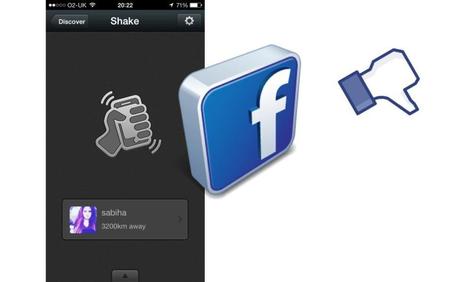









Everyone is for food, water, education and healthcare for all, but having a Cisco Chief Futurist frame in within the technology and innovation context is interesting