 Your new post is loading...

|
Scooped by
Linda Holroyd
January 31, 2014 6:54 PM
|
Many tech companies see relationships with CIOs as the Holy Grail of their sales and marketing efforts. But should you really spend the money and effort it takes for effective CIO engagement? Pro’s : - CIO’s have the power to approve or veto technology purchases, so relationships with them can be critical to getting their all-important nod towards your product.
- CIO’s plan and allocate IT budgets, so convincing them to reserve spend for your category can eliminate roadblocks late in the sales cycle
- CIO’s make technology strategy decisions, so vendors who are leading the charge in some new technology direction need to convince this key audience that the new approach will benefit their business
- CIO’s have a C in their title, which makes them great sources of endorsement quotes
Cons: - CIOs don’t actually get involved in every technology purchase. The best CIO’s empower their teams to make as many decisions as possible.
- CIOs don’t personally evaluate products. Their focus is on technology strategy and what direction to take that to support business objectives.
- CIO’s only pay attention to things that are immediately relevant. Creating personalized and relevant content gets expensive.
- CIO relationships are about the long term, not an individual sale. Nurturing those relationships will be time consuming.
- CIO’s don’t have TIME. That makes reaching them difficult, expensive, and time consuming.
Still want to get CIO’s to pay attention to you? Here are a few hints: - Don’t sell to them
- Don’t market to them
- Give CIO’s insights, or at least information, that help them stay abreast of how to leverage technology to meet business goals
- Make it relevant to their industry, company, and technology stack (That means do your research).
- Keep it SHORT – Anything targeted at CIOs (or any other exec for that matter) should be scannable in 30 seconds or less.
- Keep it SHORT #2 – Always include an executive summary – the 10-page white paper will at best be forwarded to a staff member.
- Don’t do all the talking yourself. Find and curate content from other CIOs and 3rd party subject matter experts
Bottom line: The less time your audience has, the more time you have to invest in keeping them engaged.
|
|
Scooped by
Linda Holroyd
January 14, 2014 4:34 PM
|
First of all, a very happy 2014 to all. Like many others, I took the two weeks off for the holidays and spent quite a bit of time with varying slices of my family -- in-laws, grandparents, siblings, and my kids. Even though many a movie had been written about the tensions and antics of families temporarily together in such tight quarters, few show how much our digital world has made it easier to make it all enjoyable. There were many times when things were happening that we just take for granted now, but really are deep-set behavior changes that we should step back and recognize. In our quest for always looking at the next hot app or technology, much is now embedded in our world that, as marketers, and just as people, we should recognize:
Texting coordinates. Yes, it is a basic technology, but our family sends dozens of texts per day to make sure all of our logistics are smooth. The asynchronous nature of them allow a response at your leisure, and it is much less intrusive than a phone call (does anyone phone people anymore?) For mobile marketers, getting into the texting flow via permissioned SMS will remain a viable channel, and will likely grow in importance as long as the messages are truly relevant and helpful. Let me know that my credit card bill is due tomorrow and give me a one-click way to pay.
Skype integrates. Our daughter took a semester abroad in Paris, and Skype was an essential part of our weekly routine of connecting with her. The video always worked and the ability to move her image around on an iPad, even to go over and see the dog, was incredibly convenient. I think we'll likely see more Skype-enabled interactions available on mobile and web sites so people can help you pick out the right TV, who can advise you on finances, who can solve a travel dilemma, etc. People will expect to see the human on the other side. This will likely put more pressure on service providers to change their protocols to support a face-to-face interaction. The brand bonding upside could be extremely high.
Mapping locates (and more). No one gives directions anymore, and maps do so much more, with layers for checking on traffic, cheap gas, food specials, and locations of opted-in family members. Maps are becoming a primary search function. Where location matters -- retail, dining, travel, etc – businesses will need to think more creatively about their placement in maps and the functionality they will enable. Maps will become a source for messaging, and will increasingly have real time information highlighted, such as available rooms, empty tables, open parking.
Video liberates. I was amazed at how many of the households we were in were using over-the-top services, like Roku, Chromecast, Hulu, to get access to Amazon, Netflix, YouTube and other alternatives to cable. Teens were easily moving around across them, as well as checking out the cable provider's on-demand app. No one watched timed TV except for sports, and the assumption was always that you could get pretty much anything you wanted to see. I know much has been written about the threat to cable and telecomms companies, but seeing the phenomenon so clearly , in so many households, makes me wonder how long it will just be before a simple integrated application gives access to everything in a simpler way, thereby truly breaking open the alternative to regular pay TV. Aside from the strategy for the media companies, marketers need to allocate clear budgets to experimenting with new pre-roll, on-demand, and sponsorship alternatives to buying simple commercial time.
Photos permeate. During my vacation, people were busy with Instagram posts, Snapchat messages, and Facebook galleries. Our family now uses all of these to share moments with each other, and others. As marketers, we need to make sure we are not losing sight of the image in light of the growth of video, and we should find ways to make it easier for people to use brands in the context of the images they share, e.g. sponsoring photo filters, enabling new kinds of Photshopping insertion of a product in a fun way, adding clickable information to pictures about a place that should also be marketing itself. These services have yet, in many cases, to monetize themselves, but I see new directions for the right brands to get themselves into the flow of the image dialogue in powerful ways.
So, while none of these observations is radically new, just seeing how real the trends are in reshaping one's own family behavior is motivating me to make sure clients are building new assumptions into how they'll be marketing in the next couple of years. How far has your brand gone in embracing these changes and getting ahead of the learning curve involved?
|
|
Scooped by
Linda Holroyd
January 2, 2014 4:06 PM
|
1. Know Your Destination before Reading the Map Planning for a trip is always easier once you know where you’re going. Data-driven analysis always comes back to the scientific method. The first step of the method: Form a hypothesis. Too many experts overlook this basic premise and jump headlong into the metrics. But if you have no idea what your prediction or variable is, then how can you measure its success? That first step might be the toughest, so take a breath. Your belief in science now points you to your destination. You have an end state in mind. On this journey, consider data to be your fuel and the reporting engine your vehicle. Analyze the data to see if your hypothesis turns out to be valid. Notice I didn’t recommend discovering as many shortcuts as possible. One tactic isn’t going to totally revolutionize your industry. Instead, trust the science and your own ideas to change it. 2. Let Your Changes Drive Your Research The analysis and future use of your data is based upon your expectations. These expectations determine the time, energy, and money you’re willing to spend on relevant research. If you’re contemplating changing your website background color to a seasonal print, you have no need for expensive consultants. However, if you’re developing a total redesign of your online home, you’ll want to invest in more than just a Magic 8 Ball to guide the way. Imagine a small business that immediately opts for a total website overhaul after a short period of profit decline. Did that business measure what was working or not working with the site before? Did it assess its marketing and customer service strategies? Is the outlook “very doubtful”? Instead, that business hopes a stab in the dark will guarantee success. Most likely, it was snap decisions based on flimsy data that led to declining profits in the first place. Target your variables, and base your changes on valid data. 3. Measure around Risk Now that you have a destination and recognize the resources needed to reach it, you can focus on your variables. Assess your risks, and choose which element you think needs to change to better your business. Is it a higher conversion rate, more downloads, or lower monthly costs? Specifically, how is your “perfect world” version of the business different from its current state? You can collect reliable data once you’ve determined what you’re measuring. Try to isolate your variables as much as you can. This can be difficult in a large company, but it’s necessary to interpret your data accurately. 4. Use or Lose Your Data Data is not wine — it doesn’t get better with age. Methods of collecting, storing, and reporting data constantly change. If you’ve spent hours gathering information, put it to work. Get as much value out of it now as you can. Don’t collect data just to store it. Unfortunately, many businesses do use this approach. No clear hypothesis or purpose for the data was established from the beginning, and it winds up collecting digital dust on a virtual warehouse shelf. Quick and convenient data-gathering devices and metrics allow for obscene amounts of information to be gathered. However, data for data’s sake doesn’t help move you or your business forward. By clearly defining your goals, risks, and methods at the beginning of your collection, you can forge a practical path to positive change. Data can be an incredible tool. Use it wisely.
|
|
Scooped by
Linda Holroyd
January 2, 2014 12:35 PM
|
What types of companies will prove the next investment feeding grounds and what’s gotten overhyped? Will 2014 continue the trend of large, even inflated valuations for young private tech companies while the mature ones look to go public? FORBES asked some leading venture capitalists those very questions, from Silicon Valley to London. The predictions below come from a mix of established long-time Midas List staples with big wins to their names as well as those fresh to last year’s list of the world’s top tech investors. Their thoughts have been organized across three major themes–market trends and predictions for both consumer and enterprise tech–but it’s worth noting several recurring views.
When it comes to increased valuations for private companies and the allure of the IPO, the investors agreed that they’re paying more to participate in funding rounds right now–what one VC said is a 15% to 20% premium due to a frothy market. But given the nature of their business, investors aren’t simply going to stop considering new startups or maintaining their positions in their portfolios, instead being just a bit more careful in when to write a check. The opposite holds true for founders, as multiple investors said they’re advising entrepreneurs to raise whatever millions they need while the conditions are so favorable. And the top area for growth mentioned across either consumer or enterprise tech was security–be it for mobile data, social media accounts or the cloud. Several reasons for security’s boost in 2014 are below, but the basic gist: more people are working more with more mobile devices, which is great for productivity and a nightmare for data protection. And corporate concerns post the Edward Snowden revelations don’t hurt. Other views include bear and bull takes on e-commerce and education tech, opportunity working with financial services, plus one bold prediction that Apple is primed to make a major move.
Todd Chaffee, IVP: The valuations will continue to climb and the IPO party will continue. At some stage of the game, we will have a huge unforeseen market correction come, a black swan event, that nobody sees coming, and we will have a massive correction. For us, it’s a very cautionary environment for us when valuations continue to part from fundamentals. We go, ‘Careful, we’ve been to this movie before.’ Raising money right now is absolutely what you should do as an entrepreneur and not what to do as a VC. For us right now, we are in the art of paying up. Even though the markets are frothy, there is still incredible innovation. Mike Maples, Floodgate: Next year is likely going to be another acceleration in year. In years like that, more funds get raised and more investments happen. There’s going to be a lot more heat across the board. Some of that won’t be so good. We are headed to a crescendo, and I get nervous about it every day. Scott Sandell, NEA: I think the industry overall is in a really healthy spot. We contracted significantly after the global crisis to 1996 funding levels. Going into 2014, I don’t expect money to rush back into the venture business. On the other hand, I see a continued rise of investment from the angel side. It’s now about 20 billion, and that’s great for venture for the most part. I do think we are seeing a change in the IPO market in the last month or so. There have been a few IPOs that got pulled. Now until they file they can go through the process confidentiality. We’ve seen that happen a few times, so we know the market has cooled a little bit. My guess is there will be 1 or 2 of those next year [of IPOs from Airbnb, Box, Dropbox, and Uber]. Are we in a bubble? I think the answer is no, we are not. We are in a tremendous time of change and growth, highly valued by the public market. Richard Wong, Accel: We are cautiously optimistic that 2014 will continue to be a big year both in the public markets and as the potential for IPO drives the M+A [mergers and acquisitions] market. The other leading indicator is that the quality level has stayed high. There’s a dynamic [sometimes] where when you see companies going public, lesser quality goes public. That has the impact of eventually shutting down the market. These [current] companies have great fundamentals.
Consumer tech Michael Abbott, KPCB: Wearable devices will rule. [This] extends from the meme of hardware is going through its own revolution like software has done (and is doing). Ephemeral content will rule. Secure messaging will continue to thrive as a result. Who wants certain content to live forever online? But passwords will die. How many passwords do you have? Are they strong enough?
Todd Chaffee, IVP: If I have a general theme across the board, it’s about market dominance for the key players. Facebook will continue to be the dominant social network, and Twitter the dominant information network, and LinkedIn the business network. Who is the second place to eBay? You don’t know. Once you have a marketplace, there’s the network effect. In the world of messaging, I think Snapchat and Instagram will continue to grow dramatically. The younger crowd, that’s what they use. But I also think YouTube will continue to become even more powerful as a player in the network and media world. The sleeper out there is SoundCloud. I think it will grow in its dominance and be the YouTube of sound. It just seems like where we are at a point where a lot of these new things emerged and now it’s time for the big player to take over. Jeremy Levine, BVP: My bear pick is ecommerce. Amazon is on the warpath, it’s going to steamroll everybody. The exception appears to be Zulily [which went public in November], and I can’t figure that one out. I think somehow they found a way to beat the Amazon pricing bots, but long term I would not bet against the Amazon pricing bots. Mike Maples, Floodgate: The smartphone is not just the next generation of computing, it’s as liberating as the car was. That’s become the way that teenagers and people activate their freedom seeking. If you take that as a premise, it leads you down some interesting paths. What does it mean for the car industry if people don’t want cars? What does it mean for the sharing economy? What happens in the world with how often I use my tools in my garage? Will a drone come to my yard and I pop them back in and call for the drone when I need those tools? With applications like Uber and Lyft, there’s a wow factor and experience that couldn’t exist before mobile. I think e-learning is still very compelling but very, very crowded. Companies involved with e-learning will struggle unless they have a truly disruptive idea and a structural advantage. Scott Sandell, NEA: Educational technology will reach the mainstream in 2014. It’s a sector that’s had a lot of lingering attention but there’s been question whether these are businesses. We see 12 startups in one way or another helping to reshape education. I think they will be sizable businesses. It will take a couple of years before the real winners are determined.
Enterprise tech Asheem Chandna, Greylock: People are trying to access information from mobile devices and the devices have grown in prevalence. That data is leaving the [person’s] corporation and going beyond the firewall. And as more data goes to cloud infrastructure outside the firewall, data that was previously secured on servers has crossed over. There are four areas in security where I think solutions will come from and profits be made: 1) On the mobility side, you will see existing mobile device vendors and others providing services on mobile, you will see solutions come to market next year and the following year. 2) Insecure clouds on the cloud side: You will see cloud vendors differentiating themselves. 3) Firewall vendors are also going to add to that capability, as data moves through the firewalls. You will see increasing control of SaaS applications and data leakage. You will see firewall vendors evolve these capabilities. 4) What Gartner is calling CASB. Cloud Access Security Brokers, a new category of vendors for corporate data and cloud. The whole [Edward] Snowden incident from 2013 has heightened this issue for companies. And also many international companies want to be closer to the data, those in Europe in particular. That’s added fuel. This issue is important across large corporations, but it’s heightened in regulated industries like healthcare and financial services. Jeff Jordan, Andreessen Horowitz: Technology is poised to disrupt the massive global financial services industry. Following the recent credit crisis, banks are becoming more risk adverse and more highly regulated. Also–Internet competitors have key advantages relative to traditional banks including lower operating costs and incremental online “signals” to inform credit decisions… We expect this activity to increase dramatically! Jeremy Levine, BVP: I’m excited about really small businesses entering the world of software-buying companies. A lot of the software will end up being vertical specific, the yoga studio, hair salon, or fitness club. It’s specific to the category, mapped to the business. It’s a growth opportunity as opposed to a substitution opportunity–these businesses are so small they couldn’t afford this software before. Silicon Valley is supposed to be anti these businesses, because these companies aren’t billion dollar opportunities on their own. Peter Levine, Andreessen Horowitz: What we’re seeing in the new data centers of today’s tech leaders—e.g. Facebook, Google and Amazon—is a dramatic departure from the old. No longer do applications require virtualized or carved-out, proprietary, monolithic servers. Instead of division, new and future applications will require infrastructures that aggregate or bundle together cheap, commodity parts to achieve incredible scale and processing power, efficiently and economically. And the ultimate the coup de grace will be an operating system for cloud infrastructures that basically converts your data center into one giant supercomputer. Mike Maples, Floodgate: Security I think is obvious. The world of the Internet is a more dangerous world. The bad guys have been investing in technologies that make them more capable in a decade. There’s a lot of vulnerability. If you combine that with the mobile cloud breaking everything, all the existing security companies have big holes in them. We see lots of startups pursuing this who may take off. If you think about traditional perimeter security, it doesn’t really make sense. You need a solution that keeps an individual’s private life private, and at the same time allows a user to protect that user. It’s very early and there are a couple other startups in the space. My guess is that over the next 24 months, there are 2-4 well-funded high quality teams. Richard Wong, Accel: I could see a major acquisition by AOL, Yahoo or Microsoft coming, but add Apple to the conversation. They bought the number two player, Quattro, in 2010. That formed the basis of iAd today. But if you asked around developers, they’d say iAd is not a player for making money or acquiring users at scale. Apple obviously has a lot of market cap to work with. It’s strategically important that they get this right. It’s going to be really important for Apple and iAd to get better and make money.
And a bonus international view: Harry Nelis, Accel: What you’ve seen in the last five years is many consumer-oriented investments, including in the United States. I think the pendulum is now swinging back to enterprise-oriented investments, which means there’s a slight shift in the emphasis geographically. Israel, which used to have opportunities that were a bit more subdued, is now really interesting again with all kinds of opportunities on the enterprise side. One area that is specific to Europe and the United Kingdom is new disruptive financial services for consumers and businesses. These guys are faster and better at underwriting small business loans for banks. It’s taking off for a combination of reasons: 1) London is the financial center of Europe so there are a lot of people with the expertise. 2) U.K. banks have been hard-hit in the financial crisis. 3) The regulatory environment in the U.K. is a bit more conducive to these startups than in the environment in continental Europe or in the U.S., where to target consumers you have to be licensed in all states.
|
|
Scooped by
Linda Holroyd
December 30, 2013 1:53 PM
|
Ever wondered who are the Generation Z, Baby Boomer and Millennials? What are the millennial characteristics? What do today's millennials want? What business marketers need to know about millennials? With 76Million+ members of the Gen Y population, they cannot be ignored. Did you know it costs $24,000 to replace each millennial hire that leaves, and 91% expect to stay in a job for less than 3 years? Or that by 2014, Gen Y will have over $1.4 trillion in spending power? The team at Badgeville has designed below infographic that takes a deeper look into how marketers and managers can get the most out of their workforces and audiences of this age bracket.
|
|
Scooped by
Linda Holroyd
December 20, 2013 12:03 PM
|
In 2014, we'll see brands and agencies harness digital advertising in a way that integrates seamlessly with people's busy lives, whether through location retargeting on their mobile devices, predictive analytics or the intelligent automation of the ad buying process. Consumers send buying signals every day to advertisers and the brands that figure out how to use technology to listen more closely and send their messages in an organic and authentic way will succeed. At RadiumOne we predict the following industry shifts: 1. Programmatic will Get Smarter -- skyrocketing to 60% of all digital ad spend. We predict that by the end of 2014, almost two-thirds of the digital advertising market will be automated but the key to growth will hinge on the model's ability to rely less on third-party data and more on first-party data insights. Ad tech companies must take a page from the Facebook and Twitter playbook to incorporate some form of proprietary data into their technology. This coming year will focus on the refinement of advertising automation as technologies that rely solely on third-party data will become table stakes, fueled by the industry need to innovate cookie-less forms of targeting. This added layer of ad intelligence will give brands a leg up on the competition. 2. Platforms Thrive. Networks Die. As marketers expand their digital footprint this year they will seek more cost-effective media buying solutions that offer them the transparency, control, performance and insights they truly need and generic ad networks will become a thing of the past. Advertising platforms will rise to the forefront as a crucial solution removing the complexity of media buying. Unlike networks, platforms are designed to put the power back in the hands of brands and eliminate arbitrage and heavy fee loads associated with the agency model. 3. Artificial Intelligence is a black box. Automated Intelligence will live on. Many vendors currently fail to demonstrate how their artificial intelligence based on common third-party data brings any value to marketers. In 2014, marketers will seek those vendors using intelligent software that automates media to produce new insights that no one else has gleaned by combining their brands first party customer data and linking it with location-based and proprietary data. Brands will crack the code of big data by using these findings to drive data-informed decisions on the right course of action to take, at the right time with the right message over the right channel. 4. Mobile will exceed analyst estimates to represent 30% of all digital spend. Spending an average of two hours and 21 minutes a day on their devices, consumers are replacing computers and TVs with smartphones and tablets to surf the Web and watch videos. The rise of new anonymous cookie-less methods of capturing user insights on mobile will help advertisers overcome one of the biggest obstacles for marketers -- mapping user behavior between mobile and desktop. Although current analyst estimates expects mobile ad spend to increase by 19%, we predict mobile will emerge to account for 30% of all digital spend in 2014. 5. Location becomes the new retargeting signal for mobile. Elaborating on the personalization theme, next year brands will begin utilizing location-based data to more effectively reach consumers and successfully convert customers across the web and mobile. Mobile ad campaigns will start to leverage comprehensive analytics to hyper-target existing customers in real-time and identify avenues to connect them with their next customers on their most trusted device. Wearables and other innovative technologies analyzing consumers' movements are a sign of what's to come.
|
|
Scooped by
Linda Holroyd
December 18, 2013 12:12 PM
|
LinkSV has been THE go-to resource identifying and connecting the dots on fundings, customer acquisitions, partnership development, M&As planning, and critical hires. The top ten reasons LinkSV is one of my favorite strategic networking resource are that it helps me: IDENTIFY 1. Identify the companies undergoing changes, from fundings to mergers to partnerships to staffing.
2. Identify the leaders joining companies, the existing board and executive teams for these companies, and consider how new leaders will help shift a company’s direction.
3. Identify the companies and leaders undergoing the most change and the implications for the industry and market. CONNECT 4. Reconnect to leaders and companies in the news leveraging current changes impacting them.
5. Reconnect with people from my past – prior companies, networks and organizations.
6. Connect with people who share my educational background and areas of interest. CONSIDER 7. Consider the implications of funding and M&A trends for clients and partners and markets.
8. Consider the implications of technology development trends and market opportunities for these trends.
9. Consider the implications of strategic alliances on the development of technologies and markets. Bring it Together 10. LinkSV helps me identify the organizations and people that are shaping the market and technologies, connect with them directly, and consider the implications of these changes for the future. For more information, or to sign up for a free membership, with a 30-day premium features, visit www.linksv.com.
|
|
Scooped by
Linda Holroyd
December 10, 2013 2:16 PM
|
Innovation Now neck-and-neck? Historically this was a no-brainer as Apple leapfrogged everybody with its new product breakthroughs: iPod, iPhone and iPad. However, since Tim Cook took over as CEO in 2011, the charge is that Apple has become more of an iterator rather than an innovator. For years, the Apple rumor mill has forecast (wrongly) the imminent arrival of the iWatch and the iTV, while Samsung has brought these products to market, with the Galaxy Gear and Smart TV. Google too is pushing ahead with new product categories, like the Google Glass smart-glasses. Jong-Kyun Shin, the Samsung President/CEO who runs its mobile division, said: “Innovation is what will get consumers to buy new devices… The Galaxy S4 has features unique to Samsung like Air Gesture that detect hand gestures. In the process of developing and making the Galaxy S4, we have filed around 120 patents related to user interface and software. We've also hired a number of software engineers from India, Russia, China and Europe to develop unique features internally.” Is this innovation strategy working? Reviews of the hand and eye gestures in the Galaxy S4 suggest that they are not “fully-baked”, actually slow the phone down and are more like gimmicks. Critics’ reviews of the Galaxy Gear smart-watch have also not been great, and it has only sold 800,000 units since its launch two months ago. However, Interbrand's Moon Ji-hun argues that its more about positioning: “Probably Samsung knows better than anyone that Gear will not become a mainstream product. Still, they are trying to convey the message that 'we are first with such technology,' which they hope will help build their brand as an advanced technology firm.” By contrast, the fingerprint sensor unique to the new iPhone 5s has been well-received and is thought to have been well-executed. In what Apple claims to be “the most forward-thinking iPhone ever”, the iPhone 5s is also the first smartphone to market with a 64-bit processor, the A7, which ironically is manufactured by Samsung. An unlikely Samsung admirer is former Apple CEO John Sculley, who led the firm while Steve Jobs was pushed out in the 1980s. In a piece welcoming Oh-Hyun Kwon into the 2013 TIME 100, Sculley wrote: “Product design, marketing and complex supply-chain management are the trifecta of success in consumer electronics. Excelling at all of them simultaneously is a rare feat, much like throwing a no-hitter in baseball. Akio Morita did it at Sony with the Walkman and Sony Trinitron. Steve Jobs did it with the iPhone and iPad. With the Samsung Galaxy, Oh-Hyun Kwon joins those business giants. Kwon’s first principles of leadership are remarkably simple and clear. Galaxy phones have a signature design feature: big, beautiful, highest-definition screens; an integrated supply chain allows for a family of products at more price points than competitors’; and their brand advertising is bold, tasteful and executed with a cheeky self-confidence equaled only by Apple’s.” Apple’s recent ‘This Is Our Signature’ ad is very much a restatement of the core Jobs philosophy: its strapline states, “We simplify, we perfect, until everything we touch enhances life.” So it seems we have a battle between perfection and getting it out new products fast and refining them later. If it continues on current product feature trajectories, then I would favor Samsung. But what Apple fans and stock analysts alike are crying out for are bold, new product categories which could rest the game back in Apple’s favor. CEO & Leadership Samsung Gets The Medal: 3 CEOs vs Tim Cook You may be surprised to learn that Samsung has not just one but three CEOs. In post since June 2012, Dr. Oh-Hyun Kwon is Vice Chairman & CEO. Then in March 2013, Samsung also promoted two of its presidents to CEO: most significantly for this discussion, Jong-Kyun Shin, who heads up Samsung’s mobile division, and also Boo-Keun Yoon, head of the appliances division. They do still both report to Oh-Hyun Kwon though, so he maybe the more dominant player. As is common in the culture of Korean companies, Samsung hasn’t provided anything more than minimal bios for these executives, so we don’t know a huge amount about them beyond a handful of interviews that they have given over the years. We do know that before he become CEO, Kwon oversaw Samsung's components business, which makes displays, chips, memory, processors, etc. Kwon helped lock down one of his division's biggest customers, Apple. Apple uses a lot of Samsung components in its mobile devices. Under Kwon, Samsung became the second largest chip maker in the world. Mobile chief Jong-Kyun Shin has been the most outspoken, telling analysts last month that Samsung’s tablet business is growing rapidly and the company aims to topple Apple as the biggest maker of tablet computers too. He is equally ambitious for the Samsung brand, saying, “Our product innovation and marketing strategy have made Samsung the world's most preferred smartphone brand. Now we'll move from the most preferred brand to become one of the world’s leading aspirational brands.” At Business Insider's IGNITION Conference, David Eun, executive vice president of Samsung's Open Innovation Center, shed some light on how the company has been able to see such great success despite such heavy devotion by Apple fans and customers: “Samsung is a very entrepreneurial story. The company set large goals for itself and has been bold in its execution.” He adds, “Seven years ago there was no iPhone or Samsung Galaxy phone. It was all about Nokia and Motorola. It takes entrepreneurial ideas and execution. The leaders at Samsung are people who have risen and made their mark by being entrepreneurial.” And it is still in the shadow of the visionary Jobs that Tim Cook is currently judged. Cook was a very competent logistics man and COO, but as Jobs himself expressed, “Tim is not a product person”. I see him as a ‘professional manager’ who risks managing processes rather than putting the next dent in the universe. He has done some good things, like improving internal collaboration and corporate governance, but he is not the great showman like Jobs and the jury is out on him. It will be interesting to see the impact next year when Burberry CEO Angela Ahrendts joins Apple as SVP Retail & Online Stores – will they create more of a fashion and customer focused Apple? Maybe Angela will be Apple CEO in the future? Overall, currently Samsung’s leadership has more momentum, as they are executing at speed, picking up customers, gaining market share and widening product range. Yet there are still big challenges. Last week, amid investor concern and lower than hoped-for sales of the flagship Galaxy S4, Samsung called a “crisis awareness meeting”. Samsung has invited 600 management staff members to attend a four-day "global strategizing meeting" in mid December, where the main topic is ‘Crisis Awareness’. According to a report by ZDNet Korea, “As people are foretelling that downfall of Samsung is coming, they are trying their best to prevent such crisis from happening.” While “crisis” at Samsung doesn’t sound great, it is good that the co-CEOs are facing reality and involving the wider management team. It contrasts favorably with Steve Jobs’ famous “reality distortion field”, which helped move mountains in product development, but often meant that he was abrasive and slow to acknowledge problems and challenges (e.g. iPhone 4 ‘Antennagate’). Wonder whether Apple has a 'reality distortion field' on its top team’s leadership performance? Brand Apple wins the medal but Samsung closing the gap by massive spending The Apple brand and logo are currently more recognized around the Western world, and in London and New York, you cannot walk down the street without seeing a sea of white headphones and people playing with their iPhones. The Brand Finance Global 500 2013 puts Apple and Samsung right at the very top of the best brands in the world, ahead of Coca-Cola and Google. Samsung smartphones are broadly comparable, feature-for-feature, with competitors like HTC, Sony, LG and now Nokia, so why has it become so dominant? A big part of the answer lies in its sheer marketing muscle – Samsung spends a bigger chunk of its annual revenue on advertising and promotion than any other of the world's top-20 companies by sales – 5.4%, according to Thomson Reuters data. Apple spends just 0.6%, and General Motors 3.5%. Adverts mocking Apple fans, and heavy investment in product placement and in distribution channels have strengthened its Galaxy mobile brand. Samsung now sells one in every three smartphones and has more than double Apple’s market share. Is this enough to make Samsung loved? Samsung’s Galaxy S4 launch in New York came under fire for being sexist, showing giggling women chatting about jewelry and nail polish while the men discussed the new phone. Oh Jung-Suk, associate professor at Seoul National University business school cautions: “Samsung's marketing is too much focused on projecting an image they aspire to: being innovative and ahead of the pack. They are failing to efficiently bridge the gap between the aspiration and how consumers actually respond to the campaign. It's got to be more aligned.” Moon Ji-hun, head of brand consultant Interbrand's Korean operation, adds: “When your brand doesn't have a clear identity, as is the case with Samsung, to keep spending is probably the best strategy. But maintaining marketing spend at that level in the longer term wouldn't bring much more benefit. No one can beat Samsung in terms of ad presence, and I doubt whether keeping investing at this level is effective.” Samsung has told Reuters that it will “continue to leverage our brand power to maintain growth momentum, while focusing on optimizing the efficiency of our marketing activities.” Apple may sit in top position now, but has lost its mojo over the last couple of years through lackluster product releases and perceived lack of innovation. Samsung is catching up and is already no. 2. The Samsung brand can be improved and it isn’t loved by some like Apple, but I am impressed with the leadership team for seizing the opportunity to leapfrog all its other competitors, through investment and execution with conviction. Design Apple wins the medal, but do simplicity and beauty still trump a bigger screen? Apple has long placed design at the heart of its product development policy. Steve Jobs famously used to obsess about details that nobody would ever see, such as the look of Apple’s factories and the internals of products… this trend was taken to its logical extreme with the launch of the translucent plastic iMac in 1998. When the iPhone was launched in 2007, its all-touchscreen and single-button front was distinctive and simple. Apple has honed the design over the years with glass casing and then unibody aluminum, but fundamentally it remains unchanged. The iPad takes the same design cues and it gets ever lighter and thinner. Apple’s aluminum MacBooks and iMacs are widely considered to be the most beautiful, slick and minimal. Sir Jony Ive, Senior Vice President of Design, keeps the Jobs design obsession alive at Apple. His biographer Leander Kahney recently called him the “soul” of Apple, adding, “Ive has a mad, total, one-hundred-and-ten-percent commitment to making the best products humanly possible.” Jony once flew to Japan to watch a sword-maker forge a katana, in his quest to make the MacBook Air even thinner. His remit has now been expanded to software as well as hardware, leading to the flatter, cartoon-like and generally well-received iOS 7 iPhone software update rolled out in September. However, now that nearly all smartphones have an all-touchscreen front, the differences between them are less striking. Samsung’s current flagship the Galaxy S4 in some aspects has a less polished look than the iPhone 5s, with a polycarbonate plastic backing. However, it has a singular design feature: big, beautiful, highest-definition screens, that dwarf the iPhone and its “Retina” display. The design is “good enough” for consumers who are more focused on features, price and a bigger screen canvas. Overall it feels that Apple still has the design edge. Ecosystem & User Experience Apple wins the medal with its "walled garden". This is where Apple still excels. Tim Cook likes to claim that, “Apple has unique strengths in products, software and services”. I think it’s a bit simpler than that. Apple products still broadly have the reputation that they “just work”, and indeed they have made technology more accessible and made us more connected. Add to that the 1,000,000 apps available to download in the App Store and you have a very powerful platform that is seamless across multiple devices. People (willingly) get locked in to Apple’s “walled garden” and it is difficult to persuade them to make the move outside it. Samsung on the other hand is highly reliant on Google’s Android mobile operating system for smartphones and tablets, and on Microsoft for Windows PCs. While the apps on the Google Play store have caught up in number with the Apple app store, they have historically been slower to come to market and less reliable due to the large fragmentation of Android devices. The Android tablet apps were thought to be just blown-up smartphone apps rather than iPad-style apps fully reimagined for a larger screen, although this is changing. Where Samsung adds onto its devices its own user interface, this is sometimes considered to be “bloatware” that gets in the way of the user experience and duplicates or slows down the core Android or Windows operating system. So here Apple’s obsession with control does pay a dividend for ordinary users wanting stable and intuitive devices. Principal CEO Oh-Hyun Kwon has publicly acknowledged that this is a weakness and important area of development for Samsung: “A particular focus must be given to serving new customer experience and value by strengthening soft capabilities in software, user experience, design, and solutions.” He also believes that to secure an “an absolute lead” the company, “must have dominance over new technology and global markets”. John Sculley adds, “As Samsung builds a campus in Silicon Valley, all eyes will be on Kwon to see if the CEO with a Ph.D. from Stanford can be as successful with software as he has been with hardware.” Looking at buyers of new smartphones, the above chart shows that not many users switch from Apple to Samsung, at only 11%. This is critical to Apple’s long-term survival since Apple users are sticking with iOS and not defecting to Samsung. Apple is having about one-third of its users coming from Android. It is interesting to note that similar to all buyers first-time smartphone buyers favor Samsung by about a three to one margin, approximately 6% vs. 2%, over Apple. Apple still ahead. Giving Customers What They Want Samsung wins the medal. Customers within Apple’s walled garden broadly get what they want in terms of a seamless user experience across iPhones, iPads and Macs, but they have a much more restricted choice when it comes to variations of new devices. There is only one top-end iPhone (the 5s), and only a big or a small iPad (the iPad Air or the iPad Mini). Steve Jobs famously liked to make these kinds of decisions for customers rather than bother them with a confusing array of options. By contrast, Samsung makes a much wider range of devices in all shapes and sizes, at a range of price points. They can even go bigger than the Galaxy S4, with a Galaxy Note smartphone known as a “phablet” that blurs the distinction between phone and tablet. Samsung also makes a range of hybrid PCs that fuse tablet and laptop, as well as TVs, kitchen appliances and the new Galaxy Gear smartwatch. The bigger screen in particular seems to be the biggest draw over Apple, although it is something that Apple is likely to correct with the launch of a bigger iPhone 6 in 2014. Profits & Growth Growth now with Samsung so wins the medal, but Xmas showdown ahead The most recent Fortune 500 Global rankings of worldwide companies (based on revenue in their fiscal years ended on or before March 31st, 2013) shows that Samsung topped Apple with revenue totaling $178.6 billion, compared to $156.5 bn. However, with $41.7bn in profit, Apple was beaten only by ExxonMobil. This was more than double Samsung’s $20.6 billion annual profit. This might be changing – this graph from Business Insider shows that, for the last two quarters, Samsung’s profits were actually higher than Apple’s. Having settled into a pattern of releasing new iPhones and iPads in September/October, Apple is now highly reliant on the holiday quarter in Q4 – although Tim Cook may have a point when he said, “I think it’s going to be an iPad Christmas.” For now, Apple’s iPhone business is holding up well – it sold 150 million iPhones in its last fiscal year ending in September, as well as 71 million iPads. Indeed, Apple can still claim 70% of the profits in the smartphone sector. The gloss has come off slightly off Samsung’s sales machine – it fell far short of initial estimates that it would sell 100 million Galaxy S4 units, and it is instead now predicting of 100 million total Galaxy S and Note series phones, phablets and tablet devices up until the end of the year. Apple’s share price has had a tough fall from its all-time highs of $700, although it has since recovered a lot of the ground as stands at year highs of over $560. This is partially fueled by rumors that it is finally about to do a deal to get carrier coverage for the iPhone with China Mobile, the world’s largest mobile carrier and potentially a big source of growth. But for me, this is again an example of a deal that should have happened years ago and which has been hampered by poor execution. Another question mark is the recent launch of the iPhone 5c, with the ‘c’ being variously said to stand for “color”, “cheap” and “China”. It had been hoped that a lower end model would help Apple to gain share in emerging markets, although is it only $80 cheaper that the iPhone 5s and Tim Cook has said that it is a mid-tier rather than low-tier model. This does however give Apple pricing flexibility for the future and, in a market subject to increasing commoditization, I quite admire Apple for standing firm on its high profit margins. Overall: Neck-And-Neck So overall today they seem to be neck and neck but I do see the growth of Samsung to be steadier and more sustained. We’re all fascinated by Apple, but so much of what we hear turns out just to be rumors. Right now it remains a profit generating machine, but long-term that will change if it fails to recapture the public imagination and innovate into new product categories. Samsung has weathered years of legal action, and having initially copied parts of the Apple playbook, it is now starting to innovate into new areas. In the future I am torn: my head currently says the 3 mystery CEOs of Samsung will prevail, but my heart really wants Apple to come back and leapfrog them, with innovation that changes our lives again. Maybe in future both will remain big beasts, and we will have an Apple and Samsung duopoly.
|
|
Scooped by
Linda Holroyd
December 5, 2013 5:18 PM
|
Millward Brown, the global research firm, has today published its definitive annual BrandZ list of China’s most valuable brands – essential reading for Sinophiles like me (and indeed for anyone with an interest in what’s happening in the world’s second largest economy). Now in its fourth year, the WPP-commissioned survey for the first time documents the leading 100 brands rather than the top 50. You can read the full report here, but the top ten are: China Mobile – $61.4bnICBC (Industrial & Commercial Bank of China) – $39.7bnTencent – $33.9bnChina Construction Bank – $25.5bnBaidu – $20bnAgricultural Bank of China – $19.3bnBank of China – $13.6bnPetroChina – $13.4bnSinopec – $13.1bnChina Life – $12.7bn These companies are among the biggest in the world, with a combined brand value of more than $250 billion, but most in the West know little or nothing about them (yet). The report is absorbing both in itself and in what it tells us about the unprecedented industrial revolution that has taken place in China over the last 20 years or so. Here are five things to emphasise: 1. Technology, telecoms and banking brands dominate Seven of the top ten brands are financial institutions, tech companies or telecoms providers. Looking at the top 100, the banks have a collective brand value of $114 billion, telcos $74 billion and tech businesses $60 billion. The next largest category (insurance) is worth about half that at $32 billion. Each of these three dominant sectors is developing rapidly, as China’s industrial revolution drives financial, social and behavioural change on a massive scale. As businesses they’re finding they have more and more in common. The web is bringing them into ever-closer proximity (more on this below) – and convergence happens pretty fast in a country with an online population approaching 600 million. 2. China’s tech businesses already stand toe-to-toe with the global giants Baidu, which operates almost exclusively in China, processes more than five billion search queries every day. This is on a par with Google’s global figure. Tencent’s WeChat messaging service, launched only two years ago, is now used by around 400 million people – and continues to grow exponentially. Tencent’s revenues and profits are greater than Facebook’s. And in China, where more than half the population is yet to go online, the digital explosion is only just beginning. 3. Chinese tech companies want to be banks, too Financial institutions may occupy four of the top ten slots in the BrandZ rankings, but they’re looking nervously over their shoulders at a new breed of competitor. Baidu isn’t just China’s Google. It’s Google plus Amazon, and now it’s moving squarely into the territory of the banks as well, as the latest tech player to offer users financial services. Deposits to new wealth management service, Baidu Wallet, reached their limit of one billion yuan within five hours of the service launching a few weeks ago. Transaction platforms are increasingly important to the tech companies, which already have online payment systems and even offer loans. According to Reuters Breaking Views, Alibaba is the biggest threat to the banks: by July this year it had made short-term loans totalling more than $16 billion to businesses selling merchandise on its sites. Both it and Tencent are reported to have applied for banking licences in the last few months. Given their phenomenal scale and growth, and the convenience of their platforms, these tech players are well placed to disintermediate the traditional banks in much the same way that Amazon has disintermediated traditional retailers. Many believe that physical retail banks will soon become little more than showrooms, with the real business conducted almost entirely on mobile devices. Will we see GoogleBank in the West? 4. The scale of mobile is incredible A banal observation perhaps, because in every respect China is a land of very big numbers, but the scale of mobile usage is worth reflecting on for a moment. China Mobile, which tops the BrandZ list with a value of $61 billion, has 750 million subscribers, making it the largest mobile provider on the planet. Significantly, mobile has already overtaken the desktop as the primary means of accessing the web. In China, as in other fast-growing markets, the era of the desktop has been short-lived compared to Western countries. Official estimates suggest that three quarters of China’s 591 million internet users access the web via mobile devices. In 2012 the Chinese bought 213 million smartphones, a figure that is expected to rise to 360 million this year. For marketers, this means China (the world’s largest smartphone market) is the place to watch: Hugo Shong, one of the leading Chinese venture capitalists and a WPP director, believes that a penetration of 400 million smartphones could be the tipping point when mobile advertising comes into its own. 5. Chinese business stereotypes are out of date There’s a persistent myth that all Chinese companies are good at is stealing intellectual property or at best replicating existing business models (just as people used to say about Japan or Hong Kong or South Korea). This is a lazy stereotype and well past its sell-by date. Chinese companies often have a better understanding of trends in digital, social and mobile, for example, than Western counterparts, and are becoming increasingly innovative in their approach. This innovation is driven by huge demand from consumers – as demonstrated by the presence of so many fast-growing tech and telecom companies in the BrandZ rankings. I'd like to highlight an example not on the list, though: smartphone business Xiaomi (a private company and therefore not eligible). Its CEO Lei Jun is often referred to as the Steve Jobs of China (a moniker he dislikes), the company has been accused of copying Apple, and it has an Android-based operating system. In truth, though, Xiaomi is forging its own path. Its business model relies not on handset sales but ongoing services to the user, such as accessories and apps, and it has recently launched a TV box. The company also incorporates the views of customers into design and software development, releasing an update every week based on feedback from its core user base. As The Economist has pointed out, a far more democratic approach than that of its US competitors. Xiaomi launched its first Mi smartphone in October 2011. At $10 billion, after only three years, the company is worth more than Nokia’s handset business and has recently overtaken Apple’s market share in China. Xiaomi is just one example of a growing trend, a trend that will see China become the origin of various disruptive changes in the current structures of global business – and challenge many a complacent Western assumption in the process.
|
|
Scooped by
Linda Holroyd
November 27, 2013 3:00 PM
|
CRM, Marketing and Sales was the most active SaaS product category, accounting for 13.0% of all M&A transactions in the third quarter. Buyers are seeking targets that can help gain a greater share of IT capital in spending on online marketing technology. According to Gartner, by 2017, the CMO will purchase more IT than the CIO. After two years of comprising almost 20% of all SaaS transactions, the HR & Workforce Mgt product category had its third consecutive lackluster quarter, claiming only 2% of SaaS transactions in 3Q13. The Systems Management (7%) and Supply Chain (6%) product categories also showed strength in 3Q13. Source: Q3 2013 Software Industry Financial Report from the Software Equity Group http://softwareequitygroup.files.wordpress.com/2013/11/511.jpg
|
|
Scooped by
Linda Holroyd
November 26, 2013 4:49 PM
|
The new corporate model is a distributed entrepreneurial model. Customers today demand products and services personalized or tailored to local needs with embedded quality of life services. Scaling is done first by customer alliances through social media, and later by distributed joint ventures and coopetition. We need the new wave of entrepreneurs to facilitate: A new era for manufacturing enterprises. New emerging manufacturing technologies (e.g., digital and 3D printing) in small shops or a town’s industrial and innovation hub can bring manufacturing back home. The new twenty-first century corporation can be born virtually anywhere. Single-node factories may be home-based with a global market.New goldmine of innovations and technology. Universities and other R&D groups have created a large number of new inventions and innovations, mostly lying dormant on the shelves of our researchers and labs, waiting to be commercialized by aspiring entrepreneurs, with minimal up-front costs for licensing.Next wave of economic expansion. The time is ripe for the new entrepreneurial dream. People are emerging from recent economic disasters with a new appetite for change, and making the world a better place. Gen-Y is approaching the business world with solid personal goals, and expect to create something that is creative, fun, and rewarding.The cost of entrepreneur entry is at an all-time low. With e-commerce, Internet, and smartphone apps, anyone can be an entrepreneur today for a few hundred dollars, without a huge investment, bank loans, venture capitalists, or Angels. With the global market, the growth opportunity is huge, starting local and scaling at any pace. If you are already in the entrepreneur lifestyle, you probably realize that it’s hard work and very risky. Nobody said it would be easy, but nothing that is easy satisfies for long. The days of easy and safe jobs in the large corporate world are over, and certainly not very satisfying either. We need this new generation of entrepreneurs who relish the challenge and the opportunity of rebuilding our business engine to fit the culture and the global needs of the twenty-first century. What’s holding you back from jumping on the wave?
|
|
Scooped by
Linda Holroyd
November 21, 2013 6:08 PM
|
Panelists Brian Wong and Egidio Zarrella debate China’s innovations at a recent Silicon Dragon event in Hong Kong. China’s transition to a tech economy based on innovations rather than copying continues to gain momentum. It doesn’t take a microscope to spot the signs. Chinese engineering and managerial talent is multiplying, while e-commerce and mobile communication innovations are unfolding. A rebound in China’s venture capital market after the “Death Valley” of the 2011 and 2012 and the rise of angel investors, many of them multimillionaires from the first generation of China’s “techpreneurs,” are escalating the trend. Speaking at recent Silicon Dragon panel on innovation trends, debate over China’s rise as a world-leading tech power took center stage.” China has definitely evolved from copycat to process innovation to now what’s called frugal innovation,” said angel investor Brian Wong of Hong Kong-based Seacliff Partners. He added that the market is fueled by that old adage, “necessity is the mother of invention.” See video clip. Wong, a former top executive with Alibaba for nearly a decade, observed that homegrown innovation has developed from a need in China for products and services that didn’t exist in developed markets. “So the Chinese have created it themselves,” he said. In the next phase of this evolution, he foresees China innovations expanding in other emerging markets such as Eastern Europe or Vietnam. For example, the talk-to function of Tencent’s WeChat messaging service can be applied to many emerging markets where people may not read or write. China’s innovations are bubbling up in many spots — big data, cloud computing and mobile apps, observed KPMG partner Egidio Zarrella, pointing to mobile aps for financial services as a prime example. The uptake in mobile apps capitalizes on China’s huge mobile communications market, the largest in the world, where residents of Shanghai, Beijing and other mega cities often use multiple handsets. “Right now, the U.S. is seen as the innovation leader of the world, and China is right behind it. But in five to ten years’ time, China could lead,” he said, adding that the domestic China market will drive innovation that the US and Europe will want to learn from.” Increased protection of intellectual property in China is adding more fuel to the Chinese tech innovation fire, observed Vickers Capital Investment Chairman Jeffrey Chi. He noted that Chinese tech company Huawei has become a world leader in the number of new patents filed and surpassed U.S. counterparts. Despite the uplift, Chi and other panelists commented that China will need increased spending on core research and development to catch up with the breakthroughs of the West. Silicon Valley is the mecca of high tech, especially for backbone technologies and even consumer technologies, commented Henry Wong, a venture partner with Garage Technology Ventures. “It is the place to go if you want to do research and grow fast,” he said, while adding that what works best in developing products is leveraging the resources of both this Western stronghold with the lower costs and huge markets of Asia. Turning to another indicator of China’s growing tech power, panelists pointed to the march of Chinese Internet giants acquiring companies in the U.S. In reaching out to new markets and expanding their influence, the Internet giants Baidu , Alibaba and Tencent have learned from the mistakes of some early American entrants to China, which settled for secondary positions against local competitors, set up joint ventures or ultimately withdrew. Today, the so-called BAT are not managing overseas outposts from back home but instead delegating authority and setting up offices locally within these outreach markets. They are taking minority stakes in startups, getting observer board seats and learning the characteristics of each locale. The Chinese Internet players such as Tencent have figured out that they need to be close to the innovation, close to the investment in funds and early stage deals. This is the way they ”learn the secret sauce,” pointed out James Mi, managing director at Lightspeed China. Earlier in his career, Mi spearheadedGoogle's GOOG +1.1% initial efforts in the Chinese market and witnessed how centralized decision-making at U.S. headquarters hurt the search engine’s prospects in China against strong local rival Baidu. He added the trend of Chinese companies acquiring companies rather than building new services or products internally is fed by a need to keep up with fast-moving upstarts in China that are putting pressure on the market leaders to continue to quickly innovate and protect their turf. Baidu’s minority acquisition of travel search site Qunar is one example within the local Chinese market. “It becomes much better to buy it than to build it. If you don’t buy it and build it, you are already a few years behind,” he said. “If a competitor buys it, you are in even more trouble.”
|
|
Scooped by
Linda Holroyd
November 19, 2013 3:59 PM
|
The End of an Era – No More Easy Paths to Growth
The mid-1990s to 2007 was a period of growth unusual for its scale and speed. Raising capital was easier and cheaper than any other period in history, globalization created access to new markets and consumers, innovation in technology and financial services took value to new heights and the rise of a middle class drove consumer spending. To grow, all you had to do was show up, and not mess it up. An entire generation of corporate leaders was shaped during this era of “easy growth.” Now, that era is over, having been replaced by what I admit is the “new normal.” The New Normal: “The Post Crisis Era” = Slow Growth/Fast Change After six years of global economic turmoil, we are now in a post-crisis era. In this era, changed market conditions posed a set of circumstances different from anything in the past. Current challenges could persist for decade, creating a “new normal.” In this new normal, growth is slow, but change is fast. The challenge for leaders is to create growth opportunities that far outstrip the potential of the global economy. Leaders in the new normal will have to think and act very differently -- the differences between “easy growth” and “new normal” conditions are not trivial. Source: Korn/Ferry client discussions What This Means for Leadership Talent The twin threats of slow growth and fast change make the leadership challenge in the new normal much more complicated and nuanced than ever before. Based on our discussions with CEOs, we have identified four shifts that characterize the changing requirements of leadership. Are Leaders Ready for the New Normal? Measuring the readiness of leaders to change, adapt and create new growth is not an easy task. Cognitively, it is easy to understand that outsized performance in an easy growth era will not automatically transfer the new normal. Raising awareness and providing clarity around changing expectations however, can go a long way in creating readiness. We found in our study of outperforming leaders that two leadership constructs define a level of readiness, or reveal the lack of it. These are leadership maturity and learning agility. Leadership maturity is defined as an individual’s ability to operate effectively at the appropriate level of complexity, ambiguity and scale. Think of maturity as the indicator of a “seasoned executive,” experienced in highly complex situations with the grace and temperament to take difficult leadership challenges in his or her stride. Given the complexity and the un-nerving problems of the new normal, maturity will be a critical differentiator. Learning agility is defined as an individual’s ability to operate effectively at the appropriate level of disruption, speed and volatility. Think of agility as an indicator of a “fast-learning executive,” someone who knows what to do even when he or she doesn’t know what to do. Plus leaders must have cultural dexterity - the ability to meet customer needs at the exact right time to tap borderless consumers. Given a fast changing environment in the new normal, agility will be a second critical differentiator. Taken together, leadership maturity and agility is the best combination of factors to predict readiness to outperform in the new normal. Both can be measured fairly accurately, and benchmarked against leaders in the relevant industry and markets – critical considerations to ensure the pragmatic use of these factors in business. Most importantly, both can be developed over time, giving a clear line of sight to leaders focused on enhancing the ability of their teams to win in the new normal. Businesses that excel in this gain in the marketplace as (paraphrasing Warren Buffett) the retreating tide exposes the winners and losers of the new normal.
|
|
|
Scooped by
Linda Holroyd
January 28, 2014 4:37 PM
|
Not too long ago, when the web was young and just hitting mass adoption, we were all astounded at the ability to have information at our fingertips, shifting forever the way we live and work. The 90s featured an emphasis on community and connecting, and a fascination with how social media is transforming the way people think, communicate and act. As we look into what’s next with today’s web, we see how communities are gathering not just to connect and find each other, but also to find power in their shared voice, raising the bar for what companies will deliver, and the type of service they will receive. These high-level shifts are happening in record time, and leaders and companies are striving to keep up with the trend, much less make predictions on how to better serve a much more empowered, more demanding customer base with high expectations for customized solutions. We have compiled a summary of the megatrends impacting the evolution of the web, from Web 1.0 of the 1980-90+ (Mass Adoption of the Web) to Web 2.0 1990s-2010+ (Communities Rule) to Web 3.0 (Communities Raise the Bar), in the hopes that insights from this article will help drive the planning, strategy and execution for these leaders. 1. Technology Evolution: Computer Hardware, Software, Network and Devices Y2K scare spawned a massive investment in IT, and much of the monies were devoted to the acquisition of new equipment – hardware and software, and new ways of communicating, the internet. With Web 1.0, graphics became sophisticated and complex; databases drove interactive solutions; advances in network, computer and server hardware and software and security drove mass adoption and international expansion. With Web 2.0, software emphasis was more on groups, membership, segmentation and engagement of users. The emergence of smart phones and tablets and an abundance of apps facilitated the expansion and advancement of social media solutions, and the massive response of the millennial generation in particular shifted forever how we connect and communicate, how we think about expressing ourselves. As we anticipate the rise of Web 3.0, we will see the evolution of wireless, sensors, geophysical and augmented reality solutions, along with the increased sophistication and integration of devices, databases and software. Together, this will allow companies to process unprecedented volumes of information, including video technology, creating actionable dashboards, with the focus on providing personalized services, leveraging aggregated data, and ultimately better serving the needs of the customer. 2. The Role of Marketing: From Getting a Web Presence to the Rise of Community to Forecasting Needs The self-service nature of Web 1.0 enabled customers to quickly find information and compare it with other offerings, and even get better tech support about their solution. This is a distinct difference from an age where customers and prospects waited for information to be delivered to them. Information and automation was the focus, and getting everyone within a corporation to collaboratively update and upload accurate information was no easy task. It changed the mindset of corporate employees at all levels, and also the expectations of customers – companies did not look professional unless the web site looked that way. With Web 2.0, it was a given that companies would have a web presence. Internal marketing departments focused the integrity of the brand, the alignment of the message, and the technical and process hurdles of getting all the information out there, to the right audiences. Independent communities and those sanctioned and supported by companies began to emerge, and began to increasingly impact the adoption curve of products and services. Managing the messages around product and service options became a challenge and an opportunity for companies. With the emergence of Web 3.0, online communities continue to impact whether a product is adopted or panned as well as which features and products are most desirable now and in the future. But with this next phase, Marketing will leverage the community data and begin to interpret the immediate and ongoing needs of the community, and works with internal departments to deliver to those needs. 3. The Access of Control: From Corporate Leaders to Empowered Communities With Web 1.0, Corporate leaders dictated web communication strategy and timing. The company webmaster and IT department and marketing and other execs decided whether information is up and what information is put up. With Web 2.0, IT works with marketing to create interactive communities (or not) and Marketing works with active users and other stakeholders for input and feedback. With the emergence of Web 3.0, Self-managed communities are increasingly working independently of companies to make purchase recommendations, and corporate execs are scrambling to work with these communities to manage brands and messages and get the right information to the right people. Authentic and proactive communication will support any necessary damage control measures and the goodwill of these powerful stakeholder communities. 4. The Quest for Content, Including Managing Spam: Sifting the Wheat from the Chaff With Web 1.0, there was little spam, as content is driven and approved by corporate contacts. But, with Web 2.0, content is created by a partnership of company and community and the messages of community members sometimes needed to be managed by the company. Filtering out quality content and leaders was sometimes a challenge. As Web 3.0 emerges, Company-approved ambassadors and influencers partner with companies to provide quality content, mostly unbiased, to growing communities, and Spam gets more anticipated and managed as these trusted ambassadors and influencers are valued, and spammers are increasingly shunned and sanctioned. 5. The Proliferation of Devices: From PCs to Smart Phones and Tablets to TV-Mobile-Computer Integration Web 1.0 was marked by the mass adoption of the personal computer, even for those not in technology. It also included updated servers and software and security and network access which would support users having multiple computers. Web 2.0 saw the mass adoption of smart phones and tablets, and the obsession with always being online, playing apps, connecting with communities. This mass adoption and rapid advancements in device technology and integration will lead to the integration of TV, laptop, tablets, mobile, a Web 3.0 emerging trait. 6. Security Challenges: The Direct Correlation Between Expansion and Security Challenges It was easy when Security and IT issues are managed by companies in Web 1.0. There weren’t that many security issues, viruses were existent, but only a problem for those too lax. And with Web 2.0, companies managed the security of communities they create or sponsor and independent vendors managed the security for independent communities. With the rapid adoption of computers and devices, network and software security issues increasingly became a problem, but there were also a host of solutions. As we emerge into Web 3.0, proactive security measures will be implemented, but need to be continually updated as hackers and others get more creative and resourceful. 7. Performance Hurdles: Keeping Up with Insatiable Demand The performance hurdles of Web 1.0 were generally solved by updating equipment: corporations updating IT, network and software and users updating and purchasing computers and internet access plans. With Web 2.0, the volumes of users and variable usage, IT and performance needs to be proactively managed by corporate team and independent vendors and again, users had to upgrade their equipment – namely adopting smart phones and increased data plans. As we evolve into Web 3.0, Data will become increasingly overwhelming, especially with the rise of video and the dynamic updating and customization of data. Users need better devices and contracts to get full service and access and corporations need to have the hardware, software and bandwidth to deliver what the customers want, and the leadership to proactively manage and anticipate the messaging to the user, and serve the needs of the user and community, as they define it. 8. Serving the Customer: The Evolving Expectations of the Customer In Web 1.0, corporations needed to have the hardware, software and bandwidth to deliver what the customers want, which was not easy, particularly for companies not in the technology space. Leaders learned to proactively manage and anticipate the messaging to the user, and serve the needs of the user and community, as they define it. They got more sophisticated about it with the rise of Web 2.0, when it was so much about eyeballs, communities, and the rapid spread of messages-that-needed-to-be-managed, sometimes community takes off, serving the needs of the members, independent what companies want their community to hear. With the emergence of Web 3.0, there is more content and larger communities serving more people, who range in their level of participation and involvement. The content and the community help members define ongoing needs and find offerings that meet their needs, raising the expectations of all customers, and therefore, the deliverables of the companies that serve them. 9. Delivery to the Door: As the Volume of Sales Increase, Operational Challenges also Grow With Web 1.0, eCommerce solutions were brought online, increasing sales of some companies, and putting other brick-and-mortar companies out of business. Products got delivered using standard delivery methods, as customers and companies slowly adopted the eCommerce way, and delivery vendors adapt to the new ways of customers. With the communities of Web 2.0 there were more users and prospects and additional vetting of products and recommendations, generating confidence in purchase decisions, and an increase in ecommerce success stories. ‘The ‘Dell Way’ was embraced by some companies who have quantities of standard materials, preparing for custom-built solutions on demand. Standard delivery options become more efficient, serving more customers. With Web 3.0, we are anticipating an increased volume of eCommerce sales and it becomes important to efficiently deliver to that last mile – Think ‘The Dell Way’ and map with supply chain innovations to optimally deliver personalized solutions. New delivery methods leveraging standard delivery options, software-company-turned delivery-company options (like Amazon and Google) and entrepreneurial options will emerge and grow. 10. Shift in Focus and Profits With Web 1.0, Retail goes online, E-mail and web get integrated, Messages are easily communicated and updated, and the focus is on getting the information right, and getting it out there, easily available. Money comes from Volume sales of standard offerings, new business generation as information gets to the masses cheaply, and more repeat business/better upsell, although with the expense of conversion of data, upgrades of equipment and staff, etc., profits are marginal for most companies as a result. With Web 2.0 and the rising influence of communities and their impact on product and service offerings as well as corporate brand, the focus is on ‘eyeballs’ and advertising dollars, not necessarily on revenues. With Web 3.0, user analytics on products/ services/features, will continue to guide company strategy as they better understand the aggregated community/user needs. The focus is on profits based on better serving the needs of the customer and revenues will come from better serving immediate needs of customers and even anticipate upcoming needs and trends. What are your predictions on what will happen with Web 3.0 and beyond? E-mail us at info@fountainblue.biz with your thoughts.
|
|
Scooped by
Linda Holroyd
January 3, 2014 1:19 PM
|
1. Mobile Is About To Go Mainstream
Every website needs to be optimized for mobile. This means having responsive design and thinking about how people interact with your business via mobile devices should be one of your top priorities. As a small business it's time to make the switch to a mobile site if you haven't yet, and think about ways that you can get in front of your customers through their phone. Yes, this include Mobile Apps, SMS, and emails that are designed to be viewed on your cellular phone. 2. Niche Sites Will Make An Impact
As Facebook, Twitter, and Google Plus make it harder to get found organically, niche sites are going to prove to be more valuable than ever to get in front of your customers. Not only are niche sites highly targeted, they can also provide a much more affordable solution for advertising. 3. Blogging Will Remain The #1 Way To Generate New Business
Creating great content on a regular basis and driving traffic back to your site is going to remain the number #1 way to generate new leads.
4. Spammy Content Will Be Eliminated Everywhere We've seen it happen on Google and now it's happening on Facebook. Spammy content is not going to get you anywhere, and the big sites are cracking down. Think about creating valuable content that resonates with your customers. 5. Google Plus Will Grow Faster Than Ever
G+ is my new favorite social network. With the search benefits from Google and the increased user base, it's likely that your audience will be making the move from Facebook to G+. Being a step ahead of the game is a good idea. Plus, they are about to launch promoted posts (+Post ads) that will get your content to a larger audience than ever before. Get on Google Plus as soon as possible. 6. Triggered Emails Will Increase Sales
Consumers are looking to connect with brands and by providing custom content for them based on their behavior is going to help you increase your sales. We love Infusionsoft, and you should too. 7. Ambassadors And Influencers Will Hold The Power
Influencer marketing and word-of-mouth marketing is going to be one of the most powerful ways to get in front of customers in a new way. By empowering your best customers to spread the word for you, you can gain trust in a new audience and hopefully turn them into new customers. 8. Image-Centric Sites Will Continue To Rise
Instagram, Pinterest and probably many more sites will come about in 2014 that are based around images. While text is not dead, you need to think of ways to incorporate images into your strategy that compliment your written context. 9. Video Consumption Will Increase
Whether it's an educational video or an ad, consumers will look to video content to learn about businesses. Video will continue to create meaningful relationships between business and consumer. Think video customer service here. 10. Sharing Will Be More Important Than Ever
Social media sharing will be get ramped up and everyone and their mother will be doing it. While this is a good thing for getting your content shared, it also presents challenges to get found. The key here is to communicate to your customer directly and relevantly and you'll be found. Plus, it's going to help your search rankings. 11. Marketing Will Be About Adding Value
It's no longer about pushing yourself out there, it's about how you provide value to your customer that matters. Whether this is through blogging, video, or email marketing, in order for people to stay engaged, they have to perceive value.
|
|
Scooped by
Linda Holroyd
January 2, 2014 3:08 PM
|
- Quality content is what your clients want to read, not what you want to tell them. You can’t just load up your company website with a heap of updates on what the company’s doing, how you’re helping clients, etc. These are all sales pitches and, in the majority, these won’t be widely read. You’re caught up in the corporate culture and the internal wins and losses, so the temptation is to write about them, show the people how good the company is, sell them on that culture that you, yourself are invested in, but you need to take a step back and think about what the clients want to know. What are the articles you’re reading each day? What is of interest to you, as an industry expert? What are the things clients need your services for? If you are not an industry expert, not following all the relevant influencers in your field, then you need to be and you need to be viewing their insights from the client’s point of view. Inform clients of industry trends and updates, write about positive stories in which your brand has had an influence, but always be wary of the sales angle. Social media is about building relationships, rather than booking sales. The more you’re able to establish the first, the easier the second will become.
- Content that gets highly shared is content with heart. Real stories, real storytelling, actually getting to the humanity of something, rather than corporate messaging. All businesses affect the lives of real people, many in very positive ways, and these stories are gold. They are not only great to tell, but they show the genuine passion of your brand. If you can express that passion in an engaging way, you can create strong, shareable stories that will help expand the reach of your business, which has benefits across all aspects. Take time to think about different angles to your corporate stories, try and find the heart and humanity in what you do as a company and where your brand is able to help. And again, make it story first, corporate messaging second. You don’t need to sell to your clients straight up, you’re working to establish a connection, to communicate on a deeper level.
- Take time to engage in your online community. It’s one thing to use Twitter to respond to client concerns and queries, but you shouldn’t stop there. Look to have a presence on all social media platforms and in their respective communities, become part of them, participate where you can. You’ll often see a company representative drop into a conversation on Twitter or Facebook with no real introduction, saying ‘give me a call at *** and we can help you out’. This is not real engagement. You’re likely to build better customer relationships if you talk to people on a human level, offer advice and links to online articles (not necessarily your own company content) and show them that you’re the expert in your field. The opportunity to convert these contacts into clients will come, you don’t need to rush it. By being present and being a trusted part of the conversation, you will establish better relationships for ongoing business. And be honest and positive, at all times. Going online and trashing your opposition, using a half-truth to initiate a business conversation — these tactics do not benefit the establishment of ongoing partnerships.
|
|
Scooped by
Linda Holroyd
December 30, 2013 2:17 PM
|
Let's call it what it is: shopping madness. And that means it's shipping madness too. Shoppers are surfing, buying and sending from the comfort of their homes. But behind this "virtual" shopping is the very real world of logistics playing out in the background that makes that special gift you clicked online actually appear at someone's house. So let's talk about the decidedly unsexy topic of distribution centers, which is actually the linchpin of any retailer's fulfillment capabilities. Amazon is best in class here because they've built more distribution centers (DC) than their competitors to guarantee next-day delivery from almost everywhere. This logistics issue is absolutely critical if companies want to deliver on the promise of "me-commerce," which is the ability of retailers to get the right product to the right individual customer at the right time. Check out the exhibit below that shows what sort of coverage DCs can provide.
|
|
Scooped by
Linda Holroyd
December 20, 2013 5:12 PM
|
Technology is the great enabler – making it easy for us all to connect and scale and communicate. But in so many ways, technology takes us 80% of the way there, leaving us with a job partially done. Increasingly, as we emerge into this age of personalization, the customized solutions will be localized to our individual needs, right to our doorstep, to be experienced head-on, exactly the way we want and need it to be. Below are examples of areas of opportunity and need, and my thoughts on trends on what will lie ahead, this year and beyond.
1. To-the-Door Delivery Service Shipping is a pain, whether you’re trying to send something out or receive something at home. Technology can track a package (if you pay for it to do so), but it doesn’t help you get to the post office or delivery store, stand in the line, make sure that things get done. And it doesn’t sit at home to collect your package and make sure that it gets into the proper hands. - I’m fascinated by what Shyp.com may be able to do – taking the hassle out of shipping something – from packaging to delivery. It’s not available in all areas yet, but I can’t wait to try it out!
- On the other side watch for MyDoorman.net – it will serve as a doorman to stage your delivery for a convenient evening time when you’re home, or work with your employer (SF only for now) to hold your personal packages securely for pickup at work at your convenience.
2. Concierge Services, delivered while you work, rest, or network We are all so busy doing the important day-to-day tasks, we need someone at home to take care of the little stuff. Not just a Siri on your phone who may answer your questions or add to your task list, but someone who might actually pick up a few items at the store, get the oil changed on your car, and make sure that the kids get from school to activities and back. Technology can help calendar and coordinate and find the best resources, but it takes physical bodies to get things done, and competent, reliable ones to get them done well and efficiently, and business acumen to scale concierge services that would be attractive for busy professionals. Let me know if you find one – they are growing in popularity, but which one(s) are reliable?
3. Software subscription services with support that welcomes your call I started paying for Microsoft Office this year (gasp), after buying their software for years before. This is definitely the model of the future, to help keep up with updates, to optimize versioning, security, scalability, etc. - I love GoDaddy’s web site development and support services, and in fact, gave up my desktop accounting software to go with their Online Bookkeeping solution.
- We gave up our home phone years ago, and have leaned on our cell phones more. However, the trend is leaning toward VOIP. I enjoyed Ooma for years, but now use the VOIP that comes with Comcast.
4. Installation, customization and ongoing support We are looking at getting solar panels installed, and it’s so complicated with the sun exposure, tree-trimming recommendations, installation costs, permitting requirements, rebate offerings, etc. We are delighted to find a vendor who can do it all for us. I believe that enterprises will be experiencing similar problems with enterprise software installations and upgrades, and seeking vendors who can do that all-in-one installation for them.
5. Proactive Health Management The database of information about health conditions and the desire for proactive health management is driving the rapidly expansion of the industry. - HealthTap is a community of patients connecting with doctors with specific questions about all health-related matters.
- MEDgle’s 800,000-disease database of symptoms, diagnoses, labs, and more helps patients self-diagnose their symptoms, and that of their loved ones, so that they can self-triage and access next-steps for connecting directly with their physicians.
- 23andme’s health-related genetic testing process and ancestry report through saliva samples.
6. Aggregated entertainment, pushed to order We’ve been loyal NetFlix customers since the days when you had to mail them back DVDs! But this year, they are breaking the mode with the original content and the long-loved series others followed, but you never saw. My prediction is that there will be a push to take people out of their homes, and connecting with others through entertainment options.
7. One size fits most mentality, with customization to make it just so My daughter is a big fan of Lululemon, and although I do buy the yoga pants and tops for her and appreciate their quality, I’m way too price-sensitive to buy anything for myself. However, hats-off to them for their service offerings – free tailoring, personalized consultation, phenomenal return policy, etc. I believe that the trend toward quality materials and service will continue, and that customers will continue to pay a premium for the brand, the durability and the service. Technology-wise, I’m looking for the high tech materials that would provide quality, flexibility and durability so that clothing fits a wide range of sizes and looks good for a long time.
8. Supply chain principles coupled with on-demand customization Imagine if you could leverage the best of supply chain principles (proactive management of large-order parts/items, quick assembly and delivery options etc) with the ability to deliver customized packages of products cost-efficiently to someone. This is the wave of the future. - Check out what Rexanto is doing for 7-day prescription package deliveries.
9. Communications and services to enrich existing connections We are so inundated with information – our networks are all huge and it’s hard to keep that personal relationship going for huge networks. - Newsle tells you whom from your LinkedIn network is making the news and why.
- LinkedIn offers extensive services for the free members, so that they can continue to grow that awesome network, as well as value-added resources for their premium members, so they can leverage their networks based on their objectives.
- LinkSV provides you with a strategic view of who’s getting the funding, leaders, and articles, helping you track Silicon Valley leaders, and, for premium users, advising on how you may connect with them through your LinkedIn network.
10. Proactive management of energy usage Sure we all want to proactive manage how much energy we generate and use, but it has been difficult to get all that data onto a single dashboard, with a recommendation on actions you can take to optimize your usage. - Watch for TangerinePlus, in beta now, and share how you are generating energy at home and at work, and what we can do to optimize your energy usage.
What are your predictions on what will happen in 2014 and beyond? E-mail us at info@fountainblue.biz with your thoughts.
|
|
Scooped by
Linda Holroyd
December 19, 2013 6:27 PM
|
As companies become ever more responsive to and informed by their customers, their range of interactions will continue to expand. Those customer interactions hit many different parts of the organization (call center, sales staff, web sites, mobile apps, etc.). Since those interaction points are often owned by many different parts of the organization, the customer experience is often disjointed, inconsistent, and unfulfilling. Those experiences need to be integrated into consistent customer journeys. That’s where marketing comes in. Here are three areas where marketing can really make a difference:
Provide relevant insights: Big Data and analytics have opened the door to mind-blowing insights about customers – how they behave, what they like/don’t like, what they’re interested in, etc. While carefully staying within the bounds of privacy parameters, marketers can know so much more about their customers than was possible even two years ago. Marketers need to identify, bundle, and serve relevant insights to the various parts of the organization. Insights are the foundation of any commercial strategy. Those insights, in fact, provide a vocabulary that the organization can share across silos. Data – and the insights derived from them – become the lingua franca of the organization.
Create valuable connections: CMO's know their effectiveness will increasingly lie in a brand's ability to make the execution happen at the front-lines of interaction with a customer. But marketing cannot control them all. What that means is that marketing will need to tighten their partnerships with sales, service, and product development around all sorts of things, such as how the brand should handle personalization and privacy. Service organizations, usually under the COO, now need to also coordinate with marketing as the volume of requests coming in through social media blurs the lines between what is remediation help and selling support. CMOs will need to increasingly guide IT on what their priorities should be for investing in new technologies that drive personalization and new experiences. Marketers are helping CFO's understand that "working media spend" ratios no longer define the efficiency of marketing operations when more investment has to go into content for owned and earned media.
Deliver performance excellence: Beyond creating tighter relationships, CMOs and marketing in general will need to help various other parts of the organization connect with each other. Product design should be working closely with sales. Marketing can be the glue to help bind these groups together around a vision based on deep customer insights and a clear go-to-market strategy. That growth comes from having balanced and connected marketing and sales capabilities. We have found that companies with that profile perform 2x to 3x better than the market in terms of revenue growth. And while only 14 percent of companies in a separate survey believe they have the right investment levels across their capabilities, almost 2/3 of that group has much greater confidence in their ability to beat the market compared to those that aren’t investing effectively. When the organization can effectively work together better, marketing becomes a “performance multiplier” for the entire business. These are all fundamental acts of giving. But unlike ending of “The Giving Tree” (a great book, by the way, as any parent knows) where the tree wilts away after giving away so much, the marketing version will enhance marketing’s influence. If marketing can really deliver on insights, design great experiences by pulling together the right parts of the organization, and then deliver those services and products at the right place and time to the right person, then marketing will see its influence increase significantly. I’ve seen it happen at a number of clients already. In 2014, I expect to see that giving role for marketing expand.
|
|
Scooped by
Linda Holroyd
December 17, 2013 4:06 PM
|
It’s time for a new way of thinking about Viral. Viral 2.0. Here are 4 laws to guide your thinking. 1) More Than Online Social media is great. Technologies like Facebook, Twitter, and LinkedIn have made it faster and easier to communicate with large numbers of people very quickly. Heck, without them, you probably wouldn’t be reading this article in the first place. But as I talk about in Contagious: Why Things Catch On, only 7% of word of mouth happens online. That’s right. 7%. Most word of mouth is actually offline. Face-to-face interactions around the dinner table, the watercooler, or while watching sports. So when thinking about how to generate word of mouth and get something to catch on, don’t just think about social media. Think about offline as well. How can you get people talking and sharing, online and off, so that word spreads about your product or idea? 2) 10 Million Views Doesn't Matter Everyone would love to have a video that gets 10 million views. Your boss would be happy, you’d get your 15 minutes of fame, heck, you might even get promoted. But one flash in the pan hit is not enough (anyone know where Rebecca Black is now?). And in shooting for these big numbers, companies and organizations lose sight of the much more important goal: turning customers into advocates. 10 million views is great, but the real goal is to get more people talking, sharing, and driving business growth. If every one of your existing customers brought in just one new customer, your business would double. You’d be ecstatic (and so would your boss). So while 10 million views is exciting, focus on the much more useful (and reachable) goal of getting more people to talk and share. 3) Shares Are More Important Than Views When people talk about a video going viral they’re usually referring to the number of views. A million views in three days. 100 million views overall. But while views are an easy metric to track, they’re the wrong one to focus on. Something can have a million views not because it’s particularly viral but because the company paid to have the video featured on many websites. Or because they showed that same ad on a TV spot. Further, views are passive. Just because someone clicked on a link doesn’t mean they watched it or took any subsequent action. Share rate is a better metric. What percentage of viewers shared the video? 10%? 20%? 50%? This batting average is more informative. It says whether people who see the content actually pass it on, or whether that content just has a big budget behind it. Anyone can buy views. Truly contagious content generates engagement. Just divide the number of shares by the number of views and you have a much more accurate measure of how “viral” content is. 4) Not Just Viral, Valuable Virality Viral content is fun, but it’s only useful for businesses if it helps the company, organization, or individual that made it. In 2009, Evian posted their “Roller Babies’” ad that featured what looks like babies performing a series of amazing roller-skate aerobatics. Over 55 million people viewed the clip. But, when Evian looked at how the ad impacted sales, there wasn’t much of a bump. In fact, Evian lost market share and sales dropped almost 25% in the US. The problem? The video has nothing to do with Evian. People loved watching it, and even sharing it, but it could have been for any one of dozens of products or brands. Roller skates, diapers, skin cream, etc. Viewers didn’t connect the video to Evian. Viral is great, but valuable virality is better. Content people share that also increases sales, boosts product evaluations, or in some way helps the brand. If people can’t connect the content to the brand, or remember who made the video in the first place, the content ends up just being entertainment Viral is a powerful idea, but some aspects of the message have gotten lost along the way. So it’s time for a new approach. Viral 2.0. Crafting contagious content will still help you and your business succeed, you just need to approach it the right way.
|
|
Scooped by
Linda Holroyd
December 10, 2013 2:09 PM
|
Here are my own predictions about what customers will be like in the year 2020: Time and attention span will be more precious than ever, and no one will have the patience to deal with untrustable companies, in much the same way as today’s customers have no patience for companies that can’t respond to a problem, whether they raise it by phone, email or Twitter. Customers in the year 2020 will expect every business to proactively protect customer interests. It will no longer be sufficient simply to ensure that your pricing is fair and your terms clear. They’ll expect you to warn them if they’re making a mistake, paying more than they need to pay, buying more than they need to buy, or doing anything else they might regret later. Why? Because that’s the most efficient use of their precious time. And besides, by the year 2020 that’s what all the best companies are doing. "Social filtering" – checking the opinions of your friends, or the friends of your friends – will be a robust and fairly well automated activity, because there will be 25 to 50 times as many opinions and reviews posted in 2020 as were posted in 2013. Today's minority of consumers, typically younger, who always look up product reviews and often check the opinions of their friends before buying, are what researchers sometimes call "early adopters." But by 2020, the vast majority of people in the world, including even those in less developed countries who aren't plugged into the Internet in 2013, will be like 2013's early adopters. The consumer of 2020 who we consider to be an early adopter will be pushing the envelope a good deal further. She will almost certainly be wearing the computer she now carries as a smartphone, perhaps as a set of glasses or even contact lenses. When she sees a blouse she particularly likes, her wearable smartphone-computer may even detect that she likes it because her retinas dilate slightly or her pulse quickens. After checking prices at her preferred locations, the computer will set the order up for her, and just wait for her OK.
|
|
Scooped by
Linda Holroyd
December 2, 2013 12:37 PM
|
We’ve come up with a short list of trends that we think will have the biggest influence on B2B marketing plans in 2014. While not exhaustive by any means, here are five B2B marketing trends to watch. 1. Continued growth in marketing’s use of technology Last year, Gartner released a study that claimed that by 2017, the Chief Marketing Officer would spend more dollars on technology than the Chief Information Officer. Regardless of whether that claim will be fully realized, the reality is that marketing departments in 2014 will continue a trend of investing in significant technology out of their own budgets as more and more marketing is done in the digital space and better tools become available. Everything from content managed websites to marketing automation software, CRM systems, social media management tools and project collaboration software are helping to make marketing efforts more effective and efficient. 2. Greater dependence on mobile The revolution of mobile is happening in a big way and the impact on consumer behavior—even B2B buyers—is going to have a big impact on B2B marketing best practices in 2014. According to a recent study from the Pew Internet & American Life Project, two-thirds of mobile owners in the U.S use their phones to access the Internet and check e-mail—a number that has doubled since 2009. And a growing number of users (21%) are using mobile as their primary Internet-viewing device. Further, a report from the IDC states that by 2017, 87% percent of Internet connected device sales will be smartphones and tablets. The point is, the growing dependence on mobile will make the need for mobile friendly websites, email and content absolutely mandatory—making the utilization of responsive design a must in 2014. 3. Increasing dominance of content marketing as a strategy We’re in the midst of a fundamental shift in how companies approach marketing and content marketing is at the center of that revolution. And while some of us have been a part of the content marketing movement for some time, content marketing has still not reached mainstream status—at least not in the true sense of the term. Misconceptions still exist in the marketing community at large about what content marketing really is. And many companies have failed to put together a true strategic foundation for their content marketing programs. Nevertheless, in 2014 there will be a greater awareness of content marketing at the executive level and more pressure on marketers to not just create content, but establish strategic, sustained and measurable content marketing programs. 4. Less focus on keywords, more focus on overall content Google quietly released Hummingbird, their latest algorithm update, a couple months back. And while the update represents as close to an entirely new algorithm as they’ve had in 12 years, marketers should focus less on the details of the update and more on the philosophy that’s driving the changes in the first place. Hummingbird increased Google’s focus on “semantic search,” giving the search engine a better understanding of concepts, meaning and intent, instead of just focusing on individual keywords—all to provide relevant, high-quality resources for search queries. This means that in 2014, marketers will continue to focus less on keywords and more on creating quality content aimed at answering specific, long-tail questions and search queries of a particular target audience. Marketers will need to deeply understand the questions and concerns of their target audiences in order to write content that provides answers for what they are searching for. 5. Social media marketing & measurement tools will evolve Social media in the B2B space has had a slower start than its B2C counterpart. And while most B2B companies are using social media to some degree, the practice overall is going to see changes for the positive in 2014. One of the changes coming is more widespread usage of sophisticated social media measurement tools that better track how engagement and interactions have contributed to lead conversions and sales. Additionally, social signals are predicted to have greater influence on SEO in 2014. Add to these the growth of mobile usage and the rise of content marketing and social media is something that B2B marketers simply have to get right. These trends continue to underline the importance of establishing a documented social media marketing strategy and growing your reach and influence on the social channels that are the best fit for your business. These are just a few of the B2B marketing trends you should expect to see on the rise in 2014. While there are others, we believe these are the ones that are likely to have the most ongoing impact to B2B marketers this coming year. What did we miss? Feel free to add to the conversation and share your additions in the comments.
|
|
Scooped by
Linda Holroyd
November 27, 2013 2:43 PM
|
I read with great interest the TechCrunch article on the Unicorn Club: Learning from Billion Dollar Start-ups, defined as the .07% of companies started since 2003 that were valued at over $1 billion dollars by public or private market investors. It got me thinking about some indicators for unicorns: tech-educated professionals in their 30s starting companies with people they already know from school or work in the e-commerce (consumer pays), audience (ads or leads pay), SaaS (users pay) or enterprise (companies pay) space. But beyond that, it got me thinking about what the next unicorns would be in the next decade, and of course how to facilitate innovation and business success for my clients and the community overall. Specifically, if the 60s brought on the decade of semiconductors, the 70s the era of the personal computer, the 80s, the prominence of networks, the 90s, the rise of the modern internet, and the 00s the prominence of social networks, what will the next decade bring? As with previous decades, what came before is the technical infrastructure which would support the next era of technology discovery and economic success. And what we think is next will be the rise of the age of personalization. Below are ten potential successes to found and fund in the next decade: E-commerce (consumer pays) - 1. Proactive Health Management with a Wearable, Diagnostic Component 2. Web and mobile-based proactive food/exercise choice solutions, with a way to compare self to others and implications of food/exercise choices made Audience (ads or leads pay) - focus on volume of targeted users 3. Mobile Diagnostics (software only) 4. Interactive Mobile Games or conversations/content with targeted social media components SaaS (users pay) - going beyond apps and storage 5. Mobile Diagnostics, with separate plug-in device (not just software) 6. Mobile and web proactive Health Management Solutions 7. Elder care management solutions for caregivers 8. Community-Based Funding and Gifting Solutions Enterprise (companies pay) space - More efficiently serving and connecting employees and managing resources 9. Employee Health Management Solutions 10. Proactive, Integrated, Energy Management Solutions
|
|
Scooped by
Linda Holroyd
November 26, 2013 4:43 PM
|
There are all sorts of wonderful things built into social media marketing that you won't have built into traditional one-way channels. There are: analytics: you can't really tell who paid attention to that television ad, but you can tell who watched your YouTube ad all the way through, and who liked it, and who shared it, etc etc. The data available on how people interact with your content is AMAZING.feedback: it's right there in the comments. It's also there on Twitter. Oh, and you can find out what people are saying on Reddit and on their blogs and in forums and... well, that is invaluable. Read it. Report it back to your team. Improve your product with it. Respond to it with thanks. Hell, you pay hundreds of thousands of dollars to get this feedback from focus groups each year and here it is for you for free. Completely raw.relationships: you aren't going to strike up a conversation through the TV or radio. But that two-way conversation is built into social media platforms. It's really awesome. You can find out so much about your customers and start to really build a bond. ... You want to know the ROI of social media? Number one. It's the ability to listen. It's priceless. Not with some damned tool that measures sentiment or finds influencers, either. Really listen. Number two. Serendipity. It's opening yourself up to constant and amazing opportunities to participate and by participating, you will find numerous opportunities to lead the conversation and make a great impression. Oreo's dunk in the dark tweet is a great example of this. They are doing a really great job of being a relevant brand again by seizing opportunities like that. Do they do it every single day? Nope. But when they do, they nail it. Number three. Community instead of merely customers. The difference is incredible. If you have patience and build a community instead of just a customer database, you will have finally tapped into that magical word of mouth network you wanted to buy a few months ago. But this time, it's real and authentic and it spreads.
|
|
Scooped by
Linda Holroyd
November 21, 2013 6:01 PM
|
1. THE FASTEST GROWING DEMOGRAPHIC ON TWITTER IS THE 55–64 YEAR AGE BRACKET.This demographic has grown 79% since 2012.The 45–54 year age bracket is the fastest growing demographic on both Facebook and Google+.For Facebook, this group has jumped 46%.For Google+, 56%. Those are impressive numbers against the prevailing idea that social media is "just for teenagers." It certainly points to the importance of having a solid social media strategy if these age brackets fit into your target demographic. Rethink it: Keep older users in mind when using social media, particularly on these three platforms. Our age makes a difference to our taste and interests, so if you’re focusing on younger users with the content you post, you could be missing an important demographic. 2. 189 MILLION OF FACEBOOK’S USERS ARE "MOBILE ONLY" Not only does Facebook have millions of users who don’t access it from a desktop or laptop, but mobile use generates 30% of Facebook’s ad revenue as well. This is a 7% increase from the end of 2012 already. Rethink it: There are probably more users accessing Facebook from mobile devices than you thought. It’s worth considering how your content displays on mobile devices and smaller screens before posting it, particularly if your target market is full of mobile users. Of course, make sure to make sharing to social media from mobilemore straightforward. 3. YOUTUBE REACHES MORE U.S. ADULTS AGED 18–34 THAN ANY CABLE NETWORK Did you think TV was the best way to reach the masses? Well if you’re after 18–34 year olds in the U.S., you’ll have more luck reaching them through YouTube. Of course, one video won’t necessarily reach more viewers than a cable network could, but utilizing a platform with such a wide user base makes a lot of sense. Rethink it: If you’ve been putting off adding video to your strategy, now’s the time to give it a go. You could start small with simple five-minute videos explaining what your company does or introducing your team.
4. EVERY SECOND TWO NEW MEMBERS JOIN LINKEDIN LinkedIn, the social network for professionals, continues to grow every second. From groups to blogs to job listings, this platform is a rich source of information and conversation for professionals who want to connect to others in their industry. Rethink it: LinkedIn is definitely worth paying attention to. In particular, this is a place where you may want to focus more on new users. Making your group or community a great source of information and a newbie-friendly space can help you to make the most out of the growing userbase. Make sure you share consistently to your LinkedIn company page and profile by, for example, scheduling your posts. 5. SOCIAL MEDIA HAS OVERTAKEN PORN AS THE NO. 1 ACTIVITY ON THE WEB We all knew social media was popular, but this popular? Apparently it’s the most common thing we do online. So next time you find yourself watching Kitten vs. Watermelon videos on Facebook, you can at least console yourself with the fact that the majority of people online right now are doing something similar. Social media carries more weight than ever. It’s clearly not a fad, or a phase. It continues to grow as a habit, and new platforms continue to appear and develop. Rethink it: Putting time and effort into your social media strategy clearly makes sense in light of these stats. If you weren’t already serious about social media, you might want to give it a bit more of your time now. 6. LINKEDIN HAS A LOWER PERCENTAGE OF ACTIVE USERS THAN PINTEREST, GOOGLE+, TWITTER AND FACEBOOK Although LinkedIn is gathering new users at a fast rate, the number of active users is lower than most of the biggest social networks around. So more people are signing up, but they’re not participating. This means you’re probably not going to have as good a response with participatory content on LinkedIn, like contests or polls, as you might on Facebook or Twitter. Rethink it: If you’re hoping to get people involved, think about which platforms are best for that. Looking at the latest Twitter statistics and Facebook statistics, these platforms might be a better place for your contest or survey, while passive content like blog posts or slide decks might be just right for your LinkedIn audience. 7. 93% OF MARKETERS USE SOCIAL MEDIA FOR BUSINESS Only 7% of marketers say they don’t use social media for their business. That means there are lots of people out there getting involved and managing a social media strategy. It’s becoming more common to include social media as part of an overall marketing budget or strategy, as opposed to when it was the outlier that no one wanted to spend time or money on. Rethink it: If you’re struggling to make your strategy work, or you just want some advice, you don’t have to go it alone. If 93% of marketers are using social media for business, you can probably find someone to give you a hand. Plus, there are lots of blogs, videos and slide decks around to help you out. Be sure to find the right social media management tool for you to stay on top of everything. 8. 25% OF SMARTPHONE OWNERS AGES 18–44 SAY THEY CAN’T RECALL THE LAST TIME THEIR SMARTPHONE WASN’T NEXT TO THEM It’s pretty clear that mobile is a growing space that we need to pay attention to. And we’ve all heard the cliché of smartphone owners who don’t want to let go of their phones, even for five minutes. Well, apparently that’s not too far from the truth. If 25% of people aged 18–44 can’t remember not having their phone with them, there are probably very few times when they’re not connected to the web in some way. Rethink it: While you can reach people almost anytime, since they have their smartphones with them almost always, this also means you can interrupt pretty much any part of their lives. Don’t forget that having a phone in your pocket all the time isn’t the same as being available all the time. 9. EVEN THOUGH 62% OF MARKETERS BLOG OR PLAN TO BLOG IN 2013, ONLY 9% OF US MARKETING COMPANIES EMPLOY A FULL-TIME BLOGGER Blogging is clearly a big focus for marketers who want to take advantage of social media and content marketing. This is great, because blogging for your business has lots of advantages: you can control your company blog, you can set the tone and use it to market your product, share company news or provide interesting information for your customers. With only 9% of marketing companies hiring bloggers full-time, however, the pressure to produce high-quality content consistently will be a lot higher. What a lot of people struggle here is how to write the best headlines for your articles, when the best time is to publish posts and lots of other blogging questions that arise when people are starting out. (Of course, not all marketers work at marketing companies, but the stats are still interesting--how many companies in any industry can afford to hire--or already have--a full-time blogger?) Rethink it: If you don’t have (or can’t afford) a full-time blogger for your business, be aware that having a content strategy that requires consistently posting on your blog will mean a lot of work for your marketing team and/or other team members in your company to keep up that volume. This can work, it’s just important to realize how big a task it is to run with a full-time content strategy without a full-time content creator. 10. 25% OF FACEBOOK USERS DON’T BOTHER WITH PRIVACY SETTINGS We’ve seen a lot of news about social media companies and privacy. Facebook itself has been in the news several times over privacy issues, Instagram users recently got in a kerfuffle over changing their terms of service, and the recent NSA news has seen people become more conscious of their privacy online. But despite these high-profile cases of security-conscious users pushing back against social networks and web services, Velocity Digital reports that 25% of Facebook users don’t even look at their privacy settings. Rethink it: Assuming that all of your customers are thinking along the same lines could be a big mistake. Especially if you’re basing that on what you’ve heard or read in the tech news. Remember that your customers might have very different priorities than what you expect.
|





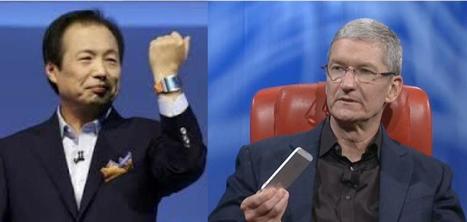










Interesting thoughts on working with CIOs