21st Century Learning and Teaching
791.7K views | +18 today
21st Century Learning and Teaching
Related articles to 21st Century Learning and Teaching as also tools...
Curated by Gust MEES
Your new post is loading...

Popular Tags

Current selected tag: 'Learning 2 Learn'. Clear
Scooped by Gust MEES
May 13, 2015 9:10 AM
Scoop.it!

All About Circuits : Free Electric Circuits & Electronics Textbooks | MakerED | MakerSpaces

All About Circuits : Free Electric Circuits & Electronics Textbooks | MakerED | MakerSpaces | 21st Century Learning and Teaching | Scoop.it

This site provides a series of online textbooks covering electricity and electronics. The information provided is great for both students and hobbyists who are looking to expand their knowledge in this field. These textbooks were written by Tony R. Kuphaldt and released under the Design Science License. Interested in contributing to the textbooks? Please click here.

.

Learn more:

.

- https://gustmees.wordpress.com/2014/08/20/maker-space-a-new-trend-in-education-and-a-big-responsibility/

.

- https://gustmees.wordpress.com/2014/08/24/coding-a-new-trend-in-education-and-a-big-responsibility/

.

Gust MEES's insight:

This site provides a series of online textbooks covering electricity and electronics. The information provided is great for both students and hobbyists who are looking to expand their knowledge in this field. These textbooks were written by Tony R. Kuphaldt and released under the Design Science License. Interested in contributing to the textbooks? Please click here.

.

Learn more:

.

- https://gustmees.wordpress.com/2014/08/20/maker-space-a-new-trend-in-education-and-a-big-responsibility/

.
- https://gustmees.wordpress.com/2014/08/24/coding-a-new-trend-in-education-and-a-big-responsibility/


Ensil's curator insight, May 15, 2015 1:50 PM

What a great find! Some reading for the (Canadian) long weekend? Electronics enthusiasts-- enjoy! 

Rescooped by Gust MEES from Leadership
May 11, 2015 11:40 AM
Scoop.it!

6 Unexpected Traits Exemplified by Great Leaders

6 Unexpected Traits Exemplified by Great Leaders | 21st Century Learning and Teaching | Scoop.it
Many people are tempted to believe that true leaders are born not made, but when it comes to leaders of historical importance, that adage rarely seems true

.

The best leaders are those whose toughest critics still think highly of their person and character. Being a person who is likeable requires that a person practice honesty and justice in all matters, even when those matters are unpleasant or cost him personally.

.

Great leaders are made, not born, and if you hope to be one someday, practice these six traits.

.

Learn more:

.

- http://www.scoop.it/t/21st-century-learning-and-teaching/?tag=LeaderShip


Via Anne Leong
Gust MEES's insight:
Many people are tempted to believe that true leaders are born not made, but when it comes to leaders of historical importance, that adage rarely seems true

.

The best leaders are those whose toughest critics still think highly of their person and character. Being a person who is likeable requires that a person practice honesty and justice in all matters, even when those matters are unpleasant or cost him personally.

.

Great leaders are made, not born, and if you hope to be one someday, practice these six traits.

.

Learn more:

.

- http://www.scoop.it/t/21st-century-learning-and-teaching/?tag=LeaderShip


Rescooped by Gust MEES from Supports for Leadership
May 3, 2015 7:45 AM
Scoop.it!

The 21st Century Hi-Performance Team -

The 21st Century Hi-Performance Team - | 21st Century Learning and Teaching | Scoop.it
Today teams are more dysfunctional than ever. There is more back stabbing, bickering, gossiping than I have ever seen in my life time. We see it in business, in congress, in communities across the USA and the world. Differences have created battle lines instead of being welcomed as complementary strengths. Why is this? People are generally good, right. Yet clearly people working TOGETHER is wanting. In my research, even top business firms with great strategy, talent, training, product, tech, capital etc. are not really operating as a team – but rather as a breeding place for conflict between people. This is tragic. The human toll and loss in performance is mind boggling. Simply, we have come to a time in our human history where we need to take a deep look at this dynamic and see what is happening and apply new solutions that actually unify, in our communities and organizations.


Learn more:


- https://gustmees.wordpress.com/2014/07/10/education-collaboration-and-coaching-the-future/


- https://gustmees.wordpress.com/2015/03/15/professional-development-why-educators-and-teachers-cant-catch-up-that-quickly-and-how-to-change-it/


Via Mark E. Deschaine, PhD
Gust MEES's insight:
Today teams are more dysfunctional than ever. There is more back stabbing, bickering, gossiping than I have ever seen in my life time. We see it in business, in congress, in communities across the USA and the world. Differences have created battle lines instead of being welcomed as complementary strengths. Why is this? People are generally good, right. Yet clearly people working TOGETHER is wanting. In my research, even top business firms with great strategy, talent, training, product, tech, capital etc. are not really operating as a team – but rather as a breeding place for conflict between people. This is tragic. The human toll and loss in performance is mind boggling. Simply, we have come to a time in our human history where we need to take a deep look at this dynamic and see what is happening and apply new solutions that actually unify, in our communities and organizations.


Learn more:


- https://gustmees.wordpress.com/2014/07/10/education-collaboration-and-coaching-the-future/


- https://gustmees.wordpress.com/2015/03/15/professional-development-why-educators-and-teachers-cant-catch-up-that-quickly-and-how-to-change-it/


No comment yet.
Scooped by Gust MEES
May 1, 2015 3:56 PM
Scoop.it!

Learning across generations in Europe | pdf | Andragogy | Research

Learning across generations in Europe | pdf | Andragogy | Research


Learn more:


- http://www.scoop.it/t/21st-century-learning-and-teaching/?tag=andragogy


- http://www.scoop.it/t/21st-century-learning-and-teaching/?tag=Heutagogy

- https://gustmees.wordpress.com/2015/03/15/professional-development-why-educators-and-teachers-cant-catch-up-that-quickly-and-how-to-change-it/


- https://gustmees.wordpress.com/2015/03/28/learning-to-learn-for-my-professional-development-i-did-it-my-way/


Gust MEES's insight:

Learning across generations in Europe | pdf | Andragogy | Research


Learn more:


- http://www.scoop.it/t/21st-century-learning-and-teaching/?tag=andragogy


- http://www.scoop.it/t/21st-century-learning-and-teaching/?tag=Heutagogy


- https://gustmees.wordpress.com/2015/03/15/professional-development-why-educators-and-teachers-cant-catch-up-that-quickly-and-how-to-change-it/


- https://gustmees.wordpress.com/2015/03/28/learning-to-learn-for-my-professional-development-i-did-it-my-way/

Scooped by Gust MEES
May 1, 2015 12:43 PM
Scoop.it!

DO'S And DONT'S | Adapting To 21st Century EDUcation | Learning To Learn | Learning By Doing | eSkills

DO'S And DONT'S | Adapting To 21st Century EDUcation | Learning To Learn | Learning By Doing | eSkills | 21st Century Learning and Teaching | Scoop.it

THE Reality . I hear most screaming ALREADY, WE are ONLY on EDUcation 1.0, or EDUcation 2.0 and starting to LEARN; EDUcation 3.0 is foreseen in the next years!!! Give us the time to LEARN!!!

Well, WE are ALREADY on EDUcation 4.0, did YOU know THAT!?SO… it might be GOOD to START learning straight off NOW about EDUcation 4.0 as the LOWER versions (EDUcation 3.0) are ALREADY included, isn’t it!?


Learn more:


- https://gustmees.wordpress.com/2015/03/15/professional-development-why-educators-and-teachers-cant-catch-up-that-quickly-and-how-to-change-it/


- https://gustmees.wordpress.com/2015/03/28/learning-to-learn-for-my-professional-development-i-did-it-my-way/


Gust MEES's insight:

THE Reality . I hear most screaming ALREADY, WE are ONLY on EDUcation 1.0, or EDUcation 2.0 and starting to LEARN; EDUcation 3.0 is foreseen in the next years!!! Give us the time to LEARN!!!

Well, WE are ALREADY on EDUcation 4.0, did YOU know THAT!?SO… it might be GOOD to START learning straight off NOW about EDUcation 4.0 as the LOWER versions (EDUcation 3.0) are ALREADY included, isn’t it!?


Learn more:


- https://gustmees.wordpress.com/2015/03/15/professional-development-why-educators-and-teachers-cant-catch-up-that-quickly-and-how-to-change-it/


- https://gustmees.wordpress.com/2015/03/28/learning-to-learn-for-my-professional-development-i-did-it-my-way/


No comment yet.
Scooped by Gust MEES
April 28, 2015 2:34 PM
Scoop.it!

ICT PracTICE | 7th Grade Student Video Project ==> Mr. Kirsch's ICT II Class | eSkills

ICT PracTICE | 7th Grade Student Video Project ==> Mr. Kirsch's ICT II Class | eSkills | 21st Century Learning and Teaching | Scoop.it

Dan KIRSCH: The following are examples of my 7th grade student’s Video projects. The objective for the students was for them to create a video describing how “Technology Has Impacted their Lives” in either a positive or negative manner.


The students were put in groups in order for them to film and describe their content. I really wanted the students to focus on how technology has become an integral part of everyday life; however can this become bad?? In essence, I wanted students to focus on the content people put on the internet and/or share information they should ==> Privacy. 


These videos were created by 7th grade students. The following videos depicting students do have permission from parents/guardians to be shown on the blog....

.

Learn more:

.

- https://gustmees.wordpress.com/2014/10/11/learning-to-become-a-good-digital-citizen-digital-citizenship/

.

- https://gustmees.wordpress.com/2014/07/10/education-collaboration-and-coaching-the-future/

.

Gust MEES's insight:

Dan KIRSCH: The following are examples of my 7th grade student’s Video projects. The objective for the students was for them to create a video describing how “Technology Has Impacted their Lives” in either a positive or negative manner.


The students were put in groups in order for them to film and describe their content. I really wanted the students to focus on how technology has become an integral part of everyday life; however can this become bad?? In essence, I wanted students to focus on the content people put on the internet and/or share information they should ==> Privacy. 


These videos were created by 7th grade students. The following videos depicting students do have permission from parents/guardians to be shown on the blog....

.

Learn more:

.

- https://gustmees.wordpress.com/2014/10/11/learning-to-become-a-good-digital-citizen-digital-citizenship/

.

- https://gustmees.wordpress.com/2014/07/10/education-collaboration-and-coaching-the-future/

.

Scooped by Gust MEES
April 28, 2015 9:08 AM
Scoop.it!

21st Century Skills Definition

21st Century Skills Definition | 21st Century Learning and Teaching | Scoop.it
The term 21st century skills refers to a broad set of knowledge, skills, work habits, and character traits that are believed—by educators, school reformers, college professors, employers, and others—to be critically important to success in today’s world, particularly in collegiate programs and contemporary careers and workplaces. Generally speaking, 21st century skills can be applied in all …


Gust MEES: In the above screenshot needs to get included CyberSecurity, Privacy and Digital CitiZENship.


Learn more:


- https://gustmees.wordpress.com/2015/01/28/practice-learning-to-learn-example-2/


- https://gustmees.files.wordpress.com/2015/02/practice-21st-century-assessment-flowchart-page1.pdf


- https://gustmees.files.wordpress.com/2015/02/practice-21st-century-assessment-flowchart-page2-pdf.pdf


Gust MEES's insight:
The term 21st century skills refers to a broad set of knowledge, skills, work habits, and character traits that are believed—by educators, school reformers, college professors, employers, and others—to be critically important to success in today’s world, particularly in collegiate programs and contemporary careers and workplaces. Generally speaking, 21st century skills can be applied in all …


Gust MEES: In the above screenshot needs to get included CyberSecurity, Privacy and Digital CitiZENship.


Learn more:


- https://gustmees.wordpress.com/2015/01/28/practice-learning-to-learn-example-2/


- https://gustmees.files.wordpress.com/2015/02/practice-21st-century-assessment-flowchart-page1.pdf


- https://gustmees.files.wordpress.com/2015/02/practice-21st-century-assessment-flowchart-page2-pdf.pdf


Willem Kuypers's curator insight, April 29, 2015 1:53 AM

Le 21e siècle est déjà là, mais je vois encore peut de personnes qui ont pris conscience de ce que ce siècle va nous apporter. Pour nous y préparer il faut "21st century skills". Le reste est dans l'article.

Javier Marrero Acosta's curator insight, April 29, 2015 3:32 AM

XXI centuty skills

Scooped by Gust MEES
April 26, 2015 12:45 PM
Scoop.it!

10 Awesome Outdoor Summer Learning Ideas

10 Awesome Outdoor Summer Learning Ideas | 21st Century Learning and Teaching | Scoop.it
Thinkstock By Jennie Rose Summer can be a mixed bag, a combination of relief from the stress of school, followed by boredom, the bugaboo of a creative mind. The break from school offers a chance to carve out enriching, fun projects and beat the doldrums brought about by summer loafing. The warm weather is a great invitation to enjoy and learn about the outdoors during this time off. Here are 10  learning opportunities for kids to come away from the summer months invigorated with fresh skills.


Learn more:


- https://globaleducationandsocialmedia.wordpress.com/2014/03/22/practice-learning-about-sustainability-up-from-the-early-age-a-must/


Gust MEES's insight:
Thinkstock By Jennie Rose Summer can be a mixed bag, a combination of relief from the stress of school, followed by boredom, the bugaboo of a creative mind. The break from school offers a chance to carve out enriching, fun projects and beat the doldrums brought about by summer loafing. The warm weather is a great invitation to enjoy and learn about the outdoors during this time off. Here are 10  learning opportunities for kids to come away from the summer months invigorated with fresh skills.


Learn more:


- https://globaleducationandsocialmedia.wordpress.com/2014/03/22/practice-learning-about-sustainability-up-from-the-early-age-a-must/


No comment yet.
Scooped by Gust MEES
April 25, 2015 12:02 PM
Scoop.it!

A Guide to Ideal Image Sizes for Your Social Media Posts

A Guide to Ideal Image Sizes for Your Social Media Posts | 21st Century Learning and Teaching | Scoop.it

Do you the know the difference between image sizes on Facebook compared to Twitter? Everything you could ever possibly need to know in this guide.


Learn more:


- http://www.scoop.it/t/social-media-and-its-influence


Gust MEES's insight:

Do you the know the difference between image sizes on Facebook compared to Twitter? Everything you could ever possibly need to know in this guide.


Learn more:


- http://www.scoop.it/t/social-media-and-its-influence


No comment yet.
Scooped by Gust MEES
April 23, 2015 7:59 AM
Scoop.it!

Meta-Collaboration: Thinking With Another | Collaboration | Global Collaboration

Meta-Collaboration: Thinking With Another | Collaboration | Global Collaboration | 21st Century Learning and Teaching | Scoop.it

What if we could dramatically improve our thought processes and learning strategies by tapping into the social genius of another? What if a classmate, colleague, or friend could help us recognize and claim our strengths, new habits of thought, and strategies from a perspective that we never imagined by ourselves?

.

As human beings, our survival depends on others. Our ability to cooperate and collaborate has trumped the stress response state of competition within our species and throughout evolution.

.

With a group affiliation to nurture these relationships, we can strengthen and reappraise our own thought processes.

.

Learn more:

.

- https://gustmees.wordpress.com/2014/07/10/education-collaboration-and-coaching-the-future/

.

- https://gustmees.wordpress.com/?s=collaboration

.

- http://www.scoop.it/t/21st-century-learning-and-teaching/?tag=Collaboration


Gust MEES's insight:

What if we could dramatically improve our thought processes and learning strategies by tapping into the social genius of another? What if a classmate, colleague, or friend could help us recognize and claim our strengths, new habits of thought, and strategies from a perspective that we never imagined by ourselves?

.

As human beings, our survival depends on others. Our ability to cooperate and collaborate has trumped the stress response state of competition within our species and throughout evolution.

.

With a group affiliation to nurture these relationships, we can strengthen and reappraise our own thought processes.

.

Learn more:

.

- https://gustmees.wordpress.com/2014/07/10/education-collaboration-and-coaching-the-future/

.

- https://gustmees.wordpress.com/?s=collaboration

.

- http://www.scoop.it/t/21st-century-learning-and-teaching/?tag=Collaboration


Sm_english's curator insight, April 24, 2015 5:57 AM

One of the things that is deteriorating education is when teachers alieneit themselves from each other. It is completely wrong if the language teacher thinks that he/she cannot benefit from the science teacher. As an ESL teacher i found extremely helpful when i discussed and scooped ideas with other colleges from other department l

Scooped by Gust MEES
April 21, 2015 7:05 AM
Scoop.it!

The 7 Ps of Modern Workplace Learning

The 7 Ps of Modern Workplace Learning | 21st Century Learning and Teaching | Scoop.it

21 April 2015 by Jane Hart: I have shared, in a number of places, a diagram of Modern Workplace Learning (MWL) , which I believes visualise all the main ways we learn at work. However, I have recently added a few P words that have helped to summarise the different elements as well as L&D’s role in it in order to help people at work. so I am sharing this diagram.

Gust MEES's insight:

21 April 2015 by Jane Hart: I have shared, in a number of places, a diagram of Modern Workplace Learning (MWL) , which I believes visualise all the main ways we learn at work. However, I have recently added a few P words that have helped to summarise the different elements as well as L&D’s role in it in order to help people at work. so I am sharing this diagram.


Susanne Alwart's curator insight, April 22, 2015 5:58 AM

Eine schöne Übersicht von Jane Hart. Wichtig für alle die sich mit #Lernarchitekturen, #new Work und #digitalem Wandel beschäftigen und Ansatzpunkte suchen welche #HR-Maßnahmen unterstützen können.

Cheryl Cruz's curator insight, April 22, 2015 8:36 AM

Providing just in time learning hepls keep things relevant and moving forward for continuous improvement

Elsa Caetano's curator insight, April 27, 2015 6:59 PM

Está na hora de (re)aprender a Língua dos "pês"

Scooped by Gust MEES
April 18, 2015 4:58 PM
Scoop.it!

Counterfeit Leadership

Counterfeit Leadership | 21st Century Learning and Teaching | Scoop.it
The responsibility of a leader is to lead. (What a concept.) The fact is, some leaders are causing irreparable damage to great institutions by shirking their responsibilities. They’re afraid to address difficult issues, make tough decisions, and introduce the change that’s required to achieve long-term success. Instead, these “counterfeit leaders” spend much of their time playing politics, protecting their turf, and promoting their self-interests. To make matters worse, counterfeit leaders, in both public and private sectors, often masquerade as positive role models while condoning unethical or irresponsible behavior that undermines the very foundation of their institution.

With full complicity, we reward these misguided efforts by electing politicians for “life” and by paying executives zillions of dollars to damage the same organizations that they “swear” to serve. And just to show there are no hard feelings when things do go irreparably wrong, we offer many of our “finest” golden parachutes to make sure they have a soft landing into their next misadventure.

How do you spot a counterfeit leader? Here are some ways to evaluate our leaders:


Real leaders achieve success by setting the bar high, encouraging teamwork, promoting win-win relationships, and demanding everyone’s best effort. Real leaders win the support of their constituents by earning their trust and respect. This is achieved through powerful ideas, personal expertise, and impeccable integrity rather than through their position or by “pulling rank.”


Learn more:


- http://www.scoop.it/t/21st-century-learning-and-teaching/?tag=Frank+SONNENBERG


Gust MEES's insight:
The responsibility of a leader is to lead. (What a concept.) The fact is, some leaders are causing irreparable damage to great institutions by shirking their responsibilities. They’re afraid to address difficult issues, make tough decisions, and introduce the change that’s required to achieve long-term success. Instead, these “counterfeit leaders” spend much of their time playing politics, protecting their turf, and promoting their self-interests. To make matters worse, counterfeit leaders, in both public and private sectors, often masquerade as positive role models while condoning unethical or irresponsible behavior that undermines the very foundation of their institution.

With full complicity, we reward these misguided efforts by electing politicians for “life” and by paying executives zillions of dollars to damage the same organizations that they “swear” to serve. And just to show there are no hard feelings when things do go irreparably wrong, we offer many of our “finest” golden parachutes to make sure they have a soft landing into their next misadventure.

How do you spot a counterfeit leader? Here are some ways to evaluate our leaders:


Real leaders achieve success by setting the bar high, encouraging teamwork, promoting win-win relationships, and demanding everyone’s best effort. Real leaders win the support of their constituents by earning their trust and respect. This is achieved through powerful ideas, personal expertise, and impeccable integrity rather than through their position or by “pulling rank.”


Learn more:


- http://www.scoop.it/t/21st-century-learning-and-teaching/?tag=Frank+SONNENBERG


No comment yet.
Rescooped by Gust MEES from Content Curation World
April 18, 2015 9:05 AM
Scoop.it!

Content Curation Takes Time

Content Curation Takes Time | 21st Century Learning and Teaching | Scoop.it

Learn more:


- https://gustmees.wordpress.com/2013/04/25/learn-every-day-a-bit-with-curation/


- https://gustmees.wordpress.com/2014/02/20/curation-tips-and-tricks-with-scoop-it-rescoop-and-tags/


- https://globaleducationandsocialmedia.wordpress.com/2014/01/19/pkm-personal-professional-knowledge-management/


Via Robin Good
Gust MEES's insight:

Learn more:


- https://gustmees.wordpress.com/2013/04/25/learn-every-day-a-bit-with-curation/


- https://gustmees.wordpress.com/2014/02/20/curation-tips-and-tricks-with-scoop-it-rescoop-and-tags/


- https://globaleducationandsocialmedia.wordpress.com/2014/01/19/pkm-personal-professional-knowledge-management/


Filomena Gomes's curator insight, April 18, 2015 9:52 AM
Robin Good's insight:


Notwithstanding the viral content-marketing tam-tam keeps selling the idea of content curation as a miracle-shortcut to work less, produce more content and get all of the benefits that an online publisher would want to have, reality has quite a different shade.

To gain reader's attention trust and interest, it is evidently not enough to pull together a few interesting titles while adding a few lines of introductory text.


Unless your readers are not very interested themselves into the topic you cover, why would they take recomendations from someone who has not even had the time to fully go through his suggested resources?

Superficially picking apparently interesting content from titles or even automatically selecting content for others to read is like recommending movies or music records based on how much you like their trailers or their cover layouts.


Can that be useful beyond attracting some initial extra visibility?


How can one become a trusted information source if one does not thoroughly look and understand at what he is about to recommend?

This is why selling or even thinking the idea of using content curation as a time and money-saver is really non-sense.

Again, for some, this type of light content curation may work in attracting some extra visibility in the short-term, but it will be deleterious in the long one, as serious readers discover gradually that content being suggested has not even been read, let alone being summarized, highlighted or contextualized.

Content curation takes serious time.


A lot more than the one needed to create normal original content.

To curate content you need to:

Find good content, resources and references. Even if you have good tools, the value is in searching where everyone else is not looking. That takes time.

Read, verify and vet each potential resource, by taking the time needed to do this thoroughly.

Make sense of what that resource communicates or represents / offers and be able to synthesize it for non-experts who will read about it.

Synthesize and highlight the value of the chosen resource within the context of your interest area.

Enrich the resource with relevant references, and related links for those that will want to find out more about it.

Credit and attribute sources and contributors.

 Preserve, classify and archive what you want to curate.

Share, distribute, promote the curated work you have produced. Creating it is not enough.


(While it is certainly possible to do a good curation job without doing exactly all of the tasks I have outlined above, I believe that it is ideal to try to do as many as these as possible, as each adds more value to the end result you will create.)


These are many more steps and activities than the ones required to create an original piece of content.

Curation is all about quality, insight and attention to details.

It is not about quantity, speed, saving time, producing more with less.

 
Robert Kisalama's curator insight, April 18, 2015 11:37 AM

truly Curation should not be  merely aggregating different links without  taking off time to reflect indeed it is very to end up like some one buying clothes impulsively only to realise you could have done without some of them.

Nedko Aldev's curator insight, April 19, 2015 2:24 PM


326
Rescooped by Gust MEES from Education 2.0 & 3.0
May 11, 2015 11:52 AM
Scoop.it!

Sir Ken Robinson: ‘The education system is a dangerous myth’ | tesconnect

Sir Ken Robinson: ‘The education system is a dangerous myth’ | tesconnect | 21st Century Learning and Teaching | Scoop.it
I’m often asked the same questions: what’s going wrong in education? Why? If you could reinvent education, what would it look like? Would you have schools? Would there be different types? What would go on in them? Would everyone have to go, and how old would they have to be? Would there be tests? If you say I can make a difference in education, where do I begin?


Learning is the process of acquiring new knowledge and skills. Human beings are highly curious; from the moment they’re born, children have a voracious appetite for learning. For many, that appetite is dulled as they go through school. Keeping it alive is the key to transforming education.

Education means organised programmes of learning.


The assumption is that young people need to know, understand and be able to do things that they wouldn’t if left to their own -devices. What those things are and how education should be organised to enable students to learn them are core issues.


Learn more:


- http://www.scoop.it/t/21st-century-learning-and-teaching/?tag=Sir+Ken+Robinson


Via Grant Montgomery, Yashy Tohsaku
Gust MEES's insight:
I’m often asked the same questions: what’s going wrong in education? Why? If you could reinvent education, what would it look like? Would you have schools? Would there be different types? What would go on in them? Would everyone have to go, and how old would they have to be? Would there be tests? If you say I can make a difference in education, where do I begin?


Learning is the process of acquiring new knowledge and skills. Human beings are highly curious; from the moment they’re born, children have a voracious appetite for learning. For many, that appetite is dulled as they go through school. Keeping it alive is the key to transforming education.

Education means organised programmes of learning.


The assumption is that young people need to know, understand and be able to do things that they wouldn’t if left to their own -devices. What those things are and how education should be organised to enable students to learn them are core issues.


Learn more:


- http://www.scoop.it/t/21st-century-learning-and-teaching/?tag=Sir+Ken+Robinson


Maruja Romero's curator insight, May 11, 2015 10:54 PM

Por qué la educación está mal?

Rescooped by Gust MEES from Luxembourg (Europe)
May 10, 2015 11:58 AM
Scoop.it!

Leadership Develops When You Escape Your Comfort Zone

Leadership Develops When You Escape Your Comfort Zone | 21st Century Learning and Teaching | Scoop.it

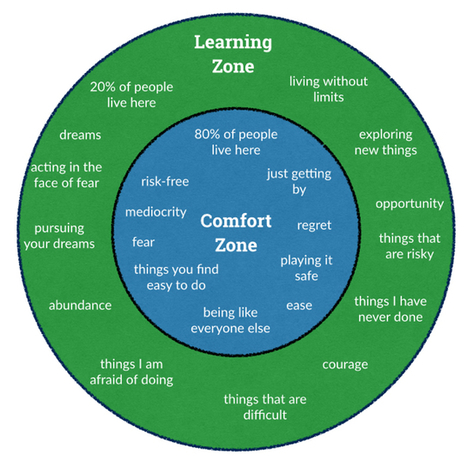
Successful leaders know that they must get out of their comfort zone to succeed. Great leaders from history are those who have spent a large amount of their time outside their comfort zone.

.

Leaders who take risks and step into their learning zone are those that succeed. It’s only when you can give up what’s safe and familiar that you create opportunities and develop new capabilities. As you do, you expand your influence and gain the skills required to take on bigger and bigger challenges.

.

In this sense, leaders are self-made and not born, they are developed, not promoted. Leadership is a learned skill that is developed as you step out of your comfort zone.

.

Learn more:

.

- http://www.scoop.it/t/21st-century-learning-and-teaching/?tag=LeaderShip


Via Patti Kinney, Gust MEES
Gust MEES's insight:

Learn more:

.

- http://www.scoop.it/t/21st-century-learning-and-teaching/?tag=LeaderShip


Marlena Gross-Taylor's curator insight, May 17, 2015 10:24 AM

To be a fearless, 360 leader you have to step outside of your comfort zone. The experience provides the opportunity for growth! #leadupchat #edchat #mschat 

Dr. Deborah Brennan's curator insight, May 17, 2015 11:54 AM

Vygotsky talked of the Zone of Proximal Development, and this article is in line with that foundational philosophy about learning.  When we think about improving schools, both of Vygotsky and this article apply.  We need leaders, teachers, and students operating outside their comfort zone, taking risks, setting goals, and learning.  There is a danger in struggling schools to push too hard and move buying the productive zone for learning.  This article speaks well to that aspect of learning.  With good intentions, leaders at building, district, and state level often push a school and omits staff beyond the productive learning zone into the danger zone.  This is done through programs, initiatives, and monitoring often with the goal of providing support, but with the result of overwhelming the school and staff.  

Yolanda jiménez's curator insight, May 26, 2015 12:58 AM

Muy interesante.  

Scooped by Gust MEES
May 2, 2015 12:50 PM
Scoop.it!

The "Dirty Dozen" SPAMPIONSHIP: And THE Winner is AGAIN USA!

The "Dirty Dozen" SPAMPIONSHIP: And THE Winner is AGAIN USA! | 21st Century Learning and Teaching | Scoop.it
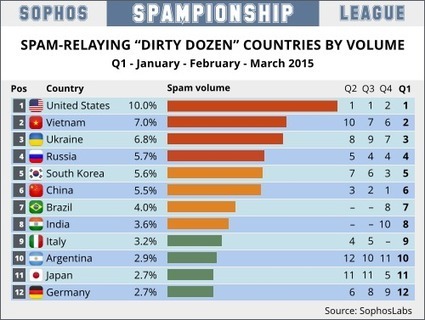
Here they are: the latest "Dirty Dozen" SPAM­PION­SHIP tables, detailing the globe's most dastardly distributors of delinquent data during the first quarter of 2015.

If you haven't seen the Dirty Dozen before, here's how it works.

SophosLabs maintains a large network of spamtraps, operated around the world with the express purpose of collecting spam.

And, boy, do they collect spam!

Of course, whenever spam falls into a trap, we can tell where the final step of its journey started by looking at the IP address of the computer from which the offending email was sent.

It's possible to track back individual IP numbers fairly accurately, sometimes down to a street block, often to a suburb or metro area, and almost always to the sender's country.

In other words, our spamtraps tell us which countries are the worst senders of spam.


Learn more:


- http://www.scoop.it/t/21st-century-learning-and-teaching/?tag=Spam


- https://gustmeesen.wordpress.com/2012/01/07/pc-security-howto-fight-spam-efficiently/


Gust MEES's insight:
If you haven't seen the Dirty Dozen before, here's how it works.

SophosLabs maintains a large network of spamtraps, operated around the world with the express purpose of collecting spam.

And, boy, do they collect spam!

Of course, whenever spam falls into a trap, we can tell where the final step of its journey started by looking at the IP address of the computer from which the offending email was sent.

It's possible to track back individual IP numbers fairly accurately, sometimes down to a street block, often to a suburb or metro area, and almost always to the sender's country.

In other words, our spamtraps tell us which countries are the worst senders of spam.


Learn more:


- http://www.scoop.it/t/21st-century-learning-and-teaching/?tag=Spam


- https://gustmeesen.wordpress.com/2012/01/07/pc-security-howto-fight-spam-efficiently/


euroagls's curator insight, May 3, 2015 5:32 PM

Tous niveaux ECJS

Rescooped by Gust MEES from Critical thinking for the 21st century
May 1, 2015 1:00 PM
Scoop.it!

CriticalThinking.org - Critical Thinking Model 1 | eSkills

CriticalThinking.org - Critical Thinking Model 1 | eSkills | 21st Century Learning and Teaching | Scoop.it

Interactive illustrating the critical thinking model of Paul and Elder ("elements of thought")


Learn more:


- http://www.scoop.it/t/21st-century-learning-and-teaching?tag=Critical-Thinking


- http://www.scoop.it/t/21st-century-learning-and-teaching?tag=Proactive+Thinking


Via Deborah Arnold
Gust MEES's insight:

Interactive illustrating the critical thinking model of Paul and Elder ("elements of thought")


Learn more:


- http://www.scoop.it/t/21st-century-learning-and-teaching?tag=Critical-Thinking


- http://www.scoop.it/t/21st-century-learning-and-teaching?tag=Proactive+Thinking


Miles McGeehan's curator insight, May 9, 2015 12:20 AM

Nice interactive effect with the mouse over.

Dr. Deborah Brennan's curator insight, May 23, 2015 6:25 PM

Great tool for teachers.  We must make students aware of their thinking processes so they can use them strategically and develop them fully

PaolaRicaurte's curator insight, April 2, 2016 8:34 AM
Everybody speaks about critical thinking, but what does it mean exactly?
Scooped by Gust MEES
May 1, 2015 7:57 AM
Scoop.it!

Schulreform in Finnland: Weniger Fächer, mehr Wissen | EDUcation4.0

Schulreform in Finnland: Weniger Fächer, mehr Wissen | EDUcation4.0 | 21st Century Learning and Teaching | Scoop.it
Finnland gilt seit den Pisa-Tests als Schullabor der Welt. Jetzt probieren die Reformer etwas Neues aus: weniger Fachunterricht, mehr Kompetenzvermittlung. Sogar bei den Noten sollen Schüler mitreden dürfen.


Das Streben nach Ganzheitlichkeit zeigt sich im finnischen Reformprogramm sehr deutlich. Die Bildungsplaner haben sieben Kompetenzbereiche definiert, unter anderem: Kulturen kennenlernen, umfassende Informationsgewinnung, Beherrschen der Informationstechnologien, Arbeitswelt und Unternehmertum sowie Aufbau der nachhaltigen Zukunft. Im Mittelpunkt des Ganzen soll der Schüler stehen, der als Mensch und Bürger Spaß am Lernen hat - und das nicht nur im Klassenzimmer. Wenn es passt, soll Unterricht verstärkt draußen stattfinden, auf dem Land oder in der Stadt.


Gust MEES's insight:
Finnland gilt seit den Pisa-Tests als Schullabor der Welt. Jetzt probieren die Reformer etwas Neues aus: weniger Fachunterricht, mehr Kompetenzvermittlung. Sogar bei den Noten sollen Schüler mitreden dürfen.


Das Streben nach Ganzheitlichkeit zeigt sich im finnischen Reformprogramm sehr deutlich. Die Bildungsplaner haben sieben Kompetenzbereiche definiert, unter anderem: Kulturen kennenlernen, umfassende Informationsgewinnung, Beherrschen der Informationstechnologien, Arbeitswelt und Unternehmertum sowie Aufbau der nachhaltigen Zukunft. Im Mittelpunkt des Ganzen soll der Schüler stehen, der als Mensch und Bürger Spaß am Lernen hat - und das nicht nur im Klassenzimmer. Wenn es passt, soll Unterricht verstärkt draußen stattfinden, auf dem Land oder in der Stadt.


No comment yet.
Scooped by Gust MEES
April 28, 2015 10:13 AM
Scoop.it!

Why and How to Write a FAQ? | Tips on Writing a Good FAQ | eSkills | eLeadership

Why and How to Write a FAQ? | Tips on Writing a Good FAQ | eSkills | eLeadership | 21st Century Learning and Teaching | Scoop.it
Why and How to Write a FAQ?


Learn more:


- https://gustmees.wordpress.com/2014/08/06/learning-the-basics-of-html-to-use-in-blogs-creating-faqs/


- http://www.avangate.com/avangate-resources/article/writing-faq.htm


- https://gustmees.wordpress.com/2014/01/04/practice-better-ways-to-say-i-dont-know-in-the-classroom/


Gust MEES's insight:

Learn more:


- LEARNing The Basics Of HTML To Use In Blogs | Creating FAQ’s


- WHAT are FAQ’s and WHY to create them?


- PracTICE: BETTER Ways To Say “I DON’T know” In The Classroom

No comment yet.
Scooped by Gust MEES
April 27, 2015 8:30 AM
Scoop.it!

Apple : les Macs sont de vraies passoires à malwares | CyberSecurity | Awareness | eSkills

Apple : les Macs sont de vraies passoires à malwares | CyberSecurity | Awareness | eSkills | 21st Century Learning and Teaching | Scoop.it
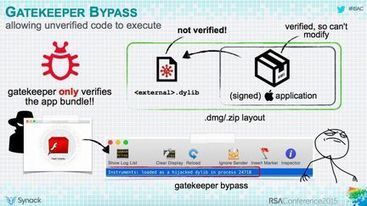
Le mythe vient de s'effondrer : un chercheur en sécurité vient de démontrer combien il était facile de contourner les mécanismes de sécurité mis en place par Apple dans OS X pour polluer le système avec des malwares.


Finalement, Apple ne fait pas mieux que les autres fabricants ni même éditeurs de solutions de protection, puisque la conférence a démontré que la plupart des outils de protection pouvaient être contournés.


Apple reste toutefois moins sujet aux attaques pour l'instant, mais les choses pourraient changer à l'avenir.


En savoir plus / Learn more:


- http://www.scoop.it/t/apple-mac-ios4-ipad-iphone-and-in-security


- http://www.scoop.it/t/apple-mac-ios4-ipad-iphone-and-in-security/?tag=Immune+No+More%3A+An+Apple+Story


Gust MEES's insight:
Le mythe vient de s'effondrer : un chercheur en sécurité vient de démontrer combien il était facile de contourner les mécanismes de sécurité mis en place par Apple dans OS X pour polluer le système avec des malwares.


Finalement, Apple ne fait pas mieux que les autres fabricants ni même éditeurs de solutions de protection, puisque la conférence a démontré que la plupart des outils de protection pouvaient être contournés.


Apple reste toutefois moins sujet aux attaques pour l'instant, mais les choses pourraient changer à l'avenir.


En savoir plus / Learn more:


- http://www.scoop.it/t/apple-mac-ios4-ipad-iphone-and-in-security


- http://www.scoop.it/t/apple-mac-ios4-ipad-iphone-and-in-security/?tag=Immune+No+More%3A+An+Apple+Story


Gust MEES's curator insight, April 27, 2015 8:35 AM
Le mythe vient de s'effondrer : un chercheur en sécurité vient de démontrer combien il était facile de contourner les mécanismes de sécurité mis en place par Apple dans OS X pour polluer le système avec des malwares.


Finalement, Apple ne fait pas mieux que les autres fabricants ni même éditeurs de solutions de protection, puisque la conférence a démontré que la plupart des outils de protection pouvaient être contournés.


Apple reste toutefois moins sujet aux attaques pour l'instant, mais les choses pourraient changer à l'avenir.


En savoir plus / Learn more:


- http://www.scoop.it/t/apple-mac-ios4-ipad-iphone-and-in-security


- http://www.scoop.it/t/apple-mac-ios4-ipad-iphone-and-in-security/?tag=Immune+No+More%3A+An+Apple+Story


Rescooped by Gust MEES from Supports for Leadership
April 25, 2015 7:06 PM
Scoop.it!

9 Keys to Being an Inspirational Leader

9 Keys to Being an Inspirational Leader | 21st Century Learning and Teaching | Scoop.it
I am fascinated by what it takes to be an extraordinary leader–an inspirational leader. I am fascinated by WHY some leaders seem to magically make a huge impact on the world while others do not  — Steve Jobs being one case in point, as he changed forever the lives of people and the world with his vision.  Let us ponder the question, “Are we all born leaders”? In a certain way I believe we are. We are ultimately leaders of our own lives and destinies. We become leaders of our families and communities, and many take on leadership positions in business. However, holding a leadership title does not guarantee that we have what it takes to inspire others and make a lasting positive impact. I recently came across a quote that speaks to this: “Leaders are not born. They are made. Who makes them? They make themselves.” ~ Peter Castenbaum, Corporate Mystic.


Learn more:


- http://www.scoop.it/t/21st-century-learning-and-teaching/?tag=LeaderShip


Via Mark E. Deschaine, PhD
Gust MEES's insight:
I am fascinated by what it takes to be an extraordinary leader–an inspirational leader. I am fascinated by WHY some leaders seem to magically make a huge impact on the world while others do not  — Steve Jobs being one case in point, as he changed forever the lives of people and the world with his vision.  Let us ponder the question, “Are we all born leaders”? In a certain way I believe we are. We are ultimately leaders of our own lives and destinies. We become leaders of our families and communities, and many take on leadership positions in business. However, holding a leadership title does not guarantee that we have what it takes to inspire others and make a lasting positive impact. I recently came across a quote that speaks to this: “Leaders are not born. They are made. Who makes them? They make themselves.” ~ Peter Castenbaum, Corporate Mystic.


Learn more:


- http://www.scoop.it/t/21st-century-learning-and-teaching/?tag=LeaderShip


No comment yet.
Scooped by Gust MEES
April 25, 2015 11:39 AM
Scoop.it!

Gamification vs Game-Based eLearning: Can You Tell The Difference?

Gamification vs Game-Based eLearning: Can You Tell The Difference? | 21st Century Learning and Teaching | Scoop.it
Gamification vs Game-Based eLearning: How To Integrate Them Into Your eLearning Course Design

Both gamification and game-based eLearning can offer your eLearning course a variety of benefits. However, it’s important to know the distinction between gamification vs game-based eLearning, so that you can choose the approach that better serves your eLearning objectives and goals, but also meets the needs of your learners. Let’s take a closer look at the basics of both gamification and game-based eLearning, in order to determine which methodology is more appropriate for your next eLearning course.

By definition, gamification involves the use of game design elements and mechanics in activities that are not inherently game-based. This is done to motivate and engage the learners, so that they can become active participants in their own learning process.  In essence, the eLearning experience itself, is transformed into an educational game by using achievement badges, leaderboards, point systems, level progressions, and quests. These game elements are all integrated to help the learner achieve their learning goals and objectives.

On the other hand, while gamification utilizes game mechanics to transform the eLearning experience into a game, game-based eLearning integrates online games into the learning process to teach a specific skill or achieve a learning objective. Games are essentially used as eLearning activities to give learners the opportunity to acquire new knowledge or skills sets in a fun and engaging way. All eLearning games typically have rules and specific objectives and learners run the risk of “losing” when they participate. Another important distinction between gamification and game-based eLearning is that in a game-based eLearning strategy the content is designed to fit into the confines of the game.


Learn more:


- http://www.scoop.it/t/21st-century-learning-and-teaching/?tag=Gamification


Gust MEES's insight:
Gamification vs Game-Based eLearning: How To Integrate Them Into Your eLearning Course Design

Both gamification and game-based eLearning can offer your eLearning course a variety of benefits. However, it’s important to know the distinction between gamification vs game-based eLearning, so that you can choose the approach that better serves your eLearning objectives and goals, but also meets the needs of your learners. Let’s take a closer look at the basics of both gamification and game-based eLearning, in order to determine which methodology is more appropriate for your next eLearning course.

By definition, gamification involves the use of game design elements and mechanics in activities that are not inherently game-based. This is done to motivate and engage the learners, so that they can become active participants in their own learning process.  In essence, the eLearning experience itself, is transformed into an educational game by using achievement badges, leaderboards, point systems, level progressions, and quests. These game elements are all integrated to help the learner achieve their learning goals and objectives.

On the other hand, while gamification utilizes game mechanics to transform the eLearning experience into a game, game-based eLearning integrates online games into the learning process to teach a specific skill or achieve a learning objective. Games are essentially used as eLearning activities to give learners the opportunity to acquire new knowledge or skills sets in a fun and engaging way. All eLearning games typically have rules and specific objectives and learners run the risk of “losing” when they participate. Another important distinction between gamification and game-based eLearning is that in a game-based eLearning strategy the content is designed to fit into the confines of the game.


Learn more:


- http://www.scoop.it/t/21st-century-learning-and-teaching/?tag=Gamification


No comment yet.
Rescooped by Gust MEES from 21st Century Teaching and Learning
April 22, 2015 6:44 AM
Scoop.it!

CreativeCommons-Infographic

CreativeCommons-Infographic | 21st Century Learning and Teaching | Scoop.it

A good summary/overview of CC licenses and use for photos.


Learn more:


- https://gustmees.wordpress.com/2013/02/22/what-you-should-know-about-copyright/


Via C.Rathsack
Gust MEES's insight:

A good summary/overview of CC licenses and use for photos.


Learn more:


- https://gustmees.wordpress.com/2013/02/22/what-you-should-know-about-copyright/


Marco Favero's curator insight, May 11, 2015 3:12 AM

aggiungi la tua intuizione ...

Sarah johnstone's curator insight, May 19, 2015 4:57 AM

Great infographic - clear and helpful rules for CC Licences for photo sharing on the net. �� Check it out! 

Philip Williams's curator insight, July 13, 2015 6:06 AM

Clear and v helpful for newbies.

Scooped by Gust MEES
April 19, 2015 10:36 AM
Scoop.it!

How To Be A Effective Leader: Top 10 Leadership Tips From Great Leaders

How To Be A Effective Leader: Top 10 Leadership Tips From Great Leaders | 21st Century Learning and Teaching | Scoop.it
How To Be A Effective Leader: Top 10 Leadership Tips From Great Leaders

Source: buzzfed.in


Learn more:


- http://www.scoop.it/t/21st-century-learning-and-teaching/?tag=Frank+SONNENBERG


Gust MEES's insight:
How To Be A Effective Leader: Top 10 Leadership Tips From Great Leaders

Source: buzzfed.in


Learn more:


- http://www.scoop.it/t/21st-century-learning-and-teaching/?tag=Frank+SONNENBERG


Marco Favero's curator insight, April 20, 2015 4:42 PM

aggiungi la tua intuizione ...

Scooped by Gust MEES
April 18, 2015 12:55 PM
Scoop.it!

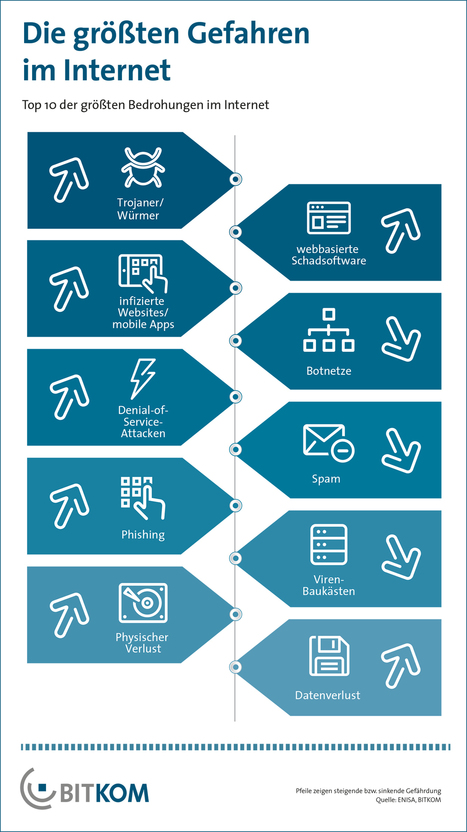
Die zehn größten Gefahren im Internet (BITKOM-Grafik) | Digital CitiZENship | eSkills

Die zehn größten Gefahren im Internet (BITKOM-Grafik) | Digital CitiZENship | eSkills | 21st Century Learning and Teaching | Scoop.it

Learn more:


- https://gustmees.wordpress.com/2012/10/11/learning-basics-of-cyber-security-by-easy-to-follow-steps/


- https://gustmees.wordpress.com/2012/11/29/cyber-hygiene-ict-hygiene-for-population-education-and-business/


- https://gustmees.wordpress.com/2015/01/28/practice-learning-to-learn-example-2/


Gust MEES's insight:

Learn more:


- https://gustmees.wordpress.com/2012/10/11/learning-basics-of-cyber-security-by-easy-to-follow-steps/


- https://gustmees.wordpress.com/2012/11/29/cyber-hygiene-ict-hygiene-for-population-education-and-business/


- https://gustmees.wordpress.com/2015/01/28/practice-learning-to-learn-example-2/


No comment yet.