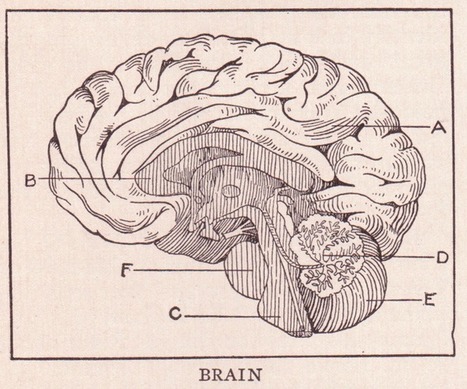
"The results provide evidence that the human executive system favors creativity for compensating its limited monitoring capacity" explained Dr. Koechlin
In a new study, published March 27 in the online, open-access journal PLoS Biology, Anne Collins and Etienne Koechlin of Ecole Normale Supérieure and Institut National de la Santé et de la Recherche Médicale, France, examine frontal lobe function using behavioral experiments and computational models of human decision-making.
===> They find that human frontal function concurrently monitors no more than three/four strategies but favors creativity, i.e. the exploration and creation of new strategies whenever no monitored strategies appear to be reliable enough. <===
Cyber security is an increasingly important requirement for global business and modern society. We exist in a data-centric world, where information technology and associated communications networks and services pervade every aspect of our lives.
This makes the protection of our digital assets and activities in cyberspace of critical importance, whether for individual life experience or a prosperous and sustainable society. But the challenge to understand cyber risk and deliver effective and accessible security becomes harder as technology continues to rapidly evolve and our systems become ever more complex.
We are increasingly dependent upon such information and communications infrastructures and the threats we face are organised and evolving the skills to exploit our dependency to further their interests.
Learning a new language can be difficult, but some languages can be trickier than others. For native English speakers, the difficulty level of a new language depends on a variety of factors.
So which are the most difficult to learn? And which languages would you be able to master in under a year? View the infographic below to learn more.
Bringing together two separate pieces of security research reveals vulnerability to cybercrime on an alarming scale.
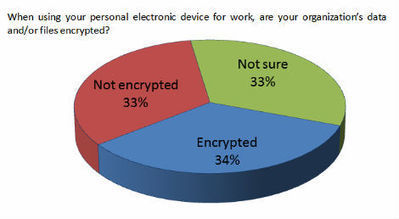
When trying to get a handle on cybercrime today, consider this: In millions of homes across America, unencrypted company information is sitting on unprotected desktops and laptops – in the hands of employees who have had no security training.
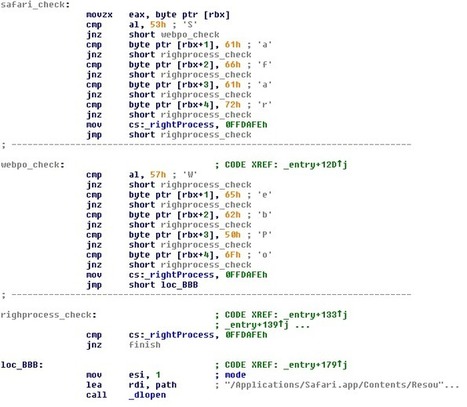
At the same time, we see software being deployed that can stealthily and remotely scan the hard drives of those machines for specific data, and secretly transmit it back to the scanner.
The new field of social neuroscience shows that when two people talk face-to-face, their brains form an instant connection. Not so with life online.
There's a "negativity bias" to emails. What you thought was a neutral message can be perceived as hostile by the recipient.
Daniel Goleman talks about employing empathy with your email communication.
Learn more about Dr. Goleman's latest research in his book The Brain and Emotional Intelligence: New Insights from More Than Sound www.morethansound.net.
“Empathy” is a word that props up quite frequently in IEET articles and comment threads, but it is also one of those words that people use quite a lot without necessarily having a very clear idea of what it means.
Starting, as I usually do these days, with wictionary, ===> “empathy” is defined as “the intellectual identification of the thoughts, feelings, or state of another person”, and alternatively as “[the ] capacity to understand another person’s point of view or the result of such understanding”. <===
Creativity is analogous to Intelligence in several ways • Everyone has some • It can be developed and nurtured • There are levels • It can be expressed in many ways • It can be viewed as ...
Au Calhoun Community College, en Alabama, les étudiants sont responsables de connaître la matière avant d’arriver en classe. Sur place, ils travaillent ensemble sur des projets leur permettant de progresser dans leurs apprentissages, tout en menant des discussions significatives avec l’enseignant. Bienvenue à l’ère de la pédagogie inversée!
While Stiglitz and I work in different worlds, I see evidence in all types of organizations that we need to better prepare, train, and inspire successful self-directed learners to meet today’s challenges.
"For parents trying to raise kids and give them the technology to be successful, yet also protect them, there's a sense that no one's there to tell folks what steps to take," said Marian Merritt, Internet safety advocate at Symantec.
But laying the responsibility for teaching digital citizenship solely at families' feet would be a mistake, Warren said. "It also has to be a part of ongoing education," she added, noting that kids as young as 2 now commonly use smartphones and other technological devices.
"I hope schools are distributing information and educating (families), ===> but ultimately, parents have a huge role to play (in the process)." <===
Dr. Judy Willis, a regular Edutopia blogger, continues her series about the neuroscience of executive function, this time examining the effects of creativity and arts integration.
Learn about child safety on the internet and find tips to protect kids online against hateful content. Learn what to look for when finding a hate website, read how internet filters prevent phishing.
We find that when we're stumped by a problem at work we need to read or see something that is completely random -- meaning it has nothing to do with the problem at hand.
For example, if you work in a business setting all day, take time to shake up your brain and look up information break dancing or how to drive a sports car or how to watercolor.
On Monday, I provided steps on how to avoid your Mac being compromised by the Flashback trojan. Today I will provide information on how to locate a Flashback infection.
To better understand the steps below, it is better to also know a bit about Flashback. It's an OS X malware family that modifies the content displayed by web browsers. To achieve this, it interposes functions used by the Mac's browsers.
The hijacked functions vary between variants but generally include CFReadStreamRead and CFWriteStreamWrite: read more...
Bestselling author, political adviser and social and ethical prophet Jeremy Rifkin investigates the evolution of empathy and the profound ways that it has shaped our development and our society.
I recently had the pleasure of interviewing Dr. Joel Rudinow who teaches Philosophy and Humanities at Santa Rosa Junior College. He is also author of Invitation to Critical Thinking.
Blogger Judy Willis shares neuroscientific research suggesting that children growing up bilingual develop better focus and judgment.
Better Memory and Attention
The implications of the bilingual research also relate to the influence of the higher brain's executive functions on working (short-term) memory strength down in the hippocampus. The hippocampus is the relay station where new information is first encoded into memory before moving up to the prefrontal cortex for further processing into long-term memory.
In the mature brain, the amount of information that can be "held" in mind for active processing in working memory is limited to somewhere between five and nine chunks of data.
To get content containing either thought or leadership enter:
To get content containing both thought and leadership enter:
To get content containing the expression thought leadership enter:
You can enter several keywords and you can refine them whenever you want. Our suggestion engine uses more signals but entering a few keywords here will rapidly give you great content to curate.


 Your new post is loading...