21st Century Learning and Teaching
791.7K views | +7 today
21st Century Learning and Teaching
Related articles to 21st Century Learning and Teaching as also tools...
Curated by Gust MEES
Your new post is loading...

Popular Tags

Rescooped by Gust MEES from The 21st Century
April 15, 2012 3:38 PM
Scoop.it!

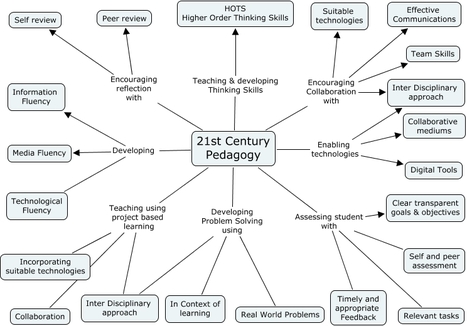
educational-origami - 21st Century Pedagogy

educational-origami - 21st Century Pedagogy | 21st Century Learning and Teaching | Scoop.it

How we teach must reflect how our students learn. It must also reflect the world our students will move into. This is a world which is rapidly changing, connected, adapting and evolving. Our style and approach to teaching must emphasise the learning in the 21st century..


Via Dr. Susan Bainbridge
Tony Meehan's curator insight, June 29, 2014 2:41 PM

For those who are just getting to grips with the power of Twitter, e.g. me, the awareness of just how quickly the world around us is changing comes sharply in to focus.  pupils in schools today have grown up with this understanding, and we, as educators, have a huge responsibility to bring our practice up to date and in line with this rapidly changing world. Young people can in theory cut themselves off from the world and, through the power of technology keep themselves to themselves, entertain themselves 24/7.  They don't need us.  But they do, in order to help them grow and develop as human beings, to learn to control the media to which they have such ready access, not to be controlled by it.

This article outlines how pedagogy in this golden age of technology needs to change.  It provides a good platform for continuing professional development.

Rescooped by Gust MEES from 21st Century Tools for Teaching-People and Learners
April 15, 2012 9:51 AM
Scoop.it!

Learning Professionals and Their Roles as Curators

Learning Professionals and Their Roles as Curators | 21st Century Learning and Teaching | Scoop.it
Over the past two weeks, we've looked at Filtering: A Challenge and Responsibility for Learning Professionals, and Curation: A Core Competency for Learning Professionals.
No comment yet.
Scooped by Gust MEES
April 14, 2012 11:27 AM
Scoop.it!

Online Education Promotes Strong Minds

Online Education Promotes Strong Minds | 21st Century Learning and Teaching | Scoop.it
Would you continue to take classes and work on your degree if you found out the degree wouldn't help you reach your academic and career goals?


Doug Lederman, editor and co-founder of Inside Higher Ed, discussed issues related to the ability of American colleges to prepare students for the real world in his review of We're Losing Our Minds.


While this is a summary of higher education in general, I believe that online education should not be included because these degree programs have an ability to provide a different outcome, one that promotes development of authentic, relevant, and meaningful learning.


Read more...


No comment yet.
Scooped by Gust MEES
April 14, 2012 11:21 AM
Scoop.it!

Plagiarism in Online Schools: What Students Need to Know

Plagiarism in Online Schools: What Students Need to Know | 21st Century Learning and Teaching | Scoop.it
Plagiarism is on the rise. The articles and reports about academic honesty are a concern for online schools and students. The question is who’s to blame?
No comment yet.
Scooped by Gust MEES
April 14, 2012 11:08 AM
Scoop.it!

Auto-Analytics: Self-Tracking Tools Students May Find Useful

Auto-Analytics: Self-Tracking Tools Students May Find Useful | 21st Century Learning and Teaching | Scoop.it
We live in a time poor society, where students and employees are concerned with how much they can accomplish in a short period of time, and where methods for increasing productivity are often stated as action plans and goals …...
No comment yet.
Scooped by Gust MEES
April 14, 2012 11:03 AM
Scoop.it!

How Students Can Learn to Be Creative

How Students Can Learn to Be Creative | 21st Century Learning and Teaching | Scoop.it
Albert Einstein said that “the true sign of intelligence is not knowledge, but imagination.” Students are often conditioned to think in a linear manner; read the assigned course materials, develop a paper or …...
No comment yet.
Scooped by Gust MEES
April 13, 2012 7:25 PM
Scoop.it!

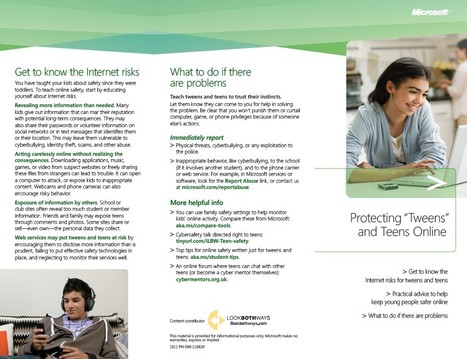
Help teach tweens/teens about #Onlinesafety & preventing potential risks

Help teach tweens/teens about #Onlinesafety & preventing potential risks | 21st Century Learning and Teaching | Scoop.it

Help teach tweens/teens about #online #safety & preventing potential risks with this PDF download:


http://t.co/2xYnB2Gi

No comment yet.
Scooped by Gust MEES
April 12, 2012 2:59 PM
Scoop.it!

Internet Encyclopedia of Philosophy

Internet Encyclopedia of Philosophy | 21st Century Learning and Teaching | Scoop.it
An open access resource hosted by the University of Tennessee at Martin.
No comment yet.
Rescooped by Gust MEES from Citizenship Education
April 11, 2012 7:08 PM
Scoop.it!

Creating a Culture of Civility in the Classroom

Creating a Culture of Civility in the Classroom | 21st Century Learning and Teaching | Scoop.it
To state that the instruction of these social expectations is the responsibility of parents and guardians only and that it is the responsibility of educators merely to transmit content knowledge is to ignore the obvious and to abrogate a central ...


Just what are the factors that create a culture of civility in the classroom of the public school? Not just an environment that promotes learning but also one that fosters the creation and maintenance of skills of social interaction?


===> Skills such as being trustworthy, helpful, courteous, and patience must be taught. <===


Many students enter, and continue along in school from year to year, with little or no knowledge of or experience in taking turns in rotation, in requesting and then


===> appreciating attention in a cordial manner, in utilizing time and resources efficiently, or in showing respect and consideration, not merely tolerance, to others. <===


===> These are all acquired skills central to any successful society, and they must be overtly taught. <===


Via Sarantis Chelmis
No comment yet.
Scooped by Gust MEES
April 11, 2012 4:06 PM
Scoop.it!

Turning Students into Good Digital Citizens

Turning Students into Good Digital Citizens | 21st Century Learning and Teaching | Scoop.it
Schools have always been charged with the task of producing good citizens. But how has our definition of a "good citizen" changed over the ages?
No comment yet.
Scooped by Gust MEES
April 11, 2012 10:42 AM
Scoop.it!

Tips for combating online risks

Tips for combating online risks | 21st Century Learning and Teaching | Scoop.it

To help consumers understand online risks and practice safe behaviors, Webroot security experts recommend the following:


- Phone home safely - Mobile malware is on the rise, especially on Android devices, so take a moment to swing by the marketplace or app store to install a mobile security application that will safeguard your device against attacks. Many security apps can also help you locate your phone if it is lost or stolen.


- Be wary of WiFi - It can be tempting to take advantage of free WiFi access points in airports, hotels or cafes, but resist the urge to use those connections to do anything other than browse.

Unsecured wireless connections can leave you vulnerable to a variety of risks, from data-stealing malware to wireless snooping of your logins or email messages by other travelers and guests.


Much more: read article...


asma jmari 's comment, April 18, 2012 5:43 AM
More than welcome @Gust Mees
Scooped by Gust MEES
April 10, 2012 6:51 PM
Scoop.it!

Telling Our Stories, Self-Promotion, or Sharing Best Practices?

Telling Our Stories, Self-Promotion, or Sharing Best Practices? | 21st Century Learning and Teaching | Scoop.it

Jackie Gerstein, Ed.D


This is cross-posted on the Powerful Learning Network – http://plpnetwork.com/2012/04/10/telling-our-stories-self-promotion-or-sharing-best-practices/


This is my response and reaction to Sheryl Nussbaum-Beach’s Unselfish Self Promotion posted on the PLP Network blog. Conceptually, I am in agreement with Sheryl. I discussed similar ideas in a blog post entitled Every Educator Has a Story . . . Just Tell It.


Where I have have difficulties is in the language of self-promotion. I begin with an excerpt of my original blog post and then discuss my thoughts regarding the language surrounding self-promotion.


Every Educator Has a Story . . . Just Tell It.


No comment yet.
Scooped by Gust MEES
April 10, 2012 11:15 AM
Scoop.it!

Copyright: Music, film and TV on the internet

Copyright: Music, film and TV on the internet | 21st Century Learning and Teaching | Scoop.it

Childnet, part of the UK Safer Internet Centre, has produced four successful editions of a leaflet aimed at keeping parents, teachers and young people well informed on how to stay safe and legal when enjoying entertainment on the internet or via a mobile device.


No comment yet.
Rescooped by Gust MEES from L'arthrose
April 15, 2012 3:35 PM
Scoop.it!

Travail sur écran et aménagement des postes de travail

Travail sur écran et aménagement des postes de travail | 21st Century Learning and Teaching | Scoop.it


Aménager votre bureau avant d'avoir des douleurs dorsales.


Voir aussi : http://www.scoop.it/t/21st-century-learning-and-teaching?tag=Ergonomics


No comment yet.
Scooped by Gust MEES
April 14, 2012 12:56 PM
Scoop.it!

What’s a connected educator?

What’s a connected educator? | 21st Century Learning and Teaching | Scoop.it
I know it’s nothing new any more. If you’re reading this blog you are probably part of a community of connected educators. We read blogs. We write blogs. We share resources and ideas vi...
No comment yet.
Scooped by Gust MEES
April 14, 2012 11:24 AM
Scoop.it!

Be Prepared for Accelerated Learning in Online Classes

Be Prepared for Accelerated Learning in Online Classes | 21st Century Learning and Teaching | Scoop.it
Learning at the speed of light? Online classes are often noted for offering features such as convenience, ease of access, and flexibility.


Many degree programs can be completed at an accelerated rate, with classes requiring an investment of time from five to ten weeks – versus a traditional semester-length class that can last 16 weeks or longer.


However, the trade-off for taking courses at an accelerated pace is involvement in a learning process that requires your immediate engagement and participation.


===> As an online student you need a plan that will help you do more than just get through the class, you need an effective learning strategy. <===


No comment yet.
Scooped by Gust MEES
April 14, 2012 11:18 AM
Scoop.it!

Be Careful What You Use – Students and Copyright Laws

Be Careful What You Use – Students and Copyright Laws | 21st Century Learning and Teaching | Scoop.it
Students have access to a large volume of information through the Internet and online library databases, and many new or inexperienced students believe that as long as they are using the information for their school work …...
No comment yet.
Scooped by Gust MEES
April 14, 2012 11:05 AM
Scoop.it!

Mindfulness Isn't Just for Buddhists

Mindfulness Isn't Just for Buddhists | 21st Century Learning and Teaching | Scoop.it
Mindfulness being taught in higher education? College students attuning to their inner thoughts? It’s really not as farfetched as you might believe.
No comment yet.
Scooped by Gust MEES
April 14, 2012 10:53 AM
Scoop.it!

Leadership and Emotional Intelligence

Leadership and Emotional Intelligence | 21st Century Learning and Teaching | Scoop.it

Using emotional intelligence can help you succeed as a leader. But what is emotional intelligence, and why is it that success in life sometimes seems unrelated to intelligence and how hard you are prepared to work?


Dr Goleman describes five main elements of emotional intelligence:


- Self-awareness.


- Self-regulation.


- Motivation.


- Empathy.


- Social skills.


Emotional intelligence is the ability to understand and manage both your own emotions, and those of the people you lead. Having a high EQ means knowing what you are feeling, what this means, and how your emotions can affect other people. For leaders, having emotional intelligence is essential for success.


Take time to work on self-awareness, self-regulation, motivation, empathy, and social skills. They will certainly help ensure that you succeed as a leader.


Read more...


No comment yet.
Scooped by Gust MEES
April 13, 2012 5:26 PM
Scoop.it!

Being in power does not always magnify personality

Being in power does not always magnify personality | 21st Century Learning and Teaching | Scoop.it
"If you want to test a man's character, give him power," said Abraham Lincoln. It's a truism that power magnifies personality—but is it true? A new study says no.


"Before, people thought that disposition is linked to will; it's mainly internally driven," says University College London psychologist Ana Guinote, who conducted the study with Mario Weick of the University of Kent and London doctoral student Alice Cai.


"Our findings show that the environment crucially triggers dispositional or counter-dispositional behavior in powerful people.


" The findings appear in Psychological Science, a journal of the Association for Psychological Science.


Read more...


No comment yet.
Scooped by Gust MEES
April 12, 2012 5:58 AM
Scoop.it!

CSEDU 2012 - the 4th International Conference on Computer Supported Education

CSEDU 2012 - the 4th International Conference on Computer Supported Education | 21st Century Learning and Teaching | Scoop.it

CSEDU 2012, the International Conference on Computer Supported Education, aims at becoming a yearly meeting place for presenting and discussing new educational environments, best practices and case studies on innovative technology-based learning strategies, institutional policies on computer supported education including open and distance education, using computers.


In particular, the Web is currently a preferred medium for distance learning and the learning practice in this context is usually referred to as e-learning.


CSEDU 2012 is expected to give an overview of the state of the art as well as upcoming trends, and to promote discussion about the pedagogical potential of new learning and educational technologies in the academic and corporate world.


Conference Areas


1. Information Technologies Supporting Learning

2. Learning/Teaching Methodologies and Assessment

3. Social Context and Learning Environments

4. Domain Applications and Case Studies

5. Ubiquitous Learning

PROGRAM CO-CHAIRS
Markus Helfert, Dublin City University, Ireland

Maria João Martins, Instituto Superior Tecnico, Portugal
Keynote Speakers
Joseph Trimmer, Ball State University, United States

David Kaufman, Simon Fraser University, Canada

Hugh Davis, University of Southampton, United Kingdom

Contact: CSEDU Secretariat

Venue: Holiday Inn Porto Gaia, Porto, Portugal
Address: Vila Nova de Gaia, Diogo Macendo 220


No comment yet.
Scooped by Gust MEES
April 11, 2012 6:52 PM
Scoop.it!

Technology Teacher or Teacher?

Technology Teacher or Teacher? | 21st Century Learning and Teaching | Scoop.it

Tom Whitby


For years I served on the board of directors of The New York State Association for Computers and Technologies in Education, a group known to most as NYSCATE. 


As professionals we need to stop separating out technology from learning. It has become part of everything we do. It will not go away or even take a single step back.


The actual use of technology in a course does not always need to fall on the teacher.


===> In many cases the student can be the teacher and the teacher can be the student. <===


That takes an open mind and a flexible, adaptive approach to learning and teaching. These are not bad traits for any teacher to have; be it any teacher in general, or a computer teacher specifically. Technology has become a tool of our profession, whether we use it, teach it, or study it, we need to deal with it. It is now a required part of what we do in our profession. For technology to become ubiquitous we need to stop compartmentalizing it from what we do.


Gust MEES: looking for a win-win situation between teacher (learner) and student (learner), even giving a challenge to students to do better than the teacher and trying so to make everybody learning better ;) Keeps teacher and students fit on new knowledge!


Angela K. Adams's curator insight, October 12, 2015 8:21 PM

Technology - I chose this resource because it encourages the use of technology across curriculum and not just from a technology class.  I hope to use this resource to share with my colleagues the importance of using technology in all subject areas.

Rescooped by Gust MEES from Voices in the Feminine - Digital Delights
April 11, 2012 12:17 PM
Scoop.it!

A different pattern of student engagement: Mature distance students at university

A different pattern of student engagement: Mature distance students at university | 21st Century Learning and Teaching | Scoop.it

Mature students have:


- Equal levels of satisfaction


- Deeper learning strategies


- more committed / motivated


- Different pattern of interaction (less interaction with other students)


- Better able to manage distance (have the life skills and time-management skills


- Experience a lot of role and financial pressure, alienation and anxiety


- Lack of skills (don't necessarily have the up to date skills required...yet another thing to learn in the first year)


- Overload of first year


- Knowledge conflict


The definition of student engagement for this study comes from the OSSIE: "The time and energy students invest in educationally purposeful activities, and the effort institutions devote to effective engagement".


===> The scales of engagement include academic challenge, work integrated learning, active learning, enriching education experiences, and staff and student interactions. <===


read more...



Via Ana Cristina Pratas
No comment yet.
Scooped by Gust MEES
April 11, 2012 5:37 AM
Scoop.it!

“Self-Learning” is the New “Schooling”

“Self-Learning” is the New “Schooling” | 21st Century Learning and Teaching | Scoop.it
The idea of “student-centered learning” coupled with “networked learning” has tossed the idea that all learning should only happen through schooling. No longer do classroom walls or school schedules dictate when high-quality learning occurs.
No comment yet.
Suggested by Evolving Classroom
April 10, 2012 2:28 PM
Scoop.it!

What Year Are K-12 Schools Preparing Students For? 1973? 1995?

What Year Are K-12 Schools Preparing Students For? 1973? 1995? | 21st Century Learning and Teaching | Scoop.it
I am not beating-up on schools. Just asking an essential question. Why is this an essential question? Because after observing middle and high school classrooms as well as various workplaces… I fo...
No comment yet.