


Comment se fait-il que certaines régions du Monde parlent de pédagogie inversée depuis déjà deux ans et que j’en ai seulement fait connaissance il y a quelques mois? Vous la connaissez...
Via Annick A. Carter

 Your new post is loading...
 Scoop.it! Comment se fait-il que certaines régions du Monde parlent de pédagogie inversée depuis déjà deux ans et que j’en ai seulement fait connaissance il y a quelques mois? Vous la connaissez... Via Annick A. Carter No comment yet.
Sign up to comment
Scoop.it!

Une recette typiquement luxembourgeoise, je suis originaire du Luxembourg et c’est une de mes recettes favorites que mon épouse sait très bien cuisiner… Une recette pour les mois...
Motivez vos étudiants à créer des blogs aussi sur leurs hobbies, mon blog comme inspiration... cela les motivera de travailler avec les nouveaux médias et ils apprendront avec plaisir de les utiliser. le "MIEUX APPRENDRE" à la portée de tou(te)s...
===> Il est possible de créer un livre avec WordPress de cette façon... <===
Scoop.it!

The Sloan Consortium is a professional leadership organization dedicated to helping online learning move into the mainstream of higher education.
Scoop.it!

For A Better World Multi-Cultural Blog A multicultural effort on showing how the world could become better. This blog is an example of multi-cultural author collaboration. This world that we live i...
Scoop.it!

Drawing on both the right and the left logical side is more difficult in large part because we have not used the right side much. Most education aims at nurturing the left side so after a time the right side kind of atrophies.
Learning to be creative opens the door to painting or performing or pursuing a new vocation or hobby. Unfortunately, we live in a left-brained world and most people have forgotten how to exercise the right hemisphere.
It takes time and effort to relearn, to let go, be creative. Making mistakes, taking risks, experimenting is all part of the formula.
Yet there is profound hope because "we are all born creative," as creativity expert Sir Ken Robinson asserts.
Learn more / En savoir plus / Mehr erfahren:
http://www.scoop.it/t/21st-century-learning-and-teaching/?&tag=Thinking
http://www.scoop.it/t/21st-century-learning-and-teaching/?&tag=Think-Different
http://www.scoop.it/t/21st-century-learning-and-teaching/?&tag=Think+outside+the+box
http://www.scoop.it/t/21st-century-learning-and-teaching/?&tag=Lateral+Thinking
Gust MEES's insight:
Drawing on both the right and the left logical side is more difficult in large part because we have not used the right side much. Most education aims at nurturing the left side so after a time the right side kind of atrophies.
Learning to be creative opens the door to painting or performing or pursuing a new vocation or hobby. Unfortunately, we live in a left-brained world and most people have forgotten how to exercise the right hemisphere.
It takes time and effort to relearn, to let go, be creative. Making mistakes, taking risks, experimenting is all part of the formula.
Yet there is profound hope because "we are all born creative," as creativity expert Sir Ken Robinson asserts.
Learn more / En savoir plus / Mehr erfahren:
http://www.scoop.it/t/21st-century-learning-and-teaching/?&tag=Thinking
http://www.scoop.it/t/21st-century-learning-and-teaching/?&tag=Think-Different
http://www.scoop.it/t/21st-century-learning-and-teaching/?&tag=Think+outside+the+box
http://www.scoop.it/t/21st-century-learning-and-teaching/?&tag=Lateral+Thinking
Scoop.it!

Tough economic times make it tempting for an employee to switch his white hat to a black one for financial gain. Insider threats also include contractors, auditors, and anyone who has authorized access to systems.
Read more, A MUST...
Via IS Decisions, Gust MEES
Scoop.it!

Fast täglich gibt es Meldungen über Sicherheitslücken in Betriebssystemen und Software. Und häufig gelingt es Hackern, diese Lücken auch auszunutzen.
Hier erfahren Sie, wie es zu den Sicherheitslücken kommt, wie Hacker die Lücken nutzen und wie Sie Ihre Systeme schützen.
Scoop.it!

I am from the UK, but I live and work in Curitiba in the south of Brazil. I have found that students are often very interested in how things are done in different countries...
This means that cultural awareness was a part of my teaching long before the current obsession with doing everything with technology. I am a firm believer in using technolgoy when it offers something different and there is a storng pedagogigcal case for doing so. All too often people use the latest high-tech gizmo just for the sake of using it.
However, technology has opened up certain ways of raising cultural awareness that perhaps weren't there before.
Scoop.it!

You’re going to want to print out this infographic and, at the very least, share it with your fellow teachers and even students. It’s all about the history of education technology and could be used to educate just about anyone on how far we’ve come in a short period of time. We did a more in-depth look at the history of education technology about a year ago but this infographic is a lot more… fun.
Anyway, the below infographic from CTU can be viewed below or downloaded as a PDF here (so you can fire up that color printer). Enjoy the walk down memory lane!

François Arnal's curator insight,
April 11, 2013 2:32 AM
De l'ardoise à la tablette, du projecteur de diapositive au vidéoprojecteur interactif...
Scoop.it!
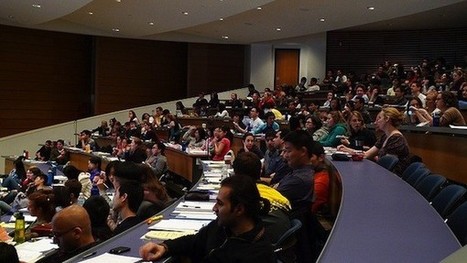
When I think about the “ethics and responsibilities of the 21st century classroom,” I think not only about our ethical responsibilities toward students but about our ethical responsibilities toward teachers. I am very concerned that the drop-out rate of K-12 teachers is even higher than the drop-out rate of K-12 students in the U.S. and in many other countries around the world.
As I’ve gone around the U.S. and abroad talking with teachers, I’ve seen over and over how beleaguered they are: by (a) too many rules, (b) too many constantly-changing systems and theories, by (c) too many “learning objectives,” by (d) too much pressure to deliver “content,” by (e) too many expectations about high test scores (on standardized tests that often do not measure real learning and content), by (f) ever-escalating and rigid standards of “accountability,” and, added to all of this, by (g) too much faddish, expensive new technology dumped not only on kids but on teachers as if the technology itself magically will take care of a, b, c, d, e, and f.
Read more...
Via Ana Cristina Pratas
Scoop.it!

April 15, 2012
The first PHSprincipalBlog (changed to Director 4/1/2009) post was on 9/18/2007. (332 posts overall) I have been using Twitter for 4 years, 4 month...
We still have a lot of work to do, but I feel more strongly than ever before that we are willing to meet the challenges to make our learning environments relevant and engaging. We have the unique opportunity to design and build a new school complex that will be both flexible and transparent and able to accommodate learning for today’s world and the challenges of tomorrow.
Read more...
|
Scoop.it!

Clips about: earth, day videos and audio from BBC Learning Zone Broadband Class Clips...
Scoop.it!

In our last blog, we discussed the importance of competence for fostering the trust you need as a manager to influence others.
We stressed that management competence includes not just technical knowledge of the work but operational and political know-how as well.
Here we want to focus on the other great component of trust — character — but by taking a different approach.
So far we've argued that intentions — character — are the foundation of trust, that they must be supported by competence, and that you must take pains to reveal them. But we haven't addressed the question of your intentions themselves. Does it matter what your intentions are?
Yes, of course it does. We don't trust anyone simply because they have clear intentions. Otherwise, we'd trust Hannibal Lector and other villains.
===> People trust us because we have the right intentions, which are those intentions people accept and agree with. What are "the right" intentions? <===
That's not an easy question to answer, especially for a boss, and it's the subject of our next blog.
Read more, very interesting...
Via Professor Jill Jameson, Gust MEES
Scoop.it!

The whole problem with the world is that fools and fanatics are always so certain of themselves, and wiser people so full of doubts.: A biography of the author of this famous literary quote...
Scoop.it!

by CORINNEW on APRIL 16, 2012
I know a lot of people view curation as a buzz word devoid of meaning, but I like the metaphor!
To talk content curation, we really need to think through the duties of a museum curator for a second. A curator scours the art world, selects the finest works, gathers them together around a unified theme, provides a frame to understand the artists’ messages and then hosts a conversation around the collection.
That’s not unlike the 21st century teacher who must comb through an overabundance of information to discover the significant and relevant, bundle those ideas into course modules, contextualize them for the class and then create an environment for students to explore those ideas and enter into a conversation about them. Over the last couple of years, I’ve come to think of my role as a teacher as that of a curator of ideas (also see my SXSWedu presentation on the topic). I’ve also come to believe that the steps involved in the curation process are key new media literacies which we should teach our students.
That’s why this spring, I introduced a brand-new curation assignment (described on the back of the syllabus) in my social media class.
Read more...
Scoop.it!

Forget the puzzles, games, and mental exercises. There's an easier way to boost your brain power.
According to Gretchen Reynolds, author of the soon to be released The First 20 Minutes, a book about the science of exercise, recent research shows that exercise can help your brain resist physical shrinkage and improve cognitive flexibility.
Read more...
Scoop.it!

21st Century How-To Guide For Teaching-People (teachers, professors, educators, instructors…)… A practical guide for teaching-people (teachers, professors, educators, instructors…...
Scoop.it!
e-Skills: Jobs for the Future. Discover powerful facts on how your ICT skills are part of the solution to tackle upcoming challenges in Europe!
Read more: http://eskills-week.ec.europa.eu/
Scoop.it!
Um ihren Nachwuchs vor den schlechten Seiten des
Sie haben ein Repertoire von Lieblingsseiten, die sie immer wieder besuchen und wenig Interesse daran, auf eigene Faust neue Inhalte zu entdecken.
Scoop.it!

Education, engagement, and creativity produce happier and longer lives.
Scoop.it!
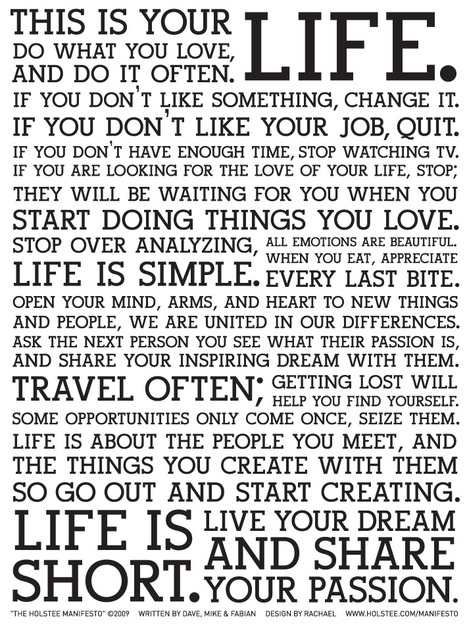
What knowing the limits of knowledge has to do with finding the frontiers of creativity.
Sir Ken Robinson has previously challenged and delighted us with his vision for changing educational paradigms to better optimize a broken system for creativity.
In this wonderful talk from The School of Life, Robinson articulates the ethos at the heart of The Element: How Finding Your Passion Changes
Everything — one of 7 essential books on education — and echoes, with his signature blend of wit and wisdom, many of the insights in this indispensable collection of advice on how to find your purpose and do what you love.
Read more...
Scoop.it!

uKnowKids is an online service that helps you monitor and quickly analyze your child's social networking and mobile phone activity, profiles, friends and much more.
Parents can also use the Family Map to locate their child and access the pictures posted online of their child with our Premier service.
uKnowKids even alerts you if your child is headed towards a risky situation or person so that you can step in and do what you do best - educate, engage and protect your child.
|






