Topics — Society
-
-
Operation Phobos
1 Thessalonians 4:4 (BSB)
-
Operation Oya
1 Timothy 5:2 (NLT)
-
Centre for Population Change Connecting Generations in the news
A collection of articles featuring research and comment from members of the Centre for Population Change
-
-
-
-
Empathy Movement Magazine
The latest news about empathy from around the world - CultureOfEmpathy.com
-
Networked Society
Support distributed social networking, collaborate and grow that new society
-
-
-
ALKEBULAN INDIGENOUS
ALKEBULAN INDIGENOUS is a division of KROTOASA RESEARCH INTENSIVE INSTITUTE (KRII), which refers to all Alkebulan communities and Diaspora Slave Descendants who lost their claims to land through colonialism and slavery, also communities with deep historical indigenous ties to the lands, natural resourses and environment, who maintain unique cultures, traditional practices and self-governance,. Alkebulan is considered the oldest and indigenous name for the continent of Africa, translating to "Mother of Mankind" or "Garden of Eden". Used by ancient Moors, Nubians, and Ethiopians, it predates the European-imposed name "Africa" and represents a push to reclaim pre-colonial African identity and history.
Alkebulan Indigeon also points to the rich diversity of Africa's original inhabitants, whose traditional lives and rights are central to understanding the continent's complex history and ongoing social dynamics. These are groups of people native to a specific region, people who lived here before colonist arrived.
Indigenous People like the San and Khoekhoe population both carrying mtDNA +100 000 years in Southern Africa are recognised indigenous peoples by the United Nations and UNDRIP., These two groups chose different lifestyles as hunters and herders but after colonialsm many Khoekhoe populations became hunters due to dispossesion and Genoicide by European and Bantu Settlers. Bantu Settlers was named by the Khoekhoe people as "Xhosas" and adopting the cultures and rituals of the KhoeKhoe population, Bantu's are distinct from the majority African populations who migrated and lost their historic continuity of their culture, tribes, indigenous livestyles, territories and surrounding natural resources.
Political Participation: Indigenous People lack political representation and participation, economic marginlization and poverty, lack of access to social services, discrimination, and protection of rights.
Alkebulan's marginalization in global politics and economics stems from a mix of historical legacies of colonialism, global politics and global economic structures that favor commodity exports, leading to asymmetrical trade, capital flight, and limited industrialization. Key factors include dependence on external powers, poor infrastructure, illicit financial flows, and structural disadvantages within global trade rules, despite rich resources.
Alkebulan's revolution of sweeping transformation, primarily the anti-colonial independence movements (Decolonisation of Africa 1950 -1970s), the anti-colonial restistance, the political revolution, the economic and social revolutions, the labour revolutions with key drivers and goals of self-determination by ending foreign control and achieving political independence and economic independence by moving from exporting raw materials to manufacturing in areas where extraction taking place. -
Gender and Literature
On women writers and gender issues in literature
-
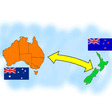
Trans Tasman Migration
Trans Tasman Migration appears to be on the rise, is it worth it? Here are current news articles on this issue.
-
Stop xenophobia
Xenophobia is the fear of that which is perceived to be strange or foreign. This curation collection also includes all the 'isms' in the world; racism, sexism, etc. Including homophobia. When are people going to realise that this behaviour is not right. Please stop it now and be inclusive in your world views. Reduce the hate in the world and stop all forms of violence against people.
-
-
-
United Nations, UNGA, UNDESA, UNDSPD, ECOSOC, UNSDN, UNNGLS,
(1) The United Nations is an international organization founded in 1945. It is currently made up of 193 Member States. The UN also provides a forum for its members to express their views in the General Assembly, the Security Council, the Economic and Social Council, and other bodies and committees. The UN's Chief Administrative Officer is the Secretary-General. This year, 2015, marks the 70th anniversary of the United Nations. (2) The United Nations Department of Economic and Social Affairs (UNDESA) works closely with governments and stakeholders to help countries around the world meet their economic, social and environmental goals. As the Secretariat entity responsible for the development pillar of the United Nations, our work addresses a range of cross-cutting issues that affect peoples’ lives and livelihoods. UNDESA’s work is guided by the United Nations development agenda. Furthermore, with a focus on equitable participation by all people, the United Nations development agenda has unique, universal legitimacy. Our vision for human progress goes beyond promoting global agreements and is fundamentally about action. Working closely with governments and other partners, DESA seeks concrete solutions. (3) The Division for Social Policy and Development (DSPD) is part of the Department of Economic and Social Affairs (DESA) of the United Nations Secretariat. The main objective of the Division for Social Policy and Development (DSPD) is to strengthen international cooperation for social development, in the context of the comprehensive and detailed framework of commitments and policies for action by Governments, intergovernmental and nongovernmental organizations provided by the Copenhagen Declaration on Social Development and Programme of Action of the World Summit for Social Development, with particular attention to the three core issues of poverty eradication, employment generation and social integration, in contributing to the creation of an international community that enables the building of secure, just, free and harmonious societies offering opportunities and higher standards of living for all. The Division’s work is vital for the social pillar of sustainable development. (4) The Economic and Social Council (ECOSOC) is the United Nations’ central platform for reflection, debate, and innovative thinking on sustainable development. Mandate - ECOSOC, one of the six main organs of the United Nations established by the UN Charter in 1946, is the principal body for coordination, policy review, policy dialogue and recommendations on economic, social and environmental issues, as well as for implementation of the internationally agreed development goals. ECOSOC serves as the central mechanism for the activities of the United Nations system and its specialized agencies, and supervises the subsidiary and expert bodies in the economic, social and environmental fields. ECOSOC has undergone reforms (A/RES/61/16, A/RES/68/1) in the last decade to strengthen the Council and its working methods, giving special attention to the integrated and coordinated implementation of, and follow-up to, the outcomes of all major United Nations conferences summits in the economic, social, environmental and related fields. Functions - ECOSOC engages a wide variety of stakeholders – policymakers, parliamentarians, academics, major groups, foundations, business sector representatives and 3,200+ registered non-governmental organizations – in a productive dialogue on sustainable development through a programmatic cycle of meetings. (5) UNSDN serves as a unique global portal for social development that: - Provides a one-stop shop that provides information and knowledge on social development; - Provides an interactive platform for stakeholders to share documents, lessons on best practices and develop joint work platforms; - Showcases new and innovative projects in social development; - Promotes capacity-building in developing countries and economies in transition by promoting knowledge and information in the area of social development; - Assists Member States to help achieve the Millennium Development Goals (MDGs). (6) The United Nations Non-Governmental Liaison Service (UN-NGLS) promotes constructive relations between the United Nations and civil society through dynamic partnerships to foster greater coherence around cross-cutting and emerging issues on the UN’s agenda and by facilitating meaningful civil society engagement in UN processes. Drawing on its inter-agency nature and UN system-wide perspective, UN-NGLS provides strategic information, analysis and support to a wide range of constituencies, using its unique convening and networking capacity to strengthen multistakeholder dialogue and alliance-building on core UN issues.
-
Women's Economic Empowerment, Gender Equality, Women in Politics, Indigenous Women and Children
Research has demonstrated that when Women are Economically Empowered, entire communities benefit. Yet until now, there has been a crucial knowledge gap regarding the most effective interventions to advance women’s economic opportunities. To address this gap, the UN Foundation and the ExxonMobil Foundation joined forces to develop A Roadmap for Promoting Women’s Economic Empowerment.
The Women's Empowerment Principles offer guidance to companies on how to empower women in the workplace, marketplace and community. They are the result of a collaboration between the the United Nations Global Compact and the United Nations Entity for Gender Equality and the Empowerment of Women (UN Women) and are adapted from the Calvert Women's Principles ®. The development of the Women's Empowerment Principles included an international multi-stakeholder consultation process, which began in March 2009 and culminated in a launch on International Women’s Day in March 2010.
In accordance with its multi-year programme of work for 2010-2014, the Commission on the Status of Women (CSW) consider ‘The empowerment of rural women and their role in poverty and hunger eradication, development and current challenges' as its priority theme during its fifty-sixth session in 2012. In order to contribute to a fuller understanding of the issue and to assist the Commission in its deliberations, UN Women in collaboration with the Food and Agriculture Organization (FAO), the International Fund for Agricultural Development (IFAD) and the World Food Programme (WFP) will convene an Expert Group Meeting (EGM) on ‘Enabling rural women's economic empowerment: institutions, opportunities and participation' from 20-23 September 2011 in Accra, Ghana.
The World Survey on the Role of Women in Development is a UN Secretary-General report mandated by the Second Committee of the General Assembly and comes out every five years. The 2014 report focuses on gender equality and sustainable development, with chapters on the green economy and care work, food security, population dynamics, and investments for gender-responsive sustainable development. (3) UNDP Global Initiative on Gender Equality in Public Administration (GEPA) was produced during GEPA Phase I. It reflects extensive research based on available national data, and provides analysis of the obstacles in the way of women’s equal participation and decision-making in public administration. Public administration is the bedrock of government and the central instrument through which national policies and programmes are implemented. In an ideal world, public administration is guided by principles of fairness, accountability, justice, equality and non-discrimination, and the civil service should serve as a model where women and men equally participate and lead, including in decision-making. Planet 50-50 by 2030: Step It Up for Gender Equality is a new UN Women initiative urging governments to make national commitments to ensure women and girls can reach their full potential by 2030.
Gender was in the spotlight at the 24th Session of the African Union Heads of States’ Summit held in Addis Ababa, Ethiopia from 30-31 January, which focused on the “Year of Women's Empowerment and Development towards Africa’s Agenda 2063”. Participating Heads of States adopted the African Union’s Agenda 2063 (a new roadmap for Africa’s long-term development that includes the need to place gender equality and equity at the centre of the continent’s social and economic development), as well as the “Addis Ababa Declaration on accelerating the implementation of the Beijing Platform for Action towards a transformational change for women and girls in Africa” (the outcome document of the Beijing+20 regional review in November 2014) and a Communiqué on gender equality (drafted during a pre-summit stakeholders consultation). “Women must be at the centre and front of all our lives,” said UN Secretary-General Ban Ki-moon in his opening speech. “I applaud your proposal at this summit: Women’s Empowerment and Development towards Africa’s Agenda 2063. Africa is home to Parliaments and Cabinets with the world’s highest percentage of women members.” However, he called for even quicker action, urging African States to make a deep and lasting difference to the lives of women and girls by 2020. -
Global Public Goods and Bads, Culture, Social Policy, Population and Migration, NGO's, NonProfit
“The opening words of the United Nations Charter are: `We, the Peoples of the United Nations.’ This is the clearest possible statement that the United Nations does not belong to States alone. […] We live in an era in which international affairs are no longer dominated by States as the sole actors. The participants include non-governmental organizations, national parliaments, private companies, the mass media, universities, intellectuals, artists, and every woman and every man who considers him or herself to be part of the great human family.”
Secretary-General Kofi Annan
Messina, Italy, April 1997
What is an NGO?
A non-governmental organization (NGO) is any non-profit, voluntary citizens’ group which is organized on a local, national or international level. Task-oriented and driven by people with a common interest, NGOs perform a variety of services and humanitarian functions, bring citizens’ concerns to Governments, monitor policies and encourage political participation at the community level. They provide analysis and expertise, serve as early warning mechanisms and help monitor and implement international agreements. Some are organized around specific issues, such as human rights, the environment or health. Their relationship with offices and agencies of the United Nations System differs depending on their location and mandates.
Over 1,300 NGOs with strong information programmes on issues of concern to the United Nations are associated with the Department of Public Information (DPI), giving the United Nations valuable links to people around the world. DPI helps those NGOs gain access to and disseminate information about the range of issues in which the United Nations is involved, to enable the public to understand better the aims and objectives of the Organization.
How do NGOs and DPI cooperate?
The Department of Public Information and NGOs cooperate regularly. NGOs associated with DPI disseminate information about the UN to their membership, thereby building knowledge of and support for the Organization at the grassroots level. This dissemination includes, publicizing UN activities around the world on such issues as peace and security, economic and social development, human rights, humanitarian affairs and international law. Additionally, promote UN observances and international years established by the General Assembly to focus world attention on important issues facing humanity.
The NGO Relations Section within the Department of Public Information at the United Nations is the link with approximately 1,300 Non-governmental Organizations (NGOs) who are partners and members in association with the Department of Public Information and support the UN efforts to disseminate information on the priority issues on its agenda, including sustainable development, creating a safer and more secure world, the importance of prevention, helping countries in transition, empowering women and young people, and addressing poverty, among others. -
Interfaith, Religion
UNITAR CO-HOSTS 3RD ANNUAL DIALOGUE IN COMMEMORATION OF WORLD INTERFAITH HARMONY WEEK
9 February 2018, Geneva, Switzerland - A little-known General Assembly resolution comes back around once a year, in the first week of February, to remind the international community about the unmistakable power of religion to transform the world. In October 2010, UN General Assembly Resolution 65/5 established World Interfaith Harmony Week, in which the UN officially charges “all States to support, on a voluntary basis, the spread of the message of interfaith harmony and goodwill in the world’s churches, mosques, synagogues, temples and other places of worship…, based on love of God and love of one’s neighbour or on love of the good and love of one’s neighbour, each according to their own religious traditions or convictions.”
Three years ago, UNITAR and the Permanent Mission of the Hashemite Kingdom of Jordan to the UN in Geneva joined forces, and co-founded the first annual Interfaith Dialogue at the Palais des Nations. Originally conceived by the United Nations Christian Association (UNCA), the Dialogue serves as the official commemoration of World Interfaith Harmony Week in the UN’s second city, and convenes a diverse group of Ambassadors and other leaders to speak on the vital role of faith and religion in global affairs. Participants of all faiths are warmly invited to engage in the discussion, not to water-down or understate the firmness of their convictions, but to acknowledge and reaffirm the truth that no religion promotes violence, and that no religion ignores the value of peace. We are, indeed, all in this together.
Each year’s Dialogue presents new variations on the Resolution’s theme. In 2016, the statements coalesced around the UN Secretary-General’s Plan of Action to Prevent Violent Extremism (24 December 2015), and the role of faith and interfaith dialogue in halting religiously-motivated terrorism. The second Dialogue explored the myriad ways in which faith-based organizations are helping to drive international development, peacebuilding, and the 2030 Agenda. In 2018, the third annual Dialogue addressed the theme of “Advancing Peace through Interfaith Harmony”. Panelists spoke on the unique ways in which their governments and organizations have used interfaith projects as tools for peacebuilding. The wide array of testimonies came from a panel of ambassadors from Jordan, Algeria, Azerbaijan, Singapore, Sri Lanka, Ecuador, the Holy See, the Sovereign Order of Malta, and the Organization of Islamic Cooperation (OIC). In this rich variety of contexts, the audience heard in concrete terms how faith and faith-based organizations remain not only effective but critical players in the quest for international peace, harmony, and sustainable development.
In 2010, and in every subsequent first week of February, the UN General Assembly has called upon Member States to find and nourish the light at the heart of the world’s varied faiths, and to harness it for the good of all nations. The ideals and aspirations of the Charter of the United Nations rely upon dialogues such as this one, which are not afraid to plumb the depths of our convictions, both diverse and common, and to ask the tough questions. UNITAR is honoured to join forces with the Mission of Jordan to create an official forum in International Geneva for this discussion, and to help foster this exchange of knowledge among states, communities, and people of all faiths. -
Fabulous Feminism
All about women's rights, news, views, insights, achievements, battles, hot topics and debates. I'm a Bookshop.org affiliate, so I might earn a small commission from links to buy books that I include in posts.
-
AGENDA 21 & AGENDA 2030: New Urban Agenda, Decentralisation, Local Governments, Cantons (Welfare State System)
INTRODUCTION
The New Urban Agenda was adopted at the United Nations Conference on Housing and Sustainable Urban Development (Habitat III) in Quito, Ecuador, on 20 October 2016 this presents a paradigm shift based on the science of cities and lays out standards and principles for the planning, construction, development, management and improvement of urban areas.
The New Urban Agenda is intended as a resource for these different actors: Local and Regional Governments, Inter-Governmental Organisations, Civil Society Organisation (NGOs, CSOs, CBOs), Business and Industry/Private Sector, Children and Youth, Academia and Research, Professional Associations, Women, Indigenous People, Workers and Trade Unions, Grassroots and Informal Settlements, People with Disabilities, Older Persons, Media, Foundations and Philanthropists, Farmers and all who reside in urban spaces of the world.
The New Urban Agenda highlights linkages between sustainable urbanization and job creation, livelihood opportunities and improved quality of life, and it insists on incorporation of all these sectors in every urban development or renewal policy and strategy. It was endorsed by the United Nations General Assembly at its sixty-eighth plenary meeting of the seventy-first session on 23 December 2016.
The New Urban Agenda represents a "shared vision" (Africa is left behind)for a better and more sustainable future. If well-planned and well-managed, urbanization can be a powerful tool for sustainable development for "both developing" (not true) and developed countries.
1. AGENDA 2030: NEW URBAN AGENDA (NUA) is not AGENDA 2063 - Is AGENDA 2063 a diversion to prevent full participation and oversight by the AU and PAP in all processes of AGENDA 2030? - Is AGENDA 2030 the Re-Colonising AGENDA?
2. DECENTRALISATION - Will National Governments and National Parliaments be useful after Local Government Autonomy and Constitutional Amendments? Will these changes allow foreign Actors in our countries? Are we Africans facilitating Re-Colonisation?
3. Are Local Governments influenced or directed by Local Government Associations, assisted by Foreign Actors to control Agenda 2030? Who are the biggest foreign actors involve in AGENDA 2030?
4. CANTONS (Welfare States System) If Cantons/Local Governments was Economic Transformation for citizens, then why are Switzerland citizens on a Welfare State System. Why Decentralising Africa and who's will benefit?
5. WHY WAS AFRICA TRICKED OUT OF AGENDA 2030 TO ADOPT AGENDA 2063 in 2013? Why was Africa's Parliamentarians not capacitated on all AGENDA 2030 processes while been mandated to make laws and policies for implementation.
-
Market 2 Women
Women make or influence 85% of all purchasing decisions, and purchase over 50% of all products, including autos, computers, travel, games.